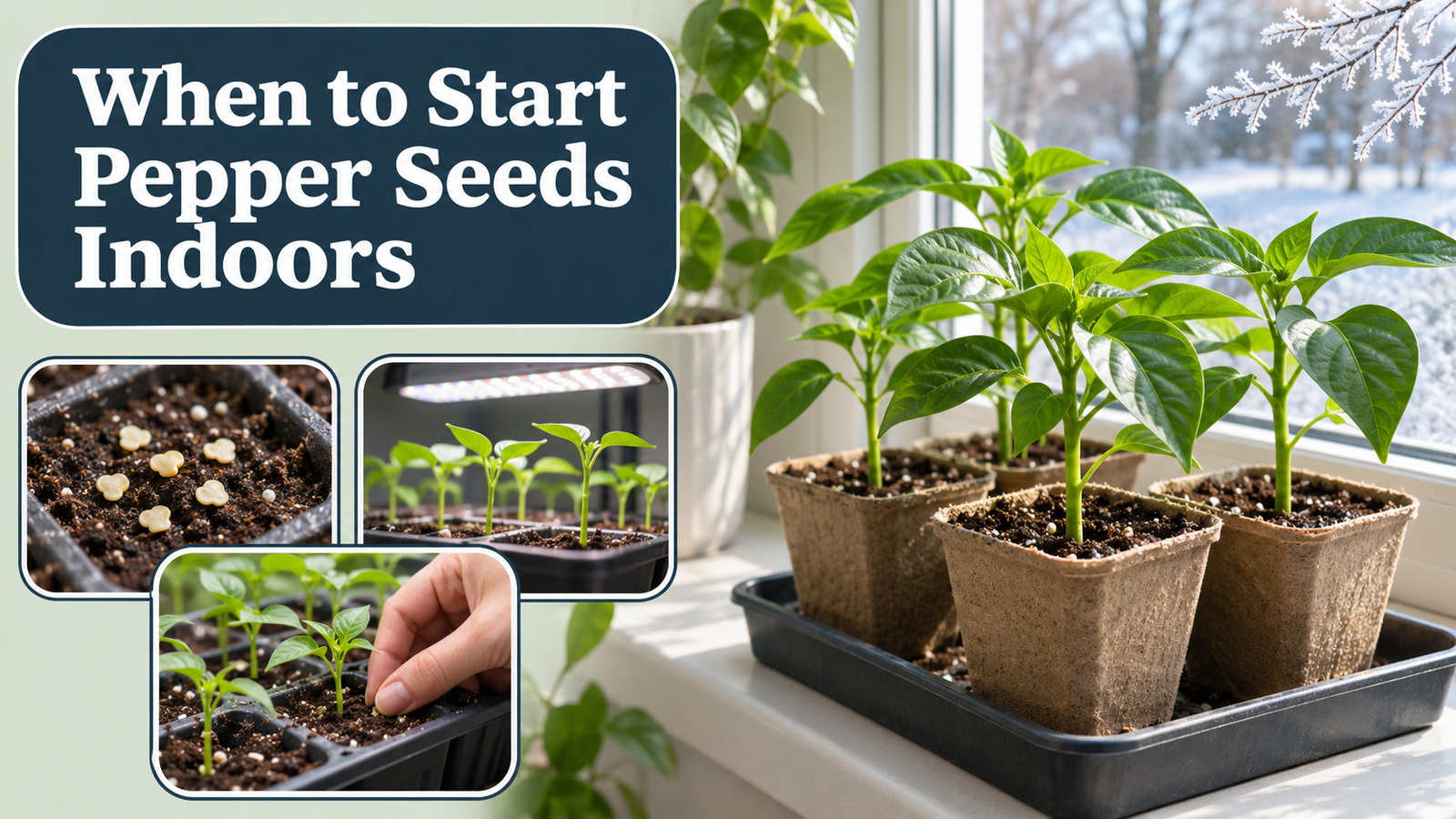
Start pepper seeds indoors about 8–10 weeks before your area’s expected last spring frost. Some varieties and growing conditions may be ready in 6–8 weeks, so check the seed packet and plan to transplant only after frost danger has passed and the soil has warmed. Peppers need warmth to germinate and grow well; starting too early can leave seedlings crowded or leggy before it’s safe to move them outside.
When to Start Pepper Seeds Indoors
Pepper seed-starting dates depend on your local last frost date, the variety you’re growing, and how quickly your seedlings develop. Use the expected date of your final spring frost as a planning guide: count back about eight weeks for most peppers, or up to ten weeks for slow-growing varieties and hot climates with shorter growing seasons.
Count Back From Your Last Frost Date
Look up the average last frost date for your town or region. Then count back eight weeks to find a good starting point. If you’re growing a slow-maturing hot pepper or have a short outdoor season, start closer to ten weeks ahead. If you’re growing a faster variety and have a long, warm season, six to eight weeks may be enough. Seed packets often give a suggested indoor-starting window, so use that information alongside your local frost date.
| Expected last frost | Approximate time to start pepper seeds |
|---|---|
| April 15 | Early to mid-February |
| May 1 | Early to mid-March |
| May 15 | Mid-March |
| June 1 | Late March to early April |
These dates are general examples, not fixed rules. Local weather can vary from year to year, and a frost-free forecast does not always mean the soil is warm enough for peppers. University extension recommendations commonly place pepper seed starting around six to eight weeks—or about eight weeks—before planting outdoors.
Adjust for Your Climate and Pepper Variety
Bell peppers, jalapeños, cayenne peppers, and many other varieties follow a similar indoor-starting schedule. However, seeds may sprout at different speeds, and some hot peppers take longer to germinate than sweet peppers. Check the seed packet for days to maturity and any variety-specific advice.
In a warm, frost-free climate, use your expected planting season instead of a last frost date. Choose a period when nights are consistently warm and the soil has warmed, then count back about eight weeks. In places with cool summers or a short growing season, starting toward the earlier end of the window gives seedlings time to develop before outdoor planting.
Why Pepper Seeds Need an Indoor Head Start
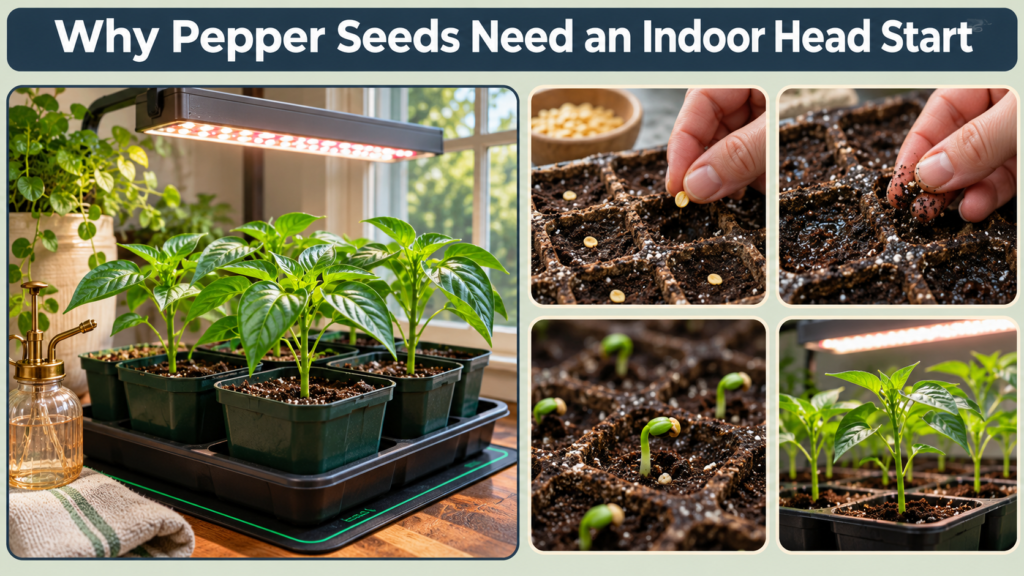
Peppers are warm-season plants. Their seeds and young seedlings grow slowly in cool conditions, and pepper plants are sensitive to frost. Starting seeds indoors lets them develop in a warm, protected place while outdoor weather is still unpredictable. By the time spring conditions improve, you can move sturdy transplants into the garden rather than waiting for seeds to sprout outdoors.
Peppers Germinate Slowly in Cool Conditions
Pepper seeds may take around a week or two to sprout, and they can take longer if the seed-starting mix is too cool. Utah State University Extension lists a broad optimum soil-temperature range for pepper germination and recommends warmer conditions for quicker emergence. A seedling heat mat can help keep the mix warm, especially in a cool room.
Once seeds sprout, remove the humidity cover and provide strong light. Keep the seedlings warm, but avoid overheating them or letting the potting mix become waterlogged.
Starting Too Early Can Create Problems
An early start may seem like a way to get an earlier harvest, but seedlings can outgrow their containers before outdoor conditions are suitable. Crowded roots, limited light, and long periods indoors can lead to weak or leggy plants. If you have limited space or lighting, it can be better to start at the later end of the recommended window.
How to Start Pepper Seeds Indoors
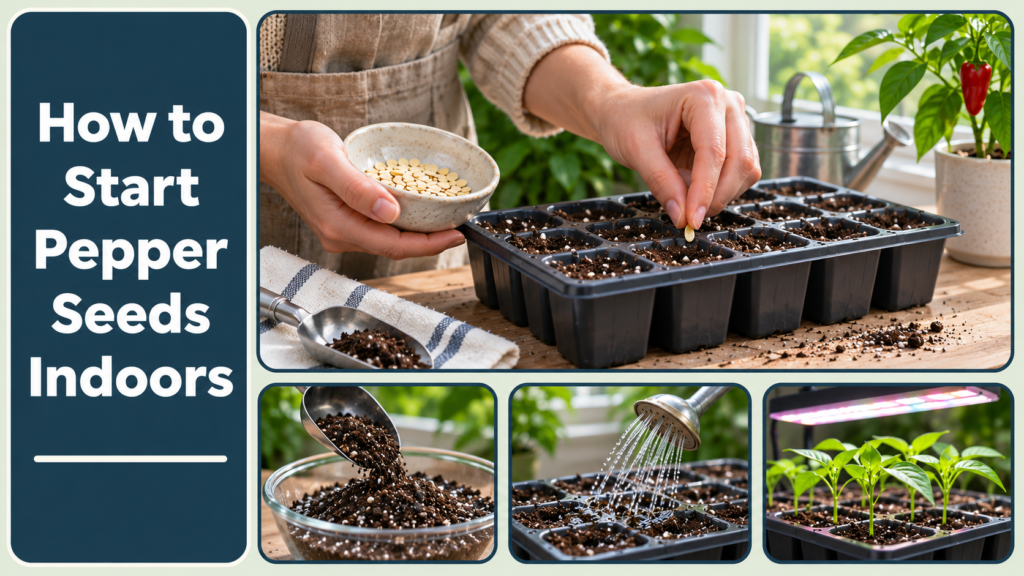
Once you’ve chosen your timing, prepare clean containers, a fine-textured seed-starting mix, and a warm, well-lit location. Sow a few extra seeds in case some do not germinate, and label each variety so you can identify seedlings later. Regular attention to warmth, moisture, and light makes it easier to grow compact pepper seedlings that can handle transplanting.
Sow Seeds in a Seed-Starting Mix
Fill seed trays or small pots with a fresh seed-starting mix. Sow pepper seeds about ¼ inch deep, following the instructions on the seed packet if they differ. Moisten the mix evenly so it feels damp but not soggy. Covering the container with a clear humidity dome or loose plastic wrap can help prevent the surface from drying while the seeds germinate.
Check containers regularly. Remove the cover once seedlings emerge to improve air circulation and reduce the risk of damping-off, a disease that can cause young seedlings to collapse at the soil line.
Keep Seeds Warm and Moist
A warm location helps pepper seeds sprout more reliably. A heat mat designed for seed starting can warm the container from below, but check the mix so it does not dry out. If the room is cool, germination may be slower; be patient and avoid repeatedly digging up seeds to check them.
Water gently when the surface begins to dry. A spray bottle or bottom-watering tray can help keep seeds in place. Empty excess water from the tray so the mix does not stay saturated.
Give Seedlings Strong Light
After germination, place seedlings under a grow light or in the brightest suitable window. If using a grow light, follow the product’s recommended distance and schedule, adjusting as the plants grow. A bright window may work, but seedlings can stretch toward the light and become thin if the light is weak or the days are short.
Turn pots occasionally if seedlings lean toward a window. When plants develop their first true leaves—the leaves that appear after the initial seed leaves—you can thin crowded seedlings by snipping the weaker ones at soil level.
When to Transplant Pepper Seedlings Outside
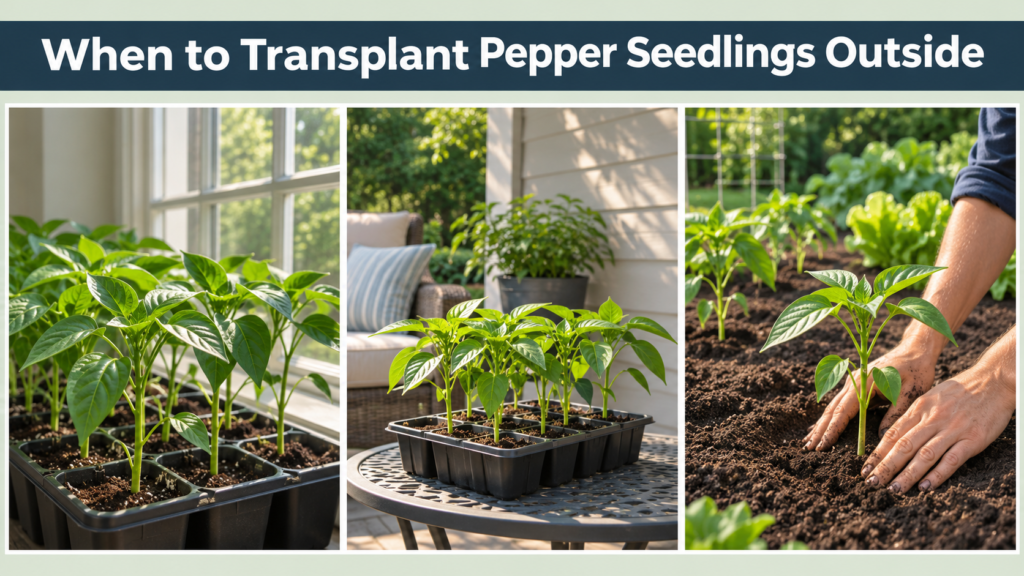
Move pepper seedlings outdoors only when the risk of frost has passed and conditions are warm enough for steady growth. Peppers do not do well in cold, wet soil, so waiting for warmer weather is often better than transplanting on the first frost-free day. Check the forecast and the soil conditions before planting.
Harden Off Plants Before Planting
Before transplanting, gradually acclimate seedlings to outdoor conditions. This process, called hardening off, helps plants adjust to sunlight, wind, and changing temperatures. Begin by placing them outside in a sheltered, partly shaded spot for a short period. Over about a week, gradually increase their time outdoors and exposure to sunlight. Bring them inside or protect them if temperatures are too cool.
Hardening off reduces the shock of moving seedlings from a protected indoor space straight into the garden. Avoid leaving tender plants outside overnight until conditions are reliably suitable.
Choose a Warm Planting Spot
Plant peppers in a sunny area with well-drained soil. Water them after transplanting, and keep an eye on the weather during the first few days. If an unexpected cold spell is forecast, protect the plants or delay transplanting until conditions improve. The seed packet can also help you confirm whether your variety is suited to your local growing season.
Common Pepper Seed-Starting Mistakes
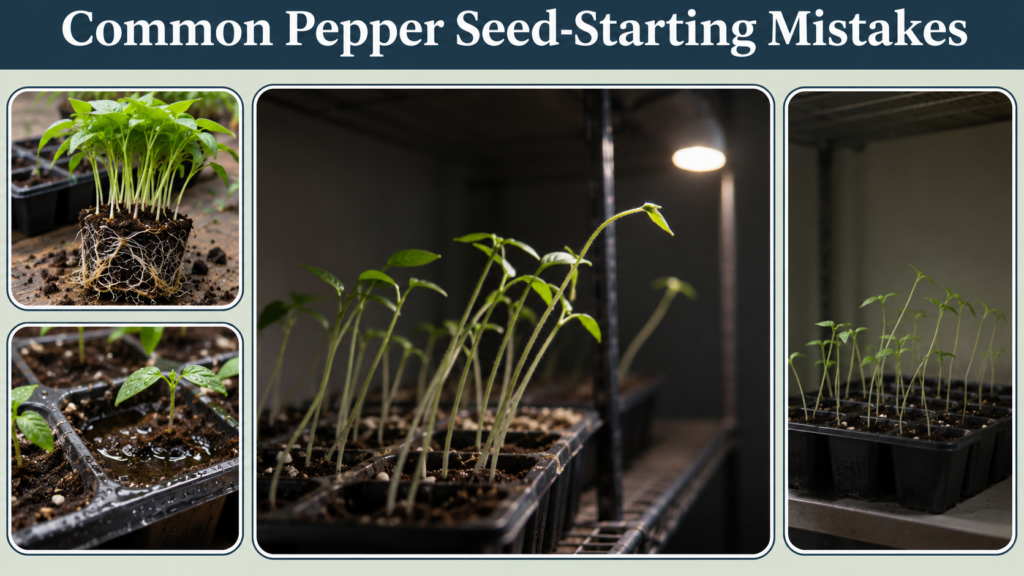
Most problems with indoor pepper seedlings come from starting at the wrong time or giving them conditions that are too cool, dark, or wet. A few adjustments can help prevent slow germination and weak growth.
Starting Too Many Weeks Ahead
Starting seeds far earlier than the recommended window can produce large plants that are difficult to manage indoors. If the seedlings are growing well but the weather is not ready, potting them up may provide more root space, but it adds work. Planning backward from your planting date helps keep the seedlings at a manageable size.
Keeping Seedlings in Low Light
Insufficient light often causes seedlings to become tall and thin. Move them closer to a suitable light source or add a grow light. Check plants regularly and adjust the light as they grow.
Transplanting Into Cold Soil
Warm air during the day does not necessarily mean the ground is ready for peppers. Cold or wet soil can slow establishment, so wait until the garden bed has warmed and frost risk has passed.
FAQs
Can I start pepper seeds indoors 12 weeks before the last frost?
You can, but it is usually earlier than necessary. Seedlings may become root-bound or leggy while waiting for outdoor conditions. For most home gardens, aim for about eight weeks before the expected last frost, adjusting to roughly six to ten weeks based on the variety and growing conditions.
Do pepper seeds need a heat mat to germinate?
No. A heat mat is optional, but it can help if the room or seed-starting mix is cool. A warm location and consistent moisture can also support germination. Once seedlings emerge, give them strong light and remove any humidity cover.
How long do pepper seeds take to sprout indoors?
Many pepper seeds sprout in about one to two weeks, though cool conditions or slower-germinating varieties can take longer. Keep the mix evenly moist and warm while you wait. Avoid letting it dry out or remain waterlogged.
Can I plant pepper seeds directly in the garden?
Direct sowing may work in regions with a long, warm growing season, but peppers need warm soil and a long period to mature. Starting seeds indoors is useful where spring is cool or the outdoor growing season is short.
What should I do if my pepper seedlings are ready before it’s warm outside?
Keep seedlings in strong light and avoid overwatering. If they need more root room, move them carefully into slightly larger containers. Harden them off when the weather allows, but wait to plant them outside until frost risk has passed and soil and air conditions are warm enough.