
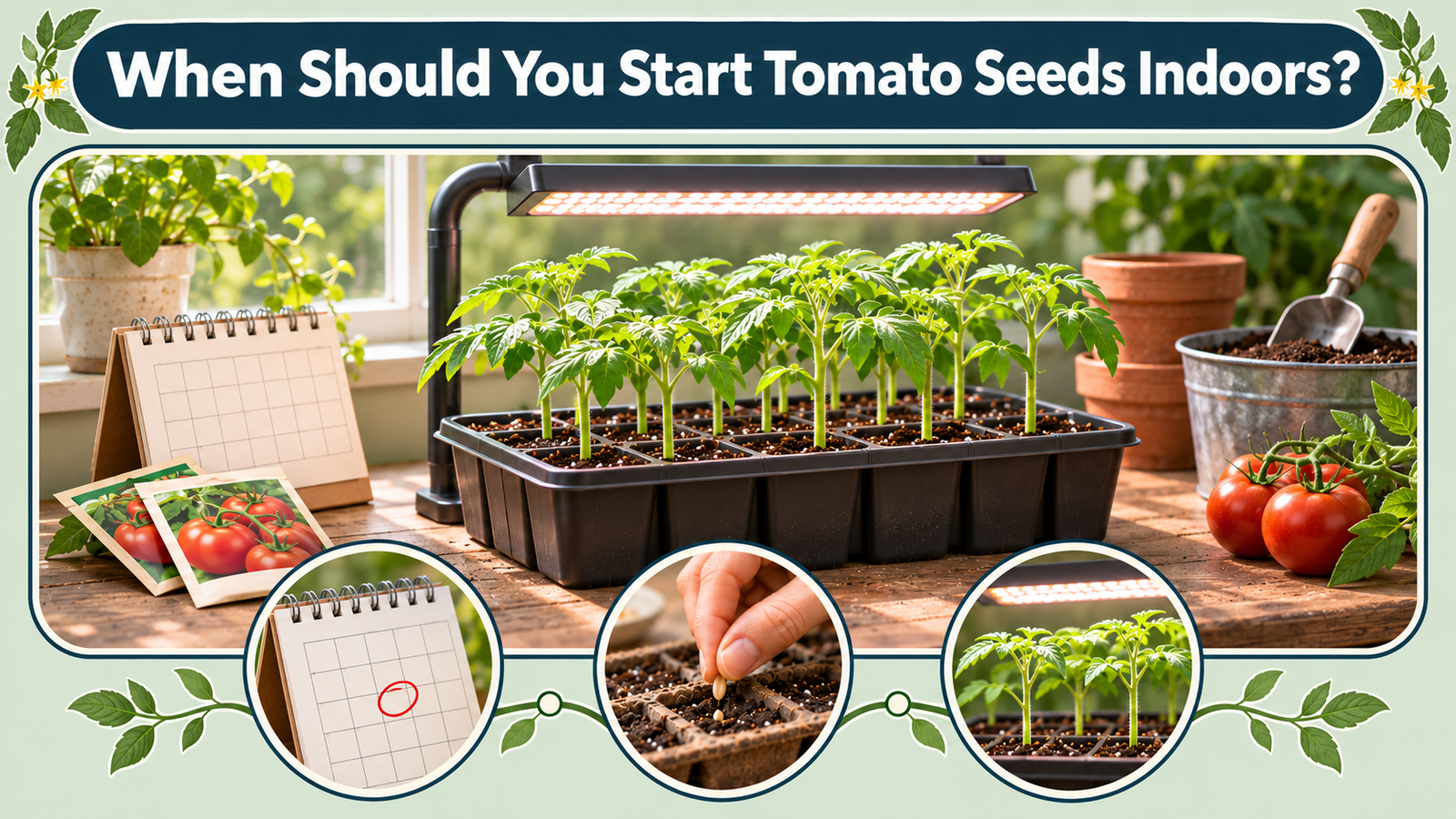
Starting tomato seeds indoors gives young plants time to grow before warm weather arrives. In most gardens, sow seeds about five to seven weeks before you expect to transplant them outside. The best date depends on your local frost timing, the tomato variety, and the conditions you can provide indoors. Rather than using the same calendar date every year, count backward from your expected planting date and check the seed packet. This helps prevent seedlings from becoming oversized while they wait for suitable outdoor weather.
The best time to start tomato seeds indoors
For many home gardens, a good starting point is to sow tomato seeds five or six weeks before outdoor planting. Some seed packets recommend a wider window, such as six to eight weeks, so use the variety’s instructions as your guide. Starting much earlier does not necessarily produce an earlier harvest; seedlings can become tall, crowded, and difficult to manage before the garden is ready.
Tomatoes are warm-season plants. They should go outside only after frost danger has passed and the soil and nighttime weather are warm enough. Since those conditions arrive at different times in different regions, your local planting date matters more than a general calendar date.
Count backward from your planting date
First, estimate when your garden will be warm enough for tomato transplants. Then count backward five to seven weeks to find an indoor sowing window. If you expect to plant outside on May 15, for example, you might sow seeds from late March to early April, depending on the packet’s recommendation.
This is a planning example, not a date for every location. A gardener in a warm region may plant much earlier, while someone in a colder area may need to wait. Use your local average last frost date as a reference, then check the forecast as outdoor planting approaches.
Allow time to harden off seedlings
Before planting, tomato seedlings need a gradual transition from indoor conditions to outdoor sun, wind, and temperature changes. This process is called hardening off. Set aside about a week before transplanting to introduce seedlings to the outdoors for short periods, increasing their exposure over several days.
Begin in a sheltered location and avoid leaving young plants in harsh midday sun or strong wind at first. Bring them inside if the temperature drops or conditions become severe. Hardening off helps seedlings adjust before they face a full day in the garden.
Tomato seed-starting schedule at a glance
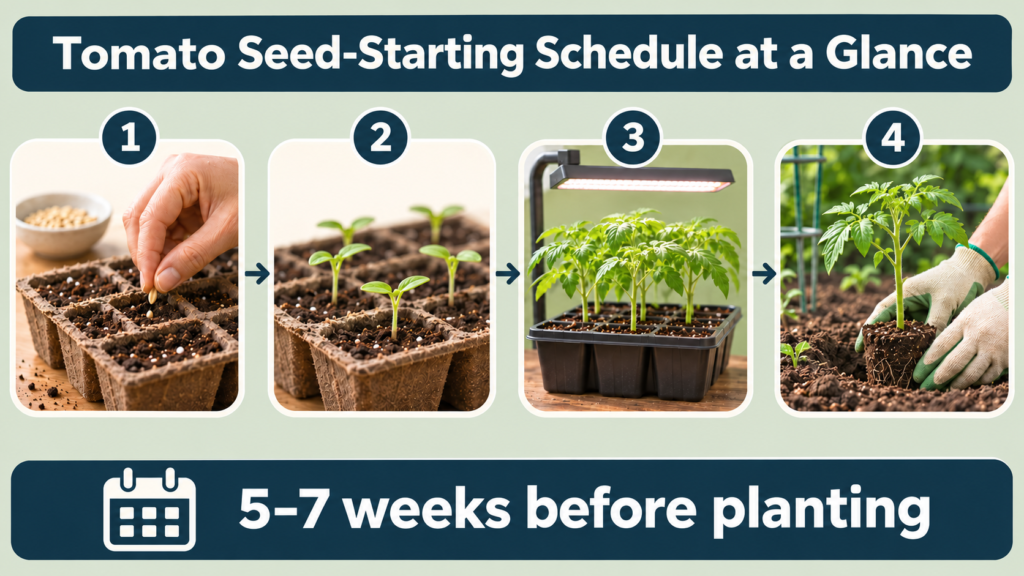
Use this table as a general guide, then adjust it to your climate and the variety you are growing. The outdoor planting date is the anchor: once you estimate that date, count backward to schedule sowing and hardening off.
| Step | Approximate timing | What to do |
|---|---|---|
| Sow tomato seeds indoors | 5–7 weeks before planting outside | Check the seed packet for the variety’s suggested timing |
| Seedlings emerge | Often within about 1–2 weeks | Move them into bright light after they sprout |
| Harden off seedlings | About 1 week before transplanting | Gradually increase outdoor exposure |
| Plant in the garden | After frost danger has passed and conditions are warm | Check the forecast and soil conditions before planting |
Germination time varies with seed freshness, moisture, and temperature. The packet may give a more specific estimate for your variety. If seedlings take longer than expected to appear, keep the growing mix appropriately moist and warm rather than adding extra water.
Calendar months are only examples
In some parts of the United States, tomato seeds are started indoors in March or early April. In colder areas, the schedule may shift later; in warmer areas, it may shift earlier. Even nearby gardens can have different planting conditions because of elevation, shade, wind exposure, and sheltered walls.
A date that works for one region should not be treated as a universal rule. If a gardening calendar gives a month, use it as a rough reference. Count backward from your own expected planting date for a more useful schedule.
How to choose the right planting date
Tomatoes are sensitive to cold, so do not move seedlings outdoors just because they have reached a certain age. Check both frost risk and growing conditions. A warm afternoon does not necessarily mean nights are warm enough for tender tomato plants.
The average last frost date helps estimate when frost risk usually declines, but it is not a guarantee. Keep an eye on local forecasts, especially if an unexpected cold spell is possible. If cold weather is forecast, delay planting or be ready to protect the plants.
Check the weather and soil
Tomatoes grow best when they can settle into warm conditions. Cold soil can slow their growth, and chilly nights can stress young plants. Wait until the danger of frost has passed and the ground has warmed before planting.
If your garden soil is slow to warm, waiting a little longer can be better than transplanting on the first mild day. Raised beds and sunny locations may warm sooner than shaded or damp ground, but local weather still matters.
Consider your tomato variety
Tomato varieties differ in how long they take to mature and how they grow. Some produce fruit earlier, while others need a longer season. Read the packet for the variety’s “days to maturity” and indoor-starting directions.
The maturity estimate can help you choose varieties suited to your growing season, but it is not a guarantee of the exact harvest date. Temperature, sunlight, and local conditions all affect plant growth. If your frost-free season is short, an earlier-maturing variety may be a practical choice.
Starting tomato seeds indoors step by step
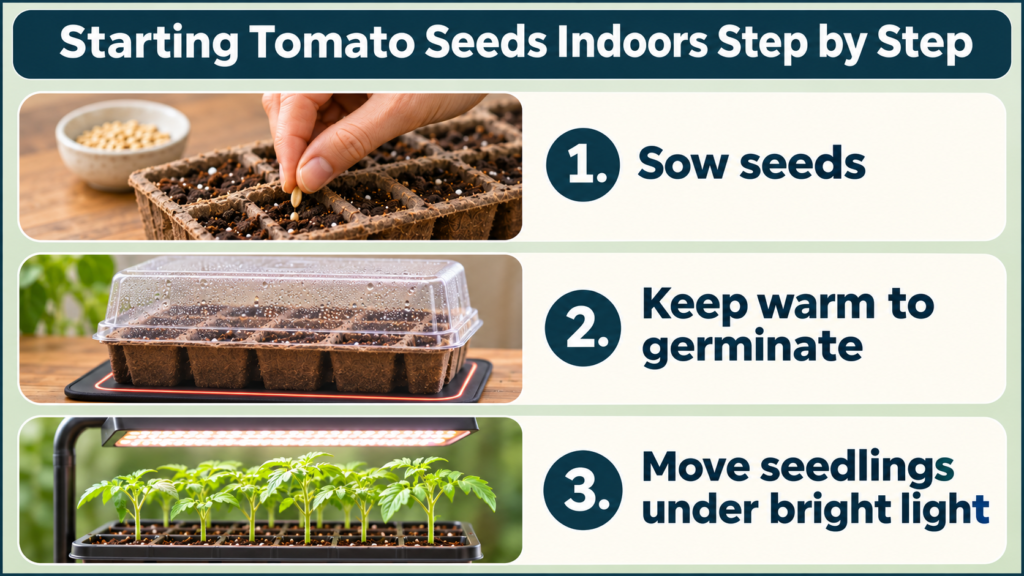
You do not need a greenhouse to grow tomato seedlings, but you do need clean containers, a suitable seed-starting mix, steady moisture, and enough light. Preparing these basics before sowing makes it easier to care for seedlings as they emerge and grow.
Sow the seeds
Fill clean seed trays, small pots, or cells with a seed-starting mix and moisten it. Sow seeds at the depth listed on the packet; tomato seeds are commonly planted shallowly. Label the containers with the variety and sowing date, especially if you are starting more than one type.
Keep the mix moist but not waterlogged while seeds germinate. A warm location can support germination, but avoid letting containers dry out. Once seedlings emerge, remove any cover used to hold in moisture and move the plants into bright light.
Give seedlings strong light
Tomato seedlings need bright light after they sprout. A sunny windowsill may work, but plants can stretch toward the window and grow thin if the light is weak or comes from one direction. An overhead grow light can provide more even coverage.
Keep the light close enough to illuminate seedlings without overheating them, and raise it as the plants grow. If using a window, rotate containers periodically so seedlings do not lean strongly toward one side. Sturdy seedlings are easier to handle when it is time to transplant.
Water and make room as plants grow
Check the growing mix regularly and water when it begins to dry. Avoid keeping the containers constantly soggy. Once seedlings develop their first true leaves, thin crowded plants or move seedlings into larger containers if they are running out of space.
A crowded tray can restrict airflow and make it harder to keep seedlings healthy. Give each plant enough room for its leaves to receive light. Handle seedlings gently when transplanting them into larger pots, holding them by a leaf rather than squeezing the stem.
Signs your tomato seedlings are ready to plant
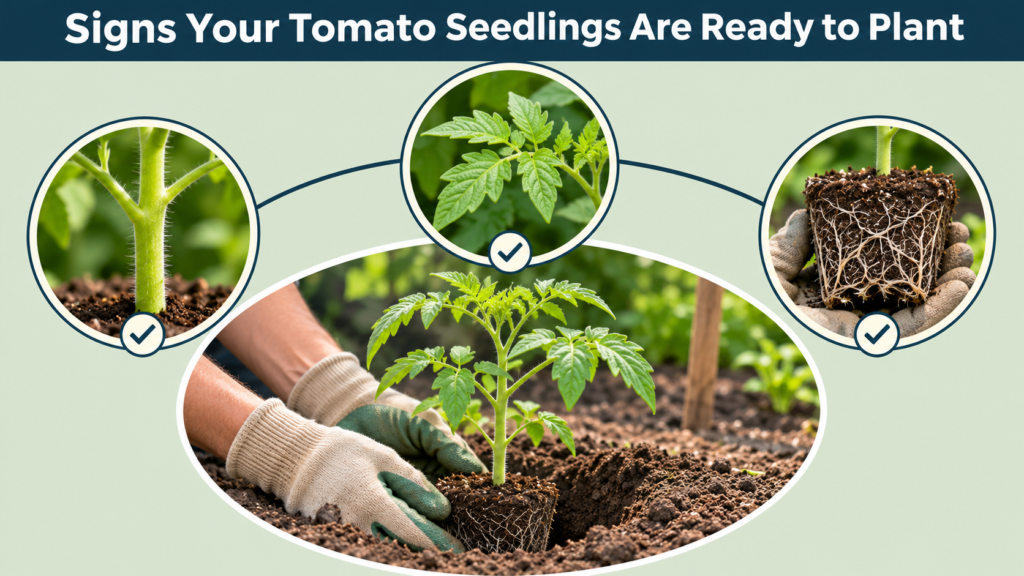
A seedling’s age alone does not tell you whether it is ready for the garden. Look for a healthy, sturdy plant that has grown enough to handle transplanting, then confirm that outdoor conditions are suitable. A plant that has been hardened off is better prepared for garden life than one moved straight from indoors.
Look for sturdy growth
Healthy seedlings generally have firm stems and green leaves. Very tall, thin stems can be a sign that plants need more light or have been kept indoors too long. If seedlings are crowded or roots are filling their containers, move them into larger pots while you wait for planting weather.
Do not rush a transplant simply because a plant looks large. A strong seedling still needs protection from frost and cold conditions. Keep caring for it indoors until the forecast and soil are more favorable.
Plant carefully
Choose a cloudy day or plant in the late afternoon to reduce stress from strong sun. Water seedlings before transplanting, and handle their roots gently. After planting, water the soil around them and provide support if the variety needs a cage or stake.
If the forecast calls for an unusually cold night, protect young plants or delay transplanting. A short wait is often easier than trying to recover seedlings damaged by cold.
What if you start tomato seeds too early or too late?
Starting too early can leave you with large seedlings that are difficult to keep indoors. They may become leggy in weak light or crowded in small pots. If you started early, provide strong light and move plants into larger containers as needed. Keep them inside until the weather is suitable, then harden them off.
Starting late does not mean you cannot grow tomatoes. You can sow seeds later if your growing season is long enough, or buy healthy transplants when the weather is ready. Choose a variety suited to the time remaining in your season and follow its packet instructions.
FAQs
How many weeks before the last frost should I start tomato seeds?
A common recommendation is about five to seven weeks before you plan to plant tomatoes outside. Some packets suggest six to eight weeks. Check the variety’s instructions and use your local frost timing to estimate when outdoor planting will be safe.
Can I start tomato seeds indoors in February?
You can, but February may be too early in many regions unless outdoor planting is also early or you can provide strong light and enough growing space. Early seedlings may outgrow their containers before the garden is ready. Count backward from your likely planting date.
When can I transplant tomato seedlings outdoors?
Transplant after frost danger has passed and the soil and nighttime weather are warm enough for tomatoes. Check your local forecast before planting. Harden seedlings off gradually for about a week so they can adjust to outdoor light, wind, and temperature changes.
Why are my tomato seedlings tall and thin?
Tall, thin seedlings often need more light. Move them to a brighter location or use an overhead grow light, keeping it close enough to provide strong illumination without overheating the plants. Rotate window-grown seedlings so they do not lean toward one side.
Is it better to start tomato seeds indoors or buy transplants?
Starting seeds indoors gives you more choice of varieties and lets you grow plants from seed. Buying transplants is convenient if you have limited light or space, or if you missed the recommended sowing window. Choose healthy plants and wait for suitable weather before planting them.