
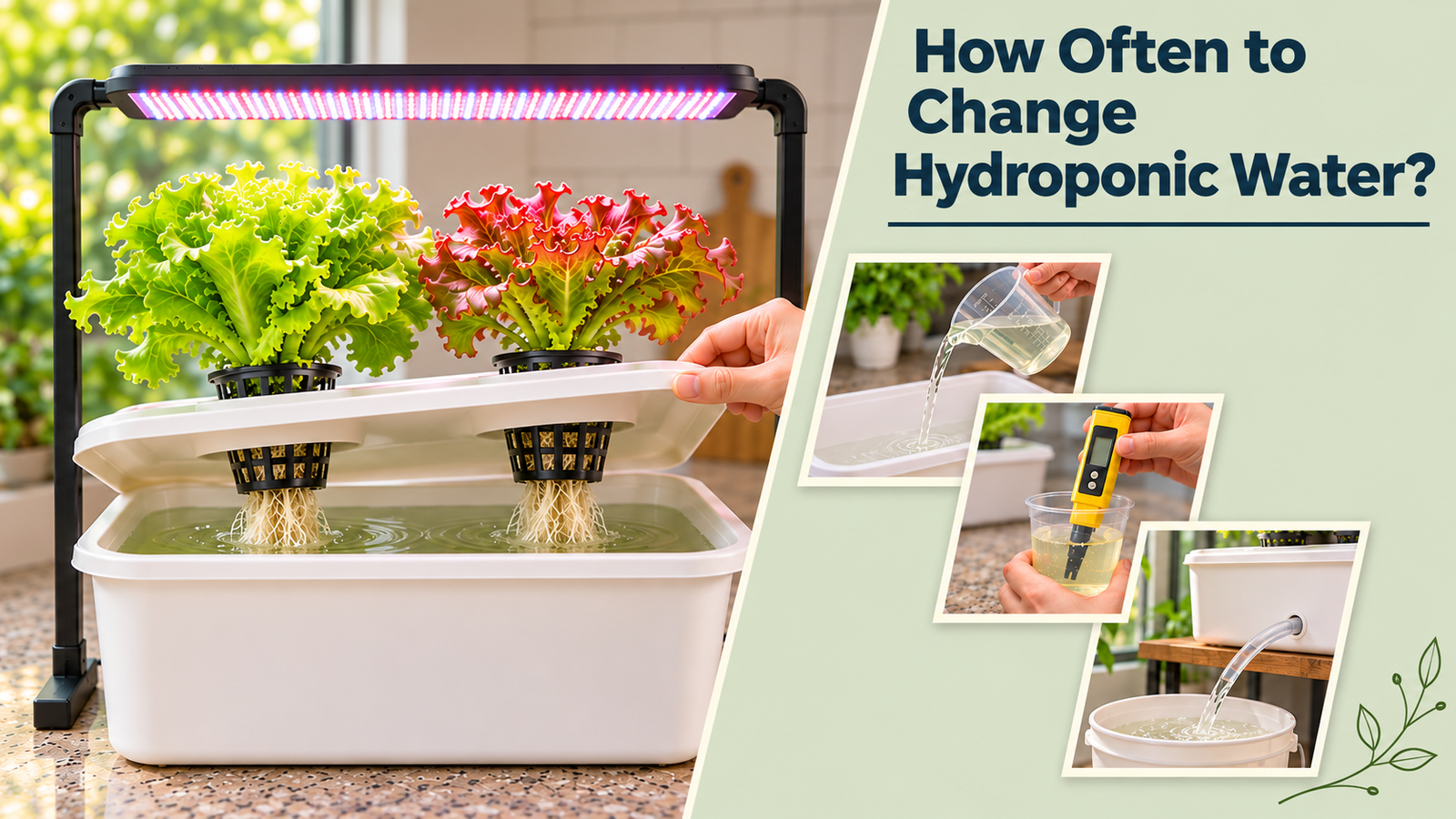
For a small active hydroponic system, start by replacing the nutrient solution every 7 to 14 days. Check the reservoir between changes and top it off as needed. The right interval depends on reservoir size, plant growth, and how steadily the solution holds its pH and nutrient concentration. A small bucket with a mature tomato plant can need attention sooner than a larger reservoir growing young lettuce. If you use the passive Kratky method, the routine is different because the falling water level creates an air gap the roots need.
How Often Should You Change Hydroponic Water?
Use 7 to 14 days as a starting schedule for small home systems with a pump or air stone. Start closer to seven days if the reservoir is small, the plants are growing fast, or the readings shift noticeably between checks. If the solution stays clear, the roots look healthy, and the readings are steady, try working toward the longer end of the range. Follow any reservoir change instructions supplied with your system or nutrient formula.
| Hydroponic system | Practical starting schedule | What to watch |
|---|---|---|
| Deep water culture (DWC) | Change every 7 to 14 days | Water level, aeration, and root condition |
| Nutrient film technique (NFT) | Change every 7 to 14 days in a small home system | Reservoir level and uninterrupted flow through the channels |
| Recirculating drip or ebb and flow | Change every 7 to 14 days initially | How quickly crops use water and how much the readings drift |
| Kratky | Start each crop with fresh solution and monitor through harvest | Keep the lower roots in solution and preserve the air gap |
Why the Schedule Changes as Plants Grow
Young seedlings use relatively little water. Once the canopy fills out, the same plants can draw down the reservoir much faster. A small reservoir also has less water to buffer changes in concentration, so a change that barely registers in a large tank may be noticeable in a countertop unit.
Check the water level more frequently as your plants mature. Keep a simple record of when you mixed the solution, how much water you added, and how the plants looked. After a few changes, you’ll have a better schedule for your own setup.
Should You Top Off the Reservoir or Replace It?
A top-off restores some of the volume lost to plant uptake and evaporation. A full change replaces the old solution with a freshly mixed batch. Use top-offs for routine water loss when the reservoir is otherwise in good shape. Make a full change when it’s due or when the condition of the solution gives you a reason to reset sooner.
When to Add Plain Water or Nutrient Solution
If the water level has dropped and electrical conductivity, or EC, has risen above your crop’s target range, add plain source water gradually. Circulate or stir the solution and retest. A rising EC as the level falls generally indicates that the remaining solution is getting more concentrated.
If both the water level and EC have fallen, top off with a diluted, premixed nutrient solution as needed to bring the reservoir back into range. Use your nutrient label and crop targets as a guide. EC measures the combined conductivity of dissolved ions, so it can help you judge overall concentration while leaving the balance of individual nutrients unknown.
When a Full Change Makes More Sense
A fresh batch is useful when you’ve topped off repeatedly and the reservoir is already approaching its next change. Plants take up different nutrients at different rates, which means a familiar EC reading can persist even as the mix shifts. If you have no clear record of what has gone into the tank, a full change gives you a known starting point.
Signs You Should Change Hydroponic Water Early
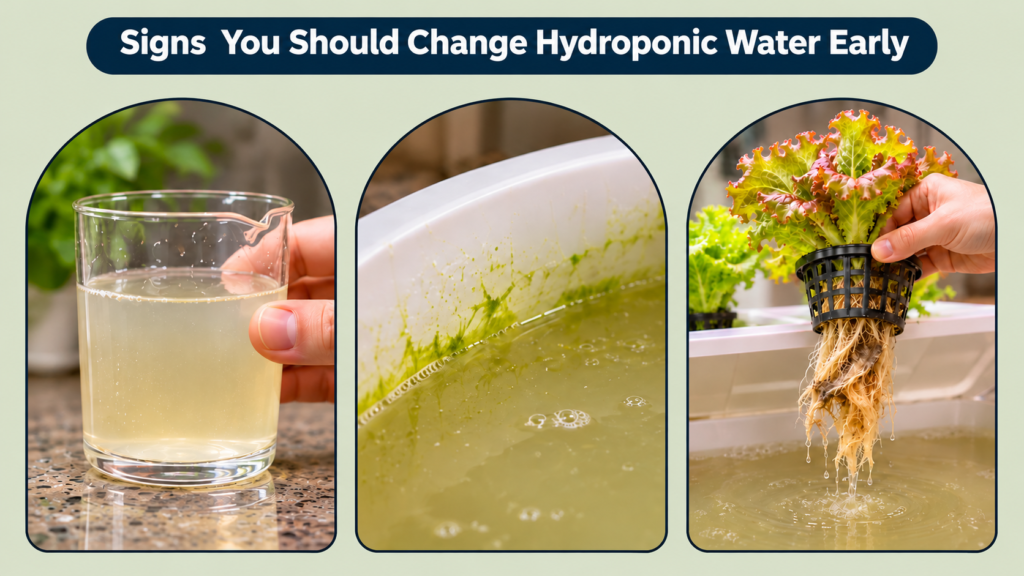
Check the reservoir sooner if something changes in the water, roots, or plant growth. Take a look at pump operation and water level first, since a circulation problem can stress plants quickly. Use the following signs to decide whether to clean and refill the reservoir or investigate another part of the system.
Cloudy Water, Bad Odor, or Slime
Persistent cloudiness accompanied by a sour smell or a slimy coating is a reason to inspect the reservoir and roots. Clear out loose plant debris, clean the affected components, and mix fresh nutrients. Also check for light leaks around the lid, tubing, and unused openings, especially if you see green algae.
Some nutrient formulas tint the water or stain roots. Look for changes in texture and smell alongside color. Firm roots that have taken on the color of the nutrient mix are less concerning than soft, slimy roots accompanied by wilting.
pH or EC Keeps Drifting
When readings repeatedly move out of range, check that your meters are calibrated and test the water you use to mix nutrients. Also review your mixing rate and how much you’ve added since the last change. Source water with high alkalinity can make pH harder to manage.
If the reservoir has had several adjustments and still drifts quickly, mix a fresh batch and record the starting pH and EC. Compare those readings with the next checks. That gives you a clearer picture of whether the problem starts with the new mix or develops while the system is running.
How to Change Hydroponic Water
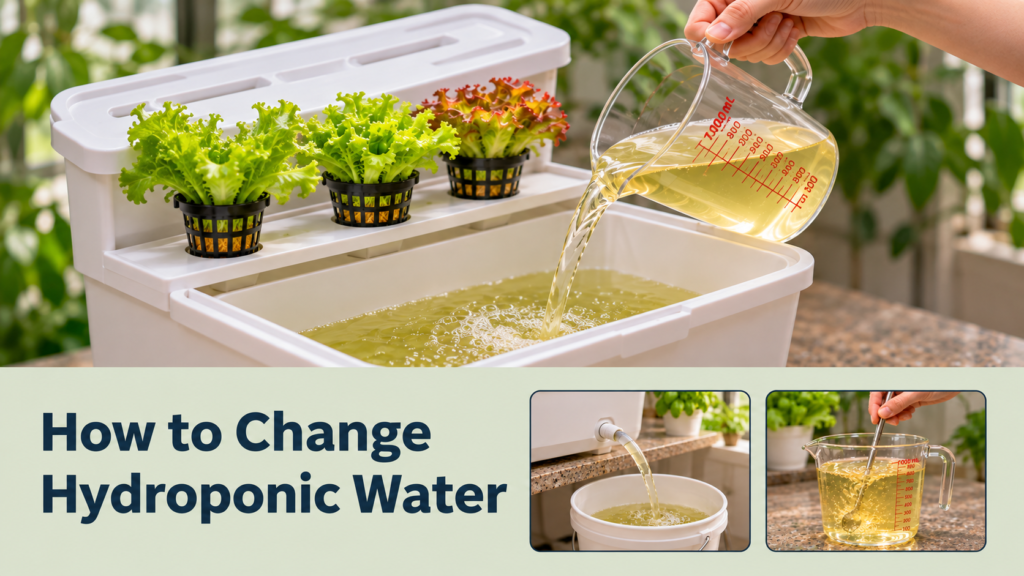
Set out a clean container for mixing the new solution and gather the tools you need before draining the system. In a recirculating setup, pause the pump before it can run dry. If you have to lift out the plants, support the lids or net pots and keep exposed roots from drying during the change.
1. Drain and Clean the Reservoir
Remove the old solution and check the bottom and sides for debris or slippery buildup. Wipe and rinse the reservoir as needed, and inspect any accessible filters, fittings, and tubing. If you find substantial buildup, clean the affected parts according to the manufacturer’s directions and rinse them thoroughly before reconnecting them.
2. Mix a Fresh Batch
Measure the water volume so you can dose the nutrients accurately. If your formula comes in several parts, add them to the water separately and mix after each addition according to the label. Once the solution is blended, check its EC and pH against the targets for your crop and nutrient program. After any adjustment, mix and test again.
3. Refill and Restart the System
Bring an active system back to its normal operating level. Restart the pump or air supply and confirm that solution is reaching the plants or that air stones are bubbling. Record the date and starting readings. If you maintain several reservoirs, mark each one so you can track its own change schedule.
How Often Should You Change Kratky Water?

A Kratky setup uses the space between the lid and the nutrient solution to supply oxygen to the upper roots. For a short crop such as loose-leaf lettuce, you can often start with enough solution to carry the plant through harvest. Check the level as the crop grows and mix a fresh batch for the next planting.
How to Refill a Kratky Reservoir
If the level drops so far that the lower roots are about to lose contact with the solution, add a modest amount while preserving the established air gap. Refilling to the original planting level can flood the upper roots that developed in air. If you regularly run low long before harvest, use a larger reservoir or grow fewer plants per container on the next cycle.
Frequently Asked Questions
Can I change hydroponic water every week?
Yes. A weekly change is a practical starting schedule for a small active system, particularly when the reservoir level or readings change quickly. If you consistently see stable readings and healthy roots at the end of the week, you can test a longer interval while monitoring the reservoir.
Do I need to change the water every time the level drops?
A normal drop usually calls for a top-off. Check the EC first to decide what to add. If the reservoir is overdue for a change, smells bad, or shows persistent cloudiness or slime, inspect it and consider a full replacement.
Can I add nutrients directly to a reservoir that already has plants?
For a small home system, dilute the nutrients in a separate container before adding them. This helps distribute the fertilizer evenly and avoids exposing roots to a concentrated dose. Add it gradually, allow it to mix, and check the EC afterward.
How often should I check pH and EC?
Check both after mixing a fresh batch and again after the solution has circulated. For a small system you’re still learning to manage, check every day or two at first. Check again after a substantial top-off or if plants begin wilting or growing poorly.
Why does my reservoir level fall faster in warm weather?
Plants may use more water as temperatures rise, and more water may evaporate from exposed surfaces. If the level is falling quickly, check it more often and look for leaks around the reservoir and fittings. Compare EC readings before and after topping off to see how the solution is changing.