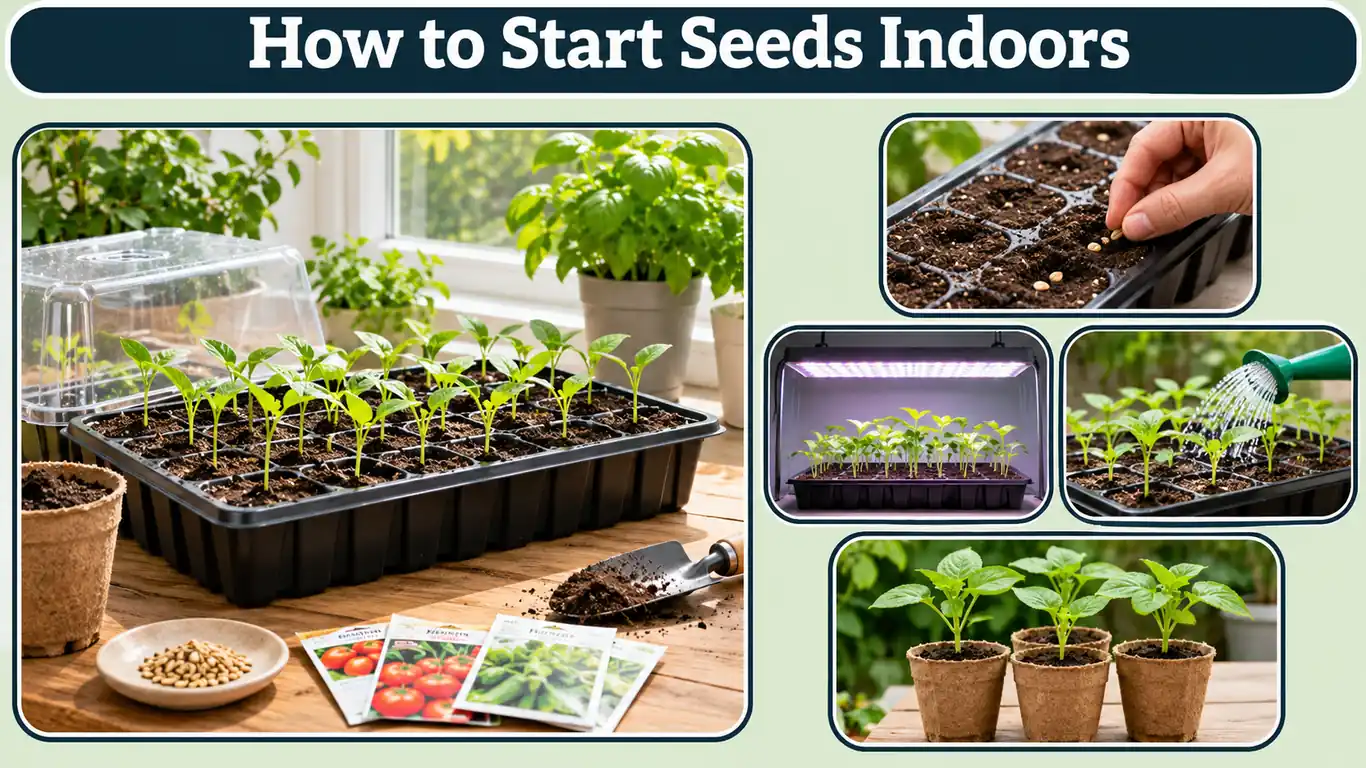
Starting seeds indoors is an easy and rewarding way to grow healthy plants before the outdoor growing season begins. Whether you want fresh vegetables, colorful flowers, or aromatic herbs, learning how to start seeds indoors gives you greater control over germination, temperature, lighting, and early plant development. Indoor seed starting can also save money and provide access to a wider variety of plants. With the right containers, quality seed-starting mix, consistent moisture, and proper lighting, beginners can successfully grow strong seedlings ready for transplanting into gardens or larger pots.
Why Should You Start Seeds Indoors?
Starting seeds indoors offers several advantages over planting directly in outdoor soil. It allows gardeners to begin growing before outdoor temperatures become suitable for certain crops. Indoor conditions also make it easier to monitor moisture, temperature, and seedling health. By providing a protected environment during early development, you can encourage more consistent germination and grow healthier plants for future transplanting.
Benefits of Starting Seeds Indoors
- Longer Growing Season: Starting seeds early gives plants additional time to develop before outdoor transplanting.
- Better Germination Control: Indoor growing makes it easier to manage temperature, moisture, and light.
- Cost Savings: Growing plants from seeds is generally cheaper than purchasing multiple established seedlings.
- More Plant Varieties: Seed catalogs offer a wider selection of vegetables, herbs, and flowers.
- Protection From Harsh Weather: Young seedlings remain protected from heavy rain, strong winds, and unexpected frost.
- Healthier Early Development: Properly managed indoor conditions encourage strong roots and compact growth.
When Should You Start Seeds Indoors?
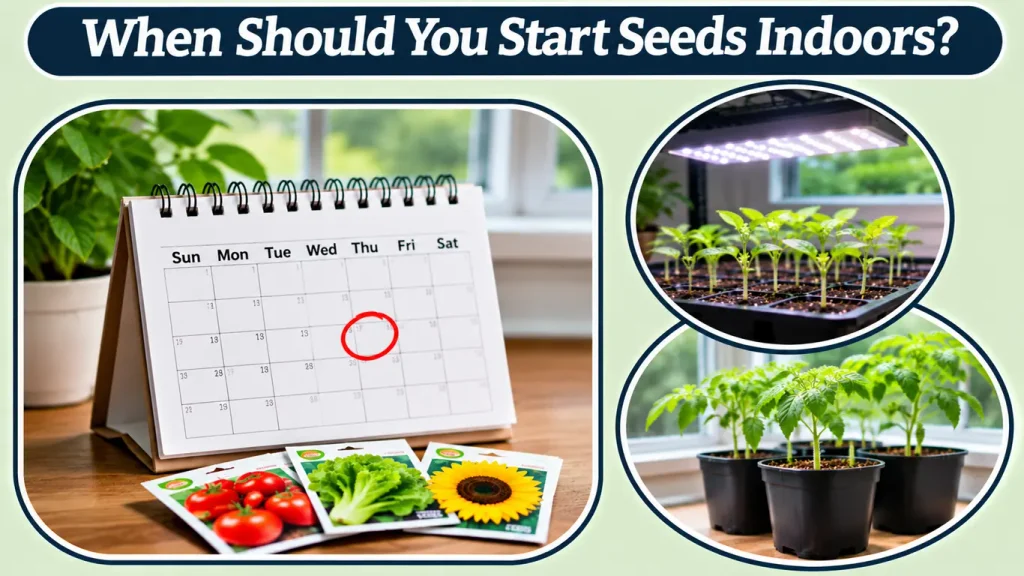
Choosing the correct planting time is essential for successful indoor seed starting. Starting too early can produce oversized seedlings that become difficult to transplant, while starting too late may delay flowering or harvesting. Most plants have specific growing requirements and recommended seed-starting schedules. Understanding these differences helps gardeners coordinate indoor growth with suitable outdoor conditions and avoid unnecessary plant stress.
Best Time to Start Different Seeds Indoors
Many vegetables and flowers are started approximately 4–10 weeks before the expected last spring frost. However, the exact timing varies depending on the plant species and local climate.
| Plant | Approximate Start Time Before Last Frost |
|---|---|
| Tomatoes | 6–8 weeks |
| Peppers | 8–10 weeks |
| Eggplants | 8–10 weeks |
| Broccoli | 4–6 weeks |
| Cabbage | 4–6 weeks |
| Lettuce | 4–6 weeks |
| Basil | 6–8 weeks |
| Marigolds | 4–6 weeks |
These periods are general guidelines. Always check the seed packet because varieties differ in growth rates, germination requirements, and transplanting recommendations.
Understanding Your Local Growing Season
Gardeners in colder regions should calculate indoor planting dates using their area’s average last frost date. In warm or tropical climates, planting schedules may depend more on rainfall, seasonal heat, and suitable outdoor growing conditions.
What Supplies Do You Need to Start Seeds Indoors?
Successful indoor seed starting does not require expensive equipment, but a few essential supplies make the process easier. Good containers, a suitable growing medium, and reliable lighting provide the foundation for healthy seedlings. Temperature and moisture management are equally important during germination. Preparing everything before planting helps prevent common problems and allows seeds to develop under stable conditions from the beginning.
Essential Indoor Seed-Starting Supplies
- Quality Seeds: Choose fresh seeds from reliable suppliers and check their recommended planting conditions.
- Seed-Starting Trays: Use cell trays, small nursery pots, or reusable containers with drainage holes.
- Seed-Starting Mix: Select a lightweight, well-draining growing medium suitable for germination.
- Grow Lights: Provide sufficient light when natural sunlight is limited.
- Spray Bottle or Watering Can: Use gentle watering equipment to avoid disturbing newly planted seeds.
- Humidity Dome: A clear cover can help maintain moisture during germination.
- Plant Labels: Identify varieties and record planting dates to monitor growth.
- Waterproof Tray: Place containers on a tray to collect excess water and protect indoor surfaces.
How to Start Seeds Indoors Step by Step
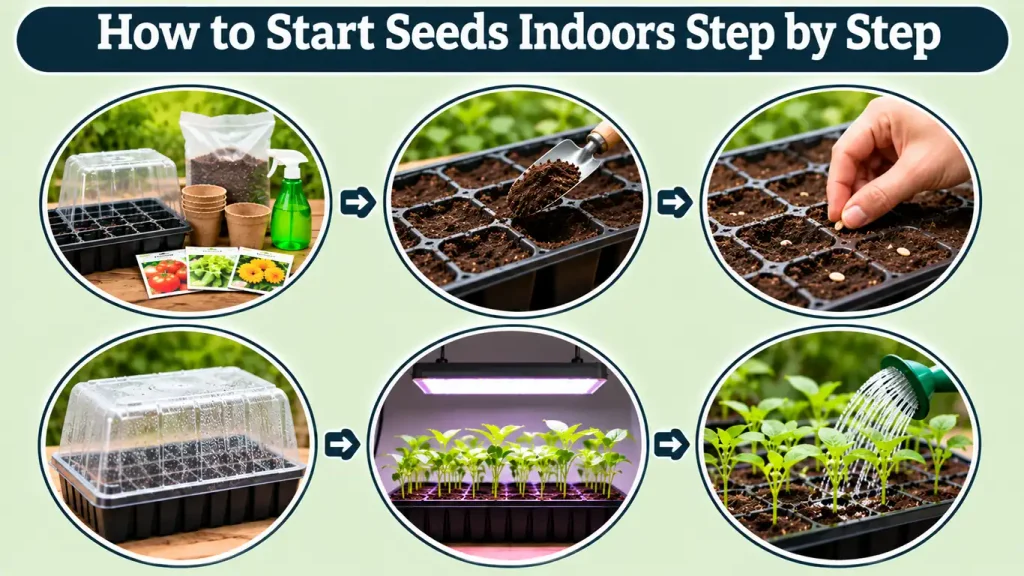
Learning how to start seeds indoors involves several simple steps that create favorable conditions for germination and early plant growth. Seeds require appropriate moisture, oxygen, and temperature, while emerging seedlings need sufficient light. Following a consistent planting process helps reduce problems such as poor germination, weak stems, and root damage. The steps below provide a practical starting method for beginners.
Step 1: Choose the Right Seeds
Select seeds suitable for indoor starting, such as tomatoes, peppers, basil, lettuce, or many annual flowers. Check the seed packet for germination temperatures, planting depth, and recommended sowing dates.
Step 2: Prepare Seed-Starting Containers
Fill clean containers with a lightly moistened seed-starting mix, leaving a small space below the rim. Gently level the surface without compacting the growing medium excessively.
Step 3: Plant Seeds at the Correct Depth
Follow the seed packet’s planting instructions because different seeds require different depths. As a general guideline, many seeds are planted approximately two to three times as deep as their diameter, while certain tiny seeds require light to germinate.
Step 4: Water the Seeds Gently
Moisten the growing medium using a fine spray or careful bottom watering. Keep it evenly moist, but avoid saturated conditions that reduce oxygen availability around developing roots.
Step 5: Maintain Suitable Germination Temperatures
Most commonly grown vegetable seeds germinate well in warm conditions, although preferred temperatures vary by species. A typical starting range is 65–75°F (18–24°C), while peppers and some warm-season crops benefit from warmer soil.
Step 6: Provide Adequate Light
After seedlings emerge, position them beneath suitable grow lights for approximately 14–16 hours daily. Adjust the distance according to the light manufacturer’s instructions and monitor plants for stretching or heat stress.
Step 7: Monitor Seedling Growth
Check seedlings regularly for moisture problems, discoloration, and weak stems. Once true leaves develop, begin suitable feeding if the growing medium contains little or no fertilizer.
How to Care for Indoor Seedlings After Germination
Proper seedling care becomes increasingly important once young plants emerge from the growing medium. At this stage, seedlings need adequate light, consistent moisture, appropriate temperatures, and gentle air circulation. Neglecting these requirements can cause weak stems, poor root development, or fungal problems. Establishing a simple daily routine helps seedlings develop stronger roots and healthier leaves before moving into larger containers or outdoor gardens.
Provide Consistent Light
Place seedlings under grow lights or in a location with reliable bright light. Insufficient lighting can cause seedlings to stretch, creating thin and weak stems.
Most seedlings benefit from a daily dark period as well as sufficient light. A timer makes it easier to maintain a consistent lighting schedule.
Water Without Overwatering
Check the growing medium before watering rather than following a rigid daily schedule. Water when the surface begins to dry slightly, while keeping the root zone from becoming completely dry.
Bottom watering can encourage even moisture distribution without disturbing delicate seedlings. Empty standing water afterward to prevent prolonged saturation.
Improve Air Circulation
Gentle airflow helps strengthen stems and reduces excessively humid conditions. A small fan may be helpful, but avoid placing seedlings directly in strong air currents.
Remove humidity domes once most seeds have germinated. Keeping covers in place too long can encourage fungal growth and create unnecessarily humid conditions.
Common Indoor Seed-Starting Problems and Solutions
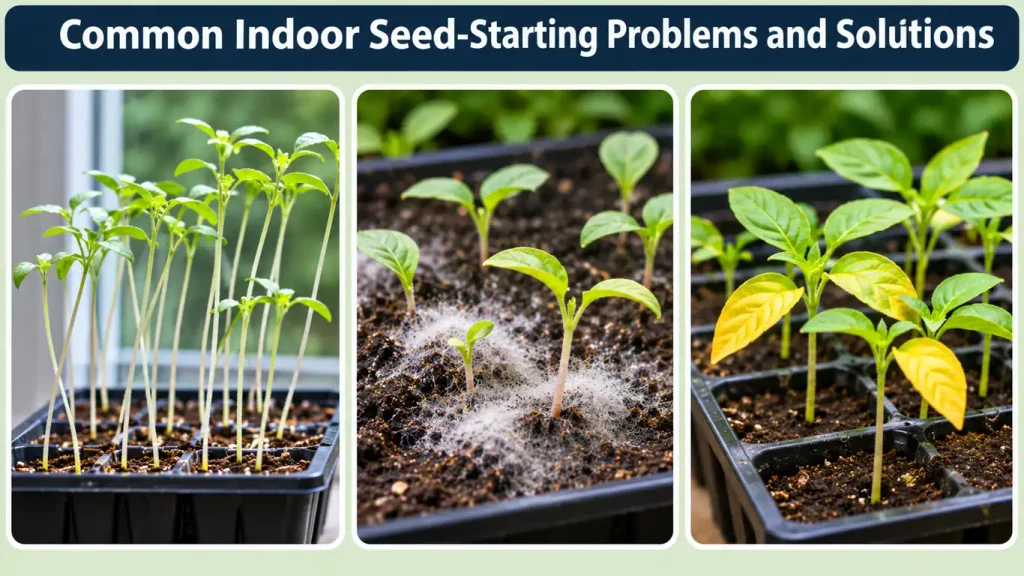
Although starting seeds indoors is relatively simple, several problems can affect germination and seedling development. Excessive moisture, inadequate lighting, incorrect temperatures, and poor growing media are among the most common causes. Identifying symptoms early allows gardeners to adjust conditions before serious damage occurs. Understanding these basic problems can improve germination success and help young plants become healthier and stronger.
Why Are My Seeds Not Germinating?
Poor germination may result from old seeds, incorrect planting depth, inadequate moisture, or unsuitable temperatures. Check the seed packet and ensure the growing medium remains consistently moist without becoming waterlogged.
Why Are My Seedlings Tall and Thin?
Tall, weak seedlings usually indicate insufficient light or excessive warmth relative to available light. Increase appropriate light exposure and adjust growing conditions to encourage compact, sturdy development.
Why Are My Seedlings Falling Over?
Seedlings collapsing near the soil surface may be affected by damping-off, a disease associated with certain soilborne pathogens. Use clean containers, fresh seed-starting mix, good airflow, and careful watering to reduce the risk.
When and How to Transplant Indoor Seedlings
Transplanting indoor seedlings at the appropriate stage helps them continue developing without unnecessary stress. Plants should have sufficiently established roots and healthy leaves before being moved into larger containers or outdoor soil. However, seedlings grown indoors are not automatically prepared for outdoor sunlight, wind, or temperature changes. Gradual exposure to outdoor conditions helps prevent transplant shock and improves establishment.
When Are Seedlings Ready for Transplanting?
Many seedlings become suitable for transplanting after developing several true leaves and an established root system. However, plant-specific recommendations are more reliable than using leaf number alone.
Inspect the roots and overall plant condition before transplanting. Avoid allowing seedlings to become severely root-bound or excessively tall.
How to Harden Off Seedlings
Hardening off involves gradually introducing indoor seedlings to outdoor conditions over approximately 7–14 days. Begin with short periods in a protected, shaded location before increasing sunlight and outdoor exposure.
Protect seedlings from strong winds, heavy rain, and temperatures below their tolerance range. Move them outdoors permanently only when conditions are suitable for the crop.
FAQs
1. What Is the Easiest Seed to Start Indoors?
Tomatoes, lettuce, basil, and marigolds are generally good choices for beginners. These plants can germinate successfully under suitable indoor conditions. Choosing fresh seeds, providing adequate light, and maintaining consistent moisture will improve the chances of healthy seedling growth.
2. Can You Start Seeds Indoors Without Grow Lights?
Yes, you can start seeds indoors without grow lights if a location provides sufficient natural light. However, window light may be inadequate, especially during winter. Supplemental lighting often produces stronger, more compact seedlings and improves overall growing consistency.
3. How Often Should I Water Seeds Started Indoors?
Water seedlings whenever the growing medium begins drying near the surface. The frequency depends on temperature, humidity, container size, and plant development. Keep the mix evenly moist during germination, but avoid overwatering because saturated conditions can damage roots.
4. How Long Does It Take for Seeds to Germinate Indoors?
Many vegetable and flower seeds germinate within 5–14 days under suitable conditions. However, some species sprout faster, while others require several weeks. Germination speed depends on seed quality, moisture, temperature, and the specific requirements of each plant.
5. Do Indoor Seedlings Need Fertilizer?
Seedlings generally do not need immediate fertilization because seeds contain stored nutrients for early growth. After true leaves develop, plants growing in nutrient-poor seed-starting mix may benefit from diluted fertilizer. Avoid excessive feeding, which can damage delicate roots.