
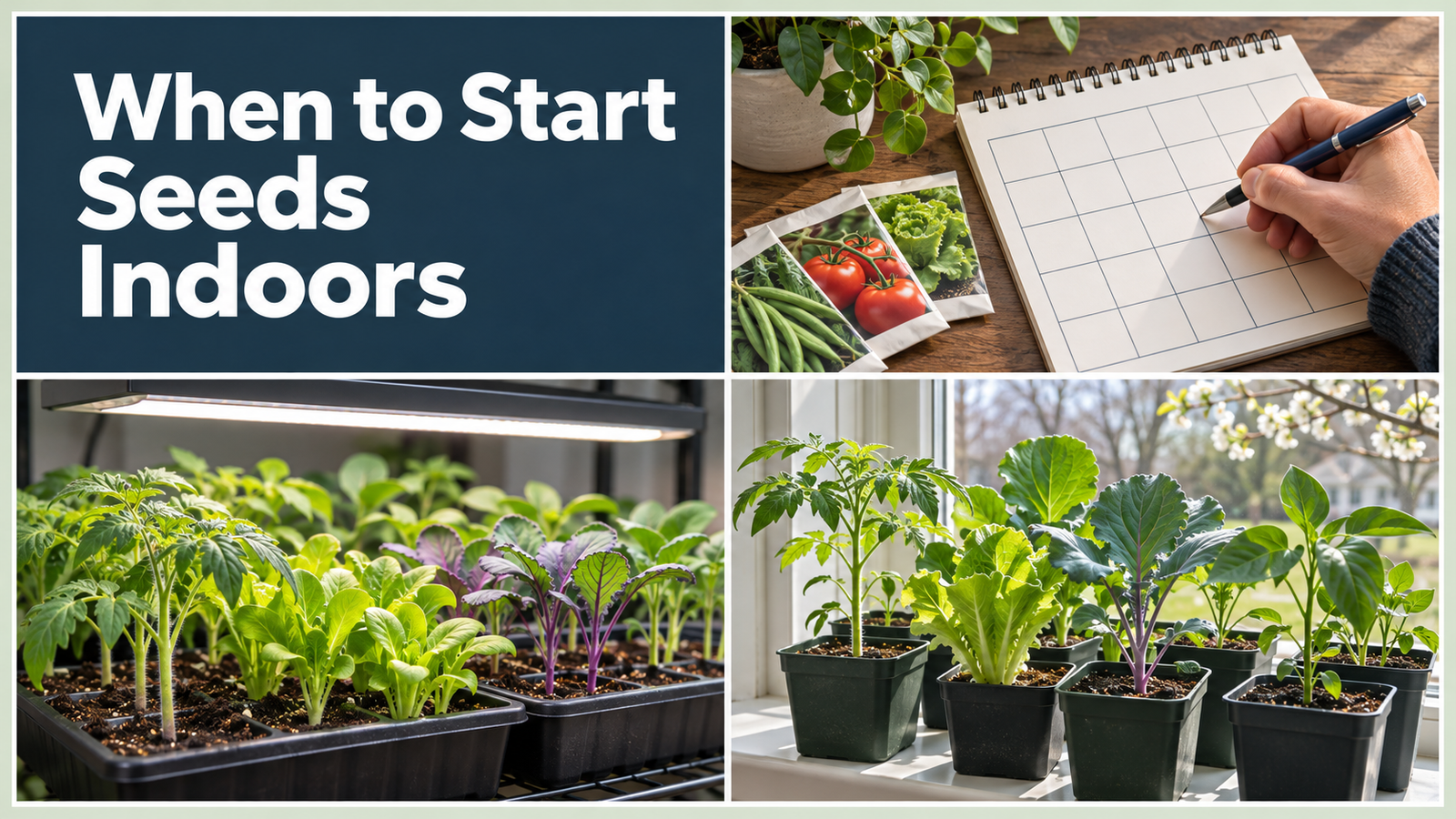
Use this seed-starting chart to estimate when to sow popular vegetables indoors. The right date depends on your area’s average last spring frost date and how long each crop needs to grow before transplanting. Count backward from the date you expect to move seedlings outdoors, then check the seed packet for variety-specific guidance. These dates are starting points: local weather, growing space, and light can affect how quickly seedlings develop.
Seed-Starting Chart by Crop
The chart gives approximate indoor-starting windows for common vegetables. Count the weeks backward from your expected outdoor transplant date. For tender warm-season crops, that date is usually near or after the last frost. Some vegetables are better sown directly in the garden, so the chart notes when indoor starting is optional.
| Crop | Start indoors before transplanting | General outdoor timing |
|---|---|---|
| Broccoli | 4–6 weeks | A few weeks before last frost, depending on local conditions |
| Brussels sprouts | 4–6 weeks | A few weeks before last frost |
| Cabbage | 4–6 weeks | A few weeks before last frost |
| Cauliflower | 4–6 weeks | A few weeks before last frost |
| Celery | 10–12 weeks | After seedlings are established and weather allows |
| Eggplant | 6–8 weeks | After frost danger, once conditions are warm |
| Kale | 4–6 weeks | Before or around last frost |
| Lettuce | 4–6 weeks | In cool weather; direct sowing is also common |
| Onion | 8–10 weeks | Transplant when seedlings are sturdy |
| Pepper | 8–10 weeks | After frost danger, in warm soil |
| Tomato | 5–8 weeks | After frost danger |
| Basil | 4–6 weeks | After frost danger and in warm conditions |
| Cucumber | 3–4 weeks | After frost danger |
| Melon | 3–4 weeks | After frost danger, in warm soil |
| Pumpkin | 2–4 weeks | After frost danger |
| Summer or winter squash | 2–4 weeks | After frost danger |
These are general ranges, not fixed deadlines. Recommendations vary by location and variety, so follow the seed packet when it gives a different schedule. Cool-season crops such as broccoli, cabbage, and cauliflower can be started several weeks before transplanting. Heat-loving crops such as eggplant, peppers, and tomatoes need warm conditions after they move outdoors.
Crops That Usually Do Better Direct-Sown
Some plants grow quickly or dislike having their roots disturbed, so it’s often easier to sow them directly in the garden. These include carrots, radishes, turnips, peas, beans, corn, and many root crops. Follow the seed packet for each crop’s outdoor timing. Cool-season vegetables such as peas and radishes can often be planted before the last frost, while beans and corn generally need warmer soil.
How to Calculate Your Indoor Seed-Starting Date
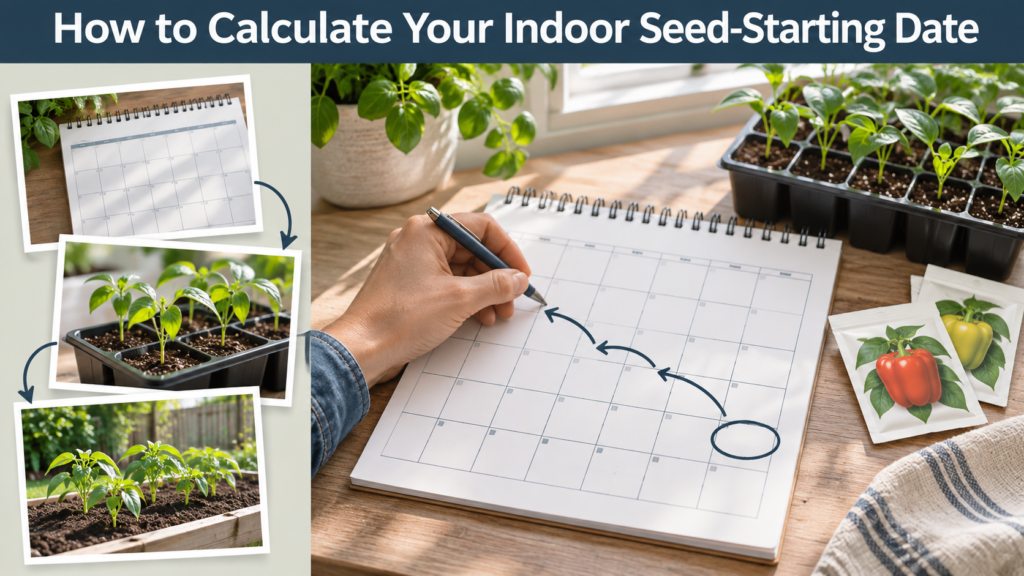
To find a date for your garden, first look up the average last spring frost for your area. Then decide when each crop can safely go outdoors. For tender plants, that is usually after frost danger has passed; some cool-season crops can be planted earlier. Count back the number of weeks listed in the chart from your planned transplant date.
Example: Counting Back From a Frost Date
If your average last frost is May 15 and you plan to transplant tomatoes about a week later, your target outdoor date is around May 22. For a crop that needs six weeks indoors, count back six weeks from May 22 and sow around early April.
The calculation is a guide, not a promise that the weather will cooperate. Last frost dates are averages, and actual conditions can vary from year to year. Check the forecast as planting time approaches and be ready to protect or delay tender seedlings if a cold spell is expected.
| Average last frost | 12 weeks before | 8 weeks before | 4 weeks before |
|---|---|---|---|
| April 15 | January 21 | February 18 | March 18 |
| May 1 | February 6 | March 6 | April 3 |
| May 15 | February 20 | March 20 | April 17 |
| June 1 | March 9 | April 6 | May 4 |
Use the column that matches the crop’s indoor-starting window. For example, a crop listed at eight weeks would be started around the date in that column. These calendar examples are approximate; use your own local frost date and seed packet rather than treating the sample dates as universal.
Adjust the Schedule for Your Region
A seed-starting calendar made for one region may not fit another. Gardeners in colder areas may have later spring frost dates and shorter growing seasons. Gardeners in warmer regions may be able to transplant earlier, but heat and seasonal rainfall can affect planting plans.
If you garden in a place with no regular spring frost, use the expected outdoor planting season instead. Choose a period when temperatures and soil are suitable for the crop, then count backward from that date. A local planting calendar can help you find dates that fit your region.
Why Starting Seeds at the Right Time Matters
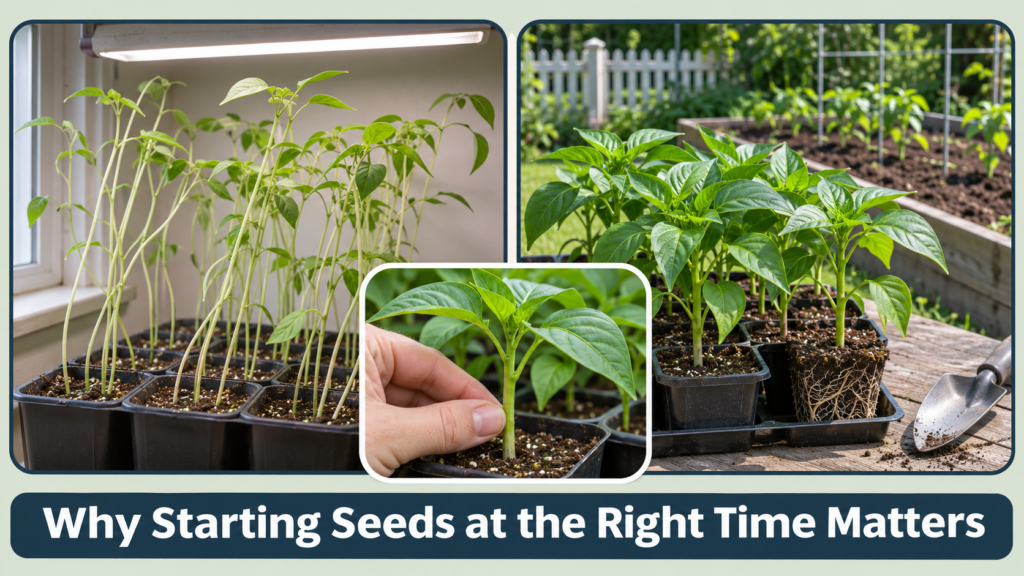
Starting seeds indoors gives some crops a head start, but seedlings still need to be the right size when they move outside. Seeds started too early can outgrow their containers, become crowded, or stretch toward weak light. Seeds started too late may not have enough time to mature before the weather turns hot or cold.
Avoid Starting Seeds Too Early
A long indoor stay can make seedlings harder to manage. Roots may become crowded, plants may become tall and weak, and you may need to pot them up before the garden is ready. If you have limited indoor light or space, use the shorter end of a recommended range rather than starting every crop as early as possible.
Allow Time for Germination and Growth
The chart measures weeks before transplanting, but seeds do not all sprout at the same speed. Some germinate in a few days; others need longer or warmer conditions. Check the seed packet for expected germination time and sowing depth. Keep seed-starting mix evenly moist, provide suitable warmth, and give newly emerged seedlings strong light.
How to Start Seeds Indoors Successfully
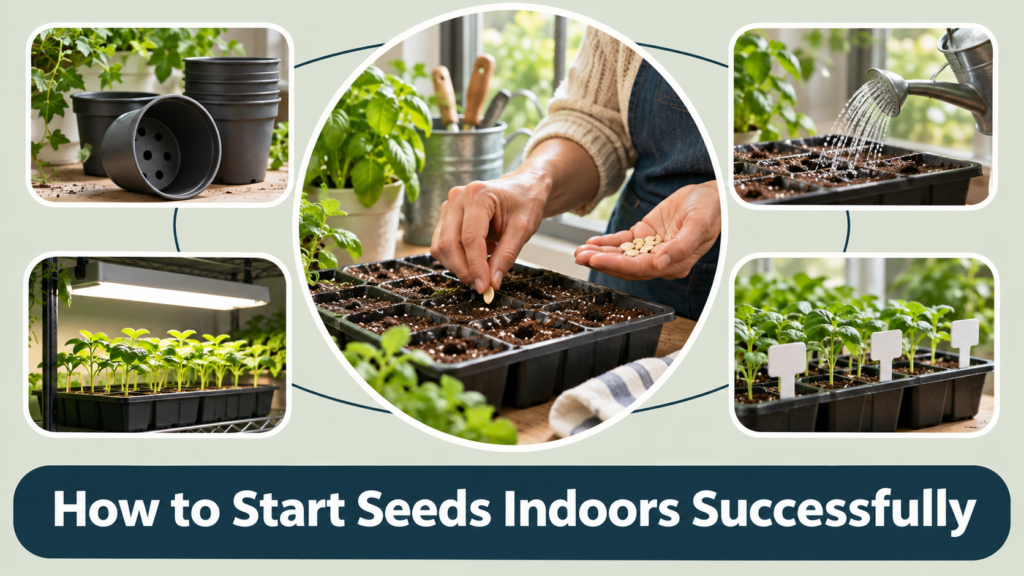
Good timing is only part of growing healthy transplants. Use clean containers with drainage holes and a seed-starting mix rather than dense garden soil. Label each pot or tray with the crop and variety. This makes it easier to track sowing dates and distinguish seedlings that look alike.
Give Seedlings Enough Light
After seeds sprout, place them in a bright location or under a grow light. If light is too weak, seedlings may become tall, thin, and floppy. Keep the light close enough to support compact growth, following the light’s instructions and adjusting it as plants grow. Rotate containers if seedlings lean toward a window.
Water Carefully and Thin Crowded Seedlings
Keep the growing mix damp but not saturated. Too much water can encourage disease and reduce airflow around young roots. If several seedlings emerge in one cell, keep the strongest one and snip the others at soil level rather than pulling them out and disturbing its roots.
Harden Off Before Transplanting
Seedlings raised indoors need time to adjust to outdoor sunlight, wind, and temperature changes. Gradually place them outside in a sheltered spot, increasing their exposure over about a week or longer. Bring them in or protect them if temperatures drop too low. This gradual adjustment is called hardening off, and it helps prepare transplants for the garden.
FAQs
Should I use the last frost date or the transplant date?
Use the planned transplant date for the crop, then count backward by the number of weeks in the chart. For tender vegetables, transplanting is usually planned for after frost danger has passed. Some cool-season crops can go outdoors earlier, so their schedule may be based on a date before the average last frost.
Can I start all my vegetable seeds indoors?
No. Some vegetables grow best when sown directly in the garden, especially root crops and plants that grow quickly or do not transplant easily. Starting every crop indoors can also take more time and space. Check the seed packet to see whether indoor sowing is recommended.
What if I missed the recommended indoor sowing date?
You can still sow seeds if there is enough growing season left for the variety to mature. Check the packet’s days-to-maturity information and compare it with the time remaining before your area’s first fall frost. For crops with a short season, buying a transplant may be an option.
Do I count the seed-germination period in the weeks shown?
Yes. The weeks before transplanting usually include the time from sowing through seedling growth. Germination speed varies, so also check the packet’s expected germination time and allow for your home’s temperature and light conditions.
Can I use this chart in a frost-free climate?
Yes, but replace the last frost date with your planned outdoor planting date. Choose a season that suits each crop, then count backward using the chart. In frost-free regions, heat, rain, and the length of the growing season may matter more than frost when choosing when to plant.