

Marigolds are colorful, easy-to-grow flowers that brighten gardens, patios, containers, and outdoor spaces throughout the growing season. Starting marigold seeds indoors gives plants a healthy head start before outdoor temperatures become suitable for planting. However, sowing seeds too early or too late can affect seedling development and flowering. The ideal planting time depends on your local frost dates, growing conditions, and marigold variety. Whether you live in zone 5, 6, or 7, understanding when to start marigold seeds indoors helps you grow healthy plants with abundant blooms.
When Is the Best Time to Start Marigold Seeds Indoors?
The best time to start most marigold seeds indoors is approximately four to six weeks before the last expected spring frost. However, larger varieties may benefit from an earlier start because they require more time to develop. Starting seeds during this period allows seedlings to establish healthy roots and strong stems before being transplanted into the garden.
Factors That Determine Marigold Seed Starting Time
- Last frost date: Determine when the risk of spring frost typically ends in your area.
- Growing zone: Colder regions generally require later sowing dates than warmer regions.
- Marigold variety: African marigolds may require more indoor growing time than French marigolds.
- Indoor temperature: Consistently warm conditions encourage faster germination.
- Light availability: Adequate lighting supports healthy seedling development.
- Outdoor conditions: Wait until outdoor temperatures become suitable for transplanting.
Marigolds are sensitive to frost and should not be transplanted outdoors while freezing temperatures remain a concern.
When to Start Marigold Seeds Indoors by Growing Zone
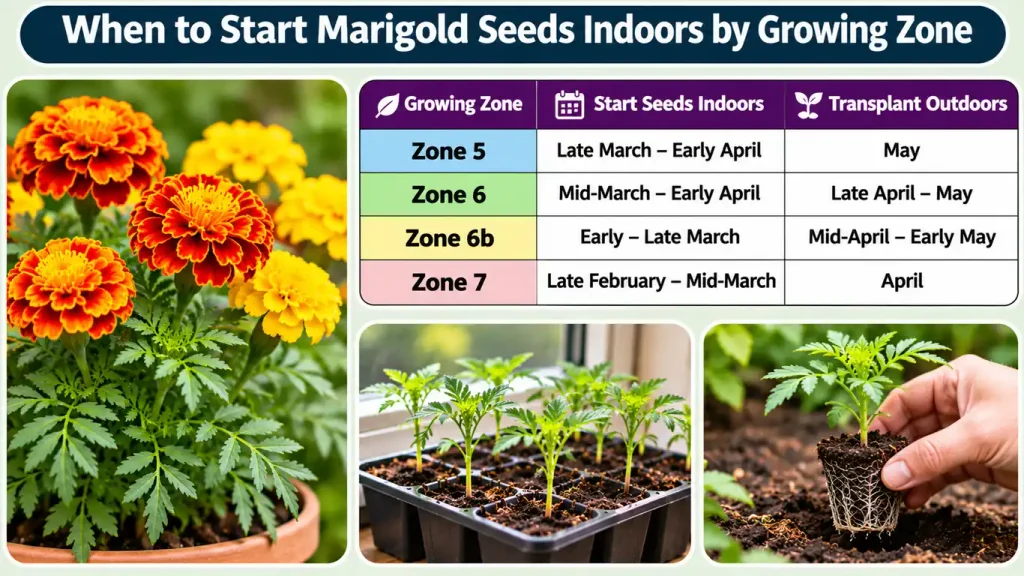
The ideal time for sowing marigold seeds varies considerably across USDA growing zones. Gardeners in colder regions generally need to wait longer before transplanting seedlings outdoors, while those in warmer climates can begin earlier. However, USDA hardiness zones do not determine exact frost dates, so always consider your local climate before establishing a planting schedule.
When to Start Marigold Seeds Indoors in Zone 5
Gardeners in zone 5 can generally start marigold seeds indoors from late March through early April. Outdoor transplanting often takes place during May, depending on local weather and frost conditions.
When to Start Marigold Seeds Indoors in Zone 6
In zone 6, mid-March through early April is often a suitable time to start marigold seeds indoors. Seedlings can typically be transplanted from late April through May once the danger of frost has passed.
When to Start Marigold Seeds Indoors in Zone 6b
Gardeners in zone 6b can often begin sowing marigold seeds indoors in early to late March. However, colder locations within this zone may require a later planting schedule to avoid frost damage.
When to Start Marigold Seeds Indoors in Zone 7
Late February through mid-March is often suitable for starting marigold seeds indoors in zone 7. The relatively mild spring conditions may allow seedlings to be transplanted outdoors earlier than in colder regions.
Marigold Seed Starting Calendar
| USDA zone | Estimated indoor starting time | Estimated outdoor planting time |
| Zone 3 | Mid-April to early May | Late May to June |
| Zone 4 | Early to mid-April | Mid-May to early June |
| Zone 5 | Late March to early April | May |
| Zone 6 | Mid-March to early April | Late April to May |
| Zone 6b | Early to late March | Mid-April to early May |
| Zone 7 | Late February to mid-March | April |
| Zone 8 | Mid-February to early March | Late March to April |
| Zone 9 | January to February | February to March |
These dates are approximate planning estimates rather than fixed planting schedules. Count backward from your area’s expected last spring frost date for more accurate results.
When to Start Different Types of Marigold Seeds Indoors
Not all marigold varieties grow at the same rate or reach maturity within the same period. Some varieties develop compact plants and produce flowers relatively quickly, while others require additional time to establish larger stems and flower heads. Understanding these differences helps you select an appropriate indoor planting schedule and achieve earlier blooms during spring and summer.
1. French Marigolds
French marigolds (Tagetes patula) are compact, fast-growing plants that perform well in containers, garden borders, and flower beds. Start their seeds indoors approximately four to six weeks before the expected last frost.
2. African Marigolds
African marigolds (Tagetes erecta) produce larger flowers and taller stems than many other varieties. Starting their seeds approximately eight to ten weeks before outdoor planting can provide additional time for healthy development.
3. Signet Marigolds
Signet marigolds (Tagetes tenuifolia) produce small flowers and delicate foliage, making them attractive additions to containers and garden borders. Their seeds can generally be started indoors five to six weeks before outdoor planting.
How to Start Marigold Seeds Indoors Step by Step
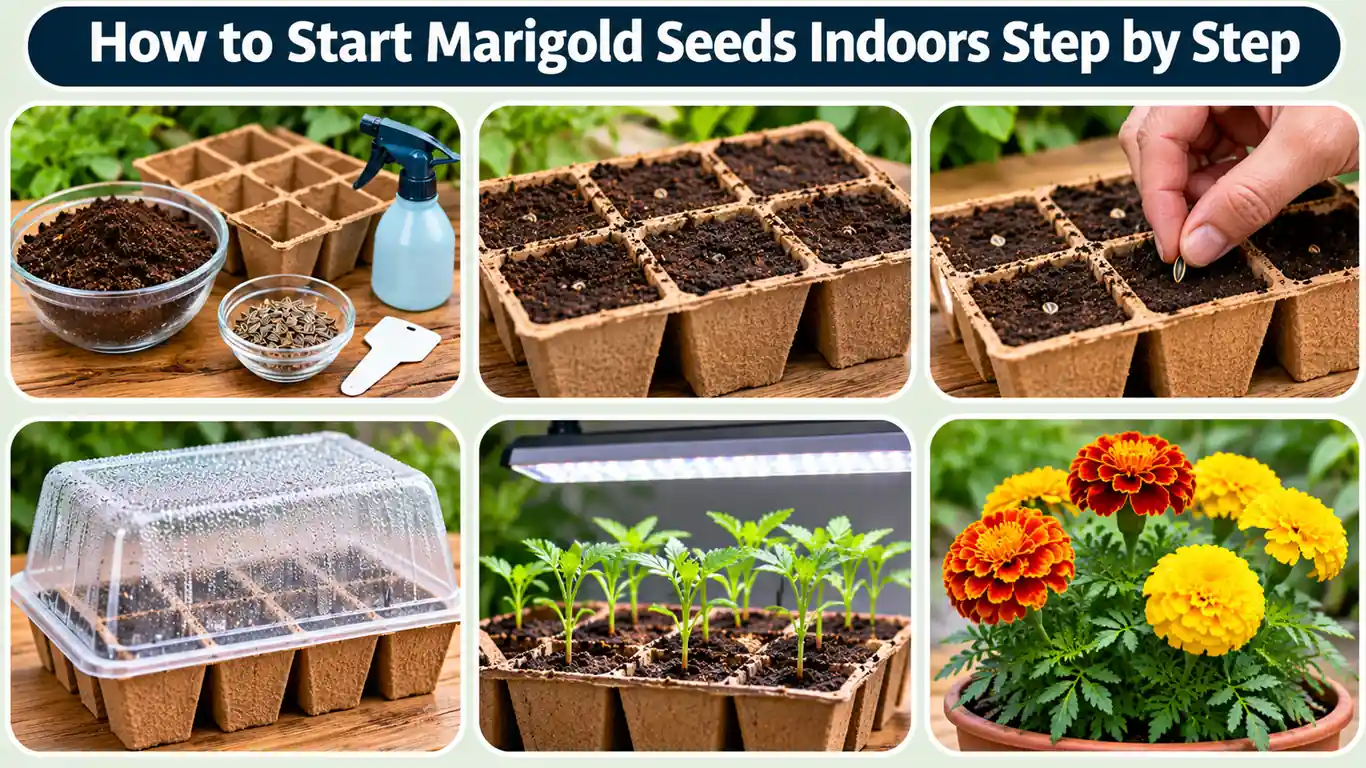
Starting marigold seeds indoors is relatively straightforward and requires only a few basic gardening supplies. Providing suitable temperatures, consistent moisture, and adequate lighting helps improve germination and seedling development. Following a systematic planting process also reduces common problems such as weak stems, overcrowding, root damage, and fungal diseases during the early stages of growth.
Step 1: Gather Your Supplies
Prepare seed-starting trays, fresh marigold seeds, seed-starting mix, plant labels, and a spray bottle. Consider using grow lights if natural sunlight is insufficient.
Step 2: Prepare the Seed-Starting Mix
Fill your containers with a lightweight, well-draining seed-starting mix. Moisten the mixture evenly before planting without making it excessively wet.
Step 3: Sow the Marigold Seeds
Plant one or two seeds in each cell approximately ¼ inch deep. Cover them lightly with the growing medium and gently water the surface.
Step 4: Maintain Warm Temperatures
Place the seed trays in a warm location with temperatures around 70–75°F (21–24°C). Maintaining consistent warmth encourages germination and helps prevent unnecessary delays.
Step 5: Provide Adequate Light
Move the seedlings under grow lights immediately after germination. Provide approximately 14–16 hours of daily light to encourage compact growth and strong stems.
Step 6: Thin the Seedlings
Once seedlings develop their first true leaves, remove weaker plants from crowded cells. Keep the healthiest seedling in each cell to reduce competition for nutrients, moisture, and light.
Step 7: Harden Off the Seedlings
Gradually expose seedlings to outdoor conditions for seven to ten days before transplanting. Begin in a sheltered, shaded location and gradually increase their exposure to sunlight and wind.
How Long Do Marigold Seeds Take to Germinate?
Marigold seeds generally germinate within five to eight days when provided with suitable moisture and temperatures. However, germination may take longer when the growing medium is too cold or the seeds are old. Maintaining stable indoor conditions during this period helps encourage consistent sprouting and reduces the likelihood of seed failure.
UMN Extension
| Growth stage | Estimated time |
| Seed germination | 5–8 days |
| First true leaves | 1–3 weeks |
| Seedling development | 3–6 weeks |
| Hardening off | 7–10 days |
| First blooms | 6–12 weeks or longer |
Growth rates depend on the variety, temperature, lighting, and overall growing conditions. Larger African marigolds may take longer to flower than compact French varieties.
Common Mistakes When Starting Marigold Seeds Indoors
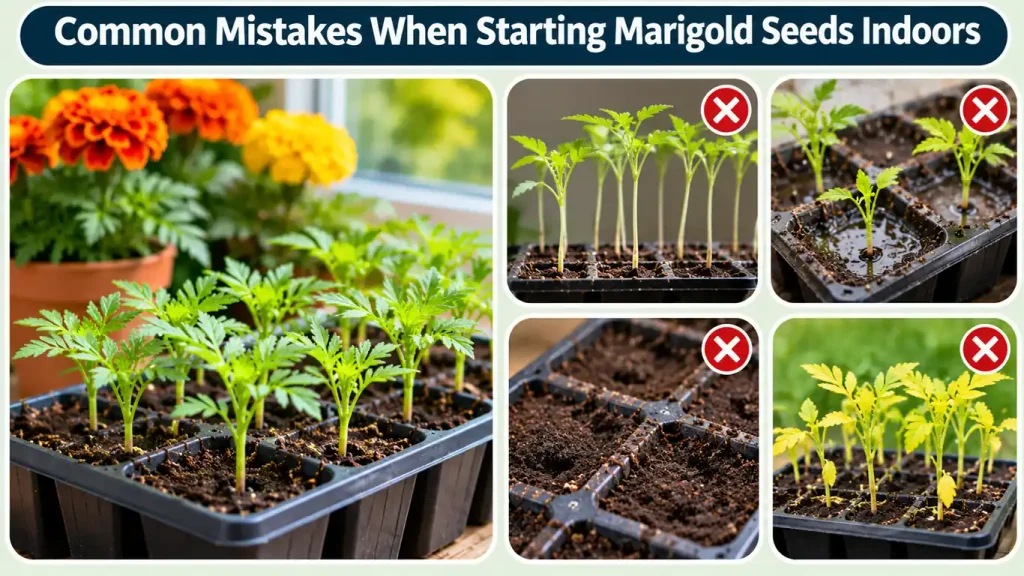
Although marigolds are relatively easy to grow, improper seed-starting techniques can result in poor germination and unhealthy seedlings. Many problems develop because of excessive moisture, inadequate lighting, or incorrect planting schedules. Avoiding these common mistakes helps produce stronger plants that establish themselves more successfully after being transplanted into outdoor containers or garden beds.
- Starting seeds too early: Seedlings may become overcrowded or rootbound before outdoor planting.
- Planting seeds too deeply: Excessive planting depth can reduce successful germination.
- Overwatering the soil: Saturated growing medium increases the risk of damping-off disease.
- Providing insufficient light: Poor lighting causes thin, weak, and leggy seedlings.
- Using heavy garden soil: Compacted soil restricts drainage and root development.
- Overfertilizing seedlings: Excessive nutrients can damage young roots.
- Transplanting too early: Cold temperatures and frost may damage tender plants.
- Skipping hardening off: Sudden exposure to direct sunlight and wind can cause transplant shock.
When Should You Transplant Marigold Seedlings Outdoors?
Marigold seedlings should be transplanted outdoors after the danger of frost has passed and nighttime temperatures remain consistently mild. Healthy seedlings should have several true leaves, sturdy stems, and well-developed roots. Choose a sunny planting location with well-draining soil and sufficient space for the plants to reach their mature size without overcrowding.
Prepare the Outdoor Planting Area
Select a location that receives at least six hours of direct sunlight daily. Loosen compacted soil and improve drainage where necessary before transplanting your marigold seedlings.
Maintain Proper Plant Spacing
Space compact French marigolds approximately 6–12 inches apart and larger African marigolds approximately 12–18 inches apart, depending on the variety. Proper spacing improves air circulation and reduces competition between neighboring plants.
Water After Transplanting
Water the seedlings thoroughly immediately after planting to help settle the soil around their roots. Maintain consistent moisture during the establishment period without allowing the soil to become waterlogged.
FAQs
1. What month should I start marigold seeds indoors?
February, March, and April are common months for starting marigold seeds indoors. The ideal month depends on your local frost date and the variety you intend to grow.
2. Can you start marigold seeds indoors too early?
Yes, starting marigold seeds too early can result in leggy, overcrowded, or rootbound seedlings. Most compact varieties benefit from being started four to six weeks before the last expected frost.
3. Should I soak marigold seeds before planting indoors?
Soaking marigold seeds is generally unnecessary because they germinate readily under suitable conditions. Fresh seeds planted in warm, moist growing medium usually sprout without special treatment.
4. Do marigold seeds need sunlight to germinate?
Marigold seeds do not require direct sunlight to germinate and should be lightly covered with growing medium. However, emerging seedlings require adequate light to develop healthy stems and leaves.
5. Can marigolds grow indoors all year?
Yes, marigolds can grow indoors throughout the year when provided with sufficient light, warmth, drainage, and growing space. Compact French marigold varieties are particularly suitable for indoor containers.