

Learning how to grow rosemary indoors is a practical way to enjoy this aromatic herb throughout the year. Rosemary can grow successfully inside when it receives strong light, excellent drainage, moderate watering, and good airflow. You can start with seeds, cuttings, or a young nursery plant, then grow it in a container near a sunny window. With consistent care, an indoor rosemary plant can provide fragrant leaves for cooking while also adding attractive evergreen foliage to your home.
Can You Grow Rosemary Indoors Successfully?
Yes, rosemary can grow indoors, but it needs conditions that closely match its natural preference for bright light and relatively dry soil. Indoor rosemary usually struggles more from overwatering and poor light than from neglect. Choosing a sunny location, using a well-draining potting mix, and allowing the soil to dry slightly between waterings can greatly improve long-term growth.
Is Rosemary a Good Indoor Plant?
Rosemary can be a good indoor herb if you have a bright location. It is especially suitable for sunny kitchens, windowsills, and indoor herb gardens.
Unlike herbs that prefer constantly moist soil, rosemary performs better when its roots receive plenty of air and are not kept wet for long periods.
Best Rosemary Varieties for Indoors
Compact or upright varieties are often easier to manage indoors because they fit well in containers.
Common choices include Tuscan Blue, Arp, Blue Boy, and other container-friendly rosemary types. Smaller plants are easier to position under grow lights or beside windows.
How to Plant Rosemary Indoors

Successful indoor rosemary starts with the right pot and growing medium. Rosemary roots need excellent drainage, so heavy soil or containers without drainage holes can quickly create problems. A relatively deep pot with loose potting mix gives roots enough oxygen and space while reducing the risk of water remaining around the root system.
What You Need
- Rosemary seeds, cuttings, or starter plant
- Pot with drainage holes
- Well-draining potting mix
- Perlite or coarse material for drainage
- Saucer
- Watering can
- Sunny window or grow light
- Balanced fertilizer
- Clean pruning scissors
Choose the Right Container
Use a pot that is slightly larger than the plant’s root system. Terracotta pots are especially useful because they allow moisture to evaporate through the container walls.
Avoid oversized pots because excess soil can remain wet longer than necessary.
Prepare the Soil
Rosemary prefers loose, fast-draining soil. A high-quality potting mix amended with perlite can provide better aeration.
Do not use compact garden soil indoors because it may drain too slowly and can restrict root development.
How to Grow Rosemary Indoors From Seed
Growing rosemary from seed is possible, but it requires patience. Germination can be slow and inconsistent compared with many other herbs. For faster results, some growers prefer starting with cuttings or young nursery plants. However, seeds remain a useful option when you want specific varieties or plan to grow several plants.
How to Plant Rosemary Seeds
- Fill a seed tray or small pot with moist seed-starting mix.
- Sow rosemary seeds shallowly.
- Cover them with only a thin layer of mix.
- Keep the medium slightly moist.
- Place the container in a warm, bright location.
- Provide gentle air circulation.
- Transplant stronger seedlings after several true leaves develop.
How Long Do Rosemary Seeds Take to Germinate?
Rosemary seeds commonly take about two to four weeks to germinate, though some may require longer.
Germination can be uneven, so sowing several seeds improves the chance of success. Warmth and steady moisture are especially important during this stage.
Is Rosemary Easy to Grow From Seed?
Rosemary is generally slower and more difficult to start from seed than herbs such as basil or parsley.
For beginners, a young plant or rooted cutting may be easier. Once established, however, rosemary becomes relatively low-maintenance when light and drainage are adequate.
Rosemary Light Requirements Indoors
Strong light is one of the most important requirements for growing rosemary indoors. Rosemary naturally thrives in sunny conditions, so indoor plants often need the brightest location available. Weak light can cause thin stems, sparse growth, pale foliage, and reduced aroma.
How Much Light Does Rosemary Need?
Rosemary usually benefits from at least six hours of direct or very bright light per day, with more being better indoors.
A south-facing window is often ideal. West-facing windows may also provide useful afternoon sunlight.
When to Use a Grow Light
If natural sunlight is limited, use a full-spectrum grow light.
Position the light according to the manufacturer’s instructions and provide roughly 12 to 14 hours of supplemental light per day. Artificial lighting can be especially useful during darker winter months.
How to Water Rosemary Indoors
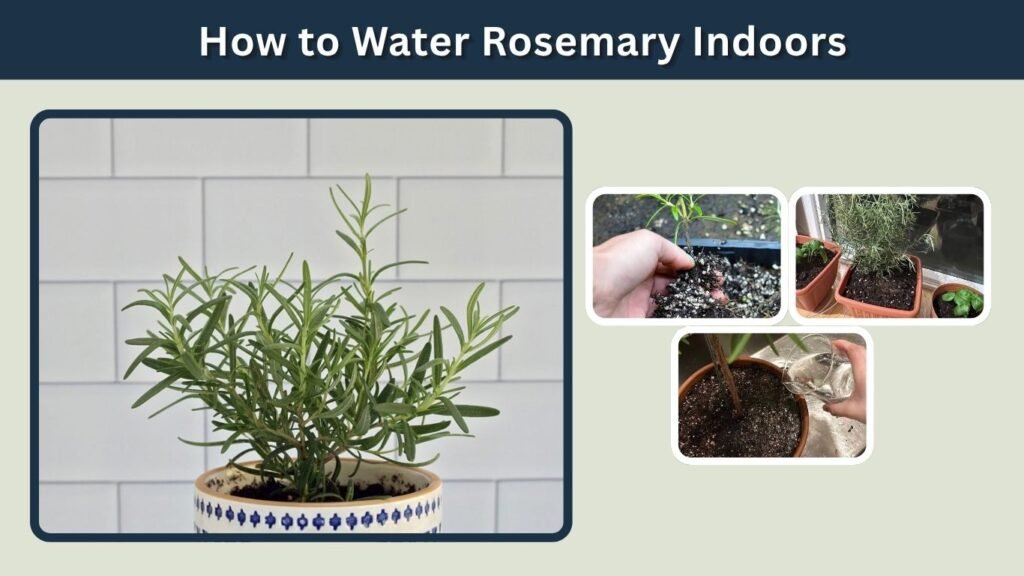
Watering is one of the most important parts of rosemary indoor plant care. Rosemary prefers its soil to dry slightly between waterings and is sensitive to constantly wet roots. Instead of following a fixed schedule, check the soil regularly and adjust watering according to temperature, light, humidity, and container size.
Watering Tips for Indoor Rosemary
- Check the top inch or two of soil first.
- Water when the upper soil feels dry.
- Water deeply rather than lightly.
- Allow excess water to drain completely.
- Empty standing water from the saucer.
- Avoid keeping the potting mix constantly wet.
- Reduce watering when growth slows.
Signs of Overwatering
Overwatered rosemary may develop yellow or brown leaves, weak stems, leaf drop, or root problems.
Wet soil that stays soggy for many days is a warning sign. Improve drainage and allow the soil to dry more before the next watering.
How to Care for Rosemary Indoors
Keeping rosemary healthy indoors involves balancing light, moisture, airflow, temperature, and nutrition. Rosemary does not need constant attention, but it reacts poorly to stagnant air and overly wet soil. Regular observation is usually enough to catch problems before they become serious.
Temperature and Airflow
Rosemary generally grows well at normal indoor temperatures but appreciates good air circulation.
Avoid placing the plant directly beside heaters, radiators, air-conditioning vents, or extremely cold windows. Gentle airflow helps reduce humidity around foliage and lowers the risk of fungal problems.
Fertilizing Indoor Rosemary
Rosemary does not require heavy feeding.
Apply a diluted balanced fertilizer occasionally during active growth. Excess fertilizer can encourage weak growth and may cause salt buildup in container soil.
Pruning Rosemary
Regular pruning keeps the plant compact and encourages branching.
Trim soft new growth rather than cutting heavily into old woody stems. Light harvesting throughout the growing season can function as routine pruning.
Growing Rosemary in Containers Indoors
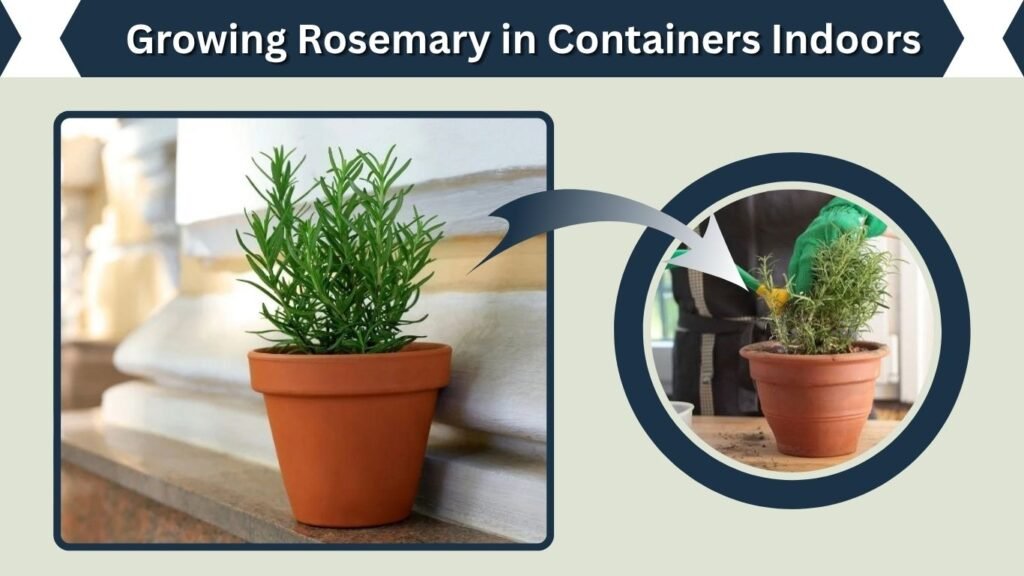
Container growing gives you better control over drainage, light, and temperature. It also allows the plant to be moved as seasonal light conditions change. Choosing the right pot is especially important because rosemary roots dislike waterlogged conditions.
Best Container-Growing Practices
- Use a pot with drainage holes.
- Choose well-draining soil.
- Avoid oversized containers.
- Place the pot in strong light.
- Rotate the plant regularly.
- Repot when roots become crowded.
- Keep the crown of the plant above the soil line.
- Remove dead or unhealthy stems.
Can Rosemary Stay in the Same Pot?
Rosemary can remain in the same container for some time, but eventually roots may become crowded.
If water begins running straight through the pot, roots circle heavily, or growth slows significantly, move the plant into a slightly larger container.
How to Keep Rosemary Alive Indoors
Many indoor rosemary plants decline because they receive too little light or too much water. The best way to keep rosemary alive is to recreate the bright, airy, relatively dry conditions it prefers.
Key Rosemary Care Tips
- Give it the brightest light possible.
- Avoid permanently wet soil.
- Use a fast-draining potting mix.
- Provide good air circulation.
- Do not overfertilize.
- Rotate the pot regularly.
- Trim lightly to encourage branching.
- Check regularly for pests.
- Avoid sudden temperature extremes.
Common Mistake: Too Much Water
Indoor rosemary often needs less frequent watering than people expect.
Before adding water, check below the soil surface. If the root zone is still damp, wait longer.
Common Problems With Indoor Rosemary

Indoor rosemary problems usually result from unsuitable growing conditions rather than difficult care requirements. Light deficiency, overwatering, poor airflow, and pests are the most common causes of decline. Identifying the exact problem early makes recovery much easier.
Brown or Dry Leaves
Brown foliage can result from underwatering, root damage, very dry indoor air, or poor root health caused by prolonged wet soil.
Check the soil before assuming the plant needs more water.
Leggy Growth
Long, weak stems usually indicate insufficient light.
Move the plant to a brighter location or provide supplemental lighting.
Powdery Mildew
Poor airflow and high humidity may encourage powdery mildew.
Increase air movement and avoid leaving foliage constantly damp. Removing heavily affected growth may also help limit spread.
Spider Mites and Aphids
Indoor rosemary may occasionally attract spider mites or aphids.
Inspect leaves and stems regularly, especially during dry indoor conditions. Early detection makes pest control much easier.
How to Harvest Rosemary Indoors

Harvesting encourages new growth when done carefully. You can begin taking small cuttings once the plant becomes established and produces enough healthy foliage.
Proper Harvesting Method
- Choose healthy outer stems.
- Cut soft green growth.
- Avoid removing more than one-third of the plant at once.
- Leave plenty of foliage behind.
- Use clean scissors.
- Harvest regularly instead of cutting heavily all at once.
When Is Rosemary Ready to Harvest?
Young nursery plants can usually be harvested lightly after they settle into their new container.
Seed-grown plants need more time. Wait until they produce enough established growth that harvesting will not weaken the plant.
FAQs
Can rosemary grow indoors all year?
Yes, rosemary can grow indoors throughout the year if it receives enough light and proper care. Winter is often the most challenging period because natural sunlight decreases. A grow light, careful watering, and good airflow can help maintain healthier growth until stronger seasonal light returns.
How much sunlight does indoor rosemary need?
Indoor rosemary generally needs at least six hours of strong light each day, although more is often beneficial. A bright south-facing window is usually best. If natural light is insufficient, a full-spectrum grow light can help prevent weak, stretched growth and maintain healthier foliage.
How often should I water rosemary indoors?
Water rosemary only after the upper portion of the soil begins to dry. The exact frequency depends on pot size, temperature, humidity, and light. Avoid following a strict schedule. Water thoroughly when needed, then let excess moisture drain completely before returning the pot to its normal location.
Why does my indoor rosemary keep dying?
Indoor rosemary commonly declines because of excessive watering, poor drainage, insufficient sunlight, or weak airflow. Check whether the soil stays wet for several days and whether the plant receives strong daily light. Improving drainage and moving the plant to a brighter location often solves the underlying problem.
Is rosemary better grown from seed or a starter plant?
A starter plant is usually easier and faster for indoor growing because rosemary seeds can germinate slowly and unevenly. Seeds are useful when you want a specific variety or multiple plants, but beginners often achieve quicker success with a healthy nursery plant or rooted cutting.