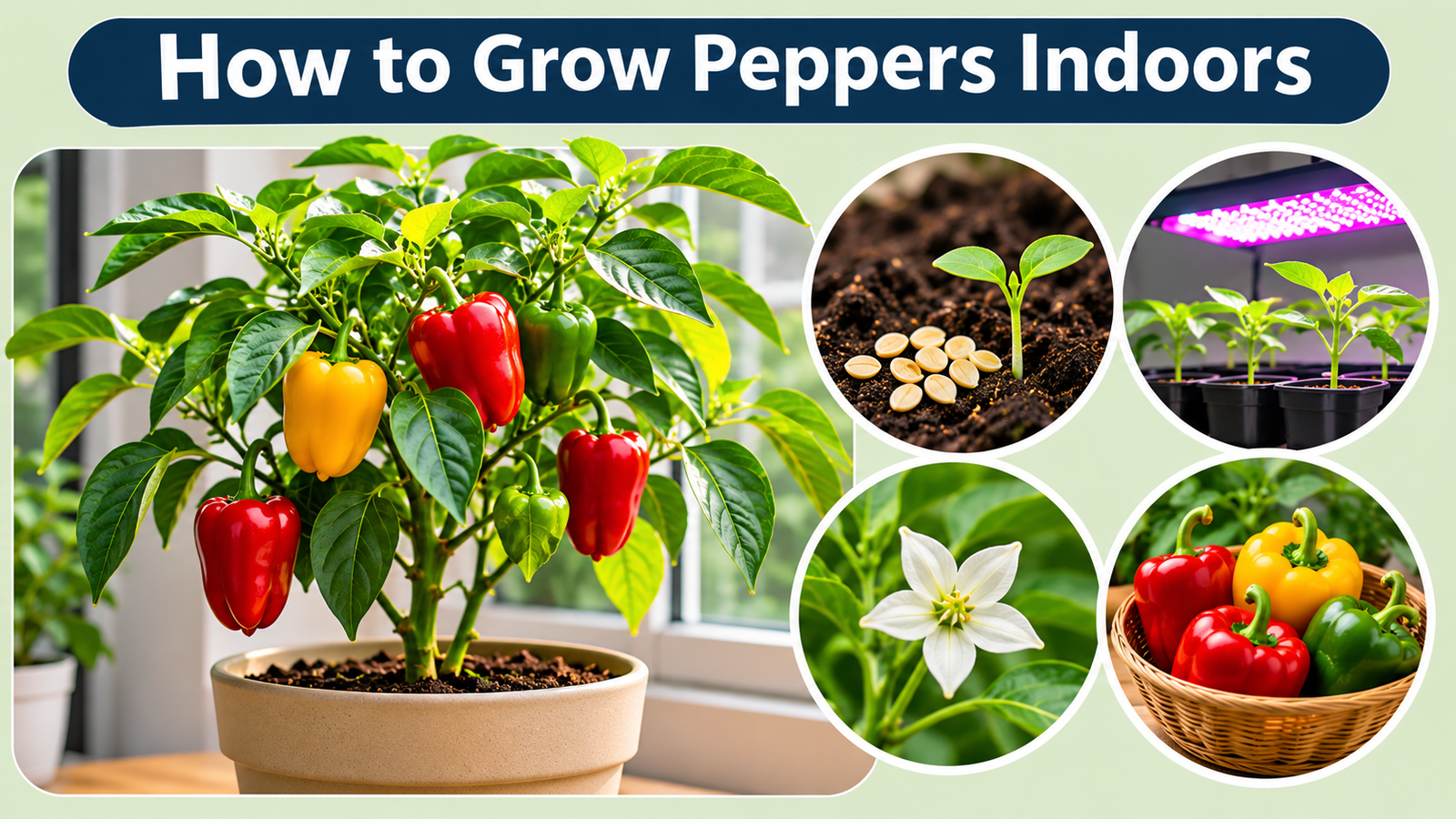
Want to grow fresh, flavorful peppers without needing an outdoor garden? Growing peppers indoors is an excellent way to enjoy homegrown vegetables throughout the year, even in small apartments or limited spaces. Whether you prefer sweet bell peppers, spicy jalapeños, or colorful chili peppers, indoor gardening allows you to control their growing environment. With proper lighting, suitable containers, and consistent care, you can grow productive pepper plants from seeds. This guide explains how to grow peppers indoors, from germination to harvesting healthy, delicious peppers.
Can You Grow Peppers Indoors Successfully?
Yes, peppers can grow indoors when provided with adequate sunlight or artificial lighting, warm temperatures, and proper watering. Both sweet and hot pepper varieties can adapt to indoor containers, although compact varieties are generally easier to manage. Understanding their growing requirements helps prevent common problems such as slow development, flower drop, and poor fruit production.
Why Peppers Are Suitable for Indoor Growing
Pepper plants are warm-season crops that thrive under controlled indoor conditions. Unlike outdoor gardening, indoor cultivation offers protection from frost, strong winds, and sudden temperature changes.Many pepper varieties are naturally compact, making them suitable for containers and grow shelves. With sufficient lighting and nutrition, indoor pepper plants can flower and produce fruits for extended periods.
Best Pepper Varieties to Grow Indoors
Choosing compact, productive varieties simplifies indoor pepper gardening. Smaller plants generally require less space and are easier to support.
- Bell Peppers: Sweet, thick-walled peppers that need relatively large containers and strong lighting.
- Jalapeño Peppers: Moderately spicy peppers that can grow successfully in indoor pots.
- Cayenne Peppers: Slender hot peppers suitable for containers and indoor growing.
- Thai Chili Peppers: Compact, productive plants that develop numerous small spicy fruits.
- Mini Sweet Peppers: Small, sweet peppers that work well in limited growing spaces.
- Habanero Peppers: Hot peppers that thrive with consistent warmth and sufficient lighting.
For beginners, compact jalapeño, Thai chili, and mini sweet pepper varieties are practical options.
How to Grow Peppers Indoors From Seeds
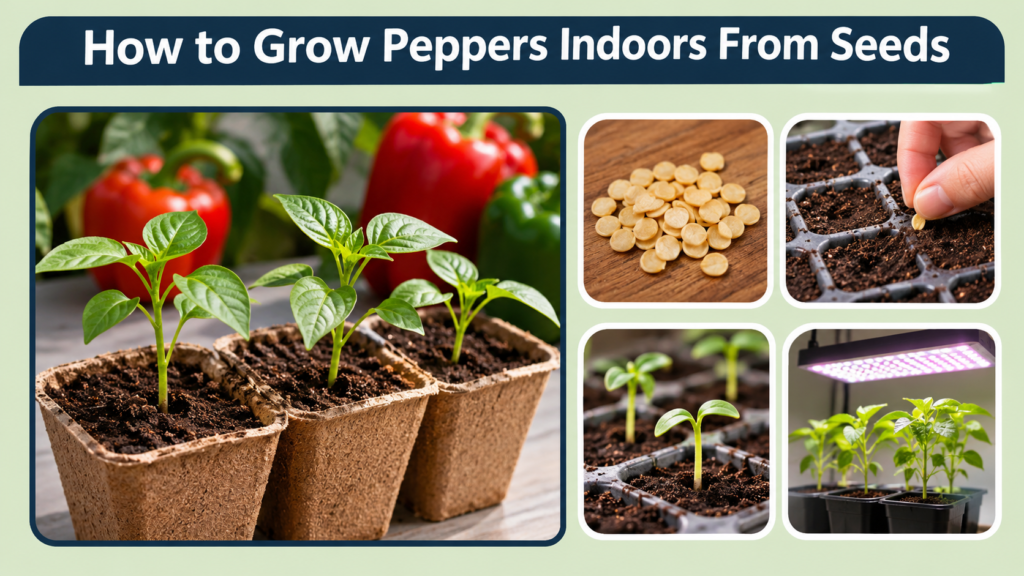
Growing peppers indoors from seeds gives you more control over plant varieties and early development. Although peppers generally germinate more slowly than tomatoes, healthy seeds can develop into productive plants with suitable warmth and moisture. Starting with clean containers and well-draining seed-starting mix helps prevent seedling problems and supports healthy root development before transplanting into permanent growing containers.
Step 1: Prepare Pepper Seeds and Containers
Choose fresh seeds from a trusted supplier. Fill seed trays or small starter pots with a lightweight, sterile seed-starting mix.Containers should have drainage holes to prevent excess water accumulation. Moisten the growing medium before planting so the seeds receive even moisture.
Step 2: Plant Pepper Seeds Indoors
Follow these steps when starting pepper seeds indoors:
- Fill seed trays with moist seed-starting mix.
- Plant pepper seeds approximately ¼ inch deep.
- Cover seeds lightly with growing medium.
- Maintain soil temperatures around 75–85°F (24–29°C).
- Keep the soil consistently moist without saturating it.
- Place germinated seedlings under bright grow lights.
- Remove any humidity cover once seedlings emerge.
Most pepper seeds germinate within 7–21 days, although some hot pepper varieties may take longer.
Step 3: Transplant Pepper Seedlings
Once seedlings develop several true leaves and their roots are established, transplant them into individual pots.Handle seedlings carefully to avoid damaging their roots. Plant them approximately at their previous soil depth and water gently after transplanting.Gradually increase container size as plants develop to prevent overcrowded roots.
Best Indoor Growing Conditions for Pepper Plants
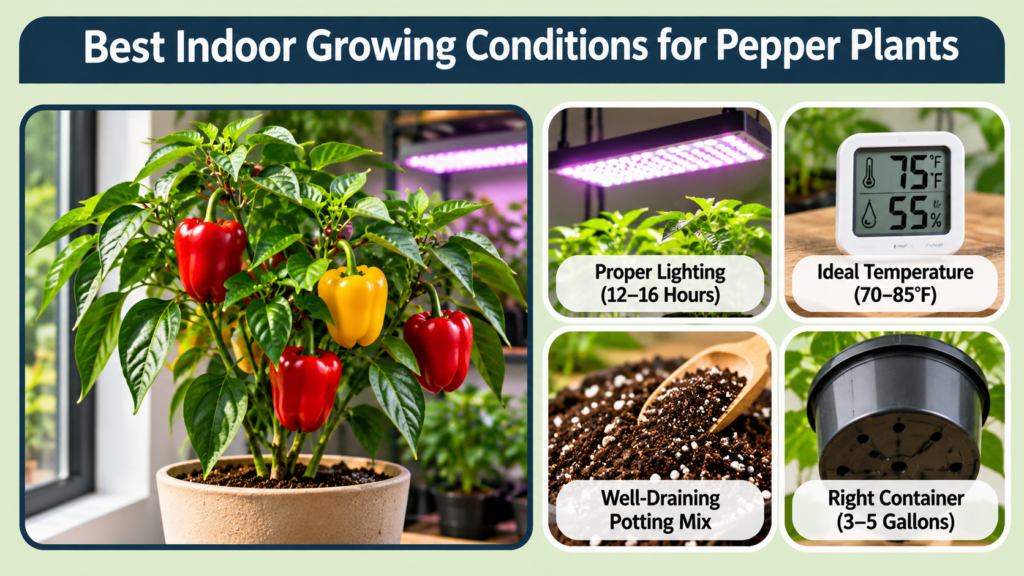
Providing suitable growing conditions is essential for producing healthy indoor pepper plants. Peppers require strong lighting, warm temperatures, well-draining soil, and sufficient root space. Poor conditions can cause weak stems, yellowing leaves, and limited fruit development. Maintaining a stable environment supports healthy growth, flowering, and fruit production while reducing the risk of common indoor gardening problems.
How Much Light Do Indoor Peppers Need?
Pepper plants ideally receive at least 6–8 hours of strong direct sunlight daily. However, indoor windows often provide insufficient light for productive fruiting.Full-spectrum LED grow lights are a reliable alternative. Depending on their intensity, pepper plants generally benefit from approximately 12–16 hours of artificial lighting daily.Position grow lights according to the manufacturer’s recommendations to prevent leaf damage or weak, stretched growth.
Ideal Temperature and Humidity
Most peppers grow well at daytime temperatures between 70–85°F (21–29°C), with slightly cooler temperatures at night.Avoid exposing plants to cold drafts or sudden temperature changes. Moderate indoor humidity and good air circulation help maintain healthy foliage.Extremely high temperatures can interfere with pollination and cause flowers to drop.
Choosing the Right Pot and Soil
Most productive pepper plants benefit from containers holding approximately 3–5 gallons of growing medium. Compact varieties may grow in smaller containers, while large bell pepper plants often need more root space.Use a high-quality potting mix containing organic matter and materials that improve drainage. Avoid compact garden soil, which can restrict root growth.
How to Care for Pepper Plants Indoors
Indoor pepper plants require consistent maintenance to develop healthy foliage and produce flavorful fruits. Watering, fertilization, pruning, and proper airflow are essential parts of their care routine. Although peppers tolerate brief periods of slightly dry soil, excessive moisture and irregular feeding can reduce productivity. Understanding how to maintain these plants helps encourage steady growth and prevent avoidable problems.
Watering Indoor Pepper Plants
Water pepper plants thoroughly when the upper inch of potting soil feels dry. Allow excess water to drain completely.Avoid consistently soggy conditions because they can damage roots and encourage fungal diseases.Watering frequency depends on container size, room temperature, lighting, and plant maturity. Check soil moisture instead of following a rigid watering schedule.
Fertilizing Peppers for Healthy Growth
Pepper plants require balanced nutrition throughout their growing cycle.
- Apply a balanced fertilizer during early vegetative growth.
- Use a fertilizer suitable for fruiting vegetables as flowering begins.
- Follow the product’s recommended application rate.
- Avoid excessive nitrogen, which can encourage leafy growth with fewer fruits.
- Monitor foliage for yellowing or other possible nutrient deficiencies.
Consistent, moderate fertilization generally supports healthier plants than excessive feeding.
Pruning and Supporting Pepper Plants
Most compact indoor pepper plants require only occasional pruning. Remove damaged, diseased, or yellowing leaves to improve plant health.Larger varieties may benefit from small stakes or cages to support branches carrying heavy fruits.Avoid removing too much healthy foliage because leaves provide energy for flowering and fruit development.
How to Pollinate Pepper Plants Indoors
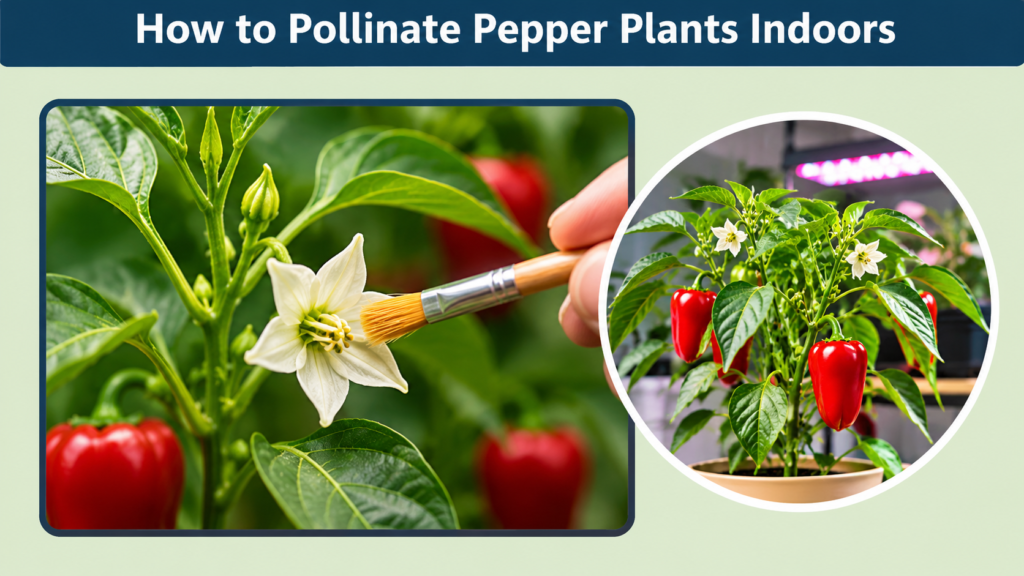
Pollination is an important part of growing peppers indoors because enclosed spaces lack the natural airflow and insect activity found outdoors. Fortunately, pepper flowers are generally self-fertile, meaning they contain both male and female reproductive structures. Gentle movement can help release pollen and improve fruit formation. Supporting pollination is particularly useful when plants flower but fail to develop peppers.
Hand Pollination Methods for Indoor Peppers
Gently shake the plant or tap flowering branches during the daytime to encourage pollen movement.You can also use a soft brush to transfer pollen between flowers. Keep the brush clean and avoid damaging delicate flower structures.Good lighting, suitable temperatures, and adequate nutrition are equally important because environmental stress can reduce successful fruit formation.
How to Grow Different Types of Peppers Indoors
Different pepper varieties have slightly different growth habits, container requirements, and fruiting characteristics. Sweet bell peppers generally produce larger fruits, while many hot pepper varieties remain relatively compact. Understanding these differences makes it easier to select suitable plants for your growing space. Most varieties share similar basic requirements, including warmth, strong lighting, regular watering, and nutrient-rich growing media.
Growing Bell Peppers Indoors
Bell peppers require strong lighting, sufficient root space, and consistent nutrition to produce large fruits.Choose compact bell pepper varieties when possible and use containers around 5 gallons for productive mature plants.Green bell peppers are usually immature fruits, while red, yellow, and orange varieties develop their mature colors as they ripen.
Growing Jalapeño and Chili Peppers Indoors
Jalapeño, cayenne, and Thai chili plants are useful choices for indoor growing because many varieties have manageable growth habits.Provide sufficient light and warm temperatures to encourage flowering. Harvest fruits at the desired ripeness, depending on their variety and intended flavor.
Growing Hot Peppers Indoors
Habanero, ghost pepper, and Carolina Reaper varieties can grow indoors, but they often require longer growing periods and consistently warm conditions.These varieties are better suited to gardeners who can provide strong artificial lighting and adequate growing space.Wear gloves when handling extremely hot peppers to avoid skin and eye irritation.
Growing Peppers Indoors During Winter
Indoor pepper cultivation allows gardeners to continue growing plants when outdoor temperatures become unsuitable. Winter growing requires particular attention to lighting and temperature because shorter days and cold windows can reduce growth. By maintaining an appropriate indoor environment, you can keep pepper plants healthy throughout colder months and potentially continue harvesting fruits even when outdoor gardens are dormant.
Can You Grow Peppers Indoors Year-Round?
Yes, peppers can grow indoors year-round with sufficient artificial lighting, warm temperatures, and proper care.Established pepper plants may continue producing fruits under suitable conditions. However, fruit production can decline as plants age or experience insufficient lighting.
Best Grow Lights for Indoor Peppers
Full-spectrum LED grow lights are practical for maintaining indoor pepper plants during winter.Choose lights designed for fruiting vegetables and confirm that their intensity covers the entire plant canopy. Use a timer to provide a consistent daily lighting period.
Common Problems When Growing Peppers Indoors
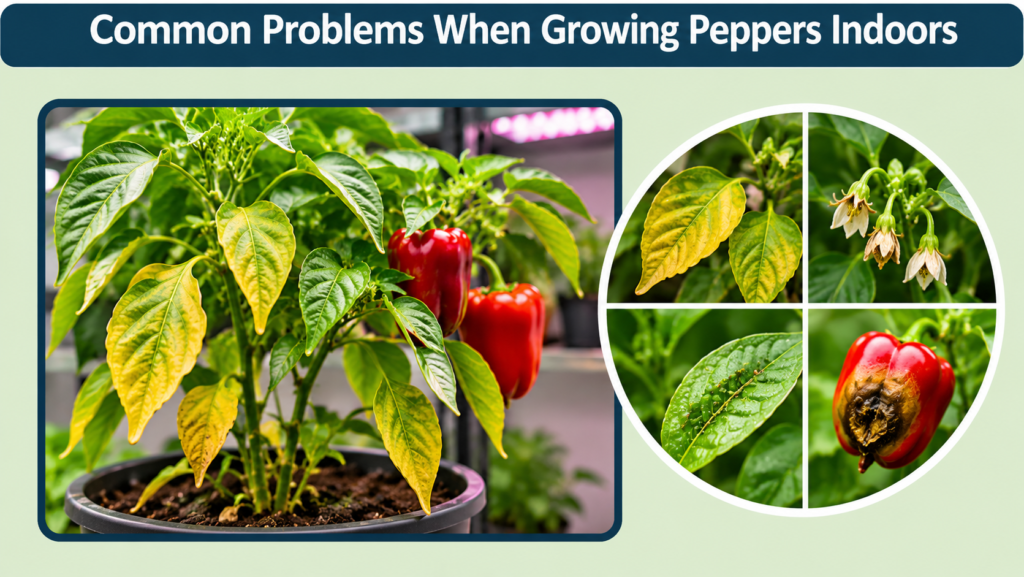
Indoor pepper plants may experience growth problems when environmental conditions become unfavorable. Insufficient lighting, excessive watering, nutrient imbalances, and unsuitable temperatures are among the most common causes. Recognizing early warning signs allows gardeners to make adjustments before plants become severely stressed. Regularly checking foliage, soil moisture, flowers, and developing fruits helps maintain healthy indoor pepper plants.
Common Indoor Pepper Problems and Solutions
- Yellow leaves: Check watering, drainage, and nutrient availability.
- Dropping flowers: Maintain suitable temperatures and avoid excessive stress.
- Slow growth: Improve lighting, warmth, and nutrient availability.
- No peppers forming: Support pollination and check environmental conditions.
- Curled leaves: Inspect for pests, temperature stress, and watering problems.
- Blossom-end rot: Maintain consistent watering to support calcium uptake.
Early adjustments often help prevent similar problems during future growth.
How Long Does It Take to Grow Peppers Indoors?
Pepper growing times depend on the selected variety, growing temperatures, lighting conditions, and seed quality. Sweet peppers often mature faster than some extremely hot pepper varieties. Indoor plants receiving sufficient warmth and strong light generally develop more efficiently than plants grown under inadequate conditions. Knowing the expected growth timeline helps gardeners plan their planting schedule and anticipate when fruits will be ready.
Pepper Growing Timeline
Pepper seeds commonly germinate within 7–21 days under suitable conditions.Many varieties take approximately 90–150 days from sowing to their first harvest, although slower-growing hot peppers can take longer.
When and How to Harvest Indoor Peppers
Harvest peppers when they reach the desired size and color. Green peppers can often be picked before full ripeness, while mature red, yellow, or orange fruits usually develop a sweeter or different flavor.Use clean pruning scissors to cut fruits from the plant without damaging branches.
FAQs
1. Can you grow peppers indoors without sunlight?
Yes, peppers can grow without natural sunlight when provided with sufficiently powerful full-spectrum grow lights. Ordinary household lighting is generally inadequate for producing healthy, fruiting plants.
2. How long does it take to grow peppers indoors from seeds?
Many pepper varieties take approximately 90–150 days from sowing to their first harvest. Some hot pepper varieties require additional time.
3. Can you grow bell peppers indoors in pots?
Yes, bell peppers can grow indoors in pots. Compact varieties and containers around 5 gallons are useful choices for healthy root growth and fruit production.
4. Can you grow peppers indoors during winter?
Yes, peppers can grow indoors during winter when sufficient artificial lighting and suitable temperatures are maintained. Protect plants from cold drafts and avoid overwatering.
5. How many hours of light do indoor pepper plants need?
Pepper plants generally benefit from approximately 12–16 hours of suitable artificial lighting daily, depending on light intensity. Provide a consistent dark period to support normal plant development.