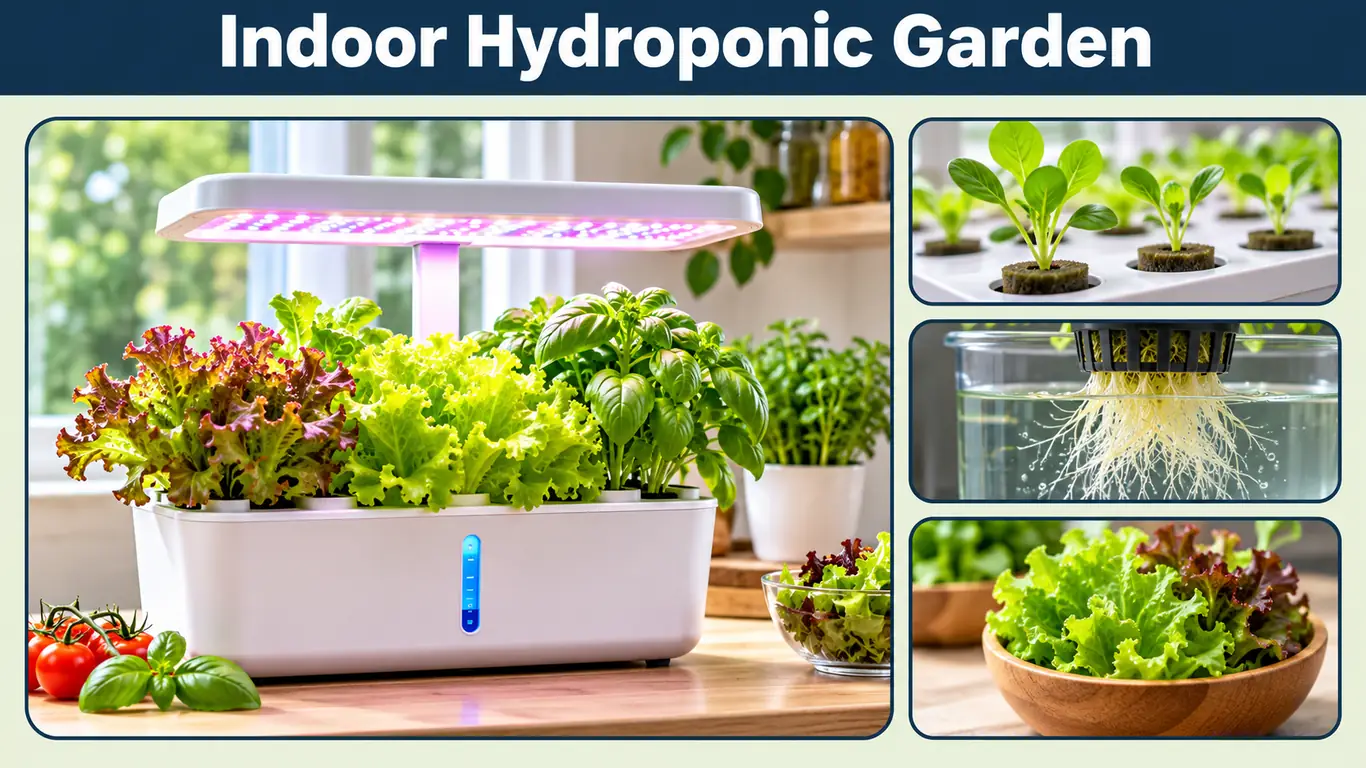
An indoor hydroponic garden allows you to grow fresh herbs, vegetables, and leafy greens without traditional soil. Instead, plants receive essential nutrients through a water-based growing system, making indoor gardening possible throughout the year. Whether you have a small apartment, kitchen countertop, or dedicated growing space, hydroponics offers a practical way to produce fresh food at home. From compact herb gardens to advanced smart growing systems, there are several options available. Understanding how indoor hydroponic gardens work can help you choose the right system and grow healthy plants successfully.
What Is an Indoor Hydroponic Garden?
An indoor hydroponic garden is a growing system that allows plants to develop without soil. Instead of obtaining nutrients from the ground, plants absorb minerals directly from a specially prepared nutrient solution.
These systems commonly use LED grow lights, water reservoirs, and growing containers to create suitable conditions for plant development. Some systems operate manually, while others automatically control lighting and water circulation.
How Does an Indoor Hydroponic Garden Work?
Hydroponic systems supply plant roots with water, dissolved nutrients, and oxygen. Depending on the design, roots may grow directly in nutrient-rich water or within a soilless growing medium.
Artificial lighting supports photosynthesis when natural sunlight is insufficient. Proper nutrient concentration, oxygen availability, and water quality help plants grow successfully.
Benefits of Growing Plants Hydroponically Indoors
Indoor hydroponic gardening offers several advantages over traditional soil-based gardening.
- Year-round growing: Produce vegetables and herbs regardless of outdoor seasons.
- Space efficiency: Grow multiple plants in compact areas.
- Reduced water waste: Recirculating systems can reuse nutrient solutions.
- Cleaner gardening: Avoid soil spills and many soil-related pests.
- Controlled growing conditions: Adjust lighting, nutrients, and water levels.
- Convenient harvesting: Keep fresh herbs and vegetables close to your kitchen.
Best Indoor Hydroponic Garden Systems
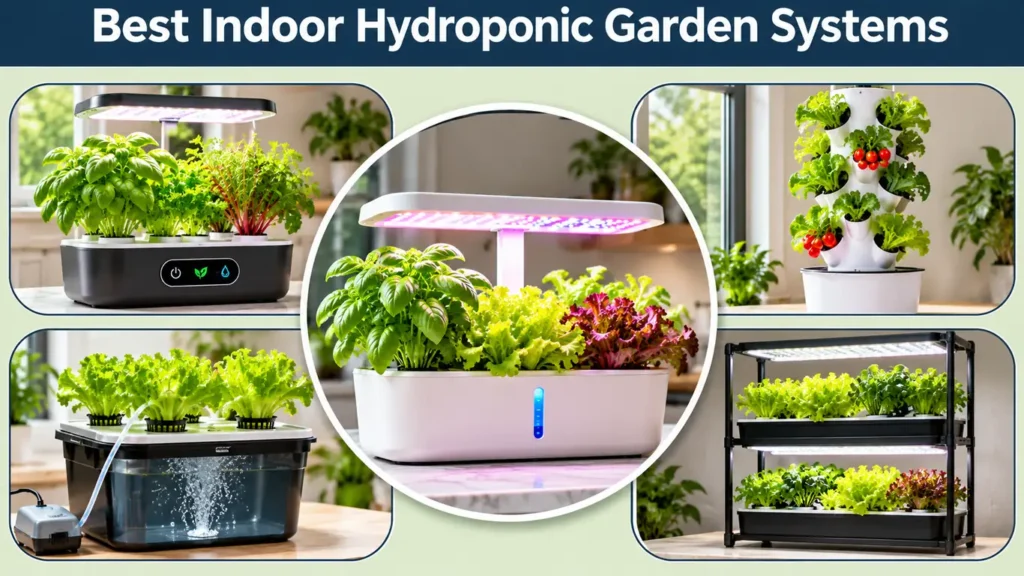
Choosing the best indoor hydroponic garden depends on your available space, gardening experience, and preferred plants. Different systems provide varying levels of automation, growing capacity, and maintenance requirements.
Understanding their differences can help you select a suitable hydroponic indoor garden system for your home.
1. Countertop Hydroponic Garden Systems
Countertop hydroponic gardens are compact units designed for kitchens, apartments, and smaller indoor spaces. Many feature integrated LED grow lights, small water reservoirs, and individual planting pods.
These systems work particularly well for basil, parsley, mint, and lettuce. Their convenient design makes them an excellent option for beginners who want to grow fresh produce without building a complicated setup.
2. Deep Water Culture Hydroponic Systems
Deep water culture (DWC) systems suspend plant roots in a nutrient solution. An air pump and air stone typically supply oxygen to submerged roots.
This design is relatively simple and suitable for leafy vegetables. It is also a popular choice for creating a DIY indoor hydroponic garden.
Regular aeration and proper nutrient management are essential for maintaining healthy root development.
3. Indoor Vertical Hydroponic Garden Towers
An indoor hydroponic garden tower grows plants vertically instead of spreading them across a horizontal surface.
Multiple planting openings allow vegetables and herbs to develop at different heights. Water and nutrients circulate through the tower to reach the roots.
These systems are useful when floor space is limited, although larger towers require sufficient lighting and regular maintenance.
4. Smart Indoor Hydroponic Garden Systems
Smart indoor hydroponic gardens incorporate automated features such as programmable LED lights, water-level alerts, and scheduled water circulation.
Some advanced models include app connectivity and reminders for nutrient replacement.
These systems reduce certain daily maintenance tasks, making them attractive to people who prefer convenient indoor gardening. However, automation does not eliminate the need to monitor plant health and nutrient conditions.
How to Choose the Best Indoor Hydroponic Garden
The best indoor hydroponic garden system should match your growing goals, budget, and available space. A compact herb garden may require only a few planting pods, while a larger vegetable garden needs greater reservoir capacity and stronger lighting.
Before purchasing an indoor hydroponic garden kit, compare its essential features carefully.
Important Features to Consider
- Growing capacity: Select enough planting spaces for your preferred vegetables or herbs.
- LED lighting: Choose adjustable grow lights appropriate for mature plant height.
- Water reservoir: Larger reservoirs generally require less frequent refilling.
- Automation: Look for useful lighting timers and water-level indicators.
- Noise level: Consider pump noise when placing a system in a bedroom or living area.
- Cleaning access: Removable components simplify routine maintenance.
- Replacement supplies: Check the availability and cost of compatible growing pods and nutrients.
Choosing Between Small and Large Systems
A small indoor hydroponic garden is generally sufficient for growing several kitchen herbs or compact leafy greens.
Larger systems offer additional planting capacity but require more space, electricity, and maintenance.
Beginners should consider starting with a manageable system before investing in a large indoor hydroponic vegetable garden.
DIY Indoor Hydroponic Garden Setup
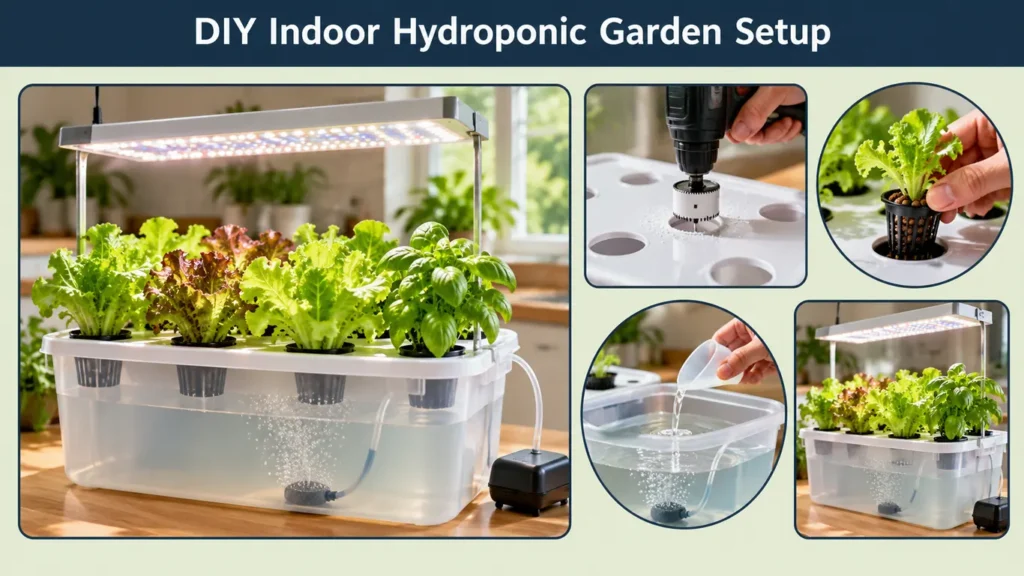
Building a DIY indoor hydroponic garden is an affordable alternative to purchasing a complete commercial system. A simple deep water culture setup can support lettuce, basil, and other compact plants.
Beginners should prioritize a lightproof reservoir, proper aeration, and reliable lighting. With basic equipment and regular monitoring, a homemade hydroponic system can provide a productive growing environment.
Materials Needed for a DIY Hydroponic Garden
Before starting, gather the following supplies:
- Food-safe, opaque plastic container with a lid
- Net pots or hydroponic growing cups
- Hydroponic growing medium
- Hydroponic nutrient solution
- Air pump, tubing, and air stone
- Full-spectrum LED grow light
- pH testing kit or digital meter
- Suitable seeds or seedlings
How to Build an Indoor Hydroponic Garden Step by Step
- Prepare the reservoir: Clean a food-safe container and create openings in its lid for net pots.
- Install the aeration system: Position an air stone inside the container and connect it to an aquarium air pump.
- Prepare the nutrient solution: Fill the reservoir with water and mix hydroponic nutrients according to the manufacturer’s instructions.
- Check the pH: Measure and adjust the nutrient solution for your chosen plants.
- Position the seedlings: Place seedlings in net pots so their developing roots can access moisture and nutrients.
- Install grow lights: Position the lights at the manufacturer’s recommended distance.
- Monitor plant development: Check water levels, nutrient concentration, root health, and lighting regularly.
Best Plants for an Indoor Hydroponic Garden
Not every plant performs equally well in an indoor hydroponic growing system. Compact vegetables, leafy greens, and herbs are generally easier to manage than large fruiting crops.
Choosing suitable varieties helps beginners achieve reliable growth without complicated equipment.
Best Herbs for Indoor Hydroponic Gardens
An indoor hydroponic herb garden provides convenient access to fresh ingredients for everyday cooking.
Basil, parsley, mint, cilantro, chives, and dill are popular choices. Most remain relatively compact and can thrive with suitable lighting and nutrients.
Basil is particularly useful for beginners because it grows quickly under favorable conditions. Mint grows vigorously but may require frequent trimming to prevent overcrowding.
Best Vegetables for Indoor Hydroponic Gardens
Leafy vegetables are especially suitable for compact hydroponic systems.
Lettuce, spinach, kale, arugula, bok choy, and Swiss chard are common choices. These plants generally require less growing space than fruiting vegetables.
Tomatoes, peppers, and cucumbers can also grow hydroponically, but they usually need stronger lighting, additional support, and more space.
Indoor Hydroponic Garden Lighting and Maintenance
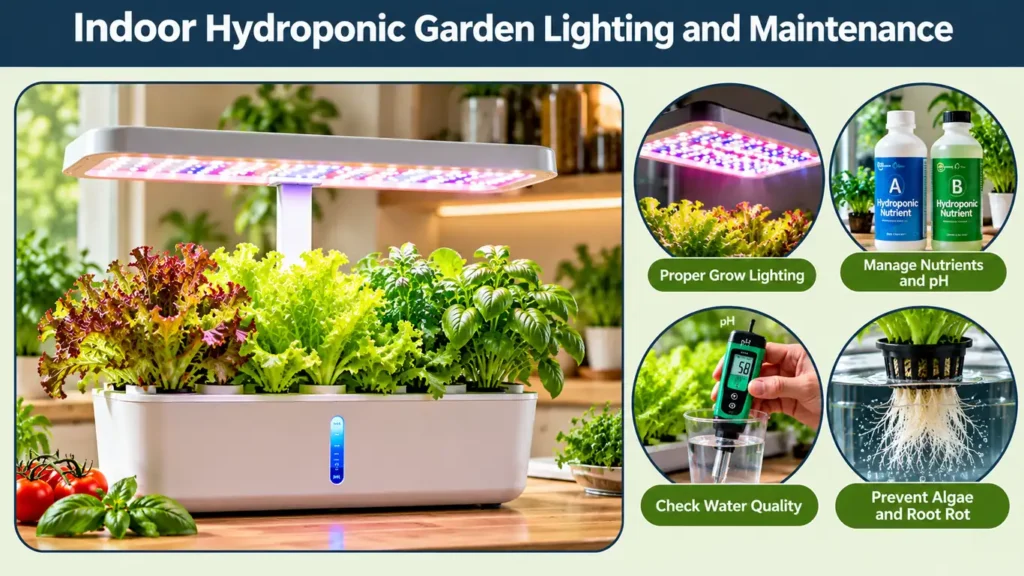
Maintaining an indoor hydroponic garden requires attention to lighting, nutrients, water quality, and plant health. Although automated systems simplify some tasks, regular monitoring remains important.
Proper care helps prevent common problems such as slow growth, yellowing leaves, algae development, and root diseases.
Providing Proper Hydroponic Grow Lighting
LED grow lights are commonly used because they provide suitable light while operating efficiently.
Many hydroponic herbs and leafy greens benefit from approximately 12–14 hours of suitable artificial lighting daily, although requirements vary by crop and light intensity.
UMN Extension
Adjustable fixtures allow you to maintain appropriate distances between the lights and growing plants.
Managing Nutrients and Water pH
Hydroponic plants need essential nutrients, including nitrogen, phosphorus, potassium, calcium, and magnesium.
Use fertilizers specifically formulated for hydroponic cultivation. Many crops perform well with nutrient-solution pH around 5.5–6.5, although individual requirements vary.
Regularly check pH, nutrient concentration, and reservoir levels to maintain healthy growing conditions.
Penn State Extension+1
Preventing Algae and Root Rot
Algae can develop when light reaches nutrient-rich water. Using opaque containers helps reduce this problem.
Root rot may occur when roots receive insufficient oxygen or pathogens establish themselves in the system.
Maintain proper aeration, clean equipment between growing cycles, and remove unhealthy plants promptly.
FAQs
1. What is the best indoor hydroponic garden for beginners?
A compact countertop hydroponic garden with integrated LED lighting is often the easiest option for beginners. Choose a system with accessible water reservoirs, simple controls, and readily available replacement supplies. Lettuce and basil are suitable plants for learning basic hydroponic maintenance.
2. Can I build a DIY indoor hydroponic garden cheaply?
Yes. A basic hydroponic garden can be constructed using a food-safe container, net pots, growing medium, and nutrient solution. Depending on the system, you may also need an air pump and LED grow light. Costs vary according to equipment quality.
3. Do indoor hydroponic gardens need sunlight?
Indoor hydroponic gardens do not necessarily require natural sunlight when suitable artificial grow lights are available. Full-spectrum LED lights can provide the energy plants need for photosynthesis. However, lighting intensity, duration, and distance must match the requirements of the plants being grown.
4. How often should I change hydroponic garden water?
Water replacement frequency depends on reservoir size, plant growth, and system design. Many small systems benefit from periodic complete nutrient-solution changes, often every few weeks. Follow the manufacturer’s instructions and regularly monitor water quality, nutrient concentration, and pH between changes.
5. Can I grow vegetables year-round in an indoor hydroponic garden?
Yes. Indoor hydroponic systems can support year-round vegetable production when appropriate lighting, temperature, nutrients, and water conditions are maintained. Leafy greens and compact herbs are particularly suitable. Larger vegetables may require stronger lighting, additional growing space, and more advanced equipment.