
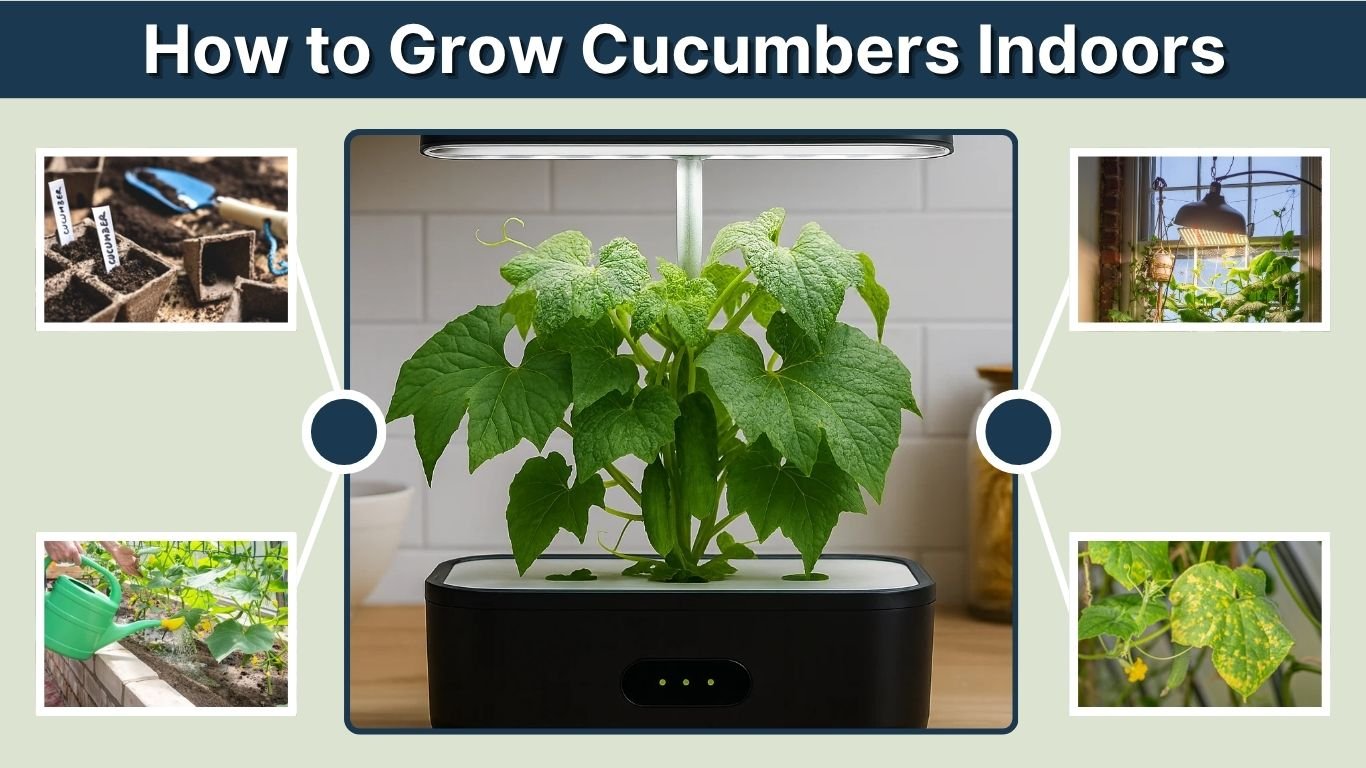
Growing cucumbers indoors is an excellent way to enjoy fresh, crunchy vegetables without needing a backyard or outdoor garden. Whether you live in an apartment, have limited space, or want to grow cucumbers during winter, indoor gardening offers a practical solution. With the right cucumber variety, containers, lighting, and watering routine, you can successfully grow productive plants throughout the year. This guide explains how to grow cucumbers indoors from seeds, maintain healthy vines, encourage fruit production, and harvest fresh cucumbers directly from your indoor garden.
Can You Grow Cucumbers Indoors Successfully?
Yes, cucumbers can grow indoors when provided with adequate light, warmth, moisture, and growing space. Although they naturally thrive outdoors, compact cucumber varieties adapt well to indoor containers. Successful cultivation depends on selecting suitable plants and maintaining consistent environmental conditions. With proper care, indoor cucumber plants can produce fresh vegetables even when outdoor temperatures are unsuitable for gardening.
Best Cucumber Varieties for Indoor Growing
Compact, bush, and parthenocarpic cucumber varieties are excellent choices for indoor gardening. Parthenocarpic cucumbers develop fruit without pollination, making them especially suitable for enclosed environments.Miniature cucumbers are convenient for apartments because their smaller fruits are easier to accommodate. Bush varieties require less vertical space, while vining varieties can grow successfully using trellises.Choose seeds labeled for greenhouse production, container gardening, or compact growth whenever possible.
Ideal Indoor Growing Environment
Cucumbers prefer temperatures around 70–80°F (21–27°C) during active growth. They also need bright lighting, consistent moisture, and adequate airflow.A sunny south-facing window may help, but supplemental grow lights are often necessary for reliable fruit production. Keep plants away from cold drafts, heating vents, and sudden temperature changes.
How to Grow Cucumbers Indoors From Seeds
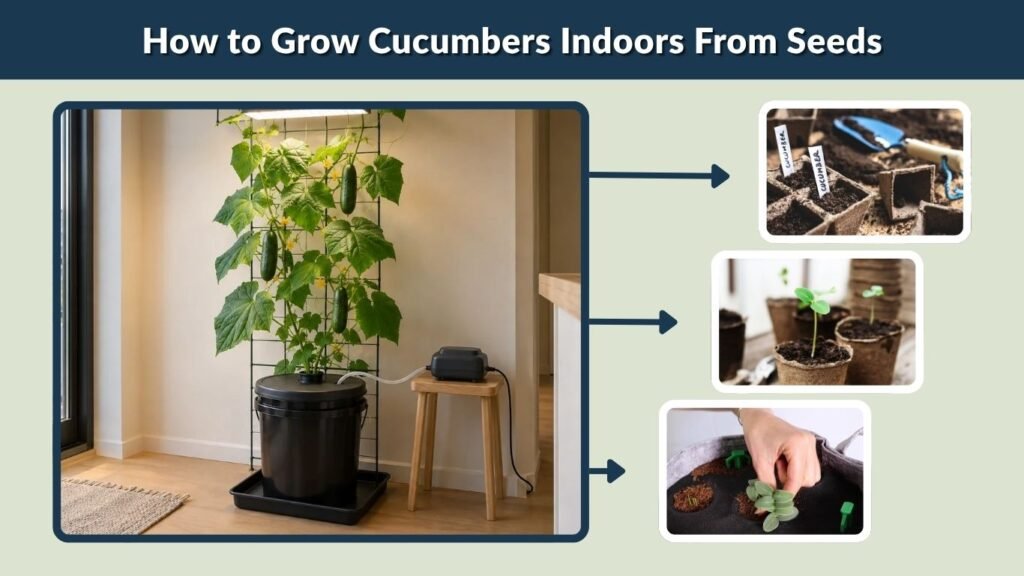
Starting cucumbers from seeds is an affordable and practical approach to indoor gardening. Cucumber seeds germinate quickly under warm conditions and develop vigorous seedlings when properly maintained. Unlike some vegetables, cucumbers dislike excessive root disturbance, so planting directly into their final containers can be beneficial. Following a simple planting process helps establish healthy roots and encourages strong early growth.
Step-by-Step Cucumber Seed Planting Guide
- Choose seeds: Select compact, bush, or parthenocarpic cucumber varieties suitable for indoor cultivation.
- Prepare containers: Use pots with drainage holes and fill them with quality potting mix.
- Plant seeds: Sow seeds approximately ½–1 inch deep in moist soil.
- Maintain warmth: Keep soil temperatures around 75–85°F (24–29°C) for germination.
- Provide moisture: Keep the growing medium consistently moist without waterlogging.
- Thin seedlings: After germination, retain the strongest seedling in each final container.
How Long Do Cucumber Seeds Take to Germinate?
Cucumber seeds generally germinate within 5–10 days under favorable conditions. Warmer soil temperatures encourage faster sprouting, while cooler temperatures can delay germination.Once seedlings emerge, provide sufficient light immediately to prevent weak, elongated stems. Healthy cucumber seedlings develop broad green leaves and sturdy stems.
Growing Cucumbers Indoors in Pots and Containers
Container gardening allows cucumbers to grow in apartments, indoor gardening rooms, and other limited spaces. However, cucumber plants develop substantial root systems and require adequate soil volume to support flowering and fruit production. Selecting appropriately sized containers and well-draining soil helps prevent root problems while maintaining sufficient moisture for continuous growth throughout the growing season.
Choosing the Right Container Size
A container holding approximately 5 gallons of potting mix is a useful starting point for one compact cucumber plant. Larger vining varieties may benefit from 7–10 gallons or more.Containers should feature sufficient drainage holes to prevent standing water. Plastic pots retain moisture longer, while fabric grow bags provide additional airflow but may require more frequent watering.
Best Soil for Indoor Cucumber Plants
Use a nutrient-rich, well-draining potting mix containing compost, coco coir or peat-based components, and perlite.Avoid heavy garden soil because it can compact inside containers and restrict root development. A slightly acidic to neutral soil pH of approximately 6.0–7.0 supports healthy cucumber growth.
Indoor Cucumber Light and Temperature Requirements
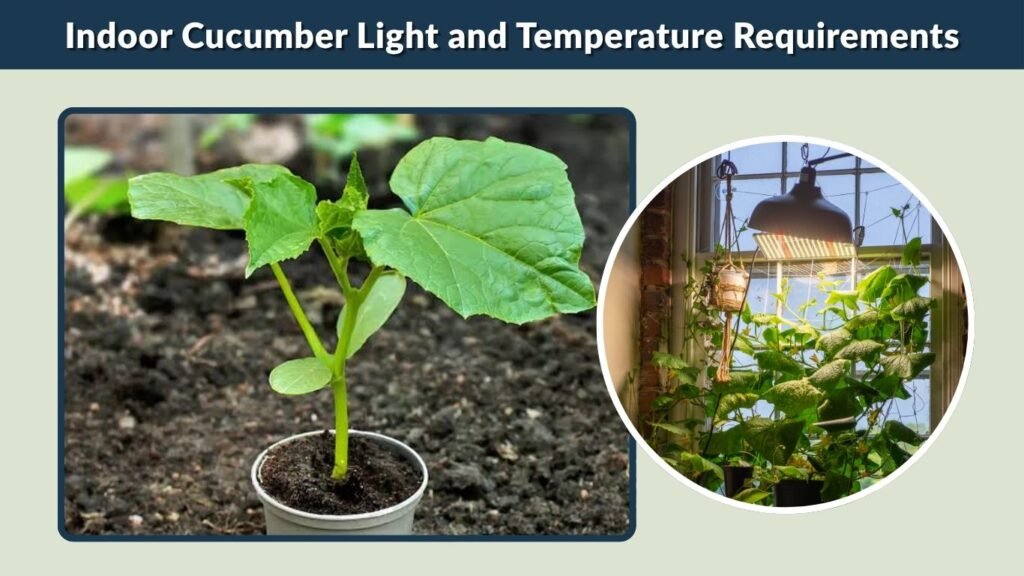
Light and temperature significantly influence cucumber growth, flowering, and fruit development. Cucumbers are warm-season vegetables that need sufficient energy to produce healthy vines and edible fruits. Indoor environments sometimes lack adequate natural sunlight, particularly during winter. Maintaining suitable temperatures and using supplemental lighting can improve plant performance and support more consistent cucumber production.
Growing Cucumbers Indoors Under Grow Lights
- Light duration: Provide approximately 14–16 hours of artificial lighting daily.
- Light type: Use full-spectrum LED grow lights suitable for fruiting vegetables.
- Light placement: Position lights according to manufacturer recommendations and adjust as plants grow.
- Dark period: Allow approximately 8–10 hours of darkness for normal plant development.
- Light coverage: Ensure the entire plant canopy receives adequate illumination.
Maintaining Suitable Indoor Temperatures
Maintain daytime temperatures around 70–80°F (21–27°C), with somewhat cooler nighttime conditions.Temperatures below 60°F (16°C) may slow growth, while excessive heat can interfere with flowering and fruit development.Use a thermometer to monitor growing conditions and protect plants from sudden temperature fluctuations.
Watering and Fertilizing Indoor Cucumbers
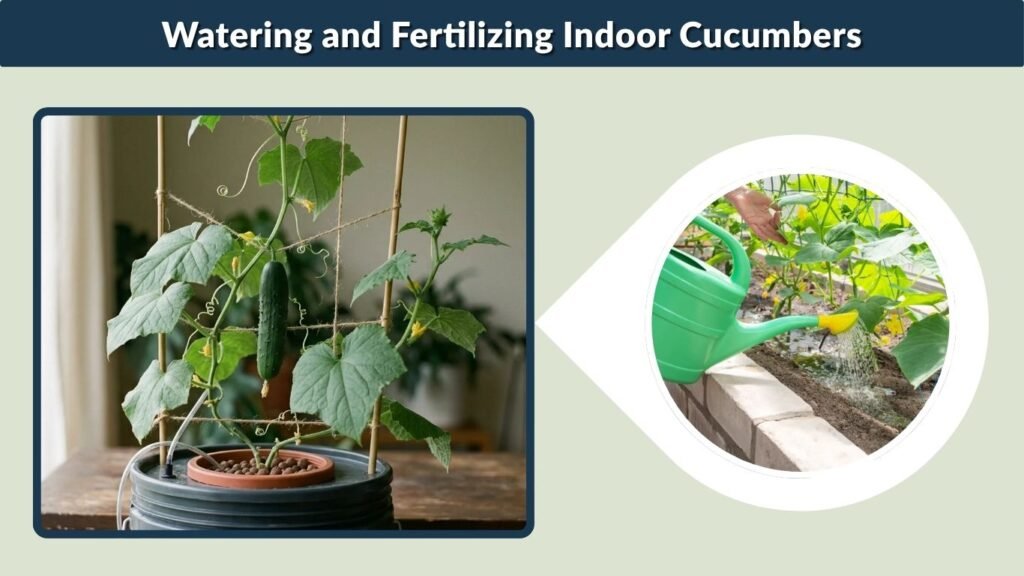
Indoor cucumbers require consistent moisture and balanced nutrition to maintain healthy leaves, strong roots, and productive vines. Container-grown plants can dry out quickly, particularly beneath grow lights. However, excessive watering may damage roots and encourage fungal problems. Establishing a reliable watering and fertilizing routine supports continuous growth while reducing common problems associated with indoor cucumber cultivation.
How Often Should You Water Indoor Cucumbers?
Check soil moisture regularly and water when the upper inch feels slightly dry. Water thoroughly until excess moisture drains from the container.Avoid allowing plants to remain in standing water. During flowering and fruit development, cucumber plants may require more frequent watering because their moisture demands increase.
Best Fertilizer for Indoor Cucumbers
Apply a balanced, water-soluble vegetable fertilizer according to the manufacturer’s instructions.Once flowering begins, use a fertilizer formulated for fruiting vegetables if necessary. Avoid excessive nitrogen because it encourages leafy growth at the expense of fruit production.
Supporting and Pollinating Indoor Cucumber Plants
Indoor cucumber plants may need structural support and assistance with pollination, depending on the variety. Vining cucumbers naturally climb using tendrils, making vertical growing systems practical for limited spaces. Meanwhile, traditional cucumber varieties usually depend on pollen transfer between flowers. Understanding these requirements helps prevent tangled vines, damaged stems, and disappointing fruit production during indoor cultivation.
Growing Cucumbers Vertically Indoors
- Install a trellis: Use a sturdy vertical trellis or garden netting.
- Train young vines: Gently guide growing stems toward their support.
- Secure stems: Attach vines loosely using soft garden ties.
- Maintain airflow: Prevent excessive overcrowding between leaves.
- Inspect regularly: Adjust supports as vines become longer and heavier.
How to Pollinate Cucumbers Indoors
Traditional cucumber varieties produce separate male and female flowers. Female flowers have a small, immature cucumber directly behind their petals.To hand-pollinate, transfer pollen from a newly opened male flower onto the stigma of a female flower using a soft brush.Parthenocarpic varieties eliminate this requirement because they develop fruit without pollination.
Growing Cucumbers Indoors During Winter
Winter cucumber cultivation is possible when indoor environmental conditions remain favorable. Shorter daylight hours, colder windows, and fluctuating indoor temperatures can reduce plant performance. However, artificial lighting and controlled temperatures allow gardeners to extend their growing season. Indoor winter gardening requires additional attention to humidity, watering, and airflow to encourage healthy cucumber development despite unfavorable outdoor weather.
How to Grow Cucumbers Indoors in Winter
Provide full-spectrum grow lights for approximately 14–16 hours daily and maintain warm temperatures.Keep containers away from cold windows, especially overnight. Maintain consistent moisture without saturating the soil, and use gentle airflow to discourage fungal growth.A compact, parthenocarpic cucumber variety can simplify winter cultivation by reducing space and pollination requirements.
Common Indoor Cucumber Growing Problems
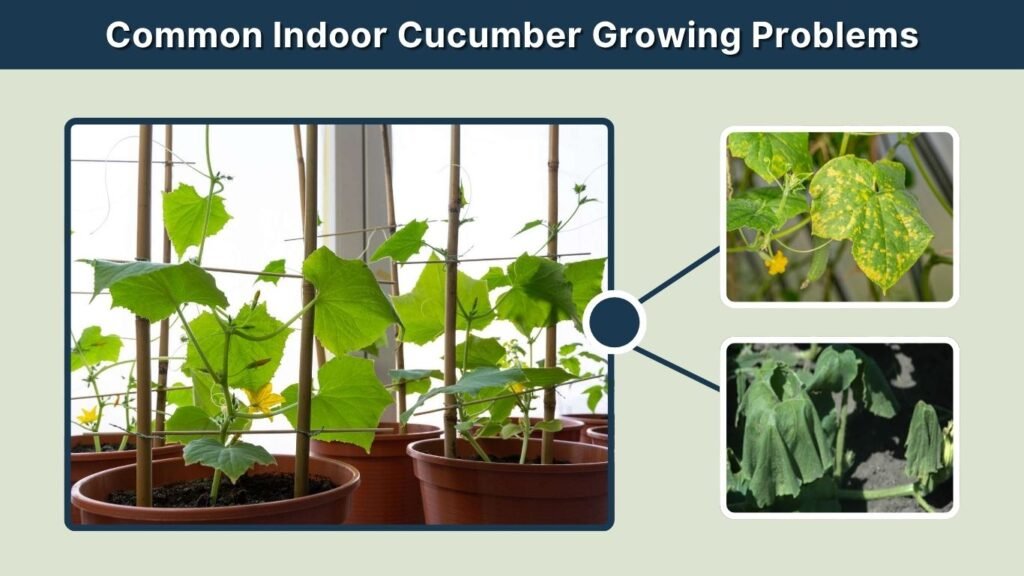
Even under controlled indoor conditions, cucumber plants occasionally develop growth problems. Yellowing leaves, weak vines, poor flowering, and unsuccessful fruit development often indicate environmental or maintenance issues. Identifying symptoms early allows gardeners to adjust their care routines before plants become severely stressed. Regular inspection is especially important when growing cucumbers in small containers or enclosed indoor environments.
Common Problems and Their Solutions
- Yellow leaves: Check for excessive watering, inadequate nutrition, or insufficient lighting.
- Weak seedlings: Increase light intensity and avoid overcrowding.
- Flowers without fruit: Check pollination requirements and growing conditions.
- Wilting leaves: Examine soil moisture and root health.
- Powdery mildew: Improve airflow, reduce leaf wetness, and remove severely affected foliage.
- Slow growth: Evaluate temperature, light intensity, container size, and fertilizer application.
When and How to Harvest Indoor Cucumbers
Harvesting cucumbers at the correct maturity encourages continued fruit production and maintains desirable flavor and texture. Indoor cucumber varieties differ in their fruit sizes and harvesting requirements. Miniature cucumbers often mature earlier than larger slicing types. Frequent harvesting also prevents oversized fruits from remaining on the vine and consuming resources that could support additional cucumber development.
How Long Does It Take to Grow Cucumbers Indoors?
Many cucumber varieties begin producing harvestable fruits approximately 50–70 days after sowing, although timing varies with variety, lighting, temperature, and growing conditions.Harvest cucumbers when they reach the recommended size for their variety and remain firm and evenly colored.Use clean scissors or pruning shears to cut fruits from the vine without damaging the plant.
FAQs
1. Can You Grow Cucumbers Indoors Year-Round?
Yes, cucumbers can grow indoors year-round when provided with adequate lighting, warmth, nutrients, and moisture. However, individual plants eventually decline and require replacement.
2. Can You Grow Mini Cucumbers Indoors?
Yes, mini cucumbers are suitable for indoor gardening. Compact, parthenocarpic varieties are especially convenient because they require less space and do not need pollination.
3. Can Cucumbers Grow Indoors Without Sunlight?
Cucumbers can grow without natural sunlight when suitable artificial grow lights provide sufficient light intensity and duration for flowering and fruit production.
4. Can You Grow Cucumbers Hydroponically Indoors?
Yes, cucumbers can grow in indoor hydroponic systems using nutrient-rich water, appropriate lighting, root-zone aeration, and suitable structural support.
5. How Many Cucumbers Can One Indoor Plant Produce?
Production varies depending on cucumber variety, lighting, nutrition, and growing conditions. Healthy plants may produce numerous fruits across several weeks, particularly when harvested regularly.