

Pothos plants are among the most popular indoor houseplants, admired for their beautiful foliage, trailing vines, and easy maintenance. Available in various colors, patterns, and leaf shapes, these tropical plants bring natural beauty to any indoor space. From Golden Pothos to Baltic Blue, each variety offers unique characteristics. Explore 12 types of pothos plants to find the perfect addition to your indoor garden.
1. Golden Pothos
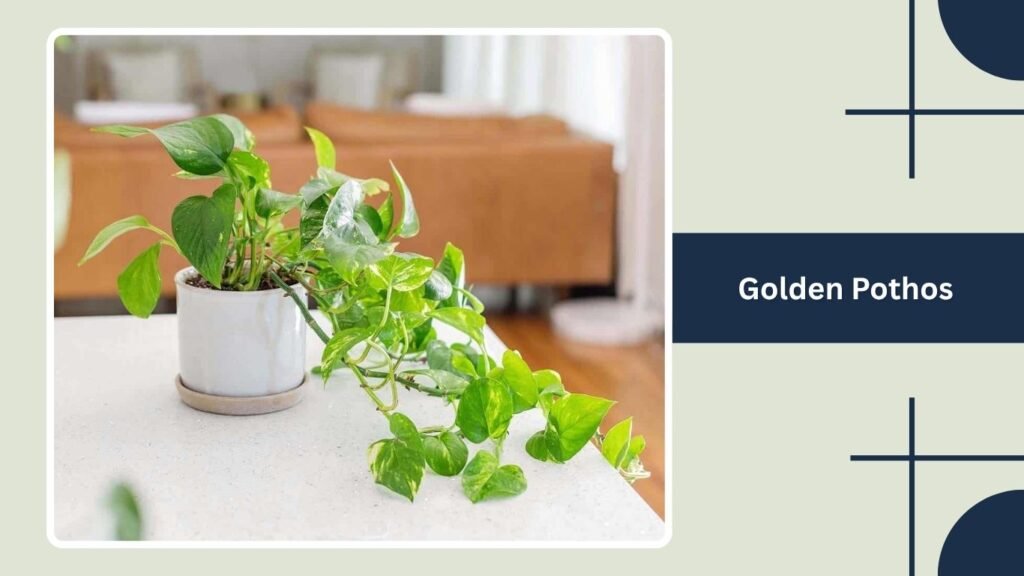
The Golden Pothos (Epipremnum aureum) is one of the most popular indoor houseplants, admired for its heart-shaped green leaves decorated with beautiful golden-yellow variegation. This tropical climbing vine is especially suitable for beginners because it grows quickly, tolerates different lighting conditions, and requires minimal maintenance. Its trailing stems make it an attractive choice for hanging baskets, shelves, and indoor plant displays. Golden Pothos is also valued for its versatility, as it can grow in soil or water and adapt to various indoor environments.
Identification
- Common Name: Golden Pothos
- Scientific Name: Epipremnum aureum
- Family: Araceae
- Plant Type: Evergreen tropical climbing vine
- Leaf Color: Green with golden-yellow variegation
- Leaf Shape: Heart-shaped, glossy leaves
- Plant Height: Trails or climbs several feet indoors
- Growth Rate: Moderate to fast
- Light Requirements: Bright, indirect sunlight preferred
- Water Requirements: Moderate; allow the top layer of soil to dry
- Propagation Method: Stem cuttings with nodes
Habitat and Growing Conditions
Golden Pothos originates from the tropical forests of French Polynesia, where it naturally grows as a climbing vine. In its native environment, the plant uses aerial roots to attach itself to trees and other surfaces while reaching toward available sunlight.
Indoors, Golden Pothos thrives in bright, indirect light, which helps maintain its beautiful yellow and green leaf patterns. Although it tolerates lower light levels, insufficient sunlight may cause the golden variegation to fade.
Temperatures between 65°F and 85°F (18°C–29°C) are ideal for healthy growth. The plant prefers well-draining potting soil and moderate humidity but can adapt to ordinary household conditions.
Watering and Maintenance
Golden Pothos requires regular but moderate watering to maintain healthy foliage. Water when the top 1–2 inches of soil feel dry, allowing excess moisture to drain freely from the container.
Overwatering can lead to yellowing leaves, root rot, and weakened growth. Conversely, prolonged underwatering may cause the leaves to droop or develop brown edges.
During spring and summer, the plant generally requires more frequent watering because growth is more active. Watering should be reduced during winter when growth naturally slows.
Occasional pruning encourages fuller growth by stimulating new shoots. Applying a balanced, diluted houseplant fertilizer during the growing season can also support healthy leaf development.
Growth, Propagation, and Lifespan
Golden Pothos is a vigorous climbing and trailing vine that can grow several feet long under favorable indoor conditions. Its flexible stems make it suitable for hanging baskets, wall decorations, moss poles, and climbing supports.
Propagation is relatively simple using stem cuttings containing at least one node. These cuttings can develop roots in water or moist potting soil, making Golden Pothos an excellent plant for beginners interested in propagation.
With proper care, Golden Pothos can live for many years and continue producing attractive foliage throughout its lifespan. Its fast growth, colorful leaves, and adaptability make it a dependable choice for indoor gardening.
2. Marble Queen Pothos
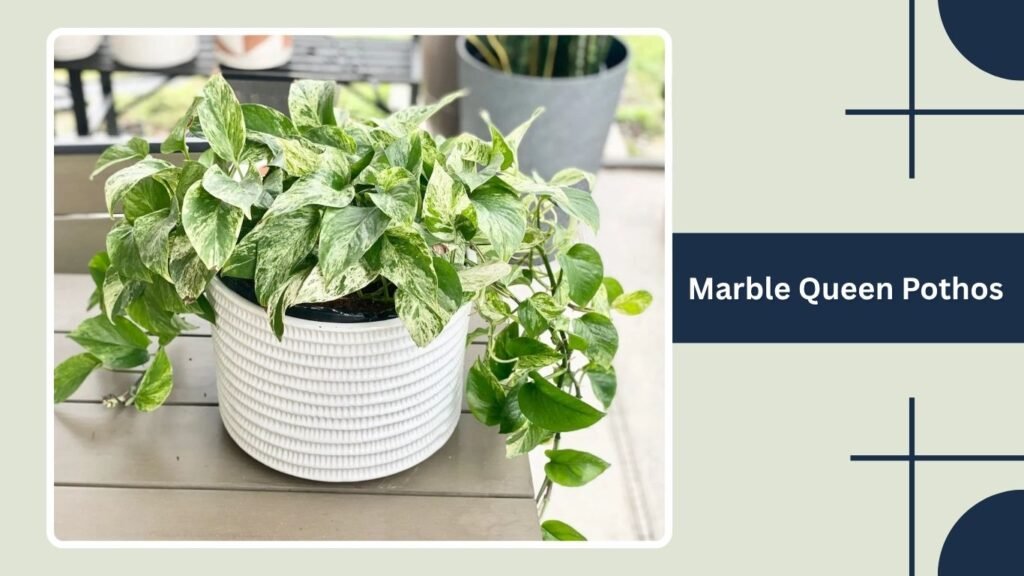
The Marble Queen Pothos (Epipremnum aureum ‘Marble Queen’) is an elegant indoor houseplant admired for its striking green and creamy-white marbled foliage. Each heart-shaped leaf features a unique combination of colors, creating an attractive appearance that brightens indoor spaces. This tropical climbing vine is especially popular for hanging baskets, decorative shelves, and indoor plant collections. Although Marble Queen grows more slowly than Golden Pothos, it remains relatively easy to maintain and is an excellent choice for plant enthusiasts seeking colorful foliage.
Identification
- Common Name: Marble Queen Pothos
- Scientific Name: Epipremnum aureum ‘Marble Queen’
- Family: Araceae
- Plant Type: Evergreen tropical climbing vine
- Leaf Color: Green with creamy-white marbled variegation
- Leaf Shape: Heart-shaped, glossy leaves
- Plant Length: Several feet when grown indoors
- Growth Rate: Slow to moderate
- Light Requirements: Bright, indirect sunlight
- Water Requirements: Moderate; allow the upper soil to dry
- Propagation Method: Stem cuttings with nodes
Habitat and Growing Conditions
Marble Queen Pothos is a cultivated variety of Epipremnum aureum, a tropical climbing species originating from French Polynesia. It grows best in warm environments with adequate humidity and well-draining soil.
Bright, indirect sunlight is particularly important for maintaining the plant’s beautiful white and green variegation. In low-light conditions, the leaves may develop more green coloration, and growth may slow considerably.
Temperatures between 65°F and 85°F (18°C–29°C) generally support healthy development. A loose potting mixture containing perlite or orchid bark can improve drainage and root aeration.
Watering and Maintenance
Marble Queen Pothos requires moderate watering to maintain healthy roots and attractive foliage. Water when the upper 1–2 inches of soil become dry, rather than following a fixed watering schedule.
Overwatering can cause yellow leaves, root rot, and weakened stems. Containers with drainage holes are essential for preventing excessive moisture accumulation.
During spring and summer, occasional applications of diluted balanced fertilizer can encourage healthy growth. Pruning long vines helps maintain a compact appearance and encourages branching.Cleaning accumulated dust from the leaves also helps the plant receive sufficient light.
Growth, Propagation, and Lifespan
Marble Queen Pothos develops trailing or climbing stems that gradually produce beautiful variegated leaves. Its growth is usually slower than that of greener pothos varieties because the pale sections of its foliage contain less chlorophyll.
Propagation is commonly accomplished through stem cuttings containing at least one healthy node. These cuttings can develop roots in water or moist potting soil.
With proper care, Marble Queen can remain healthy for many years. Its distinctive marbled foliage makes it an attractive choice for hanging planters, bookshelves, living rooms, and bright office spaces.
3. Neon Pothos
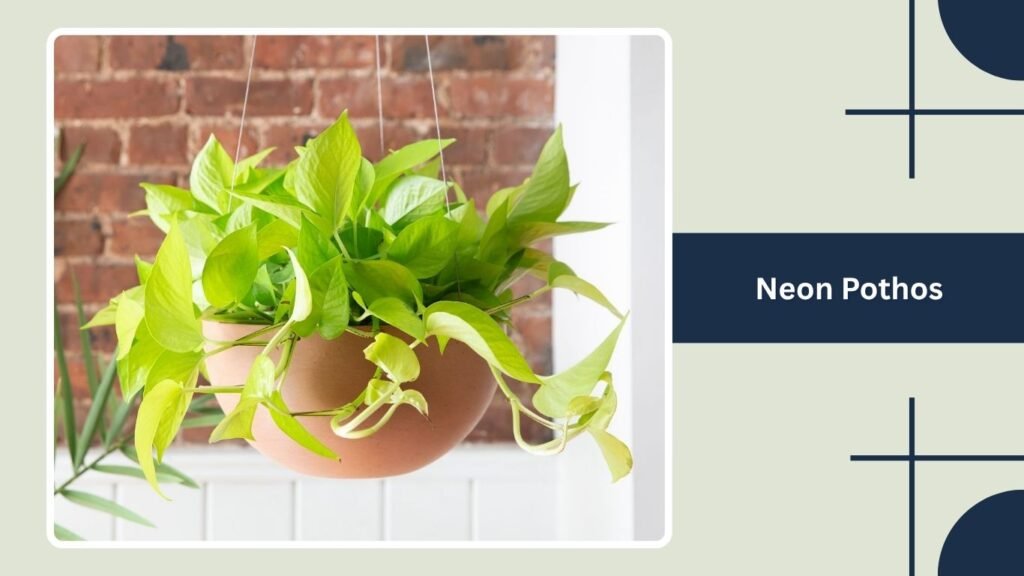
The Neon Pothos (Epipremnum aureum ‘Neon’) is a vibrant indoor houseplant recognized for its brilliant lime-green to chartreuse foliage. Unlike traditional pothos varieties featuring green and yellow markings, Neon Pothos typically produces uniformly colored leaves that brighten indoor environments. Its heart-shaped foliage and trailing growth habit make it especially attractive in hanging baskets, shelves, and decorative containers. This tropical vine is also appreciated for its relatively fast growth, adaptability, and straightforward maintenance, making it a popular choice for beginners and experienced indoor gardeners.
Identification
- Common Name: Neon Pothos
- Scientific Name: Epipremnum aureum ‘Neon’
- Family: Araceae
- Plant Type: Evergreen tropical climbing vine
- Leaf Color: Bright lime-green to chartreuse
- Leaf Shape: Heart-shaped, smooth, glossy leaves
- Plant Length: Several feet indoors
- Growth Rate: Moderate to fast
- Light Requirements: Medium to bright indirect light
- Water Requirements: Moderate
- Propagation Method: Stem cuttings with nodes
Habitat and Growing Conditions
Neon Pothos is a cultivated variety of Epipremnum aureum, a tropical climbing vine that naturally grows in warm, humid environments. Its flexible stems and aerial roots allow it to climb surfaces or trail from elevated containers.
Bright indirect sunlight helps maintain its vibrant lime-green coloration. Although Neon Pothos tolerates lower lighting conditions, prolonged shade may cause its leaves to develop darker green tones.
Temperatures between 65°F and 85°F are generally suitable. The plant prefers a well-draining potting mixture and ordinary to moderately high indoor humidity.
Watering and Maintenance
Neon Pothos requires watering when the upper portion of its soil becomes dry. Keeping the growing medium consistently saturated can damage the roots and cause yellowing foliage.
A container with drainage holes helps excess water escape and promotes healthy root development. Watering frequency depends on temperature, light exposure, and pot size.
During active growth, occasional applications of diluted houseplant fertilizer can support healthy foliage. Pruning excessively long vines encourages branching and creates a fuller appearance.Remove damaged or yellowing leaves when necessary to maintain the plant’s attractive appearance.
Growth, Propagation, and Lifespan
Neon Pothos develops long, flexible vines covered with bright heart-shaped leaves. Its trailing growth habit makes it suitable for hanging baskets, climbing supports, and decorative plant shelves.
Propagation is simple through stem cuttings containing healthy nodes. These cuttings can develop roots in water or directly in moist potting soil.Under favorable growing conditions, Neon Pothos can produce substantial new growth during spring and summer. With proper indoor care, the plant can survive for many years.
Its brilliant foliage provides a colorful contrast against darker houseplants, making it particularly useful for creating visually appealing indoor plant arrangements.
4. Jade Pothos
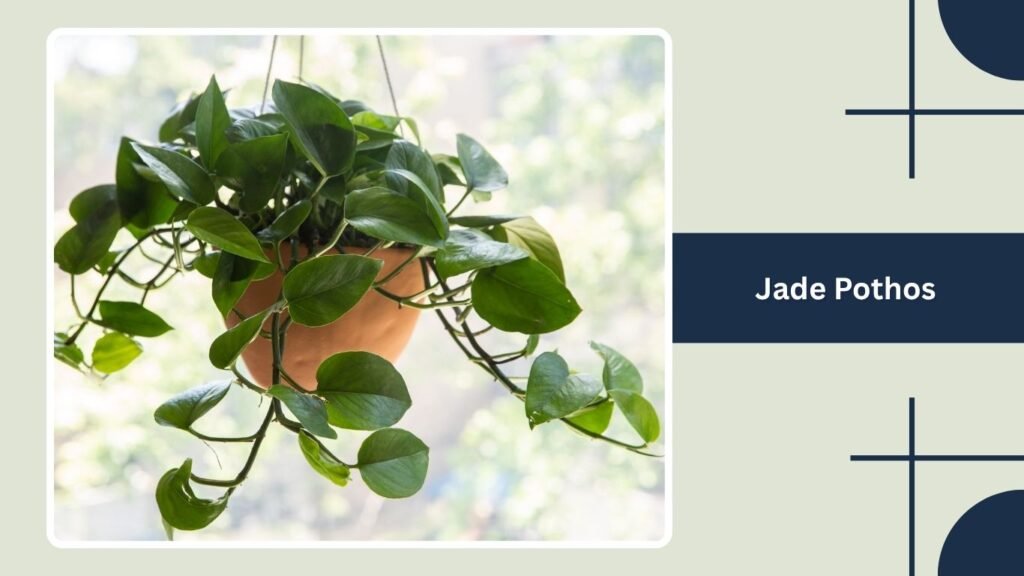
The Jade Pothos (Epipremnum aureum ‘Jade’) is a classic indoor houseplant admired for its rich, solid green foliage and vigorous trailing growth. Unlike variegated pothos varieties, Jade Pothos generally produces uniformly green, heart-shaped leaves without noticeable yellow or white patterns. Its simple appearance makes it an excellent choice for indoor spaces where natural greenery is preferred. This hardy tropical vine is particularly popular because it tolerates relatively low light, grows quickly under favorable conditions, and requires minimal maintenance compared with many other indoor plants.
Identification
- Common Name: Jade Pothos
- Scientific Name: Epipremnum aureum ‘Jade’
- Family: Araceae
- Plant Type: Evergreen tropical climbing vine
- Leaf Color: Solid medium to dark green
- Leaf Shape: Heart-shaped, glossy leaves
- Plant Length: Several feet indoors
- Growth Rate: Moderate to fast
- Light Requirements: Low to bright indirect light
- Water Requirements: Moderate
- Propagation Method: Stem cuttings with nodes
Habitat and Growing Conditions
Jade Pothos is a green-leaved cultivated form of Epipremnum aureum, a tropical species native to French Polynesia. Its natural climbing habit allows it to grow along trees and other supports in warm environments.
Indoors, Jade Pothos adapts well to a range of lighting conditions. Although bright indirect light encourages stronger growth, it can tolerate lower light levels better than many heavily variegated pothos varieties.
Temperatures between 65°F and 85°F generally support healthy development. The plant prefers well-draining soil and benefits from moderate humidity, although it adapts to typical household environments.
Watering and Maintenance
Jade Pothos requires moderate watering and should be allowed to dry slightly between watering sessions. Water when the upper 1–2 inches of soil feel dry.Overwatering may cause yellow leaves, root rot, and weakened stems. Using a container with adequate drainage helps prevent excess moisture from accumulating around the root system.
During spring and summer, occasional feeding with diluted balanced fertilizer can encourage healthy growth. Pruning long stems helps maintain the plant’s desired size and promotes a bushier appearance.
Dusting the foliage occasionally keeps the leaves clean and attractive.
Growth, Propagation, and Lifespan
Jade Pothos grows as a trailing or climbing vine, producing long stems covered with glossy green leaves. When provided with a moss pole or other vertical support, the plant may develop larger mature foliage.
Propagation is easily accomplished through stem cuttings containing one or more nodes. These cuttings can root in water or moist potting soil.With suitable growing conditions, Jade Pothos can survive for many years and develop impressive trailing vines.
Its durable nature, attractive foliage, and adaptability make it an excellent choice for bedrooms, offices, hanging planters, and indoor gardening beginners.
5. N’Joy Pothos
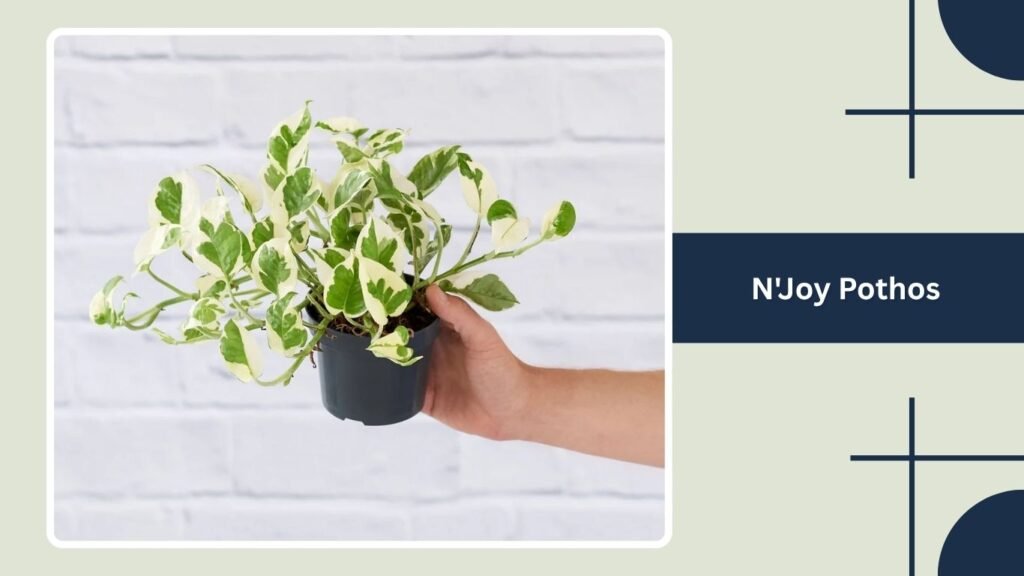
The N’Joy Pothos (Epipremnum aureum ‘N’Joy’) is a compact and beautifully variegated indoor plant recognized for its small, heart-shaped leaves decorated with crisp green and creamy-white patterns. Unlike Marble Queen Pothos, which features a more blended marbled appearance, N’Joy typically displays distinct patches of green and white coloration. Its relatively compact foliage and trailing stems make it particularly suitable for tabletop planters, hanging baskets, and decorative shelves. This attractive cultivar is popular among indoor gardeners who appreciate colorful foliage and manageable growth.
Identification
- Common Name: N’Joy Pothos
- Scientific Name: Epipremnum aureum ‘N’Joy’
- Family: Araceae
- Plant Type: Evergreen tropical climbing vine
- Leaf Color: Green with creamy-white variegation
- Leaf Shape: Small, heart-shaped leaves
- Plant Length: Several feet with maturity
- Growth Rate: Slow to moderate
- Light Requirements: Bright indirect light preferred
- Water Requirements: Moderate
- Propagation Method: Stem cuttings with nodes
Habitat and Growing Conditions
N’Joy Pothos is a cultivated variety of Epipremnum aureum, a tropical climbing species adapted to warm, humid conditions. Its variegated foliage requires adequate indirect light to maintain strong contrasting colors.
Bright indirect sunlight encourages healthy development and helps preserve the distinctive green and white leaf patterns. In low-light environments, growth may slow, and new leaves may develop less prominent variegation.
Temperatures between 65°F and 85°F are generally suitable. A loose, well-draining potting mixture helps promote healthy roots and reduces the risk of waterlogging.
Watering and Maintenance
N’Joy Pothos requires watering when the upper portion of the soil becomes dry. Although the plant appreciates moderate moisture, constantly wet soil can cause root rot.
A container with drainage holes is important for maintaining proper moisture levels. During cooler months, watering requirements usually decrease because plant growth slows.Occasional pruning helps encourage fuller growth and maintains a compact shape. Applying diluted fertilizer during spring and summer can support healthy foliage development.
Avoid exposing the plant to intense direct afternoon sunlight, which may scorch its delicate white leaf sections.
Growth, Propagation, and Lifespan
N’Joy Pothos produces slender trailing vines with small, attractively patterned leaves. Compared with larger pothos varieties, its foliage creates a more delicate decorative appearance.
Propagation is accomplished through stem cuttings containing healthy nodes. Cuttings can develop roots in water or moist potting soil, making it easy to establish additional plants.
With proper indoor care, N’Joy can live for many years. Its colorful foliage and relatively compact growth habit make it an excellent choice for decorative containers, office desks, shelves, and small apartments.
6. Pearls and Jade Pothos
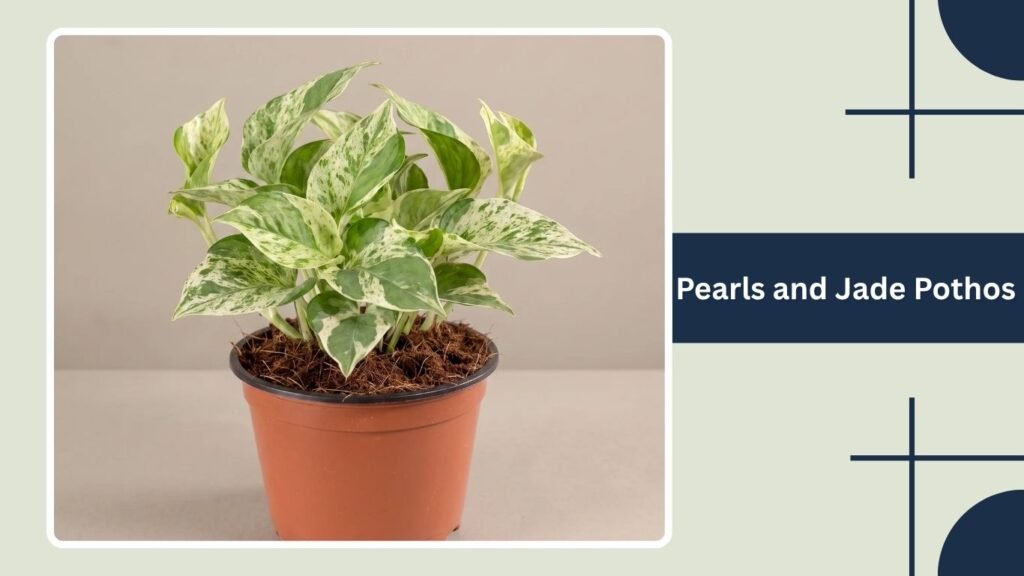
The Pearls and Jade Pothos (Epipremnum aureum ‘Pearls and Jade’) is a decorative indoor climbing vine admired for its intricate green, white, and grayish-green variegation. Its relatively small, heart-shaped leaves display irregular patches and speckles that create a delicate, patterned appearance. Compared with other pothos varieties, Pearls and Jade often features noticeable green flecks within the lighter leaf sections. This attractive cultivar is especially suitable for hanging baskets, shelves, and compact indoor gardens. Its manageable growth habit and modest maintenance requirements make it popular among houseplant enthusiasts.
Identification
- Common Name: Pearls and Jade Pothos
- Scientific Name: Epipremnum aureum ‘Pearls and Jade’
- Family: Araceae
- Plant Type: Evergreen tropical climbing vine
- Leaf Color: Green, creamy-white, and grayish-green variegation
- Leaf Shape: Small, heart-shaped leaves
- Plant Length: Several feet indoors
- Growth Rate: Slow to moderate
- Light Requirements: Bright indirect sunlight
- Water Requirements: Moderate
- Propagation Method: Stem cuttings with nodes
Habitat and Growing Conditions
Pearls and Jade Pothos was developed as a cultivated selection of Epipremnum aureum. Like other pothos varieties, it grows best in warm environments with well-draining soil and adequate humidity.
Bright indirect sunlight helps maintain the attractive mixture of green and white foliage. Prolonged low-light conditions may reduce growth and affect the intensity of its variegation.
Temperatures between 65°F and 85°F generally provide favorable conditions. A potting mixture containing perlite or orchid bark improves drainage and allows sufficient airflow around the roots.
Watering and Maintenance
Pearls and Jade Pothos requires moderate watering to maintain healthy foliage. Water when the upper 1–2 inches of soil feel dry, allowing excess moisture to drain completely.
Overwatering can lead to yellowing leaves, damaged roots, and weakened growth. Avoid leaving water in saucers or decorative containers for extended periods.
During the active growing season, occasional applications of diluted balanced fertilizer can support healthy leaf development. Pruning long vines helps maintain a fuller appearance and prevents excessive legginess.Its variegated leaves should also be protected from intense direct sunlight, which may cause scorching.
Growth, Propagation, and Lifespan
Pearls and Jade Pothos grows as a trailing or climbing vine, producing small leaves with unique combinations of green, cream, and silver-green markings.
Its relatively slow growth makes it suitable for smaller decorative arrangements. When allowed to trail, the stems gradually extend over the edges of containers, creating an attractive cascading appearance.Propagation is easily accomplished through stem cuttings containing healthy nodes. These cuttings can develop roots in water or directly in moist potting soil.
With suitable indoor care, Pearls and Jade Pothos can survive for many years. Its detailed foliage patterns and manageable size make it an excellent choice for shelves, hanging baskets, and indoor plant collections.
7. Manjula Pothos
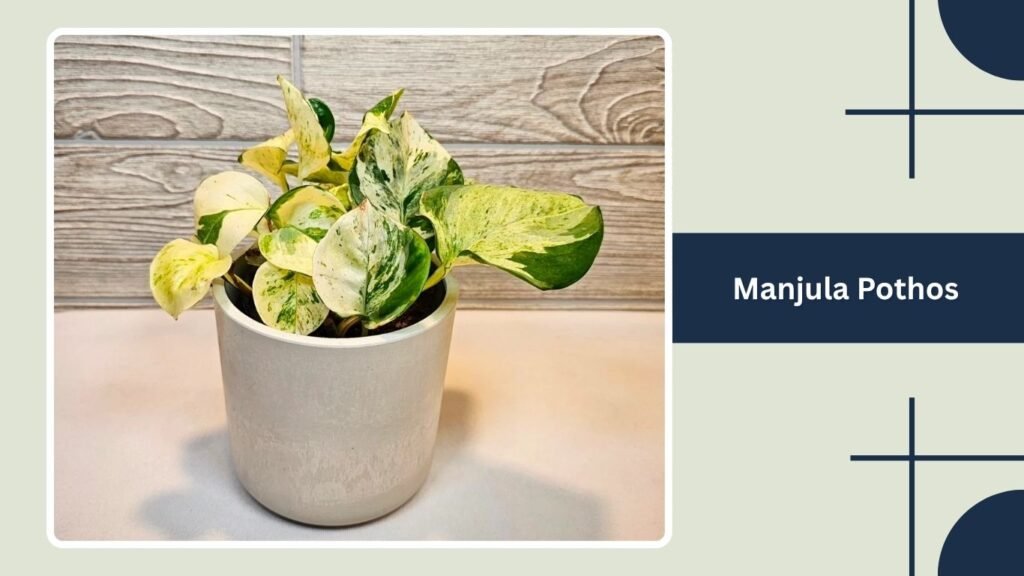
The Manjula Pothos (Epipremnum aureum ‘Manjula’) is a beautiful indoor houseplant admired for its broad, heart-shaped leaves featuring creamy-white, green, and silvery-green variegation. Unlike traditional pothos varieties, Manjula often develops slightly wavy leaf edges, giving its foliage a distinctive appearance. Its irregular color patterns make every leaf unique, adding visual interest to indoor gardens. This tropical climbing vine is especially popular among houseplant collectors because of its attractive foliage, manageable growth habit, and relatively simple maintenance requirements.
Identification
- Common Name: Manjula Pothos
- Scientific Name: Epipremnum aureum ‘Manjula’
- Family: Araceae
- Plant Type: Evergreen tropical climbing vine
- Leaf Color: Creamy-white, green, and silvery-green
- Leaf Shape: Broad, heart-shaped leaves with slightly wavy edges
- Plant Length: Several feet indoors
- Growth Rate: Slow to moderate
- Light Requirements: Bright, indirect sunlight
- Water Requirements: Moderate
- Propagation Method: Stem cuttings containing nodes
Habitat and Growing Conditions
Manjula Pothos is a cultivated variety of Epipremnum aureum, a tropical climbing species native to French Polynesia. It grows best in warm indoor environments with adequate humidity and well-draining soil.
Bright, indirect sunlight is essential for maintaining its distinctive creamy-white and green variegation. Although Manjula can tolerate moderate light, prolonged low-light conditions may result in slower growth and less colorful foliage.
Temperatures between 65°F and 85°F (18°C–29°C) generally support healthy development. A loose potting mixture containing perlite, coco coir, or orchid bark provides suitable drainage and root aeration.
Watering and Maintenance
Manjula Pothos requires moderate watering to maintain healthy foliage and roots. Water when the upper 1–2 inches of soil feel dry, allowing excess moisture to drain from the container.
Overwatering may cause yellow leaves, root rot, and weakened stems. Its highly variegated leaves can also develop brown patches when exposed to intense direct sunlight or excessive environmental stress.
During spring and summer, occasional applications of diluted balanced fertilizer support healthy growth. Pruning long vines encourages branching and helps maintain a fuller appearance.
Growth, Propagation, and Lifespan
Manjula Pothos develops trailing or climbing stems covered with uniquely patterned leaves. Because its foliage contains large creamy-white sections with reduced chlorophyll, it often grows more slowly than solid-green pothos varieties.
Propagation is commonly performed through stem cuttings containing at least one healthy node. These cuttings can develop roots in water or moist potting soil.
With proper care, Manjula can survive for many years. Its colorful foliage and attractive growth habit make it an excellent choice for decorative shelves, hanging baskets, and indoor plant collections.
8. Cebu Blue Pothos
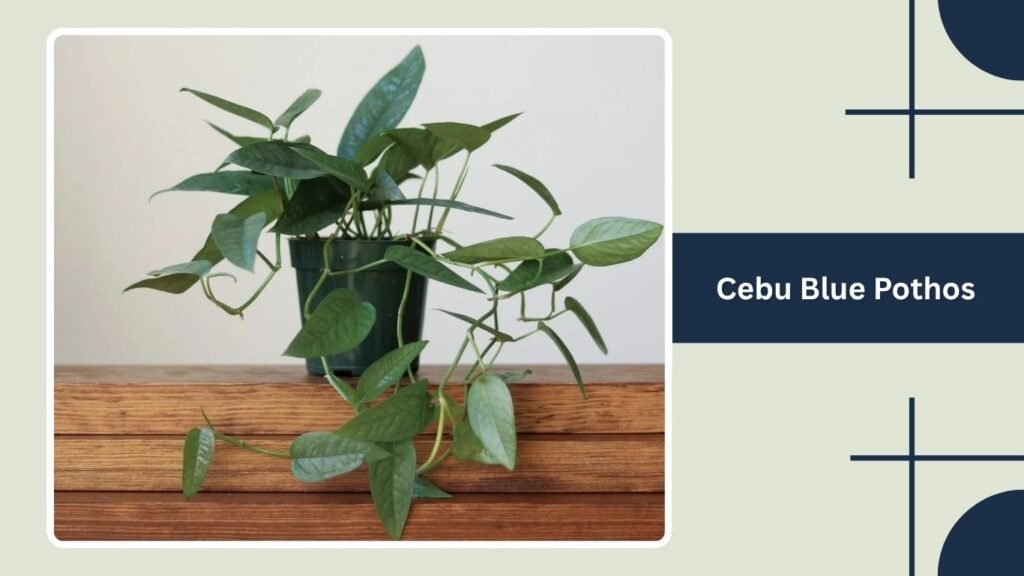
The Cebu Blue Pothos (Epipremnum pinnatum ‘Cebu Blue’) is a distinctive tropical climbing vine recognized for its narrow, elongated leaves with an attractive silvery-blue or blue-green appearance. Unlike traditional pothos varieties with heart-shaped foliage, Cebu Blue produces slender leaves that may develop natural splits as the plant matures and climbs. Its unusual coloration and elegant trailing growth make it highly desirable among indoor gardening enthusiasts. This hardy houseplant is especially suitable for hanging baskets, moss poles, and indoor plant displays.
Identification
- Common Name: Cebu Blue Pothos
- Scientific Name: Epipremnum pinnatum ‘Cebu Blue’
- Family: Araceae
- Plant Type: Evergreen tropical climbing vine
- Leaf Color: Silvery-blue to blue-green
- Leaf Shape: Narrow, elongated, lance-shaped leaves
- Plant Length: Several feet indoors
- Growth Rate: Moderate to fast
- Light Requirements: Bright, indirect light preferred
- Water Requirements: Moderate
- Propagation Method: Stem cuttings with nodes
Habitat and Growing Conditions
Cebu Blue Pothos is a cultivated form of Epipremnum pinnatum, a climbing species naturally found in tropical regions of Asia and the Pacific. The Cebu Blue form is associated with the Philippine island of Cebu.
Indoors, this plant grows best in warm environments with bright, indirect sunlight. Adequate lighting supports healthy leaf development and helps maintain its distinctive bluish appearance.
Temperatures between 65°F and 85°F are generally suitable. Cebu Blue also benefits from moderate humidity, although it can tolerate typical household conditions.A well-draining potting mixture containing perlite and orchid bark encourages healthy roots.
Watering and Maintenance
Cebu Blue Pothos requires regular but moderate watering. Allow the upper 1–2 inches of soil to dry before watering again, as constantly saturated soil can damage the roots.
During warmer months, the plant may require more frequent watering because growth becomes more active. Watering should be reduced during winter when growth naturally slows.Providing a moss pole or climbing support can encourage larger leaves and more mature foliage development.
Occasional pruning helps maintain the desired length, while diluted fertilizer during spring and summer can support healthy growth.
Growth, Propagation, and Lifespan
Cebu Blue Pothos produces long, flexible vines covered with narrow, silvery-blue leaves. When grown as a trailing plant, its foliage usually remains relatively small and elongated.
However, when provided with vertical support and favorable conditions, mature plants may develop larger leaves with natural fenestrations or splits.Propagation is simple through stem cuttings containing healthy nodes. These cuttings can develop roots in water, sphagnum moss, or moist potting soil.
With appropriate care, Cebu Blue Pothos can remain healthy for many years. Its unusual leaf coloration and climbing growth habit make it an attractive addition to modern indoor gardens.
9. Satin Pothos
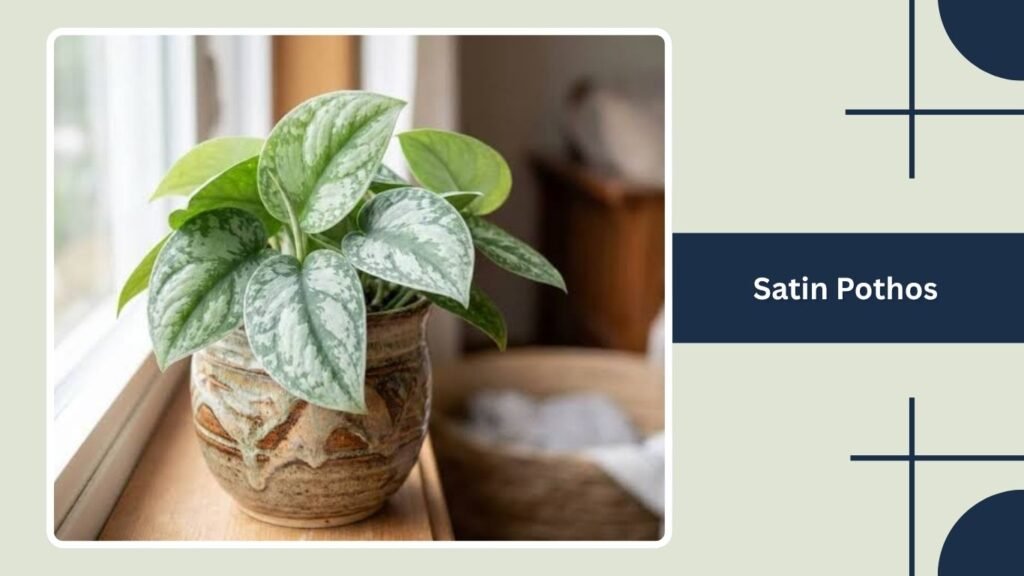
The Satin Pothos (Scindapsus pictus) is an elegant tropical houseplant admired for its velvety, heart-shaped leaves decorated with beautiful silver markings. Although commonly called pothos, Satin Pothos belongs to the genus Scindapsus, making it botanically different from true Epipremnum pothos varieties. Its soft, matte foliage and trailing growth habit create an attractive cascading appearance. This plant is especially popular for hanging baskets, decorative shelves, and indoor plant collections because it combines unusual foliage with relatively manageable care requirements.
Identification
- Common Name: Satin Pothos
- Scientific Name: Scindapsus pictus
- Family: Araceae
- Plant Type: Evergreen tropical climbing vine
- Leaf Color: Deep green with silvery-gray markings
- Leaf Shape: Heart-shaped, slightly velvety leaves
- Plant Length: Several feet indoors
- Growth Rate: Slow to moderate
- Light Requirements: Bright, indirect sunlight
- Water Requirements: Moderate
- Propagation Method: Stem cuttings with nodes
Habitat and Growing Conditions
Satin Pothos originates from tropical regions of Southeast Asia, where it naturally grows as a climbing vine in warm, humid forest environments.
Indoors, it prefers bright, indirect sunlight, which helps maintain the distinctive silver patterns on its foliage. Although it can tolerate moderate light, prolonged low-light conditions may slow growth and reduce the prominence of its markings.
Temperatures between 65°F and 85°F provide favorable growing conditions. Satin Pothos generally appreciates moderate to high humidity but can adapt to ordinary indoor environments. A loose, well-draining potting mixture helps maintain adequate moisture without causing waterlogging.
Watering and Maintenance
Satin Pothos requires moderate watering and should not remain in constantly wet soil. Water when the upper 1–2 inches of the potting mixture feel dry.
Its leaves may begin curling slightly when the plant becomes excessively dry, although curling can also occur from other environmental stresses.Overwatering can cause yellowing foliage, weakened stems, and root rot. Containers with proper drainage are essential for maintaining healthy roots.
During the active growing season, occasional fertilization with a diluted balanced houseplant fertilizer can encourage healthy development.Pruning long stems helps maintain a compact appearance and encourages fuller growth.
Growth, Propagation, and Lifespan
Satin Pothos produces slender trailing or climbing vines covered with attractive green and silver leaves. Its natural climbing habit allows it to attach to suitable supports using aerial roots.
When grown in hanging containers, the stems cascade downward and create an elegant decorative display.Propagation is commonly achieved through stem cuttings containing at least one node. Cuttings can establish roots in water, moss, or a suitable moist growing medium.
With proper care, Satin Pothos can survive for many years. Its velvety foliage, silver patterns, and graceful growth make it a valuable addition to indoor plant collections.
10. Snow Queen Pothos
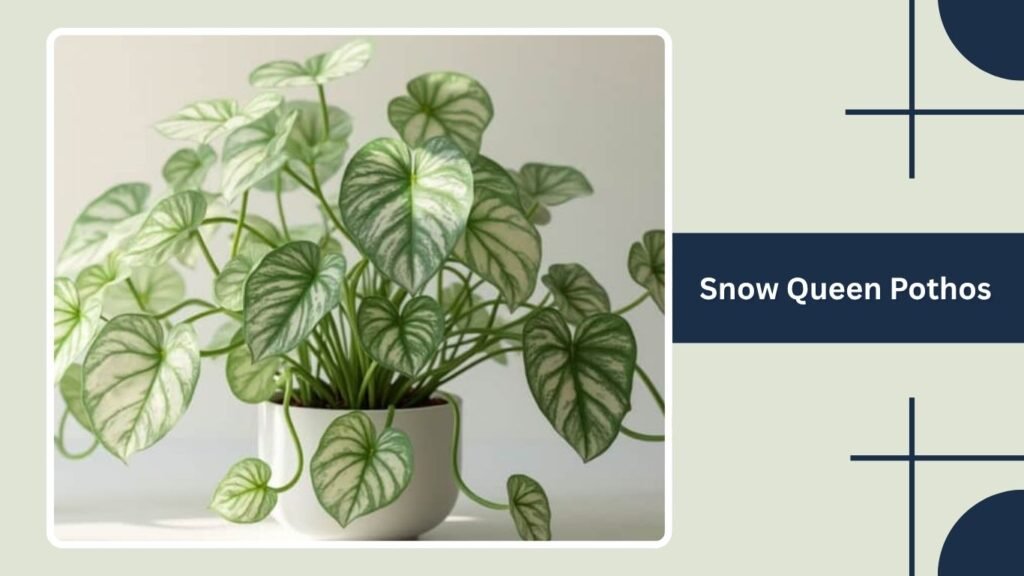
The Snow Queen Pothos (Epipremnum aureum ‘Snow Queen’) is a striking indoor houseplant recognized for its predominantly creamy-white foliage decorated with delicate green marbling. It is closely related to Marble Queen Pothos but is typically marketed for its greater proportion of white coloration. Its bright, variegated leaves create an elegant appearance that complements modern indoor decorations. Although Snow Queen generally grows more slowly than greener pothos varieties, its beautiful foliage and manageable maintenance requirements make it a favorite among houseplant collectors.
Identification
- Common Name: Snow Queen Pothos
- Scientific Name: Epipremnum aureum ‘Snow Queen’ (horticultural trade name)
- Family: Araceae
- Plant Type: Evergreen tropical climbing vine
- Leaf Color: Predominantly creamy-white with green marbling
- Leaf Shape: Heart-shaped, glossy leaves
- Plant Length: Several feet indoors
- Growth Rate: Slow to moderate
- Light Requirements: Bright, indirect sunlight
- Water Requirements: Moderate
- Propagation Method: Stem cuttings containing nodes
Habitat and Growing Conditions
Snow Queen Pothos is a highly variegated cultivated form of Epipremnum aureum, a tropical climbing species native to French Polynesia. Its attractive pale foliage requires sufficient indirect sunlight to maintain healthy growth.
Bright, indirect light helps preserve the plant’s distinctive white and green coloration. In lower lighting conditions, new leaves may become greener, and overall growth may slow.Temperatures between 65°F and 85°F generally provide suitable growing conditions. Snow Queen prefers well-draining potting soil and moderate indoor humidity.
Avoid exposing the plant to harsh afternoon sunlight because its pale leaf sections are especially vulnerable to scorching.
Watering and Maintenance
Snow Queen Pothos requires careful watering because excessive moisture can damage its roots. Water when the upper 1–2 inches of soil feel dry, allowing excess water to drain completely.
Since its white leaf sections contain little chlorophyll, Snow Queen may grow more slowly and use water less quickly than greener pothos varieties.Avoid following a rigid watering schedule. Instead, check soil moisture regularly and adjust watering according to temperature, lighting, and container size.
Occasional pruning removes damaged foliage and encourages branching. Diluted fertilizer during spring and summer can support healthy growth.
Growth, Propagation, and Lifespan
Snow Queen Pothos develops trailing or climbing stems with beautiful white and green marbled leaves. Its highly variegated foliage makes it particularly attractive in hanging baskets, decorative containers, and indoor shelves.
Propagation is accomplished through stem cuttings containing healthy nodes. Choose cuttings that include both green and white leaf coloration to help preserve the plant’s variegated appearance.Cuttings can develop roots in water or moist potting soil. New growth may be relatively slow compared with Golden or Jade Pothos.
With proper indoor care, Snow Queen can survive for many years. Its bright foliage and elegant trailing growth make it an excellent choice for adding visual contrast to indoor plant collections.
11. Global Green Pothos
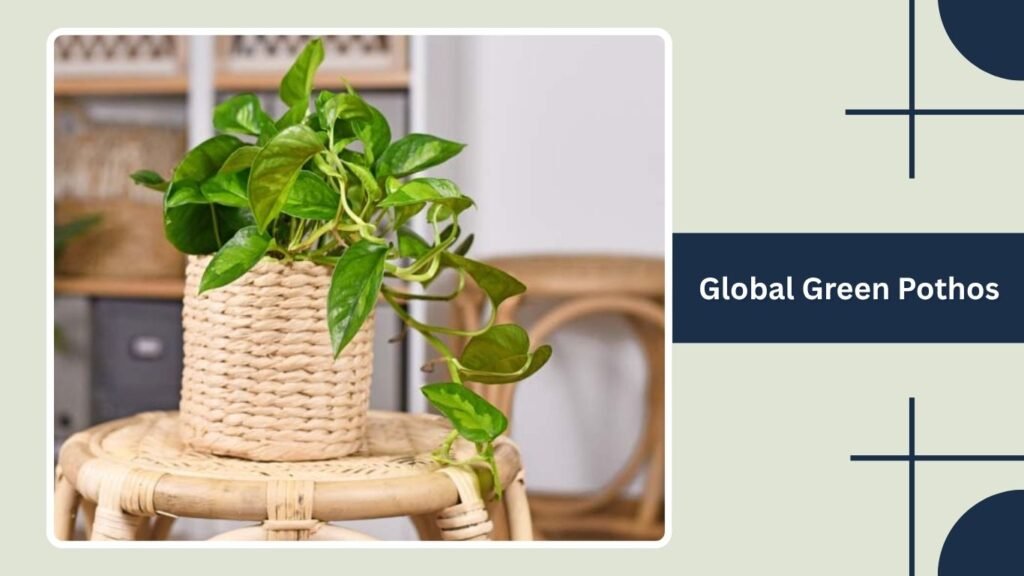
The Global Green Pothos (Epipremnum aureum ‘Global Green’) is an attractive indoor houseplant recognized for its distinctive green-on-green variegation and glossy, heart-shaped leaves. Unlike pothos varieties with white or yellow markings, Global Green features beautiful combinations of dark and light green patterns. Its lush foliage and trailing growth habit make it an excellent choice for hanging baskets, decorative shelves, and indoor plant displays. This hardy tropical vine is particularly popular because of its adaptability, relatively fast growth, and minimal maintenance requirements.
Identification
- Common Name: Global Green Pothos
- Scientific Name: Epipremnum aureum ‘Global Green’
- Family: Araceae
- Plant Type: Evergreen tropical climbing vine
- Leaf Color: Dark green with lighter green variegation
- Leaf Shape: Heart-shaped, glossy leaves
- Plant Length: Several feet indoors
- Growth Rate: Moderate to fast
- Light Requirements: Medium to bright indirect sunlight
- Water Requirements: Moderate
- Propagation Method: Stem cuttings containing nodes
Habitat and Growing Conditions
Global Green Pothos is a cultivated variety of Epipremnum aureum, a tropical climbing species native to French Polynesia. It thrives in warm environments with moderate humidity and well-draining soil.
Bright, indirect sunlight encourages healthy growth and helps maintain the attractive contrast between its dark and light green leaf patterns. Although Global Green tolerates lower lighting conditions, prolonged shade may result in slower growth and less noticeable variegation.
Temperatures between 65°F and 85°F (18°C–29°C) generally provide suitable growing conditions. A loose potting mixture containing perlite, coco coir, or orchid bark supports healthy root development.
Watering and Maintenance
Global Green Pothos requires moderate watering to maintain healthy foliage. Water when the upper 1–2 inches of soil feel dry, allowing excess moisture to drain freely from the container.
Overwatering can cause yellow leaves, damaged roots, and weakened stems. Using containers with drainage holes helps prevent moisture accumulation.During spring and summer, occasional applications of diluted balanced houseplant fertilizer can support healthy foliage development.
Pruning long vines encourages branching and creates a fuller appearance. Regularly removing damaged leaves also helps maintain the plant’s attractive appearance.
Growth, Propagation, and Lifespan
Global Green Pothos develops flexible climbing or trailing vines covered with beautifully patterned green foliage. Under favorable conditions, its stems can grow several feet long, making it suitable for hanging planters and climbing supports.
Propagation is easily accomplished through stem cuttings containing at least one healthy node. These cuttings can develop roots in water or moist potting soil.Providing a moss pole or vertical support may encourage larger leaves as the plant matures.
With proper care, Global Green Pothos can survive for many years. Its attractive foliage, vigorous growth, and adaptable nature make it an excellent choice for living rooms, bedrooms, offices, and indoor gardening beginners.
12. Baltic Blue Pothos
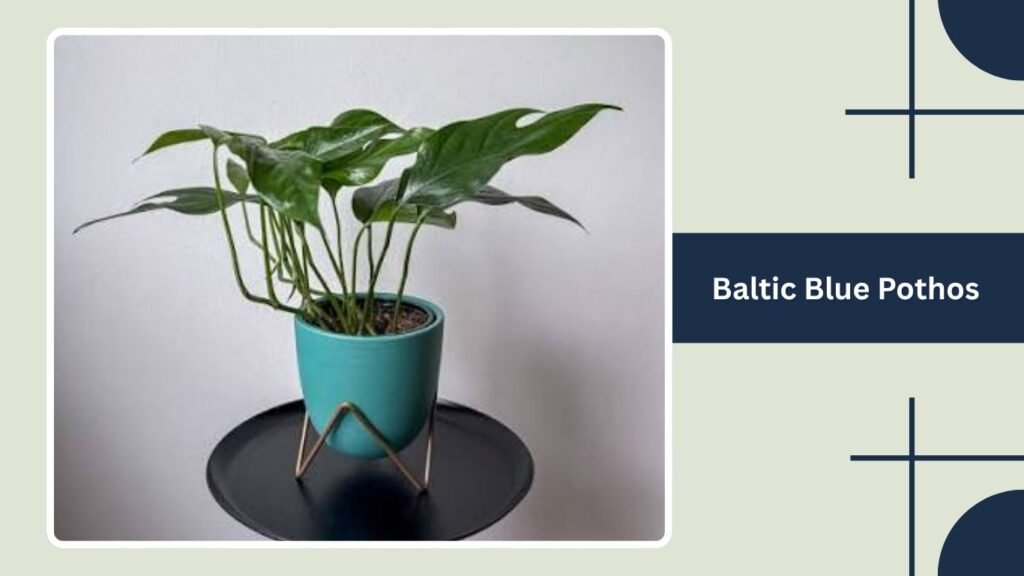
The Baltic Blue Pothos (Epipremnum pinnatum ‘Baltic Blue’) is a distinctive tropical climbing plant admired for its deep blue-green foliage and naturally developing leaf splits. Unlike traditional pothos varieties with heart-shaped leaves, Baltic Blue produces elongated, glossy leaves that may develop fenestrations as they mature. Its elegant appearance and vigorous climbing habit make it especially popular among indoor plant enthusiasts. This attractive houseplant is valued for its relatively easy maintenance, adaptability, and ability to create a lush tropical atmosphere in homes, offices, and indoor gardens.
Identification
- Common Name: Baltic Blue Pothos
- Scientific Name: Epipremnum pinnatum ‘Baltic Blue’
- Family: Araceae
- Plant Type: Evergreen tropical climbing vine
- Leaf Color: Deep blue-green to dark green
- Leaf Shape: Elongated, pointed leaves with potential splits
- Plant Length: Several feet indoors
- Growth Rate: Moderate to fast
- Light Requirements: Bright, indirect sunlight preferred
- Water Requirements: Moderate
- Propagation Method: Stem cuttings containing nodes
Habitat and Growing Conditions
Baltic Blue Pothos is a cultivated selection of Epipremnum pinnatum, a tropical climbing species naturally distributed across parts of Asia and the Pacific. It grows best in warm environments with well-draining soil and moderate humidity.
Bright, indirect sunlight supports healthy growth and helps maintain its attractive blue-green foliage. Although Baltic Blue can tolerate lower light levels, insufficient sunlight may slow growth and reduce leaf development.
Temperatures between 65°F and 85°F are generally suitable. A loose potting mixture containing perlite and orchid bark provides good drainage and allows oxygen to reach the roots.
Watering and Maintenance
Baltic Blue Pothos requires moderate watering to maintain healthy foliage and roots. Water when the upper 1–2 inches of soil become dry, allowing excess moisture to drain completely.
Overwatering can lead to yellowing leaves, root rot, and weakened growth. A container with drainage holes helps prevent these problems.During spring and summer, occasional feeding with diluted balanced fertilizer encourages healthy development.
Providing a moss pole, trellis, or climbing support is particularly beneficial because Baltic Blue naturally climbs and may produce larger, more deeply divided leaves as it matures.Pruning excessively long stems helps control the plant’s size and encourages branching.
Growth, Propagation, and Lifespan
Baltic Blue Pothos grows as a climbing or trailing vine, producing elongated leaves with an attractive blue-green appearance. Its ability to develop natural leaf splits makes it especially distinctive among pothos varieties.
When provided with vertical support, the plant may produce larger leaves with increasingly noticeable fenestrations. Trailing plants can also develop attractive foliage, although their leaves may remain smaller.Propagation is commonly achieved through stem cuttings containing healthy nodes. Cuttings can establish roots in water, sphagnum moss, or moist potting soil.
With appropriate indoor care, Baltic Blue Pothos can survive for many years. Its unusual foliage, vigorous growth, and climbing habit make it an excellent choice for indoor plant collections, living rooms, and decorative vertical gardens.
FAQs
1. Which Type of Pothos Is Best for Indoor Growing?
Golden Pothos, Jade Pothos, and Neon Pothos are excellent choices for indoor growing. These varieties are easy to maintain, tolerate different lighting conditions, and grow well in typical household environments. Golden Pothos is particularly suitable for beginners because of its adaptability, attractive foliage, and relatively fast growth.
2. How Many Types of Pothos Plants Are There?
There are numerous pothos varieties and cultivars, each featuring different leaf colors, shapes, and patterns. Popular types include Golden Pothos, Marble Queen, Neon, Manjula, N’Joy, and Global Green. Some plants commonly called pothos, such as Satin Pothos, belong to a different botanical genus but share similar growing characteristics.
3. Do Pothos Plants Need Direct Sunlight?
Pothos plants generally prefer bright, indirect sunlight rather than direct sunlight. Although many varieties tolerate low-light conditions, insufficient light can slow growth and reduce leaf variegation. Variegated varieties such as Marble Queen, Manjula, and Snow Queen typically need brighter indirect light to maintain their distinctive colors. Strong afternoon sunlight can scorch their leaves.
4. How Often Should You Water Indoor Pothos Plants?
Most indoor pothos plants should be watered when the upper 1–2 inches of soil feel dry. Depending on temperature, humidity, lighting, and container size, watering may be necessary every one to two weeks. During winter, plants generally require less water. Avoid overwatering because constantly wet soil can cause yellowing leaves and root rot.
5. Are Pothos Plants Toxic to Cats and Dogs?
Yes, pothos plants are toxic to cats and dogs if ingested. They contain insoluble calcium oxalate crystals that can cause mouth irritation, excessive drooling, vomiting, and difficulty swallowing. Popular varieties such as Golden Pothos, Neon Pothos, and Marble Queen should be kept away from pets. Contact a veterinarian if your pet chews or swallows any part of the plant.