
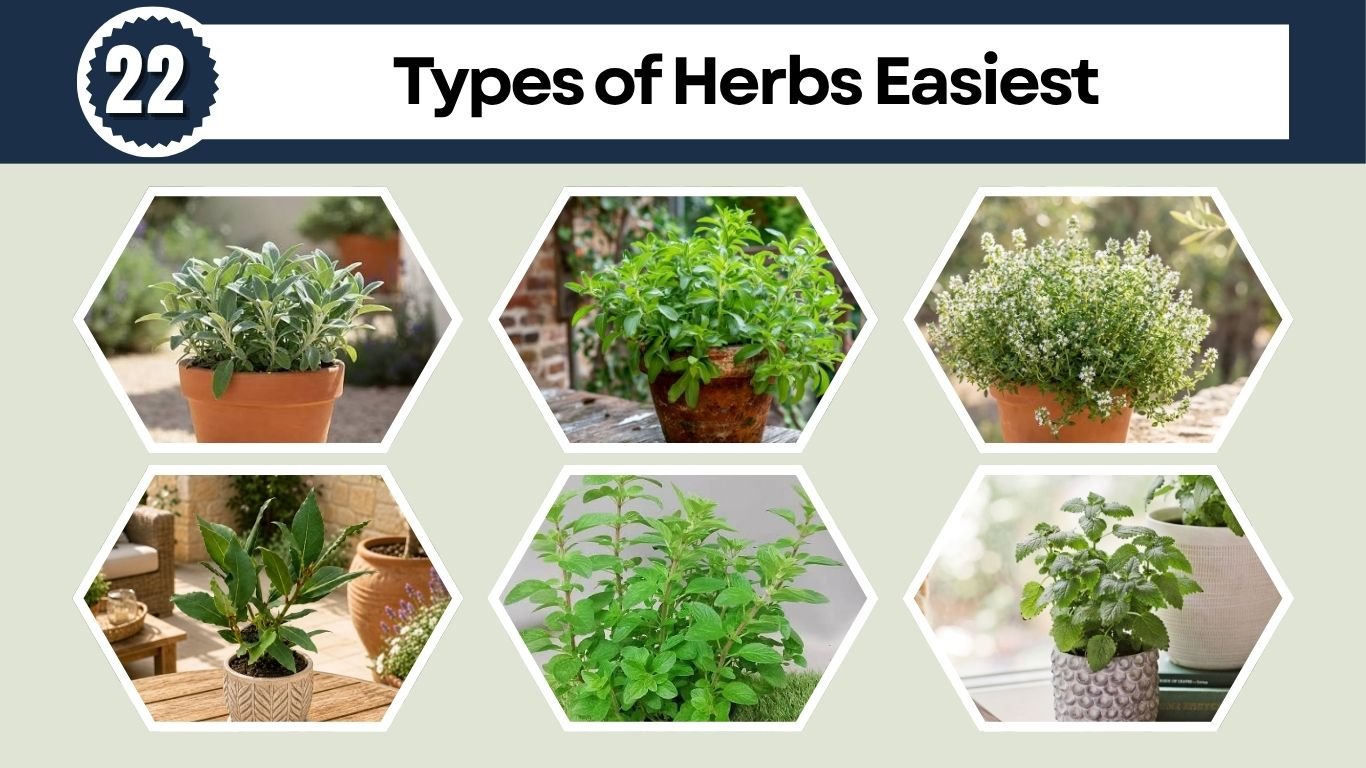
Growing fresh herbs indoors is an easy way to enjoy flavorful ingredients throughout the year. Many herbs thrive in containers with proper sunlight, watering, and minimal maintenance. From popular choices like basil and mint to aromatic varieties like rosemary and thyme, indoor herbs offer both culinary and decorative benefits. Explore 22 of the easiest herbs to grow indoors and create your own productive kitchen herb garden.
1. Basil
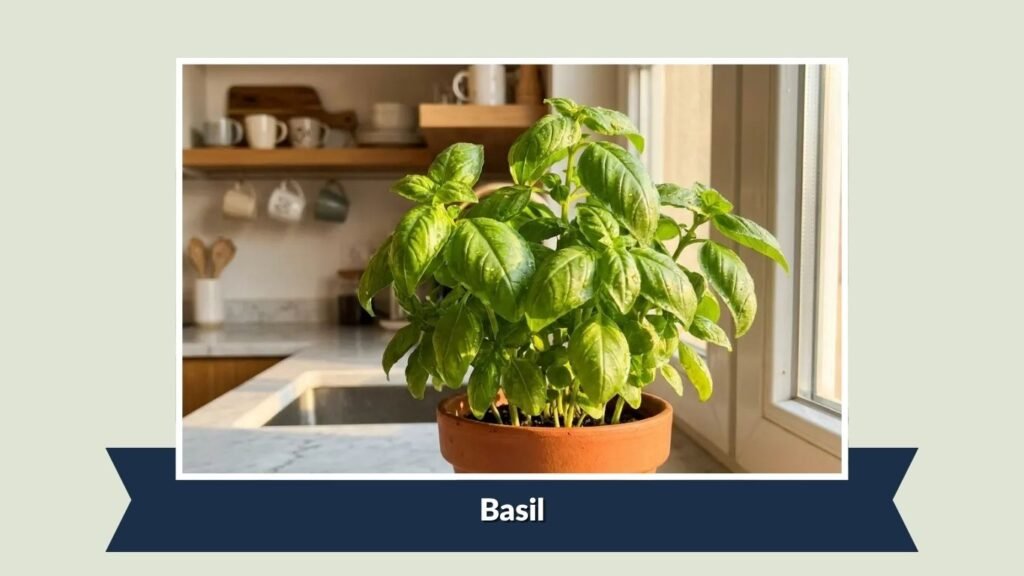
Basil (Ocimum basilicum) is one of the easiest and most popular culinary herbs to grow indoors. Known for its fragrant green leaves and distinctive sweet, slightly peppery flavor, basil is widely used in cooking, particularly in Italian and Mediterranean dishes. This fast-growing herb thrives in warm environments and can produce fresh leaves throughout the year when provided with sufficient light and proper care. Its compact growth habit makes it an excellent choice for kitchen windowsills, indoor herb gardens, and small containers.
Identification
- Common Name: Basil or Sweet Basil
- Scientific Name: Ocimum basilicum
- Family: Lamiaceae
- Plant Type: Annual culinary herb
- Height: Approximately 12–24 inches indoors
- Leaf Color: Bright to deep green
- Leaf Shape: Oval, smooth, and slightly pointed
- Growth Rate: Fast
- Light Requirements: 6–8 hours of direct sunlight or 12–16 hours under suitable grow lights
- Water Requirements: Moderate; prefers evenly moist but well-draining soil
- Propagation Method: Seeds and stem cuttings
Habitat and Growing Conditions
Basil originates from tropical regions of Asia and is naturally adapted to warm, sunny environments. Indoors, it grows best near a bright south-facing window or under full-spectrum LED grow lights. Unlike some shade-tolerant herbs, basil needs plenty of light to maintain strong stems, healthy foliage, and vigorous growth.
Temperatures between 65°F and 85°F (18°C–29°C) are generally ideal for growing basil indoors. The plant is sensitive to cold temperatures and should be protected from chilly windows and drafts.
A well-draining, nutrient-rich potting mixture supports healthy root development. Containers with drainage holes are essential because basil prefers consistent moisture without waterlogged roots.
Watering and Maintenance
Basil requires regular watering to maintain its tender foliage. Water when the upper inch of soil begins to feel dry, ensuring that excess moisture drains freely from the container. Avoid allowing the soil to remain completely dry for extended periods, as this can cause wilting and leaf damage.
During active growth, basil benefits from occasional applications of diluted balanced fertilizer. Excessive fertilization should be avoided because it can encourage weak growth.Regular pruning is particularly important for maintaining a bushy plant. Pinching the growing tips above a pair of leaves encourages branching and produces additional harvestable foliage.
Removing flower buds as they appear can also help extend leaf production and maintain the plant’s culinary quality.
Growth, Harvesting, and Lifespan
Basil grows quickly under favorable indoor conditions and can be ready for its first light harvest approximately four to six weeks after germination. Harvesting the upper stems regularly encourages the plant to produce additional branches rather than becoming tall and leggy.
When collecting leaves, cut just above a leaf node to promote new growth. Avoid removing more than one-third of the plant at a time so it can recover and continue producing foliage.Basil is commonly grown as an annual herb, although healthy indoor plants can remain productive for several months or longer with sufficient light, warmth, and regular pruning.
Fresh basil leaves are widely used in pesto, pasta sauces, salads, soups, and homemade pizzas. Their aromatic flavor and convenient availability make basil an excellent addition to indoor kitchen gardens.
2. Mint
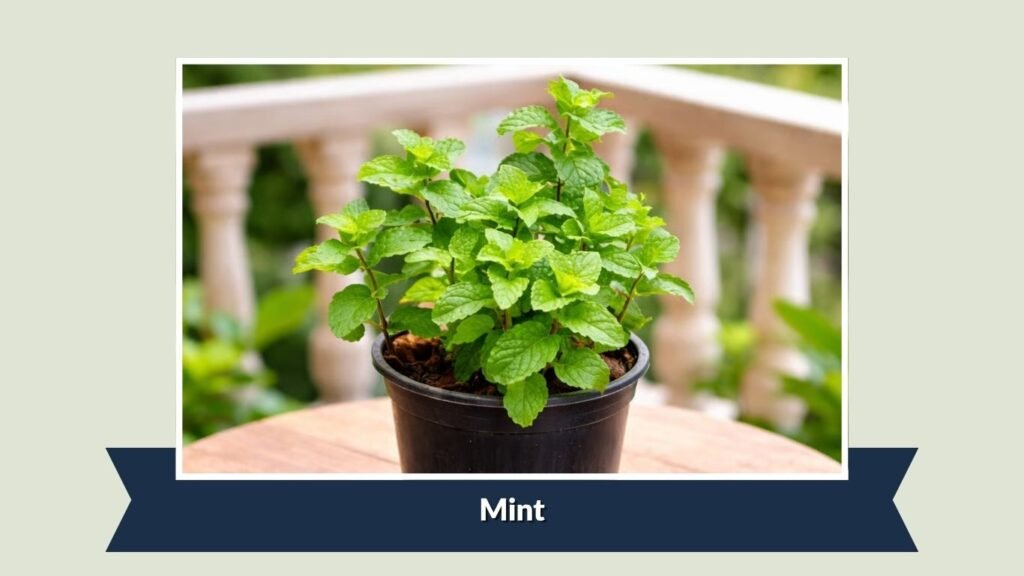
Mint (Mentha spp.) is one of the easiest and most versatile herbs to grow indoors. Known for its refreshing aroma, bright green leaves, and cooling flavor, mint is commonly used in teas, beverages, desserts, and savory dishes. This fast-growing perennial herb adapts well to containers and can produce fresh foliage throughout the year when given proper care. Its spreading growth habit makes it particularly suitable for individual pots, kitchen windowsills, and indoor herb gardens. Mint is an excellent choice for beginners seeking a productive and aromatic houseplant.
Identification
- Common Name: Mint
- Scientific Name: Mentha spp.
- Family: Lamiaceae
- Plant Type: Perennial culinary herb
- Height: Approximately 12–24 inches
- Leaf Color: Bright to dark green
- Leaf Shape: Oval with serrated edges
- Growth Rate: Fast
- Light Requirements: 4–6 hours of direct sunlight or bright supplemental lighting
- Water Requirements: Moderate to high
- Propagation Method: Stem cuttings, division, and runners
Habitat and Growing Conditions
Mint naturally grows in temperate regions where moisture and sunlight are readily available. Indoors, it performs best near a bright window receiving several hours of sunlight daily. Although mint tolerates partial shade, adequate lighting encourages stronger stems and more flavorful leaves.
Temperatures between 60°F and 75°F (16°C–24°C) generally support healthy development. Mint prefers nutrient-rich, well-draining soil that retains some moisture without becoming waterlogged.
Because mint spreads through underground runners, growing it in a separate container prevents it from competing with other indoor herbs.
Watering and Maintenance
Mint prefers consistently moist soil, making regular watering important for maintaining healthy foliage. Water when the upper inch of soil begins to dry, ensuring that excess moisture drains from the container.Avoid allowing the plant to remain completely dry for extended periods, as its tender leaves can wilt quickly.
Regular pruning encourages bushier growth and prevents stems from becoming excessively long. Removing flower buds helps maintain tender foliage and supports continued leaf production.
Occasional feeding with diluted balanced fertilizer during active growth can support healthy development.
Growth, Harvesting, and Lifespan
Mint grows rapidly and produces numerous stems from its spreading root system. Under favorable conditions, fresh leaves can be harvested regularly throughout the growing season and year-round indoors with sufficient light.
Harvest by cutting stems just above a leaf node, encouraging additional branching. Avoid removing too much foliage at once.
As a perennial herb, mint can survive for several years with proper care. Dividing overcrowded plants occasionally helps maintain vigorous growth.Fresh mint leaves are commonly used in herbal teas, lemonades, salads, desserts, and sauces.
3. Parsley
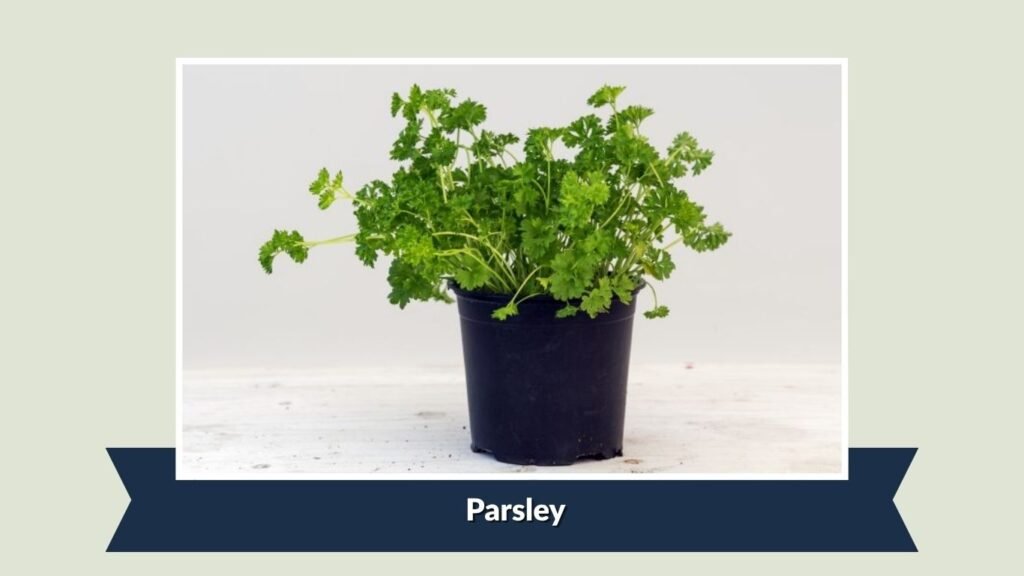
Parsley (Petroselinum crispum) is a popular culinary herb valued for its attractive green foliage, mild flavor, and versatility in cooking. Available in curly-leaf and flat-leaf varieties, parsley is widely used in soups, salads, sauces, and garnishes. This compact herb adapts well to indoor containers and can provide fresh leaves for extended periods when grown under suitable conditions. Although parsley grows more slowly than basil or mint, its manageable size and relatively simple care requirements make it an excellent addition to kitchen windowsills and indoor herb gardens.
Identification
- Common Name: Parsley
- Scientific Name: Petroselinum crispum
- Family: Apiaceae
- Plant Type: Biennial culinary herb
- Height: Approximately 8–18 inches
- Leaf Color: Bright green
- Leaf Shape: Curly or flat, divided leaves
- Growth Rate: Moderate
- Light Requirements: 4–6 hours of direct sunlight or adequate grow lighting
- Water Requirements: Moderate
- Propagation Method: Seeds
Habitat and Growing Conditions
Parsley originates from the Mediterranean region, where it naturally grows in relatively mild climates. Indoors, it performs best near a bright window or under grow lights that provide sufficient illumination for healthy foliage development.
Temperatures between 60°F and 75°F are generally suitable. Parsley prefers fertile, well-draining soil that retains moderate moisture.
A container approximately 6–8 inches deep or larger provides enough space for its developing taproot. Proper drainage is essential because constantly saturated soil can damage the roots.
Watering and Maintenance
Parsley requires regular watering to maintain healthy, tender foliage. Water when the upper inch of soil feels dry, keeping the growing medium lightly moist without allowing water to accumulate.
Inconsistent watering may cause wilting, yellowing leaves, or reduced growth. A container with drainage holes helps maintain balanced soil moisture.Occasional applications of diluted fertilizer support steady leaf production. Remove damaged or yellowing leaves to maintain the plant’s appearance.
Rotating the container occasionally encourages even growth when sunlight comes primarily from one direction.
Growth, Harvesting, and Lifespan
Parsley develops clusters of leafy stems from a central crown. Seed germination can take two to four weeks, so patience is important during the early growing stage.
Once established, parsley can be harvested by cutting mature outer stems near the base of the plant. Leaving younger central growth intact encourages continued leaf production.As a biennial herb, parsley typically produces foliage during its first year and flowers during its second year. Indoor plants are often replaced when leaf quality declines.
Fresh parsley is commonly used in pasta dishes, soups, salads, vegetable recipes, and homemade sauces.
4. Chives
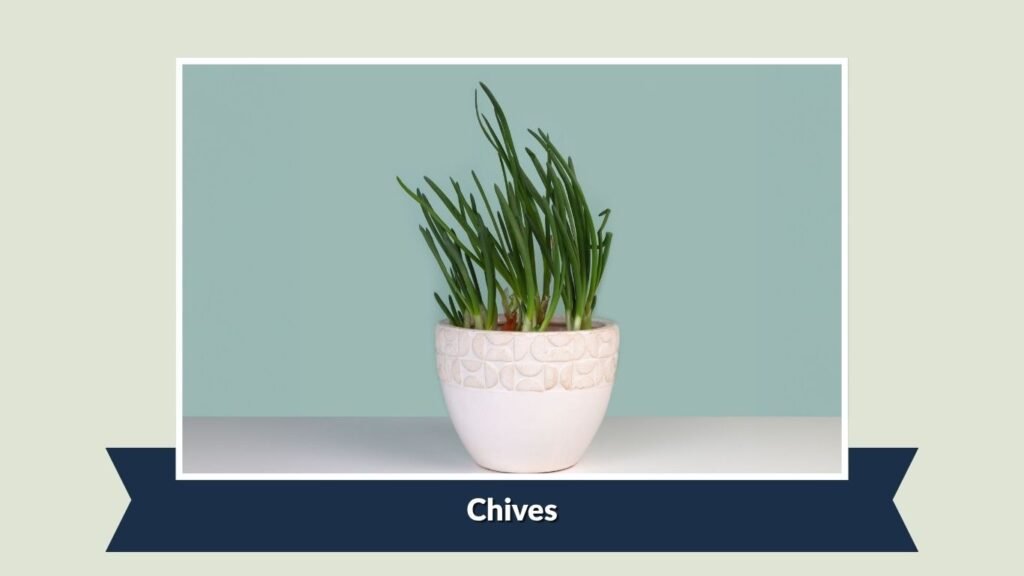
Chives (Allium schoenoprasum) are easy-to-grow perennial herbs recognized for their slender, hollow green leaves and mild onion-like flavor. Closely related to onions and garlic, chives are widely used in salads, soups, baked potatoes, and savory dishes. Their compact, grass-like appearance makes them particularly attractive for kitchen windowsills and small indoor containers. Chives are valued for their ability to regrow after harvesting, providing a convenient supply of fresh leaves. With sufficient sunlight and consistent moisture, they can remain productive indoors for extended periods.
Identification
- Common Name: Chives
- Scientific Name: Allium schoenoprasum
- Family: Amaryllidaceae
- Plant Type: Perennial culinary herb
- Height: Approximately 8–18 inches
- Leaf Color: Bright to dark green
- Leaf Shape: Thin, hollow, tubular leaves
- Growth Rate: Moderate
- Light Requirements: At least 6 hours of direct sunlight or suitable grow lighting
- Water Requirements: Moderate
- Propagation Method: Seeds and clump division
Habitat and Growing Conditions
Chives naturally grow across temperate regions of Europe, Asia, and North America. They prefer relatively cool growing conditions and can tolerate temperatures lower than many tropical culinary herbs.
Indoors, chives grow best near a sunny window receiving several hours of direct sunlight daily. Supplemental LED grow lights are helpful when natural light is insufficient.
Temperatures between 60°F and 75°F generally encourage healthy foliage development. A fertile, well-draining potting mixture supports strong root growth.Containers approximately 6 inches deep or larger provide adequate space for developing clumps.
Watering and Maintenance
Chives prefer evenly moist soil but should not remain in waterlogged conditions. Water when the upper inch of soil begins to dry, ensuring excess moisture drains freely.
Regular harvesting helps encourage fresh leaf production and prevents the plant from becoming excessively overgrown.During active growth, occasional feeding with diluted balanced fertilizer supports healthy development. Remove dried or yellowing leaves when necessary.
If indoor chives begin producing flowers, the blooms can be removed to direct more energy toward foliage growth.
Growth, Harvesting, and Lifespan
Chives grow in dense clumps of slender leaves that emerge from small underground bulbs. As plants mature, additional shoots increase the size of each clump.Harvest by cutting leaves approximately 1–2 inches above the soil, allowing the remaining growth to regenerate.
Avoid removing all foliage too frequently, as plants need time to recover between harvests.Chives are perennial herbs that can live for several years. Dividing established clumps every few years helps prevent overcrowding and supports vigorous growth.Their delicate onion flavor makes them ideal for garnishing eggs, potatoes, salads, soups, and creamy dips.
5. Thyme
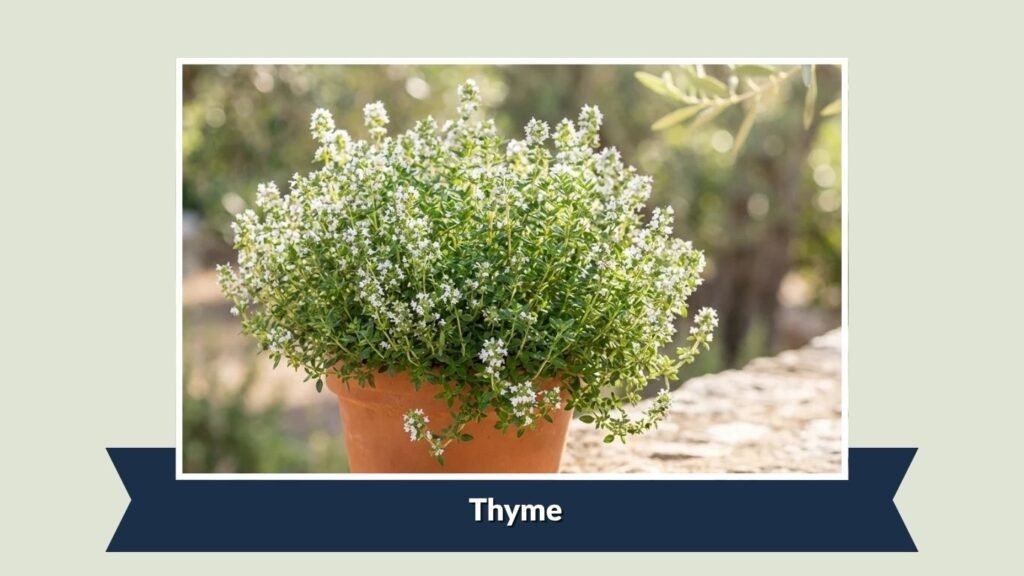
Thyme (Thymus vulgaris) is a fragrant Mediterranean herb admired for its tiny aromatic leaves, woody stems, and distinctive earthy flavor. This compact perennial plant is widely used in soups, roasted vegetables, meat dishes, and herbal seasoning blends. Thyme is particularly suitable for indoor gardening because it tolerates relatively dry conditions and requires less frequent watering than many leafy herbs. Its small size makes it an attractive choice for sunny kitchen windowsills, container gardens, and decorative herb arrangements. With adequate sunlight and proper drainage, thyme can remain productive for several years.
Identification
- Common Name: Common Thyme
- Scientific Name: Thymus vulgaris
- Family: Lamiaceae
- Plant Type: Evergreen perennial herb
- Height: Approximately 6–12 inches
- Leaf Color: Grayish-green to dark green
- Leaf Shape: Small, narrow, oval leaves
- Growth Rate: Slow to moderate
- Light Requirements: 6–8 hours of direct sunlight or strong grow lighting
- Water Requirements: Low to moderate
- Propagation Method: Seeds, stem cuttings, and division
Habitat and Growing Conditions
Thyme originates from the Mediterranean region, where it naturally thrives in sunny locations with dry, rocky, and well-draining soils.
Indoors, thyme performs best near a bright south-facing window or beneath a suitable LED grow light. Insufficient sunlight can cause weak stems, reduced growth, and less aromatic foliage.
Temperatures between 60°F and 80°F generally support healthy development. Thyme prefers relatively low humidity and good airflow around its foliage.A sandy, well-draining potting mixture is especially important because thyme does not tolerate constantly wet roots.
Watering and Maintenance
Thyme requires relatively little watering compared with herbs such as mint and parsley. Allow the upper portion of the soil to dry before watering thoroughly.
Overwatering can cause root rot, yellowing leaves, and declining growth. Containers with drainage holes are essential for maintaining healthy roots.
Regular light pruning helps preserve a compact, bushy appearance and prevents the plant from becoming excessively woody.Thyme generally needs little fertilizer. Occasional diluted feeding during active growth is sufficient, as excessive nutrients can encourage soft growth.
Growth, Harvesting, and Lifespan
Thyme grows as a small, branching shrub with woody stems and clusters of tiny aromatic leaves. Its compact growth makes it especially suitable for small indoor containers.Harvest young stems when the plant becomes established, preferably before heavy flowering when the foliage is particularly aromatic.
Avoid cutting deeply into old, leafless woody stems because they may not produce new growth readily.As a perennial herb, thyme can live for several years when provided with adequate sunlight, proper drainage, and occasional pruning.
Fresh or dried thyme is commonly used in roasted vegetables, soups, sauces, poultry dishes, and Mediterranean recipes.
6. Oregano
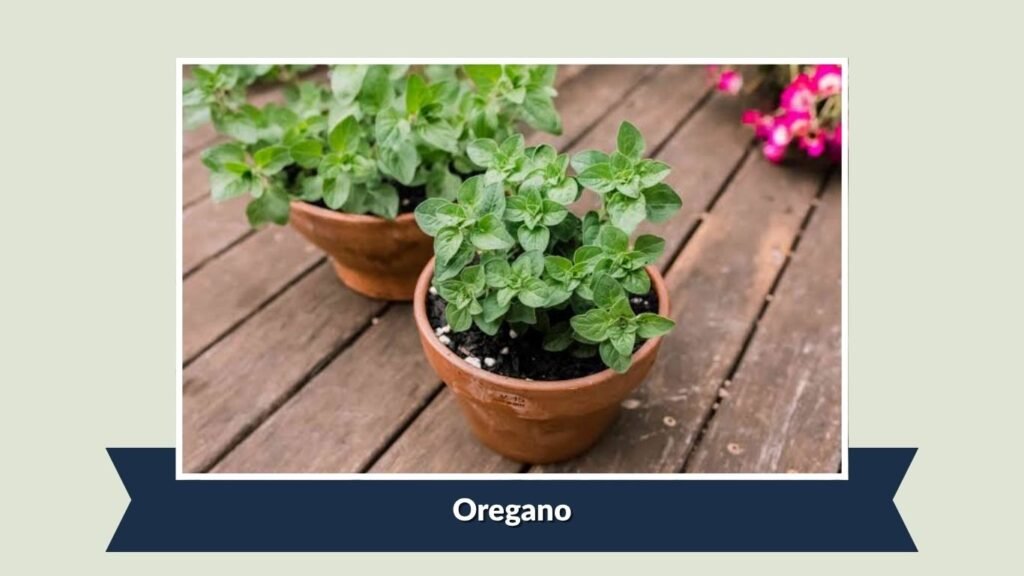
Oregano (Origanum vulgare) is a popular perennial culinary herb recognized for its small, aromatic leaves and warm, slightly peppery flavor. Commonly associated with Mediterranean cooking, oregano is widely used in pizza sauces, pasta dishes, roasted vegetables, and seasoning blends. This hardy herb adapts well to indoor containers and can produce fresh foliage throughout the year with sufficient sunlight. Its spreading, bushy growth habit makes it attractive for kitchen windowsills and compact herb gardens. Oregano is particularly appreciated for its drought tolerance, easy propagation, and relatively low maintenance requirements.
Identification
- Common Name: Oregano
- Scientific Name: Origanum vulgare
- Family: Lamiaceae
- Plant Type: Perennial culinary herb
- Height: Approximately 8–18 inches indoors
- Leaf Color: Medium to dark green
- Leaf Shape: Small, oval, slightly fuzzy leaves
- Growth Rate: Moderate
- Light Requirements: 6–8 hours of direct sunlight or strong grow lighting
- Water Requirements: Low to moderate
- Propagation Method: Seeds, stem cuttings, and division
Habitat and Growing Conditions
Oregano originates from Europe and western Asia, particularly regions with sunny environments and well-draining soil. Its natural tolerance for relatively dry conditions makes it suitable for indoor container gardening.
Indoors, oregano performs best near a sunny window receiving at least six hours of direct sunlight daily. Supplemental grow lights can support healthy development when natural sunlight is limited.
Temperatures between 60°F and 80°F generally encourage vigorous growth. Oregano prefers loose, well-draining soil and does not require excessive humidity.Providing adequate airflow helps reduce fungal problems and maintains healthy foliage.
Watering and Maintenance
Oregano requires moderate watering, with the soil allowed to dry slightly between watering sessions. Water when the upper inch or two of the growing medium feels dry.
Avoid constantly saturated soil because oregano is susceptible to root rot when drainage is poor.Regular pruning encourages branching and helps maintain a compact, bushy appearance. Removing flower buds can also extend the period of tender leaf production.
Oregano generally requires little fertilizer, especially when grown in a nutrient-rich potting mixture. Excessive fertilization may reduce the concentration of aromatic compounds in the foliage.
Growth, Harvesting, and Lifespan
Oregano develops branching stems covered with small, fragrant leaves. Under favorable indoor conditions, mature plants gradually spread outward, creating dense clusters of foliage.
Harvest stems regularly by cutting just above a leaf node to encourage additional branching. Avoid removing more than one-third of the plant at once.The leaves can be used fresh or dried, with dried oregano often developing a concentrated flavor suitable for cooking.
As a perennial herb, oregano can survive for several years with appropriate care. Older plants may become woody and benefit from occasional pruning or replacement with propagated cuttings.Its fragrant foliage, compact growth, and culinary versatility make oregano an excellent addition to sunny indoor herb gardens.
7. Rosemary
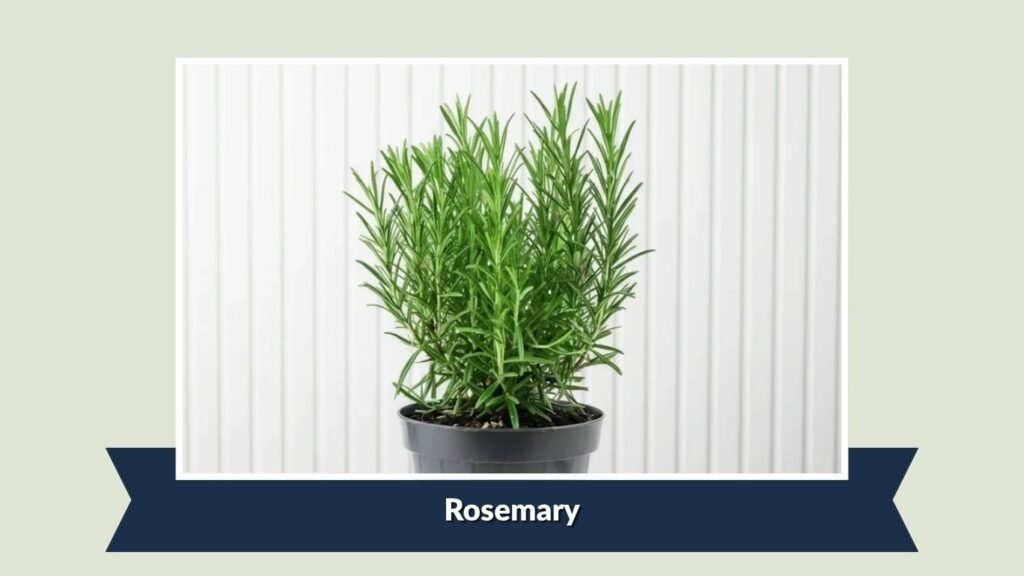
Rosemary (Salvia rosmarinus) is a fragrant evergreen herb admired for its needle-like leaves, woody stems, and distinctive pine-like aroma. Widely used in Mediterranean cooking, rosemary adds a rich, earthy flavor to roasted meats, vegetables, soups, and homemade bread. This attractive herb can grow successfully indoors when provided with plenty of sunlight, excellent drainage, and good airflow. Although it requires slightly more attention than some indoor herbs, its long lifespan, ornamental appearance, and culinary versatility make it a rewarding addition to sunny kitchen windowsills and indoor herb gardens.
Identification
- Common Name: Rosemary
- Scientific Name: Salvia rosmarinus
- Family: Lamiaceae
- Plant Type: Evergreen perennial herb
- Height: Approximately 12–36 inches indoors
- Leaf Color: Dark green with silvery undersides
- Leaf Shape: Narrow, needle-like leaves
- Growth Rate: Slow to moderate
- Light Requirements: 6–8 hours of direct sunlight or strong grow lighting
- Water Requirements: Low to moderate
- Propagation Method: Stem cuttings and seeds
Habitat and Growing Conditions
Rosemary originates from the Mediterranean region, where it naturally grows in sunny, rocky environments with well-draining soil. Its narrow leaves help conserve moisture, allowing the plant to tolerate relatively dry conditions.
Indoors, rosemary performs best near a bright south-facing window receiving at least six hours of direct sunlight daily. Supplemental LED grow lights are often beneficial when natural sunlight is insufficient.
Temperatures between 60°F and 80°F (16°C–27°C) generally support healthy development. Rosemary also prefers good airflow and moderate humidity.A sandy, well-draining potting mixture helps prevent excess moisture from accumulating around the roots.
Watering and Maintenance
Rosemary requires careful watering because it does not tolerate consistently saturated soil. Allow the upper 1–2 inches of soil to dry before watering thoroughly.
Although rosemary is drought tolerant when established outdoors, container-grown plants should not be allowed to remain completely dry for prolonged periods.
Overwatering may cause yellowing leaves, root rot, and declining growth. A container with drainage holes is essential.
Regular light pruning encourages branching and maintains a compact shape. Avoid cutting deeply into older, leafless woody stems.Occasional diluted fertilizer during active growth is generally sufficient.
Growth, Harvesting, and Lifespan
Rosemary develops upright or spreading woody stems covered with aromatic, needle-like leaves. With sufficient sunlight and adequate space, indoor plants can gradually become small shrubs.
Harvest young stems by cutting just above a leafy branching point. Regular light harvesting encourages new growth while maintaining the plant’s natural shape.
Rosemary is a perennial herb that can survive for many years with suitable care. However, insufficient sunlight and excessive moisture can shorten its lifespan indoors.Fresh rosemary is commonly used in roasted potatoes, chicken, lamb, soups, and herb-infused oils prepared for immediate culinary use.
8. Cilantro
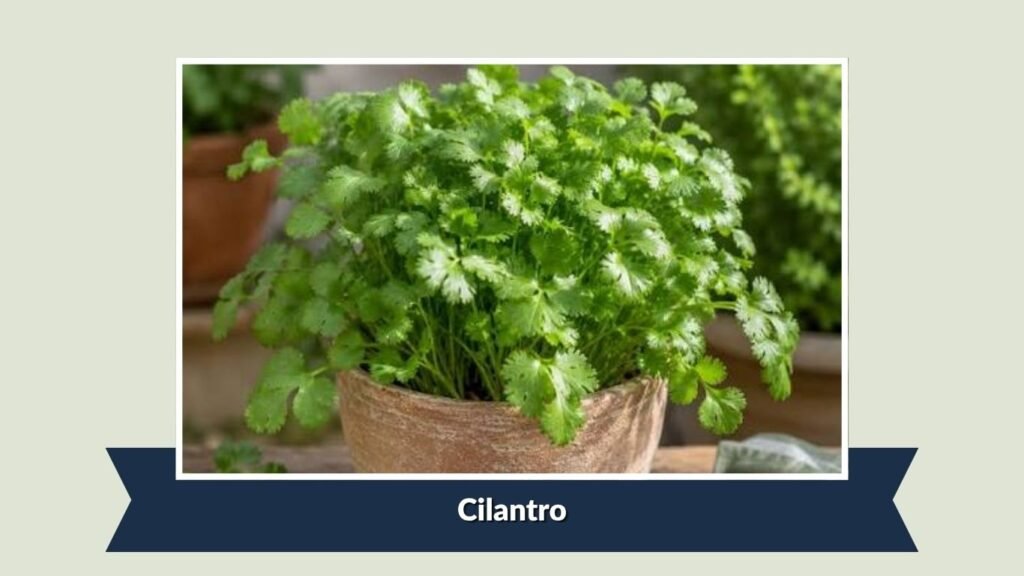
Cilantro (Coriandrum sativum) is a popular culinary herb recognized for its delicate green leaves, refreshing aroma, and distinctive flavor. Widely used in Mexican, Indian, Middle Eastern, and Asian cooking, cilantro adds freshness to salads, curries, sauces, and soups. This fast-growing herb is suitable for indoor cultivation, especially in cool environments with adequate sunlight. Although cilantro has a relatively short productive lifespan before flowering, regular seed sowing can provide a continuous supply of fresh leaves throughout the year.
Identification
- Common Name: Cilantro or Coriander Leaves
- Scientific Name: Coriandrum sativum
- Family: Apiaceae
- Plant Type: Annual culinary herb
- Height: Approximately 12–24 inches
- Leaf Color: Bright green
- Leaf Shape: Broad, lobed lower leaves and finely divided upper leaves
- Growth Rate: Fast
- Light Requirements: 4–6 hours of direct sunlight or suitable grow lighting
- Water Requirements: Moderate
- Propagation Method: Seeds
Habitat and Growing Conditions
Cilantro is associated with regions of southern Europe, North Africa, and western Asia. It grows best in relatively cool conditions and can flower prematurely when exposed to excessive heat.
Indoors, cilantro performs well near a bright window receiving several hours of sunlight daily. Supplemental grow lights help maintain steady growth when natural light is limited.
Temperatures between 55°F and 75°F (13°C–24°C) are generally suitable. Cooler conditions encourage tender foliage and can delay flowering.A fertile, well-draining potting mixture supports healthy development. Containers at least 8 inches deep provide suitable space for the plant’s taproot.
Watering and Maintenance
Cilantro prefers consistently moist but well-draining soil. Water when the upper inch of soil begins to dry, ensuring that excess moisture drains freely.
Allowing the growing medium to become excessively dry can stress the plant and encourage premature flowering.Avoid overwatering because saturated soil can damage the roots and cause yellowing leaves.
Cilantro usually requires only light fertilization when grown in nutrient-rich potting soil. Excessive feeding is unnecessary for its relatively short growing period.For continuous harvesting, sow small batches of seeds every two to three weeks.
Growth, Harvesting, and Lifespan
Cilantro grows rapidly from seed and may produce harvestable leaves within four to six weeks under favorable conditions.
Harvest mature outer leaves while allowing younger foliage to continue developing. Cutting entire stems near the base is another effective harvesting method.
Cilantro is an annual herb that eventually produces flowers and seeds. Once flowering begins, leaf production generally decreases, and the foliage may develop a stronger flavor.The dried seeds are commonly known as coriander and are widely used as a culinary spice.
Growing several small containers at different stages provides a more reliable indoor supply than depending on a single mature plant.
9. Dill
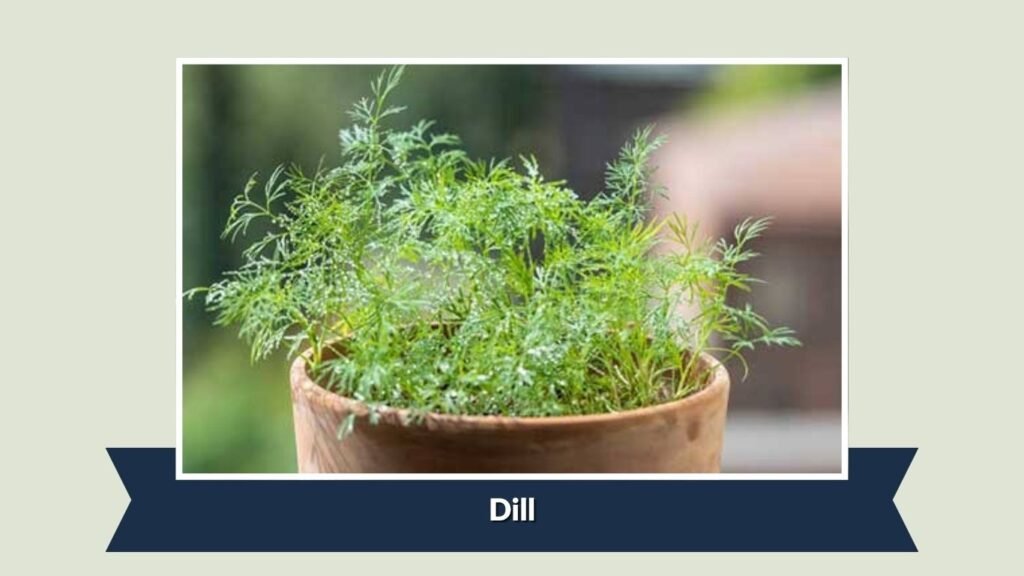
Dill (Anethum graveolens) is an aromatic annual herb admired for its delicate, feathery foliage and distinctive fresh flavor. Its soft green leaves are commonly used in pickles, seafood dishes, salads, soups, and creamy sauces. Dill is an attractive addition to indoor herb gardens because its fine-textured foliage creates a graceful appearance. Although it requires strong lighting and sufficient root space, dill can grow successfully in containers. Its relatively fast growth and useful culinary leaves make it a rewarding herb for sunny indoor growing areas.
Identification
- Common Name: Dill
- Scientific Name: Anethum graveolens
- Family: Apiaceae
- Plant Type: Annual culinary herb
- Height: Approximately 12–36 inches, depending on variety
- Leaf Color: Soft green to blue-green
- Leaf Shape: Fine, feathery, thread-like leaves
- Growth Rate: Fast
- Light Requirements: 6–8 hours of direct sunlight or strong grow lighting
- Water Requirements: Moderate
- Propagation Method: Seeds
Habitat and Growing Conditions
Dill originates from regions of Europe and western Asia, where it grows in sunny environments with well-draining soil. The plant prefers relatively mild temperatures and can struggle with excessive indoor heat.
Indoors, dill requires a sunny windowsill or supplemental grow lighting to develop strong stems and healthy foliage.
Temperatures between 60°F and 75°F generally encourage steady growth. A container approximately 10–12 inches deep provides sufficient room for its developing taproot.Dill prefers fertile, well-draining soil and benefits from good airflow. Compact varieties are particularly suitable for smaller indoor gardening spaces.
Watering and Maintenance
Dill requires regular watering, especially during germination and early development. Keep the soil lightly moist without allowing it to become waterlogged.Once established, water when the upper inch of soil begins to dry. Excessively dry conditions may cause wilting and encourage premature flowering.
Dill generally requires little fertilizer when planted in a nutrient-rich potting mixture. Excessive nitrogen can encourage weak, soft growth.Because dill develops a taproot, it usually grows best when seeds are sown directly into their final containers rather than transplanted repeatedly.
Growth, Harvesting, and Lifespan
Dill grows quickly, producing upright stems covered with delicate, feathery leaves. Under suitable conditions, young foliage may be ready for harvesting approximately six to eight weeks after sowing.Harvest the outer leaves or small leafy stems while allowing the central growing point to continue developing.
Regular light harvesting can provide fresh leaves, although dill naturally progresses toward flowering as it matures.As an annual herb, dill completes its lifecycle within one growing season. For a continuous indoor harvest, sow additional seeds every few weeks.
Fresh dill is especially popular in potato salads, fish dishes, homemade pickles, yogurt sauces, and vegetable recipes.
10. Lemon Balm
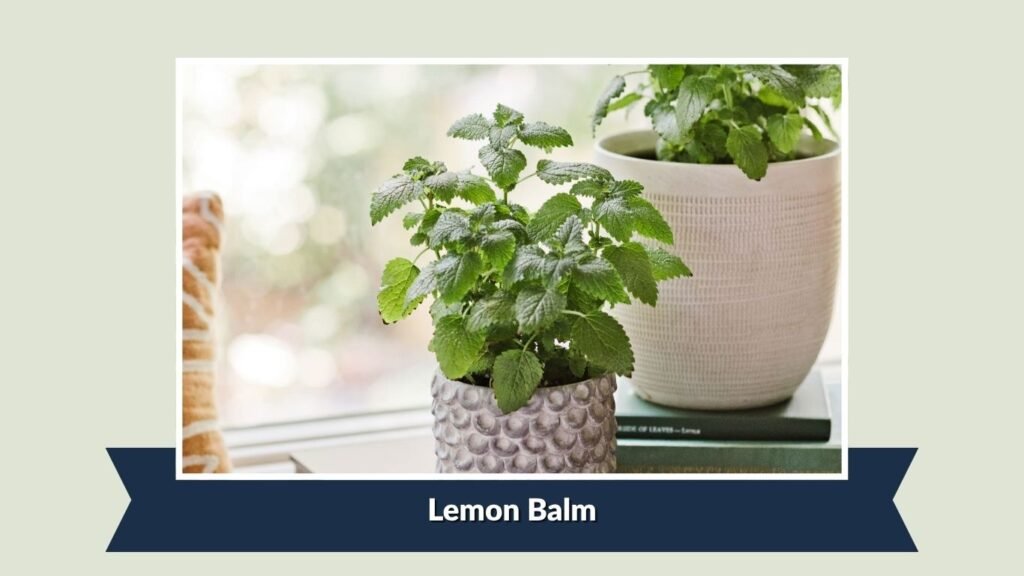
Lemon Balm (Melissa officinalis) is a fragrant perennial herb known for its bright green leaves and refreshing lemon-like aroma. A member of the mint family, this versatile herb is commonly grown for herbal teas, flavored beverages, desserts, and decorative indoor gardens. Its soft, textured foliage and bushy growth habit make it an attractive addition to kitchen windowsills and container arrangements. Lemon Balm is particularly suitable for beginners because it grows relatively quickly, tolerates occasional pruning, and adapts well to indoor environments with adequate light and moisture.
Identification
- Common Name: Lemon Balm
- Scientific Name: Melissa officinalis
- Family: Lamiaceae
- Plant Type: Perennial aromatic herb
- Height: Approximately 12–24 inches indoors
- Leaf Color: Bright green
- Leaf Shape: Oval, slightly wrinkled leaves with serrated edges
- Growth Rate: Moderate to fast
- Light Requirements: 4–6 hours of direct sunlight or bright supplemental lighting
- Water Requirements: Moderate
- Propagation Method: Seeds, stem cuttings, and division
Habitat and Growing Conditions
Lemon Balm is native to parts of Europe, North Africa, and western Asia. It naturally grows in temperate environments and prefers fertile, well-draining soil with moderate moisture.
Indoors, Lemon Balm performs best near a bright window receiving several hours of sunlight daily. Although it tolerates partial shade, sufficient light encourages compact growth and aromatic foliage.
Temperatures between 60°F and 75°F generally support healthy development. The plant adapts to ordinary indoor humidity but benefits from good airflow.
A container with drainage holes and nutrient-rich potting soil provides favorable growing conditions.
Watering and Maintenance
Lemon Balm prefers evenly moist soil but does not tolerate prolonged waterlogging. Water when the upper inch of soil begins to feel dry.
During active growth, the plant may require more frequent watering, particularly when positioned near a warm, sunny window.Regular pruning encourages branching and prevents the stems from becoming excessively long or weak.
Occasional diluted balanced fertilizer can support healthy foliage production. Remove flower buds when the main goal is harvesting tender leaves.
Growth, Harvesting, and Lifespan
Lemon Balm develops branching stems covered with fragrant leaves that release a pleasant citrus scent when gently crushed.
Under favorable conditions, the plant grows quickly and can provide repeated harvests throughout the growing season.
Harvest young stems or individual leaves regularly, cutting just above a leaf node to encourage new branching.As a perennial herb, Lemon Balm can survive for several years. Dividing mature plants or starting fresh cuttings helps maintain vigorous growth.Its aromatic foliage is commonly used in herbal teas, fruit salads, lemon-flavored drinks, and desserts.
11. Sage
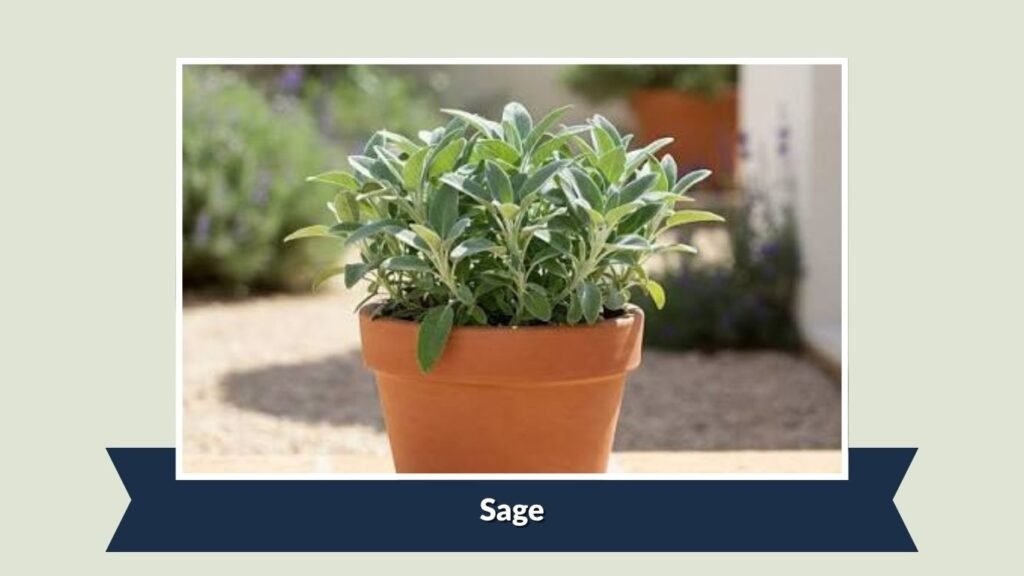
Sage (Salvia officinalis) is a fragrant perennial herb admired for its soft, grayish-green leaves and distinctive earthy flavor. Commonly used in Mediterranean cooking, sage adds a rich aroma to roasted poultry, stuffing, sauces, and vegetable dishes. This evergreen herb develops a compact, shrub-like appearance, making it an attractive addition to sunny indoor windowsills and container gardens. Sage is especially valued for its drought tolerance, long lifespan, and relatively low watering requirements. With sufficient sunlight and excellent drainage, it can remain productive indoors for several years.
Identification
- Common Name: Common Sage or Garden Sage
- Scientific Name: Salvia officinalis
- Family: Lamiaceae
- Plant Type: Evergreen perennial herb
- Height: Approximately 12–24 inches indoors
- Leaf Color: Grayish-green to silvery-green
- Leaf Shape: Oblong, slightly fuzzy, textured leaves
- Growth Rate: Slow to moderate
- Light Requirements: 6–8 hours of direct sunlight or strong grow lighting
- Water Requirements: Low to moderate
- Propagation Method: Seeds, stem cuttings, and division
Habitat and Growing Conditions
Sage originates from the Mediterranean region, where it naturally thrives in sunny environments with rocky, well-draining soil. Its thick, slightly fuzzy leaves help conserve moisture during dry periods.
Indoors, sage performs best near a bright south-facing window or beneath full-spectrum grow lights. Insufficient sunlight can result in weak stems and reduced leaf production.
Temperatures between 60°F and 80°F generally support healthy growth. Sage prefers relatively dry air and good airflow around its foliage.A sandy or gritty potting mixture with excellent drainage helps prevent moisture-related root problems.
Watering and Maintenance
Sage requires relatively infrequent watering compared with herbs such as parsley and mint. Allow the upper portion of the soil to dry before watering thoroughly.
Overwatering can cause root rot, yellowing leaves, and weakened growth. Containers with drainage holes are essential for keeping the roots healthy.
Occasional pruning encourages bushier development and prevents the plant from becoming excessively woody.Sage generally requires little fertilizer. A light application of diluted balanced fertilizer during active growth is usually sufficient.Avoid excessive misting because prolonged moisture on the foliage may encourage fungal problems.
Growth, Harvesting, and Lifespan
Sage develops woody stems covered with aromatic, textured leaves. As the plant matures, it gradually forms a compact shrub that can remain attractive throughout the year.
Harvest individual leaves or young stems once the plant is well established. Regular light harvesting encourages new growth and maintains a manageable shape.
Avoid removing large amounts of foliage from young plants or cutting deeply into older, leafless woody stems.As a perennial herb, sage can survive for several years with appropriate care. Older plants may become woody and benefit from replacement with new plants propagated from cuttings.
Fresh or dried sage is commonly used in roasted vegetables, poultry dishes, stuffing, soups, and savory sauces.
12. Tarragon
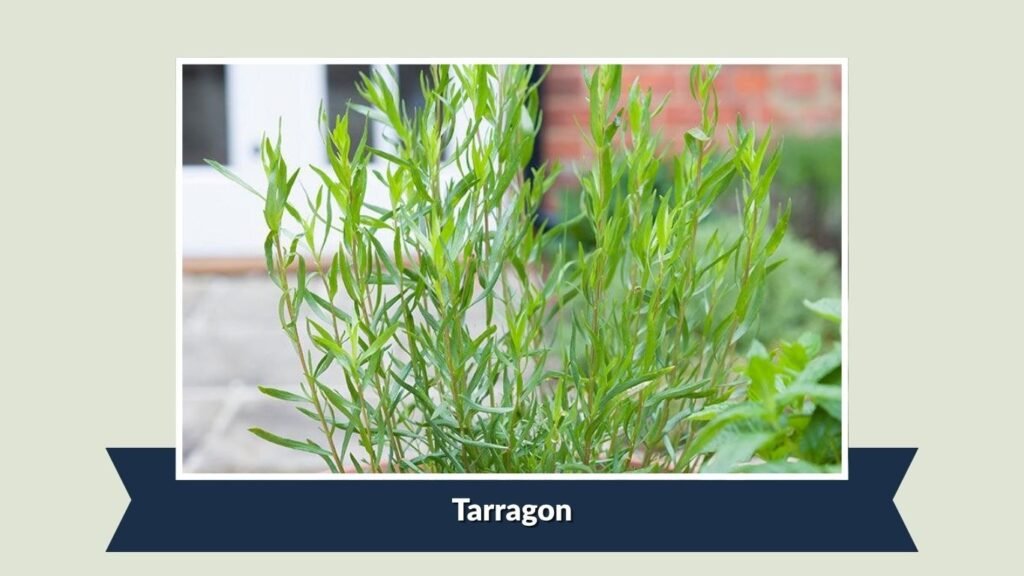
Tarragon (Artemisia dracunculus) is a fragrant perennial herb known for its slender green leaves and distinctive sweet, slightly anise-like flavor. Widely used in French cuisine, tarragon adds delicious flavor to chicken, fish, sauces, and salad dressings. French tarragon is particularly popular for culinary purposes because of its delicate aroma and rich taste. Although this herb requires adequate sunlight and proper drainage, it can grow successfully indoors in suitable containers. Its attractive foliage and versatile culinary uses make it a valuable addition to kitchen herb gardens.
Identification
- Common Name: Tarragon
- Scientific Name: Artemisia dracunculus
- Family: Asteraceae
- Plant Type: Perennial culinary herb
- Height: Approximately 12–24 inches indoors
- Leaf Color: Bright to dark green
- Leaf Shape: Long, narrow, lance-shaped leaves
- Growth Rate: Moderate
- Light Requirements: 6–8 hours of direct sunlight or strong grow lighting
- Water Requirements: Low to moderate
- Propagation Method: Stem cuttings and root division
Habitat and Growing Conditions
Tarragon naturally grows in temperate regions of Eurasia, where it thrives in sunny environments with well-draining soil. French tarragon prefers warm growing conditions but benefits from seasonal changes in temperature.
Indoors, tarragon grows best near a bright window receiving several hours of direct sunlight daily. Supplemental LED grow lights can support healthy development when natural sunlight is insufficient.
Temperatures between 60°F and 75°F (16°C–24°C) generally encourage healthy growth. A loose potting mixture containing perlite or coarse sand helps prevent waterlogging.Good airflow is important because stagnant moisture around the leaves can encourage fungal problems.
Watering and Maintenance
Tarragon requires moderate watering and prefers soil that becomes slightly dry between watering sessions. Water when the upper 1–2 inches of soil feel dry, allowing excess moisture to drain freely.
Overwatering can cause root rot, yellowing foliage, and weakened growth. Containers with drainage holes are essential for maintaining healthy roots.
Regular light pruning encourages branching and helps maintain a compact appearance. Avoid excessive fertilization because overly rich soil can encourage weak growth.Removing damaged or dried stems also helps maintain a healthy plant.
Growth, Harvesting, and Lifespan
Tarragon develops upright, branching stems covered with narrow aromatic leaves. French tarragon is normally propagated through cuttings or division because it rarely produces viable seeds.
Once established, the plant can provide repeated harvests of fresh leaves during active growth. Harvest young stems by cutting just above a leaf node to encourage branching.
Tarragon is a perennial herb that can live for several years. French tarragon may benefit from a cool winter rest period, making continuous indoor cultivation more challenging than growing basil or mint.Fresh tarragon leaves are commonly used in béarnaise sauce, chicken recipes, seafood dishes, and flavored vinegar.
13. Peppermint
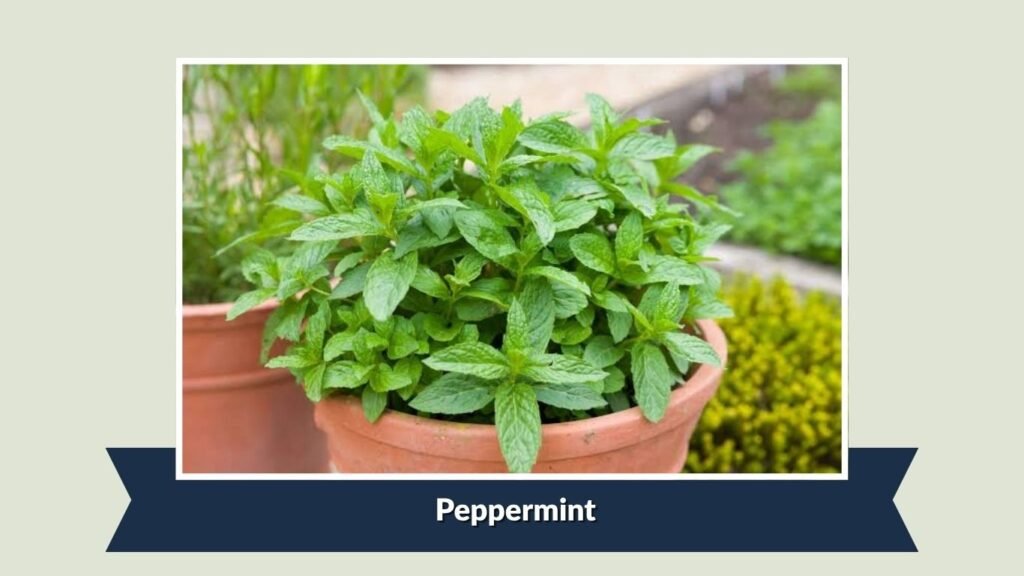
Peppermint (Mentha × piperita) is a highly aromatic perennial herb recognized for its refreshing menthol fragrance and distinctive cooling flavor. A natural hybrid of watermint and spearmint, peppermint is widely grown for herbal teas, beverages, desserts, and culinary flavoring. Its attractive green leaves and vigorous growth habit make it particularly suitable for indoor herb gardens. Peppermint is also appreciated for its easy propagation and ability to produce fresh leaves repeatedly. With adequate light, consistent moisture, and occasional pruning, this hardy herb can remain productive indoors for many years.
Identification
- Common Name: Peppermint
- Scientific Name: Mentha × piperita
- Family: Lamiaceae
- Plant Type: Perennial aromatic herb
- Height: Approximately 12–24 inches indoors
- Leaf Color: Dark green, sometimes with purplish stems
- Leaf Shape: Oval to lance-shaped leaves with serrated edges
- Growth Rate: Fast
- Light Requirements: 4–6 hours of direct sunlight or bright supplemental lighting
- Water Requirements: Moderate to high
- Propagation Method: Stem cuttings, runners, and division
Habitat and Growing Conditions
Peppermint originated as a hybrid in Europe and thrives in relatively cool, moist environments. Unlike Mediterranean herbs that prefer drier soil, peppermint performs best when its growing medium retains moderate moisture.
Indoors, peppermint grows successfully near a bright window receiving several hours of sunlight daily. Although it tolerates partial shade, adequate lighting encourages stronger stems and more aromatic leaves.
Temperatures between 60°F and 75°F generally support healthy development. A nutrient-rich, well-draining potting mixture provides favorable growing conditions.Because peppermint spreads rapidly through underground runners, growing it in a separate container helps control its growth.
Watering and Maintenance
Peppermint prefers consistently moist soil but should not remain waterlogged. Water when the upper inch of soil begins to dry, ensuring that excess water drains from the container.Allowing the soil to become excessively dry may cause wilting, leaf curling, and reduced growth.
Regular pruning encourages bushier development and prevents stems from becoming long and weak. Removing flower buds helps maintain tender foliage and supports continued leaf production.
Occasional diluted balanced fertilizer during active growth can encourage healthy development.
Growth, Harvesting, and Lifespan
Peppermint develops branching stems covered with fragrant leaves containing naturally occurring menthol. Under favorable conditions, the plant grows rapidly and produces numerous new shoots.
Harvest mature stems by cutting just above a leaf node. Regular harvesting encourages additional branching and maintains a compact appearance.
As a perennial herb, peppermint can survive for several years when provided with suitable conditions. Mature plants benefit from occasional root division to prevent overcrowding.Fresh peppermint leaves are commonly used in herbal teas, cold beverages, desserts, chocolate recipes, and homemade mint syrups.
14. Spearmint
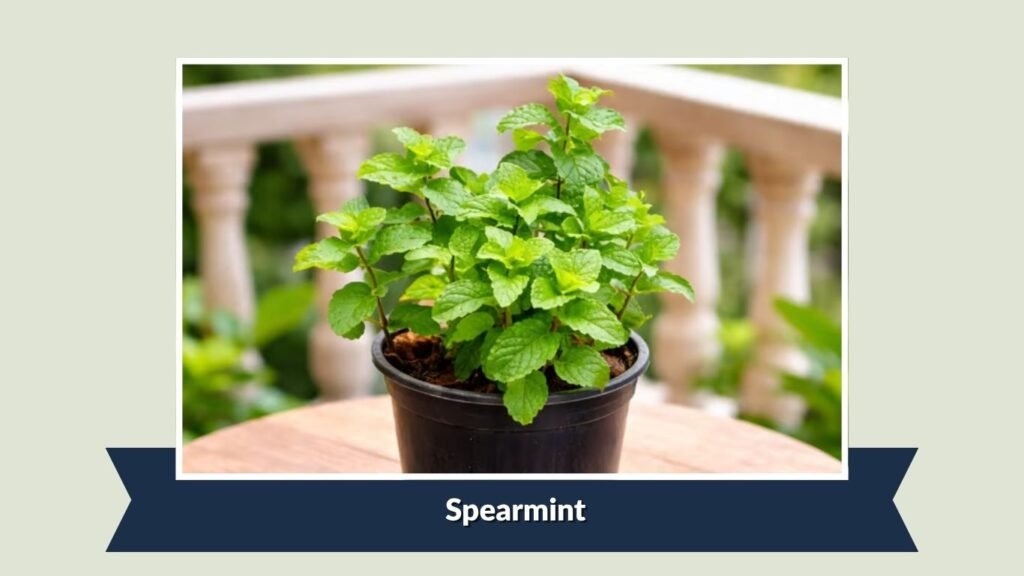
Spearmint (Mentha spicata) is a popular aromatic herb admired for its bright green foliage, refreshing fragrance, and naturally sweet mint flavor. Compared with peppermint, spearmint generally contains much less menthol, giving it a milder taste suitable for beverages, salads, and culinary dishes. This fast-growing perennial herb adapts well to indoor containers and can provide a continuous supply of fresh leaves with proper care. Its attractive textured foliage and easy propagation make spearmint an excellent choice for beginners interested in growing flavorful herbs indoors.
Identification
- Common Name: Spearmint
- Scientific Name: Mentha spicata
- Family: Lamiaceae
- Plant Type: Perennial culinary herb
- Height: Approximately 12–24 inches indoors
- Leaf Color: Bright to medium green
- Leaf Shape: Lance-shaped leaves with serrated margins
- Growth Rate: Fast
- Light Requirements: 4–6 hours of direct sunlight or bright grow lighting
- Water Requirements: Moderate to high
- Propagation Method: Stem cuttings, runners, and division
Habitat and Growing Conditions
Spearmint originates from temperate regions of Europe and Asia, where it commonly grows in environments with adequate sunlight and moderate soil moisture.
Indoors, spearmint performs best near a bright window receiving several hours of sunlight daily. It can tolerate partial shade, although sufficient light encourages compact growth and stronger leaf production.
Temperatures between 60°F and 75°F generally support healthy development. Spearmint prefers fertile, well-draining soil that retains moisture without becoming saturated.Because its underground runners spread aggressively, it is best grown in an individual container rather than alongside slower-growing herbs.
Watering and Maintenance
Spearmint requires regular watering to maintain healthy foliage. Water when the upper inch of soil feels dry, keeping the growing medium consistently moist.
Prolonged drought can cause wilting and reduce leaf production. However, excessive moisture may damage the roots and encourage fungal problems.Frequent pruning helps maintain a bushy appearance and prevents the stems from becoming excessively long.
Occasional feeding with diluted balanced fertilizer supports healthy growth. Removing flower buds can help direct energy toward leaf production.
Growth, Harvesting, and Lifespan
Spearmint grows quickly, producing numerous branching stems covered with aromatic leaves. Its spreading root system allows established plants to develop dense clusters of foliage.
Harvest stems regularly by cutting above a leaf node, which encourages additional branching and continued production.
Avoid removing more than one-third of the foliage during a single harvest so the plant can recover.Spearmint is a perennial herb that can survive for many years with appropriate care. Dividing mature plants periodically helps maintain healthy growth and prevents overcrowding.
Fresh spearmint leaves are widely used in mint tea, lemonade, fruit salads, yogurt sauces, and refreshing summer beverages.
15. Marjoram
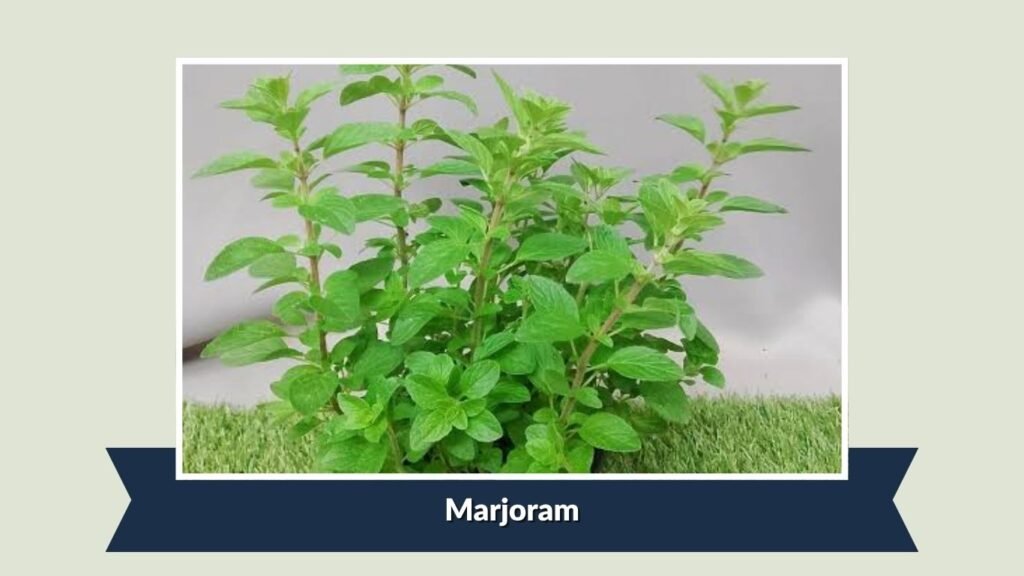
Marjoram (Origanum majorana) is a fragrant culinary herb recognized for its small, soft green leaves and delicate, sweet, slightly floral flavor. Closely related to oregano, marjoram is commonly used in Mediterranean cooking, including soups, sauces, roasted vegetables, and meat dishes. Its compact, branching growth habit makes it suitable for indoor containers and sunny kitchen windowsills. Although marjoram requires adequate sunlight and well-draining soil, it is relatively easy to maintain. Its pleasant aroma, attractive foliage, and culinary versatility make it a valuable addition to indoor herb gardens.
Identification
- Common Name: Sweet Marjoram
- Scientific Name: Origanum majorana
- Family: Lamiaceae
- Plant Type: Tender perennial herb, often grown as an annual
- Height: Approximately 8–18 inches indoors
- Leaf Color: Soft grayish-green
- Leaf Shape: Small, oval, slightly fuzzy leaves
- Growth Rate: Moderate
- Light Requirements: 6–8 hours of direct sunlight or strong grow lighting
- Water Requirements: Low to moderate
- Propagation Method: Seeds, stem cuttings, and division
Habitat and Growing Conditions
Marjoram originates from the Mediterranean region and nearby parts of western Asia, where it naturally thrives in warm, sunny environments with excellent soil drainage.
Indoors, marjoram grows best near a bright south-facing window or under suitable LED grow lights. Insufficient sunlight can produce weak stems and reduce the intensity of its aromatic foliage.
Temperatures between 65°F and 80°F generally provide favorable conditions. Marjoram prefers loose, well-draining soil and does not require excessive humidity.A container with drainage holes is essential because prolonged moisture around the roots can cause damage.
Watering and Maintenance
Marjoram requires moderate watering, allowing the upper 1–2 inches of soil to dry before watering again. Although it tolerates occasional dryness, young plants benefit from more consistent moisture.
Overwatering can cause yellowing leaves, root rot, and weakened growth. Avoid leaving standing water in saucers or decorative pots.
Regular pruning encourages branching and maintains a compact, bushy appearance. Removing flower buds can help extend the period of tender leaf production.Marjoram generally requires minimal fertilizer. Occasional diluted feeding during active growth is usually sufficient.
Growth, Harvesting, and Lifespan
Marjoram develops branching stems covered with small, fragrant leaves. Under favorable indoor conditions, the plant forms an attractive, compact mound of foliage.
Harvest young stems regularly by cutting just above a leaf node. This encourages additional branching and provides a steady supply of fresh leaves.
The foliage can be used fresh or dried, although fresh marjoram offers a particularly delicate flavor.Marjoram is a tender perennial that can survive for multiple years indoors when protected from cold temperatures. Older plants may gradually become woody and benefit from replacement through stem cuttings.
Its aromatic leaves are commonly used in pasta sauces, soups, roasted vegetables, poultry dishes, and seasoning blends.
16. Bay Laurel
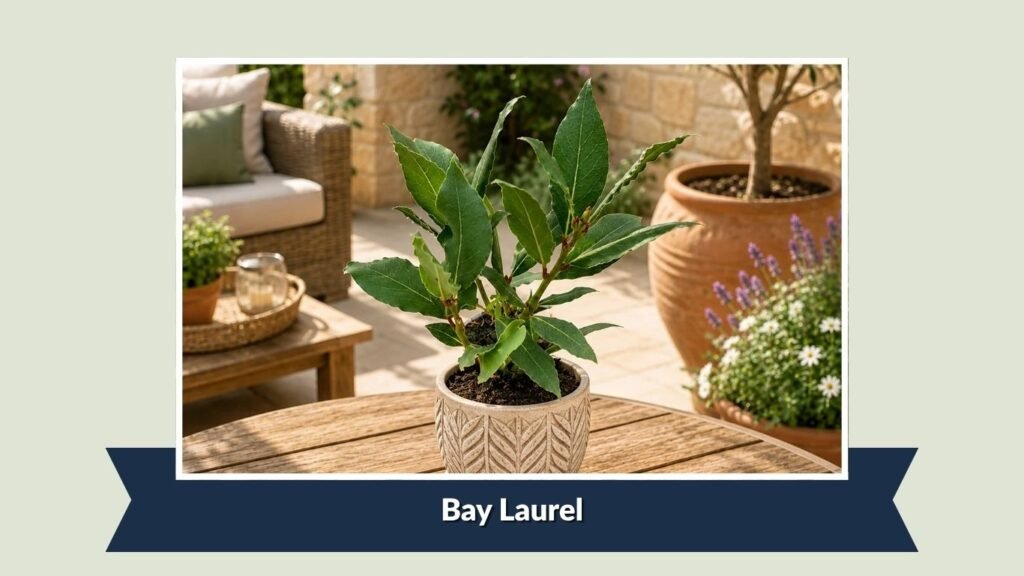
Bay Laurel (Laurus nobilis) is an evergreen culinary herb admired for its glossy, aromatic leaves and elegant shrub-like growth habit. Unlike many soft-stemmed herbs, bay laurel develops woody branches and can eventually grow into a small tree. Its fragrant leaves are widely used to flavor soups, stews, sauces, and slow-cooked dishes. Bay Laurel is especially suitable for indoor gardeners who want a long-lived culinary plant with ornamental value. Although it grows more slowly than basil or mint, its attractive foliage and relatively manageable maintenance requirements make it a rewarding indoor container plant.
Identification
- Common Name: Bay Laurel or Sweet Bay
- Scientific Name: Laurus nobilis
- Family: Lauraceae
- Plant Type: Evergreen perennial shrub or tree
- Height: Approximately 2–6 feet indoors with pruning
- Leaf Color: Dark, glossy green
- Leaf Shape: Oval to lance-shaped, leathery leaves
- Growth Rate: Slow to moderate
- Light Requirements: 6 hours of sunlight or bright supplemental lighting
- Water Requirements: Moderate
- Propagation Method: Stem cuttings and seeds
Habitat and Growing Conditions
Bay Laurel originates from the Mediterranean region, where it naturally grows in warm environments with well-draining soil. Unlike smaller culinary herbs, it develops a woody trunk and extensive root system as it matures.
Indoors, bay laurel performs best near a bright window receiving several hours of sunlight daily. Adequate lighting encourages strong branches and healthy leaf development.
Temperatures between 60°F and 75°F generally support indoor growth. The plant also benefits from relatively cool winter conditions and good airflow.
A well-draining potting mixture containing perlite or coarse materials helps prevent waterlogging. Choose a sturdy container large enough to support the plant’s developing roots.
Watering and Maintenance
Bay Laurel requires moderate watering and prefers the upper portion of its soil to dry slightly between watering sessions.Water thoroughly when the top 1–2 inches feel dry, allowing excess moisture to drain completely. Avoid keeping the soil constantly saturated because this can damage the roots.
During winter, watering should be reduced when growth slows. However, the soil should not remain completely dry for extended periods.Regular pruning helps maintain a manageable indoor size and encourages bushier growth.Occasional applications of diluted balanced fertilizer during spring and summer can support healthy leaf production.
Growth, Harvesting, and Lifespan
Bay Laurel grows slowly, gradually developing woody stems and dense clusters of glossy green leaves. With proper pruning, it can be maintained as a compact indoor shrub or small decorative tree.
Harvest mature leaves individually once the plant becomes established. Avoid removing excessive foliage from young plants.Fresh leaves can be used in cooking, although dried bay leaves are commonly preferred because their flavor becomes more concentrated and balanced.
Bay Laurel is a long-lived perennial that can survive for many years with appropriate care. Established plants may remain productive for decades under favorable conditions.
Its aromatic foliage is widely used in soups, stews, rice dishes, sauces, and slow-cooked recipes. Remove whole bay leaves before serving because their tough texture can present a choking or injury hazard.
17. Lemongrass
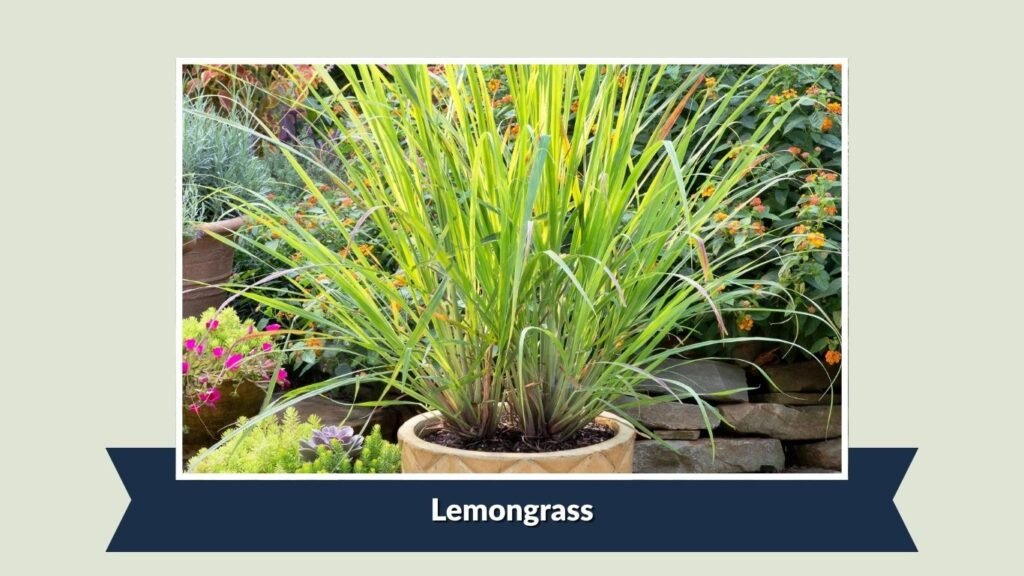
Lemongrass (Cymbopogon citratus) is a fragrant tropical herb recognized for its long, narrow leaves and distinctive citrus-like aroma. Widely used in Asian cooking, lemongrass adds a refreshing lemon flavor to soups, curries, teas, and marinades. This fast-growing perennial grass can thrive indoors when provided with sufficient sunlight, warmth, and moisture. Its tall, graceful foliage also makes it an attractive ornamental plant for indoor gardens. Although lemongrass requires more space than smaller culinary herbs, it is relatively easy to maintain in a suitable container.
Identification
- Common Name: Lemongrass
- Scientific Name: Cymbopogon citratus
- Family: Poaceae
- Plant Type: Tropical perennial grass
- Height: Approximately 2–4 feet indoors
- Leaf Color: Bright to bluish-green
- Leaf Shape: Long, narrow, blade-like leaves
- Growth Rate: Fast
- Light Requirements: 6–8 hours of direct sunlight or strong grow lighting
- Water Requirements: Moderate to high
- Propagation Method: Stalk division and rooted stem bases
Habitat and Growing Conditions
Lemongrass originates from tropical Asia, where it naturally grows in warm environments with abundant sunlight and seasonal rainfall. Its tropical background makes it particularly suitable for warm indoor locations.
Indoors, lemongrass performs best near a sunny south-facing window or under powerful LED grow lights. Insufficient sunlight can cause weak stems and reduced leaf production.
Temperatures between 70°F and 90°F (21°C–32°C) generally support vigorous growth. The plant prefers fertile, well-draining soil that retains moderate moisture.A large container with drainage holes provides enough room for its expanding root system and developing clumps.
Watering and Maintenance
Lemongrass requires regular watering, particularly during active growth. Water when the upper inch of soil begins to feel dry, keeping the growing medium moderately moist.
Prolonged drought can cause brown leaf tips, wilting, and slower development. However, constantly saturated soil may damage the roots.
During spring and summer, occasional applications of balanced fertilizer support healthy foliage and stem growth.
Remove dried leaves when necessary and divide overcrowded clumps to maintain vigorous development.
Growth, Harvesting, and Lifespan
Lemongrass grows in dense clumps of upright stems surrounded by long, aromatic leaves. Under favorable conditions, mature plants develop thick stalk bases that are especially valued for cooking.
Harvest established outer stalks by cutting them close to the base or carefully separating them from the clump. Young leaves can also be used to prepare herbal teas.
As a tropical perennial, lemongrass can survive for several years indoors when protected from cold temperatures.Its fragrant stalks are commonly used in Thai curries, Vietnamese soups, marinades, and refreshing herbal beverages.
18. Stevia
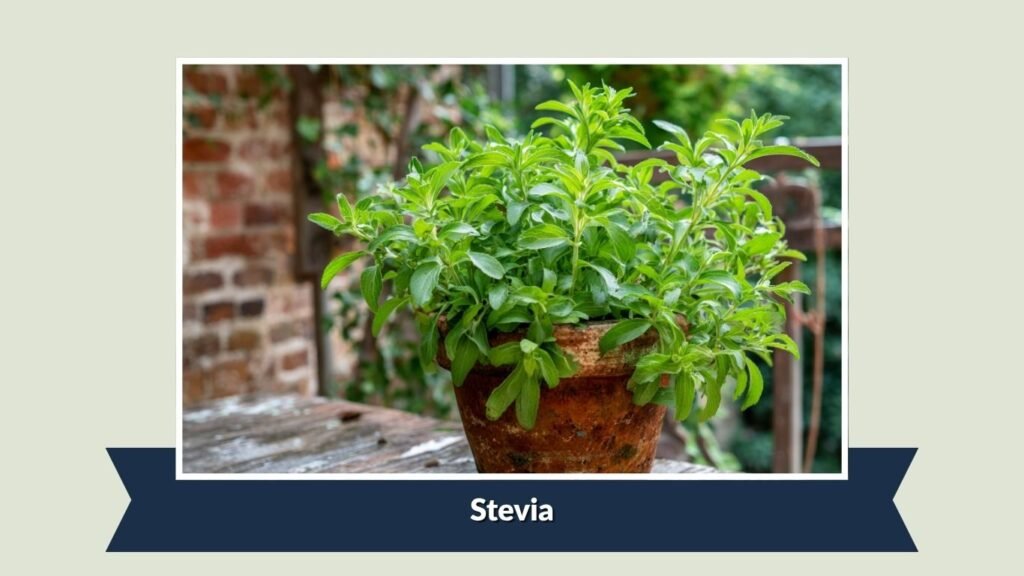
Stevia (Stevia rebaudiana) is a sweet-leaved perennial herb widely appreciated for its natural sweetness and culinary versatility. Its small green leaves contain steviol glycosides, compounds that provide an intensely sweet taste without the same calorie contribution as ordinary sugar. Stevia is commonly grown for homemade herbal teas, beverages, and natural sweetening purposes. This compact herb can grow successfully indoors when provided with adequate sunlight, warmth, and well-draining soil. Its attractive foliage and interesting flavor make it a unique addition to kitchen windowsills and indoor herb gardens.
Identification
- Common Name: Stevia or Sweetleaf
- Scientific Name: Stevia rebaudiana
- Family: Asteraceae
- Plant Type: Tender perennial herb
- Height: Approximately 12–24 inches indoors
- Leaf Color: Bright to medium green
- Leaf Shape: Oval to lance-shaped leaves with serrated edges
- Growth Rate: Moderate
- Light Requirements: 6–8 hours of direct sunlight or strong grow lighting
- Water Requirements: Moderate
- Propagation Method: Seeds and stem cuttings
Habitat and Growing Conditions
Stevia originates from Paraguay and neighboring regions of South America, where it naturally grows in warm environments with adequate sunlight and seasonal rainfall.
Indoors, stevia performs best near a bright window receiving several hours of direct sunlight daily. Supplemental grow lights can encourage stronger growth when natural lighting is insufficient.
Temperatures between 65°F and 85°F (18°C–29°C) generally support healthy development. Stevia is sensitive to frost and should be protected from cold indoor drafts.A loose, fertile potting mixture with good drainage helps maintain healthy roots and steady growth.
Watering and Maintenance
Stevia prefers moderately moist soil but does not tolerate prolonged waterlogging. Water when the upper inch of soil begins to dry, allowing excess moisture to drain freely.Excessive dryness can cause wilting and leaf damage, particularly during warmer periods.
Regular pruning helps encourage branching and creates a fuller, more productive plant. Pinching the growing tips also helps prevent excessively tall, weak stems.
Occasional applications of diluted balanced fertilizer during active growth can support healthy foliage production.
Growth, Harvesting, and Lifespan
Stevia grows as a branching herbaceous plant covered with small, sweet-tasting leaves. Under favorable indoor conditions, it can provide multiple harvests throughout its active growing period.
Harvest leaves once the plant becomes well established. Stevia leaves often develop stronger sweetness as the plant approaches flowering.Fresh or dried leaves can be used to sweeten herbal teas and other beverages, although they may introduce a slightly herbal or licorice-like aftertaste.
Stevia is a tender perennial that can survive for several years indoors with suitable care. Older plants may gradually become less productive and benefit from replacement using stem cuttings.Unlike commercially purified stevia sweeteners, whole stevia leaves have a different flavor profile and sweetness concentration.
19. Catnip
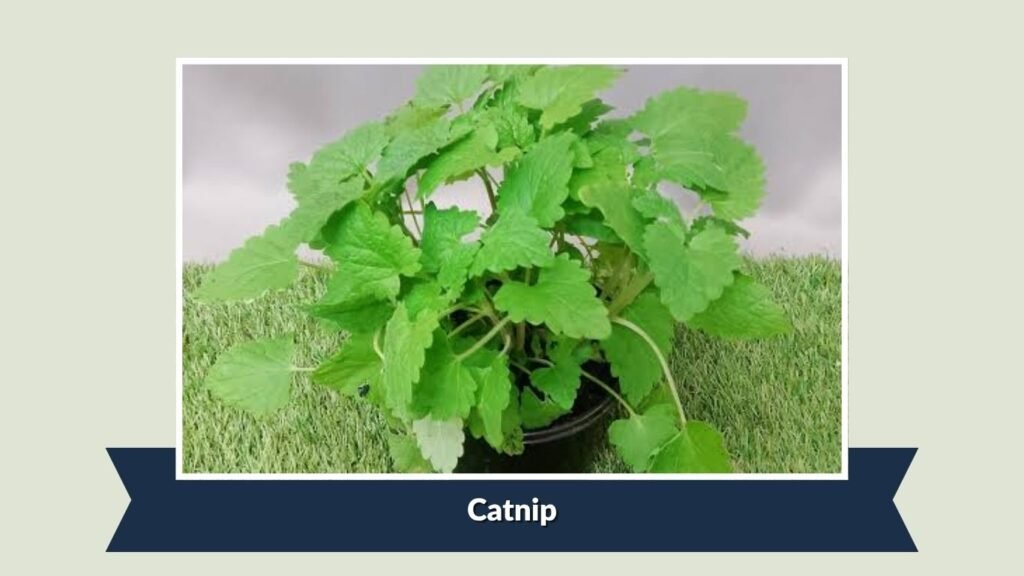
Catnip (Nepeta cataria) is a fragrant perennial herb known for its soft green leaves, square stems, and distinctive mint-like aroma. A member of the mint family, catnip is especially famous for its stimulating effect on many domestic cats. However, it is also grown as an ornamental herb and occasionally used in herbal tea preparations. This hardy plant adapts well to indoor containers and requires relatively simple maintenance. Its fast growth, attractive foliage, and easy propagation make catnip a practical choice for indoor gardeners interested in aromatic herbs.
Identification
- Common Name: Catnip
- Scientific Name: Nepeta cataria
- Family: Lamiaceae
- Plant Type: Perennial aromatic herb
- Height: Approximately 12–24 inches indoors
- Leaf Color: Grayish-green to medium green
- Leaf Shape: Heart-shaped to oval with serrated edges
- Growth Rate: Moderate to fast
- Light Requirements: 6 hours of direct sunlight or strong grow lighting
- Water Requirements: Moderate
- Propagation Method: Seeds, stem cuttings, and division
Habitat and Growing Conditions
Catnip is native to parts of Europe and Asia, where it naturally grows in sunny fields, open woodlands, and well-drained soils.
Indoors, catnip thrives near a bright window receiving several hours of sunlight daily. Strong lighting encourages bushy development and healthy aromatic foliage.
Temperatures between 60°F and 80°F (16°C–27°C) generally provide suitable growing conditions. Catnip tolerates ordinary indoor humidity and prefers good airflow.A loose, well-draining potting mixture supports healthy root development and prevents excess moisture accumulation.
Watering and Maintenance
Catnip requires moderate watering, particularly during early growth. Allow the upper 1–2 inches of soil to dry before watering thoroughly.
Established plants tolerate occasional drought, but prolonged dryness can reduce leaf production and cause wilting.
Regular pruning encourages branching and helps maintain a compact shape. Removing developing flower stems can extend the period of tender foliage growth.Occasional diluted fertilizer during active growth is generally sufficient. Excessive feeding is unnecessary.
Growth, Harvesting, and Lifespan
Catnip develops branching stems covered with aromatic leaves that contain nepetalactone, a naturally occurring compound responsible for its characteristic effects on many cats.Under favorable growing conditions, the plant produces new shoots rapidly and can be harvested several times during active growth.
Harvest leaves and young stems by cutting just above a leaf node. The foliage can be used fresh or dried.As a perennial herb, catnip can survive for several years with appropriate care. Older plants may benefit from pruning or division.
When growing catnip for cats, place the container in a protected location to prevent excessive chewing or damage to young plants.
20. Garlic Chives
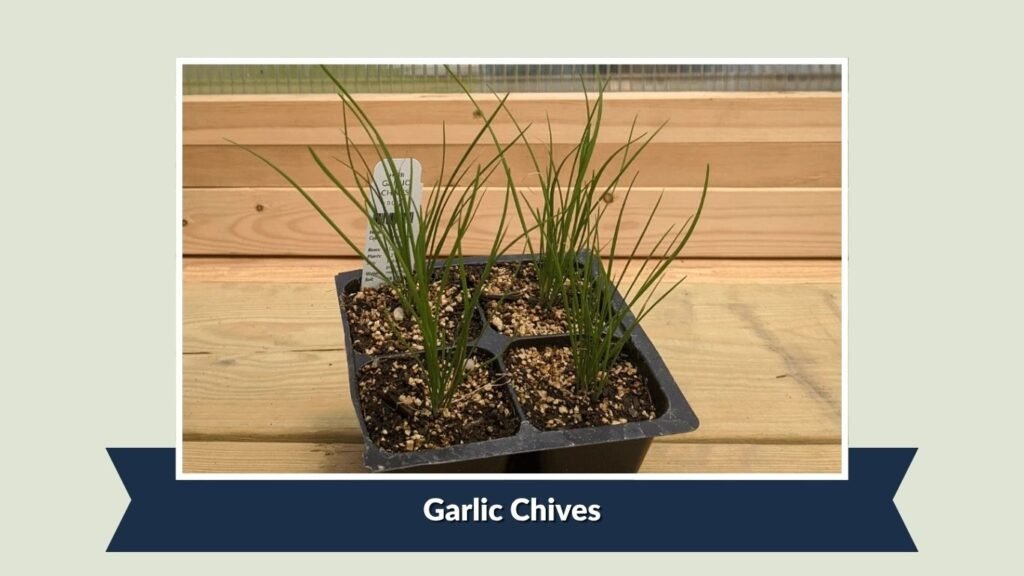
Garlic Chives (Allium tuberosum) are attractive perennial herbs recognized for their flat, narrow green leaves and distinctive mild garlic flavor. Unlike common chives, which have hollow tubular leaves and a delicate onion taste, garlic chives produce solid, grass-like foliage with a more noticeable garlic aroma. Widely used in Asian cuisine, they are popular ingredients in stir-fries, dumplings, soups, and savory pancakes. Garlic chives adapt well to indoor containers and can provide repeated harvests when grown under sufficient sunlight and proper moisture conditions.
Identification
- Common Name: Garlic Chives or Chinese Chives
- Scientific Name: Allium tuberosum
- Family: Amaryllidaceae
- Plant Type: Perennial culinary herb
- Height: Approximately 12–20 inches indoors
- Leaf Color: Bright to dark green
- Leaf Shape: Long, narrow, flat leaves
- Growth Rate: Moderate
- Light Requirements: 6 hours of direct sunlight or suitable grow lighting
- Water Requirements: Moderate
- Propagation Method: Seeds and clump division
Habitat and Growing Conditions
Garlic chives originate from eastern Asia, where they have been cultivated for centuries as culinary herbs. They naturally prefer sunny environments with fertile, well-draining soil.
Indoors, garlic chives grow best near a bright window receiving several hours of direct sunlight daily. Supplemental grow lights help maintain steady foliage production when natural sunlight is limited.
Temperatures between 60°F and 80°F generally support healthy development. Garlic chives can tolerate relatively cool conditions but grow more actively in moderate warmth.
A container approximately 6–8 inches deep provides suitable space for their developing roots and expanding clumps.
Watering and Maintenance
Garlic chives prefer consistently moist but well-draining soil. Water when the upper inch begins to feel dry, ensuring that excess moisture drains freely.Avoid allowing the growing medium to remain completely dry for long periods, as this may reduce leaf production.
Regular harvesting encourages fresh foliage development. Removing damaged or yellowing leaves also helps maintain the plant’s appearance.
Occasional applications of diluted balanced fertilizer during active growth support healthy development.
Growth, Harvesting, and Lifespan
Garlic chives develop dense clumps of flat, aromatic leaves emerging from underground bulbs. As plants mature, new shoots gradually increase the size of each clump.
Harvest established plants by cutting the leaves approximately 1–2 inches above the soil surface. This allows new growth to emerge from the base.
Avoid harvesting too frequently without allowing the plant sufficient recovery time.Garlic chives are perennial herbs that can survive for many years with proper care. Established clumps benefit from division every few years to prevent overcrowding.
Fresh garlic chives are commonly used in dumplings, noodle dishes, egg recipes, vegetable stir-fries, and Asian-style soups.
21. Winter Savory
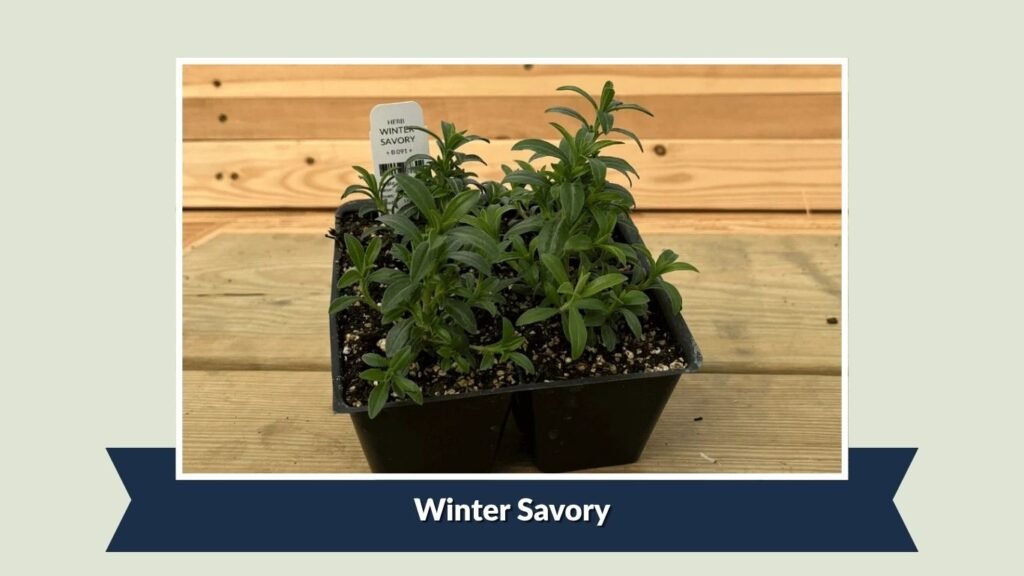
Winter Savory (Satureja montana) is a compact evergreen herb recognized for its small, aromatic leaves and distinctive peppery flavor. A member of the mint family, this Mediterranean herb is widely used to season beans, roasted vegetables, meats, and savory dishes. Unlike summer savory, which is typically grown as an annual, winter savory is a hardy perennial that can remain productive for several years. Its low-growing, shrub-like appearance makes it attractive for indoor containers and kitchen windowsills. With adequate sunlight and proper drainage, winter savory requires relatively little maintenance.
Identification
- Common Name: Winter Savory
- Scientific Name: Satureja montana
- Family: Lamiaceae
- Plant Type: Evergreen perennial herb
- Height: Approximately 6–12 inches indoors
- Leaf Color: Dark green
- Leaf Shape: Small, narrow, pointed leaves
- Growth Rate: Slow to moderate
- Light Requirements: 6–8 hours of direct sunlight or strong grow lighting
- Water Requirements: Low to moderate
- Propagation Method: Seeds, stem cuttings, and division
Habitat and Growing Conditions
Winter savory originates from southern Europe and the Mediterranean region, where it naturally grows in rocky, sunny environments with relatively dry soil.
Indoors, the plant performs best near a bright south-facing window or under supplemental LED grow lights. Adequate sunlight encourages compact growth and helps maintain its aromatic foliage.
Temperatures between 60°F and 75°F generally support healthy development. Winter savory prefers excellent drainage and relatively low humidity.A sandy or gritty potting mixture containing perlite or coarse mineral materials provides a suitable growing medium.
Watering and Maintenance
Winter savory requires relatively infrequent watering because it tolerates dry conditions once established. Allow the upper portion of the soil to dry before watering thoroughly.
Overwatering can cause root rot, yellowing leaves, and reduced growth. Containers with drainage holes are essential.
Regular light pruning encourages branching and maintains a compact, attractive shape. Avoid cutting deeply into old, leafless woody stems because they may not regenerate readily.
Winter savory generally requires little fertilizer. Occasional diluted feeding during active growth is sufficient.
Growth, Harvesting, and Lifespan
Winter savory grows as a small woody shrub covered with narrow, aromatic leaves. Its compact structure makes it particularly suitable for small indoor herb containers.
Harvest young leafy stems once the plant becomes established. Regular light cutting encourages new growth and helps prevent excessive woodiness.Both fresh and dried leaves can be used in cooking. Winter savory has a stronger, more peppery flavor than summer savory.
As a perennial herb, winter savory can survive for several years with adequate sunlight, good drainage, and occasional pruning.Its aromatic leaves are commonly used in bean dishes, roasted vegetables, meat recipes, soups, and Mediterranean seasoning mixtures.
22. Vietnamese Coriander
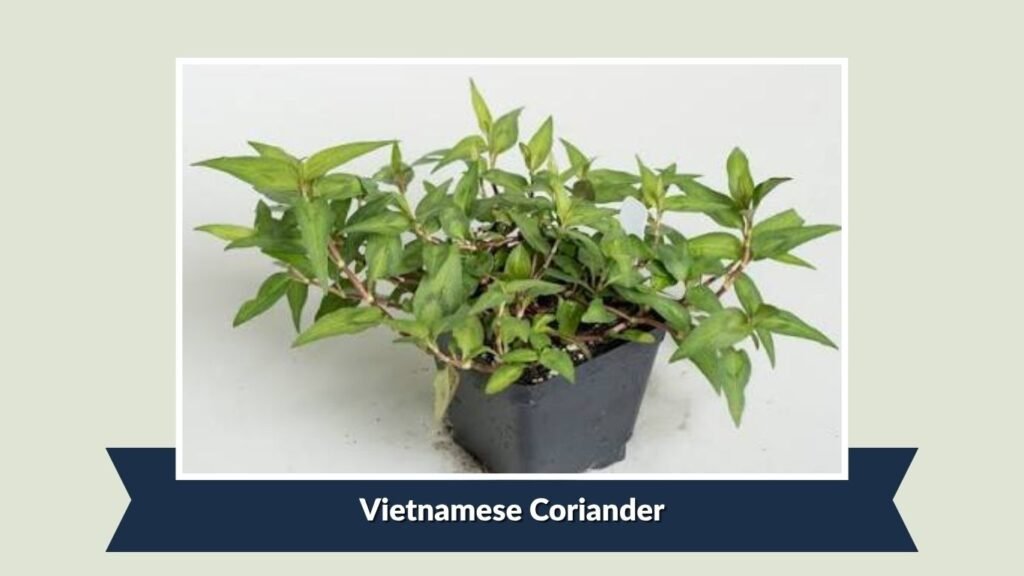
Vietnamese Coriander (Persicaria odorata) is a fragrant tropical herb recognized for its slender, pointed leaves and distinctive spicy, citrus-like flavor. Also known as Vietnamese mint or rau răm, this herb is widely used in Southeast Asian cooking, particularly in Vietnamese salads, soups, and noodle dishes. Unlike true cilantro, Vietnamese coriander is a perennial plant that can continue producing fresh leaves under warm growing conditions. Its attractive foliage, rapid growth, and preference for moisture make it an excellent choice for indoor gardeners who want a productive tropical culinary herb.
Identification
- Common Name: Vietnamese Coriander or Vietnamese Mint
- Scientific Name: Persicaria odorata
- Family: Polygonaceae
- Plant Type: Tropical perennial culinary herb
- Height: Approximately 6–18 inches, with spreading stems
- Leaf Color: Deep green, often with dark central markings
- Leaf Shape: Narrow, pointed, lance-shaped leaves
- Growth Rate: Moderate to fast
- Light Requirements: Bright indirect light or gentle direct sunlight
- Water Requirements: Moderate to high
- Propagation Method: Stem cuttings and division
Habitat and Growing Conditions
Vietnamese coriander originates from tropical regions of Southeast Asia, where it thrives in warm, humid environments with consistently moist soil.
Indoors, it grows best near a bright window receiving filtered sunlight or gentle morning sun. Strong afternoon sunlight may scorch the foliage, particularly when the soil becomes dry.
Temperatures between 70°F and 85°F (21°C–29°C) generally encourage vigorous growth. The plant is sensitive to cold temperatures and should be protected from chilly drafts.A nutrient-rich, moisture-retentive potting mixture with adequate drainage provides favorable growing conditions.
Watering and Maintenance
Vietnamese coriander prefers consistently moist soil and requires more frequent watering than drought-tolerant Mediterranean herbs.
Water when the soil surface begins to dry, ensuring that the root zone remains evenly moist without becoming stagnant or waterlogged.Prolonged dryness can cause wilting, leaf curling, and reduced growth. Moderate to high humidity also supports healthy foliage development.
Regular pruning helps prevent excessively long stems and encourages a fuller, bushier appearance.Occasional applications of diluted balanced fertilizer during active growth can support continued leaf production.
Growth, Harvesting, and Lifespan
Vietnamese coriander develops slender, branching stems that spread outward and produce numerous aromatic leaves. Its rapid growth makes it particularly suitable for repeated harvesting.
Harvest young stems and leaves by cutting just above a node. Regular trimming encourages additional branches and maintains a compact plant.Propagation is especially easy through stem cuttings. Healthy cuttings placed in water or moist potting soil can develop roots and establish new plants.
As a tropical perennial, Vietnamese coriander can survive for several years indoors when provided with sufficient warmth, moisture, and light.Fresh leaves are commonly used in Vietnamese salads, noodle dishes, soups, spring rolls, and Southeast Asian herb mixtures.
FAQs
1. What Are the Easiest Herbs to Grow Indoors for Beginners?
Basil, mint, parsley, chives, and oregano are among the easiest herbs to grow indoors. These herbs adapt well to containers, require relatively simple maintenance, and produce fresh leaves regularly. Mint and chives are particularly forgiving, while basil grows quickly when provided with sufficient sunlight, warmth, and consistent watering.
2. Can You Grow Herbs Indoors All Year Round?
Yes, many herbs can grow indoors throughout the year when provided with adequate light, suitable temperatures, and proper watering. Perennial herbs such as mint, thyme, rosemary, and oregano can remain productive for several years. Annual herbs like basil, cilantro, and dill may need periodic replanting to maintain a continuous supply of fresh leaves.
3. How Much Sunlight Do Indoor Herbs Need?
Most indoor herbs require approximately 6–8 hours of direct sunlight daily for healthy growth. Sun-loving varieties such as basil, rosemary, thyme, and oregano need especially bright conditions. Herbs like mint, parsley, and lemon balm tolerate somewhat less sunlight. If natural light is insufficient, full-spectrum LED grow lights can provide supplemental lighting for approximately 12–16 hours daily.
4. How Often Should You Water Herbs Growing Indoors?
Watering frequency depends on the herb variety, container size, temperature, and soil conditions. Moisture-loving herbs such as mint, parsley, and basil generally need watering when the upper inch of soil begins to dry. Mediterranean herbs like rosemary, thyme, and sage prefer drier conditions between watering sessions. Always use containers with drainage holes to prevent root rot.
5. What Are the Best Herbs to Grow Indoors Without Sunlight?
Mint, parsley, chives, and lemon balm are good choices for indoor areas with limited natural sunlight. However, no culinary herb grows well in complete darkness. These varieties still require sufficient light for photosynthesis and healthy development. In rooms without suitable windows, LED grow lights can help maintain strong growth and allow you to harvest fresh herbs throughout the year.