
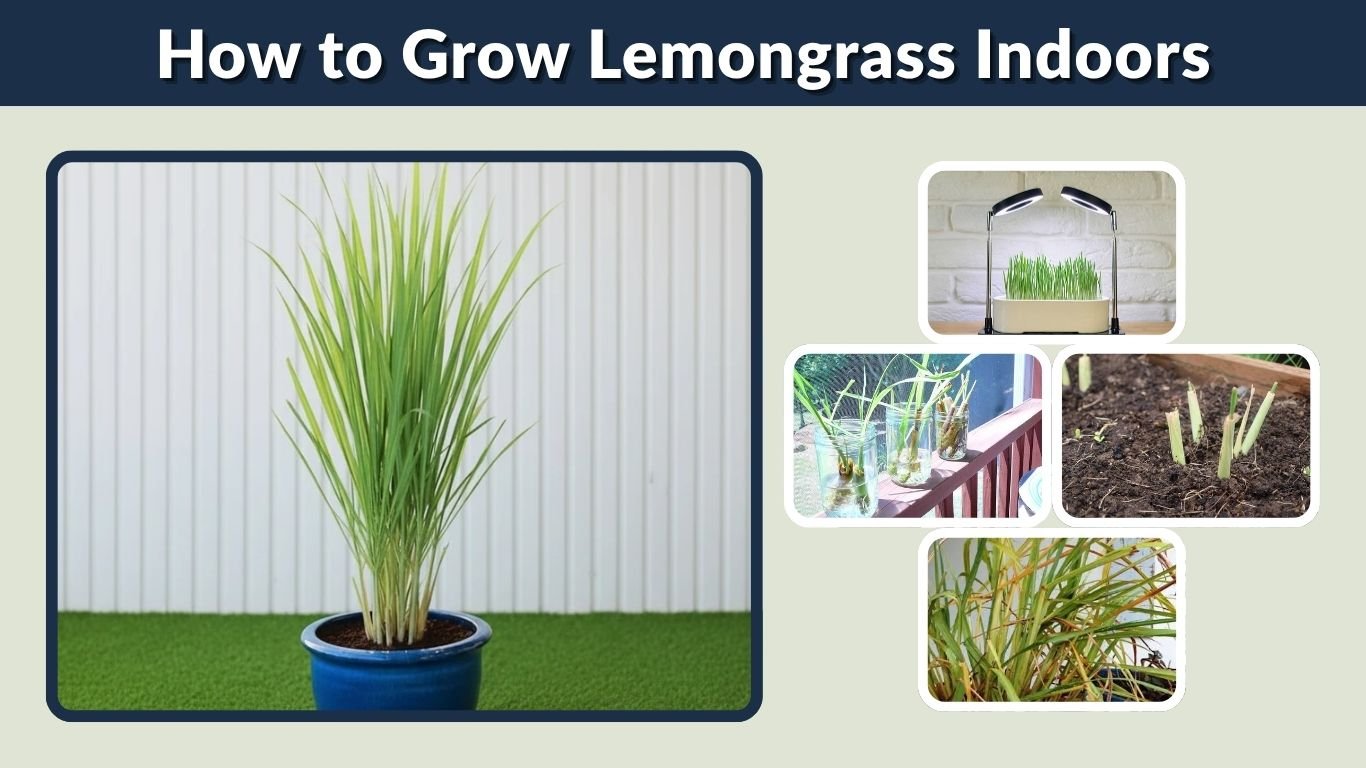
Growing lemongrass indoors is an excellent way to enjoy fresh, citrus-scented herbs throughout the year. This tropical plant is widely used in Asian cooking, herbal teas, and homemade recipes. Although lemongrass naturally thrives in warm outdoor climates, it can also grow successfully inside with adequate sunlight, suitable soil, and consistent watering. You can start it from seeds, rooted stalks, or an established nursery plant. Whether you have a sunny kitchen window or a dedicated indoor garden, this guide explains how to grow lemongrass indoors and maintain healthy, productive plants.
Can You Grow Lemongrass Indoors?
Yes, lemongrass grows well indoors when provided with sufficient warmth, light, and growing space. Scientifically known as Cymbopogon citratus, this tropical perennial forms clumps of tall, narrow leaves with a distinctive citrus fragrance. Indoor plants may grow more slowly than outdoor specimens, particularly during winter, but suitable conditions can support healthy growth and regular harvesting.
Benefits of Growing Lemongrass Indoors
Growing lemongrass inside provides convenient access to fresh stalks for soups, curries, sauces, and teas.
Container growing also protects the plant from frost and allows gardeners in cooler climates to maintain it year-round. Its upright green foliage adds a tropical appearance to indoor spaces.
How to Start Growing Lemongrass Indoors
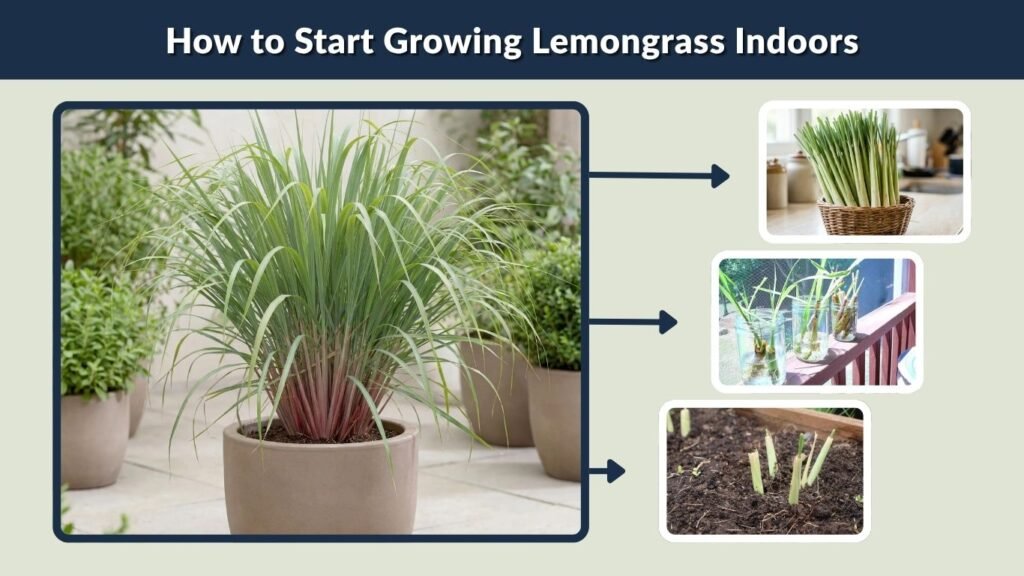
Lemongrass can be started from seeds, rooted grocery-store stalks, or established nursery plants. Growing from healthy stalks is often the quickest option because the plant already has a developed stem base. Seeds require additional time and suitable germination conditions. Whichever method you choose, warmth and adequate light are essential for successful early growth.
Growing Lemongrass From Stalks
- Select fresh, firm lemongrass stalks with intact bulbous bases.
- Remove damaged outer leaves and trim excessively long foliage.
- Place the stem bases in a jar containing a few inches of water.
- Position the jar near a bright window away from cold drafts.
- Replace the water regularly to prevent stagnation.
- Once several healthy roots develop, transfer the stalks into potting soil.
Growing Lemongrass From Seeds
Lemongrass seeds can be started indoors in small containers filled with moist, well-draining seed-starting mix.
Keep the containers warm, ideally around 68–77°F (20–25°C). Seeds typically germinate within two to three weeks under favorable conditions.
Once seedlings develop healthy roots and several leaves, transplant them into larger containers.
Choosing the Best Pot and Soil for Lemongrass
Choosing a suitable container and growing medium is essential for healthy indoor lemongrass. This tropical grass develops a substantial root system and gradually forms expanding clumps. A container that is too small can restrict growth, while poorly draining soil increases the risk of root problems. Proper drainage and adequate growing space encourage stronger stems.
Best Pot Size for Indoor Lemongrass
Start a small rooted plant in a pot approximately 8–10 inches wide, with drainage holes.
As the plant grows, move it into a larger container, potentially 12–16 inches wide or more. Mature clumps need generous space for their expanding roots and stems.
Best Soil for Lemongrass Plants
Lemongrass prefers fertile, moisture-retentive but well-draining soil.
A quality indoor potting mix amended with compost and a modest amount of perlite can provide suitable conditions. Avoid dense garden soil that becomes compacted inside containers.
Indoor Lemongrass Sunlight and Temperature Requirements
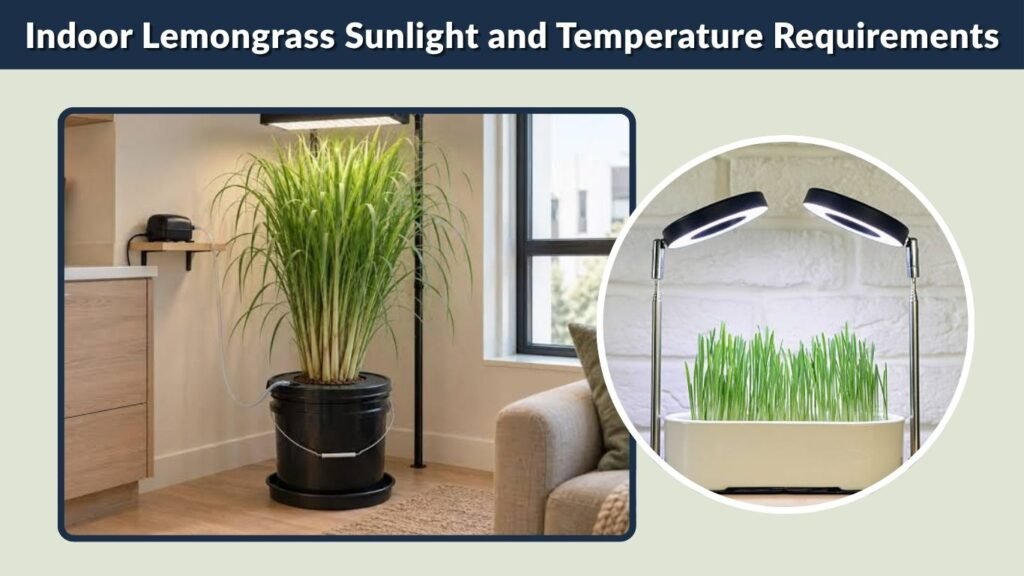
Lemongrass naturally thrives in bright tropical conditions, making sunlight one of the most important factors for successful indoor cultivation. Plants grown in insufficient light often become weak, pale, or slow-growing. Positioning containers near bright windows and maintaining suitable temperatures can significantly improve growth. Supplemental lighting may be necessary during shorter winter days.
How Much Sunlight Does Lemongrass Need Indoors?
Lemongrass grows best with approximately six or more hours of direct sunlight daily.
A bright, south-facing window is often suitable in the Northern Hemisphere. If natural sunlight is insufficient, a full-spectrum LED grow light can supplement indoor conditions.
Ideal Indoor Temperature
Warm conditions encourage steady lemongrass growth, ideally around 65–85°F (18–29°C).
Avoid exposing plants to frost, cold windows, or strong air-conditioning drafts. Growth slows considerably in cooler environments, particularly when temperatures remain below approximately 55°F (13°C).
How to Water and Fertilize Indoor Lemongrass
Watering and nutrition directly influence the quality of lemongrass foliage and stems. This plant prefers consistently moist growing conditions during active growth but does not tolerate permanently waterlogged roots. Indoor watering requirements change with temperature, humidity, sunlight, and container size. Moderate fertilization helps replenish nutrients that are gradually depleted from potting soil.
Proper Watering Practices
- Check soil moisture regularly rather than following a fixed schedule.
- Water when the upper inch of soil begins to feel dry.
- Apply water thoroughly until excess drains from the container.
- Empty standing water from saucers after watering.
- Reduce watering during cooler months when growth slows.
Fertilizing Lemongrass Indoors
Apply a balanced liquid fertilizer according to the product instructions during active growth.
Feeding every two to three weeks at an appropriate dilution may support healthy foliage. Avoid excessive fertilizer, which can cause salt accumulation or damage roots.
How to Harvest Lemongrass Indoors
Harvesting lemongrass provides fragrant stems and leaves for culinary use while allowing the plant to continue producing new growth. However, young plants need time to establish before frequent cutting. Mature clumps can provide repeated harvests when enough healthy stems remain. Using clean tools and selecting suitable stalks helps avoid unnecessary damage.
When Is Lemongrass Ready to Harvest?
Lemongrass is generally ready for a light harvest once it has developed several sturdy stalks with thickened bases.
Harvest timing varies with growing conditions. Plants started from rooted stalks may establish faster than those grown from seed.
How to Harvest Lemongrass
Choose mature outer stalks and remove them close to the base using a clean, sharp knife.
Leave younger central shoots intact so the plant can continue developing. Avoid removing most of the stems at once, especially from small indoor plants.
Tender lower stalk sections are useful for cooking, while leaves can be infused for tea.
Common Problems When Growing Lemongrass Indoors
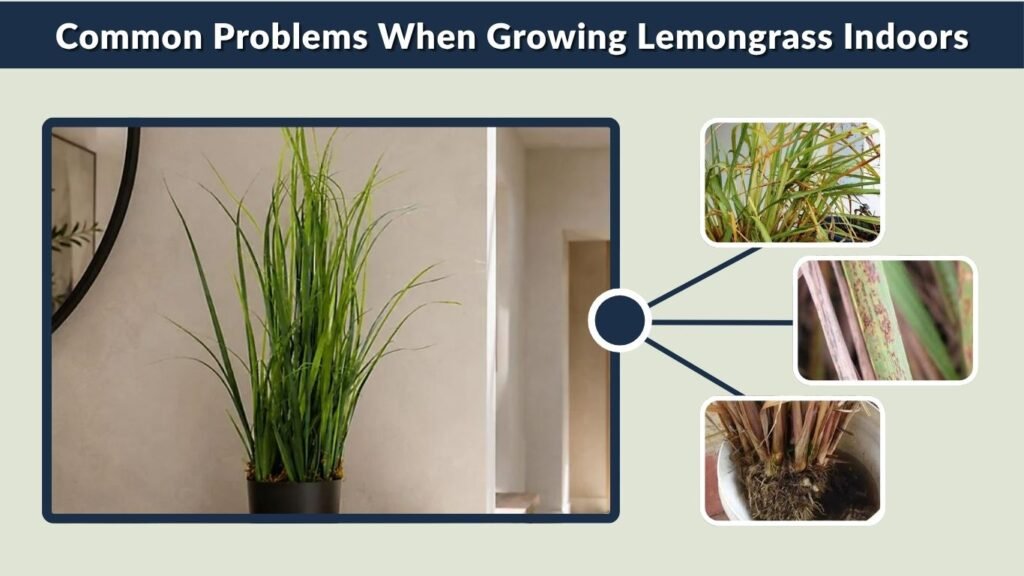
Indoor lemongrass is generally straightforward to maintain, but unsuitable growing conditions can cause several problems. Yellow leaves, weak stems, slow growth, and root damage often indicate issues involving water, light, or temperature. Indoor plants may also occasionally attract sap-feeding insects. Identifying the cause early helps prevent minor problems from becoming serious.
Common Lemongrass Growing Problems
- Yellow leaves: May indicate overwatering, inadequate nutrients, or natural leaf aging.
- Brown leaf tips: Can result from inconsistent moisture, dry air, or fertilizer accumulation.
- Slow growth: Often associated with insufficient sunlight or low temperatures.
- Root rot: Develops when poorly drained soil remains excessively wet.
- Pest infestations: Spider mites, aphids, or whiteflies may occasionally appear.
How to Keep Indoor Lemongrass Healthy
Inspect plants regularly and remove damaged foliage using clean scissors.
Maintain good drainage, provide adequate sunlight, and avoid extreme temperature changes. If pests appear, isolate the affected plant and use an appropriate indoor plant treatment according to its label.
Growing Lemongrass Indoors During Winter
Lemongrass is sensitive to cold temperatures and requires protection in regions that experience frost. During winter, shorter days and reduced sunlight can slow its growth. Indoor plants may survive successfully when provided with warmth, sufficient light, and careful watering. Maintaining appropriate conditions throughout winter allows established plants to resume vigorous growth when brighter weather returns.
Winter Care for Indoor Lemongrass
Place the container near the brightest available window or provide supplemental grow lighting.
Keep the plant away from cold drafts and heating vents. Water less frequently when growth slows, but prevent the soil from drying completely for extended periods.
FAQs
1. Can Lemongrass Grow Indoors All Year?
Yes. Lemongrass can grow indoors year-round when provided with sufficient sunlight, warmth, and proper watering. Growth may slow during winter.
2. How Long Does Lemongrass Take to Grow Indoors?
Seeds usually germinate within two to three weeks. Developing substantial harvestable stalks may take several additional months, depending on light, warmth, and growing conditions.
3. Can You Grow Lemongrass Indoors Without Sunlight?
Lemongrass needs adequate light to grow. If natural sunlight is limited, a suitable full-spectrum LED grow light can support development.
4. How Often Should Indoor Lemongrass Be Watered?
Water when the upper inch of soil begins to dry. The exact frequency depends on temperature, container size, humidity, and plant growth.
5. Does Lemongrass Grow Back After Cutting?
Yes. Healthy lemongrass plants produce new shoots from their bases. Harvest mature outer stalks while leaving enough younger growth to support continued development.