
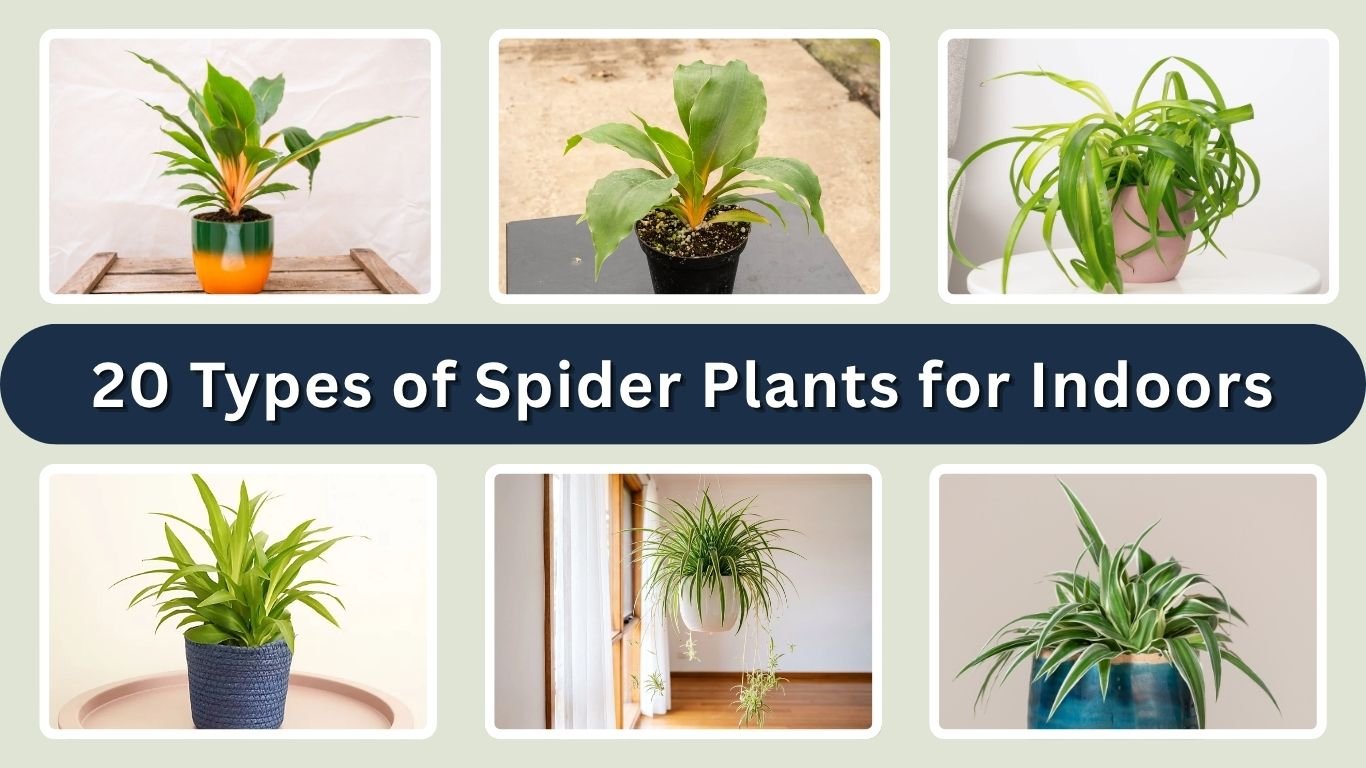
Spider plants are among the easiest and most attractive indoor houseplants, loved for their graceful arching leaves, colorful stripes, and low-maintenance nature. From the classic Vittatum Spider Plant to the vibrant Fire Flash variety, each offers unique foliage and growing characteristics. Explore 20 types of spider plants with pictures, identification features, growing requirements, and essential care tips to find the perfect variety for your indoor garden.
1. Vittatum Spider Plant (Chlorophytum comosum ‘Vittatum’)
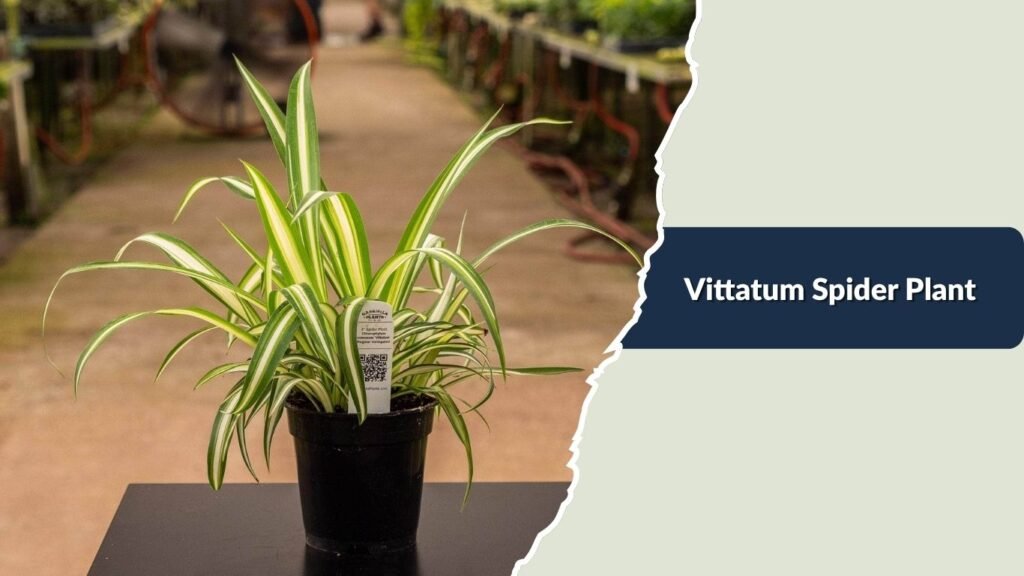
Vittatum Spider Plant is one of the most popular indoor spider plant varieties, admired for its long, arching green leaves with a distinctive creamy-white stripe running through the center. Native to southern Africa through its parent species, this attractive houseplant produces small white flowers and baby plantlets that hang gracefully from long stems. Its easy-care nature makes it an excellent choice for beginners and experienced indoor gardeners.
Identification
- Common Name: Vittatum Spider Plant, Variegated Spider Plant
- Botanical Name: Chlorophytum comosum ‘Vittatum’
- Family: Asparagaceae
- Leaf Color: Green edges with creamy-white central stripes
- Leaf Shape: Long, narrow, arching, strap-like leaves
- Mature Indoor Height: Approximately 12–18 inches
- Leaf Length: Commonly 8–16 inches
- Flower Color: Small, white, star-shaped flowers
- Growth Habit: Clump-forming perennial with trailing plantlets
- Light Requirements: Bright, indirect sunlight
Growing Conditions
Vittatum Spider Plant thrives in bright, indirect sunlight but can tolerate moderate indoor lighting. Too much direct sunlight may scorch its delicate leaves, while insufficient light can reduce growth and variegation. A well-draining potting mix containing organic matter and perlite supports healthy root development. Temperatures between 60°F and 80°F are generally suitable for consistent growth.
Watering and Maintenance
Water your Vittatum Spider Plant when the top 1–2 inches of soil feel dry. Avoid keeping the soil constantly wet because excessive moisture may cause root rot. Brown leaf tips can develop from inconsistent watering, mineral buildup, or dry indoor air. Trim damaged tips when necessary and occasionally remove older leaves to maintain a tidy appearance.
2. Variegatum Spider Plant (Chlorophytum comosum ‘Variegatum’)
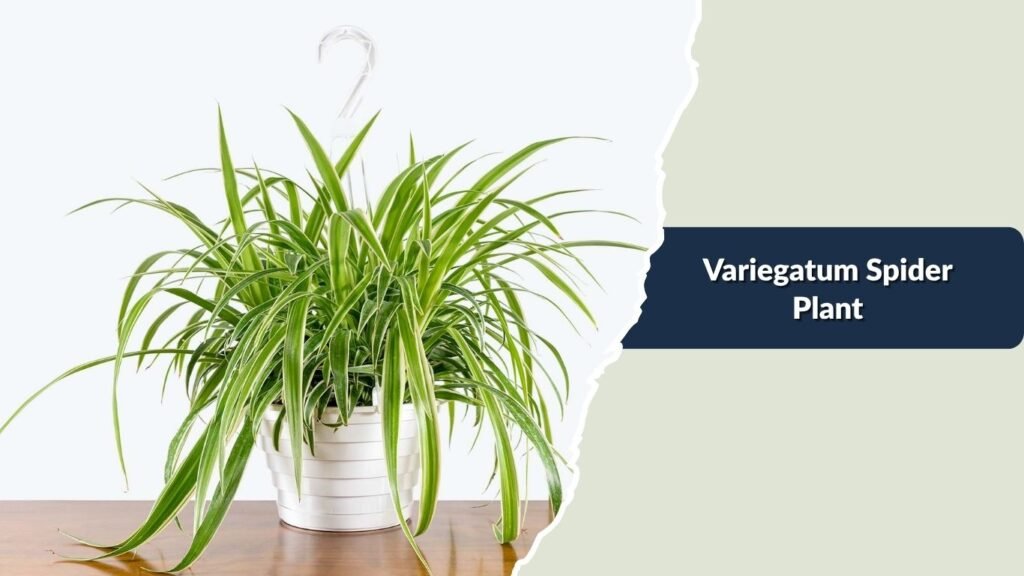
Variegatum Spider Plant is a beautiful indoor houseplant admired for its long, arching leaves with creamy-white edges and green centers. This popular spider plant cultivar creates an elegant cascading appearance, especially when grown in hanging baskets. Its attractive foliage, easy propagation, and adaptability to indoor conditions make it an excellent choice for beginners and experienced plant enthusiasts.
Identification
- Common Name: Variegatum Spider Plant
- Botanical Name: Chlorophytum comosum ‘Variegatum’
- Family: Asparagaceae
- Leaf Color: Green centers with creamy-white margins
- Leaf Shape: Long, narrow, strap-shaped leaves
- Mature Indoor Height: Approximately 12–18 inches
- Growth Habit: Arching, clump-forming perennial
- Flower Color: Small white flowers
- Light Requirements: Bright, indirect sunlight
Growing Conditions
Variegatum Spider Plant grows best in bright, indirect sunlight, although it tolerates moderate indoor lighting. A well-draining potting mixture containing perlite and organic matter supports healthy root development. Temperatures between 60°F and 80°F encourage steady growth. Avoid prolonged exposure to intense afternoon sunlight because it can scorch the lighter leaf margins.
Watering and Maintenance
Water when the upper 1–2 inches of soil feel dry. Allow excess water to drain completely to prevent root rot. During active growth, occasional applications of diluted balanced fertilizer support healthy foliage. Remove yellowing leaves and trim brown tips when necessary. Mature plants may produce long stems carrying small white flowers and baby plantlets.
3. Bonnie Spider Plant (Chlorophytum comosum ‘Bonnie’)
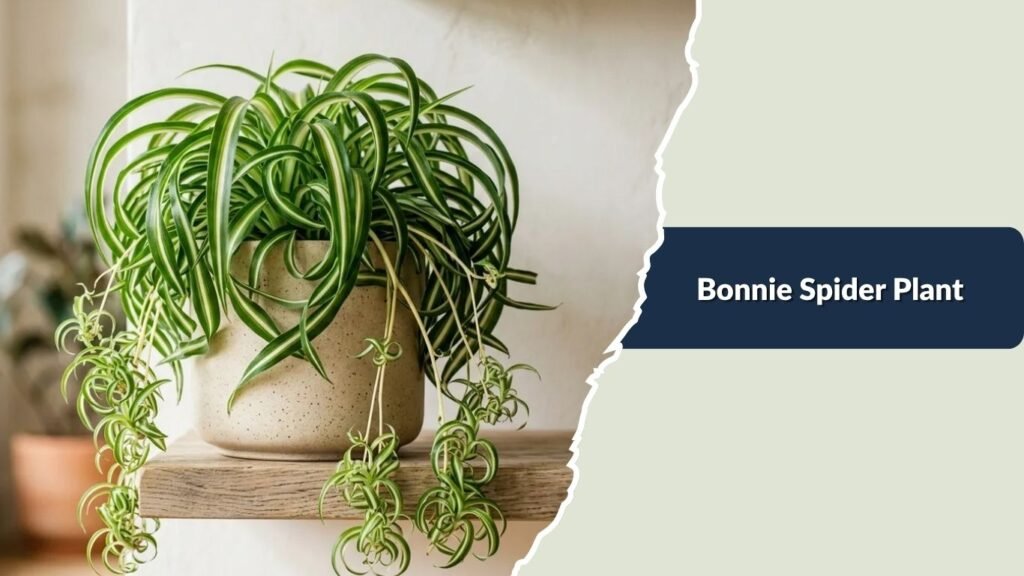
Bonnie Spider Plant is a charming compact houseplant recognized for its distinctive curly foliage and attractive green and white stripes. Unlike traditional spider plants with straight, arching leaves, this cultivar produces curled leaves that create a playful, textured appearance. Its relatively small growth habit makes it especially suitable for apartments, offices, and indoor spaces with limited room.
Identification
- Common Name: Bonnie Spider Plant, Curly Spider Plant
- Botanical Name: Chlorophytum comosum ‘Bonnie’
- Family: Asparagaceae
- Leaf Color: Green with creamy-white central stripes
- Leaf Shape: Narrow, curled, ribbon-like leaves
- Mature Indoor Height: Approximately 6–12 inches
- Growth Habit: Compact, curly, clump-forming perennial
- Flower Color: Small white flowers
- Light Requirements: Medium to bright, indirect sunlight
Growing Conditions
Bonnie Spider Plant thrives in bright, indirect sunlight but can tolerate moderate indoor lighting. A lightweight, well-draining potting mix containing perlite and organic matter provides suitable growing conditions. Temperatures between 60°F and 80°F support healthy development. Moderate household humidity is generally sufficient, although extremely dry conditions may contribute to brown leaf tips.
Watering and Maintenance
Water when the upper inch or two of soil becomes dry. Avoid allowing the container to remain waterlogged because excessive moisture can damage the roots. Remove damaged foliage occasionally to maintain its attractive shape. Bonnie Spider Plant also produces small plantlets that may develop curled leaves similar to the parent plant.
4. Hawaiian Spider Plant (Chlorophytum comosum ‘Hawaiian’)
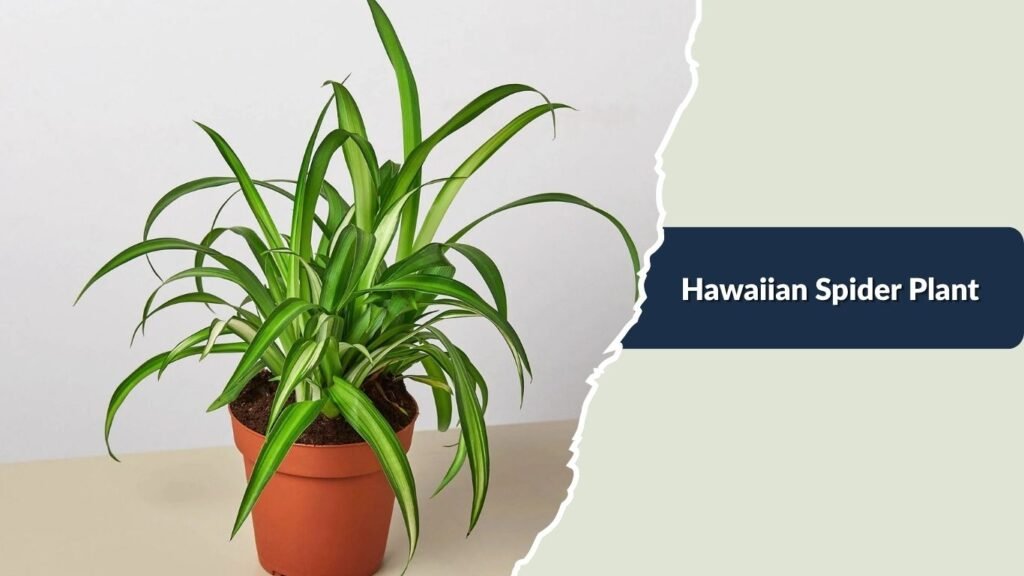
Hawaiian Spider Plant is an attractive tropical-looking houseplant admired for its glossy green foliage and subtle variegated patterns. Sometimes called Golden Glow Spider Plant, this cultivar produces arching leaves with lighter markings that may become less noticeable as the plant matures. Its compact appearance and easy-care requirements make it a popular choice for indoor gardening.
Identification
- Common Name: Hawaiian Spider Plant, Golden Glow Spider Plant
- Botanical Name: Chlorophytum comosum ‘Hawaiian’
- Family: Asparagaceae
- Leaf Color: Green with subtle golden or creamy central markings
- Leaf Shape: Long, narrow, arching leaves
- Mature Indoor Height: Approximately 8–12 inches
- Growth Habit: Compact, clump-forming perennial
- Flower Color: Small white flowers
- Light Requirements: Bright, indirect sunlight
Growing Conditions
Hawaiian Spider Plant prefers bright, filtered sunlight to encourage healthy foliage and maintain its attractive coloration. It tolerates moderate indoor light but may grow more slowly in darker locations. A well-draining potting mixture enriched with organic matter provides suitable root conditions. Temperatures between 60°F and 80°F encourage consistent growth.
Watering and Maintenance
Water when the upper 1–2 inches of soil begin drying. Avoid overwatering because standing moisture may damage the roots. Remove dry or yellowing leaves occasionally and clean the foliage gently when dust accumulates. During spring and summer, light fertilization can help maintain healthy development without encouraging excessive salt buildup.
5. Ocean Spider Plant (Chlorophytum comosum ‘Ocean’)
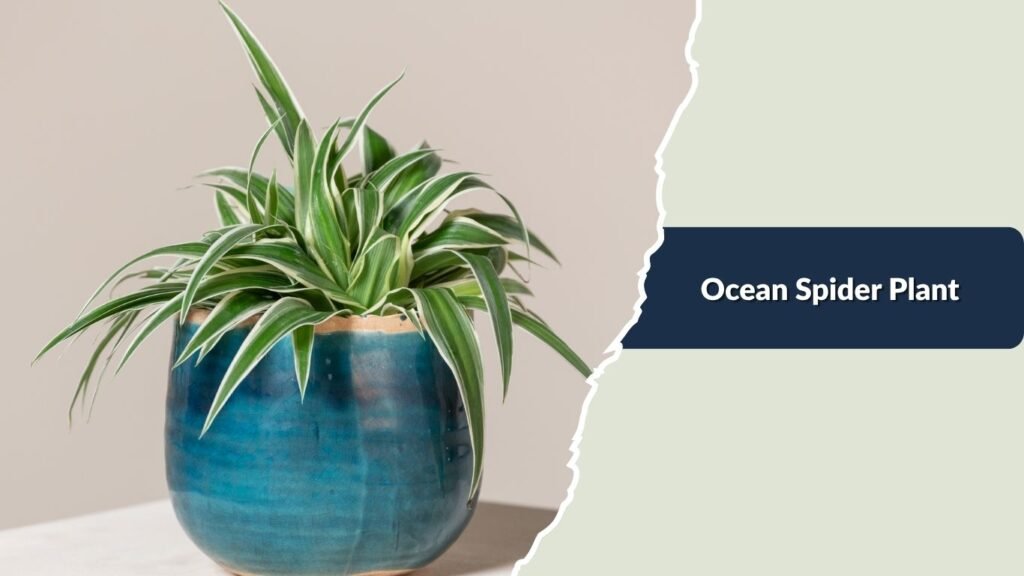
Ocean Spider Plant is a compact variegated cultivar recognized for its attractive green leaves with creamy-white margins. This decorative houseplant features shorter, broader foliage than many traditional spider plant varieties, giving it a fuller and more organized appearance. Its manageable size and attractive coloration make it particularly suitable for small indoor gardens and decorative containers.
Identification
- Common Name: Ocean Spider Plant
- Botanical Name: Chlorophytum comosum ‘Ocean’
- Family: Asparagaceae
- Leaf Color: Green centers with creamy-white edges
- Leaf Shape: Relatively short, broad, arching leaves
- Mature Indoor Height: Approximately 6–12 inches
- Growth Habit: Compact, clump-forming perennial
- Flower Color: Small white flowers
- Light Requirements: Bright, indirect sunlight
Growing Conditions
Ocean Spider Plant thrives in bright, indirect sunlight, which helps maintain its distinctive variegation. A well-draining potting mixture containing perlite and organic matter encourages healthy root development. Temperatures between 60°F and 80°F are suitable for steady growth. Avoid exposing the plant to harsh afternoon sunlight because it may scorch its pale leaf edges.
Watering and Maintenance
Water when the top 1–2 inches of soil feel dry. Ensure the container has drainage holes to prevent water accumulation. Remove damaged leaves as needed to preserve its compact shape. Occasional feeding with diluted balanced fertilizer during the growing season supports healthy foliage development. Mature plants may produce small white flowers and trailing baby plantlets.
6. Green Spider Plant (Chlorophytum comosum)
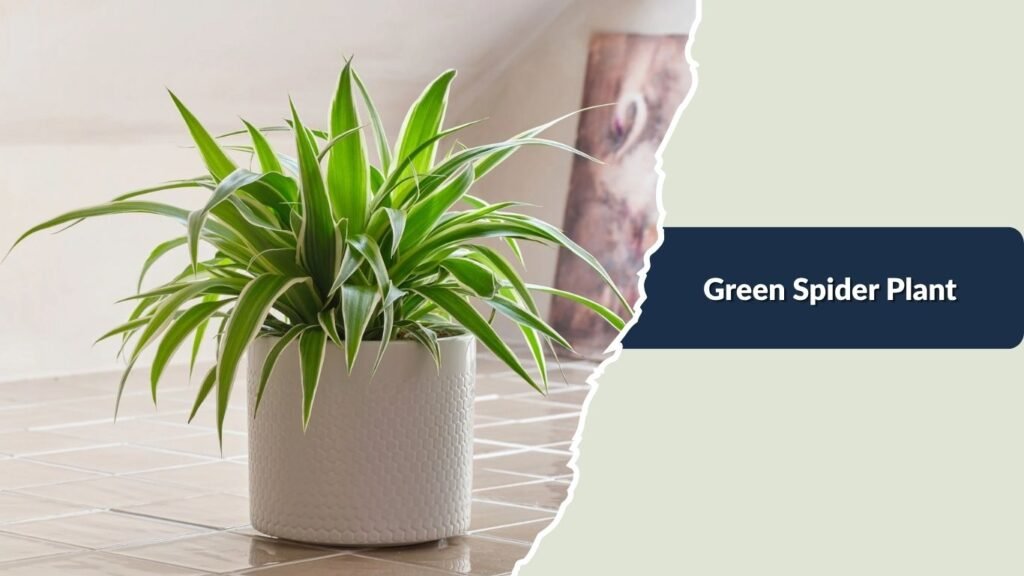
Green Spider Plant is a classic, non-variegated form of the popular spider plant, admired for its long, arching, solid-green foliage. Unlike striped spider plant cultivars, this variety features uniformly green leaves that create a lush, natural appearance. Its excellent adaptability and straightforward care requirements make it suitable for beginners looking to grow attractive indoor greenery.
Identification
- Common Name: Green Spider Plant, Solid Green Spider Plant
- Scientific Name: Chlorophytum comosum
- Family: Asparagaceae
- Leaf Color: Solid medium to deep green
- Leaf Shape: Long, narrow, arching, strap-shaped leaves
- Mature Indoor Height: Approximately 12–18 inches
- Growth Habit: Clump-forming perennial with trailing plantlets
- Flower Color: Small, white, star-shaped flowers
- Light Requirements: Medium to bright, indirect sunlight
Growing Conditions
Green Spider Plant thrives in bright, indirect sunlight but tolerates moderate lighting and some lower-light conditions. A well-draining potting mix containing organic matter and perlite supports healthy root development. Temperatures between 60°F and 80°F encourage consistent growth. Although the plant adapts to ordinary household humidity, protection from cold drafts and intense afternoon sunlight helps maintain attractive foliage.
Watering and Maintenance
Water when the upper 1–2 inches of soil feel dry. Its fleshy roots store moisture, allowing it to tolerate occasional missed waterings. However, prolonged dryness can cause brown leaf tips and slower growth. Ensure proper drainage, remove damaged leaves, and occasionally apply diluted balanced fertilizer during the growing season.
7. Reverse Variegated Spider Plant (Chlorophytum comosum ‘Variegatum’)
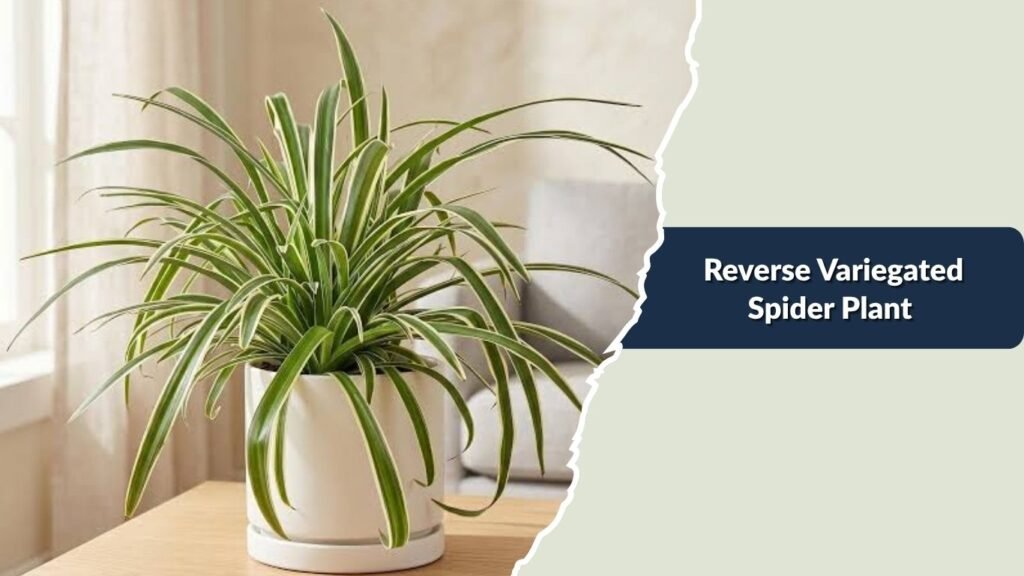
Reverse Variegated Spider Plant is an attractive indoor houseplant known for its long, arching leaves featuring green centers and creamy-white edges. This popular spider plant cultivar creates a beautiful cascading appearance, especially in hanging baskets. Its elegant striped foliage, easy propagation, and low-maintenance nature make it an excellent choice for beginners and experienced indoor gardeners.
Identification
- Common Name: Reverse Variegated Spider Plant
- Botanical Name: Chlorophytum comosum ‘Variegatum’
- Family: Asparagaceae
- Leaf Color: Green centers with creamy-white margins
- Leaf Shape: Long, narrow, arching, strap-like leaves
- Mature Indoor Height: Approximately 12–18 inches
- Flower Color: Small white flowers
- Growth Habit: Clump-forming perennial with trailing plantlets
- Light Requirements: Bright, indirect sunlight
Growing Conditions
Reverse Variegated Spider Plant grows best in bright, indirect sunlight, although it can tolerate moderate indoor lighting. A well-draining potting mixture containing perlite and organic matter supports healthy root development. Temperatures between 60°F and 80°F are generally suitable. Avoid intense afternoon sunlight because it may scorch the pale leaf margins and cause brown patches.
Watering and Maintenance
Water when the upper 1–2 inches of soil feel dry. Ensure excess water drains completely to prevent waterlogging and root rot. Remove yellowing foliage and trim brown leaf tips when necessary. During spring and summer, occasional applications of diluted balanced fertilizer encourage healthy growth and the production of baby plantlets.
8. Zebra Spider Plant (Chlorophytum laxum ‘Zebra’)
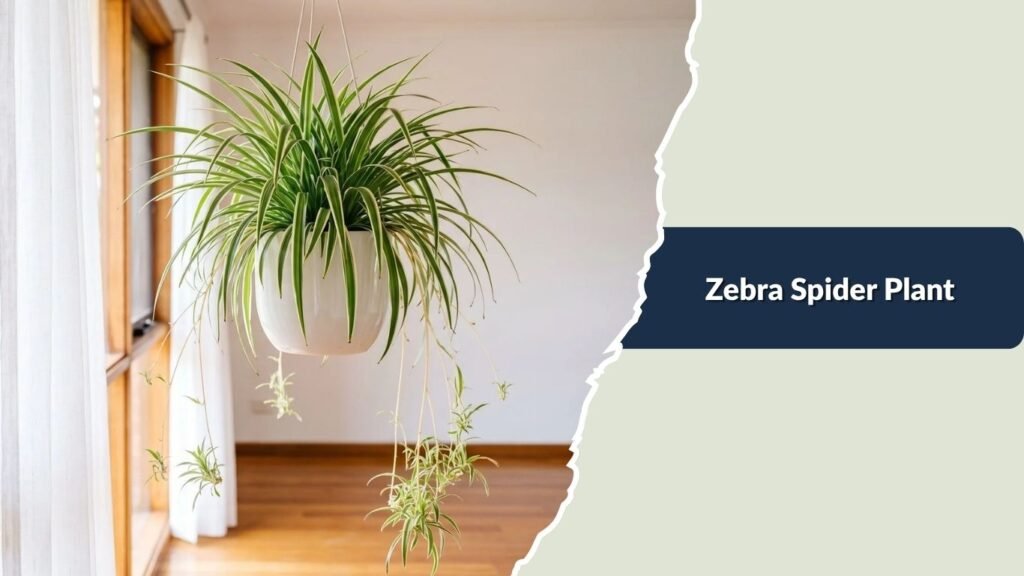
Zebra Spider Plant is an attractive ornamental houseplant recognized for its narrow green leaves decorated with bright white or cream-colored margins. Often associated with the Chlorophytum laxum group in horticulture, this plant has a compact appearance that distinguishes it from larger, arching spider plants. Its decorative striped foliage makes it suitable for small indoor gardens and tabletop arrangements.
Identification
- Common Name: Zebra Spider Plant
- Botanical Name: Chlorophytum laxum ‘Zebra’ (horticultural identification varies)
- Family: Asparagaceae
- Leaf Color: Green with white or cream margins
- Leaf Shape: Narrow, pointed, strap-shaped leaves
- Mature Indoor Height: Approximately 6–12 inches
- Flower Color: Small, pale flowers
- Growth Habit: Compact, clump-forming perennial
- Light Requirements: Bright, indirect sunlight
Growing Conditions
Zebra Spider Plant thrives in bright, filtered sunlight, which helps maintain its attractive leaf patterns. Use a well-draining potting mixture containing organic matter and perlite. Temperatures between 60°F and 80°F generally support healthy growth. Moderate household humidity is usually sufficient, although excessively dry environments may cause brown leaf tips.
Watering and Maintenance
Water when the upper inch of soil begins to dry. Avoid keeping the growing medium continuously saturated because excessive moisture can damage the roots. Remove yellow or damaged leaves occasionally to maintain a neat appearance. During active growth, diluted balanced fertilizer can support healthy foliage development without encouraging excessive salt accumulation.
9. Fire Flash Spider Plant (Chlorophytum orchidastrum)
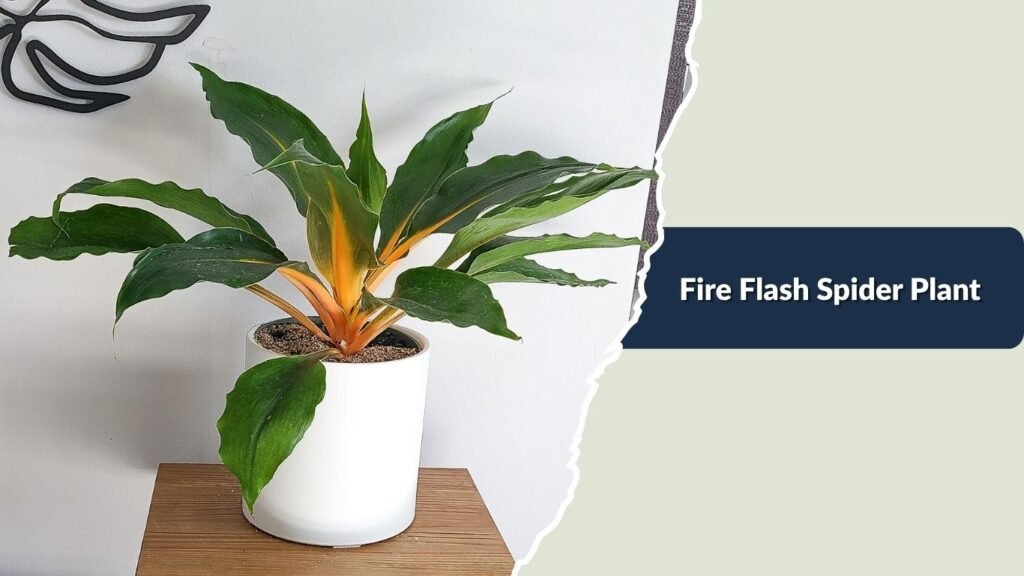
Fire Flash Spider Plant is a striking tropical houseplant recognized for its broad, glossy green leaves and brilliant orange leaf stalks. Unlike traditional spider plants with narrow, cascading foliage, this related species develops an upright, rosette-like appearance. Native to tropical West Africa, it brings bold color and a distinctive architectural shape to indoor plant collections.
Identification
- Common Name: Fire Flash Spider Plant, Mandarin Plant
- Scientific Name: Chlorophytum orchidastrum
- Family: Asparagaceae
- Leaf Color: Deep green with bright orange petioles
- Leaf Shape: Broad, lance-shaped leaves with pointed tips
- Mature Indoor Height: Approximately 12–24 inches
- Flower Color: Small, pale flowers
- Growth Habit: Upright, rosette-forming perennial
- Light Requirements: Bright, indirect sunlight
Growing Conditions
Fire Flash Spider Plant grows best in bright, filtered sunlight and warm indoor temperatures. A well-draining potting mixture containing organic matter, perlite, and loamy soil supports healthy roots. Temperatures above 60°F are preferable, and moderate humidity encourages attractive foliage. Protect the plant from harsh afternoon sunlight, which may scorch its broad green leaves.
Watering and Maintenance
Water when the upper inch of soil begins to dry, keeping the root zone lightly moist without waterlogging. Avoid prolonged drought because inconsistent moisture can damage its foliage. Remove yellowing leaves and inspect the plant occasionally for pests. Unlike traditional spider plants, Fire Flash does not produce hanging baby plantlets and is generally propagated through seeds or division.
10. Lemon Spider Plant (Chlorophytum ‘Lemon’)
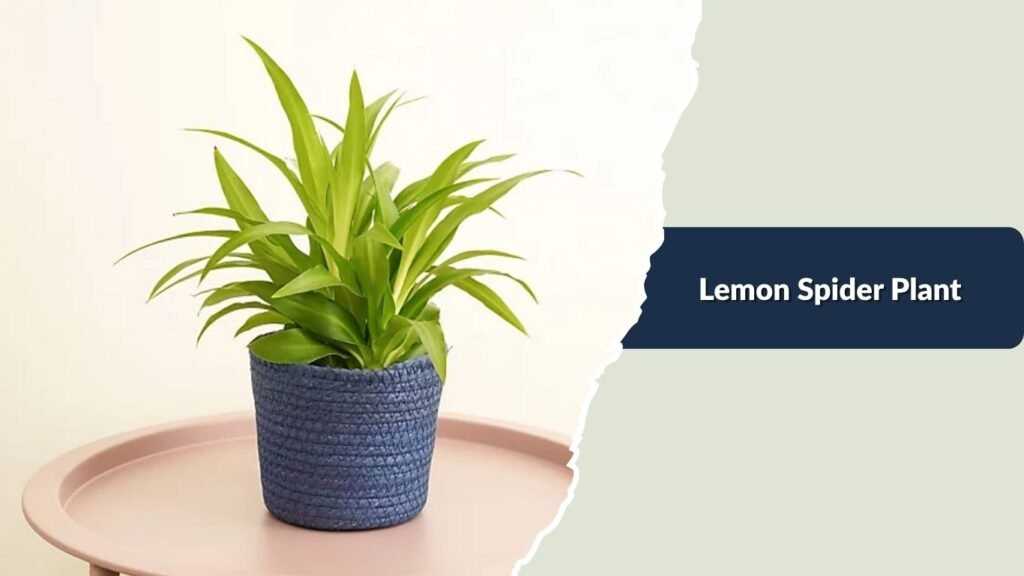
Lemon Spider Plant is a colorful ornamental houseplant admired for its fresh lemon-green foliage and compact growth habit. Unlike traditional spider plants with white and green stripes, this selection features bright, light-green leaves that create a refreshing appearance. Its slender foliage and relatively small size make it an attractive choice for indoor gardens, decorative containers, and bright living spaces.
Identification
- Common Name: Lemon Spider Plant
- Botanical Name: Chlorophytum ‘Lemon’
- Family: Asparagaceae
- Leaf Color: Bright lemon-green
- Leaf Shape: Long, narrow, slender leaves
- Mature Indoor Height: Approximately 6–12 inches
- Growth Habit: Compact, upright, clump-forming perennial
- Flower Color: Small, pale flowers when produced
- Light Requirements: Bright, indirect sunlight
Growing Conditions
Lemon Spider Plant grows best in bright, indirect sunlight, which helps maintain its attractive foliage coloration. A lightweight, well-draining potting mixture containing perlite and organic matter supports healthy development. Temperatures between 60°F and 80°F are generally suitable. Avoid prolonged exposure to intense afternoon sunlight, which may damage its delicate leaves.
Watering and Maintenance
Water when the upper 1–2 inches of soil begin drying. Ensure the container has drainage holes to prevent standing water around the roots. Remove damaged leaves occasionally to preserve its compact appearance. During spring and summer, occasional diluted fertilizer applications can encourage healthy foliage. Avoid excessive feeding because mineral buildup may contribute to brown leaf tips.
11. Bichetii Spider Plant (Chlorophytum laxum ‘Bichetii’)
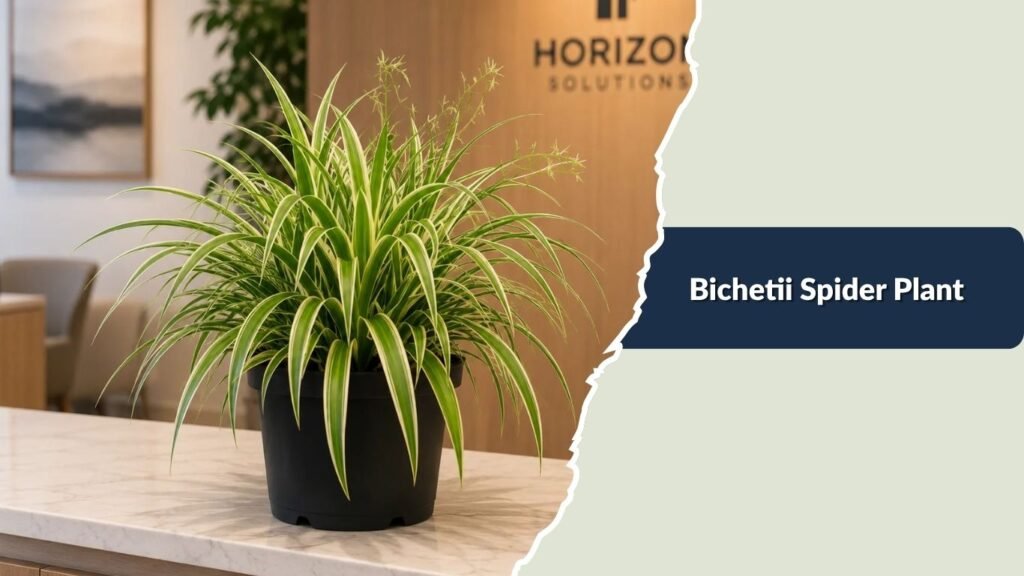
Bichetii Spider Plant is an attractive ornamental houseplant known for its narrow green leaves with creamy-white margins. Often sold under the botanical name Chlorophytum laxum ‘Bichetii’, this compact plant has an elegant, fountain-like growth habit. Its beautifully striped foliage resembles the traditional spider plant, but it generally maintains a smaller, more controlled appearance.
Identification
- Common Name: Bichetii Spider Plant
- Botanical Name: Chlorophytum laxum ‘Bichetii’ (commonly used horticultural name)
- Family: Asparagaceae
- Leaf Color: Green with creamy-white edges
- Leaf Shape: Narrow, arching, strap-shaped leaves
- Mature Indoor Height: Approximately 6–12 inches
- Flower Color: Small, white flowers
- Growth Habit: Compact, clump-forming perennial
- Light Requirements: Bright, indirect sunlight
Growing Conditions
Bichetii Spider Plant grows best in bright, filtered sunlight, although it tolerates moderate indoor lighting. Use a well-draining potting mixture enriched with organic matter and perlite. Temperatures between 60°F and 80°F encourage consistent growth. Moderate humidity helps maintain attractive foliage, while protection from direct afternoon sunlight prevents leaf scorching.
Watering and Maintenance
Water when the upper inch of soil feels slightly dry. Avoid keeping the soil constantly saturated because excessive moisture may lead to root problems. Remove dry or damaged leaves regularly to maintain its appearance. Divide established clumps during repotting when propagation is desired, rather than relying on the hanging plantlets associated with traditional spider plants.
12. Curly Bonnie Spider Plant (Chlorophytum comosum ‘Bonnie’)
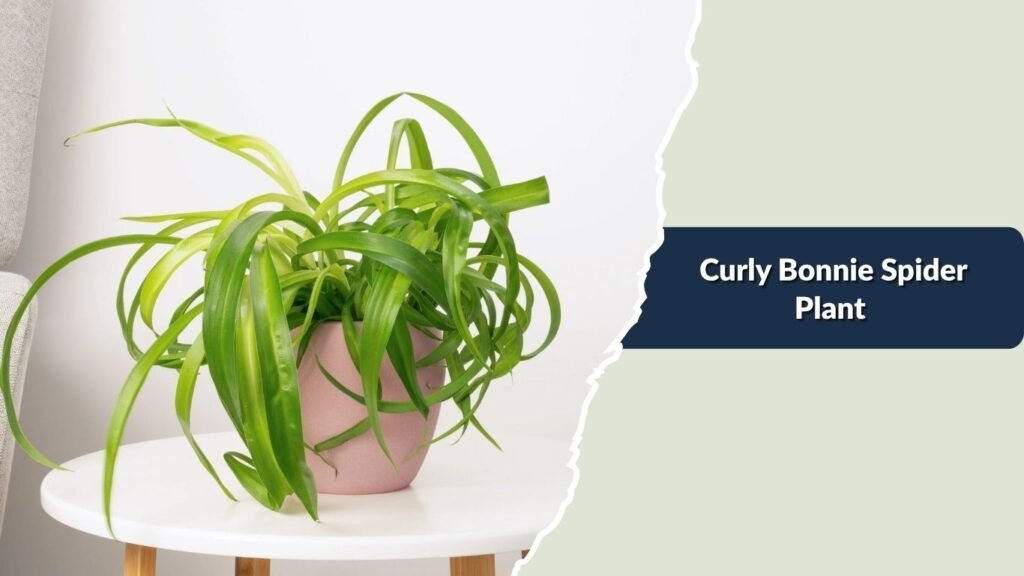
Curly Bonnie Spider Plant is a beautiful indoor houseplant admired for its tightly curled green and white leaves. This popular spider plant cultivar produces attractive, ribbon-like foliage that twists naturally, creating a playful and decorative appearance. Its compact growth habit and easy-care requirements make it an excellent choice for apartments, offices, hanging baskets, and small indoor gardens.
Identification
- Common Name: Curly Bonnie Spider Plant, Curly Spider Plant
- Botanical Name: Chlorophytum comosum ‘Bonnie’
- Family: Asparagaceae
- Leaf Color: Green with creamy-white central stripes
- Leaf Shape: Narrow, curly, ribbon-like leaves
- Mature Indoor Height: Approximately 6–12 inches
- Flower Color: Small, white flowers
- Growth Habit: Compact, clump-forming perennial with trailing plantlets
- Light Requirements: Medium to bright, indirect sunlight
Growing Conditions
Curly Bonnie Spider Plant thrives in bright, indirect sunlight, although it tolerates moderate indoor lighting. A well-draining potting mixture containing perlite and organic matter encourages healthy root development. Temperatures between 60°F and 80°F generally support steady growth. Moderate household humidity is suitable, but extremely dry environments may contribute to brown leaf tips.
Watering and Maintenance
Water when the upper 1–2 inches of soil feel dry. Avoid keeping the growing medium constantly saturated because excessive moisture can damage the roots. Remove yellowing leaves and trim damaged tips when necessary. Mature plants may produce small white flowers followed by curly baby plantlets that can be propagated in separate containers.
13. Milky Way Spider Plant (Chlorophytum comosum ‘Milky Way’)
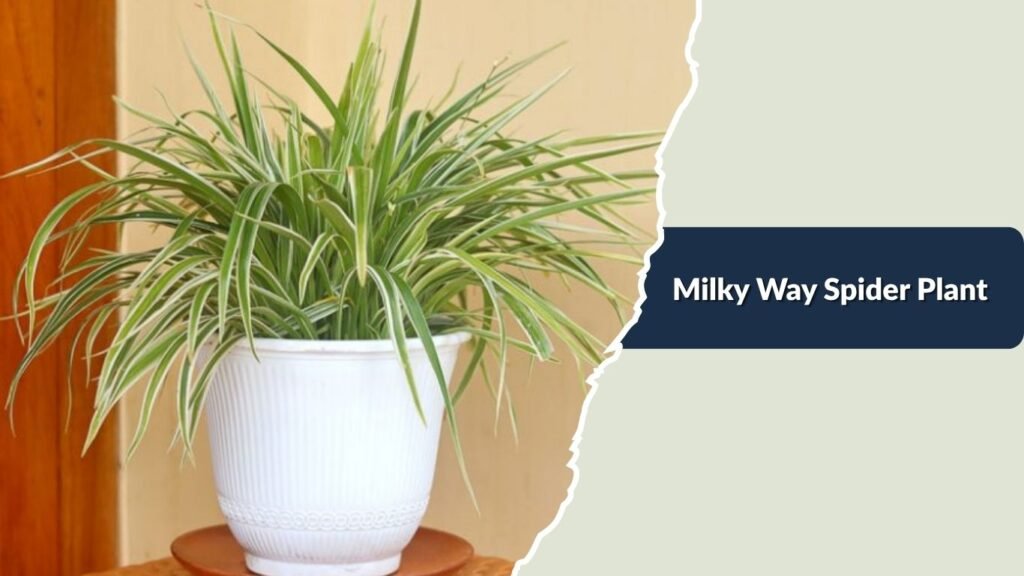
Milky Way Spider Plant is an attractive variegated houseplant recognized for its beautiful creamy-white and green foliage. This ornamental spider plant selection produces long, narrow leaves with prominent pale markings that create a bright decorative appearance. Its arching growth habit makes it a charming addition to indoor plant collections, particularly in hanging baskets and decorative containers.
Identification
- Common Name: Milky Way Spider Plant
- Botanical Name: Chlorophytum comosum ‘Milky Way’ (horticultural trade name)
- Family: Asparagaceae
- Leaf Color: Creamy-white with green margins
- Leaf Shape: Long, narrow, arching leaves
- Mature Indoor Height: Approximately 8–15 inches, depending on growing conditions
- Flower Color: Small white flowers
- Growth Habit: Arching, clump-forming perennial
- Light Requirements: Bright, indirect sunlight
Growing Conditions
Milky Way Spider Plant grows best in bright, filtered sunlight, which helps maintain its attractive variegated foliage. Use a well-draining potting mixture containing organic matter and perlite. Temperatures between 60°F and 80°F encourage healthy growth. Avoid intense afternoon sunlight because its pale leaf sections may develop brown patches when exposed to excessive heat.
Watering and Maintenance
Water when the upper 1–2 inches of soil begin drying. Ensure the container has proper drainage to prevent waterlogging. Remove damaged leaves and trim dry leaf tips to maintain an attractive appearance. Occasional feeding with diluted balanced fertilizer during spring and summer supports healthy foliage development without causing excessive mineral buildup.
14. Golden Glow Spider Plant (Chlorophytum comosum ‘Hawaiian’)
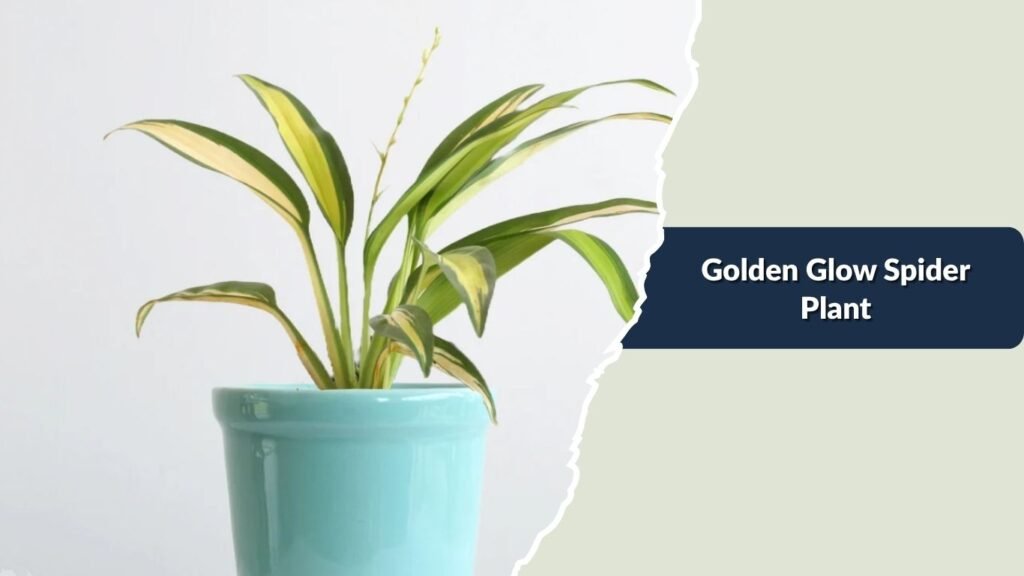
Golden Glow Spider Plant is a distinctive indoor houseplant appreciated for its glossy green foliage and subtle golden-yellow markings. Often associated with the Hawaiian Spider Plant, this selection produces arching leaves that may display lighter central coloration during their early growth stages. Its compact appearance and adaptable nature make it an attractive option for indoor gardeners.
Identification
- Common Name: Golden Glow Spider Plant, Hawaiian Spider Plant
- Botanical Name: Chlorophytum comosum ‘Hawaiian’
- Family: Asparagaceae
- Leaf Color: Green with subtle golden or yellow-green central markings
- Leaf Shape: Narrow, arching, strap-shaped leaves
- Mature Indoor Height: Approximately 8–12 inches
- Flower Color: Small white flowers
- Growth Habit: Compact, clump-forming perennial
- Light Requirements: Bright, indirect sunlight
Growing Conditions
Golden Glow Spider Plant prefers bright, indirect sunlight to maintain healthy foliage and attractive coloration. A well-draining potting mixture containing perlite and organic matter supports root development. Temperatures between 60°F and 80°F are generally suitable. Moderate household humidity encourages healthy growth, while protection from intense afternoon sunlight helps prevent leaf scorching.
Watering and Maintenance
Water when the top 1–2 inches of soil feel dry. Avoid excessive watering because continuously saturated soil can cause root problems. Remove damaged or yellowing leaves regularly. Occasional applications of diluted balanced fertilizer during the growing season encourage healthy foliage. Mature plants may develop trailing stems with small flowers and baby plantlets.
15. White Lightning Spider Plant (Chlorophytum comosum ‘White Lightning’)
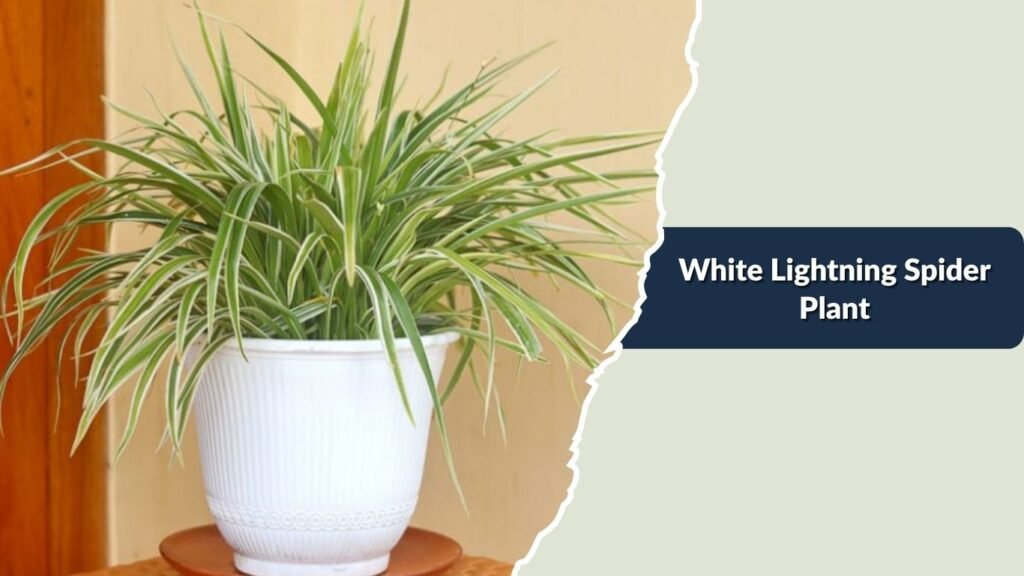
White Lightning Spider Plant is a striking variegated houseplant recognized for its predominantly creamy-white foliage with narrow green edges. Its bright, arching leaves create an attractive appearance that stands out among traditional spider plants. This ornamental cultivar is particularly appealing to indoor gardeners who enjoy unusual foliage patterns and want a decorative plant for bright living spaces.
Identification
- Common Name: White Lightning Spider Plant
- Botanical Name: Chlorophytum comosum ‘White Lightning’
- Family: Asparagaceae
- Leaf Color: Predominantly creamy-white with narrow green margins
- Leaf Shape: Long, narrow, arching, strap-shaped leaves
- Mature Indoor Height: Approximately 8–15 inches, depending on conditions
- Flower Color: Small white flowers
- Growth Habit: Clump-forming, arching perennial
- Light Requirements: Bright, indirect sunlight
Growing Conditions
White Lightning Spider Plant grows best in bright, filtered sunlight. Its extensive pale variegation means it has less green tissue for photosynthesis, making adequate indirect lighting particularly important. A well-draining potting mixture containing perlite and organic matter encourages healthy root development. Temperatures between 60°F and 80°F are generally suitable, while harsh direct sunlight should be avoided.
Watering and Maintenance
Water when the upper 1–2 inches of soil become dry. Ensure excess water drains freely to prevent root problems. The pale leaf sections may develop brown tips from excessive sunlight, inconsistent moisture, or mineral accumulation. Remove damaged foliage when necessary and apply diluted balanced fertilizer sparingly during the active growing season.
16. Green Orange Spider Plant (Chlorophytum orchidastrum)
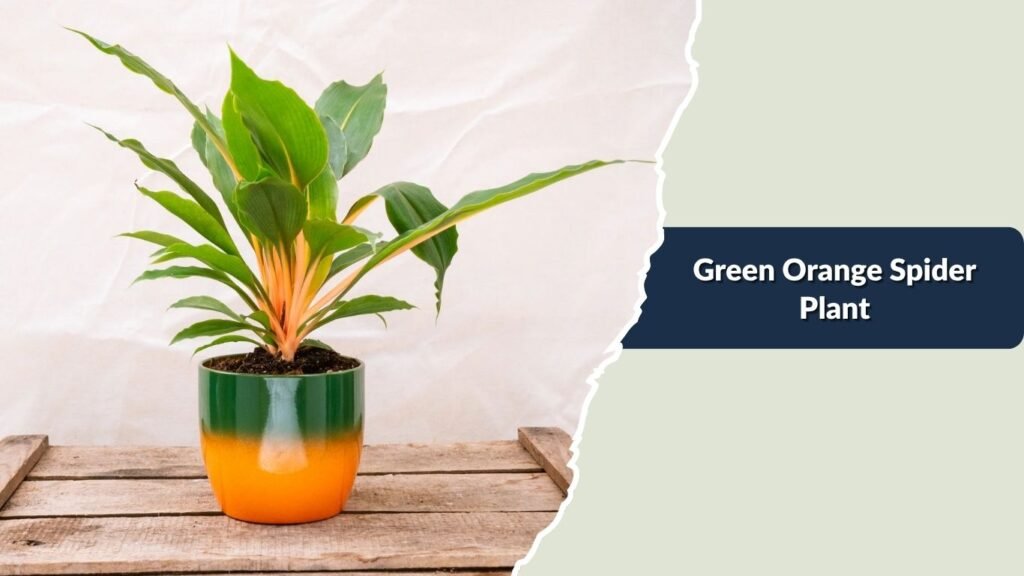
Green Orange Spider Plant is an attractive tropical houseplant recognized for its bright orange leaf stalks and broad, glossy green foliage. Unlike traditional spider plants with narrow, arching leaves, this species develops an upright rosette of colorful leaves. Native to tropical Africa, it creates a bold decorative appearance, making it an excellent choice for indoor gardeners who appreciate unusual foliage.
Identification
- Common Name: Green Orange Spider Plant, Orange Spider Plant
- Scientific Name: Chlorophytum orchidastrum
- Family: Asparagaceae
- Leaf Color: Deep green with bright orange leaf stalks
- Leaf Shape: Broad, lance-shaped leaves with pointed tips
- Mature Indoor Height: Approximately 12–24 inches
- Flower Color: Small, pale greenish-white flowers
- Growth Habit: Upright, clump-forming tropical perennial
- Light Requirements: Bright, indirect sunlight
Growing Conditions
Green Orange Spider Plant thrives in bright, indirect sunlight and warm indoor environments. A well-draining potting mixture containing organic matter, perlite, and coco coir supports healthy roots. Temperatures between 65°F and 85°F encourage steady growth. Moderate to high humidity helps maintain its attractive foliage, while harsh afternoon sunlight may scorch the leaves.
Watering and Maintenance
Water when the upper inch of soil feels slightly dry. Keep the potting mixture moderately moist without allowing excess water to accumulate. Avoid prolonged drought, which may cause leaf drooping and brown edges. Remove damaged foliage occasionally and use diluted balanced fertilizer during the growing season to support healthy development.
17. Silver Surfer Spider Plant (Chlorophytum comosum ‘Silver Surfer’)
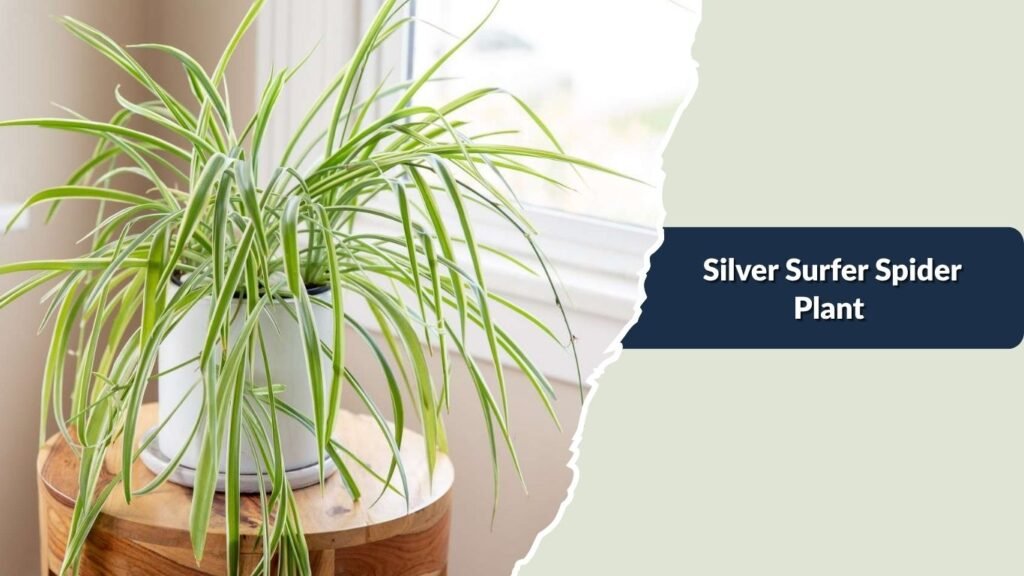
Silver Surfer Spider Plant is a decorative variegated spider plant sold for its attractive green and silvery-white striped foliage. Its long, arching leaves create a graceful cascading appearance suitable for hanging baskets and elevated shelves. This horticultural trade selection is especially appealing to gardeners who want bright foliage and a classic spider plant growth habit.
Identification
- Common Name: Silver Surfer Spider Plant
- Botanical Name: Chlorophytum comosum ‘Silver Surfer’ (trade name)
- Family: Asparagaceae
- Leaf Color: Green with pale silver-white or creamy stripes
- Leaf Shape: Long, narrow, arching leaves
- Mature Indoor Height: Approximately 8–18 inches, depending on the selection
- Flower Color: Small white flowers
- Growth Habit: Arching, clump-forming perennial
- Light Requirements: Bright, indirect sunlight
Growing Conditions
Silver Surfer Spider Plant prefers bright, indirect sunlight to maintain healthy growth and attractive foliage markings. A loose, well-draining potting mixture containing organic matter and perlite supports healthy roots. Temperatures between 60°F and 80°F are generally suitable. Protect the plant from intense afternoon sunlight because excessive exposure can damage its delicate leaves.
Watering and Maintenance
Water when the upper 1–2 inches of soil begin drying. Ensure the container has drainage holes to prevent waterlogging. Remove damaged leaves regularly and trim brown tips when necessary. Occasional applications of diluted balanced fertilizer during spring and summer support healthy foliage. Mature plants may produce trailing stems with flowers and young plantlets.
18. Atlantic Spider Plant (Chlorophytum comosum ‘Atlantic’)
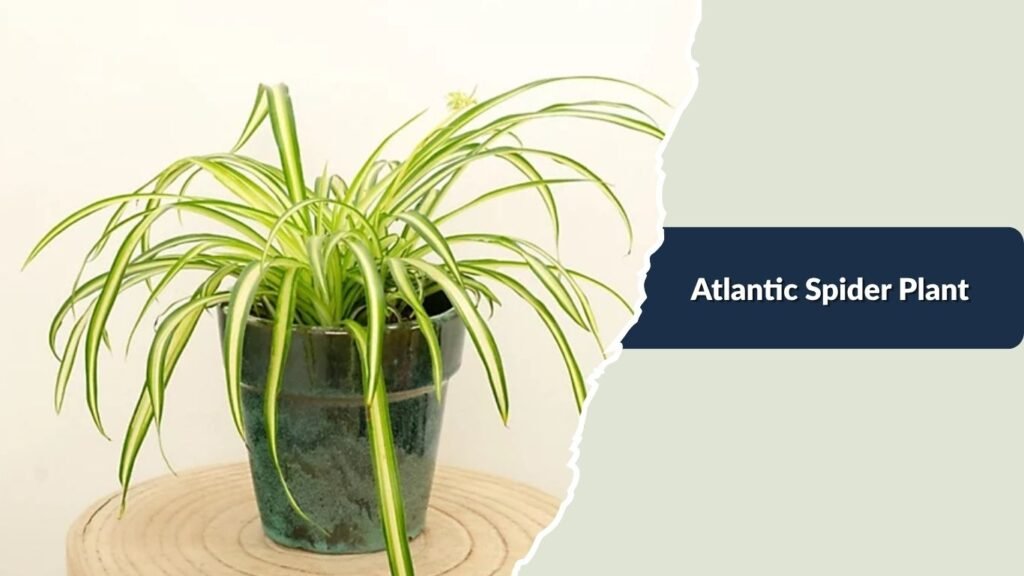
Atlantic Spider Plant is an attractive variegated houseplant known for its graceful, arching foliage and contrasting green and creamy-white stripes. It is sometimes marketed under the Atlantic name, although cultivar identification can vary between nurseries. Its decorative foliage and relatively simple care requirements make it a suitable choice for hanging baskets, shelves, and indoor plant displays.
Identification
- Common Name: Atlantic Spider Plant
- Botanical Name: Chlorophytum comosum ‘Atlantic’ (trade designation)
- Family: Asparagaceae
- Leaf Color: Green with creamy-white variegation
- Leaf Shape: Long, narrow, arching leaves
- Mature Indoor Height: Approximately 8–18 inches, depending on the plant sold
- Flower Color: Small white flowers
- Growth Habit: Clump-forming perennial with cascading foliage
- Light Requirements: Bright, indirect sunlight
Growing Conditions
Atlantic Spider Plant grows best in bright, filtered sunlight but generally tolerates moderate indoor lighting. A well-draining potting mixture containing organic matter and perlite encourages healthy root development. Temperatures between 60°F and 80°F are suitable for most spider plants. Avoid exposing the foliage to intense afternoon sunlight, which may cause leaf scorching or brown tips.
Watering and Maintenance
Water when the upper 1–2 inches of potting mix feel dry. Avoid allowing the container to remain waterlogged, as excessively wet soil can damage its fleshy roots. Remove yellowing leaves and trim brown tips as needed. Apply diluted balanced fertilizer occasionally during active growth and repot when roots become overcrowded.
19. Mandarin Spider Plant (Chlorophytum orchidastrum)
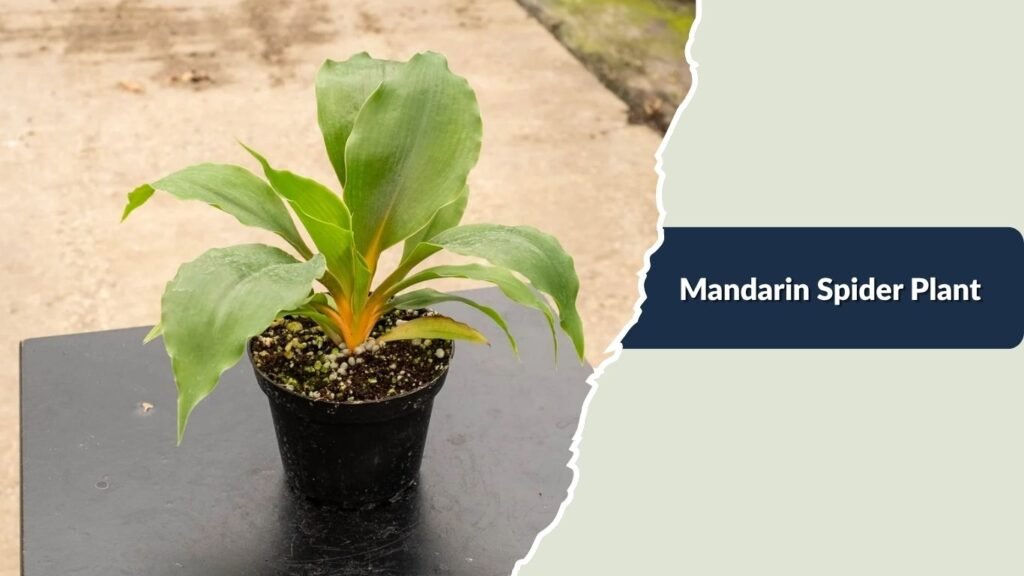
Mandarin Spider Plant is a colorful tropical houseplant recognized for its bright orange leaf stalks and broad, glossy green foliage. Also called Fire Flash or Orange Spider Plant, this species belongs to the same genus as traditional spider plants but has a noticeably different appearance. Its vibrant orange coloration and upright growth make it a beautiful addition to indoor plant collections.
Identification
- Common Name: Mandarin Spider Plant, Fire Flash Plant
- Scientific Name: Chlorophytum orchidastrum (also known as Chlorophytum amaniense in horticulture)
- Family: Asparagaceae
- Leaf Color: Deep green with bright orange petioles
- Leaf Shape: Broad, elongated, lance-shaped leaves
- Mature Indoor Height: Approximately 12–24 inches
- Flower Color: Small, pale greenish-white flowers
- Growth Habit: Upright, rosette-forming perennial
- Light Requirements: Bright, indirect sunlight
Growing Conditions
Mandarin Spider Plant thrives in bright, indirect sunlight and warm indoor environments. A well-draining potting mixture containing organic matter, perlite, and coco coir encourages healthy root development. Temperatures between 65°F and 85°F generally support steady growth. Moderate humidity helps maintain its broad green leaves, while excessive direct sunlight may cause scorching.
Watering and Maintenance
Water when the upper inch of soil begins to feel dry. Avoid prolonged waterlogging, which can damage the roots and cause yellowing foliage. Remove old or damaged leaves occasionally to maintain its attractive appearance. Unlike traditional spider plants, Mandarin Spider Plant does not normally produce hanging baby plantlets. Propagation is typically accomplished through seeds or division when suitable.
20. White Stripe Spider Plant (Chlorophytum comosum ‘White Stripe’)
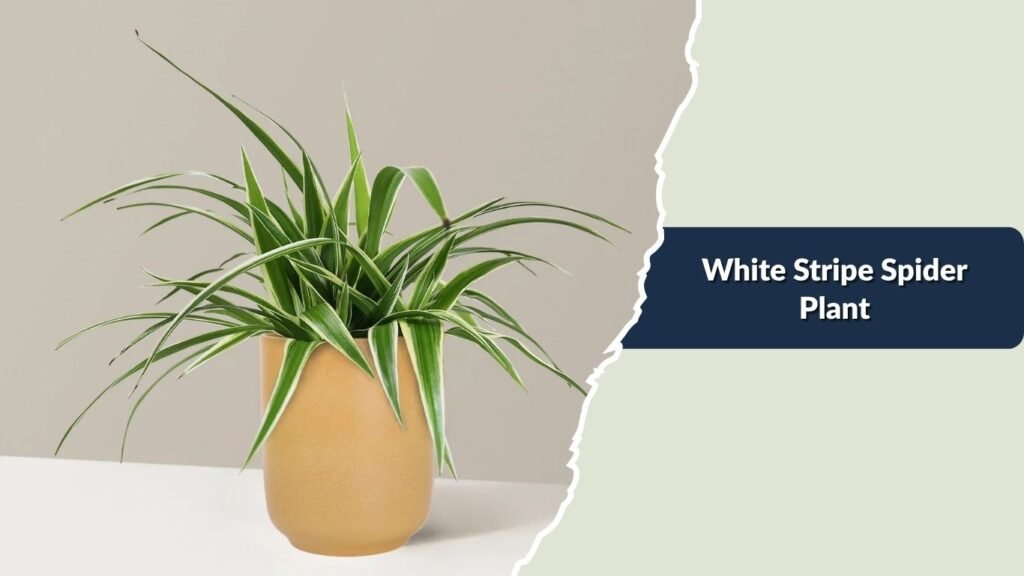
White Stripe Spider Plant is an elegant ornamental houseplant recognized for its narrow, creamy-white central stripe and gracefully arching green leaves. Unlike heavily variegated spider plants, this cultivar displays a relatively thin pale stripe that may become less noticeable as the foliage matures. Its attractive appearance and easy-care nature make it a practical choice for indoor gardening.
Identification
- Common Name: White Stripe Spider Plant
- Botanical Name: Chlorophytum comosum ‘White Stripe’
- Family: Asparagaceae
- Leaf Color: Green with a narrow white or cream central stripe
- Leaf Shape: Long, narrow, arching, strap-shaped leaves
- Mature Indoor Height: Approximately 8–18 inches
- Flower Color: Small white flowers
- Growth Habit: Clump-forming perennial with trailing plantlets
- Light Requirements: Bright, indirect sunlight
Growing Conditions
White Stripe Spider Plant grows best in bright, indirect sunlight, although it can tolerate moderate lighting. A lightweight, well-draining potting mixture containing organic matter and perlite supports healthy root development. Temperatures between 60°F and 80°F encourage steady growth. Protect the foliage from harsh afternoon sunlight and cold drafts to prevent unnecessary stress.
Watering and Maintenance
Water when the top 1–2 inches of soil become dry. Ensure excess water drains freely because continuously saturated soil may cause root rot. Remove yellowing leaves and trim brown tips when necessary. During spring and summer, occasional applications of diluted balanced fertilizer encourage healthy growth. Mature plants can produce small white flowers and hanging plantlets.
FAQs
1. What Is the Easiest Spider Plant to Grow Indoors?
Vittatum Spider Plant and Green Spider Plant are among the easiest varieties to grow indoors. Both adapt well to typical household conditions and require minimal maintenance. They thrive in bright, indirect sunlight, well-draining soil, and moderate watering, making them excellent choices for beginners and experienced indoor gardeners.
2. How Often Should I Water My Spider Plant?
Spider plants generally need watering every 7–10 days, depending on temperature, humidity, and pot size. Water when the top 1–2 inches of soil feel dry. During warmer months, plants may require more frequent watering. Avoid keeping the soil constantly wet because excessive moisture can cause root rot.
3. Do Spider Plants Need Direct Sunlight?
Spider plants prefer bright, indirect sunlight rather than intense direct sunlight. Although they tolerate moderate or lower light conditions, insufficient lighting can slow growth and reduce leaf variegation. Harsh afternoon sunlight may scorch their leaves, causing brown tips or faded patches. Filtered light near a window is generally ideal.
4. Which Spider Plant Variety Is Best for Small Spaces?
Bonnie Spider Plant, Ocean Spider Plant, and Hawaiian Spider Plant are excellent options for small indoor spaces. These compact varieties typically grow around 6–12 inches tall, depending on growing conditions. Their attractive foliage makes them suitable for desks, shelves, hanging baskets, and decorative tabletop planters without occupying excessive room.
5. Are Spider Plants Toxic to Cats and Dogs?
The common spider plant (Chlorophytum comosum) and its cultivars are considered non-toxic to cats and dogs. However, eating large amounts of foliage may cause mild digestive upset. Not every plant marketed as a spider plant is the same species, so verify its botanical identification before assuming it is pet-safe.