
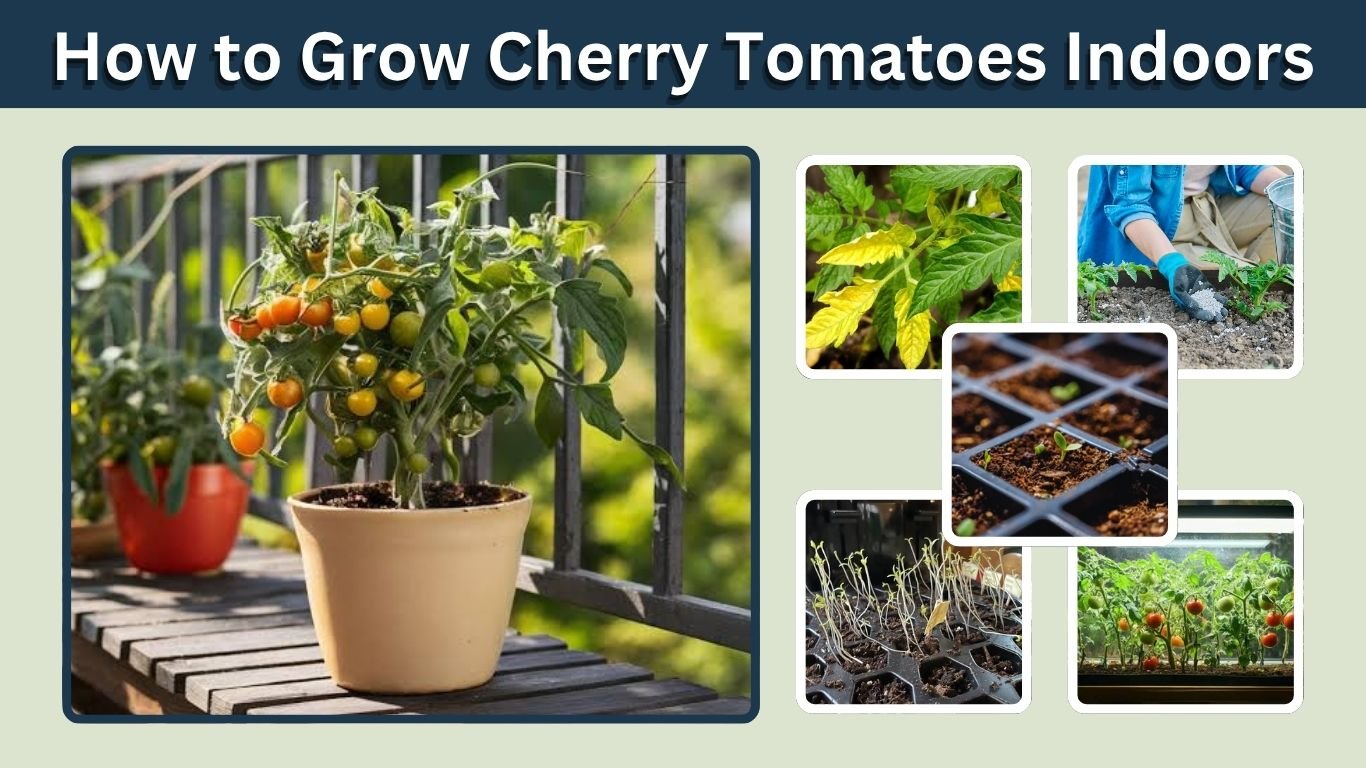
Want to enjoy fresh, sweet cherry tomatoes without having an outdoor garden? Growing cherry tomatoes indoors is easier than you might think when you provide enough light, warmth, and proper care. Whether you have a sunny windowsill, a small apartment, or a dedicated indoor growing space, you can successfully grow productive tomato plants. From choosing suitable varieties and planting seeds to watering, pollination, and harvesting, this guide explains how to grow cherry tomatoes indoors and enjoy homegrown tomatoes throughout the year.
Can You Grow Cherry Tomatoes Indoors?
Yes, cherry tomatoes can grow indoors successfully when their basic growing requirements are met. Unlike outdoor plants, indoor tomatoes depend on controlled lighting, consistent temperatures, and proper watering. Compact cherry tomato varieties are particularly suitable for containers and small spaces. With adequate artificial lighting and regular maintenance, you can grow healthy plants that produce sweet, flavorful tomatoes throughout the year.
Why Cherry Tomatoes Are Suitable for Indoor Growing
Cherry tomatoes are a practical choice for indoor vegetable gardening because many varieties produce small fruits on relatively compact plants. Dwarf varieties fit comfortably into containers, making them suitable for apartments, balconies, and indoor growing shelves.However, tomatoes require significantly more light than most decorative houseplants. A bright window may support growth, but supplemental lighting is often necessary for reliable fruit production.
Best Cherry Tomato Varieties to Grow Indoors
Choosing the right variety makes indoor gardening easier. Compact and determinate varieties generally require less space and maintenance than tall, indeterminate tomato plants.
- Tiny Tim: A compact dwarf variety suitable for small indoor containers.
- Micro Tom: An exceptionally small tomato plant that works well on growing shelves.
- Red Robin: A dwarf cherry tomato variety that produces small red fruits.
- Tumbling Tom: A trailing variety suitable for hanging baskets and containers.
- Orange Hat: A miniature tomato variety producing small orange fruits.
For beginners, Tiny Tim, Micro Tom, and Red Robin are particularly convenient options.
How to Grow Cherry Tomatoes Indoors From Seeds
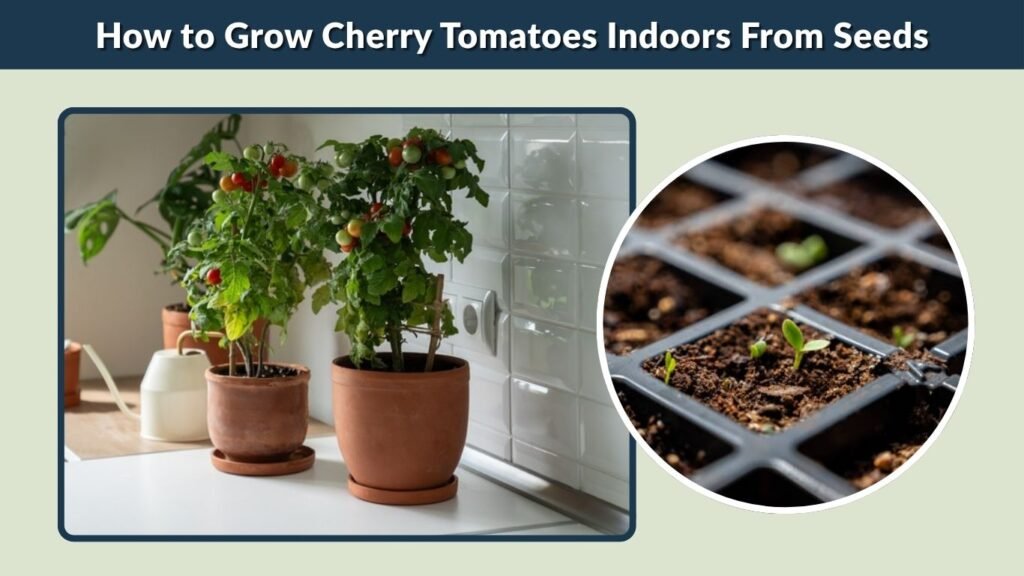
Growing cherry tomatoes indoors from seed allows you to choose varieties that may not be available as mature plants. Tomato seeds germinate relatively quickly under warm conditions, and seedlings develop steadily when provided with sufficient light. Starting with healthy seeds, clean containers, and appropriate potting soil creates a strong foundation for successful indoor growing and future fruit production.
Step 1: Prepare Seeds and Growing Containers
Choose high-quality cherry tomato seeds from a reliable supplier. Fill small seed trays or individual starter pots with a lightweight, well-draining seed-starting mix.Ensure every container has drainage holes to prevent excessive moisture accumulation. Moisten the growing medium before planting so the seeds receive consistent moisture.
Step 2: Plant Cherry Tomato Seeds
Follow these steps when starting cherry tomatoes indoors:
- Fill seed trays with lightly moistened seed-starting mix.
- Plant seeds approximately ¼ inch deep.
- Cover the seeds gently with growing medium.
- Keep the soil consistently moist without making it soggy.
- Maintain temperatures around 70–80°F (21–27°C).
- Place seedlings under bright light immediately after germination.
Most tomato seeds germinate within approximately 5–10 days under favorable conditions.
Step 3: Transplant Cherry Tomato Seedlings
Once seedlings develop their first true leaves, transplant them into individual containers. Handle seedlings carefully to avoid damaging their delicate roots.As the plants grow, gradually move them into larger pots. When transplanting, you can bury part of the stem beneath the soil to encourage additional root development.
Best Indoor Growing Conditions for Cherry Tomatoes
Providing suitable indoor growing conditions is essential for healthy tomato plants and consistent fruit development. Cherry tomatoes need strong lighting, warm temperatures, sufficient growing space, and well-draining soil. Poor environmental conditions can cause weak stems, slow growth, and limited flowering. Maintaining a stable growing environment helps indoor cherry tomato plants develop stronger roots and produce better harvests.
Light Requirements for Indoor Cherry Tomatoes
Cherry tomatoes ideally receive 6–8 hours or more of strong direct sunlight daily. However, many indoor windows cannot provide enough light for consistent fruiting.Full-spectrum LED grow lights are often the most reliable solution. Depending on the light’s strength, plants may need approximately 12–16 hours of artificial lighting daily.Position the lights according to the manufacturer’s recommended distance to prevent overheating or weak growth.
Ideal Temperature and Humidity
Indoor cherry tomato plants generally grow well with daytime temperatures around 70–80°F (21–27°C) and slightly cooler nights.Avoid placing containers near cold windows, air-conditioning vents, or heating systems. Moderate humidity and good air circulation help support healthy foliage and reduce fungal problems.
Choosing the Right Pot and Soil
Container size depends on the tomato variety. Micro-dwarf plants can grow in relatively small containers, while larger cherry tomato varieties need additional root space.Choose a well-draining potting mix enriched with organic matter. A container approximately 12 inches wide is a useful starting point for many compact bush varieties, although some require larger pots.
How to Care for Cherry Tomato Plants Indoors

Proper maintenance helps indoor cherry tomato plants remain healthy throughout their growing cycle. Although these plants are relatively manageable, inconsistent watering, insufficient nutrients, and overcrowded growth can affect fruit production. Establishing a regular care routine improves plant development and helps prevent common problems. Focus on balanced watering, appropriate fertilization, gentle pruning, and adequate airflow around the foliage.
Watering Indoor Cherry Tomato Plants
Cherry tomato plants prefer consistently moist soil rather than constantly wet conditions. Water thoroughly when the upper inch of potting mix begins to dry.Allow excess water to drain completely, and avoid leaving containers standing in water. Irregular watering can contribute to fruit cracking and blossom-end rot.
Fertilizing Cherry Tomatoes
Cherry tomato plants need sufficient nutrients for leaf development, flowering, and fruit production.
- Apply a balanced fertilizer during early vegetative growth.
- Switch to a tomato fertilizer suitable for fruiting plants when flowering begins.
- Follow the manufacturer’s recommended application rate.
- Avoid excessive nitrogen, which can encourage foliage growth at the expense of fruit.
- Monitor leaves for yellowing or other potential nutrient problems.
Consistent, moderate fertilization is generally better than applying excessive nutrients.
Pruning and Supporting Indoor Tomato Plants
Compact determinate cherry tomatoes usually need minimal pruning. Remove damaged, yellowing, or diseased leaves to improve plant health.Taller indeterminate varieties may need stakes or small cages to support growing stems. These plants can also benefit from selective sucker pruning when space is limited.Avoid excessive pruning because healthy leaves are essential for photosynthesis and fruit development.
How to Pollinate Cherry Tomatoes Indoors
Pollination is essential for developing cherry tomatoes, but indoor plants may not receive the natural vibrations provided by wind or pollinating insects. Fortunately, tomato flowers are self-fertile, meaning individual flowers contain the structures needed for pollination. Gentle movement helps release pollen and encourages fruit formation. Supporting pollination becomes especially important when growing cherry tomatoes inside enclosed rooms or apartments.
Hand Pollination Methods
Once flowers open, gently shake the plant or tap individual flower clusters during the daytime.You can also use a clean electric toothbrush against the flower stem to create gentle vibrations. Avoid damaging the flowers or applying excessive pressure.Repeat the process periodically while new flowers develop. Proper temperatures and sufficient lighting are also necessary for successful fruit formation.
Growing Cherry Tomatoes Indoors in Winter

Cherry tomatoes can grow indoors during winter when artificial lighting and indoor temperatures remain suitable. Unlike outdoor gardening, indoor growing does not depend entirely on seasonal weather conditions. However, shorter winter days and cold windows can reduce plant growth and productivity. A well-managed indoor growing setup allows gardeners to maintain healthy tomato plants even when outdoor temperatures are unsuitable for gardening.
Best Grow Lights for Indoor Cherry Tomatoes
Full-spectrum LED grow lights are a practical choice because they are energy-efficient and suitable for indoor fruiting plants.Select a light designed for vegetables rather than a low-output decorative plant lamp. Check its recommended coverage area, intensity, and hanging distance.A programmable timer can help maintain consistent daily lighting schedules.
Common Problems When Growing Cherry Tomatoes Indoors

Indoor cherry tomato plants sometimes experience problems despite regular care. Most issues result from inadequate lighting, watering mistakes, nutrient imbalances, or unfavorable temperatures. Identifying symptoms early makes them easier to correct before plant health deteriorates. Observing leaf color, flowering behavior, soil moisture, and fruit development can help you understand what your plants need for healthy growth and production.
Common Problems and Solutions
- Yellow leaves: Check drainage, watering frequency, nutrient availability, and light exposure.
- Leggy seedlings: Increase light intensity or move grow lights closer within the recommended distance.
- Flowers dropping: Check for excessive temperatures, inadequate lighting, and inconsistent watering.
- No fruit development: Improve lighting and gently vibrate open flowers to support pollination.
- Cracked tomatoes: Maintain more consistent soil moisture.
- Blossom-end rot: Improve watering consistency to support calcium uptake.
Correcting growing conditions early generally improves future flowering and fruit quality.
How Long Does It Take to Grow Cherry Tomatoes Indoors?
The time required to grow cherry tomatoes indoors depends on the variety, environmental conditions, and whether plants are started from seeds or seedlings. Compact early-maturing varieties generally produce fruit sooner than larger tomato plants. Adequate lighting, balanced nutrition, and consistent temperatures encourage steady development. Understanding the growing timeline helps you plan when to plant and anticipate your first harvest.
Cherry Tomato Growing Timeline
Most cherry tomato varieties take approximately 60–100 days from sowing to their first ripe fruits, although some require longer.Seeds typically germinate within one to two weeks. Plants then develop foliage, form flowers, and produce green tomatoes that gradually ripen.
When and How to Harvest Cherry Tomatoes
Harvest cherry tomatoes once they reach their mature color and develop a slightly soft but firm texture.Gently twist the fruit from its stem or use clean scissors. Check plants regularly because ripe tomatoes may appear at different times.Allowing fruits to ripen fully on the plant usually improves their sweetness and flavor.
FAQs
1. Can you grow cherry tomatoes indoors without sunlight?
Yes, cherry tomatoes can grow without direct sunlight when provided with sufficiently powerful full-spectrum grow lights. Weak household lighting is generally not enough for reliable fruit production.
2. Can you grow cherry tomatoes indoors in small pots?
Yes, micro-dwarf varieties can grow in small pots, often around 1–2 gallons. Larger cherry tomato varieties require bigger containers for healthy root development.
3. How many hours of grow light do indoor cherry tomatoes need?
Indoor cherry tomatoes generally need approximately 12–16 hours of suitable artificial lighting daily, depending on light intensity. They also require a regular dark period.
4. Can you grow cherry tomatoes indoors during winter?
Yes, winter growing is possible with sufficient artificial lighting, warm indoor temperatures, and consistent watering. Protect plants from cold windows and drafts.
5. How many cherry tomatoes can one indoor plant produce?
Production varies significantly by variety, plant size, lighting, and growing conditions. A healthy dwarf plant may produce dozens of fruits, while larger varieties can produce considerably more under suitable conditions.