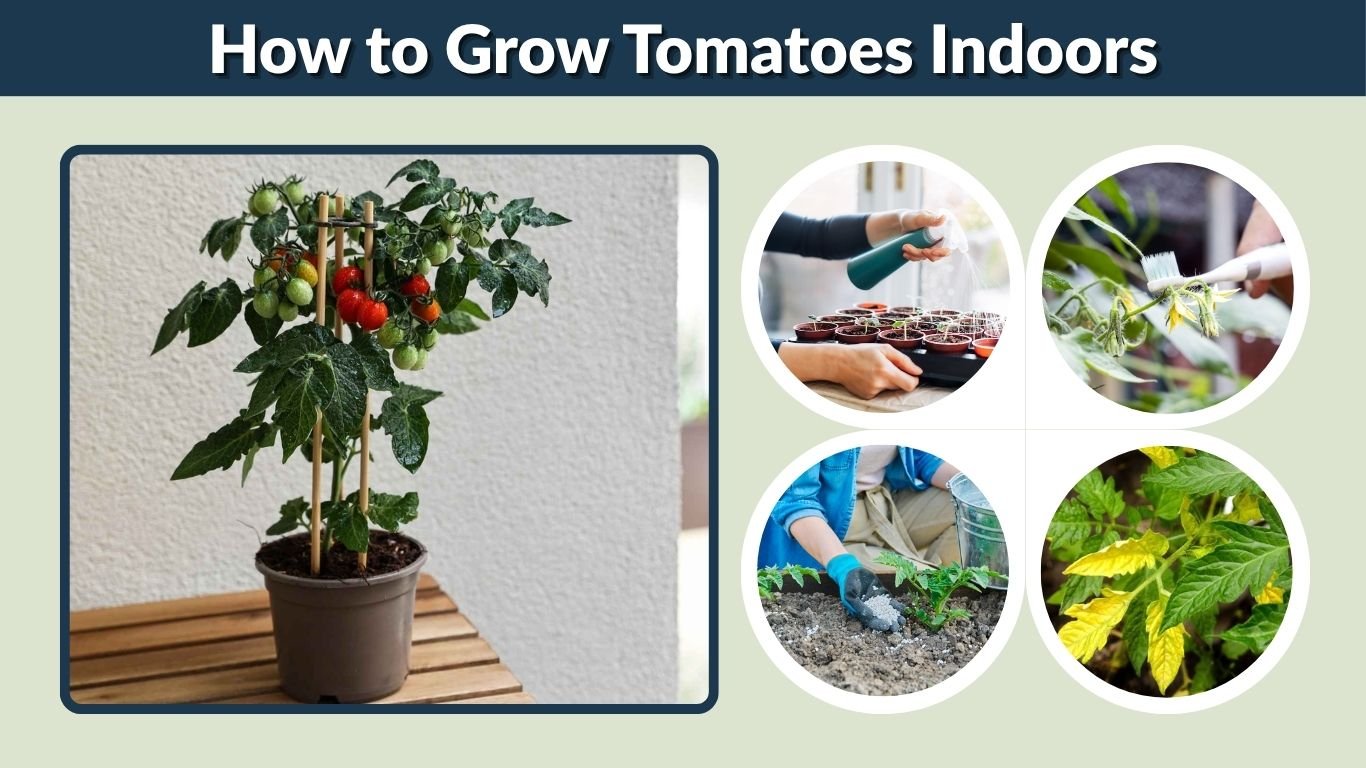
Growing fresh, juicy tomatoes indoors is possible even if you don’t have a backyard or outdoor garden. With the right tomato variety, proper lighting, and consistent care, you can enjoy homegrown tomatoes throughout the year. Indoor tomato gardening works especially well for small apartments, sunny windowsills, and dedicated growing spaces. From starting tomato seeds to encouraging flowers and harvesting ripe fruit, this beginner-friendly guide explains how to grow tomatoes indoors successfully while maintaining healthy plants and creating a productive indoor vegetable garden.
Can You Grow Tomatoes Indoors Year-Round?
Yes, tomatoes can grow indoors throughout the year when their environmental needs are properly maintained. Unlike leafy vegetables, tomatoes require strong lighting, warm temperatures, and adequate space to produce fruit. Although indoor cultivation takes more attention than growing herbs, compact tomato varieties can perform well in containers. Successful year-round production depends on maintaining suitable conditions and providing the plants with consistent care.
Why Tomatoes Can Grow Successfully Indoors
Tomatoes are warm-season plants that can produce flowers and fruit indoors when sufficient light and nutrients are available. Compact varieties are particularly suitable because they require less growing space.Indoor cultivation also protects plants from outdoor weather fluctuations. However, providing strong artificial lighting and helping flowers pollinate are often necessary for reliable fruit production.
Ideal Indoor Growing Conditions
Tomato plants generally prefer daytime temperatures around 70–80°F (21–27°C), with slightly cooler nighttime conditions.They also require fertile growing media, adequate root space, and consistent moisture. Maintaining these conditions helps support healthy foliage, flowering, and fruit development.
Best Tomato Varieties to Grow Indoors
Selecting the right tomato variety is one of the most important steps in successful indoor gardening. While large tomato plants can grow indoors, compact and dwarf varieties are generally easier to manage. Many smaller varieties also produce fruit without requiring extensive support. Consider the plant’s mature height, container requirements, and fruit size before choosing seeds or seedlings for your indoor growing space.
Recommended Indoor Tomato Varieties
- Tiny Tim: A compact dwarf tomato producing small cherry tomatoes, suitable for limited spaces.
- Micro Tom: One of the smallest tomato varieties, making it useful for tabletop gardening.
- Red Robin: Produces sweet cherry tomatoes on compact plants that fit well in containers.
- Patio Choice Yellow: A compact variety producing clusters of small yellow tomatoes.
- Tumbling Tom: A trailing cherry tomato variety suitable for hanging baskets and elevated containers.
Can You Grow Cherry Tomatoes Indoors?
Cherry tomatoes are among the most practical choices for indoor cultivation because certain varieties remain relatively compact and produce smaller fruits.Choose a dwarf or determinate cherry tomato variety for easier maintenance. With strong lighting, proper fertilization, and successful pollination, indoor cherry tomato plants can produce satisfying harvests.
How to Grow Tomatoes Indoors From Seeds

Starting tomatoes from seeds allows gardeners to choose from many different varieties and control the entire growing process. Tomato seeds germinate best in warm, moist conditions and usually develop into seedlings within one to two weeks. Using a suitable seed-starting mixture and providing sufficient light after germination encourages stronger plants. Once seedlings establish healthy roots, they can be transferred into larger containers.
Step-by-Step Guide to Planting Tomato Seeds Indoors
- Choose quality seeds: Select fresh seeds from compact, dwarf, or container-friendly tomato varieties.
- Prepare seed trays: Fill small containers with a lightweight, well-draining seed-starting mixture.
- Plant the seeds: Sow seeds approximately ¼ inch deep and lightly cover them with growing medium.
- Water carefully: Moisten the mixture without making it waterlogged.
- Maintain warmth: Keep the growing medium around 70–80°F (21–27°C) to encourage germination.
- Provide adequate lighting: Once seedlings emerge, place them under grow lights to prevent weak, elongated stems.
- Transplant healthy seedlings: Move seedlings into larger pots after they develop several true leaves and sufficient roots.
How Long Do Tomato Seeds Take to Germinate Indoors?
Tomato seeds commonly germinate within 5–10 days under suitable conditions, although some varieties may take longer.Consistent warmth and moisture are important during this stage. Once seedlings appear, adequate light becomes essential for strong stem and leaf development.
How to Grow Tomatoes Indoors With Grow Lights
Lighting is often the biggest challenge when growing tomatoes indoors. Tomato plants require considerably more light than many common houseplants, especially during flowering and fruit development. A sunny window may support vegetative growth, but it often provides insufficient light for productive fruiting. Full-spectrum LED grow lights offer a practical solution by supplying consistent illumination regardless of weather or seasonal daylight changes.
How Much Light Do Indoor Tomatoes Need?
Tomato plants generally benefit from at least 6–8 hours of strong direct sunlight when grown in naturally lit conditions.For artificial lighting, a daily schedule of approximately 14–16 hours is a useful starting point. Actual requirements depend on light intensity and the plant’s growth stage.
Choosing the Right Grow Light
Full-spectrum LED grow lights are commonly used because they provide useful wavelengths for plant growth while consuming relatively little electricity.Choose a fixture designed for fruiting vegetables rather than one intended only for small seedlings. Follow its recommended hanging distance and adjust the position as plants grow.
Signs of Insufficient Lighting
Tomato plants receiving inadequate light often develop long, weak stems and unusually large spaces between leaves.They may also flower poorly or produce limited fruit. Increasing usable light intensity and maintaining a consistent lighting schedule can improve plant development.
How to Care for Tomato Plants Indoors
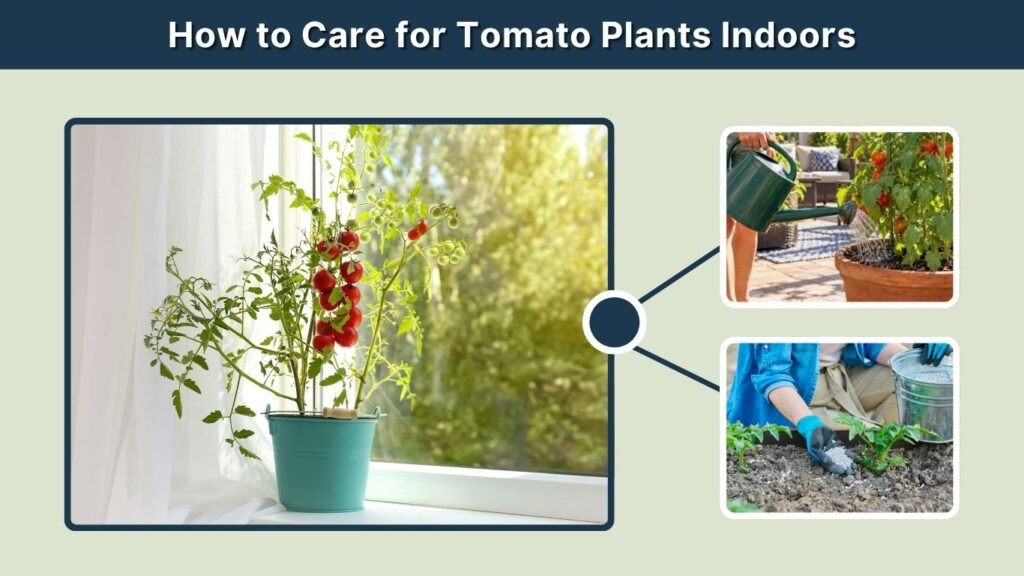
Healthy indoor tomato plants need regular attention to watering, feeding, temperature, and airflow. Because containers hold limited soil, moisture and nutrient levels can change quickly as plants grow. Proper care encourages strong roots, healthy leaves, and successful fruit development. Maintaining a consistent growing environment also reduces common problems such as blossom drop, yellowing leaves, and poor tomato production.
Watering Indoor Tomato Plants
Water tomatoes when the upper inch of potting mix begins to dry. Apply water thoroughly until excess moisture drains from the container.Avoid allowing the growing medium to become completely dry or remain continuously saturated. Inconsistent watering can contribute to blossom-end rot and fruit cracking.
Fertilizing Indoor Tomatoes
Tomatoes require sufficient nutrients throughout their growth cycle, especially when flowering and producing fruit.Use a balanced fertilizer suitable for container tomatoes, following its application instructions. Avoid excessive nitrogen because it can encourage leafy growth at the expense of fruit production.
Maintaining Temperature and Humidity
Tomatoes grow well in warm indoor conditions, generally around 70–80°F (21–27°C) during the day.Keep plants away from cold drafts and excessive heating. Moderate humidity and gentle air circulation help maintain healthy foliage and support pollination.
Growing Tomatoes Indoors in Pots
Container selection plays an important role in successful indoor tomato cultivation. Tomato plants develop extensive root systems, so they need sufficient soil volume and reliable drainage. Smaller dwarf varieties require less space than traditional garden tomatoes, making them more practical for indoor setups. Choosing the right pot also helps maintain consistent moisture, supports healthy roots, and reduces the need for frequent repotting.
Choosing the Right Container Size
Micro-dwarf tomatoes may grow successfully in containers holding approximately 1–3 gallons of potting mix.Larger compact tomatoes generally benefit from 3–5 gallons or more, depending on the variety. Standard tomato plants often require at least 5 gallons and substantial vertical growing space.
Best Soil for Indoor Tomato Plants
Use a lightweight, nutrient-rich potting mix with good drainage. A mixture containing peat or coco coir, perlite, and composted organic matter can provide a suitable root environment.Avoid heavy garden soil because it can compact inside containers and restrict drainage.
How to Pollinate Tomato Plants Indoors
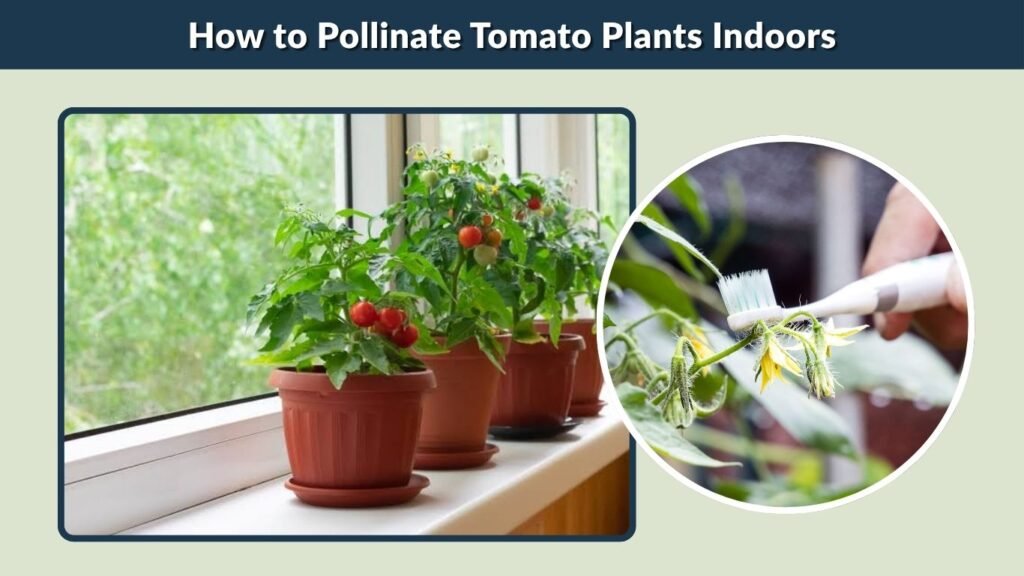
Indoor tomatoes may require help with pollination because enclosed growing environments usually lack wind and insect activity. Tomato flowers contain both male and female reproductive structures, allowing them to self-pollinate. However, gentle movement helps release pollen inside the flowers. Proper pollination, suitable temperatures, and healthy plant growth are essential for converting blossoms into developing tomatoes.
Hand Pollination Techniques
Gently shake the plant or tap its flowering stems to help release pollen. This can be done periodically while flowers are open.Another method involves touching an electric toothbrush against the flower stalk to create a gentle vibration. Avoid damaging the flowers during the process.
Why Indoor Tomato Flowers Fall Off
Flower drop can occur when plants experience excessive heat, inadequate lighting, inconsistent watering, or unsuccessful pollination.Maintaining stable growing conditions and gently vibrating flower clusters can improve the chances of fruit developing.
Growing Tomatoes Indoors During Winter
Winter tomato gardening is possible, although shorter daylight hours and cooler conditions can make fruit production more challenging. Unlike spinach or lettuce, tomatoes require substantial light and warmth to grow successfully. Artificial lighting often becomes necessary during winter, particularly in apartments with limited natural sunlight. With appropriate equipment and consistent care, compact tomato varieties can continue producing fruit during colder months.
How to Grow Tomatoes Indoors in Winter
Place plants in a warm location with stable temperatures and provide strong supplemental lighting.Maintain adequate moisture and nutrients while protecting plants from freezing windows and cold drafts. A daily artificial-light period of approximately 14–18 hours may be useful, depending on fixture intensity.
Growing Tomatoes Hydroponically Indoors
Hydroponic tomato systems allow plants to grow without traditional soil by delivering nutrients through water.These systems require careful monitoring of nutrient concentration, water pH, oxygen availability, and lighting. Compact cherry tomatoes are practical choices for smaller hydroponic growing systems.
Common Problems When Growing Tomatoes Indoors

Indoor tomatoes can develop several problems when growing conditions become unfavorable. Yellow leaves, weak stems, flower drop, and poor fruit production commonly result from inadequate light, watering problems, or nutrient imbalances. Identifying symptoms early helps prevent serious damage and supports healthier plants. Most indoor tomato problems can be reduced through consistent maintenance, proper ventilation, and suitable environmental conditions.
Indoor Tomato Problems and Solutions
- Yellow leaves: Check for overwatering, nutrient deficiencies, or inadequate drainage.
- Leggy seedlings: Increase light intensity and position grow lights correctly.
- Flowers without fruit: Improve pollination and check temperature and lighting conditions.
- Blossom-end rot: Maintain consistent soil moisture and adequate calcium availability.
- Slow growth: Examine root space, nutrient supply, and available light.
- Curling leaves: Investigate heat stress, inconsistent watering, and possible pest activity.
How Long Does It Take to Grow Tomatoes Indoors?
Indoor tomato growth depends on the variety, light availability, temperature, and growing method. Small cherry tomato varieties generally mature faster than large-fruited types, although the difference varies between cultivars. Starting plants from seed adds several weeks before flowering and fruit development begin. Understanding the typical growing timeline makes it easier to plan planting dates and maintain realistic expectations for indoor harvesting.
Tomato Growth Timeline
Tomato seeds commonly germinate within 5–10 days. Seedlings then develop roots and foliage over the following several weeks.Many compact varieties produce ripe tomatoes approximately 90–120 days after sowing, although some grow faster and others take longer.
How to Harvest Indoor Tomatoes
Harvest tomatoes when they develop their mature color and feel appropriately firm for the variety.Use clean scissors or gently twist ripe fruit from the stem. Regular harvesting helps prevent overripe tomatoes from remaining on the plant.
FAQs
1. Can You Grow Tomatoes Indoors All Year Round?
Yes. Tomatoes can grow indoors year-round when they receive sufficient artificial lighting, appropriate warmth, nutrients, and water. Consistent fruit production also depends on the variety and successful pollination.
2. How Long Does It Take to Grow Tomatoes Indoors?
Many compact tomato varieties take approximately 90–120 days from seed to their first ripe fruit. Growing conditions and variety selection can significantly influence the timeline.
3. Can You Grow Cherry Tomatoes Indoors?
Yes. Dwarf cherry tomato varieties are excellent choices for indoor cultivation because they require relatively little space and can produce fruit in suitable containers.
4. How Much Light Do Tomatoes Need Indoors?
Tomatoes generally benefit from 6–8 or more hours of strong direct sunlight. Under artificial lighting, approximately 14–18 hours may be necessary, depending on the strength and efficiency of the grow lights.
5. Can You Grow Tomatoes Indoors Without Grow Lights?
Yes, but reliable fruit production requires abundant natural sunlight. A very bright, unobstructed window may work for some compact varieties, while supplemental lighting is usually more dependable.