
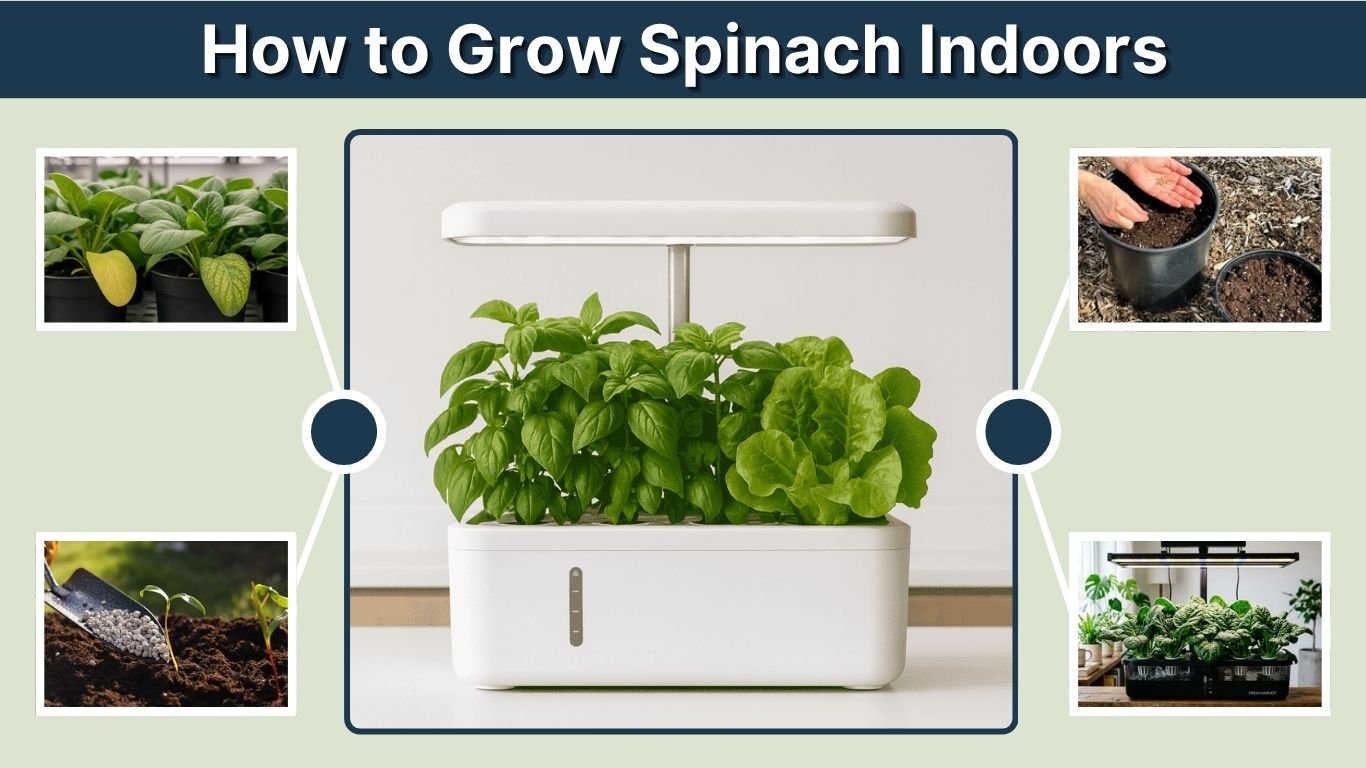
Growing fresh spinach at home is easier than you might think, even without a backyard or outdoor garden. With the right container, lighting, and care, you can enjoy tender, nutritious spinach leaves throughout the year. Whether you have a sunny windowsill, a small apartment, or an indoor gardening setup, spinach can thrive in limited spaces. This guide explains how to grow spinach indoors from seed, choose suitable varieties, maintain healthy plants, and harvest fresh leaves for salads, smoothies, and everyday cooking.
Can You Grow Spinach Indoors Year-Round?
Yes, spinach can grow indoors throughout the year when its basic growing requirements are maintained. Unlike many vegetables, spinach prefers cooler temperatures, making it suitable for indoor container gardening. However, successful year-round production requires adequate lighting, consistent moisture, and regular planting. During warmer months, controlling indoor temperatures becomes especially important because excessive heat can encourage premature flowering and reduce leaf quality.
Why Spinach Is Suitable for Indoor Growing
Spinach is a relatively fast-growing leafy vegetable that adapts well to containers. Its compact growth makes it suitable for windowsills, shelves, and small indoor gardening systems.You can harvest tender baby spinach before plants reach full maturity. This makes indoor growing especially convenient for households wanting fresh greens without maintaining a large garden.
Best Indoor Conditions for Spinach
Spinach generally performs well at temperatures around 50–70°F (10–21°C). It prefers bright light, fertile soil, and consistent moisture.Although spinach tolerates cooler conditions, excessively warm rooms can encourage bolting, especially when combined with long days. A cool location away from heating vents usually provides better growing conditions.
Best Spinach Varieties to Grow Indoors
Choosing the right spinach variety makes indoor gardening easier and improves harvesting results. Some varieties produce smooth, tender leaves, while others develop thick, textured foliage. Compact and slow-bolting varieties are especially useful for containers because they can remain productive under suitable conditions. Consider your available growing space, preferred leaf texture, and whether you want baby spinach or mature leaves.
Recommended Spinach Varieties
- Bloomsdale Long Standing: Produces dark green, crinkled leaves with excellent flavor and good cold tolerance.
- Space Spinach: A smooth-leaf variety suitable for compact gardens and baby-leaf production.
- Tyee Spinach: Features semi-savoy leaves and good resistance to premature bolting.
- Baby’s Leaf Hybrid: Produces tender, smooth leaves suitable for young harvests.
- Regiment Spinach: Develops thick, dark green leaves and grows well under cool conditions.
Can You Grow Malabar Spinach Indoors?
Malabar spinach can grow indoors, but it is different from common spinach. It is a warm-season climbing vine that requires more space, warmth, and support.Unlike regular spinach, Malabar spinach prefers higher temperatures. A warm, brightly lit indoor location and a climbing trellis can support its growth.
How to Grow Spinach Indoors From Seed

Starting spinach from seed is one of the simplest and most affordable indoor growing methods. Direct sowing is particularly effective because spinach develops a taproot and may respond poorly to unnecessary transplanting. With a suitable potting mix, adequate drainage, and favorable temperatures, seeds can begin germinating within approximately one to two weeks. Proper spacing also helps seedlings develop stronger roots and healthier leaves.
Step-by-Step Indoor Spinach Planting Guide
1. Choose a suitable container: Select a pot approximately 6–8 inches deep with drainage holes. Wider containers allow multiple plants to grow together.
2. Prepare the growing medium: Fill the container with a nutrient-rich, well-draining potting mix. Avoid compacted garden soil.
3. Plant spinach seeds: Sow seeds approximately ½ inch deep, initially spacing them about 2 inches apart.
4. Water gently: Moisten the soil evenly without washing away the seeds or creating standing water.
5. Maintain suitable temperatures: Keep the growing medium around 60–70°F (16–21°C) during germination.
6. Provide adequate light: Once seedlings emerge, place the container near a bright window or beneath LED grow lights.
7. Thin the seedlings: Leave approximately 3–6 inches between plants, depending on whether you want baby leaves or mature spinach.
How Long Does Spinach Take to Germinate Indoors?
Spinach seeds commonly germinate within 7–14 days under favorable conditions. Cool or excessively warm soil can delay germination.Fresh seeds usually perform better because spinach seed viability declines during storage. Maintain even moisture and avoid letting the growing medium dry completely.
Growing Spinach Indoors With Grow Lights
Adequate lighting is essential for producing healthy spinach leaves indoors. While a bright windowsill may support growth, natural sunlight can become limited during winter or in shaded apartments. LED grow lights provide a more consistent alternative and help maintain plant development. Proper light duration, fixture placement, and temperature management are important for preventing weak seedlings and encouraging healthy foliage.
How Much Light Does Indoor Spinach Need?
Spinach benefits from approximately 4–6 hours of direct sunlight, although brighter conditions may improve growth when temperatures remain cool.Under LED grow lights, a starting schedule of 12–14 hours daily works well for many home setups. Adjust according to the light’s intensity and the plants’ response.
Best Placement for Indoor Grow Lights
Position grow lights according to the manufacturer’s recommended distance. Many small LED growing fixtures operate effectively several inches above the foliage.If seedlings become unusually tall or lean toward the light, lighting may be insufficient. Avoid placing powerful fixtures so close that leaves become overheated or damaged.
How to Care for Spinach Plants Indoors

Healthy indoor spinach requires regular attention to watering, feeding, and air circulation. Although spinach is relatively easy to maintain, inconsistent growing conditions can cause yellow leaves, slow development, and premature flowering. The goal is to keep the soil evenly moist while preventing waterlogged roots. Proper plant spacing and moderate fertilization also encourage vigorous growth and improve the quality of harvested leaves.
Watering Indoor Spinach
Water spinach when the upper surface of the potting mix begins to dry. The root zone should remain consistently moist but never saturated.Containers with drainage holes help prevent excess moisture from collecting around the roots. During warmer weather or under powerful grow lights, plants may require more frequent watering.
Fertilizing Indoor Spinach
Spinach benefits from fertile growing media because leaf development requires a steady supply of nutrients.If plants show signs of nutrient deficiency, apply a diluted, balanced liquid fertilizer according to the product instructions. Avoid excessive feeding, particularly with nitrogen-rich fertilizers.
Temperature and Air Circulation
Keep spinach away from radiators, heating vents, and excessively warm windows.Gentle air circulation helps maintain a healthier growing environment and reduces prolonged moisture around leaves. Avoid strong drafts that dry the soil rapidly.
Growing Spinach Indoors in Winter
Winter is an excellent opportunity to grow spinach indoors because this vegetable naturally prefers cooler conditions. However, reduced daylight can slow leaf production, particularly in rooms without sufficient sunlight. Supplemental grow lights help compensate for shorter days and support more reliable harvests. Maintaining moderate temperatures and carefully managing soil moisture allows indoor gardeners to continue growing fresh spinach even when outdoor conditions are unsuitable.
How to Grow Spinach Indoors During Winter
Place containers in a bright location where temperatures remain relatively stable. Use supplemental lighting when natural daylight is inadequate.Keep plants away from cold window glass, freezing drafts, and direct heating sources. Water only as needed because soil usually dries more slowly during cooler months.
Growing Spinach Indoors Hydroponically
Hydroponic spinach grows without soil using a nutrient solution and suitable root support.Small indoor hydroponic systems can produce spinach successfully when nutrient concentration, dissolved oxygen, lighting, and water temperature are controlled. Beginners may find container gardening easier because it requires less equipment and monitoring.
Common Problems When Growing Spinach Indoors
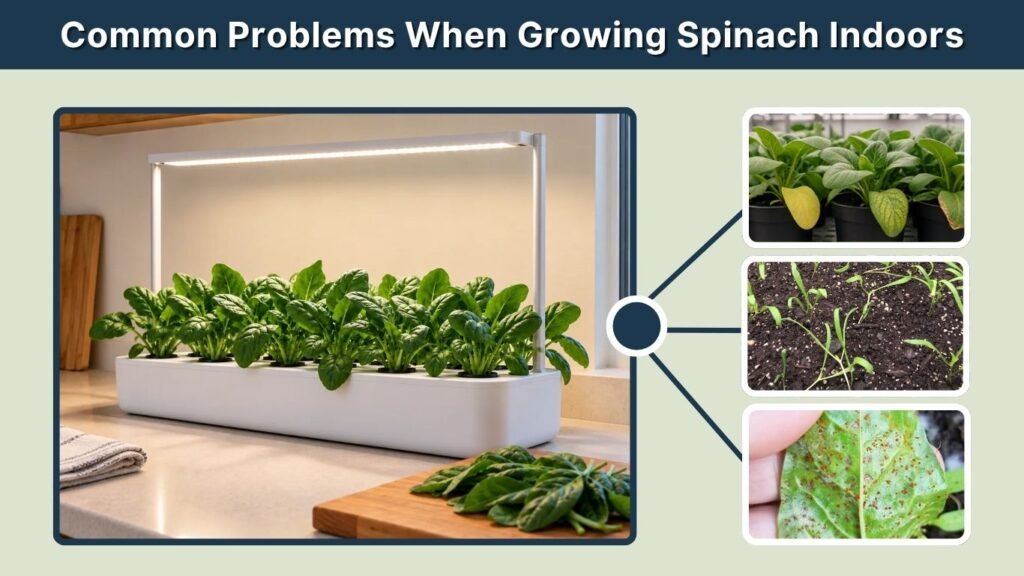
Even healthy spinach plants can develop problems when environmental conditions change. Yellowing leaves, weak seedlings, slow growth, and premature flowering are among the most common indoor growing challenges. Most problems can be prevented by adjusting watering, lighting, temperature, or plant spacing. Recognizing symptoms early allows you to correct growing conditions before they significantly reduce your harvest or damage developing plants.
Common Indoor Spinach Problems and Solutions
- Yellow leaves: Often associated with overwatering, poor drainage, or nutrient deficiencies. Check soil moisture and fertility.
- Slow growth: Usually results from inadequate lighting, unfavorable temperatures, or limited nutrients.
- Leggy seedlings: Increase usable light intensity and prevent overcrowding.
- Wilting plants: Check whether the roots are too dry or waterlogged before watering again.
- Premature bolting: Maintain cooler temperatures and choose slower-bolting varieties.
- Brown leaf edges: Investigate heat stress, inconsistent watering, or excessive fertilizer.
How and When to Harvest Indoor Spinach
Harvesting spinach correctly encourages continued leaf production and helps maintain plant health. Depending on the variety and growing conditions, baby leaves may become ready within three to five weeks, while larger leaves require additional time. Rather than removing the entire plant immediately, you can harvest selected leaves as they mature. This approach allows remaining foliage to continue developing until the plant’s productive period ends.
Harvesting Baby Spinach
Begin harvesting baby spinach when leaves reach approximately 2–3 inches long.Use clean scissors to remove individual outer leaves while protecting the central growing point. Avoid stripping too many leaves at once because plants need remaining foliage for continued growth.
FAQs
1. Can You Grow Spinach Indoors Without Sunlight?
Yes. Spinach can grow indoors without natural sunlight when suitable full-spectrum grow lights provide sufficient intensity and duration. Most indoor setups benefit from approximately 12–14 hours of artificial lighting daily.
2. How Long Does It Take to Grow Spinach Indoors?
Baby spinach may be ready within 21–35 days, while mature leaves often require approximately 40–55 days. Growth depends on variety, temperature, lighting, and overall care.
3. Can You Grow Spinach Indoors in a Pot?
Yes. Spinach grows successfully in pots at least 6–8 inches deep. Choose containers with drainage holes and use fertile, well-draining potting mix.
4. Can You Grow Spinach Indoors All Year Round?
Yes, with suitable lighting and temperature management. However, individual plants eventually decline or bolt, so regular reseeding is necessary for continuous production.
5. What Is the Best Way to Grow Baby Spinach Indoors?
Grow baby spinach in wide containers with fertile soil, consistent moisture, and adequate lighting. Sow seeds relatively close together and harvest tender leaves while they are young.