
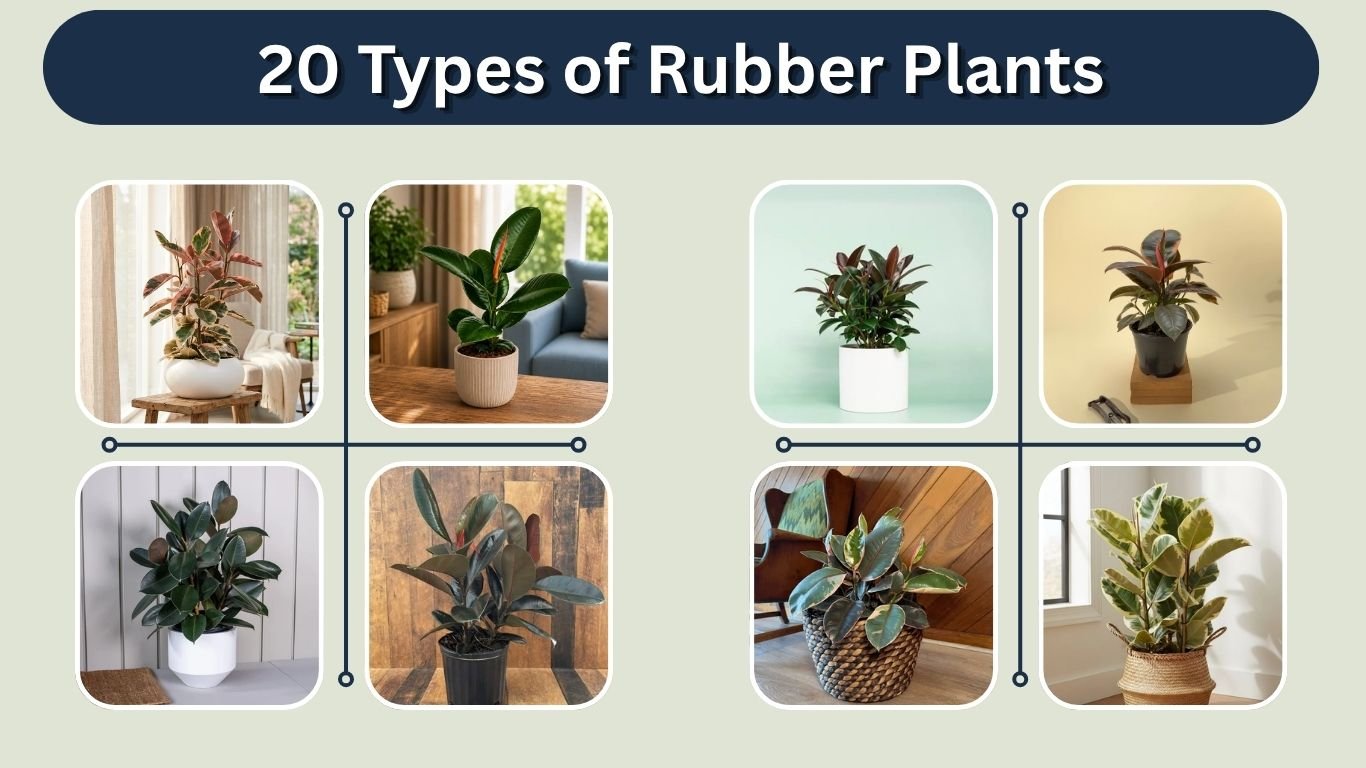
Looking for a beautiful houseplant that adds a tropical touch to your home? Rubber plants are an excellent choice, offering glossy leaves, attractive colors, and elegant upright growth. From classic deep-green varieties to stunning pink and cream variegated types, there’s something for every indoor space. Explore 20 types of rubber plants, their unique characteristics, and essential care tips to help them thrive indoors.
1. Ficus elastica ‘Robusta’ (Robusta Rubber Plant)
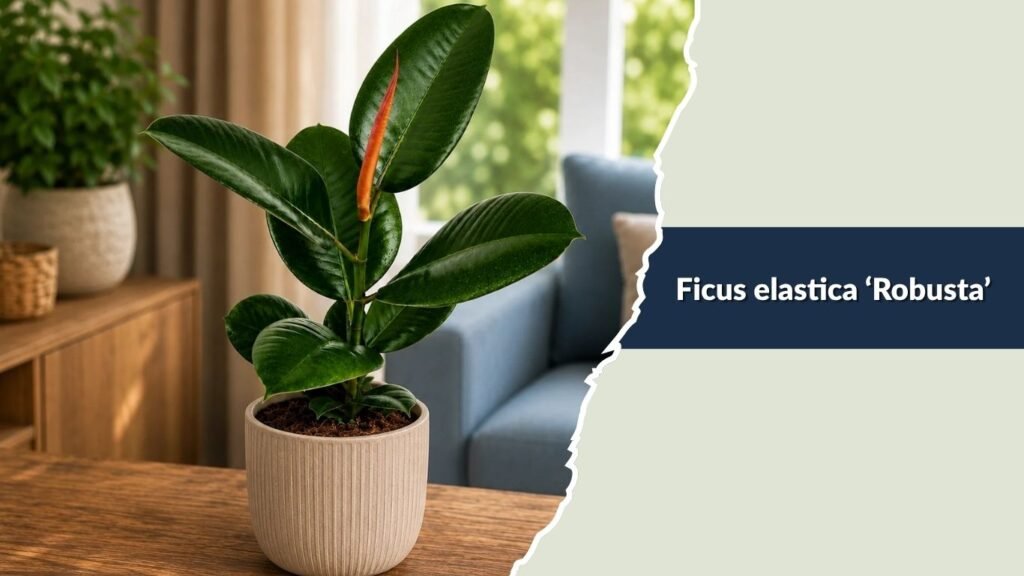
The Robusta Rubber Plant is one of the most popular rubber plant varieties for indoor growing. Known for its large, glossy, deep-green leaves and strong upright growth, this tropical houseplant adds a bold, elegant appearance to any room. It is relatively easy to maintain, making it an excellent choice for beginners and experienced indoor gardeners.
Identification
- Scientific Name: Ficus elastica ‘Robusta’
- Common Name: Robusta Rubber Plant
- Family: Moraceae
- Leaf Color: Deep green with a glossy surface
- Leaf Shape: Large, oval, thick, and leathery
- Indoor Height: Commonly 4–8 feet, depending on pruning and growing conditions
- Growth Habit: Upright, with a sturdy central stem
Ideal Indoor Growing Conditions
Robusta Rubber Plants grow best in bright, indirect sunlight, although they can tolerate moderate indoor light. Position the plant near an east-facing window or a few feet away from a bright south-facing window.Maintain temperatures between 65°F and 85°F (18°C–29°C) and protect the plant from cold drafts. Use a well-draining potting mixture containing perlite or bark to support healthy root development. Average household humidity is generally suitable.
Watering and Maintenance Tips
Water your Robusta Rubber Plant when the top 1–2 inches of soil feel dry. Avoid overwatering because constantly wet soil can cause root rot. During winter, reduce watering as growth slows.Wipe the leaves occasionally with a damp cloth to remove dust and maintain their glossy appearance. Apply a balanced houseplant fertilizer during spring and summer according to the product instructions. Prune excessive growth to encourage branching and maintain the desired indoor size.
2. Ficus elastica ‘Burgundy’ (Burgundy Rubber Plant)
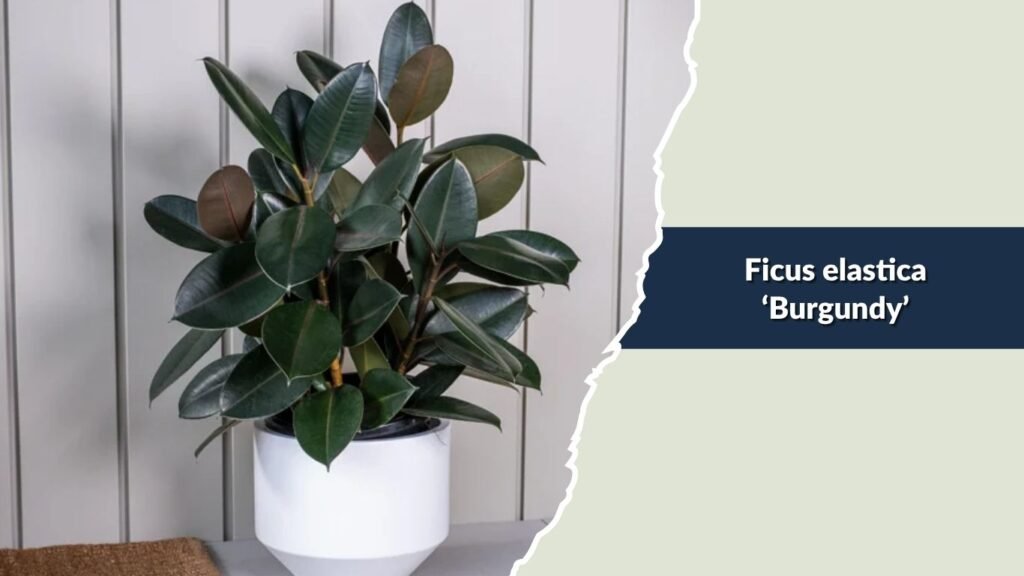
The Burgundy Rubber Plant is a stunning indoor variety known for its dark, glossy leaves that appear almost black under certain lighting conditions. Its deep green foliage with burgundy undertones creates a dramatic appearance, making it an attractive addition to modern homes and offices. This rubber plant grows upright and requires relatively simple maintenance when provided with proper lighting and watering.
Identification
- Scientific Name: Ficus elastica ‘Burgundy’
- Common Name: Burgundy Rubber Plant
- Family: Moraceae
- Leaf Color: Dark green to deep burgundy, almost black
- Leaf Shape: Broad, oval, thick, and glossy
- Indoor Height: Commonly 4–8 feet, depending on growing conditions
- Growth Habit: Upright with large, closely spaced leaves
Ideal Indoor Growing Conditions
Burgundy Rubber Plants thrive in bright, indirect sunlight, which helps maintain their rich foliage color. They can tolerate moderate light, but insufficient sunlight may slow growth and reduce leaf vibrancy.Place the plant near an east-facing window or in a bright room with filtered sunlight. Maintain indoor temperatures between 65°F and 85°F (18°C–29°C). A well-draining potting mixture containing perlite and organic matter supports healthy root development.
Watering and Maintenance Tips
Water your Burgundy Rubber Plant when the top 1–2 inches of soil become dry. Ensure the container has drainage holes to prevent excess moisture from accumulating around the roots.During spring and summer, feed the plant with a balanced liquid fertilizer at the recommended dilution. Wipe its leaves occasionally to remove dust and improve light absorption. Pruning the growing tip can encourage branching and help maintain a compact appearance.
3. Ficus elastica ‘Tineke’ (Tineke Rubber Plant)
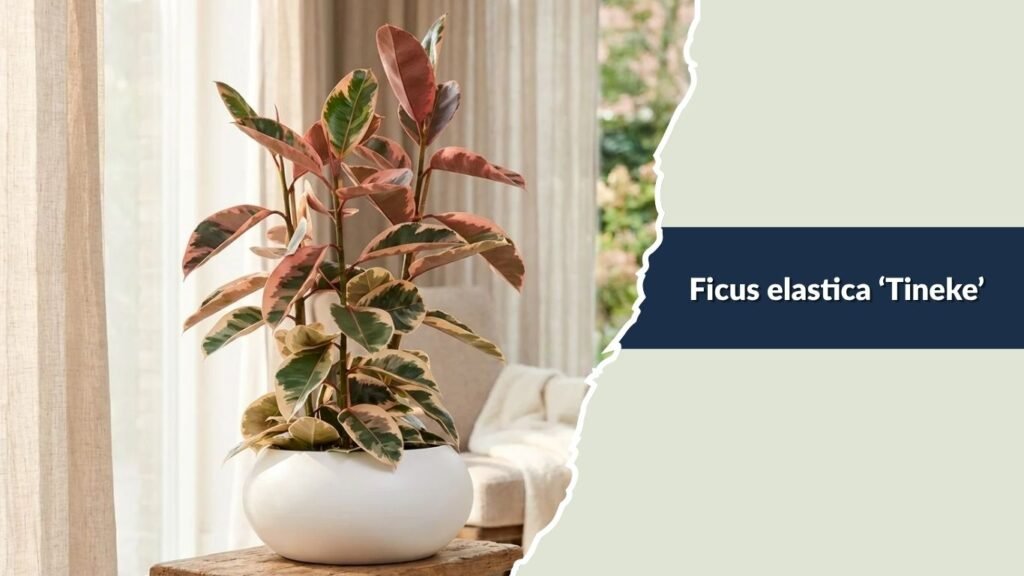
The Tineke Rubber Plant is a beautiful variegated rubber plant featuring a striking combination of creamy white, light green, and deep green foliage. Its colorful leaves and upright growth make it a popular choice for bright indoor spaces. Compared with solid-green rubber plants, Tineke requires slightly more light to maintain its attractive variegation and support healthy development.
Identification
- Scientific Name: Ficus elastica ‘Tineke’
- Common Name: Tineke Rubber Plant
- Family: Moraceae
- Leaf Color: Creamy white, light green, and dark green
- Leaf Shape: Broad, oval, leathery, and glossy
- Indoor Height: Commonly 3–6 feet, although it can grow taller
- Growth Habit: Upright with colorful variegated foliage
Ideal Indoor Growing Conditions
Tineke Rubber Plants grow best in bright, indirect sunlight. Their variegated leaves contain less chlorophyll than entirely green varieties, making sufficient light especially important.Position the plant near a bright east-facing window or a south-facing window with filtered sunlight. Maintain temperatures between 65°F and 85°F (18°C–29°C). Use a loose, well-draining potting mixture with perlite or orchid bark to provide proper aeration.Avoid prolonged exposure to harsh afternoon sunlight, which can scorch the lighter sections of the leaves.
Watering and Maintenance Tips
Water your Tineke Rubber Plant when the top 1–2 inches of soil feel dry. Allow excess water to drain completely, and avoid leaving the pot standing in water.Fertilize lightly during the active growing season using a balanced houseplant fertilizer. Remove damaged leaves when necessary and gently clean the foliage with a soft, damp cloth.Rotate the plant regularly to encourage balanced growth and keep its attractive leaf patterns visible from every angle.
4. Ficus elastica ‘Ruby’ (Ruby Rubber Plant)
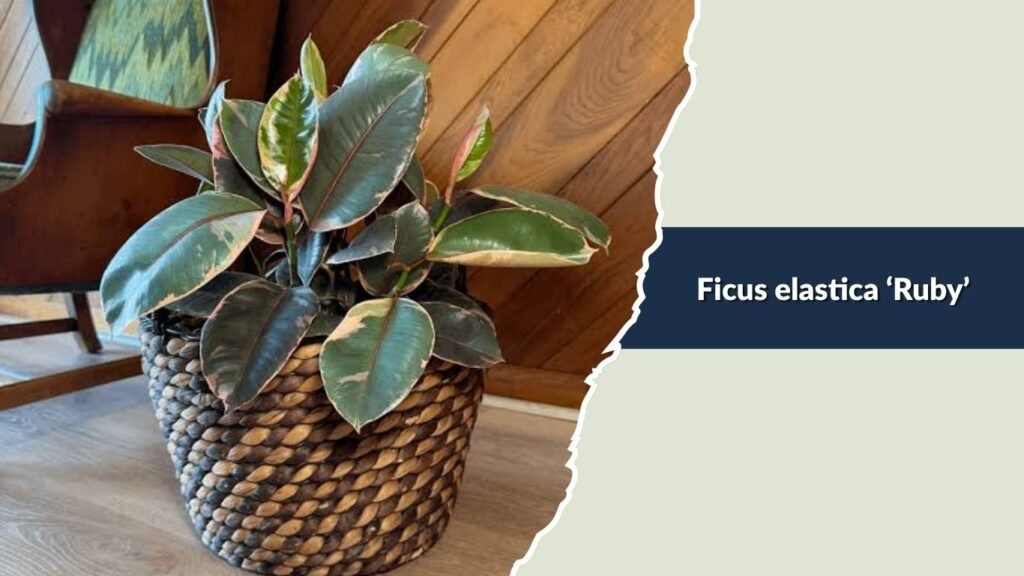
The Ruby Rubber Plant is a colorful indoor variety admired for its beautiful combination of pink, cream, and green foliage. Its broad, glossy leaves often display vibrant reddish-pink tones, making it an eye-catching addition to living rooms, bedrooms, and offices. This tropical houseplant grows upright and requires consistent care to maintain its attractive variegation and healthy appearance.
Identification
- Scientific Name: Ficus elastica ‘Ruby’
- Common Name: Ruby Rubber Plant
- Family: Moraceae
- Leaf Color: Pink, creamy white, light green, and dark green
- Leaf Shape: Broad, oval, thick, and glossy
- Indoor Height: Commonly 3–6 feet, although it can grow taller
- Growth Habit: Upright with colorful, variegated foliage
Ideal Indoor Growing Conditions
Ruby Rubber Plants thrive in bright, indirect sunlight, which helps maintain their vibrant pink coloration. Because their variegated leaves contain less chlorophyll than solid-green varieties, they generally require brighter conditions for healthy growth.Place the plant near an east-facing window or a bright south-facing window with filtered sunlight. Maintain temperatures between 65°F and 85°F (18°C–29°C) and protect it from cold drafts.Use a well-draining potting mixture containing perlite and organic matter. Moderate household humidity is usually sufficient, although the plant benefits from slightly higher humidity in dry indoor environments.
Watering and Maintenance Tips
Water your Ruby Rubber Plant when the top 1–2 inches of soil feel dry. Avoid keeping the soil continuously wet, as excessive moisture can lead to root rot.During spring and summer, apply a balanced liquid fertilizer according to the product instructions. Clean the leaves regularly using a soft, damp cloth to remove accumulated dust.Prune damaged or unwanted growth to maintain the plant’s shape. Rotate the container occasionally to encourage balanced development.
5. Ficus elastica ‘Abidjan’ (Abidjan Rubber Plant)
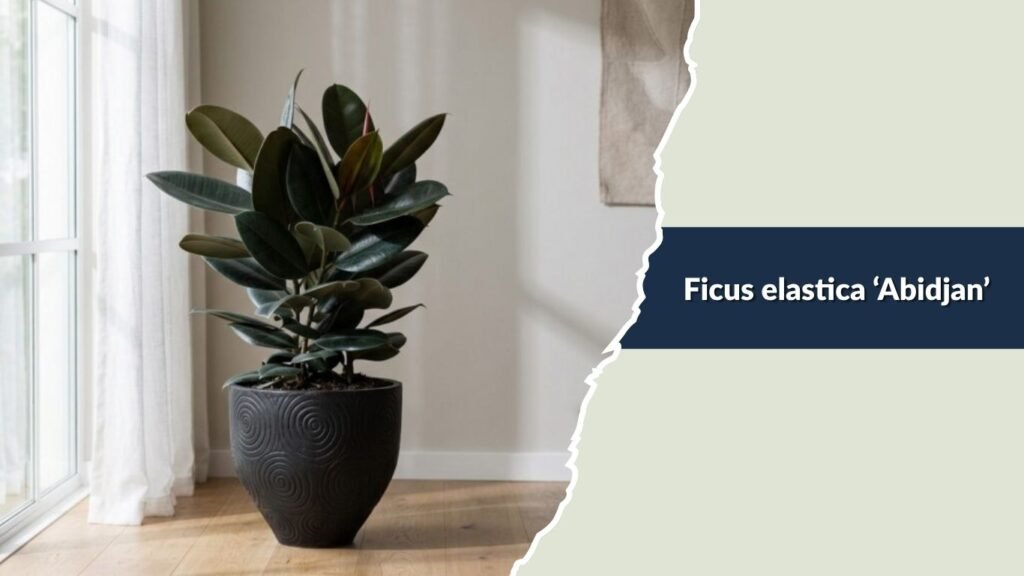
The Abidjan Rubber Plant is an elegant indoor variety recognized for its large, glossy, dark-green leaves with subtle reddish or bronze undertones. Its bold foliage and upright growth create a sophisticated tropical appearance, making it suitable for modern interiors. This rubber plant is relatively low-maintenance and can adapt to typical indoor conditions when provided with adequate light and proper watering.
Identification
- Scientific Name: Ficus elastica ‘Abidjan’
- Common Name: Abidjan Rubber Plant
- Family: Moraceae
- Leaf Color: Deep green with burgundy or bronze undertones
- Leaf Shape: Large, oval, leathery, and glossy
- Indoor Height: Commonly 4–8 feet, depending on available space and care
- Growth Habit: Upright with sturdy stems and broad foliage
Ideal Indoor Growing Conditions
Abidjan Rubber Plants grow best in bright, indirect sunlight but can tolerate moderate indoor lighting. Adequate light encourages healthy leaf development and helps maintain their rich foliage color.Position the plant near an east-facing window or in a bright room where sunlight is filtered through curtains. Maintain temperatures between 65°F and 85°F (18°C–29°C), avoiding sudden temperature changes and cold air.A well-draining potting mixture containing perlite, composted bark, or similar aerating materials supports healthy roots. Average household humidity is generally suitable.
Watering and Maintenance Tips
Water your Abidjan Rubber Plant when the upper 1–2 inches of soil become dry. Water thoroughly and allow any excess moisture to drain from the bottom of the pot.During the growing season, provide a balanced houseplant fertilizer at the recommended strength. Reduce feeding and watering frequency during winter when plant growth naturally slows.Wipe the large leaves regularly to remove dust and maintain their glossy appearance. Pruning can help control height and encourage a fuller shape.
6. Ficus elastica ‘Melany’ (Melany Rubber Plant)
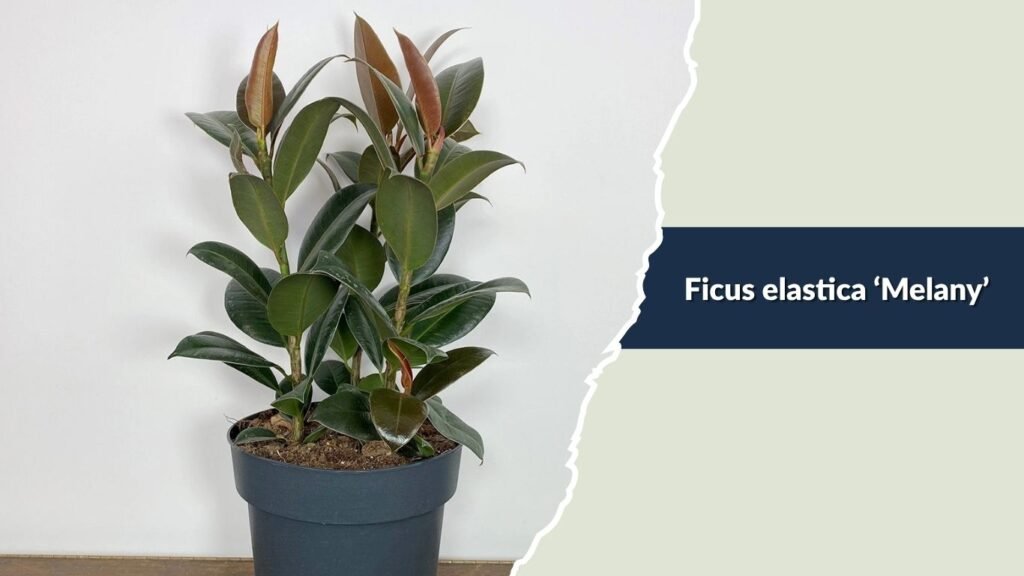
The Melany Rubber Plant is a compact and attractive rubber plant variety known for its glossy, dark-green leaves with subtle reddish undertones. Unlike larger rubber plant varieties, Melany typically develops a bushier, more compact appearance, making it suitable for apartments, bedrooms, and smaller indoor spaces. Its elegant foliage and manageable growth habit make it a practical choice for indoor gardeners seeking a low-maintenance tropical houseplant.
Identification
- Scientific Name: Ficus elastica ‘Melany’
- Common Name: Melany Rubber Plant
- Family: Moraceae
- Leaf Color: Dark green with bronze or reddish undertones
- Leaf Shape: Oval, thick, glossy, and slightly pointed
- Indoor Height: Commonly 2–4 feet, although mature plants can grow taller
- Growth Habit: Compact, upright, and relatively bushy
Ideal Indoor Growing Conditions
Melany Rubber Plants thrive in bright, indirect sunlight but can tolerate moderate indoor lighting. Place the plant near an east-facing window or several feet away from a bright south-facing window.Maintain temperatures between 65°F and 85°F (18°C–29°C) and protect the plant from cold drafts. Average household humidity is generally sufficient, although moderate humidity encourages healthy foliage.Use a loose, well-draining potting mixture containing perlite, composted bark, or other aerating materials. Good drainage helps prevent excessive moisture from accumulating around the roots.
Watering and Maintenance Tips
Water your Melany Rubber Plant when the top 1–2 inches of soil feel dry. Allow excess water to drain completely, and avoid leaving the container standing in water.Apply a balanced liquid houseplant fertilizer during spring and summer according to the manufacturer’s instructions. Reduce watering frequency during winter when growth slows.Clean the leaves occasionally using a soft, damp cloth to remove dust. Light pruning can help maintain its compact shape and encourage branching.
7. Ficus elastica ‘Decora’ (Decora Rubber Plant)
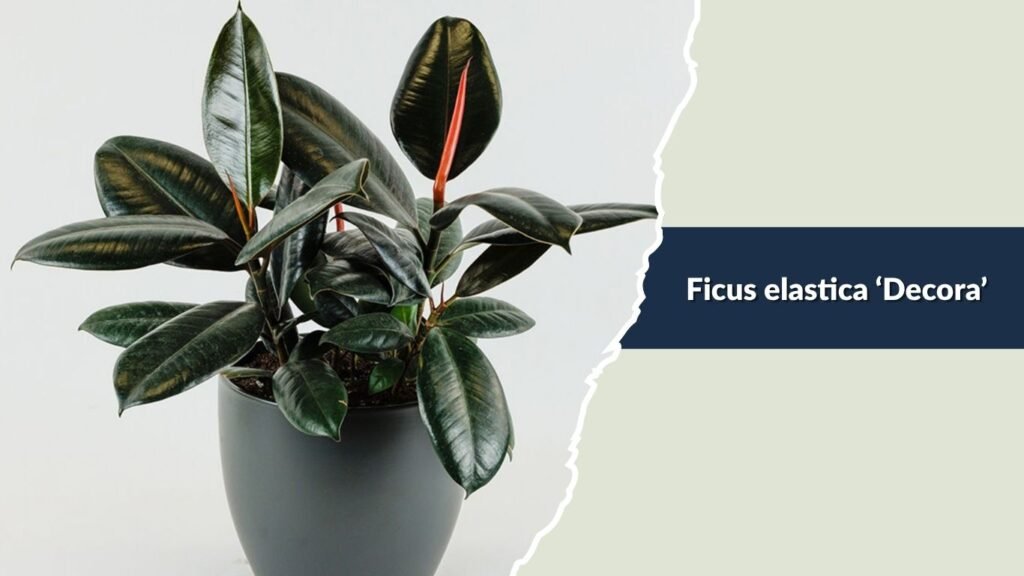
The Decora Rubber Plant is a classic indoor rubber plant variety admired for its large, glossy, deep-green leaves and strong upright growth. Its broad foliage creates a bold tropical appearance, making it an excellent decorative plant for living rooms, hallways, and spacious offices. With proper lighting, occasional pruning, and consistent watering, this beautiful houseplant can remain healthy and attractive for many years.
Identification
- Scientific Name: Ficus elastica ‘Decora’
- Common Name: Decora Rubber Plant
- Family: Moraceae
- Leaf Color: Deep green with a glossy surface
- Leaf Shape: Large, broad, oval, thick, and leathery
- Indoor Height: Commonly 4–8 feet, although it can grow taller
- Growth Habit: Upright with a sturdy central stem and spreading foliage
Ideal Indoor Growing Conditions
Decora Rubber Plants grow best in bright, indirect sunlight, although they can adapt to moderate indoor light. A location near an east-facing window or a bright window with sheer curtains provides favorable growing conditions.Maintain temperatures between 65°F and 85°F (18°C–29°C). Avoid exposing the plant to cold drafts, sudden temperature fluctuations, or direct airflow from heating and cooling systems.Choose a well-draining potting mixture containing perlite and organic matter. A container with drainage holes is essential for preventing waterlogged soil and supporting healthy root development.
Watering and Maintenance Tips
Water your Decora Rubber Plant when the upper 1–2 inches of soil become dry. Water thoroughly until excess moisture drains from the bottom of the container.During spring and summer, fertilize with a balanced houseplant fertilizer at the recommended dilution. Reduce feeding during cooler months when plant growth naturally slows.Wipe its large leaves regularly to remove dust and preserve their glossy appearance. Prune the growing tip when necessary to control height and encourage side branches.Rotate the pot occasionally to promote balanced growth and prevent the plant from leaning toward the nearest light source.
8. Ficus elastica ‘Doescheri’ (Doescheri Rubber Plant)
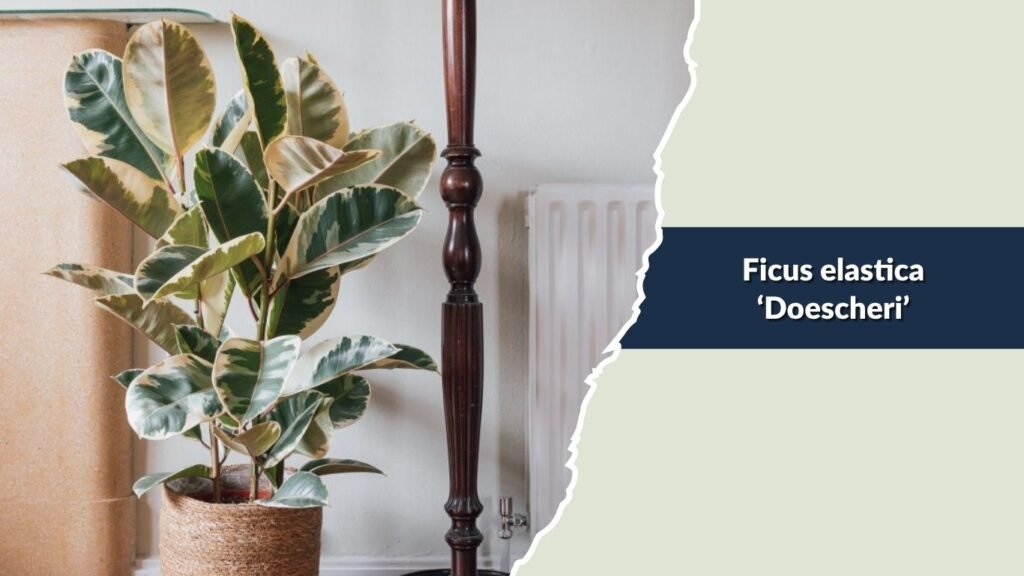
The Doescheri Rubber Plant is a beautiful variegated variety admired for its large, glossy leaves featuring a combination of creamy white, grayish-green, and dark-green patterns. Its decorative foliage creates a refreshing tropical appearance, making it an attractive addition to living rooms, offices, and bright indoor spaces. This rubber plant requires consistent lighting and proper watering to maintain its colorful leaves and healthy growth.
Identification
- Scientific Name: Ficus elastica ‘Doescheri’
- Common Name: Doescheri Rubber Plant
- Family: Moraceae
- Leaf Color: Creamy white, grayish-green, and dark green
- Leaf Shape: Broad, oval, thick, and glossy
- Indoor Height: Commonly 3–6 feet, although mature plants can grow taller
- Growth Habit: Upright with spreading, variegated foliage
Ideal Indoor Growing Conditions
Doescheri Rubber Plants thrive in bright, indirect sunlight, which helps maintain their attractive variegated foliage. Insufficient light can slow growth, while prolonged exposure to intense direct sunlight may scorch the lighter sections of the leaves.Position the plant near an east-facing window or a bright south-facing window with filtered sunlight. Maintain temperatures between 65°F and 85°F (18°C–29°C) and protect it from cold drafts.Use a well-draining potting mixture containing perlite, composted bark, and organic matter. Moderate indoor humidity supports healthy foliage development.
Watering and Maintenance Tips
Water your Doescheri Rubber Plant when the top 1–2 inches of soil feel dry. Allow excess water to drain completely to prevent root rot.During spring and summer, apply a balanced liquid houseplant fertilizer according to the manufacturer’s instructions. Reduce fertilizing during winter when growth naturally slows.Clean the leaves occasionally with a soft, damp cloth to remove dust. Prune damaged foliage and rotate the container regularly to encourage balanced growth.
9. Ficus elastica ‘Belize’ (Belize Rubber Plant)
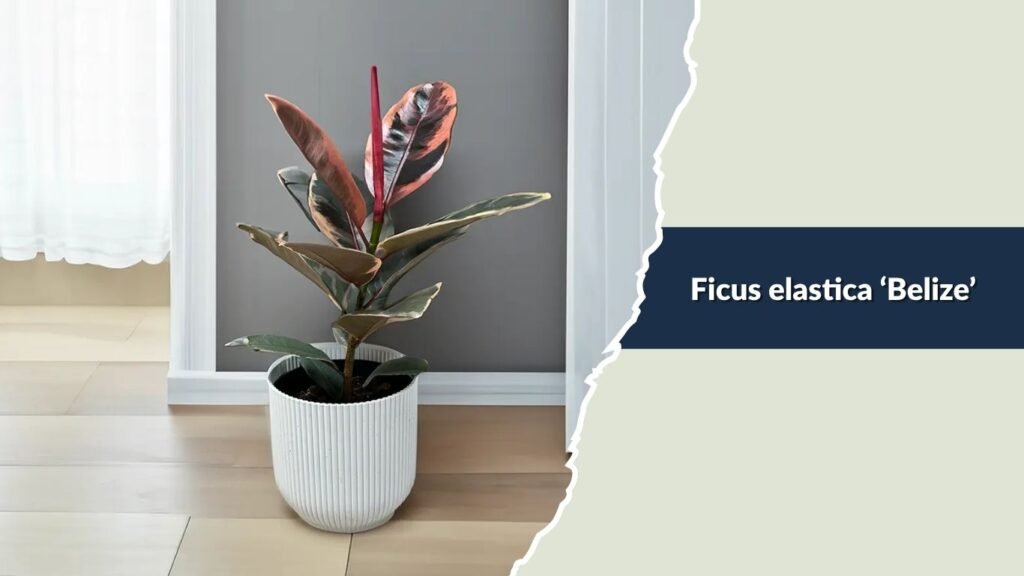
The Belize Rubber Plant is a colorful indoor variety recognized for its striking combination of pink, cream, and green foliage. Its broad, glossy leaves often display beautiful reddish-pink margins, creating an eye-catching tropical appearance. This attractive houseplant works well in bright living rooms, bedrooms, and offices, where its colorful foliage adds warmth and elegance to the surrounding décor.
Identification
- Scientific Name: Ficus elastica ‘Belize’
- Common Name: Belize Rubber Plant
- Family: Moraceae
- Leaf Color: Pink, cream, light green, and dark green
- Leaf Shape: Broad, oval, leathery, and glossy
- Indoor Height: Commonly 3–6 feet, depending on growing conditions
- Growth Habit: Upright with large, colorful variegated leaves
Ideal Indoor Growing Conditions
Belize Rubber Plants grow best in bright, indirect sunlight. Adequate lighting supports healthy development and helps maintain their colorful foliage. Low-light conditions may result in slower growth and less vibrant coloration.Place the plant near an east-facing window or a bright south-facing window with sheer curtains. Maintain temperatures between 65°F and 85°F (18°C–29°C), avoiding sudden temperature changes.Use a loose, well-draining potting mixture containing perlite and organic matter. Average household humidity is generally suitable, although moderate humidity can help prevent dry leaf edges.
Watering and Maintenance Tips
Water your Belize Rubber Plant when the upper 1–2 inches of soil become dry. Water thoroughly and allow excess moisture to escape through the drainage holes.Feed the plant with a balanced liquid fertilizer during spring and summer, following the recommended application instructions. Reduce watering and fertilizing during cooler months.Wipe the leaves gently with a damp cloth to remove dust and maintain their glossy appearance. Remove damaged leaves when necessary and rotate the pot occasionally for balanced growth.
10. Ficus elastica ‘Tricolor’ (Tricolor Rubber Plant)
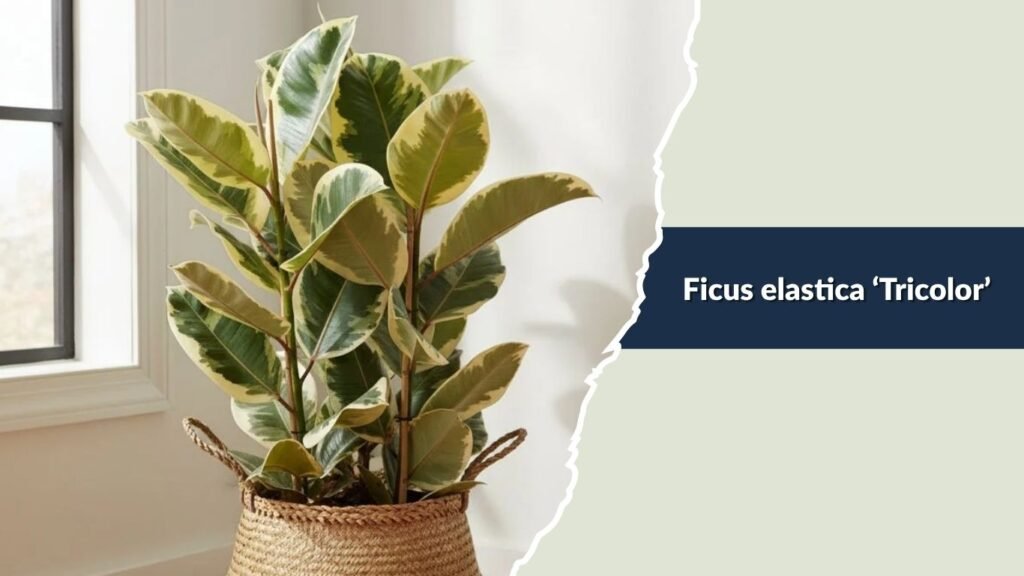
The Tricolor Rubber Plant is a stunning indoor variety known for its colorful foliage featuring beautiful shades of green, cream, and pink. Its broad, glossy leaves create an attractive tropical appearance, making it a wonderful addition to living rooms, bedrooms, and offices. This variegated rubber plant requires bright lighting and consistent care to maintain its vibrant leaf patterns and healthy growth.
Identification
- Scientific Name: Ficus elastica ‘Tricolor’
- Common Name: Tricolor Rubber Plant
- Family: Moraceae
- Leaf Color: Green, creamy white, and pink
- Leaf Shape: Broad, oval, thick, and glossy
- Indoor Height: Commonly 3–6 feet, although mature plants can grow taller
- Growth Habit: Upright with large, colorful variegated leaves
Ideal Indoor Growing Conditions
Tricolor Rubber Plants thrive in bright, indirect sunlight, which helps maintain their attractive foliage patterns. Because their variegated leaves contain less chlorophyll than solid-green varieties, they require adequate lighting for healthy growth.Place the plant near an east-facing window or a bright south-facing window with filtered sunlight. Maintain temperatures between 65°F and 85°F (18°C–29°C) and avoid sudden temperature changes.Use a well-draining potting mixture containing perlite, composted bark, and organic matter. Moderate household humidity generally supports healthy foliage development.
Watering and Maintenance Tips
Water your Tricolor Rubber Plant when the top 1–2 inches of soil become dry. Allow excess water to drain completely, as consistently wet soil can lead to root rot.During spring and summer, feed the plant with a balanced liquid houseplant fertilizer according to the manufacturer’s instructions. Reduce watering and fertilizing during winter when growth slows.Clean the leaves occasionally using a soft, damp cloth to remove dust. Rotate the container regularly to encourage balanced growth and prevent the plant from leaning toward the light.
11. Ficus elastica ‘Variegata’ (Variegated Rubber Plant)
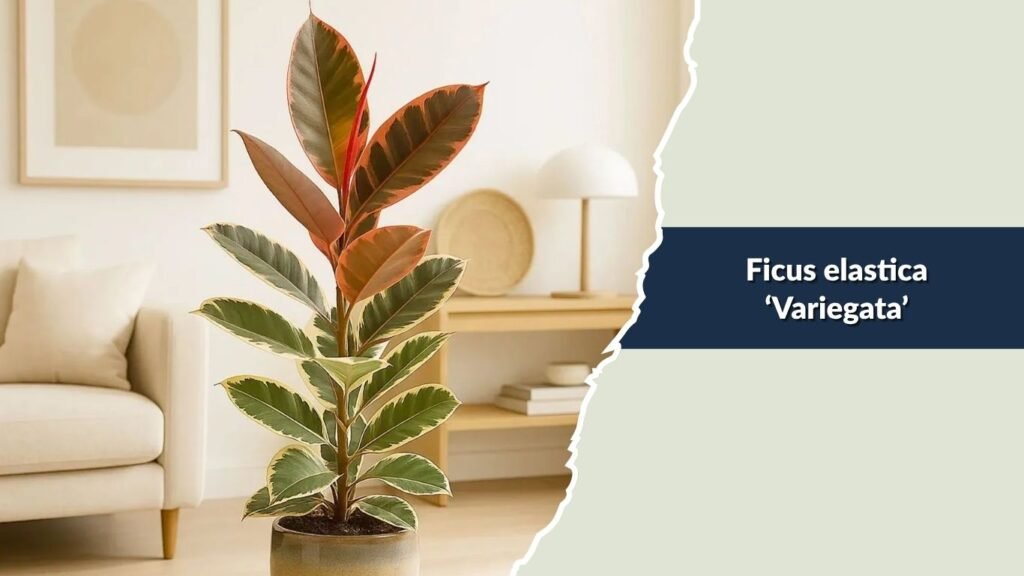
The Variegated Rubber Plant is an attractive indoor houseplant admired for its large, glossy leaves decorated with creamy white and green patterns. Its distinctive foliage adds brightness and natural beauty to indoor spaces, making it a popular choice for tropical-themed interiors. Although it requires slightly more light than solid-green rubber plants, this variety is relatively easy to maintain with appropriate watering and growing conditions.
Identification
- Scientific Name: Ficus elastica ‘Variegata’
- Common Name: Variegated Rubber Plant
- Family: Moraceae
- Leaf Color: Dark green, light green, and creamy white
- Leaf Shape: Broad, oval, leathery, and glossy
- Indoor Height: Commonly 3–6 feet, depending on growing conditions
- Growth Habit: Upright with broad, variegated foliage
Ideal Indoor Growing Conditions
Variegated Rubber Plants grow best in bright, indirect sunlight. Adequate lighting helps support healthy leaf development and maintain their attractive cream-and-green patterns. Prolonged low-light conditions can slow growth, while harsh direct sunlight may damage the lighter leaf sections.Position the plant near an east-facing window or a bright window with sheer curtains. Maintain indoor temperatures between 65°F and 85°F (18°C–29°C).Choose a loose, well-draining potting mixture containing perlite and organic matter. Average household humidity is usually suitable, although protecting the plant from dry heating vents helps prevent leaf-edge damage.
Watering and Maintenance Tips
Water your Variegated Rubber Plant when the upper 1–2 inches of soil feel dry. Water thoroughly and allow excess moisture to escape through the drainage holes.Apply a balanced liquid fertilizer during spring and summer, following the manufacturer’s recommended dosage. Reduce feeding during the winter months when plant growth naturally slows.Gently clean the leaves with a damp cloth to remove dust and maintain their glossy appearance. Remove damaged foliage when necessary and prune excessive growth to control the plant’s indoor size.
12. Ficus elastica ‘Yellow Gem’ (Yellow Gem Rubber Plant)
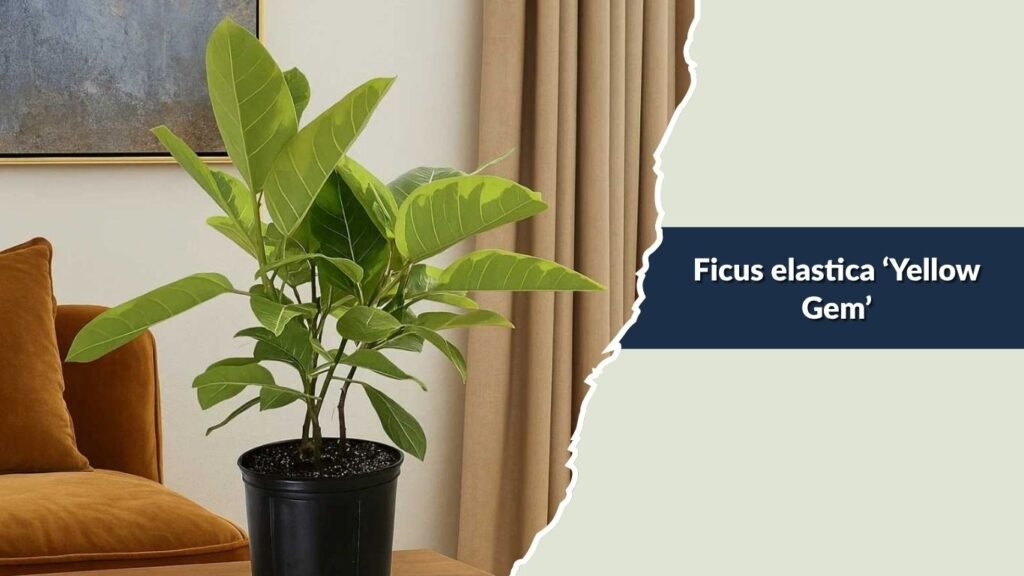
The Yellow Gem Rubber Plant is an attractive indoor variety admired for its bright green foliage with golden-yellow variegation. Its large, glossy leaves create a refreshing tropical appearance, making it a beautiful addition to living rooms, bedrooms, and offices. This decorative rubber plant grows upright and requires consistent lighting, proper watering, and occasional maintenance to support healthy development.
Identification
- Scientific Name: Ficus elastica ‘Yellow Gem’
- Common Name: Yellow Gem Rubber Plant
- Family: Moraceae
- Leaf Color: Green with yellow or golden variegation
- Leaf Shape: Broad, oval, thick, and glossy
- Indoor Height: Approximately 3–6 feet, depending on growing conditions
- Growth Habit: Upright with large, colorful foliage
Ideal Indoor Growing Conditions
Yellow Gem Rubber Plants grow best in bright, indirect sunlight, which supports healthy foliage and helps maintain their attractive yellow coloring. Insufficient light may slow growth, while prolonged exposure to intense direct sunlight can damage the leaves.Position the plant near an east-facing window or a bright south-facing window with filtered sunlight. Maintain temperatures between 65°F and 85°F (18°C–29°C), avoiding cold drafts and sudden temperature changes.Use a well-draining potting mixture containing perlite, composted bark, and organic matter. Moderate household humidity generally supports healthy leaf development.
Watering and Maintenance Tips
Water your Yellow Gem Rubber Plant when the top 1–2 inches of soil feel dry. Allow excess water to drain completely, as consistently wet soil can cause root rot.During spring and summer, apply a balanced liquid houseplant fertilizer according to the manufacturer’s instructions. Reduce fertilizing during winter when growth naturally slows.Clean the leaves occasionally with a soft, damp cloth to remove dust. Rotate the container regularly to encourage balanced growth and maintain an attractive appearance.
13. Ficus elastica ‘Shivereana’ (Shivereana Rubber Plant)
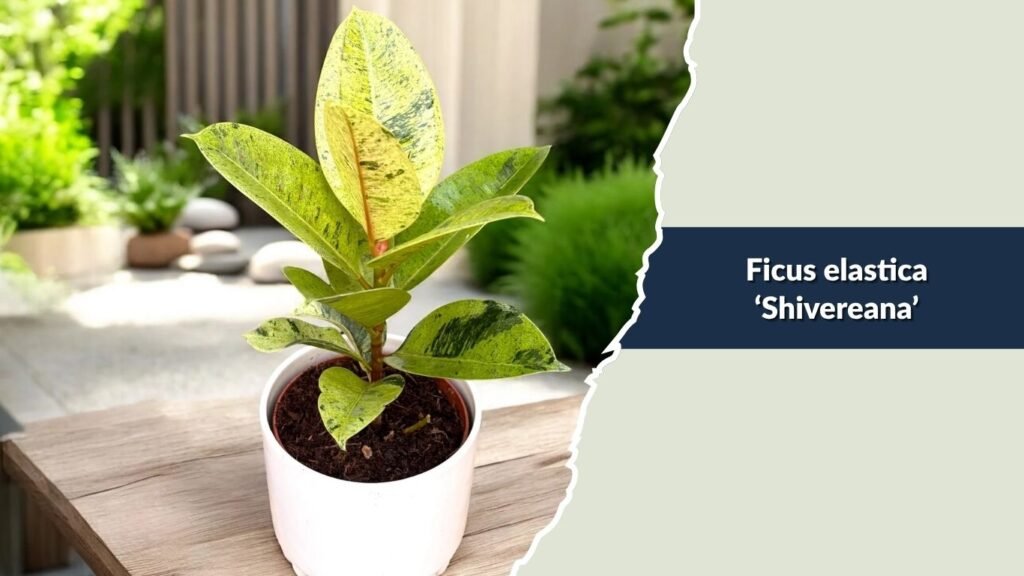
The Shivereana Rubber Plant is a distinctive indoor variety recognized for its beautiful lime-green leaves decorated with dark-green speckles and irregular patterns. Its unusual foliage makes it an eye-catching addition to modern homes, offices, and indoor plant collections. Compared with traditional dark-green rubber plants, Shivereana offers a lighter, more colorful appearance while maintaining the familiar upright growth habit of Ficus elastica.
Identification
- Scientific Name: Ficus elastica ‘Shivereana’
- Common Name: Shivereana Rubber Plant
- Family: Moraceae
- Leaf Color: Lime green, pale green, and dark-green speckles
- Leaf Shape: Broad, oval, thick, and slightly pointed
- Indoor Height: Commonly 3–6 feet, although mature plants may grow taller
- Growth Habit: Upright with patterned, variegated foliage
Ideal Indoor Growing Conditions
Shivereana Rubber Plants thrive in bright, indirect sunlight, which supports healthy growth and maintains their distinctive speckled foliage. Low-light conditions can slow development, while harsh afternoon sunlight may scorch the lighter sections of the leaves.Place the plant near an east-facing window or a bright south-facing window with sheer curtains. Maintain temperatures between 65°F and 85°F (18°C–29°C) and protect it from cold drafts.Choose a loose, well-draining potting mixture containing perlite, orchid bark, and organic matter. Average household humidity is generally suitable, although moderate humidity can help prevent dry leaf edges.
Watering and Maintenance Tips
Water your Shivereana Rubber Plant when the upper 1–2 inches of soil become dry. Water thoroughly and allow excess moisture to drain through the bottom of the container.During the active growing season, feed the plant with a balanced liquid houseplant fertilizer at the recommended dilution. Reduce watering and fertilizing during winter when growth slows.Wipe the leaves gently with a damp cloth to remove dust and maintain their natural appearance. Prune damaged foliage when necessary and rotate the pot occasionally to encourage even growth.
14. Ficus elastica ‘Black Prince’ (Black Prince Rubber Plant)
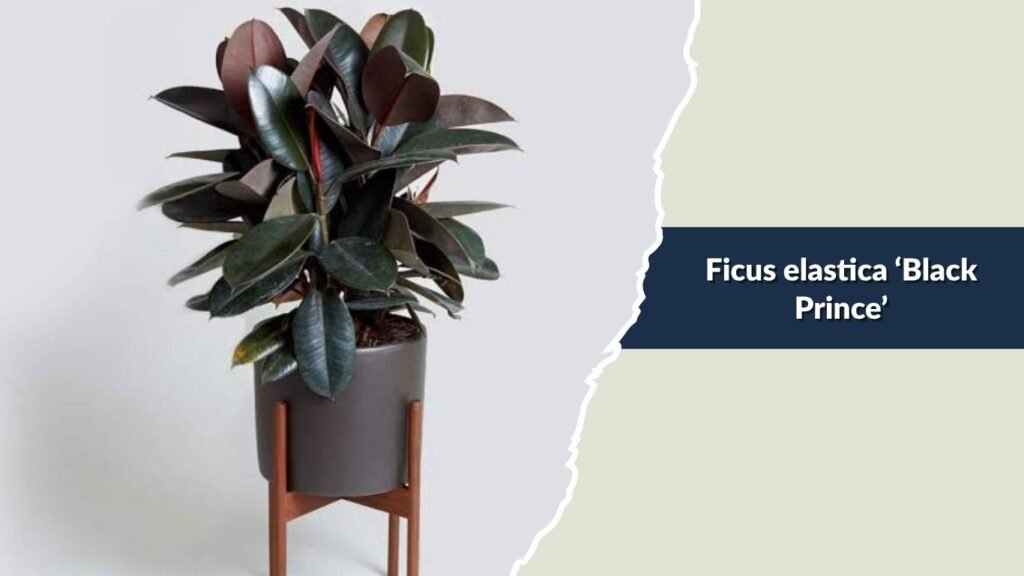
The Black Prince Rubber Plant is a striking indoor variety admired for its large, glossy leaves that develop deep green, burgundy, and almost black tones. Its dramatic foliage creates a sophisticated tropical appearance, making it an attractive addition to living rooms, offices, and modern indoor spaces. This rubber plant grows upright and requires relatively simple maintenance when provided with adequate lighting and proper watering.
Identification
- Scientific Name: Ficus elastica ‘Black Prince’
- Common Name: Black Prince Rubber Plant
- Family: Moraceae
- Leaf Color: Very dark green, deep burgundy, and nearly black
- Leaf Shape: Broad, oval, thick, and glossy
- Indoor Height: Commonly 4–8 feet, depending on growing conditions
- Growth Habit: Upright with sturdy stems and large, dark foliage
Ideal Indoor Growing Conditions
Black Prince Rubber Plants thrive in bright, indirect sunlight, which supports healthy growth and maintains their rich foliage color. They can tolerate moderate indoor lighting, although insufficient light may result in slower development.Position the plant near an east-facing window or a bright south-facing window with filtered sunlight. Maintain temperatures between 65°F and 85°F (18°C–29°C) and protect it from cold drafts.Use a well-draining potting mixture containing perlite, composted bark, and organic matter. Average household humidity is generally suitable, making this plant adaptable to most indoor environments.
Watering and Maintenance Tips
Water your Black Prince Rubber Plant when the top 1–2 inches of soil feel dry. Water thoroughly and allow excess moisture to drain completely to prevent root rot.During spring and summer, apply a balanced liquid houseplant fertilizer according to the manufacturer’s instructions. Reduce fertilizing during winter when plant growth naturally slows.Clean the leaves occasionally with a soft, damp cloth to remove dust and maintain their glossy appearance. Prune excessive growth when necessary to control height and encourage branching.
15. Ficus elastica ‘Sofia’ (Sofia Rubber Plant)
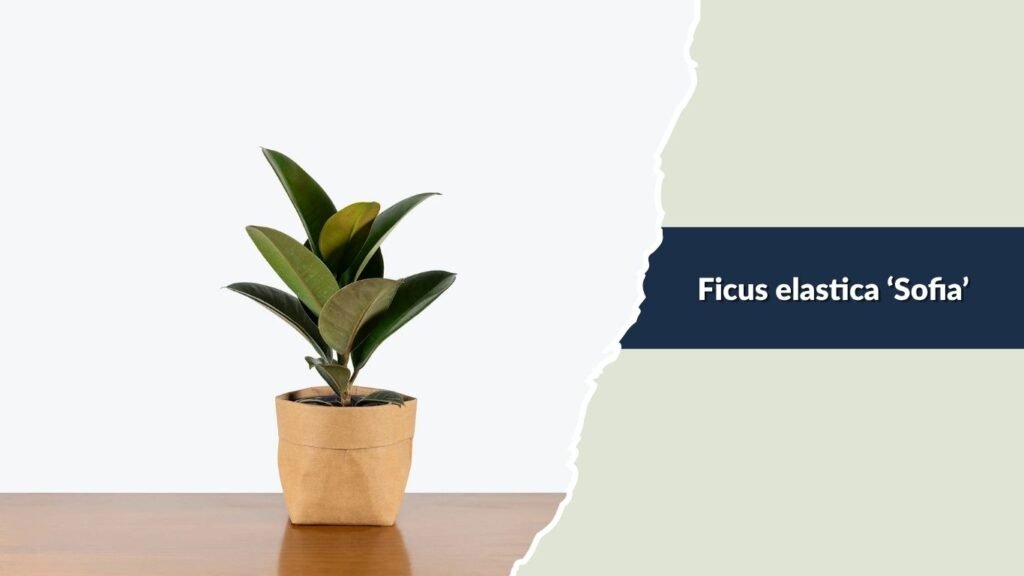
The Sofia Rubber Plant is an attractive indoor variety known for its lush, glossy green leaves and elegant upright growth. Its broad foliage creates a refreshing tropical atmosphere, making it suitable for bedrooms, living rooms, and office environments. With proper lighting, balanced watering, and occasional pruning, this rubber plant can develop into a beautiful indoor decorative feature.
Identification
- Scientific Name: Ficus elastica ‘Sofia’
- Common Name: Sofia Rubber Plant
- Family: Moraceae
- Leaf Color: Rich green with a glossy finish
- Leaf Shape: Oval, broad, thick, and leathery
- Indoor Height: Approximately 3–6 feet, although mature plants may grow taller
- Growth Habit: Upright with dense green foliage
Ideal Indoor Growing Conditions
Sofia Rubber Plants grow best in bright, indirect sunlight but can adapt to moderate indoor lighting. Adequate light encourages healthy leaf development and helps maintain their attractive green coloration.Place the plant near an east-facing window or in a bright room with filtered sunlight. Maintain temperatures between 65°F and 85°F (18°C–29°C), avoiding sudden temperature changes and cold airflow.Choose a loose, well-draining potting mixture containing perlite and organic matter. A container with drainage holes helps prevent waterlogging and supports healthy root development.
Watering and Maintenance Tips
Water your Sofia Rubber Plant when the upper 1–2 inches of soil become dry. Allow excess water to escape through the drainage holes and avoid leaving the pot standing in water.Apply a balanced liquid fertilizer during spring and summer according to the manufacturer’s recommended dosage. Reduce watering and fertilizing during cooler months when growth slows.Wipe the leaves regularly with a damp cloth to remove dust and preserve their glossy appearance. Light pruning can help maintain a balanced shape and encourage new growth.
16. Ficus elastica ‘Moonshine’ (Moonshine Rubber Plant)
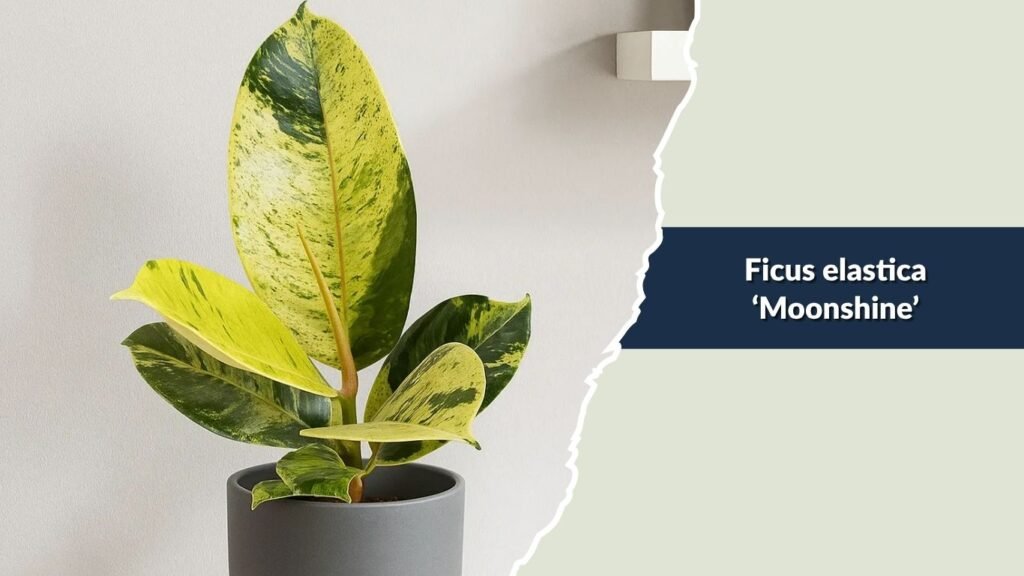
The Moonshine Rubber Plant is an attractive indoor variety known for its pale green foliage and elegant tropical appearance. Its broad, glossy leaves create a soft, refreshing look that complements modern living rooms, bedrooms, and offices. This decorative rubber plant grows upright and requires consistent lighting, proper watering, and occasional maintenance to support healthy leaf development.
Identification
- Scientific Name: Ficus elastica ‘Moonshine’
- Common Name: Moonshine Rubber Plant
- Family: Moraceae
- Leaf Color: Light green, pale green, and creamy tones
- Leaf Shape: Broad, oval, thick, and glossy
- Indoor Height: Approximately 3–6 feet, depending on growing conditions
- Growth Habit: Upright with broad, decorative foliage
Ideal Indoor Growing Conditions
Moonshine Rubber Plants grow best in bright, indirect sunlight, which encourages healthy leaf development and supports their attractive light-colored foliage. Insufficient lighting can slow growth, while prolonged exposure to harsh direct sunlight may cause leaf damage.Position the plant near an east-facing window or a bright south-facing window with filtered sunlight. Maintain temperatures between 65°F and 85°F (18°C–29°C), avoiding sudden temperature changes.Use a well-draining potting mixture containing perlite, composted bark, and organic matter. Average household humidity is generally suitable, although moderate humidity can help prevent dry leaf edges.
Watering and Maintenance Tips
Water your Moonshine Rubber Plant when the upper 1–2 inches of soil feel dry. Allow excess moisture to drain completely, as consistently wet soil can damage the roots.During spring and summer, apply a balanced liquid houseplant fertilizer according to the manufacturer’s instructions. Reduce fertilizing during winter when plant growth naturally slows.Clean the leaves occasionally with a soft, damp cloth to remove dust. Rotate the container regularly to encourage balanced growth and maintain its attractive appearance.
17. Ficus elastica ‘Red Ruby’ (Red Ruby Rubber Plant)
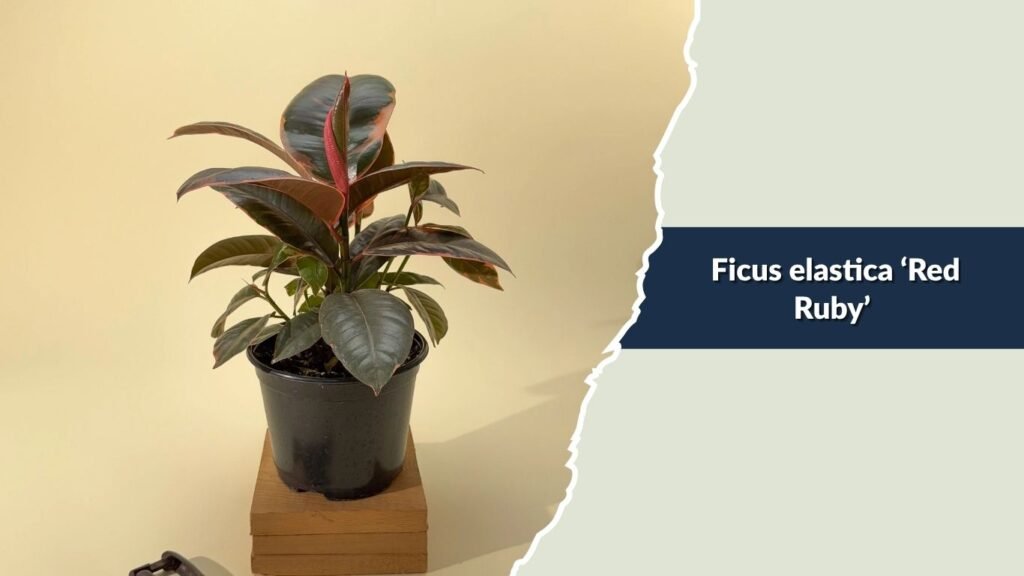
The Red Ruby Rubber Plant is a colorful indoor rubber plant recognized for its stunning combination of reddish-pink, creamy white, and green foliage. Its large, glossy leaves create a vibrant tropical appearance, making it a beautiful decorative feature for living rooms, offices, and bright indoor corners. With adequate lighting and proper care, this variegated rubber plant can maintain its attractive coloration throughout the growing season.
Identification
- Scientific Name: Ficus elastica ‘Red Ruby’
- Common Name: Red Ruby Rubber Plant
- Family: Moraceae
- Leaf Color: Reddish-pink, cream, light green, and dark green
- Leaf Shape: Broad, oval, leathery, and glossy
- Indoor Height: Commonly 3–6 feet, although mature plants can grow taller
- Growth Habit: Upright with colorful, variegated foliage
Ideal Indoor Growing Conditions
Red Ruby Rubber Plants thrive in bright, indirect sunlight, which supports healthy growth and helps maintain their vibrant pink and red coloration. Because their variegated foliage contains less chlorophyll than solid-green leaves, adequate lighting is particularly important.Place the plant near an east-facing window or a bright south-facing window with sheer curtains. Maintain temperatures between 65°F and 85°F (18°C–29°C) and protect it from cold drafts.Choose a loose, well-draining potting mixture containing perlite, orchid bark, and organic matter. Moderate household humidity supports healthy leaf development and helps prevent excessive dryness.
Watering and Maintenance Tips
Water your Red Ruby Rubber Plant when the top 1–2 inches of soil become dry. Water thoroughly and allow excess moisture to escape through the drainage holes.During the active growing season, feed the plant with a balanced liquid fertilizer at the recommended dilution. Reduce watering and fertilizing during winter when growth naturally slows.Gently wipe the leaves with a soft, damp cloth to remove dust and maintain their glossy appearance. Remove damaged foliage when necessary and rotate the pot occasionally for balanced growth.
18. Ficus elastica ‘Schrijveriana’ (Schrijveriana Rubber Plant)
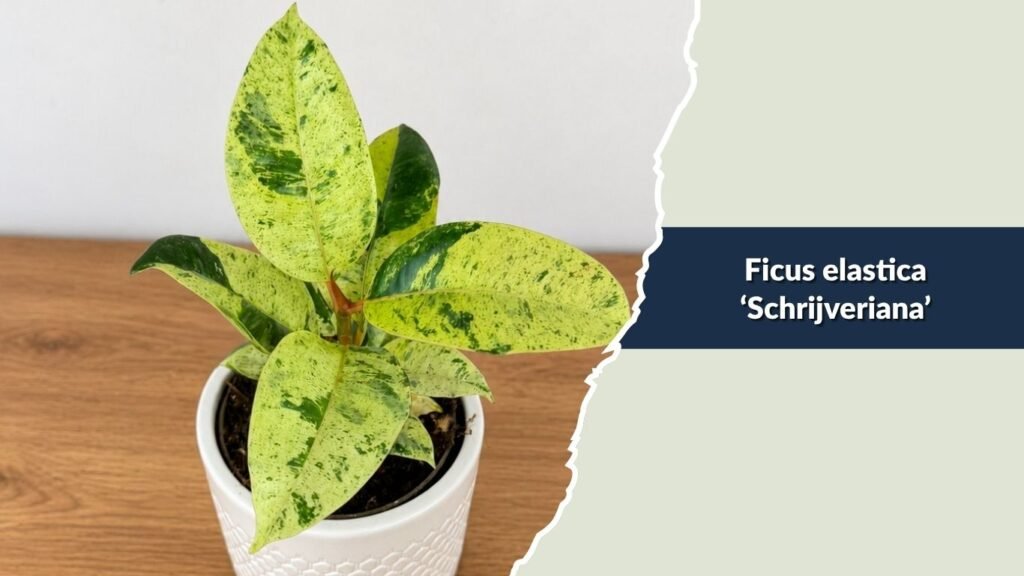
The Schrijveriana Rubber Plant is an attractive variegated rubber plant admired for its unusual foliage featuring shades of pale green, cream, and darker green markings. Its broad, glossy leaves create a beautiful tropical appearance, making it an excellent decorative choice for living rooms, bedrooms, and bright indoor spaces. This variety requires consistent lighting and proper watering to maintain healthy growth and attractive foliage.
Identification
- Scientific Name: Ficus elastica ‘Schrijveriana’
- Common Name: Schrijveriana Rubber Plant
- Family: Moraceae
- Leaf Color: Pale green, creamy yellow, and dark green
- Leaf Shape: Broad, oval, thick, and glossy
- Indoor Height: Commonly 3–6 feet, although mature plants may grow taller
- Growth Habit: Upright with large, variegated leaves
Ideal Indoor Growing Conditions
Schrijveriana Rubber Plants thrive in bright, indirect sunlight, which supports healthy development and helps maintain their attractive leaf patterns. Insufficient light can slow growth, while prolonged exposure to intense sunlight may scorch the lighter portions of the leaves.Position the plant near an east-facing window or a bright south-facing window with filtered sunlight. Maintain temperatures between 65°F and 85°F (18°C–29°C) and protect it from cold drafts.Use a well-draining potting mixture containing perlite, composted bark, and organic matter. Moderate household humidity generally supports healthy foliage development.
Watering and Maintenance Tips
Water your Schrijveriana Rubber Plant when the upper 1–2 inches of soil become dry. Allow excess moisture to drain completely to prevent waterlogging and root rot.During spring and summer, apply a balanced liquid houseplant fertilizer according to the manufacturer’s instructions. Reduce fertilizing during winter when growth slows.Clean the leaves occasionally with a soft, damp cloth to remove dust. Remove damaged foliage when necessary and rotate the container regularly to encourage balanced growth.
19. Ficus elastica ‘Sylvie’ (Sylvie Rubber Plant)
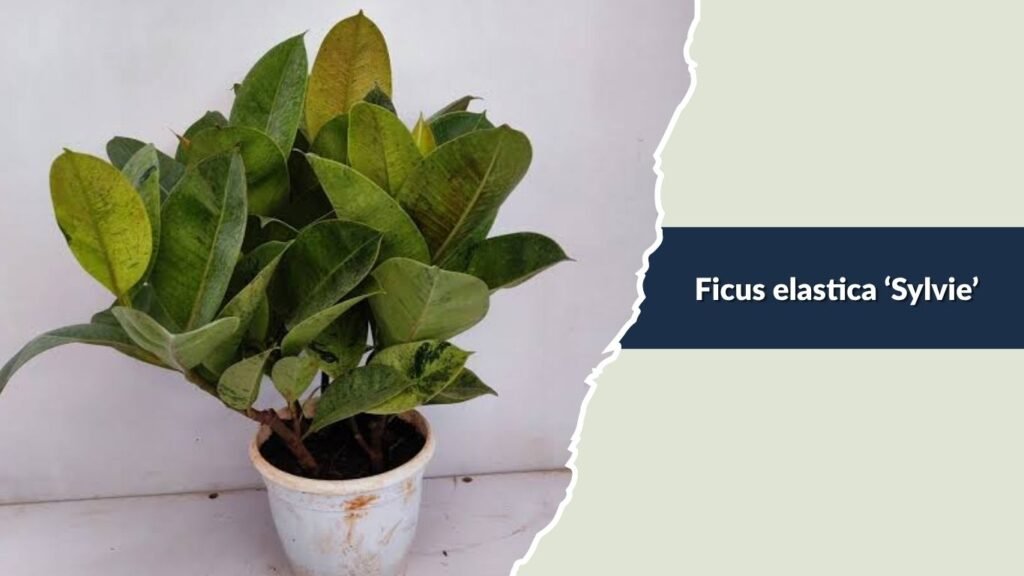
The Sylvie Rubber Plant is a decorative indoor variety known for its beautiful green foliage accented with creamy white variegation. Its broad, glossy leaves create an elegant tropical appearance, making it a lovely addition to modern homes, offices, and indoor plant collections. With suitable lighting, proper watering, and occasional maintenance, this attractive rubber plant can develop into a healthy indoor specimen.
Identification
- Scientific Name: Ficus elastica ‘Sylvie’
- Common Name: Sylvie Rubber Plant
- Family: Moraceae
- Leaf Color: Green with creamy white or pale green variegation
- Leaf Shape: Oval, broad, leathery, and glossy
- Indoor Height: Approximately 3–6 feet, depending on growing conditions
- Growth Habit: Upright with colorful, variegated foliage
Ideal Indoor Growing Conditions
Sylvie Rubber Plants grow best in bright, indirect sunlight, which encourages healthy foliage development and supports their attractive variegation. Low-light conditions may result in slower growth, while harsh direct sunlight can damage the lighter leaf sections.Place the plant near an east-facing window or a bright window with sheer curtains. Maintain temperatures between 65°F and 85°F (18°C–29°C), avoiding sudden temperature changes.Choose a loose, well-draining potting mixture containing perlite and organic matter. Average household humidity is generally suitable, although protecting the plant from dry heating vents helps prevent leaf-edge damage.
Watering and Maintenance Tips
Water your Sylvie Rubber Plant when the top 1–2 inches of soil feel dry. Water thoroughly and allow excess moisture to drain through the container’s drainage holes.Apply a balanced liquid fertilizer during spring and summer according to the manufacturer’s recommended dosage. Reduce feeding during winter when plant growth naturally slows.Gently wipe the leaves with a damp cloth to remove dust and maintain their glossy appearance. Prune damaged foliage when necessary and rotate the pot occasionally for balanced growth.
20. Ficus elastica ‘Emerald’ (Emerald Rubber Plant)
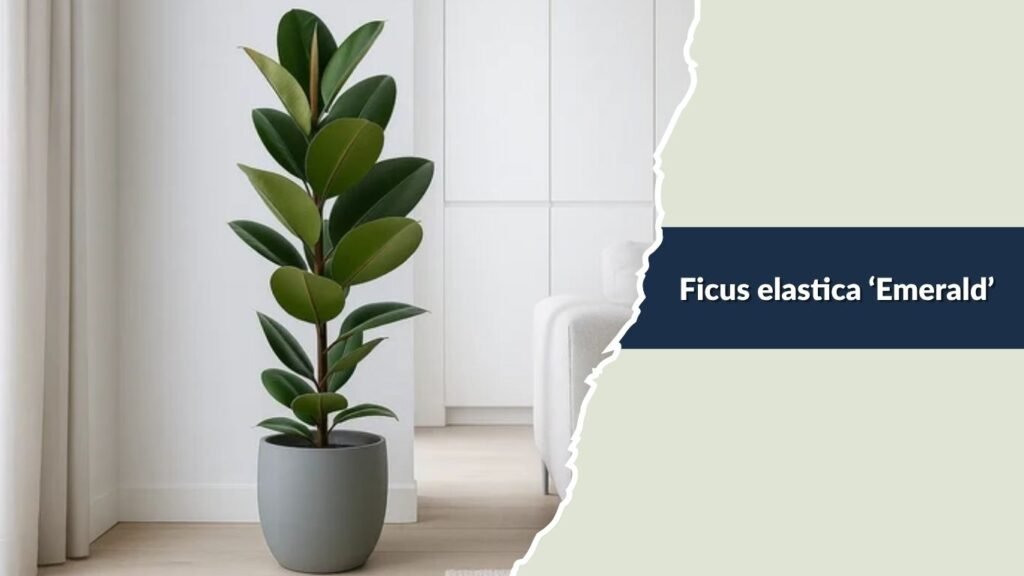
The Emerald Rubber Plant is an attractive indoor rubber plant valued for its lush green foliage and elegant upright growth. Its broad, glossy leaves bring a refreshing tropical atmosphere to living rooms, bedrooms, and office spaces. This decorative houseplant is relatively easy to maintain and can adapt to typical indoor environments when provided with adequate light, proper watering, and well-draining soil.
Identification
- Scientific Name: Ficus elastica ‘Emerald’
- Common Name: Emerald Rubber Plant
- Family: Moraceae
- Leaf Color: Rich green to deep emerald green
- Leaf Shape: Broad, oval, thick, and glossy
- Indoor Height: Approximately 3–6 feet, although mature plants may grow taller
- Growth Habit: Upright with sturdy stems and dense green foliage
Ideal Indoor Growing Conditions
Emerald Rubber Plants thrive in bright, indirect sunlight but can tolerate moderate indoor lighting. Adequate light encourages strong growth and maintains the rich green appearance of their leaves.Position the plant near an east-facing window or in a bright room with filtered sunlight. Maintain temperatures between 65°F and 85°F (18°C–29°C) and protect it from cold drafts.Use a well-draining potting mixture containing perlite, composted bark, and organic matter. Average household humidity generally provides suitable growing conditions.
Watering and Maintenance Tips
Water your Emerald Rubber Plant when the upper 1–2 inches of soil feel dry. Allow excess water to drain completely to prevent soggy soil and root rot.During spring and summer, apply a balanced liquid houseplant fertilizer according to the manufacturer’s instructions. Reduce watering and feeding during winter when growth naturally slows.Clean the leaves regularly with a soft, damp cloth to remove dust and preserve their glossy appearance. Prune excessive growth when necessary to maintain the desired indoor height and shape.
FAQs
1. Which Type of Rubber Plant Is Best for Indoor Growing?
Ficus elastica ‘Robusta,’ ‘Burgundy,’ and ‘Tineke’ are excellent choices for indoor growing. Robusta is particularly suitable for beginners because of its attractive green foliage and relatively simple care requirements. Burgundy offers dramatic dark leaves, while Tineke adds beautiful cream-and-green variegation to bright indoor spaces.
2. How Often Should I Water My Indoor Rubber Plant?
Water your indoor rubber plant when the top 1–2 inches of soil feel dry. Most rubber plants need more frequent watering during spring and summer and less during winter. Always check soil moisture before watering, as excessive moisture can cause yellow leaves and root rot.
3. Do Rubber Plants Need Direct Sunlight?
Rubber plants generally prefer bright, indirect sunlight rather than prolonged exposure to intense direct sunlight. Variegated varieties like Ruby, Tineke, and Shivereana require sufficient light to support healthy growth and maintain their colorful foliage. Too much harsh afternoon sunlight can scorch their leaves.
4. How Big Do Rubber Plants Grow Indoors?
Most rubber plants can grow approximately 3–8 feet tall indoors, depending on the variety, available space, and growing conditions. Some mature specimens can become considerably taller. Regular pruning helps control their height, encourages branching, and maintains a manageable size for indoor decoration.
5. Are Rubber Plants Toxic to Cats and Dogs?
Yes, rubber plants (Ficus elastica) are toxic to cats and dogs. Their milky sap contains irritating substances that can cause drooling, vomiting, and mouth irritation if chewed or swallowed. The sap may also irritate skin. Keep rubber plants out of reach of pets and contact a veterinarian if your pet ingests any part of the plant.