
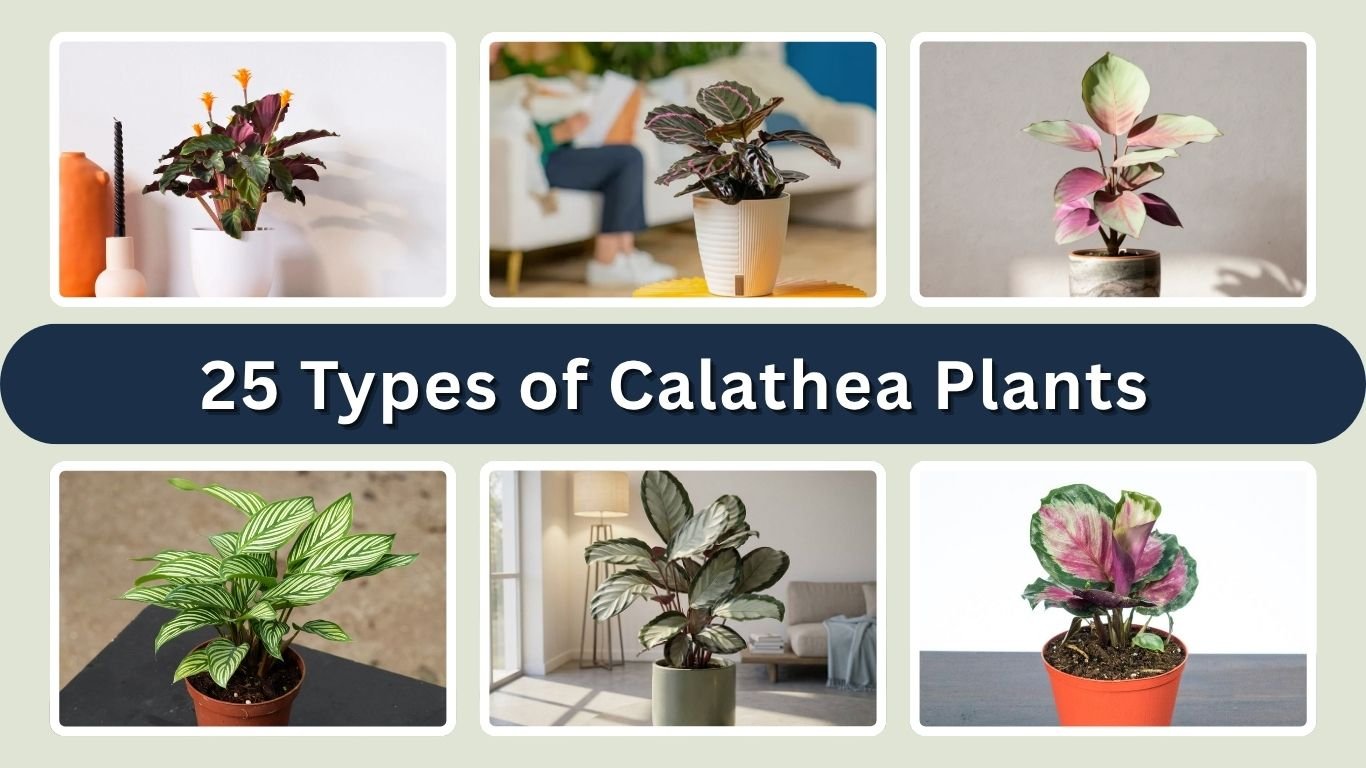
Calathea plants can transform any indoor space into a beautiful tropical retreat with their colorful patterns, elegant leaves, and unique textures. From the stunning Calathea Orbifolia to the vibrant White Fusion, each variety offers something special. In this guide, explore 25 types of Calathea plants, their identifying features, ideal growing conditions, and essential care tips to help you choose your favorites.
1. Calathea Orbifolia
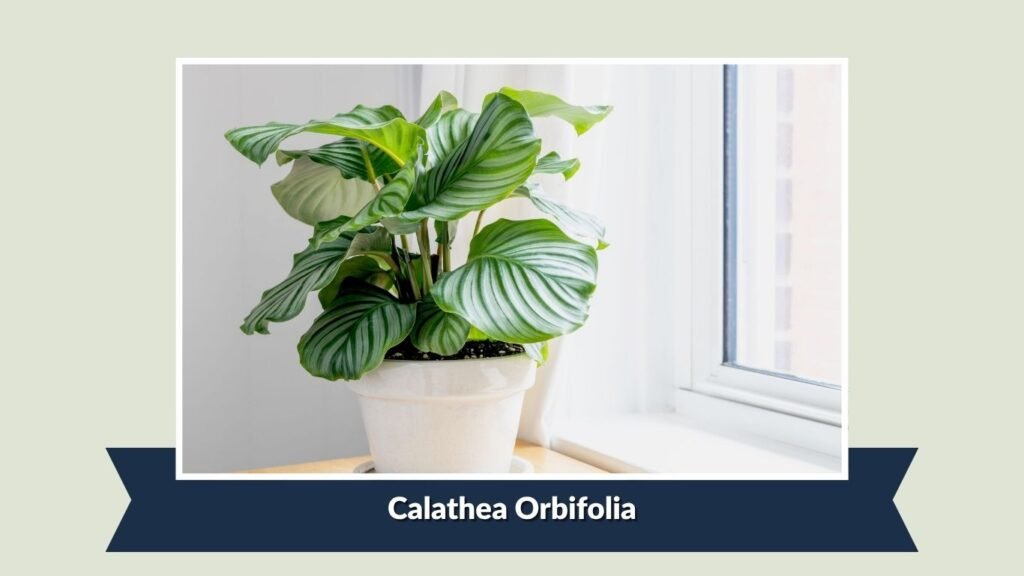
Calathea Orbifolia (Goeppertia orbifolia) is a beautiful tropical houseplant known for its large, rounded leaves featuring striking silver-green stripes. Native to Bolivia, this Calathea variety is highly valued for its elegant foliage and lush appearance. Its broad leaves make it an attractive choice for indoor gardens, living rooms, and decorative plant displays. With proper humidity, indirect sunlight, and consistent watering, Calathea Orbifolia can thrive indoors.
Identification
- Scientific Name: Goeppertia orbifolia
- Common Name: Calathea Orbifolia
- Plant Family: Marantaceae
- Native Region: Bolivia
- Leaf Shape: Large, broad, and rounded
- Leaf Color: Light green with silvery-green stripes
- Mature Height: Approximately 2–3 feet indoors
- Growth Habit: Upright, clumping tropical perennial
Ideal Indoor Growing Conditions
Calathea Orbifolia grows best in bright, indirect sunlight. Direct sunlight can burn its delicate leaves, causing brown patches and fading patterns. Place the plant near an east-facing window or a few feet away from a bright window with filtered light.The ideal temperature ranges between 65°F and 80°F (18°C–27°C). This tropical plant prefers humidity levels around 60% or higher. A humidifier can help maintain moisture in dry indoor environments. Use a loose, nutrient-rich potting mix that retains some moisture while allowing excess water to drain.
Watering and Maintenance
Calathea Orbifolia prefers consistently moist soil but cannot tolerate waterlogged roots. Water when the top inch of soil begins to feel dry. Use filtered, distilled, or rainwater when possible, especially if your tap water contains high mineral levels.Remove yellow or damaged leaves using clean pruning scissors to encourage healthy growth. During spring and summer, apply a diluted balanced houseplant fertilizer approximately once a month.Watch for brown leaf edges, curling foliage, or yellowing leaves, as these may indicate low humidity, watering problems, or excessive sunlight. With regular care, Calathea Orbifolia can remain a beautiful indoor foliage plant throughout the year.
2. Calathea Medallion
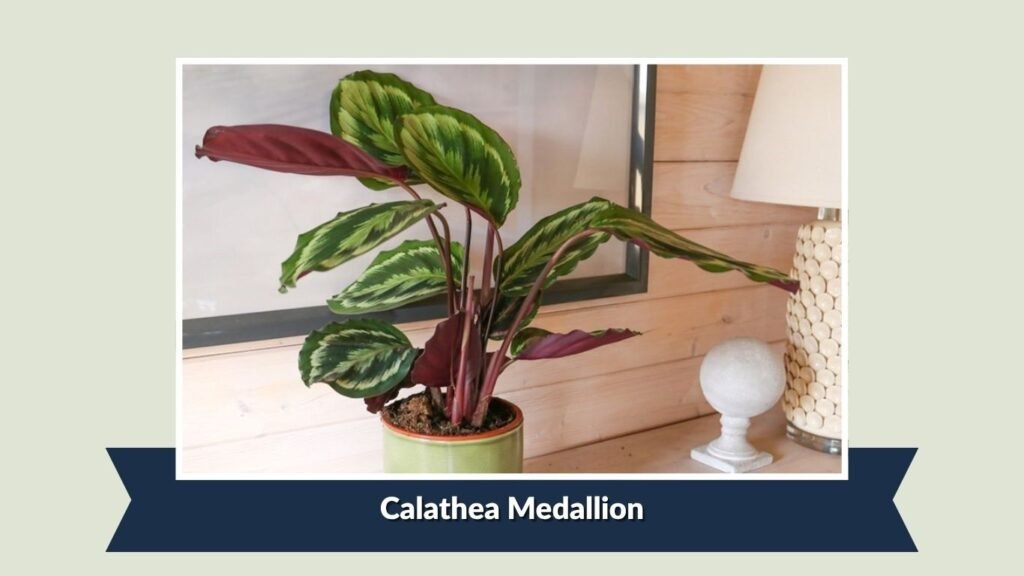
Calathea Medallion (Goeppertia roseopicta ‘Medallion’) is a stunning tropical houseplant admired for its large, rounded leaves with beautiful green patterns and deep purple undersides. Its decorative foliage features feather-like markings that create a striking contrast. This plant is an excellent choice for indoor gardens, living rooms, and shaded corners. With proper lighting, humidity, and watering, Calathea Medallion can maintain its vibrant appearance throughout the year.
Identification
- Scientific Name: Goeppertia roseopicta ‘Medallion’
- Common Name: Calathea Medallion
- Plant Family: Marantaceae
- Native Region: Tropical South America
- Leaf Shape: Broad, oval, and rounded
- Leaf Color: Dark green with lighter green patterns and purple undersides
- Mature Height: Approximately 1–2 feet indoors
- Growth Habit: Compact, upright, and clumping
Ideal Indoor Growing Conditions
Calathea Medallion thrives in bright, indirect sunlight. Direct sunlight can damage its delicate foliage, causing faded patterns and brown leaf edges. An east-facing window or a location with filtered sunlight is ideal for healthy growth.Maintain indoor temperatures between 65°F and 80°F (18°C–27°C). This plant prefers humidity levels of 60% or higher, making a humidifier beneficial in dry environments. Use well-draining, moisture-retentive potting soil enriched with organic matter to support healthy roots.
Watering and Maintenance
Keep the soil evenly moist without allowing it to become soggy. Water when the top inch of soil feels slightly dry. Filtered or rainwater is preferable when tap water contains high mineral concentrations.Remove damaged or yellow leaves using clean scissors. Fertilize monthly during spring and summer with a diluted balanced liquid fertilizer.Brown leaf tips may indicate low humidity, inconsistent watering, or mineral buildup. Regularly inspect the underside of leaves for spider mites and other common indoor pests.
3. Calathea Rattlesnake
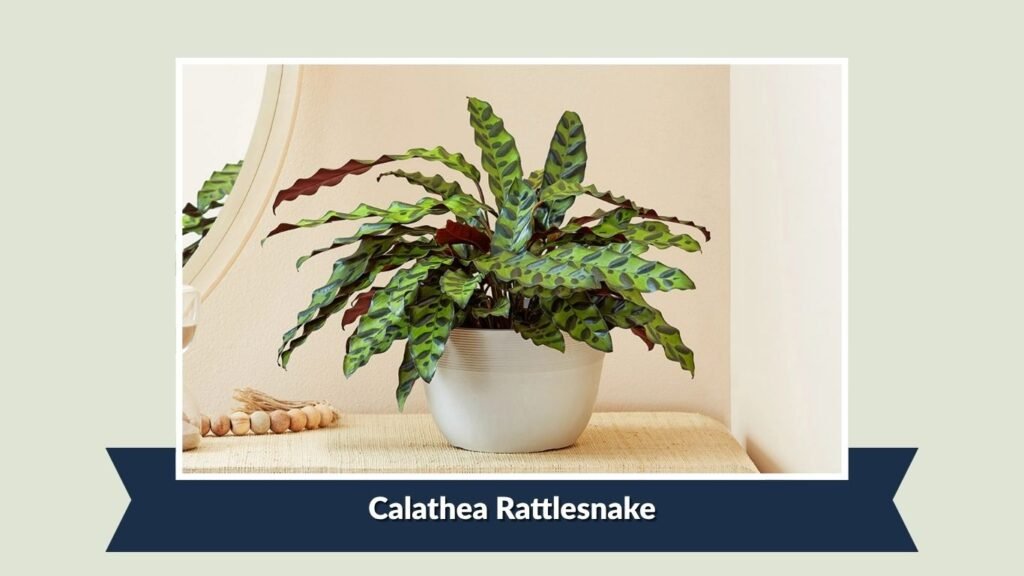
Calathea Rattlesnake (Goeppertia insignis, commonly sold as Calathea lancifolia) is a distinctive tropical houseplant recognized for its long, narrow leaves with wavy edges and dark green oval markings. The undersides display a rich purple color, giving the plant additional ornamental appeal. Its unique leaf patterns resemble the markings of a rattlesnake, inspiring its common name. This variety is popular among indoor plant enthusiasts because of its unusual appearance and relatively manageable care requirements.
Identification
- Scientific Name: Goeppertia insignis
- Common Name: Rattlesnake Plant
- Plant Family: Marantaceae
- Native Region: Brazil
- Leaf Shape: Long, narrow, and wavy
- Leaf Color: Light green with dark green markings and purple undersides
- Mature Height: Approximately 1–2.5 feet indoors
- Growth Habit: Upright and clumping
Ideal Indoor Growing Conditions
Calathea Rattlesnake prefers medium to bright indirect light. Strong direct sunlight can scorch its foliage, while extremely low light may slow growth and reduce the vibrancy of its patterns. Place it near a window with sheer curtains for filtered sunlight.The ideal temperature ranges from 65°F to 80°F (18°C–27°C). Humidity levels above 50%, preferably around 60% or higher, help prevent dry leaf edges. A well-draining potting mix containing peat or coco coir, perlite, and organic matter provides suitable growing conditions.
Watering and Maintenance
Water when the upper inch of soil begins to dry, keeping the root zone lightly moist rather than saturated. Avoid leaving standing water in the saucer, as excessive moisture can cause root rot.Clean the leaves occasionally with a soft, damp cloth to remove dust. During the growing season, apply diluted fertilizer every four to six weeks.Curling leaves may indicate underwatering, low humidity, cold temperatures, or excessive light. Maintaining stable indoor conditions helps preserve its distinctive foliage.
4. Calathea White Fusion
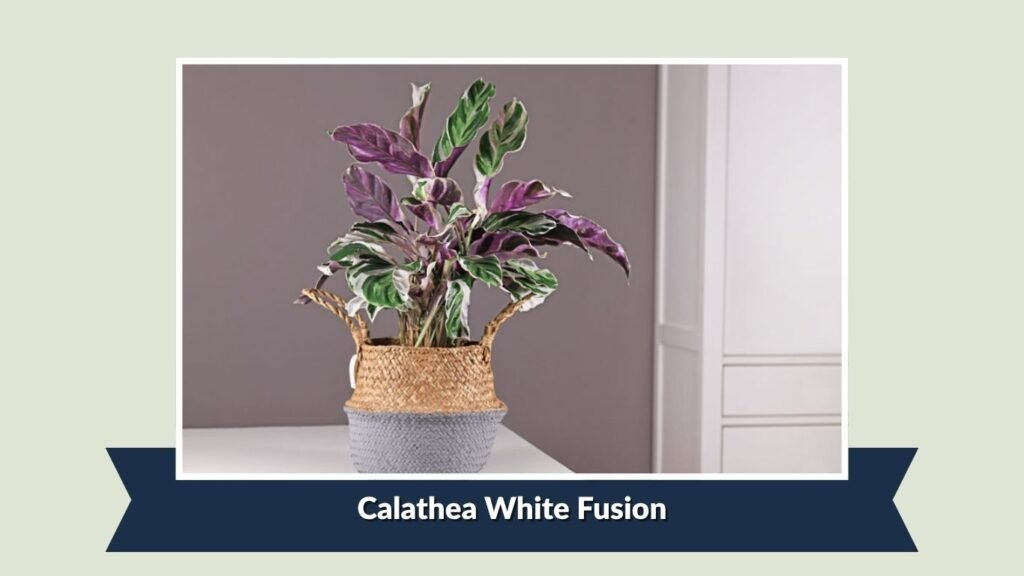
Calathea White Fusion (Goeppertia lietzei ‘Fusion White’) is one of the most eye-catching Calathea varieties for indoor cultivation. Its beautifully variegated leaves feature irregular combinations of white, cream, light green, and dark green, often with purple undersides. Each leaf displays a slightly different pattern, making the plant especially attractive for decorative indoor arrangements. Although its colorful foliage requires attentive care, Calathea White Fusion can flourish in a warm, humid indoor environment.
Identification
- Scientific Name: Goeppertia lietzei ‘Fusion White’
- Common Name: Calathea White Fusion
- Plant Family: Marantaceae
- Native Region: Cultivated variety of a Brazilian species
- Leaf Shape: Oval to lance-shaped with gently wavy edges
- Leaf Color: White, cream, and green variegation with purple undersides
- Mature Height: Approximately 1–2 feet indoors
- Growth Habit: Compact, bushy, and clumping
Ideal Indoor Growing Conditions
Calathea White Fusion requires bright, indirect sunlight to maintain its attractive variegation. Avoid direct afternoon sunlight because the white portions of its leaves are particularly sensitive to scorching. Filtered light near an east-facing window is generally ideal.Maintain temperatures between 65°F and 80°F (18°C–27°C) and protect the plant from cold drafts. Humidity levels of approximately 60–80% are beneficial for preventing crispy leaf edges. Plant it in a loose, well-draining potting mixture that retains moderate moisture without becoming waterlogged.
Watering and Maintenance
Water Calathea White Fusion when the upper inch of soil feels slightly dry. Maintain consistent moisture but avoid overwatering, which can damage its sensitive roots. Filtered, distilled, or rainwater may help prevent mineral-related leaf damage.Remove brown or yellow leaves with sanitized scissors. Feed lightly with a diluted balanced fertilizer during spring and summer, avoiding excessive fertilizer that may burn the roots.Monitor the plant for spider mites, leaf curling, and browning. Stable humidity, gentle lighting, and careful watering are essential for maintaining its beautiful white-and-green foliage.
5. Calathea Roseopicta
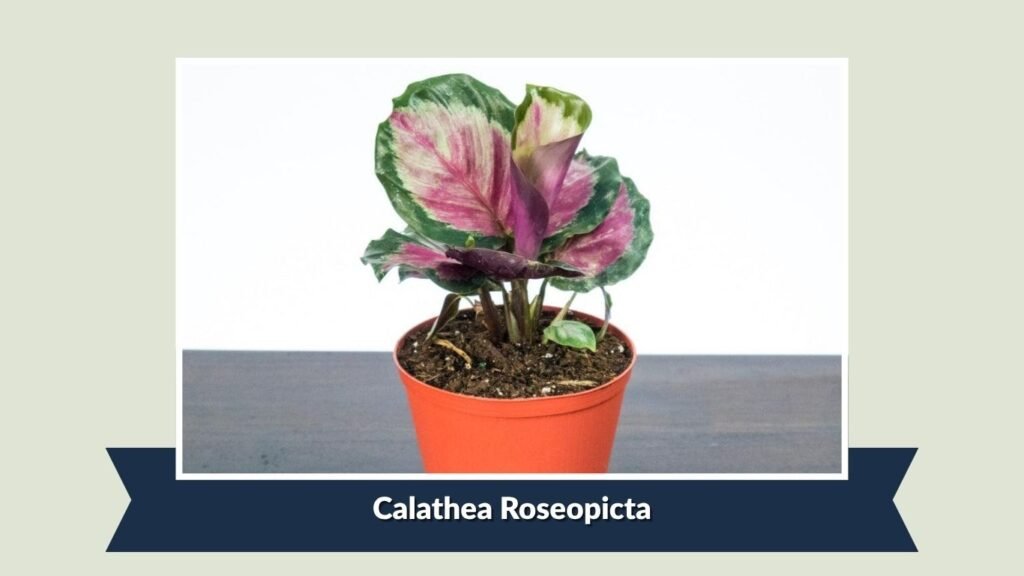
Calathea Roseopicta (Goeppertia roseopicta), commonly known as the Rose-Painted Calathea, is a beautiful tropical houseplant admired for its colorful foliage and decorative leaf patterns. Its broad, oval leaves feature dark green surfaces with pink or lighter green markings and rich purple undersides. Native to tropical South America, this plant adds an elegant touch to indoor gardens, bedrooms, and living spaces. With proper humidity, filtered sunlight, and consistent watering, Calathea Roseopicta can thrive indoors.
Identification
- Scientific Name: Goeppertia roseopicta
- Common Name: Rose-Painted Calathea
- Plant Family: Marantaceae
- Native Region: Tropical South America
- Leaf Shape: Broad, oval, and slightly rounded
- Leaf Color: Dark green with pink or light green patterns and purple undersides
- Mature Height: Approximately 1–2 feet indoors
- Growth Habit: Upright, compact, and clumping
Ideal Indoor Growing Conditions
Calathea Roseopicta grows best in medium to bright indirect sunlight. Direct sunlight can scorch its delicate leaves and fade their beautiful patterns. An east-facing window or a location with filtered sunlight provides suitable lighting conditions.Maintain temperatures between 65°F and 80°F (18°C–27°C). This tropical plant prefers humidity levels around 60% or higher. Use a moisture-retentive, well-draining potting mix containing coco coir, perlite, and organic matter to encourage healthy root development.
Watering and Maintenance
Water Calathea Roseopicta when the top inch of soil begins to feel dry. Keep the soil consistently moist without allowing water to collect around the roots. Filtered or rainwater can help reduce mineral-related leaf damage.Remove damaged leaves with clean pruning scissors and fertilize lightly during spring and summer using a diluted balanced fertilizer.Brown leaf edges, curling foliage, or fading colors may indicate low humidity, inconsistent watering, or excessive sunlight. Maintaining stable growing conditions helps preserve its attractive appearance.
6. Calathea Makoyana
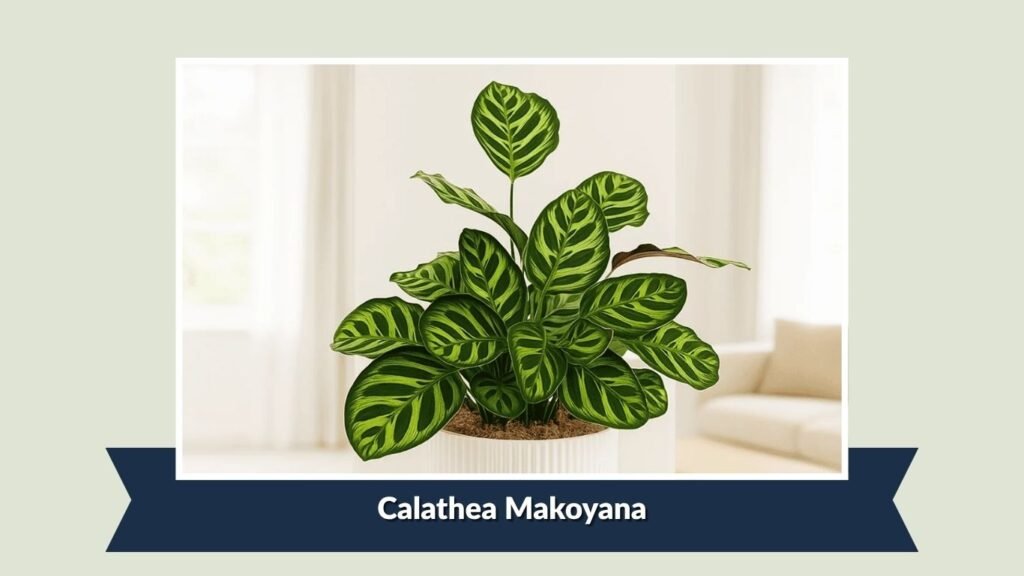
Calathea Makoyana (Goeppertia makoyana), commonly known as the Peacock Plant, is a popular indoor tropical plant recognized for its stunning feather-like leaf patterns. Its thin, oval leaves display light green backgrounds decorated with dark green markings, while the undersides feature reddish-purple patterns. Native to Brazil, this plant creates a beautiful tropical appearance in indoor spaces. Its distinctive foliage and graceful growth habit make it an attractive addition to houseplant collections.
Identification
- Scientific Name: Goeppertia makoyana
- Common Name: Peacock Plant
- Plant Family: Marantaceae
- Native Region: Brazil
- Leaf Shape: Oval, thin, and slightly elongated
- Leaf Color: Light green with dark green feather-like markings and purple undersides
- Mature Height: Approximately 1–2 feet indoors
- Growth Habit: Upright, bushy, and clumping
Ideal Indoor Growing Conditions
Calathea Makoyana thrives in bright, indirect sunlight but can tolerate moderate indoor lighting. Avoid exposing the plant to direct afternoon sunlight because intense light may cause leaf discoloration and dry edges.The ideal temperature ranges between 65°F and 80°F (18°C–27°C). Humidity levels around 60% or higher help maintain healthy foliage. Positioning the plant near a humidifier can be especially helpful during dry weather.Use loose, nutrient-rich potting soil with good drainage. A mixture containing coco coir, perlite, and composted organic matter provides moisture retention while allowing sufficient airflow around the roots.
Watering and Maintenance
Keep the soil lightly and evenly moist by watering whenever the upper inch feels slightly dry. Avoid overwatering, as constantly saturated soil may encourage root rot.Clean the leaves occasionally with a damp cloth to remove dust and improve their appearance. During the active growing season, apply a diluted liquid fertilizer approximately once a month.Calathea Makoyana may develop brown tips when exposed to dry air or mineral-heavy water. Protect it from cold drafts and sudden temperature changes to support healthy growth.
7. Calathea Lancifolia
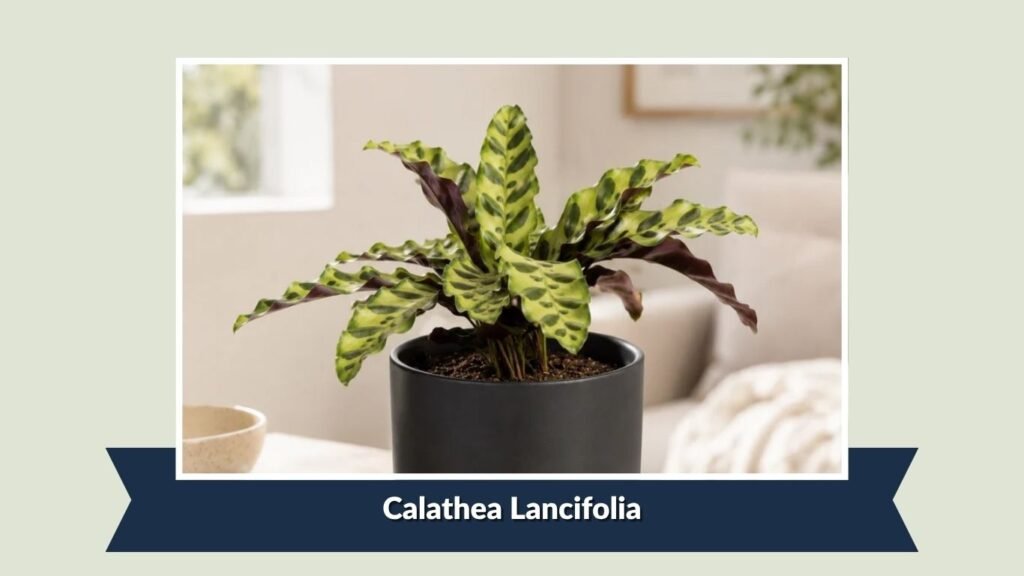
Calathea Lancifolia (Goeppertia insignis), commonly called the Rattlesnake Plant, is a striking tropical houseplant with long, narrow leaves and attractive dark green markings. Its wavy leaf edges and purple undersides create a dramatic appearance that complements modern indoor decorations. Native to Brazil, this plant is valued for its ornamental foliage and relatively adaptable growing habits. Although it is often sold under the name Calathea Lancifolia, its currently accepted scientific name is Goeppertia insignis.
Identification
- Scientific Name: Goeppertia insignis
- Common Name: Calathea Lancifolia or Rattlesnake Plant
- Plant Family: Marantaceae
- Native Region: Brazil
- Leaf Shape: Long, narrow, lance-shaped, and wavy
- Leaf Color: Light green with dark green oval markings and purple undersides
- Mature Height: Approximately 1–2.5 feet indoors
- Growth Habit: Upright, dense, and clumping
Ideal Indoor Growing Conditions
Calathea Lancifolia grows best in medium to bright indirect sunlight. Direct exposure to strong sunlight may cause leaf scorching, while very low light can slow its growth. A location near an east-facing window provides suitable lighting.Maintain temperatures between 65°F and 80°F (18°C–27°C). The plant prefers humidity above 50%, with approximately 60% or higher being beneficial for healthy foliage.Choose a well-draining potting mixture that retains moderate moisture. Combining coco coir, perlite, and organic matter supports root growth while preventing excessive water retention.
Watering and Maintenance
Water Calathea Lancifolia when the top inch of soil begins to dry. Keep the root zone evenly moist but never waterlogged. Reduce watering slightly during winter when plant growth naturally slows.Remove damaged or yellowing leaves with clean pruning scissors. Apply diluted balanced fertilizer every four to six weeks during spring and summer.Curling leaves, brown tips, and drooping foliage may indicate inconsistent watering, dry air, or temperature stress. Regular monitoring helps maintain healthy leaves and vibrant patterns.
8. Calathea Zebrina
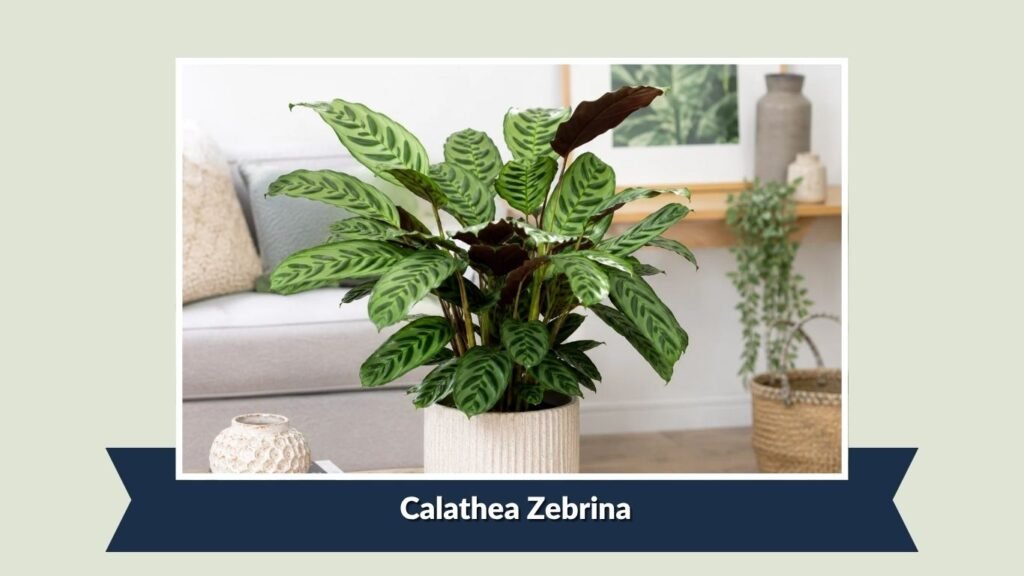
Calathea Zebrina (Goeppertia zebrina), commonly known as the Zebra Plant, is a stunning tropical houseplant recognized for its velvety green leaves with distinctive dark green stripes. Its beautiful foliage resembles the patterns of a zebra, making it an attractive addition to indoor gardens and decorative spaces. Native to Brazil, this Calathea variety thrives in warm, humid environments. With proper lighting, watering, and humidity, Calathea Zebrina can maintain its lush appearance throughout the year.
Identification
- Scientific Name: Goeppertia zebrina
- Common Name: Zebra Plant
- Plant Family: Marantaceae
- Native Region: Brazil
- Leaf Shape: Large, oval, and elongated
- Leaf Color: Light green with dark green zebra-like stripes
- Mature Height: Approximately 2–3 feet indoors
- Growth Habit: Upright, bushy, and clumping
Ideal Indoor Growing Conditions
Calathea Zebrina prefers medium to bright indirect sunlight. Direct sunlight can scorch its delicate foliage and cause the vibrant green patterns to fade. Place the plant near an east-facing window or in a location receiving filtered natural light.The ideal temperature ranges between 65°F and 80°F (18°C–27°C). Humidity levels around 60% or higher are beneficial for maintaining healthy leaves. A humidifier can help prevent dry edges in indoor environments.Use a well-draining, moisture-retentive potting mix containing coco coir, perlite, and organic matter. Proper drainage helps protect the roots from excessive moisture.
Watering and Maintenance
Water Calathea Zebrina when the top inch of soil begins to feel dry. Keep the soil evenly moist without allowing it to become waterlogged. Filtered or rainwater is preferable when tap water contains excessive minerals.Remove yellowing or damaged leaves using clean pruning scissors. During spring and summer, apply a diluted balanced fertilizer approximately once a month.Brown leaf edges, curling foliage, or faded patterns may indicate low humidity, inconsistent watering, or excessive sunlight. Maintaining stable indoor conditions helps preserve its attractive striped leaves.
9. Calathea Warscewiczii
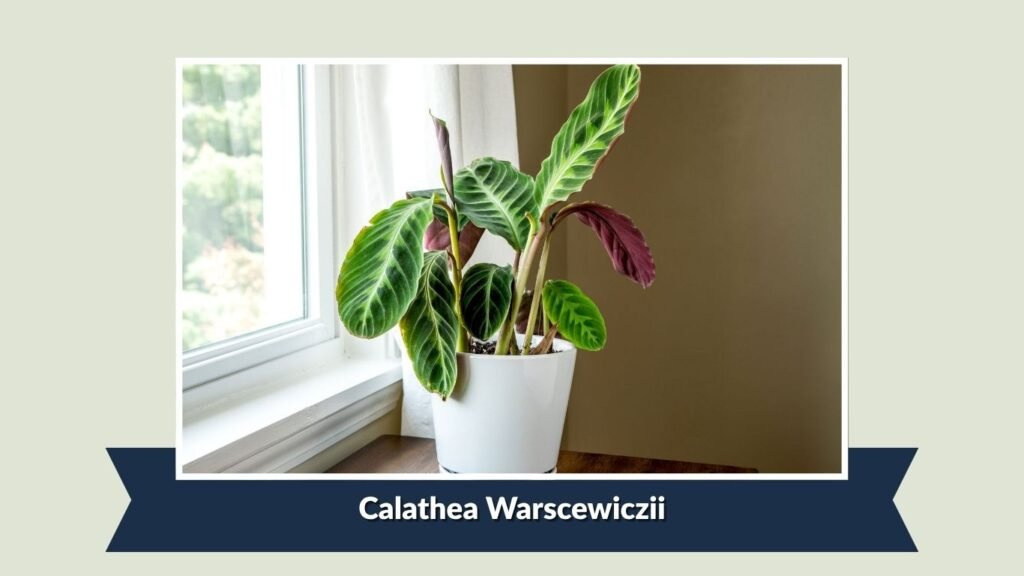
Calathea Warscewiczii (Goeppertia warszewiczii), commonly known as the Jungle Velvet Calathea, is an elegant tropical houseplant admired for its soft, velvety foliage. Its elongated leaves feature deep green surfaces with lighter green feather-like patterns and rich burgundy undersides. Native to Central America, this plant creates a luxurious tropical appearance in indoor spaces. Its distinctive texture and dramatic leaf coloration make it a favorite among houseplant collectors.
Identification
- Scientific Name: Goeppertia warszewiczii
- Common Name: Jungle Velvet Calathea
- Plant Family: Marantaceae
- Native Region: Central America
- Leaf Shape: Elongated, oval, and slightly pointed
- Leaf Color: Dark green with light green patterns and burgundy undersides
- Mature Height: Approximately 2–3 feet indoors
- Growth Habit: Upright, dense, and clumping
Ideal Indoor Growing Conditions
Calathea Warscewiczii thrives in medium to bright indirect sunlight. Strong direct sunlight can damage its soft, velvety leaves and cause brown patches. Position the plant near a window with sheer curtains to provide gentle, filtered light.Maintain indoor temperatures between 65°F and 80°F (18°C–27°C). This tropical variety prefers humidity levels around 60–80%, making it suitable for naturally humid rooms or spaces with a humidifier.Choose a loose, well-draining potting mixture containing coco coir, perlite, and organic matter. The growing medium should retain sufficient moisture while allowing excess water to escape.
Watering and Maintenance
Keep the soil consistently moist but never saturated. Water when the upper inch of soil becomes slightly dry. Avoid allowing the potting mixture to dry completely for extended periods.Remove damaged or yellowing foliage with sanitized scissors. Feed the plant monthly during spring and summer using a diluted balanced liquid fertilizer.Avoid rubbing or frequently touching the velvety leaf surfaces, as this may damage their delicate texture. Brown tips or curling leaves may indicate insufficient humidity, irregular watering, or exposure to cold drafts.
10. Calathea Musaica
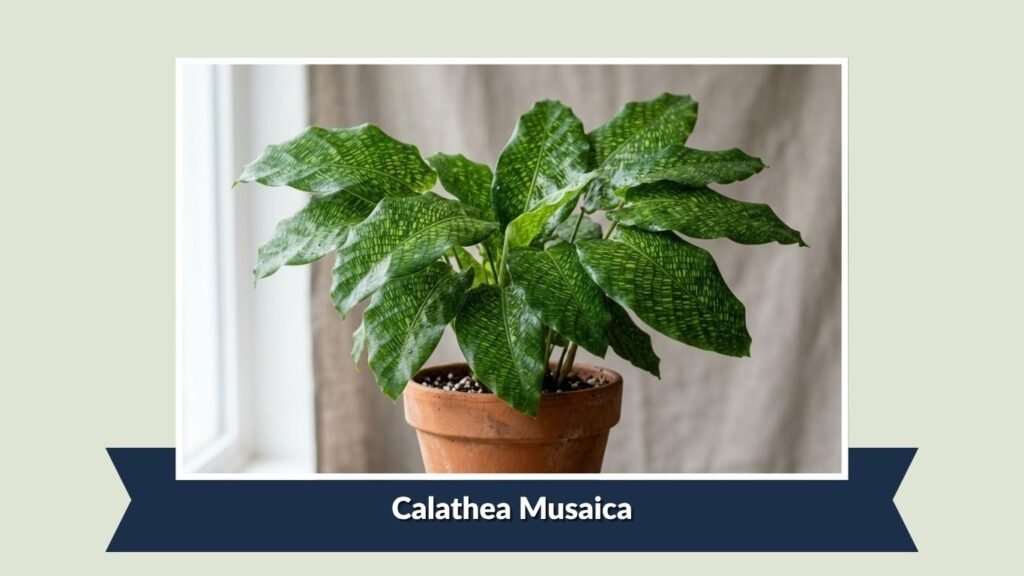
Calathea Musaica (Goeppertia kegeljanii), commonly known as Calathea Network, is a fascinating tropical houseplant recognized for its unusual mosaic-like leaf patterns. Its glossy, light green foliage features a delicate network of darker green lines that resemble a geometric design. Native to Brazil, this plant offers a distinctive appearance compared with other Calathea varieties. Its intricate foliage makes it an excellent choice for indoor plant collections, tabletops, and decorative displays.
Identification
- Scientific Name: Goeppertia kegeljanii
- Common Name: Calathea Musaica or Network Plant
- Plant Family: Marantaceae
- Native Region: Brazil
- Leaf Shape: Broad, oval, and slightly pointed
- Leaf Color: Light green with fine, dark green network patterns
- Mature Height: Approximately 1–2 feet indoors
- Growth Habit: Compact, upright, and clumping
Ideal Indoor Growing Conditions
Calathea Musaica grows best in medium to bright indirect sunlight. Although it tolerates slightly lower light conditions, sufficient filtered light helps maintain its attractive leaf patterns. Avoid direct afternoon sunlight, which can cause leaf scorching.The ideal temperature ranges between 65°F and 80°F (18°C–27°C). This variety appreciates moderate to high humidity, preferably around 50–70%. Maintaining consistent humidity helps prevent brown leaf edges.Use a well-draining potting mix containing coco coir, perlite, and organic matter. The soil should retain light moisture while allowing adequate airflow around the roots.
Watering and Maintenance
Water Calathea Musaica when the top inch of soil feels slightly dry. Keep the growing medium evenly moist without allowing standing water to accumulate in the pot.Clean its glossy leaves occasionally using a soft, damp cloth to remove dust and highlight their distinctive patterns. During the active growing season, apply a diluted balanced fertilizer every four to six weeks.Avoid sudden temperature changes, excessive fertilizer, and prolonged soil dryness. Yellowing leaves may indicate overwatering, while curling or crispy leaves can result from underwatering or low humidity.
11. Calathea Beauty Star
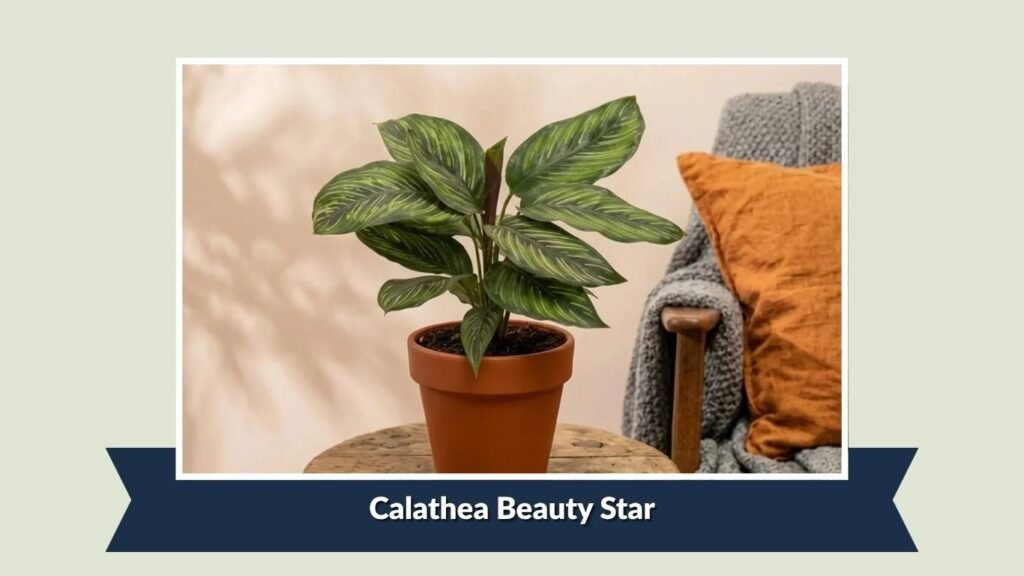
Calathea Beauty Star (Goeppertia ornata ‘Beauty Star’) is an elegant tropical houseplant admired for its elongated leaves decorated with delicate light green, cream, and pinkish stripes. Its dark green foliage and purple undersides create an attractive contrast, making it a popular choice for indoor gardens and decorative spaces. This Calathea variety grows best in warm, humid environments with filtered sunlight. With proper care, Calathea Beauty Star can maintain its colorful foliage throughout the year.
Identification
- Scientific Name: Goeppertia ornata ‘Beauty Star’
- Common Name: Calathea Beauty Star
- Plant Family: Marantaceae
- Native Region: Cultivated variety of a tropical South American species
- Leaf Shape: Long, oval, and slightly pointed
- Leaf Color: Dark green with light green, cream, and pinkish stripes
- Mature Height: Approximately 1–2 feet indoors
- Growth Habit: Upright, compact, and clumping
Ideal Indoor Growing Conditions
Calathea Beauty Star thrives in medium to bright indirect sunlight. Direct sunlight can scorch its delicate leaves and cause the colorful stripes to fade. Position the plant near an east-facing window or behind sheer curtains to provide gentle, filtered sunlight.The ideal temperature ranges between 65°F and 80°F (18°C–27°C). Humidity levels around 60% or higher help maintain healthy foliage and prevent dry leaf edges.Use a well-draining, moisture-retentive potting mixture containing coco coir, perlite, and organic matter. Proper drainage supports healthy root development while maintaining consistent soil moisture.
Watering and Maintenance
Water Calathea Beauty Star when the top inch of soil begins to feel dry. Keep the soil evenly moist without allowing excess water to accumulate around the roots.Remove yellowing or damaged leaves using clean pruning scissors. During spring and summer, apply a diluted balanced liquid fertilizer approximately once a month.Brown leaf tips, curling foliage, and fading stripes may indicate low humidity, inconsistent watering, or excessive sunlight. Maintaining stable indoor conditions helps preserve its decorative appearance.
12. Calathea Freddie
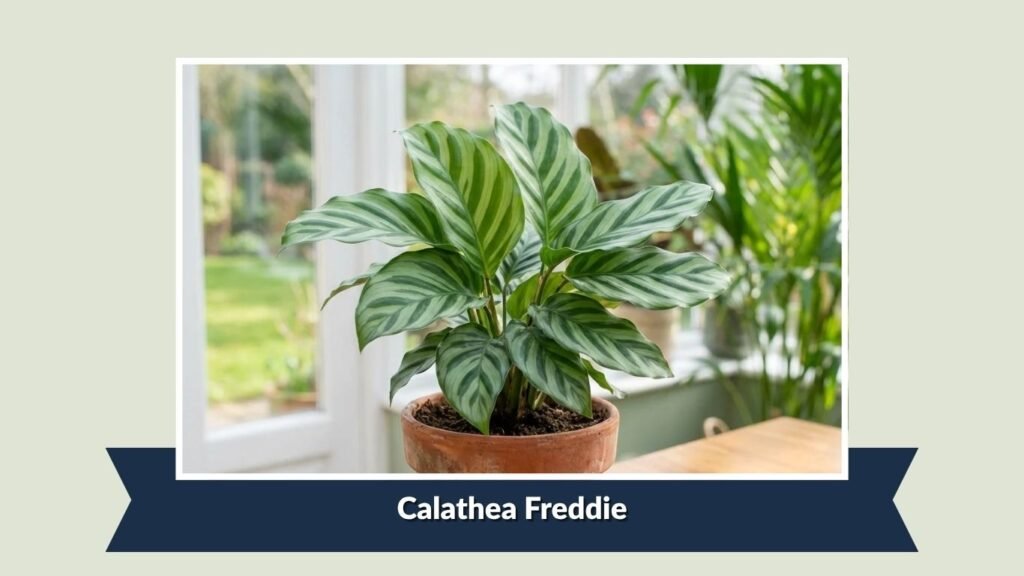
Calathea Freddie (Goeppertia concinna ‘Freddie’) is a charming tropical houseplant known for its narrow, elongated leaves featuring beautiful dark green feather-like markings. The light green leaf surfaces create a striking contrast with the darker patterns, giving the plant an elegant appearance. Native to tropical South America through its parent species, this variety is popular among indoor gardening enthusiasts. Its graceful foliage and relatively compact growth make it suitable for bedrooms, offices, and indoor plant displays.
Identification
- Scientific Name: Goeppertia concinna ‘Freddie’
- Common Name: Calathea Freddie
- Plant Family: Marantaceae
- Native Region: Cultivated variety of a South American species
- Leaf Shape: Narrow, elongated, and slightly pointed
- Leaf Color: Light green with dark green feather-like stripes
- Mature Height: Approximately 1–2 feet indoors
- Growth Habit: Upright, bushy, and clumping
Ideal Indoor Growing Conditions
Calathea Freddie grows best in medium to bright indirect sunlight. It can tolerate moderate indoor lighting, but very low light may slow its growth. Avoid exposing the plant to strong direct sunlight because intense light may damage its leaves.Maintain temperatures between 65°F and 80°F (18°C–27°C). This plant prefers humidity around 50–70%, although higher humidity can be beneficial in dry indoor environments.Choose a loose, well-draining potting mixture that retains moderate moisture. A combination of coco coir, perlite, and organic compost creates suitable conditions for healthy root growth.
Watering and Maintenance
Water Calathea Freddie when the upper inch of soil feels slightly dry. Keep the soil consistently moist but avoid waterlogging, as excessive moisture can lead to root problems.Clean the leaves occasionally with a soft, damp cloth to remove dust. During the growing season, apply diluted balanced fertilizer every four to six weeks.Remove damaged or yellow leaves with sanitized scissors. Curling leaves, brown edges, or drooping foliage may indicate dry soil, insufficient humidity, or sudden temperature changes. Consistent care encourages healthy growth and vibrant foliage.
13. Calathea Dottie
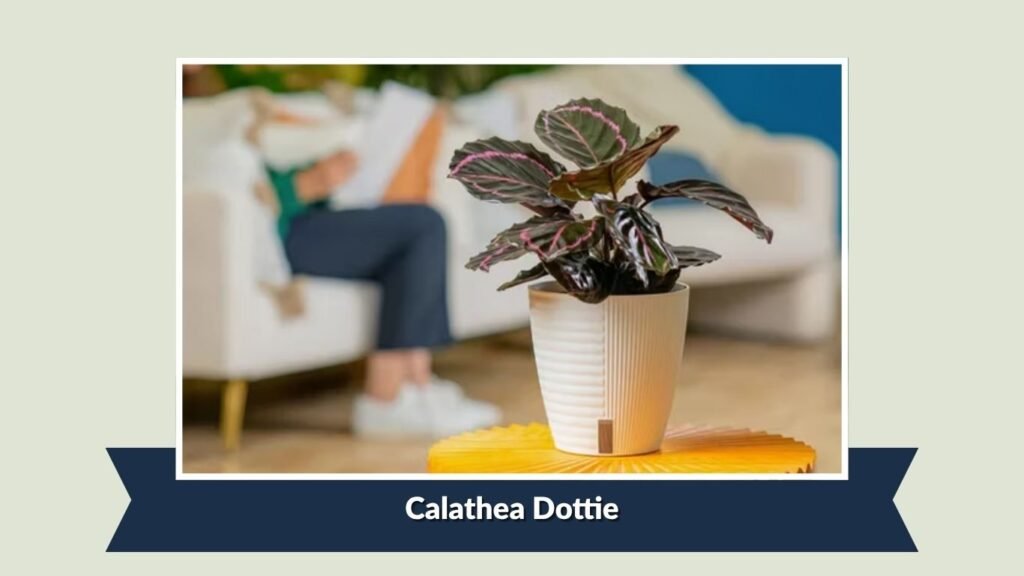
Calathea Dottie (Goeppertia roseopicta ‘Dottie’) is a striking tropical houseplant recognized for its dramatic dark purple foliage and bright pink leaf markings. Its broad, rounded leaves feature attractive pink outlines and central patterns that stand out against the nearly black surfaces. This cultivated Calathea variety brings bold color and an exotic appearance to indoor gardens. With proper lighting, humidity, and watering, Calathea Dottie can maintain its distinctive foliage and become an impressive decorative houseplant.
Identification
- Scientific Name: Goeppertia roseopicta ‘Dottie’
- Common Name: Calathea Dottie
- Plant Family: Marantaceae
- Native Region: Cultivated variety of a tropical South American species
- Leaf Shape: Broad, oval, and rounded
- Leaf Color: Deep purple to nearly black with bright pink markings
- Mature Height: Approximately 1–2 feet indoors
- Growth Habit: Compact, upright, and clumping
Ideal Indoor Growing Conditions
Calathea Dottie thrives in medium to bright indirect sunlight. Its dark foliage benefits from sufficient filtered light to maintain vibrant pink patterns. However, direct sunlight can scorch the leaves and cause discoloration.The ideal temperature ranges between 65°F and 80°F (18°C–27°C). Humidity levels around 60% or higher help prevent dry edges and maintain healthy foliage. A humidifier is especially useful in rooms with dry air.Use a moisture-retentive but well-draining potting mixture containing coco coir, perlite, and organic matter. The growing medium should remain lightly moist without becoming saturated.
Watering and Maintenance
Water Calathea Dottie when the top inch of soil begins to feel dry. Maintain consistent soil moisture while allowing excess water to drain freely from the container.Remove yellowing or damaged leaves using clean pruning scissors. Apply a diluted balanced liquid fertilizer approximately once a month during spring and summer.Avoid placing the plant near heating vents, air conditioners, or cold drafts. Brown leaf edges, fading pink markings, and curling foliage may indicate environmental stress. With consistent humidity and careful watering, Calathea Dottie can remain a beautiful indoor foliage plant throughout the year.
14. Calathea White Star
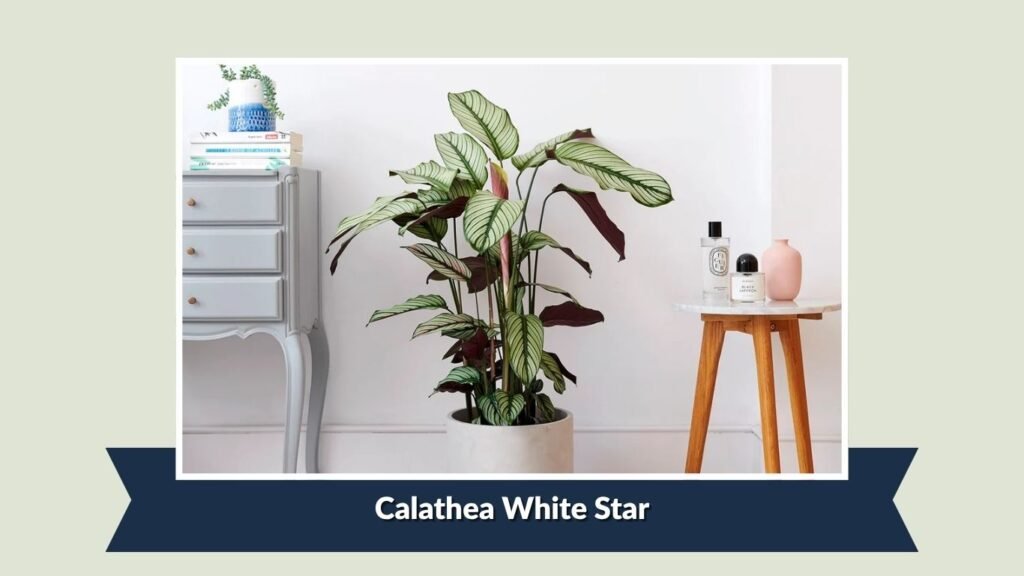
Calathea White Star (Goeppertia majestica ‘White Star’) is a beautiful tropical houseplant admired for its long, elegant leaves featuring delicate white and pink stripes. Its dark green foliage and rich purple undersides create a stunning contrast, making it a popular choice for indoor plant collections. This Calathea variety adds a sophisticated tropical appearance to living rooms, bedrooms, and offices. With proper humidity, filtered sunlight, and consistent watering, Calathea White Star can thrive indoors.
Identification
- Scientific Name: Goeppertia majestica ‘White Star’
- Common Name: Calathea White Star
- Plant Family: Marantaceae
- Native Region: Cultivated variety of a tropical South American species
- Leaf Shape: Long, oval, and slightly pointed
- Leaf Color: Dark green with white and pink stripes and purple undersides
- Mature Height: Approximately 2–3 feet indoors
- Growth Habit: Upright, bushy, and clumping
Ideal Indoor Growing Conditions
Calathea White Star grows best in bright, indirect sunlight. Sufficient filtered light helps maintain its beautiful white and pink leaf patterns. However, direct sunlight can scorch its delicate foliage and cause discoloration.Maintain indoor temperatures between 65°F and 80°F (18°C–27°C). This tropical variety prefers humidity levels around 60–80%, making a humidifier beneficial in dry indoor environments.Use a well-draining, moisture-retentive potting mixture containing coco coir, perlite, and organic matter. Proper drainage helps prevent root rot while maintaining consistent soil moisture.
Watering and Maintenance
Water Calathea White Star when the top inch of soil begins to feel dry. Keep the growing medium evenly moist without allowing excess water to accumulate around the roots.Remove damaged or yellowing leaves using sanitized pruning scissors. Apply a diluted balanced fertilizer approximately once a month during spring and summer.Brown leaf edges, curling foliage, or fading patterns may indicate insufficient humidity, inconsistent watering, or excessive sunlight. Maintaining stable growing conditions helps preserve its striking foliage.
15. Calathea Pinstripe
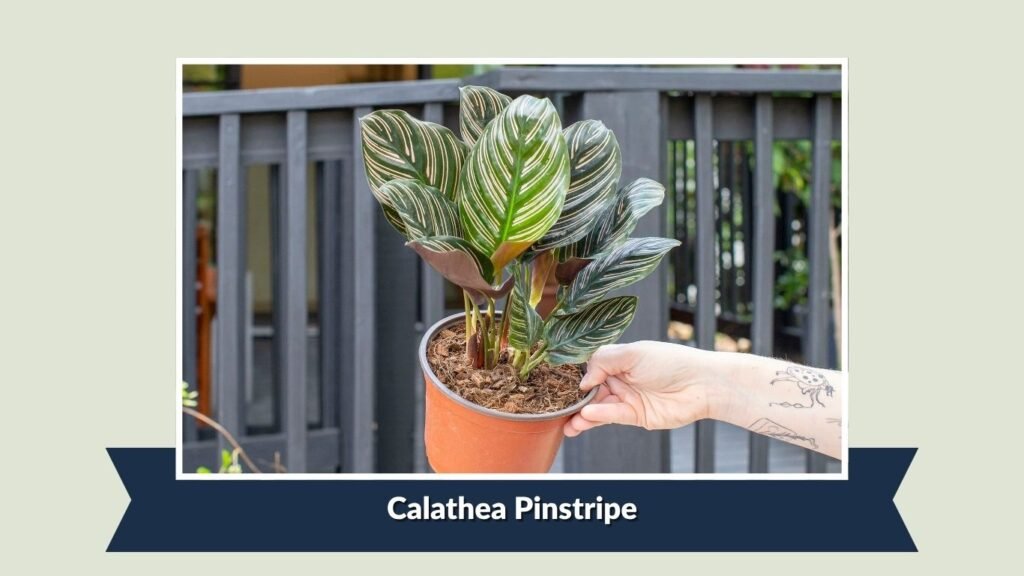
Calathea Pinstripe (Goeppertia ornata) is an elegant tropical houseplant recognized for its dark green leaves decorated with thin, delicate pinkish-white stripes. These beautiful markings resemble carefully painted lines, giving the plant its common name. Native to tropical South America, Calathea Pinstripe is widely appreciated for its decorative foliage and graceful appearance. Its deep purple leaf undersides add another layer of visual interest, making it an attractive choice for indoor gardens.
Identification
- Scientific Name: Goeppertia ornata
- Common Name: Calathea Pinstripe
- Plant Family: Marantaceae
- Native Region: Tropical South America
- Leaf Shape: Long, oval, and pointed
- Leaf Color: Dark green with pinkish-white pinstripes and purple undersides
- Mature Height: Approximately 2–3 feet indoors
- Growth Habit: Upright, dense, and clumping
Ideal Indoor Growing Conditions
Calathea Pinstripe thrives in medium to bright indirect sunlight. Direct afternoon sunlight can damage its leaves and cause the delicate stripes to fade. Place the plant near an east-facing window or behind sheer curtains for suitable lighting.The ideal temperature ranges between 65°F and 80°F (18°C–27°C). This tropical plant prefers humidity levels around 60% or higher to prevent brown leaf edges and maintain healthy growth.Choose a loose, moisture-retentive potting mixture containing coco coir, perlite, and organic matter. The soil should drain efficiently while retaining enough moisture to support its roots.
Watering and Maintenance
Water Calathea Pinstripe when the upper inch of soil feels slightly dry. Maintain evenly moist soil without allowing it to become waterlogged. Filtered or rainwater may help prevent mineral-related leaf damage.Clean the foliage occasionally with a soft, damp cloth to remove accumulated dust. During spring and summer, apply a diluted balanced liquid fertilizer every four to six weeks.Remove yellowing or damaged leaves using clean pruning scissors. Curling foliage, dry brown edges, and fading stripes may indicate inconsistent watering, low humidity, or excessive sunlight. Regular care helps maintain its elegant appearance.
16. Calathea Rufibarba
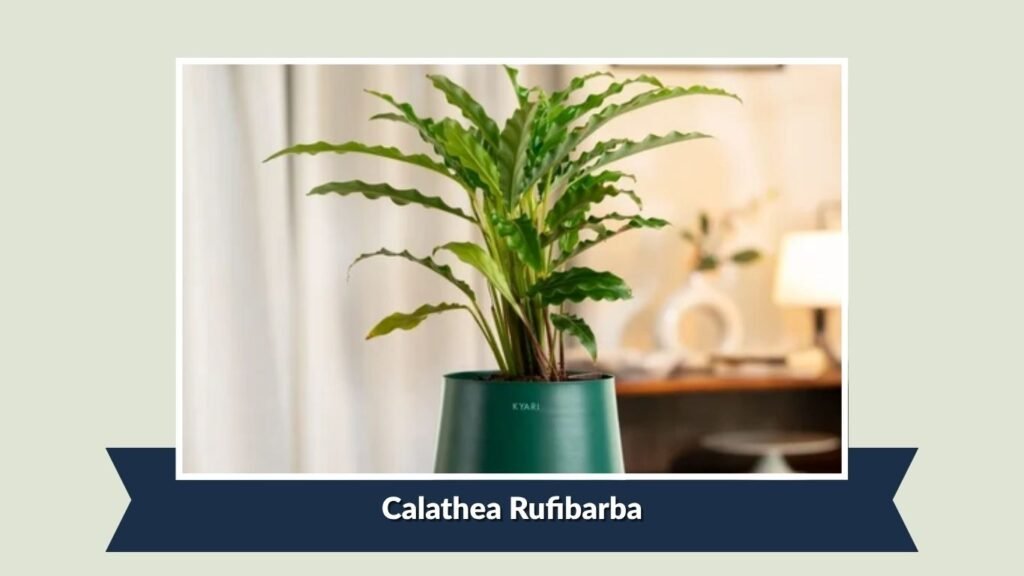
Calathea Rufibarba (Goeppertia rufibarba), commonly known as the Furry Feather Calathea, is a distinctive tropical houseplant recognized for its long, narrow leaves and soft, fuzzy texture. Unlike many Calathea varieties with colorful leaf patterns, this species features relatively plain green foliage with burgundy-purple undersides. Its gently wavy leaves and fine hairs along the stems and undersides create an unusual appearance. Native to Brazil, Calathea Rufibarba is a beautiful addition to indoor plant collections.
Identification
- Scientific Name: Goeppertia rufibarba
- Common Name: Furry Feather Calathea
- Plant Family: Marantaceae
- Native Region: Brazil
- Leaf Shape: Long, narrow, lance-shaped, and wavy
- Leaf Color: Green upper surfaces with burgundy-purple undersides
- Mature Height: Approximately 2–3 feet indoors
- Growth Habit: Upright, bushy, and clumping
Ideal Indoor Growing Conditions
Calathea Rufibarba grows best in medium to bright indirect sunlight. It can tolerate moderate indoor lighting, but prolonged exposure to strong direct sunlight may cause leaf scorching and discoloration.Maintain temperatures between 65°F and 80°F (18°C–27°C). This tropical plant prefers humidity around 50–70%, although higher humidity can help prevent dry leaf edges.
Use a well-draining potting mixture containing coco coir, perlite, and organic matter. The soil should retain moderate moisture while allowing sufficient airflow around the root system.
Watering and Maintenance
Water Calathea Rufibarba when the top inch of soil begins to feel dry. Keep the soil consistently moist but avoid excessive watering, which can lead to root rot.Remove damaged or yellowing leaves using clean pruning scissors. During the growing season, apply diluted balanced fertilizer approximately once a month to support healthy foliage.Avoid rubbing its fuzzy leaves excessively because this may damage their delicate surface texture. Brown leaf tips, curling foliage, or drooping leaves may indicate low humidity, irregular watering, or temperature stress. With stable indoor conditions, Calathea Rufibarba can develop lush, attractive foliage throughout the year.
17. Calathea Crocata
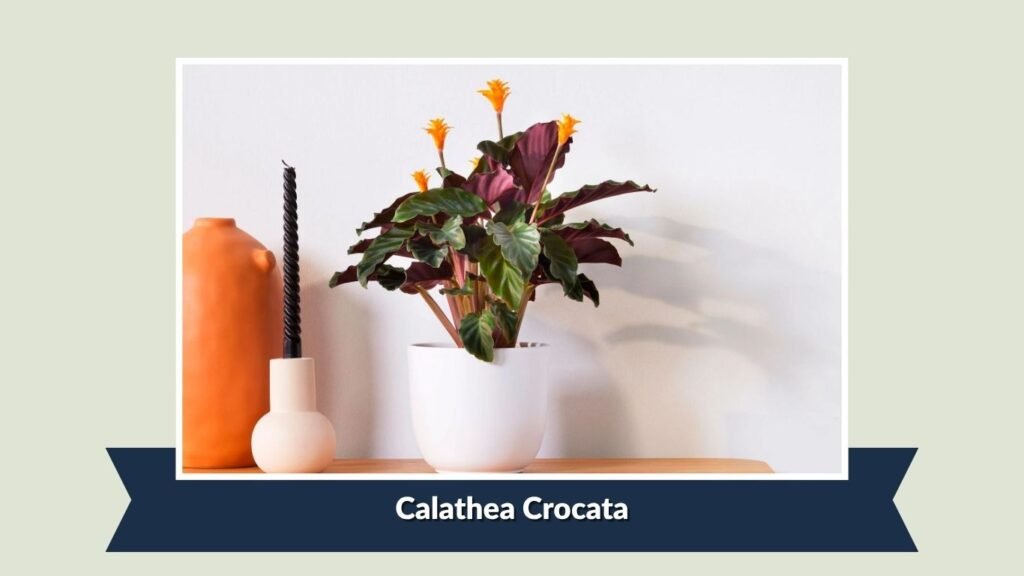
Calathea Crocata (Goeppertia crocata), commonly known as the Eternal Flame Plant, is a beautiful tropical houseplant admired for its striking orange flowers and dark green foliage. Unlike many Calathea varieties grown mainly for decorative leaves, this species produces bright orange flower-like bracts that resemble small flames. Native to Brazil, Calathea Crocata adds vibrant color to indoor gardens and decorative plant collections. With proper lighting, warmth, and humidity, it can produce attractive blooms while maintaining healthy foliage.
Identification
- Scientific Name: Goeppertia crocata
- Common Name: Eternal Flame Plant
- Plant Family: Marantaceae
- Native Region: Brazil
- Leaf Shape: Broad, oval, and slightly pointed
- Leaf Color: Dark green with purple undersides
- Mature Height: Approximately 1–2 feet indoors
- Growth Habit: Compact, upright, and clumping
Ideal Indoor Growing Conditions
Calathea Crocata thrives in bright, indirect sunlight. Adequate filtered light encourages healthy foliage and supports flowering. However, strong direct sunlight can scorch its leaves and damage the colorful bracts.Maintain temperatures between 65°F and 80°F (18°C–27°C). This tropical plant prefers humidity levels around 60% or higher. A humidifier can help maintain suitable conditions in dry indoor spaces.Use a loose, well-draining potting mixture containing coco coir, perlite, and organic matter. The soil should retain moderate moisture without becoming waterlogged.
Watering and Maintenance
Water Calathea Crocata when the top inch of soil begins to feel dry. Keep the growing medium consistently moist while allowing excess water to drain freely.Remove faded flower stalks and damaged leaves using clean pruning scissors. Apply a diluted balanced fertilizer approximately once a month during spring and summer.Brown leaf edges, curling foliage, and fading flowers may indicate insufficient humidity, irregular watering, or unsuitable lighting. Stable conditions encourage healthy growth and improve the chances of flowering.
18. Calathea Leopardina
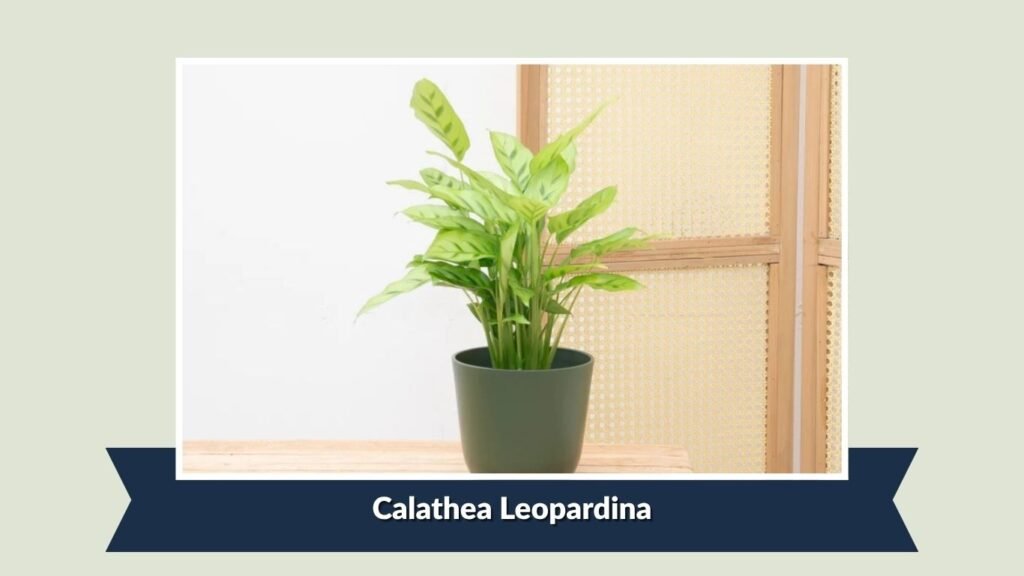
Calathea Leopardina (Goeppertia leopardina) is an attractive tropical houseplant recognized for its elongated green leaves decorated with distinctive dark green spots and feather-like markings. Its unusual foliage resembles the patterned coat of a leopard, giving the plant its common name. Native to Brazil, this Calathea variety adds a fresh tropical appearance to indoor gardens, living rooms, and shaded decorative spaces. Its upright growth and patterned leaves make it an appealing addition to houseplant collections.
Identification
- Scientific Name: Goeppertia leopardina
- Common Name: Calathea Leopardina
- Plant Family: Marantaceae
- Native Region: Brazil
- Leaf Shape: Long, oval, and slightly pointed
- Leaf Color: Light green with dark green spots and markings
- Mature Height: Approximately 1–2 feet indoors
- Growth Habit: Upright, slender, and clumping
Ideal Indoor Growing Conditions
Calathea Leopardina grows best in medium to bright indirect sunlight. Direct sunlight can damage its delicate foliage and cause the attractive markings to fade. Place the plant near an east-facing window or behind sheer curtains for filtered natural light.The ideal temperature ranges between 65°F and 80°F (18°C–27°C). Humidity around 60% or higher helps maintain healthy leaves and prevent dry edges.Choose a well-draining, moisture-retentive potting mixture containing coco coir, perlite, and organic matter. Proper drainage helps prevent root damage while allowing the soil to remain lightly moist.
Watering and Maintenance
Water Calathea Leopardina when the upper inch of soil begins to dry. Keep the potting mixture evenly moist without allowing standing water to accumulate around the roots.Remove yellowing or damaged leaves with sanitized pruning scissors. During the growing season, apply diluted balanced fertilizer every four to six weeks.Clean its foliage occasionally using a soft, damp cloth to remove dust. Curling leaves, brown edges, or yellowing foliage may indicate inconsistent watering, low humidity, or excessive sunlight. Maintaining stable conditions supports healthy indoor growth.
19. Calathea Louisae
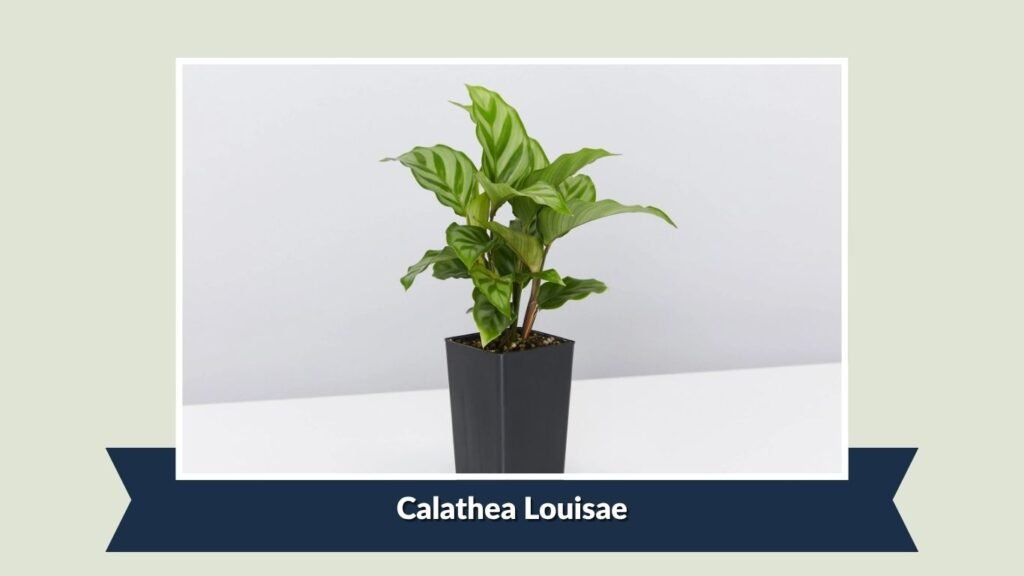
Calathea Louisae (Goeppertia louisae) is a beautiful tropical houseplant admired for its elongated green leaves decorated with elegant feather-like patterns. Its foliage features contrasting shades of green that create a distinctive ornamental appearance. Native to Brazil, this Calathea species grows naturally in warm, humid tropical environments. Its compact growth habit and attractive foliage make it suitable for indoor gardens, decorative plant arrangements, and houseplant collections.
Identification
- Scientific Name: Goeppertia louisae
- Common Name: Calathea Louisae
- Plant Family: Marantaceae
- Native Region: Brazil
- Leaf Shape: Elongated, oval, and slightly pointed
- Leaf Color: Green with darker feather-like markings
- Mature Height: Approximately 1–2 feet indoors
- Growth Habit: Upright, compact, and clumping
Ideal Indoor Growing Conditions
Calathea Louisae prefers medium to bright indirect sunlight. Strong direct sunlight can scorch its delicate leaves, while insufficient lighting may slow its growth. A location receiving gentle, filtered sunlight provides suitable growing conditions.Maintain indoor temperatures between 65°F and 80°F (18°C–27°C). This tropical plant benefits from humidity levels around 60% or higher, especially during dry weather.Use loose, well-draining potting soil containing coco coir, perlite, and organic matter. The mixture should retain moderate moisture while providing adequate drainage and airflow around the roots.
Watering and Maintenance
Water Calathea Louisae when the top inch of soil feels slightly dry. Keep the growing medium consistently moist without allowing the roots to remain in saturated conditions.Remove yellowing or damaged foliage using clean pruning scissors. During spring and summer, apply diluted balanced fertilizer approximately once a month.Avoid placing the plant near cold drafts, heating vents, or air conditioners. Brown leaf tips, curling foliage, or drooping leaves may indicate inadequate humidity, irregular watering, or sudden temperature changes. Consistent care helps preserve its decorative leaf patterns.
20. Calathea Picturata
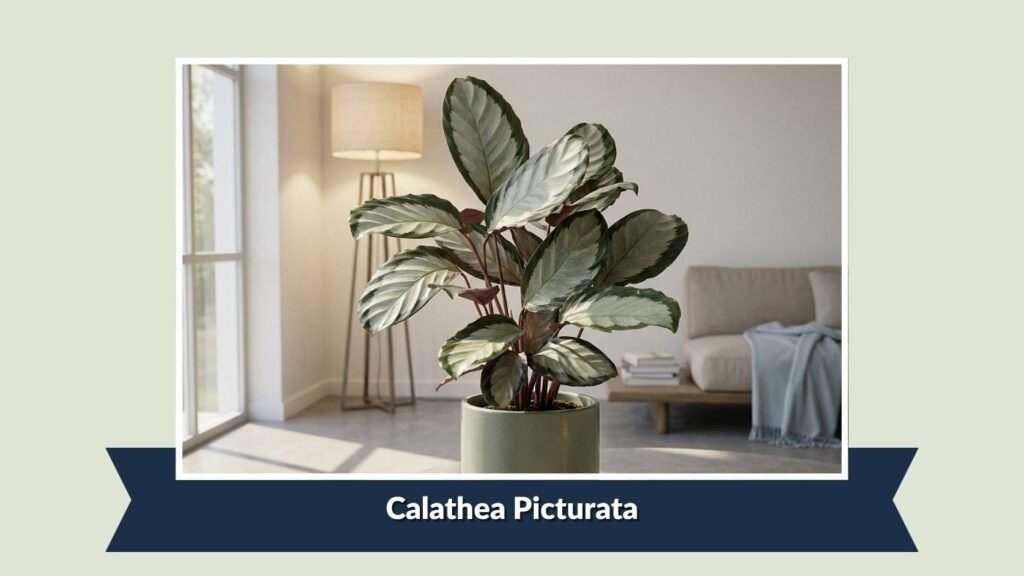
Calathea Picturata (Goeppertia picturata) is an elegant tropical houseplant known for its broad, beautifully patterned leaves featuring contrasting shades of green and silver. Many cultivated varieties display a pale central leaf area surrounded by a darker green border, creating a striking decorative appearance. Native to tropical South America, this Calathea species is valued for its colorful foliage and compact growth habit. It is an attractive choice for indoor gardens, tabletops, and decorative houseplant displays.
Identification
- Scientific Name: Goeppertia picturata
- Common Name: Calathea Picturata
- Plant Family: Marantaceae
- Native Region: Tropical South America
- Leaf Shape: Broad, oval, and slightly pointed
- Leaf Color: Green with pale green or silvery patterns and darker borders
- Mature Height: Approximately 1–2 feet indoors
- Growth Habit: Compact, upright, and clumping
Ideal Indoor Growing Conditions
Calathea Picturata thrives in medium to bright indirect sunlight. Its beautifully patterned foliage benefits from filtered natural light, but direct afternoon sunlight may cause leaf scorching or faded colors.The ideal temperature ranges between 65°F and 80°F (18°C–27°C). Humidity levels around 60% or higher help maintain healthy foliage and reduce brown leaf edges.Choose a well-draining potting mixture containing coco coir, perlite, and organic matter. The soil should retain sufficient moisture while allowing excess water to escape easily.
Watering and Maintenance
Water Calathea Picturata when the upper inch of soil begins to feel dry. Maintain evenly moist soil but avoid waterlogging, which can damage the root system.Clean the leaves occasionally with a soft, damp cloth to remove dust and highlight their beautiful patterns. Apply diluted balanced fertilizer every four to six weeks during the active growing season.Remove yellowing or damaged foliage using sanitized pruning scissors. Brown tips, curling leaves, and faded patterns may indicate low humidity, inconsistent watering, or excessive sunlight. Stable indoor conditions help maintain its attractive foliage throughout the year.
21. Calathea Vittata
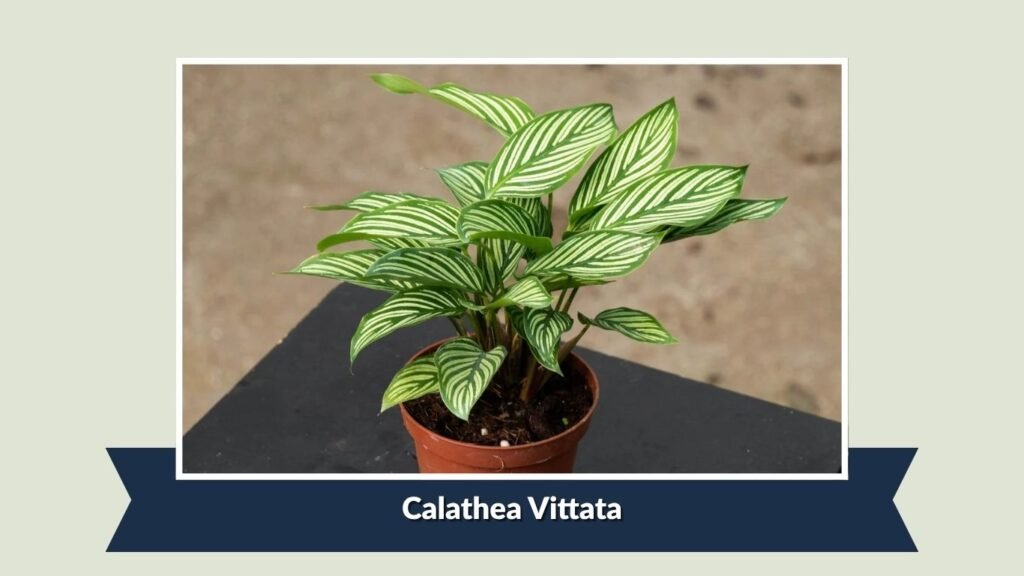
Calathea Vittata (Goeppertia elliptica ‘Vittata’) is a beautiful tropical houseplant admired for its elegant green leaves decorated with thin, creamy-white stripes. Its elongated foliage features symmetrical patterns that create a fresh and attractive appearance. Native to tropical South America through its parent species, this Calathea variety is popular for indoor gardens, bedrooms, and decorative spaces. With proper lighting, humidity, and consistent watering, Calathea Vittata can maintain its attractive foliage throughout the year.
Identification
- Scientific Name: Goeppertia elliptica ‘Vittata’
- Common Name: Calathea Vittata
- Plant Family: Marantaceae
- Native Region: Tropical South America
- Leaf Shape: Long, oval, and slightly pointed
- Leaf Color: Green with thin, creamy-white stripes
- Mature Height: Approximately 1–2 feet indoors
- Growth Habit: Upright, compact, and clumping
Ideal Indoor Growing Conditions
Calathea Vittata thrives in medium to bright indirect sunlight. Direct sunlight can damage its delicate foliage and cause its creamy-white stripes to fade or develop brown patches. An east-facing window or a location with filtered sunlight provides suitable lighting.Maintain indoor temperatures between 65°F and 80°F (18°C–27°C). Humidity levels around 60% or higher help prevent dry leaf edges and support healthy growth.Use a well-draining, moisture-retentive potting mixture containing coco coir, perlite, and organic matter. Proper drainage helps maintain healthy roots while keeping the soil lightly moist.
Watering and Maintenance
Water Calathea Vittata when the upper inch of soil begins to feel dry. Keep the growing medium evenly moist without allowing it to become waterlogged.Remove yellowing or damaged leaves using clean pruning scissors. During spring and summer, apply diluted balanced fertilizer approximately once a month.Brown leaf edges, curling foliage, or fading stripes may indicate inconsistent watering, low humidity, or excessive sunlight. Maintaining stable indoor conditions helps preserve its beautiful striped leaves.
22. Calathea Flamestar
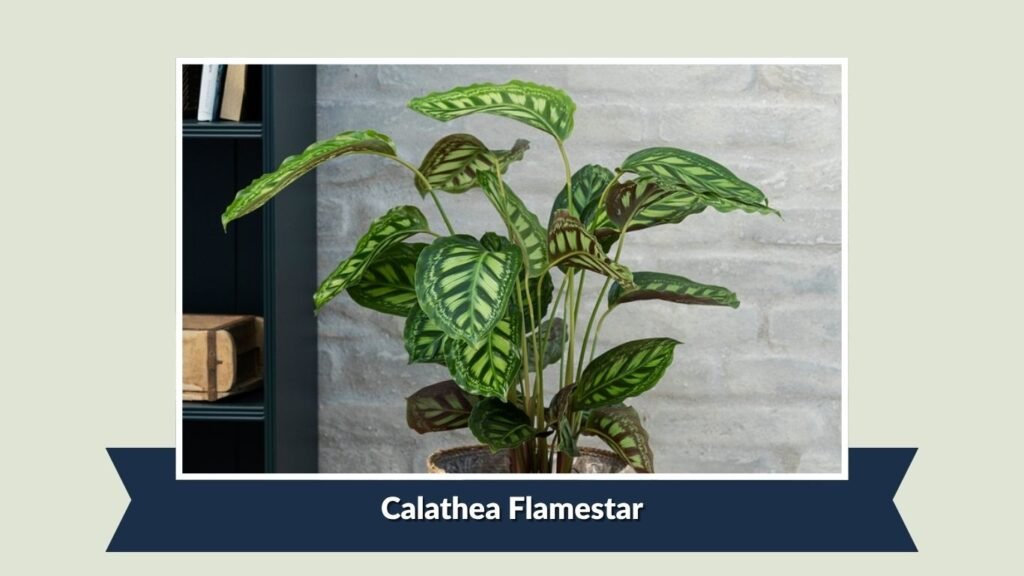
Calathea Flamestar (Goeppertia roseopicta ‘Flamestar’) is a striking tropical houseplant recognized for its bold leaf patterns and colorful foliage. Its broad, rounded leaves feature beautiful combinations of dark green, light green, and creamy markings, creating a dramatic ornamental appearance. The undersides often display deep purple tones that enhance its tropical beauty. This cultivated variety is an excellent addition to indoor gardens and decorative plant collections.
Identification
- Scientific Name: Goeppertia roseopicta ‘Flamestar’
- Common Name: Calathea Flamestar
- Plant Family: Marantaceae
- Native Region: Cultivated variety of a tropical South American species
- Leaf Shape: Broad, oval, and rounded
- Leaf Color: Dark green with lighter green and creamy patterns
- Mature Height: Approximately 1–2 feet indoors
- Growth Habit: Compact, upright, and clumping
Ideal Indoor Growing Conditions
Calathea Flamestar prefers medium to bright indirect sunlight. Strong direct sunlight can scorch its leaves and cause the decorative patterns to lose their vibrant appearance. Place the plant near an east-facing window or behind sheer curtains.The ideal temperature ranges between 65°F and 80°F (18°C–27°C). This tropical variety prefers humidity levels around 60–70% or higher.Choose a loose, moisture-retentive potting mixture containing coco coir, perlite, and organic matter. Good drainage helps prevent root rot while allowing the soil to retain moderate moisture.
Watering and Maintenance
Water Calathea Flamestar when the top inch of soil begins to feel slightly dry. Maintain consistent soil moisture without leaving excess water in the pot.Clean its broad leaves occasionally with a soft, damp cloth to remove dust. Apply diluted balanced fertilizer every four to six weeks during spring and summer.Remove damaged leaves using sanitized scissors. Brown leaf tips, curling foliage, and fading patterns may indicate low humidity, irregular watering, or excessive light. Stable indoor conditions help maintain its attractive appearance.
23. Calathea Misto
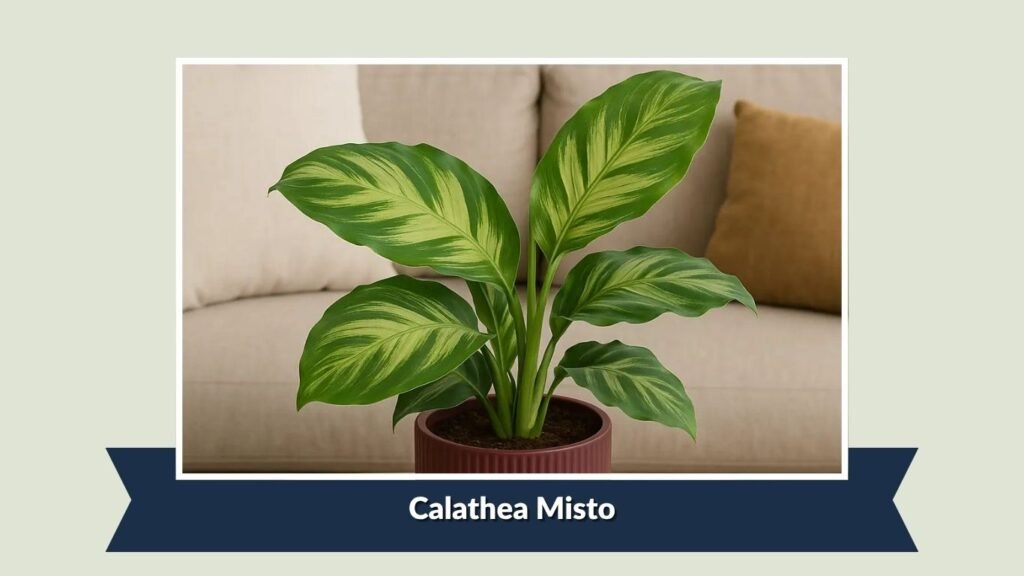
Calathea Misto (Goeppertia ‘Misto’) is an attractive tropical houseplant admired for its soft green foliage and delicate leaf markings. Its elongated leaves feature a beautiful combination of light green and darker green patterns, creating a calm and refreshing appearance. This ornamental Calathea variety is commonly grown indoors because of its manageable size and decorative foliage. With consistent moisture, filtered sunlight, and suitable humidity, Calathea Misto can become a beautiful addition to indoor plant collections.
Identification
- Scientific Name: Goeppertia ‘Misto’ (horticultural name)
- Common Name: Calathea Misto
- Plant Family: Marantaceae
- Native Region: Cultivated ornamental variety
- Leaf Shape: Oval, elongated, and slightly pointed
- Leaf Color: Light green with darker green patterns
- Mature Height: Approximately 1–2 feet indoors
- Growth Habit: Upright, compact, and clumping
Ideal Indoor Growing Conditions
Calathea Misto thrives in medium to bright indirect sunlight. Direct afternoon sunlight may burn its delicate leaves, while extremely low light can slow its growth. Position the plant where it receives gentle, filtered natural light.Maintain temperatures between 65°F and 80°F (18°C–27°C). Humidity levels around 60% or higher help maintain healthy foliage and reduce brown leaf edges.Use a well-draining potting mixture containing coco coir, perlite, and organic matter. The growing medium should retain light moisture while allowing excess water to escape.
Watering and Maintenance
Water Calathea Misto when the upper inch of soil feels slightly dry. Keep the soil evenly moist without allowing waterlogged conditions.Remove yellowing or damaged leaves using clean pruning scissors. During the active growing season, apply diluted balanced liquid fertilizer approximately once a month.Avoid exposing the plant to cold drafts, heating vents, or sudden temperature changes. Curling leaves, brown tips, and drooping foliage may indicate inconsistent moisture or low humidity. Proper indoor care helps maintain its lush green appearance.
24. Calathea Silver Plate
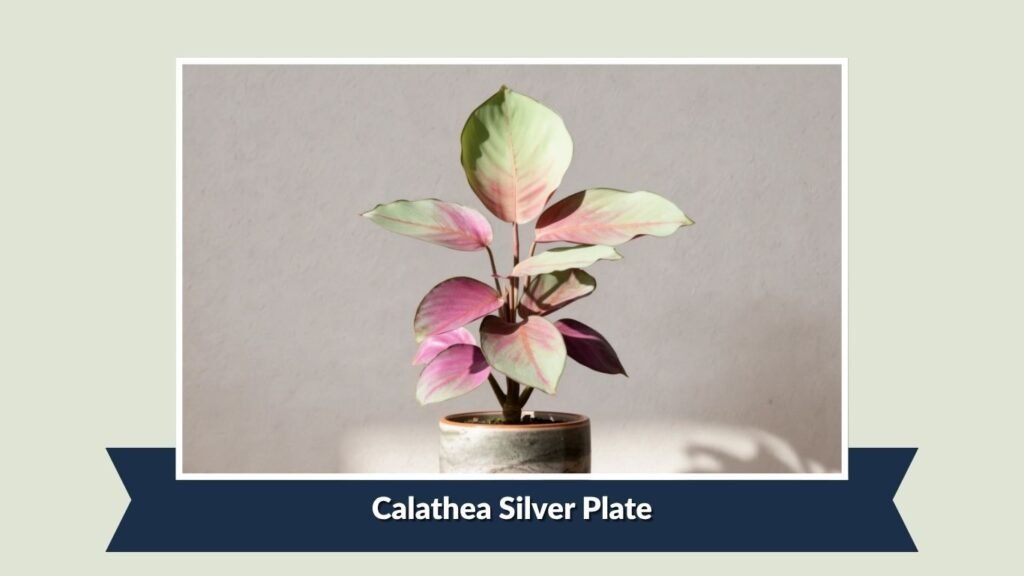
Calathea Silver Plate (often sold as Goeppertia roseopicta ‘Silver Plate’) is a beautiful ornamental houseplant valued for its striking silvery-green foliage. Its broad, rounded leaves feature a pale silver central area surrounded by darker green margins, creating an elegant contrast. Some forms also display attractive purple undersides. This tropical plant is particularly appealing for modern indoor decorations and houseplant collections because of its distinctive leaf coloration.
Identification
- Scientific Name: Often marketed as Goeppertia roseopicta ‘Silver Plate’
- Common Name: Calathea Silver Plate
- Plant Family: Marantaceae
- Native Region: Cultivated ornamental variety
- Leaf Shape: Broad, oval, and rounded
- Leaf Color: Silvery-green with dark green margins
- Mature Height: Approximately 1–2 feet indoors
- Growth Habit: Compact, upright, and clumping
Ideal Indoor Growing Conditions
Calathea Silver Plate grows best in medium to bright indirect sunlight. Its pale foliage is sensitive to strong direct sunlight, which can cause leaf scorching and brown patches. Filtered light near an east-facing window is suitable.The ideal temperature ranges between 65°F and 80°F (18°C–27°C). Maintain humidity around 60% or higher to reduce leaf dryness and encourage healthy growth.Use a moisture-retentive but well-draining potting mixture containing coco coir, perlite, and organic matter. Good drainage is essential for protecting its sensitive roots.
Watering and Maintenance
Water Calathea Silver Plate when the top inch of soil begins to dry. Keep the soil consistently moist without allowing excess water to accumulate.Clean the leaves gently with a damp cloth to remove dust. During spring and summer, apply diluted balanced fertilizer every four to six weeks.Remove damaged or yellowing foliage using sanitized pruning scissors. Brown leaf edges, curling leaves, or faded silver coloration may indicate insufficient humidity, inconsistent watering, or excessive sunlight. Stable growing conditions help preserve its attractive foliage.
25. Calathea Network
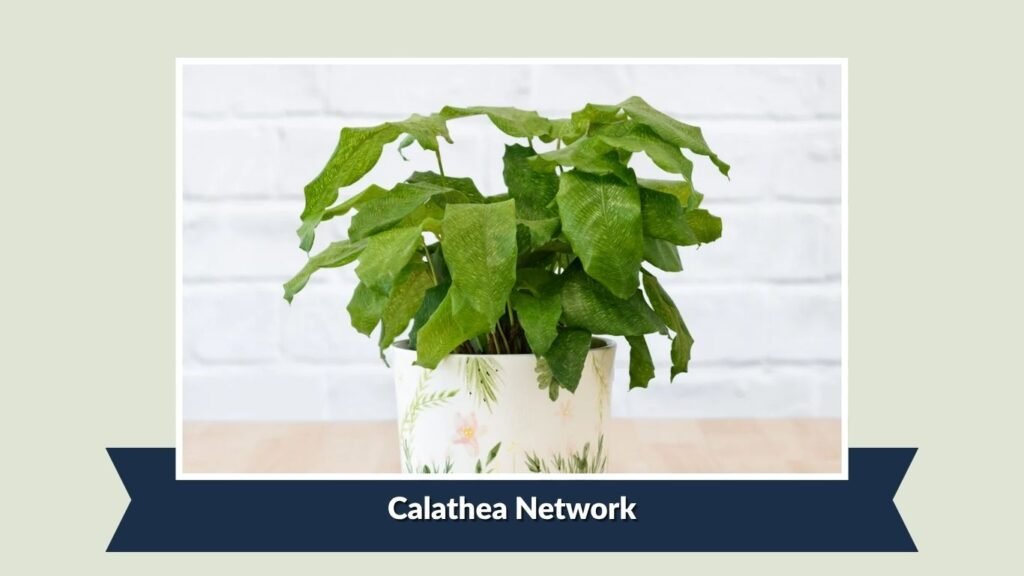
Calathea Network (Goeppertia kegeljanii), also commonly known as Calathea Musaica, is a fascinating tropical houseplant admired for its intricate mosaic-like leaf patterns. Its glossy green leaves feature delicate dark green lines that resemble a finely woven network. Native to Brazil, this plant has a distinctive appearance that makes it stand out among indoor foliage plants. Its decorative leaves and compact growth habit make it suitable for tabletops, offices, and indoor plant collections.
Identification
- Scientific Name: Goeppertia kegeljanii
- Common Name: Calathea Network or Calathea Musaica
- Plant Family: Marantaceae
- Native Region: Brazil
- Leaf Shape: Broad, oval, and slightly pointed
- Leaf Color: Light green with intricate dark green network patterns
- Mature Height: Approximately 1–2 feet indoors
- Growth Habit: Compact, upright, and clumping
Ideal Indoor Growing Conditions
Calathea Network thrives in medium to bright indirect sunlight. Sufficient filtered light helps maintain its distinctive leaf patterns, while strong direct sunlight may cause leaf scorching.Maintain indoor temperatures between 65°F and 80°F (18°C–27°C). This plant prefers moderate to high humidity, ideally around 50–70%, making it suitable for warm indoor environments.Use a loose, well-draining potting mixture containing coco coir, perlite, and organic matter. The growing medium should retain moderate moisture while allowing sufficient airflow around the roots.
Watering and Maintenance
Water Calathea Network when the upper inch of soil feels slightly dry. Keep the growing medium lightly moist without allowing water to accumulate around the roots.Clean the leaves occasionally with a soft, damp cloth to highlight their intricate patterns. During spring and summer, apply diluted balanced fertilizer approximately once a month.Remove yellowing or damaged foliage using clean pruning scissors. Brown leaf tips, curling foliage, and yellowing leaves may indicate inconsistent watering, low humidity, or excessive sunlight. Regular care supports healthy growth and maintains its unique mosaic patterns.
FAQs
1. Which Calathea plant is best for indoor growing?
Calathea Orbifolia, Calathea Rattlesnake, and Calathea Freddie are excellent choices for indoor growing. These varieties are admired for their decorative foliage and ability to thrive in indirect sunlight. Calathea Rattlesnake is particularly suitable for beginners because it is relatively adaptable compared with more sensitive varieties.
2. How often should I water my Calathea plant?
Most Calathea plants need watering when the top inch of soil begins to feel dry. This may be approximately once a week, depending on indoor temperature, humidity, and pot size. Keep the soil evenly moist but avoid overwatering, as waterlogged conditions can cause root rot.
3. Do Calathea plants need direct sunlight?
No, Calathea plants prefer medium to bright indirect sunlight. Direct sunlight can scorch their delicate leaves, fade colorful patterns, and cause brown patches. An east-facing window or a location with filtered natural light is ideal for maintaining healthy foliage.
4. Why are my Calathea leaves turning brown or curling?
Calathea leaves may turn brown or curl due to low humidity, inconsistent watering, excessive sunlight, or mineral-heavy tap water. Maintain humidity around 50–70%, water consistently, and protect the plant from temperature fluctuations. Using filtered or rainwater may also help reduce leaf damage.
5. Are Calathea plants safe for cats and dogs?
Yes, Calathea plants are generally considered non-toxic to cats and dogs. This makes them popular indoor houseplants for pet owners. However, chewing large amounts of plant material may still cause mild digestive discomfort, so keeping plants away from curious pets is advisable.