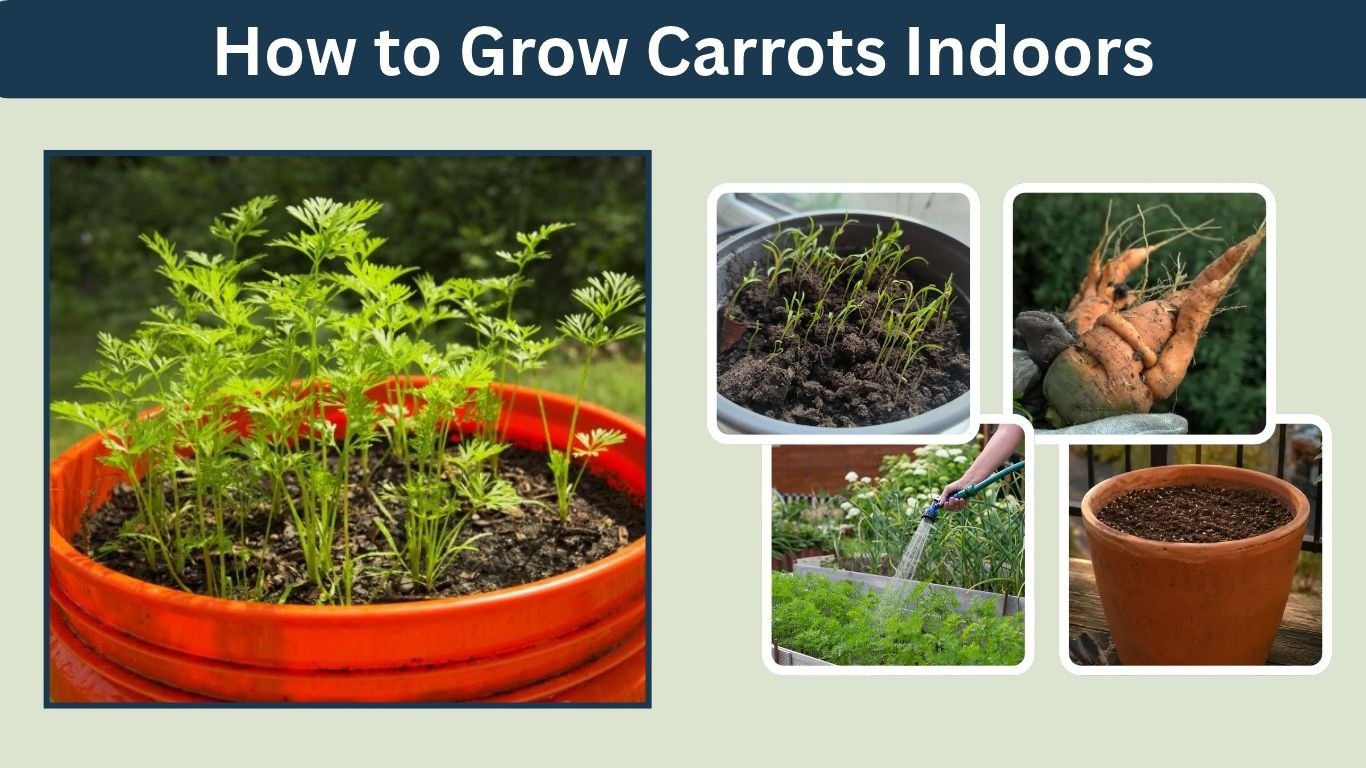
Growing carrots indoors is an excellent way to enjoy fresh, nutritious root vegetables without needing an outdoor garden. Whether you live in an apartment, have limited gardening space, or want to grow carrots during winter, indoor cultivation offers a convenient solution. With the right carrot varieties, deep containers, loose soil, and sufficient lighting, you can successfully produce healthy carrots throughout the year. This guide explains how to grow carrots indoors from seeds, choose suitable containers, maintain proper growing conditions, and harvest fresh carrots from your home garden.
Can You Grow Carrots Indoors Successfully?
Yes, carrots can grow indoors when provided with sufficient light, suitable containers, and loose, well-draining soil. Unlike many vegetables, carrots develop their edible portions underground, making soil depth and structure especially important. Indoor cultivation works particularly well for shorter carrot varieties that require less growing space. With consistent moisture and appropriate temperatures, gardeners can produce flavorful carrots in apartments and small indoor gardens.
Best Carrot Varieties for Indoor Growing
Short-rooted and round carrot varieties are ideal for indoor containers because they require less soil depth than traditional long carrots.Parisian carrots produce small, round roots suitable for shallow containers. Little Finger carrots develop slender, compact roots, while Short ‘n Sweet varieties offer relatively short, thick carrots.Chantenay-type carrots are another option when containers provide adequate growing depth. Choose varieties based on available space and the recommended mature root length.
Ideal Indoor Growing Conditions
Carrots grow best in relatively cool conditions, with temperatures around 60–75°F (16–24°C).They require sufficient lighting, loose soil, and consistent moisture for healthy root development. A bright window may support growth, but supplemental lighting often improves results.Avoid excessive heat because it can negatively affect root quality and overall plant development.
How to Grow Carrots Indoors From Seeds
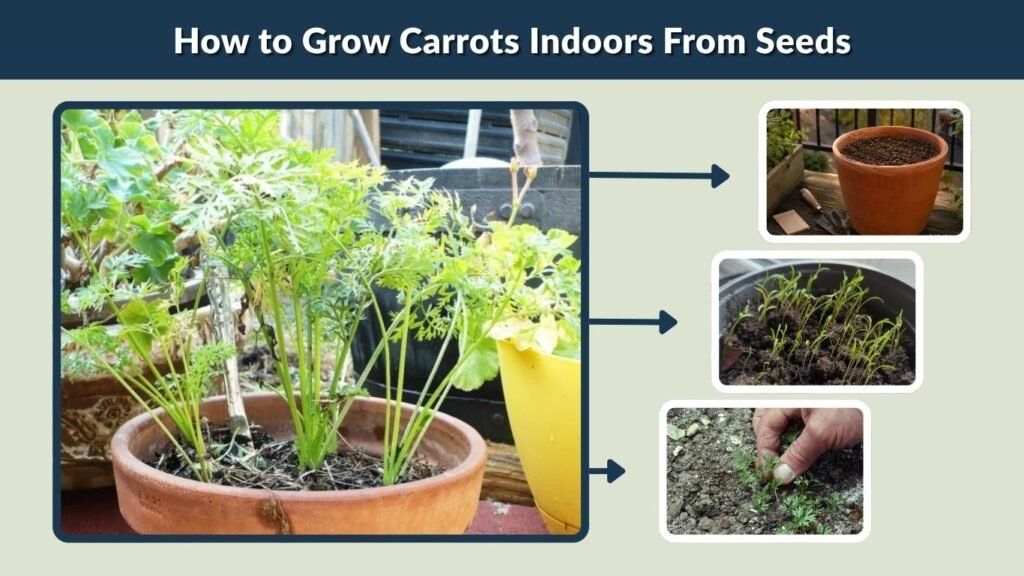
Growing carrots from seeds is the most reliable way to produce edible roots indoors. Carrots develop a primary taproot early, making them sensitive to transplanting and root disturbance. Direct sowing into their final containers helps roots develop naturally without unnecessary stress. Proper seed placement, moisture management, and thinning encourage straight, healthy carrots while reducing competition between developing seedlings.
Step-by-Step Carrot Seed Planting Guide
- Choose seeds: Select short, round, or compact carrot varieties suitable for container gardening.
- Prepare containers: Fill pots with loose, well-draining potting mix.
- Plant seeds: Sow seeds approximately ¼ inch deep.
- Maintain moisture: Keep the soil surface consistently moist during germination.
- Provide warmth: Maintain soil temperatures around 65–75°F (18–24°C) for reliable germination.
- Thin seedlings: Space developing plants approximately 2–3 inches apart, depending on the variety.
How Long Do Carrot Seeds Take to Germinate?
Carrot seeds typically germinate within 7–21 days, depending on soil temperature and moisture conditions.Because carrot seeds are small and planted shallowly, the soil surface can dry quickly. Maintain gentle, consistent moisture throughout germination.Once seedlings emerge, provide sufficient light to encourage healthy leaf development and prevent weak, elongated growth.
Growing Carrots Indoors in Pots and Containers
Container gardening makes carrot cultivation possible in apartments, kitchens, and dedicated indoor growing spaces. However, carrots require enough soil depth to develop properly shaped roots. Shallow containers can restrict longer varieties, while compacted soil may cause crooked or forked carrots. Choosing suitable containers and growing media creates favorable conditions for producing smooth, healthy roots.
Choosing the Right Container Size
For short carrot varieties, containers approximately 8–10 inches deep may be sufficient. Longer varieties often require 12 inches or more.Choose wide containers to accommodate several plants with adequate spacing. Every container should have drainage holes to prevent excess moisture accumulation.Plastic pots, planter boxes, and deep growing trays can all support indoor carrot cultivation.
Best Soil for Growing Carrots Indoors
Use a lightweight, well-draining potting mix with a loose texture that allows roots to expand easily.A growing medium containing coco coir or peat-based components and perlite can provide suitable moisture retention and drainage.Avoid compacted soil, large stones, and excessive amounts of fresh manure because these conditions may interfere with healthy root development.
Indoor Carrot Light and Temperature Requirements
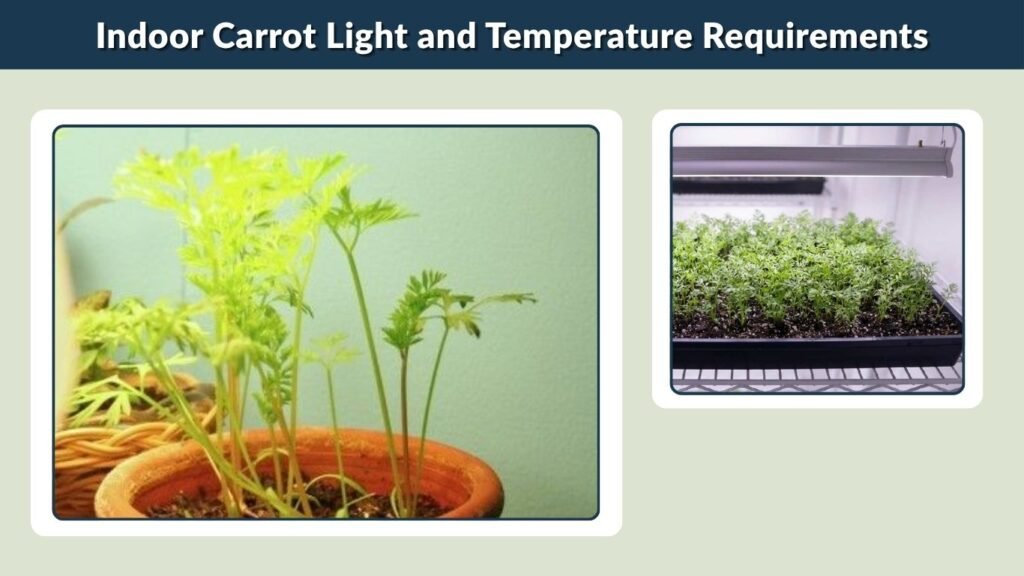
Light and temperature strongly influence carrot growth, leaf development, and root formation. Although carrots tolerate cooler conditions than many fruiting vegetables, they still require adequate light to produce healthy roots. Indoor growing environments may lack sufficient natural sunlight, particularly during winter. Supplemental lighting and stable temperatures help maintain steady growth and improve overall crop quality.
Growing Carrots Indoors Under Grow Lights
- Light duration: Provide approximately 12–16 hours of artificial lighting daily.
- Light type: Choose full-spectrum LED grow lights designed for vegetable cultivation.
- Light placement: Follow the manufacturer’s recommended distance from the plant canopy.
- Light coverage: Ensure all seedlings receive reasonably even illumination.
- Dark period: Provide a regular nighttime period rather than continuous lighting.
Maintaining Ideal Indoor Temperatures
Carrots generally perform well when indoor temperatures remain around 60–75°F (16–24°C).Excessively warm conditions may reduce root quality, while very cold soil slows growth and germination.Keep containers away from heating vents and locations with extreme temperature fluctuations.
Watering and Fertilizing Indoor Carrots
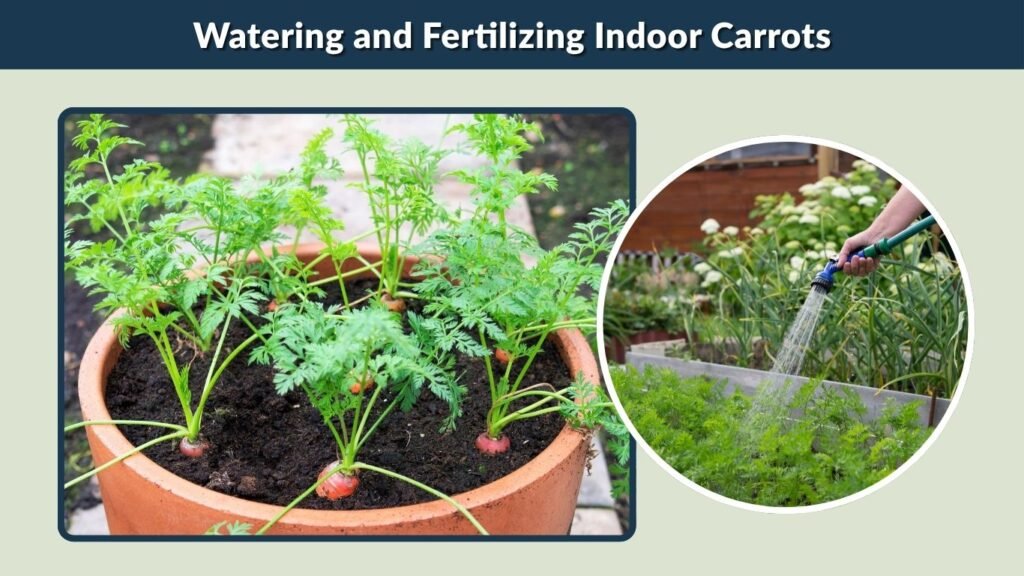
Consistent watering and balanced nutrition are essential for growing healthy carrots indoors. Unlike leafy vegetables, carrots need steady underground growth to develop smooth, flavorful roots. Excess moisture can encourage root diseases, while irregular watering may contribute to cracking or poor development. Maintaining moderate soil moisture and avoiding excessive fertilizer helps carrots develop properly throughout their growing period.
How Often Should You Water Indoor Carrots?
Check the soil regularly and water when the upper layer begins to dry. Keep the growing medium evenly moist without allowing it to become waterlogged.Young seedlings need particular attention because their shallow roots dry out quickly. Established plants benefit from deeper watering that reaches the developing taproots.
Best Fertilizer for Indoor Carrots
Use a balanced vegetable fertilizer sparingly if the potting mix does not already contain sufficient nutrients.Avoid excessive nitrogen because it encourages leafy growth rather than healthy root development.Follow fertilizer instructions carefully, as excessive feeding can cause nutrient imbalances and reduce crop quality.
Growing Carrots Indoors During Winter
Winter is an excellent opportunity to experiment with indoor carrot gardening, especially when outdoor soil is frozen or unavailable. Although carrots tolerate cool temperatures, limited winter sunlight can slow their development. With supplemental lighting, suitable containers, and consistent indoor conditions, gardeners can maintain productive plants throughout colder months. Careful moisture management also helps prevent problems associated with reduced evaporation.
How to Grow Carrots Indoors in Winter
Place carrot containers beneath full-spectrum grow lights and maintain approximately 12–16 hours of daily illumination.Keep the growing area around 60–75°F (16–24°C), avoiding direct exposure to heating vents or freezing windows.Monitor moisture because indoor heating can dry the growing medium. Maintain gentle airflow and allow sufficient space between plants.
Growing Carrot Tops Indoors From Scraps
Growing carrot tops from kitchen scraps is a simple indoor gardening activity that requires minimal equipment. Although carrot tops can produce fresh green leaves, they cannot regenerate the original edible taproot. This method is useful for observing plant growth or harvesting small amounts of carrot greens. Gardeners wanting full-sized carrots should always start with seeds instead.
How to Grow Carrot Tops Indoors in Water
- Save the tops: Cut approximately one inch from the upper portion of fresh carrots.
- Prepare a dish: Place carrot tops cut-side down in a shallow container.
- Add water: Cover only the bottom portion with clean water.
- Provide light: Position the dish somewhere with bright, indirect light.
- Replace water: Change the water regularly to discourage bacterial growth.
- Observe growth: Fresh green leaves may emerge within several days.
Can Carrot Tops Grow New Carrots?
No, carrot tops cannot produce another full-sized carrot root. They can develop new leaves and small fibrous roots, but the original storage root does not regenerate.For edible carrot roots, plant fresh carrot seeds in suitable soil.
Common Indoor Carrot Growing Problems
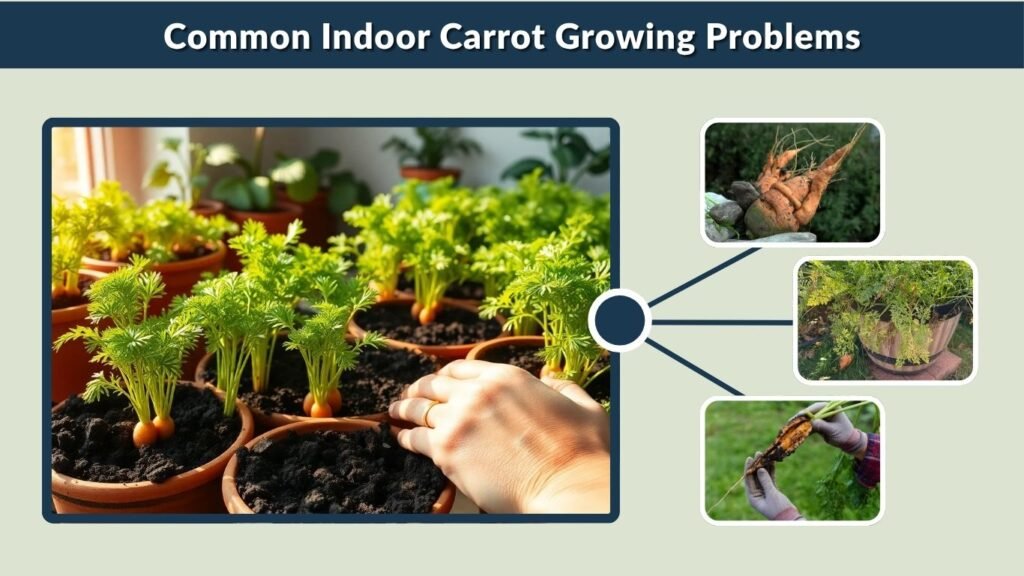
Indoor carrot cultivation sometimes involves challenges related to lighting, watering, soil conditions, and plant spacing. Because the edible roots develop underground, gardeners may not immediately notice problems until harvesting. However, leaf appearance and growth patterns can provide valuable clues. Identifying potential issues early helps prevent misshapen roots, weak seedlings, and disappointing harvests in container gardens.
Common Problems and Their Solutions
- Forked carrots: Use loose soil free from stones and avoid disturbing developing roots.
- Small roots: Improve lighting, maintain spacing, and allow sufficient growing time.
- Yellow leaves: Check watering practices, drainage, and nutrient availability.
- Leggy seedlings: Increase light intensity and position grow lights appropriately.
- Cracked roots: Maintain consistent soil moisture and avoid prolonged dry periods.
- Slow germination: Keep the seedbed evenly moist and maintain suitable soil temperatures.
When and How to Harvest Indoor Carrots
Harvesting carrots at the appropriate time ensures desirable flavor, texture, and root development. Indoor carrots generally follow similar maturity schedules to outdoor-grown varieties, although insufficient lighting can delay growth. Smaller varieties may be ready earlier than traditional long carrots. Checking root shoulders and seed packet recommendations helps determine harvesting readiness without unnecessarily disturbing developing plants.
How Long Does It Take to Grow Carrots Indoors?
Most carrot varieties require approximately 60–80 days from sowing to harvesting, although some take longer depending on their variety and growing conditions.Check the seed packet for expected maturity dates. Gently remove a little soil around the root shoulder to inspect its diameter.Harvest mature carrots by loosening the surrounding soil and pulling carefully from the base of the leaves.
FAQs
1. Can You Grow Carrots Indoors Year-Round?
Yes, carrots can grow indoors year-round when provided with adequate lighting, suitable temperatures, and consistent moisture. Supplemental grow lights are especially useful during winter.
2. Can You Grow Carrots Indoors Without Sunlight?
Yes, carrots can grow without natural sunlight when suitable LED grow lights provide sufficient intensity and duration for healthy root development.
3. Can You Grow Carrots Indoors in Water?
Carrot tops can regrow leaves in water, but they cannot produce new edible carrot taproots. Growing full carrots generally requires seeds and a suitable root-growing medium.
4. What Is the Best Container for Growing Carrots Indoors?
A deep container with drainage holes is best. Choose approximately 8–10 inches of depth for short varieties and at least 12 inches for longer carrots.
5. How Many Carrots Can You Grow in One Indoor Pot?
The number depends on the container’s surface area and the variety. Generally, spacing carrots 2–3 inches apart provides enough room for healthy root development.