
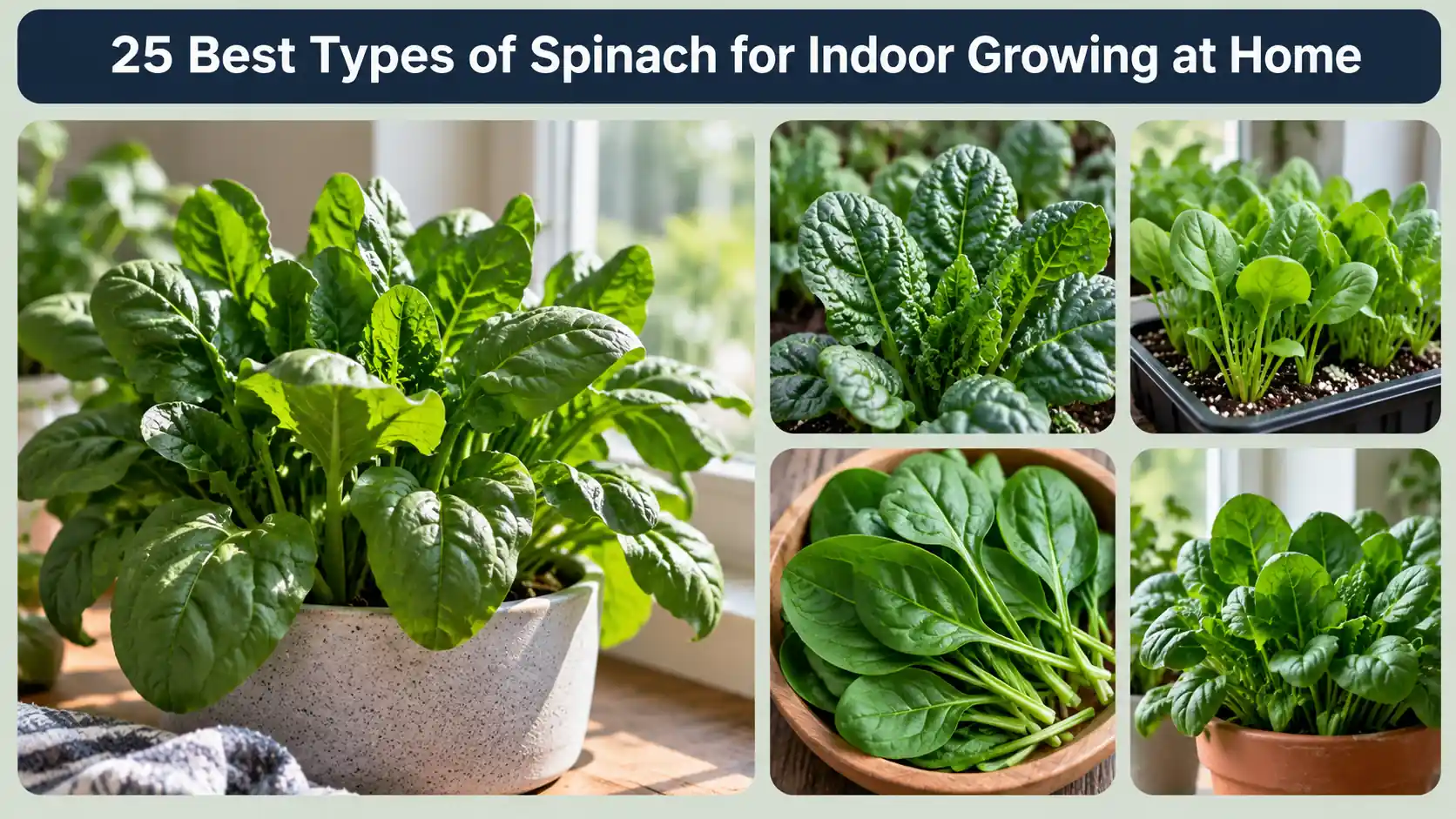
Growing spinach indoors is an excellent way to enjoy fresh, nutritious greens throughout the year. Many spinach varieties thrive in containers, making them perfect for windowsills, balconies, and small indoor gardens. From tender baby spinach to flavorful, crinkled varieties, there are plenty of options for home gardeners. This guide explores 25 types of spinach for indoor growing, including their identification, ideal growing conditions, and essential maintenance tips.
1. Bloomsdale Long Standing Spinach
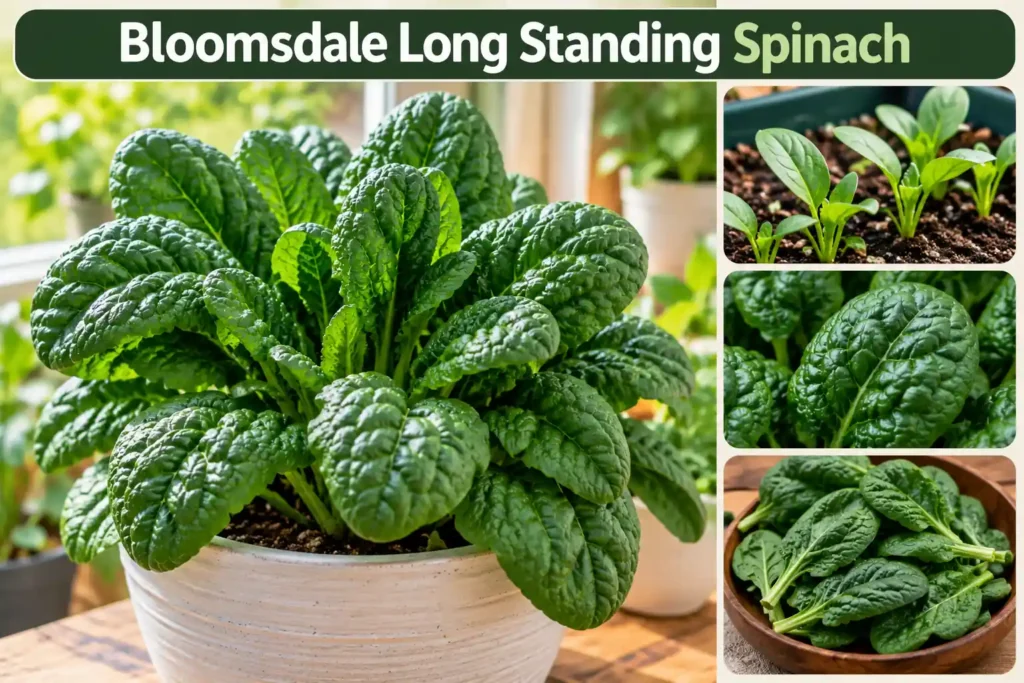
Bloomsdale Long Standing Spinach is a popular heirloom spinach variety known for its dark green, crinkled leaves and rich flavor. It is an excellent choice for indoor growing because of its compact growth and ability to thrive in containers. This cool-season vegetable produces tender, nutritious leaves that are perfect for salads, smoothies, and cooked dishes.
Identification
- Scientific Name: Spinacia oleracea
- Common Name: Bloomsdale Long Standing Spinach
- Plant Type: Annual leafy vegetable
- Leaf Color: Dark green
- Leaf Shape: Broad, heavily crinkled, and rounded
- Mature Height: 8–12 inches
- Harvest Time: Approximately 40–50 days
- Growing Season: Cool season
Ideal Indoor Growing Conditions
Bloomsdale Long Standing Spinach grows best in cool indoor temperatures between 50°F and 70°F. Place containers near a bright window that receives around 4–6 hours of direct sunlight daily. Alternatively, use full-spectrum LED grow lights for 12–14 hours per day. Choose a container at least 6–8 inches deep with proper drainage holes. Use nutrient-rich, well-draining potting soil to encourage healthy root development and continuous leaf production.
Watering and Maintenance Tips
Keep the soil consistently moist without making it waterlogged. Water when the top inch of soil begins to dry. Apply a diluted, balanced liquid fertilizer occasionally to support leafy growth. Remove yellow or damaged leaves regularly to maintain plant health. Harvest the outer leaves first, allowing the center to continue producing fresh spinach. Avoid excessive heat, which can cause early bolting and bitter leaves.
2. Space Spinach
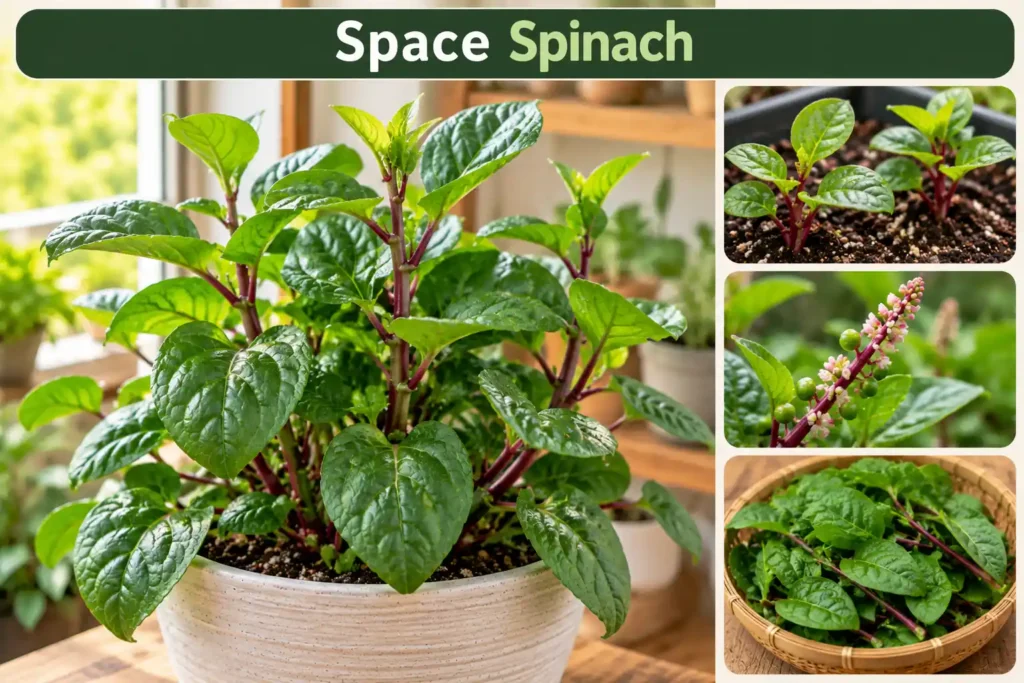
Space Spinach is a fast-growing hybrid variety known for its smooth, dark green leaves and compact growth habit. It is an excellent choice for indoor gardening because it grows well in containers and produces tender leaves suitable for fresh salads and cooking. Its good resistance to bolting and certain downy mildew races makes it a reliable option for home growers.
Identification
- Scientific Name: Spinacia oleracea
- Common Name: Space Spinach
- Plant Type: Annual leafy vegetable
- Leaf Color: Medium to dark green
- Leaf Shape: Smooth to slightly crinkled
- Harvest Time: Approximately 30–45 days
- Growing Season: Cool season
Ideal Indoor Growing Conditions
Space Spinach grows best in temperatures between 50°F and 70°F. Place the container near a sunny window that receives at least 4–6 hours of direct sunlight daily. Alternatively, provide 12–14 hours of light using LED grow lights. Use a container at least 6–8 inches deep with drainage holes. Well-draining, nutrient-rich potting soil supports healthy root development and consistent leaf growth.
Watering and Maintenance Tips
Water Space Spinach regularly to maintain evenly moist soil without creating waterlogged conditions. Check the top inch of soil before watering. Apply diluted liquid fertilizer occasionally to encourage healthy foliage. Harvest young outer leaves when they reach a usable size, allowing the inner leaves to continue growing. Maintain good air circulation and avoid excessive indoor heat to prevent premature bolting.
3. Tyee Spinach
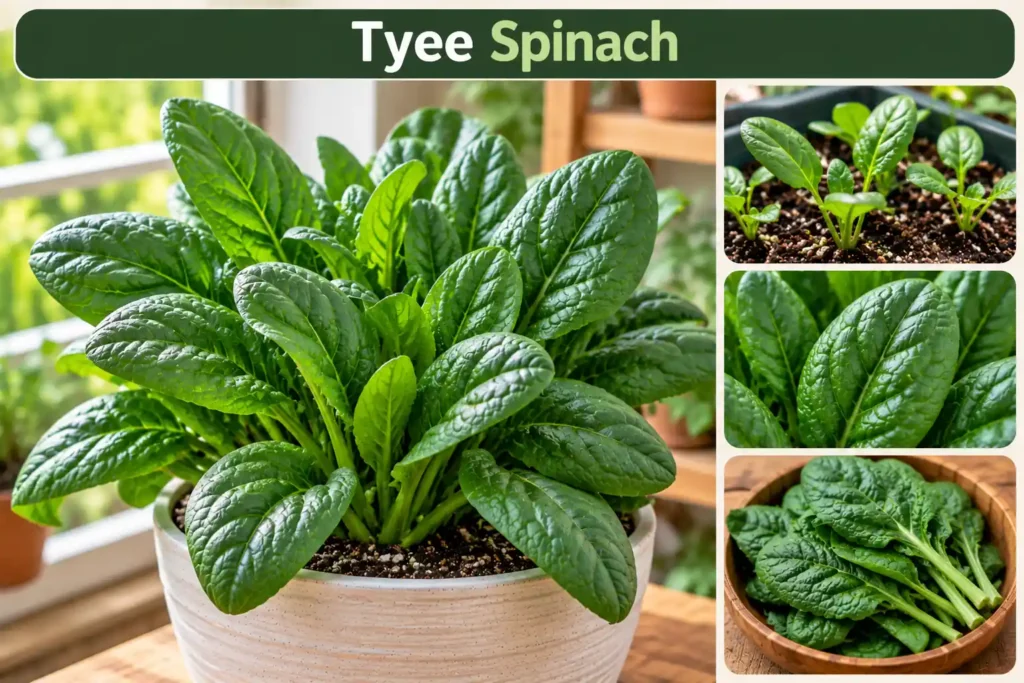
Tyee Spinach is a productive hybrid variety recognized for its dark green, slightly crinkled leaves and upright growth habit. It is particularly suitable for indoor container gardening because its vertical leaf growth makes harvesting easier. This variety also offers excellent resistance to premature bolting, allowing gardeners to enjoy fresh spinach leaves for an extended period under suitable conditions.
Identification
- Scientific Name: Spinacia oleracea
- Common Name: Tyee Spinach
- Plant Type: Annual leafy vegetable
- Leaf Color: Dark green
- Leaf Shape: Broad, semi-savoyed leaves
- Harvest Time: Approximately 39–45 days
- Growing Season: Cool season
Ideal Indoor Growing Conditions
Tyee Spinach thrives in cool indoor environments with temperatures ranging from 50°F to 70°F. Position containers near bright windows or provide 12–14 hours of artificial lighting daily. Select a pot approximately 8 inches deep with sufficient drainage. Use fertile, loose potting soil enriched with organic matter to support strong roots and healthy leaf production. Maintain moderate humidity and adequate airflow.
Watering and Maintenance Tips
Keep the soil consistently moist by watering whenever the upper layer begins drying. Avoid excessive watering because saturated soil can damage the roots. Apply a diluted, nitrogen-containing fertilizer occasionally to encourage leafy growth. Remove yellowing or damaged leaves to maintain plant health. Harvest larger outer leaves regularly while leaving the central growing point intact for continued production.
4. Melody Spinach
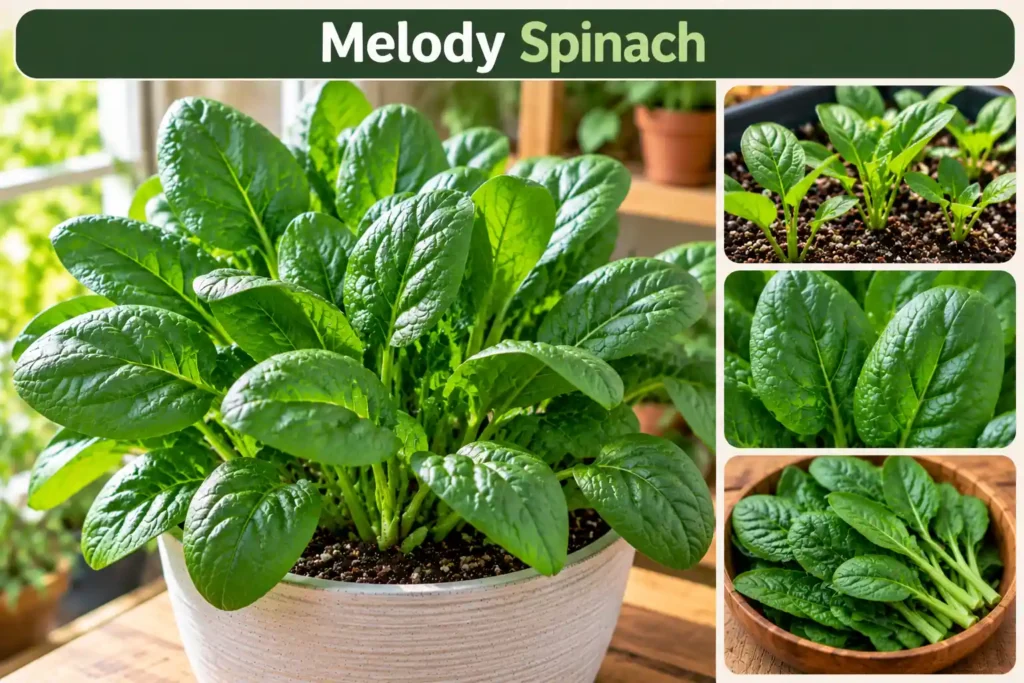
Melody Spinach is a popular hybrid variety valued for its thick, dark green leaves and slightly crinkled texture. This productive leafy vegetable is suitable for indoor growing when provided with cool temperatures and sufficient lighting. Its upright growth habit makes it convenient for container gardening, while its tender leaves are excellent for salads, soups, smoothies, and cooked vegetable dishes.
Identification
- Scientific Name: Spinacia oleracea
- Common Name: Melody Spinach
- Plant Type: Annual leafy vegetable
- Leaf Color: Deep green
- Leaf Shape: Thick, semi-savoyed leaves
- Harvest Time: Approximately 42–50 days
- Growing Season: Cool season
Ideal Indoor Growing Conditions
Melody Spinach grows best at temperatures between 50°F and 70°F. Place the container near a bright, sunny window or use full-spectrum LED grow lights for approximately 12–14 hours daily. A container measuring 6–8 inches deep provides suitable root space. Choose fertile, well-draining potting soil with good moisture retention. Maintain proper ventilation to discourage fungal diseases and promote healthy foliage.
Watering and Maintenance Tips
Water Melody Spinach regularly, keeping the soil slightly moist but never soggy. Check soil moisture frequently, particularly when growing under artificial lighting. Feed plants occasionally with diluted liquid fertilizer to encourage vigorous leaf growth. Remove damaged leaves and maintain enough spacing between plants for airflow. Harvest mature outer leaves with clean scissors while preserving the central growth. Avoid high temperatures that encourage flowering and reduce leaf quality.
5. Baby’s Leaf Spinach
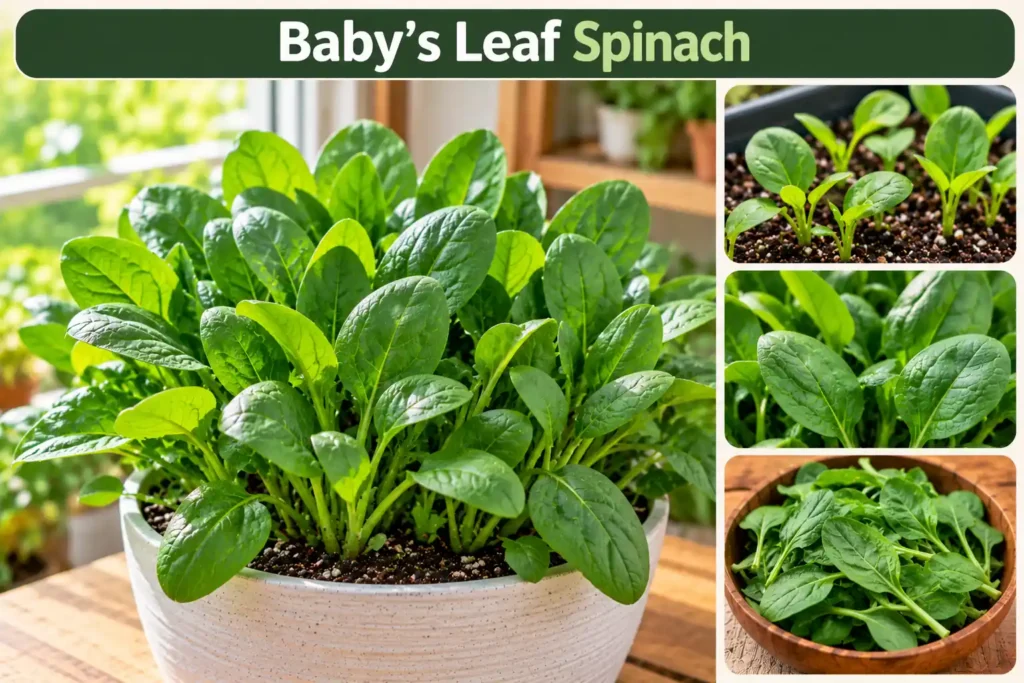
Baby’s Leaf Spinach is a fast-growing hybrid variety developed for producing small, tender leaves with a delicate flavor. Its compact growth habit makes it particularly suitable for growing indoors in containers, window boxes, and small garden spaces. The smooth, delicate leaves are excellent for fresh salads, sandwiches, and smoothies. This variety is especially appealing to gardeners interested in frequent baby spinach harvests.
Identification
- Scientific Name: Spinacia oleracea
- Common Name: Baby’s Leaf Spinach
- Plant Type: Annual leafy vegetable
- Leaf Color: Green
- Leaf Shape: Small, flat, semi-smooth leaves
- Harvest Time: Approximately 30–41 days
- Growing Season: Cool season
Ideal Indoor Growing Conditions
Baby’s Leaf Spinach performs best in cool temperatures between 50°F and 70°F. Position containers near a sunny window or provide 12–14 hours of light using full-spectrum LED grow lights. Choose a container at least 6 inches deep with drainage holes. Fill it with loose, nutrient-rich potting mix to encourage quick germination and healthy leaf development.
Watering and Maintenance Tips
Keep the growing medium evenly moist, especially during seed germination and early development. Water gently to avoid disturbing young seedlings. Apply a mild liquid fertilizer when necessary to maintain healthy foliage. Harvest tender leaves when they reach approximately 2–4 inches long. Cut carefully above the growing point if you want additional harvests. Sow fresh seeds every few weeks to maintain a consistent indoor supply.
6. Catalina Spinach
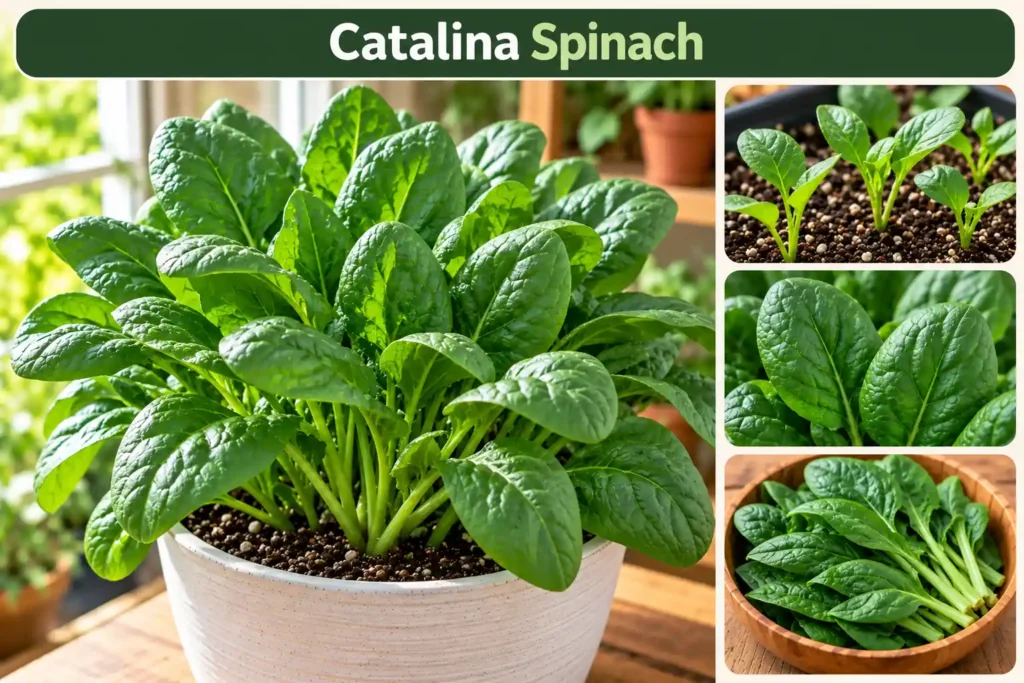
Catalina Spinach is a compact hybrid variety known for its small, dark green leaves and upright growth habit. It is a suitable option for indoor gardening because of its manageable size and ability to produce tender baby spinach leaves. Its relatively good heat tolerance also makes it useful for growers who experience slightly warmer indoor conditions, although cool temperatures remain preferable.
Identification
- Scientific Name: Spinacia oleracea
- Common Name: Catalina Spinach
- Plant Type: Annual leafy vegetable
- Leaf Color: Dark green
- Leaf Shape: Small, tender leaves
- Mature Height: Approximately 9–10 inches
- Harvest Time: Approximately 45–48 days
- Growing Season: Cool season
Ideal Indoor Growing Conditions
Catalina Spinach grows best in temperatures between 50°F and 70°F. Place containers near windows receiving 4–6 hours of direct sunlight or provide 12–14 hours of artificial lighting daily. Choose containers at least 6–8 inches deep with proper drainage. Use fertile, well-draining potting soil that retains adequate moisture without becoming compacted. Good ventilation helps maintain healthy leaves.
Watering and Maintenance Tips
Water Catalina Spinach whenever the upper soil surface begins to dry, maintaining consistent moisture throughout its growing period. Avoid allowing the container to remain saturated. Apply diluted liquid fertilizer occasionally to encourage fresh leaf growth. Harvest young leaves regularly for salads and other dishes. Remove damaged foliage and maintain adequate spacing to improve airflow. Keep plants away from excessive heat to prevent premature flowering.
7. Corvair Spinach
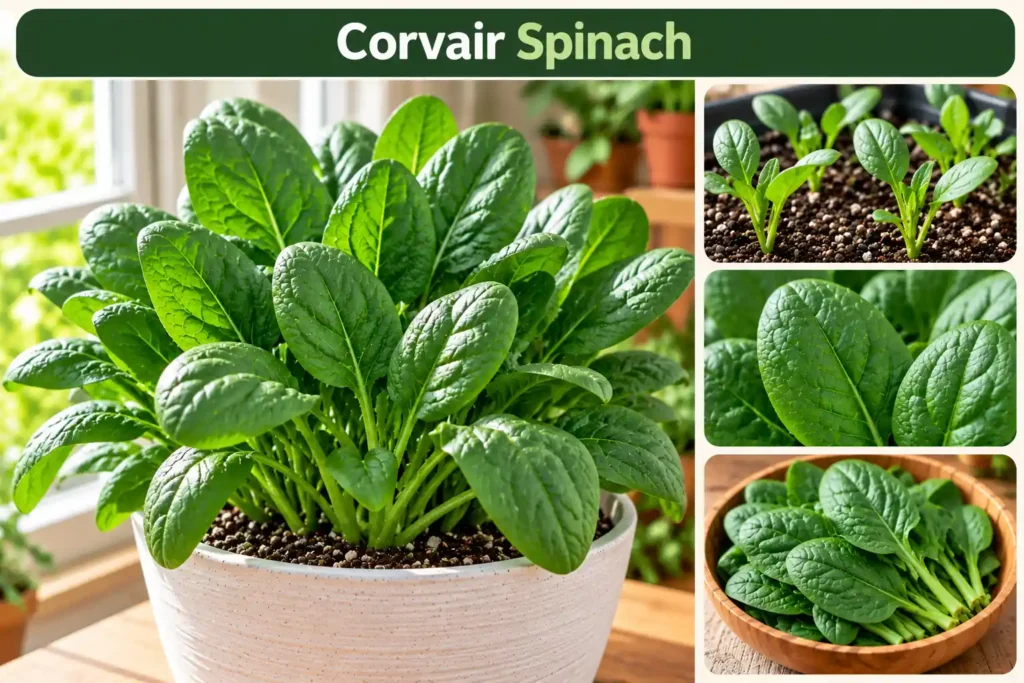
Corvair Spinach is a productive hybrid variety known for its smooth, oval-shaped leaves and attractive dark green color. It is an excellent choice for indoor growing because of its upright growth habit and reliable leaf production. This variety also offers good resistance to premature bolting and downy mildew, making it suitable for container gardening. Its tender leaves are perfect for salads, soups, and cooked dishes.
Identification
- Scientific Name: Spinacia oleracea
- Common Name: Corvair Spinach
- Plant Type: Annual leafy vegetable
- Leaf Color: Medium to dark green
- Leaf Shape: Smooth, oval-shaped leaves
- Harvest Time: Approximately 40 days
- Growing Season: Cool season
Ideal Indoor Growing Conditions
Corvair Spinach grows best in temperatures between 50°F and 70°F. Place containers near a bright window receiving at least 4–6 hours of direct sunlight daily. Alternatively, provide 12–14 hours of artificial lighting using full-spectrum LED grow lights. Choose containers approximately 6–8 inches deep with proper drainage holes. Use fertile, well-draining potting soil enriched with organic matter to encourage healthy root development and continuous leaf production.
Watering and Maintenance Tips
Keep the soil consistently moist without allowing water to accumulate around the roots. Water whenever the upper soil layer begins to dry. Apply diluted liquid fertilizer occasionally to support healthy foliage. Remove damaged or yellowing leaves regularly. Harvest larger outer leaves first while preserving the central growing point. Maintain cool temperatures and adequate airflow to encourage continuous growth.
8. Palco Spinach
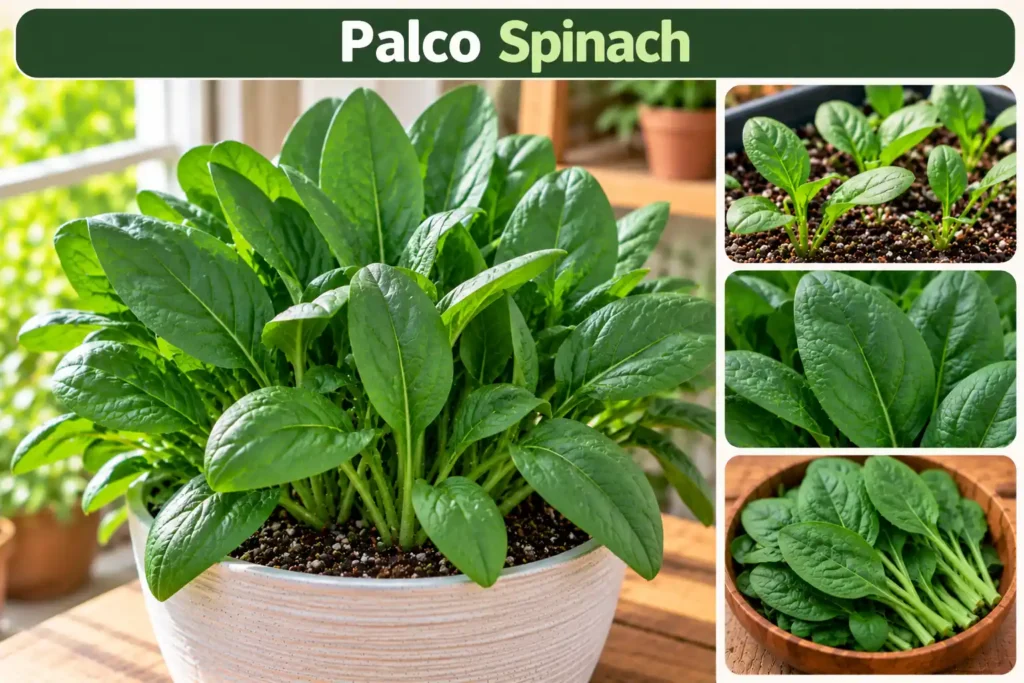
Palco Spinach is a fast-growing hybrid variety appreciated for its tender, spoon-shaped green leaves and excellent flavor. It is suitable for indoor container gardening because of its productive growth and ability to provide fresh baby spinach leaves. This variety also offers good bolting tolerance compared with many traditional spinach varieties, making it useful for indoor environments where temperatures occasionally fluctuate.
Identification
- Scientific Name: Spinacia oleracea
- Common Name: Palco Spinach
- Plant Type: Annual leafy vegetable
- Leaf Color: Rich green
- Leaf Shape: Smooth, spoon-shaped leaves
- Harvest Time: Approximately 38 days
- Growing Season: Cool season
Ideal Indoor Growing Conditions
Palco Spinach grows best in temperatures ranging from 50°F to 70°F. Position containers near a sunny window or provide 12–14 hours of artificial lighting daily. Select a container at least 6–8 inches deep with adequate drainage. Use loose, nutrient-rich potting soil that retains moderate moisture while allowing excess water to escape. Good air circulation and consistent lighting encourage strong leaf growth.
Watering and Maintenance Tips
Water Palco Spinach regularly to keep the soil evenly moist throughout its growing period. Avoid overwatering, which can cause root problems and yellowing leaves. Feed plants occasionally with diluted, balanced liquid fertilizer. Harvest tender baby leaves when they reach approximately 3 inches long. Remove damaged foliage and maintain adequate spacing between plants. Keep the growing area relatively cool to preserve leaf quality and reduce premature flowering.
9. Regiment Spinach
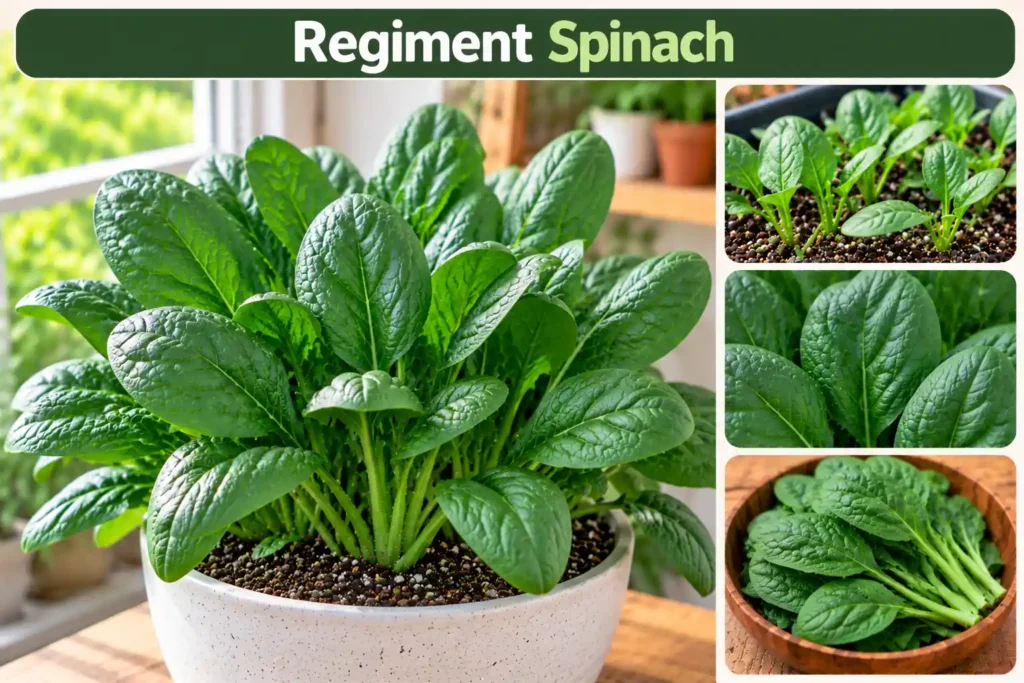
Regiment Spinach is a vigorous hybrid variety recognized for its broad, dark green leaves and slightly crinkled texture. It produces attractive, upright foliage that makes harvesting convenient in indoor containers. This variety is also valued for its resistance to certain downy mildew races and its relatively fast growth. Its flavorful leaves are suitable for fresh salads, smoothies, soups, and cooked vegetable dishes.
Identification
- Scientific Name: Spinacia oleracea
- Common Name: Regiment Spinach
- Plant Type: Annual leafy vegetable
- Leaf Color: Dark green
- Leaf Shape: Broad, semi-savoyed leaves
- Harvest Time: Approximately 37–40 days
- Growing Season: Cool season
Ideal Indoor Growing Conditions
Regiment Spinach thrives in cool indoor temperatures between 50°F and 70°F. Place containers near windows receiving approximately 4–6 hours of direct sunlight or provide full-spectrum LED grow lights for 12–14 hours daily. Choose pots at least 6–8 inches deep with drainage holes. Use fertile, well-draining potting soil containing organic matter. Consistent lighting and moderate humidity support healthy foliage development.
Watering and Maintenance Tips
Keep Regiment Spinach evenly moist by watering whenever the soil surface begins to dry. Avoid excessive watering, as waterlogged conditions can encourage root diseases. Apply diluted liquid fertilizer occasionally to maintain healthy leaf growth. Remove yellowing leaves and inspect the foliage regularly for pests. Harvest larger outer leaves while allowing younger central leaves to continue developing. Maintain proper air circulation and avoid excessive heat to reduce bolting.
10. Renegade Spinach
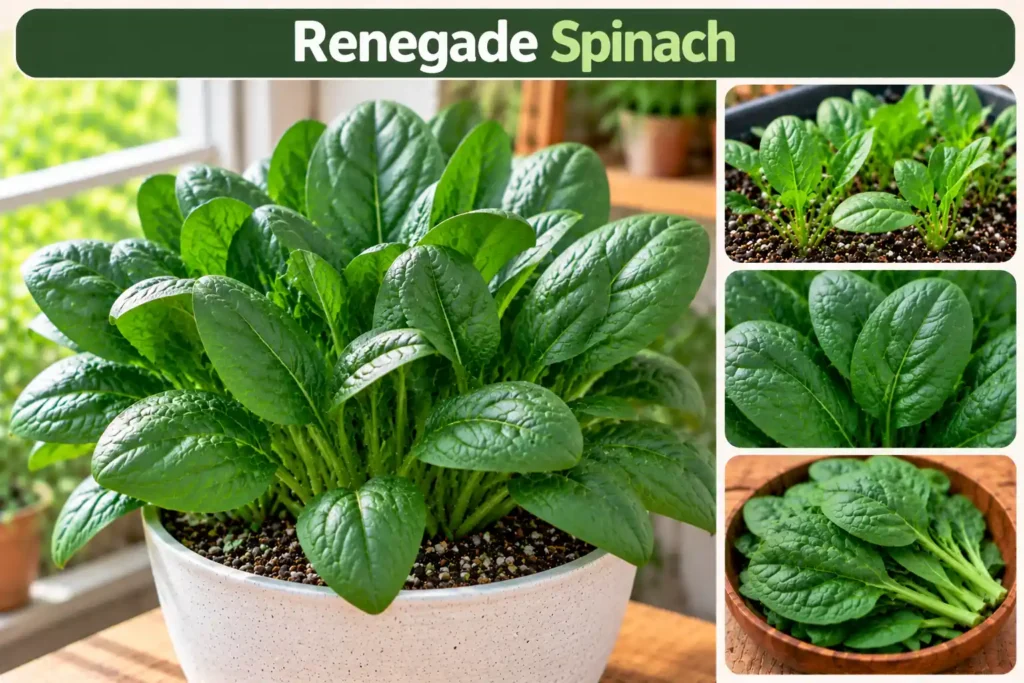
Renegade Spinach is a fast-growing hybrid variety known for its smooth, rounded leaves and rich dark green appearance. It produces vigorous foliage and offers reliable yields under suitable growing conditions. Its upright growth and manageable size make it a practical choice for indoor vegetable gardening. This variety is also valued for resistance to certain downy mildew races and cucumber mosaic virus.
Identification
- Scientific Name: Spinacia oleracea
- Common Name: Renegade Spinach
- Plant Type: Annual leafy vegetable
- Leaf Color: Dark green
- Leaf Shape: Smooth, rounded to oval leaves
- Harvest Time: Approximately 42 days
- Growing Season: Cool season
Ideal Indoor Growing Conditions
Renegade Spinach performs best in cool environments with temperatures between 50°F and 70°F. Place containers near bright windows providing sufficient sunlight or use LED grow lights for approximately 12–14 hours daily. Select a container around 8 inches deep with drainage holes. Fill it with loose, nutrient-rich potting soil that supports healthy root growth. Maintain adequate spacing and ventilation to encourage strong, productive plants.
Watering and Maintenance Tips
Water Renegade Spinach regularly, ensuring the soil remains consistently moist but not saturated. Check the upper soil layer frequently and adjust watering according to indoor temperatures. Apply diluted liquid fertilizer occasionally to encourage lush foliage. Remove yellow or damaged leaves as needed. Harvest mature outer leaves carefully without disturbing the central growing point. Keep plants away from strong heat sources to maintain tender leaves and discourage early bolting.
11. Seaside Spinach
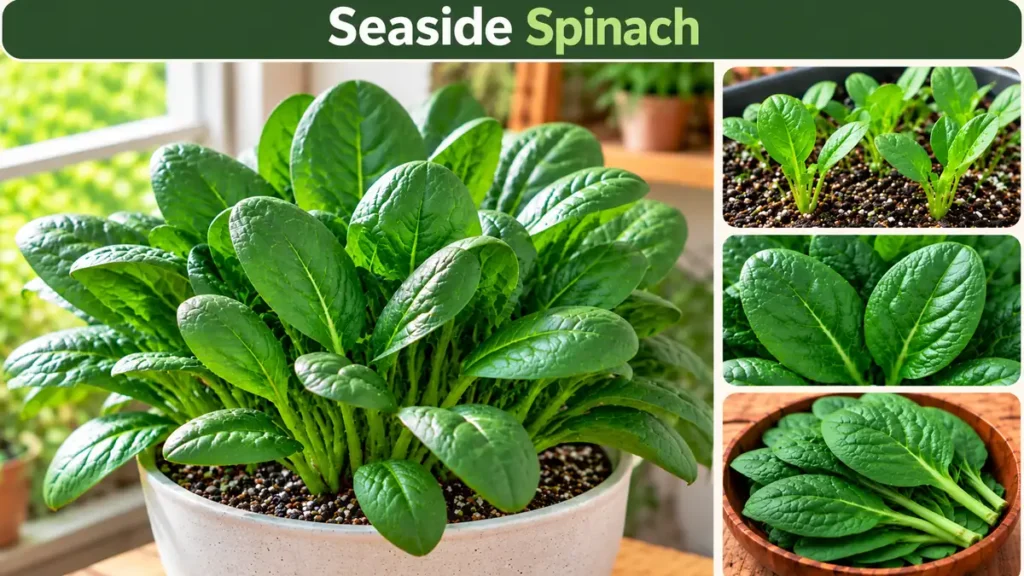
Seaside Spinach is a modern hybrid variety recognized for its smooth, thick, dark green leaves and uniform upright growth. It is particularly suitable for indoor gardening because it performs well in controlled growing environments and produces attractive baby spinach leaves. Its relatively slow growth and good resistance to downy mildew make it a dependable choice for gardeners interested in growing nutritious greens indoors.
Identification
- Scientific Name: Spinacia oleracea
- Common Name: Seaside Spinach
- Plant Type: Annual leafy vegetable
- Leaf Color: Very dark green
- Leaf Shape: Smooth, thick, spade-shaped leaves
- Harvest Time: Approximately 21–30 days for baby leaves, depending on growing conditions
- Growing Season: Cool season
Ideal Indoor Growing Conditions
Seaside Spinach grows best in temperatures between 50°F and 70°F. Position containers near a sunny window or provide 12–14 hours of light using full-spectrum LED grow lights. Choose pots at least 6–8 inches deep with adequate drainage. Use loose, fertile potting soil with good moisture retention. Consistent lighting and moderate indoor temperatures promote uniform leaf development.
Watering and Maintenance Tips
Maintain evenly moist soil by watering whenever the top layer begins to dry. Avoid excessive watering because saturated soil can damage the roots. Apply a diluted liquid fertilizer occasionally to encourage healthy leaf development. Harvest baby leaves regularly once they reach a suitable size, leaving the growing point intact for additional growth. Remove damaged foliage and ensure adequate air circulation around the plants. Consistent moisture and cool temperatures help maintain tender, flavorful leaves.
12. Avon Spinach
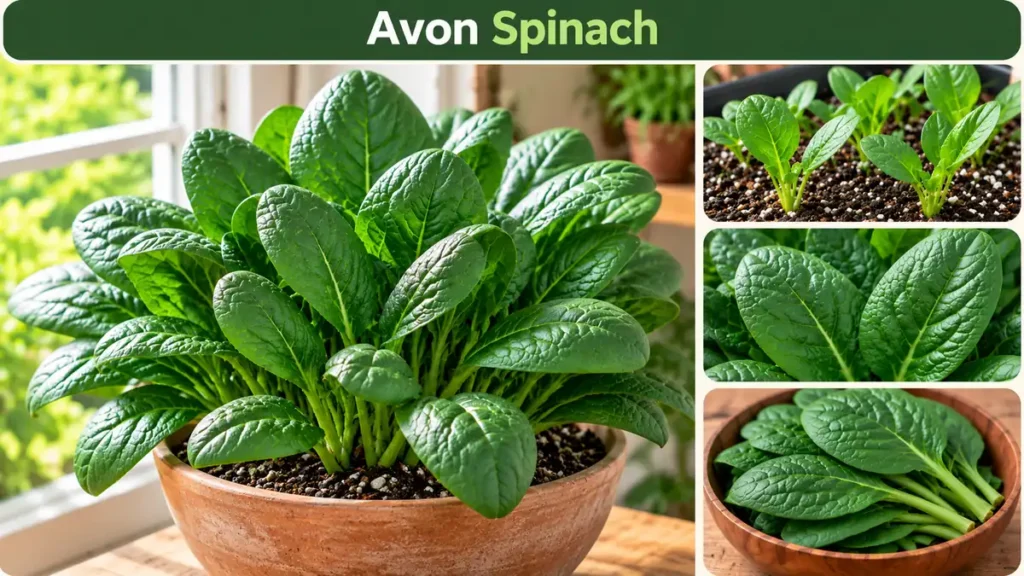
Avon Spinach is a productive hybrid variety known for its large, tender, dark green leaves and slightly crinkled texture. It is an excellent choice for indoor container gardening because of its relatively quick growth and flavorful foliage. This cool-season vegetable produces nutritious leaves suitable for fresh salads, smoothies, soups, and cooked dishes.
Identification
- Scientific Name: Spinacia oleracea
- Common Name: Avon Spinach
- Plant Type: Annual leafy vegetable
- Leaf Color: Dark green
- Leaf Shape: Large, slightly crinkled, semi-savoyed leaves
- Harvest Time: Approximately 44 days
- Growing Season: Cool season
Ideal Indoor Growing Conditions
Avon Spinach grows best in cool indoor temperatures between 50°F and 70°F. Position containers near a sunny window receiving approximately 4–6 hours of direct sunlight daily. Alternatively, provide 12–14 hours of artificial lighting using full-spectrum LED grow lights. Choose containers at least 6–8 inches deep with proper drainage holes. Use fertile, well-draining potting soil enriched with organic matter to encourage healthy root development and vigorous leaf growth.
Watering and Maintenance Tips
Keep the soil consistently moist without allowing excess water to accumulate around the roots. Water whenever the upper soil layer begins to dry. Apply diluted liquid fertilizer occasionally to encourage healthy foliage. Remove damaged or yellowing leaves regularly to maintain plant health. Harvest larger outer leaves first while allowing younger central leaves to continue growing. Maintain cool temperatures to reduce premature bolting.
13. Carmel Spinach
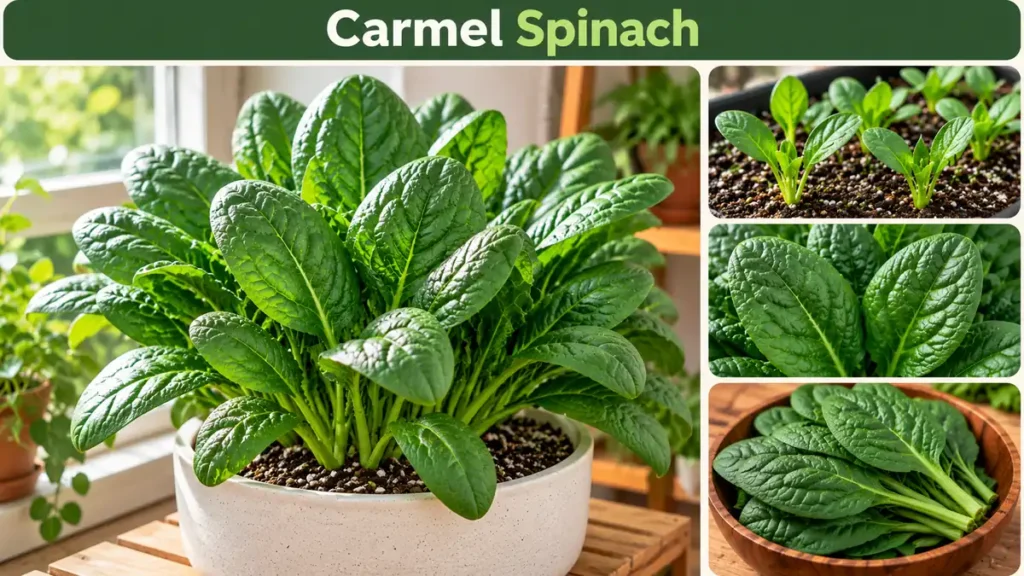
Carmel Spinach is a fast-growing hybrid variety recognized for its dark green, slightly crinkled leaves and uniform upright growth habit. It is particularly suitable for indoor growing because it produces tender baby leaves and mature spinach under controlled conditions. Its resistance to several races of downy mildew makes it a practical choice for home vegetable gardening.
Identification
- Scientific Name: Spinacia oleracea
- Common Name: Carmel Spinach
- Plant Type: Annual leafy vegetable
- Leaf Color: Dark green
- Leaf Shape: Broad, semi-savoyed leaves
- Harvest Time: Approximately 35–60 days, depending on harvest size
- Growing Season: Cool season
Ideal Indoor Growing Conditions
Carmel Spinach thrives in temperatures ranging from 50°F to 70°F. Place containers near bright windows receiving adequate sunlight or provide 12–14 hours of artificial lighting daily. Select containers approximately 6–8 inches deep with sufficient drainage holes. Fill them with loose, nutrient-rich potting soil that retains moisture without becoming waterlogged. Maintain good air circulation and consistent indoor temperatures to support healthy, uniform foliage development.
Watering and Maintenance Tips
Water Carmel Spinach regularly to keep the growing medium evenly moist. Avoid allowing the soil to become excessively dry or saturated. Apply diluted, balanced liquid fertilizer occasionally to support leaf production. Harvest baby spinach leaves when they reach approximately 3–4 inches long. Remove damaged foliage and provide adequate spacing between plants. Avoid excessive heat and prolonged lighting periods that may encourage premature flowering.
14. Acadia Spinach
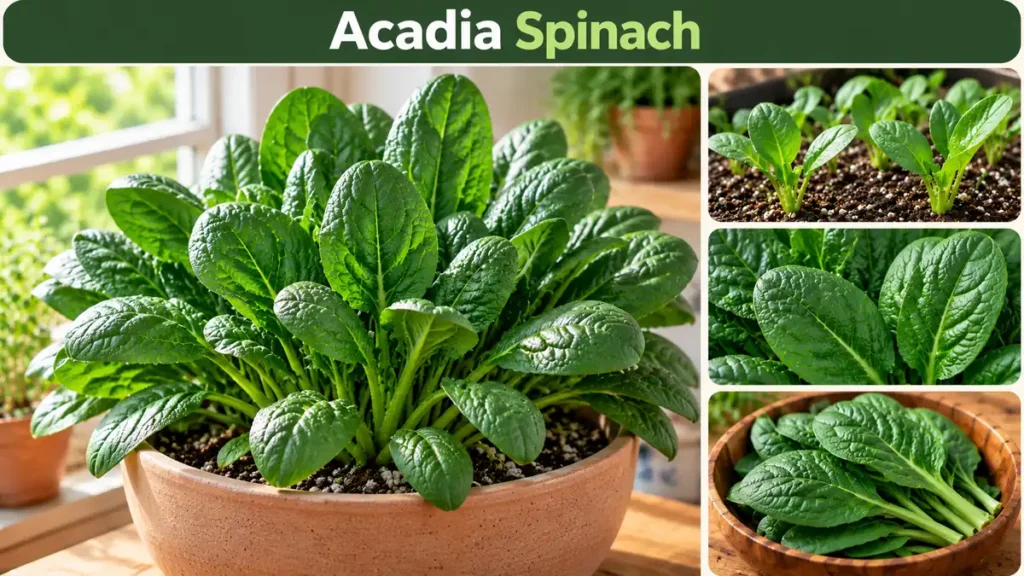
Acadia Spinach is a dark green hybrid variety known for its attractive oval-shaped leaves and slightly crinkled texture. This spinach develops tender, flavorful foliage that is especially suitable for baby leaf harvesting. Its relatively slow growth, bolting tolerance, and resistance to several downy mildew races make it a useful choice for indoor container gardening.
Identification
- Scientific Name: Spinacia oleracea
- Common Name: Acadia Spinach
- Plant Type: Annual leafy vegetable
- Leaf Color: Dark green
- Leaf Shape: Medium-sized, oval, semi-savoyed leaves
- Harvest Time: Approximately 40 days
- Growing Season: Cool season
Ideal Indoor Growing Conditions
Acadia Spinach performs best in cool indoor temperatures between 50°F and 70°F. Position containers near a sunny window or use full-spectrum LED grow lights for approximately 12–14 hours daily. Choose containers at least 6–8 inches deep with adequate drainage. Use fertile, well-draining potting soil containing organic matter to encourage strong root growth. Provide sufficient space between plants for good air circulation and healthy foliage development.
Watering and Maintenance Tips
Maintain evenly moist soil by watering whenever the upper surface begins to dry. Avoid overwatering because saturated soil can encourage root diseases. Apply a mild liquid fertilizer occasionally if leaf growth appears slow. Harvest tender outer leaves regularly while keeping the central growing point intact. Remove yellowing leaves and monitor plants for signs of fungal infection. Maintain cool temperatures to preserve leaf tenderness and prevent premature bolting.
15. Kolibri Spinach
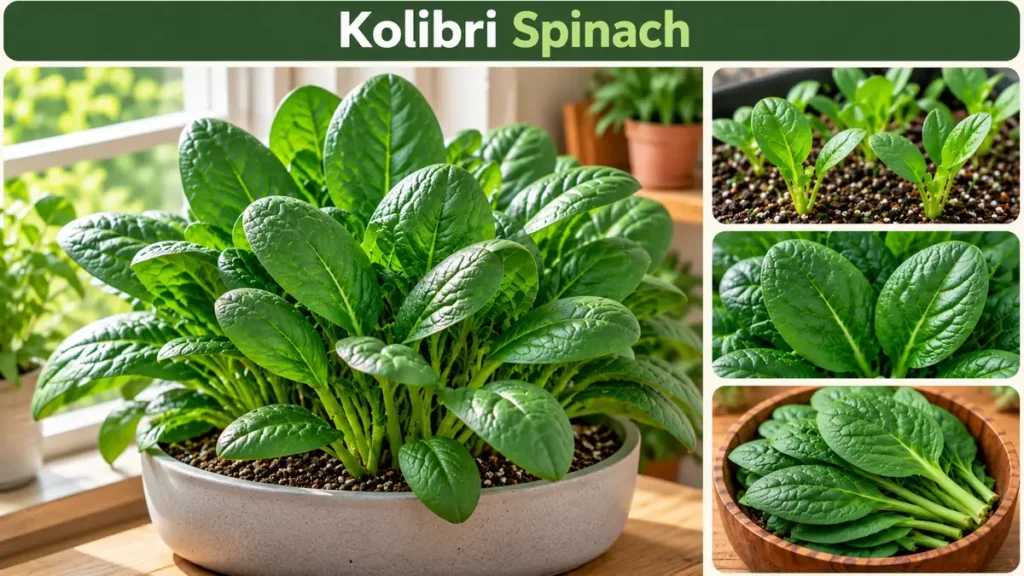
Kolibri Spinach is a productive hybrid variety valued for its dark green, semi-savoyed leaves and upright growth habit. It is an excellent choice for indoor gardening because it produces tender baby spinach leaves and can regrow after careful harvesting. Its good resistance to downy mildew and relatively fast growth make it suitable for growing fresh greens in containers.
Identification
- Scientific Name: Spinacia oleracea
- Common Name: Kolibri Spinach
- Plant Type: Annual leafy vegetable
- Leaf Color: Medium to dark green
- Leaf Shape: Oval, slightly crinkled leaves
- Harvest Time: Approximately 29–45 days, depending on harvest size
- Growing Season: Cool season
Ideal Indoor Growing Conditions
Kolibri Spinach grows best in temperatures between 50°F and 70°F. Place containers near bright windows receiving approximately 4–6 hours of direct sunlight daily. Alternatively, use full-spectrum LED grow lights for 12–14 hours. Select pots approximately 6–8 inches deep with proper drainage holes. Fill them with loose, fertile potting soil that provides good moisture retention. Consistent lighting and adequate ventilation encourage vigorous leaf development.
Watering and Maintenance Tips
Water Kolibri Spinach regularly to maintain evenly moist soil without creating soggy conditions. Check the upper soil layer before adding water. Apply diluted liquid fertilizer occasionally to support continued leaf production. Harvest larger outer leaves carefully, allowing the central growth to develop. Remove damaged or yellowing foliage to maintain plant health. Keep the growing environment cool to reduce premature bolting and encourage repeated harvests.
16. Red Kitten Spinach
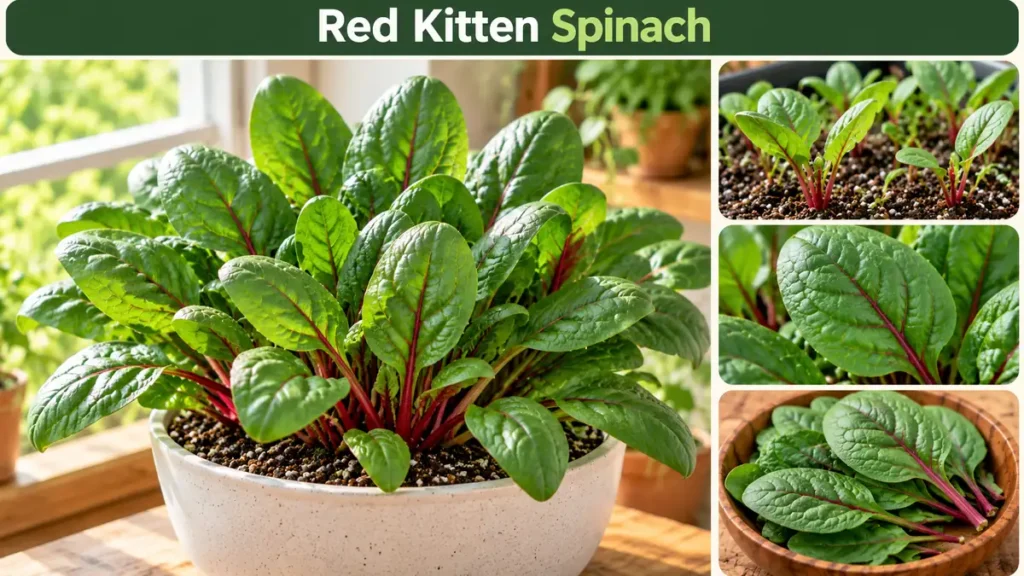
Red Kitten Spinach is an attractive hybrid variety recognized for its glossy green leaves decorated with distinctive red veins. It is a suitable choice for indoor growing because of its upright growth habit and relatively quick harvest time. The colorful, tender leaves add visual appeal to salads and other fresh dishes while providing nutritious homegrown greens.
Identification
- Scientific Name: Spinacia oleracea
- Common Name: Red Kitten Spinach
- Plant Type: Annual leafy vegetable
- Leaf Color: Glossy green with red veins
- Leaf Shape: Smooth, rounded leaves
- Harvest Time: Approximately 23–34 days
- Growing Season: Cool season
Ideal Indoor Growing Conditions
Red Kitten Spinach thrives in cool indoor temperatures between 50°F and 70°F. Position containers near sunny windows or provide 12–14 hours of artificial lighting using full-spectrum LED grow lights. Choose a container at least 6–8 inches deep with adequate drainage holes. Use nutrient-rich, well-draining potting soil to encourage strong roots and colorful leaf development. Maintain proper ventilation and avoid excessive indoor heat.
Watering and Maintenance Tips
Keep the soil consistently moist by watering whenever the top layer begins to dry. Avoid excessive watering that may damage the roots. Apply diluted liquid fertilizer occasionally to support healthy foliage. Harvest tender baby leaves regularly while allowing younger central leaves to continue developing. Remove yellowing or damaged leaves and maintain adequate plant spacing for airflow. Protect plants from high temperatures to discourage early bolting and preserve their attractive appearance.
17. Flamingo Spinach
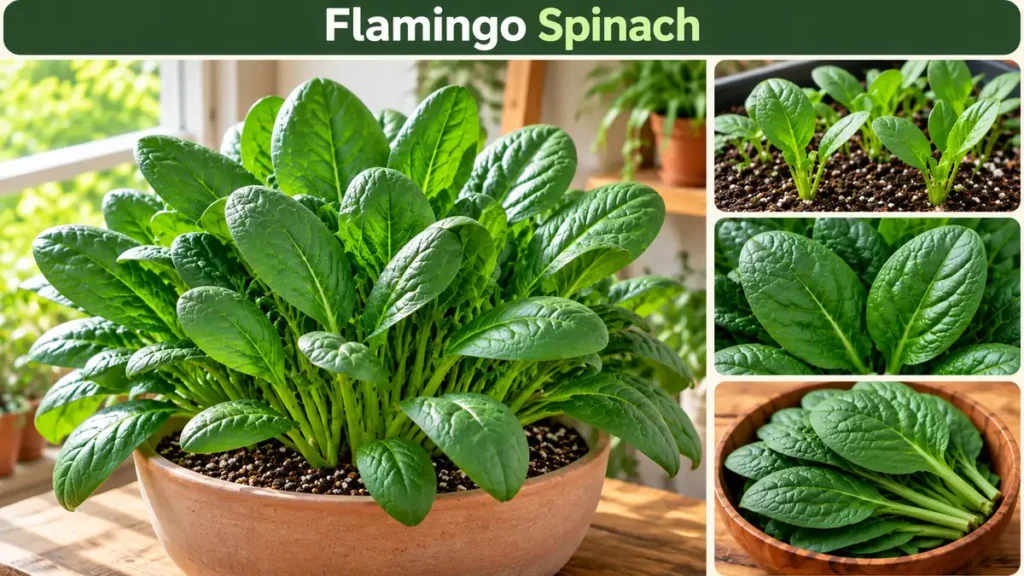
Flamingo Spinach is an attractive Asian-style spinach variety known for its smooth, pointed green leaves and long, slender stems. Its distinctive leaf shape and rapid growth make it suitable for indoor container gardening. This variety produces tender, flavorful leaves that are excellent for fresh salads, stir-fries, soups, and other cooked dishes. It performs particularly well in cool growing conditions.
Identification
- Scientific Name: Spinacia oleracea
- Common Name: Flamingo Spinach
- Plant Type: Annual leafy vegetable
- Leaf Color: Medium green
- Leaf Shape: Smooth, pointed, arrowhead-shaped leaves
- Stem Color: Green with occasional pink coloration near the base
- Harvest Time: Approximately 25–40 days
- Growing Season: Cool season
Ideal Indoor Growing Conditions
Flamingo Spinach grows best in temperatures between 50°F and 70°F. Place containers near a sunny window receiving approximately 4–6 hours of direct sunlight daily. Alternatively, use full-spectrum LED grow lights for 12–14 hours per day. Choose containers at least 6–8 inches deep with drainage holes. Use fertile, well-draining potting soil enriched with organic matter to encourage strong root development and healthy foliage.
Watering and Maintenance Tips
Keep the soil consistently moist without allowing it to become waterlogged. Water whenever the upper soil layer begins drying. Apply diluted liquid fertilizer occasionally to support leaf production. Harvest larger outer leaves while preserving the central growing point. Remove damaged foliage regularly and maintain adequate ventilation. Avoid excessive heat and prolonged lighting periods that encourage early bolting.
18. Gazelle Spinach
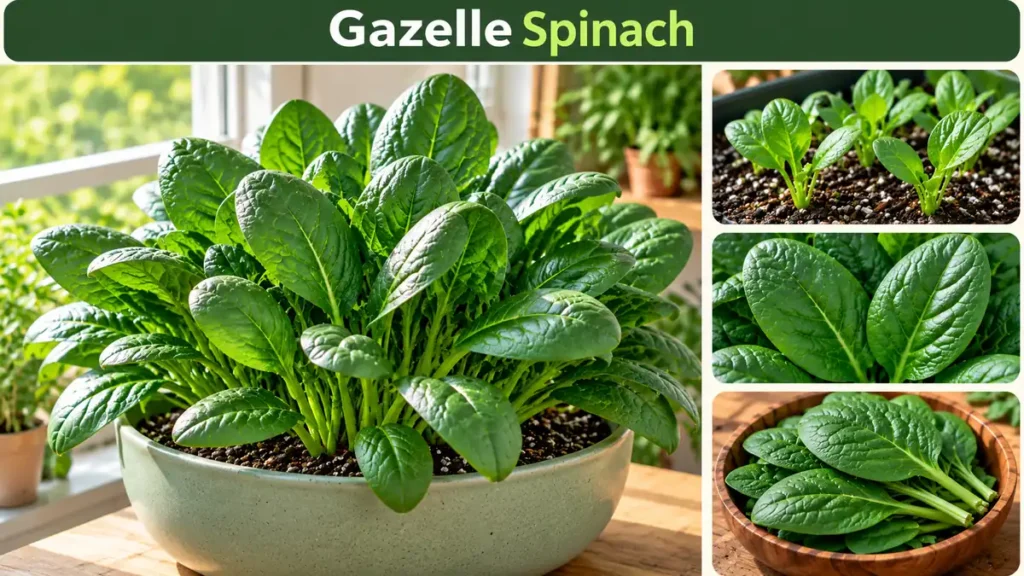
Gazelle Spinach is a productive hybrid variety recognized for its glossy, dark green leaves and vigorous growth. It produces firm, rounded foliage with a slightly crinkled texture, making it suitable for fresh salads and cooked meals. Its upright growth habit and suitability for baby-leaf harvesting make it a practical option for indoor containers and small growing spaces.
Identification
- Scientific Name: Spinacia oleracea
- Common Name: Gazelle Spinach
- Plant Type: Annual leafy vegetable
- Leaf Color: Very dark green
- Leaf Shape: Rounded, slightly crinkled leaves
- Growth Habit: Upright and vigorous
- Harvest Time: Varies with growing conditions and desired leaf size
- Growing Season: Cool season
Ideal Indoor Growing Conditions
Gazelle Spinach thrives in cool indoor environments with temperatures ranging from 50°F to 70°F. Position containers near bright windows receiving sufficient sunlight or provide 12–14 hours of artificial lighting daily. Choose a container approximately 6–8 inches deep with adequate drainage. Fill it with loose, nutrient-rich potting soil that maintains moisture without becoming compacted. Proper spacing and airflow encourage healthy leaf development.
Watering and Maintenance Tips
Water Gazelle Spinach regularly to maintain evenly moist soil throughout its growing period. Avoid excessive watering because saturated soil can damage the roots. Apply diluted liquid fertilizer occasionally to encourage vigorous foliage growth. Harvest young leaves when they reach approximately 3–4 inches long. Remove yellowing or damaged leaves to maintain plant health. Keep plants away from excessive heat to reduce premature flowering.
19. Hammerhead Spinach
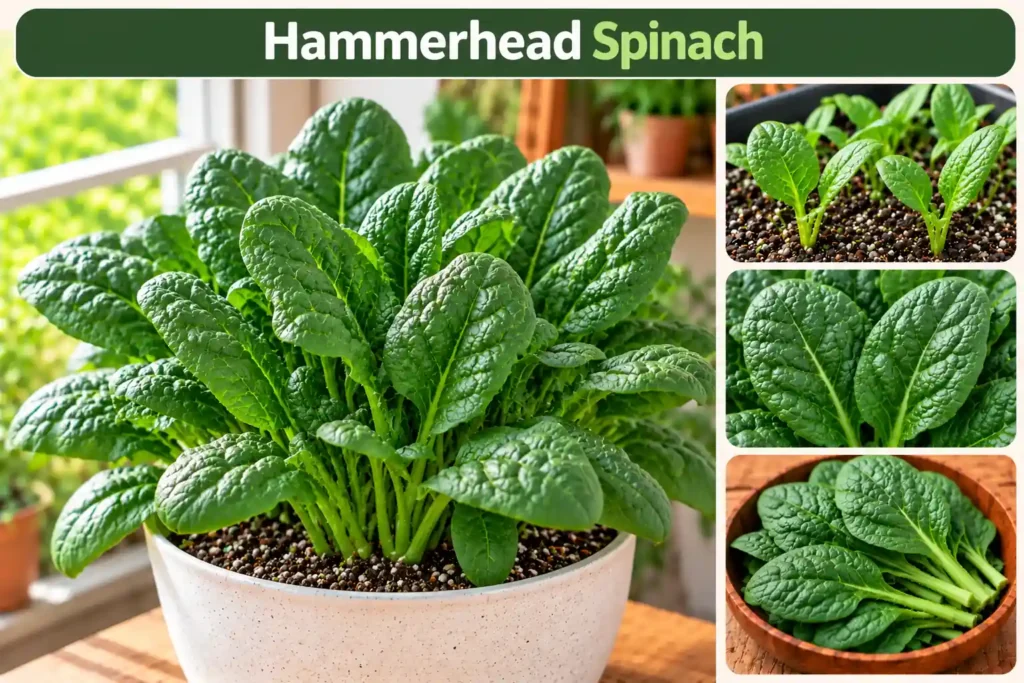
Hammerhead Spinach is a fast-growing hybrid variety known for its heavily crinkled, medium-dark green leaves and upright growth habit. Its distinctive savoyed foliage gives it an attractive appearance and makes it suitable for fresh salads, soups, and cooked vegetable dishes. This variety performs best in cool conditions and can be grown indoors with sufficient lighting and proper temperature control.
Identification
- Scientific Name: Spinacia oleracea
- Common Name: Hammerhead Spinach
- Plant Type: Annual leafy vegetable
- Leaf Color: Medium to dark green
- Leaf Shape: Heavily crinkled, rounded, slightly elongated leaves
- Growth Habit: Upright
- Harvest Time: Approximately 27 days
- Growing Season: Cool season
Ideal Indoor Growing Conditions
Hammerhead Spinach grows best in cool temperatures between 50°F and 65°F. Position containers near a bright window or provide approximately 12 hours of full-spectrum LED lighting daily. Choose pots at least 6–8 inches deep with proper drainage holes. Use fertile, well-draining potting soil containing organic matter to encourage healthy root development. Maintain moderate humidity and adequate airflow around the plants.
Watering and Maintenance Tips
Keep the growing medium consistently moist without allowing excess water to collect around the roots. Water whenever the upper soil surface begins drying. Apply diluted liquid fertilizer occasionally to support healthy foliage development. Harvest tender outer leaves regularly while preserving the central growing point. Remove damaged foliage to improve airflow. Hammerhead Spinach bolts relatively quickly, so maintain cool temperatures and harvest promptly.
20. Crocodile Spinach
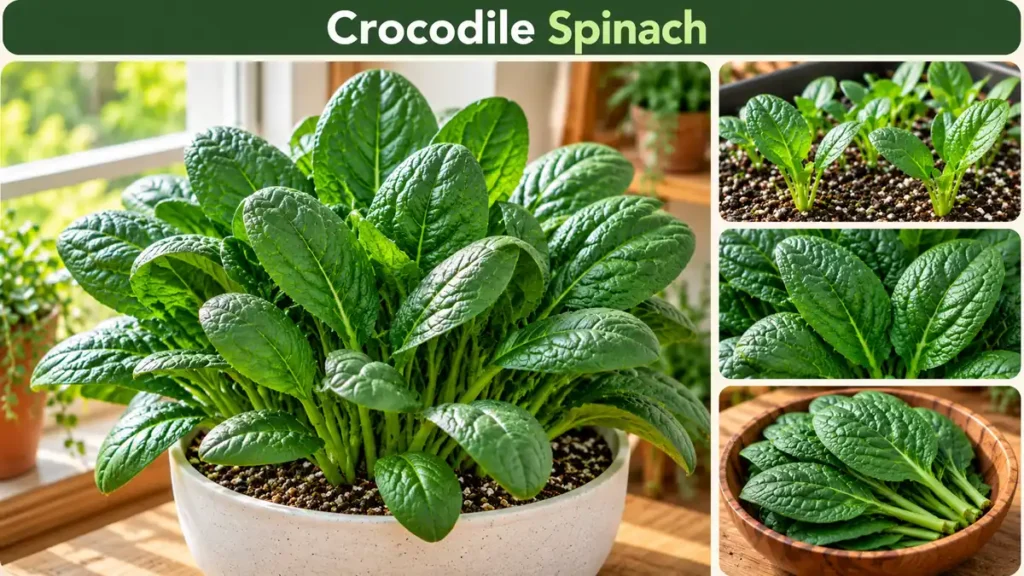
Crocodile Spinach is a hybrid variety recognized for its thick, dark green leaves and slightly crinkled texture. Unlike many fast-growing spinach varieties, it develops foliage more slowly and offers relatively good tolerance to warmer conditions. Its sturdy leaves and suitability for baby-leaf production make it an interesting option for indoor vegetable gardening, particularly where temperatures are difficult to maintain consistently.
Identification
- Scientific Name: Spinacia oleracea
- Common Name: Crocodile Spinach
- Plant Type: Annual leafy vegetable
- Leaf Color: Dark green
- Leaf Shape: Thick, oval, semi-savoyed leaves
- Growth Habit: Relatively slow-growing
- Harvest Time: Varies according to leaf size and growing conditions
- Growing Season: Cool season, with some heat tolerance
Ideal Indoor Growing Conditions
Crocodile Spinach performs well in temperatures between 55°F and 70°F. Place containers near bright windows receiving approximately 4–6 hours of direct sunlight daily. Alternatively, provide 12–14 hours of artificial lighting using LED grow lights. Choose containers at least 6–8 inches deep with drainage holes. Use fertile, moisture-retentive, well-draining potting soil to support healthy roots and steady leaf development.
Watering and Maintenance Tips
Water Crocodile Spinach regularly to maintain evenly moist soil without causing waterlogging. Check the upper soil layer before watering. Apply diluted liquid fertilizer occasionally to encourage healthy foliage growth. Harvest tender baby leaves when they reach a suitable size, leaving enough foliage for continued development. Remove yellowing leaves and maintain adequate air circulation. Although relatively heat tolerant, cooler conditions help preserve leaf quality and reduce bolting.
21. Reflect Spinach
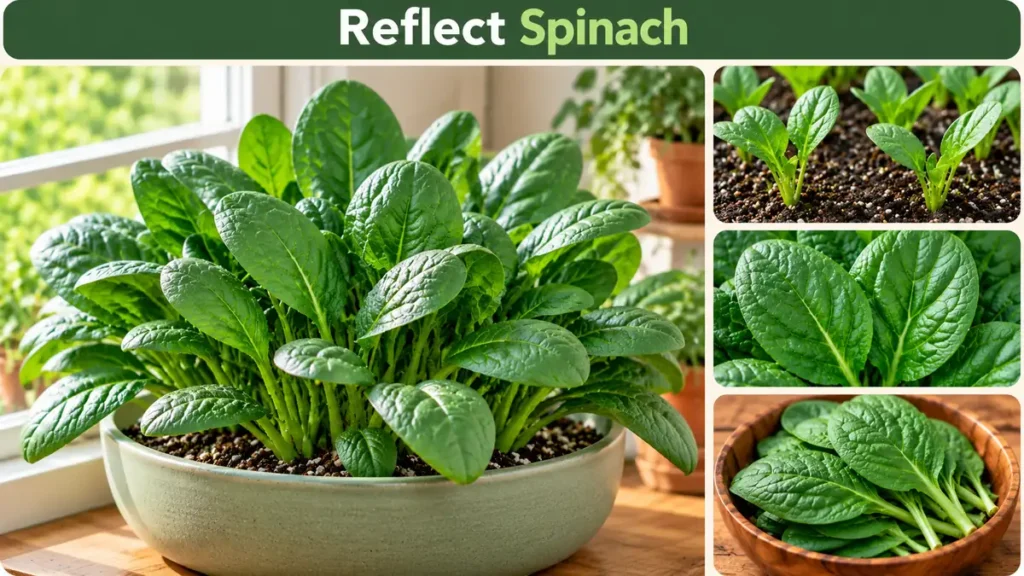
Reflect Spinach is a productive hybrid variety known for its dark green, slightly crinkled leaves and vigorous growth. Its upright foliage and rounded leaf shape make harvesting and cleaning convenient. This variety offers resistance to several races of downy mildew and produces tender leaves suitable for salads, smoothies, and cooked dishes. It can also grow successfully in indoor containers when provided with cool temperatures and sufficient light.
Identification
- Scientific Name: Spinacia oleracea
- Common Name: Reflect Spinach
- Plant Type: Annual leafy vegetable
- Leaf Color: Dark green
- Leaf Shape: Rounded to oval, semi-savoyed leaves
- Growth Habit: Upright and vigorous
- Harvest Time: Approximately 38 days
- Growing Season: Cool season
Ideal Indoor Growing Conditions
Spinach thrives in cool indoor temperatures between 50°F and 70°F. Position containers near windows receiving approximately 4–6 hours of direct sunlight or provide 12–14 hours of artificial lighting daily. Choose pots at least 6–8 inches deep with adequate drainage. Fill them with loose, fertile potting soil that provides good moisture retention. Consistent lighting and moderate humidity encourage uniform foliage growth.
Watering and Maintenance Tips
Keep the soil consistently moist by watering whenever the top layer begins to dry. Avoid overwatering because saturated conditions may encourage root diseases. Apply diluted liquid fertilizer occasionally to maintain healthy leaf production. Harvest larger outer leaves while leaving the central growing point intact. Remove damaged foliage regularly and maintain proper spacing for airflow. Keep plants away from excessive indoor heat to encourage tender leaves and prevent premature bolting.
22. Olympia Spinach
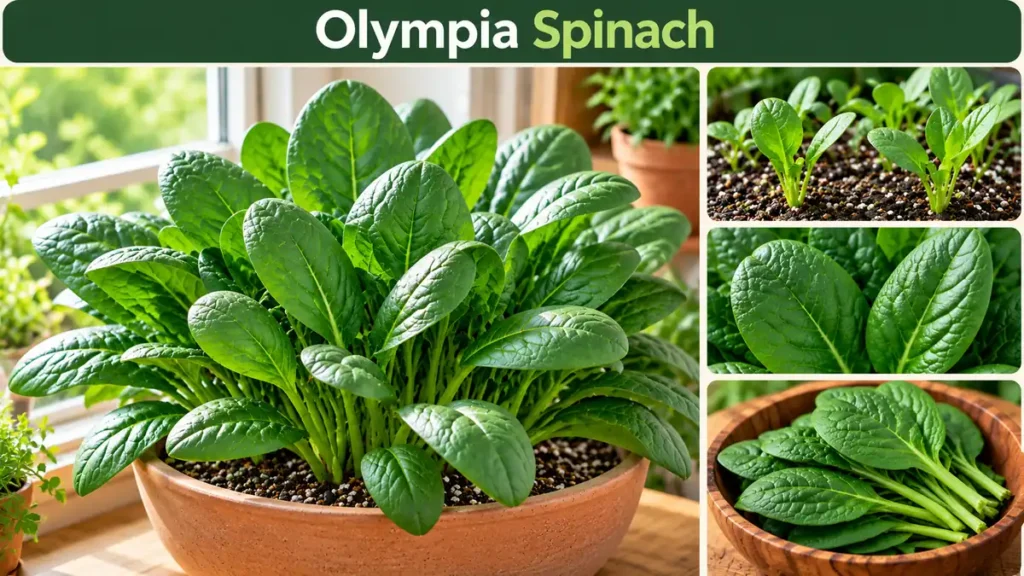
Olympia Spinach is a productive hybrid variety known for its large, smooth green leaves and mild flavor. It is an excellent option for indoor container gardening because of its relatively fast growth and good resistance to premature bolting. Its semi-upright growth habit makes harvesting convenient, while its tender leaves are suitable for salads, smoothies, soups, and cooked dishes.
Identification
- Scientific Name: Spinacia oleracea
- Common Name: Olympia Spinach
- Plant Type: Annual leafy vegetable
- Leaf Color: Medium to dark green
- Leaf Shape: Large, smooth, elongated oval leaves
- Growth Habit: Semi-upright
- Harvest Time: Approximately 45–50 days
- Growing Season: Cool season
Ideal Indoor Growing Conditions
Olympia Spinach grows best in temperatures between 50°F and 70°F. Place containers near bright windows receiving approximately 4–6 hours of direct sunlight daily. Alternatively, provide 12–14 hours of artificial lighting using full-spectrum LED grow lights. Choose containers at least 6–8 inches deep with proper drainage holes. Use fertile, well-draining potting soil enriched with organic matter to encourage healthy roots and steady leaf growth.
Watering and Maintenance Tips
Keep the soil evenly moist without allowing water to accumulate around the roots. Water whenever the upper soil layer begins drying. Apply diluted liquid fertilizer occasionally to encourage healthy foliage. Harvest mature outer leaves while preserving the central growing point. Remove damaged leaves regularly and maintain proper ventilation. Avoid excessive heat to maintain tender, flavorful spinach.
23. Persius Spinach
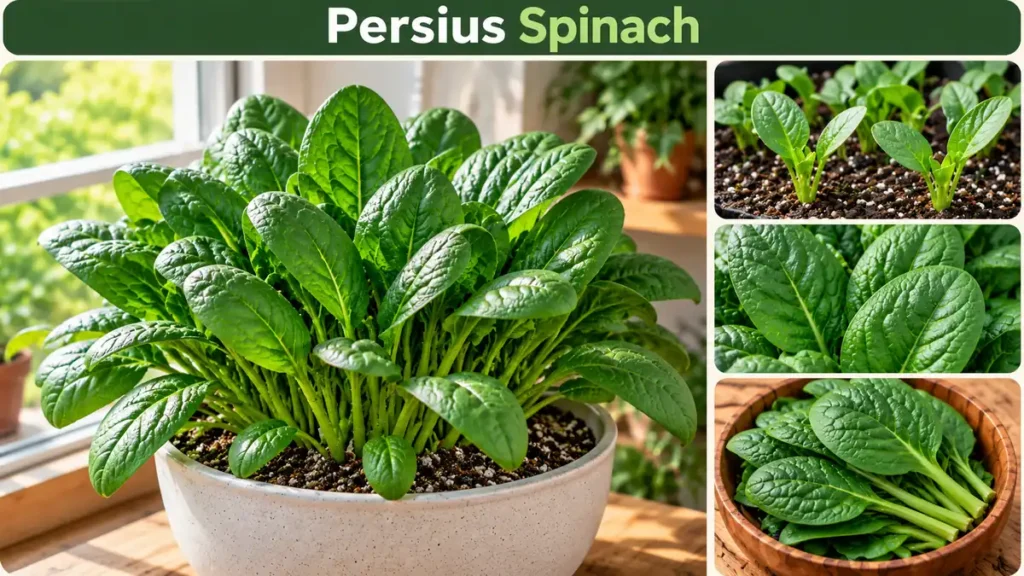
Persius Spinach is a high-yielding hybrid variety recognized for its smooth green leaves and slightly lobed appearance. It develops a semi-upright growth habit and produces tender foliage suitable for cooking and fresh consumption. Although primarily developed for commercial production, it can also be grown indoors in containers with adequate lighting and cool temperatures.
Identification
- Scientific Name: Spinacia oleracea
- Common Name: Persius Spinach
- Plant Type: Annual leafy vegetable
- Leaf Color: Medium green
- Leaf Shape: Smooth, slightly lobed leaves
- Growth Habit: Semi-upright
- Harvest Time: Approximately 45–50 days
- Growing Season: Cool season
Ideal Indoor Growing Conditions
Persius Spinach grows best in cool indoor environments with temperatures between 50°F and 70°F. Position containers near sunny windows or provide 12–14 hours of full-spectrum LED lighting daily. Choose a container approximately 8 inches deep with adequate drainage. Use nutrient-rich, well-draining potting soil to support strong root development. Maintain good air circulation and consistent moisture to encourage healthy leaf production.
Watering and Maintenance Tips
Water Persius Spinach regularly to keep the growing medium slightly moist without becoming saturated. Check the upper soil layer before watering. Apply diluted, balanced liquid fertilizer occasionally to encourage vigorous growth. Harvest tender outer leaves when they reach a suitable size. Remove yellowing foliage and inspect plants regularly for pests or diseases. Maintain cool indoor temperatures to discourage early bolting.
24. Lizard Spinach
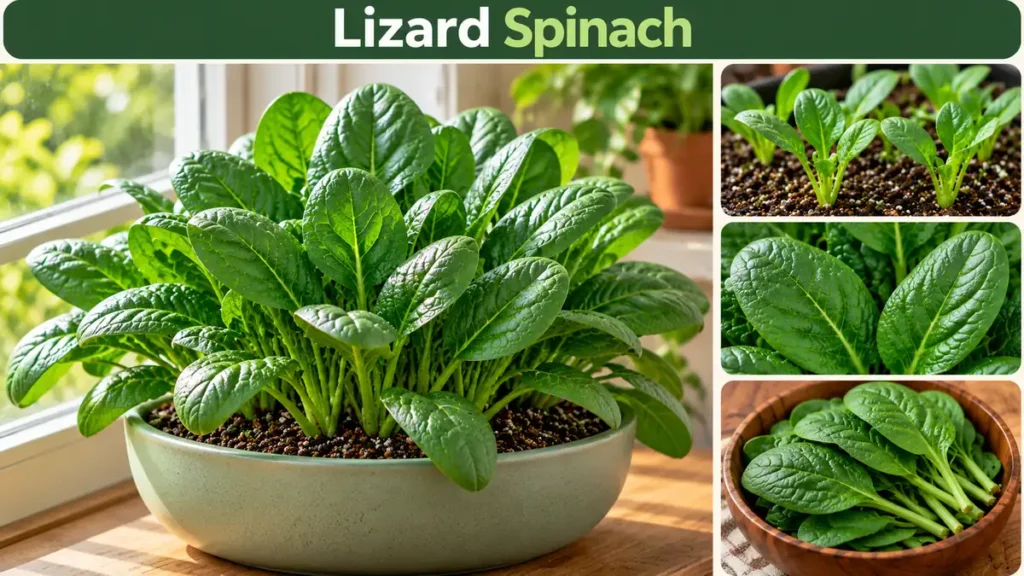
Lizard Spinach is a compact hybrid variety valued for its smooth, rounded, dark green leaves and excellent regrowth potential. It is particularly suitable for growing baby spinach indoors because its upright growth habit makes harvesting convenient. This variety also has good bolting tolerance and resistance to several downy mildew races, making it a reliable choice for home gardeners.
Identification
- Scientific Name: Spinacia oleracea
- Common Name: Lizard Spinach
- Plant Type: Annual leafy vegetable
- Leaf Color: Dark green
- Leaf Shape: Smooth, thick, rounded leaves
- Growth Habit: Compact and upright
- Harvest Time: Approximately 25–40 days for baby leaves, depending on conditions
- Growing Season: Cool season
Ideal Indoor Growing Conditions
Lizard Spinach thrives in temperatures between 50°F and 70°F. Place containers near bright windows receiving sufficient sunlight or provide approximately 12–14 hours of artificial lighting daily. Choose pots at least 6–8 inches deep with proper drainage holes. Fill them with loose, fertile potting soil containing organic matter. Consistent lighting and moderate humidity help encourage healthy, productive foliage.
Watering and Maintenance Tips
Keep the soil consistently moist by watering whenever the upper layer begins drying. Avoid excessive watering because saturated soil can damage roots. Apply diluted liquid fertilizer occasionally to support new leaf development. Harvest young outer leaves regularly while leaving the central growing point intact. Remove damaged foliage and maintain adequate spacing for airflow. Cool conditions help extend the harvest period.
25. Butterflay Spinach
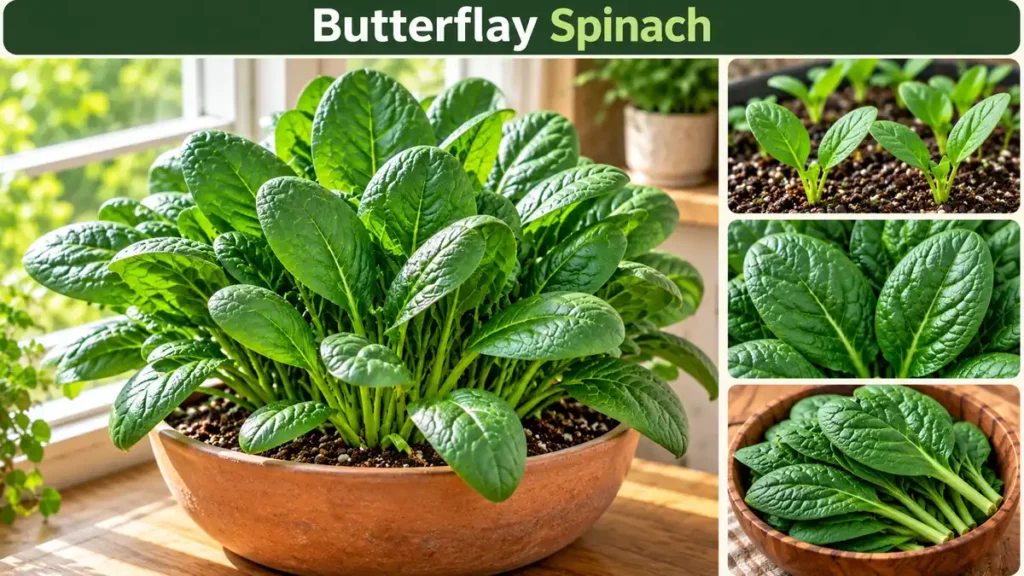
Butterflay Spinach is a traditional, open-pollinated variety recognized for its attractive green leaves and vigorous growth. It is valued for its cold tolerance, relatively slow bolting, and good mildew tolerance. Its manageable growth habit and flavorful foliage make it an appealing option for indoor container gardening, particularly during cooler months.
Identification
- Scientific Name: Spinacia oleracea
- Common Name: Butterflay Spinach
- Plant Type: Annual leafy vegetable
- Leaf Color: Rich green
- Leaf Shape: Rounded to oval, slightly crinkled leaves
- Growth Habit: Leafy rosette
- Harvest Time: Approximately 30–50 days, depending on growing conditions
- Growing Season: Cool season
Ideal Indoor Growing Conditions
Butterflay Spinach grows best in temperatures between 50°F and 70°F. Position containers near windows receiving approximately 4–6 hours of direct sunlight daily. Alternatively, use full-spectrum LED grow lights for 12–14 hours per day. Choose pots at least 6–8 inches deep with adequate drainage holes. Use fertile, moisture-retentive potting soil that allows excess water to drain easily. Good ventilation supports healthy foliage.
Watering and Maintenance Tips
Water Butterflay Spinach regularly to maintain evenly moist soil throughout its growing period. Avoid allowing the soil to become excessively dry or waterlogged. Apply diluted liquid fertilizer occasionally when additional nutrients are needed. Harvest larger outer leaves carefully while preserving younger central leaves. Remove yellowing foliage regularly and maintain adequate spacing between plants. Keep indoor temperatures cool to maintain leaf tenderness and reduce premature flowering.
FAQs
1. Which spinach variety is best for growing indoors?
Space, Bloomsdale Long Standing, and Lizard Spinach are excellent options for indoor growing. Space produces smooth, tender leaves, Bloomsdale offers flavorful crinkled foliage, and Lizard is particularly suitable for baby spinach production.
2. Can spinach grow indoors without direct sunlight?
Yes, spinach can grow indoors without direct sunlight when provided with suitable artificial lighting. Full-spectrum LED grow lights generally work well when used for approximately 12–14 hours daily, depending on their intensity and placement.
3. How long does indoor spinach take to grow?
Most spinach varieties produce harvestable baby leaves within approximately 25–35 days. Full-sized leaves generally take 40–50 days or longer, depending on the variety, temperature, lighting, and growing conditions.
4. What size container is best for growing spinach indoors?
A container approximately 6–8 inches deep is suitable for most indoor spinach varieties. Choose a pot with drainage holes and enough space between plants to encourage healthy root development and proper airflow.
5. Can indoor spinach grow throughout the year?
Yes, spinach can be grown indoors throughout the year when temperatures, lighting, and moisture are properly controlled. Maintain cool growing conditions, provide adequate artificial lighting, and sow new seeds regularly for a continuous supply of fresh leaves.