
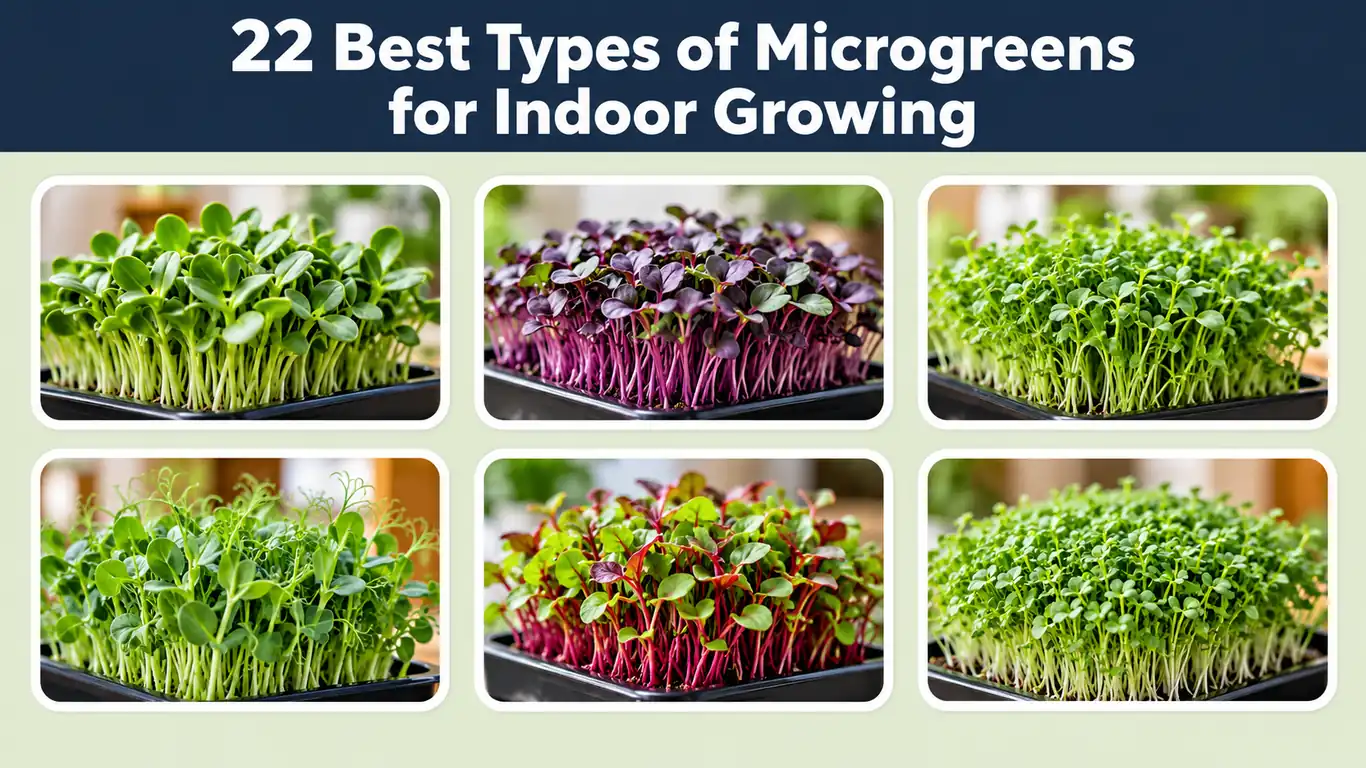
Growing microgreens indoors is an easy and rewarding way to enjoy fresh, nutritious greens throughout the year. These fast-growing plants require minimal space, simple care, and just a few weeks to harvest. From broccoli and radish to sunflower and pea shoots, these 22 best types of microgreens for indoor growing offer delicious flavors, vibrant colors, and excellent options for beginners and experienced gardeners alike.
1. Broccoli Microgreens
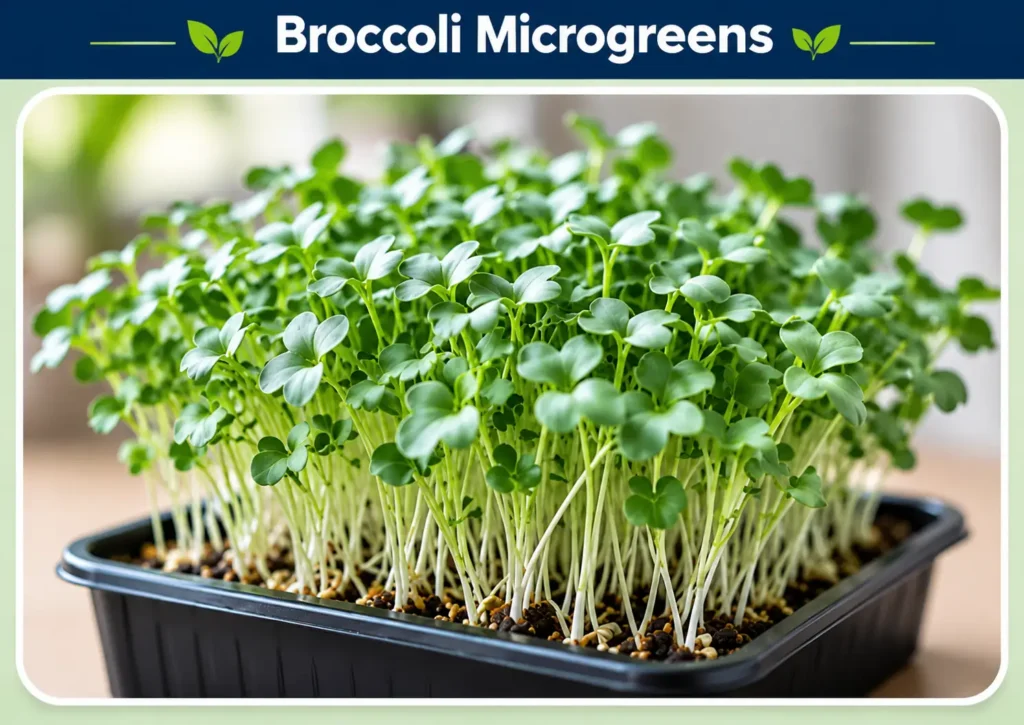
Broccoli Microgreens are among the most popular microgreens for indoor growing because of their quick growth, mild flavor, and nutritional value. These young seedlings feature delicate green leaves and slender stems, making them excellent additions to salads, sandwiches, smoothies, and healthy meals. Their compact growth and simple care requirements make broccoli microgreens ideal for beginners who want to grow fresh, nutritious greens indoors throughout the year.
Identification
- Scientific Name: Brassica oleracea var. italica
- Common Name: Broccoli Microgreens
- Plant Height: Approximately 2–3 inches
- Leaf Color: Bright green
- Stem Color: Pale green to white
- Growth Habit: Dense, upright seedlings
- Harvest Time: Approximately 8–12 days after sowing
Ideal Indoor Growing Conditions
Broccoli microgreens grow best in temperatures between 65°F and 75°F (18°C–24°C). Use a shallow growing tray with drainage holes and fill it with a thin layer of moist, seed-starting mix or a suitable microgreen growing mat. After germination, provide approximately 12–16 hours of bright LED grow lighting daily. Maintain good airflow and avoid overcrowding to encourage healthy growth.
Watering and Maintenance
Keep the growing medium consistently moist without allowing water to accumulate. Bottom watering is an effective method for maintaining moisture while keeping the leaves relatively dry. Use untreated seeds specifically intended for sprouting or microgreen production. Fertilizer is generally unnecessary during the short growing period. Harvest broccoli microgreens with clean scissors just above the growing medium when their cotyledon leaves are fully developed.
2. Radish Microgreens
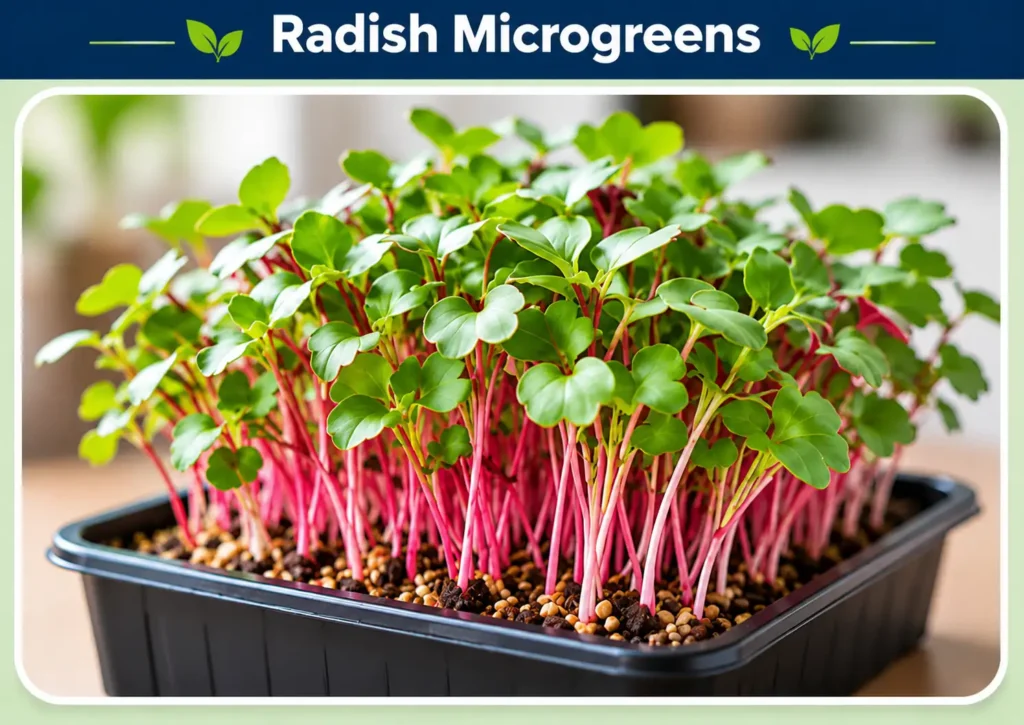
Radish Microgreens are fast-growing, flavorful leafy greens that are excellent for indoor gardening. Known for their crisp texture, peppery taste, and colorful stems, these microgreens add a spicy kick to salads, sandwiches, and other dishes. Their rapid germination and relatively easy maintenance make them ideal for beginners. Radish microgreens grow well in shallow trays and can provide a fresh harvest in just over a week.
Identification
- Scientific Name: Raphanus sativus
- Common Name: Radish Microgreens
- Plant Height: Approximately 2–4 inches
- Leaf Color: Bright green
- Stem Color: White, pink, or reddish-purple
- Growth Habit: Upright, dense seedlings
- Harvest Time: Approximately 7–10 days after sowing
Ideal Indoor Growing Conditions
Radish microgreens grow best in temperatures between 65°F and 75°F (18°C–24°C). Use shallow growing trays filled with a lightweight, well-draining seed-starting mix or a suitable growing mat. After germination, provide 12–16 hours of bright LED grow lighting daily. Good airflow and moderate humidity encourage healthy seedling development. Their compact growth makes them suitable for kitchen counters, indoor shelves, and small growing areas.
Watering and Maintenance
Keep the growing medium evenly moist but avoid excessive watering. Bottom watering helps maintain consistent moisture while reducing wet foliage. Check the trays daily for signs of mold or overcrowding. Fertilizer is generally unnecessary because radish microgreens grow quickly. Harvest them with clean scissors just above the growing medium when the cotyledons are fully open.
3. Sunflower Microgreens
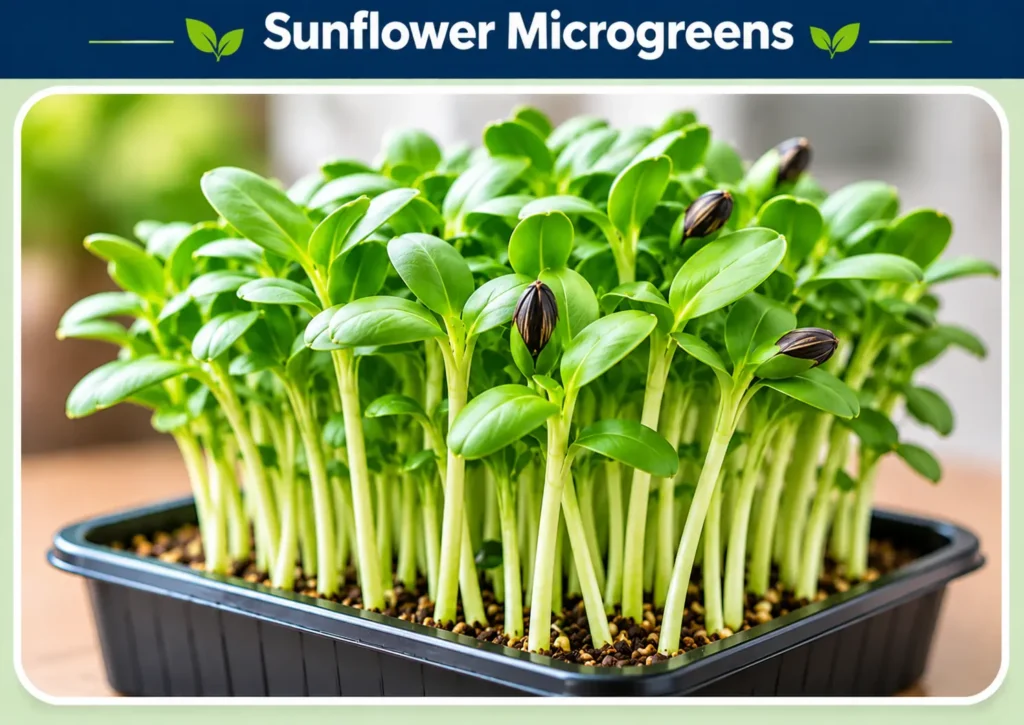
Sunflower Microgreens are popular indoor greens known for their thick, crunchy stems, tender leaves, and pleasantly nutty flavor. These nutritious seedlings are larger than many other microgreens, making them excellent additions to salads, wraps, sandwiches, and smoothies. Sunflower microgreens are relatively easy to cultivate indoors with proper moisture, lighting, and ventilation. Their satisfying texture and quick growth make them a favorite among home gardeners.
Identification
- Scientific Name: Helianthus annuus
- Common Name: Sunflower Microgreens
- Plant Height: Approximately 3–5 inches
- Leaf Color: Bright green
- Stem Color: Pale green to white
- Growth Habit: Thick-stemmed, upright seedlings
- Harvest Time: Approximately 8–14 days after sowing
Ideal Indoor Growing Conditions
Sunflower microgreens prefer temperatures between 65°F and 75°F (18°C–24°C). Use shallow trays containing a well-draining growing medium, such as seed-starting mix or coconut coir. Select untreated sunflower seeds intended for microgreen production. After germination, provide 12–16 hours of bright supplemental lighting daily. Maintain good airflow and adequate spacing to reduce mold problems and encourage strong seedling growth.
Watering and Maintenance
Water consistently to keep the growing medium moist without becoming waterlogged. Bottom watering is recommended to reduce excessive moisture around the stems. Remove empty seed hulls from the leaves when necessary. Monitor the tray for mold and maintain proper ventilation throughout the growing period. Harvest sunflower microgreens using clean scissors when the seed leaves are fully developed, preferably before the first true leaves become prominent.
4. Pea Shoot Microgreens
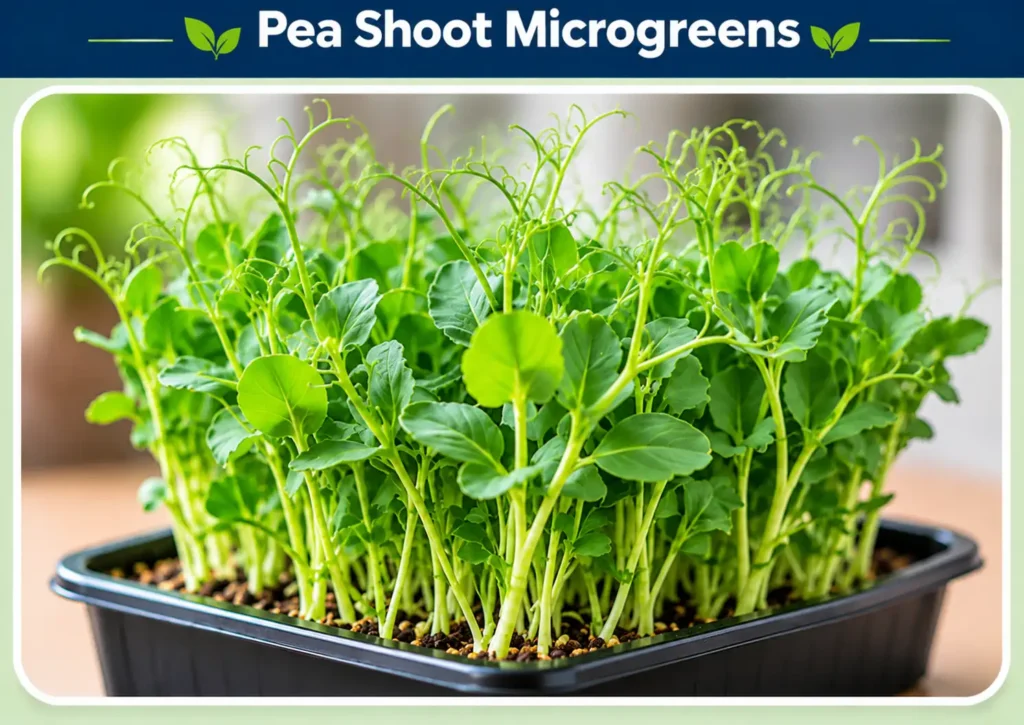
Pea Shoot Microgreens are tender, fast-growing greens recognized for their delicate leaves, curling tendrils, and sweet pea-like flavor. These young shoots are excellent for indoor gardening because they grow well in shallow containers and produce generous harvests. Their fresh taste and attractive appearance make them popular ingredients in salads, stir-fries, sandwiches, and garnishes. Pea shoots are particularly suitable for gardeners who want flavorful greens in limited indoor spaces.
Identification
- Scientific Name: Pisum sativum
- Common Name: Pea Shoot Microgreens
- Plant Height: Approximately 3–6 inches
- Leaf Color: Bright to medium green
- Stem Color: Light green
- Growth Habit: Upright shoots with delicate tendrils
- Harvest Time: Approximately 10–16 days after sowing
Ideal Indoor Growing Conditions
Pea shoot microgreens grow best in temperatures between 60°F and 72°F (16°C–22°C). Use shallow trays containing nutrient-rich, well-draining potting mix or another suitable growing medium. Soaking untreated pea seeds for approximately 6–12 hours before planting can encourage uniform germination. After sprouting, provide 12–16 hours of bright LED grow lighting daily. Good airflow helps maintain healthy foliage and prevents excessive moisture buildup.
Watering and Maintenance
Maintain consistent moisture throughout the growing period, especially during germination and early shoot development. Water gently or use bottom watering to avoid disturbing the seedlings. Remove damaged foliage and monitor for mold or fungal growth. Fertilizer is usually unnecessary for short growing cycles. Harvest pea shoots with clean scissors when they reach the desired height, leaving healthy lower nodes if you want to encourage limited regrowth.
5. Arugula Microgreens
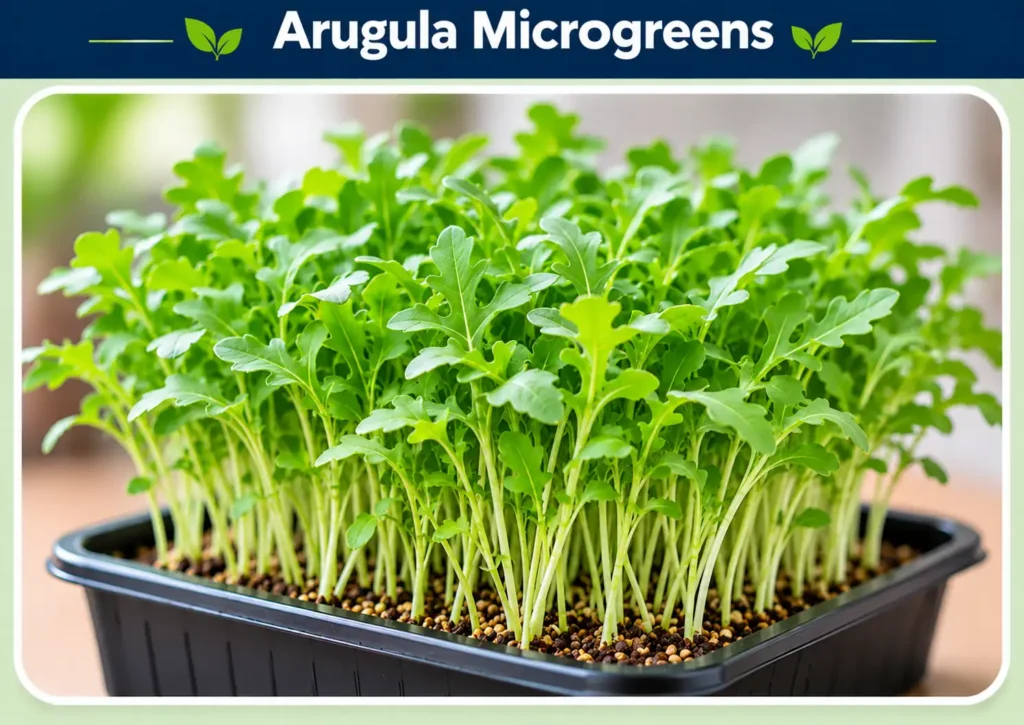
Arugula Microgreens are delicate, fast-growing leafy greens known for their distinctive peppery flavor and tender texture. These nutritious seedlings are excellent for indoor gardening because they require minimal space and mature quickly. Their bright green leaves add freshness and a slightly spicy taste to salads, sandwiches, pizzas, and other dishes. Arugula microgreens are particularly suitable for beginners who want flavorful greens from small indoor growing trays.
Identification
- Scientific Name: Eruca vesicaria subsp. sativa
- Common Name: Arugula Microgreens
- Plant Height: Approximately 1–3 inches
- Leaf Color: Bright green
- Stem Color: Pale green to white
- Growth Habit: Compact, upright seedlings
- Harvest Time: Approximately 7–12 days after sowing
Ideal Indoor Growing Conditions
Arugula microgreens grow best in temperatures between 60°F and 72°F (16°C–22°C). Use shallow growing trays filled with a lightweight, well-draining seed-starting mix or a suitable growing mat. After germination, provide approximately 12–16 hours of bright LED grow lighting daily. Maintain moderate humidity and good airflow to encourage healthy growth. Arugula seeds become gelatinous when wet, so spread them evenly without soaking them beforehand.
Watering and Maintenance
Keep the growing medium consistently moist without allowing excessive water to accumulate. Mist gently during germination, then switch to bottom watering once roots are established. Avoid overcrowding and maintain adequate ventilation to reduce fungal problems. Fertilizer is generally unnecessary during the short growing period. Harvest arugula microgreens with clean scissors just above the growing medium when the cotyledon leaves are fully developed.
6. Kale Microgreens
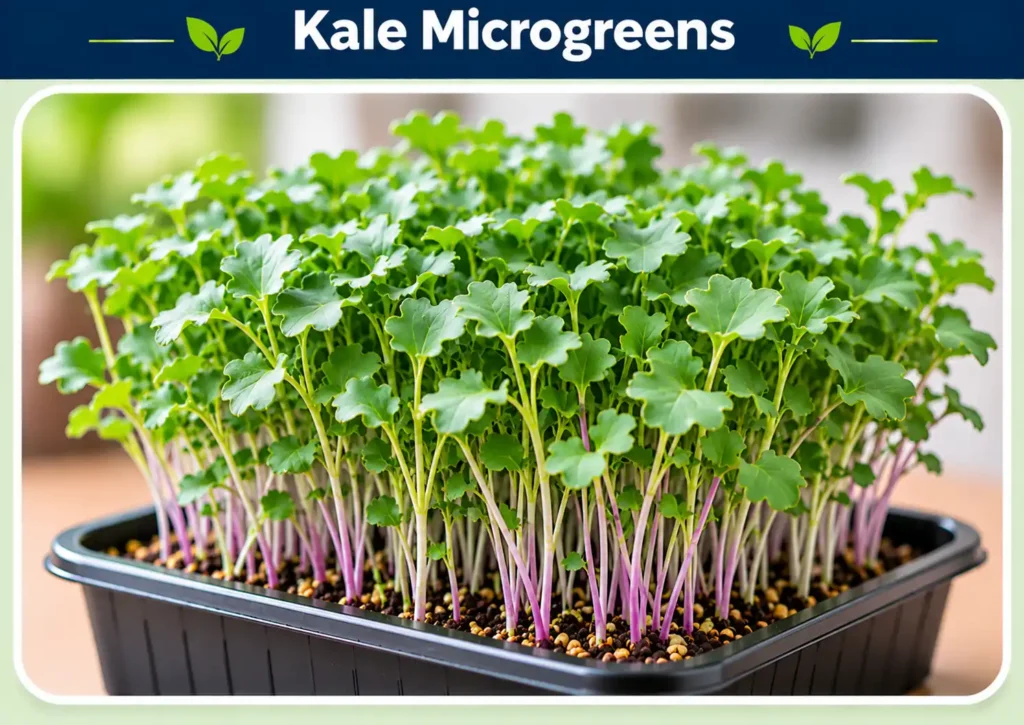
Kale Microgreens are nutritious young seedlings valued for their mild cabbage-like flavor, tender leaves, and attractive appearance. These compact greens are ideal for indoor growing because they develop quickly and require relatively little space. Kale microgreens are excellent additions to salads, smoothies, sandwiches, and healthy bowls. Their vibrant green foliage and delicate texture make them popular among indoor gardeners looking for fresh vegetables throughout the year.
Identification
- Scientific Name: Brassica oleracea var. sabellica
- Common Name: Kale Microgreens
- Plant Height: Approximately 2–3 inches
- Leaf Color: Bright to dark green
- Stem Color: Pale green, white, or purple depending on variety
- Growth Habit: Dense, upright seedlings
- Harvest Time: Approximately 8–14 days after sowing
Ideal Indoor Growing Conditions
Kale microgreens prefer temperatures between 60°F and 75°F (16°C–24°C). Grow them in shallow trays containing a moist, well-draining seed-starting mix or microgreen growing mat. After germination, provide 12–16 hours of full-spectrum LED lighting daily to encourage sturdy stems and healthy leaves. Maintain adequate ventilation and avoid excessive humidity. Their small size makes them suitable for kitchen shelves, windowsill gardens, and compact indoor growing systems.
Watering and Maintenance
Water regularly to keep the growing medium evenly moist but never waterlogged. Bottom watering helps protect tender seedlings from excessive surface moisture. Monitor the tray for mold, weak stems, or overcrowding, and maintain good airflow. Additional fertilizer is usually unnecessary during the short growing cycle. Harvest kale microgreens with clean scissors just above the growing medium when their seed leaves are fully open and before the true leaves become large.
7. Red Cabbage Microgreens
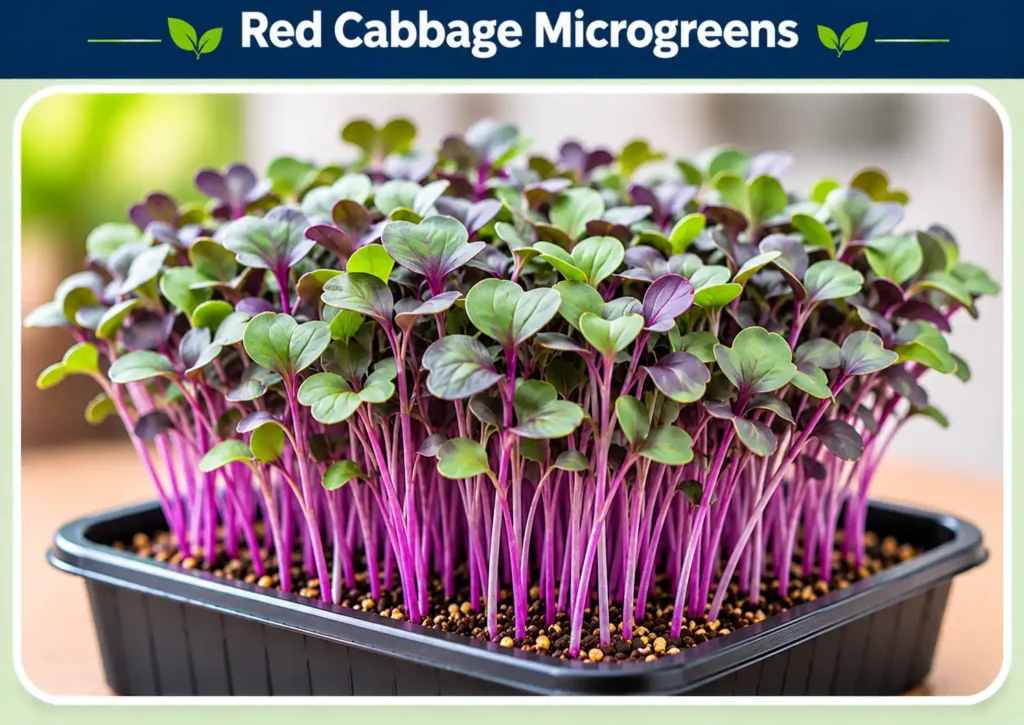
Red Cabbage Microgreens are colorful, nutritious seedlings recognized for their vibrant purple stems and tender green leaves. Their mild cabbage flavor and attractive appearance make them excellent additions to salads, sandwiches, wraps, and garnishes. These fast-growing microgreens are particularly suitable for indoor gardening because they thrive in shallow trays and require minimal maintenance. Their striking coloration also adds decorative appeal to small indoor growing spaces.
Identification
- Scientific Name: Brassica oleracea var. capitata f. rubra
- Common Name: Red Cabbage Microgreens
- Plant Height: Approximately 2–3 inches
- Leaf Color: Green with occasional purple tones
- Stem Color: Reddish-purple
- Growth Habit: Dense, upright seedlings
- Harvest Time: Approximately 8–12 days after sowing
Ideal Indoor Growing Conditions
Red cabbage microgreens grow best in temperatures between 60°F and 75°F (16°C–24°C). Choose shallow growing trays with drainage holes and fill them with lightweight, moisture-retaining seed-starting mix. Provide approximately 12–16 hours of bright LED grow lighting daily after germination. Consistent lighting encourages sturdy growth and attractive stem coloration. Maintain proper airflow and moderate humidity to reduce the likelihood of mold and other moisture-related problems.
Watering and Maintenance
Keep the growing medium evenly moist by watering gently during germination and using bottom watering as the seedlings develop. Avoid saturated conditions that may damage delicate roots. Inspect the tray regularly for mold or unhealthy seedlings, and maintain good ventilation. Fertilizer is generally unnecessary because red cabbage microgreens mature quickly. Harvest with clean scissors just above the growing medium when the cotyledons are fully expanded and the seedlings reach the desired height.
8. Mustard Microgreens
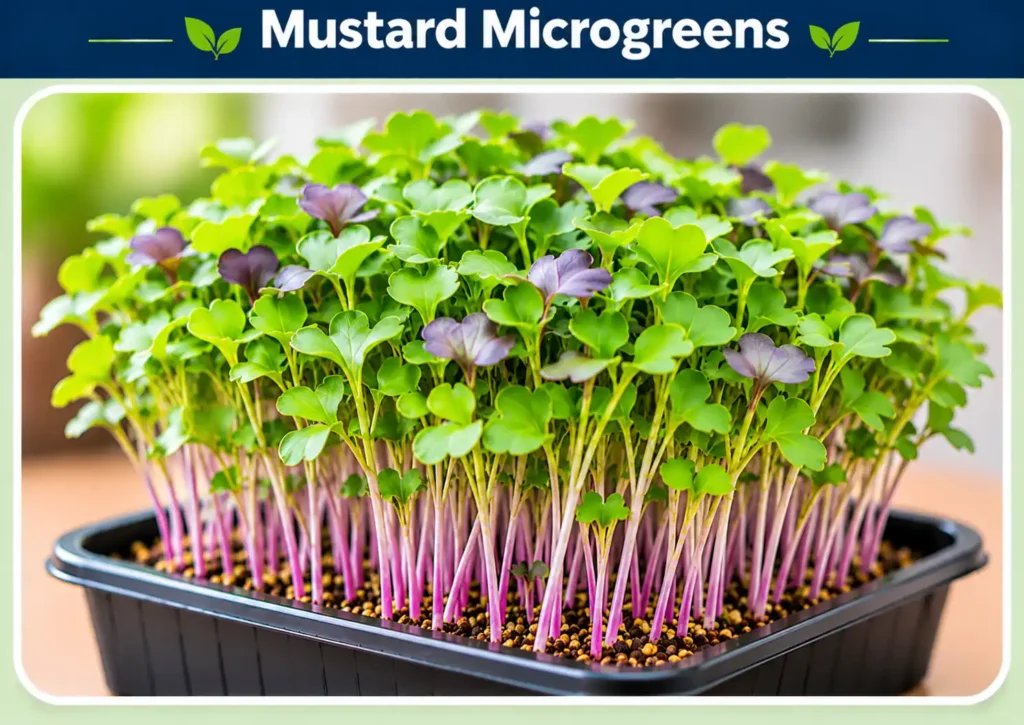
Mustard Microgreens are fast-growing, flavorful leafy greens known for their spicy taste and delicate texture. These young seedlings are excellent for indoor gardening because they require minimal space and mature quickly. Depending on the variety, mustard microgreens produce green, reddish, or purple leaves with slender stems. Their peppery flavor makes them perfect for salads, sandwiches, wraps, and garnishes, adding a fresh, slightly sharp taste to everyday meals.
Identification
- Scientific Name: Brassica juncea
- Common Name: Mustard Microgreens
- Plant Height: Approximately 2–3 inches
- Leaf Color: Green, reddish-green, or purple
- Stem Color: Pale green to reddish-purple
- Growth Habit: Dense, upright seedlings
- Harvest Time: Approximately 7–12 days after sowing
Ideal Indoor Growing Conditions
Mustard microgreens grow best in temperatures between 60°F and 75°F (16°C–24°C). Use shallow growing trays filled with a lightweight, well-draining seed-starting mix or a suitable growing mat. After germination, provide 12–16 hours of bright LED grow lighting daily. Maintain moderate humidity and good airflow to encourage healthy seedlings. Consistent lighting helps develop attractive leaf colors and sturdy stems.
Watering and Maintenance
Keep the growing medium evenly moist without allowing waterlogging. Mist gently during germination, then use bottom watering once the roots become established. Avoid overcrowding and maintain good ventilation to reduce mold problems. Fertilizer is generally unnecessary during the short growing period. Harvest mustard microgreens with clean scissors just above the growing medium when their cotyledon leaves are fully developed.
9. Beet Microgreens
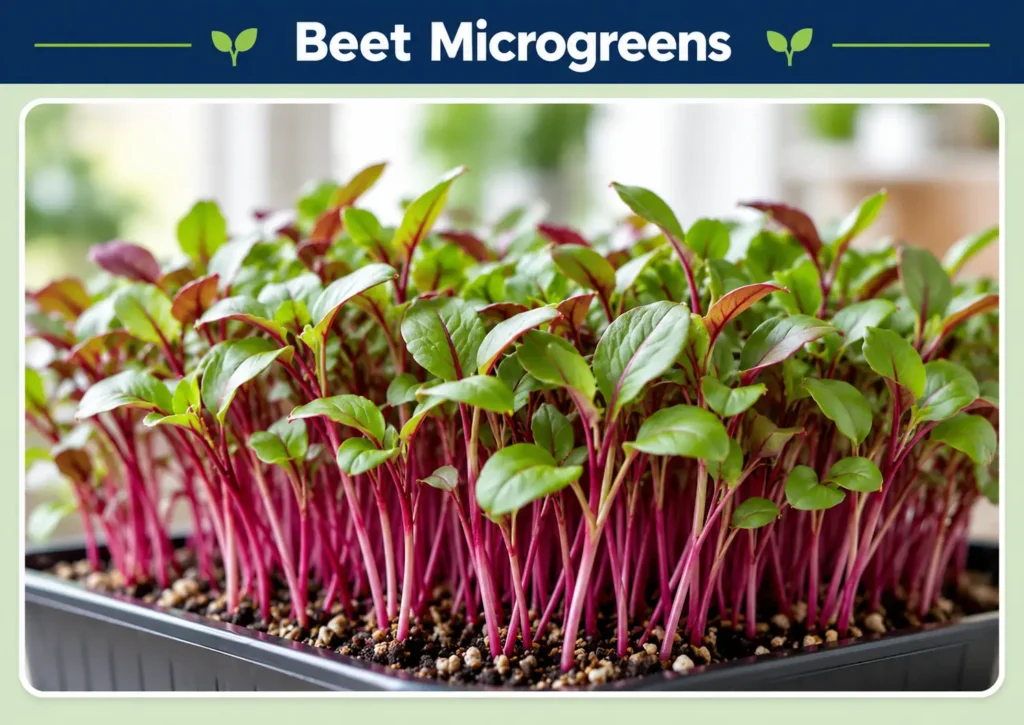
Beet Microgreens are colorful, nutritious young seedlings recognized for their vibrant reddish-purple stems and tender green leaves. These attractive microgreens bring visual interest to indoor growing trays while providing a mild, earthy flavor. Although they generally take longer to mature than radish or broccoli microgreens, beet microgreens are excellent for salads, sandwiches, grain bowls, and decorative garnishes.
Identification
- Scientific Name: Beta vulgaris
- Common Name: Beet Microgreens
- Plant Height: Approximately 2–4 inches
- Leaf Color: Green with reddish veins
- Stem Color: Red, pink, or reddish-purple
- Growth Habit: Slender, upright seedlings
- Harvest Time: Approximately 12–20 days after sowing
Ideal Indoor Growing Conditions
Beet microgreens prefer temperatures between 65°F and 75°F (18°C–24°C). Use shallow trays containing a well-draining seed-starting mix or coconut coir. Their seeds have relatively tough outer coverings, so soaking them for approximately 4–8 hours may encourage more uniform germination. After sprouting, provide 12–16 hours of bright LED grow lighting daily. Maintain adequate airflow and consistent moisture to support healthy development.
Watering and Maintenance
Water regularly to keep the growing medium moist but never saturated. Bottom watering is recommended once seedlings establish their roots. Remove loose seed husks when necessary and avoid excessive humidity around the stems. Beet microgreens generally do not require fertilizer during their short growing cycle. Harvest with clean scissors above the soil surface when the seedlings reach the desired height and their cotyledons are fully developed.
10. Cilantro Microgreens
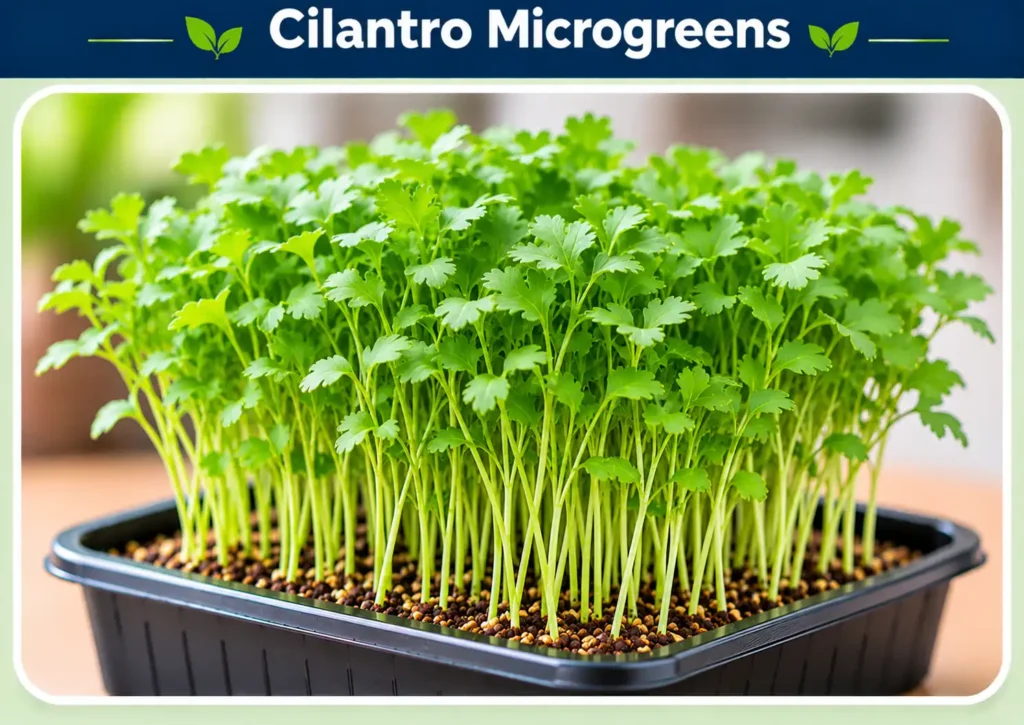
Cilantro Microgreens are aromatic young herbs valued for their fresh, citrus-like flavor and delicate green foliage. These flavorful seedlings are excellent for indoor growing, especially for gardeners who enjoy adding fresh herbs to everyday meals. Cilantro microgreens develop more slowly than many brassica microgreens, but their distinctive taste makes them worthwhile. They are ideal for tacos, salads, soups, sandwiches, and various Asian and Mexican dishes.
Identification
- Scientific Name: Coriandrum sativum
- Common Name: Cilantro Microgreens
- Plant Height: Approximately 2–4 inches
- Leaf Color: Bright green
- Stem Color: Pale green
- Growth Habit: Slender, upright seedlings
- Harvest Time: Approximately 18–25 days after sowing
Ideal Indoor Growing Conditions
Cilantro microgreens grow best in temperatures between 60°F and 72°F (16°C–22°C). Choose shallow growing trays with drainage holes and fill them with a fertile, well-draining seed-starting mix. Lightly crushing or splitting the dry coriander seed husks can improve germination, but avoid damaging the seeds inside. After germination, provide approximately 12–16 hours of bright LED grow lighting daily. Maintain consistent temperatures and good airflow for healthy growth.
Watering and Maintenance
Keep the growing medium consistently moist throughout germination and early development. Water gently to avoid disturbing the seedlings, then switch to bottom watering as roots establish. Avoid overly wet conditions, which can encourage fungal diseases. Remove damaged seedlings and maintain adequate ventilation. Harvest cilantro microgreens with clean scissors above the growing medium when the first true leaves begin developing and the plants have a noticeable cilantro aroma.
11. Basil Microgreens
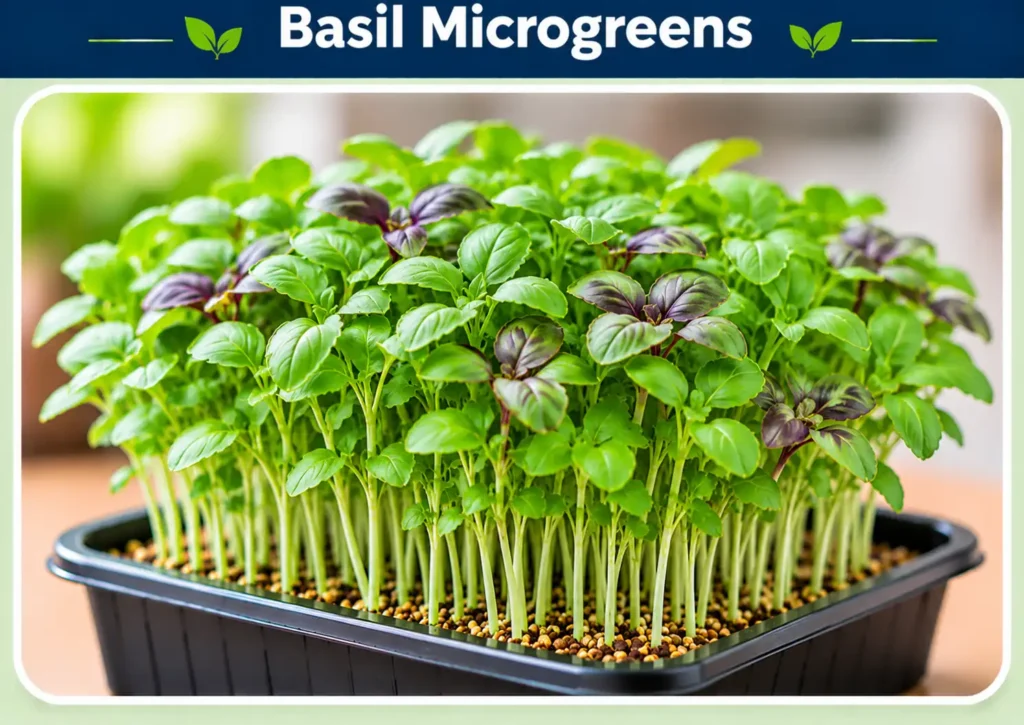
Basil Microgreens are aromatic, tender young seedlings known for their fresh,sweet flavor and delicate green leaves. These flavorful microgreens are excellent for indoor growing because they require minimal space and thrive in controlled environments. Their distinctive herbal aroma makes them perfect for salads, sandwiches, pasta, and garnishes. Basil microgreens grow more slowly than some other varieties, but their rich flavor and attractive appearance make them a rewarding addition to indoor gardens.
Identification
- Scientific Name: Ocimum basilicum
- Common Name: Basil Microgreens
- Plant Height: Approximately 2–3 inches
- Leaf Color: Bright green or purple, depending on variety
- Stem Color: Pale green to purple
- Growth Habit: Compact, upright seedlings
- Harvest Time: Approximately 12–20 days after sowing
Ideal Indoor Growing Conditions
Basil microgreens grow best in warm temperatures between 70°F and 80°F (21°C–27°C). Use shallow trays filled with a lightweight, well-draining seed-starting mix or suitable growing mat. After germination, provide approximately 12–16 hours of bright LED grow lighting daily. Basil seeds develop a gelatinous coating when wet, so avoid soaking them before sowing. Maintain moderate humidity and good airflow to encourage healthy seedling development.
Watering and Maintenance
Keep the growing medium evenly moist without allowing excessive water accumulation. Mist gently during germination, then switch to bottom watering once the roots establish. Avoid overcrowding because basil seedlings are sensitive to excessive humidity and poor ventilation. Fertilizer is generally unnecessary during the short growing period. Harvest basil microgreens with clean scissors just above the growing medium when their cotyledons are fully expanded or the first true leaves begin developing.
12. Amaranth Microgreens
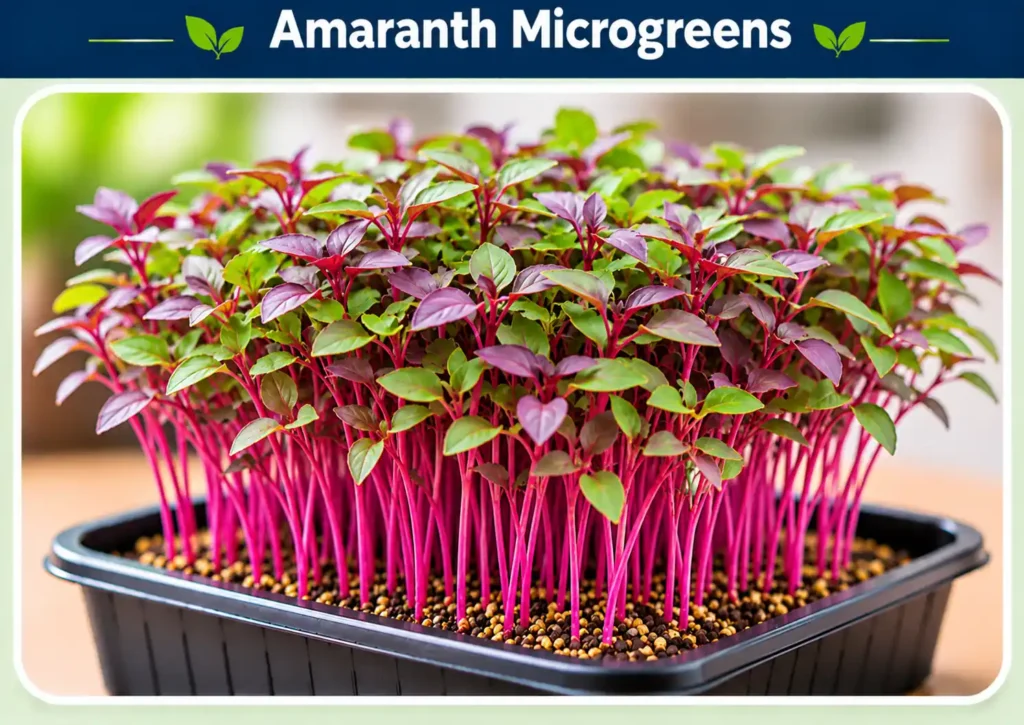
Amaranth Microgreens are colorful, delicate seedlings recognized for their vibrant red, pink, or purple stems and tender leaves. These attractive microgreens are popular among indoor gardeners because they add beautiful color and a mild, earthy flavor to meals. Their small size makes them suitable for shallow growing trays and compact indoor growing spaces. Amaranth microgreens are especially appealing as garnishes for salads, grain bowls, soups, and other dishes.
Identification
- Scientific Name: Amaranthus spp.
- Common Name: Amaranth Microgreens
- Plant Height: Approximately 1–3 inches
- Leaf Color: Green, red, or reddish-purple
- Stem Color: Pink, red, or purple
- Growth Habit: Fine-stemmed, upright seedlings
- Harvest Time: Approximately 10–16 days after sowing
Ideal Indoor Growing Conditions
Amaranth microgreens prefer warm temperatures between 70°F and 80°F (21°C–27°C). Use shallow growing trays containing a fine-textured, well-draining seed-starting mix. Because amaranth seeds are extremely small, scatter them evenly across the surface without burying them deeply. After germination, provide 12–16 hours of bright LED grow lighting daily. Maintain gentle airflow and moderate humidity to support healthy growth and reduce fungal problems.
Watering and Maintenance
Water carefully to keep the growing medium consistently moist without disturbing the delicate seedlings. A fine mist works well during germination, while bottom watering is preferable once roots develop. Avoid excessive moisture and overcrowding, which can encourage mold and weak stems. Additional fertilizer is generally unnecessary during the short growing cycle. Harvest amaranth microgreens with clean scissors just above the growing medium when the seedlings reach the desired height.
13. Kohlrabi Microgreens
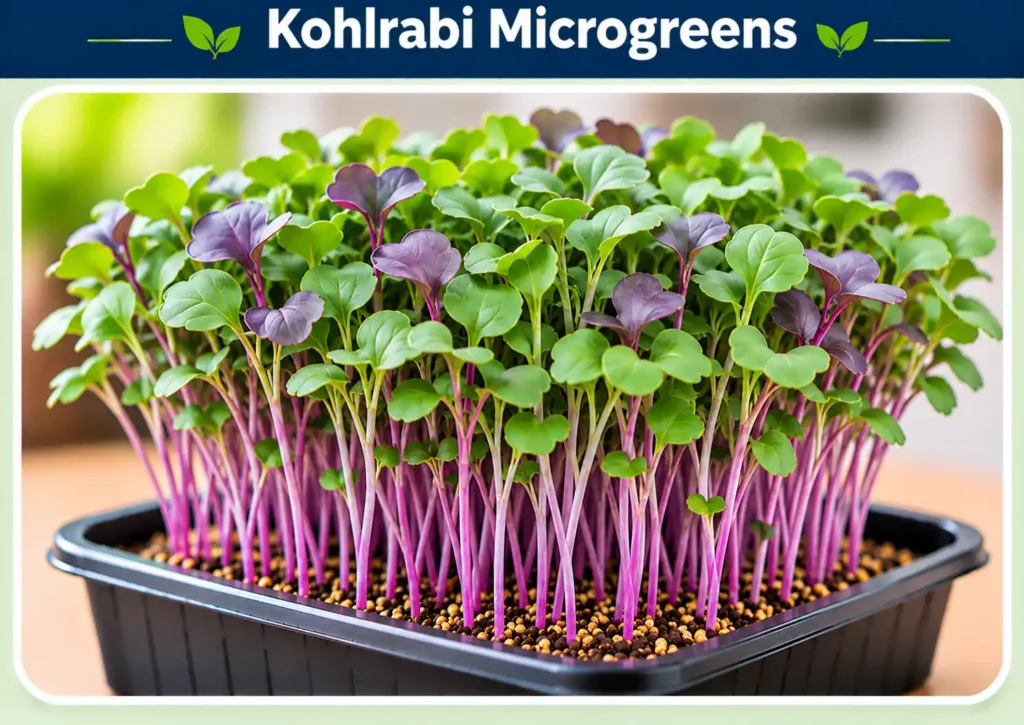
Kohlrabi Microgreens are fast-growing, nutritious seedlings valued for their tender leaves, colorful stems, and mild cabbage-like flavor. These attractive young greens are particularly suitable for indoor gardening because they grow quickly in shallow trays and require relatively little maintenance. Purple kohlrabi varieties produce striking violet stems that contrast beautifully with their green leaves. Their crisp texture and delicate flavor make them excellent additions to salads, sandwiches, wraps, and vegetable bowls.
Identification
- Scientific Name: Brassica oleracea var. gongylodes
- Common Name: Kohlrabi Microgreens
- Plant Height: Approximately 2–3 inches
- Leaf Color: Bright green
- Stem Color: Pale green or reddish-purple, depending on variety
- Growth Habit: Dense, upright seedlings
- Harvest Time: Approximately 8–12 days after sowing
Ideal Indoor Growing Conditions
Kohlrabi microgreens grow best in temperatures between 60°F and 75°F (16°C–24°C). Use shallow trays with drainage holes and fill them with a lightweight, moisture-retaining seed-starting mix or suitable microgreen growing mat. After germination, provide approximately 12–16 hours of bright LED grow lighting daily. Maintain moderate humidity and adequate airflow to encourage sturdy stems and healthy leaf development.
Watering and Maintenance
Keep the growing medium evenly moist throughout the growing period without allowing waterlogging. Mist lightly during germination and switch to bottom watering once seedlings become established. Maintain proper ventilation and inspect the growing tray for mold or unhealthy seedlings. Fertilizer is generally unnecessary because kohlrabi microgreens mature quickly. Harvest with clean scissors just above the growing medium when their cotyledon leaves are fully expanded and the seedlings reach approximately 2–3 inches tall.
14. Chia Microgreens
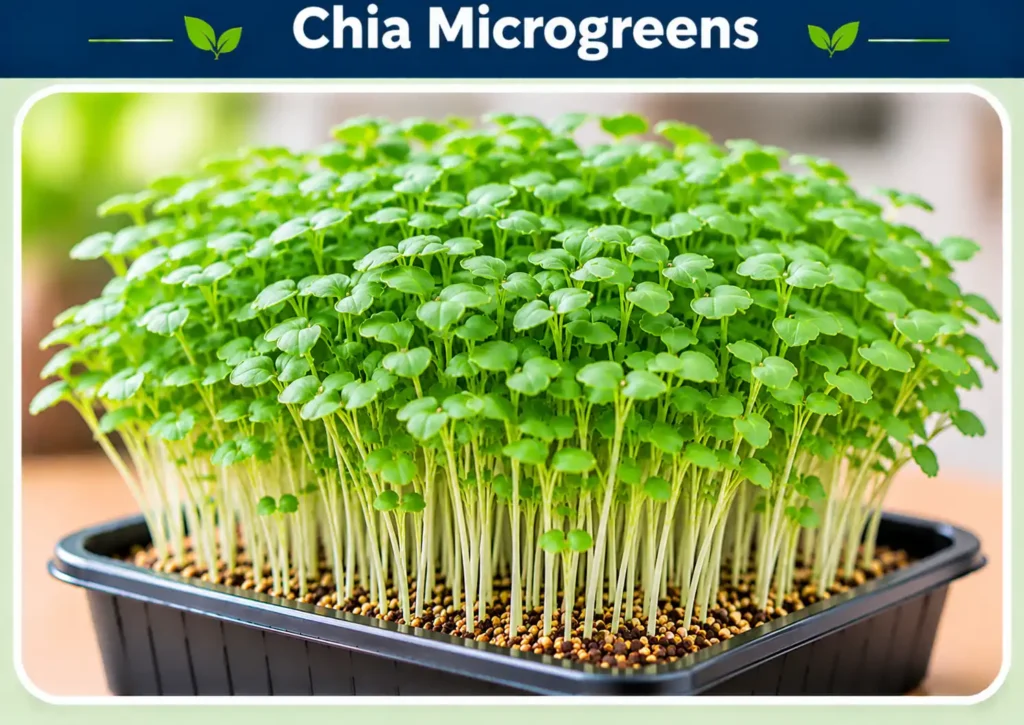
Chia Microgreens are tender, nutritious seedlings known for their delicate green leaves, slender stems, and mild, slightly earthy flavor. These fast-growing microgreens are excellent for indoor gardening because they require minimal space and simple growing conditions. Chia microgreens are ideal for salads, sandwiches, smoothies, and healthy meal garnishes. Their compact growth and quick harvest time make them a practical choice for beginners interested in growing fresh greens indoors.
Identification
- Scientific Name: Salvia hispanica
- Common Name: Chia Microgreens
- Plant Height: Approximately 1–3 inches
- Leaf Color: Bright green
- Stem Color: Pale green to white
- Growth Habit: Dense, delicate, upright seedlings
- Harvest Time: Approximately 8–14 days after sowing
Ideal Indoor Growing Conditions
Chia microgreens grow best in temperatures between 65°F and 75°F (18°C–24°C). Use shallow growing trays containing a fine-textured seed-starting mix or a suitable growing mat. Because chia seeds develop a gelatinous coating when wet, avoid soaking them before planting. Spread the seeds evenly across the moist growing surface. After germination, provide 12–16 hours of bright LED grow lighting daily. Maintain moderate humidity and good airflow for healthy development.
Watering and Maintenance
Keep the growing medium consistently moist without allowing excessive water accumulation. Mist gently during early germination, then use careful bottom watering once the seedlings establish roots. Avoid overcrowding and stagnant air, which may encourage fungal growth. Fertilizer is generally unnecessary during the short growing cycle. Harvest chia microgreens with clean scissors just above the growing medium when the cotyledons are fully developed.
15. Pak Choi Microgreens
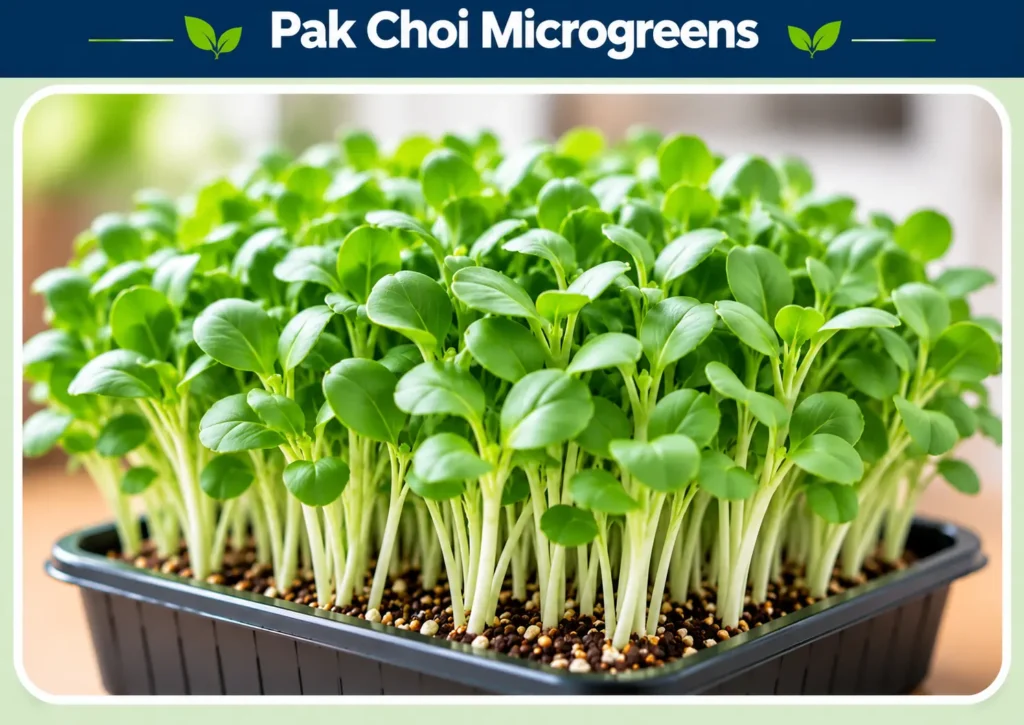
Pak Choi Microgreens are fast-growing Asian greens recognized for their tender leaves, delicate stems, and mild cabbage-like flavor. These young seedlings are excellent for indoor growing because they mature quickly and require little space. Their fresh taste and crisp texture make them suitable for salads, sandwiches, wraps, and Asian-inspired dishes. Pak choi microgreens are particularly attractive to gardeners who want an easy-to-grow vegetable that produces a nutritious harvest throughout the year.
Identification
- Scientific Name: Brassica rapa subsp. chinensis
- Common Name: Pak Choi Microgreens
- Plant Height: Approximately 2–3 inches
- Leaf Color: Bright to medium green
- Stem Color: Pale green or white
- Growth Habit: Dense, upright seedlings
- Harvest Time: Approximately 8–12 days after sowing
Ideal Indoor Growing Conditions
Pak choi microgreens prefer temperatures between 60°F and 75°F (16°C–24°C). Choose shallow growing trays with drainage holes and fill them with a lightweight, well-draining seed-starting mix or a suitable growing mat. Sow the seeds evenly across the surface to encourage uniform germination. After sprouting, provide approximately 12–16 hours of bright LED grow lighting daily. Maintain good airflow and moderate humidity to support healthy seedling development.
Watering and Maintenance
Maintain consistent moisture throughout the growing period without allowing the growing medium to become waterlogged. Water gently during germination and switch to bottom watering once the roots establish. Avoid excessive humidity and monitor the seedlings for mold or weak growth. Additional fertilizer is generally unnecessary during the short growing cycle. Harvest pak choi microgreens with clean scissors just above the growing medium when their seed leaves are fully expanded.
16. Swiss Chard Microgreens
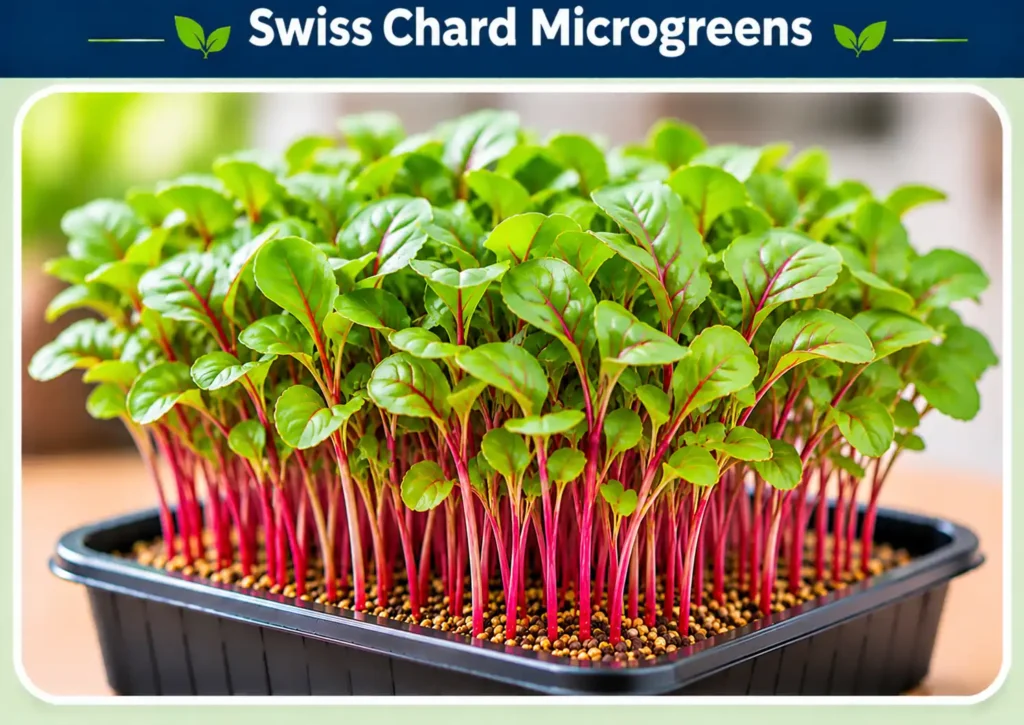
Swiss Chard Microgreens are colorful, tender young greens valued for their vibrant stems, delicate leaves, and mild, earthy flavor. Depending on the variety, these attractive microgreens produce red, yellow, pink, orange, or white stems that add visual interest to indoor gardens. Swiss chard microgreens grow more slowly than many brassica varieties, but their beautiful appearance and versatile culinary uses make them an excellent choice for salads, sandwiches, and decorative garnishes.
Identification
- Scientific Name: Beta vulgaris subsp. vulgaris (Leaf Beet Group)
- Common Name: Swiss Chard Microgreens
- Plant Height: Approximately 2–4 inches
- Leaf Color: Bright to dark green
- Stem Color: Red, yellow, pink, orange, or white
- Growth Habit: Slender, upright seedlings
- Harvest Time: Approximately 12–21 days after sowing
Ideal Indoor Growing Conditions
Swiss chard microgreens grow best in temperatures between 65°F and 75°F (18°C–24°C). Use shallow trays containing a well-draining seed-starting mix or coconut coir. Soaking the seed clusters for approximately 4–8 hours before sowing may encourage more uniform germination. After sprouting, provide 12–16 hours of bright LED grow lighting daily. Maintain consistent moisture and adequate airflow to encourage strong, colorful stems.
Watering and Maintenance
Keep the growing medium evenly moist without allowing standing water around the roots. Bottom watering helps maintain moisture while reducing excessive wetness around the delicate stems. Remove loose seed husks when necessary and inspect seedlings regularly for signs of mold. Fertilizer is generally unnecessary during the short growing cycle. Harvest Swiss chard microgreens with clean scissors just above the growing medium once their cotyledons are fully developed and the stems display their characteristic colors.
17. Spinach Microgreens
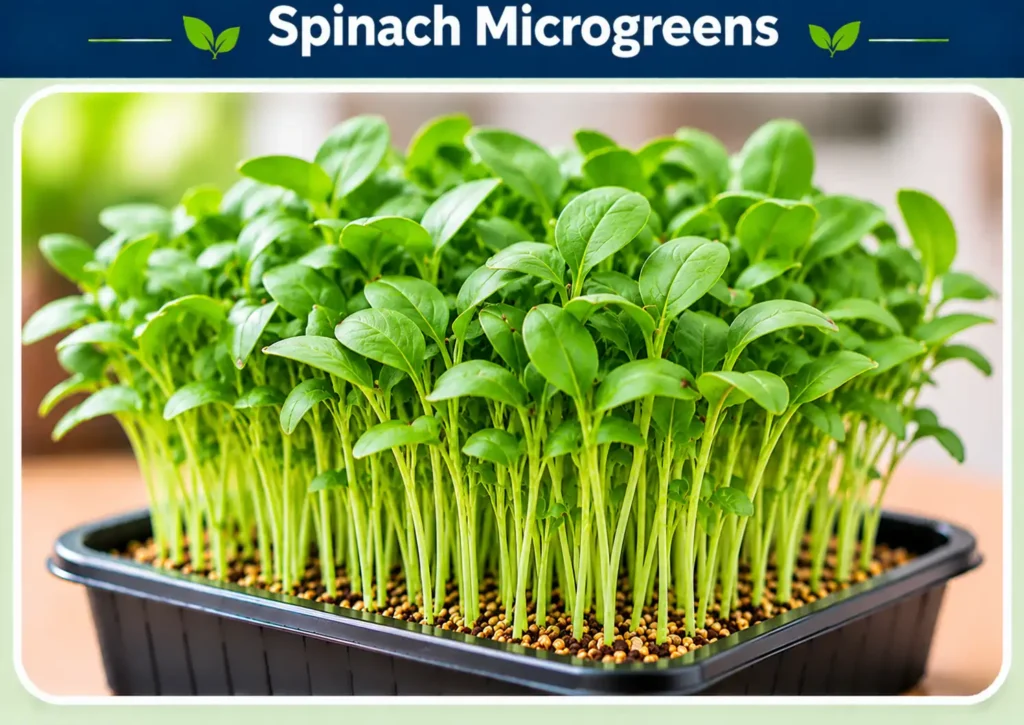
Spinach Microgreens are tender, nutritious young greens valued for their mild flavor, delicate leaves, and attractive green appearance. These microgreens are an excellent addition to indoor gardens, although they require more patience than faster-growing varieties such as radish or broccoli. Their soft texture and fresh taste make them suitable for salads, sandwiches, wraps, and healthy meal garnishes. Spinach microgreens grow best in cool indoor environments with consistent moisture and adequate lighting.
Identification
- Scientific Name: Spinacia oleracea
- Common Name: Spinach Microgreens
- Plant Height: Approximately 2–3 inches
- Leaf Color: Bright to dark green
- Stem Color: Pale green
- Growth Habit: Delicate, upright seedlings
- Harvest Time: Approximately 14–25 days after sowing
Ideal Indoor Growing Conditions
Spinach microgreens prefer cool temperatures between 55°F and 70°F (13°C–21°C). Use shallow growing trays filled with a lightweight, well-draining seed-starting mix. Sow untreated seeds evenly and cover them lightly with the growing medium. After germination, provide approximately 12–16 hours of bright LED grow lighting daily. Good airflow and moderate humidity encourage healthy development, while excessive heat can reduce germination success.
Watering and Maintenance
Keep the growing medium consistently moist without allowing it to become waterlogged. Water gently during germination and switch to bottom watering once the roots become established. Avoid overcrowding and excessive humidity to reduce fungal problems. Fertilizer is generally unnecessary during the short growing period. Harvest spinach microgreens with clean scissors just above the growing medium when their seed leaves are fully developed.
18. Wheatgrass Microgreens
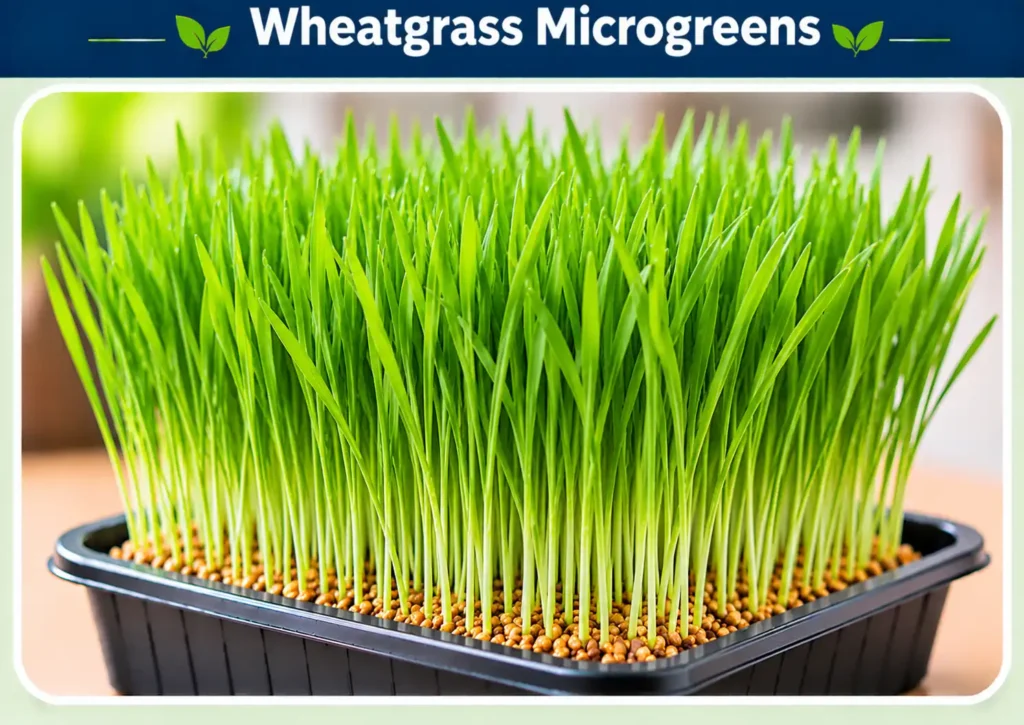
Wheatgrass Microgreens are fast-growing, grass-like seedlings recognized for their bright green blades and fresh, grassy flavor. Commonly grown indoors for wheatgrass juice and smoothies, these young greens are popular among home gardeners because they require minimal space and simple growing conditions. Their dense growth and vibrant appearance make them suitable for kitchen counters, growing shelves, and small indoor gardening setups throughout the year.
Identification
- Scientific Name: Triticum aestivum
- Common Name: Wheatgrass Microgreens
- Plant Height: Approximately 4–7 inches
- Leaf Color: Bright green
- Stem Color: Light green
- Growth Habit: Dense, upright, grass-like shoots
- Harvest Time: Approximately 7–12 days after sowing
Ideal Indoor Growing Conditions
Wheatgrass grows best in temperatures between 65°F and 75°F (18°C–24°C). Use shallow trays filled with a well-draining seed-starting mix or coconut coir. Soak untreated wheat seeds for approximately 8–12 hours before sowing to encourage uniform germination. Spread the seeds evenly across the growing medium and maintain consistent moisture. After sprouting, provide 12–16 hours of bright LED grow lighting daily to encourage strong, healthy blades.
Watering and Maintenance
Water regularly to keep the growing medium evenly moist without allowing standing water. Bottom watering helps reduce excessive moisture around the stems and roots. Maintain good airflow and inspect the trays for mold, especially during early germination. Additional fertilizer is generally unnecessary during the short growing cycle. Harvest wheatgrass using clean scissors when the blades reach approximately 4–7 inches tall. A second harvest may be possible, although regrowth is often less vigorous.
19. Fenugreek Microgreens
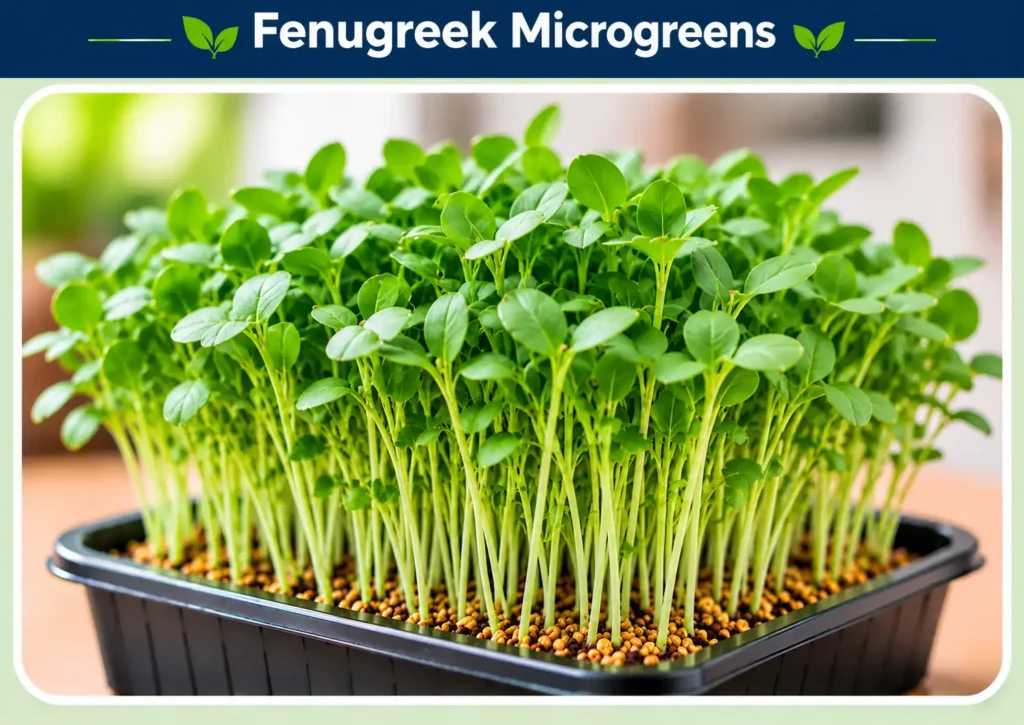
Fenugreek Microgreens are aromatic young seedlings known for their tender green leaves and distinctive slightly bitter, nutty flavor. These microgreens are popular in Indian and Middle Eastern cooking, where they add a unique taste to salads, sandwiches, and vegetable dishes. Fenugreek microgreens are suitable for indoor gardening because they grow quickly, require relatively little space, and develop well in shallow trays under consistent lighting.
Identification
- Scientific Name: Trigonella foenum-graecum
- Common Name: Fenugreek Microgreens
- Plant Height: Approximately 2–4 inches
- Leaf Color: Bright green
- Stem Color: Pale green to white
- Growth Habit: Upright, tender seedlings
- Harvest Time: Approximately 10–15 days after sowing
Ideal Indoor Growing Conditions
Fenugreek microgreens grow best in temperatures between 65°F and 75°F (18°C–24°C). Use shallow growing trays containing a lightweight, well-draining seed-starting mix or coconut coir. Soak untreated fenugreek seeds for approximately 6–8 hours before planting to encourage faster germination. After sprouting, provide 12–16 hours of bright LED grow lighting daily. Maintain moderate humidity and good airflow to support strong seedling development.
Watering and Maintenance
Keep the growing medium consistently moist without allowing excess water to accumulate. Water gently during germination and switch to bottom watering once the seedlings establish healthy roots. Avoid overcrowding and maintain adequate ventilation to reduce mold problems. Fertilizer is generally unnecessary during the short growing period. Harvest fenugreek microgreens with clean scissors just above the growing medium when their cotyledons are fully developed and the seedlings reach the desired height.
20. Mizuna Microgreens
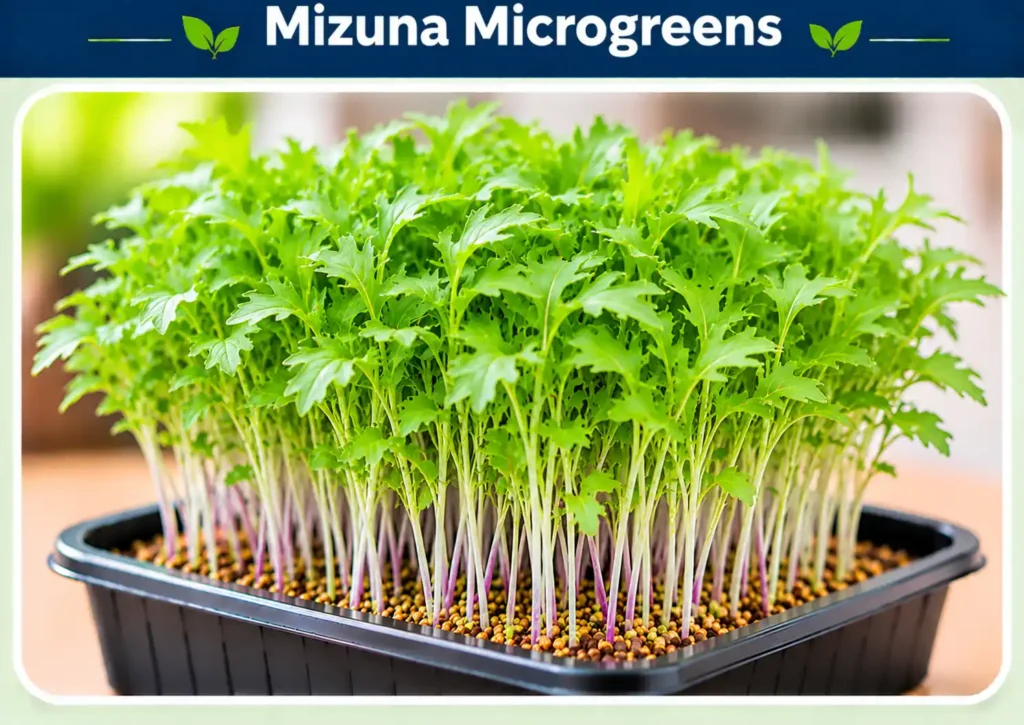
Mizuna Microgreens are tender, fast-growing Japanese mustard greens known for their delicate leaves and mild, peppery flavor. These nutritious seedlings are excellent for indoor gardening because they require minimal space and develop quickly. Their fresh taste and attractive appearance make them popular additions to salads, sandwiches, wraps, and vegetable bowls. Mizuna microgreens are especially suitable for beginners who want flavorful leafy greens from compact indoor growing trays.
Identification
- Scientific Name: Brassica rapa var. nipposinica
- Common Name: Mizuna Microgreens
- Plant Height: Approximately 2–3 inches
- Leaf Color: Bright green or reddish-purple, depending on variety
- Stem Color: Pale green to purple
- Growth Habit: Dense, upright seedlings
- Harvest Time: Approximately 8–12 days after sowing
Ideal Indoor Growing Conditions
Mizuna microgreens grow best in temperatures between 60°F and 75°F (16°C–24°C). Use shallow growing trays filled with a lightweight, well-draining seed-starting mix or suitable microgreen growing mat. Sow untreated seeds evenly across the moist surface. After germination, provide approximately 12–16 hours of bright LED grow lighting daily. Maintain moderate humidity and adequate airflow to encourage healthy growth and prevent excessive moisture buildup.
Watering and Maintenance
Keep the growing medium consistently moist without allowing waterlogging. Mist gently during germination, then switch to bottom watering once the seedlings establish roots. Maintain good ventilation and inspect plants regularly for mold or weak growth. Fertilizer is generally unnecessary during the short growing cycle. Harvest mizuna microgreens with clean scissors just above the growing medium when their cotyledon leaves are fully expanded.
21. Turnip Microgreens
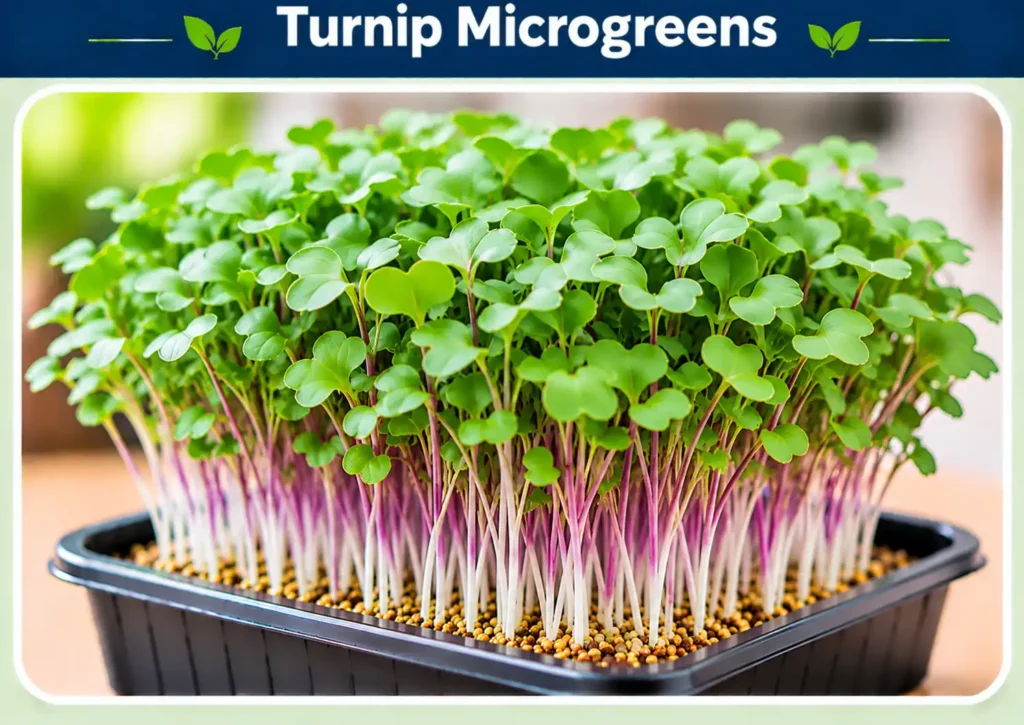
Turnip Microgreens are fast-growing, tender leafy greens valued for their mild, slightly peppery flavor and delicate texture. These young seedlings are excellent for indoor gardening because they mature quickly and require little growing space. Their bright green leaves and crisp stems make them attractive additions to salads, sandwiches, soups, and garnishes. Turnip microgreens are particularly suitable for beginners looking for an easy-to-grow vegetable that produces fresh greens throughout the year.
Identification
- Scientific Name: Brassica rapa subsp. rapa
- Common Name: Turnip Microgreens
- Plant Height: Approximately 2–3 inches
- Leaf Color: Bright to medium green
- Stem Color: Pale green or white
- Growth Habit: Dense, upright seedlings
- Harvest Time: Approximately 8–12 days after sowing
Ideal Indoor Growing Conditions
Turnip microgreens prefer temperatures between 60°F and 75°F (16°C–24°C). Choose shallow growing trays with drainage holes and fill them with a lightweight, moisture-retaining seed-starting mix or growing mat. Spread seeds evenly to encourage uniform germination. After sprouting, provide 12–16 hours of bright LED grow lighting daily. Consistent temperatures, moderate humidity, and good airflow help produce healthy, sturdy seedlings.
Watering and Maintenance
Maintain even moisture throughout the growing period without saturating the growing medium. Water gently during germination and use bottom watering once the roots become established. Avoid excessive humidity and overcrowding to reduce fungal problems. Additional fertilizer is usually unnecessary because turnip microgreens mature quickly. Harvest with clean scissors just above the growing medium when the cotyledons are fully developed and the seedlings reach the desired height.
22. Lettuce Microgreens
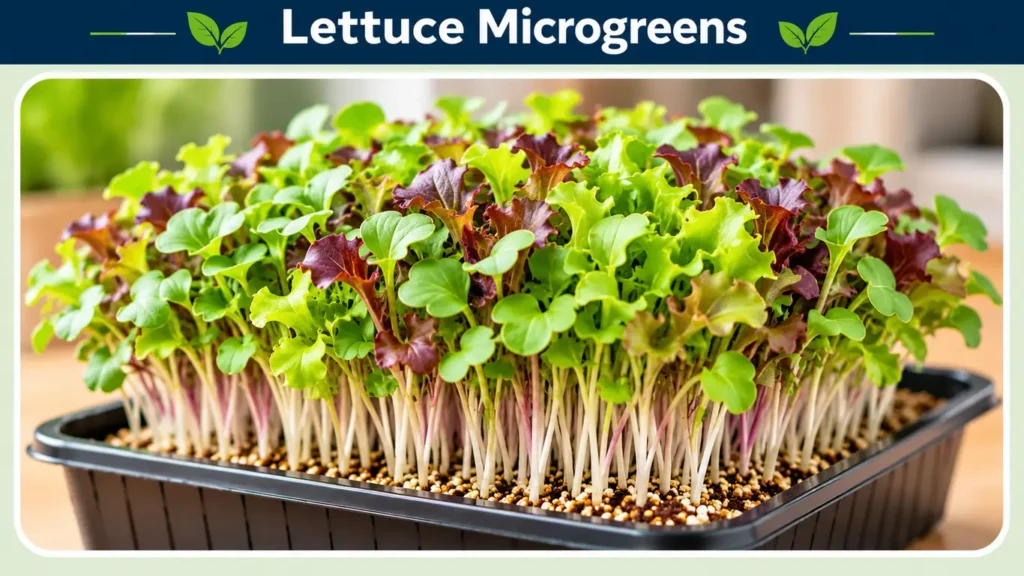
Lettuce Microgreens are delicate, mild-flavored young greens that make an excellent addition to indoor vegetable gardens. Their tender leaves, soft texture, and fresh taste are ideal for salads, sandwiches, wraps, and decorative garnishes. Different lettuce varieties produce attractive green, red, or purple foliage, adding color to indoor growing trays. Although lettuce microgreens may take slightly longer to develop than some brassica varieties, they remain a rewarding choice for gardeners with limited space.
Identification
- Scientific Name: Lactuca sativa
- Common Name: Lettuce Microgreens
- Plant Height: Approximately 1–3 inches
- Leaf Color: Light green, dark green, red, or purple
- Stem Color: Pale green to reddish
- Growth Habit: Compact, delicate, upright seedlings
- Harvest Time: Approximately 10–16 days after sowing
Ideal Indoor Growing Conditions
Lettuce microgreens grow best in cool temperatures between 60°F and 70°F (16°C–21°C). Use shallow trays filled with a fine-textured, well-draining seed-starting mix. Scatter untreated lettuce seeds evenly across the moist surface and cover them only very lightly, since many lettuce varieties germinate best with some light exposure. After germination, provide approximately 12–16 hours of bright LED grow lighting daily. Avoid excessive heat, which can interfere with germination and healthy growth.
Watering and Maintenance
Keep the growing medium evenly moist without allowing standing water around the delicate roots. Mist gently during germination and switch to careful bottom watering once the seedlings develop. Maintain adequate airflow and avoid overcrowding to reduce mold and damping-off problems. Fertilizer is generally unnecessary during the short growing period. Harvest lettuce microgreens with clean scissors just above the growing medium when their cotyledon leaves are fully expanded or the first true leaves begin appearing.
FAQs
1. What Are the Best Microgreens to Grow Indoors?
Broccoli, radish, sunflower, pea shoots, and kale are among the best microgreens for indoor growing. They germinate relatively quickly, require minimal space, and grow well in shallow trays. These varieties are excellent for beginners and provide fresh, flavorful greens throughout the year.
2. How Long Do Microgreens Take to Grow Indoors?
Most microgreens take approximately 7–21 days to reach harvestable size, depending on the variety and growing conditions. Radish and broccoli grow quickly, while cilantro and spinach generally take longer. Proper lighting, consistent moisture, and suitable temperatures help encourage healthy development.
3. Do Microgreens Need Sunlight to Grow Indoors?
Microgreens need adequate light after germination to develop healthy leaves and strong stems. A bright windowsill may work, but LED grow lights provide more consistent results. Most varieties benefit from approximately 12–16 hours of supplemental lighting daily, followed by a dark period.
4. Can You Grow Microgreens Indoors Without Soil?
Yes, many microgreens can grow without soil using coconut coir, hemp mats, or other suitable growing media. Some varieties also grow in hydroponic systems. Maintaining consistent moisture, proper lighting, and good airflow is essential for producing healthy microgreens without traditional potting soil.
5. How Often Should You Water Microgreens Indoors?
Check microgreens daily and water whenever the growing medium begins to dry. The medium should remain moist but never waterlogged. Bottom watering is often recommended after germination because it reduces excessive moisture on delicate stems and leaves, helping prevent fungal problems.