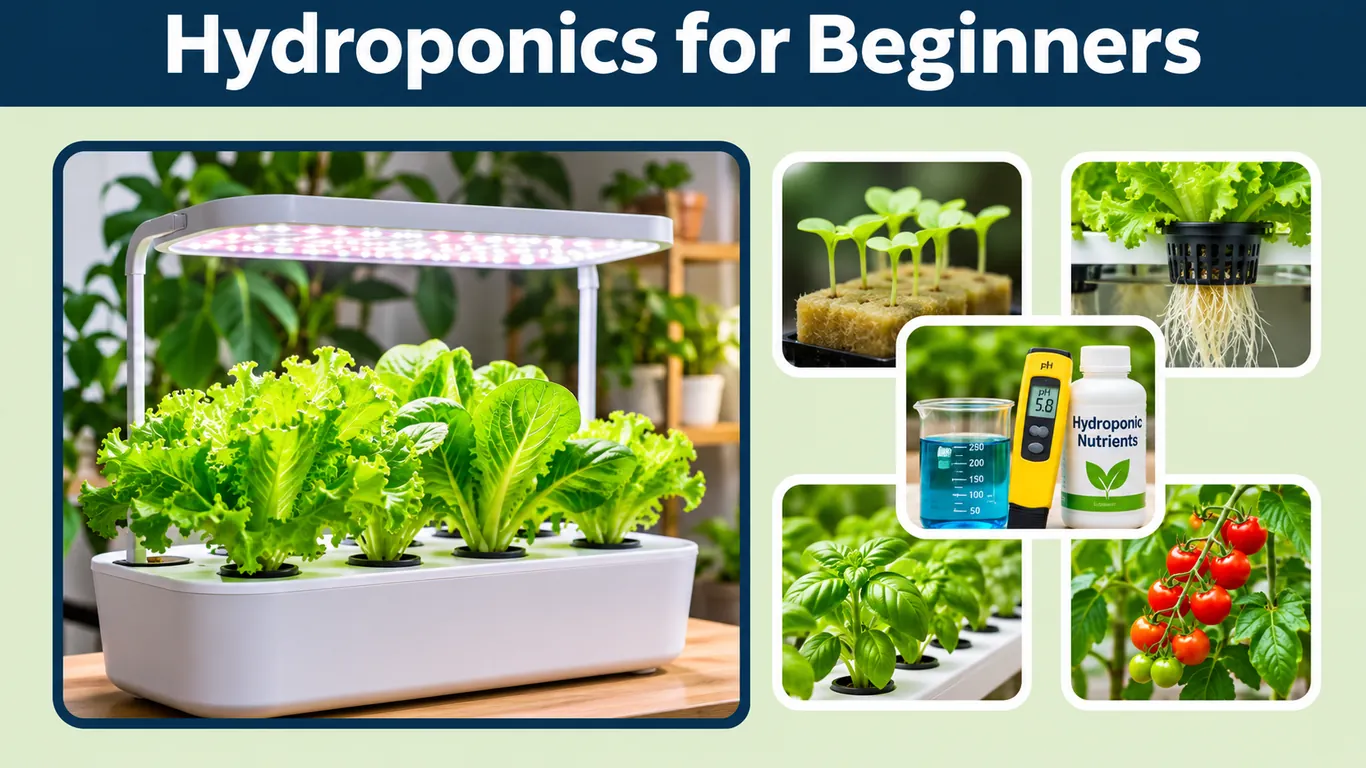
Hydroponics for beginners is an exciting way to grow fresh vegetables, herbs, and leafy greens without using traditional soil. Instead, plants receive essential nutrients through water, allowing their roots to absorb what they need for healthy growth. Whether you have a small apartment, limited outdoor space, or want to experiment with indoor gardening, hydroponics offers a practical growing method. With the right equipment, suitable plants, and basic maintenance, you can create a productive hydroponic garden at home without spending too much money or needing advanced gardening experience.
What Is Hydroponics and How Does It Work?
Hydroponics is a gardening method that grows plants without soil by supplying nutrients directly through water. Instead of searching through soil for minerals, plant roots receive dissolved nutrients from a carefully prepared solution.
Most hydroponic growing systems use containers, water, nutrients, and supporting materials to keep plants upright. Some systems also require pumps to circulate water or provide oxygen.
The basic requirements for hydroponic gardening include:
- Water: Carries essential nutrients to plant roots.
- Nutrients: Provide minerals necessary for growth.
- Light: Supports photosynthesis and healthy development.
- Oxygen: Keeps roots functioning properly.
- Growing medium: Supports plants without traditional soil.
Hydroponics can work indoors throughout the year when environmental conditions are properly controlled. It also allows gardeners to manage plant nutrition more precisely than traditional soil gardening.
Best Hydroponic Systems for Beginners
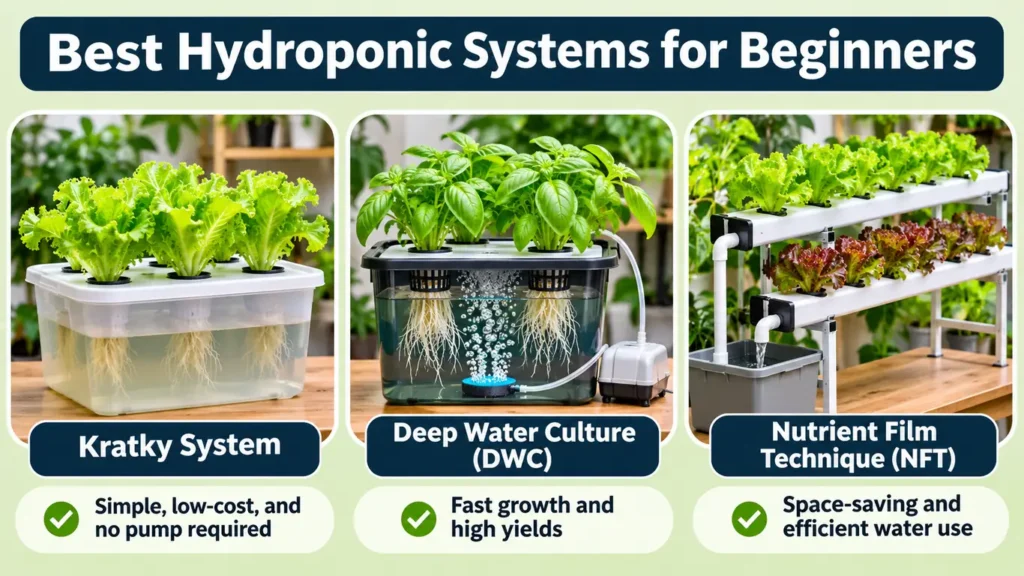
Choosing the right hydroponic system is an important first step. Different systems use different methods to deliver water and nutrients, but some are significantly easier to maintain than others.
1. Kratky Hydroponic System
The Kratky method is one of the easiest hydroponic systems for beginners because it does not require electricity, pumps, or complicated equipment.
Plants sit in net cups above a container containing nutrient solution. As plants absorb water, the water level drops, creating an air gap that allows developing roots to access oxygen.
2. Deep Water Culture (DWC)
Deep Water Culture is another beginner-friendly growing method. Plants remain suspended above a nutrient reservoir while their roots extend into oxygenated water.
An aquarium air pump and air stone supply oxygen to submerged roots, helping prevent oxygen deficiency.
DWC hydroponics for beginners works especially well for leafy vegetables and herbs. However, it requires electricity and regular equipment checks.
3. Nutrient Film Technique (NFT)
The Nutrient Film Technique uses a pump to circulate a shallow stream of nutrient solution through channels containing plant roots.
This system can grow multiple plants efficiently while using relatively little growing space.
Although NFT systems are effective for leafy greens, beginners should understand that pump failures and blocked channels can quickly affect plant health.
Essential Equipment for a Beginner Hydroponic Setup
Starting an indoor hydroponic garden does not require expensive equipment. A small DIY hydroponic system can operate successfully with basic supplies.
However, choosing suitable materials helps prevent common growing problems.
- Growing container: An opaque, food-safe bucket or reservoir holds the nutrient solution.
- Net pots: Small perforated containers support plants while allowing roots to grow downward.
- Growing medium: Clay pebbles, rockwool, or suitable starter plugs hold seedlings securely.
- Hydroponic nutrients: Water-soluble fertilizers provide essential plant minerals.
- LED grow lights: Supply artificial light when natural sunlight is insufficient.
- pH testing kit: Helps monitor the acidity of the nutrient solution.
- Air pump and air stone: Provide oxygen for systems such as DWC.
A complete hydroponic kit for beginners may include most of these supplies. However, checking the included equipment before purchasing helps avoid unnecessary expenses.
How to Set Up Hydroponics at Home Step by Step
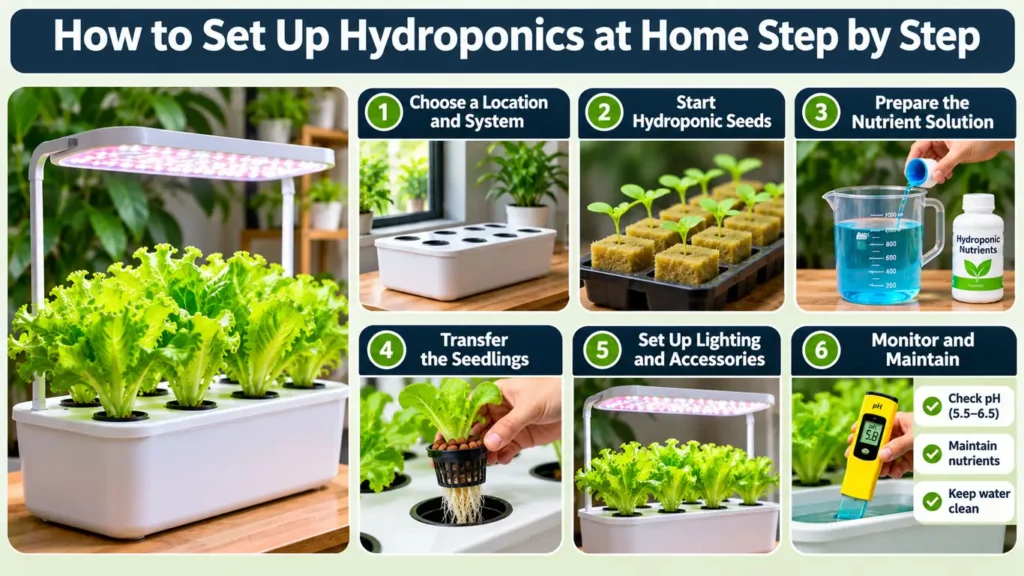
Creating a hydroponic garden at home becomes easier when you start with a simple system. A small Kratky setup is particularly suitable for learning how nutrient solutions, roots, and lighting work together.
Step 1: Select a Suitable Location
Choose a clean indoor location with stable temperatures and sufficient space for plants. A sturdy table, shelf, or countertop can support a compact growing system.
Keep electrical equipment away from potential water spills.
Step 2: Prepare the Growing Container
Select an opaque container with a secure lid. Create openings that fit the net pots without allowing them to fall inside.
Clean the container thoroughly before adding water.
Step 3: Start Hydroponic Seeds
Place lettuce, basil, or other beginner-friendly seeds inside moist starter cubes.
Keep the growing medium appropriately moist until seedlings develop roots and their first true leaves.
Step 4: Prepare the Nutrient Solution
Fill the reservoir with suitable water and mix in hydroponic fertilizer according to the manufacturer’s directions.
Measure the pH and adjust it carefully using appropriate pH adjustment products.
Step 5: Transfer the Seedlings
Place the seedlings into net pots, ensuring their roots can initially reach the nutrient solution.
For a Kratky system, maintain an air gap as the roots develop rather than continuously filling the container to the top.
Step 6: Monitor Plant Growth
Position the system beneath suitable lighting and inspect plants regularly.
Check nutrient conditions, water levels, leaf appearance, and root health. Make adjustments when needed to maintain healthy growth.
Best Hydroponic Plants for Beginners
Not every plant is equally suitable for a beginner hydroponic garden. Fast-growing leafy vegetables and herbs generally require less space and fewer resources than large fruiting crops.
The following plants are excellent starting options:
- Lettuce: Grows quickly, has relatively compact roots, and works well in Kratky or DWC systems.
- Basil: A popular culinary herb that responds well to hydroponic cultivation.
- Bok choy: A leafy vegetable suitable for small indoor hydroponic gardens.
- Kale: Produces nutritious leaves and can be harvested repeatedly.
- Arugula: A fast-growing leafy green suitable for compact setups.
- Mint: Grows vigorously, although its spreading roots require adequate space.
Lettuce and basil are particularly practical first crops because they are manageable and do not require the extensive support needed by tomatoes or cucumbers.
Understanding Hydroponic Nutrients, pH, and Lighting
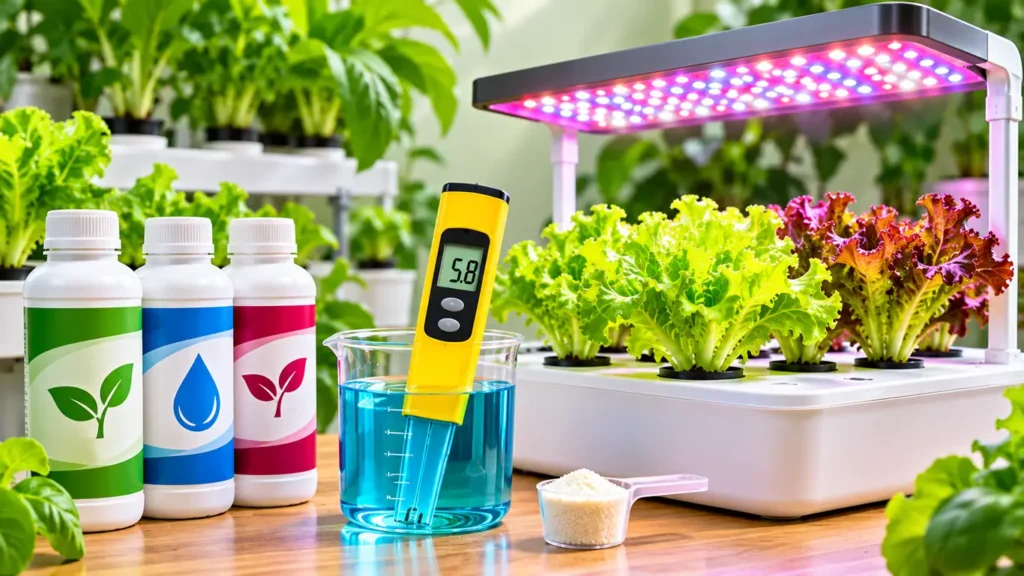
Successful hydroponic gardening depends on maintaining suitable growing conditions. Even a well-designed system may struggle when nutrients, light, or water chemistry become unbalanced.
Hydroponic Nutrients for Beginners
Hydroponic plants require nitrogen, phosphorus, potassium, calcium, magnesium, and several micronutrients.
Choose a complete fertilizer specifically designed for hydroponics rather than relying on ordinary soil fertilizers.
Nutrient strength varies according to plant type and growth stage. An electrical conductivity (EC) meter can help monitor the concentration of dissolved fertilizers.
Maintaining Proper pH Levels
Many hydroponic crops grow well with nutrient solutions around pH 5.5–6.5, although individual plants may prefer different ranges.
Incorrect pH can reduce nutrient availability, even when fertilizer is present.
Measure pH regularly and make gradual adjustments. Lettuce recommendations, for example, can vary by production system and growing conditions.
Providing Enough Grow Light
Indoor hydroponic gardens often need supplemental lighting.
Many leafy greens can be grown under LED lights operating approximately 12–16 hours daily, depending on light intensity and the crop.
Follow the light manufacturer’s distance recommendations and provide a consistent daily dark period.
Common Hydroponic Gardening Mistakes to Avoid
Beginners sometimes experience plant problems because of incorrect setup or inconsistent maintenance. Most issues can be prevented through regular observation.
Common mistakes include:
- Adding excessive nutrients: Overfertilization can damage roots and leaves.
- Ignoring water pH: Incorrect acidity can interfere with nutrient absorption.
- Providing insufficient light: Weak lighting often produces thin, stretched seedlings.
- Allowing poor root oxygenation: Oxygen-deficient conditions can damage roots.
- Using transparent reservoirs: Light exposure encourages unwanted algae growth.
- Starting with difficult crops: Large fruiting plants require more space, lighting, and nutritional management.
Begin with a few plants rather than filling an entire system immediately. This makes troubleshooting easier while you develop practical hydroponic gardening skills.
FAQs
1. What is the easiest hydroponic system for beginners?
The Kratky system is one of the easiest options because it does not require a water pump or electricity. It uses a container, nutrient solution, and net pots. Beginners can successfully grow lettuce and certain herbs with minimal equipment.
2. How much does a beginner hydroponic setup cost?
A small DIY hydroponic setup may cost approximately 20–60, depending on the materials already available. Complete indoor kits with pumps and LED grow lights can cost considerably more. Equipment quality, system size, and lighting requirements influence overall expenses.
3. Can beginners grow hydroponic plants without grow lights?
Yes, hydroponic plants can grow without artificial lighting when they receive sufficient natural sunlight. However, indoor locations with limited daylight usually need supplemental grow lights. Proper light exposure helps plants develop healthy leaves, strong stems, and consistent growth.
4. How often should hydroponic water be changed?
Water replacement depends on the hydroponic system, reservoir size, and plant requirements. Small recirculating systems may need solution replacement every one to two weeks, while appropriately designed Kratky systems often operate through a growing cycle without complete replacement.
5. Is hydroponic gardening better than growing plants in soil?
Hydroponics offers precise nutrient control, efficient water use, and opportunities for year-round indoor growing. However, soil gardening often requires less equipment and monitoring. The better method depends on available space, budget, preferred crops, and personal gardening experience.