

Olive trees bring natural beauty and Mediterranean charm to indoor spaces with their silvery- green leaves and elegant branches. From compact dwarf varieties to traditional fruit-producing trees, several types of olive trees can grow in containers with proper care. In this guide, explore 20 types of olive trees for indoor growing, including their unique characteristics, growing requirements, and maintenance tips.
1. Arbequina Olive Tree
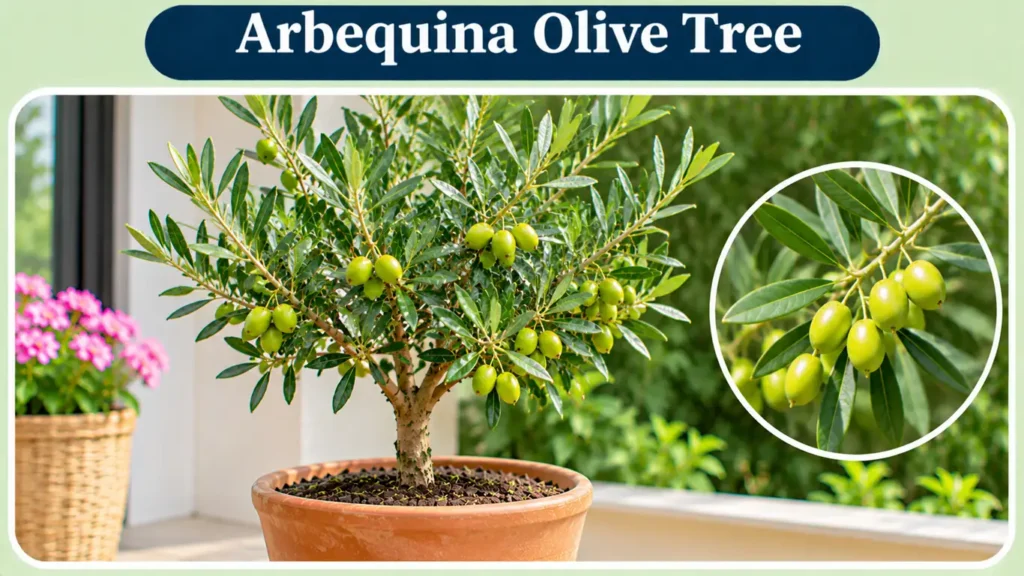
The Arbequina Olive Tree (Olea europaea ‘Arbequina’) is one of the best olive varieties for indoor growing. Originally from Spain, this evergreen tree is known for its compact growth, attractive silver-green leaves, and small, flavorful olives. It grows well in containers and can add a Mediterranean touch to your living room, balcony, or sunny indoor space. With proper sunlight, watering, and pruning, an Arbequina Olive Tree can remain healthy and beautiful for many years.
Identification and Characteristics
- Scientific Name: Olea europaea ‘Arbequina’
- Common Name: Arbequina Olive Tree
- Origin: Spain
- Plant Type: Evergreen fruit tree
- Indoor Height: Usually maintained around 3–6 feet with pruning
- Leaf Color: Silvery-green
- Fruit Color: Green, turning purple-black when ripe
- Sunlight: 6–8 hours of direct sunlight daily
- Soil Type: Well-draining, sandy or loamy soil
- Growth Rate: Moderate
How to Grow Arbequina Olive Trees Indoors
Growing an Arbequina Olive Tree indoors requires a sunny location and a container with proper drainage. Place the tree near a south-facing window where it receives at least six hours of direct sunlight daily. If natural sunlight is insufficient, use a full-spectrum grow light.
Choose a container with drainage holes and fill it with well-draining potting soil. A cactus or citrus potting mix can work well. Keep the tree away from heating vents and excessively humid areas. Rotate the container occasionally to encourage balanced growth.
Watering and Maintenance Tips
Arbequina Olive Trees prefer slightly dry soil rather than constantly wet conditions. Water thoroughly when the top 1–2 inches of soil feel dry, allowing excess water to drain completely.
During spring and summer, apply a balanced fertilizer according to the product instructions. Reduce watering during winter when growth slows. Prune unwanted branches to maintain a compact shape and improve airflow. Check the leaves regularly for pests such as spider mites and scale insects, especially in dry indoor environments.
Benefits of Growing Arbequina Olive Trees Indoors
The Arbequina Olive Tree offers both ornamental beauty and the possibility of producing edible olives.Its narrow, silvery leaves create a natural Mediterranean appearance, making it suitable for modern home decoration. Its relatively compact growth also makes it easier to maintain in containers than many larger olive varieties.
Although Arbequina trees are self-fertile, indoor fruit production can be limited without sufficient sunlight, seasonal temperature changes, and pollination. With consistent care and a bright growing location, this olive variety can be a long-lasting addition to your indoor plant collection.
2. Little Ollie Dwarf Olive Tree

The Little Ollie Dwarf Olive Tree (Olea europaea ‘Montra’) is an excellent choice for indoor growing because of its compact size and attractive evergreen foliage. Unlike traditional olive trees, this dwarf variety is primarily grown for ornamental purposes rather than fruit production. Its dense branches, narrow silver-green leaves, and slow growth make it suitable for containers, sunny living rooms, and indoor garden spaces. With proper care, Little Ollie can maintain a beautiful, bushy appearance throughout the year.
Identification and Characteristics
- Scientific Name: Olea europaea ‘Montra’
- Common Name: Little Ollie Dwarf Olive Tree
- Plant Type: Evergreen ornamental shrub
- Mature Outdoor Height: Approximately 4–6 feet, sometimes taller
- Indoor Height: Can be maintained around 2–4 feet with pruning
- Leaf Color: Dark green with silvery undersides
- Fruit Production: Generally fruitless
- Sunlight: 6–8 hours of direct sunlight daily
- Soil Type: Well-draining sandy or loamy soil
- Growth Rate: Slow to moderate
How to Grow Little Ollie Olive Trees Indoors
Little Ollie Olive Trees grow best in bright indoor spaces with plenty of direct sunlight. Position the plant near a south-facing window or another location that receives at least six hours of strong sunlight. A full-spectrum grow light can help when natural light is limited.
Choose a container with drainage holes and use a well-draining potting mix. Adding perlite or coarse mineral material can improve drainage and help prevent root problems. Although Little Ollie is naturally compact, occasional pruning helps maintain its rounded appearance. Avoid placing the tree in dark corners or rooms with poor airflow.
Watering and Maintenance Tips
Little Ollie Olive Trees tolerate dry conditions better than waterlogged soil. Water when the top 1–2 inches of soil become dry, allowing excess moisture to drain away.
During the growing season, feed the plant lightly with a balanced fertilizer. Reduce watering during winter when growth becomes slower. Remove dead, damaged, or overcrowded branches to encourage healthy growth. Regularly inspect the foliage for scale insects, spider mites, and other common indoor pests.
Benefits of Growing Little Ollie Olive Trees Indoors
Little Ollie is particularly suitable for homeowners who want the appearance of an olive tree without dealing with fallen fruits. Its compact growth makes it easier to manage in containers, while its evergreen foliage provides year-round decorative value. The dense branching structure also allows it to be shaped into a small ornamental tree or rounded shrub.
With sufficient sunlight and proper drainage, Little Ollie can become an attractive and relatively low-maintenance indoor plant.
3. Koroneiki Olive Tree

The Koroneiki Olive Tree (Olea europaea ‘Koroneiki’) is a popular Greek olive variety known for producing small, oil-rich fruits. Although traditionally cultivated outdoors for olive oil production, young Koroneiki trees can also grow in containers and bright indoor environments. This evergreen variety features narrow silver-green leaves, slender branches, and a graceful Mediterranean appearance. Its relatively manageable growth makes it an interesting option for indoor gardeners who can provide strong sunlight and regular maintenance.
Identification and Characteristics
- Scientific Name: Olea europaea ‘Koroneiki’
- Common Name: Koroneiki Olive Tree
- Origin: Greece
- Plant Type: Evergreen fruit tree
- Indoor Height: Can be maintained around 3–6 feet with pruning
- Leaf Color: Narrow, silver-green foliage
- Fruit Size: Small
- Fruit Color: Green, turning dark purple when ripe
- Sunlight: 6–8 hours of direct sunlight daily
- Soil Type: Well-draining sandy or loamy soil
- Growth Rate: Moderate
How to Grow Koroneiki Olive Trees Indoors
Koroneiki Olive Trees require abundant sunlight to grow successfully indoors. Place the container beside a bright south-facing window where the plant receives several hours of direct sunlight every day. If your home receives limited sunlight, consider using a full-spectrum grow light to support healthy foliage development.
Choose a container with drainage holes and fill it with a well-draining potting mixture. A blend designed for citrus or Mediterranean plants can provide suitable growing conditions. Because Koroneiki trees can eventually become large, prune regularly to control height and encourage balanced branching.
Watering and Maintenance Tips
Water Koroneiki Olive Trees thoroughly when the upper layer of soil feels dry. Avoid keeping the roots constantly wet, as excessive moisture can lead to root rot. During spring and summer, apply a balanced fertilizer according to the manufacturer’s recommendations. Reduce feeding and watering during periods of slower growth.
Inspect the leaves regularly for discoloration, insect infestations, and signs of insufficient sunlight. Pruning should focus on removing weak, crossing, or overcrowded branches while preserving the tree’s natural shape.
Benefits of Growing Koroneiki Olive Trees Indoors
Koroneiki Olive Trees offer attractive evergreen foliage and the potential for producing olives under favorable conditions.Their narrow leaves and delicate branching structure complement modern, minimalist, and Mediterranean-inspired indoor spaces.
Koroneiki is especially valued for its high-quality olive oil, although indoor fruit production can be challenging. Flowering and fruit development depend on adequate sunlight, suitable seasonal temperatures, and successful pollination. For gardeners with bright indoor spaces, this variety offers both ornamental appeal and an opportunity to explore container-grown olive cultivation.
4. Arbosana Olive Tree

The Arbosana Olive Tree (Olea europaea ‘Arbosana’) is a Spanish olive variety valued for its compact growth, dense foliage, and productive nature. Compared with many traditional olive varieties, Arbosana has a relatively restrained growth habit that can make it easier to manage in containers. Its narrow green leaves with silvery undersides create an elegant appearance suitable for sunny indoor spaces. With careful pruning, proper watering, and strong sunlight, young Arbosana trees can adapt to indoor container cultivation.
Identification and Characteristics
- Scientific Name: Olea europaea ‘Arbosana’
- Common Name: Arbosana Olive Tree
- Origin: Spain
- Plant Type: Evergreen fruit tree
- Indoor Height: Can be maintained around 3–6 feet with pruning
- Leaf Color: Green with silvery undersides
- Fruit Size: Small
- Fruit Color: Green, becoming dark purple to black when ripe
- Sunlight: 6–8 hours of direct sunlight daily
- Soil Type: Well-draining sandy or loamy soil
- Growth Rate: Slow to moderate
How to Grow Arbosana Olive Trees Indoors
Arbosana Olive Trees perform best in locations with strong natural sunlight. Place the container near a south-facing window where it can receive at least six hours of direct sunlight each day. Choose a pot with adequate drainage holes to prevent excess water from accumulating around the roots. Use a loose, well-draining soil mixture suitable for Mediterranean plants.
Young Arbosana trees can grow well in containers, but they need sufficient space for root development. Repot the tree when its roots become crowded. Prune occasionally to control height, remove unnecessary branches, and maintain an attractive shape.
Watering and Maintenance Tips
Arbosana Olive Trees prefer moderately dry growing conditions. Water deeply when the top 1–2 inches of soil become dry, and allow excess water to drain completely. Avoid frequent shallow watering, which can encourage poor root development.
During the active growing season, provide a balanced fertilizer in moderate amounts. Reduce watering and feeding during winter when the plant grows more slowly. Keep the foliage clean and inspect the undersides of leaves for common pests such as spider mites and scale insects.
Benefits of Growing Arbosana Olive Trees Indoors
Arbosana Olive Trees are appreciated for their compact growth habit and attractive evergreen foliage. Their dense branching structure makes them suitable for decorative containers, while their narrow leaves create a classic Mediterranean appearance.
Another benefit is their potential for olive production. Arbosana is a self-fertile variety, although fruiting indoors is not guaranteed and generally requires abundant sunlight and appropriate seasonal conditions. With proper care, an Arbosana Olive Tree can provide lasting ornamental beauty while remaining manageable through regular pruning.
5. Mission Olive Tree

The Mission Olive Tree (Olea europaea ‘Mission’) is a popular olive variety known for its attractive silver-green foliage, sturdy branches, and flavorful fruits. Originally associated with Spanish missions in California, this evergreen tree is commonly grown for both ornamental and fruit-producing purposes. Although Mission Olive Trees can become quite large outdoors, they can be maintained at a smaller size through container growing and regular pruning. With sufficient sunlight and proper care, they can bring a Mediterranean appearance to bright indoor spaces.
Identification and Characteristics
- Scientific Name: Olea europaea ‘Mission’
- Common Name: Mission Olive Tree
- Origin: California, United States
- Plant Type: Evergreen fruit tree
- Indoor Height: Can be maintained around 4–6 feet with pruning
- Leaf Color: Silver-green
- Fruit Color: Green, turning purple-black when ripe
- Fruit Size: Small to medium
- Sunlight: 6–8 hours of direct sunlight daily
- Soil Type: Well-draining sandy or loamy soil
- Growth Rate: Moderate
How to Grow Mission Olive Trees Indoors
Mission Olive Trees require a bright location with plenty of direct sunlight. Position the container near a south-facing window that receives at least six hours of sunlight daily. If natural sunlight is limited, a full-spectrum grow light can help maintain healthy growth. Choose a large container with drainage holes and fill it with a well-draining potting mixture. Citrus or Mediterranean plant potting mixes are suitable options.
Because Mission Olive Trees naturally develop a broad canopy, regular pruning is necessary to control their height and maintain an attractive shape. Keep the plant away from heating vents and poorly ventilated spaces. During suitable weather, moving the container outdoors can improve growth and overall plant health.
Watering and Maintenance Tips
Mission Olive Trees prefer soil that dries slightly between watering sessions. Water thoroughly when the top 1–2 inches of soil feel dry, allowing excess water to drain completely. Avoid overwatering because olive trees are sensitive to waterlogged roots.
During spring and summer, apply a balanced fertilizer according to the manufacturer’s instructions. Reduce feeding during winter when growth slows.Remove dead, damaged, or crossing branches to encourage healthy development. Regularly inspect the leaves for spider mites, scale insects, and other pests.
Benefits of Growing Mission Olive Trees Indoors
Mission Olive Trees provide attractive evergreen foliage and a traditional Mediterranean appearance. Their silver-green leaves complement modern interiors, while their strong branches create an elegant tree-like structure.
Another advantage is their potential to produce edible olives. Mission olives are commonly used for table olives and olive oil, although indoor fruit production requires favorable conditions. With sufficient sunlight, regular pruning, and proper container management, a Mission Olive Tree can become a beautiful addition to a sunny home.
6. Manzanilla Olive Tree

The Manzanilla Olive Tree (Olea europaea ‘Manzanilla’) is a well-known Spanish olive variety valued for its rounded fruits and attractive evergreen foliage. It is especially popular for producing green table olives. This tree features narrow silver-green leaves, dense branching, and a classic Mediterranean appearance. Although Manzanilla Olive Trees naturally grow outdoors, young plants can be cultivated in containers and maintained at a manageable height. They are best suited to bright indoor locations where they can receive plenty of direct sunlight throughout the day.
Identification and Characteristics
- Scientific Name: Olea europaea ‘Manzanilla’
- Common Name: Manzanilla Olive Tree
- Origin: Spain
- Plant Type: Evergreen fruit tree
- Indoor Height: Can be maintained around 3–6 feet with pruning
- Leaf Color: Silver-green
- Fruit Size: Medium
- Fruit Color: Green, turning dark purple when mature
- Sunlight: 6–8 hours of direct sunlight daily
- Soil Type: Well-draining sandy or loamy soil
- Growth Rate: Moderate
How to Grow Manzanilla Olive Trees Indoors
Manzanilla Olive Trees need strong sunlight to maintain healthy foliage and develop properly. Place the container beside a bright south-facing window where the tree receives at least six hours of direct sunlight each day. If the available natural light is insufficient, supplement it with a full-spectrum grow light.
Choose a container with drainage holes and use a well-draining potting mixture. Adding perlite or coarse sand can help improve soil drainage.Because Manzanilla trees can develop spreading branches, pruning is important for controlling their size indoors. Remove overcrowded growth and maintain an open canopy to improve airflow.
Watering and Maintenance Tips
Manzanilla Olive Trees prefer moderately dry soil conditions. Water thoroughly when the upper 1–2 inches of soil feel dry, but avoid allowing water to collect at the bottom of the container. During spring and summer, fertilize lightly with a balanced fertilizer to support healthy leaf and branch development.
Reduce watering and feeding during winter when the tree’s growth naturally slows. Prune damaged, weak, or crossing branches to maintain a balanced shape. Check the foliage regularly for spider mites, scale insects, and yellowing leaves.
Benefits of Growing Manzanilla Olive Trees Indoors
Manzanilla Olive Trees offer ornamental beauty and the potential for producing edible olives. Their slender silver-green leaves create a calming Mediterranean appearance that complements a variety of interior decorating styles. The tree’s evergreen nature provides year-round foliage, making it an attractive decorative plant even when it does not produce fruit.
Manzanilla olives are widely appreciated for their flavor and firm texture. However, successful indoor fruiting may require additional pollination, strong sunlight, and suitable seasonal temperatures. With careful pruning and proper sunlight, young Manzanilla trees can be maintained in containers for indoor decoration.
7. Picholine Olive Tree
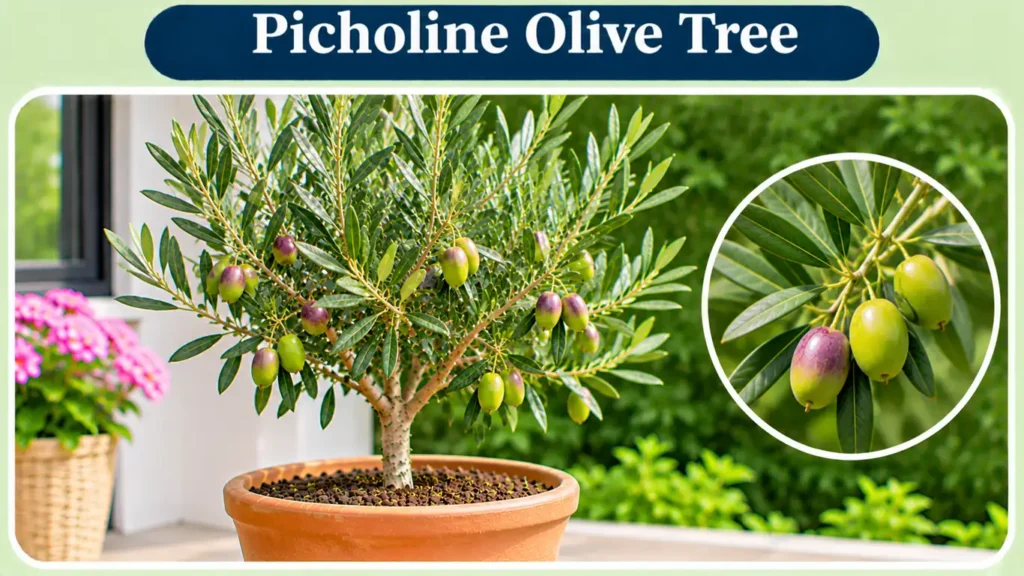
The Picholine Olive Tree (Olea europaea ‘Picholine’) is a traditional French olive variety recognized for its elegant growth habit, narrow silver-green leaves, and high-quality fruits. Originating from southern France, this evergreen tree is commonly cultivated for table olives and olive oil production. Its attractive foliage and Mediterranean character also make it appealing as an ornamental container plant. Although Picholine Olive Trees naturally prefer outdoor growing conditions, young specimens can be maintained indoors when they receive abundant sunlight and suitable care.
Identification and Characteristics
- Scientific Name: Olea europaea ‘Picholine’
- Common Name: Picholine Olive Tree
- Origin: France
- Plant Type: Evergreen fruit tree
- Indoor Height: Can be maintained around 3–6 feet with pruning
- Leaf Color: Narrow silver-green leaves
- Fruit Size: Small to medium
- Fruit Shape: Elongated or oval
- Fruit Color: Green, becoming darker when ripe
- Sunlight: 6–8 hours of direct sunlight daily
- Soil Type: Well-draining sandy or loamy soil
- Growth Rate: Moderate
How to Grow Picholine Olive Trees Indoors
Picholine Olive Trees grow best in bright locations with several hours of direct sunlight. Place the container near a south-facing window that receives six to eight hours of strong sunlight daily. When natural light is limited, use a suitable full-spectrum grow light to encourage healthy growth.
Choose a container with drainage holes and fill it with loose, well-draining soil. A citrus potting mix or Mediterranean plant mixture can provide appropriate growing conditions. Because Picholine trees naturally grow into medium-sized trees, regular pruning is essential for maintaining a compact indoor shape.
Watering and Maintenance Tips
Picholine Olive Trees are relatively drought-tolerant once established, but container-grown plants still require regular watering. Water deeply when the top 1–2 inches of soil feel dry. Allow excess moisture to drain away before returning the container to its decorative tray.
During the growing season, apply a balanced fertilizer according to the label instructions. Avoid excessive fertilization because it can encourage weak growth. Prune dead, damaged, and crossing branches to improve airflow and maintain the desired height.
Benefits of Growing Picholine Olive Trees Indoors
Picholine Olive Trees provide attractive evergreen foliage and a distinctive Mediterranean appearance. Their narrow leaves and naturally elegant branching structure make them suitable for decorative containers in bright indoor spaces.
The tree also offers the possibility of producing flavorful olives under favorable conditions. Picholine olives are particularly valued for their crisp texture and are often prepared as green table olives, indoor fruit production is challenging and may require additional pollination, strong sunlight, and appropriate seasonal temperatures.
8. Frantoio Olive Tree
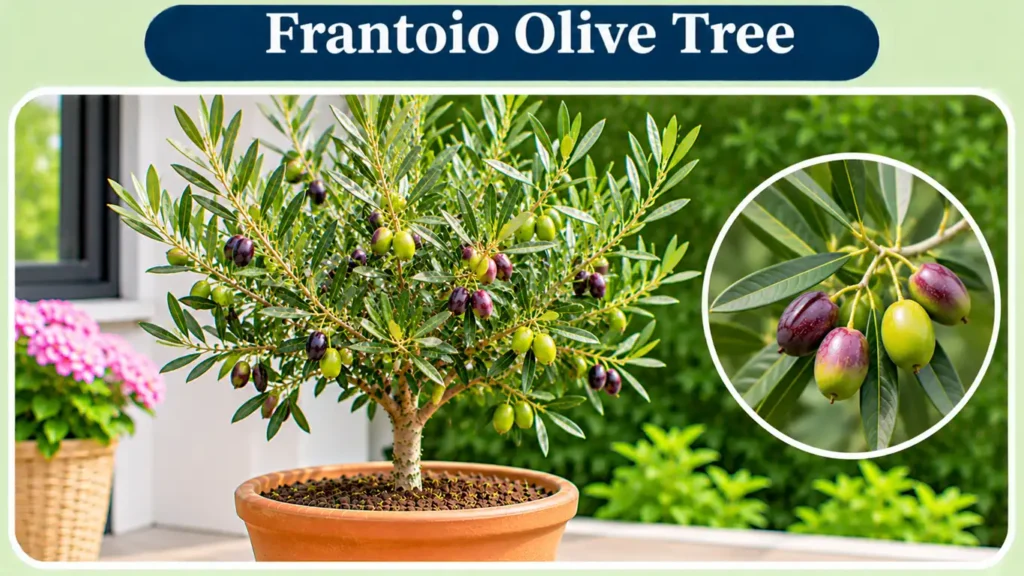
The Frantoio Olive Tree (Olea europaea ‘Frantoio’) is a traditional Italian olive variety known for its elegant branching, attractive silver-green foliage, and high-quality olive oil production. Originally from Tuscany, this evergreen tree is widely cultivated in Mediterranean regions. Although Frantoio Olive Trees naturally grow into large trees outdoors, young plants can be maintained in containers with proper pruning. Their graceful appearance and narrow leaves make them appealing for bright indoor spaces, especially homes with a Mediterranean-inspired design.
Identification and Characteristics
- Scientific Name: Olea europaea ‘Frantoio’
- Common Name: Frantoio Olive Tree
- Origin: Tuscany, Italy
- Plant Type: Evergreen fruit tree
- Indoor Height: Can be maintained around 3–6 feet with regular pruning
- Leaf Color: Silver-green
- Fruit Size: Small to medium
- Fruit Color: Green, turning dark purple or black when ripe
- Sunlight: 6–8 hours of direct sunlight daily
- Soil Type: Well-draining sandy or loamy soil
- Growth Rate: Moderate
How to Grow Frantoio Olive Trees Indoors
Frantoio Olive Trees require abundant sunlight to maintain healthy growth indoors. Place the container near a bright south-facing window where the plant receives at least six hours of direct sunlight daily. If your home lacks sufficient sunlight, consider using a full-spectrum grow light. Choose a sturdy container with drainage holes and fill it with a well-draining potting mixture. A citrus or Mediterranean plant potting mix can provide suitable growing conditions.
Since Frantoio trees naturally develop spreading branches, regular pruning helps maintain their size and shape. Remove overcrowded branches to improve airflow and encourage balanced growth.During warm weather, placing the tree outdoors in a sunny location can support stronger development. Introduce outdoor sunlight gradually to prevent leaf damage.
Watering and Maintenance Tips
Frantoio Olive Trees prefer soil that dries slightly between watering sessions. Water thoroughly when the upper 1–2 inches of soil feel dry, allowing excess water to drain completely. Avoid frequent watering because constantly wet soil can damage the roots. During spring and summer, apply a balanced fertilizer according to the manufacturer’s instructions.
Reduce watering and fertilization during winter when the tree’s growth slows. Prune dead, weak, or crossing branches to maintain an attractive shape. Inspect the foliage regularly for scale insects, spider mites, and other indoor pests.
Benefits of Growing Frantoio Olive Trees Indoors
Frantoio Olive Trees are valued for their attractive evergreen foliage and elegant Mediterranean appearance. Their silver-green leaves create a natural decorative effect that complements modern living spaces. Another advantage is their potential to produce olives used for premium olive oil. However, indoor fruiting can be difficult without sufficient sunlight, suitable seasonal conditions, and successful pollination.
The tree’s flexible branches also make it suitable for decorative shaping and container cultivation. With careful maintenance and a consistently bright growing environment, a Frantoio Olive Tree can become a beautiful, long-lasting ornamental plant.
9. Leccino Olive Tree

The Leccino Olive Tree (Olea europaea ‘Leccino’) is a well-known Italian olive variety admired for its attractive evergreen foliage, adaptable growth habit, and productive nature. This traditional olive tree features narrow gray-green leaves and a naturally rounded canopy. It is commonly grown for olive oil production but can also serve as an ornamental container plant. Although Leccino trees generally perform best outdoors, young specimens can grow in bright indoor spaces when provided with strong sunlight, proper drainage, and regular pruning.
Identification and Characteristics
- Scientific Name: Olea europaea ‘Leccino’
- Common Name: Leccino Olive Tree
- Origin: Italy
- Plant Type: Evergreen fruit tree
- Indoor Height: Can be maintained around 3–6 feet with pruning
- Leaf Color: Gray-green with silvery undersides
- Fruit Size: Small to medium
- Fruit Color: Green, turning purple-black when ripe
- Sunlight: 6–8 hours of direct sunlight daily
- Soil Type: Well-draining sandy or loamy soil
- Growth Rate: Moderate
How to Grow Leccino Olive Trees Indoors
Leccino Olive Trees need a bright growing environment with several hours of direct sunlight each day. Position the container near a south-facing window where it receives at least six hours of sunlight. When natural light is insufficient, use a full-spectrum grow light to support healthy leaf development.
Select a container with adequate drainage holes and fill it with a loose, well-draining soil mixture. Avoid heavy soil that retains excessive moisture around the roots. Because Leccino trees can eventually become large, occasional pruning is necessary to control their height and encourage balanced branching. Rotate the container periodically to promote even growth and prevent the tree from leaning toward the light source.
Watering and Maintenance Tips
Leccino Olive Trees prefer moderately dry soil. Water when the top 1–2 inches of the potting mixture feel dry, and allow excess water to drain away. During active growth in spring and summer, apply a balanced fertilizer at the recommended rate. Reduce watering during winter and avoid fertilizing when the tree is not actively growing.
Remove damaged, overcrowded, or crossing branches to improve airflow and maintain an attractive canopy. Inspect the leaves for yellowing, pests, and other signs of stress. Excess moisture and inadequate sunlight are common problems when growing olive trees indoors.
Benefits of Growing Leccino Olive Trees Indoors
Leccino Olive Trees bring classic Mediterranean beauty to indoor spaces with their narrow leaves, graceful branches, and evergreen appearance. Their foliage remains attractive throughout the year, making them useful as decorative plants in bright living rooms and sunrooms.
Leccino is also appreciated for its olive oil production and relatively good cold tolerance compared with some other olive varieties. However, fruit production indoors is uncertain. Leccino generally benefits from compatible cross-pollinating varieties, along with sufficient sunlight and appropriate seasonal conditions.
10. Pendolino Olive Tree
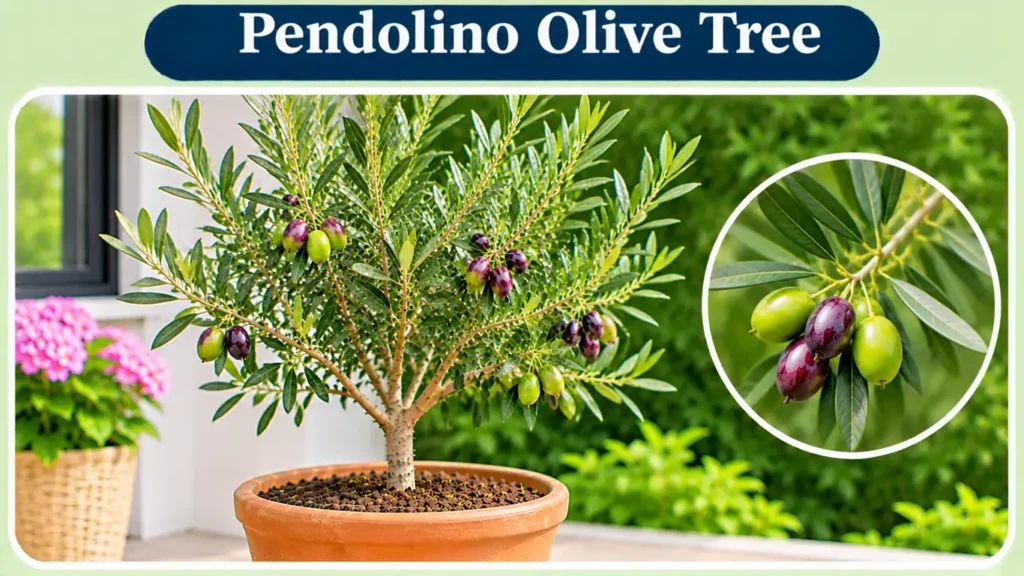
The Pendolino Olive Tree (Olea europaea ‘Pendolino’) is an Italian olive variety recognized for its distinctive weeping branches, narrow silver-green leaves, and ornamental appearance. Unlike olive varieties with upright growth habits, Pendolino develops graceful, slightly drooping branches that create a soft and elegant canopy. It is frequently cultivated as a pollinator for other olive varieties, including some Italian cultivars. Although Pendolino Olive Trees naturally prefer outdoor environments, young specimens can be grown in containers and maintained indoors with strong sunlight and careful pruning.
Identification and Characteristics
- Scientific Name: Olea europaea ‘Pendolino’
- Common Name: Pendolino Olive Tree
- Origin: Tuscany, Italy
- Plant Type: Evergreen fruit tree
- Indoor Height: Can be maintained around 3–6 feet with pruning
- Leaf Color: Silver-green
- Branching Habit: Graceful, drooping branches
- Fruit Size: Small
- Fruit Color: Green, turning dark purple when mature
- Sunlight: 6–8 hours of direct sunlight daily
- Soil Type: Well-draining sandy or loamy soil
- Growth Rate: Moderate
How to Grow Pendolino Olive Trees Indoors
Pendolino Olive Trees grow best in bright locations with plenty of direct sunlight. Place the container near a south-facing window where it receives at least six hours of strong sunlight daily. If your home does not provide enough natural light, supplement it with a full-spectrum grow light.
Choose a container with drainage holes and use a well-draining potting mixture. A citrus potting mix with added perlite can help prevent water accumulation around the roots. Since Pendolino has naturally drooping branches, prune selectively to maintain its graceful form without removing too much healthy growth.
Watering and Maintenance Tips
Pendolino Olive Trees prefer slightly dry conditions between watering sessions. Water deeply when the top 1–2 inches of soil feel dry, allowing excess moisture to drain away. Avoid keeping the soil constantly wet because olive trees are vulnerable to root problems caused by poor drainage.
Apply a balanced fertilizer during spring and summer according to the manufacturer’s recommendations. Reduce watering and feeding during winter when growth slows. Remove dead, damaged, or overcrowded branches to maintain good airflow. Regularly check the foliage for spider mites, scale insects, and other common pests.
Benefits of Growing Pendolino Olive Trees Indoors
The Pendolino Olive Tree offers a distinctive ornamental appearance because of its elegant, weeping branches and attractive evergreen foliage. Its narrow silver-green leaves create a soft Mediterranean look that can complement contemporary and traditional interiors.
Another benefit is its role as a pollinator. Pendolino produces pollen that can improve fruit production in certain compatible olive varieties, making it valuable in mixed olive plantings. Although the tree can produce olives, indoor fruiting requires suitable growing conditions and is not guaranteed. With sufficient sunlight, proper pruning, and careful watering, a Pendolino Olive Tree can provide year-round greenery and an elegant decorative feature.
11. Pendolino Olive Tree

The Pendolino Olive Tree (Olea europaea ‘Pendolino’) is a traditional Italian olive variety admired for its elegant, weeping branches and narrow silver-green leaves. Originally from Tuscany, this evergreen tree is widely grown for olive production and pollination. Its graceful appearance makes it an attractive choice for decorative containers in bright indoor spaces. Although Pendolino naturally grows outdoors, young trees can be maintained indoors with sufficient sunlight, proper drainage, and regular pruning.
Identification and Characteristics
- Scientific Name: Olea europaea ‘Pendolino’
- Common Name: Pendolino Olive Tree
- Origin: Tuscany, Italy
- Plant Type: Evergreen fruit tree
- Indoor Height: Can be maintained around 3–6 feet with pruning
- Leaf Color: Silver-green
- Growth Habit: Graceful, drooping branches
- Fruit Size: Small
- Sunlight: 6–8 hours of direct sunlight daily
- Soil Type: Well-draining sandy or loamy soil
How to Grow Pendolino Olive Trees Indoors
Pendolino Olive Trees require a bright indoor location with plenty of direct sunlight. Place the container near a south-facing window that receives at least six hours of sunlight daily. A full-spectrum grow light may be necessary when natural light is limited.
Choose a container with drainage holes and fill it with a well-draining potting mixture. Citrus or Mediterranean plant soil can provide suitable growing conditions. Prune the tree carefully to control its size while preserving its naturally drooping branches. Allow enough space around the plant for airflow and healthy foliage development.
Watering and Maintenance Tips
Pendolino Olive Trees prefer soil that dries slightly between watering sessions. Water thoroughly when the upper 1–2 inches of soil feel dry, allowing excess moisture to drain completely. During spring and summer, apply a balanced fertilizer according to the manufacturer’s instructions. Reduce watering and feeding during winter when growth slows.
Remove damaged, dead, or overcrowded branches to maintain an attractive appearance. Inspect the foliage regularly for spider mites, scale insects, and other common indoor pests.
Benefits of Growing Pendolino Olive Trees Indoors
The Pendolino Olive Tree offers a distinctive ornamental appearance with its elegant, weeping branches and evergreen foliage. Its silver-green leaves complement modern interiors and Mediterranean-inspired decorations. The tree also serves as an important pollinator for certain olive varieties.
Although Pendolino can produce olives, indoor fruiting requires suitable sunlight, seasonal temperatures, and successful pollination. With proper care and regular pruning, this variety can provide attractive greenery throughout the year.
12. Cipressino Olive Tree
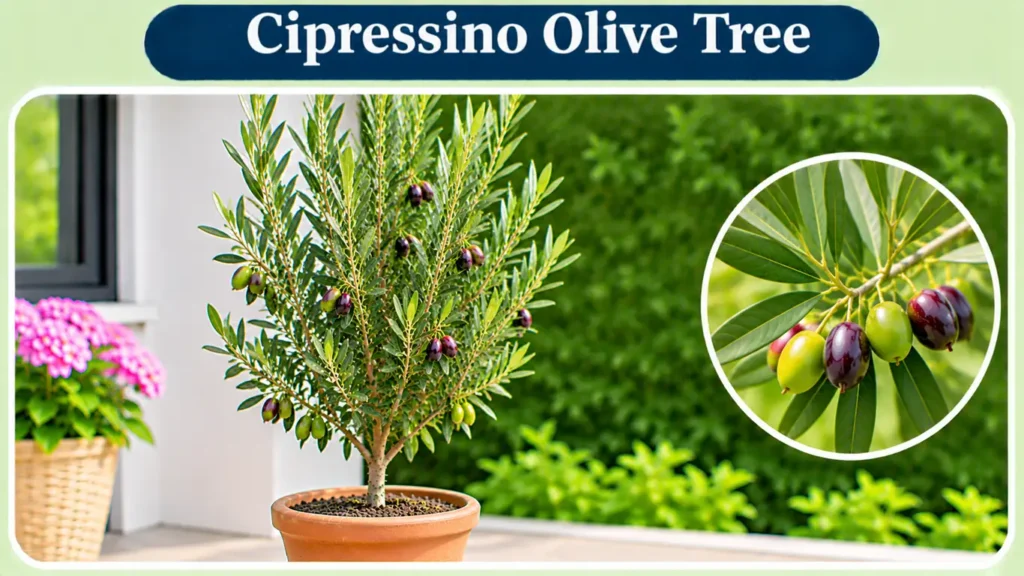
The Cipressino Olive Tree (Olea europaea ‘Cipressino’) is an Italian olive variety recognized for its narrow, upright growth habit and attractive silver-green foliage. Its columnar shape resembles a Mediterranean cypress tree, making it visually appealing for decorative containers. Unlike olive varieties with broad, spreading canopies, Cipressino naturally develops a more vertical structure. Although it can become tall outdoors, young specimens can be maintained in large indoor containers through regular pruning and careful attention to sunlight and watering.
Identification and Characteristics
- Scientific Name: Olea europaea ‘Cipressino’
- Common Name: Cipressino Olive Tree
- Origin: Italy
- Plant Type: Evergreen fruit tree
- Indoor Height: Can be maintained around 4–6 feet with pruning
- Leaf Color: Silver-green
- Growth Habit: Upright and columnar
- Fruit Size: Small to medium
- Sunlight: 6–8 hours of direct sunlight daily
- Soil Type: Well-draining sandy or loamy soil
- Growth Rate: Moderate
How to Grow Cipressino Olive Trees Indoors
Cipressino Olive Trees grow best in bright spaces with strong natural sunlight. Position the container near a south-facing window where the plant receives at least six hours of direct sunlight daily. If your home receives insufficient sunlight, supplement natural light with a full-spectrum grow light.
Select a sturdy container with drainage holes and fill it with a well-draining potting mixture. Because Cipressino has an upright growth habit, choose a stable pot that can support the tree as it becomes taller. Prune the upper branches occasionally to maintain a manageable height. Remove overcrowded growth to improve airflow and encourage healthy development.
Watering and Maintenance Tips
Cipressino Olive Trees prefer moderately dry growing conditions. Water deeply when the upper layer of soil becomes dry, allowing excess moisture to drain away. Avoid overwatering because poorly drained soil can cause root damage.
During spring and summer, apply a balanced fertilizer according to product recommendations. Reduce watering and fertilization when the tree enters a period of slower growth. Remove weak, damaged, or crossing branches to maintain its upright shape. Check the foliage occasionally for pests and signs of insufficient sunlight.
Benefits of Growing Cipressino Olive Trees Indoors
One of the main advantages of the Cipressino Olive Tree is its naturally narrow growth habit. Its vertical structure can make it easier to position in spaces where a broad canopy would be inconvenient, although the tree still needs sufficient room and sunlight.
The evergreen foliage provides year-round decorative interest, while its Mediterranean appearance complements traditional and contemporary interiors. Cipressino also has the potential to produce olives under suitable growing conditions. However, indoor fruiting is not guaranteed.
13. Swan Hill Fruitless Olive Tree
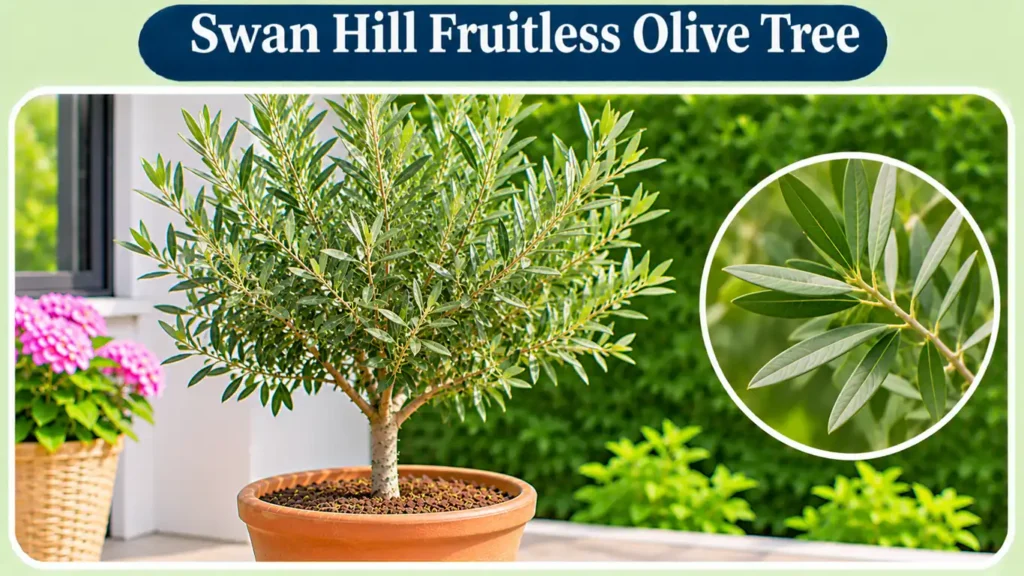
The Swan Hill Fruitless Olive Tree (Olea europaea ‘Swan Hill’) is an ornamental olive cultivar valued for its attractive silver-green foliage and minimal fruit production. Unlike many traditional olive varieties, Swan Hill is primarily grown for decorative landscaping rather than harvesting olives. Its graceful branches and evergreen leaves create a classic Mediterranean appearance. Although this cultivar naturally develops into a substantial outdoor tree, young specimens can be grown in large containers and temporarily maintained indoors when sufficient sunlight and space are available.
Identification and Characteristics
- Scientific Name: Olea europaea ‘Swan Hill’
- Common Name: Swan Hill Fruitless Olive Tree
- Plant Type: Evergreen ornamental tree
- Indoor Height: Can be maintained around 4–6 feet while young with pruning
- Leaf Color: Silver-green
- Growth Habit: Rounded, spreading canopy
- Fruit Production: Little to no fruit under typical conditions
- Sunlight: 6–8 hours of direct sunlight daily
- Soil Type: Well-draining sandy or loamy soil
- Growth Rate: Moderate
How to Grow Swan Hill Olive Trees Indoors
Swan Hill Olive Trees require abundant sunlight to grow successfully in containers. Place young trees near a bright south-facing window or inside a sunroom that receives several hours of direct sunlight daily.
Use a sturdy container with adequate drainage holes and fill it with well-draining soil suitable for Mediterranean plants. Because Swan Hill naturally grows into a large tree, regular pruning is necessary to maintain a manageable size. However, pruning alone cannot make a mature outdoor tree permanently suitable for a small indoor space.
Watering and Maintenance Tips
Swan Hill Olive Trees tolerate dry conditions once established, but container-grown plants still require careful watering. Water thoroughly when the upper soil becomes dry. Allow excess water to drain completely before returning the container to its decorative position.
During the active growing season, apply a balanced fertilizer at the recommended rate. Prune damaged or overcrowded branches to maintain an attractive shape and improve airflow. Regularly inspect the leaves for discoloration, scale insects, and spider mites. Yellowing foliage may indicate excessive watering, inadequate sunlight, or other growing problems.
Benefits of Growing Swan Hill Olive Trees Indoors
Swan Hill Olive Trees are particularly appreciated for their ornamental appearance and minimal fruit production. Their evergreen silver-green leaves provide natural decorative beauty throughout the year, making them suitable for Mediterranean-inspired landscaping and spacious sunrooms.
Because the cultivar produces little or no fruit, it generally creates less fallen-fruit mess than traditional fruiting olive varieties. Its graceful canopy and attractive foliage can make it an impressive container specimen while young.
14. Kalamata Olive Tree

The Kalamata Olive Tree (Olea europaea ‘Kalamata’) is a popular Greek olive variety known for its dark purple fruits, attractive evergreen foliage, and Mediterranean appearance. Originally cultivated in southern Greece, this tree produces distinctive almond-shaped olives widely used in Mediterranean cuisine. Its narrow silver-green leaves and elegant branches make it an attractive ornamental plant. Although Kalamata Olive Trees naturally grow outdoors, young specimens can be maintained in containers with sufficient sunlight, proper watering, and regular pruning.
Identification and Characteristics
- Scientific Name: Olea europaea ‘Kalamata’
- Common Name: Kalamata Olive Tree
- Origin: Greece
- Plant Type: Evergreen fruit tree
- Indoor Height: Can be maintained around 3–6 feet with pruning
- Leaf Color: Silver-green
- Fruit Shape: Almond-shaped
- Fruit Color: Green, turning dark purple when ripe
- Sunlight: 6–8 hours of direct sunlight daily
- Soil Type: Well-draining sandy or loamy soil
- Growth Rate: Moderate
How to Grow Kalamata Olive Trees Indoors
Kalamata Olive Trees require plenty of direct sunlight to maintain healthy foliage and strong growth. Place the container near a south-facing window that receives at least six hours of sunlight daily. If natural light is limited, use a full-spectrum grow light to support healthy development.
Choose a large container with drainage holes and fill it with a well-draining potting mixture. Citrus or Mediterranean plant soil is suitable for container cultivation. Because Kalamata trees naturally develop spreading branches, regular pruning helps control their height and maintain an attractive indoor shape.
Watering and Maintenance Tips
Kalamata Olive Trees prefer moderately dry soil conditions. Water thoroughly when the top 1–2 inches of soil feel dry, allowing excess water to drain completely. Avoid keeping the soil constantly wet because excessive moisture can cause root rot.
During spring and summer, apply a balanced fertilizer according to the manufacturer’s recommendations. Reduce watering and feeding during winter when growth slows. Remove damaged, dead, or crossing branches to maintain a healthy canopy. Inspect the leaves regularly for pests such as spider mites and scale insects.
Benefits of Growing Kalamata Olive Trees Indoors
The Kalamata Olive Tree offers ornamental beauty and the possibility of producing flavorful olives under suitable conditions. Its narrow silver-green leaves and attractive branching structure create a Mediterranean appearance that complements different interior styles.
Kalamata olives are widely appreciated for their distinctive flavor and firm texture. However, indoor fruit production can be difficult because flowering and pollination depend on favorable growing conditions. With adequate sunlight and regular maintenance, a young Kalamata Olive Tree can become an attractive container plant for a bright indoor space.
15. Amfissa Olive Tree
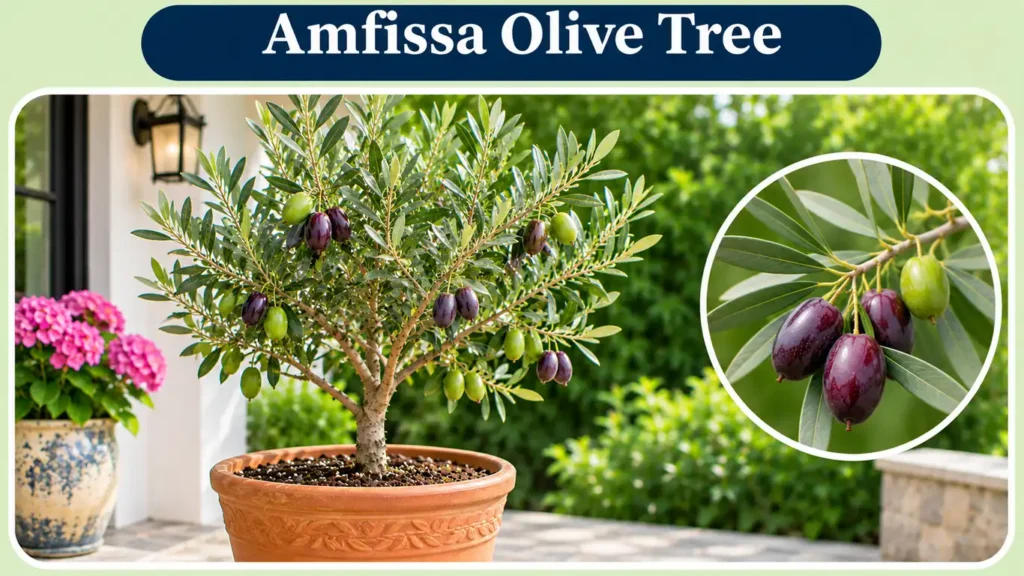
The Amfissa Olive Tree (Olea europaea ‘Amfissa’) is a traditional Greek olive variety recognized for its large, flavorful fruits and attractive evergreen foliage. Named after the region of Amfissa in Greece, this cultivar is commonly grown for producing table olives. Its broad canopy, sturdy branches, and narrow silver-green leaves create a classic Mediterranean appearance. Although Amfissa Olive Trees naturally become large outdoor plants, young specimens can be cultivated in containers and maintained in bright indoor spaces through regular pruning and proper care.
Identification and Characteristics
- Scientific Name: Olea europaea ‘Amfissa’
- Common Name: Amfissa Olive Tree
- Origin: Greece
- Plant Type: Evergreen fruit tree
- Indoor Height: Can be maintained around 3–6 feet with pruning
- Leaf Color: Silver-green
- Fruit Size: Medium to large
- Fruit Shape: Rounded to oval
- Fruit Color: Green, becoming purple or dark when ripe
- Sunlight: 6–8 hours of direct sunlight daily
- Soil Type: Well-draining sandy or loamy soil
- Growth Rate: Moderate
How to Grow Amfissa Olive Trees Indoors
Amfissa Olive Trees grow best in locations with abundant direct sunlight. Position the container near a bright south-facing window where the tree receives at least six hours of sunlight daily. If your indoor space lacks sufficient natural light, supplement it with a full-spectrum grow light.
Select a sturdy container with drainage holes and use a well-draining potting mixture. A combination of quality potting soil, perlite, and coarse mineral material can help prevent excessive moisture retention. Because Amfissa trees naturally develop broad canopies, regular pruning is necessary to maintain a manageable shape indoors.
Watering and Maintenance Tips
Amfissa Olive Trees prefer soil that dries slightly between watering sessions. Water thoroughly when the upper 1–2 inches of soil become dry, allowing excess water to drain away. Avoid excessive watering because olive trees are sensitive to poorly drained soil.
During spring and summer, apply a balanced fertilizer according to product instructions. Reduce feeding during winter when the tree’s growth slows. Remove damaged, weak, or overcrowded branches to encourage healthy development and maintain an attractive canopy.
Benefits of Growing Amfissa Olive Trees Indoors
Amfissa Olive Trees are appreciated for their evergreen foliage and traditional Mediterranean appearance. Their silver-green leaves provide year-round decorative interest, while their branching structure creates an elegant ornamental effect in spacious indoor environments.
Another advantage is their potential to produce large table olives. These fruits are commonly prepared through curing processes before consumption. However, indoor fruit production depends on abundant sunlight, suitable seasonal temperatures, and successful pollination.
16. Picual Olive Tree

The Picual Olive Tree (Olea europaea ‘Picual’) is one of Spain’s most widely cultivated olive varieties, particularly valued for its high-quality olive oil production. Originating from Andalusia, this evergreen tree features dense silver-green foliage, sturdy branches, and a vigorous growth habit. Its attractive leaves and Mediterranean character make it an interesting ornamental plant for container cultivation. Although Picual Olive Trees naturally grow into large outdoor trees, young specimens can be maintained indoors with strong sunlight, careful pruning, and proper watering.
Identification and Characteristics
- Scientific Name: Olea europaea ‘Picual’
- Common Name: Picual Olive Tree
- Origin: Andalusia, Spain
- Plant Type: Evergreen fruit tree
- Indoor Height: Can be maintained around 3–6 feet with regular pruning
- Leaf Color: Silver-green
- Fruit Size: Medium
- Fruit Shape: Oval with a slightly pointed tip
- Fruit Color: Green, turning dark purple or black when ripe
- Sunlight: 6–8 hours of direct sunlight daily
- Soil Type: Well-draining sandy or loamy soil
- Growth Rate: Moderate to vigorous
How to Grow Picual Olive Trees Indoors
Picual Olive Trees need abundant direct sunlight to grow successfully indoors. Place the container near a south-facing window that receives at least six to eight hours of sunlight daily. If natural light is insufficient, use a full-spectrum grow light to maintain healthy foliage and prevent weak growth.
Choose a large, stable container with drainage holes and fill it with a well-draining potting mixture. Citrus or Mediterranean plant soil can provide appropriate growing conditions. Since Picual trees naturally develop vigorous branches, regular pruning is essential to maintain a compact appearance. Remove overcrowded growth and shape the canopy carefully to encourage balanced development. During warm weather, gradually moving the tree outdoors can help improve overall health.
Watering and Maintenance Tips
Picual Olive Trees tolerate relatively dry conditions but require regular watering when grown in containers. Water thoroughly when the upper 1–2 inches of soil feel dry. Allow excess moisture to drain completely, and avoid leaving standing water beneath the pot.
During spring and summer, apply a balanced fertilizer according to the manufacturer’s instructions. Reduce watering and feeding during winter when growth slows. Prune dead, damaged, or crossing branches to improve airflow and maintain an attractive shape.
Benefits of Growing Picual Olive Trees Indoors
Picual Olive Trees offer attractive evergreen foliage and a classic Mediterranean appearance suitable for bright indoor garden spaces. Their dense silver-green leaves provide decorative greenery throughout the year, while their sturdy branches create an elegant tree-like structure.
Picual is particularly famous for producing olives used in high-quality olive oil. The variety is valued for its productive nature and distinctive oil characteristics.Although Picual trees can produce fruit, indoor flowering and fruit development are challenging without sufficient sunlight and suitable seasonal conditions. With proper watering, regular pruning, and an exceptionally bright location, a young Picual Olive Tree can become an attractive container-grown specimen.
17. Chemlali Olive Tree
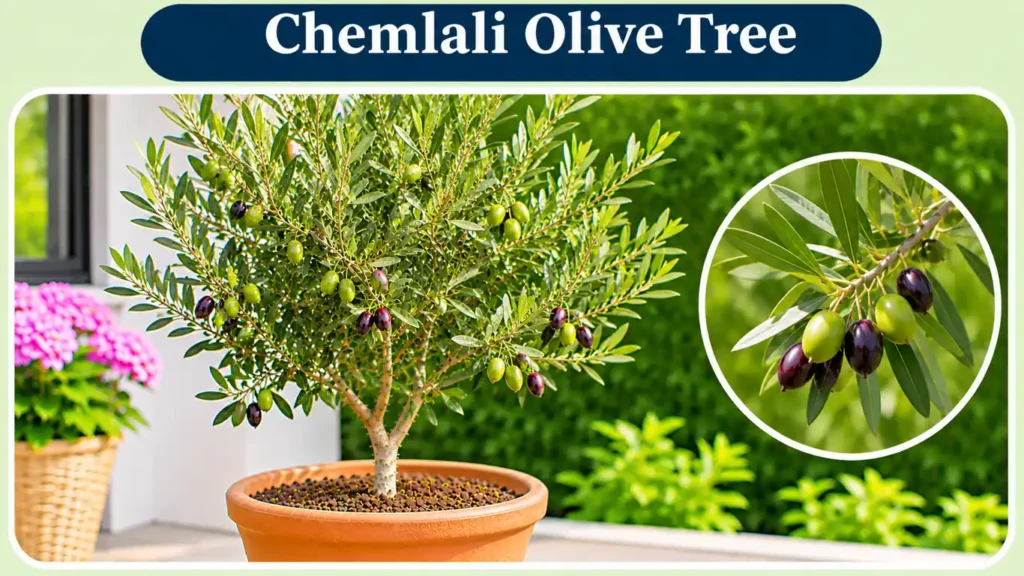
The Chemlali Olive Tree (Olea europaea ‘Chemlali’) is a traditional Tunisian olive variety known for its excellent drought tolerance, attractive silver-green foliage, and productive growth. Commonly cultivated in North Africa, this evergreen tree produces small olives used primarily for olive oil. Its slender leaves and natural Mediterranean appearance make it an interesting choice for ornamental container gardening. Although Chemlali trees grow best outdoors, young specimens can be maintained in bright indoor spaces with proper sunlight, well-draining soil, and regular pruning.
Identification and Characteristics
- Scientific Name: Olea europaea ‘Chemlali’
- Common Name: Chemlali Olive Tree
- Origin: Tunisia
- Plant Type: Evergreen fruit tree
- Indoor Height: Can be maintained around 3–6 feet with pruning
- Leaf Color: Silver-green
- Fruit Size: Small
- Fruit Color: Green, turning dark purple or black when ripe
- Growth Habit: Spreading and vigorous
- Sunlight: 6–8 hours of direct sunlight daily
- Soil Type: Well-draining sandy or loamy soil
How to Grow Chemlali Olive Trees Indoors
Chemlali Olive Trees need plenty of direct sunlight to maintain healthy growth. Place the container near a bright south-facing window where it receives at least six hours of sunlight daily. If natural sunlight is insufficient, use a full-spectrum grow light.
Choose a sturdy container with drainage holes and fill it with well-draining potting soil. A citrus or Mediterranean plant mixture is suitable for container cultivation. Because Chemlali trees naturally develop spreading branches, pruning is necessary to maintain a manageable indoor size.
Watering and Maintenance Tips
Chemlali Olive Trees tolerate dry conditions once established, but container-grown specimens still need regular moisture checks. Water thoroughly when the upper 1–2 inches of soil feel dry, allowing excess water to drain completely.
During spring and summer, apply a balanced fertilizer according to the manufacturer’s instructions. Reduce watering and fertilization during slower winter growth. Remove dead, damaged, or overcrowded branches to maintain an attractive shape. Check the leaves regularly for scale insects and spider mites.
Benefits of Growing Chemlali Olive Trees Indoors
Chemlali Olive Trees offer attractive evergreen foliage and a traditional Mediterranean appearance. Their narrow silver-green leaves provide year-round greenery, while their naturally spreading branches create an elegant ornamental effect.
Another advantage is their tolerance of dry growing conditions, although this does not eliminate the need for regular watering in containers. Chemlali olives are widely used for olive oil production, but indoor fruiting requires sufficient sunlight and favorable growing conditions.
18. Coratina Olive Tree

The Coratina Olive Tree (Olea europaea ‘Coratina’) is a famous Italian olive variety valued for its high-quality olive oil, vigorous growth, and attractive evergreen foliage. Originating from Apulia in southern Italy, this tree produces medium-sized olives rich in oil. Its narrow gray-green leaves and strong branching structure provide a distinctive Mediterranean appearance. Although Coratina naturally grows into a substantial outdoor tree, young specimens can be maintained in containers with sufficient sunlight, proper watering, and regular pruning.
Identification and Characteristics
- Scientific Name: Olea europaea ‘Coratina’
- Common Name: Coratina Olive Tree
- Origin: Apulia, Italy
- Plant Type: Evergreen fruit tree
- Indoor Height: Can be maintained around 3–6 feet with pruning
- Leaf Color: Gray-green with silvery undersides
- Fruit Size: Medium
- Fruit Color: Green, becoming dark purple when ripe
- Growth Habit: Upright to spreading
- Sunlight: 6–8 hours of direct sunlight daily
- Soil Type: Well-draining sandy or loamy soil
How to Grow Coratina Olive Trees Indoors
Coratina Olive Trees require abundant sunlight to maintain healthy foliage and strong development. Position the container near a south-facing window that receives six to eight hours of direct sunlight daily. If your home does not receive enough natural light, supplement it with a suitable full-spectrum grow light.
Choose a large container with drainage holes and fill it with well-draining potting soil. Adding perlite or pumice can improve drainage and reduce the risk of root problems. Since Coratina trees naturally grow vigorously, prune the branches occasionally to control their height and maintain a balanced canopy. Keep the tree away from heating vents and poorly ventilated spaces. Outdoor exposure during suitable weather can encourage healthier growth.
Watering and Maintenance Tips
Coratina Olive Trees prefer soil that dries slightly between watering sessions. Water thoroughly when the upper layer of soil feels dry, allowing excess moisture to drain away. Avoid keeping the roots constantly wet because excessive moisture can cause root rot.
During spring and summer, apply a balanced fertilizer according to the manufacturer’s recommendations. Reduce watering and fertilization during winter when growth slows. Remove damaged, weak, or crossing branches to improve airflow and maintain an attractive appearance. Inspect the foliage regularly for pests and signs of environmental stress.
Benefits of Growing Coratina Olive Trees Indoors
Coratina Olive Trees provide attractive evergreen foliage and a classic Mediterranean appearance. Their narrow gray-green leaves create natural decorative interest throughout the year, while their sturdy branches give them a distinctive ornamental structure.
Coratina is particularly valued for olive oil production. Its olives produce oil known for a robust flavor and high polyphenol content. However, indoor olive production is challenging and depends on strong sunlight, favorable seasonal temperatures, and adequate pollination.
19. Ascolano Olive Tree
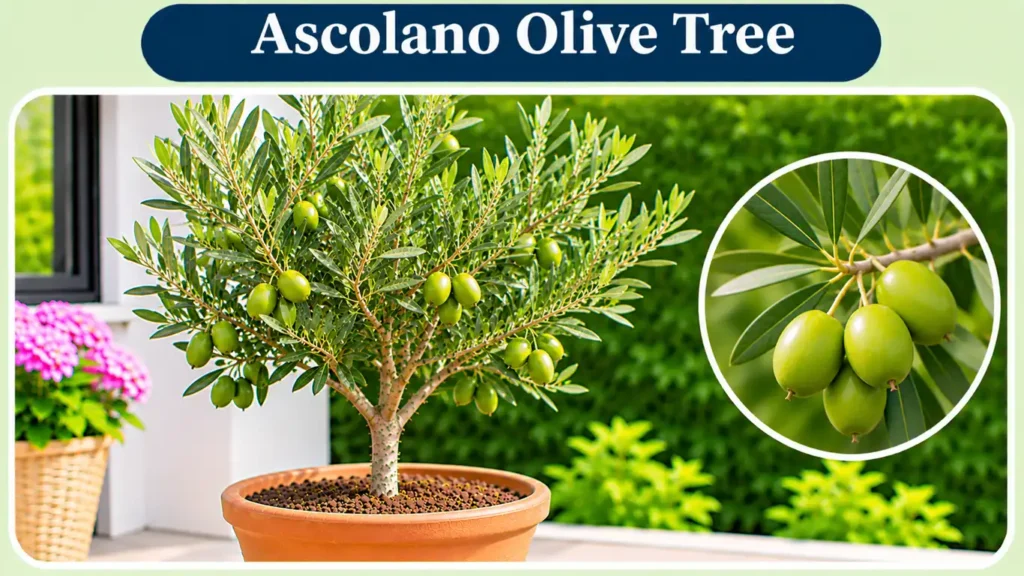
The Ascolano Olive Tree (Olea europaea ‘Ascolano’) is a traditional Italian olive variety recognized for its large fruits, attractive silver-green foliage, and ornamental appearance. Originating from central Italy, this evergreen tree is especially valued for producing table olives. Its broad branching structure and narrow leaves create a beautiful Mediterranean look. Although Ascolano Olive Trees naturally develop into large outdoor plants, young trees can be grown in containers and maintained indoors with sufficient sunlight, proper watering, and occasional pruning.
Identification and Characteristics
- Scientific Name: Olea europaea ‘Ascolano’
- Common Name: Ascolano Olive Tree
- Origin: Central Italy
- Plant Type: Evergreen fruit tree
- Indoor Height: Can be maintained around 3–6 feet with pruning
- Leaf Color: Silver-green
- Fruit Size: Large
- Fruit Shape: Oval to rounded
- Fruit Color: Green, turning darker when ripe
- Growth Habit: Upright to spreading
- Sunlight: 6–8 hours of direct sunlight daily
- Soil Type: Well-draining sandy or loamy soil
How to Grow Ascolano Olive Trees Indoors
Ascolano Olive Trees perform best in bright indoor spaces with plenty of direct sunlight. Place the container near a south-facing window where the tree receives at least six hours of sunlight daily. If natural sunlight is limited, use a full-spectrum grow light to support healthy foliage development.
Choose a sturdy container with drainage holes and fill it with a loose, well-draining potting mixture. A citrus or Mediterranean plant potting mix can provide suitable growing conditions. Because Ascolano trees naturally develop spreading branches, regular pruning helps maintain their size and improve airflow. Rotate the container occasionally to encourage balanced growth. Avoid placing the tree in dark rooms or locations with consistently damp soil.
Watering and Maintenance Tips
Ascolano Olive Trees prefer moderately dry soil conditions. Water deeply when the upper 1–2 inches of soil feel dry, allowing excess moisture to drain completely. Avoid excessive watering because olive roots are sensitive to poor drainage.
During spring and summer, apply a balanced fertilizer according to product instructions. Reduce watering and fertilization during winter when the tree grows more slowly. Remove damaged, dead, or crossing branches to maintain a balanced canopy. Inspect the foliage regularly for spider mites, scale insects, and yellowing leaves.
Benefits of Growing Ascolano Olive Trees Indoors
Ascolano Olive Trees offer attractive evergreen foliage and a traditional Mediterranean appearance. Their silver-green leaves provide decorative greenery throughout the year, while their sturdy branches create an elegant ornamental structure.
Another advantage is their potential to produce large table olives. Ascolano olives are traditionally valued for their size and are often used in specialty olive preparations. However, successful fruit production indoors requires sufficient sunlight, suitable seasonal conditions, and effective pollination.
20. Sevillano Olive Tree
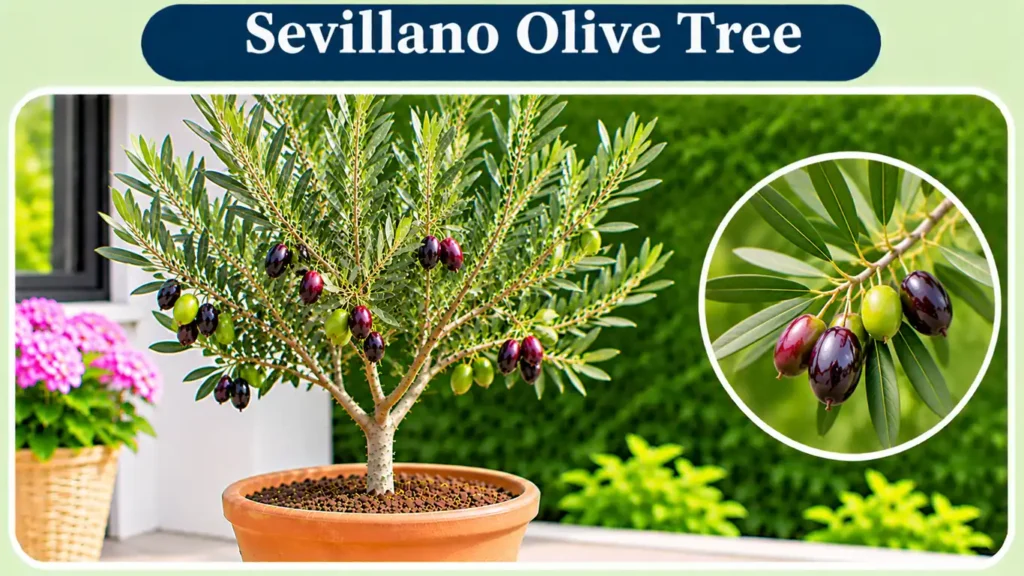
The Sevillano Olive Tree (Olea europaea ‘Sevillano’) is a Spanish olive variety famous for its exceptionally large fruits and attractive evergreen foliage. Commonly associated with the production of table olives, this tree features broad branches, narrow silver-green leaves, and a traditional Mediterranean appearance. Although Sevillano naturally develops into a large outdoor tree, young specimens can be maintained in containers through careful pruning. With abundant sunlight, proper soil drainage, and regular maintenance, it can serve as an ornamental plant in spacious indoor environments.
Identification and Characteristics
- Scientific Name: Olea europaea ‘Sevillano’
- Common Name: Sevillano Olive Tree
- Origin: Spain
- Plant Type: Evergreen fruit tree
- Indoor Height: Can be maintained around 3–6 feet while young with pruning
- Leaf Color: Silver-green
- Fruit Size: Very large
- Fruit Shape: Rounded to oval
- Fruit Color: Green, turning darker when mature
- Growth Habit: Vigorous and spreading
- Sunlight: 6–8 hours of direct sunlight daily
- Soil Type: Well-draining sandy or loamy soil
How to Grow Sevillano Olive Trees Indoors
Sevillano Olive Trees require abundant direct sunlight to maintain healthy growth indoors. Place the container near a bright south-facing window where the plant receives at least six to eight hours of sunlight daily. If natural sunlight is insufficient, supplement it with a full-spectrum grow light.
Choose a large, sturdy container with drainage holes and fill it with well-draining potting soil. A Mediterranean plant or citrus potting mixture can provide suitable growing conditions. Because Sevillano trees naturally become large, regular pruning is necessary to control their height and spreading branches. Keep the plant in a well-ventilated area and avoid excessive humidity. When possible, move the container outdoors during suitable weather to support stronger growth.
Watering and Maintenance Tips
Sevillano Olive Trees prefer soil that dries slightly between watering sessions. Water thoroughly when the top 1–2 inches of soil feel dry, allowing excess moisture to drain away. Avoid keeping the roots constantly wet, as poor drainage can lead to root problems.
During spring and summer, apply a balanced fertilizer according to the manufacturer’s recommendations. Reduce watering and feeding during winter when growth slows. Prune weak, damaged, or crossing branches to maintain a healthy canopy and encourage balanced growth. Inspect the foliage occasionally for scale insects, spider mites, and signs of insufficient sunlight.
Benefits of Growing Sevillano Olive Trees Indoors
Sevillano Olive Trees are valued for their decorative silver-green foliage and distinctive Mediterranean appearance. Their evergreen leaves provide year-round greenery, while their broad branching structure creates an attractive ornamental effect.
The variety is especially famous for producing large table olives, which are commonly processed and cured before consumption. However, Sevillano is a vigorous olive cultivar, making it more challenging to maintain indoors than compact varieties. Indoor fruit production also requires abundant sunlight, suitable seasonal temperatures, and adequate pollination.
FAQs
1. Which olive tree is best for indoor growing?
Arbequina and Little Ollie are among the best olive trees for indoor growing. Arbequina offers attractive foliage and potential fruit production, while Little Ollie is compact and generally fruitless. Both require strong sunlight, well-draining soil, and proper watering.
2. Can olive trees grow indoors without direct sunlight?
Olive trees cannot grow well indoors without sufficient light. They generally need at least six to eight hours of direct sunlight daily. If natural sunlight is limited, a full-spectrum grow light can help maintain healthy foliage and prevent weak growth.
3. How often should I water an indoor olive tree?
Water an indoor olive tree when the upper one to two inches of soil feel dry. Watering frequency depends on temperature, container size, and sunlight. Avoid overwatering because constantly wet soil can cause root rot and yellow leaves.
4. How tall do olive trees grow indoors?
Indoor olive trees can often be maintained around three to six feet tall through regular pruning and container management. Dwarf varieties may remain smaller. However, vigorous olive cultivars require more space and can become difficult to maintain indoors over time.
5. Can indoor olive trees produce edible olives?
Yes, indoor olive trees can produce edible olives under suitable conditions. Varieties such as Arbequina and Koroneiki have fruiting potential. However, successful production requires abundant sunlight, appropriate seasonal temperatures, and adequate pollination. Fresh olives must be properly cured before eating.