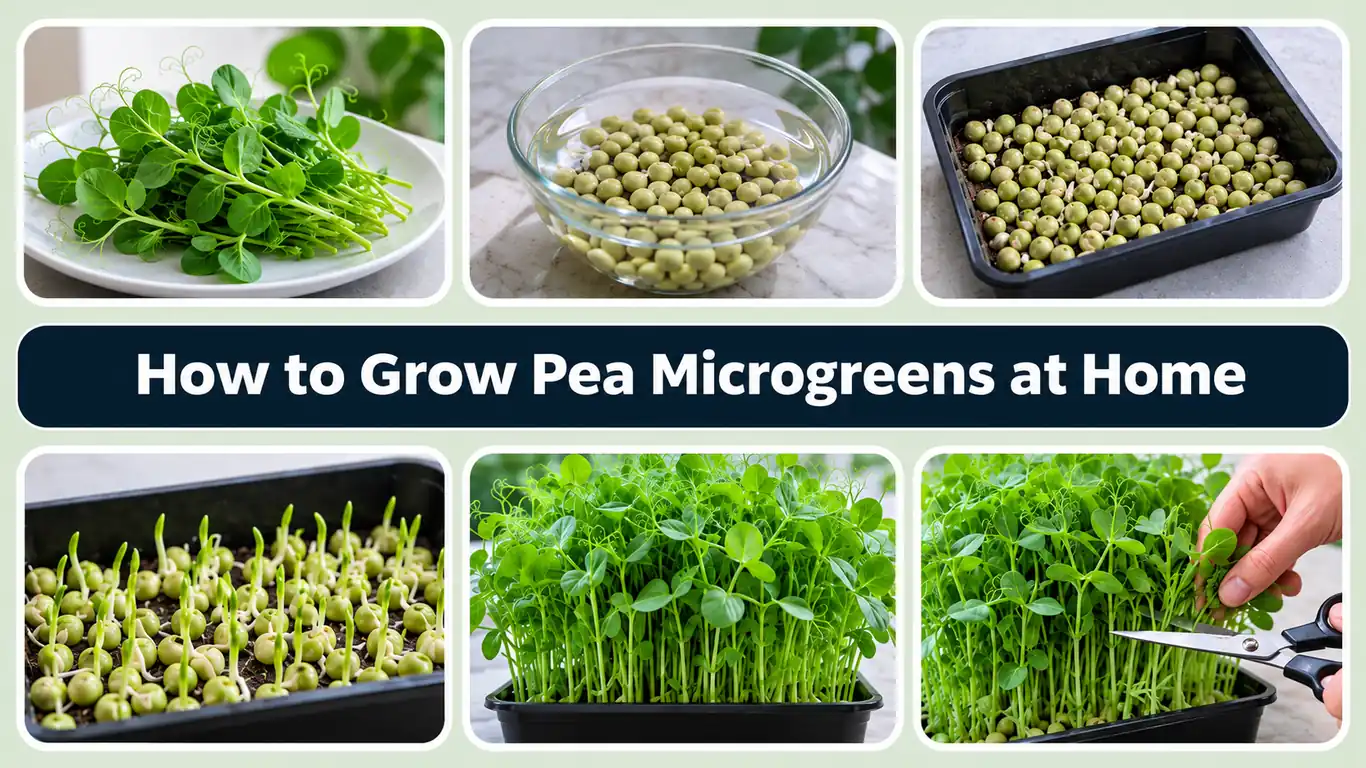
Pea microgreens are tender, nutritious young shoots that grow quickly and add a fresh, sweet flavor to salads, sandwiches, and other meals. Learning how to grow pea microgreens at home is simple, even if you have limited gardening experience or indoor space. These fast-growing greens require only pea seeds, a shallow tray, a growing medium, water, and adequate light. With proper care, you can harvest fresh pea shoots in approximately 10 to 14 days, making them an excellent choice for beginner indoor gardeners.
What Are Pea Microgreens?
Pea microgreens are young edible pea plants harvested shortly after their first leaves develop. Unlike mature pea plants that produce pods, microgreens are grown primarily for their tender stems, leaves, and delicate pea-like flavor. They are popular among indoor gardeners because they grow quickly, require minimal equipment, and can be cultivated throughout the year under suitable conditions.
Pea Microgreens vs. Pea Sprouts
Pea sprouts are typically germinated in water and eaten with their roots, while pea microgreens grow in soil or another suitable growing medium. Microgreens are harvested above the growing medium once their stems and leaves have developed.
Best Pea Varieties for Microgreens
Speckled peas, field peas, and certain green pea varieties are commonly grown for microgreens. Choose untreated seeds specifically sold for sprouting or microgreen production to improve food safety and germination reliability.
Materials Needed to Grow Pea Microgreens

Growing pea microgreens indoors does not require expensive gardening equipment or a large growing area. Most supplies are affordable, reusable, and easy to find at gardening stores. Choosing the right materials helps maintain consistent moisture, encourages healthy root development, and reduces problems such as poor germination, mold, and overcrowding.
Essential Supplies
- Pea Seeds: Use untreated pea seeds suitable for microgreen growing.
- Growing Tray: Choose a shallow tray with drainage holes.
- Bottom Tray: Place a solid tray underneath to collect excess water.
- Growing Medium: Use coco coir or a fine-textured, clean seed-starting mix.
- Clean Water: Keep seeds and growing medium consistently moist.
- Spray Bottle: Mist the surface gently during early germination.
- Grow Light: Provide additional lighting if natural sunlight is insufficient.
Choosing the Right Growing Tray
A standard 10 × 20-inch growing tray works well for pea microgreens, although smaller containers are suitable for beginners. Select food-safe trays with drainage holes to prevent standing water around the roots.
How to Grow Pea Microgreens in 7 Easy Steps
Growing pea microgreens involves preparing seeds, encouraging germination, and maintaining suitable growing conditions until harvest. Peas have relatively large seeds, so soaking them before planting helps start the germination process. Following these seven steps can produce a healthy crop of fresh, tender greens in a small indoor growing space.
Step 1: Select and Prepare Pea Seeds
Choose high-quality, untreated pea seeds intended for microgreens. Remove damaged seeds and debris before planting, and avoid using chemically treated garden seeds.
Step 2: Soak the Seeds
Place the pea seeds in a clean container and cover them with plenty of cool water. Soak for approximately 8 to 12 hours, then drain thoroughly and rinse with clean water.
Step 3: Prepare the Growing Medium
Fill a shallow growing tray with approximately 1 to 1.5 inches of moistened coco coir or seed-starting mix. Level the surface gently without compressing it too tightly, allowing young roots to develop easily.
Step 4: Spread the Seeds Evenly
Distribute the soaked seeds across the growing medium in a dense, mostly single layer. The seeds can sit close together, but avoid excessive stacking that restricts airflow and encourages mold.
Step 5: Cover for Germination
Place a clean, empty tray over the seeds to maintain darkness and consistent contact with the growing medium. Apply gentle, evenly distributed pressure if needed, and check daily for germination and excess moisture.
Step 6: Provide Light and Water
Once the shoots begin lifting the cover, usually after several days, remove it and place the tray under a grow light or near a bright window. Water from the bottom whenever the growing medium starts to dry.
Step 7: Harvest the Pea Microgreens
Pea microgreens are generally ready to harvest approximately 10 to 14 days after planting, depending on temperature, lighting, and variety. Use clean scissors to cut the shoots above the growing medium when they reach your preferred size, often around 3 to 5 inches tall.
Best Growing Conditions for Pea Microgreens
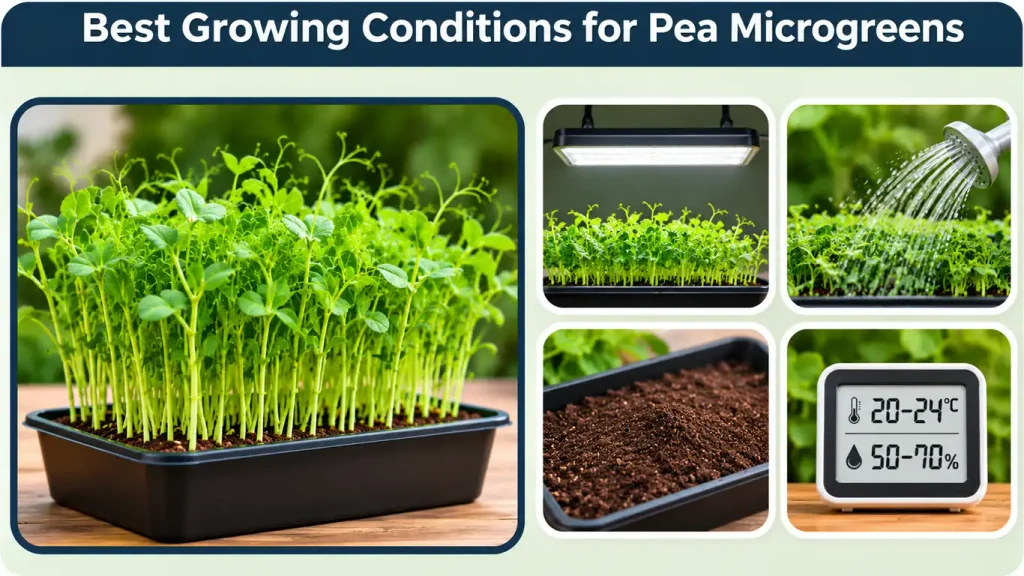
Pea microgreens grow successfully indoors when temperature, light, moisture, and airflow remain balanced. Although these plants are relatively forgiving, poor growing conditions can produce weak stems, yellow leaves, or fungal problems. Establishing a suitable environment helps encourage strong root systems, vibrant green foliage, and an even harvest.
Temperature and Humidity
Pea microgreens generally perform well at temperatures around 60–75°F (16–24°C). Moderate humidity and good air circulation help prevent excessive moisture around the seedlings.
Light Requirements
Provide approximately 12 to 16 hours of bright light daily after germination. A full-spectrum LED grow light is useful for indoor growing, especially when natural sunlight is limited.
Watering Requirements
Keep the growing medium evenly moist without soaking it continuously. Bottom watering helps protect tender stems from excessive surface moisture and reduces the likelihood of fungal growth.
Common Problems When Growing Pea Microgreens
Although pea microgreens are relatively easy to grow, beginners may occasionally experience germination problems, mold, yellow leaves, or weak seedlings. Most issues develop because of excessive moisture, poor airflow, unsuitable temperatures, or insufficient light. Identifying these problems early allows you to adjust growing conditions and protect your crop before harvesting.
Common Growing Problems and Solutions
- Poor Germination: Old seeds, inadequate soaking, or unsuitable temperatures may prevent germination. Use fresh seeds and maintain consistent moisture.
- Mold Growth: Excessive moisture and overcrowded seeds encourage fungal growth. Improve airflow, reduce watering, and discard contaminated batches.
- Yellow Leaves: Seedlings naturally appear pale during germination in darkness. Provide sufficient light after removing the cover to encourage healthy green leaves.
- Weak or Leggy Stems: Insufficient light causes seedlings to stretch and develop thin stems. Move the grow light closer while avoiding excessive heat.
- Slow Growth: Low temperatures, inconsistent watering, or poor seed quality can delay development. Maintain suitable growing conditions and monitor moisture regularly.
How to Prevent Mold on Pea Microgreens
Mold prevention begins with clean equipment, quality seeds, and proper watering practices. Avoid leaving standing water in the bottom tray, and maintain gentle airflow around the growing area.
White root hairs are sometimes mistaken for mold because they appear fuzzy near developing roots. However, root hairs are typically concentrated around roots, while mold may spread across seeds and growing surfaces.
How to Harvest and Store Pea Microgreens
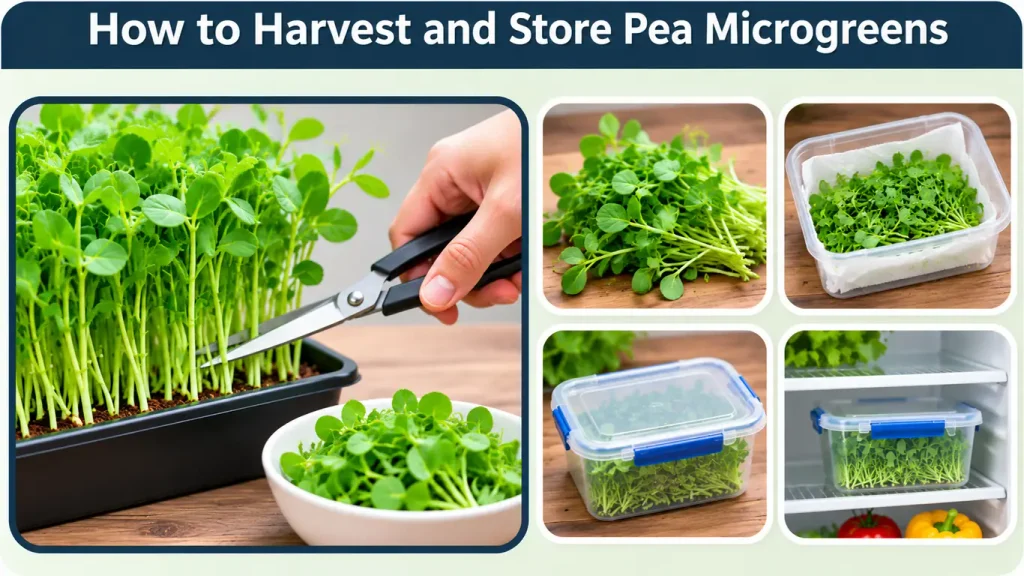
Harvesting pea microgreens at the right stage helps preserve their tender texture, fresh flavor, and nutritional value. Most varieties develop harvestable shoots within approximately two weeks under suitable conditions. Proper handling after cutting also helps keep harvested greens fresh and reduces unnecessary moisture that can accelerate spoilage during refrigerator storage.
How to Harvest Pea Microgreens Properly
- Check Plant Height: Harvest when shoots are approximately 3 to 5 inches tall and have developed healthy green leaves.
- Use Clean Scissors: Cut stems just above the growing medium to avoid collecting roots and soil.
- Harvest When Dry: Avoid harvesting immediately after watering to minimize surface moisture.
- Remove Damaged Shoots: Discard yellow, slimy, moldy, or otherwise unhealthy plant material.
- Handle Gently: Place harvested greens in a clean container without tightly compressing the stems.
How to Store Fresh Pea Microgreens
After harvesting, gently remove any growing-medium particles and inspect the greens for damaged leaves. Store them dry in a clean, food-safe container lined with a paper towel to absorb excess moisture.
Keep the container refrigerated at approximately 40°F (4°C) or below, and wash the microgreens thoroughly before eating. Fresh pea microgreens commonly remain usable for approximately 5 to 7 days when harvested and stored properly, although their shelf life varies.
Can Pea Microgreens Regrow After Cutting?
Pea microgreens can sometimes produce a second harvest because their stems may retain growing points after the first cutting. However, regrowth depends on the variety, cutting height, and condition of the remaining plants. A second harvest is often smaller and less uniform, and maintaining an older tray can increase contamination risks.
How to Encourage a Second Harvest
Leave some healthy stem growth and leaf nodes intact when harvesting the first crop. Continue providing adequate light, moderate watering, and good airflow while monitoring the remaining shoots.
If new growth develops, harvest only healthy shoots with a clean cutting tool. For more consistent yields and food safety, starting a fresh tray is generally the better option.
Benefits of Growing Pea Microgreens at Home
Growing pea microgreens offers several advantages for gardeners who want fresh vegetables without maintaining a large garden. These greens require little space, grow relatively quickly, and can be produced indoors throughout the year. Their tender texture and mild sweetness also make them a versatile ingredient for everyday meals.
Why Grow Pea Microgreens Indoors?
- Quick Harvest: Produce fresh greens in approximately 10 to 14 days.
- Space-Saving: Grow multiple trays on countertops, shelves, or compact indoor gardening stations.
- Fresh Nutrition: Pea shoots provide nutrients, including vitamin C and other beneficial plant compounds.
- Easy Maintenance: They require basic watering, adequate lighting, and occasional monitoring.
- Versatile Uses: Add fresh pea shoots to salads, sandwiches, wraps, soups, and stir-fries.
Are Pea Microgreens Healthy?
Pea microgreens contain vitamins, minerals, and plant compounds that contribute to a balanced diet. Their exact nutritional composition varies depending on the pea variety, growing conditions, and harvesting stage.
They are best enjoyed as part of a varied diet that includes other vegetables and nutrient-rich foods. Growing them at home also provides an opportunity to harvest fresh greens whenever needed.
FAQs
1. How Long Do Pea Microgreens Take to Grow?
Pea microgreens typically take around 10 to 14 days from planting to harvest. However, growing time depends on seed variety, temperature, light exposure, and watering practices. Cooler indoor conditions may slow development, while suitable temperatures encourage faster, healthier growth.
2. Do You Have to Soak Pea Seeds Before Planting?
Soaking pea seeds is strongly recommended because it helps hydrate their relatively large seed coats and encourages germination. Most growers soak seeds for approximately 8 to 12 hours before planting. Drain the seeds thoroughly afterward to avoid excessive moisture.
3. Can You Grow Pea Microgreens Without Soil?
Yes, pea microgreens can grow without traditional soil using coco coir, suitable hemp growing mats, or other clean soilless growing media. These materials support roots while retaining moisture. Proper drainage, consistent watering, and adequate lighting remain essential for healthy development.
4. How Often Should You Water Pea Microgreens?
Check pea microgreens daily and water whenever the growing medium begins to dry. Watering frequency varies with temperature, humidity, airflow, and tray size. Bottom watering is recommended after germination because it keeps foliage drier while supplying moisture to developing roots.
5. Can You Eat Pea Microgreens Raw?
Yes, healthy pea microgreens grown and handled hygienically can be eaten raw in salads, sandwiches, and wraps. Wash them thoroughly before consumption, and discard any showing signs of spoilage. Cooking them is another option, especially for people at higher risk of foodborne illness.