
Sunflower microgreens are fast-growing, nutritious seedlings known for their crunchy texture and mild, nutty flavor. Learning how to grow sunflower microgreens at home is simple, even if you have limited gardening experience or indoor space. With quality sunflower seeds, a shallow growing tray, clean water, and adequate lighting, you can produce fresh greens throughout the year. Whether you prefer soil-based gardening or hydroponic growing methods, sunflower microgreens offer an excellent way to enjoy homegrown vegetables. They are also delicious additions to salads, sandwiches, wraps, and smoothies.
What Do You Need to Grow Sunflower Microgreens?
Growing sunflower microgreens indoors requires only a few affordable gardening supplies. Unlike mature sunflowers, these young seedlings do not need deep containers, large garden spaces, or months of maintenance. Choosing suitable seeds and growing materials helps improve germination and overall harvest quality. Prepare the following supplies before planting to create a healthy and productive growing environment.
- Sunflower seeds: Choose untreated black oil sunflower seeds intended for microgreen production.
- Growing tray: Select a shallow tray with drainage holes.
- Watering tray: Use a second tray without drainage holes for bottom watering.
- Growing medium: Choose seed-starting mix, coconut coir, or hydroponic mats.
- Spray bottle: Useful for moistening the growing medium during germination.
- Light source: Provide sufficient natural sunlight or LED grow lights.
- Tray cover: Helps maintain darkness and moisture during germination.
- Sharp scissors: Required for clean and convenient harvesting.
How to Grow Sunflower Microgreens at Home: 7 Easy Steps

Growing sunflower microgreens at home involves soaking seeds, preparing the growing medium, encouraging germination, and maintaining suitable environmental conditions. Sunflower seeds have relatively hard outer shells, making proper seed preparation particularly important. Following a consistent growing routine helps produce strong stems, healthy green leaves, and an abundant harvest. Here are seven simple steps to get started.
1. Choose and Soak Sunflower Seeds
Select high-quality sunflower seeds specifically intended for edible microgreen production. Soak the seeds in clean drinking water for approximately 8–12 hours to soften their outer shells and encourage germination. Drain them thoroughly before planting.
2. Prepare the Growing Tray
Fill a shallow growing tray with approximately one inch of fresh seed-starting mix or coconut coir. Spread the growing medium evenly and moisten it without creating standing water.
Place the growing tray inside another tray without drainage holes. This arrangement makes bottom watering easier throughout the growing process.
3. Sow the Sunflower Seeds
Distribute the soaked sunflower seeds evenly across the prepared growing surface. Avoid overlapping seeds or creating excessively crowded areas, as this can restrict airflow and encourage mold.
Gently press the seeds against the growing medium to improve contact. Lightly mist the surface if additional moisture is necessary.
4. Cover the Tray for Germination
Place another clean tray over the seeds to create a dark growing environment. Adding a light, evenly distributed weight to the cover can improve seed contact and encourage uniform growth.
Keep the tray covered for approximately two to four days, checking moisture and seedling development daily. Remove the cover once the seedlings become established.
5. Provide Sufficient Light
Move the growing tray near a bright window or underneath an LED grow light. Provide approximately 12–16 hours of artificial light daily to support healthy leaf development.
The initially pale seedlings should gradually develop green leaves after receiving light. Rotate the tray periodically if you rely on natural sunlight.
6. Water and Remove Seed Hulls
Water the sunflower microgreens from below to maintain root moisture without excessively wetting the leaves. Allow the growing medium to absorb water before removing any excess.
Gently brush away loose seed hulls as the leaves open. Avoid forcibly removing stubborn shells, as this can damage delicate seedlings.
7. Harvest the Sunflower Microgreens
Harvest when the seed leaves have fully opened, ideally before the true leaves become well developed. The seedlings should have thick stems, vibrant green leaves, and a pleasant, nutty flavor.
Use clean, sharp scissors to cut the stems slightly above the growing medium. Remove any remaining seed hulls before consumption.
How Long Do Sunflower Microgreens Take to Grow?
Sunflower microgreens generally take 8–12 days to grow from sowing to harvest under favorable indoor conditions. However, the exact growing period depends on seed quality, temperature, moisture, lighting, and growing medium. Maintaining consistent conditions encourages faster and more uniform development. Check the appearance of the seedlings rather than relying exclusively on the number of growing days.
| Growth stage | Growing time | Expected development |
| Seed preparation | Before sowing | Seeds absorb water |
| Germination | Days 1–3 | Roots and shoots emerge |
| Early growth | Days 3–5 | Stems develop |
| Leaf development | Days 5–8 | Green seed leaves open |
| Harvesting | Days 8–12 | Microgreens become harvest-ready |
How to Grow Black Oil Sunflower Microgreens
Black oil sunflower seeds are a popular choice for growing microgreens because they produce tender seedlings with thick stems and attractive green leaves. Their mild, nutty taste and crunchy texture make them particularly suitable for fresh meals. Successful cultivation depends on choosing seeds intended for human consumption, preparing them correctly, and maintaining balanced moisture throughout germination.
Selecting Black Oil Sunflower Seeds
Purchase untreated black oil sunflower seeds from a reputable microgreen seed supplier. Avoid seeds intended exclusively for bird feeding or chemically treated agricultural planting.
Planting and Maintaining the Seeds
Soak the seeds before distributing them across a moist growing medium. Maintain darkness during early germination, then introduce adequate light and regular bottom watering until harvest.
How to Grow Sunflower Microgreens Without Soil
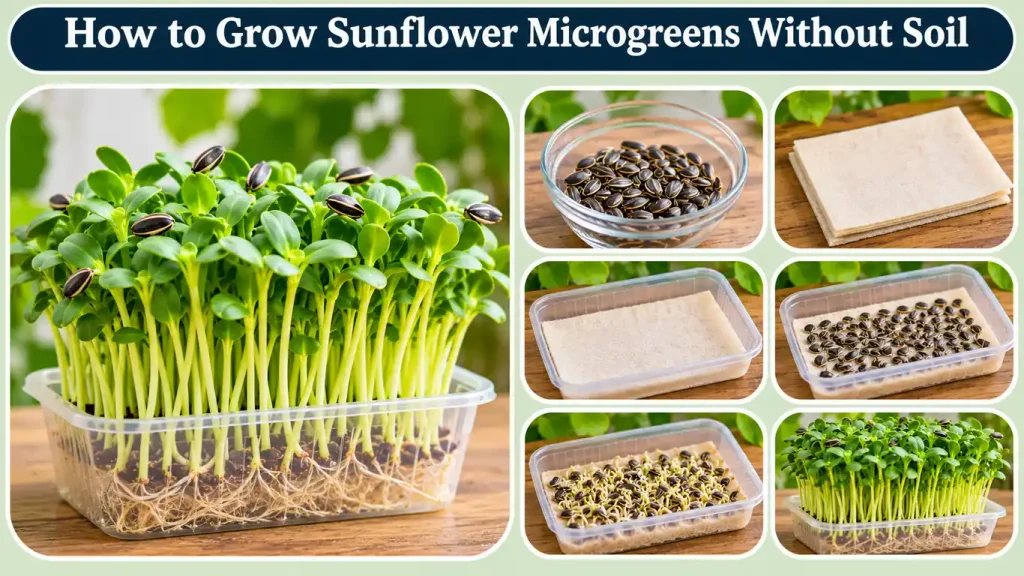
Growing sunflower microgreens without soil is an excellent alternative for gardeners who prefer a cleaner indoor growing setup. Hydroponic growing mats and coconut coir provide suitable support for developing roots while retaining moisture. Although soil-free cultivation is relatively straightforward, proper drainage and ventilation remain important because sunflower seeds can develop mold when exposed to excessive moisture.
Growing Sunflower Microgreens Hydroponically
- Place a food-safe hydroponic growing mat inside a clean tray.
- Moisten the mat with clean drinking water.
- Soak and drain the sunflower seeds.
- Spread the seeds evenly across the mat.
- Cover the tray during early germination.
- Introduce light after the seedlings become established.
- Maintain consistent moisture and harvest when ready.
Growing Sunflower Microgreens in Coconut Coir
Hydrate fresh coconut coir and spread it evenly inside a shallow growing tray. Sow the prepared sunflower seeds across the surface and maintain suitable germination conditions.
Coconut coir provides good moisture retention and root support. However, avoid oversaturation to maintain adequate oxygen around the roots.
Best Growing Conditions for Sunflower Microgreens
Sunflower microgreens require balanced temperature, lighting, moisture, and airflow to develop healthy leaves and strong stems. Excessive heat or moisture can encourage mold, while insufficient lighting may result in weak or elongated seedlings. Maintaining stable indoor growing conditions helps improve harvest quality and makes it possible to cultivate sunflower microgreens throughout the year.
| Growing requirement | Recommended condition |
| Temperature | 65–75°F (18–24°C) |
| Seed soaking | 8–12 hours |
| Blackout period | 2–4 days |
| Light duration | 12–16 hours daily |
| Watering | Consistent bottom watering |
| Air circulation | Gentle and regular |
| Harvest height | Approximately 2–4 inches |
| Fertilizer | Generally unnecessary for short growing cycles |
Common Problems When Growing Sunflower Microgreens

Sunflower microgreens are relatively easy to cultivate, but their large seeds and thick growing stems can create certain challenges. Overwatering, poor ventilation, overcrowding, and unsuitable seeds are common causes of unsuccessful harvests. Monitoring seedlings regularly allows you to identify developing problems early and improve your growing techniques for future batches.
- Mold growth: Reduce excessive moisture, improve ventilation, and discard contaminated batches.
- Poor germination: Use fresh seeds and soak them before planting.
- Remaining seed hulls: Gently brush away loose shells after leaf development.
- Weak stems: Increase light exposure following germination.
- Uneven growth: Distribute seeds evenly across the growing medium.
- Yellow leaves: Provide sufficient light after the blackout period.
- Bitter flavor: Harvest before the true leaves become well developed.
How to Harvest and Store Sunflower Microgreens
Harvesting sunflower microgreens at the correct growth stage helps preserve their crunchy texture and mild, nutty flavor. Proper storage is equally important because excess moisture can accelerate deterioration. Using clean harvesting tools, removing seed hulls, and maintaining suitable refrigeration conditions can help keep your freshly harvested microgreens in good condition for several days.
Harvesting Sunflower Microgreens
Cut the stems just above the growing medium using sanitized scissors. Remove remaining seed hulls and avoid introducing growing medium or damaged seedlings into the harvested greens.
Storing Sunflower Microgreens
Place dry microgreens inside a clean food-safe container lined with a paper towel. Refrigerate at 40°F (4°C) or below and preferably consume within five to seven days. Wash thoroughly under clean running water before eating.
FAQs
1. Do sunflower microgreen seeds need to be soaked?
Yes, soaking sunflower seeds for approximately 8–12 hours helps soften their hard outer shells and promotes more uniform germination. Use clean drinking water and drain the seeds thoroughly before distributing them across the prepared growing medium.
2. Can sunflower microgreens regrow after cutting?
Sunflower microgreens generally do not regrow successfully after harvesting because their seed leaves and growing points are removed. Starting a new batch with fresh seeds and clean growing materials is the most reliable way to maintain continuous production.
3. How warm does it need to be to grow sunflower microgreens?
Sunflower microgreens generally grow well at indoor temperatures between 65°F and 75°F (18–24°C). Cooler temperatures may slow germination, while excessive warmth combined with high moisture can encourage mold and reduce the overall quality of your harvest.
4. Can you grow sunflower microgreens from regular sunflower seeds?
Yes, viable, untreated sunflower seeds suitable for human consumption can produce microgreens. However, black oil sunflower seeds specifically sold for microgreen cultivation are generally preferable. Avoid roasted, salted, chemically treated, or unsuitable bird-feed sunflower seeds.
5. Are sunflower sprouts and microgreens the same?
No, sunflower sprouts and microgreens are harvested at different developmental stages. Sprouts are young germinated seeds commonly consumed with their roots, while microgreens develop stems and seed leaves and are harvested above the growing medium. Both require careful food hygiene.