
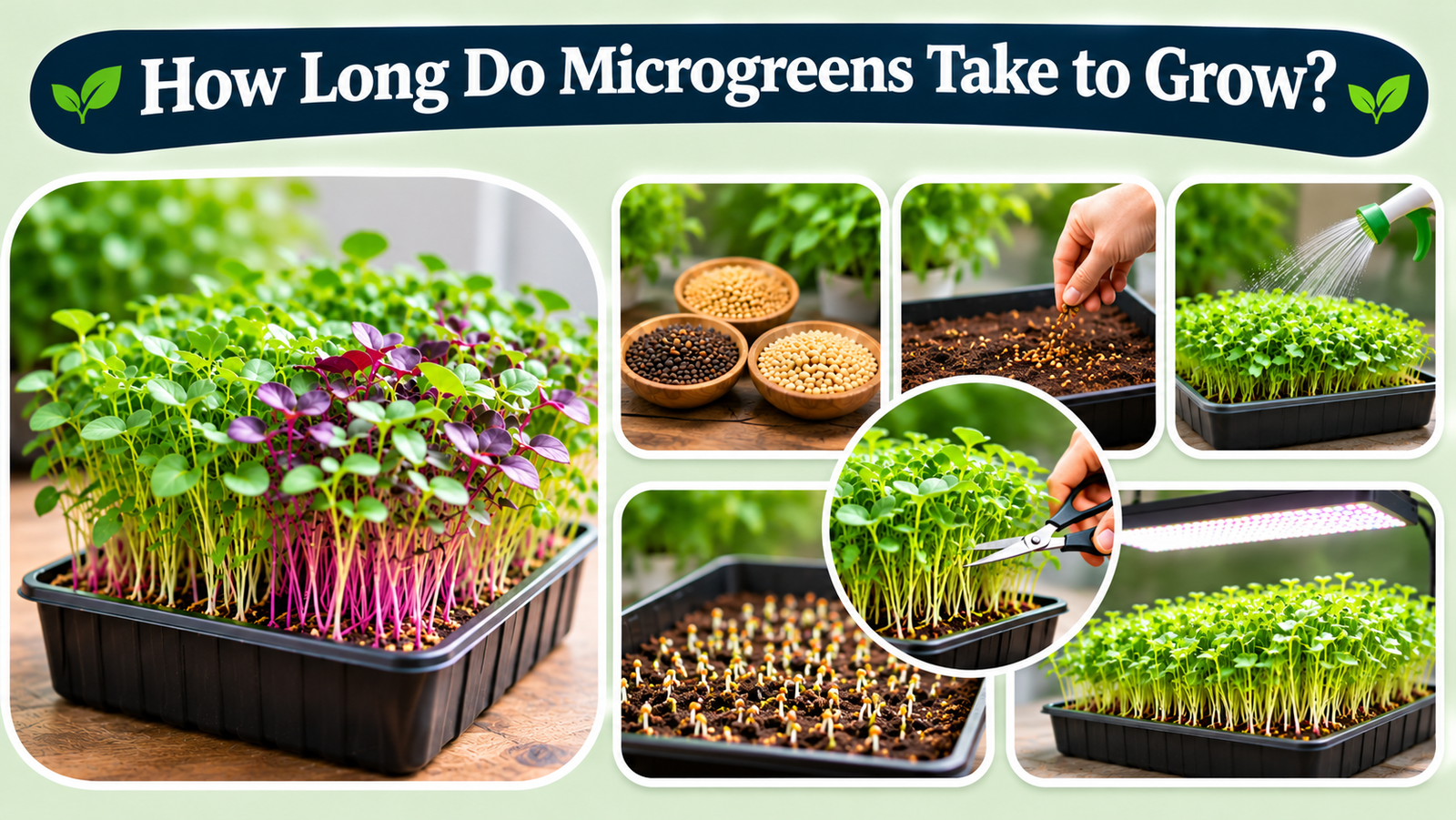
Microgreens are among the fastest-growing edible plants, making them an excellent choice for indoor gardening. But how long do microgreens take to grow? Most microgreens are ready to harvest within 7 to 14 days, although some fast-growing varieties mature in five days, while slower varieties may require three to four weeks.
The growing time depends on seed variety, temperature, lighting, moisture, and growing medium. Understanding these factors can help you achieve faster germination, healthier seedlings, and consistent harvests throughout the year, even when growing microgreens in limited indoor spaces.
How Long Do Microgreens Take to Grow?
Most microgreens take approximately 7–21 days to grow from planting to harvest. Fast-growing varieties such as radish and mustard reach maturity relatively quickly, while herbs like basil and cilantro require more time to develop.
The microgreen growing cycle includes seed germination, root development, leaf formation, and harvest maturity. Maintaining favorable growing conditions throughout these stages helps produce healthy, flavorful microgreens.
| Microgreen Variety | Germination Time | Harvest Time |
|---|---|---|
| Radish | 1–3 days | 5–10 days |
| Broccoli | 2–3 days | 7–12 days |
| Mustard | 1–3 days | 6–12 days |
| Kale | 2–4 days | 8–14 days |
| Arugula | 2–3 days | 7–12 days |
| Sunflower | 2–4 days | 8–14 days |
| Pea shoots | 2–4 days | 10–14 days |
| Cabbage | 2–4 days | 7–12 days |
| Amaranth | 2–5 days | 10–15 days |
| Beet | 3–6 days | 12–21 days |
| Basil | 3–7 days | 15–25 days |
| Cilantro | 5–10 days | 18–28 days |
These are approximate growing times measured from sowing. Seed quality, environmental conditions, and preferred harvesting size can influence the actual growing period.
4 Different Stages of Microgreen Growth
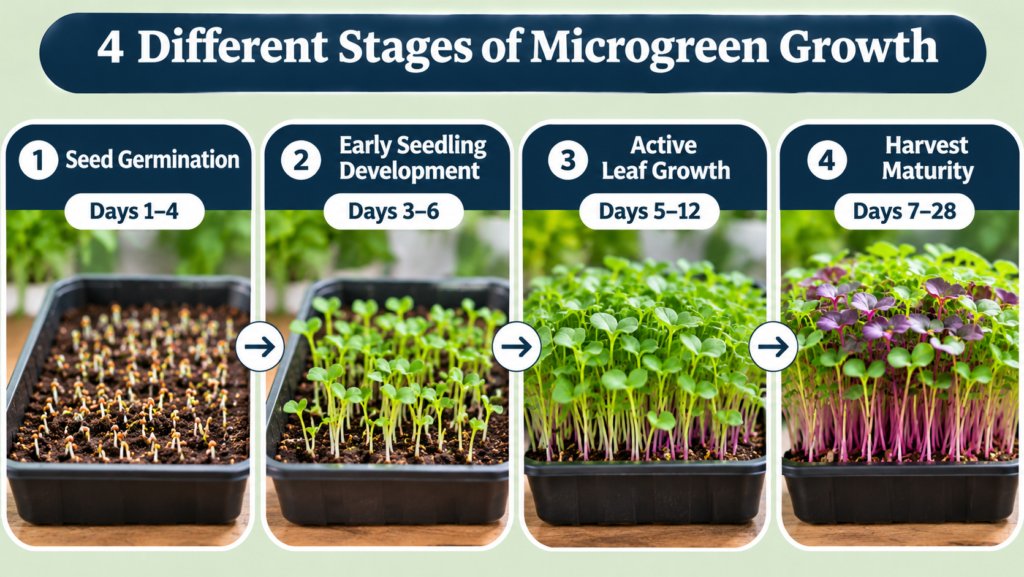
Microgreens pass through several growth stages before they become ready for harvesting. Each stage requires appropriate moisture, temperature, and environmental conditions to support healthy development. Understanding the microgreen growth cycle helps gardeners identify potential problems and determine when their seedlings are ready to harvest.
1. Seed Germination (Days 1–4)
During germination, seeds absorb moisture, soften, and begin developing small roots. Most fast-growing microgreen seeds germinate within one to four days when provided with suitable temperatures and consistent moisture.
Keep the growing medium evenly moist without allowing excessive water to accumulate. Some varieties benefit from a short covered germination period.
2. Early Seedling Development (Days 3–6)
After germination, seedlings develop roots and begin pushing their stems upward. Their first seed leaves, known as cotyledons, gradually emerge and unfold.
Once seedlings become established, remove the germination cover and introduce appropriate lighting. Adequate air circulation also becomes increasingly important during this stage.
3. Active Leaf Growth (Days 5–12)
Microgreens begin developing greener leaves and stronger stems when exposed to sufficient light. Photosynthesis supports active growth, while the roots absorb moisture from the growing medium.
Consistent lighting and proper watering help prevent weak, stretched seedlings. Fast-growing varieties may become ready for harvesting during this stage.
4. Harvest Maturity (Days 7–28)
Microgreens typically reach harvest maturity when their cotyledons are fully expanded or their first true leaves begin appearing. Depending on the variety, they generally reach approximately one to three inches in height, although pea shoots may grow taller.
Harvesting at the appropriate stage provides desirable flavor, tenderness, and texture.
What Factors Affect How Long Microgreens Take to Grow?
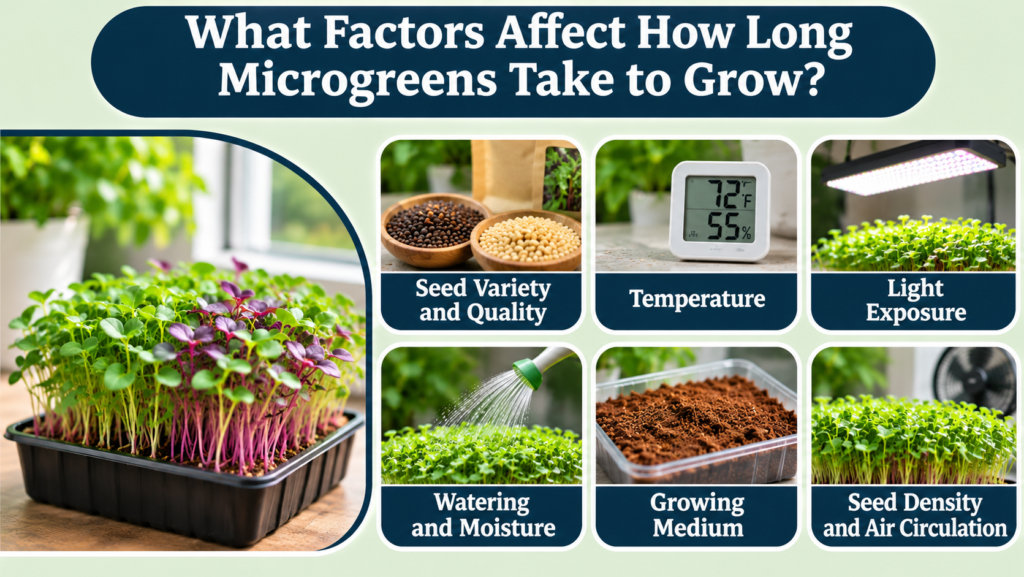
Although microgreens grow relatively quickly, various environmental and biological factors influence their development. Even seeds of the same variety may mature at different rates when grown under different conditions. Managing these factors helps improve germination, seedling health, and harvest consistency.
Seed Variety and Quality
Different microgreen varieties have naturally different growth rates. Radish and mustard develop quickly, while cilantro, beet, and basil generally require longer growing periods.
Fresh, high-quality seeds typically provide better germination and more uniform growth than old or improperly stored seeds.
Temperature
Most common microgreens grow well at temperatures between 65–75°F (18–24°C). Cooler temperatures can slow germination and seedling development, while excessive heat may increase moisture loss and encourage growing problems.
Maintain a relatively stable indoor temperature for consistent growth.
Light Exposure
Microgreens require sufficient light after germination to develop healthy leaves and stems. Providing approximately 12–16 hours of suitable artificial lighting daily can support steady indoor growth.
Insufficient lighting often causes seedlings to become elongated, pale, and weak rather than developing compact foliage.
Watering and Moisture
Consistent moisture is essential for seed germination and root development. Dry growing mediums can delay germination, while excessive watering may encourage mold and root problems.
Bottom watering after germination helps maintain root moisture without keeping the foliage excessively wet.
Growing Medium
A suitable growing medium provides moisture retention, drainage, and root support. Potting mix, coconut coir, and specialized hydroponic growing mats are commonly used for cultivating microgreens.
Poorly drained or heavily compacted growing mediums may restrict root development and slow growth.
Seed Density and Air Circulation
Planting seeds too densely can cause overcrowding, reduce airflow, and increase competition for available light and moisture. These conditions may result in uneven growth and unhealthy seedlings.
Distribute seeds evenly and maintain gentle air circulation around growing trays to support healthy development.
7 Tips to Make Microgreens Grow Faster

Although you cannot completely change the natural growth rate of microgreens, maintaining favorable growing conditions can help reduce unnecessary delays. Proper seed preparation, consistent moisture, and sufficient lighting encourage steady development. Focus on improving growing conditions rather than forcing seedlings to mature before they are ready.
- Choose fast-growing varieties: Start with radish, mustard, broccoli, or arugula for quicker harvests.
- Use fresh seeds: Purchase quality, untreated seeds suitable for edible microgreen production.
- Soak suitable seeds: Soak larger seeds, such as peas and sunflowers, according to supplier instructions.
- Maintain consistent temperatures: Avoid placing growing trays near cold drafts or excessive heat sources.
- Provide adequate lighting: Use LED grow lights when natural sunlight is insufficient.
- Maintain proper moisture: Keep the growing medium consistently moist without waterlogging.
- Improve air circulation: Provide gentle airflow to reduce excessive humidity and discourage mold development.
How Do You Know When Microgreens Are Ready to Harvest?
Harvesting microgreens at the correct time is important for achieving desirable flavor, texture, and freshness. While estimated growing times provide useful guidance, observing seedling development is a more reliable way to determine harvest readiness.
Common signs that microgreens are ready to harvest include:
- Fully expanded seed leaves.
- Healthy, variety-appropriate leaf coloration.
- Strong, upright stems.
- Appearance of the first true leaves in some varieties.
- Sufficient height for cutting above the growing medium.
- Tender stems and fresh-looking foliage.
Use clean, sharp scissors to harvest microgreens just above the growing medium. Avoid harvesting seedlings showing signs of mold, decay, or contamination.
Why Are My Microgreens Taking So Long to Grow?
Slow microgreen growth is often associated with unsuitable temperatures, poor seed quality, insufficient lighting, or inconsistent watering. Identifying the underlying problem early can help improve growing conditions and prevent further delays.
| Growing Problem | Possible Cause | Solution |
|---|---|---|
| Slow germination | Cold temperatures | Maintain suitable warmth |
| Uneven growth | Inconsistent moisture | Water evenly |
| Weak, tall seedlings | Insufficient light | Improve lighting |
| Yellow leaves | Prolonged darkness or excess water | Adjust lighting and watering |
| Poor germination | Old or damaged seeds | Use fresh seeds |
| Mold development | Excessive moisture and humidity | Discard affected crops and improve airflow |
| Stunted growth | Overcrowding | Reduce seed density |
Monitor your growing trays daily and adjust environmental conditions when necessary. Different varieties naturally grow at different speeds, so avoid comparing slow-growing herbs directly with fast-growing radish microgreens.
Frequently Asked Questions
1. What are the fastest-growing microgreens?
Radish, mustard, arugula, and broccoli are among the fastest-growing microgreens. Radish microgreens can be ready for harvesting within five to ten days under favorable conditions. These varieties are excellent choices for beginners seeking quick and consistent harvests.
2. Can microgreens grow in three days?
Some microgreen seeds germinate within three days, but most are not sufficiently developed for harvesting at that stage. Fast-growing varieties generally require at least five to seven days to produce expanded leaves and suitable stems.
3. Do microgreens grow faster in soil or hydroponically?
Microgreens can grow successfully in both soil and hydroponic growing mediums. Neither method guarantees faster growth because temperature, lighting, seed quality, and moisture management have a significant influence on development. Both methods can produce healthy and consistent harvests.
4. What happens if you let microgreens grow too long?
Microgreens gradually develop into larger seedlings when left unharvested. Their stems may become tougher, and their flavor and texture may change. Overcrowded trays can also experience increased competition for moisture, light, and nutrients as the plants mature.
5. How often can you harvest microgreens?
Most microgreens can be harvested only once from each planting. To maintain a continuous supply, sow new trays every three to seven days, depending on the variety and your consumption needs. Succession planting allows you to enjoy fresh microgreens regularly.