
Growing fresh vegetables, herbs, and leafy greens indoors is becoming increasingly popular among home gardeners. The Toledo Indoor Garden hydroponic grow system options offer practical ways to cultivate plants without using traditional soil. These systems use nutrient-rich water, growing containers, and specialized equipment to support healthy plant development. Whether you are a beginner interested in growing kitchen herbs or an experienced gardener planning a larger indoor setup, understanding hydroponic technology, installation methods, maintenance requirements, and plant selection can help you create a productive indoor garden throughout the year.
What Is the Toledo Indoor Garden Hydroponic Grow System?
Toledo Indoor Garden is a hydroponic gardening retailer offering equipment and supplies for indoor plant cultivation. Its selection includes growing systems, irrigation components, nutrients, lighting equipment, and gardening accessories. Instead of referring to one specific hydroponic machine, the Toledo Indoor Garden name covers different products that help gardeners establish soil-free growing environments.
How Does Hydroponic Growing Work?
Hydroponic gardening allows plants to grow without conventional soil by supplying essential nutrients through water. Plant roots absorb dissolved minerals directly from a nutrient solution, while the growing system maintains access to moisture and oxygen.
Depending on the setup, plants may grow in net pots containing clay pebbles, rockwool, or other suitable growing media. Indoor grow lights provide additional illumination when natural sunlight is insufficient.
Who Can Use a Hydroponic Grow System?
Hydroponic systems are suitable for beginners, apartment residents, indoor gardening enthusiasts, and experienced growers. Smaller setups work well for herbs and leafy vegetables, while larger systems can support more demanding crops.
Gardeners with limited outdoor space can also use hydroponics to cultivate fresh produce indoors. However, successful growing requires appropriate lighting, nutrients, and regular maintenance.
5 Key Features of Toledo Indoor Garden Hydroponic Systems
Hydroponic equipment available through Toledo Indoor Garden supports different growing methods and gardening requirements. Although specific features vary depending on the selected product, most systems use similar principles for delivering nutrients, supporting roots, and managing water. Understanding these features helps gardeners choose practical equipment for their available space, budget, and preferred plants.
1. Soil-Free Growing Technology
Hydroponic systems eliminate the need for traditional garden soil by delivering nutrients through water. This method allows growers to manage plant nutrition more precisely while reducing mess from soil handling.
2. Efficient Nutrient Delivery
Many hydroponic systems use reservoirs, water pumps, and irrigation tubing to supply nutrients directly to plant roots. Proper circulation helps distribute dissolved minerals while maintaining suitable growing conditions.
3. Indoor Grow Light Compatibility
Indoor hydroponic gardens can use LED grow lights to support photosynthesis when sunlight is limited. The lighting schedule, intensity, and distance from plants should match the requirements of the selected crops.
4. Multiple Growing Methods
Different hydroponic systems use different methods to provide water and nutrients. Common options include deep water culture, nutrient film technique, drip irrigation, and ebb-and-flow systems.
5. Flexible Growing Capacity
Some hydroponic setups can accommodate additional growing containers or planting sites. This flexibility allows gardeners to expand their indoor gardens when compatible equipment and sufficient space are available.
Types of Toledo Indoor Garden Hydroponic Systems
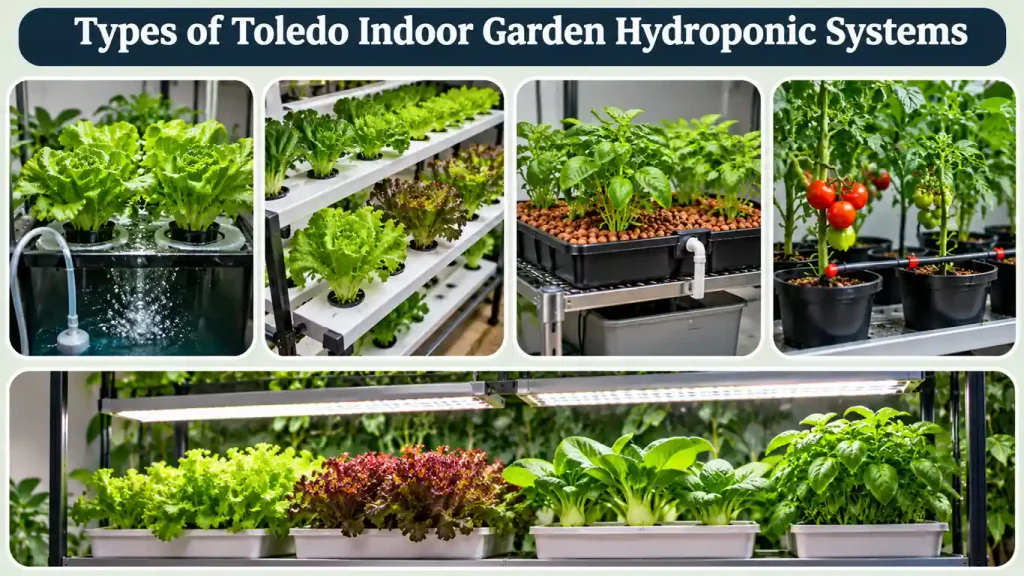
Hydroponic gardening includes several growing methods that differ in complexity, watering techniques, and equipment requirements. Choosing the appropriate system depends on the available space, preferred vegetables, and level of gardening experience. Understanding the differences between common hydroponic methods can help beginners avoid unnecessary expenses and establish a manageable indoor growing environment.
Deep Water Culture (DWC)
Deep water culture systems suspend plant roots in a nutrient-rich water reservoir. An air pump and air stone typically provide dissolved oxygen, helping prevent oxygen deficiency around the roots.
This growing method is particularly suitable for lettuce, basil, and other leafy vegetables. Regular monitoring of water temperature, nutrient concentration, and aeration is important.
Nutrient Film Technique (NFT)
Nutrient film technique systems circulate a thin stream of nutrient solution through channels containing plant roots. The continuously moving water supplies nutrients while allowing some root surfaces to access oxygen.
NFT systems are commonly used for lightweight vegetables and herbs. However, reliable water circulation is essential because pump failures can quickly affect exposed roots.
Ebb and Flow Systems
Ebb and flow hydroponic systems periodically flood growing containers with nutrient solution before draining the water back into a reservoir. This process supplies nutrients and allows fresh air to reach the roots between watering cycles.
These systems can support various vegetables when the irrigation schedule and growing media are appropriately selected.
Drip Hydroponic Systems
Drip systems deliver nutrient solution directly to individual plants through small irrigation lines. This method allows growers to regulate water delivery for different container sizes and plant requirements.
Drip irrigation works well for various crops, although tubing and emitters require regular inspection to prevent blockages.
How to Set Up a Toledo Indoor Garden Hydroponic System
Setting up an indoor hydroponic garden requires planning, suitable equipment, and careful preparation. Although installation procedures differ between products, most systems follow similar fundamental steps. Choosing a suitable location, assembling irrigation components, preparing nutrients, and arranging lighting correctly creates a stable environment that supports healthy plant growth.
Step 1: Choose a Suitable Growing Location
Select an indoor location with sufficient space, ventilation, and access to electricity. The surface should be stable enough to support the weight of the reservoir, water, growing containers, and mature plants.
Step 2: Assemble the Hydroponic Equipment
Install the reservoir, plant containers, pumps, and irrigation components according to the manufacturer’s instructions. Check that connections are secure and test the system for leaks before introducing plants.
Step 3: Prepare the Nutrient Solution
Fill the reservoir with suitable water and add hydroponic nutrients according to the product instructions. Use a pH meter and electrical conductivity meter to monitor water conditions and nutrient strength.
Step 4: Add Seeds or Seedlings
Start seeds in suitable propagation plugs or transfer established seedlings into growing containers. Position the plants carefully so their roots can access sufficient moisture and oxygen.
Step 5: Install and Adjust Grow Lights
Position LED grow lights at a suitable distance above the plants, following the light manufacturer’s recommendations. Adjust the lighting schedule according to the crops being grown and their stage of development.
Best Plants to Grow in an Indoor Hydroponic System
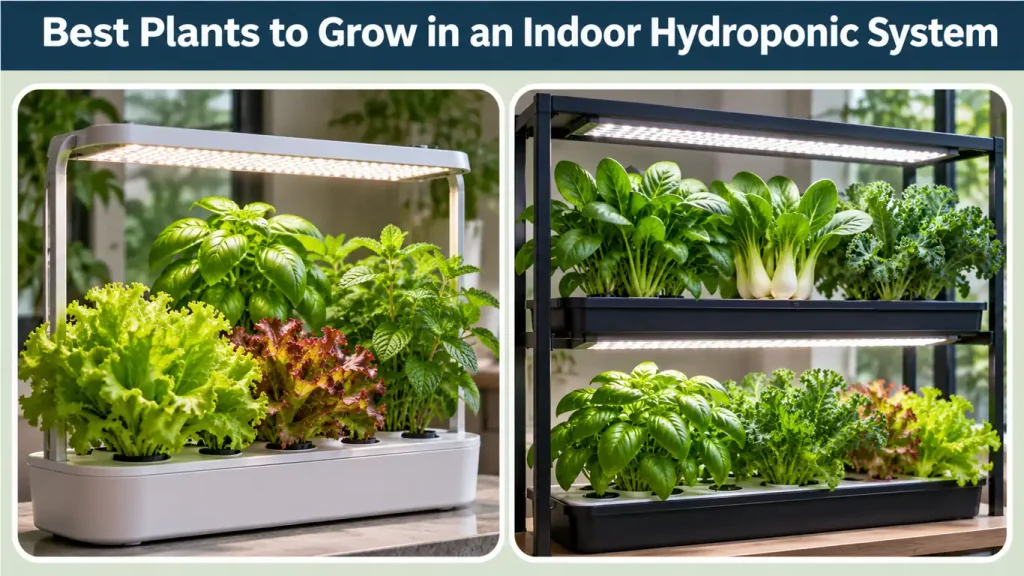
Choosing suitable plants is an important part of successful hydroponic gardening. Certain vegetables and herbs grow efficiently in compact systems, making them excellent options for beginners. Leafy greens generally require less space and support than larger fruiting vegetables, while herbs offer convenient harvests for everyday cooking.
1. Lettuce
Lettuce is one of the most beginner-friendly hydroponic vegetables because it grows relatively quickly and requires limited space. With sufficient lighting and balanced nutrients, gardeners can produce tender leaves for salads and sandwiches.
2. Basil
Basil performs well in hydroponic environments and provides fresh leaves for cooking. Regular harvesting encourages branching and helps maintain compact, productive plants.
3. Spinach
Spinach is a nutritious leafy vegetable that can grow successfully in hydroponic systems. It generally prefers cooler temperatures, making environmental control important for healthy development.
4. Mint
Mint is a vigorous herb that adapts well to water-based growing methods. Frequent trimming helps control its growth while providing fresh leaves for beverages and cooking.
5. Bok Choy
Bok choy is a compact leafy vegetable suitable for indoor hydroponic cultivation. It benefits from consistent nutrients, adequate lighting, and moderate temperatures.
6. Kale
Kale can produce nutritious leaves over an extended harvesting period. Providing sufficient root space and balanced nutrition supports continuous leaf development.
How to Maintain Your Hydroponic Grow System

Regular maintenance helps hydroponic plants remain healthy and productive. Unlike traditional soil gardening, hydroponic cultivation depends heavily on water quality, nutrient balance, oxygen availability, and equipment performance. Monitoring these conditions consistently can prevent common problems such as nutrient deficiencies, algae development, and unhealthy roots.
Maintain Proper Water pH
Most common hydroponic vegetables grow well within an approximate pH range of 5.5 to 6.5, although individual crops may have different requirements. Check the nutrient solution regularly and make gradual adjustments when necessary.
Monitor Nutrient Concentration
Plants require balanced quantities of essential nutrients for healthy development. Measure electrical conductivity to monitor nutrient solution strength and adjust feeding according to the crop and growth stage.
Clean the Water Reservoir
Remove plant debris and inspect the reservoir for algae or unwanted buildup. Replace the nutrient solution when necessary and clean equipment according to the manufacturer’s recommendations.
Inspect Roots and Water Pumps
Healthy roots are generally firm and often light-colored, although some nutrient solutions can cause harmless staining. Inspect water pumps, tubing, and air stones regularly to maintain reliable water flow and oxygen delivery.
Advantages and Disadvantages of Toledo Hydroponic Systems
Hydroponic gardening offers several benefits for gardeners who want to grow fresh produce indoors. However, different growing methods have their own limitations, including equipment expenses and ongoing maintenance requirements. Understanding both the advantages and disadvantages can help gardeners select systems that fit their experience, available space, and long-term gardening goals.
Major Advantages
- Space efficiency: Compact hydroponic systems can fit in apartments, kitchens, and dedicated growing areas.
- Controlled nutrition: Gardeners can monitor and adjust the nutrients delivered to plant roots.
- Reduced soil mess: Plants grow without conventional garden soil, making indoor cultivation cleaner.
- Water efficiency: Recirculating systems can reuse nutrient solution and potentially reduce water consumption.
- Year-round growing: Proper lighting and environmental control allow vegetables and herbs to grow throughout the year.
Possible Disadvantages
Hydroponic gardening may require an initial investment in reservoirs, grow lights, pumps, nutrients, and monitoring equipment. Electricity consumption and replacement supplies can also increase ongoing operating costs.
Some systems depend heavily on continuous water circulation or aeration. Equipment failures, poor nutrient management, and unsuitable water temperatures can affect plant health if problems are not addressed promptly.
How to Choose the Right Toledo Hydroponic Grow System
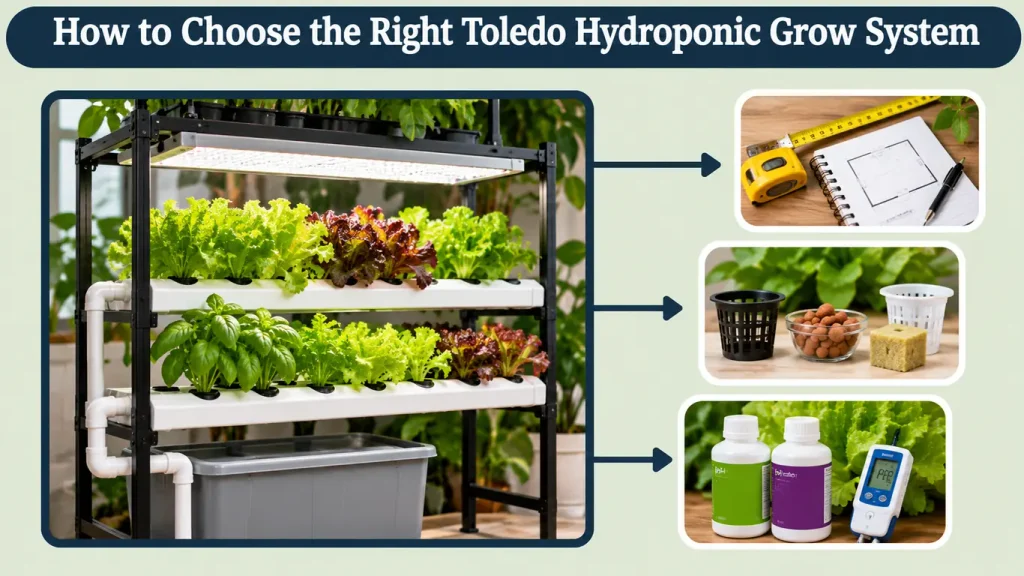
Choosing the right hydroponic system depends on several practical factors, including the available growing space, preferred plants, budget, and maintenance requirements. Beginners often benefit from simpler equipment, while experienced gardeners may prefer advanced systems that provide greater control over irrigation and nutrient delivery. Comparing these requirements before purchasing helps create a sustainable indoor garden.
Consider Your Available Space
Measure the area where the hydroponic equipment will be installed and consider the mature height of the selected plants. Leave enough room for lighting adjustments, ventilation, harvesting, and reservoir maintenance.
Evaluate Equipment Requirements
Check whether the selected hydroponic system includes essential components such as pumps, reservoirs, growing containers, and irrigation accessories. Some setups require separately purchased lighting equipment, nutrients, or monitoring tools.
Compare Long-Term Costs
Consider electricity usage, replacement nutrients, growing media, and regular cleaning supplies. Selecting compatible, durable equipment can help reduce unnecessary expenses and make maintenance easier.
FAQs
1. Is Toledo Indoor Garden Hydroponic Grow System Good for Beginners?
Yes, Toledo Indoor Garden offers equipment that can support beginner-friendly hydroponic setups. However, ease of use depends on the chosen system. Compact deep water culture systems and simple herb-growing arrangements are generally easier to manage than advanced irrigation setups.
2. Does a Toledo Hydroponic System Need Sunlight?
Hydroponic plants require adequate light for photosynthesis, but direct sunlight is not always necessary. Properly selected LED grow lights can provide the illumination needed for healthy indoor growth when natural sunlight is insufficient.
3. How Often Should You Change Hydroponic Water?
Many small hydroponic systems benefit from replacing the nutrient solution approximately every one to two weeks. However, replacement frequency depends on reservoir capacity, plant growth, water quality, and the manufacturer’s instructions. Nutrient conditions should also be monitored between changes.
4. Can You Grow Vegetables Year-Round With Hydroponics?
Yes, hydroponic systems can support year-round vegetable cultivation when temperature, lighting, nutrients, and water conditions remain suitable. Herbs and leafy greens are particularly convenient for indoor growing, while fruiting vegetables generally require more powerful lighting and additional space.
5. Where Can You Buy Toledo Indoor Garden Hydroponic Equipment?
Toledo Indoor Garden sells hydroponic gardening equipment and related supplies through its retail business. Before purchasing, compare available systems, included components, growing capacity, and maintenance requirements to find equipment that suits your indoor gardening goals.