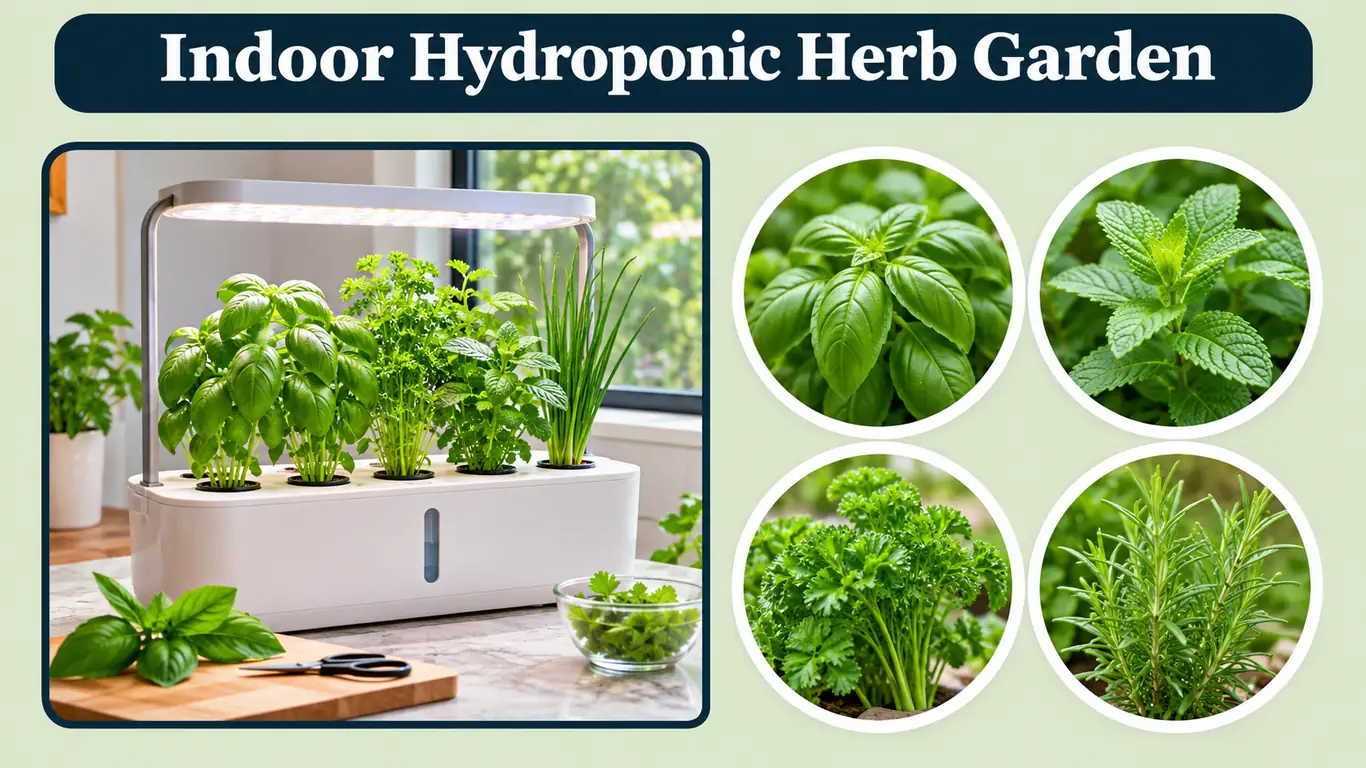
Growing fresh herbs indoors is easier than ever with an indoor hydroponic herb garden. This soil-free gardening method allows you to grow basil, mint, parsley, cilantro, and other herbs using water, nutrients, and controlled lighting. Hydroponic systems are ideal for kitchens, apartments, and small spaces where traditional gardening may be difficult. With proper equipment and regular maintenance, you can enjoy fresh, flavorful herbs throughout the year. Whether you are a beginner or an experienced gardener, understanding hydroponic growing techniques can help you build a healthy indoor herb garden.
What Is an Indoor Hydroponic Herb Garden?
An indoor hydroponic herb garden is a gardening system that grows herbs without traditional soil. Instead, plant roots receive water, dissolved nutrients, and oxygen through a controlled growing environment. These systems range from simple countertop containers to advanced automated gardens with LED grow lights. Hydroponic gardening can support steady herb growth while using less water than many conventional soil-growing methods.
How Does Hydroponic Herb Gardening Work?
Hydroponic systems deliver essential nutrients directly to plant roots through a water-based solution. The roots may grow in water or be supported by materials such as clay pebbles, coco coir, or rockwool.
Most indoor setups use LED grow lights to provide the energy required for photosynthesis. Depending on the system, a water pump, air pump, or passive reservoir helps maintain suitable growing conditions.
Why Grow Herbs Without Soil?
Growing herbs without soil eliminates the need for traditional potting mixes and reduces problems associated with soil-borne pests. It also makes indoor gardening convenient for people with limited outdoor space.
Hydroponic systems allow gardeners to monitor nutrient levels, water quality, and lighting more precisely. However, successful growth still depends on maintaining the correct balance of nutrients, oxygen, and environmental conditions.
Benefits of Growing an Indoor Hydroponic Herb Garden
An indoor hydroponic herb garden offers several practical advantages over traditional container gardening. It provides convenient access to fresh herbs, reduces dependence on outdoor weather, and makes productive use of limited household space. Many systems are also designed for easy maintenance, making hydroponic gardening accessible to beginners who want to grow edible plants throughout the year.
1. Fresh Herbs Throughout the Year
Indoor hydroponic systems allow herbs to grow regardless of seasonal changes outside. With sufficient artificial lighting and stable temperatures, plants can continue producing leaves during colder months.
2. Efficient Water Usage
Many hydroponic gardens reuse water through a reservoir or recirculating system. This reduces water waste compared with gardening methods that lose significant moisture through drainage and evaporation.
3. Ideal for Small Spaces
Compact hydroponic gardens can fit on kitchen counters, shelves, or dedicated plant stands. Vertical systems are especially useful when growing several herbs in apartments with limited floor space.
4. Faster Growth Under Suitable Conditions
Some herbs grow faster hydroponically when nutrients, oxygen, temperature, and lighting are optimized. Growth rates vary depending on plant variety, system design, and environmental conditions.
Best Herbs to Grow in an Indoor Hydroponic Garden
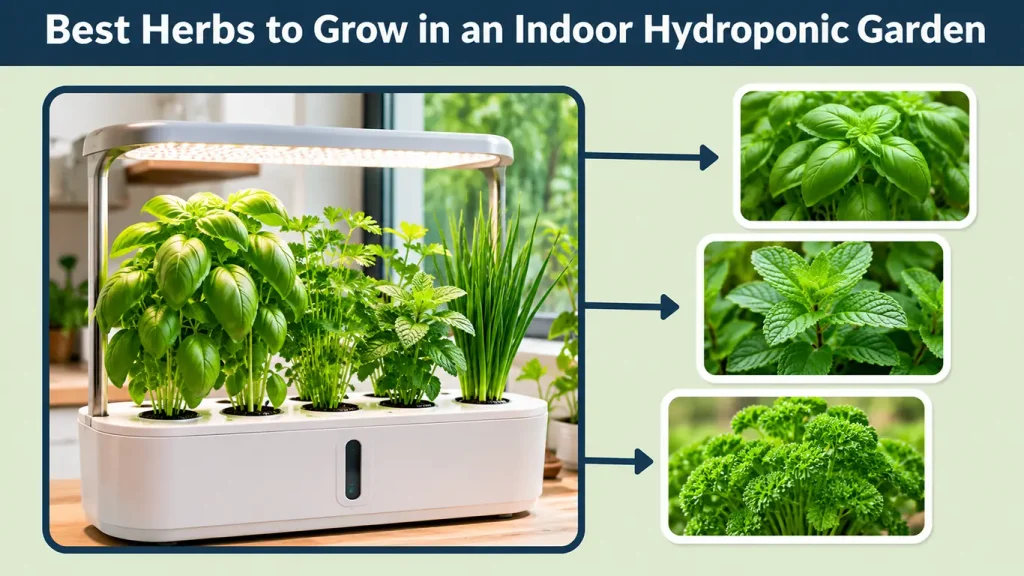
Choosing suitable herbs is essential for creating a productive indoor hydroponic garden. Many culinary herbs adapt well to soil-free growing environments, particularly leafy varieties that prefer consistent moisture. Beginners should start with herbs that grow quickly and tolerate regular harvesting. Combining several compatible varieties can provide a continuous supply of fresh ingredients for everyday cooking.
Recommended herbs include:
- Basil: A fast-growing culinary herb that thrives under strong lighting and warm temperatures.
- Mint: A vigorous herb with refreshing leaves that works well in hydroponic systems.
- Parsley: A versatile herb that produces flavorful leaves over an extended harvesting period.
- Cilantro: A popular cooking herb that prefers relatively cool growing conditions.
- Chives: Compact herbs with slender, onion-flavored leaves suitable for small gardens.
- Oregano: An aromatic herb that performs well with adequate lighting and moderate moisture.
- Thyme: A Mediterranean herb that prefers good root oxygenation and careful watering.
- Dill: A fragrant herb suitable for hydroponics, although taller varieties require additional space.
For beginners, basil, mint, parsley, and chives are particularly practical choices. Their manageable growing requirements make them suitable for learning basic hydroponic maintenance.
Essential Equipment for an Indoor Hydroponic Herb Garden
Setting up an indoor hydroponic herb garden requires a few essential supplies. The exact equipment depends on whether you choose a simple passive system or an automated countertop garden. Understanding the purpose of each component will help you select practical materials without unnecessary expenses. Reliable lighting, a suitable nutrient solution, and proper root support are especially important for successful herb production.
Hydroponic Growing System
Several hydroponic methods work well for indoor herbs:
- Deep Water Culture (DWC): Plant roots remain suspended in nutrient-rich water, usually with an air pump supplying oxygen.
- Kratky Method: A passive system that relies on an air gap above the nutrient solution as water levels decline.
- Nutrient Film Technique (NFT): A thin stream of nutrient solution flows continuously past plant roots.
- Wick System: A wick transfers nutrient solution from a reservoir to the growing medium through capillary action.
LED Grow Lights
Full-spectrum LED grow lights provide the artificial light needed for indoor herb growth. Many culinary herbs benefit from approximately 12–16 hours of suitable light daily, although actual requirements vary by species and light intensity.
Nutrients and Growing Medium
Use a complete hydroponic nutrient solution formulated for edible plants. Growing media such as clay pebbles, coco coir, and rockwool help support seedlings while allowing roots to access moisture and oxygen.
Water Reservoir and pH Meter
A clean, light-blocking reservoir helps reduce algae growth and protects the nutrient solution from contamination. A pH meter or reliable testing kit allows you to monitor water acidity and adjust it when necessary.
How to Set Up an Indoor Hydroponic Herb Garden
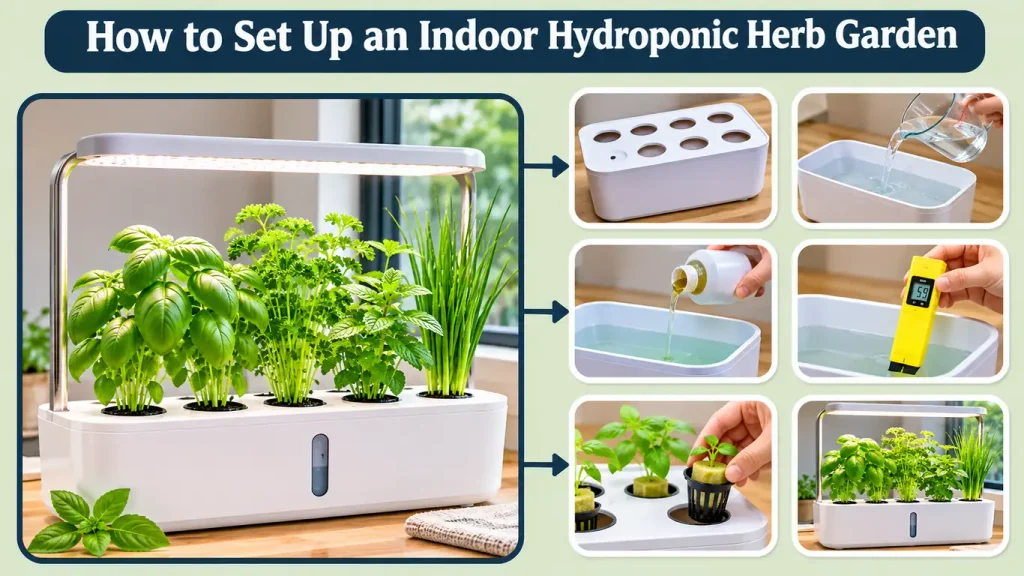
Creating an indoor hydroponic herb garden is manageable when you follow a systematic approach. Begin with a compact setup and expand it as your experience increases. Most beginners can successfully grow several herb varieties using a countertop hydroponic kit or a simple DIY system. Proper installation helps establish healthy roots and reduces common maintenance problems.
Step 1: Choose a Suitable Location
Select a stable indoor location near an electrical outlet and away from extreme temperature changes. A kitchen counter, shelf, or dedicated growing station can provide sufficient space.
Step 2: Prepare the Hydroponic System
Clean the reservoir, plant holders, and reusable equipment before assembly. Install pumps or aeration equipment if your selected system requires them.
Step 3: Add Water and Nutrients
Fill the reservoir with clean water and add hydroponic nutrients according to the manufacturer’s instructions. Check the solution’s pH, generally aiming for approximately 5.5–6.5 for many culinary herbs.
Step 4: Plant Herb Seeds or Seedlings
Start seeds in suitable propagation plugs or use seedlings with carefully cleaned roots. Position the plants so their roots can access moisture while receiving sufficient oxygen.
Step 5: Install and Adjust Grow Lights
Place LED grow lights at the manufacturer’s recommended distance above the plants. Use a timer to maintain a consistent daily lighting schedule.
Step 6: Monitor Early Plant Growth
Inspect seedlings regularly for new leaves, root development, and signs of stress. Monitor the water level and nutrient solution as the plants establish themselves.
How to Maintain Healthy Hydroponic Herbs Indoors
Regular maintenance is essential for keeping an indoor hydroponic herb garden productive. Unlike soil gardening, hydroponic growing requires attention to nutrient concentrations, water quality, lighting, and root health. Fortunately, most maintenance tasks take only a few minutes once the system is established. Consistent monitoring helps prevent nutrient deficiencies, algae growth, and unhealthy plant development.
Maintain Proper Water and Nutrient Levels
Check reservoir levels regularly and replenish water as needed. Follow the nutrient manufacturer’s recommendations for refreshing the solution, particularly when growing plants are consuming nutrients rapidly.
Control Temperature and Humidity
Many culinary herbs perform well at indoor temperatures around 65–75°F (18–24°C). Provide gentle airflow and avoid excessively humid conditions that encourage fungal problems.
Prune and Harvest Regularly
Harvest established herbs by removing small amounts of mature growth without stripping the plant. For branching herbs such as basil and mint, pruning above a leaf node encourages additional shoots.
Clean the Growing System
Remove dead leaves, inspect roots, and clean exposed surfaces regularly. Between planting cycles, thoroughly wash and sanitize reusable equipment according to the manufacturer’s recommendations.
Common Indoor Hydroponic Herb Garden Problems
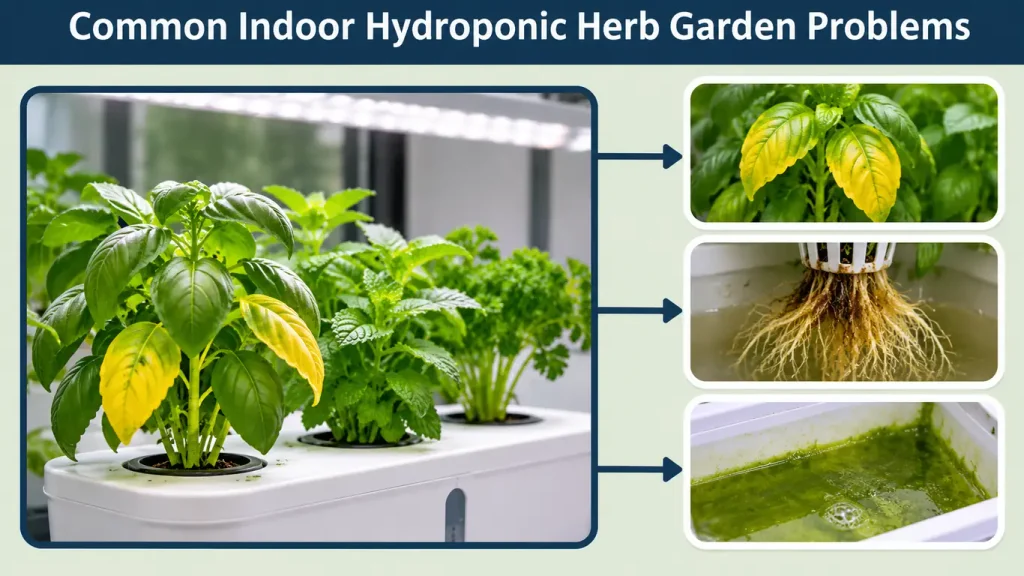
Even a well-maintained indoor hydroponic herb garden can experience occasional growing problems. Yellow leaves, weak stems, algae, and slow growth are common warning signs that environmental conditions need adjustment. Identifying the underlying cause is more effective than adding extra nutrients or water without testing. Careful observation helps restore healthy plant growth while preventing the same issues from recurring.
Why Are Hydroponic Herb Leaves Turning Yellow?
Yellow leaves may indicate nutrient imbalance, unsuitable pH, insufficient lighting, or unhealthy roots. Test the solution and examine the plant before making adjustments.
Why Are Herbs Growing Slowly?
Slow growth can result from weak lighting, low temperatures, or incorrect nutrient concentrations. Improving environmental stability and ensuring adequate light often supports healthier development.
How Can You Prevent Algae and Root Rot?
Keep light out of the nutrient reservoir and remove accumulated organic debris. Maintain appropriate aeration, avoid excessively warm solution temperatures, and replace contaminated water when necessary.
Tips for Growing a Successful Indoor Hydroponic Herb Garden
Successful hydroponic gardening depends on consistency rather than complicated techniques. Small improvements in lighting, plant spacing, and routine maintenance can significantly improve herb quality. Beginners benefit from observing plant responses and making gradual adjustments instead of changing several conditions simultaneously. Establishing a simple care routine makes the garden easier to manage and supports reliable harvesting throughout the year.
- Start With Easy Herbs: Grow basil, mint, or chives before experimenting with more demanding varieties.
- Avoid Overcrowding: Give plants enough space for proper airflow and leaf development.
- Monitor pH Regularly: Keep nutrient availability consistent by testing the solution.
- Provide Consistent Lighting: Use an automatic timer to maintain regular light and dark periods.
- Harvest Carefully: Remove manageable amounts of foliage while preserving enough leaves for continued growth.
FAQs
1. Can You Grow Herbs Hydroponically Indoors Without Sunlight?
Yes, herbs can grow indoors without direct sunlight when suitable LED grow lights provide adequate intensity and duration. Most culinary herbs need consistent daily lighting, along with appropriate nutrients, water, and temperature, to maintain healthy growth and leaf production.
2. What Is the Easiest Herb to Grow Hydroponically?
Basil is one of the easiest herbs to grow hydroponically because it responds well to consistent nutrients, warm temperatures, and adequate lighting. Mint and chives are also beginner-friendly choices that adapt well to indoor growing systems.
3. How Often Should You Change Hydroponic Water?
Many small hydroponic systems benefit from a complete nutrient solution replacement approximately every one to two weeks. However, the appropriate schedule depends on reservoir size, plant growth, water quality, and the manufacturer’s instructions.
4. Is an Indoor Hydroponic Herb Garden Expensive?
An indoor hydroponic herb garden can be relatively affordable, especially when using a basic DIY system. Automated countertop gardens cost more initially, but both options involve ongoing expenses for electricity, nutrients, replacement supplies, and occasional maintenance.
5. How Long Do Hydroponic Herbs Take to Grow?
Many fast-growing hydroponic herbs can provide their first modest harvest within approximately four to eight weeks after planting seeds. Growth varies with herb species, light intensity, temperature, nutrients, and whether the plants were started from seeds or established seedlings.