
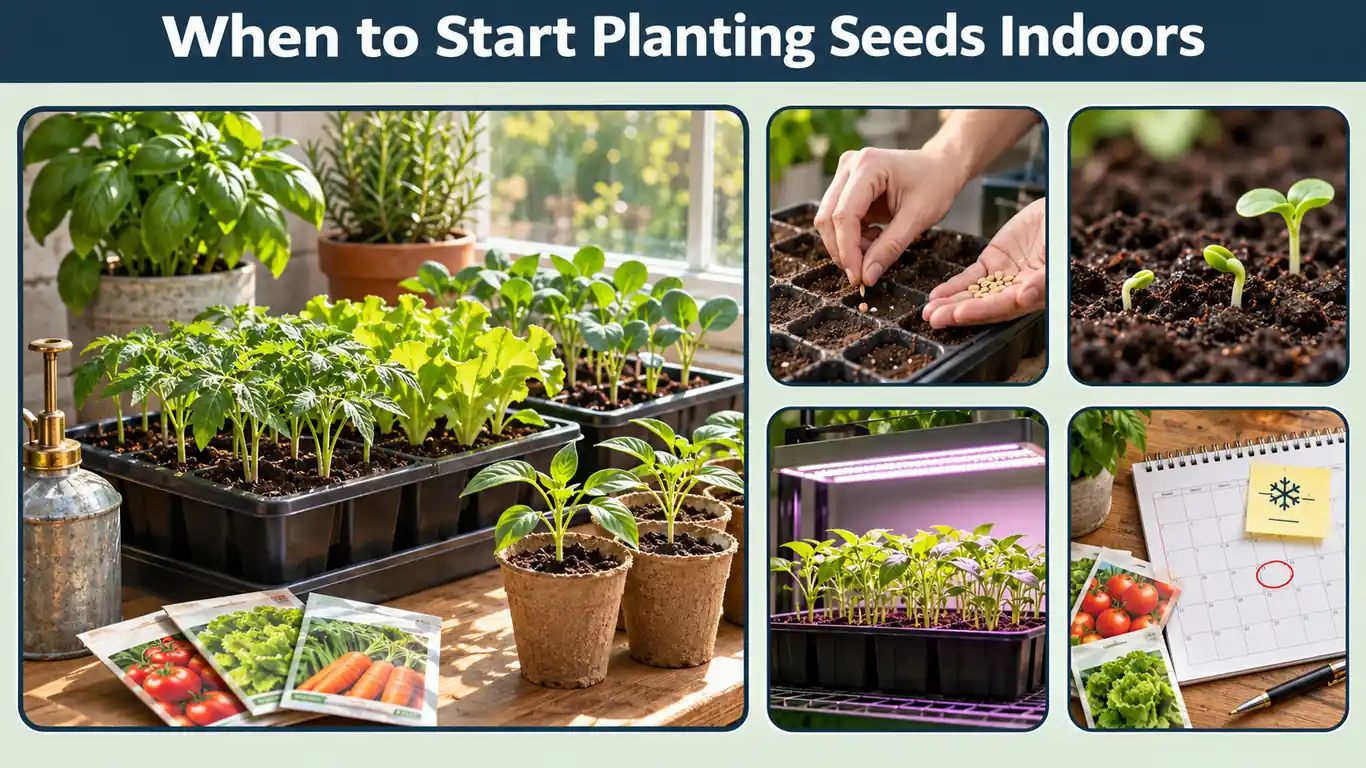
Knowing when to start planting seeds indoors can make a significant difference in plant growth and garden productivity. Starting seeds at the right time allows plants to develop strong roots and healthy leaves before being transplanted outdoors. However, the ideal planting schedule depends on plant varieties, local climate, and the last expected frost date. Most seeds should be started indoors four to eight weeks before transplanting. This guide explains the best planting times for vegetables, flowers, and herbs, along with practical tips for successful seed germination.
When Is the Best Time to Start Planting Seeds Indoors?
The best time to start planting seeds indoors is typically between late winter and early spring in temperate climates. However, not all plants require the same amount of indoor growing time. Some seeds germinate quickly, while others need several weeks to develop healthy roots and foliage before they are ready for outdoor planting.
Early-Season Planting
Slow-growing plants such as peppers, celery, onions, and certain perennial flowers benefit from early planting. These plants may require eight to twelve weeks of indoor growth before transplanting.
Mid-Season Planting
Tomatoes, broccoli, basil, and many annual flowers can be started approximately four to eight weeks before transplanting. This gives seedlings sufficient time to develop without becoming overcrowded.
Late-Season Planting
Fast-growing plants such as cucumbers, zucchini, pumpkins, and melons generally require only two to four weeks indoors. Starting these seeds too early can cause root crowding and transplant difficulties.
When to Start Seeds Indoors for Spring Planting
Starting seeds indoors for spring planting allows gardeners to get a head start before outdoor temperatures become suitable. The most effective approach is to work backward from the recommended outdoor planting date. Understanding your local climate, frost conditions, and plant requirements helps you create a reliable planting schedule and avoid unnecessary seedling stress.
- Identify the last frost date: Find the average last spring frost date for your area.
- Read seed packets: Check recommended germination conditions and indoor growing periods.
- Determine transplanting dates: Consider outdoor temperatures and frost tolerance.
- Count backward: Subtract the recommended growing period from the transplanting date.
- Prepare growing supplies: Arrange seed trays, potting mix, containers, and grow lights.
- Monitor weather conditions: Adjust transplanting dates when unexpected cold weather occurs.
For example, if your intended outdoor planting date is April 20, seeds requiring six weeks of indoor growth should be planted around March 9.
When to Start Planting Seeds Indoors Chart
Different plants have unique germination periods, temperature requirements, and growth rates. A seed-starting chart helps gardeners organize their planting schedules and manage available indoor growing space. The following table provides approximate indoor growing periods for popular vegetables, flowers, and herbs before they are ready to be transplanted into outdoor gardens or containers.
| Plant | Weeks Before Transplanting |
| Tomato | 6–8 weeks |
| Pepper | 8–10 weeks |
| Cucumber | 2–4 weeks |
| Eggplant | 8–10 weeks |
| Broccoli | 4–6 weeks |
| Lettuce | 3–4 weeks |
| Pumpkin | 2–4 weeks |
| Basil | 4–6 weeks |
| Parsley | 8–10 weeks |
| Thyme | 8–10 weeks |
| Lavender | 10–12 weeks |
| Marigold | 4–6 weeks |
| Zinnia | 4–6 weeks |
| Petunia | 10–12 weeks |
| Snapdragon | 8–10 weeks |
| Sunflower | 2–4 weeks |
These planting periods are general estimates. Always follow variety-specific seed packet instructions and adjust your schedule according to local growing conditions.
When to Start Planting Different Types of Seeds Indoors
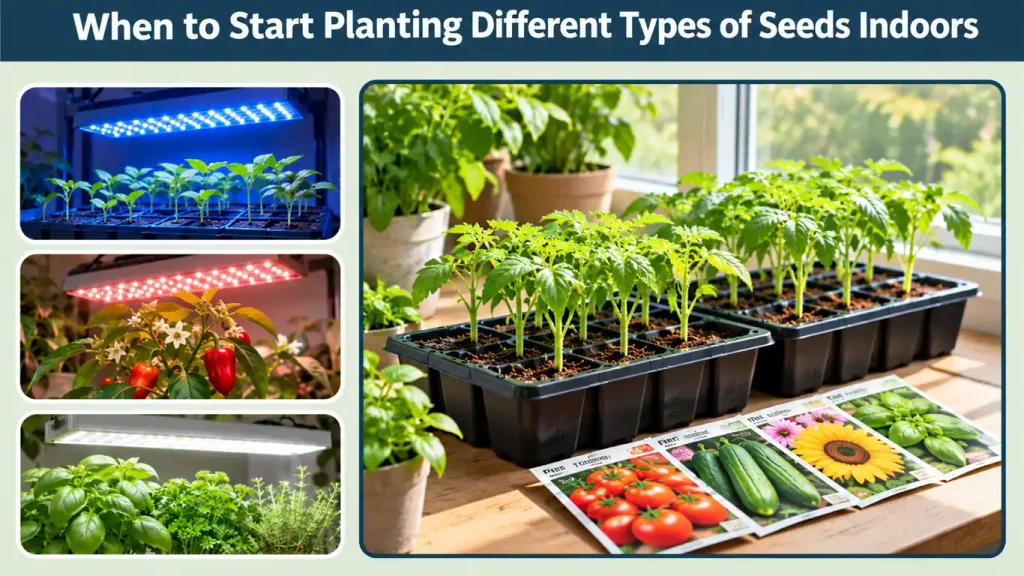
Vegetables, flowers, and herbs have different growing habits and environmental requirements. While some plants benefit from an extended indoor growing period, others germinate rapidly and prefer minimal root disturbance. Understanding these differences allows gardeners to select appropriate planting dates and provide each seed variety with the conditions needed for successful development.
When to Start Planting Vegetable Seeds Indoors
Most vegetable seeds can be started indoors four to eight weeks before transplanting. Slow-growing vegetables, including peppers and eggplants, require additional time, while root vegetables such as carrots and radishes generally perform better when directly sown outdoors.
When to Start Tomato Plants From Seeds Indoors
Start tomato seeds indoors approximately six to eight weeks before the intended outdoor planting date. Provide sufficient warmth during germination and strong lighting after seedlings emerge to encourage healthy stem and leaf development.
When to Start Planting Cucumber Seeds Indoors
Cucumber seeds should generally be started two to four weeks before transplanting. Use individual containers to minimize root disturbance, and wait until outdoor soil has warmed before planting seedlings in the garden.
When to Start Planting Flower Seeds Indoors
Most annual flowers benefit from four to twelve weeks of indoor growth. Marigolds and zinnias develop relatively quickly, while petunias and snapdragons require longer growing periods to become established.
When to Start Planting Herb Seeds Indoors
Herb seeds are commonly started indoors four to ten weeks before transplanting. Basil grows relatively quickly, while parsley, thyme, and lavender benefit from earlier planting because of their slower development.
When to Start Planting Seeds Indoors by Location
Climate conditions influence how early gardeners can begin planting seeds indoors. Northern regions generally experience longer winters and later frost dates, while warmer areas offer earlier outdoor planting opportunities. The following periods provide a broad spring seed-starting reference, although local frost dates and individual plant requirements should determine your final schedule.
| Location | General Seed-Starting Period |
| Michigan | February–April |
| Minnesota | February–April |
| Pennsylvania | February–April |
| Illinois | February–April |
| Massachusetts | February–April |
| New York | February–April |
| Ohio | February–April |
| Wisconsin | February–April |
| Pasco, Washington | January–March |
| Ontario, Canada | February–April |
| United Kingdom | February–April |
These approximate periods cover multiple plant varieties rather than specific sowing dates. Gardeners should consult local planting calendars, particularly in areas with considerable differences in elevation and climate.
What Do You Need to Start Planting Seeds Indoors?
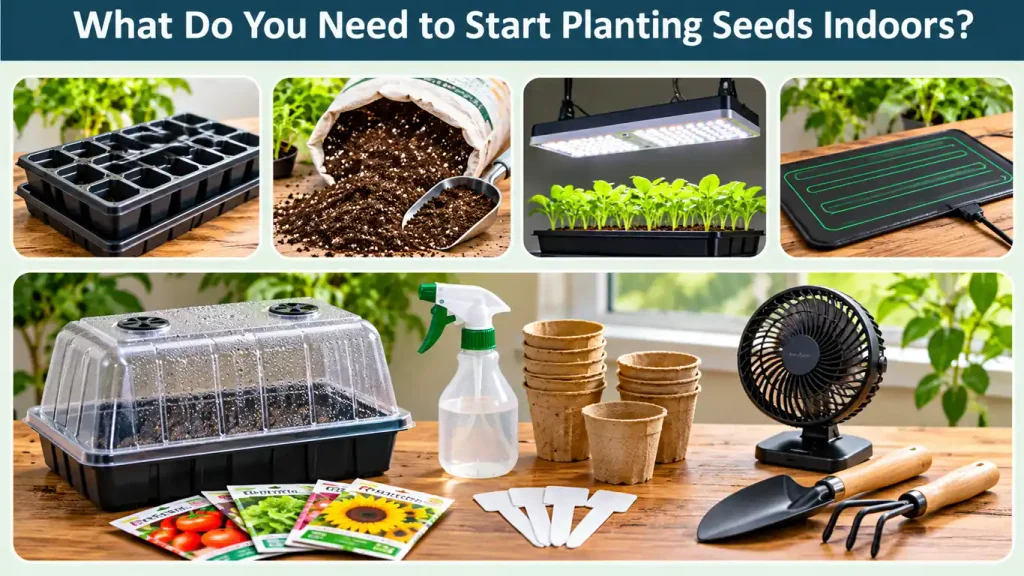
Successful indoor seed starting requires a suitable growing environment that supports germination and healthy seedling development. Expensive equipment is not always necessary, but proper containers, growing medium, lighting, and moisture management are essential. Preparing these supplies before planting helps prevent unnecessary delays and creates consistent conditions for young plants.
- Seed trays: Choose containers with adequate drainage holes.
- Seed-starting mix: Use a lightweight, clean, well-draining growing medium.
- Grow lights: Provide consistent lighting when sunlight is insufficient.
- Heating mat: Maintain suitable germination temperatures for heat-loving plants.
- Humidity dome: Retain moisture until seeds begin germinating.
- Spray bottle: Moisten the growing medium without disturbing seeds.
- Plant labels: Identify different plant varieties and sowing dates.
- Small fan: Encourage gentle air circulation around seedlings.
How to Start Planting Seeds Indoors Successfully
Growing plants from seeds indoors involves several simple steps, from preparing containers to caring for emerging seedlings. Maintaining consistent moisture, suitable temperatures, and sufficient light encourages strong development. Following a structured planting process also reduces common problems such as poor germination, overcrowding, fungal diseases, and weak seedlings.
1. Prepare the Seed-Starting Mix
Fill containers with a pre-moistened seed-starting mix. Leave enough space at the top for planting and watering without compacting the growing medium excessively.
2. Plant the Seeds
Sow one or two seeds per cell according to the recommended planting depth. Some seeds require light for germination and should remain uncovered or only lightly covered.
3. Maintain Warmth and Moisture
Keep the growing medium consistently moist without becoming waterlogged. Provide the recommended germination temperature for each plant variety.
4. Provide Sufficient Lighting
Once seedlings emerge, provide approximately 14–16 hours of daily grow light when needed. Adjust the light position as plants grow to prevent weak, elongated stems.
5. Prepare Seedlings for Transplanting
Gradually introduce seedlings to outdoor sunlight, wind, and temperature changes over seven to fourteen days. This process, known as hardening off, helps reduce transplant shock.
Common Mistakes When Starting Seeds Indoors
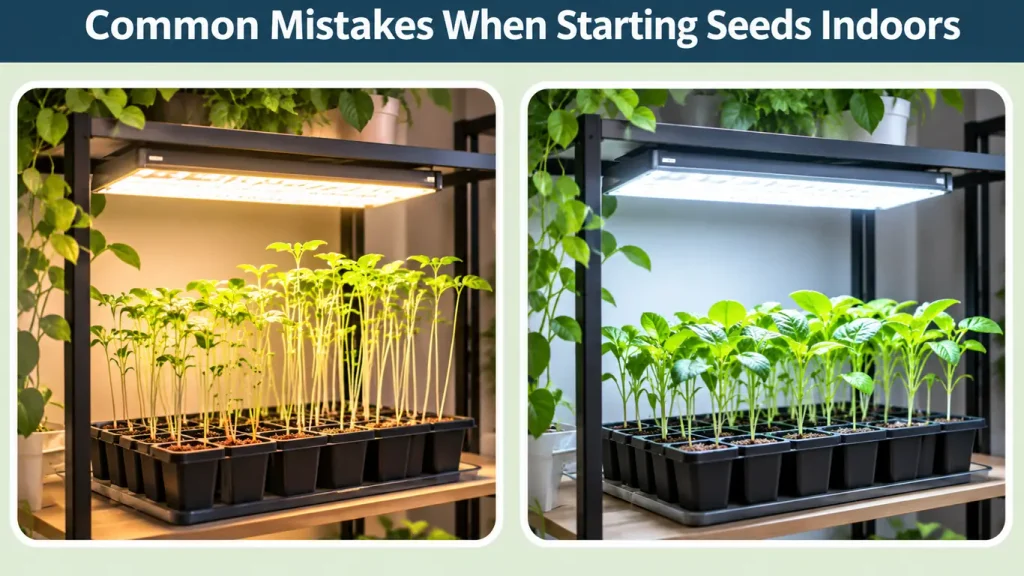
Even experienced gardeners can encounter problems when growing plants from seeds indoors. Starting too early, providing insufficient lighting, and maintaining excessive moisture are common issues that affect seedling quality. Recognizing these mistakes early helps gardeners improve germination rates and produce healthier plants that adapt successfully to outdoor growing conditions.
- Starting seeds too early: Causes oversized or root-bound seedlings.
- Insufficient lighting: Results in tall, weak, and leggy plants.
- Overwatering: Increases the risk of damping-off disease and root damage.
- Planting seeds too deeply: May prevent successful germination.
- Overcrowding seedlings: Creates competition for light, nutrients, and space.
- Skipping hardening off: Exposes tender seedlings to sudden environmental changes.
- Transplanting too early: Increases the risk of frost and cold damage.
FAQs
1. What month should I start planting seeds indoors?
February and March are common months for starting seeds indoors in temperate climates. However, slow-growing plants may require January planting, while fast-growing varieties can be started in April. Your local climate and intended transplanting date determine the ideal timing.
2. Is it too early to start seeds indoors in January?
January is suitable for starting slow-growing plants such as onions, celery, and certain flowers. However, it may be too early for cucumbers, squash, and other fast-growing plants, particularly in regions with late spring frost dates.
3. How many seeds should I plant per container indoors?
Plant one or two seeds per cell for most vegetable and flower varieties. If both seeds germinate, remove the weaker seedling when appropriate. Older seeds with lower germination rates may require additional seeds per container.
4. How do I prevent leggy seedlings when starting seeds indoors?
Provide sufficient lighting, avoid excessive temperatures, and maintain appropriate spacing between seedlings. Position grow lights at the manufacturer’s recommended distance and provide gentle airflow to encourage stronger stems and compact plant growth.
5. Can I start planting seeds indoors throughout the year?
Yes, seeds can be started indoors throughout the year with suitable lighting, temperature, moisture, and growing space. However, plants intended for outdoor gardens should be started according to seasonal conditions and their specific transplanting requirements.