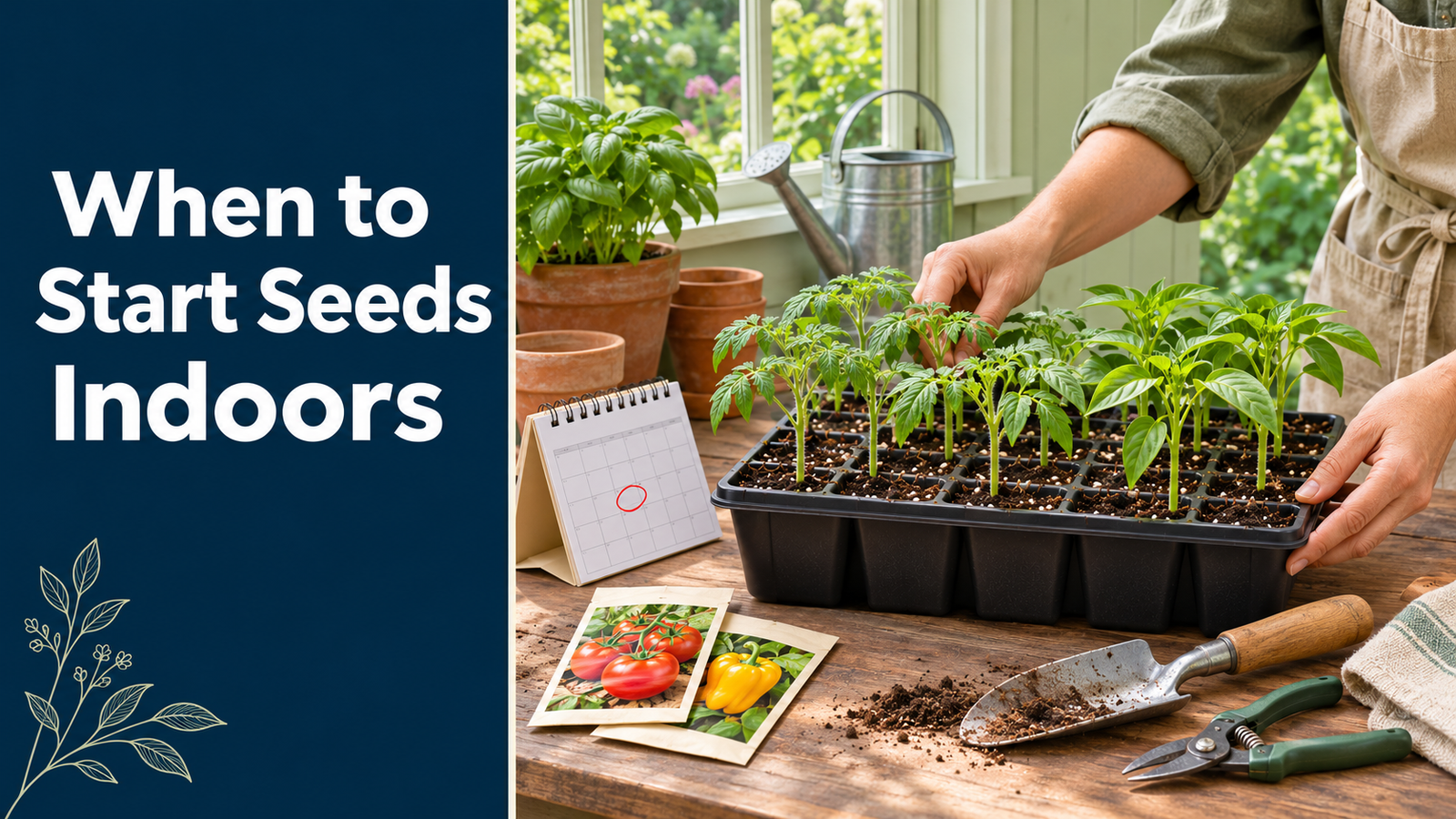
Starting seeds indoors gives many vegetables and flowers time to grow before the outdoor season begins. The right date depends on your local frost timing, the crop, and how long its seedlings should grow inside. Instead of following a calendar date meant for another region, use your expected planting date and count backward using the seed packet. This approach helps you raise healthy seedlings that are ready for the garden when the weather and soil suit them.
The easiest way to choose a start date
For most garden seeds, work backward from the date you expect to transplant seedlings outdoors. First, find your area’s average last spring frost date. Then check the seed packet for how many weeks before that date to sow indoors. If the packet says six weeks, count back six weeks from your expected outdoor planting date.
The average last frost date is a planning guide. It does not guarantee that frost cannot happen afterward, and it does not mean every crop should go outside as soon as the date passes. Some plants tolerate cool conditions; others need warm soil and settled weather.
Count back from planting day
Suppose you expect to plant tomatoes outside around May 15 and the packet recommends sowing six weeks beforehand. Your indoor start date would be around the beginning of April. If you are growing peppers that need a longer indoor period, you might start them earlier.
Use the crop’s recommended transplant date when counting backward. For tender plants, that date is usually after frost danger has passed and once temperatures are suitable. For cool-season crops, it may be earlier. Local planting calendars and the seed packet can help you estimate the right date.
Treat frost dates as estimates
Frost dates vary by location, elevation, and nearby buildings or bodies of water. A city’s average may not match your yard. A low-lying garden can stay colder than a sunny, sheltered spot nearby.
Use the average date to plan, then check the forecast before moving seedlings outdoors. If a cold snap is expected, keep tender plants inside or protect them. A few days of patience can prevent frost damage to seedlings you have cared for indoors.
Indoor seed-starting schedule by crop
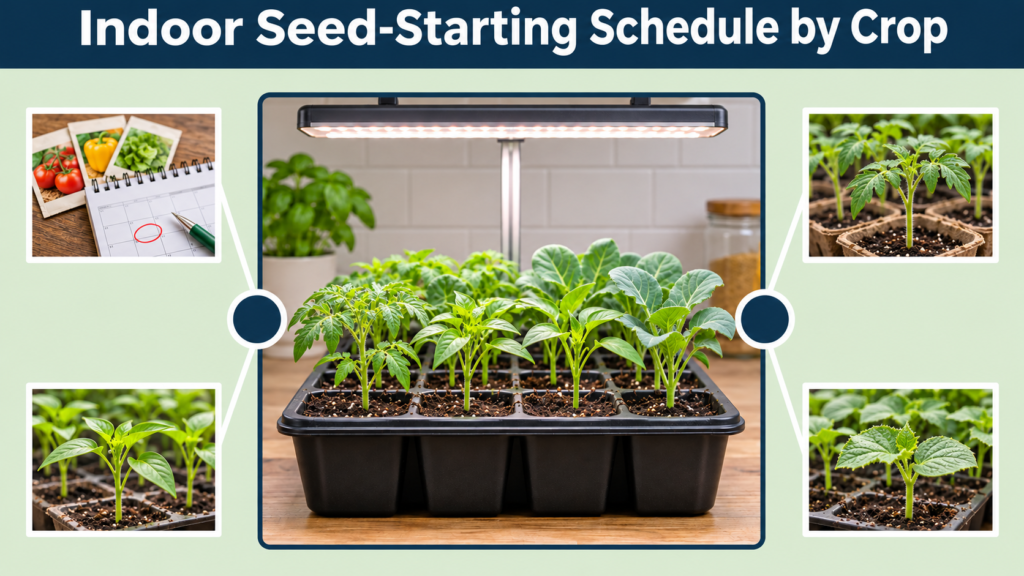
The schedule below is a general guide for gardens with a spring frost. “Weeks before outdoor planting” is more useful than a fixed month because spring comes at different times in different regions. Follow the packet if its timing differs.
| Crop | General indoor sowing time |
|---|---|
| Onions and leeks | 10–12 weeks before planting outdoors |
| Celery | 10–12 weeks |
| Peppers and eggplants | 8–10 weeks |
| Broccoli, cabbage, and cauliflower | 6–8 weeks |
| Tomatoes | 5–7 weeks |
| Lettuce | 4–6 weeks |
| Cucumbers, squash, and melons | 2–4 weeks |
These ranges are starting points. The variety, growing conditions, and local climate can change how long seedlings should stay indoors. For example, one regional schedule may recommend starting tomatoes earlier than another because its outdoor season begins later.
Slow-growing crops need an earlier start
Onions, leeks, and celery can take longer to develop into sturdy transplants. Starting them indoors well ahead of planting day gives them time to grow before they move outside.
Peppers and eggplants also tend to need a longer indoor start than many garden vegetables. If you sow them too late, they may have less time to establish before the season changes. Check each packet for the recommended number of weeks and expected germination time.
Fast-growing crops need less time indoors
Cucumbers, squash, and melons grow quickly once they have warm conditions. They often need only a short indoor start, if one is needed at all. Starting them too early can leave you with large, crowded seedlings before outdoor conditions are ready.
For these crops, direct sowing outdoors may be simpler when the soil is warm enough. If you do start them inside, use containers that allow you to move the seedlings with minimal root disturbance.
Which seeds should you start indoors?
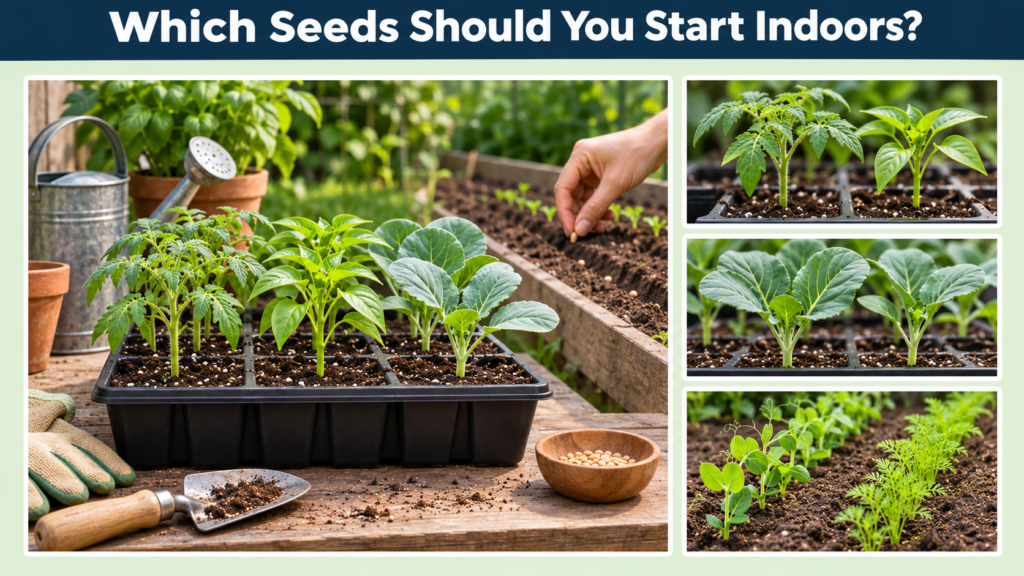
Indoor sowing is useful for plants that need a long growing season, grow slowly, or are commonly planted as transplants. It can also help you grow varieties that are not easy to find at local garden centers. But starting every seed indoors is unnecessary, and some plants do better when sown where they will grow.
Good candidates for an indoor start
Tomatoes, peppers, and eggplants are common indoor-start crops because they need warm weather and a long frost-free season. Broccoli, cabbage, and cauliflower are also often started indoors, especially when gardeners want young transplants ready for an early planting.
Onions and leeks can benefit from a longer indoor growing period. Many annual flowers and herbs can also be started inside, but their timing varies widely. Check the packet for each variety rather than assuming all flowers or herbs follow the same schedule.
Seeds often sown directly outdoors
Carrots, radishes, peas, beans, and corn are commonly planted directly in the garden. Some grow quickly enough that an indoor start adds little benefit; others can be harder to transplant without damaging their roots.
Look for instructions such as “direct sow” on the packet. If it recommends sowing outdoors, follow that advice unless you have a specific reason to start the seeds another way. Planting at the right time and depth outdoors is often easier than managing extra seedlings inside.
Build a seed-starting calendar that works
A simple calendar can keep several crops on schedule. Write down when you expect each crop to go outside, then count backward by the number of weeks on its packet. Include time for the seedlings to adjust to outdoor conditions before planting.
Record dates for each crop
Make a short list of what you plan to grow. For each crop, note the indoor sowing date, expected germination time, and estimated outdoor planting date. Add a reminder to check seedlings and begin hardening them off before transplanting.
If you are growing several varieties of one crop, check each packet. A compact tomato variety and a long-season pepper, for example, may have different recommendations. Keeping the packets with your calendar makes it easier to confirm details as the season progresses.
Plan for hardening off
Seedlings raised indoors are not used to outdoor sunlight, wind, and temperature changes. Before transplanting, gradually expose them to outdoor conditions. This process, called hardening off, usually takes about a week.
Begin with a short period in a sheltered spot, then increase the time outside over several days. Avoid exposing tender seedlings to harsh midday sun, strong wind, or cold temperatures right away. Bring them back inside if the weather turns unsuitable.
Avoid starting seeds too early
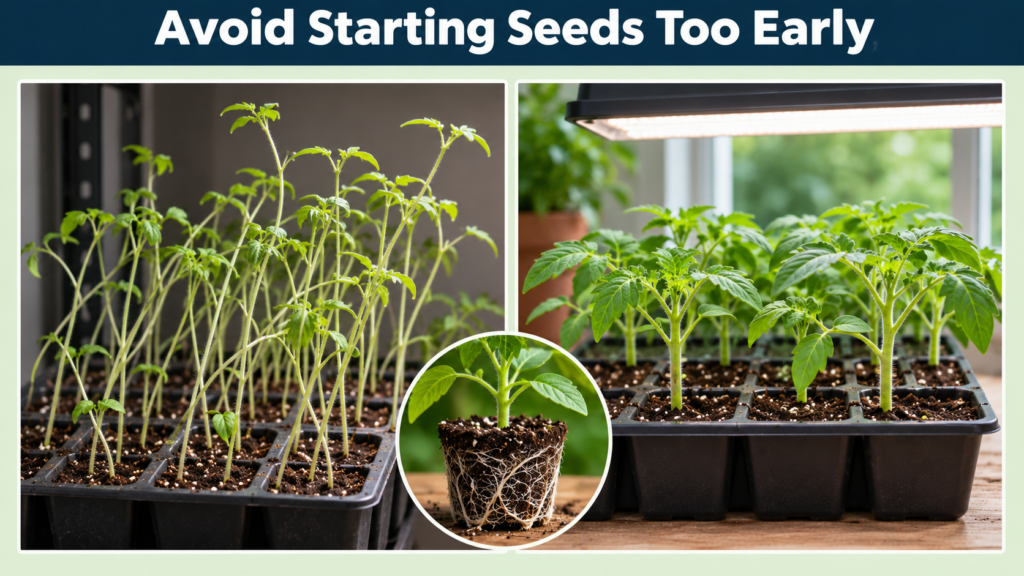
Sowing early can feel like a head start, but seedlings can become difficult to manage if they stay indoors too long. They may outgrow their containers, become crowded, or develop weak, stretched stems. A large seedling is not automatically a stronger one.
If you have already started seeds early, give them bright light and enough room. Move them into larger containers if their roots fill the cells, and water when the growing mix needs it. Keep them indoors until outdoor weather is suitable for the crop, then harden them off before transplanting.
Give seedlings enough light
Light is essential once seeds emerge. A bright window may work for some seedlings, but plants that need several weeks indoors—such as tomatoes and peppers—can become tall and weak if light is inadequate. An overhead grow light can provide more consistent coverage.
Keep lights close enough to illuminate seedlings without overheating them, and adjust them as plants grow. Rotate trays if the light comes from one side of a window. Strong, steady light helps seedlings grow more compactly.
Use the right containers and moisture
Start seeds in clean containers with drainage holes and a seed-starting mix. Follow the packet for sowing depth; some seeds need light to germinate, while others should be covered. Label each container so you know what you planted and when.
Keep the mix evenly moist, not soaked. Once seedlings appear, avoid letting them dry out completely, but do not leave containers standing in water. Crowded seedlings compete for light and space, so thin them as needed by snipping the weaker ones at soil level.
FAQs
When should I start tomato seeds indoors?
A useful general range is five to seven weeks before you plan to transplant tomatoes outside. Check the packet and local frost timing. Plant outdoors only after frost danger has passed and conditions are warm enough for tomatoes.
How do I calculate when to start seeds indoors?
Find your expected outdoor planting date, then count backward by the number of weeks listed on the seed packet. Include about a week for hardening off before transplanting, and adjust if local weather delays planting.
Is it better to start seeds early?
Not necessarily. Seeds started too early may grow large before outdoor conditions are suitable. They can become crowded or weak if kept indoors for too long. Starting close to the packet’s recommended schedule usually makes seedlings easier to manage.
Can I start all vegetable seeds indoors?
No. Many crops, including carrots, radishes, peas, and beans, are commonly sown directly outdoors. Some grow quickly, while others are difficult to transplant. Check the packet to see whether indoor starting is recommended.
Do seedlings need a grow light?
Seedlings need bright light after they emerge. A sunny window may be enough for some plants, but long-season seedlings can stretch when light is weak. An overhead grow light can help provide consistent light indoors.