
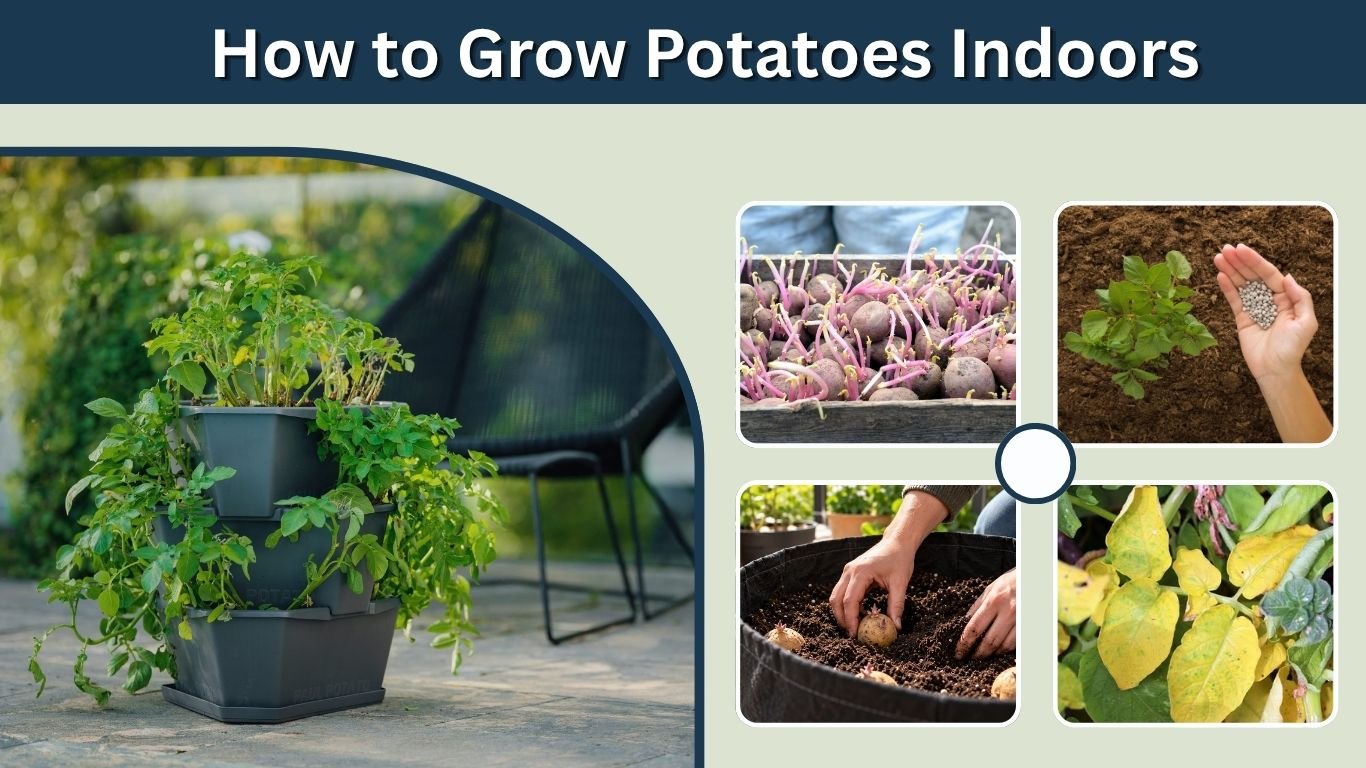
Growing potatoes indoors is a practical way to enjoy homegrown vegetables without a traditional garden. Whether you live in an apartment or want fresh potatoes during winter, container gardening makes indoor cultivation possible. Learning how to grow potatoes indoors requires proper seed potatoes, a deep container, nutrient-rich soil, and sufficient lighting. With suitable growing conditions, potato plants can produce healthy tubers inside your home. This guide explains everything from planting potatoes in pots and buckets to watering, fertilizing, troubleshooting, and harvesting your indoor potato crop successfully.
Can You Grow Potatoes Indoors Successfully?
Yes, potatoes can grow indoors when provided with adequate light, space, moisture, and suitable temperatures. Unlike many small houseplants, potatoes require significant growing room because their edible tubers develop underground. Indoor cultivation works best with compact or early-maturing potato varieties planted in large containers. Although indoor yields may be smaller than outdoor harvests, suitable conditions can produce healthy, edible potatoes.
Why Grow Potatoes Indoors?
Growing potatoes indoors allows gardeners to manage their growing environment without depending entirely on outdoor weather.Indoor cultivation also makes it easier to monitor watering, soil quality, and plant health. Gardeners living in apartments can use large containers or grow bags instead of traditional vegetable beds.However, potatoes need strong lighting for healthy growth. A sunny window alone may not provide sufficient light, particularly during winter. Supplemental grow lights can improve growth and tuber production.
What Do You Need to Grow Potatoes Indoors?
Before planting potatoes indoors, choosing suitable supplies helps create the conditions necessary for healthy growth. Potato plants develop extensive roots and underground tubers, so containers must provide adequate depth and drainage. The growing medium should retain moisture without remaining waterlogged. Selecting certified seed potatoes and appropriate lighting equipment can also improve success, especially when growing in apartments with limited natural sunlight.
Essential Supplies for Indoor Potato Growing
- Certified seed potatoes: Choose disease-free potatoes from a reputable garden supplier.
- Large container: Use a 10–15-gallon pot, bucket, or grow bag with drainage holes.
- Quality potting mix: Select loose, fertile, well-draining soil.
- Grow light: Use a suitable full-spectrum LED grow light when natural sunlight is insufficient.
- Balanced fertilizer: Choose fertilizer appropriate for container vegetables.
- Watering can: Use one that allows controlled watering.
- Drainage tray: Protect indoor floors from excess water.
How to Grow Potatoes Indoors Step by Step
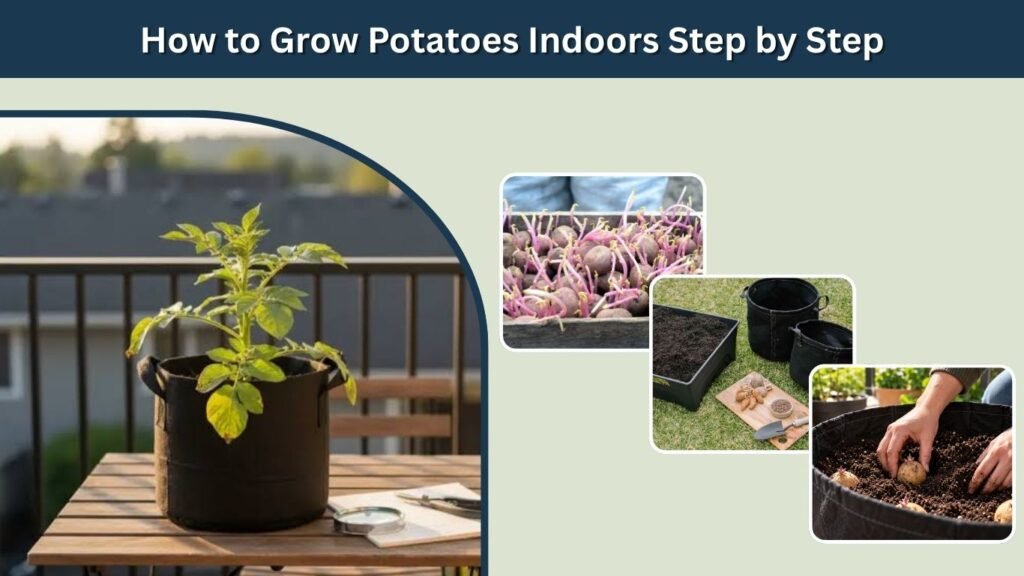
Learning how to grow a potato plant indoors starts with preparing healthy seed potatoes and a suitable container. Potatoes develop new shoots from small buds called eyes, which eventually produce stems and leaves. Underground stolons then form edible tubers under favorable growing conditions. Proper planting depth, spacing, and lighting are essential for successful development. Follow these steps to establish a productive indoor potato plant.
Step 1: Choose the Right Seed Potatoes
Select certified disease-free seed potatoes rather than ordinary grocery-store potatoes, which may carry diseases.Early-maturing varieties, including suitable fingerling and small red potatoes, are practical choices for containers.Look for firm seed potatoes with healthy eyes. Avoid soft, moldy, or severely damaged potatoes.
Step 2: Prepare the Seed Potatoes
Small seed potatoes can usually be planted whole. Larger potatoes may be divided into pieces weighing approximately 1.5–2 ounces, each containing at least one healthy eye.Allow cut surfaces to dry for one or two days before planting. This helps reduce the likelihood of rotting.Avoid damaging the growing buds during preparation.
Step 3: Prepare the Container
Choose a large container with multiple drainage holes.Add approximately 4–6 inches of well-draining potting mix to the bottom. Avoid using heavy garden soil, which can compact inside containers.Position the container where excess water can drain safely without damaging flooring.
Step 4: Plant the Potatoes
Place one or two seed potatoes in a suitably sized container, spacing them so each plant has room to develop.Position the eyes facing upward and cover the seed potatoes with approximately 3–4 inches of potting mix.Water gently to moisten the growing medium without saturating it.
Step 5: Provide Light and Maintain Growth
Position the container beneath a strong grow light or near a location receiving at least six to eight hours of direct sunlight.As stems grow, gradually add potting mix around their lower portions while leaving the upper leaves exposed.This process, called hilling, helps protect developing potatoes from light exposure and greening.
Best Indoor Growing Conditions for Potatoes
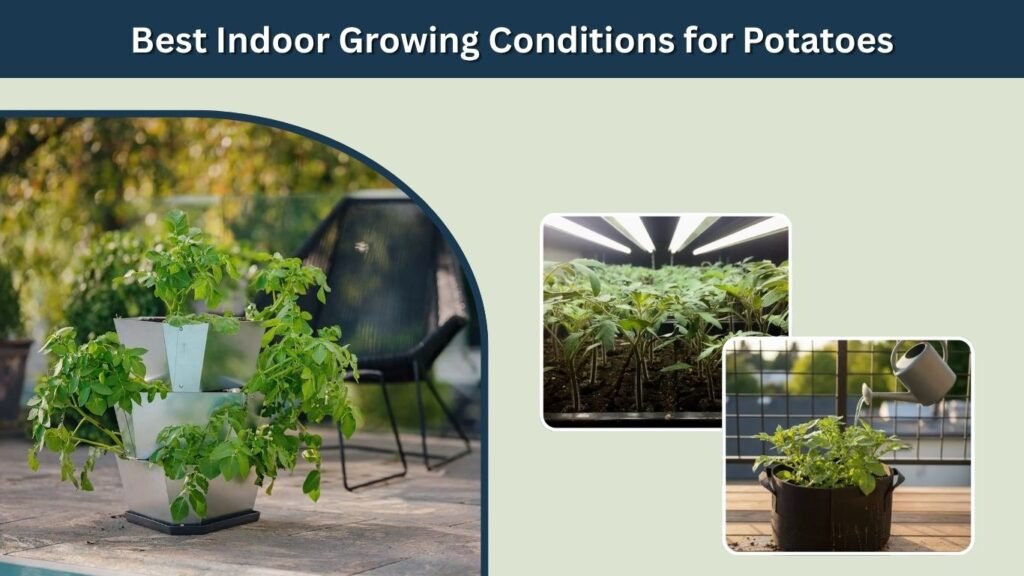
Potato plants require a balanced environment for healthy foliage and underground tuber development. Although they tolerate relatively cool conditions, excessive heat can interfere with potato formation. Indoor gardeners should pay particular attention to lighting because insufficient illumination often produces weak stems and poor harvests. Proper soil moisture, ventilation, and container drainage also contribute to successful growth throughout the potato plant’s development.
Light Requirements
Potatoes grow best with at least six to eight hours of strong direct sunlight daily.When growing entirely indoors, full-spectrum LED grow lights are often necessary. Approximately 12–16 hours of supplemental lighting daily is a practical starting point, depending on light intensity.Keep grow lights at the manufacturer’s recommended distance to prevent leaf damage.
Temperature and Humidity
Maintain daytime temperatures around 60–75°F (16–24°C) when possible.Potato plants generally produce tubers more successfully in cooler conditions than many tropical vegetables. Excessively warm soil, particularly above approximately 80°F (27°C), can inhibit tuber development.Normal indoor humidity is generally sufficient when watering and ventilation are properly managed.
Soil and Water Requirements
Use loose, fertile potting mix with good drainage.Keep the soil evenly moist during active growth, especially when tubers begin developing.Avoid allowing the container to remain waterlogged. Excess moisture may cause root diseases or tuber rot.
How to Grow Potatoes in Containers Indoors
Container gardening offers several practical methods for growing potatoes inside apartments and homes. The most suitable option depends on available space, container size, and lighting conditions. Pots, buckets, and fabric grow bags can all support potato growth when properly prepared. Each method requires drainage, sufficient soil volume, and room for developing tubers. Choosing a suitable container also makes harvesting easier.
Growing Potatoes in a Bucket Indoors
A large food-safe bucket can provide a practical growing container.Drill adequate drainage holes into the bottom, add potting mix, and plant a small number of seed potatoes based on available space.A five-gallon bucket generally works best for one compact potato plant, while larger containers provide more growing room.
Growing Potatoes in Grow Bags Indoors
Fabric grow bags allow good drainage and air movement around the growing medium.Choose a bag approximately 10–15 gallons in capacity. Fill it partially, plant the seed potatoes, and add more soil as stems develop.Place the grow bag on a waterproof tray to collect drainage water.
Growing Potatoes Indoors Without Soil
Potatoes can be grown using specialized hydroponic or aeroponic systems, but these methods require more equipment and careful management.A complete setup must supply water, nutrients, oxygen, and adequate darkness around developing tubers.Placing a potato in a glass of water may encourage sprouting, but it is not a reliable method for producing a substantial edible harvest.
How to Care for Indoor Potato Plants
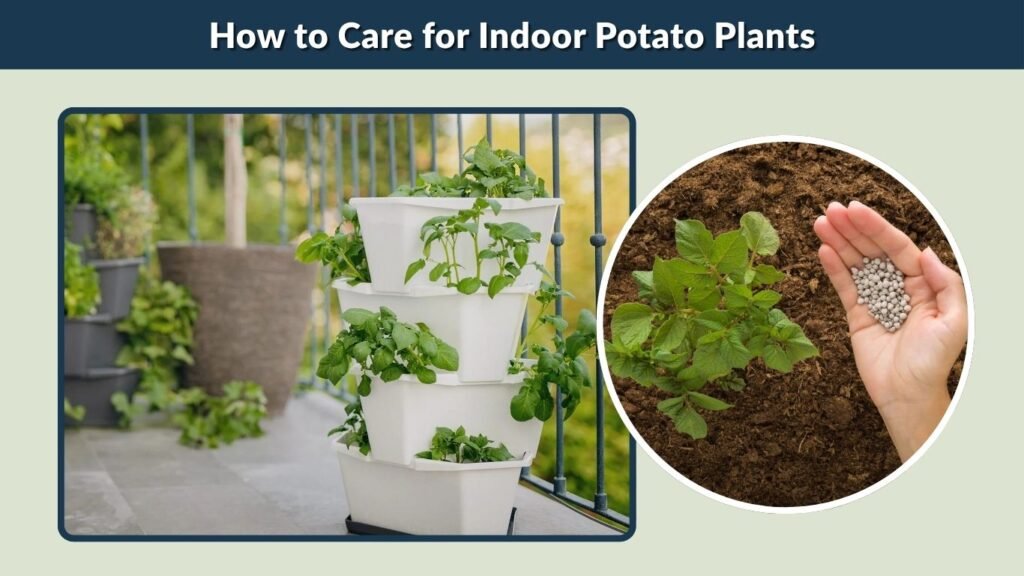
Consistent maintenance is important after potato shoots emerge. Healthy plants require adequate nutrients, controlled watering, and protection from pests and diseases. Potatoes can grow quickly under favorable conditions, but crowded roots, poor lighting, and excessive fertilizer may reduce yields. Regular observation makes it easier to recognize problems before they damage the crop. Proper care also supports healthy underground tuber development.
Fertilizing Indoor Potato Plants
Potatoes require sufficient nutrients, particularly potassium, to support healthy growth and tuber production.Use a balanced vegetable fertilizer according to the product instructions and the nutrients already present in the potting mix.Avoid excessive nitrogen fertilization because it can encourage leafy growth at the expense of tuber development.
Monitoring Plant Growth
Check leaves regularly for yellowing, wilting, pest activity, and unusual spots.Maintain good airflow around the plants and remove severely damaged or diseased foliage when necessary. Avoid excessive pruning of healthy leaves because they produce the energy required for tuber development.
Common Problems When Growing Potatoes Indoors
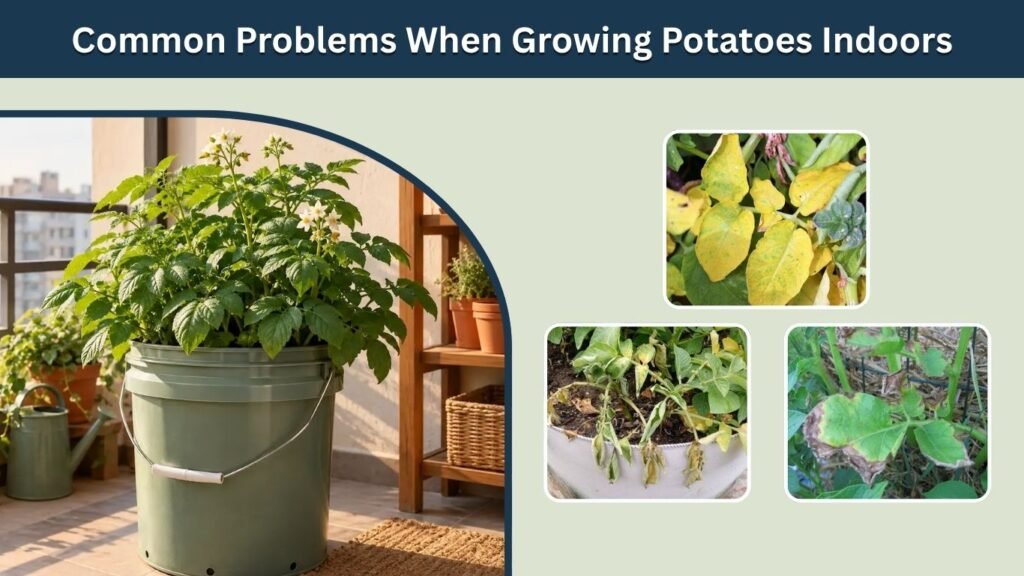
Indoor potato plants sometimes develop problems when growing conditions become unsuitable. Insufficient light, excessive watering, and overly warm temperatures can interfere with normal development. Understanding the causes of common symptoms makes troubleshooting easier. Many problems can be corrected through adjustments to watering, lighting, or ventilation. Regular inspection is especially important because container-grown plants depend entirely on the conditions provided by the gardener.
Common Potato Growing Problems and Solutions
- Yellowing leaves: Check soil moisture, nutrient availability, and natural plant maturity.
- Weak, stretched stems: Increase light intensity or improve grow-light positioning.
- No potato tubers: Check for insufficient lighting, excessive heat, or nutrient imbalance.
- Rotting seed potatoes: Improve drainage and avoid overwatering.
- Brown leaf edges: Investigate irregular watering, fertilizer buildup, and temperature stress.
- Green potatoes: Keep developing tubers fully covered with soil and discard green potatoes.
How Long Does It Take to Grow Potatoes Indoors?
Potatoes typically require approximately 90–120 days to reach maturity, although early varieties and smaller new-potato harvests may require less time. Indoor growth rates depend on lighting, temperature, variety, and overall plant health. Gardeners may harvest small young potatoes before the crop reaches full maturity. Waiting until the foliage naturally yellows and dies back generally allows larger, more mature tubers to develop.
When Are Indoor Potatoes Ready to Harvest?
Small new potatoes may be ready approximately six to eight weeks after planting when growing conditions are favorable.For mature potatoes, wait until the foliage begins yellowing and eventually dies back.Growth may take longer indoors when lighting is inadequate or temperatures are unsuitable.
How to Harvest Potatoes From Indoor Containers
Stop watering once the foliage has died back and the soil begins drying.Carefully tip the container onto a clean surface or gently loosen the soil to expose the potatoes.Remove the tubers without cutting or bruising them. Brush away loose soil, inspect for damage, and store suitable mature potatoes somewhere cool, dark, and well-ventilated.
FAQs
1. Can You Grow Potatoes Indoors During Winter?
Yes, potatoes can grow indoors during winter with suitable temperature control and strong supplemental lighting. Full-spectrum grow lights are often necessary because winter sunlight may be insufficient. Proper soil moisture, ventilation, and adequate container space also support healthy development.
2. How Long Does It Take to Grow Potatoes Indoors?
Most potato varieties require approximately 90–120 days to mature, although small new potatoes may be harvested earlier. Growing time depends on variety, light exposure, temperature, and soil conditions. Poor indoor lighting can significantly delay development and reduce harvest size.
3. Can You Grow Potatoes Indoors From a Potato?
Yes, potatoes can grow from seed-potato pieces containing healthy eyes. Certified disease-free seed potatoes are recommended because ordinary supermarket potatoes may carry diseases. Plant the pieces in well-draining potting mix and provide strong lighting, moisture, and suitable temperatures.
4. Can You Grow Potatoes Indoors in Water?
Potatoes can sprout in water, but producing edible tubers requires a properly designed hydroponic or aeroponic growing system. Simply suspending a potato in water is unlikely to provide the oxygen, nutrients, darkness, and growing conditions necessary for a successful harvest.
5. Can You Grow Sweet Potatoes Indoors the Same Way?
Sweet potatoes require a different growing approach. Unlike regular potatoes, they are normally propagated using slips, which are shoots developed from mature sweet potato roots. They also prefer warmer temperatures and generally require a longer growing season to produce substantial harvests.