
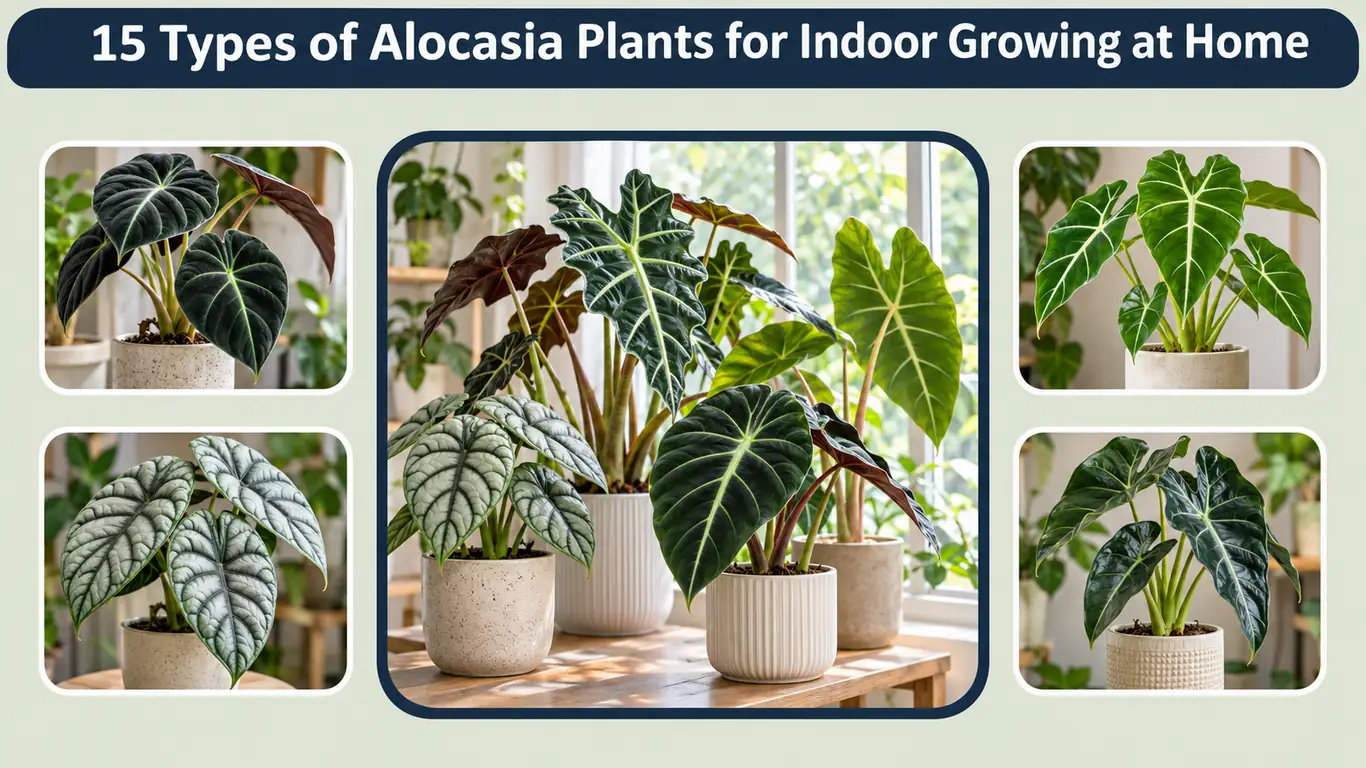
Alocasia plants are popular indoor houseplants known for their stunning foliage, unique leaf shapes, and striking colors. From the velvety Black Velvet to the eye-catching Silver Dragon, different types of Alocasia plants bring tropical beauty to any indoor space. Whether you prefer compact varieties or large statement plants, these 15 Alocasia varieties offer beautiful options for growing indoors with proper care and suitable conditions.
1. Alocasia Polly (African Mask Plant)

Alocasia Polly is a popular tropical houseplant known for its dramatic, arrow-shaped leaves, deep green color, and striking silvery-white veins. Its glossy foliage and wavy leaf edges make it an attractive choice for indoor plant collections. This compact Alocasia variety grows well in containers and adds a bold tropical appearance to bedrooms, living rooms, and other indoor spaces with suitable growing conditions.
Identification
- Scientific Name: Alocasia × amazonica ‘Polly’
- Common Name: African Mask Plant
- Plant Type: Tropical perennial
- Height: Approximately 1–2 feet indoors
- Leaf Color: Dark green with prominent pale veins
- Leaf Shape: Arrow-shaped with wavy edges
- Light Requirements: Bright, indirect sunlight
- Toxicity: Toxic to cats, dogs, and humans if ingested
Growing Conditions
Alocasia Polly thrives in warm, humid indoor environments with bright, indirect sunlight. Direct afternoon sunlight can scorch its delicate leaves, while insufficient light may slow growth and reduce foliage production. Place the plant near an east-facing window or a few feet away from a bright south-facing window.
Maintain indoor temperatures between 65°F and 80°F (18°C–27°C) and provide well-draining, airy potting soil. A mixture containing potting soil, orchid bark, and perlite helps retain moderate moisture without keeping the roots waterlogged.
Care and Maintenance
Water Alocasia Polly when the top inch of soil feels slightly dry, allowing excess water to drain completely. The plant prefers consistently light moisture but may develop root rot if left in soggy soil. Higher humidity, ideally around 60% or above, supports healthy leaf development and helps prevent dry, brown edges.
During spring and summer, apply a balanced liquid houseplant fertilizer at a diluted strength every four to six weeks. Remove damaged or yellowing leaves with clean pruning shears and occasionally wipe the foliage to remove dust. Growth may slow significantly during winter, so reduce watering and avoid unnecessary fertilization during this period.
2. Alocasia Amazonica

Alocasia Amazonica is a striking tropical houseplant recognized for its large, arrow-shaped leaves, glossy dark green surfaces, and prominent silvery-white veins. Its dramatic foliage creates a bold appearance that complements modern indoor spaces. Often called the African Mask Plant, this hybrid is especially popular among indoor plant enthusiasts because of its distinctive leaf patterns and elegant upright growth. With proper lighting, humidity, and watering, Alocasia Amazonica can become an impressive decorative plant.
Identification
- Scientific Name: Alocasia × amazonica
- Common Name: African Mask Plant
- Plant Type: Tropical evergreen perennial
- Height: Approximately 2–3 feet indoors
- Leaf Color: Deep green with silvery-white veins
- Leaf Shape: Arrow-shaped with wavy edges
- Light Requirements: Bright, indirect sunlight
- Toxicity: Toxic to humans and pets if ingested
Growing Conditions
Alocasia Amazonica grows best in warm indoor environments with filtered sunlight and consistently high humidity. Position the plant near an east-facing window or behind a sheer curtain where it receives plenty of indirect light. Excessive direct sunlight can burn its leaves, while poorly lit conditions may cause weak growth and smaller foliage.
Use a loose, well-draining potting mixture containing perlite, orchid bark, and organic matter. Maintain temperatures between 65°F and 80°F (18°C–27°C), and avoid exposing the plant to cold drafts or sudden temperature changes.
Care and Maintenance
Water Alocasia Amazonica when the upper inch of soil begins to dry, ensuring excess moisture drains from the container. Keeping the soil constantly saturated can encourage root rot, while prolonged dryness may cause drooping or yellowing leaves.
Maintain humidity around 60% or higher whenever practical. Feed the plant with diluted balanced fertilizer every four to six weeks during active growth. Regularly inspect the undersides of leaves for spider mites and other common indoor pests, and remove damaged foliage to support healthy development.
3. Alocasia Black Velvet

Alocasia Black Velvet is a compact indoor plant admired for its nearly black, velvety leaves and contrasting silver-white veins. Unlike larger Alocasia varieties, this species maintains a relatively small size, making it suitable for shelves, desks, and indoor plant displays. Its thick, heart-shaped foliage creates an elegant appearance that stands out among ordinary green houseplants. Native to Borneo, Alocasia Black Velvet grows slowly and performs best in warm, humid environments with carefully controlled watering.
Identification
- Scientific Name: Alocasia reginula ‘Black Velvet’
- Common Name: Black Velvet Alocasia
- Plant Type: Tropical perennial
- Height: Approximately 8–18 inches indoors
- Leaf Color: Dark green to nearly black
- Leaf Shape: Broad, heart-shaped leaves
- Light Requirements: Bright, indirect sunlight
- Toxicity: Toxic to humans and pets if ingested
Growing Conditions
Alocasia Black Velvet prefers bright, filtered sunlight but should be protected from intense direct exposure. Its dark foliage makes it visually distinctive, although the plant still requires adequate light for healthy development. An east-facing window or a position near a bright window with filtered light generally provides suitable conditions.
Grow this variety in an airy potting mixture that combines orchid bark, perlite, and moisture-retaining organic material. Temperatures between 65°F and 80°F (18°C–27°C) support healthy growth, while moderate to high humidity helps prevent dry leaf edges.
Care and Maintenance
Allow the upper portion of the potting mixture to dry slightly before watering Alocasia Black Velvet. Its thick leaves and underground storage structures make it particularly vulnerable to problems caused by excessive watering. Always use a container with drainage holes and avoid leaving standing water in the saucer.
Apply diluted balanced fertilizer approximately once a month during spring and summer. Clean the leaves gently with a soft, dry or slightly damp cloth to preserve their velvety appearance. Monitor the plant for yellow leaves, spider mites, and signs of root rot, especially during cooler months when growth slows.
4. Alocasia Silver Dragon
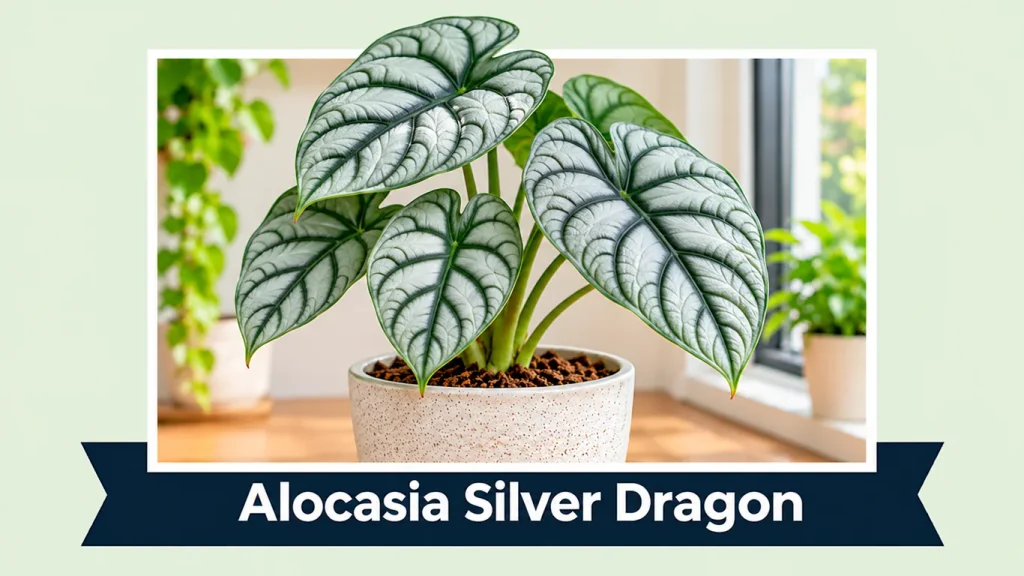
Alocasia Silver Dragon is an attractive tropical houseplant known for its thick, textured leaves with a metallic silver-green appearance and dark green veins. The unusual foliage resembles dragon scales, giving this variety its distinctive name. Its compact growth habit makes it an excellent option for small indoor spaces, decorative shelves, and tabletop plant collections. Although its appearance is exotic, Alocasia Silver Dragon can grow successfully indoors when provided with suitable humidity, indirect sunlight, and well-draining soil.
Identification
- Scientific Name: Alocasia baginda ‘Silver Dragon’
- Common Name: Silver Dragon Alocasia
- Plant Type: Tropical perennial
- Height: Approximately 1–2 feet indoors
- Leaf Color: Silver-green with dark green veins
- Leaf Shape: Broad, heart-shaped, textured leaves
- Light Requirements: Bright, indirect sunlight
- Toxicity: Toxic to humans and pets if ingested
Growing Conditions
Alocasia Silver Dragon thrives in warm indoor environments with bright, indirect sunlight and moderate to high humidity. Direct exposure to strong afternoon sunlight can damage its textured leaves, while insufficient lighting may produce slow growth and smaller foliage. Position the plant near a bright window where sunlight is naturally filtered.
A well-draining potting mixture containing orchid bark, perlite, and coco coir provides a suitable balance of aeration and moisture retention. Maintain temperatures between 65°F and 80°F (18°C–27°C) and protect the plant from cold air and sudden environmental changes.
Care and Maintenance
Water Alocasia Silver Dragon when the top inch or two of soil feels dry, adjusting the frequency according to temperature, humidity, and seasonal growth. Avoid consistently wet soil because its roots are sensitive to poor drainage. A pot with drainage holes helps prevent excess moisture from accumulating.
Maintain humidity around 60% or higher to encourage healthy foliage and reduce the likelihood of crispy leaf edges. During the growing season, feed the plant with a diluted balanced fertilizer every four to six weeks. Occasionally inspect its textured leaves for spider mites and other pests, and remove damaged foliage using clean pruning tools.
5. Alocasia Dragon Scale

Alocasia Dragon Scale is a stunning tropical houseplant admired for its thick, textured leaves that resemble the scales of a dragon. Its light green foliage features deep, dark green veins that create a dramatic three-dimensional appearance. This compact variety is popular among indoor plant enthusiasts because of its unusual leaf patterns and attractive growth habit. Native to the tropical forests of Borneo, Alocasia Dragon Scale grows best in warm, humid environments with bright, indirect sunlight and proper moisture management.
Identification
- Scientific Name: Alocasia baginda ‘Dragon Scale’
- Common Name: Dragon Scale Alocasia
- Plant Type: Tropical perennial
- Height: Approximately 1–2 feet indoors
- Leaf Color: Light green with dark green veins
- Leaf Shape: Broad, heart-shaped, heavily textured leaves
- Light Requirements: Bright, indirect sunlight
- Toxicity: Toxic to humans and pets if ingested
Growing Conditions
Alocasia Dragon Scale prefers warm indoor environments with filtered sunlight and consistently moderate to high humidity. Place the plant near an east-facing window or behind a sheer curtain to protect its foliage from harsh direct sunlight. Insufficient lighting may slow growth and reduce the development of its distinctive leaf texture.
Use a well-draining potting mixture containing orchid bark, perlite, and coco coir to provide adequate airflow around the roots. Maintain temperatures between 65°F and 80°F (18°C–27°C), and protect the plant from cold drafts. Humidity levels around 60% or higher help support healthy foliage development.
Care and Maintenance
Water Alocasia Dragon Scale when the upper inch or two of soil begins to dry, ensuring excess water drains completely. Avoid allowing the potting mixture to remain constantly saturated because excess moisture can cause root rot. During winter, reduce watering as the plant’s growth naturally slows.
Apply a diluted balanced liquid fertilizer every four to six weeks during spring and summer. Regularly inspect the textured leaves for spider mites, mealybugs, and other common houseplant pests. Remove yellow or damaged leaves using clean pruning shears, and occasionally wipe the foliage gently to prevent dust accumulation.
6. Alocasia Frydek (Green Velvet)

Alocasia Frydek, commonly known as Green Velvet Alocasia, is an elegant tropical houseplant recognized for its large, velvety, deep green leaves and striking white veins. Its arrow-shaped foliage creates a dramatic appearance that makes it a favorite among indoor plant collectors. Unlike glossy Alocasia varieties, Frydek has a soft, matte leaf surface that adds unique texture to indoor spaces. With proper care, this plant develops impressive foliage and becomes a beautiful decorative addition to living rooms, bedrooms, and bright indoor corners.
Identification
- Scientific Name: Alocasia micholitziana ‘Frydek’
- Common Name: Green Velvet Alocasia
- Plant Type: Tropical perennial
- Height: Approximately 2–3 feet indoors
- Leaf Color: Deep green with prominent white veins
- Leaf Shape: Large, arrow-shaped, velvety leaves
- Light Requirements: Bright, indirect sunlight
- Toxicity: Toxic to humans and pets if ingested
Growing Conditions
Alocasia Frydek thrives in warm, humid indoor environments with bright but indirect sunlight. Its velvety leaves are sensitive to strong afternoon sunlight, which may cause scorching or brown patches. Position the plant near an east-facing window or a bright location with filtered natural light for healthy foliage development.
Grow Alocasia Frydek in a loose, nutrient-rich potting mixture containing perlite, orchid bark, and coco coir. This combination helps maintain moisture while allowing excess water to escape. Temperatures between 65°F and 80°F (18°C–27°C) are generally suitable, while humidity around 60% or higher encourages larger leaves and healthy growth.
Care and Maintenance
Water Alocasia Frydek when the top inch of soil feels slightly dry, keeping the root zone lightly moist without allowing waterlogging. Prolonged exposure to saturated soil may lead to root rot, while severe dryness can cause drooping foliage. Use a container with adequate drainage and adjust watering according to seasonal conditions.
During active growth, apply a diluted balanced fertilizer every four to six weeks to support healthy leaf production. Avoid excessive fertilizer because mineral buildup may damage sensitive roots. Gently remove dust from the velvety leaves using a soft brush, and inspect the plant regularly for spider mites and other indoor pests.
7. Alocasia Zebrina

Alocasia Zebrina is a distinctive tropical houseplant known for its tall, slender stems decorated with zebra-like dark markings. Its large, arrow-shaped green leaves grow above these patterned stalks, creating an elegant architectural appearance. Unlike many other Alocasia varieties that are primarily valued for their leaf patterns, Zebrina attracts attention because of its uniquely striped stems. Native to the Philippines, this plant can become an impressive indoor statement piece when provided with sufficient space, bright indirect light, and warm growing conditions.
Identification
- Scientific Name: Alocasia zebrina
- Common Name: Zebra Alocasia
- Plant Type: Tropical perennial
- Height: Approximately 3–5 feet indoors
- Leaf Color: Bright to deep green
- Leaf Shape: Large, arrow-shaped leaves
- Stem Appearance: Pale green stems with dark zebra-like markings
- Light Requirements: Bright, indirect sunlight
- Toxicity: Toxic to humans and pets if ingested
Growing Conditions
Alocasia Zebrina grows best in warm indoor environments with abundant indirect sunlight and moderate to high humidity. Position the plant near a bright window where it can receive filtered light throughout the day. Insufficient sunlight may cause weak stems and slow leaf production, while intense direct sunlight can damage its foliage.
Use a well-aerated potting mixture containing orchid bark, perlite, and organic potting soil. Maintain temperatures between 65°F and 85°F (18°C–29°C) and avoid placing the plant near cold windows or air-conditioning vents. Since mature specimens develop tall stems and broad leaves, provide enough surrounding space for natural growth.
Care and Maintenance
Water Alocasia Zebrina when the upper inch or two of soil begins to dry, allowing excess moisture to drain from the container. Although the plant appreciates consistent moisture, soggy conditions can encourage root diseases. Reduce watering during cooler months when its growth rate decreases.
Feed the plant with diluted balanced liquid fertilizer every four to six weeks during spring and summer. Rotate the container occasionally to encourage balanced growth because the stems naturally lean toward available light. Remove aging leaves when they turn completely yellow, and inspect the foliage regularly for spider mites, mealybugs, and other common pests.
8. Alocasia Cuprea (Red Secret)

Alocasia Cuprea, commonly known as Red Secret Alocasia, is an exotic tropical houseplant admired for its metallic, copper-colored leaves and glossy appearance. Its thick, oval-shaped foliage features shades of deep green, bronze, and reddish-purple, creating a unique reflective surface. Native to Borneo, this compact Alocasia species adds a luxurious tropical touch to indoor plant collections. Its unusual coloring and distinctive leaf texture make it particularly attractive for decorative shelves, tabletops, and bright indoor spaces with suitable growing conditions.
Identification
- Scientific Name: Alocasia cuprea
- Common Name: Red Secret Alocasia
- Plant Type: Tropical perennial
- Height: Approximately 1–2 feet indoors
- Leaf Color: Metallic copper-green with reddish-purple undersides
- Leaf Shape: Oval to heart-shaped, glossy leaves
- Light Requirements: Bright, indirect sunlight
- Toxicity: Toxic to humans and pets if ingested
Growing Conditions
Alocasia Cuprea thrives in warm indoor environments with bright, filtered sunlight and consistently high humidity. Position the plant near an east-facing window or behind a sheer curtain where it receives sufficient indirect light. Strong direct sunlight may scorch its metallic foliage, while inadequate lighting can slow growth and reduce healthy leaf development.
Use a loose, well-draining potting mixture containing orchid bark, perlite, and coco coir to maintain adequate moisture without waterlogging. Keep temperatures between 65°F and 80°F (18°C–27°C), and maintain humidity around 60% or higher. Avoid cold drafts and sudden temperature fluctuations that may stress the plant.
Care and Maintenance
Water Alocasia Cuprea when the top inch or two of soil begins to dry, allowing excess water to drain completely. The plant prefers lightly moist soil during active growth but is sensitive to prolonged wet conditions. Reduce watering during winter when growth slows and the potting mixture takes longer to dry.
Apply diluted balanced liquid fertilizer every four to six weeks during spring and summer. Occasionally wipe the glossy leaves with a soft, damp cloth to remove dust and maintain their natural shine. Inspect the foliage regularly for spider mites and other indoor pests, and remove damaged leaves using clean pruning tools.
9. Alocasia Stingray

Alocasia Stingray is a distinctive tropical houseplant recognized for its unusual leaves that resemble the shape of a swimming stingray. Each broad green leaf features a narrow, elongated tip that looks like a stingray’s tail, giving the plant its memorable appearance. Its upright growth habit and large decorative foliage make it an attractive choice for living rooms, indoor gardens, and spacious plant displays. With proper care, Alocasia Stingray can develop impressive leaves and become a unique focal point in indoor spaces.
Identification
- Scientific Name: Alocasia macrorrhizos ‘Stingray’
- Common Name: Stingray Alocasia
- Plant Type: Tropical perennial
- Height: Approximately 3–5 feet indoors
- Leaf Color: Bright to deep green
- Leaf Shape: Broad, wing-like leaves with elongated pointed tips
- Light Requirements: Bright, indirect sunlight
- Toxicity: Toxic to humans and pets if ingested
Growing Conditions
Alocasia Stingray grows best in warm indoor environments with abundant indirect sunlight and moderate to high humidity. Place the plant near a bright window with filtered light to encourage healthy foliage development. Strong afternoon sunlight may damage its leaves, while insufficient lighting can slow growth and produce smaller foliage.
Plant Alocasia Stingray in a nutrient-rich, well-draining potting mixture containing orchid bark, perlite, and organic potting soil. Maintain temperatures between 65°F and 85°F (18°C–29°C) and provide humidity around 60% or higher. Since mature plants develop broad leaves and tall stems, choose a spacious location that allows comfortable growth.
Care and Maintenance
Water Alocasia Stingray when the upper inch or two of soil feels slightly dry, keeping the root zone moderately moist without becoming saturated. Use a container with drainage holes to prevent standing water and reduce the risk of root rot. During winter, adjust watering frequency according to temperature and the plant’s reduced growth rate.
Feed the plant with diluted balanced liquid fertilizer every four to six weeks during the active growing season. Rotate the container occasionally to encourage balanced growth and prevent the stems from leaning excessively toward sunlight. Remove yellowing leaves when necessary, and inspect the foliage for spider mites, mealybugs, and other common houseplant pests.
10. Alocasia Regal Shields
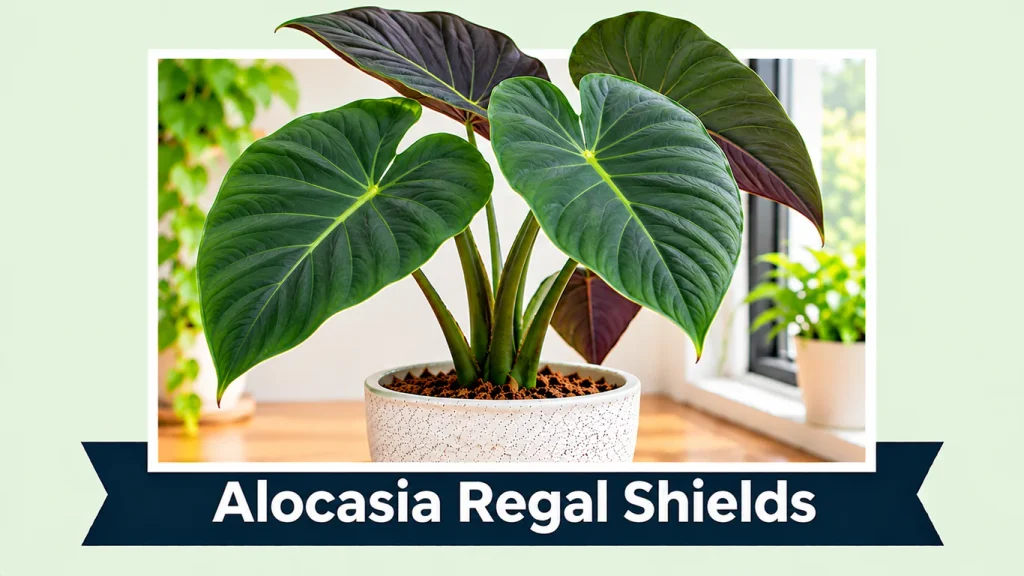
Alocasia Regal Shields is an impressive tropical houseplant known for its large, shield-shaped leaves and dramatic dark green coloring. The broad foliage features prominent veins and deep purple undersides, creating an attractive contrast that makes this hybrid variety stand out among indoor plants. Its upright stems and expansive leaves give it a bold architectural appearance, making it ideal for spacious living rooms and indoor plant displays. With appropriate lighting, warmth, and consistent care, Alocasia Regal Shields can become a striking centerpiece in a tropical-inspired interior.
Identification
- Scientific Name: Alocasia ‘Regal Shields’
- Common Name: Regal Shields Alocasia
- Plant Type: Tropical perennial hybrid
- Height: Approximately 3–5 feet indoors
- Leaf Color: Dark green with purple undersides
- Leaf Shape: Large, broad, shield-shaped leaves
- Light Requirements: Bright, indirect sunlight
- Toxicity: Toxic to humans and pets if ingested
Growing Conditions
Alocasia Regal Shields thrives in warm indoor environments with bright, indirect sunlight and moderate to high humidity. Place the plant near a large window where it receives plenty of filtered natural light. Although mature plants can tolerate some gentle morning sunlight, intense afternoon exposure may cause leaf scorching and discoloration.
Grow this variety in a well-draining potting mixture enriched with organic matter, perlite, and orchid bark. Maintain temperatures between 65°F and 85°F (18°C–29°C) and protect the plant from cold drafts. Humidity levels around 60% or higher support healthy foliage, while adequate space allows the large leaves to spread naturally.
Care and Maintenance
Water Alocasia Regal Shields when the upper inch or two of soil begins to dry, allowing excess moisture to drain away. During active growth, maintain consistent moisture without leaving the soil waterlogged. Reduce watering during cooler months when the plant requires less moisture and develops new foliage more slowly.
Apply a diluted balanced fertilizer every four to six weeks throughout spring and summer to encourage vigorous leaf production. Occasionally rotate the pot to promote even growth, and gently wipe large leaves with a damp cloth to remove accumulated dust. Inspect the plant regularly for spider mites, scale insects, and other pests, and remove damaged or aging leaves with clean pruning shears.
11. Alocasia Melo

Alocasia Melo is a unique tropical houseplant known for its thick, heavily textured leaves that resemble rough stone or reptile skin. Its bluish-green to gray-green foliage features deeply sunken veins and a firm, leathery surface, creating an unusual architectural appearance. Native to Borneo, this compact Alocasia species grows naturally in tropical environments and adapts well to indoor cultivation. Its slow growth and distinctive foliage make it an excellent choice for plant collectors looking for something different from traditional leafy houseplants.
Identification
- Scientific Name: Alocasia melo
- Common Name: Alocasia Melo
- Plant Type: Tropical perennial
- Height: Approximately 1–2 feet indoors
- Leaf Color: Bluish-green to gray-green
- Leaf Shape: Broad, rounded, thick, heavily textured leaves
- Light Requirements: Bright, indirect sunlight
- Toxicity: Toxic to humans and pets if ingested
Growing Conditions
Alocasia Melo thrives in warm indoor environments with bright, filtered sunlight and moderate to high humidity. Position the plant near an east-facing window or in a well-lit room where direct afternoon sunlight cannot damage its foliage. Although it grows relatively slowly, adequate indirect light helps maintain its compact shape and encourages healthy leaf development.
Use a chunky, well-draining potting mixture containing orchid bark, perlite, and coco coir to promote proper root aeration. Maintain temperatures between 65°F and 80°F (18°C–27°C), and provide humidity around 60% or higher when possible. Avoid compacted soil and cold drafts because these conditions may negatively affect root health and overall growth.
Care and Maintenance
Water Alocasia Melo when the top inch or two of soil becomes slightly dry, allowing excess moisture to drain completely. Its thick foliage and relatively slow growth make it particularly sensitive to overwatering, especially during cooler months. Avoid leaving the pot in standing water and adjust watering frequency according to seasonal conditions.
Apply diluted balanced liquid fertilizer every four to six weeks during spring and summer. Clean the textured leaves gently with a soft brush to remove dust without damaging their surface. Regularly inspect the plant for spider mites, mealybugs, and signs of root rot, and remove yellowing leaves only when necessary.
12. Alocasia Maharani (Grey Dragon)
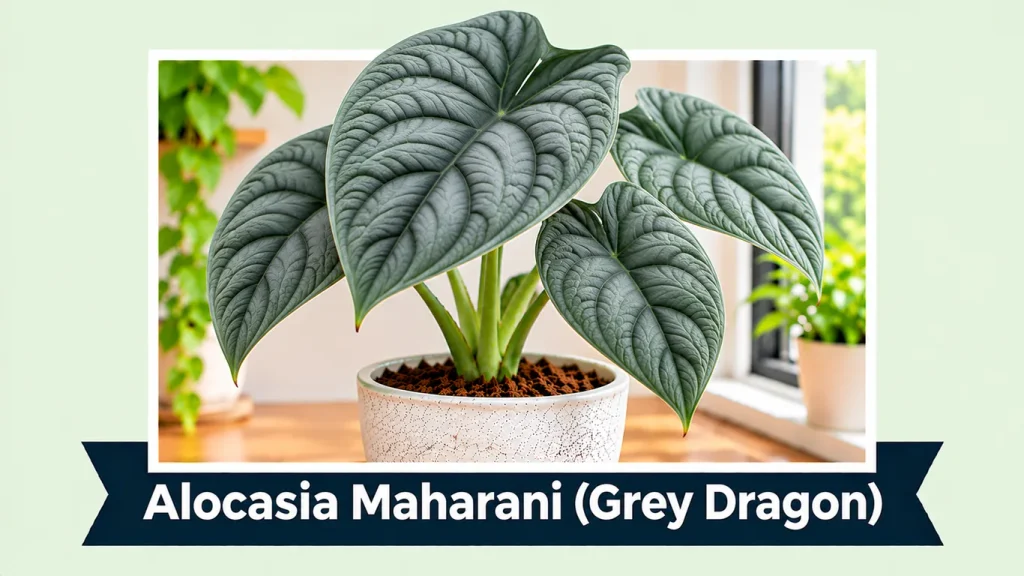
Alocasia Maharani, commonly called Grey Dragon Alocasia, is an attractive compact houseplant admired for its thick, silvery-gray leaves and deeply textured surface. Its foliage features prominent dark veins that create a distinctive dragon-scale appearance, making it a popular choice among tropical plant enthusiasts. This hybrid combines unusual leaf coloration with a manageable growth habit, making it suitable for shelves, desks, and small indoor gardens. Alocasia Maharani grows best in warm, humid conditions with filtered sunlight and carefully managed soil moisture.
Identification
- Scientific Name: Alocasia ‘Maharani’
- Common Name: Grey Dragon Alocasia
- Plant Type: Tropical perennial hybrid
- Height: Approximately 8–18 inches indoors
- Leaf Color: Silvery-gray to gray-green
- Leaf Shape: Broad, heart-shaped, heavily textured leaves
- Light Requirements: Bright, indirect sunlight
- Toxicity: Toxic to humans and pets if ingested
Growing Conditions
Alocasia Maharani prefers warm indoor environments with bright, indirect sunlight and consistently moderate to high humidity. Place the plant near an east-facing window or in a location where sunlight is filtered through a sheer curtain. Strong afternoon sunlight can scorch its textured leaves, while insufficient lighting may slow growth and reduce foliage production.
Grow this variety in an airy potting mixture containing orchid bark, perlite, and organic potting soil. Maintain temperatures between 65°F and 80°F (18°C–27°C), and aim for humidity around 60% or higher. Proper airflow is also important because stagnant, excessively humid conditions may encourage fungal problems.
Care and Maintenance
Water Alocasia Maharani when the upper inch or two of soil begins to dry, allowing excess water to drain freely. Its relatively compact root system is sensitive to prolonged wet conditions, so avoid oversized containers that retain moisture for extended periods. Reduce watering during winter when growth naturally slows.
Feed the plant with diluted balanced liquid fertilizer every four to six weeks during the active growing season. Gently remove dust from the leaves with a soft brush or slightly damp cloth to preserve their distinctive texture. Check regularly for spider mites and mealybugs, and remove damaged foliage using clean pruning tools.
13. Alocasia Bambino
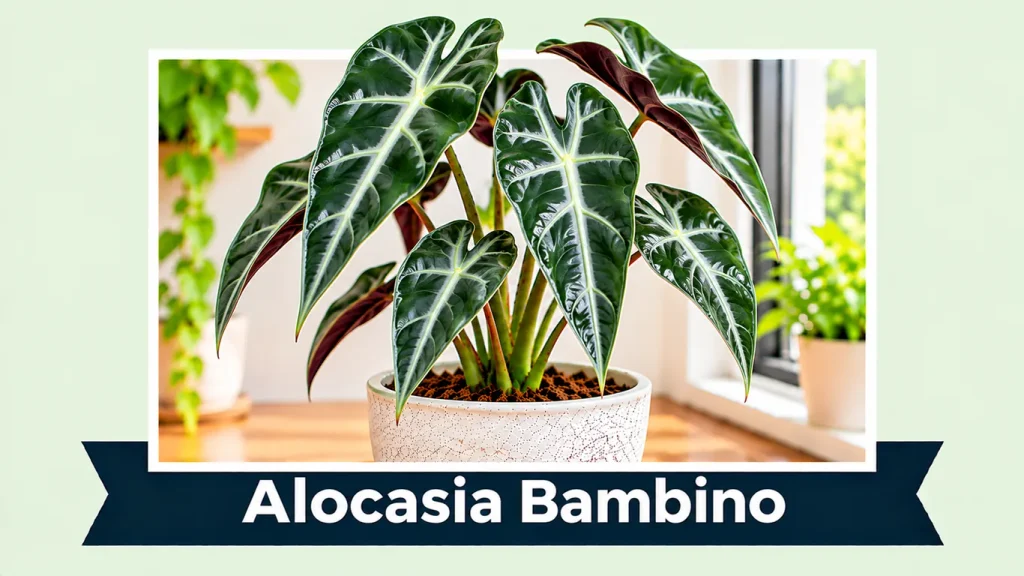
Alocasia Bambino is an elegant compact tropical houseplant recognized for its narrow, arrow-shaped leaves and striking white veins. Its glossy, deep green foliage features gently wavy edges, creating an attractive contrast between the dark leaf surfaces and lighter markings. Smaller than many traditional Alocasia varieties, Bambino is particularly suitable for tabletops, shelves, and limited indoor spaces. Its upright growth habit and decorative foliage make it a popular choice for modern interiors, especially when provided with warm temperatures, filtered sunlight, and consistent humidity.
Identification
- Scientific Name: Alocasia × amazonica ‘Bambino’
- Common Name: Bambino Arrow Alocasia
- Plant Type: Tropical perennial hybrid
- Height: Approximately 12–18 inches indoors
- Leaf Color: Deep green with prominent white veins
- Leaf Shape: Narrow, elongated, arrow-shaped leaves
- Light Requirements: Bright, indirect sunlight
- Toxicity: Toxic to humans and pets if ingested
Growing Conditions
Alocasia Bambino grows best in warm indoor environments with bright, indirect sunlight and moderate to high humidity. Position the plant near an east-facing window or behind a sheer curtain to protect its leaves from harsh afternoon sunlight. Adequate filtered light helps maintain its compact growth habit and encourages the development of healthy, well-defined foliage.
Plant Alocasia Bambino in a loose, well-draining potting mixture containing orchid bark, perlite, and coco coir. Maintain temperatures between 65°F and 80°F (18°C–27°C) and provide humidity around 60% or higher when practical. Keep the plant away from cold drafts, air-conditioning vents, and sudden temperature fluctuations that can stress its sensitive foliage.
Care and Maintenance
Water Alocasia Bambino when the top inch of soil feels slightly dry, keeping the potting mixture moderately moist without allowing it to become waterlogged. Its compact root system requires careful moisture management, particularly during winter when growth slows. Always use a container with adequate drainage holes to prevent excess water from accumulating around the roots.
Apply diluted balanced liquid fertilizer every four to six weeks during spring and summer to encourage healthy leaf development. Occasionally wipe the glossy leaves with a soft, damp cloth to remove dust and maintain their natural appearance. Inspect the undersides of leaves regularly for spider mites and other indoor pests, and remove yellow or damaged foliage using clean pruning shears.
14. Alocasia Jacklyn

Alocasia Jacklyn is a distinctive tropical houseplant admired for its deeply lobed, arrow-shaped leaves and striking dark green veins. Its bright green foliage features an unusual textured surface, while the stems display attractive dark markings that add to its exotic appearance. Native to Sulawesi, Indonesia, this Alocasia species has become popular among indoor plant collectors because of its dramatic foliage and unique growth pattern. With proper humidity, filtered sunlight, and consistent care, Alocasia Jacklyn can become an impressive decorative plant for bright indoor spaces.
Identification
- Scientific Name: Alocasia tandurusa
- Common Name: Alocasia Jacklyn
- Plant Type: Tropical perennial
- Height: Approximately 2–4 feet indoors
- Leaf Color: Bright green with dark green veins
- Leaf Shape: Deeply lobed, arrow-shaped leaves
- Stem Appearance: Green stems with dark brown or purple markings
- Light Requirements: Bright, indirect sunlight
- Toxicity: Toxic to humans and pets if ingested
Growing Conditions
Alocasia Jacklyn thrives in warm indoor environments with bright, indirect sunlight and consistently high humidity. Position the plant near an east-facing window or in a well-lit room where sunlight is filtered through a sheer curtain. Strong direct sunlight may damage its delicate foliage, while insufficient lighting can result in slower growth and smaller leaves.
Grow this variety in a loose, well-draining potting mixture containing orchid bark, perlite, and coco coir. This combination provides adequate airflow around the roots while retaining enough moisture for healthy growth. Maintain temperatures between 65°F and 85°F (18°C–29°C), and aim for humidity around 60% or higher. Avoid cold drafts and sudden temperature changes that may stress the plant.
Care and Maintenance
Water Alocasia Jacklyn when the upper inch or two of soil begins to dry, allowing excess moisture to drain completely. The plant prefers consistently light moisture during active growth but is sensitive to waterlogged conditions. Reduce watering during winter when growth slows, and avoid allowing the container to stand in water.
Apply diluted balanced liquid fertilizer every four to six weeks during spring and summer to encourage healthy foliage development. Occasionally rotate the pot to promote even growth and prevent the stems from leaning toward sunlight. Inspect the leaves regularly for spider mites, mealybugs, and other common indoor pests. Remove yellow or damaged foliage using clean pruning tools to maintain the plant’s appearance.
15. Alocasia Micholitziana ‘Maxkowskii’
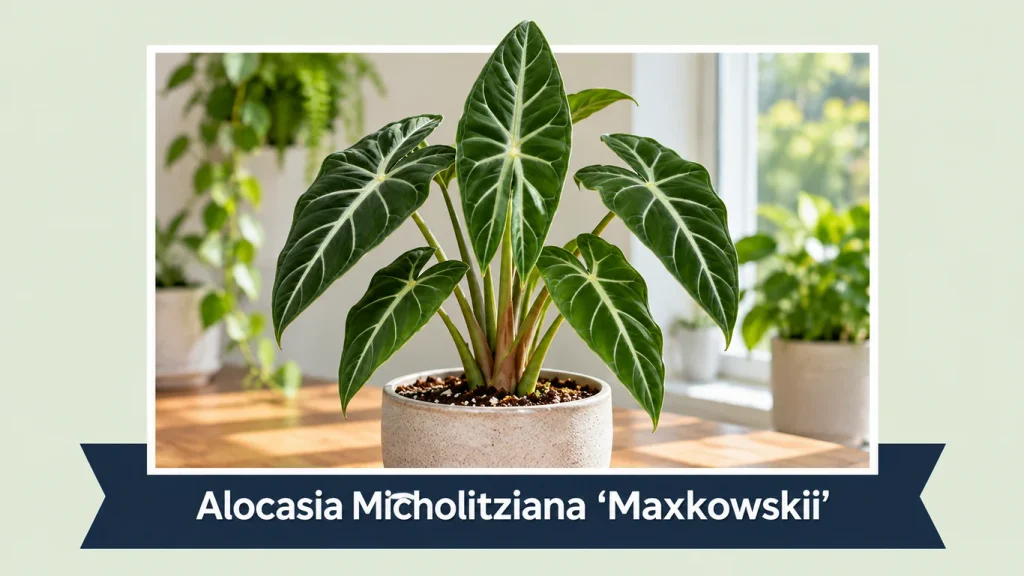
Alocasia Micholitziana ‘Maxkowskii’ is an attractive tropical houseplant known for its elongated, arrow-shaped leaves and prominent pale veins. Its rich green foliage creates an elegant appearance that complements modern indoor plant collections. Closely related to other velvet-leaved Alocasia varieties, this plant is valued for its distinctive foliage and upright growth habit. With suitable lighting, humidity, and careful watering, Alocasia Micholitziana ‘Maxkowskii’ can develop healthy leaves and become a beautiful decorative addition to living rooms, bedrooms, and indoor gardens.
Identification
- Scientific Name: Alocasia micholitziana ‘Maxkowskii’ (name requires taxonomic verification)
- Common Name: Micholitziana Alocasia
- Plant Type: Tropical perennial
- Height: Approximately 2–3 feet indoors
- Leaf Color: Deep green with prominent pale veins
- Leaf Shape: Elongated, arrow-shaped leaves
- Light Requirements: Bright, indirect sunlight
- Toxicity: Toxic to humans and pets if ingested
Growing Conditions
Alocasia Micholitziana prefers warm indoor environments with bright, filtered sunlight and moderate to high humidity. Place the plant near an east-facing window or behind a sheer curtain to provide sufficient natural light without exposing the foliage to intense afternoon sunlight. Proper indirect lighting encourages healthy growth and helps maintain the plant’s attractive leaf coloration.
Use a well-draining potting mixture containing orchid bark, perlite, and moisture-retaining organic matter. This combination helps prevent waterlogging while maintaining suitable moisture around the roots. Keep temperatures between 65°F and 80°F (18°C–27°C), and maintain humidity around 60% or higher when possible. Avoid exposing the plant to cold drafts or sudden environmental changes.
Care and Maintenance
Water Alocasia Micholitziana when the top inch or two of soil begins to dry, keeping the potting mixture lightly moist without becoming saturated. Excessive watering can encourage root rot, while prolonged dryness may cause drooping or browning foliage. Adjust watering frequency according to seasonal growth and indoor temperature conditions.
Apply diluted balanced liquid fertilizer every four to six weeks during spring and summer to support healthy leaf production. Gently clean the foliage with a soft brush or damp cloth, depending on its surface texture, to remove accumulated dust. Inspect the plant regularly for spider mites, mealybugs, and other indoor pests, and remove damaged leaves using clean pruning shears.
FAQs
1. Which Alocasia Plant Is Best for Indoor Growing?
Alocasia Polly, Black Velvet, and Silver Dragon are popular choices for indoor growing. Black Velvet is especially suitable for small spaces because of its compact size. All three require bright, indirect sunlight, well-draining soil, and consistent humidity to grow successfully.
2. How Often Should I Water Indoor Alocasia Plants?
Water indoor Alocasia plants when the top one or two inches of soil feel slightly dry. Watering frequency depends on temperature, humidity, pot size, and seasonal growth. Avoid overwatering because constantly wet soil can cause root rot and yellowing leaves.
3. Do Alocasia Plants Need Direct Sunlight?
Most Alocasia plants prefer bright, indirect sunlight rather than strong direct sun. Excessive sunlight can scorch their leaves, while insufficient light may slow growth. Placing them near an east-facing window or behind a sheer curtain usually provides suitable lighting conditions.
4. Are Alocasia Plants Easy to Grow Indoors?
Alocasia plants can grow successfully indoors, although many varieties require more attention than common houseplants. They prefer warm temperatures, moderate to high humidity, and carefully controlled watering. Beginners may find Alocasia Polly or Regal Shields relatively manageable with proper care.
5. Why Are My Indoor Alocasia Leaves Turning Yellow?
Alocasia leaves may turn yellow because of overwatering, underwatering, insufficient light, temperature stress, or natural aging. Check soil moisture and drainage before adjusting your care routine. Older leaves may also turn yellow naturally as the plant produces new growth.