

Coffee trees bring tropical beauty to indoor spaces with their glossy green leaves, fragrant flowers, and colorful coffee cherries. From compact dwarf varieties to unique tropical species, several types of coffee trees can grow successfully in containers. In this guide, explore 15 types of coffee trees for indoor growing, including their characteristics, growing requirements, and essential care tips for healthy growth.
1. Arabica Coffee Tree

The Arabica Coffee Tree (Coffea arabica) is one of the best coffee varieties for indoor growing. Native to Ethiopia, this evergreen plant features glossy dark green leaves, fragrant white flowers, and bright red coffee cherries. Its attractive appearance and manageable growth make it ideal for sunny living rooms, offices, and indoor gardens. With proper care, Arabica coffee trees can thrive in containers and may eventually produce coffee beans.
Identification and Characteristics
- Scientific Name: Coffea arabica
- Common Name: Arabica Coffee Tree
- Origin: Ethiopia
- Plant Type: Evergreen tropical shrub
- Indoor Height: 3–6 feet with pruning
- Leaf Color: Glossy dark green
- Flower Color: White
- Fruit Color: Red when ripe
- Sunlight: Bright, indirect sunlight
- Soil Type: Well-draining, slightly acidic soil
- Temperature: 65–75°F (18–24°C)
How to Grow Arabica Coffee Trees Indoors
Place your Arabica Coffee Tree near an east-facing window where it receives bright, indirect sunlight. Use a container with drainage holes and slightly acidic, well-draining potting soil. Avoid direct afternoon sunlight, which can damage its delicate leaves.
Maintain warm temperatures and moderate to high humidity for healthy growth. Rotate the container occasionally to encourage even development and prevent uneven branches.
Watering and Maintenance Tips
Water your Arabica Coffee Tree when the top inch of soil feels slightly dry. Keep the soil consistently moist but never waterlogged. During spring and summer, apply a balanced fertilizer suitable for acid-loving plants.
Prune damaged or overgrown branches to maintain a compact shape. Regularly check the foliage for spider mites, mealybugs, and other common indoor pests.
Benefits of Growing Arabica Coffee Trees Indoors
Arabica Coffee Trees provide beautiful evergreen foliage that adds a tropical appearance to indoor spaces. Their glossy leaves and compact growth make them excellent decorative plants for homes and offices.
Under favorable conditions, mature trees may produce fragrant white flowers followed by red coffee cherries. These cherries contain coffee beans, making Arabica an attractive choice for indoor gardeners interested in growing their own coffee.
2. Robusta Coffee Tree
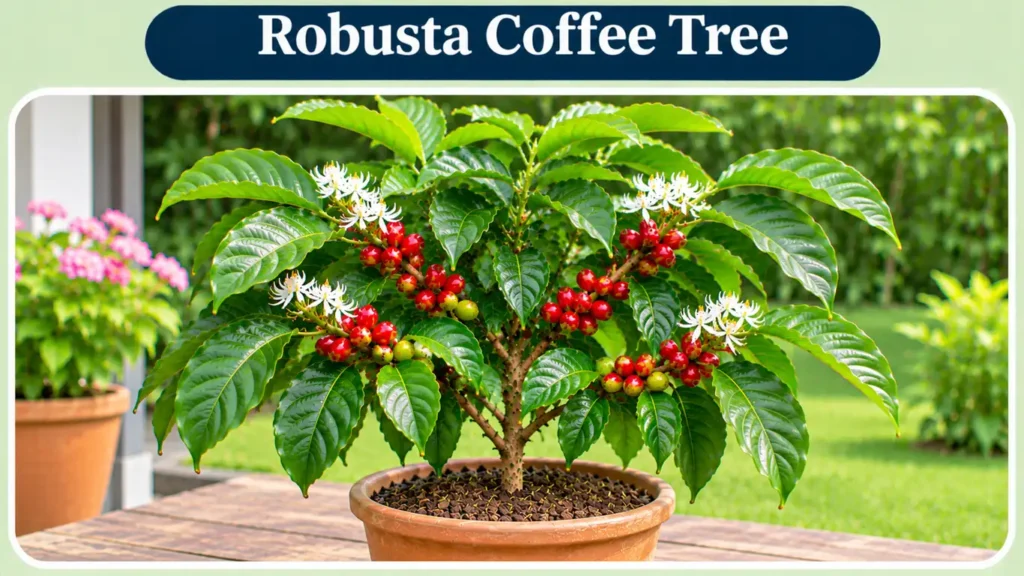
The Robusta Coffee Tree (Coffea canephora) is a tropical evergreen plant known for its strong coffee beans, large glossy leaves, and vigorous growth. Native to sub-Saharan Africa, this coffee variety grows naturally in warm, humid environments. Although Robusta trees can become quite tall outdoors, they can be maintained in containers through regular pruning. With proper humidity, bright indirect sunlight, and consistent watering, Robusta Coffee Trees can grow successfully in spacious indoor environments.
Identification and Characteristics
- Scientific Name: Coffea canephora
- Common Name: Robusta Coffee Tree
- Origin: Sub-Saharan Africa
- Plant Type: Evergreen tropical shrub or tree
- Indoor Height: 4–6 feet with pruning
- Leaf Color: Glossy dark green
- Flower Color: White
- Fruit Color: Red when ripe
- Sunlight: Bright, indirect sunlight
- Soil Type: Well-draining, slightly acidic soil
- Temperature: 70–85°F (21–29°C)
How to Grow Robusta Coffee Trees Indoors
Place your Robusta Coffee Tree near a bright window where it receives filtered sunlight throughout the day. Use a large container with drainage holes and fill it with slightly acidic, well-draining potting soil.
Maintain warm temperatures and high humidity to encourage healthy growth. Avoid cold drafts and prolonged exposure to intense afternoon sunlight, which can damage the leaves.
Watering and Maintenance Tips
Water your Robusta Coffee Tree when the top inch of soil begins to dry. Keep the soil evenly moist without allowing water to accumulate around the roots. Apply balanced fertilizer during the active growing season.
Prune long or overcrowded branches to maintain a manageable indoor size. Regularly inspect the leaves for spider mites, mealybugs, and scale insects.
Benefits of Growing Robusta Coffee Trees Indoors
Robusta Coffee Trees offer attractive tropical foliage with large, glossy green leaves. Their vigorous growth makes them suitable for spacious rooms and indoor gardens with warm, humid conditions.
Mature plants may produce white flowers and red coffee cherries under favorable conditions. However, Robusta generally requires compatible cross-pollination for fruit production, making indoor harvesting challenging.
3. Liberica Coffee Tree

The Liberica Coffee Tree (Coffea liberica) is a distinctive tropical coffee species recognized for its unusually large leaves, tall growth habit, and aromatic coffee beans. Native to West and Central Africa, this evergreen tree is cultivated in several tropical countries. Its broad, glossy foliage creates a striking ornamental appearance. Although Liberica naturally grows much larger than Arabica, young plants can be maintained in spacious indoor containers with regular pruning, warm temperatures, and adequate humidity.
Identification and Characteristics
- Scientific Name: Coffea liberica
- Common Name: Liberica Coffee Tree
- Origin: West and Central Africa
- Plant Type: Evergreen tropical tree
- Indoor Height: 4–7 feet with pruning
- Leaf Color: Large, glossy dark green
- Flower Color: White
- Fruit Color: Red when ripe
- Sunlight: Bright, indirect sunlight
- Soil Type: Well-draining, slightly acidic soil
- Temperature: 70–85°F (21–29°C)
How to Grow Liberica Coffee Trees Indoors
Place your Liberica Coffee Tree near a bright window with filtered sunlight. Choose a large container with drainage holes and use a nutrient-rich, slightly acidic potting mixture that retains some moisture without becoming waterlogged.
Maintain warm temperatures and moderate to high humidity. Since Liberica develops large leaves and vigorous branches, provide enough growing space and prune occasionally to control its height.
Watering and Maintenance Tips
Water your Liberica Coffee Tree when the upper inch of soil feels slightly dry. Keep the soil consistently moist but avoid excessive watering. Apply a balanced fertilizer during spring and summer to support healthy foliage.
Remove damaged or overcrowded branches to maintain an attractive shape. Check the leaves regularly for spider mites, mealybugs, and other common indoor pests.
Benefits of Growing Liberica Coffee Trees Indoors
Liberica Coffee Trees provide a bold tropical appearance with their exceptionally large, glossy leaves. Their distinctive foliage makes them attractive ornamental plants for spacious living rooms and indoor gardens.
Under suitable conditions, mature trees may produce fragrant flowers and coffee cherries. However, their naturally large size makes them more challenging to maintain indoors than compact Arabica varieties.
4. Excelsa Coffee Tree
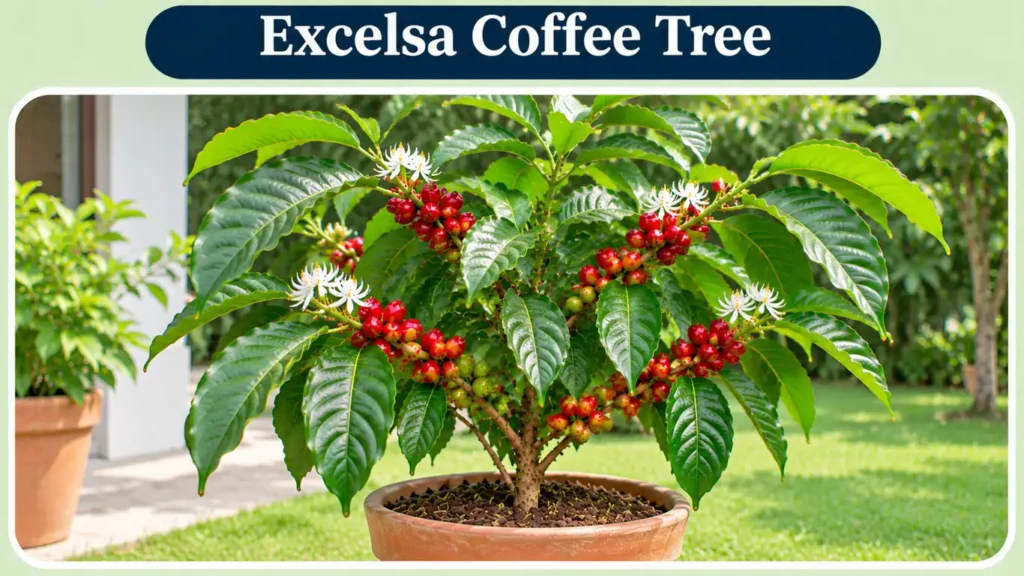
The Excelsa Coffee Tree (Coffea liberica var. dewevrei, often treated as Coffea dewevrei) is a tropical coffee plant admired for its distinctive foliage and unusual coffee flavor. Native to Central Africa, Excelsa is closely related to Liberica and naturally develops into a large evergreen tree. Its glossy leaves, elegant branches, and tropical appearance make it an interesting ornamental choice. Young Excelsa plants can grow in spacious indoor containers when provided with bright filtered sunlight, warm temperatures, and regular maintenance.
Identification and Characteristics
- Scientific Name: Coffea dewevrei (also classified under Coffea liberica)
- Common Name: Excelsa Coffee Tree
- Origin: Central Africa
- Plant Type: Evergreen tropical tree
- Indoor Height: 4–7 feet with pruning
- Leaf Color: Glossy green
- Flower Color: White
- Fruit Color: Red when ripe
- Sunlight: Bright, indirect sunlight
- Soil Type: Well-draining, slightly acidic soil
- Temperature: 70–85°F (21–29°C)
How to Grow Excelsa Coffee Trees Indoors
Place your Excelsa Coffee Tree near a window that provides bright, filtered sunlight. Use a spacious container with drainage holes and fill it with slightly acidic soil enriched with organic matter.
Maintain warm temperatures and relatively high humidity for healthy growth. Since Excelsa naturally becomes a large tree, regular pruning is necessary to maintain a manageable indoor height.
Watering and Maintenance Tips
Water your Excelsa Coffee Tree when the upper inch of soil begins to dry. Keep the soil lightly moist without allowing standing water around the roots. Apply balanced fertilizer during the growing season.
Prune weak, damaged, or excessively long branches to maintain a compact shape. Inspect the foliage occasionally for spider mites, mealybugs, and scale insects.
Benefits of Growing Excelsa Coffee Trees Indoors
Excelsa Coffee Trees offer attractive evergreen foliage and a distinctive tropical appearance. Their glossy leaves and branching structure can create an impressive decorative feature in spacious indoor environments.
Mature trees may eventually produce fragrant flowers and colorful coffee cherries under favorable conditions. However, their vigorous growth and specific environmental requirements make them less suitable for small indoor spaces than dwarf coffee varieties.
5. Dwarf Arabica Coffee Tree (Nana)

The Dwarf Arabica Coffee Tree (Coffea arabica ‘Nana’) is a compact coffee variety ideal for indoor growing. Known for its small size, glossy dark green leaves, and attractive evergreen foliage, this plant is suitable for apartments, offices, and small indoor gardens. Unlike larger coffee trees, Dwarf Arabica requires less growing space and can be maintained in decorative containers. With proper sunlight, humidity, and watering, it can thrive indoors and may eventually produce coffee cherries.
Identification and Characteristics
- Scientific Name: Coffea arabica ‘Nana’
- Common Name: Dwarf Arabica Coffee Tree
- Origin: Cultivated dwarf form of Arabica coffee
- Plant Type: Evergreen tropical shrub
- Indoor Height: Approximately 2–4 feet
- Leaf Color: Glossy dark green
- Flower Color: White
- Fruit Color: Red when ripe
- Sunlight: Bright, indirect sunlight
- Soil Type: Well-draining, slightly acidic soil
- Temperature: 65–75°F (18–24°C)
How to Grow Dwarf Arabica Coffee Trees Indoors
Place your Dwarf Arabica Coffee Tree near an east-facing window where it receives bright, indirect sunlight. Use a medium-sized container with drainage holes and fill it with slightly acidic, well-draining potting soil.
Maintain warm temperatures and moderate to high humidity for healthy growth. Avoid intense afternoon sunlight and cold drafts, which can damage the leaves.
Watering and Maintenance Tips
Water your Dwarf Arabica Coffee Tree when the top inch of soil begins to dry. Keep the soil lightly moist without allowing excess water to collect around the roots. Apply balanced fertilizer during spring and summer.
Trim damaged leaves and overgrown branches to maintain its compact appearance. Check the foliage regularly for spider mites, mealybugs, and other common indoor pests.
Benefits of Growing Dwarf Arabica Coffee Trees Indoors
Dwarf Arabica Coffee Trees are excellent for small indoor spaces because of their naturally compact growth. Their glossy evergreen leaves provide year-round greenery and create an attractive tropical appearance.
Under favorable conditions, mature plants may produce fragrant white flowers and colorful coffee cherries. Their manageable size also makes them easier to prune and maintain than larger coffee species.
6. Caturra Coffee Tree
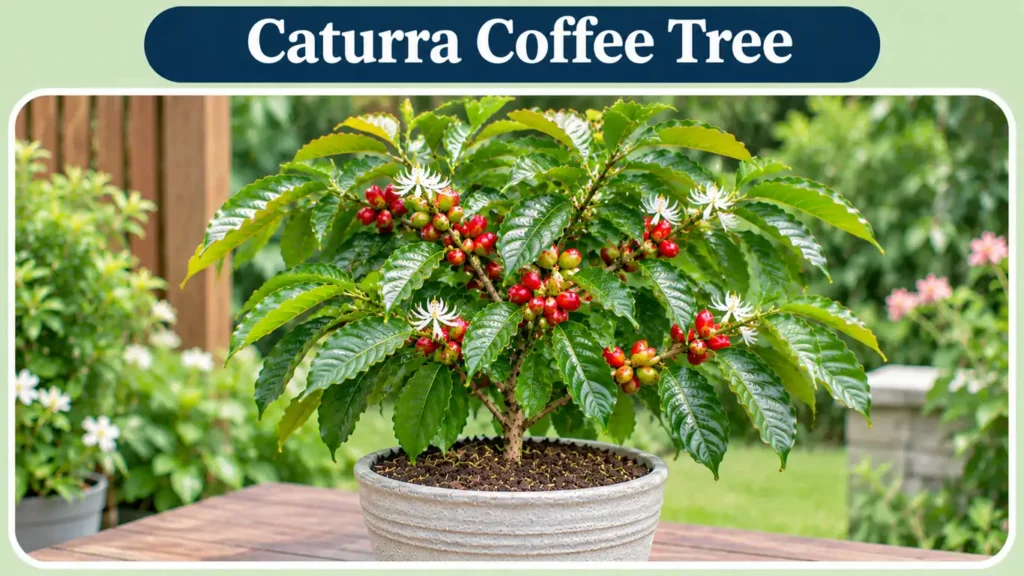
The Caturra Coffee Tree (Coffea arabica ‘Caturra’) is a naturally compact Arabica coffee variety known for its attractive foliage and productive growth. Originally discovered in Brazil, Caturra developed as a natural mutation of Bourbon coffee. Its short branches, glossy green leaves, and bushy appearance make it suitable for container cultivation. With proper sunlight, watering, and humidity, Caturra Coffee Trees can grow successfully indoors while maintaining a relatively small size.
Identification and Characteristics
- Scientific Name: Coffea arabica ‘Caturra’
- Common Name: Caturra Coffee Tree
- Origin: Brazil
- Plant Type: Evergreen tropical shrub
- Indoor Height: Approximately 3–5 feet with pruning
- Leaf Color: Glossy dark green
- Flower Color: White
- Fruit Color: Red or yellow, depending on the selection
- Sunlight: Bright, indirect sunlight
- Soil Type: Well-draining, slightly acidic soil
- Temperature: 65–75°F (18–24°C)
How to Grow Caturra Coffee Trees Indoors
Place your Caturra Coffee Tree near a bright window where it receives filtered sunlight throughout the day. Choose a container with drainage holes and use nutrient-rich, slightly acidic potting soil.
Maintain moderate to high humidity and protect the plant from cold drafts. Since Caturra naturally grows in a compact shape, occasional pruning helps encourage dense and healthy foliage.
Watering and Maintenance Tips
Water your Caturra Coffee Tree when the upper inch of soil feels slightly dry. Keep the soil consistently moist but avoid overwatering. During the active growing season, apply a balanced fertilizer according to the product instructions.
Remove damaged or overcrowded branches to improve airflow and maintain its shape. Inspect the leaves regularly for mealybugs, spider mites, and scale insects.
Benefits of Growing Caturra Coffee Trees Indoors
Caturra Coffee Trees are particularly suitable for container gardening because of their compact growth habit. Their glossy leaves and dense branching create an attractive tropical appearance in living rooms and indoor gardens.
Under suitable conditions, mature trees can produce fragrant white flowers and coffee cherries. Caturra also has good fruiting potential, although indoor harvests are usually smaller than those from outdoor plants.
7. Bourbon Coffee Tree

The Bourbon Coffee Tree (Coffea arabica ‘Bourbon’) is a traditional Arabica coffee variety recognized for its high-quality beans, attractive evergreen foliage, and elegant growth habit. Originally associated with Réunion Island, formerly known as Bourbon Island, this coffee variety is widely cultivated in tropical regions. Its glossy green leaves and fragrant white flowers make it an appealing ornamental plant. Although Bourbon grows taller than dwarf coffee varieties, it can be maintained indoors through regular pruning and proper container care.
Identification and Characteristics
- Scientific Name: Coffea arabica ‘Bourbon’
- Common Name: Bourbon Coffee Tree
- Origin: Réunion Island
- Plant Type: Evergreen tropical shrub
- Indoor Height: Approximately 3–6 feet with pruning
- Leaf Color: Glossy dark green
- Flower Color: White
- Fruit Color: Red, yellow, or orange, depending on the selection
- Sunlight: Bright, indirect sunlight
- Soil Type: Well-draining, slightly acidic soil
- Temperature: 65–75°F (18–24°C)
How to Grow Bourbon Coffee Trees Indoors
Place your Bourbon Coffee Tree near an east-facing window or another location that receives bright, filtered sunlight. Use a container with drainage holes and fill it with slightly acidic soil enriched with organic matter.
Maintain warm temperatures and moderate to high humidity. Because Bourbon grows taller than compact varieties, prune occasionally to control its height and encourage balanced branching.
Watering and Maintenance Tips
Water your Bourbon Coffee Tree when the top inch of soil begins to feel dry. Keep the soil evenly moist without allowing water to accumulate around the roots. Apply balanced fertilizer during spring and summer.
Remove dead, damaged, or excessively long branches to maintain an attractive shape. Regularly inspect the foliage for spider mites, mealybugs, and yellowing leaves.
Benefits of Growing Bourbon Coffee Trees Indoors
Bourbon Coffee Trees provide attractive tropical greenery with their glossy leaves and graceful branching structure. Their evergreen appearance makes them decorative plants for bright homes and indoor garden spaces.
Mature Bourbon plants may produce fragrant white flowers followed by colorful coffee cherries. The variety is also valued for its coffee quality, making it interesting for gardeners who want to explore growing coffee at home.
8. Typica Coffee Tree

The Typica Coffee Tree (Coffea arabica ‘Typica’) is one of the oldest and most traditional Arabica coffee varieties. Known for its elegant growth habit, glossy dark green leaves, and high-quality coffee beans, this evergreen plant adds tropical beauty to indoor spaces. Originally associated with Ethiopia and later cultivated across Asia and the Americas, Typica grows naturally into a tall shrub or small tree. With proper pruning, sunlight, and humidity, it can be maintained in spacious indoor containers.
Identification and Characteristics
- Scientific Name: Coffea arabica ‘Typica’
- Common Name: Typica Coffee Tree
- Origin: Ethiopia (ancestral origin)
- Plant Type: Evergreen tropical shrub
- Indoor Height: 3–6 feet with pruning
- Leaf Color: Glossy dark green
- Flower Color: White
- Fruit Color: Red when ripe
- Sunlight: Bright, indirect sunlight
- Soil Type: Well-draining, slightly acidic soil
- Temperature: 65–75°F (18–24°C)
How to Grow Typica Coffee Trees Indoors
Place your Typica Coffee Tree near an east-facing window where it receives bright, indirect sunlight. Choose a container with drainage holes and fill it with nutrient-rich, slightly acidic potting soil.
Maintain warm temperatures and moderate to high humidity. Since Typica naturally develops long branches, occasional pruning helps control its height and maintain an attractive indoor shape.
Watering and Maintenance Tips
Water your Typica Coffee Tree when the top inch of soil begins to dry. Keep the soil lightly moist but avoid waterlogging. Apply balanced fertilizer during spring and summer to support healthy growth.
Remove damaged or excessively long branches to encourage balanced development. Check the leaves regularly for spider mites, mealybugs, and scale insects.
Benefits of Growing Typica Coffee Trees Indoors
Typica Coffee Trees provide attractive evergreen foliage and an elegant tropical appearance. Their glossy leaves and graceful branching structure make them suitable for bright living rooms and spacious indoor gardens.
Under favorable conditions, mature trees may produce fragrant white flowers and red coffee cherries. Typica is also valued for its excellent coffee quality, making it interesting for home gardeners.
9. Catuaí Coffee Tree

The Catuaí Coffee Tree (Coffea arabica ‘Catuaí’) is a compact Brazilian coffee variety known for its productive nature, dense foliage, and manageable growth. Developed through a cross between Mundo Novo and Caturra coffee varieties, Catuaí is widely cultivated in tropical coffee-growing regions. Its glossy green leaves and bushy branching structure make it an appealing choice for container gardening. With suitable indoor conditions, Catuaí Coffee Trees can maintain healthy foliage and may eventually produce colorful coffee cherries.
Identification and Characteristics
- Scientific Name: Coffea arabica ‘Catuaí’
- Common Name: Catuaí Coffee Tree
- Origin: Brazil
- Plant Type: Evergreen tropical shrub
- Indoor Height: 3–5 feet with pruning
- Leaf Color: Glossy dark green
- Flower Color: White
- Fruit Color: Red or yellow, depending on the selection
- Sunlight: Bright, indirect sunlight
- Soil Type: Well-draining, slightly acidic soil
- Temperature: 65–75°F (18–24°C)
How to Grow Catuaí Coffee Trees Indoors
Place your Catuaí Coffee Tree near a bright window that provides filtered sunlight throughout the day. Use a container with drainage holes and slightly acidic potting soil enriched with organic matter.
Maintain warm temperatures and moderate to high humidity. Catuaí’s relatively compact growth habit makes it suitable for containers, while occasional pruning helps maintain dense, balanced foliage.
Watering and Maintenance Tips
Water your Catuaí Coffee Tree when the upper inch of soil feels slightly dry. Keep the soil evenly moist without allowing excess water to collect around the roots. Apply balanced fertilizer during active growth.
Trim damaged or overcrowded branches to maintain a healthy shape. Regularly inspect the foliage for spider mites, mealybugs, and other common indoor pests.
Benefits of Growing Catuaí Coffee Trees Indoors
Catuaí Coffee Trees offer attractive glossy foliage and a compact growth habit, making them suitable for bright indoor spaces. Their dense branches create a naturally bushy appearance that complements tropical home decoration.
Mature plants may produce fragrant white flowers followed by red or yellow coffee cherries. Although indoor harvests are usually limited, Catuaí offers both ornamental beauty and potential coffee production.
10. Mundo Novo Coffee Tree

The Mundo Novo Coffee Tree (Coffea arabica ‘Mundo Novo’) is a vigorous Brazilian coffee variety valued for its productive growth, attractive evergreen leaves, and high-quality coffee beans. Developed from a natural cross between Typica and Bourbon coffee, this variety is widely grown in tropical regions. Its glossy dark green foliage and strong branching structure create an appealing tropical appearance. Although Mundo Novo naturally grows taller than compact coffee varieties, it can be maintained in large indoor containers with regular pruning and appropriate care.
Identification and Characteristics
- Scientific Name: Coffea arabica ‘Mundo Novo’
- Common Name: Mundo Novo Coffee Tree
- Origin: Brazil
- Plant Type: Evergreen tropical shrub or small tree
- Indoor Height: 4–6 feet with pruning
- Leaf Color: Glossy dark green
- Flower Color: White
- Fruit Color: Red when ripe
- Sunlight: Bright, indirect sunlight
- Soil Type: Well-draining, slightly acidic soil
- Temperature: 65–75°F (18–24°C)
How to Grow Mundo Novo Coffee Trees Indoors
Place your Mundo Novo Coffee Tree near an east-facing window or another bright location with filtered sunlight. Choose a spacious container with drainage holes and fill it with nutrient-rich, slightly acidic potting soil.
Maintain warm temperatures and moderate to high humidity. Since Mundo Novo develops vigorous branches, regular pruning is necessary to control its height and maintain a manageable indoor shape.
Watering and Maintenance Tips
Water your Mundo Novo Coffee Tree when the top inch of soil begins to feel dry. Keep the soil consistently moist without allowing standing water around the roots. Apply a balanced fertilizer during spring and summer.
Remove damaged, weak, or excessively long branches to maintain an attractive canopy. Check the foliage regularly for mealybugs, spider mites, and signs of inadequate humidity.
Benefits of Growing Mundo Novo Coffee Trees Indoors
Mundo Novo Coffee Trees provide attractive tropical foliage with their glossy evergreen leaves and strong branching structure. Their upright growth makes them appealing decorative plants for spacious living rooms and indoor gardens.
Under suitable conditions, mature trees may develop fragrant white flowers and red coffee cherries. However, their vigorous growth makes them more challenging to maintain indoors than naturally compact varieties such as Caturra and Catuaí.
11. Pacas Coffee Tree
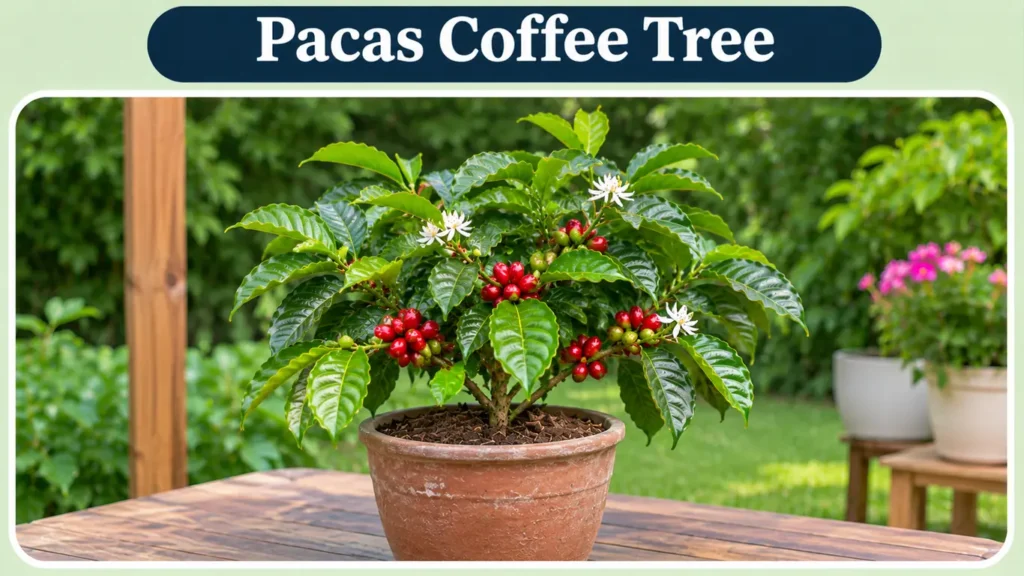
The Pacas Coffee Tree (Coffea arabica ‘Pacas’) is a naturally compact Arabica variety originally discovered in El Salvador. Known for its glossy green leaves, dense branching, and attractive appearance, this evergreen shrub is suitable for indoor container growing. As a natural mutation of Bourbon coffee, Pacas maintains a smaller growth habit than many traditional varieties. With bright indirect sunlight, moderate humidity, and proper watering, it can thrive indoors and may eventually produce coffee cherries.
Identification and Characteristics
- Scientific Name: Coffea arabica ‘Pacas’
- Common Name: Pacas Coffee Tree
- Origin: El Salvador
- Plant Type: Evergreen tropical shrub
- Indoor Height: 3–5 feet with pruning
- Leaf Color: Glossy dark green
- Flower Color: White
- Fruit Color: Red when ripe
- Sunlight: Bright, indirect sunlight
- Soil Type: Well-draining, slightly acidic soil
- Temperature: 65–75°F (18–24°C)
How to Grow Pacas Coffee Trees Indoors
Place your Pacas Coffee Tree near an east-facing window where it receives bright, filtered sunlight. Choose a container with drainage holes and fill it with nutrient-rich, slightly acidic potting soil.
Maintain warm temperatures and moderate to high humidity for healthy growth. Its naturally compact structure makes it easier to manage in containers, while occasional pruning helps maintain balanced branches.
Watering and Maintenance Tips
Water your Pacas Coffee Tree when the top inch of soil begins to dry. Keep the soil lightly moist without allowing excess water to accumulate around the roots. Apply a balanced fertilizer during spring and summer.
Remove damaged or overcrowded branches to maintain a healthy shape. Check the foliage regularly for spider mites, mealybugs, and other common indoor pests.
Benefits of Growing Pacas Coffee Trees Indoors
Pacas Coffee Trees offer attractive evergreen foliage and a compact growth habit, making them suitable for smaller indoor spaces. Their glossy leaves and dense branches create a beautiful tropical appearance.
Under favorable conditions, mature plants may produce fragrant white flowers and red coffee cherries. Their manageable size also makes them easier to maintain than larger coffee varieties.
12. Maragogype Coffee Tree

The Maragogype Coffee Tree (Coffea arabica ‘Maragogype’) is a distinctive Arabica coffee variety recognized for its unusually large leaves, cherries, and coffee beans. Originally discovered in Brazil, this variety is sometimes called Elephant Bean Coffee because of its oversized seeds. Its broad foliage and elegant branching structure create an attractive tropical appearance. Although Maragogype naturally grows taller than compact varieties, young plants can be maintained indoors in spacious containers with regular pruning and proper care.
Identification and Characteristics
- Scientific Name: Coffea arabica ‘Maragogype’
- Common Name: Maragogype Coffee Tree
- Origin: Brazil
- Plant Type: Evergreen tropical shrub or small tree
- Indoor Height: 4–6 feet with pruning
- Leaf Color: Large, glossy dark green
- Flower Color: White
- Fruit Color: Red when ripe
- Sunlight: Bright, indirect sunlight
- Soil Type: Well-draining, slightly acidic soil
- Temperature: 65–75°F (18–24°C)
How to Grow Maragogype Coffee Trees Indoors
Place your Maragogype Coffee Tree near a bright window that provides filtered sunlight throughout the day. Choose a large container with drainage holes and use slightly acidic, nutrient-rich potting soil.
Maintain warm temperatures and moderate to high humidity. Since Maragogype develops larger leaves and branches, provide sufficient growing space and prune occasionally to control its height.
Watering and Maintenance Tips
Water your Maragogype Coffee Tree when the upper inch of soil feels slightly dry. Keep the soil evenly moist but avoid waterlogging. Apply balanced fertilizer during the active growing season.
Remove weak, damaged, or excessively long branches to maintain an attractive canopy. Regularly inspect the leaves for spider mites, mealybugs, and signs of low humidity.
Benefits of Growing Maragogype Coffee Trees Indoors
Maragogype Coffee Trees provide an impressive tropical appearance with their unusually large, glossy leaves. Their distinctive foliage makes them attractive decorative plants for spacious indoor gardens.
Mature trees may produce fragrant white flowers and coffee cherries containing oversized beans. However, their vigorous growth and larger size make them more challenging to maintain indoors than dwarf coffee varieties.
13. Geisha Coffee Tree
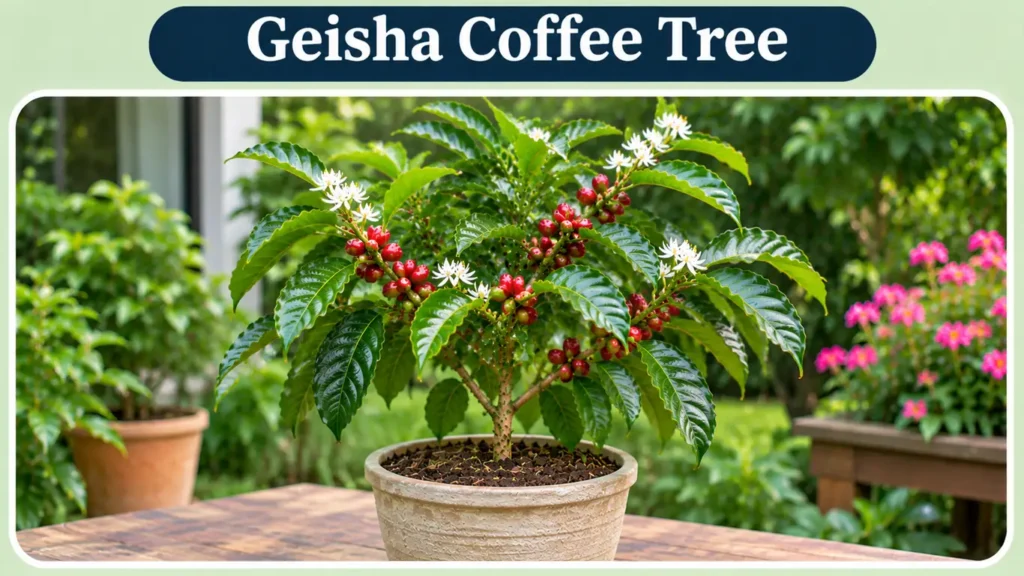
The Geisha Coffee Tree (Coffea arabica ‘Geisha’, also spelled Gesha) is a highly valued Arabica coffee variety famous for its exceptional coffee quality and elegant growth habit. Originating from Ethiopia and later gaining popularity in Panama, this evergreen plant features slender branches, glossy green leaves, and fragrant white flowers. Its attractive tropical appearance makes it an interesting choice for indoor gardeners. Although Geisha requires careful growing conditions, young plants can be cultivated in containers with sufficient light and humidity.
Identification and Characteristics
- Scientific Name: Coffea arabica ‘Geisha’
- Common Name: Geisha or Gesha Coffee Tree
- Origin: Ethiopia
- Plant Type: Evergreen tropical shrub
- Indoor Height: 4–6 feet with pruning
- Leaf Color: Glossy green
- Flower Color: White
- Fruit Color: Red or yellow, depending on the selection
- Sunlight: Bright, indirect sunlight
- Soil Type: Well-draining, slightly acidic soil
- Temperature: 65–75°F (18–24°C)
How to Grow Geisha Coffee Trees Indoors
Place your Geisha Coffee Tree near an east-facing window where it receives bright, indirect sunlight. Use a container with drainage holes and fill it with slightly acidic potting soil enriched with organic matter.
Maintain moderate temperatures and relatively high humidity. Protect the plant from cold drafts and intense afternoon sunlight. Occasional pruning helps control its naturally tall growth and maintain an attractive indoor shape.
Watering and Maintenance Tips
Water your Geisha Coffee Tree when the upper inch of soil begins to feel dry. Keep the soil consistently moist without allowing standing water around the roots. Apply a balanced fertilizer during spring and summer.
Remove dead, damaged, or overcrowded branches to maintain healthy growth. Check the leaves regularly for spider mites, mealybugs, and other common indoor pests.
Benefits of Growing Geisha Coffee Trees Indoors
Geisha Coffee Trees offer elegant evergreen foliage and a distinctive tropical appearance. Their slender branches and glossy leaves make them attractive ornamental plants for bright indoor spaces.
Under suitable conditions, mature plants may produce fragrant white flowers followed by colorful coffee cherries. Geisha is especially famous for its floral coffee flavor, although producing a meaningful harvest indoors can be difficult.
14. Eugenioides Coffee Tree
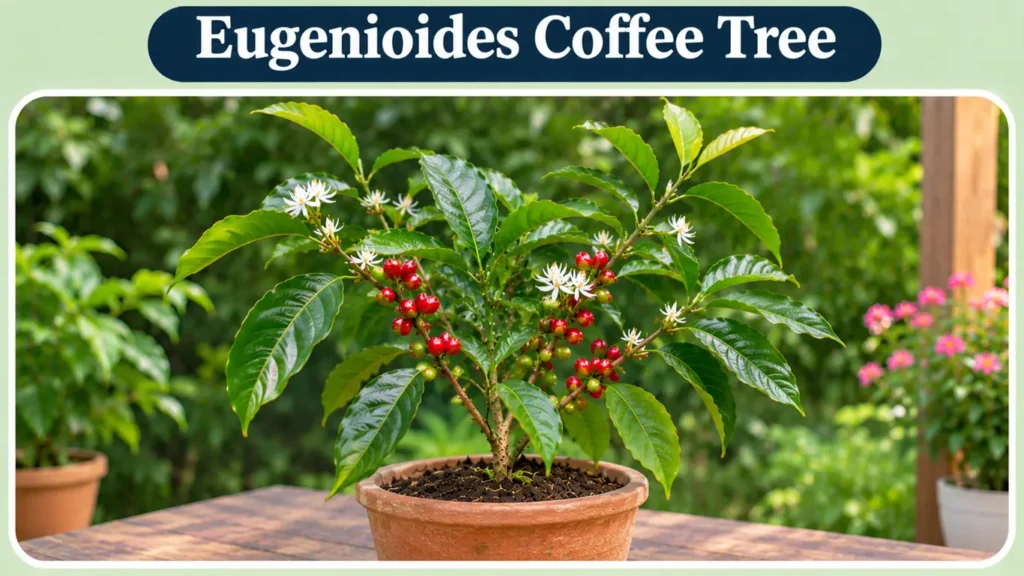
The Eugenioides Coffee Tree (Coffea eugenioides) is a rare tropical coffee species known for its naturally sweet coffee beans, attractive evergreen foliage, and delicate growth habit. Native to East Africa, this species is one of the ancestral parents of Arabica coffee. Its glossy green leaves and compact appearance make it an interesting choice for indoor gardeners. Although Eugenioides is less commonly available than traditional coffee varieties, it can grow in containers with proper sunlight, humidity, and consistent care.
Identification and Characteristics
- Scientific Name: Coffea eugenioides
- Common Name: Eugenioides Coffee Tree
- Origin: East Africa
- Plant Type: Evergreen tropical shrub
- Indoor Height: Approximately 3–5 feet with pruning
- Leaf Color: Glossy green
- Flower Color: White
- Fruit Color: Red when ripe
- Sunlight: Bright, indirect sunlight
- Soil Type: Well-draining, slightly acidic soil
- Temperature: 65–80°F (18–27°C)
How to Grow Eugenioides Coffee Trees Indoors
Place your Eugenioides Coffee Tree near an east-facing window where it receives bright, filtered sunlight. Choose a container with drainage holes and fill it with nutrient-rich, slightly acidic potting soil.
Maintain warm temperatures and moderate to high humidity. Protect the plant from intense afternoon sunlight and cold drafts. Occasional pruning helps maintain a compact, attractive shape.
Watering and Maintenance Tips
Water your Eugenioides Coffee Tree when the top inch of soil begins to dry. Keep the soil lightly moist without allowing water to collect around the roots. Apply a balanced fertilizer during the active growing season.
Remove damaged or overcrowded branches to encourage healthy growth. Check the foliage regularly for spider mites, mealybugs, and other common indoor pests.
Benefits of Growing Eugenioides Coffee Trees Indoors
Eugenioides Coffee Trees offer attractive evergreen foliage and a distinctive tropical appearance. Their manageable growth and glossy leaves make them interesting ornamental plants for indoor gardens.
This rare species is also valued for its naturally sweet coffee flavor and low caffeine content. Under favorable conditions, mature plants may produce fragrant white flowers and colorful coffee cherries, although indoor fruit production can be challenging.
15. Stenophylla Coffee Tree
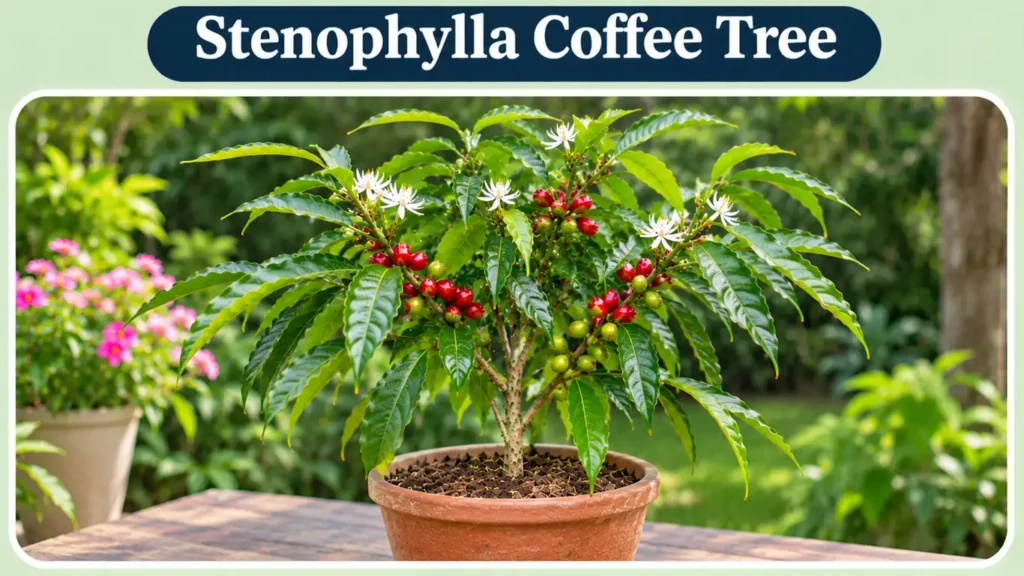
The Stenophylla Coffee Tree (Coffea stenophylla) is a rare coffee species admired for its narrow leaves, attractive evergreen appearance, and potential for producing high-quality coffee. Native to West Africa, particularly Sierra Leone, Guinea, and Ivory Coast, this tropical tree is recognized for its ability to tolerate warmer growing conditions than some commercial coffee species. Its slender foliage and graceful branches create a distinctive ornamental appearance. Young Stenophylla plants can be cultivated in spacious indoor containers with suitable light, humidity, and regular maintenance.
Identification and Characteristics
- Scientific Name: Coffea stenophylla
- Common Name: Stenophylla Coffee Tree
- Origin: West Africa
- Plant Type: Evergreen tropical shrub or tree
- Indoor Height: Approximately 4–6 feet with pruning
- Leaf Color: Dark green
- Leaf Shape: Narrow and elongated
- Flower Color: White
- Fruit Color: Dark purple to black when ripe
- Sunlight: Bright, filtered sunlight
- Soil Type: Well-draining, slightly acidic soil
- Temperature: Warm tropical conditions, approximately 70–85°F (21–29°C)
How to Grow Stenophylla Coffee Trees Indoors
Place your Stenophylla Coffee Tree near a bright window with filtered sunlight. Use a spacious container with drainage holes and fill it with slightly acidic, well-draining potting soil enriched with organic matter.
Maintain warm temperatures and moderate to high humidity for healthy growth. Since Stenophylla naturally develops into a larger tree, occasional pruning helps control its height and maintain a manageable indoor shape.
Watering and Maintenance Tips
Water your Stenophylla Coffee Tree when the upper inch of soil begins to feel dry. Keep the soil consistently moist but avoid excessive watering. Apply a balanced fertilizer during spring and summer to encourage healthy foliage.
Remove damaged, weak, or overcrowded branches to maintain an attractive appearance. Inspect the leaves regularly for spider mites, mealybugs, and signs of environmental stress.
Benefits of Growing Stenophylla Coffee Trees Indoors
Stenophylla Coffee Trees provide attractive tropical greenery with their distinctive narrow leaves and elegant branching structure. Their evergreen foliage adds natural beauty to spacious indoor gardens.
This rare coffee species is particularly interesting because of its heat tolerance and promising coffee flavor. Although mature trees can produce flowers and dark-colored cherries, indoor fruit production remains uncertain and requires favorable growing conditions.
FAQs
1. Which coffee tree is best for indoor growing?
Arabica Coffee Tree is one of the best choices for indoor growing. Dwarf Arabica, Caturra, and Pacas are also suitable because of their compact growth. These varieties thrive in bright, indirect sunlight, warm temperatures, and moderate humidity.
2. Can coffee trees grow indoors without direct sunlight?
Yes, coffee trees can grow indoors without direct sunlight, but they need plenty of bright, indirect light. Place them near an east-facing window or use a full-spectrum grow light. Avoid dark locations because insufficient light can slow growth.
3. How long does an indoor coffee tree take to produce beans?
Indoor coffee trees usually take three to five years to begin producing coffee cherries, depending on the variety and growing conditions. Adequate sunlight, humidity, and proper watering encourage flowering. However, indoor plants may produce fewer beans than outdoor trees.
4. How often should I water an indoor coffee tree?
Water your indoor coffee tree when the top inch of soil feels slightly dry. Most coffee plants prefer consistently moist but well-drained soil. Watering frequency depends on temperature, humidity, container size, and seasonal growth. Avoid overwatering to prevent root rot.
5. How tall do coffee trees grow indoors?
Most indoor coffee trees can be maintained around three to six feet tall through regular pruning. Dwarf varieties may remain smaller, making them suitable for apartments and limited spaces. Larger species, such as Liberica, require more room and frequent maintenance.