

Dracaena plants are popular indoor greenery known for their attractive foliage, unique shapes, and easy maintenance. From the elegant Madagascar Dragon Tree to the hardy Snake Plant, these tropical plants can brighten living rooms, offices, and bedrooms. In this guide, we’ll explore 15 types of Dracaena plants suitable for indoor growing, including their identification, ideal growing conditions, watering needs, and essential care tips.
1. Dracaena Fragrans (Corn Plant)
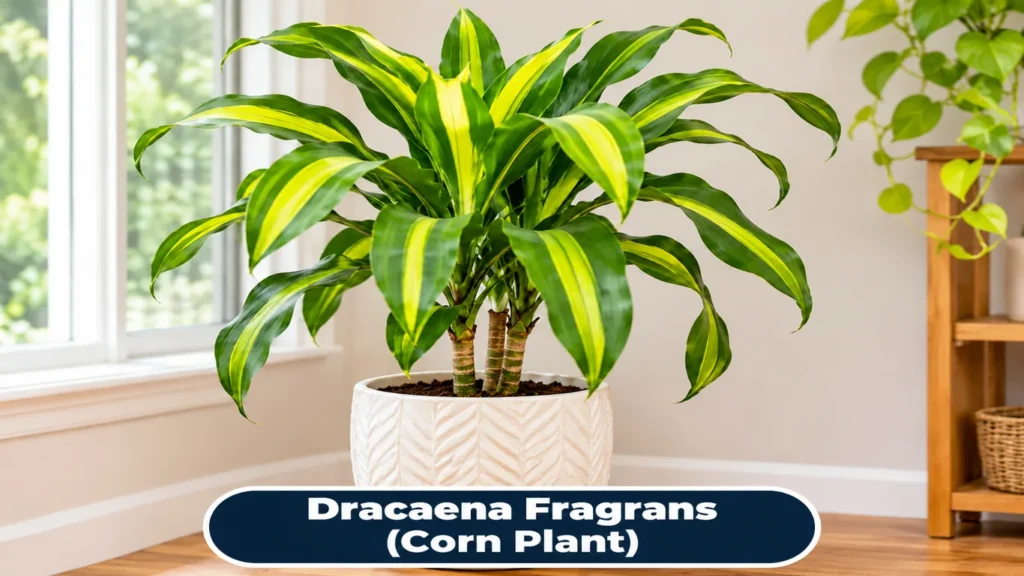
Dracaena fragrans, commonly known as the Corn Plant, is one of the most popular Dracaena species for indoor growing. This tropical evergreen plant features long, arching green leaves that resemble corn foliage. Its attractive appearance, low maintenance requirements, and ability to tolerate moderate indoor lighting make it an excellent choice for homes and offices. With proper care, it can grow into a beautiful indoor tree.
Identification
- Scientific Name: Dracaena fragrans
- Common Name: Corn Plant
- Plant Family: Asparagaceae
- Native Region: Tropical Africa
- Indoor Height: 3–6 feet, sometimes taller
- Leaf Color: Dark green, sometimes with yellow or lime-green stripes
- Leaf Shape: Long, broad, arching, sword-shaped leaves
- Growth Habit: Upright, woody stems with clusters of leaves
Ideal Indoor Growing Conditions
Dracaena fragrans grows best in bright, indirect sunlight but can tolerate low to moderate lighting conditions. Position the plant near an east-facing window or several feet away from a bright south-facing window. Avoid prolonged direct sunlight, which can scorch its leaves.
The ideal indoor temperature ranges from 65°F to 80°F (18°C to 27°C). This plant prefers moderate humidity and well-draining potting soil. A container with drainage holes helps prevent water accumulation around the roots.
Watering and Maintenance Tips
Water your Corn Plant when the top 1–2 inches of soil feel dry. Avoid overwatering because consistently soggy soil can cause root rot. Reduce watering during winter when plant growth naturally slows.
Remove yellow or damaged leaves and occasionally wipe the foliage with a damp cloth to remove dust. Apply a diluted balanced fertilizer every four to six weeks during spring and summer. With proper maintenance, Dracaena fragrans can remain healthy and attractive indoors for many years.
2. Dracaena Marginata (Madagascar Dragon Tree)
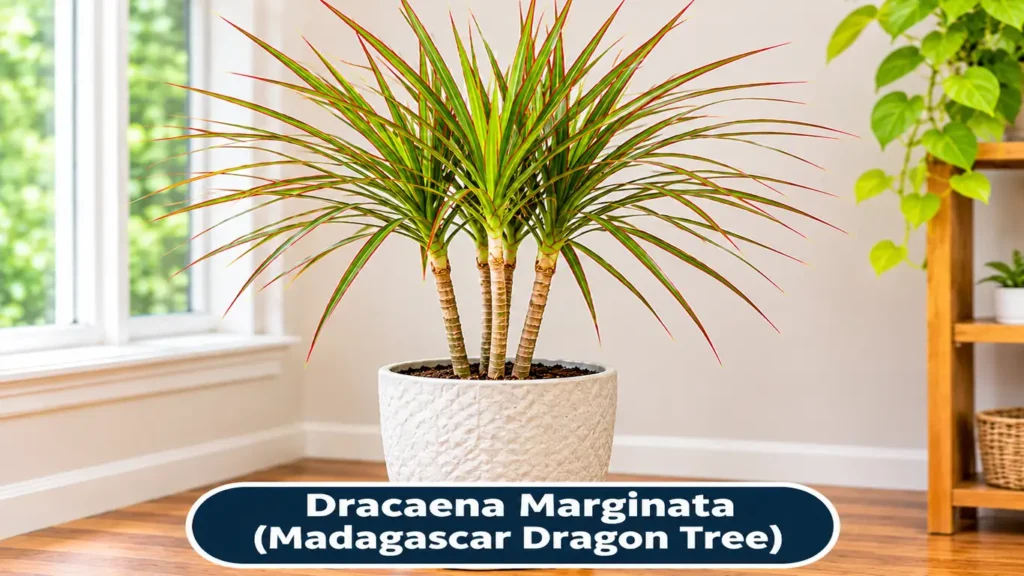
Dracaena marginata, commonly known as the Madagascar Dragon Tree, is a beautiful indoor plant recognized for its slender trunk and narrow, arching leaves with reddish-purple edges. Its upright growth habit and attractive foliage make it a popular choice for modern homes and offices. This slow-growing tropical plant requires minimal maintenance and adapts well to various indoor environments.
Identification
- Scientific Name: Dracaena marginata (Dracaena reflexa var. angustifolia)
- Common Name: Madagascar Dragon Tree
- Plant Family: Asparagaceae
- Native Region: Madagascar
- Indoor Height: 4–8 feet
- Leaf Color: Green with reddish-purple edges
- Leaf Shape: Long, narrow, pointed leaves
- Growth Habit: Upright, slender woody stems with clustered foliage
Ideal Indoor Growing Conditions
Madagascar Dragon Trees prefer bright, indirect sunlight but can tolerate moderate indoor lighting. Place the plant near an east-facing window or a few feet away from a south-facing window. Too much direct sunlight may cause leaf scorching, while insufficient light can slow its growth.
The ideal temperature ranges from 65°F to 80°F (18°C to 27°C). Use well-draining potting soil and a container with drainage holes. Moderate household humidity is generally sufficient for healthy growth.
Watering and Maintenance Tips
Water Dracaena marginata when the upper 2 inches of soil become dry. Avoid keeping the soil constantly wet, as excessive moisture can damage the roots.
Remove dead leaves and occasionally trim the stems to maintain the desired height. Feed the plant with diluted liquid fertilizer once every four to six weeks during its active growing season. Rotate the pot occasionally to encourage balanced growth.
3. Dracaena Reflexa (Song of India)

Dracaena reflexa, commonly called Song of India, is an attractive tropical plant known for its colorful, glossy foliage and bushy growth. Its narrow, pointed leaves often display green centers surrounded by bright yellow or cream-colored margins. This decorative plant adds a vibrant tropical appearance to indoor spaces and grows well in containers with proper lighting and watering.
Identification
- Scientific Name: Dracaena reflexa
- Common Name: Song of India
- Plant Family: Asparagaceae
- Native Region: Madagascar and other western Indian Ocean islands
- Indoor Height: 3–6 feet
- Leaf Color: Green with yellow or cream margins
- Leaf Shape: Narrow, pointed, slightly curved leaves
- Growth Habit: Bushy, branching stems with dense foliage
Ideal Indoor Growing Conditions
Song of India grows best in bright, indirect sunlight. Adequate lighting helps maintain its colorful variegated leaves. Position the plant near a bright window with filtered sunlight, avoiding intense afternoon sun that could damage the foliage.
Maintain temperatures between 65°F and 80°F (18°C to 27°C). The plant prefers moderate humidity and well-draining soil containing organic matter. Avoid placing it near cold drafts or direct heating vents.
Watering and Maintenance Tips
Water Dracaena reflexa when the top 1–2 inches of soil become dry. Allow excess water to drain completely and avoid leaving the container sitting in water.
Prune leggy branches to encourage a fuller appearance and remove yellow or damaged leaves regularly. Apply diluted balanced fertilizer every four to six weeks during spring and summer. Wiping the leaves with a damp cloth helps keep their glossy appearance.
4. Dracaena Sanderiana (Lucky Bamboo)
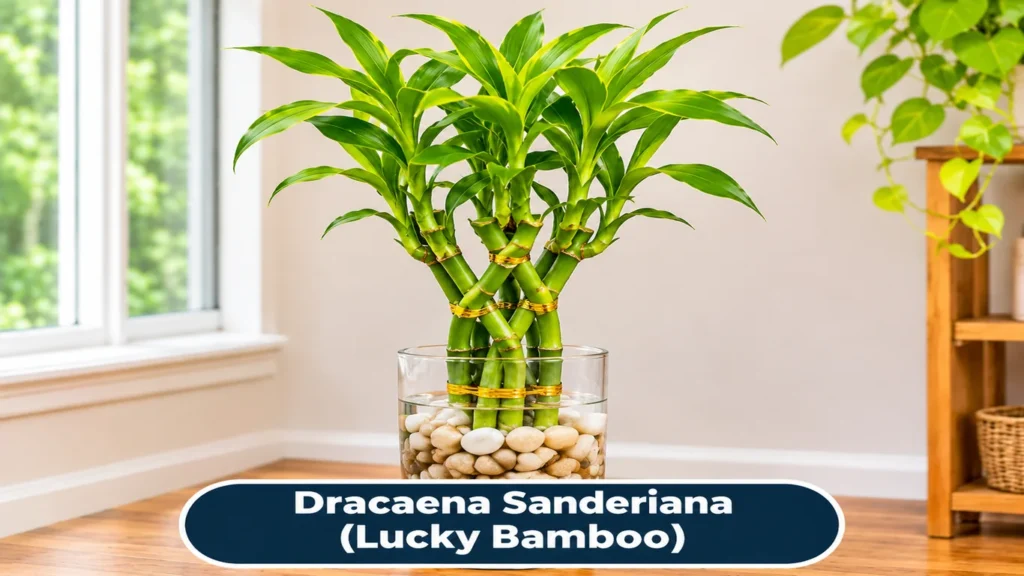
Dracaena sanderiana, commonly known as Lucky Bamboo, is a popular indoor ornamental plant recognized for its slender green stalks and attractive leaves. Despite its name, Lucky Bamboo is not a true bamboo species. It belongs to the Dracaena genus and can grow in either water or soil. Its compact appearance and flexible growing requirements make it suitable for desks, shelves, and small indoor spaces.
Identification
- Scientific Name: Dracaena sanderiana
- Common Name: Lucky Bamboo
- Plant Family: Asparagaceae
- Native Region: Central Africa
- Indoor Height: 1–3 feet
- Leaf Color: Bright green
- Leaf Shape: Narrow, lance-shaped leaves
- Growth Habit: Upright, segmented-looking green stems with leafy shoots
Ideal Indoor Growing Conditions
Lucky Bamboo prefers bright, indirect sunlight but can survive in moderate or low-light indoor environments. Avoid direct afternoon sunlight, which can turn its leaves yellow or brown.
The ideal temperature ranges from 65°F to 85°F (18°C to 29°C). It grows successfully in clean water or well-draining potting soil. When growing in water, keep the roots submerged while avoiding unnecessary immersion of the upper stems.
Watering and Maintenance Tips
For water-grown Lucky Bamboo, replace the water every one to two weeks to reduce algae buildup. Use distilled, filtered, or other low-mineral water if tap water causes leaf-tip browning.
For soil-grown plants, water when the upper inch of soil feels slightly dry. Avoid excessive fertilizer, as Lucky Bamboo is sensitive to mineral buildup. Remove yellow leaves and trim overgrown shoots to maintain its attractive shape.
5. Dracaena Deremensis (Janet Craig Dracaena)

Dracaena deremensis, commonly known as Janet Craig Dracaena, is a popular indoor plant admired for its glossy, dark green foliage and upright growth habit. It is generally treated as part of the Dracaena fragrans species. Its elegant appearance and ability to tolerate lower light conditions make it an excellent choice for homes, offices, and indoor corners. This low-maintenance tropical plant can remain attractive for many years with proper care.
Identification
- Scientific Name: Dracaena fragrans ‘Janet Craig’
- Common Name: Janet Craig Dracaena
- Plant Family: Asparagaceae
- Native Region: Tropical Africa (parent species)
- Indoor Height: 3–6 feet
- Leaf Color: Deep, glossy green
- Leaf Shape: Long, broad, arching leaves
- Growth Habit: Upright woody stems with dense clusters of foliage
Ideal Indoor Growing Conditions
Janet Craig Dracaena grows best in medium to bright, indirect sunlight but can tolerate low-light environments. Position it near an east-facing window or in a room with filtered natural light. Avoid prolonged exposure to direct afternoon sunlight, which may scorch its leaves.
The ideal temperature ranges from 65°F to 80°F (18°C to 27°C). Use well-draining potting soil and maintain moderate indoor humidity. Protect the plant from cold drafts and sudden temperature changes.
Watering and Maintenance Tips
Water Janet Craig Dracaena when the upper 1–2 inches of soil feel dry. Allow excess water to drain completely to prevent root rot.
Clean the leaves occasionally with a damp cloth to remove dust. Apply diluted balanced fertilizer every four to six weeks during spring and summer. Remove damaged foliage and prune overly tall stems to maintain its appearance.
6. Dracaena Surculosa (Gold Dust Dracaena)

Dracaena surculosa, commonly called Gold Dust Dracaena, is a distinctive indoor ornamental plant known for its spotted foliage and compact, branching growth. Unlike many upright Dracaena species, this plant produces slender, bamboo-like stems with oval leaves decorated with cream or yellow spots. Its unusual appearance makes it an attractive addition to tabletops, plant stands, and indoor garden collections.
Identification
- Scientific Name: Dracaena surculosa
- Common Name: Gold Dust Dracaena
- Plant Family: Asparagaceae
- Native Region: Tropical West and Central Africa
- Indoor Height: 2–4 feet
- Leaf Color: Dark green with cream or yellow spots
- Leaf Shape: Oval to elliptical, pointed leaves
- Growth Habit: Bushy, branching stems with spotted foliage
Ideal Indoor Growing Conditions
Gold Dust Dracaena prefers bright, indirect sunlight to maintain its attractive leaf patterns. It can tolerate moderate lighting, although insufficient light may reduce the visibility of its colorful spots. Place the plant near a bright window with filtered sunlight.
Maintain temperatures between 65°F and 80°F (18°C to 27°C). This species appreciates moderate to high humidity and well-draining soil enriched with organic matter. Avoid exposing it to cold drafts or excessively dry air.
Watering and Maintenance Tips
Water Dracaena surculosa when the top inch of soil begins to feel dry. Keep the soil lightly moist during active growth without allowing it to become waterlogged.
Prune long or uneven stems to encourage bushier growth. Remove yellow or damaged leaves to maintain a healthy appearance. Feed the plant with diluted liquid fertilizer every four to six weeks during spring and summer.
7. Dracaena Draco (Dragon Tree)
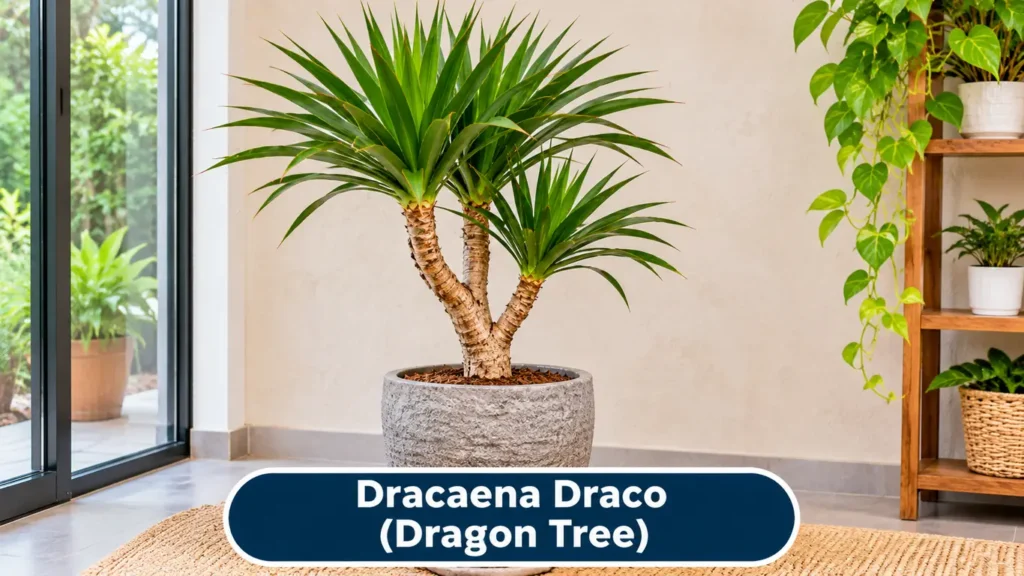
Dracaena draco, commonly known as the Dragon Tree, is a striking evergreen plant recognized for its thick trunk and clusters of long, sword-shaped leaves. Native to the Canary Islands and nearby regions, this slow-growing species develops a dramatic tree-like appearance as it matures. Although it can become very large outdoors, young Dragon Trees can be grown successfully indoors in spacious containers with adequate sunlight.
Identification
- Scientific Name: Dracaena draco
- Common Name: Dragon Tree
- Plant Family: Asparagaceae
- Native Region: Canary Islands, Madeira, and northwestern Africa
- Indoor Height: Usually 3–6 feet in containers
- Leaf Color: Bluish-green to grayish-green
- Leaf Shape: Long, stiff, sword-shaped leaves
- Growth Habit: Slow-growing, upright trunk with a rosette of foliage
Ideal Indoor Growing Conditions
Dragon Trees prefer bright light and can tolerate several hours of direct sunlight when gradually acclimated. Position the plant near a sunny south-facing or west-facing window for healthy indoor growth. Insufficient sunlight may result in weak or slow development.
The ideal temperature ranges from 65°F to 85°F (18°C to 29°C). Use a fast-draining soil mixture containing sand, perlite, or other coarse materials. This drought-tolerant plant generally performs well in normal household humidity.
Watering and Maintenance Tips
Water Dracaena draco thoroughly when much of the potting soil has dried. Its drought tolerance makes it sensitive to frequent watering, especially during winter.
Remove dead or damaged lower leaves when necessary. Apply a diluted balanced fertilizer once every six to eight weeks during spring and summer. Repot only when the roots become crowded, as this species grows slowly and does not require frequent container changes.
8. Dracaena Angolensis (Cylindrical Snake Plant)

Dracaena angolensis, commonly known as the Cylindrical Snake Plant, is a unique indoor plant recognized for its thick, cylindrical leaves that grow upright from the soil. Formerly classified as Sansevieria cylindrica, this hardy succulent is popular for its architectural appearance and low-maintenance requirements. Its drought tolerance and ability to adapt to different indoor lighting conditions make it an excellent choice for bedrooms, offices, and modern living spaces.
Identification
- Scientific Name: Dracaena angolensis
- Common Name: Cylindrical Snake Plant
- Plant Family: Asparagaceae
- Native Region: Angola, Africa
- Indoor Height: 2–4 feet
- Leaf Color: Dark green with lighter green horizontal bands
- Leaf Shape: Thick, cylindrical, pointed leaves
- Growth Habit: Upright, succulent leaves emerging from underground rhizomes
Ideal Indoor Growing Conditions
Cylindrical Snake Plants grow best in bright, indirect sunlight but can tolerate low to moderate indoor lighting. Place the plant near an east-facing window or in a bright room with filtered sunlight. Gradually acclimated plants can also tolerate some direct sunlight.
The ideal temperature ranges from 65°F to 85°F (18°C to 29°C). Use well-draining cactus or succulent potting soil to prevent excess moisture around the roots. This plant tolerates dry indoor air and does not require additional humidity.
Watering and Maintenance Tips
Water Dracaena angolensis only when the potting soil has dried completely. Its thick leaves store water, allowing it to survive extended periods without frequent watering.
Reduce watering during winter when growth slows. Remove damaged leaves near their base using clean pruning tools. Apply diluted succulent fertilizer once or twice during the growing season. Avoid overwatering, which can cause root rot and leaf softening.
9. Dracaena Trifasciata (Snake Plant)

Dracaena trifasciata, commonly called the Snake Plant or Mother-in-Law’s Tongue, is one of the most recognizable indoor plants. Previously known as Sansevieria trifasciata, this evergreen perennial features stiff, upright leaves decorated with attractive green patterns. Its exceptional drought tolerance, simple care requirements, and adaptability to indoor environments make it a favorite among beginners and experienced plant enthusiasts.
Identification
- Scientific Name: Dracaena trifasciata
- Common Name: Snake Plant
- Plant Family: Asparagaceae
- Native Region: Tropical West and Central Africa
- Indoor Height: 1–4 feet
- Leaf Color: Dark green with grayish-green horizontal bands
- Leaf Shape: Long, flat, sword-shaped leaves
- Growth Habit: Upright, clustered foliage emerging from underground rhizomes
Ideal Indoor Growing Conditions
Snake Plants prefer bright, indirect sunlight but can survive in low-light areas. For stronger growth and attractive foliage, position the plant near an east-facing or west-facing window. Avoid suddenly exposing a shade-grown plant to intense direct sunlight.
Maintain indoor temperatures between 65°F and 85°F (18°C to 29°C). Use a well-draining cactus or succulent soil mixture and a container with drainage holes. Snake Plants tolerate normal household humidity and dry indoor conditions.
Watering and Maintenance Tips
Allow the soil to dry completely between watering sessions. Water thoroughly, then let excess moisture drain from the container. Avoid frequent watering because Snake Plants are particularly sensitive to waterlogged soil.
Remove yellow or damaged leaves using clean scissors. Wipe the foliage occasionally to remove accumulated dust. Apply diluted balanced fertilizer once every four to eight weeks during spring and summer. Repot when the roots or rhizomes become crowded.
10. Dracaena Masoniana (Whale Fin Snake Plant)

Dracaena masoniana, commonly known as the Whale Fin Snake Plant, is a distinctive indoor ornamental plant admired for its unusually broad, paddle-shaped leaves. Formerly classified as Sansevieria masoniana, this slow-growing succulent often produces one or a few large, upright leaves resembling a whale’s fin. Its bold appearance and minimal care requirements make it suitable for modern interiors, tabletops, and decorative plant collections.
Identification
- Scientific Name: Dracaena masoniana
- Common Name: Whale Fin Snake Plant
- Plant Family: Asparagaceae
- Native Region: Democratic Republic of the Congo
- Indoor Height: 1–3 feet
- Leaf Color: Dark green with lighter green mottled patterns
- Leaf Shape: Very broad, thick, paddle-shaped leaves
- Growth Habit: Slow-growing, upright succulent foliage arising from rhizomes
Ideal Indoor Growing Conditions
Whale Fin Snake Plants thrive in bright, indirect sunlight but can tolerate moderate indoor lighting. Position the plant near a bright window where it receives filtered sunlight throughout the day. Too little light may significantly slow its already gradual growth.
The ideal temperature ranges from 65°F to 85°F (18°C to 29°C). Use a well-draining succulent potting mix containing perlite or coarse sand. This plant tolerates low household humidity and generally requires no additional misting.
Watering and Maintenance Tips
Water Dracaena masoniana only after the potting soil has dried completely. Its thick leaves and rhizomes store moisture, making frequent watering unnecessary.
Reduce watering during cooler months to prevent root problems. Remove damaged or yellow leaves when needed, although healthy leaves should be preserved because the plant grows slowly. Feed with diluted succulent fertilizer once or twice during spring and summer. Repot only when necessary to avoid disturbing its roots.
11. Dracaena Braunii (Ribbon Dracaena)

Dracaena braunii, commonly known as Ribbon Dracaena, is an attractive tropical evergreen plant that grows well in indoor environments. It features slender stems and narrow, glossy green leaves that create a fresh, elegant appearance. This species is closely associated with plants sold as Lucky Bamboo. Its compact growth habit and ability to adapt to moderate indoor lighting make it suitable for desks, shelves, and small living spaces.
Identification
- Scientific Name: Dracaena braunii
- Common Name: Ribbon Dracaena
- Plant Family: Asparagaceae
- Native Region: Tropical Central Africa
- Indoor Height: 1–3 feet
- Leaf Color: Bright green, sometimes with lighter stripes
- Leaf Shape: Narrow, lance-shaped, pointed leaves
- Growth Habit: Upright, slender stems with clusters of leaves
Ideal Indoor Growing Conditions
Ribbon Dracaena grows best in bright, indirect sunlight but can tolerate moderate indoor lighting. Place the plant near an east-facing window or in a location that receives filtered natural light. Avoid intense afternoon sunlight, which may scorch its delicate foliage.
The ideal indoor temperature ranges from 65°F to 85°F (18°C to 29°C). This plant prefers moderate humidity and grows well in a loose, well-draining potting mixture. It can also be maintained in water under suitable conditions.
Watering and Maintenance Tips
For soil-grown Ribbon Dracaena, water when the upper inch of soil begins to dry. Avoid allowing the roots to remain in waterlogged conditions.
If grown in water, replace the water every one to two weeks and keep the roots submerged. Remove yellow or damaged leaves regularly. Apply a small amount of diluted fertilizer during spring and summer to support healthy growth.
12. Dracaena Arborea (Tree Dracaena)

Dracaena arborea, commonly called Tree Dracaena, is a tropical evergreen species recognized for its tall, upright growth and clusters of long, narrow leaves. Its architectural appearance makes it an attractive ornamental plant for spacious indoor areas. Although this species can grow into a large tree outdoors, younger specimens can be maintained in containers indoors. Its elegant foliage adds a natural tropical atmosphere to living rooms, hallways, and offices.
Identification
- Scientific Name: Dracaena arborea
- Common Name: Tree Dracaena
- Plant Family: Asparagaceae
- Native Region: Tropical Africa
- Indoor Height: Approximately 4–8 feet with suitable conditions
- Leaf Color: Deep green
- Leaf Shape: Long, narrow, sword-shaped leaves
- Growth Habit: Upright woody trunk with dense clusters of foliage
Ideal Indoor Growing Conditions
Tree Dracaena prefers bright, indirect sunlight for healthy growth. Place the plant near a large window with filtered natural light. It may tolerate moderate light, although insufficient sunlight can cause slower growth and weaker foliage.
Maintain indoor temperatures between 65°F and 85°F (18°C to 29°C). Use a loose, well-draining potting mixture containing organic matter and perlite. Moderate humidity supports healthy foliage, but the plant can adapt to typical household conditions.
Watering and Maintenance Tips
Water Dracaena arborea when the upper 2 inches of soil become dry. Avoid excessive watering because consistently wet soil may encourage root rot.
Remove dead or damaged leaves to maintain its attractive appearance. Apply diluted balanced fertilizer every four to six weeks during spring and summer. Rotate the container occasionally for even growth and repot when the root system becomes crowded.
13. Dracaena Aubryana (Aubry’s Dracaena)

Dracaena aubryana, commonly known as Aubry’s Dracaena, is a tropical African plant admired for its broad, glossy green leaves and attractive upright growth. Compared with many narrow-leaved Dracaena species, it has wider foliage that creates a lush appearance. Although less common in indoor plant collections, young specimens can be grown successfully in containers when provided with suitable lighting, warmth, and humidity.
Identification
- Scientific Name: Dracaena aubryana
- Common Name: Aubry’s Dracaena
- Plant Family: Asparagaceae
- Native Region: Tropical Central Africa
- Indoor Height: Approximately 2–5 feet in containers
- Leaf Color: Deep, glossy green
- Leaf Shape: Broad, elongated, lance-shaped leaves
- Growth Habit: Upright stems with clusters of broad foliage
Ideal Indoor Growing Conditions
Aubry’s Dracaena grows best in bright, indirect sunlight. Position the plant near an east-facing window or in a room that receives plenty of filtered natural light. Avoid prolonged direct sunlight because intense exposure may damage its broad leaves.
The ideal temperature ranges from 65°F to 80°F (18°C to 27°C). This tropical species benefits from moderate to high humidity. Use a well-draining potting mixture enriched with organic matter to encourage healthy root development.
Watering and Maintenance Tips
Water Dracaena aubryana when the top 1–2 inches of soil begin to dry. Maintain moderate soil moisture without allowing the container to become waterlogged.
Wipe the broad leaves occasionally with a damp cloth to remove dust. Remove yellow or damaged foliage using clean pruning tools. Apply diluted balanced fertilizer every four to six weeks during active growth. Keep the plant away from cold drafts and heating vents.
14. Dracaena Aletriformis (Large-Leaved Dragon Tree)

Dracaena aletriformis, commonly known as the Large-Leaved Dragon Tree, is an attractive evergreen plant native to southern Africa. It features broad, glossy green leaves that form dense clusters at the ends of its stems. Unlike narrow-leaved Dracaena varieties, this species creates a lush, tropical appearance. Young plants can be grown indoors in containers, making them suitable for bright living rooms, offices, and indoor plant collections.
Identification
- Scientific Name: Dracaena aletriformis
- Common Name: Large-Leaved Dragon Tree
- Plant Family: Asparagaceae
- Native Region: Southern Africa
- Indoor Height: Approximately 3–6 feet in containers
- Leaf Color: Deep, glossy green
- Leaf Shape: Broad, lance-shaped leaves with pointed tips
- Growth Habit: Upright woody stems with clusters of large leaves
Ideal Indoor Growing Conditions
Dracaena aletriformis prefers bright, indirect sunlight for healthy indoor growth. Position the plant near an east-facing window or a bright south-facing window with filtered sunlight. Although it can tolerate partial shade, insufficient light may slow its development.
The ideal temperature ranges from 65°F to 80°F (18°C to 27°C). Use a well-draining potting mixture containing organic matter and perlite. Moderate household humidity is generally suitable, although slightly higher humidity may benefit its broad foliage.
Watering and Maintenance Tips
Water the Large-Leaved Dragon Tree when the upper 1–2 inches of soil feel dry. Allow excess water to drain completely to prevent root rot.
Remove yellow or damaged leaves to maintain its attractive appearance. Wipe the foliage occasionally with a damp cloth to remove dust. Apply diluted balanced fertilizer every four to six weeks during spring and summer. Repot when the roots become crowded.
15. Dracaena Reflexa Var. Angustifolia (Red-Edged Dracaena)
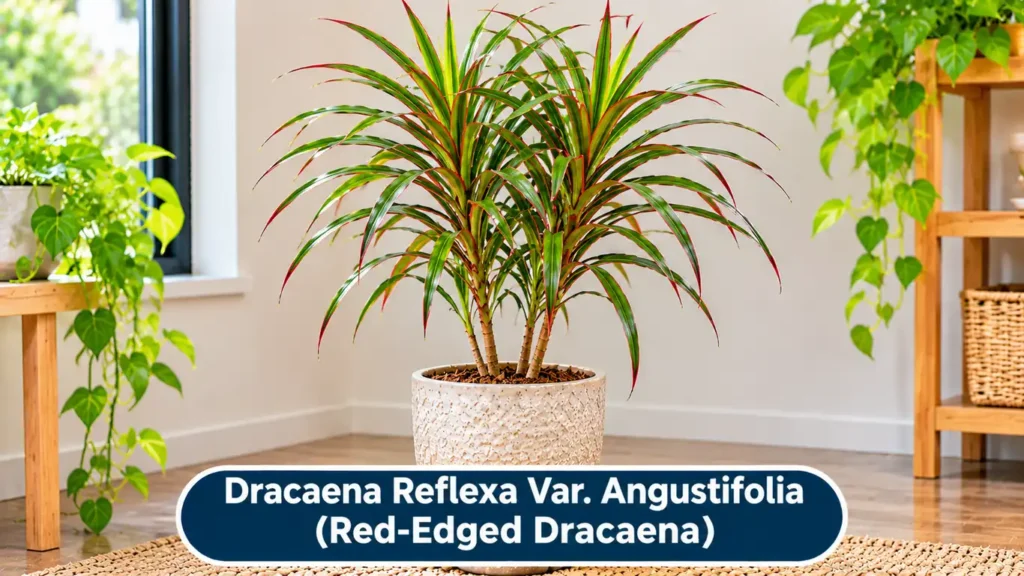
Dracaena reflexa var. angustifolia, commonly known as the Red-Edged Dracaena or Madagascar Dragon Tree, is a popular indoor ornamental plant recognized for its slender stems and narrow green leaves with reddish margins. Its elegant, upright growth makes it an attractive choice for modern interiors. This variety is closely associated with Dracaena marginata and is valued for its relatively simple care requirements and adaptability to indoor environments.
Identification
- Scientific Name: Dracaena reflexa var. angustifolia
- Common Name: Red-Edged Dracaena
- Plant Family: Asparagaceae
- Native Region: Madagascar
- Indoor Height: 4–8 feet
- Leaf Color: Green with red or reddish-purple edges
- Leaf Shape: Long, narrow, arching, sword-shaped leaves
- Growth Habit: Upright, slender woody stems with clusters of narrow foliage
Ideal Indoor Growing Conditions
Red-Edged Dracaena grows best in bright, indirect sunlight but can tolerate moderate indoor lighting. Place the plant near an east-facing window or several feet away from a bright south-facing window. Avoid intense afternoon sunlight, which can scorch the leaves.
Maintain temperatures between 65°F and 80°F (18°C to 27°C). This plant performs well in normal household humidity and prefers loose, well-draining potting soil. Protect it from cold drafts and sudden temperature changes.
Watering and Maintenance Tips
Water Dracaena reflexa var. angustifolia when the upper 2 inches of soil become dry. Allow excess moisture to drain completely, as continuously wet soil may cause root problems.
Remove dead or damaged leaves regularly. Prune tall stems when necessary to control the plant’s height and encourage branching. Apply diluted balanced fertilizer every four to six weeks during spring and summer. Rotate the container occasionally to promote even growth.
FAQs
1. Which Dracaena species are best for indoor growing?
Dracaena fragrans, Dracaena marginata, Dracaena reflexa, and Dracaena trifasciata are among the best choices for indoor growing. These plants tolerate typical household conditions and require relatively little maintenance. They also provide attractive foliage and grow well in containers with proper lighting and watering.
2. Can Dracaena plants grow indoors without sunlight?
Dracaena plants can survive in low-light environments, but they still need some light to grow. Species such as Dracaena fragrans and Dracaena trifasciata tolerate limited natural light. However, bright, indirect sunlight or suitable artificial grow lights encourage healthier foliage and stronger growth.
3. How often should I water indoor Dracaena plants?
Most indoor Dracaena plants need watering when the upper 1–2 inches of soil become dry. However, succulent species such as Dracaena trifasciata require less frequent watering and should dry out completely between waterings. Always check soil moisture before watering to prevent root rot.
4. Are Dracaena plants safe for cats and dogs?
No, Dracaena plants are generally toxic to cats and dogs when ingested. They contain compounds called saponins, which may cause vomiting, drooling, and digestive discomfort. Keep these plants away from pets and contact a veterinarian if your animal eats any part of the plant.
5. How can I make my indoor Dracaena grow faster?
Provide bright, indirect sunlight, appropriate watering, well-draining soil, and warm temperatures to encourage healthy growth. Apply diluted balanced fertilizer during spring and summer. Avoid overwatering and cold drafts. Remember that many Dracaena species naturally grow slowly, even under ideal indoor conditions.