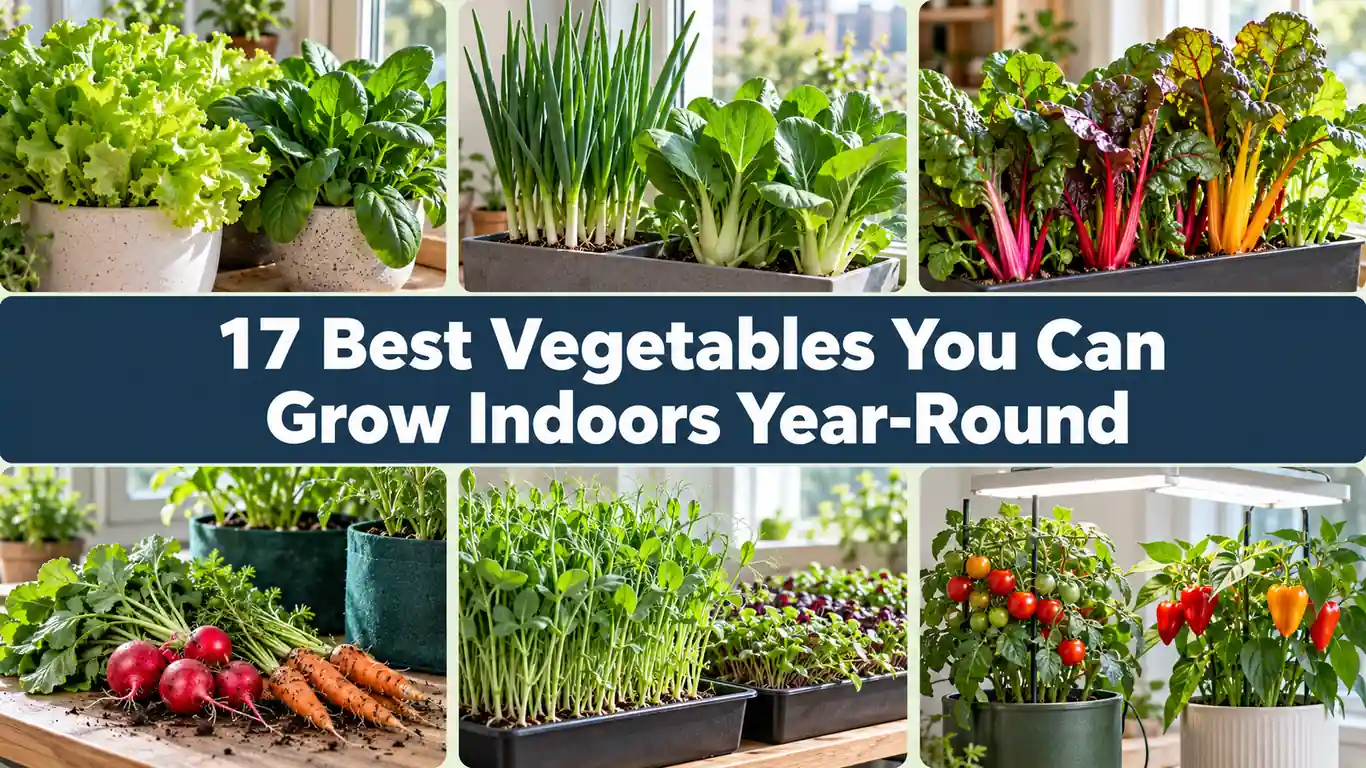
Growing fresh vegetables indoors is a great way to enjoy healthy, homegrown food throughout the year, even with limited space. Whether you have a sunny windowsill, a small kitchen, or an indoor garden setup, many vegetables can thrive inside your home. From leafy greens and root vegetables to tomatoes and peppers, these 17 best vegetables you can grow indoors are perfect for beginners and experienced gardeners alike.
1. Lettuce
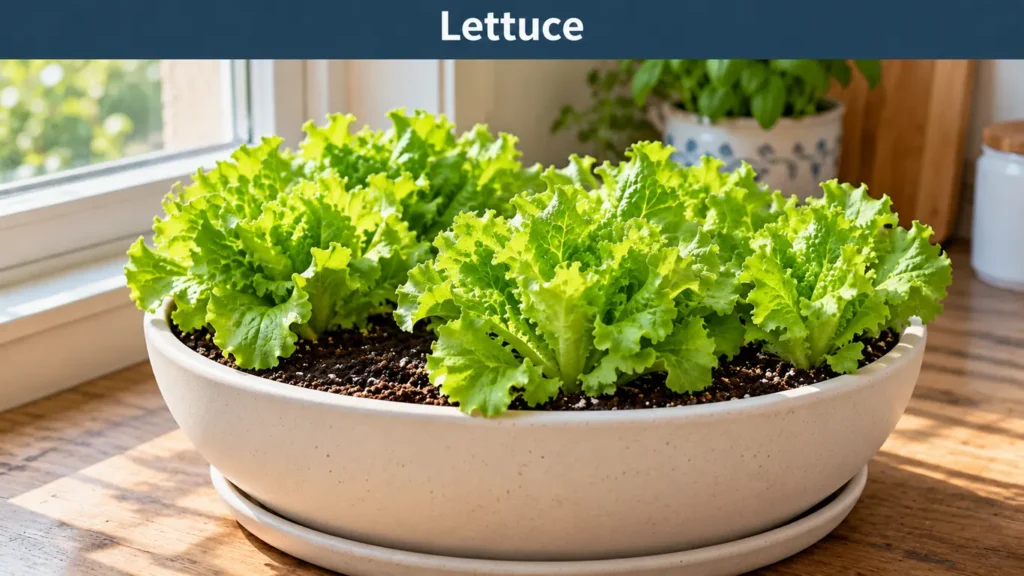
Lettuce is one of the easiest and fastest-growing vegetables you can grow indoors, making it an excellent choice for beginners. This leafy green vegetable grows well in containers, requires relatively little space, and can provide fresh harvests throughout the year. Lettuce is particularly suitable for kitchen windowsills, indoor garden shelves, and small growing areas. With proper lighting, watering, and temperature control, you can enjoy fresh, homegrown lettuce for salads, sandwiches, and healthy meals.
Identification and Popular Varieties
Lettuce is a cool-season leafy vegetable known for its tender leaves and mild flavor. Different varieties offer unique colors, textures, and growing habits, making them attractive additions to indoor vegetable gardens.
- Butterhead Lettuce: Produces soft, tender leaves with a mild, buttery flavor.
- Romaine Lettuce: Features upright, elongated leaves with a crisp texture.
- Loose-Leaf Lettuce: Grows quickly and allows repeated harvesting of individual leaves.
- Oak Leaf Lettuce: Has deeply lobed leaves available in green and reddish shades.
- Little Gem Lettuce: A compact romaine variety suitable for small indoor containers.
Ideal Indoor Growing Conditions
Lettuce grows best in cool temperatures between 60°F and 70°F (15°C–21°C). Place containers near a bright window that receives several hours of sunlight daily, or use full-spectrum LED grow lights for approximately 12–16 hours. Choose pots at least 6 inches deep with drainage holes and fill them with nutrient-rich, well-draining potting mix. Maintain consistent soil moisture without allowing the roots to become waterlogged. Loose-leaf and compact lettuce varieties are especially suitable for limited indoor growing spaces.
Watering and Maintenance Tips
Water lettuce whenever the upper surface of the soil begins to feel dry, keeping the growing medium consistently moist but not soggy. Use a balanced, diluted liquid fertilizer occasionally to support healthy leaf development. Remove yellowing or damaged leaves to encourage fresh growth and maintain good airflow around the plants. For continuous harvesting, pick the outer leaves when they reach a usable size, leaving the center intact. Most baby lettuce leaves can be harvested within approximately 25–35 days, depending on the variety and growing conditions.
2. Spinach
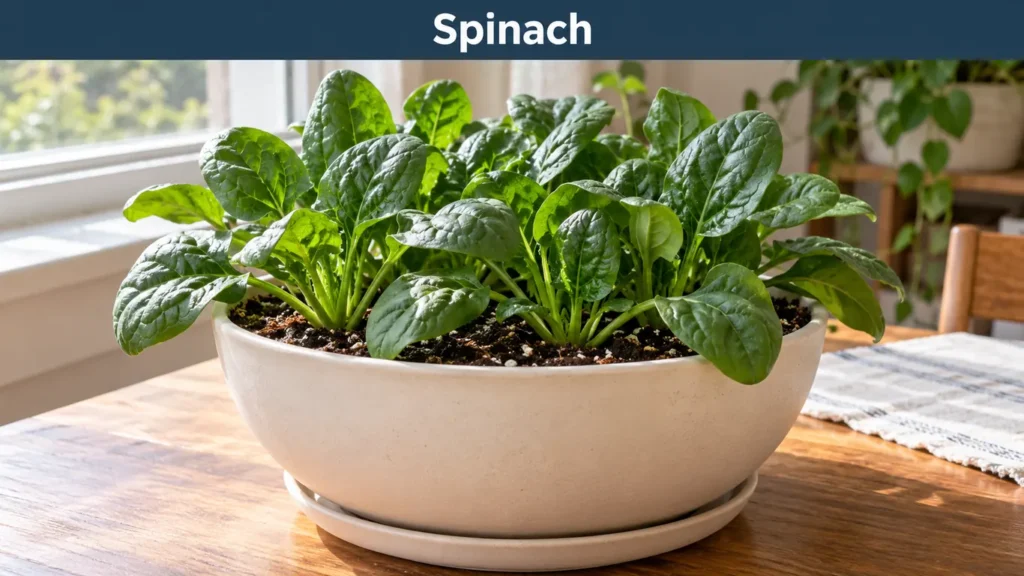
Spinach is a nutritious and fast-growing leafy vegetable that grows well indoors with proper care. Known for its tender green leaves and mild flavor, spinach is an excellent choice for home gardeners who want fresh vegetables throughout the year. It requires relatively little space and can thrive in containers, making it suitable for kitchen windowsills, indoor garden shelves, and small apartments. With sufficient lighting, cool temperatures, and regular watering, indoor spinach plants can produce fresh leaves for salads, smoothies, soups, and everyday cooking.
Identification and Popular Varieties
Spinach is a cool-season leafy vegetable recognized by its smooth or slightly crinkled green leaves. Different varieties offer unique textures, growth habits, and levels of heat tolerance, making some particularly suitable for indoor container gardening.
- Bloomsdale Spinach: Produces dark green, crinkled leaves with a rich flavor.
- Baby’s Leaf Spinach: A compact variety grown for tender, young leaves.
- Space Spinach: Features smooth, dark green leaves and grows well in containers.
- Tyee Spinach: Produces thick, slightly savoyed leaves and has good disease resistance.
- Regiment Spinach: A vigorous variety with tender, flavorful leaves suitable for regular harvesting.
Ideal Indoor Growing Conditions
Spinach grows best in cool temperatures between 50°F and 70°F (10°C–21°C). Place containers near a bright window that receives several hours of direct sunlight, or use full-spectrum LED grow lights for approximately 12–14 hours daily. Choose containers at least 6–8 inches deep with drainage holes and fill them with loose, nutrient-rich, well-draining potting mix. Maintain consistent soil moisture and provide adequate airflow around the plants. Spinach prefers cooler growing environments, as excessive heat can encourage early flowering and reduce leaf quality.
Watering and Maintenance Tips
Water spinach regularly to keep the soil evenly moist without becoming waterlogged. Check the upper layer of soil frequently and water when it begins to dry. Apply a diluted, nitrogen-rich liquid fertilizer occasionally to encourage healthy leaf development. Remove yellowing or damaged leaves and avoid overcrowding the plants. Harvest baby spinach leaves when they reach approximately 3–4 inches long, usually within 25–35 days under favorable conditions. Pick the outer leaves first, allowing the center to continue producing fresh growth for additional harvests.
3. Kale
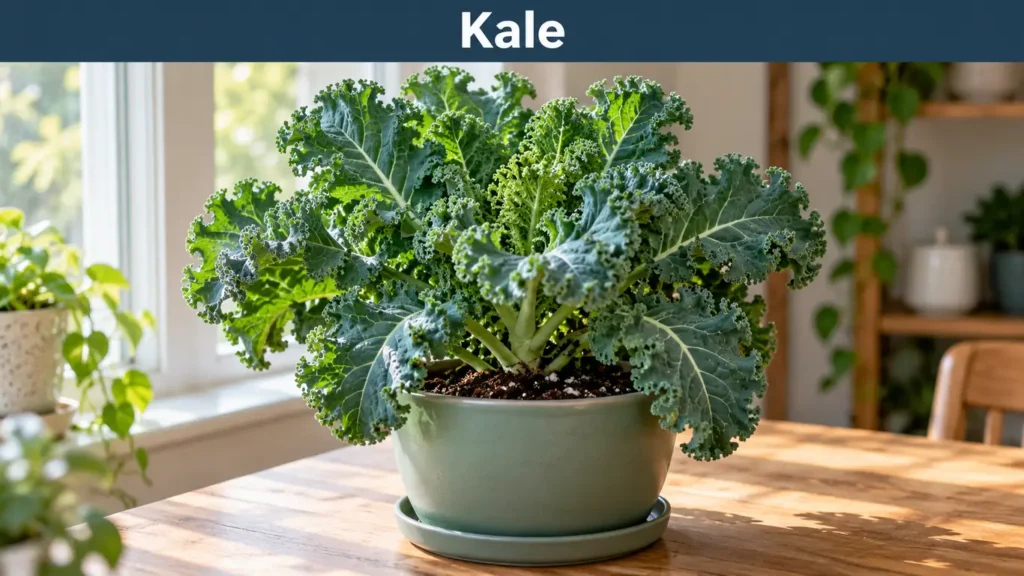
Kale is a hardy and nutrient-rich leafy vegetable that can grow successfully indoors throughout the year. Its attractive green or purple leaves make it both a productive vegetable and a decorative addition to indoor gardening spaces. Kale is particularly suitable for container gardening because young leaves can be harvested repeatedly without removing the entire plant. With adequate lighting, moderate temperatures, and consistent care, indoor kale can provide a reliable supply of fresh greens for salads, smoothies, soups, and healthy homemade meals.
Identification and Popular Varieties
Kale is a leafy vegetable belonging to the cabbage family and is recognized by its textured leaves and sturdy growth habit. Different varieties produce curly, flat, or deeply divided foliage, offering interesting colors and flavors for indoor gardens.
- Dwarf Blue Curled Kale: A compact variety with tightly curled blue-green leaves, ideal for containers.
- Red Russian Kale: Features flat, tender green leaves with purple stems and veins.
- Lacinato Kale: Produces long, dark blue-green leaves with a distinctive wrinkled texture.
- Winterbor Kale: Develops heavily curled green leaves and tolerates cooler growing conditions.
- Scarlet Kale: Displays attractive purple-red foliage and adds color to indoor vegetable gardens.
Ideal Indoor Growing Conditions
Kale grows best in temperatures between 55°F and 75°F (13°C–24°C), although it generally prefers cooler conditions. Position containers near a bright, sunny window or provide full-spectrum LED grow lights for approximately 12–16 hours daily. Choose containers at least 8–12 inches deep with proper drainage to accommodate root development. Fill the pots with fertile, well-draining soil enriched with organic matter. Compact kale varieties are particularly suitable for smaller indoor gardens, while larger varieties require additional space and lighting for healthy growth.
Watering and Maintenance Tips
Keep the soil consistently moist by watering whenever the top inch begins to feel dry. Avoid excessive watering, as soggy conditions can contribute to root problems. Apply a balanced liquid fertilizer at a diluted strength every few weeks to support healthy foliage. Remove damaged or yellowing leaves and maintain good airflow to reduce fungal problems. Begin harvesting baby kale leaves when they reach approximately 3–5 inches long, often within 25–40 days. Pick mature outer leaves first while leaving the central growing point intact for continued production.
4. Arugula
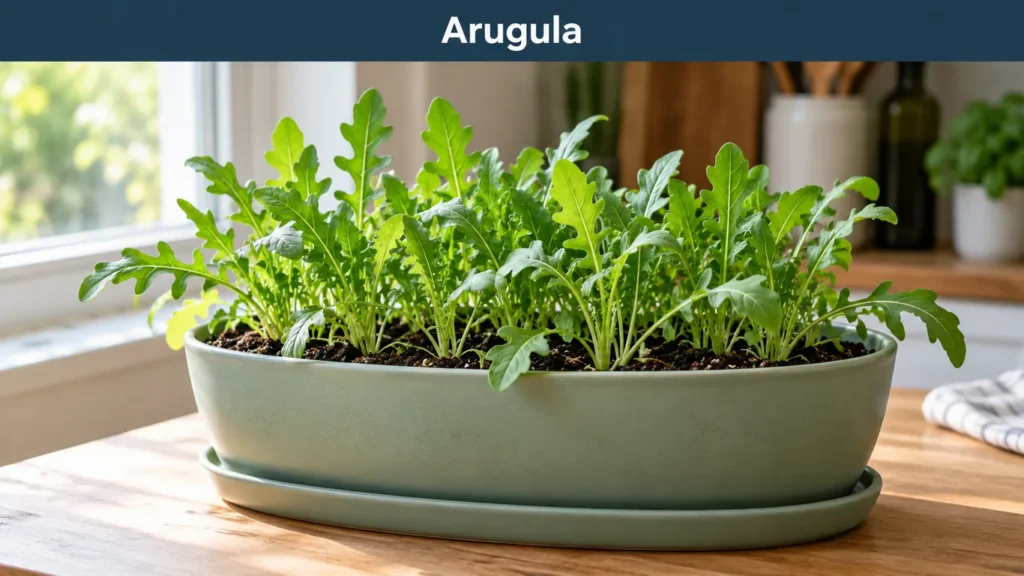
Arugula is a fast-growing leafy vegetable that thrives indoors with proper lighting and care. Known for its distinctive peppery flavor and tender green leaves, arugula is an excellent choice for beginner gardeners who want fresh vegetables throughout the year. It requires relatively little growing space and performs well in containers, making it suitable for kitchen windowsills, indoor gardening shelves, and small apartments. With consistent moisture, moderate temperatures, and sufficient light, indoor arugula can provide fresh leaves for salads, sandwiches, pizzas, and homemade meals.
Identification and Popular Varieties
Arugula is a cool-season leafy vegetable recognized by its deeply lobed green leaves and slightly spicy flavor. Different varieties offer unique leaf shapes, growth rates, and levels of peppery taste, making them suitable for various indoor growing conditions.
- Astro Arugula: Produces tender, mildly peppery leaves and grows quickly in containers.
- Rocket Arugula: A popular variety with deeply lobed leaves and a distinctive spicy flavor.
- Sylvetta Arugula: Features narrow, deeply divided leaves with a stronger peppery taste.
- Wasabi Arugula: Known for its sharp, spicy flavor that resembles wasabi.
- Slow Bolt Arugula: Selected for its slower flowering habit, making it useful for extended harvesting.
Ideal Indoor Growing Conditions
Arugula grows best in temperatures between 55°F and 70°F (13°C–21°C). Position containers near a bright window receiving several hours of sunlight daily, or provide full-spectrum LED grow lights for approximately 12–14 hours. Choose pots at least 6 inches deep with drainage holes and fill them with loose, nutrient-rich potting mix. Maintain consistent soil moisture and allow enough space between plants for healthy leaf development. Arugula prefers cooler conditions because excessive heat can encourage early flowering and make the leaves taste more bitter.
Watering and Maintenance Tips
Water arugula regularly to keep the soil evenly moist without becoming waterlogged. Check the upper layer of soil frequently and water whenever it begins to dry. Apply a diluted balanced liquid fertilizer occasionally to support healthy foliage. Remove yellowing or damaged leaves and maintain adequate airflow around the plants. Begin harvesting baby arugula leaves when they reach approximately 2–3 inches long, usually within 20–30 days. Pick the outer leaves first, allowing the central growing point to continue producing fresh leaves.
5. Swiss Chard
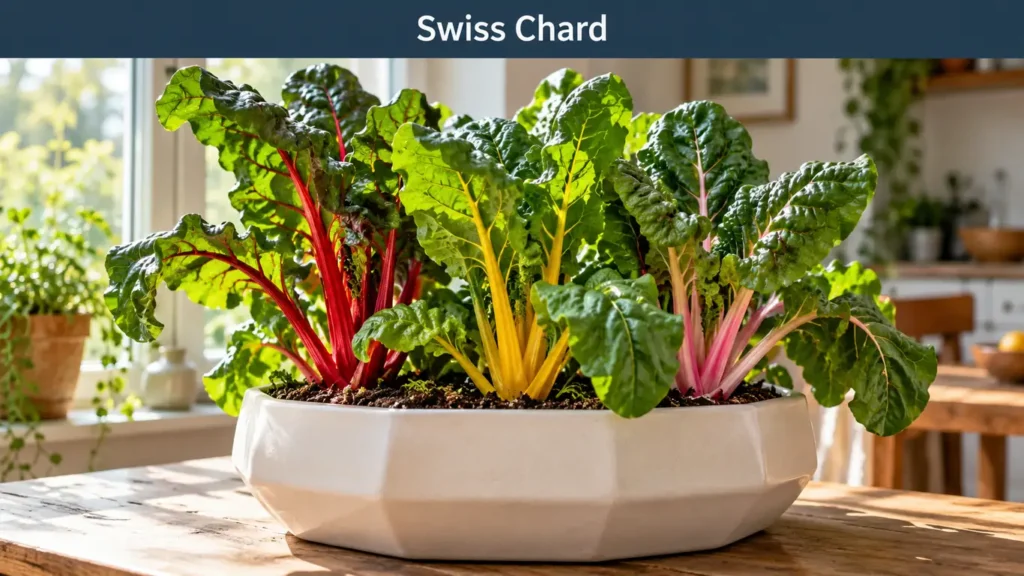
Swiss chard is a colorful and nutritious leafy vegetable that grows successfully indoors when provided with sufficient light and proper care. Its large green leaves and brightly colored stems make it both an attractive ornamental plant and a productive vegetable. Swiss chard is particularly suitable for indoor container gardening because it can produce repeated harvests over an extended period. With appropriate growing conditions, you can enjoy fresh Swiss chard leaves and stems for salads, stir-fries, soups, and other nutritious homemade dishes throughout the year.
Identification and Popular Varieties
Swiss chard is a leafy vegetable closely related to beets and is recognized by its broad leaves and distinctive colored stalks. Different varieties produce green, red, yellow, orange, or white stems, making them visually appealing additions to indoor gardens.
- Bright Lights Swiss Chard: Produces colorful stems in shades of yellow, orange, pink, red, and white.
- Fordhook Giant Swiss Chard: Features large, dark green leaves with thick white stalks.
- Ruby Red Swiss Chard: Develops deep red stems and green leaves with reddish veins.
- Lucullus Swiss Chard: Produces tender, light green leaves with pale stalks.
- Barese Swiss Chard: A compact, fast-growing variety suitable for baby-leaf production in containers.
Ideal Indoor Growing Conditions
Swiss chard grows best in temperatures between 60°F and 75°F (16°C–24°C). Place containers near a sunny window receiving several hours of direct sunlight, or use full-spectrum LED grow lights for approximately 12–16 hours daily. Choose pots at least 8–12 inches deep with proper drainage to support healthy root development. Fill containers with fertile, well-draining potting mix enriched with organic matter. Compact varieties and baby-leaf harvesting are especially suitable for limited indoor spaces, while full-sized plants need larger containers and adequate growing room.
Watering and Maintenance Tips
Keep the soil consistently moist by watering whenever the top inch begins to feel dry. Avoid allowing containers to remain waterlogged, as excessive moisture can damage the roots. Apply a balanced liquid fertilizer at a diluted strength every few weeks to encourage healthy foliage. Remove damaged or yellowing leaves and maintain good airflow around the plants. Harvest baby Swiss chard leaves when they reach approximately 3–4 inches long, often within 25–35 days. For mature plants, remove the larger outer leaves while preserving the central growing point.
6. Radishes
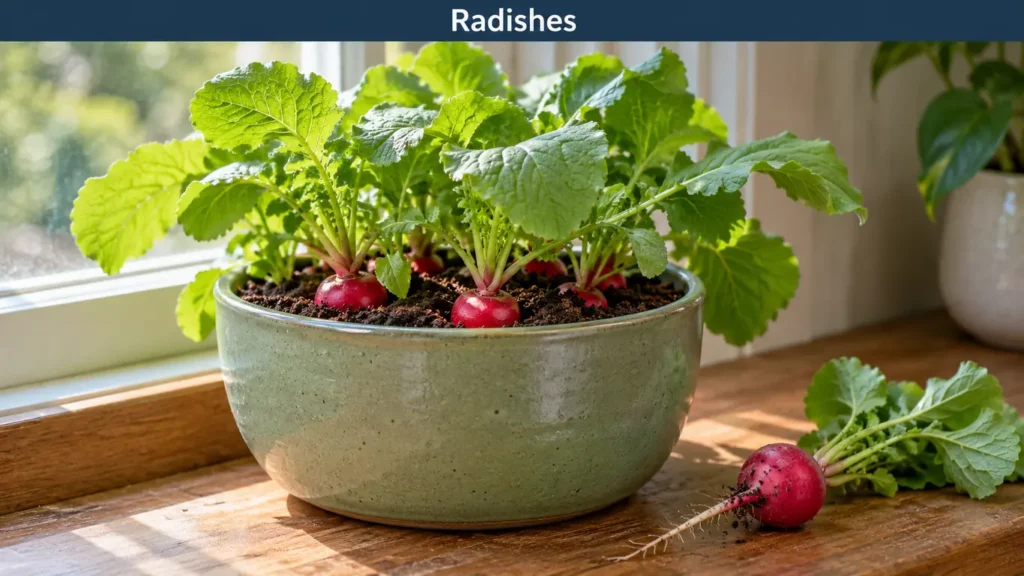
Radishes are among the fastest-growing vegetables you can grow indoors, making them an excellent choice for beginners and gardeners with limited space. These compact root vegetables are popular for their crisp texture, refreshing flavor, and relatively short growing period. Radishes perform well in containers when provided with adequate sunlight, loose soil, and consistent moisture. Their quick development makes them especially rewarding for indoor gardening projects, allowing you to harvest fresh, homegrown vegetables for salads, sandwiches, and healthy snacks within a few weeks.
Identification and Popular Varieties
Radishes are cool-season root vegetables recognized by their round or elongated edible roots and leafy green tops. Different varieties offer unique shapes, colors, flavors, and harvest times, making compact types particularly suitable for indoor container gardening.
- Cherry Belle Radish: Produces small, round, bright red roots with crisp white flesh.
- French Breakfast Radish: Features elongated red roots with distinctive white tips.
- Sparkler Radish: Develops round, red roots with white lower portions and a mild flavor.
- White Icicle Radish: Produces slender, white roots with a crisp texture and slightly spicy taste.
- Easter Egg Radish: A colorful mixture of round radishes in red, purple, pink, and white shades.
Ideal Indoor Growing Conditions
Radishes grow best in cool temperatures between 50°F and 70°F (10°C–21°C). Position containers near a bright window receiving at least 6 hours of direct sunlight, or provide full-spectrum LED grow lights for approximately 12–16 hours daily. Choose containers at least 6–8 inches deep for small round varieties, with deeper pots for long-rooted types. Fill them with loose, well-draining potting mix free from stones and compacted materials. Proper spacing is important because overcrowded radishes may develop small or poorly formed roots.
Watering and Maintenance Tips
Water radishes consistently to keep the soil evenly moist without becoming soggy. Irregular watering can cause roots to crack, become woody, or develop an excessively sharp flavor. Avoid applying too much nitrogen fertilizer, as it can encourage leafy growth instead of healthy root development. Thin seedlings after germination to provide enough room for the roots to expand. Most small radish varieties are ready for harvesting approximately 25–35 days after planting. Harvest promptly when the roots reach their expected mature size to preserve their crisp texture and mild flavor.
7. Carrots
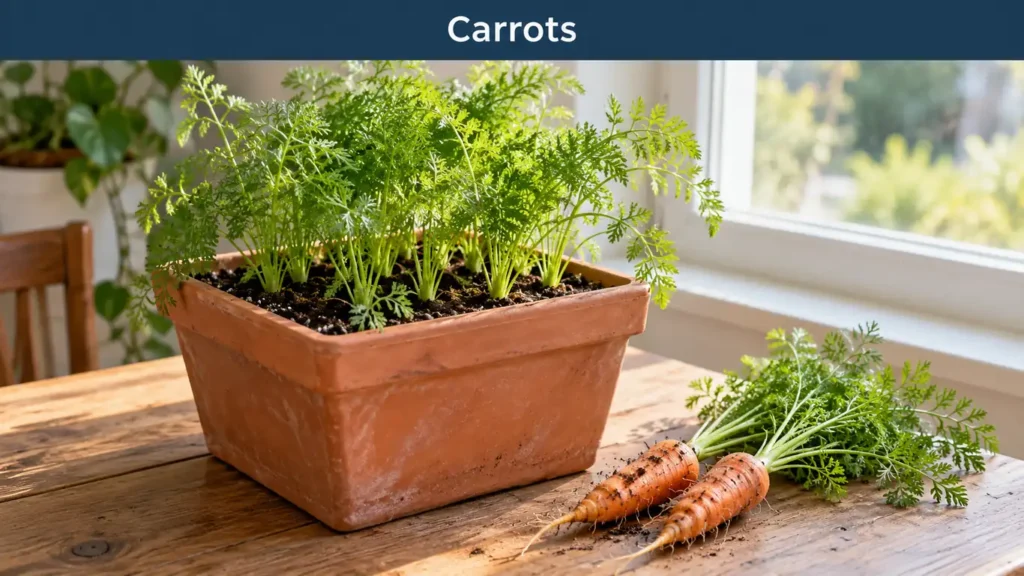
Carrots are nutritious and versatile root vegetables that can grow successfully indoors with the right container size and growing conditions. Known for their crunchy texture, naturally sweet flavor, and bright orange roots, carrots are an excellent choice for home gardeners interested in growing fresh vegetables throughout the year. Compact and short-rooted carrot varieties are particularly suitable for indoor gardening because they require less soil depth than traditional long carrots. With sufficient lighting, loose soil, and consistent moisture, indoor carrots can provide fresh harvests for salads, soups, snacks, and everyday cooking.
Identification and Popular Varieties
Carrots are cool-season root vegetables recognized by their feathery green foliage and edible taproots. Different varieties produce roots in various shapes, sizes, and colors, making shorter varieties especially suitable for indoor container gardening.
- Parisian Carrots: Produce small, round orange roots that grow well in shallow containers.
- Little Finger Carrots: Feature short, slender roots with a sweet flavor and tender texture.
- Thumbelina Carrots: Develop compact, round roots that are ideal for small indoor pots.
- Amsterdam Forcing Carrots: Produce slender, tender roots suitable for early harvesting.
- Chantenay Carrots: Feature short, broad roots with a sweet flavor and compact growing habit.
Ideal Indoor Growing Conditions
Carrots grow best in temperatures between 60°F and 70°F (16°C–21°C). Place containers near a sunny window receiving approximately 6–8 hours of direct sunlight, or provide full-spectrum LED grow lights for 12–16 hours daily. Choose pots at least 8–10 inches deep for compact varieties, ensuring enough room for root development. Fill containers with loose, well-draining potting mix free from stones and large debris. Avoid compacted soil because it can cause roots to become twisted or misshapen. Proper spacing between seedlings is also important for producing healthy, well-developed carrots.
Watering and Maintenance Tips
Keep the soil consistently moist during germination and early growth, as carrot seeds require steady moisture to sprout successfully. Water gently whenever the upper layer begins to dry, avoiding excessive moisture that could encourage root rot. Thin seedlings once they develop true leaves, leaving approximately 2–3 inches between plants. Avoid excessive nitrogen fertilizer because it can promote leafy growth rather than root development. Most compact carrot varieties are ready for harvesting within 55–75 days, depending on the variety and growing conditions. Gently loosen the soil before pulling mature roots to prevent damage.
8. Cherry Tomatoes
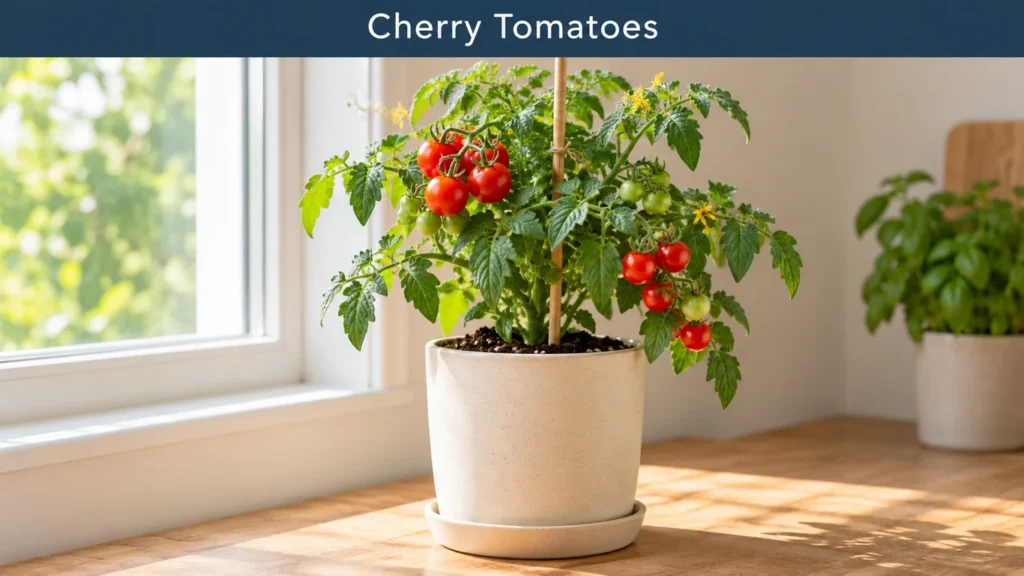
Cherry tomatoes are one of the most rewarding vegetables you can grow indoors, especially when you choose compact or dwarf varieties. These small, colorful fruits are popular for their sweet flavor, juicy texture, and versatility in everyday cooking. Although botanically classified as fruits, cherry tomatoes are commonly grown and used as vegetables. They thrive in containers when provided with strong lighting, adequate nutrients, and consistent care. Indoor cherry tomato plants can produce fresh harvests for salads, sandwiches, pasta dishes, and healthy snacks throughout the growing season.
Identification and Popular Varieties
Cherry tomatoes are small-fruited tomato plants recognized by their clusters of round or oval fruits and green, slightly fuzzy foliage. Different varieties offer unique colors, flavors, and growth habits, with compact types being especially suitable for indoor containers.
- Tiny Tim Tomato: A compact dwarf variety that produces small, bright red cherry tomatoes.
- Red Robin Tomato: Features miniature plants with clusters of sweet, red fruits.
- Micro Tom Tomato: One of the smallest tomato varieties, ideal for windowsills and small containers.
- Tumbling Tom Tomato: Produces cascading branches with numerous small cherry tomatoes.
- Vilma Tomato: A compact bush variety that develops small, flavorful red fruits.
Ideal Indoor Growing Conditions
Cherry tomatoes grow best in temperatures between 65°F and 80°F (18°C–27°C). Position containers near a south-facing window with abundant direct sunlight, or use powerful full-spectrum LED grow lights for approximately 14–16 hours daily. Choose containers at least 8–12 inches deep for miniature varieties, while larger plants may require pots holding 3–5 gallons of soil. Use fertile, well-draining potting mix enriched with organic matter. Maintain good airflow around the plants and provide support with small stakes or cages when necessary. Indoor tomato plants also benefit from gentle flower shaking to encourage pollination and fruit development.
Watering and Maintenance Tips
Water cherry tomatoes deeply whenever the top inch of soil begins to feel dry, maintaining consistent moisture without waterlogging the roots. Avoid irregular watering because it can contribute to fruit cracking and other growth problems. Apply a balanced fertilizer during early development, then switch to a fertilizer suitable for fruiting tomatoes once flowering begins. Remove yellowing leaves and provide adequate spacing for air circulation. Gently shake flowering stems every few days to help distribute pollen indoors. Depending on the variety, cherry tomatoes may begin producing ripe fruits approximately 60–90 days after transplanting. Harvest when the fruits develop their full color and feel slightly firm.
9. Bell Peppers
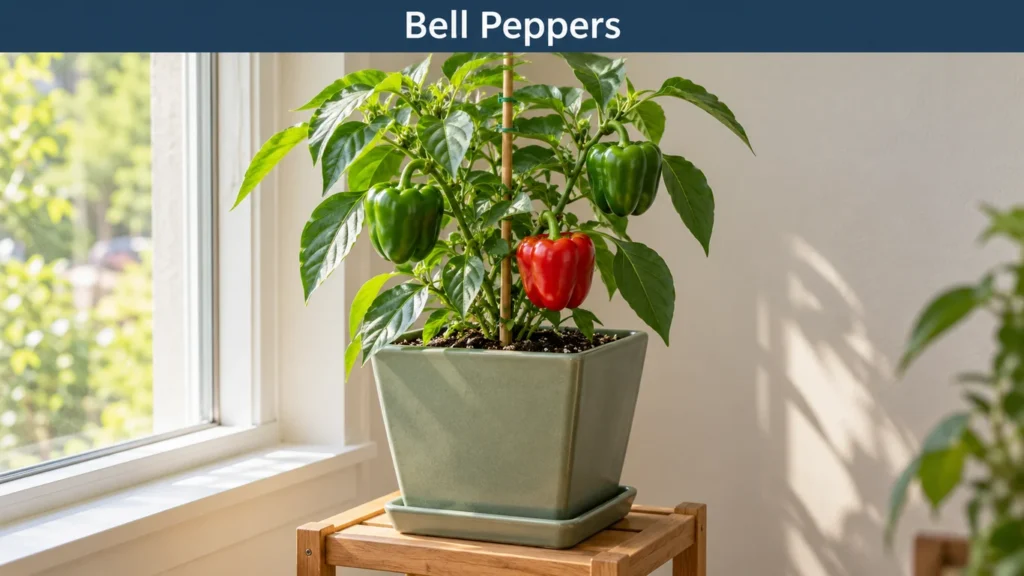
Bell peppers are colorful and nutritious vegetables that can grow successfully indoors with proper lighting, warmth, and care. Known for their sweet flavor, crisp texture, and vibrant colors, bell peppers make an attractive addition to indoor vegetable gardens. Compact pepper varieties are particularly suitable for container gardening because they require less growing space than larger plants. With adequate sunlight, consistent watering, and nutrient-rich soil, indoor bell pepper plants can produce fresh vegetables for salads, stir-fries, stuffed peppers, and everyday cooking throughout the year.
Identification and Popular Varieties
Bell peppers are warm-season vegetables recognized by their smooth, glossy fruits and bushy green foliage. Different varieties produce peppers in various sizes, shapes, and colors, making compact varieties especially suitable for indoor container gardening.
- Mini Bell Peppers: Produce small, sweet peppers in red, yellow, and orange colors.
- California Wonder Pepper: A popular variety with large, blocky fruits that turn green to red as they mature.
- Lunchbox Peppers: Feature small, colorful, sweet fruits suitable for snacking.
- Redskin Pepper: A compact variety that produces sweet, red bell-shaped peppers.
- Mohawk Pepper: A small, bushy variety that develops sweet, colorful fruits and grows well in containers.
Ideal Indoor Growing Conditions
Bell peppers grow best in temperatures between 70°F and 85°F (21°C–29°C). Position containers near a bright, sunny window receiving at least 6–8 hours of direct sunlight, or provide full-spectrum LED grow lights for approximately 14–16 hours daily. Choose containers at least 10–12 inches deep with proper drainage, preferably holding 3–5 gallons of potting mix for productive plants. Use fertile, well-draining soil enriched with organic matter. Maintain moderate humidity and good airflow around the plants. Since indoor environments lack natural pollinators, gently shaking flowering branches can help encourage successful fruit development.
Watering and Maintenance Tips
Water bell peppers whenever the top inch of soil begins to feel dry, keeping the growing medium evenly moist without becoming waterlogged. Avoid irregular watering, which can contribute to blossom-end rot and poor fruit development. Apply a balanced liquid fertilizer during early growth and use a fertilizer suitable for fruiting vegetables once flowers appear. Remove damaged or yellowing leaves and provide support for branches carrying heavy fruits. Gently shake flowering stems to assist pollination indoors. Depending on the variety and growing conditions, bell peppers typically begin producing harvestable fruits approximately 60–90 days after transplanting.
10. Green Onions
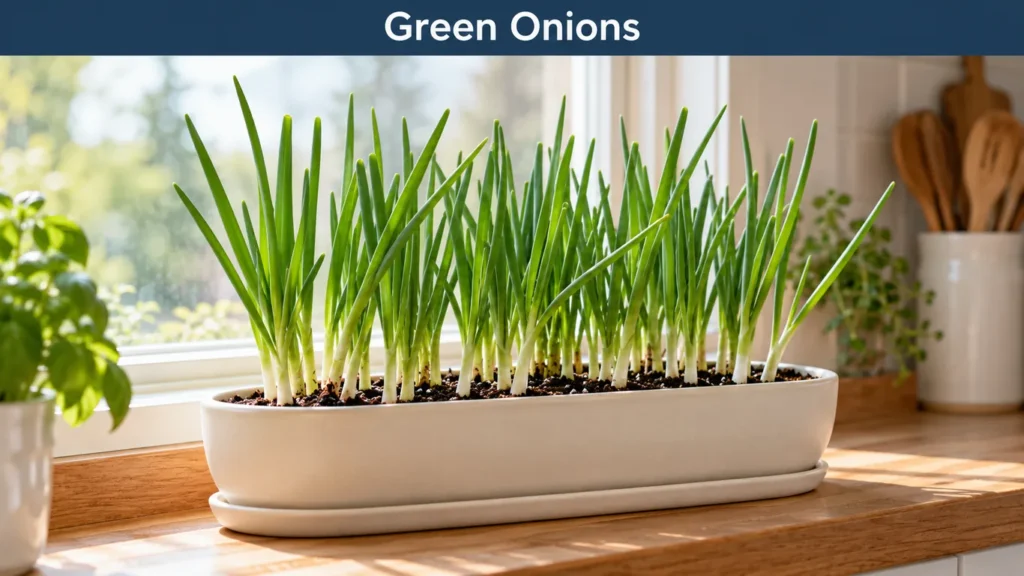
Green onions are among the easiest and most practical vegetables you can grow indoors, making them an excellent choice for beginners and gardeners with limited space. Also known as scallions or spring onions, these vegetables are valued for their slender green leaves and mild onion flavor. They grow quickly in containers and can provide repeated harvests when properly maintained. Green onions are particularly suitable for kitchen windowsills, small indoor garden shelves, and countertop growing systems. With sufficient sunlight, regular watering, and basic care, you can enjoy fresh green onions for salads, soups, stir-fries, and everyday cooking.
Identification and Popular Varieties
Green onions are leafy members of the onion family, recognized by their long, hollow green leaves and narrow white bases. Different varieties offer unique flavors, growth habits, and levels of cold tolerance, making several types suitable for indoor container gardening.
- Evergreen Hardy White: Produces slender green stalks with mild-flavored white bases and excellent cold tolerance.
- White Lisbon: A fast-growing variety with tender green leaves and small white stems.
- Tokyo Long White: Features long, straight white stalks with flavorful green tops.
- Parade Green Onion: Produces uniform, upright stalks and is suitable for repeated indoor harvesting.
- Nabechan Green Onion: Develops thick, tender stems with a sweet, mild onion flavor.
Ideal Indoor Growing Conditions
Green onions grow best in temperatures between 60°F and 75°F (16°C–24°C). Place containers near a bright window receiving approximately 6 hours of sunlight daily, or provide full-spectrum LED grow lights for 12–14 hours. Choose pots at least 6 inches deep with drainage holes and fill them with nutrient-rich, well-draining potting mix. Green onions have relatively shallow root systems, making them suitable for compact containers. Space plants approximately 1–2 inches apart when growing them primarily for their green tops. Maintain consistent moisture and provide adequate airflow to encourage healthy leaf development.
Watering and Maintenance Tips
Water green onions regularly whenever the upper layer of soil begins to dry, keeping the growing medium consistently moist but not soggy. Apply a diluted balanced liquid fertilizer occasionally to encourage healthy leaf production. Remove yellowing or damaged leaves and ensure the plants receive sufficient sunlight to prevent weak, pale growth. Begin harvesting green tops when they reach approximately 6–8 inches tall, often within 30–45 days from seed under favorable conditions. Use clean scissors to cut the leaves above the base, allowing healthy plants to produce additional growth. For continued harvests, avoid removing too much foliage at once.
11. Bok Choy
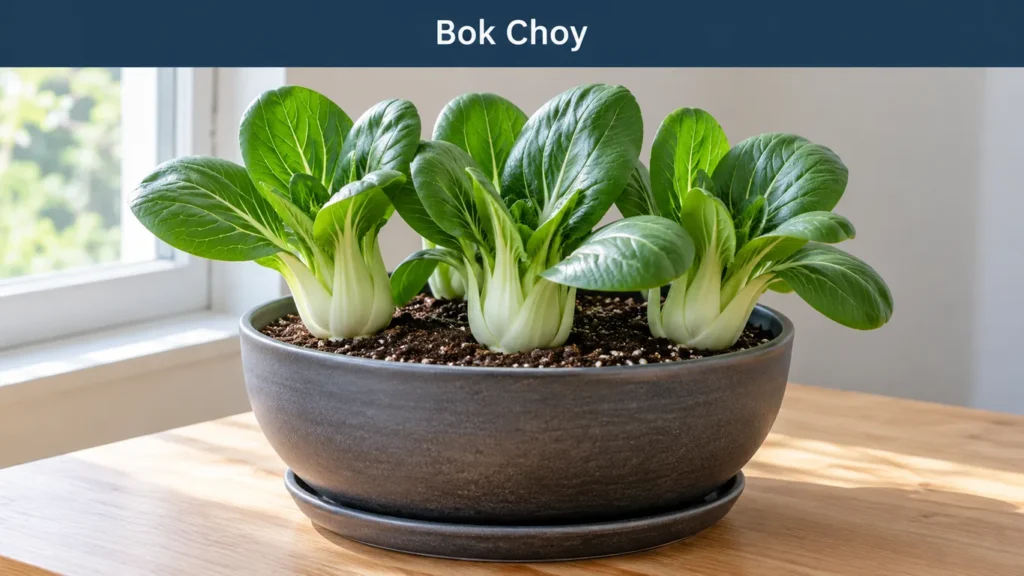
Bok choy is a nutritious and fast-growing leafy vegetable that grows successfully indoors with proper care. Also known as pak choi or Chinese cabbage, this vegetable is popular for its tender green leaves, crisp white or green stalks, and mild flavor. Bok choy is particularly suitable for indoor container gardening because compact varieties require relatively little space and mature quickly. With adequate lighting, consistent moisture, and moderate temperatures, indoor bok choy can provide fresh harvests for stir-fries, soups, salads, and healthy homemade meals throughout the year.
Identification and Popular Varieties
Bok choy is a cool-season leafy vegetable belonging to the cabbage family. It is recognized by its spoon-shaped green leaves and thick, fleshy stalks. Different varieties offer unique sizes, colors, and growth habits, making smaller types especially suitable for indoor gardening.
- Baby Bok Choy: Produces compact plants with tender green leaves and crisp stalks.
- Joi Choi Bok Choy: Features dark green leaves with thick, bright white stems.
- Mei Qing Choi: A compact variety with light green stems and tender foliage.
- Shanghai Green Bok Choy: Develops smooth green leaves and pale green stalks with a mild flavor.
- Toy Choy Bok Choy: A miniature variety that matures quickly and grows well in small containers.
Ideal Indoor Growing Conditions
Bok choy grows best in temperatures between 55°F and 70°F (13°C–21°C). Position containers near a bright window receiving approximately 4–6 hours of direct sunlight, or provide full-spectrum LED grow lights for 12–14 hours daily. Choose pots at least 6–8 inches deep with proper drainage and fill them with fertile, well-draining potting mix. Compact varieties can grow in smaller containers, while full-sized plants require additional spacing. Maintain consistent soil moisture and provide adequate airflow around the foliage. Avoid excessive heat because high temperatures can encourage early flowering and reduce leaf quality.
Watering and Maintenance Tips
Water bok choy regularly to keep the soil evenly moist without becoming waterlogged. Check the upper layer of soil frequently and water whenever it begins to dry. Apply a diluted balanced liquid fertilizer occasionally to support healthy leaf and stalk development. Remove damaged or yellowing leaves and maintain sufficient spacing between plants to encourage airflow. Baby bok choy can often be harvested within 30–45 days, depending on the variety and growing conditions. Harvest the entire plant when it reaches the desired size, or carefully remove the larger outer leaves for additional growth.
12. Microgreens
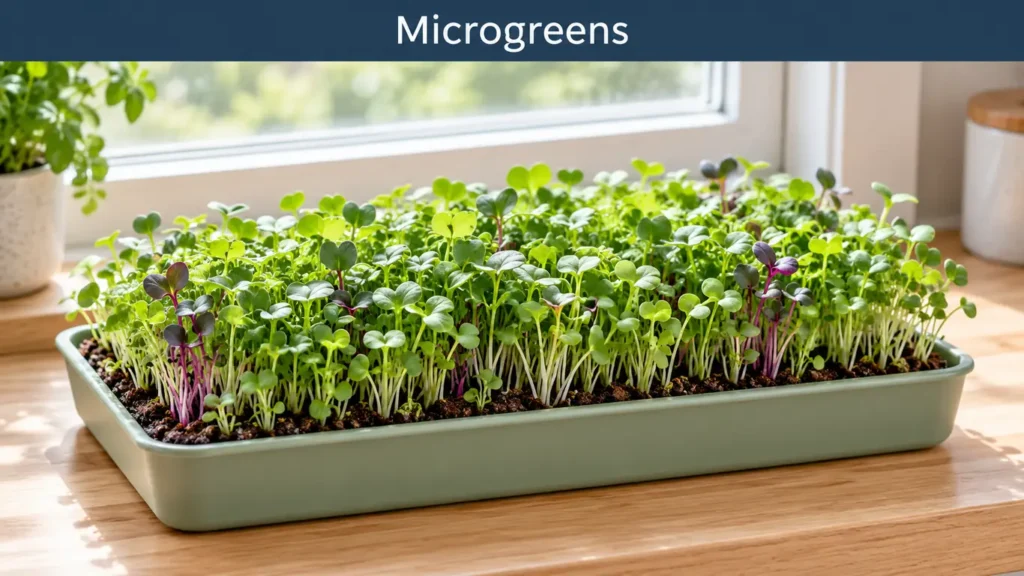
Microgreens are among the easiest and fastest-growing vegetables you can cultivate indoors, making them an excellent choice for beginners and gardeners with limited space. These young edible seedlings are harvested shortly after their first true leaves begin to appear. They offer fresh flavors, attractive colors, and valuable nutrients while requiring very little growing space. Microgreens are particularly suitable for kitchen countertops, sunny windowsills, and indoor growing trays. With basic supplies, proper moisture, and sufficient lighting, you can produce fresh microgreens for salads, sandwiches, smoothies, and decorative meal toppings throughout the year.
Identification and Popular Varieties
Microgreens are young seedlings of edible vegetables and herbs, typically harvested when they reach approximately 1–3 inches tall. Different varieties offer unique flavors, colors, textures, and growing speeds, making them attractive additions to indoor gardens.
- Broccoli Microgreens: Produce tender green seedlings with a mild, slightly earthy flavor.
- Radish Microgreens: Feature colorful stems and small green leaves with a peppery taste.
- Pea Shoot Microgreens: Develop tender shoots with a sweet, fresh pea flavor.
- Sunflower Microgreens: Produce thick, crunchy stems and broad leaves with a nutty flavor.
- Red Cabbage Microgreens: Feature attractive purple stems and green leaves with a mild cabbage flavor.
Ideal Indoor Growing Conditions
Microgreens grow best in temperatures between 65°F and 75°F (18°C–24°C). Place growing trays near a bright window or provide full-spectrum LED grow lights for approximately 12–16 hours daily after germination. Choose shallow containers around 1–2 inches deep with drainage holes and fill them with a clean, lightweight seed-starting mix. Spread seeds evenly across the growing surface according to the recommended density for each variety. Maintain consistent moisture without saturating the medium. Good airflow and clean growing equipment are particularly important because densely planted seedlings can develop mold problems when conditions remain excessively humid.
Watering and Maintenance Tips
Keep the growing medium consistently moist by watering gently during germination. Once seedlings establish roots, bottom watering is often preferable because it reduces moisture accumulation on delicate stems and leaves. Avoid overwatering and provide adequate airflow to discourage mold growth. Microgreens generally do not require additional fertilizer when grown in a suitable seed-starting medium for their short growing period. Most varieties are ready for harvesting approximately 7–21 days after sowing. Use clean scissors to cut the seedlings just above the growing medium when their first true leaves begin appearing. Harvest only healthy seedlings grown from untreated, food-safe seeds, and rinse them before eating.
13. Bush Beans
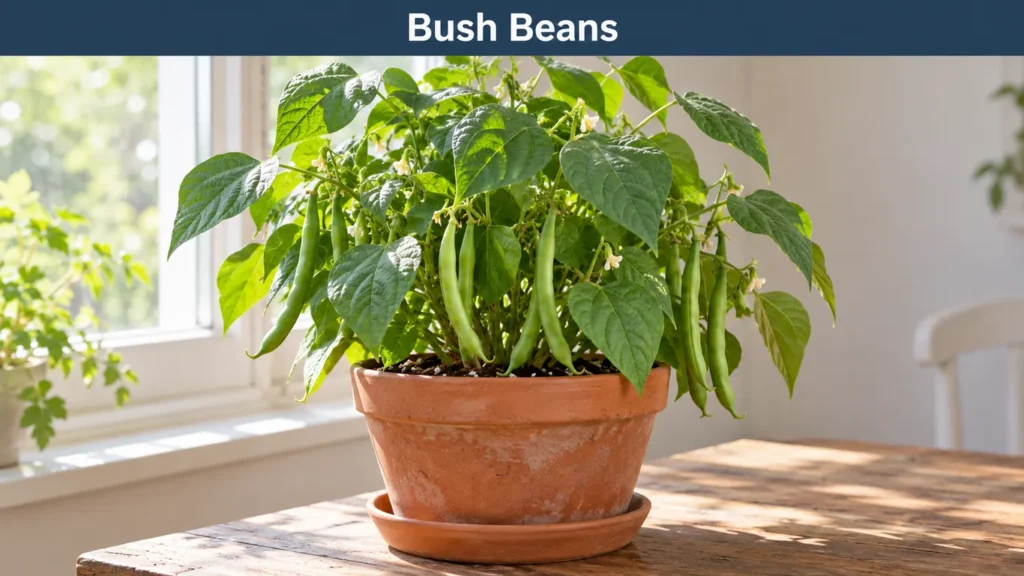
Bush beans are productive and easy-to-grow vegetables that can thrive indoors when provided with sufficient light and proper care. Unlike climbing beans, bush bean plants grow in a compact, upright shape, making them suitable for containers and small indoor gardening spaces. These vegetables are popular for their tender green pods, mild flavor, and relatively quick growing period. With consistent watering, warm temperatures, and adequate lighting, indoor bush beans can produce fresh harvests for stir-fries, salads, soups, and healthy homemade meals.
Identification and Popular Varieties
Bush beans are warm-season vegetables recognized by their compact growth habit, broad green leaves, and slender edible pods. Different varieties produce beans in various colors, lengths, and textures, making smaller types especially suitable for indoor container gardening.
- Provider Bush Beans: Produce tender green pods and are known for their reliable growth and early maturity.
- Contender Bush Beans: Feature smooth, flavorful green pods and a compact growing habit.
- Blue Lake 274 Bush Beans: Develop straight, dark green pods with a crisp texture and excellent flavor.
- Top Crop Bush Beans: Produce abundant, tender green beans on sturdy, upright plants.
- Royal Burgundy Bush Beans: Feature attractive purple pods that turn green when cooked.
Ideal Indoor Growing Conditions
Bush beans grow best in temperatures between 65°F and 80°F (18°C–27°C). Place containers near a sunny window receiving approximately 6–8 hours of direct sunlight, or provide full-spectrum LED grow lights for 14–16 hours daily. Choose containers at least 8–12 inches deep with drainage holes and enough width to accommodate the plants. Fill them with loose, fertile, well-draining potting mix. Space plants approximately 4–6 inches apart to encourage healthy development. Bush beans need strong lighting for flowering and pod production, making supplemental grow lights particularly useful indoors.
Watering and Maintenance Tips
Water bush beans whenever the top inch of soil begins to feel dry, maintaining consistent moisture without waterlogging the roots. Avoid excessive nitrogen fertilizer because beans can obtain nitrogen through beneficial root bacteria when properly inoculated, and too much nitrogen may encourage foliage rather than pods. Apply a balanced fertilizer sparingly if the growing medium lacks nutrients. Maintain adequate airflow and gently shake flowering plants if needed to support pollination, although beans are generally self-pollinating. Most bush bean varieties begin producing harvestable pods approximately 50–65 days after planting. Pick the pods while they are young and tender to encourage continued production.
14. Peas
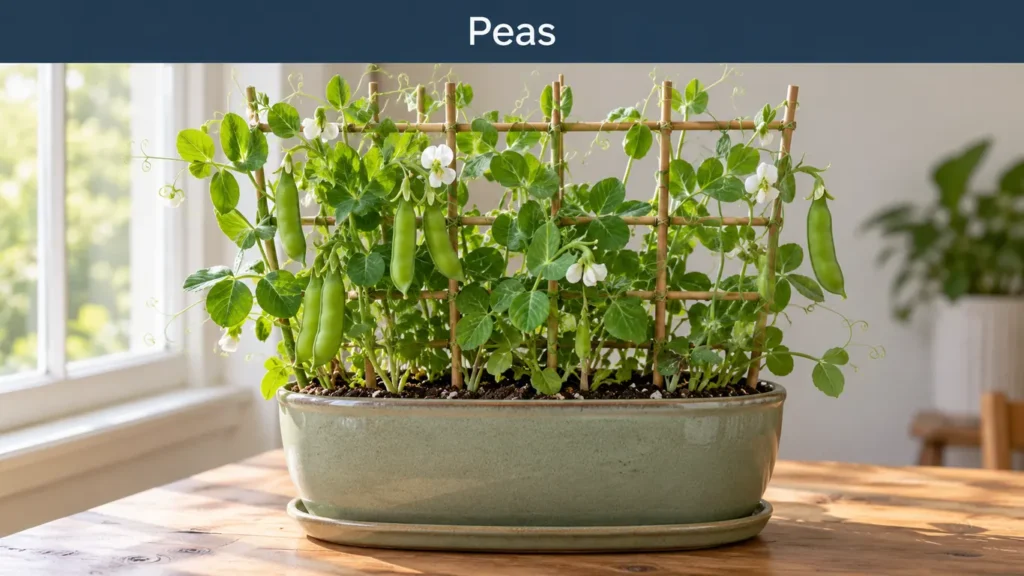
Peas are nutritious and versatile vegetables that can grow successfully indoors with adequate lighting and cool temperatures. Known for their sweet flavor, tender pods, and attractive climbing foliage, peas are a rewarding choice for home gardeners. Compact pea varieties are particularly suitable for indoor container gardening because they require less space than traditional tall-growing types. Whether grown for fresh peas, edible pods, or tender shoots, indoor pea plants can provide delicious harvests for salads, stir-fries, soups, and everyday cooking.
Identification and Popular Varieties
Peas are cool-season vegetables recognized by their delicate green leaves, curling tendrils, and rounded seeds enclosed in pods. Different varieties offer unique growth habits, flavors, and pod characteristics, making compact types especially suitable for indoor gardens.
- Little Marvel Peas: Produce sweet green peas on compact plants suitable for container gardening.
- Tom Thumb Peas: A dwarf variety with short, bushy growth that performs well in small spaces.
- Sugar Ann Snap Peas: Develop sweet, crisp edible pods on relatively compact plants.
- Dwarf Grey Sugar Peas: Produce tender, edible pods and attractive purple flowers.
- Premium Peas: Feature compact plants with sweet, flavorful peas and reliable productivity.
Ideal Indoor Growing Conditions
Peas grow best in temperatures between 55°F and 70°F (13°C–21°C). Position containers near a bright window receiving approximately 6–8 hours of direct sunlight, or use full-spectrum LED grow lights for 12–16 hours daily. Choose pots at least 8–12 inches deep with proper drainage and fill them with fertile, well-draining potting mix. Compact varieties are ideal for smaller indoor spaces, although some still require small trellises or supports. Provide adequate spacing between plants and maintain good airflow to reduce the risk of fungal diseases.
Watering and Maintenance Tips
Water peas regularly to keep the soil evenly moist, particularly during flowering and pod development. Avoid allowing the soil to become completely dry or excessively wet. Apply a balanced fertilizer sparingly because peas can fix atmospheric nitrogen when suitable beneficial bacteria are present around their roots. Install small supports for climbing varieties and gently guide growing tendrils toward the structure. Remove yellowing leaves and maintain good airflow around the plants. Most compact pea varieties begin producing harvestable pods approximately 55–70 days after planting. Harvest snap peas when the pods are plump and tender, while shelling peas should be picked when the seeds have developed fully but remain sweet. Regular harvesting helps maintain plant productivity.
15. Cucumbers
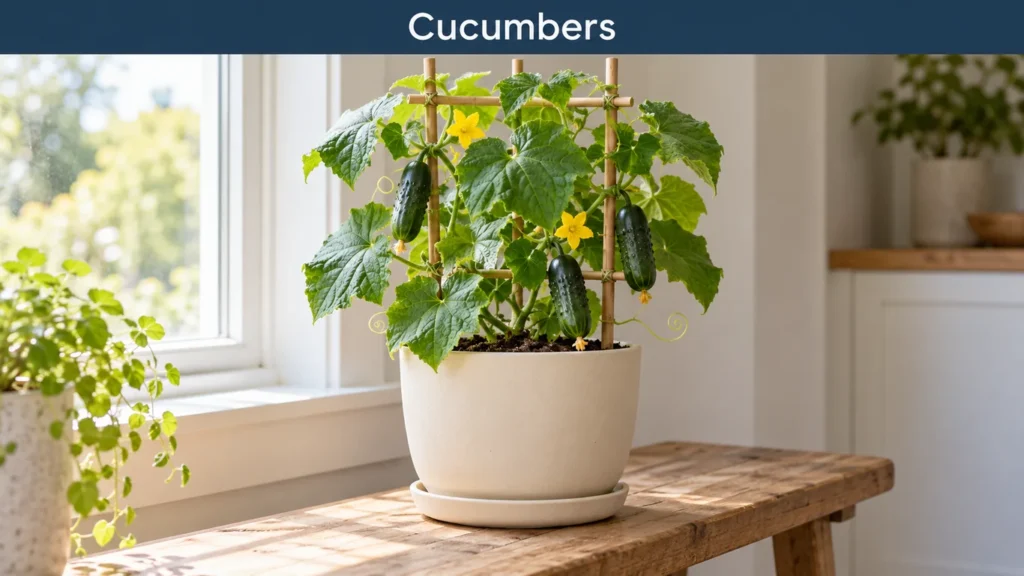
Cucumbers are refreshing and productive vegetables that can grow successfully indoors with proper lighting, warmth, and care. Known for their crisp texture, mild flavor, and high water content, cucumbers are a rewarding choice for indoor vegetable gardening. Compact and bush-type cucumber varieties are particularly suitable for containers because they require less growing space than traditional climbing varieties. With adequate sunlight, consistent watering, and proper support, indoor cucumber plants can produce fresh vegetables for salads, sandwiches, and healthy homemade meals.
Identification and Popular Varieties
Cucumbers are warm-season vegetables recognized by their broad green leaves, creeping or climbing vines, and elongated green fruits. Different varieties offer unique sizes, growth habits, and flavors, making compact types especially suitable for indoor container gardening.
- Spacemaster Cucumber: A compact variety that produces flavorful cucumbers on short vines, ideal for containers.
- Bush Champion Cucumber: Features bushy growth and produces medium-sized, crisp green fruits.
- Patio Snacker Cucumber: Develops compact vines with small, crunchy cucumbers suitable for patio and indoor containers.
- Bush Pickle Cucumber: Produces short, firm cucumbers on compact plants, making it useful for limited growing spaces.
- Diva Cucumber: A mostly seedless, parthenocarpic variety that can develop fruits without pollination.
Ideal Indoor Growing Conditions
Cucumbers grow best in temperatures between 70°F and 85°F (21°C–29°C). Position containers near a sunny window receiving approximately 6–8 hours of direct sunlight, or provide full-spectrum LED grow lights for 14–16 hours daily. Choose containers at least 12 inches deep, preferably holding 3–5 gallons of fertile, well-draining potting mix. Provide a small trellis or support system for climbing varieties to encourage vertical growth. Maintain moderate humidity, consistent soil moisture, and good airflow. Parthenocarpic cucumber varieties are particularly useful indoors because they can produce fruits without insect pollination.
Watering and Maintenance Tips
Water cucumber plants regularly to keep the soil consistently moist without becoming waterlogged. Check the upper inch of soil frequently, especially during flowering and fruit development. Apply a balanced liquid fertilizer during early growth and a fertilizer suitable for fruiting vegetables once flowers appear. Guide climbing vines along their supports and remove damaged or yellowing leaves to improve airflow. For varieties requiring pollination, transfer pollen between male and female flowers using a small brush. Many compact cucumber varieties begin producing harvestable fruits approximately 50–70 days after planting. Harvest cucumbers regularly while they are firm and tender to encourage continued production.
16. Beets
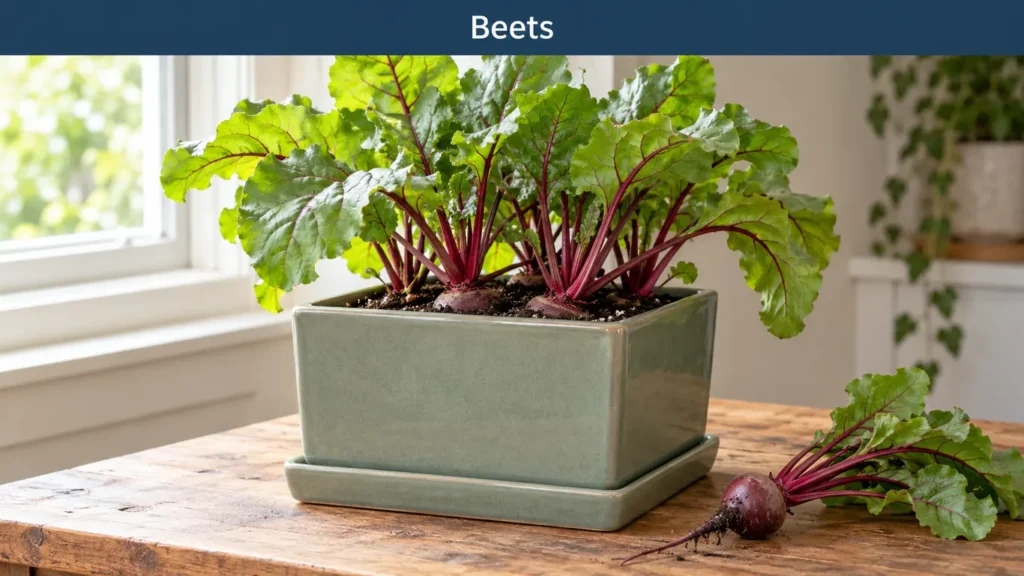
Beets are nutritious and colorful root vegetables that can grow successfully indoors with adequate lighting, suitable containers, and consistent care. Known for their earthy flavor, vibrant roots, and edible leafy greens, beets are a versatile addition to indoor vegetable gardens. Both the roots and leaves can be harvested for cooking, making them particularly useful for gardeners with limited space. Compact beet varieties are suitable for container gardening and can provide fresh vegetables for salads, soups, roasted dishes, and nutritious homemade meals.
Identification and Popular Varieties
Beets are cool-season root vegetables recognized by their rounded or elongated edible roots and broad green leaves with colorful veins. Different varieties produce roots in red, golden, white, and striped shades, offering attractive options for indoor gardening.
- Detroit Dark Red Beets: Produce smooth, round, deep red roots with sweet and tender flesh.
- Baby Ball Beets: Develop small, rounded roots suitable for compact containers and early harvesting.
- Golden Beets: Feature bright golden-yellow roots with a mild, sweet flavor.
- Chioggia Beets: Produce attractive red-and-white striped roots with a tender texture.
- Cylindra Beets: Develop long, cylindrical roots that provide uniform slices for cooking.
Ideal Indoor Growing Conditions
Beets grow best in temperatures between 55°F and 75°F (13°C–24°C). Place containers near a bright window receiving approximately 6 hours of direct sunlight, or use full-spectrum LED grow lights for 12–16 hours daily. Choose pots at least 10–12 inches deep with proper drainage to accommodate root development. Fill containers with loose, fertile, well-draining potting mix free from large stones and compacted materials. Space plants approximately 3–4 inches apart to allow the roots to develop properly. Consistent lighting and moderate temperatures help encourage healthy foliage and well-formed edible roots.
Watering and Maintenance Tips
Keep beet plants consistently moist by watering whenever the upper inch of soil begins to dry. Avoid excessive watering because soggy soil can contribute to root diseases and poor development. Thin seedlings once they develop true leaves, leaving sufficient space for the roots to expand. Apply a balanced fertilizer occasionally, but avoid excessive nitrogen because it can encourage leafy growth at the expense of root formation. Harvest tender beet greens selectively without removing too many leaves from developing plants. Most compact beet varieties are ready for root harvesting approximately 50–70 days after planting. Gently loosen the soil before lifting mature roots to prevent damage.
17. Mustard Greens
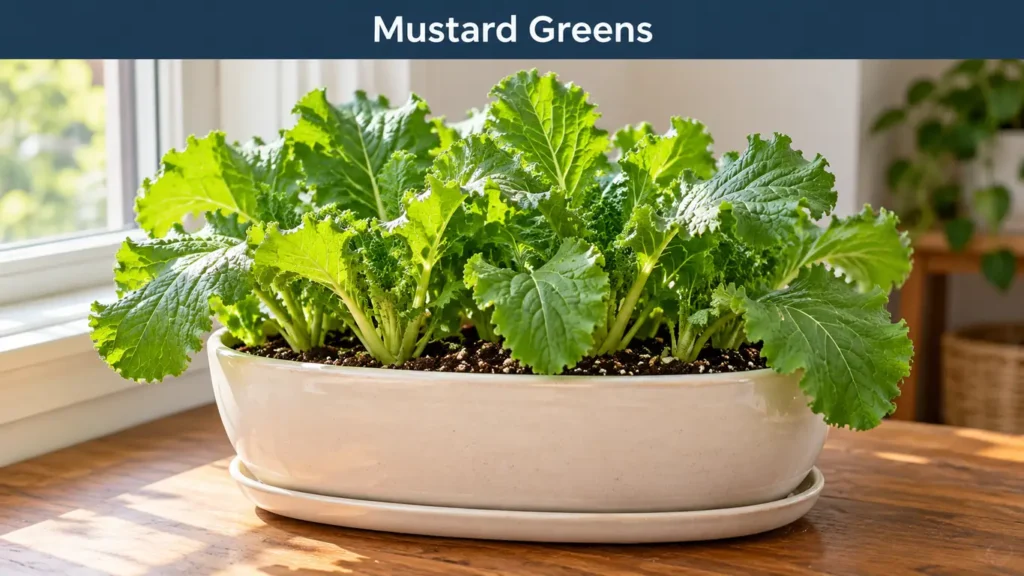
Mustard greens are fast-growing and nutritious leafy vegetables that thrive indoors with proper lighting, moderate temperatures, and consistent care. Known for their distinctive peppery flavor and tender foliage, mustard greens are an excellent choice for gardeners who enjoy fresh, flavorful vegetables. These leafy greens require relatively little growing space and perform well in containers, making them suitable for kitchen windowsills, indoor gardening shelves, and small apartments. With sufficient sunlight and regular harvesting, indoor mustard greens can provide fresh leaves for salads, stir-fries, soups, and healthy homemade dishes.
Identification and Popular Varieties
Mustard greens are cool-season leafy vegetables belonging to the cabbage family. They are recognized by their green or reddish leaves, which may be smooth, curled, or deeply divided. Different varieties offer unique flavors, colors, and growth habits, making them attractive additions to indoor vegetable gardens.
- Southern Giant Curled Mustard: Produces large, heavily curled green leaves with a bold, peppery flavor.
- Red Giant Mustard: Features broad, reddish-purple leaves with green veins and a spicy taste.
- Mizuna Mustard: Develops finely divided, feathery green leaves with a mild peppery flavor.
- Green Wave Mustard: Produces frilly, bright green leaves with a tender texture and moderate spiciness.
- Tendergreen Mustard: Features smooth, tender green leaves with a relatively mild mustard flavor.
Ideal Indoor Growing Conditions
Mustard greens grow best in temperatures between 55°F and 70°F (13°C–21°C). Position containers near a bright window receiving approximately 4–6 hours of direct sunlight, or provide full-spectrum LED grow lights for 12–14 hours daily. Choose pots at least 6–8 inches deep with drainage holes and fill them with fertile, well-draining potting mix. Compact varieties and baby-leaf harvesting are especially suitable for small indoor spaces. Maintain consistent soil moisture and adequate airflow around the plants. Cooler temperatures help preserve leaf tenderness and prevent premature flowering.
Watering and Maintenance Tips
Water mustard greens regularly whenever the upper layer of soil begins to feel dry, keeping the growing medium evenly moist without becoming waterlogged. Apply a diluted, nitrogen-rich liquid fertilizer occasionally to support healthy leaf production. Remove yellowing or damaged leaves and provide adequate spacing between plants to improve airflow. Avoid exposing the plants to excessive heat, which can encourage bolting and increase leaf bitterness. Begin harvesting baby mustard greens when the leaves reach approximately 3–4 inches long, often within 20–30 days. Pick the larger outer leaves first while leaving the central growing point intact for continued production.
FAQs
1. What Are the Easiest Vegetables to Grow Indoors?
Lettuce, spinach, green onions, radishes, and microgreens are among the easiest vegetables to grow indoors. These vegetables require relatively little space, grow quickly, and thrive in containers with proper lighting, consistent watering, and suitable temperatures.
2. Can You Grow Vegetables Indoors Without Sunlight?
Yes, vegetables can grow indoors without natural sunlight when provided with suitable artificial grow lights. Full-spectrum LED grow lights are particularly effective. Most leafy greens need approximately 12–16 hours of artificial light daily, depending on the variety.
3. What Vegetables Grow Fastest Indoors?
Microgreens, radishes, arugula, lettuce, and mustard greens are some of the fastest-growing indoor vegetables. Microgreens can be harvested within 7–21 days, while many radishes and baby leafy greens are ready within approximately 20–35 days.
4. Can You Grow Vegetables Indoors All Year Round?
Yes, many vegetables can grow indoors year-round when lighting, temperature, watering, and nutrients are properly maintained. Leafy greens and microgreens are especially suitable, while fruiting vegetables such as tomatoes and peppers usually require stronger lighting and additional care.
5. What Is the Best Soil for Growing Vegetables Indoors?
A lightweight, nutrient-rich, well-draining potting mix is best for most indoor vegetables. Choose a quality container potting mix with ingredients such as compost, coco coir, and perlite. Avoid compacted garden soil, which can restrict drainage and root development.