

Myrtle trees are beautiful evergreen plants known for their glossy foliage, fragrant flowers, and attractive growth habits. Many varieties can thrive in containers, making them suitable for bright indoor spaces, sunny windowsills, and conservatories. From compact Dwarf Myrtle to aromatic Lemon Myrtle, these plants offer unique ornamental features. Discover 17 types of Myrtle trees and learn how to grow them successfully indoors.
1. Common Myrtle (Myrtus communis)

Common Myrtle is a beautiful evergreen shrub or small tree that can be grown indoors with proper care. Native to the Mediterranean region, it features glossy, dark green leaves, fragrant white flowers, and small purple-black berries. This plant is popular for its compact growth, pleasant aroma, and attractive appearance. When grown in containers, Common Myrtle can be pruned into a miniature indoor tree.
Appearance and Characteristics
Common Myrtle has small, oval-shaped leaves that release a refreshing fragrance when crushed. During summer, it produces delicate white flowers with numerous prominent stamens. These flowers may develop into dark berries as they mature.
Its dense branching structure makes it suitable for decorative pots, bonsai arrangements, and indoor topiary. With regular pruning, gardeners can maintain a compact shape that complements indoor spaces.
How to Grow Common Myrtle Indoors
Place Common Myrtle near a bright, south-facing window where it receives at least 6 hours of direct sunlight daily. Use well-draining potting soil and a container with drainage holes to prevent waterlogging. Water when the upper layer of soil begins to dry.
Maintain moderate humidity and good air circulation. During spring and summer, apply a balanced fertilizer occasionally to support healthy growth. Prune unwanted branches to maintain its shape, and provide cooler conditions during winter when possible.
2. Dwarf Myrtle (Myrtus communis ‘Nana’)
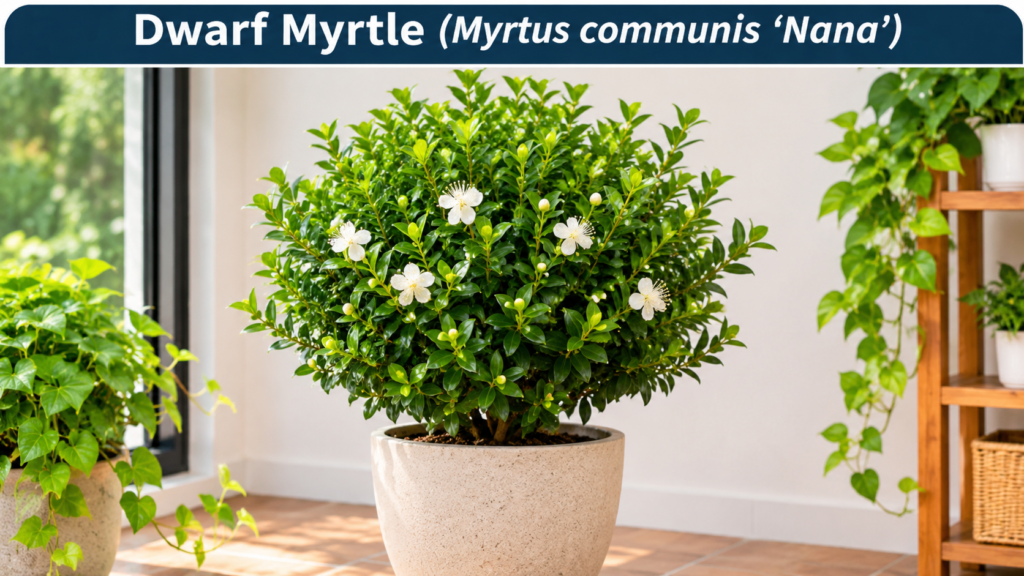
Dwarf Myrtle is a compact evergreen shrub that makes an excellent decorative plant for bright indoor spaces. This miniature variety of Common Myrtle features small, glossy green leaves, dense branching, and delicate white flowers. Its naturally compact growth makes it suitable for windowsills, tabletops, and small indoor gardens. With proper sunlight and regular pruning, Dwarf Myrtle maintains an attractive, bushy appearance.
Appearance and Characteristics
Dwarf Myrtle produces tiny, oval-shaped leaves with a pleasant aromatic fragrance. Its dense foliage and closely spaced branches create a neat, rounded shape. During its flowering season, small white blossoms may appear, followed by dark berries.
Its slow-growing nature and compact size make it suitable for miniature indoor trees and bonsai arrangements. Regular trimming helps maintain its decorative appearance without requiring excessive space.
How to Grow Dwarf Myrtle Indoors
Place Dwarf Myrtle near a sunny window that receives at least 6 hours of direct sunlight daily. Use a well-draining potting mix and a container with drainage holes. Water when the top layer of soil feels slightly dry.
Maintain good air circulation and avoid overwatering. Feed occasionally with a balanced liquid fertilizer during the growing season. Light pruning encourages dense growth, while a cool, bright winter location helps keep the plant healthy.
3. Compact Myrtle (Myrtus communis ‘Compacta’)
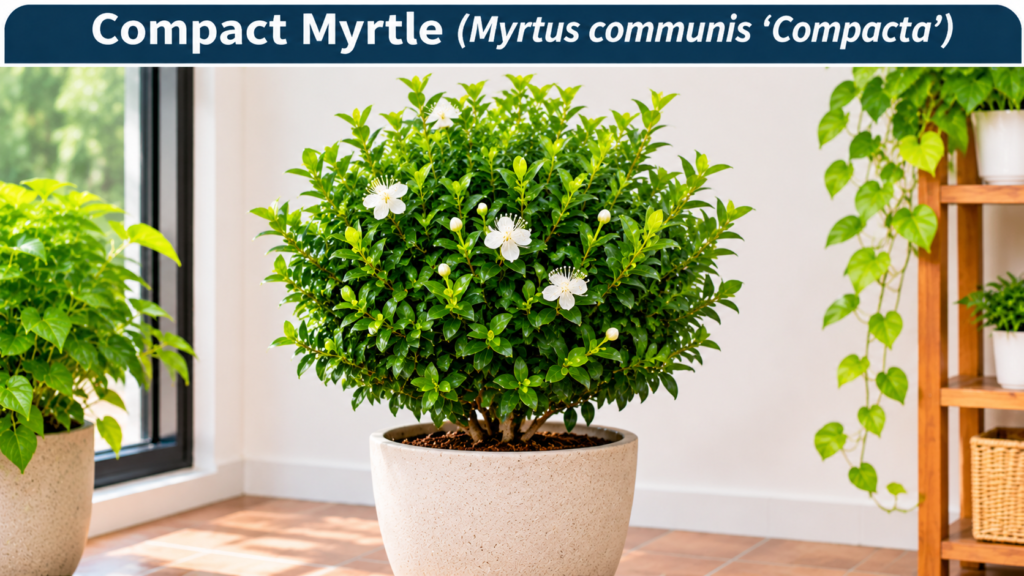
Compact Myrtle is an attractive evergreen shrub valued for its dense foliage, aromatic leaves, and manageable growth habit. This variety develops a naturally rounded shape, making it suitable for container gardening and decorative indoor arrangements. Its small, dark green leaves remain attractive throughout the year, while fragrant white flowers add seasonal beauty. Compact Myrtle grows best in bright indoor spaces with plenty of natural sunlight.
Appearance and Characteristics
Compact Myrtle features glossy, narrow green leaves arranged along closely spaced branches. Its foliage produces a pleasant herbal fragrance when gently crushed. During warmer months, the plant may develop small white flowers with prominent stamens.
The naturally bushy growth habit makes this variety suitable for decorative containers and miniature tree arrangements. With occasional trimming, it can maintain a symmetrical shape and compact appearance.
How to Grow Compact Myrtle Indoors
Grow Compact Myrtle near a south-facing window with at least 6 hours of direct sunlight. Plant it in loose, well-draining soil and choose a container that allows excess water to escape. Water whenever the upper soil layer becomes slightly dry.
Provide good ventilation and avoid excessively humid or poorly lit locations. Apply diluted balanced fertilizer during spring and summer. Prune lightly to encourage branching and maintain its compact structure.
4. Variegated Myrtle (Myrtus communis ‘Variegata’)

Variegated Myrtle is a decorative evergreen shrub known for its striking green leaves edged with creamy white or pale yellow. This colorful variety adds visual interest to bright indoor gardens, sunny windowsills, and container arrangements. Like Common Myrtle, it produces aromatic foliage and delicate white flowers under suitable growing conditions. Its attractive leaf patterns make it particularly appealing for gardeners seeking an ornamental indoor tree.
Appearance and Characteristics
Variegated Myrtle features small, oval leaves with contrasting green centers and creamy margins. Its foliage remains attractive throughout the year, creating a bright appearance even when the plant is not flowering.
During summer, mature plants may produce fragrant white blossoms followed by small dark berries. Its branching structure responds well to gentle pruning, allowing gardeners to maintain a rounded shrub or miniature tree shape.
How to Grow Variegated Myrtle Indoors
Place Variegated Myrtle near a bright window where it receives 6 or more hours of direct sunlight daily. Adequate light helps maintain its attractive leaf coloration. Use a well-draining potting mix and water when the upper soil begins to dry.
Avoid excessive watering and keep the plant away from heating vents. Apply a balanced fertilizer occasionally during active growth. Trim overgrown branches as needed, and remove any fully green shoots to help preserve its variegated appearance.
5. Tarentum Myrtle (Myrtus communis subsp. tarentina)

Tarentum Myrtle is a compact evergreen shrub known for its small, aromatic leaves and dense branching structure. Native to the Mediterranean region, this attractive variety is suitable for container gardening and bright indoor spaces. Its glossy green foliage, delicate white flowers, and naturally rounded growth habit make it a beautiful ornamental plant. With proper sunlight and occasional pruning, Tarentum Myrtle can develop into an elegant miniature indoor tree.
Appearance and Characteristics
Tarentum Myrtle features small, narrow, dark green leaves that release a pleasant fragrance when crushed. Its closely spaced branches create a dense, bushy appearance. During summer, mature plants may produce small white flowers with prominent stamens, followed by dark berries.
Its compact growth habit makes it suitable for decorative containers, bonsai arrangements, and small indoor gardens. Regular trimming helps maintain its rounded shape while encouraging healthy branching.
How to Grow Tarentum Myrtle Indoors
Place Tarentum Myrtle near a sunny window where it receives at least 6 hours of direct sunlight daily. Use well-draining potting soil and a container with drainage holes. Water when the upper layer of soil begins to dry, avoiding excessive moisture around the roots.
Maintain good air circulation and provide cooler temperatures during winter. Apply diluted balanced fertilizer occasionally during spring and summer. Prune lightly to maintain its compact appearance and remove damaged branches.
6. Variegated Tarentum Myrtle (Myrtus communis ‘Tarentina Variegata’)

Variegated Tarentum Myrtle is an attractive evergreen shrub recognized for its small green leaves with creamy white margins. This ornamental variety combines colorful foliage with a naturally compact growth habit, making it suitable for bright indoor gardens and decorative containers. Its aromatic leaves and delicate white flowers add seasonal interest. With sufficient sunlight and proper maintenance, Variegated Tarentum Myrtle can remain an eye-catching miniature tree.
Appearance and Characteristics
Variegated Tarentum Myrtle produces small, oval-shaped leaves featuring green centers and contrasting creamy edges. Its closely arranged branches create a full, rounded appearance, while the foliage releases a pleasant herbal fragrance when gently crushed.
During warmer months, established plants may develop small white flowers followed by dark berries. Its colorful foliage and compact structure make it particularly suitable for decorative pots, sunny windowsills, and miniature tree arrangements.
How to Grow Variegated Tarentum Myrtle Indoors
Grow Variegated Tarentum Myrtle near a bright, south-facing window with approximately 6 hours of direct sunlight daily. Adequate light helps maintain its distinctive leaf coloration. Plant it in well-draining soil and water when the upper soil layer feels slightly dry.
Avoid waterlogged conditions and provide good ventilation. Apply a diluted balanced fertilizer occasionally during the growing season. Light pruning encourages dense growth, while removing fully green shoots helps preserve its variegated foliage.
7. Boxleaf Myrtle (Myrtus communis ‘Buxifolia’)
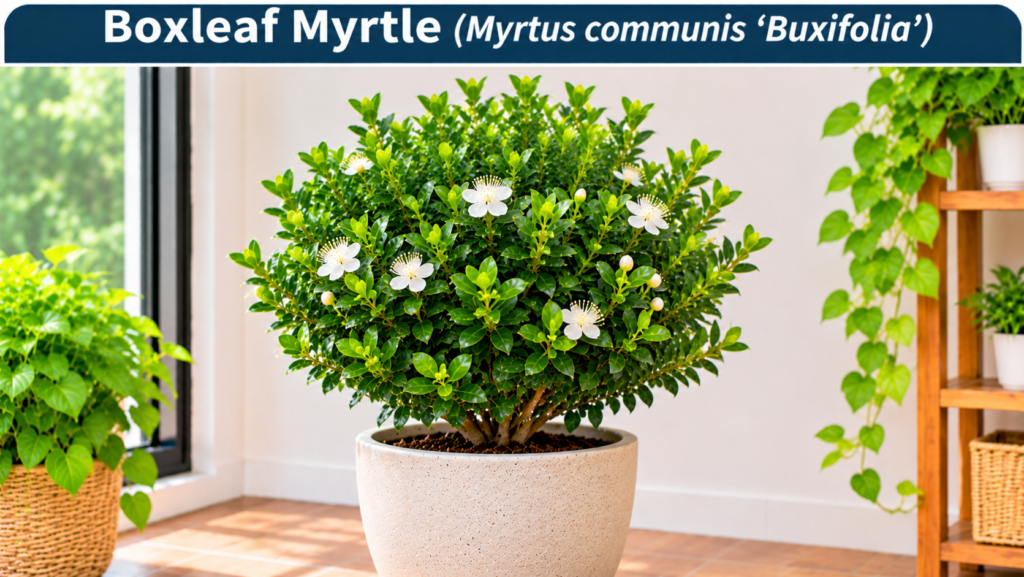
Boxleaf Myrtle is a compact evergreen shrub valued for its small, rounded leaves and dense, attractive foliage. Its appearance resembles traditional boxwood, making it a popular choice for decorative containers, miniature hedges, and topiary arrangements. This aromatic Mediterranean plant can adapt to bright indoor environments when provided with sufficient sunlight. Its neat growth habit and attractive green leaves make it an appealing option for indoor gardeners.
Appearance and Characteristics
Boxleaf Myrtle features small, rounded to oval green leaves arranged along closely spaced branches. Its dense foliage creates a naturally tidy appearance, while the leaves release a gentle fragrance when crushed. Under favorable conditions, mature plants may produce delicate white flowers during summer.
Its compact branching structure responds well to shaping and pruning. Gardeners can maintain it as a rounded shrub, miniature tree, or decorative topiary in containers.
How to Grow Boxleaf Myrtle Indoors
Place Boxleaf Myrtle near a sunny window that provides at least 6 hours of direct sunlight daily. Choose a container with proper drainage and fill it with loose, well-draining potting soil. Water when the top layer of soil becomes slightly dry.
Maintain moderate humidity and good airflow around the foliage. Feed occasionally with a balanced liquid fertilizer during spring and summer. Prune unwanted branches to maintain the desired shape, and provide a cool, bright location during winter to support healthy growth.
8. Small-Leaf Myrtle (Myrtus communis ‘Microphylla’)

Small-Leaf Myrtle is a charming evergreen shrub known for its tiny, glossy leaves and compact branching structure. This ornamental variety is suitable for container gardening and bright indoor environments. Its delicate foliage creates a soft, attractive appearance, while fragrant white flowers provide seasonal beauty. With proper sunlight, regular watering, and occasional pruning, Small-Leaf Myrtle can grow into an elegant miniature tree for indoor decoration.
Appearance and Characteristics
Small-Leaf Myrtle features tiny, oval-shaped green leaves arranged along slender branches. Its dense foliage creates a neat, bushy appearance, making it particularly attractive for small decorative containers. During summer, mature plants may produce delicate white flowers followed by dark purple berries.
Its naturally compact growth habit makes it suitable for bonsai arrangements and miniature indoor trees. Gentle pruning encourages additional branching and helps maintain its attractive shape throughout the year.
How to Grow Small-Leaf Myrtle Indoors
Place Small-Leaf Myrtle near a sunny window where it receives at least 6 hours of direct sunlight daily. Use well-draining potting soil and a container with drainage holes. Water when the upper layer of soil begins to dry, avoiding excessive moisture around the roots.
Maintain good air circulation and moderate indoor humidity. Apply diluted balanced fertilizer occasionally during spring and summer. Prune lightly to encourage dense growth, and provide cooler temperatures during winter whenever possible.
9. Boetica Myrtle (Myrtus communis ‘Boetica’)

Boetica Myrtle is an attractive evergreen shrub recognized for its aromatic foliage, graceful branching, and ornamental appearance. This Mediterranean myrtle variety can be grown in containers and maintained as a small decorative tree. Its glossy green leaves remain attractive throughout the year, while delicate white flowers add seasonal interest. Boetica Myrtle performs best in sunny indoor locations with proper drainage and regular maintenance.
Appearance and Characteristics
Boetica Myrtle develops glossy, oval-shaped green leaves along woody branches. Its foliage releases a pleasant fragrance when gently crushed. During warmer months, established plants may produce white flowers with numerous delicate stamens, followed by small dark berries.
Its attractive branching structure makes it suitable for decorative containers and carefully maintained indoor topiary. Regular pruning helps control its size while encouraging a fuller, more balanced appearance.
How to Grow Boetica Myrtle Indoors
Grow Boetica Myrtle near a bright, south-facing window that receives approximately 6 hours of direct sunlight daily. Plant it in a loose, well-draining potting mixture and select a container with adequate drainage. Water when the upper soil layer becomes slightly dry.
Provide good ventilation and avoid placing the plant near heating vents. Apply balanced liquid fertilizer occasionally during active growth. Remove damaged branches and prune lightly to maintain its shape. A cool, bright winter location supports healthier long-term growth.
10. White-Berried Myrtle (Myrtus communis ‘Leucocarpa’)

White-Berried Myrtle is a distinctive evergreen shrub valued for its fragrant leaves, delicate white flowers, and unusual pale-colored berries. Unlike typical Common Myrtle varieties that produce dark purple or black fruits, this ornamental form develops whitish berries when mature. Its attractive foliage and unique fruit coloration make it an interesting choice for container gardening. With sufficient sunlight and appropriate care, White-Berried Myrtle can grow as a decorative miniature indoor tree.
Appearance and Characteristics
White-Berried Myrtle features glossy, dark green leaves with a pleasant aromatic fragrance. During its flowering season, the plant produces small white blossoms with prominent stamens. These flowers may eventually develop into distinctive pale or whitish berries.
Its dense evergreen foliage provides year-round ornamental appeal. The combination of fragrant leaves, seasonal flowers, and unusual berries makes it especially attractive for sunny indoor gardens and conservatories.
How to Grow White-Berried Myrtle Indoors
Place White-Berried Myrtle near a sunny window where it receives at least 6 hours of direct sunlight daily. Use well-draining potting soil and a container with drainage holes. Water when the upper portion of the soil starts to dry, keeping the roots from remaining waterlogged.
Maintain good air circulation and provide occasional balanced fertilizer during spring and summer. Prune lightly to control its size and encourage branching. For healthier flowering and berry production, provide strong sunlight and cooler winter conditions whenever possible.
11. Compact Variegated Myrtle (Myrtus communis ‘Compacta Variegata’)

Compact Variegated Myrtle is an attractive evergreen shrub known for its colorful foliage and naturally compact growth habit. This ornamental myrtle features small green leaves with creamy white margins, creating a bright and decorative appearance. Its dense branching structure makes it suitable for container gardening, miniature trees, and sunny indoor spaces. With sufficient sunlight and regular maintenance, Compact Variegated Myrtle can remain an appealing decorative plant throughout the year.
Appearance and Characteristics
Compact Variegated Myrtle produces small, oval-shaped leaves featuring green centers and creamy white edges. Its closely spaced branches create a rounded, bushy appearance. Under favorable conditions, mature plants may produce delicate white flowers followed by small dark berries.
Its compact growth habit makes it suitable for decorative pots and miniature topiary arrangements. Light pruning encourages additional branching and helps maintain its attractive shape without requiring excessive growing space.
How to Grow Compact Variegated Myrtle Indoors
Place Compact Variegated Myrtle near a bright, south-facing window that receives approximately 6 hours of direct sunlight daily. Use well-draining potting soil and a container with drainage holes. Water when the upper layer of soil begins to dry, avoiding waterlogged conditions.
Maintain good air circulation and keep the plant away from heating vents. Apply diluted balanced fertilizer occasionally during spring and summer. Prune lightly to maintain its compact appearance, and provide a cool, bright location during winter for healthier growth.
12. Compact Tarentum Myrtle (Myrtus communis subsp. tarentina ‘Compacta’)
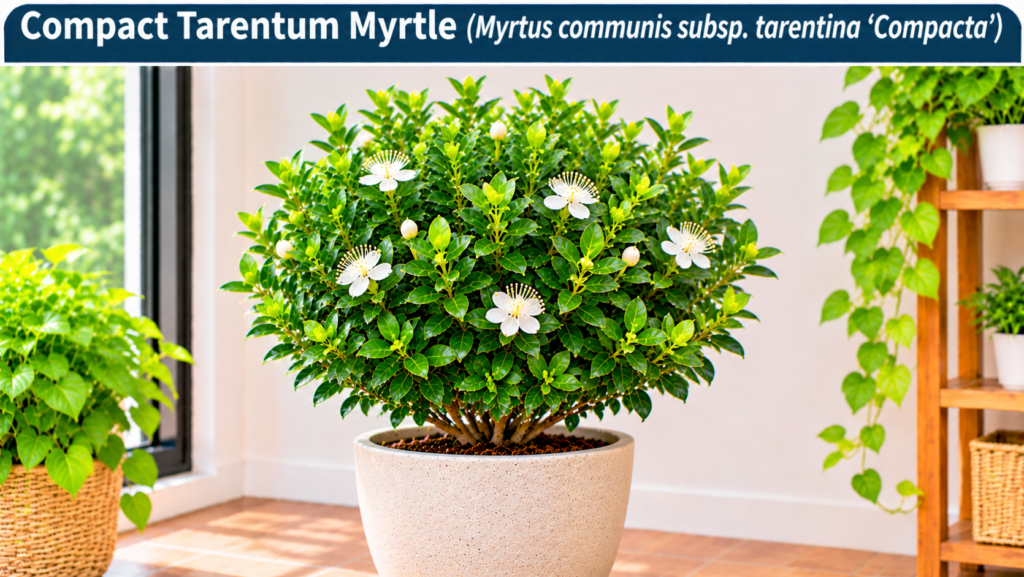
Compact Tarentum Myrtle is a small evergreen shrub valued for its dense foliage, aromatic leaves, and neat growth habit. This compact form of Tarentum Myrtle is well suited to decorative containers and miniature garden arrangements. Its glossy green leaves remain attractive throughout the year, while small white flowers provide seasonal interest. With proper sunlight and occasional pruning, Compact Tarentum Myrtle can be maintained as a charming indoor ornamental tree.
Appearance and Characteristics
Compact Tarentum Myrtle features small, narrow green leaves arranged along closely spaced branches. Its dense foliage creates a naturally rounded shape, while the aromatic leaves release a pleasant fragrance when gently crushed. During summer, established plants may develop delicate white flowers followed by dark berries.
Its slow to moderate growth makes it suitable for small containers and decorative topiary arrangements. Regular trimming helps maintain a balanced appearance while encouraging fuller branching.
How to Grow Compact Tarentum Myrtle Indoors
Grow Compact Tarentum Myrtle near a sunny window where it receives at least 6 hours of direct sunlight daily. Plant it in a loose, well-draining potting mixture and select a container with adequate drainage. Water when the upper soil layer becomes slightly dry.
Provide good ventilation and avoid excessive watering. Apply a balanced liquid fertilizer occasionally during the growing season. Prune unwanted branches to maintain its compact shape, and place the plant in a cool, bright location during winter.
13. Lemon Myrtle (Backhousia citriodora)
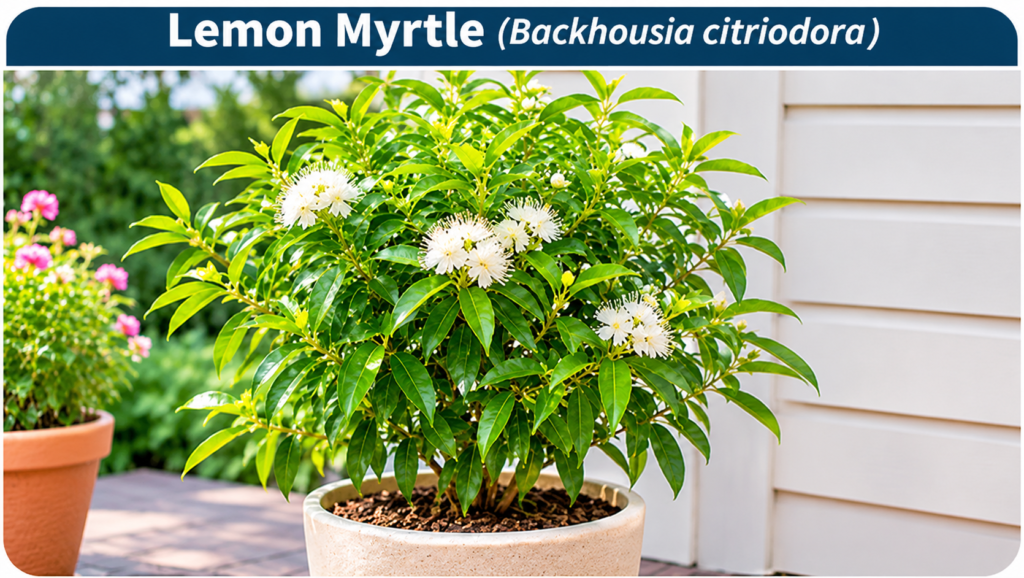
Lemon Myrtle is a fragrant evergreen tree native to the subtropical rainforests of Queensland, Australia. It is especially popular for its strongly lemon-scented leaves, attractive green foliage, and clusters of creamy white flowers. Although it can become a large tree outdoors, Lemon Myrtle can be maintained in containers through regular pruning. Its refreshing fragrance and ornamental appearance make it an interesting choice for spacious, brightly lit indoor gardens.
Appearance and Characteristics
Lemon Myrtle produces glossy, lance-shaped green leaves that release a powerful citrus fragrance when crushed. Its foliage contains aromatic compounds, particularly citral, responsible for its distinctive lemon scent. During flowering, the tree develops clusters of small, creamy white blossoms.
Its upright growth habit and attractive foliage make it suitable for decorative containers and indoor tree arrangements. Regular pruning helps control its height while encouraging a fuller, bushier appearance.
How to Grow Lemon Myrtle Indoors
Place Lemon Myrtle near a bright window where it receives several hours of gentle direct sunlight or strong indirect light daily. Use fertile, well-draining potting soil and a container with drainage holes. Water when the upper layer of soil begins to dry, keeping the growing medium lightly moist rather than soggy.
Maintain moderate to high humidity and protect the plant from cold drafts. Apply balanced fertilizer during spring and summer to support healthy foliage development. Prune regularly to control its size, and provide supplemental grow lighting when natural indoor sunlight is insufficient.
14. Aniseed Myrtle (Syzygium anisatum)

Aniseed Myrtle is an aromatic evergreen tree native to the subtropical rainforests of eastern Australia. It is widely admired for its attractive green foliage and distinctive anise-like fragrance. Although this tree can grow quite tall outdoors, regular pruning helps maintain a manageable size in containers. Its fragrant leaves and elegant appearance make it an interesting choice for bright indoor gardens, sunrooms, and spacious conservatories.
Appearance and Characteristics
Aniseed Myrtle features glossy, elongated green leaves that release a sweet, licorice-like fragrance when crushed. Its dense foliage and upright branching structure create an attractive ornamental appearance. Mature trees may produce clusters of small, creamy white flowers during favorable growing conditions.
Its aromatic leaves are sometimes used for culinary purposes, particularly in herbal teas and seasonings. When maintained in containers, the plant develops a compact structure with regular pruning.
How to Grow Aniseed Myrtle Indoors
Place Aniseed Myrtle near a bright window that provides strong indirect sunlight or gentle morning sunshine. Use fertile, well-draining potting soil and a container with adequate drainage. Water when the upper soil layer begins to dry, keeping the roots consistently moist without waterlogging.
Maintain moderate to high humidity and protect the plant from cold drafts. Apply balanced liquid fertilizer occasionally during spring and summer. Prune lightly to encourage branching, and provide additional grow lighting if natural indoor light is insufficient.
15. Cinnamon Myrtle (Backhousia myrtifolia)

Cinnamon Myrtle is an attractive evergreen tree native to eastern Australia’s subtropical rainforests. This ornamental species is valued for its aromatic foliage, compact container potential, and delicate cream-colored flowers. Its leaves release a distinctive spicy fragrance, making it an appealing addition to indoor plant collections. With appropriate pruning, humidity, and bright lighting, Cinnamon Myrtle can be maintained as a decorative container tree in spacious indoor environments.
Appearance and Characteristics
Cinnamon Myrtle produces small, glossy, oval-shaped leaves with a rich green appearance. When crushed, the foliage releases a warm, spicy fragrance often compared to cinnamon. During flowering, mature plants develop clusters of delicate cream or white blossoms.
Its dense evergreen foliage and attractive branching structure make it suitable for ornamental container gardening. Regular trimming helps maintain a rounded appearance while encouraging healthy new shoots.
How to Grow Cinnamon Myrtle Indoors
Grow Cinnamon Myrtle near a bright window that provides strong indirect light and some gentle morning sunlight. Choose a loose, well-draining potting mixture rich in organic matter. Water when the upper layer of soil starts drying, avoiding prolonged dryness or excessive moisture.
Maintain moderate humidity and protect the plant from cold temperatures and drying air. Apply diluted balanced fertilizer during the active growing season. Prune unwanted branches to maintain a compact shape, and provide supplemental lighting when necessary.
16. Chilean Myrtle (Luma apiculata)

Chilean Myrtle is a beautiful evergreen tree native to the temperate forests of Chile and Argentina. It is especially admired for its smooth, cinnamon-colored bark, glossy green leaves, and delicate white flowers. Although it grows into a substantial tree in its natural habitat, young specimens can be maintained in large containers. Its colorful bark and elegant foliage make it an unusual ornamental choice for bright, cool indoor conservatories.
Appearance and Characteristics
Chilean Myrtle features small, glossy, dark green leaves arranged along slender branches. One of its most distinctive characteristics is its smooth, reddish-brown bark, which becomes particularly attractive as the plant matures. During summer, the tree produces fragrant white flowers with prominent stamens.
These blossoms may eventually develop into small, dark purple or black berries. Its evergreen foliage, colorful bark, and graceful branching structure provide ornamental interest throughout the year.
How to Grow Chilean Myrtle Indoors
Place Chilean Myrtle in a bright, cool location with strong indirect sunlight or gentle direct sunshine. Use slightly acidic, well-draining soil rich in organic matter. Water regularly to maintain evenly moist soil, but avoid leaving the container waterlogged.
Maintain moderate humidity and provide good ventilation. Protect the plant from excessively hot indoor conditions and heating vents. Apply balanced fertilizer sparingly during the growing season, and prune lightly to maintain its shape. A cool conservatory is generally more suitable than a warm indoor room.
17. Australian Myrtle (Myoporum insulare)
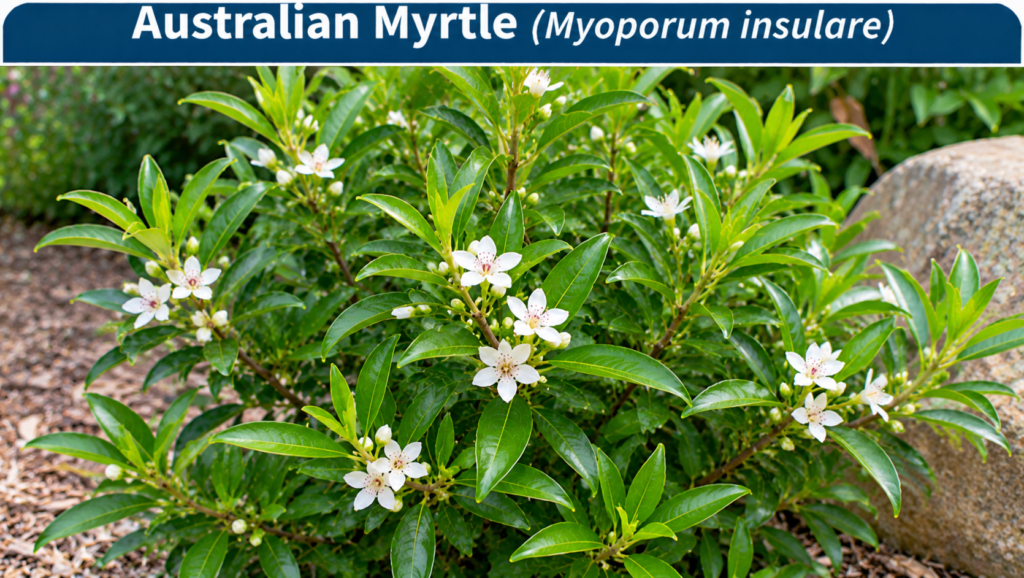
Australian Myrtle is an attractive evergreen shrub or small tree native to coastal regions of Australia. Also known as Common Boobialla, this hardy plant features glossy green leaves, small white flowers, and attractive purple berries. Its dense foliage and adaptable growth habit make it suitable for container gardening and ornamental landscapes. Although primarily an outdoor species, Australian Myrtle can be maintained in bright indoor spaces with sufficient sunlight and regular pruning.
Appearance and Characteristics
Australian Myrtle produces thick, glossy, lance-shaped green leaves arranged along smooth branches. Its dense evergreen foliage creates a lush appearance throughout the year. During flowering, the plant develops small white blossoms, often marked with delicate purple spots, followed by rounded purple berries.
Its naturally bushy growth habit makes it suitable for decorative containers and miniature tree arrangements. Regular pruning encourages additional branching and helps maintain a compact, attractive shape.
How to Grow Australian Myrtle Indoors
Place Australian Myrtle near a sunny, south-facing window where it receives at least 6 hours of direct sunlight daily. Use sandy, well-draining potting soil and a container with adequate drainage holes. Water when the upper soil layer becomes dry, avoiding excessive moisture around the roots.
Maintain good air circulation and avoid poorly lit locations. Apply diluted balanced fertilizer occasionally during spring and summer. Prune overgrown branches to maintain the desired shape. This species generally performs better outdoors, so supplemental grow lights may be necessary for successful indoor cultivation.
FAQs
1. Can Myrtle Trees Grow Indoors?
Yes, several Myrtle trees can grow indoors when provided with sufficient sunlight, proper watering, and good air circulation. Compact varieties, such as Dwarf Myrtle and Common Myrtle, are particularly suitable for container gardening. However, most Myrtle trees prefer bright conditions, and some species grow better in sunny conservatories than ordinary indoor rooms.
2. How Much Sunlight Do Indoor Myrtle Trees Need?
Most indoor Myrtle trees require at least 6 hours of direct sunlight daily for healthy growth. A bright, south-facing window is usually the best location. Some species, including Lemon Myrtle and Aniseed Myrtle, can tolerate bright indirect light. Supplemental grow lights may help when natural sunlight is insufficient.
3. How Often Should You Water Indoor Myrtle Trees?
Watering frequency depends on the Myrtle species, container size, temperature, and soil conditions. Generally, water when the upper inch of soil begins to dry. Avoid keeping the soil constantly waterlogged, as excessive moisture can cause root rot. Tropical Myrtle species may require more consistent moisture than Mediterranean varieties.
4. Do Indoor Myrtle Trees Produce Flowers and Berries?
Yes, indoor Myrtle trees can produce flowers and berries when growing conditions are favorable. Common Myrtle develops fragrant white flowers followed by dark berries, while White-Berried Myrtle produces pale fruits. However, indoor flowering depends on sufficient sunlight, plant maturity, suitable temperatures, and seasonal growing conditions.
5. What Is the Best Myrtle Tree for Indoor Growing?
Dwarf Myrtle (Myrtus communis ‘Nana’) is one of the best choices for indoor growing because of its compact size, attractive foliage, and manageable growth habit. Common Myrtle and Compact Myrtle are also suitable options. These plants perform best in sunny windows, with well-draining soil, careful watering, and occasional pruning.