
Growing peas indoors is an excellent way to enjoy fresh, sweet, and nutritious vegetables throughout the year. From compact dwarf varieties to productive climbing peas, many types can thrive in containers with proper care. Whether you have a sunny windowsill or an indoor garden with grow lights, these 20 types of peas for indoor growing offer delicious harvests, manageable growth, and options for small spaces.
1. Little Marvel Peas
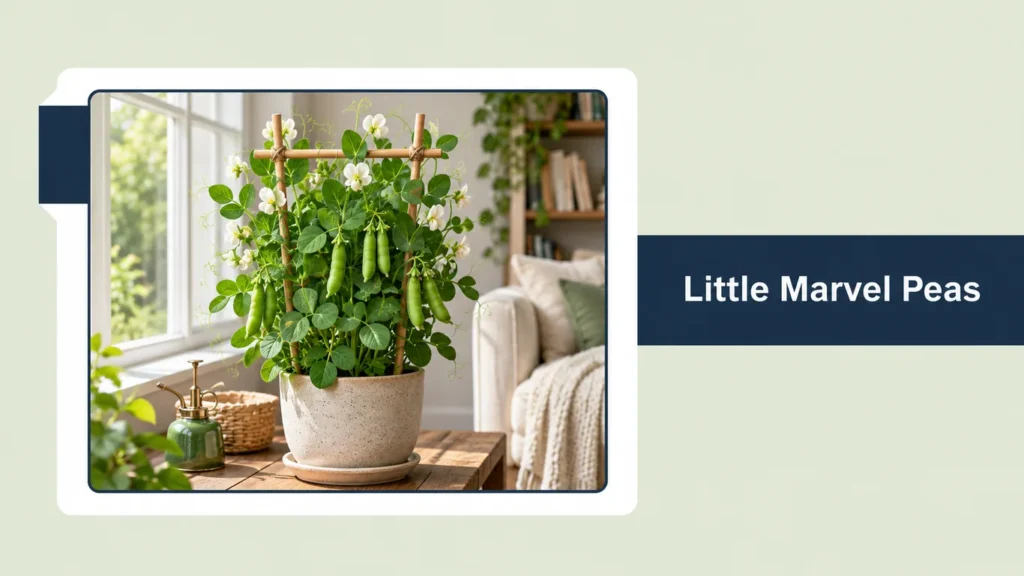
Little Marvel Peas are a compact, early-maturing garden pea variety ideal for indoor growing. These peas produce sweet, tender, bright green seeds inside plump pods. Their relatively short vines make them suitable for containers, balconies, and indoor gardens with adequate lighting. Little Marvel Peas are an excellent choice for beginners who want to grow fresh peas in limited spaces.
Identification
- Scientific Name: Pisum sativum
- Plant Type: Annual climbing vegetable
- Plant Height: Approximately 18–24 inches
- Pod Color: Bright green
- Pod Length: Around 2–3 inches
- Pea Color: Light to medium green
- Harvest Time: Approximately 60–65 days
- Growth Habit: Compact, bushy vines
Ideal Indoor Growing Conditions
Little Marvel Peas grow best in cool temperatures between 55°F and 70°F (13°C–21°C). Place the container near a bright south-facing window or use a full-spectrum LED grow light for 12–14 hours daily.
Choose a container at least 8–10 inches deep with proper drainage holes. Fill it with nutrient- rich, well-draining potting mix. Although the plants remain relatively compact, small stakes or a short trellis can help support their vines.
Watering & Maintenance Tips
Keep the soil consistently moist without allowing it to become waterlogged. Water when the upper inch of soil begins to dry. Apply a balanced fertilizer sparingly, as peas generally need little supplemental nitrogen. Provide good air circulation to reduce fungal problems.
Harvest pods when they become plump and well-filled but are still tender. Regular harvesting encourages continued production while the plants remain healthy and growing conditions are favorable.
2. Tom Thumb Peas

Tom Thumb Peas are an extremely compact heirloom pea variety, making them an excellent choice for indoor gardening. These dwarf plants produce small, tender green peas with a pleasantly sweet flavor. Their naturally short growth habit makes them ideal for windowsills, small containers, and indoor vegetable gardens where space is limited.
Identification
- Scientific Name: Pisum sativum
- Plant Type: Annual dwarf vegetable
- Plant Height: Approximately 8–12 inches
- Pod Color: Bright green
- Pod Length: Around 2–3 inches
- Pea Color: Medium green
- Harvest Time: Approximately 50–60 days
- Growth Habit: Very compact, bushy plants
Ideal Indoor Growing Conditions
Tom Thumb Peas prefer cool temperatures between 55°F and 70°F (13°C–21°C). Place the plants near a sunny window where they receive at least 6 hours of direct sunlight, or provide 12–14 hours of supplemental grow lighting daily.
Use a container approximately 6–8 inches deep with drainage holes. Fill it with fertile, well-draining potting soil. These naturally dwarf plants generally require little or no additional support.
Watering & Maintenance Tips
Water regularly to maintain lightly moist soil, but avoid excessive watering. Allow the upper layer of soil to dry slightly between watering sessions.
Maintain good air circulation and remove yellowing leaves to prevent fungal infections. Avoid heavy nitrogen fertilization because it can encourage excessive foliage growth. Harvest the pods when they appear plump and tender for the sweetest flavor.
3. Sugar Snap Peas
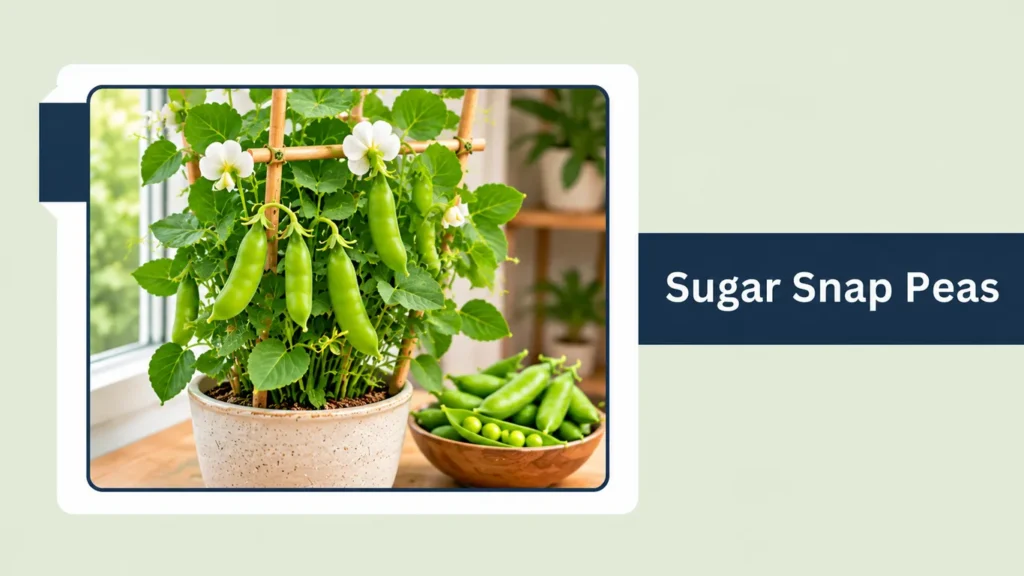
Sugar Snap Peas are popular edible-pod peas known for their crisp texture and naturally sweet flavor. Unlike traditional shelling peas, both their pods and developing peas can be eaten. These vigorous climbing plants can grow successfully indoors with sufficient light, vertical support, and growing space.
Identification
- Scientific Name: Pisum sativum (Macrocarpon Group)
- Plant Type: Annual climbing vegetable
- Plant Height: Approximately 5–6 feet for the original Sugar Snap variety
- Pod Color: Bright green
- Pod Length: Around 2.5–3 inches
- Pea Color: Green
- Harvest Time: Approximately 60–75 days
- Growth Habit: Vigorous climbing vines
Ideal Indoor Growing Conditions
Sugar Snap Peas perform best in temperatures between 55°F and 70°F (13°C–21°C). Provide bright sunlight or full-spectrum LED grow lighting for approximately 12–16 hours daily.
Choose a container at least 10–12 inches deep with adequate drainage. Use nutrient-rich, well- draining potting mix to encourage strong root development.Install a sturdy trellis or vertical support system because the vines can become relatively tall.
Watering & Maintenance Tips
Keep the soil evenly moist, particularly during flowering and pod formation. Avoid allowing water to accumulate around the roots. Provide good air circulation and monitor plants for aphids and powdery mildew. Fertilize lightly if the potting mix becomes depleted. Harvest the pods when they are rounded, crisp, and tender. Frequent harvesting helps maintain productivity.
4. Sugar Ann Peas
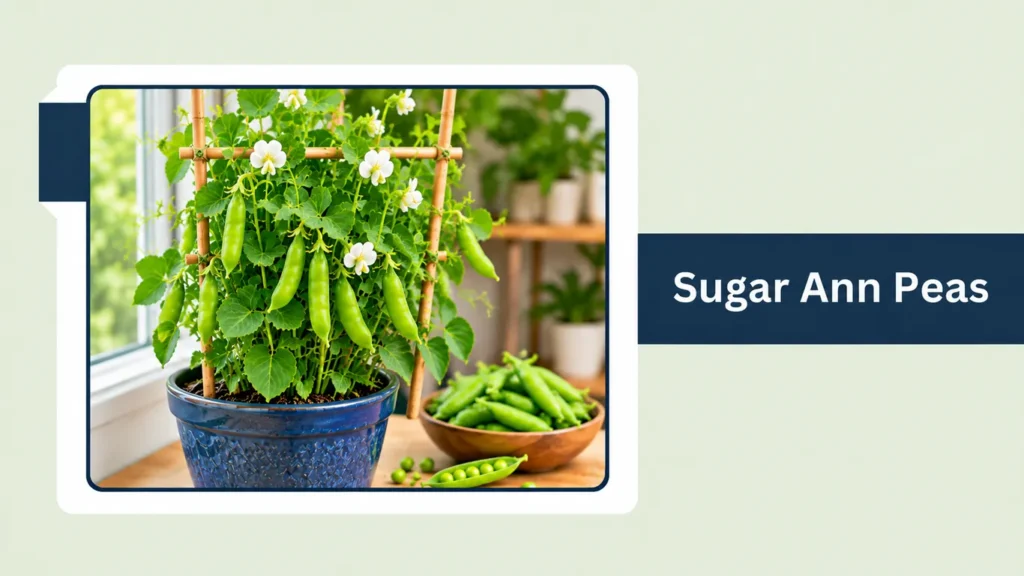
Sugar Ann Peas are an early-maturing dwarf snap pea variety well suited to indoor vegetable gardening. These compact plants produce sweet, crunchy, edible pods and require less vertical space than many traditional snap pea varieties. Their quick-growing nature makes them especially appealing for beginners and gardeners with limited indoor space.
Identification
- Scientific Name: Pisum sativum
- Plant Type: Annual dwarf snap pea
- Plant Height: Approximately 18–24 inches
- Pod Color: Bright green
- Pod Length: Around 2–3 inches
- Pea Color: Light green
- Harvest Time: Approximately 50–60 days
- Growth Habit: Compact, semi-bushy vines
Ideal Indoor Growing Conditions
Sugar Ann Peas prefer temperatures between 55°F and 70°F (13°C–21°C). Position the plants near a bright window or provide supplemental LED lighting for approximately 12–14 hours daily.
Use containers at least 8–10 inches deep with sufficient drainage. Fill them with loose, nutrient-rich potting mix that retains moisture without becoming soggy. Although the plants remain compact, a small trellis or support stakes can help keep their vines upright.
Watering & Maintenance Tips
Water consistently to maintain moderate soil moisture, especially when flowers and pods begin developing. Avoid applying excessive nitrogen fertilizer, which can stimulate foliage growth at the expense of pea production.
Remove damaged foliage and maintain airflow around the plants. Harvest the pods when they become crisp and slightly swollen, before the peas inside grow overly large.
5. Oregon Sugar Pod II Peas
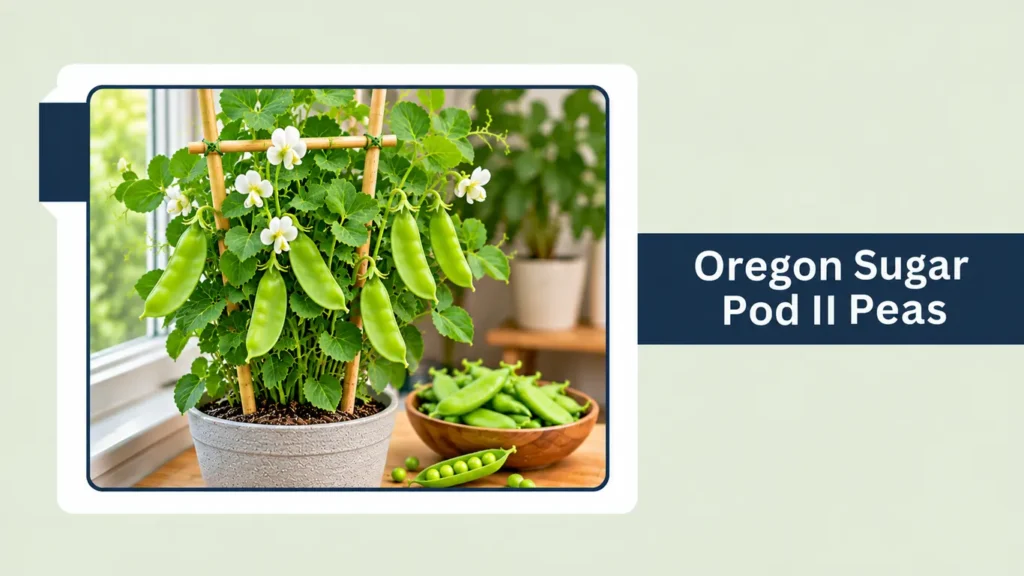
Oregon Sugar Pod II Peas are a productive snow pea variety known for their broad, flat, tender edible pods. These plants have a relatively compact growth habit, making them suitable for indoor containers and small gardening spaces. Their sweet flavor and crunchy texture make them popular for salads, stir-fries, and fresh snacks.
Identification
- Scientific Name: Pisum sativum
- Plant Type: Annual snow pea vegetable
- Plant Height: Approximately 24–36 inches
- Pod Color: Bright green
- Pod Length: Around 4–5 inches
- Pea Color: Light green
- Harvest Time: Approximately 60–70 days
- Growth Habit: Compact, semi-dwarf vines
Ideal Indoor Growing Conditions
Oregon Sugar Pod II Peas prefer cool temperatures between 55°F and 70°F (13°C–21°C). Position the container near a sunny window or provide full-spectrum LED grow lighting for 12–14 hours daily.
Choose a container at least 10–12 inches deep with proper drainage holes. Fill it with loose, fertile, well-draining potting mix. A small trellis or vertical support helps the vines grow upright and prevents overcrowding.
Watering & Maintenance Tips
Keep the soil consistently moist, especially during flowering and pod development. Avoid overwatering because soggy conditions can damage the roots.
Maintain good air circulation to reduce the risk of powdery mildew. Apply fertilizer sparingly because peas generally require little additional nitrogen.Harvest the flat pods while they remain tender and before the seeds become noticeably swollen.
6. Dwarf Grey Sugar Peas
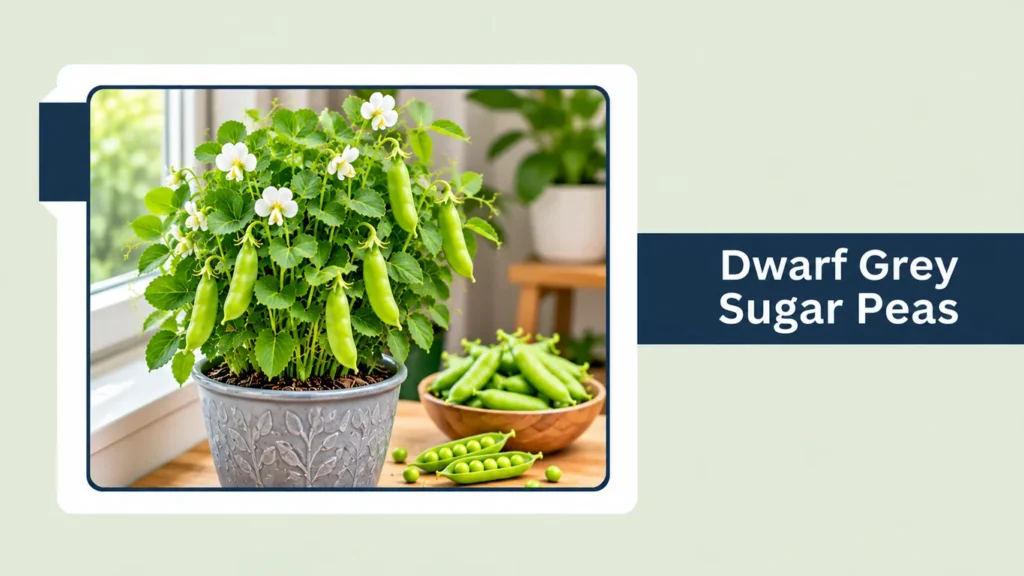
Dwarf Grey Sugar Peas are an heirloom snow pea variety appreciated for their attractive purple flowers, tender edible pods, and compact climbing habit. Their ornamental appearance makes them an interesting addition to indoor vegetable gardens. They can produce fresh peas in containers when provided with sufficient light and cool growing conditions.
Identification
- Scientific Name: Pisum sativum
- Plant Type: Annual snow pea vegetable
- Plant Height: Approximately 24–36 inches
- Pod Color: Medium green
- Pod Length: Around 2.5–3 inches
- Flower Color: Purple and reddish-purple
- Harvest Time: Approximately 60–70 days
- Growth Habit: Compact climbing vines
Ideal Indoor Growing Conditions
Dwarf Grey Sugar Peas grow best in temperatures between 55°F and 70°F (13°C–21°C). Provide at least 6 hours of strong sunlight or 12–14 hours of full-spectrum LED grow lighting daily.
Use a container approximately 10–12 inches deep with adequate drainage. Fill it with nutrient- rich, well-draining potting soil. Install a small trellis or supporting stakes to guide the vines upward. Good airflow helps maintain healthy foliage and encourages flower development.
Watering & Maintenance Tips
Water regularly to keep the soil evenly moist without creating waterlogged conditions. Check moisture levels frequently during flowering.
Remove damaged or yellowing leaves and monitor for common pests such as aphids. Avoid excessive nitrogen fertilizer, which may encourage leafy growth instead of pod production. Harvest the pods when they are young, flat, and tender for the best eating quality.
7. Green Arrow Peas

Green Arrow Peas are a productive shelling pea variety valued for their long pods and sweet, flavorful green peas. These plants are taller than many dwarf varieties but can still grow indoors with adequate container space and vertical support. Their reliable pod production makes them a good choice for gardeners interested in harvesting fresh peas at home.
Identification
- Scientific Name: Pisum sativum
- Plant Type: Annual shelling pea vegetable
- Plant Height: Approximately 24–36 inches
- Pod Color: Dark green
- Pod Length: Around 4–5 inches
- Peas Per Pod: Approximately 8–11
- Harvest Time: Approximately 65–75 days
- Growth Habit: Upright, semi-dwarf vines
Ideal Indoor Growing Conditions
Green Arrow Peas prefer cool indoor temperatures between 55°F and 70°F (13°C–21°C). Place them near a sunny window or use full-spectrum LED grow lights for approximately 12–16 hours daily. Choose containers at least 10–12 inches deep with proper drainage. Use loose, fertile potting mix that supports healthy root development.
Provide a sturdy trellis or vertical support to accommodate the growing vines. Adequate spacing between plants encourages airflow and reduces competition for light.
Watering & Maintenance Tips
Keep the soil consistently moist, particularly during flowering and pea formation. Avoid letting the soil dry completely for extended periods. Inspect the leaves regularly for aphids, mildew, and other common problems. Apply a low-nitrogen fertilizer only when necessary.
Harvest pods when they become full and plump but remain bright green. Open the pods and remove the peas before cooking or eating, since Green Arrow is a shelling variety.
8. Wando Peas

Wando Peas are a popular heirloom shelling pea variety known for their sweet flavor and relatively good tolerance to warm weather. These plants produce plump, green peas inside long pods, making them an excellent choice for home gardeners. Although they grow taller than some dwarf varieties, Wando Peas can thrive indoors when provided with sufficient lighting, container space, and vertical support.
Identification
- Scientific Name: Pisum sativum
- Plant Type: Annual shelling pea vegetable
- Plant Height: Approximately 24–36 inches
- Pod Color: Medium to dark green
- Pod Length: Around 3–4 inches
- Pea Color: Bright green
- Harvest Time: Approximately 65–75 days
- Growth Habit: Semi-dwarf, climbing vines
Ideal Indoor Growing Conditions
Wando Peas grow best in temperatures between 55°F and 70°F (13°C–21°C), although they tolerate moderately warmer conditions better than many traditional pea varieties.
Place the container near a bright, south-facing window or provide full-spectrum LED grow lighting for 12–16 hours daily. Use a container at least 10–12 inches deep with adequate drainage holes. Fill the container with fertile, well-draining potting mix. Install a small trellis or supporting stakes to keep the vines upright and encourage healthy development.
Watering & Maintenance Tips
Keep the soil consistently moist, especially during flowering and pod production. Avoid overwatering because waterlogged soil can cause root problems.
Maintain good air circulation and inspect plants regularly for aphids and powdery mildew. Avoid excessive nitrogen fertilizer. Harvest the pods when they become plump and well-filled. Shell the peas before eating or cooking for the best flavor and tenderness.
9. Alaska Peas
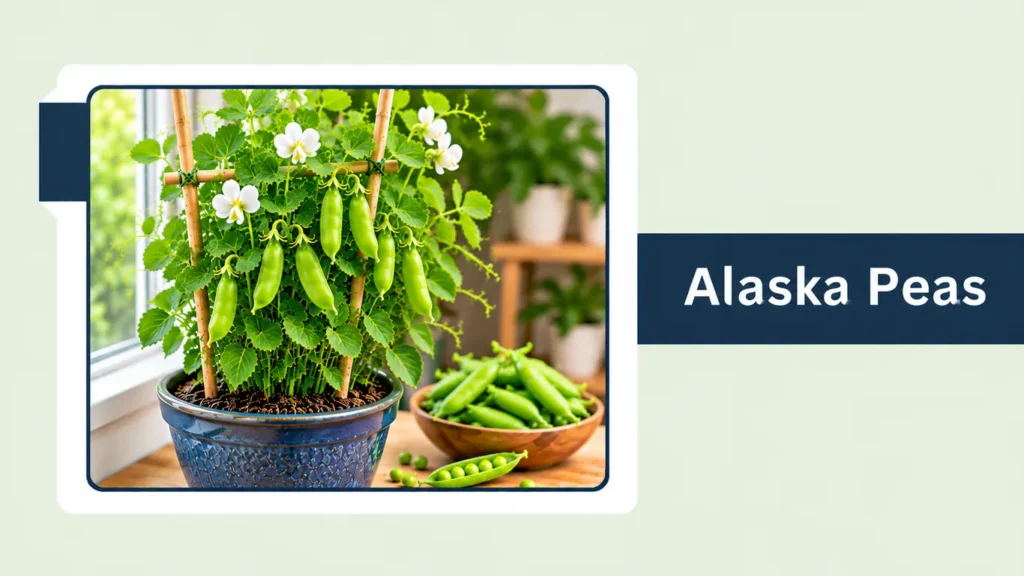
Alaska Peas are an early-maturing shelling pea variety valued for their ability to grow in cool conditions. These vigorous plants produce smooth, round green peas inside slender pods. Their relatively quick growth cycle makes them an appealing choice for indoor gardeners who want to harvest fresh peas without waiting too long. They are especially suitable for cool indoor environments with sufficient artificial or natural lighting.
Identification
- Scientific Name: Pisum sativum
- Plant Type: Annual shelling pea vegetable
- Plant Height: Approximately 24–36 inches
- Pod Color: Bright green
- Pod Length: Around 2.5–3 inches
- Pea Color: Light to medium green
- Harvest Time: Approximately 50–60 days
- Growth Habit: Upright, semi-dwarf vines
Ideal Indoor Growing Conditions
Alaska Peas prefer cool temperatures between 50°F and 65°F (10°C–18°C). They grow well near bright windows but benefit from supplemental full-spectrum LED lighting for approximately 12–14 hours daily.
Choose a container at least 10–12 inches deep with sufficient drainage holes. Use loose, fertile, well-draining potting mix to promote strong root development. Provide a small trellis or supporting stakes to accommodate the upright vines. Adequate spacing between plants helps improve airflow and overall plant health.
Watering & Maintenance Tips
Water regularly to maintain evenly moist soil without saturating the roots. Check soil moisture frequently during flowering and pod development. Avoid heavy fertilization because peas naturally require relatively little additional nitrogen. Remove damaged leaves and monitor the plants for aphids and fungal diseases.
Harvest pods when the peas are well-developed but remain tender. For the sweetest taste, shell and use the peas soon after harvesting.
10. Lincoln Peas
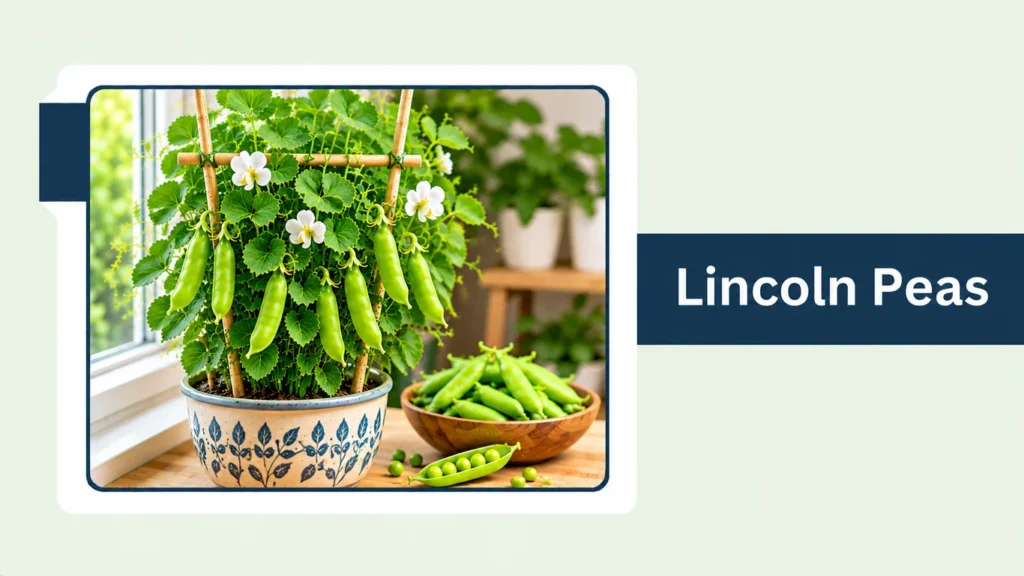
Lincoln Peas are a classic heirloom shelling pea variety appreciated for their sweet flavor, tender texture, and dependable production. These plants develop compact to medium-height vines with attractive green foliage and well-filled pods. Lincoln Peas are suitable for indoor vegetable growing when provided with enough sunlight, suitable containers, and consistent care. Their flavorful peas are excellent for fresh eating, steaming, and home cooking.
Identification
- Scientific Name: Pisum sativum
- Plant Type: Annual shelling pea vegetable
- Plant Height: Approximately 24–36 inches
- Pod Color: Dark green
- Pod Length: Around 3–4 inches
- Peas Per Pod: Approximately 6–9
- Harvest Time: Approximately 65–75 days
- Growth Habit: Compact, semi-dwarf vines
Ideal Indoor Growing Conditions
Lincoln Peas grow best in temperatures between 55°F and 70°F (13°C–21°C). Position the plants near a sunny window that receives at least 6 hours of direct sunlight or use full-spectrum LED grow lights for 12–16 hours daily.
Select a container approximately 10–12 inches deep with proper drainage. Fill it with nutrient- rich, well-draining potting soil. Although Lincoln Peas have relatively compact vines, providing a small trellis or supporting stakes helps prevent stems from bending under the weight of developing pods.
Watering & Maintenance Tips
Keep the potting mix evenly moist, particularly when flowers and pods begin forming. Allow the soil surface to dry slightly before watering again.
Maintain proper air circulation and inspect the foliage regularly for insects or disease. Avoid excessive nitrogen fertilizer, which can encourage leafy growth instead of productive flowering. Harvest the pods when they become plump, bright green, and well-filled. Remove the peas from their pods before eating or cooking.
11. Maestro Peas

Maestro Peas are a productive shelling pea variety known for their sweet flavor, tender texture, and long, well-filled pods. These plants produce attractive green foliage and develop medium-height vines suitable for container gardening. With proper lighting, consistent moisture, and vertical support, Maestro Peas can grow successfully indoors. Their flavorful green peas make them an excellent choice for fresh eating, steaming, and home cooking.
Identification
- Scientific Name: Pisum sativum
- Plant Type: Annual shelling pea vegetable
- Plant Height: Approximately 24–30 inches
- Pod Color: Dark green
- Pod Length: Around 4–5 inches
- Peas Per Pod: Approximately 8–10
- Harvest Time: Approximately 60–65 days
- Growth Habit: Compact, semi-dwarf vines
Ideal Indoor Growing Conditions
Maestro Peas grow best in cool temperatures between 55°F and 70°F (13°C–21°C). Place the container near a bright window that receives at least 6 hours of direct sunlight, or provide full-spectrum LED grow lighting for 12–16 hours daily.
Choose a container at least 10–12 inches deep with proper drainage holes. Fill it with loose, fertile, well-draining potting mix that retains moderate moisture. Install a small trellis or supporting stakes to keep the plants upright. Good air circulation helps promote healthy foliage and reduces fungal problems.
Watering & Maintenance Tips
Keep the soil consistently moist without allowing it to become waterlogged. Water more frequently during flowering and pod development if the upper layer of soil begins drying.
Avoid excessive nitrogen fertilizer, as peas generally require little additional nitrogen. Inspect plants regularly for aphids and powdery mildew. Harvest pods when they become plump and well-filled. Shell the peas while they remain tender for the best flavor.
12. Progress No. 9 Peas
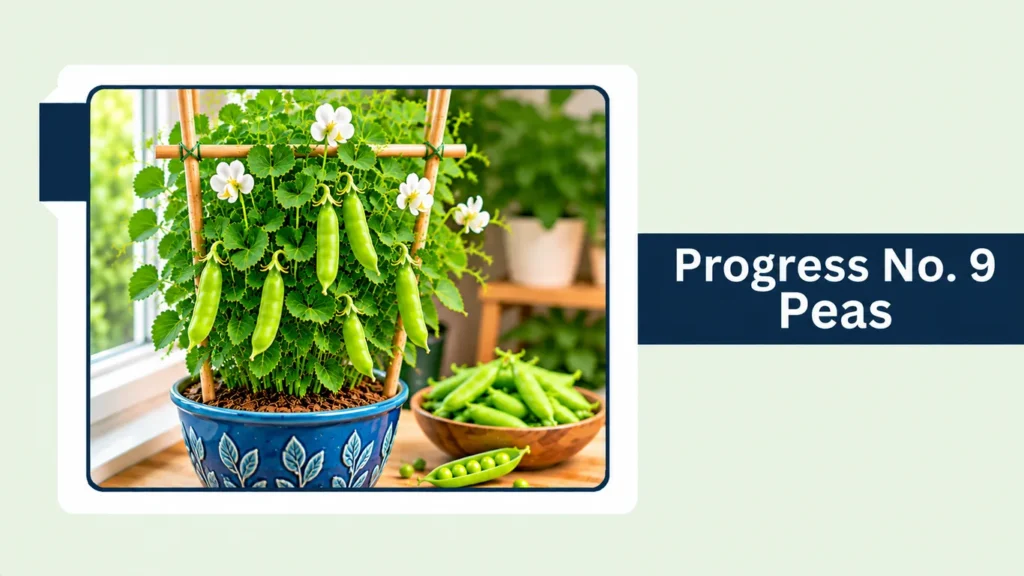
Progress No. 9 Peas are an early-maturing dwarf shelling pea variety appreciated for their compact growth and sweet, tender green peas. These plants produce short vines and attractive green pods, making them particularly suitable for indoor containers and small growing spaces. Their manageable size and relatively quick harvest time make them a practical choice for beginners interested in growing fresh peas at home.
Identification
- Scientific Name: Pisum sativum
- Plant Type: Annual dwarf shelling pea
- Plant Height: Approximately 15–20 inches
- Pod Color: Medium green
- Pod Length: Around 3–4 inches
- Peas Per Pod: Approximately 6–9
- Harvest Time: Approximately 55–60 days
- Growth Habit: Compact, bushy vines
Ideal Indoor Growing Conditions
Progress No. 9 Peas prefer temperatures between 55°F and 70°F (13°C–21°C). Position the plants near a bright south-facing window or use full-spectrum LED grow lights for approximately 12–14 hours daily.
Select a container at least 8–10 inches deep with drainage holes. Fill it with fertile, well-draining potting mix to encourage healthy root development. Because these plants remain relatively short, they generally need only minimal support. Small stakes can help prevent stems from bending under developing pods.
Watering & Maintenance Tips
Water regularly to keep the soil evenly moist, especially when the plants begin flowering. Avoid excessive watering because saturated soil can damage the roots. Maintain good airflow and remove yellowing or damaged leaves when necessary. Apply fertilizer sparingly, particularly products containing high levels of nitrogen.
Harvest pods when they are bright green and plump but before the peas become hard or starchy. Remove the peas from their pods before eating or cooking.
13. Cascadia Snap Peas
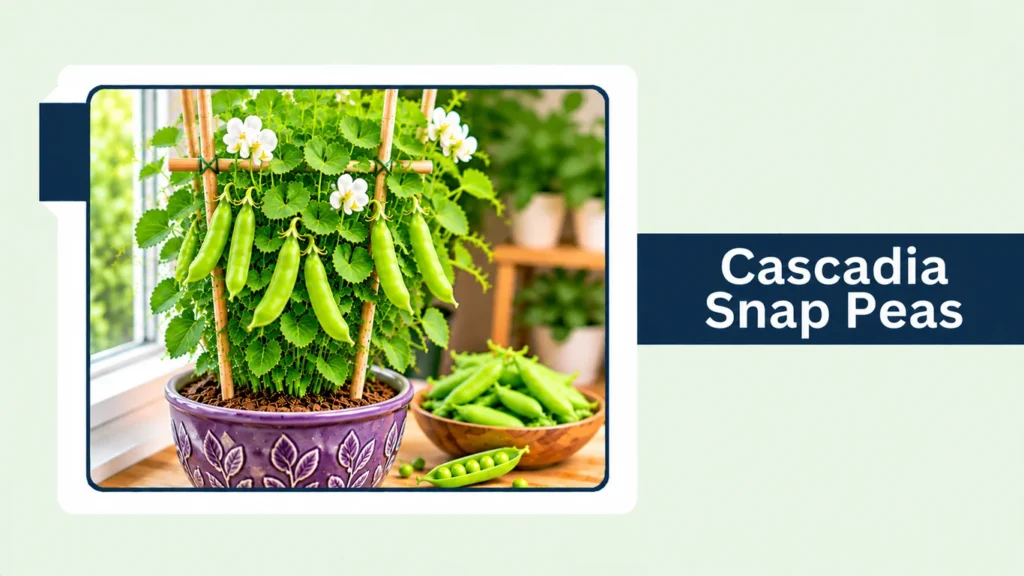
Cascadia Snap Peas are a popular snap pea variety known for their sweet, crunchy, edible pods and relatively compact growth habit. These plants produce thick, flavorful pods that can be eaten whole without shelling. Their manageable vines make them suitable for indoor growing with adequate lighting and support. Cascadia Snap Peas are especially appealing to gardeners who enjoy harvesting fresh vegetables for salads, stir-fries, and healthy snacks.
Identification
- Scientific Name: Pisum sativum
- Plant Type: Annual snap pea vegetable
- Plant Height: Approximately 24–36 inches
- Pod Color: Bright green
- Pod Length: Around 2.5–3 inches
- Pea Color: Light to medium green
- Harvest Time: Approximately 60–70 days
- Growth Habit: Compact, semi-dwarf vines
Ideal Indoor Growing Conditions
Cascadia Snap Peas grow best in temperatures between 55°F and 70°F (13°C–21°C). Provide at least 6 hours of strong direct sunlight or supplement with full-spectrum LED grow lighting for 12–16 hours daily.
Choose a container approximately 10–12 inches deep with sufficient drainage holes. Fill it with nutrient-rich, well-draining potting mix. Install a small trellis or vertical support system to guide the vines upward. Keep the plants adequately spaced to encourage airflow and healthy pod development.
Watering & Maintenance Tips
Maintain consistent soil moisture throughout the growing season, particularly during flowering and pod formation. Avoid leaving standing water in saucers beneath the containers. Inspect leaves regularly for aphids and fungal diseases. Remove damaged foliage and avoid applying excessive nitrogen fertilizer.
Harvest the pods when they are rounded, crisp, and tender. Cascadia Snap Peas have edible pods, so they can be eaten whole after washing. Regular harvesting encourages further pod production while the plants remain productive.
14. Super Sugar Snap Peas

Super Sugar Snap Peas are a vigorous climbing snap pea variety known for their sweet flavor, crisp texture, and thick edible pods. These plants produce tall vines with abundant green foliage and attractive white flowers. Although they require more vertical space than dwarf varieties, Super Sugar Snap Peas can grow indoors with proper lighting, large containers, and sturdy support. Their crunchy pods are excellent for fresh snacks, salads, and stir-fries.
Identification
- Scientific Name: Pisum sativum
- Plant Type: Annual climbing snap pea
- Plant Height: Approximately 5–6 feet
- Pod Color: Bright green
- Pod Length: Around 3 inches
- Pea Color: Medium green
- Harvest Time: Approximately 60–70 days
- Growth Habit: Tall, vigorous climbing vines
Ideal Indoor Growing Conditions
Super Sugar Snap Peas prefer cool temperatures between 55°F and 70°F (13°C–21°C). Position the plants near a bright window or use full-spectrum LED grow lights for approximately 12–16 hours daily.
Choose a container at least 12 inches deep with sufficient drainage holes. Fill it with loose, fertile, well-draining potting mix that retains moderate moisture. Install a sturdy trellis approximately 5–6 feet tall to support the climbing vines. Adequate spacing and good air circulation encourage healthy development and improve flowering.
Watering & Maintenance Tips
Keep the soil consistently moist, especially during flowering and pod formation. Avoid waterlogged conditions that can damage the roots. Check the plants regularly for aphids and powdery mildew. Remove damaged foliage and avoid excessive nitrogen fertilization.
Harvest the pods when they become plump, crisp, and sweet. Regular harvesting helps maintain productivity during favorable growing conditions.
15. Sugar Daddy Peas
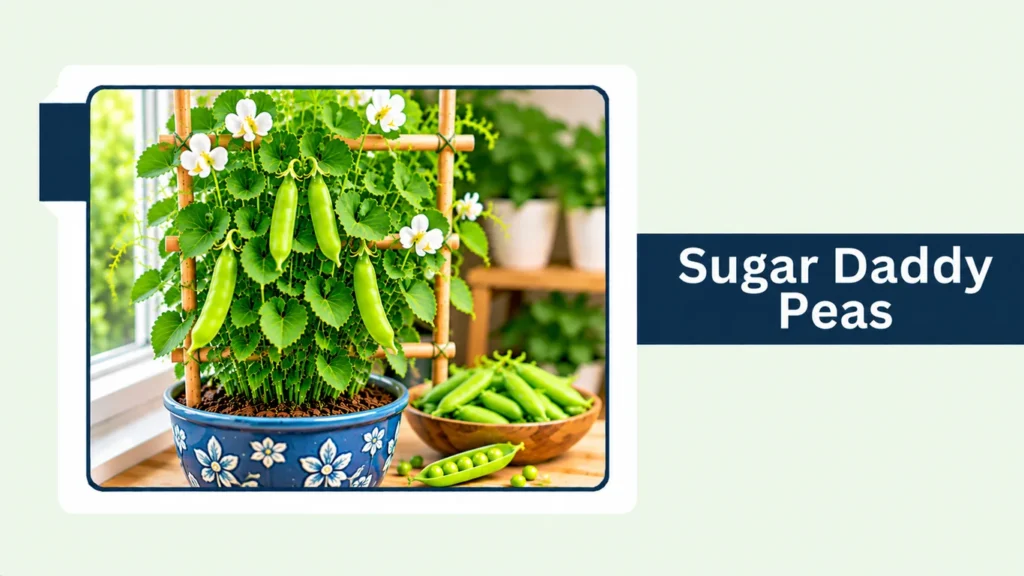
Sugar Daddy Peas are a compact, nearly stringless snap pea variety that produces sweet, crunchy, edible pods. Their relatively short vines and manageable growth habit make them an excellent choice for indoor container gardening. These peas are particularly appealing to beginners because they require less vertical support than traditional climbing varieties. Sugar Daddy Peas are ideal for fresh eating, steaming, and preparing healthy vegetable dishes.
Identification
- Scientific Name: Pisum sativum
- Plant Type: Annual dwarf snap pea
- Plant Height: Approximately 24–30 inches
- Pod Color: Medium to dark green
- Pod Length: Around 2.5–3 inches
- Pea Color: Bright green
- Harvest Time: Approximately 60–70 days
- Growth Habit: Compact, bushy vines
Ideal Indoor Growing Conditions
Sugar Daddy Peas grow best in temperatures between 55°F and 70°F (13°C–21°C). Provide at least 6 hours of direct sunlight or use full-spectrum LED grow lights for approximately 12–14 hours daily.
Select a container at least 8–10 inches deep with proper drainage holes. Fill it with fertile, well-draining potting soil that supports healthy root growth. Although Sugar Daddy Peas are compact, small stakes or a short trellis can help support the vines and prevent stems from bending under developing pods.
Watering & Maintenance Tips
Water regularly to maintain evenly moist soil without oversaturating the roots. Check moisture levels frequently during flowering and pod development.
Maintain good airflow around the plants to minimize fungal diseases. Avoid excessive nitrogen fertilizer because peas generally require little additional nitrogen. Harvest pods when they are well-developed, crisp, and tender. Their edible pods can be enjoyed whole after washing, making them convenient for home harvesting.
16. Snowbird Snow Peas
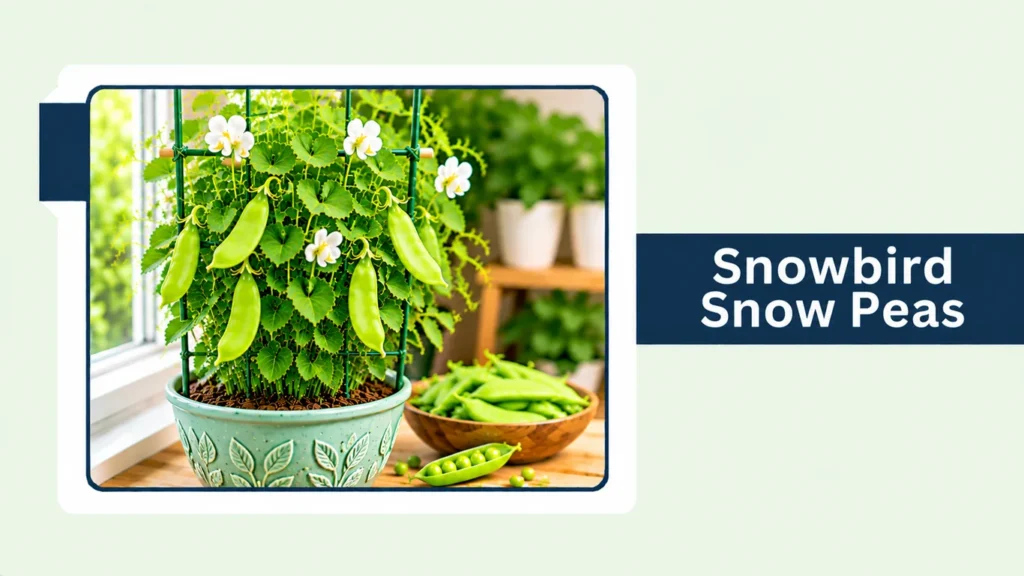
Snowbird Snow Peas are an early-maturing dwarf snow pea variety valued for their tender, flat, edible pods and naturally sweet flavor. These compact plants are well suited for indoor gardens, windowsill containers, and small growing spaces. Their short growth habit and relatively quick harvest time make them particularly useful for beginners who want to produce fresh vegetables at home without needing tall climbing structures.
Identification
- Scientific Name: Pisum sativum
- Plant Type: Annual dwarf snow pea
- Plant Height: Approximately 18–24 inches
- Pod Color: Bright green
- Pod Length: Around 3 inches
- Pea Color: Light green
- Harvest Time: Approximately 55–65 days
- Growth Habit: Compact, semi-bushy vines
Ideal Indoor Growing Conditions
Snowbird Snow Peas prefer cool temperatures between 55°F and 70°F (13°C–21°C). Place the plants near a bright south-facing window or provide full-spectrum LED grow lighting for approximately 12–14 hours daily.
Use a container at least 8–10 inches deep with adequate drainage holes. Fill it with loose, nutrient-rich, well-draining potting mix. Because these plants remain relatively compact, they usually need minimal support. However, a small trellis or supporting stakes can help maintain upright growth and improve airflow.
Watering & Maintenance Tips
Keep the soil evenly moist, especially when flowers and pods begin developing. Avoid allowing excess water to remain around the roots. Inspect the foliage regularly for aphids, mildew, and yellowing leaves. Remove damaged growth and maintain proper spacing between plants.
Harvest the pods while they remain flat, tender, and bright green, before the peas inside become noticeably enlarged. Snowbird Snow Peas can be eaten whole after washing and are excellent for salads and stir-fries.
17. Mammoth Melting Sugar Peas

Mammoth Melting Sugar Peas are a popular heirloom snow pea variety known for their large, flat, tender edible pods. These vigorous climbing plants produce sweet, flavorful peas that are excellent for salads, stir-fries, and fresh eating. Although they grow taller than many dwarf varieties, Mammoth Melting Sugar Peas can be grown indoors with sufficient vertical space, strong lighting, and proper support.
Identification
- Scientific Name: Pisum sativum
- Plant Type: Annual climbing snow pea
- Plant Height: Approximately 4–6 feet
- Pod Color: Bright green
- Pod Length: Around 4–5 inches
- Flower Color: White
- Harvest Time: Approximately 65–75 days
- Growth Habit: Tall, vigorous climbing vines
Ideal Indoor Growing Conditions
Mammoth Melting Sugar Peas prefer cool temperatures between 55°F and 70°F (13°C–21°C). Position the plants near a bright window or provide full-spectrum LED grow lights for approximately 12–16 hours daily.
Choose a container at least 12 inches deep with sufficient drainage holes. Fill it with fertile, loose, well-draining potting mix.Install a sturdy trellis approximately 5–6 feet tall to support the climbing vines. Adequate spacing and good air circulation encourage healthy flowering and pod development.
Watering & Maintenance Tips
Keep the soil consistently moist without allowing it to become waterlogged. Water regularly, especially during flowering and pod formation. Inspect leaves for aphids and powdery mildew. Remove damaged foliage and avoid excessive nitrogen fertilizer.
Harvest the pods while they remain flat, tender, and bright green. Picking regularly helps maintain production during favorable growing conditions.
18. Golden Sweet Snow Peas

Golden Sweet Snow Peas are a distinctive heirloom variety known for their beautiful golden-yellow edible pods and attractive purple flowers. These colorful climbing plants are both ornamental and productive, making them an interesting addition to indoor vegetable gardens. Their sweet, tender pods can be enjoyed fresh or cooked, while their colorful appearance adds visual interest to indoor growing spaces.
Identification
- Scientific Name: Pisum sativum
- Plant Type: Annual climbing snow pea
- Plant Height: Approximately 5–6 feet
- Pod Color: Golden yellow
- Pod Length: Around 3–4 inches
- Flower Color: Purple and reddish-purple
- Harvest Time: Approximately 60–70 days
- Growth Habit: Tall, climbing vines
Ideal Indoor Growing Conditions
Golden Sweet Snow Peas grow best in temperatures between 55°F and 70°F (13°C–21°C). Provide at least 6 hours of strong sunlight or use full-spectrum LED grow lighting for approximately 12–16 hours daily.
Select a container at least 12 inches deep with adequate drainage holes. Use nutrient-rich, well-draining potting mix that supports healthy root development. Install a sturdy vertical trellis to accommodate the tall vines. Good airflow and consistent lighting encourage healthy foliage, colorful flowers, and developing pods.
Watering & Maintenance Tips
Water consistently to maintain slightly moist soil, particularly when flowers and pods begin forming. Avoid excessive watering that leaves the roots saturated.Monitor plants for aphids and fungal diseases. Remove yellowing leaves and provide enough space between vines for proper ventilation.
Harvest the golden-yellow pods while they remain flat and tender. Regular harvesting encourages additional pod development while the plants remain productive.
19. Patio Pride Peas

Patio Pride Peas are an exceptionally compact pea variety developed for container gardening and limited growing spaces. These dwarf plants produce sweet, tender green peas on short, manageable stems, making them ideal for indoor gardens, windowsills, and small patios. Their quick growth and minimal support requirements make them particularly suitable for beginners interested in growing vegetables indoors.
Identification
- Scientific Name: Pisum sativum
- Plant Type: Annual dwarf shelling pea
- Plant Height: Approximately 6–12 inches
- Pod Color: Bright green
- Pod Length: Around 2–3 inches
- Pea Color: Medium green
- Harvest Time: Approximately 40–55 days
- Growth Habit: Extremely compact, bushy plants
Ideal Indoor Growing Conditions
Patio Pride Peas prefer cool temperatures between 55°F and 70°F (13°C–21°C). Place the plants near a bright window receiving direct sunlight or provide full-spectrum LED grow lighting for approximately 12–14 hours daily.
Choose a container at least 6–8 inches deep with proper drainage holes. Fill it with loose, fertile, well-draining potting soil. Their naturally compact growth habit makes them suitable for small containers without tall trellises. However, good lighting and adequate spacing remain essential for healthy development.
Watering & Maintenance Tips
Keep the soil evenly moist without allowing excess water to accumulate. Check soil moisture regularly because smaller containers can dry out quickly.Avoid excessive fertilizer, especially nitrogen-rich products that promote leafy growth rather than pod production.
Remove damaged leaves and maintain good air circulation. Harvest pods when they become plump and bright green, then shell the peas for fresh eating or cooking.
20. Premium Peas

Premium Peas are an early-maturing dwarf shelling pea variety valued for their tender green peas, sweet flavor, and compact growth habit. These plants produce attractive green pods on relatively short vines, making them suitable for container gardening and small indoor growing areas. Their manageable size and productive nature make them a practical option for gardeners who want fresh peas without requiring extensive vertical space.
Identification
- Scientific Name: Pisum sativum
- Plant Type: Annual dwarf shelling pea
- Plant Height: Approximately 18–24 inches
- Pod Color: Medium to dark green
- Pod Length: Around 3–4 inches
- Pea Color: Bright green
- Harvest Time: Approximately 55–65 days
- Growth Habit: Compact, bushy vines
Ideal Indoor Growing Conditions
Premium Peas grow best in cool temperatures between 55°F and 70°F (13°C–21°C). Position the container near a bright window or use full-spectrum LED grow lights for approximately 12–14 hours daily.
Use a container at least 8–10 inches deep with sufficient drainage holes. Fill it with fertile, loose, well-draining potting mix that retains moderate moisture. Provide small stakes or a short trellis if the stems need additional support. Proper spacing helps improve airflow and encourages healthy flowering.
Watering & Maintenance Tips
Water regularly to keep the soil consistently moist, especially during flowering and pod development. Avoid waterlogged conditions that may damage the roots. Inspect foliage for aphids, mildew, and other common problems. Remove damaged leaves and avoid heavy nitrogen fertilization.
Harvest pods when they become well-filled, bright green, and tender. Shell the peas before eating or cooking to enjoy their naturally sweet flavor.
FAQs
1. Can You Grow Peas Indoors All Year Round?
Yes, peas can grow indoors throughout the year when provided with suitable temperatures, lighting, and moisture. Most varieties prefer temperatures between 55°F and 70°F (13°C–21°C). Using full-spectrum LED grow lights and well-draining containers helps maintain healthy growth and encourages consistent flowering and pod production.
2. What Are the Best Pea Varieties for Indoor Growing?
Tom Thumb, Little Marvel, Sugar Ann, Patio Pride, and Progress No. 9 are excellent choices for indoor growing. These compact varieties require less space than tall climbing peas. They grow well in containers with sufficient lighting, regular watering, and suitable growing temperatures.
3. How Long Does It Take to Grow Peas Indoors?
Most indoor pea varieties take approximately 50–75 days from planting to their first harvest, depending on the variety and growing conditions. Early-maturing varieties such as Patio Pride and Tom Thumb may produce harvestable peas sooner. Adequate lighting, cool temperatures, and consistent moisture support healthy development.
4. Do Indoor Pea Plants Need a Trellis?
Not all indoor pea plants require a trellis. Dwarf varieties such as Tom Thumb and Patio Pride usually grow without extensive support. However, climbing varieties like Super Sugar Snap and Mammoth Melting Sugar benefit from sturdy trellises that support their vines and encourage vertical growth.
5. How Often Should You Water Peas Growing Indoors?
Indoor pea plants need consistently moist but well-drained soil. Check the upper inch of potting mix regularly and water when it begins to dry. Watering frequency depends on container size, temperature, and lighting. Avoid overwatering because saturated soil can damage roots and reduce plant growth.