

Hibiscus trees are beautiful flowering plants known for their vibrant blossoms, lush green foliage, and tropical appearance. Many varieties can grow in containers, making them attractive choices for bright indoor spaces and sunny conservatories. From colorful Tropical Hibiscus to elegant Hawaiian White Hibiscus, each variety offers unique ornamental features. Explore 20 types of Hibiscus trees and discover their characteristics and indoor growing requirements.
1. Tropical Hibiscus (Hibiscus rosa-sinensis)

Tropical Hibiscus is a beautiful evergreen shrub or small tree known for its large, colorful flowers and glossy green leaves. Native to tropical Asia, this ornamental plant is popular for indoor container gardening and decorative spaces. Its vibrant flowers appear in shades of red, pink, yellow, orange, and white. With proper sunlight, regular watering, and occasional pruning, Tropical Hibiscus can grow successfully indoors and produce beautiful blooms throughout much of the year.
Appearance and Characteristics
Tropical Hibiscus features large, glossy, dark green leaves with slightly serrated edges. Its most attractive feature is its trumpet-shaped flowers, which can reach 4–8 inches across. The blossoms often display prominent stamens and come in various bright colors.
This plant typically grows 4–10 feet tall outdoors but can be maintained at a smaller size in containers. Its dense branching structure and colorful flowers make it suitable for sunny living rooms, indoor gardens, and decorative plant arrangements.
How to Grow Tropical Hibiscus Indoors
Place Tropical Hibiscus near a bright, south-facing window where it receives at least 6 hours of direct sunlight daily. Use fertile, well-draining potting soil and a container with adequate drainage holes. Water when the upper inch of soil begins to dry, keeping the soil evenly moist without waterlogging.
Maintain warm indoor temperatures between 60–85°F and moderate humidity. Apply a balanced fertilizer during the growing season to encourage healthy foliage and flowering. Prune lightly to maintain its compact shape, and provide supplemental grow lights if natural sunlight is insufficient.
2. Chinese Hibiscus (Hibiscus rosa-sinensis)
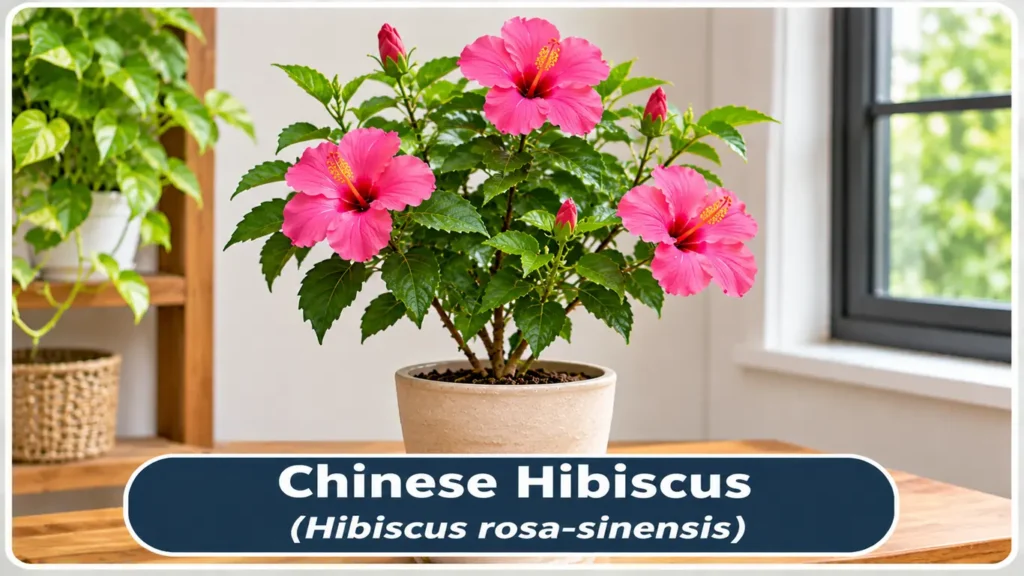
Chinese Hibiscus is a beautiful evergreen shrub or small tree admired for its large, colorful flowers and glossy green foliage. This tropical plant is commonly grown in gardens, but it can also thrive indoors with proper care. Its stunning flowers appear in shades of red, pink, orange, yellow, and white. With sufficient sunlight and regular pruning, Chinese Hibiscus can become an attractive indoor flowering tree.
Appearance and Characteristics
Chinese Hibiscus features broad, glossy, dark green leaves with serrated edges. Its large, trumpet-shaped flowers often measure 4–8 inches across and display a prominent central staminal column. Individual blooms usually last only a day or two, but healthy plants can produce flowers repeatedly.
Its naturally bushy growth habit makes it suitable for decorative containers and indoor tree arrangements. Regular pruning encourages additional branching and helps maintain a compact, attractive shape.
How to Grow Chinese Hibiscus Indoors
Place Chinese Hibiscus near a sunny, south-facing window where it receives at least 6 hours of direct sunlight daily. Use fertile, well-draining potting soil and a container with drainage holes. Water when the upper inch of soil feels dry, keeping the growing medium evenly moist.
Maintain warm temperatures between 60–85°F and moderate humidity. Apply balanced fertilizer regularly during active growth. Prune lightly to encourage branching, and provide supplemental grow lighting when natural sunlight is insufficient.
3. Double Red Hibiscus (Hibiscus rosa-sinensis ‘Double Red’)
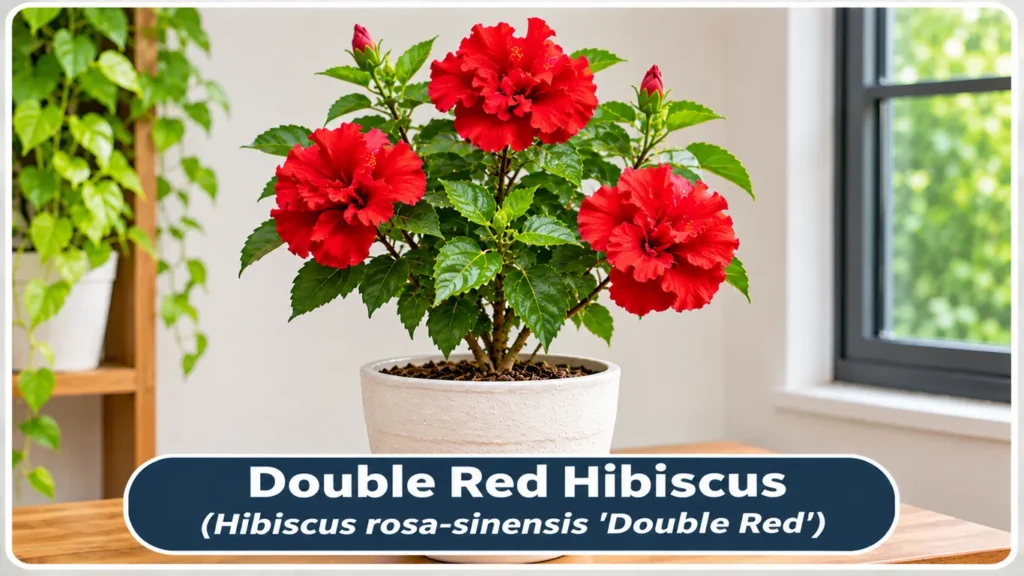
Double Red Hibiscus is an eye-catching tropical flowering shrub known for its large, layered red blossoms. Unlike single-flowered hibiscus varieties, this ornamental plant develops multiple overlapping petals, creating a fuller, rose-like appearance. Its glossy green leaves provide an attractive contrast against the bright flowers. With proper sunlight, warmth, and regular care, Double Red Hibiscus can be maintained as a colorful indoor container plant.
Appearance and Characteristics
Double Red Hibiscus produces large, vibrant red flowers featuring multiple layers of soft petals. The densely arranged petals give each blossom a rounded, decorative appearance. Its dark green, glossy leaves have slightly serrated edges and remain attractive throughout the growing season.
This hibiscus develops a bushy branching structure that responds well to pruning. When grown in containers, it can be shaped into a compact shrub or small ornamental tree suitable for sunny indoor spaces.
How to Grow Double Red Hibiscus Indoors
Grow Double Red Hibiscus near a bright window that receives approximately 6 hours of direct sunlight daily. Choose a nutrient-rich, well-draining potting mixture and a container with adequate drainage. Water whenever the upper inch of soil begins to dry, avoiding waterlogged conditions.
Maintain indoor temperatures between 65–85°F and provide moderate humidity. Apply a fertilizer formulated for flowering plants during the growing season. Remove damaged branches and prune lightly to encourage healthy growth and additional flower buds.
4. Cooper’s Hibiscus (Hibiscus rosa-sinensis ‘Cooperi’)

Cooper’s Hibiscus is a distinctive tropical evergreen shrub valued for its colorful variegated foliage and attractive flowers. Unlike many hibiscus varieties grown mainly for their blossoms, this ornamental plant also provides year-round visual interest through its patterned leaves. Its foliage displays combinations of green, cream, pink, and reddish shades. With sufficient sunlight and regular maintenance, Cooper’s Hibiscus makes an unusual and beautiful addition to bright indoor gardens.
Appearance and Characteristics
Cooper’s Hibiscus features striking variegated leaves decorated with irregular patches of green, creamy white, pink, and red. Its colorful foliage creates an attractive appearance even when the plant is not flowering. Mature plants may also produce bright red hibiscus blossoms with prominent staminal columns.
Its upright, branching growth habit makes it suitable for decorative containers and miniature tree arrangements. Regular pruning helps control its height while encouraging fuller foliage development.
How to Grow Cooper’s Hibiscus Indoors
Place Cooper’s Hibiscus near a bright, sunny window where it receives several hours of direct sunlight daily. Adequate lighting helps maintain its colorful leaf patterns. Use fertile, well-draining potting soil and water when the upper inch begins to dry.
Maintain warm indoor temperatures between 65–85°F and provide moderate humidity. Apply diluted balanced fertilizer during spring and summer. Prune unwanted branches to encourage compact growth, and avoid placing the plant near cold drafts or heating vents.
5. Snow Queen Hibiscus (Hibiscus rosa-sinensis ‘Snow Queen’)
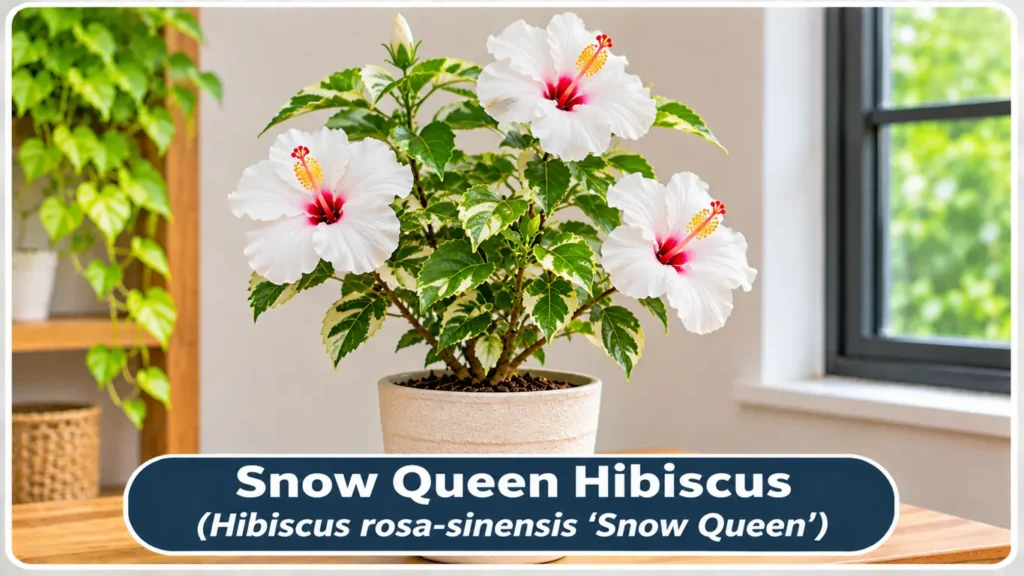
Snow Queen Hibiscus is a beautiful tropical evergreen shrub admired for its colorful variegated foliage and bright red flowers. This ornamental hibiscus features green leaves decorated with creamy white, pink, and reddish markings, creating an eye-catching appearance. Its attractive foliage provides year-round interest, making it suitable for bright indoor gardens and decorative containers. With sufficient sunlight and proper care, Snow Queen Hibiscus can grow as a compact indoor flowering tree.
Appearance and Characteristics
Snow Queen Hibiscus produces glossy, variegated leaves featuring irregular combinations of green, white, and pink. Its colorful foliage contrasts beautifully with the vibrant red flowers that appear during favorable growing conditions. The blossoms feature broad petals and prominent central staminal columns.
Its naturally bushy growth habit makes it suitable for decorative pots and miniature tree arrangements. Regular pruning encourages additional branching and helps maintain its attractive, compact appearance.
How to Grow Snow Queen Hibiscus Indoors
Place Snow Queen Hibiscus near a bright window where it receives approximately 6 hours of direct sunlight daily. Adequate sunlight helps maintain its colorful leaf patterns and supports flowering. Use fertile, well-draining potting soil and water when the upper inch begins to dry.
Maintain warm temperatures between 65–85°F and moderate indoor humidity. Apply balanced liquid fertilizer during the growing season. Prune lightly to encourage dense growth, and protect the plant from cold drafts and sudden temperature changes.
6. Red Hot Hibiscus (Hibiscus rosa-sinensis ‘Red Hot’)
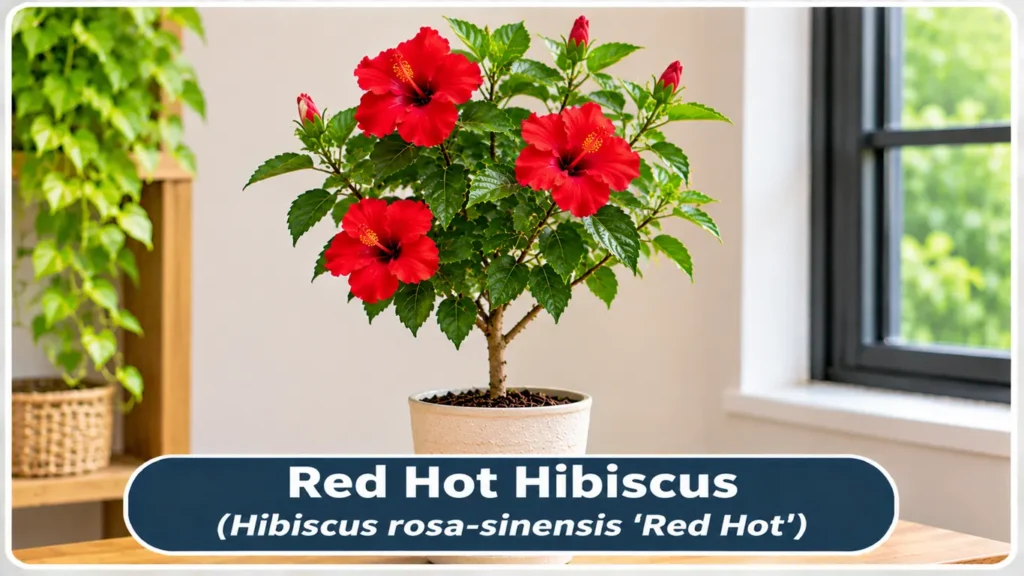
Red Hot Hibiscus is an attractive tropical evergreen shrub known for its colorful foliage and vibrant red flowers. This ornamental variety features variegated leaves with shades of green, cream, pink, and red, giving it a striking appearance throughout the year. Its decorative foliage and bright blossoms make it suitable for sunny indoor spaces and container arrangements. With proper lighting and regular maintenance, Red Hot Hibiscus can become a beautiful indoor ornamental plant.
Appearance and Characteristics
Red Hot Hibiscus features glossy leaves decorated with irregular patterns of green, creamy white, and reddish-pink. Its colorful foliage creates an attractive display even when flowers are absent. Under suitable conditions, the plant produces bright red hibiscus blossoms with prominent staminal columns.
Its upright, bushy branching structure responds well to regular pruning. When maintained in containers, it can develop a compact shape suitable for sunny windows, bright living rooms, and indoor plant displays.
How to Grow Red Hot Hibiscus Indoors
Grow Red Hot Hibiscus near a sunny window that provides at least 6 hours of direct sunlight daily. Use nutrient-rich, well-draining potting soil and a container with drainage holes. Water when the upper inch of soil feels dry, keeping the roots evenly moist without waterlogging.
Maintain indoor temperatures between 65–85°F and provide moderate humidity. Apply balanced fertilizer during active growth to encourage healthy foliage and flowering. Prune unwanted branches regularly and provide supplemental grow lights when natural sunlight is limited.
7. Brilliant Hibiscus (Hibiscus rosa-sinensis ‘Brilliant’)

Brilliant Hibiscus is a popular tropical flowering shrub admired for its large, vivid red blossoms and glossy green foliage. This ornamental variety produces striking flowers that add a colorful tropical appearance to indoor spaces. Its evergreen leaves and attractive branching structure make it suitable for decorative containers and small indoor tree arrangements. With bright sunlight, consistent watering, and occasional pruning, Brilliant Hibiscus can produce beautiful flowers throughout the growing season.
Appearance and Characteristics
Brilliant Hibiscus develops large, bright red flowers with broad, overlapping petals and a prominent central staminal column. Its glossy, dark green leaves feature serrated edges, creating an attractive contrast against the vibrant blossoms. Individual flowers are short-lived, but healthy plants can produce new buds repeatedly.
Its naturally upright growth habit makes it suitable for training into a small ornamental tree. Regular pruning helps maintain a balanced structure while encouraging additional flowering branches.
How to Grow Brilliant Hibiscus Indoors
Place Brilliant Hibiscus near a bright, south-facing window where it receives at least 6 hours of direct sunlight daily. Plant it in fertile, well-draining potting soil and select a container with adequate drainage. Water whenever the upper inch of soil begins to dry.
Maintain warm indoor temperatures between 65–85°F and moderate humidity. Feed regularly with a balanced fertilizer during spring and summer to support healthy flowering. Remove damaged branches, prune lightly to control its size, and use supplemental lighting if necessary.
8. President Hibiscus (Hibiscus rosa-sinensis ‘President’)
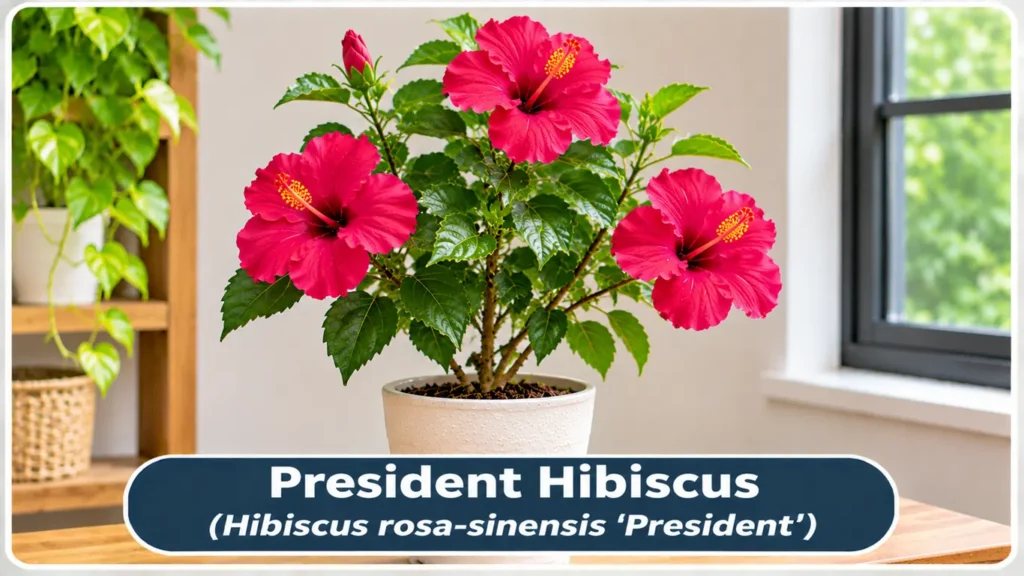
President Hibiscus is a beautiful tropical evergreen shrub known for its large, vibrant red flowers and glossy green foliage. This ornamental variety is popular for container gardening and bright indoor spaces. Its colorful blossoms create an attractive tropical appearance, while the dense green leaves provide year-round beauty. With sufficient sunlight, regular watering, and occasional pruning, President Hibiscus can grow successfully as a decorative indoor flowering tree.
Appearance and Characteristics
President Hibiscus produces large, bright red flowers with broad, slightly overlapping petals and prominent central staminal columns. Its glossy, dark green leaves have serrated edges, creating an attractive contrast with the colorful blossoms. Individual flowers typically last only a short time, but healthy plants can bloom repeatedly.
Its naturally upright branching structure makes it suitable for decorative containers and small indoor tree arrangements. Regular pruning encourages additional branching and helps maintain a compact, balanced appearance.
How to Grow President Hibiscus Indoors
Place President Hibiscus near a sunny, south-facing window where it receives at least 6 hours of direct sunlight daily. Use fertile, well-draining potting soil and a container with adequate drainage holes. Water when the upper inch of soil begins to dry, keeping the growing medium evenly moist.
Maintain warm indoor temperatures between 65–85°F and moderate humidity. Apply balanced fertilizer regularly during the growing season to encourage flowering. Prune lightly to maintain its shape, and provide supplemental grow lights when natural sunlight is insufficient.
9. Fiesta Hibiscus (Hibiscus rosa-sinensis ‘Fiesta’)

Fiesta Hibiscus is an eye-catching tropical flowering shrub admired for its vibrant multicolored blossoms and attractive green foliage. This ornamental variety produces beautiful flowers featuring combinations of orange, yellow, pink, and red shades. Its colorful appearance makes it particularly suitable for bright indoor gardens, sunny windowsills, and decorative container arrangements. With proper sunlight, warmth, and consistent care, Fiesta Hibiscus can become an attractive indoor flowering tree.
Appearance and Characteristics
Fiesta Hibiscus features large, showy flowers displaying colorful combinations of orange, yellow, and reddish-pink tones. Its broad petals often exhibit contrasting shades that create a striking tropical appearance. The plant also develops glossy green leaves with slightly serrated edges.
Its naturally bushy growth habit makes it suitable for decorative containers and miniature tree arrangements. Regular pruning helps control its height while encouraging fuller branching and additional flowering shoots.
How to Grow Fiesta Hibiscus Indoors
Grow Fiesta Hibiscus near a bright window where it receives approximately 6 hours of direct sunlight daily. Use nutrient-rich, well-draining potting soil and a container with proper drainage. Water whenever the upper inch of soil begins to dry, avoiding excessive moisture around the roots.
Maintain warm indoor temperatures between 65–85°F and provide moderate humidity. Apply fertilizer formulated for flowering plants during spring and summer. Remove damaged branches and prune lightly to maintain a compact shape. Supplemental grow lighting can help encourage flowering in poorly lit rooms.
10. Painted Lady Hibiscus (Hibiscus rosa-sinensis ‘Painted Lady’)
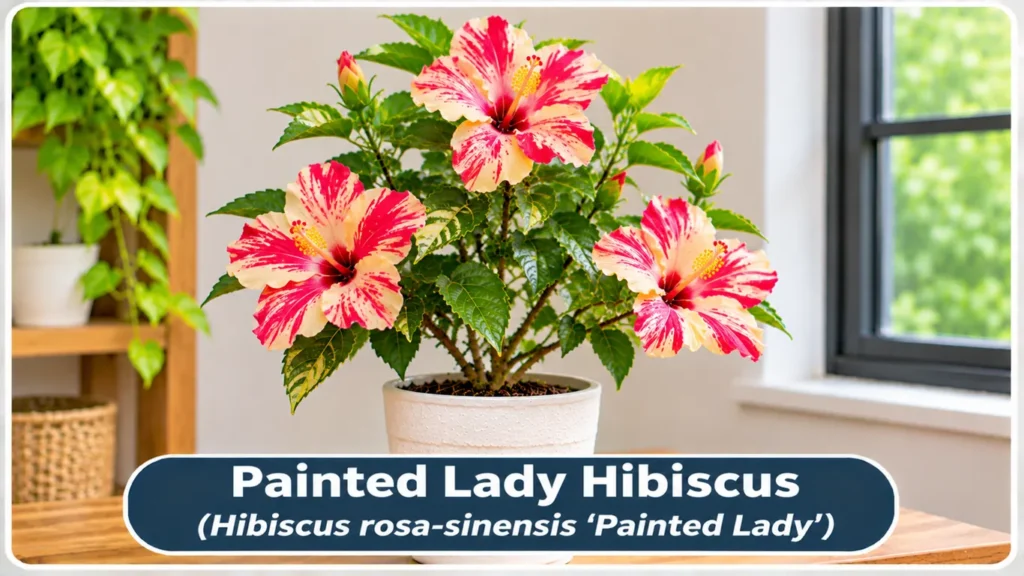
Painted Lady Hibiscus is a stunning tropical evergreen shrub valued for its attractive pink flowers and glossy green foliage. This ornamental variety produces colorful blossoms with contrasting darker centers, creating a beautiful decorative appearance. Its tropical charm makes it suitable for sunny indoor spaces, container gardens, and bright conservatories. With sufficient sunlight, proper watering, and regular maintenance, Painted Lady Hibiscus can grow as a compact indoor flowering tree.
Appearance and Characteristics
Painted Lady Hibiscus produces large, soft pink flowers with deep red or reddish-pink centers. Its broad, delicate petals surround a prominent central staminal column, creating an attractive floral display. The plant also features glossy, dark green leaves with gently serrated edges.
Its dense branching structure makes it suitable for decorative containers and small ornamental tree arrangements. Regular pruning encourages fuller growth while helping maintain a balanced shape and manageable height.
How to Grow Painted Lady Hibiscus Indoors
Place Painted Lady Hibiscus near a sunny window that provides at least 6 hours of direct sunlight daily. Choose fertile, well-draining potting soil and a container with adequate drainage holes. Water when the upper inch of soil feels dry, keeping the growing medium consistently moist without waterlogging.
Maintain indoor temperatures between 65–85°F and moderate humidity. Apply balanced liquid fertilizer during the active growing season to support healthy foliage and flowering. Prune lightly to encourage branching, and protect the plant from cold drafts and sudden temperature changes.
11. Seminole Pink Hibiscus (Hibiscus rosa-sinensis ‘Seminole Pink’)
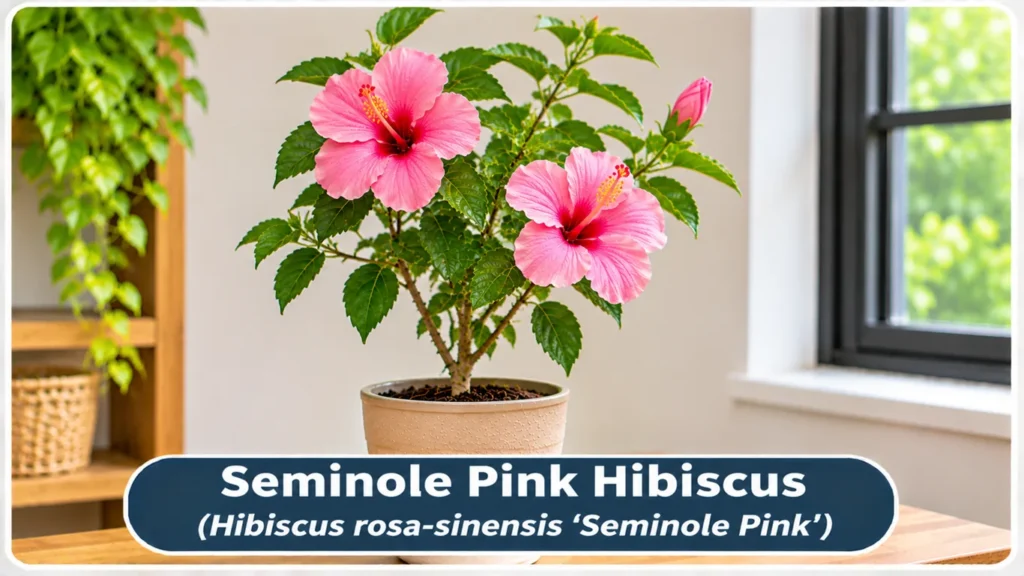
Seminole Pink Hibiscus is a beautiful tropical evergreen shrub admired for its large, soft pink flowers and glossy green foliage. This ornamental variety adds a charming tropical appearance to bright indoor spaces, sunny windowsills, and decorative containers. Its attractive blossoms and dense branching structure make it suitable for indoor gardening. With proper sunlight, regular watering, and occasional pruning, Seminole Pink Hibiscus can grow as a colorful indoor flowering tree.
Appearance and Characteristics
Seminole Pink Hibiscus produces large, delicate pink flowers with broad petals and prominent central staminal columns. Its glossy, dark green leaves feature slightly serrated edges, creating an attractive contrast against the colorful blossoms. Under favorable conditions, the plant can produce flowers repeatedly throughout the growing season.
Its naturally bushy growth habit makes it suitable for decorative containers and miniature tree arrangements. Regular pruning encourages additional branches and helps maintain a compact, balanced appearance.
How to Grow Seminole Pink Hibiscus Indoors
Place Seminole Pink Hibiscus near a bright, south-facing window where it receives at least 6 hours of direct sunlight daily. Use fertile, well-draining potting soil and a container with adequate drainage holes. Water when the upper inch of soil begins to dry, keeping the growing medium evenly moist.
Maintain warm indoor temperatures between 65–85°F and moderate humidity. Apply balanced fertilizer regularly during spring and summer to encourage healthy flowering. Prune lightly to control its size, and provide supplemental grow lighting when natural sunlight is limited.
12. Florida Sunset Hibiscus (Hibiscus rosa-sinensis ‘Florida Sunset’)
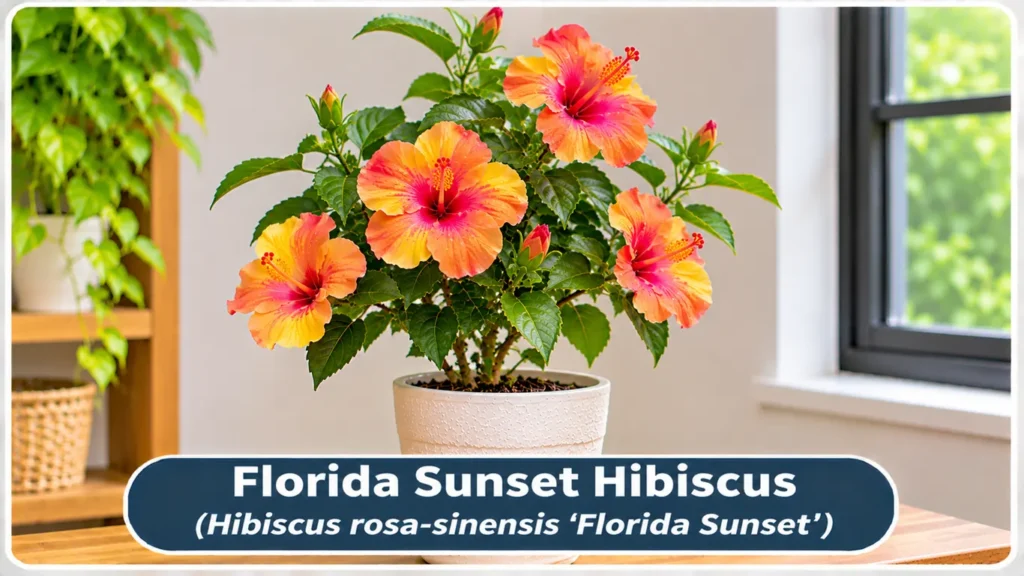
Florida Sunset Hibiscus is an eye-catching tropical flowering shrub known for its colorful blossoms and attractive evergreen foliage. This ornamental variety is admired for flowers displaying warm shades reminiscent of a sunset. Its glossy green leaves and beautiful blooms make it suitable for bright indoor gardens and decorative container arrangements. With sufficient sunlight, consistent watering, and proper maintenance, Florida Sunset Hibiscus can become an attractive indoor flowering tree.
Appearance and Characteristics
Florida Sunset Hibiscus produces large, colorful flowers featuring combinations of yellow, orange, and reddish tones. Its broad petals create a beautiful tropical display, while the prominent central staminal column adds decorative interest. The plant also develops glossy, dark green leaves with gently serrated edges.
Its naturally upright, branching growth habit makes it suitable for decorative containers and small ornamental tree arrangements. Regular pruning helps maintain a manageable height while encouraging fuller foliage and additional flowering shoots.
How to Grow Florida Sunset Hibiscus Indoors
Grow Florida Sunset Hibiscus near a sunny window that provides approximately 6 hours of direct sunlight daily. Use nutrient-rich, well-draining potting soil and a container with proper drainage. Water whenever the upper inch of soil begins to dry, avoiding waterlogged conditions around the roots.
Maintain indoor temperatures between 65–85°F and provide moderate humidity. Apply fertilizer formulated for flowering plants during the growing season. Remove damaged branches and prune lightly to encourage compact growth. Supplemental grow lights may help support flowering during darker months.
13. Yellow Hibiscus (Hibiscus brackenridgei)
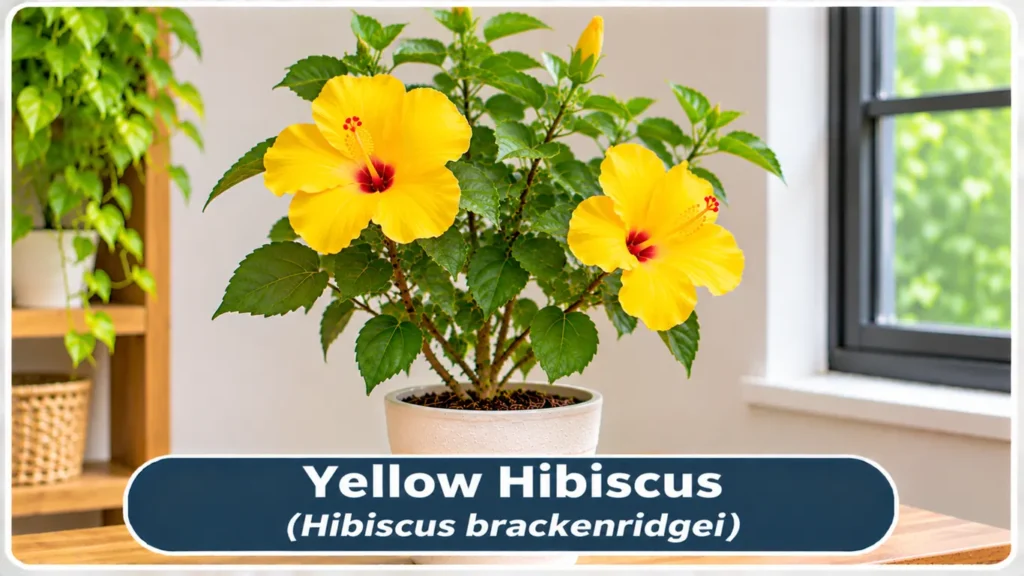
Yellow Hibiscus is a beautiful tropical flowering shrub or small tree native to Hawaii. Also known as Ma’o Hau Hele, it is recognized for its bright yellow flowers and attractive green foliage. This species is Hawaii’s official state flower and is valued for its ornamental beauty. Although primarily grown outdoors in warm climates, Yellow Hibiscus can be cultivated in containers and maintained in very bright indoor spaces with appropriate care.
Appearance and Characteristics
Yellow Hibiscus produces large, bright yellow flowers with delicate petals and prominent central staminal columns. Some blossoms develop reddish or maroon coloration near their centers. Its green leaves vary in shape and may feature slightly lobed or serrated edges.
This plant naturally develops an upright, branching structure and can grow into a small tree under favorable conditions. When maintained in containers, careful pruning helps control its height and encourage a fuller appearance.
How to Grow Yellow Hibiscus Indoors
Place Yellow Hibiscus near a sunny, south-facing window where it receives at least 6 hours of direct sunlight daily. Use a well-draining potting mixture and a container with adequate drainage holes. Water when the upper layer of soil begins to dry, avoiding excessive moisture around the roots.
Maintain warm temperatures between 65–85°F and provide good air circulation. Apply balanced fertilizer moderately during active growth. Prune lightly to maintain its shape, and use supplemental grow lighting when natural sunlight is insufficient. Because this is a protected Hawaiian native species, obtain plants only from reputable, legally authorized nurseries.
14. Hawaiian White Hibiscus (Hibiscus arnottianus)

Hawaiian White Hibiscus is a beautiful evergreen shrub or small tree native to the Hawaiian Islands. This tropical species is admired for its delicate white flowers, glossy green foliage, and pleasant fragrance. Its elegant appearance makes it an attractive choice for sunny indoor gardens, decorative containers, and spacious conservatories. With sufficient sunlight, warmth, and proper maintenance, Hawaiian White Hibiscus can grow as a charming indoor ornamental tree.
Appearance and Characteristics
Hawaiian White Hibiscus produces large, delicate white flowers with five broad petals and prominent pink or reddish staminal columns. Its blossoms often release a gentle fragrance, making it particularly appealing for indoor plant collections. The plant also features glossy, dark green leaves with smooth or slightly toothed edges.
Its naturally upright branching structure can develop into a small ornamental tree. Regular pruning helps maintain a manageable height while encouraging additional branches and fuller foliage growth.
How to Grow Hawaiian White Hibiscus Indoors
Place Hawaiian White Hibiscus near a bright, south-facing window where it receives several hours of direct sunlight daily. Use fertile, well-draining potting soil and a container with adequate drainage holes. Water when the upper inch of soil begins to dry, keeping the roots evenly moist without waterlogging.
Maintain warm indoor temperatures between 65–85°F and moderate humidity. Apply diluted balanced fertilizer during spring and summer to encourage healthy growth. Prune lightly to control its shape, and provide supplemental grow lighting when natural sunlight is insufficient.
15. Ma’o Hau Hele Hibiscus (Hibiscus brackenridgei)

Ma’o Hau Hele Hibiscus is a rare and beautiful flowering shrub native to Hawaii. Recognized for its brilliant yellow blossoms, this species is also known as Hawaiian Yellow Hibiscus and serves as Hawaii’s official state flower. Its colorful flowers and attractive green foliage make it an interesting ornamental plant for tropical gardens. Although it naturally grows outdoors, it can be maintained in containers in exceptionally sunny indoor locations or conservatories.
Appearance and Characteristics
Ma’o Hau Hele Hibiscus produces large, bright yellow flowers with delicate overlapping petals. Some blossoms feature reddish or maroon coloration near the center, creating an attractive contrast. Its leaves are generally green, with shapes ranging from rounded to distinctly lobed, depending on the plant.
This hibiscus naturally grows as a branching shrub or small tree. With regular pruning, container-grown specimens can maintain a smaller size while developing an attractive, balanced appearance.
How to Grow Ma’o Hau Hele Hibiscus Indoors
Grow Ma’o Hau Hele Hibiscus near a sunny window that receives at least 6 hours of direct sunlight daily. Use loose, well-draining potting soil and a container with proper drainage. Water when the upper soil layer becomes slightly dry, avoiding excessive moisture around the roots.
Maintain warm temperatures between 65–85°F and provide good ventilation. Apply balanced fertilizer occasionally during the growing season to support foliage and flower development. Prune lightly to maintain its shape. Since this is a protected native Hawaiian species, purchase only legally propagated plants from reputable nurseries.
16. Sea Hibiscus (Hibiscus tiliaceus)
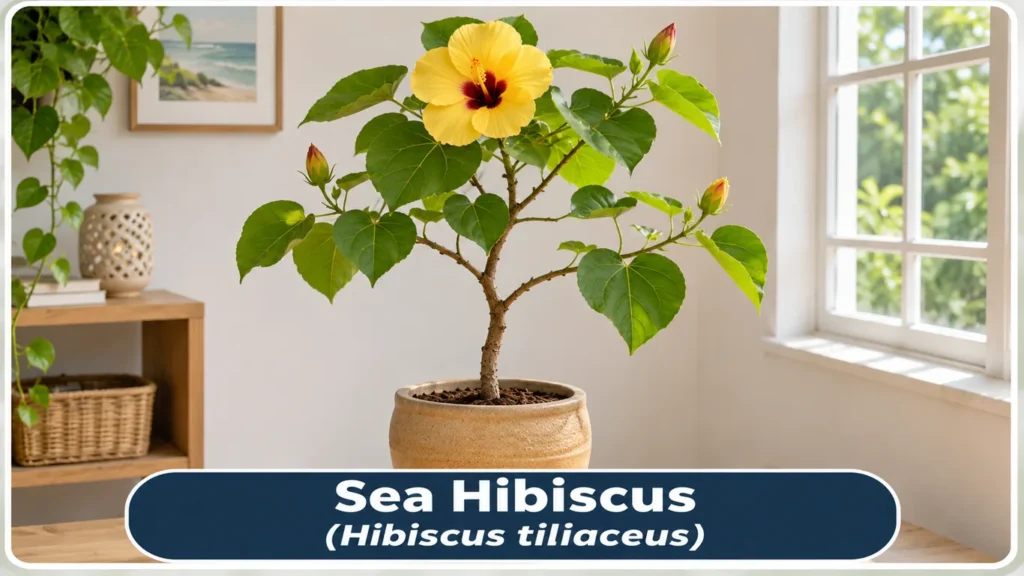
Sea Hibiscus is a fast-growing tropical evergreen tree commonly found along coastlines throughout the Pacific and Indian Ocean regions. Also known as Beach Hibiscus, this ornamental species is admired for its broad, heart-shaped leaves and beautiful yellow flowers that gradually change color. Its lush foliage creates a tropical appearance, making it suitable for large containers, spacious conservatories, and exceptionally bright indoor gardens when its growth is carefully managed.
Appearance and Characteristics
Sea Hibiscus features large, heart-shaped green leaves that create a dense, tropical canopy. Its attractive flowers typically open yellow with dark reddish centers and gradually turn orange or reddish as they age. The blossoms have five broad petals surrounding a prominent central staminal column.
This species naturally develops into a large, spreading tree with strong branches. Young plants can be maintained in containers, although frequent pruning is necessary to control their vigorous growth and maintain a manageable indoor size.
How to Grow Sea Hibiscus Indoors
Place Sea Hibiscus near a large, sunny window where it receives at least 6 hours of direct sunlight daily. Use fertile, well-draining potting soil and a spacious container with drainage holes. Water when the upper layer of soil begins to dry, keeping the growing medium consistently moist.
Maintain warm indoor temperatures between 65–85°F and provide moderate to high humidity. Apply balanced fertilizer during active growth to encourage healthy foliage development. Prune regularly to control its height and branching. Because of its vigorous growth and large mature size, Sea Hibiscus is better suited to spacious conservatories than ordinary indoor rooms.
17. Rose of Sharon (Hibiscus syriacus)
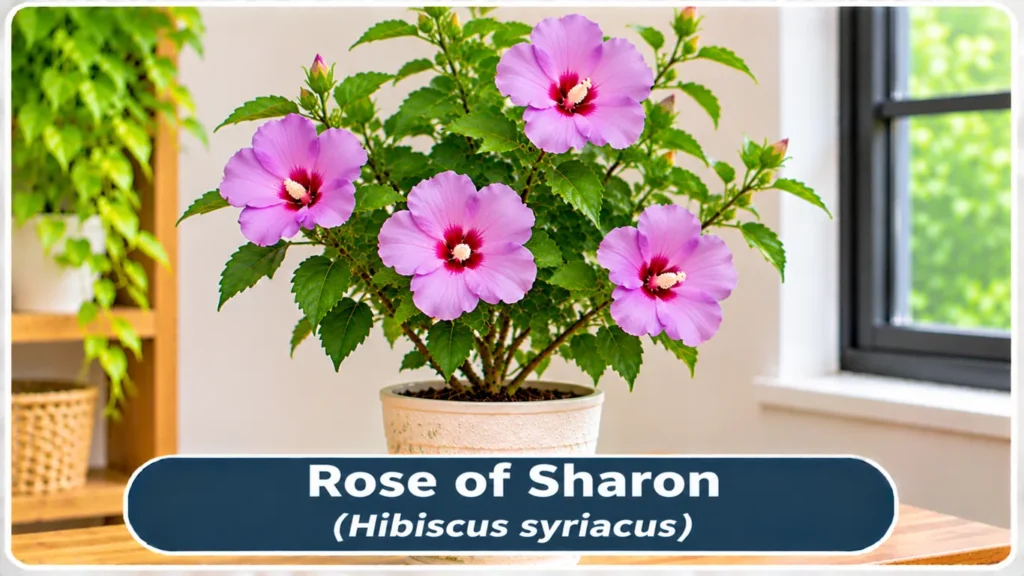
Rose of Sharon is a beautiful deciduous flowering shrub or small tree known for its colorful, trumpet-shaped blossoms and attractive green foliage. Native to eastern Asia, this ornamental hibiscus produces flowers in shades of pink, purple, white, and blue-violet. Its upright growth habit makes it suitable for container gardening and decorative tree arrangements. Although it grows best outdoors, Rose of Sharon can be maintained in a cool, sunny conservatory with proper seasonal care.
Appearance and Characteristics
Rose of Sharon features medium-sized green leaves with toothed edges and sometimes shallow lobes. Its large, showy flowers typically measure 2–4 inches across and often display contrasting centers. The blossoms appear during summer and continue into early fall under favorable conditions.
This plant naturally develops a tall, upright branching structure that can be trained into a small ornamental tree. Regular pruning helps maintain its shape and encourages healthy flowering branches.
How to Grow Rose of Sharon Indoors
Place Rose of Sharon near a bright window where it receives at least 6 hours of direct sunlight daily. Use fertile, well-draining potting soil and a container with adequate drainage. Water when the upper inch of soil becomes dry, avoiding prolonged waterlogging.
Apply balanced fertilizer during spring and early summer to support healthy growth. Prune during late winter or early spring to maintain its shape. Since Rose of Sharon is deciduous and requires winter dormancy, provide a cool winter resting period rather than keeping it in a warm indoor room year-round.
18. Confederate Rose (Hibiscus mutabilis)
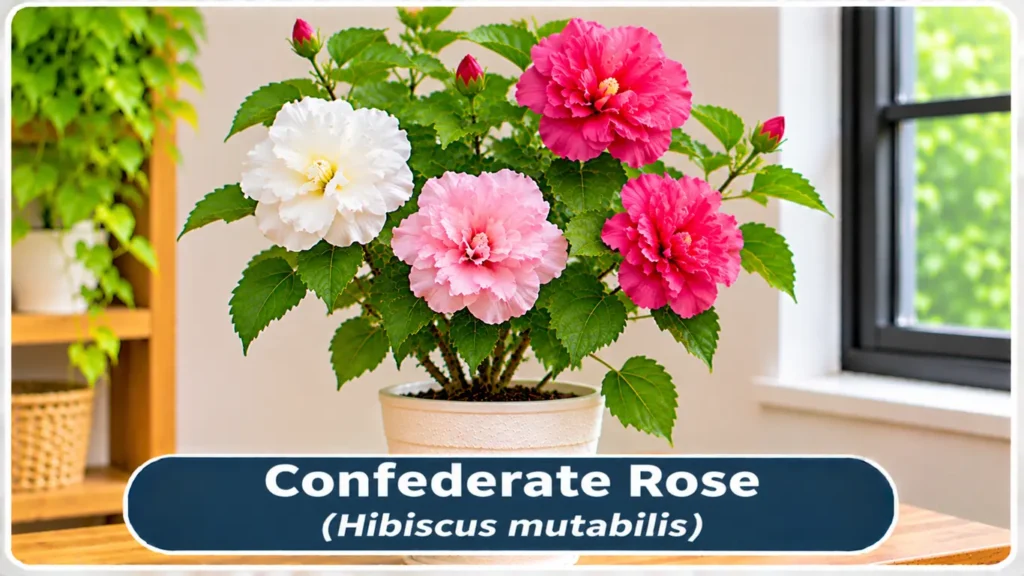
Confederate Rose is an attractive flowering shrub or small tree admired for its large blossoms that change color throughout the day. Native to parts of Asia, this ornamental hibiscus produces beautiful flowers that typically open white or pale pink before gradually turning deeper pink or reddish. Its broad green leaves and impressive flowers create a tropical appearance. Although it can grow in large containers, Confederate Rose performs best in spacious, sunny environments with sufficient room for seasonal growth.
Appearance and Characteristics
Confederate Rose features large, broad leaves with three to five lobes and a slightly textured surface. Its most distinctive feature is its colorful flowers, which may change from white to pink and eventually deep rose as they mature. Some varieties produce double flowers resembling large roses.
This plant develops a vigorous, branching growth habit and can become quite tall outdoors. Container-grown specimens require regular pruning to maintain a manageable size and encourage an attractive, balanced appearance.
How to Grow Confederate Rose Indoors
Grow Confederate Rose near a sunny window where it receives at least 6 hours of direct sunlight daily. Choose a large container with adequate drainage and fill it with fertile, well-draining potting soil. Water when the upper layer of soil begins to dry, keeping the growing medium moderately moist.
Maintain warm temperatures during active growth and provide good ventilation. Apply balanced fertilizer during spring and summer to encourage foliage and flowering. Prune during its dormant season to control height. A cool winter resting period and strong seasonal sunlight are beneficial, making a conservatory preferable to an ordinary living room.
19. Cranberry Hibiscus (Hibiscus acetosella)

Cranberry Hibiscus is a striking tropical shrub known for its deep burgundy foliage and attractive pinkish-red flowers. Native to tropical Africa, this ornamental species is widely grown for its colorful, maple-like leaves rather than its blossoms alone. Its rich red foliage creates a dramatic contrast with green indoor plants. With sufficient sunlight, warmth, and regular pruning, Cranberry Hibiscus can be maintained as a decorative container plant in bright indoor gardens.
Appearance and Characteristics
Cranberry Hibiscus produces deeply lobed leaves in shades of burgundy, reddish-purple, and dark maroon. The foliage resembles Japanese maple leaves, giving the plant an elegant ornamental appearance. Its flowers are typically pinkish-red or burgundy with darker centers and appear under favorable growing conditions.
This plant develops an upright, bushy growth habit and can become several feet tall. Regular pruning encourages branching and helps maintain a compact structure suitable for decorative containers.
How to Grow Cranberry Hibiscus Indoors
Place Cranberry Hibiscus near a bright, south-facing window where it receives at least 6 hours of direct sunlight daily. Strong lighting helps maintain its rich foliage coloration. Use fertile, well-draining potting soil and a container with drainage holes. Water whenever the upper inch of soil begins to dry.
Maintain warm indoor temperatures between 65–85°F and moderate humidity. Apply balanced fertilizer occasionally during active growth. Prune regularly to encourage bushier foliage and control its height. Supplemental grow lights may be necessary during winter, especially when natural sunlight is limited.
20. Fringed Hibiscus (Hibiscus schizopetalus)
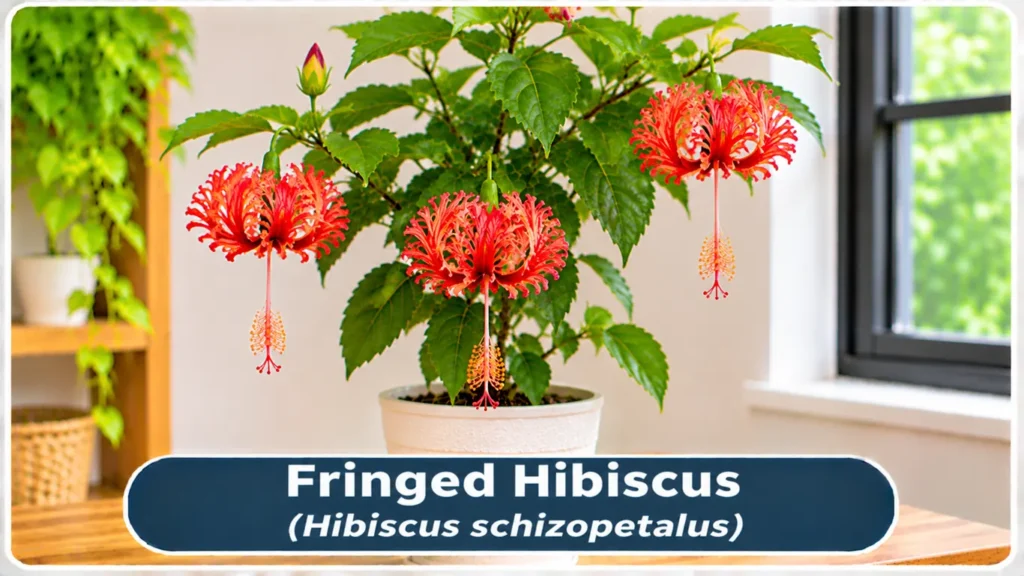
Fringed Hibiscus is a unique tropical evergreen shrub admired for its unusual hanging flowers with deeply divided, fringed petals. Native to eastern Africa, this ornamental plant is also called Japanese Lantern Hibiscus or Coral Hibiscus. Its delicate red or pink blossoms hang gracefully from slender branches, creating an elegant appearance. With bright sunlight, warmth, and appropriate pruning, Fringed Hibiscus can be maintained as an attractive indoor flowering shrub or small ornamental tree.
Appearance and Characteristics
Fringed Hibiscus features glossy green leaves with serrated edges and slender, arching branches. Its most remarkable characteristic is its hanging flowers, which have deeply cut, backward-curving petals in shades of red, coral, or pink. Long staminal columns extend downward from the blossoms, giving them a distinctive lantern-like appearance.
This species naturally develops an open, spreading growth habit. Its graceful branches and unusual flowers make it particularly attractive for decorative containers and spacious indoor plant displays.
How to Grow Fringed Hibiscus Indoors
Place Fringed Hibiscus near a bright window where it receives approximately 6 hours of direct sunlight daily. Use fertile, well-draining potting soil and a container with adequate drainage holes. Water when the upper inch of soil begins to dry, maintaining consistent moisture without waterlogging.
Maintain indoor temperatures between 65–85°F and provide moderate humidity. Apply balanced fertilizer during spring and summer to support healthy growth and flowering. Prune lightly to maintain its shape while preserving flowering branches. Protect the plant from cold drafts, and provide supplemental grow lighting if natural sunlight is insufficient.
FAQs
1. Can Hibiscus Trees Grow Indoors?
Yes, several Hibiscus varieties can grow indoors when provided with sufficient sunlight, warmth, and proper care. Tropical Hibiscus, Chinese Hibiscus, and Dwarf Hibiscus are particularly suitable for container gardening. Most varieties require bright sunlight, well-draining soil, and consistent watering. Regular pruning helps maintain a manageable size in indoor spaces.
2. How Much Sunlight Do Indoor Hibiscus Trees Need?
Indoor Hibiscus trees generally require at least 6 hours of direct sunlight daily for healthy growth and flowering. A bright, south-facing window is usually the best location. Without adequate sunlight, plants may develop weak branches and produce fewer flowers. Supplemental LED grow lights can help maintain healthy growth during darker months.
3. How Often Should You Water Indoor Hibiscus Trees?
Water indoor Hibiscus trees when the upper inch of soil feels dry. During warmer months, they may require more frequent watering, while winter growth usually demands less moisture. Always use containers with drainage holes to prevent waterlogging. Consistent watering supports healthy foliage, strong roots, and regular flower production.
4. Why Is My Indoor Hibiscus Not Flowering?
Indoor Hibiscus may stop flowering because of insufficient sunlight, improper watering, low temperatures, or nutrient deficiencies. Excessive nitrogen fertilizer can also encourage leafy growth instead of flowers. Provide at least 6 hours of direct sunlight, maintain warm temperatures, and use suitable fertilizer during the growing season to encourage blooming.
5. What Is the Best Hibiscus Tree for Indoor Growing?
Tropical Hibiscus (Hibiscus rosa-sinensis) is one of the best options for indoor growing because of its colorful flowers, evergreen foliage, and adaptability to containers. Compact cultivars such as Brilliant Hibiscus and Painted Lady Hibiscus are also attractive choices. These plants perform best in sunny rooms with consistent watering and occasional pruning.