

Indoor palm trees bring a tropical touch to homes with their elegant fronds, lush greenery, and attractive growth habits. From the beginner-friendly Parlor Palm to the stunning Lipstick Palm, these plants offer various shapes, sizes, and care requirements. In this guide, we’ll explore 23 types of palm trees suitable for indoor growing, including their identification, ideal growing conditions, watering needs, and maintenance tips.
1. Areca Palm (Dypsis lutescens)
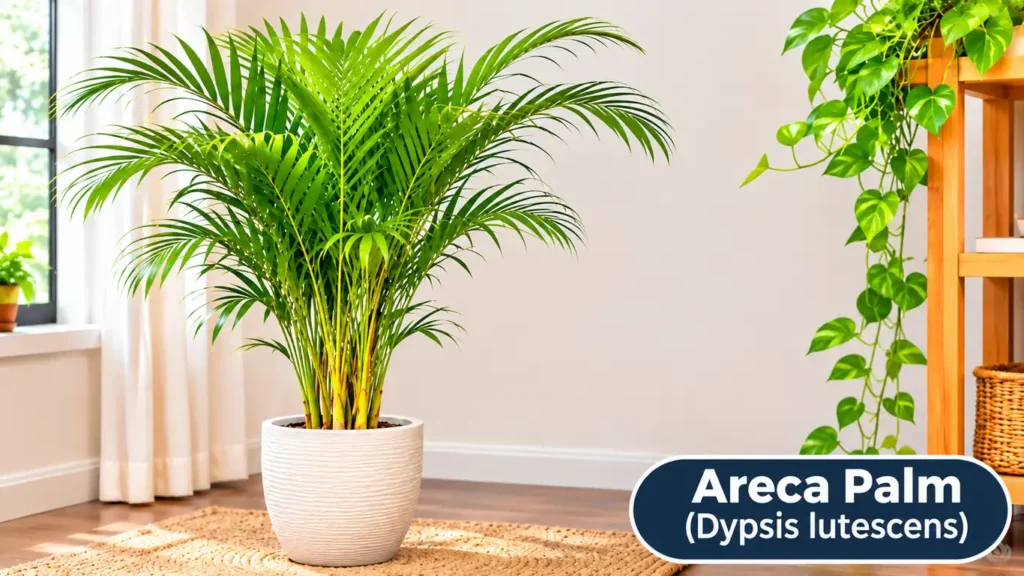
Areca Palm, scientifically known as Dypsis lutescens, is one of the most popular palm trees suitable for indoor growing. This tropical evergreen plant features graceful, arching fronds with numerous narrow, green leaflets that create a lush appearance. Its clustered stems and feathery foliage make it an excellent decorative plant for living rooms, offices, and spacious indoor areas. With proper lighting, watering, and humidity, Areca Palms can thrive indoors for many years.
Identification
- Scientific Name: Dypsis lutescens (also classified as Chrysalidocarpus lutescens)
- Common Name: Areca Palm, Butterfly Palm, Golden Cane Palm
- Plant Family: Arecaceae
- Native Region: Madagascar
- Indoor Height: 4–8 feet
- Leaf Color: Bright green to yellowish-green
- Leaf Shape: Long, arching, feather-like fronds
- Growth Habit: Multiple slender, clustered stems with dense foliage
Ideal Indoor Growing Conditions
Areca Palms thrive in bright, indirect sunlight. Place the plant near an east-facing window or a few feet away from a south-facing window with filtered light. Although it tolerates moderate indoor lighting, insufficient sunlight can cause slower growth and weaker foliage. Avoid prolonged exposure to intense afternoon sunlight.
The ideal temperature ranges from 65°F to 80°F (18°C to 27°C). Areca Palms prefer moderate to high humidity, making them suitable for warm indoor environments. Use well-draining potting soil enriched with organic matter to support healthy root development.
Watering and Maintenance Tips
Water your Areca Palm when the top 1–2 inches of soil feel dry. Keep the soil lightly moist during active growth, but avoid waterlogging, which can cause root rot. Reduce watering during winter.
Trim completely brown or damaged fronds using clean pruning shears. Apply diluted palm fertilizer during spring and summer according to the product instructions. Occasionally wipe or gently rinse the leaves to remove accumulated dust. Maintain adequate humidity to help prevent brown leaf tips and keep the palm looking healthy.
2. Parlor Palm (Chamaedorea elegans)
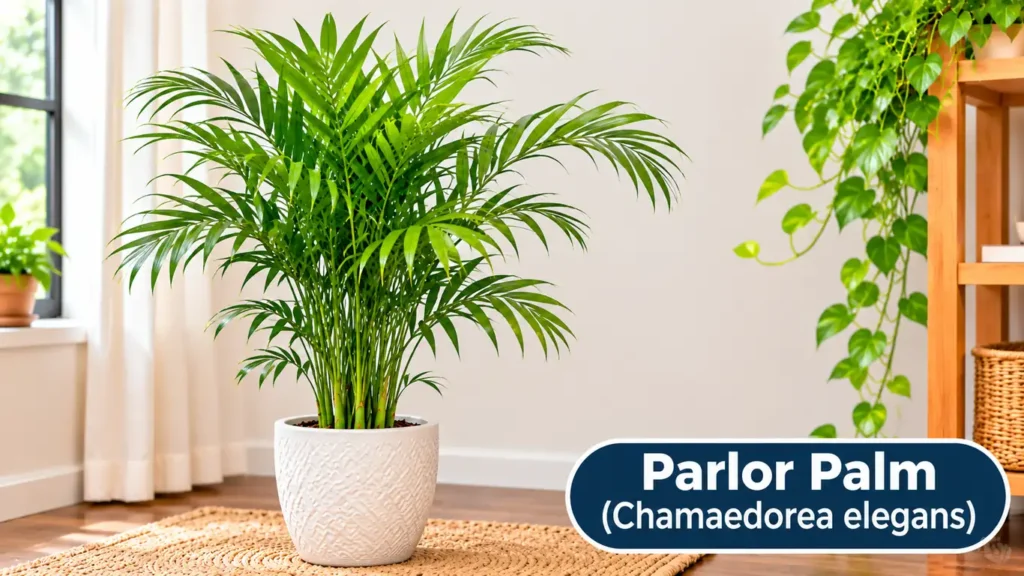
Parlor Palm, scientifically known as Chamaedorea elegans, is one of the easiest palm trees to grow indoors. This compact tropical plant features delicate, arching fronds with numerous narrow green leaflets. Its elegant appearance and ability to tolerate low-light conditions make it ideal for bedrooms, living rooms, offices, and small apartments. Parlor Palms grow slowly and require minimal maintenance, making them especially suitable for beginners.
Identification
- Scientific Name: Chamaedorea elegans
- Common Name: Parlor Palm, Neanthe Bella Palm
- Plant Family: Arecaceae
- Native Region: Mexico and Guatemala
- Indoor Height: 2–4 feet
- Leaf Color: Deep green
- Leaf Shape: Delicate, arching, feather-like fronds
- Growth Habit: Slow-growing, slender stems with graceful foliage
Ideal Indoor Growing Conditions
Parlor Palms prefer medium to bright, indirect sunlight but can tolerate lower indoor lighting. Position the plant near a north-facing or east-facing window where it receives gentle natural light. Avoid strong direct sunlight because excessive exposure can scorch its delicate leaves.
The ideal temperature ranges from 65°F to 80°F (18°C to 27°C). This palm grows well in normal household humidity but appreciates slightly higher moisture levels in the air. Use loose, well-draining potting soil enriched with organic matter.
Watering and Maintenance Tips
Water Parlor Palm when the upper 1–2 inches of soil become dry. Avoid keeping the soil constantly wet, as excessive moisture can cause root rot.
Remove yellow or completely brown fronds using clean pruning scissors. Apply diluted balanced fertilizer every six to eight weeks during spring and summer. Occasionally wipe the leaves to remove dust and inspect for spider mites.
3. Kentia Palm (Howea forsteriana)

Kentia Palm, scientifically known as Howea forsteriana, is an elegant indoor palm admired for its long, arching fronds and deep green foliage. This slow-growing evergreen plant creates a tropical atmosphere in homes, offices, and spacious living areas. Its ability to tolerate moderate lighting and typical household conditions makes it a reliable choice for indoor cultivation. With proper care, a Kentia Palm can remain attractive for many years.
Identification
- Scientific Name: Howea forsteriana
- Common Name: Kentia Palm, Thatch Palm
- Plant Family: Arecaceae
- Native Region: Lord Howe Island, Australia
- Indoor Height: 5–10 feet
- Leaf Color: Dark green
- Leaf Shape: Long, arching, feather-like fronds
- Growth Habit: Slow-growing, upright trunk with gracefully spreading foliage
Ideal Indoor Growing Conditions
Kentia Palms grow best in bright, indirect sunlight but can adapt to moderate or lower lighting conditions. Place the plant near an east-facing window or several feet away from a bright south-facing window. Avoid prolonged exposure to intense direct sunlight, particularly for plants accustomed to indoor shade.
Maintain indoor temperatures between 65°F and 80°F (18°C to 27°C). Kentia Palms prefer moderate humidity and well-draining potting soil. Protect the plant from cold drafts, heating vents, and sudden temperature changes.
Watering and Maintenance Tips
Water Kentia Palm when the top 1–2 inches of soil feel dry. Allow excess water to drain completely because consistently soggy soil may damage its roots.
Remove dead or damaged fronds when necessary, but avoid cutting healthy green foliage. Apply diluted palm fertilizer every six to eight weeks during the growing season. Repot only when the roots become crowded, as Kentia Palms generally prefer minimal root disturbance.
4. Lady Palm (Rhapis excelsa)

Lady Palm, scientifically known as Rhapis excelsa, is an attractive indoor palm recognized for its fan-shaped leaves and slender, bamboo-like stems. Its dense, bushy appearance makes it an excellent decorative plant for homes, offices, hallways, and indoor corners. Unlike many feather-leaved palms, Lady Palm produces distinctive segmented foliage that adds texture and elegance to indoor spaces. This slow-growing species is also valued for its adaptability and relatively simple maintenance requirements.
Identification
- Scientific Name: Rhapis excelsa
- Common Name: Lady Palm, Broadleaf Lady Palm
- Plant Family: Arecaceae
- Native Region: Southern China
- Indoor Height: 3–6 feet
- Leaf Color: Deep green
- Leaf Shape: Fan-shaped leaves divided into several narrow segments
- Growth Habit: Clumping, bamboo-like stems with dense foliage
Ideal Indoor Growing Conditions
Lady Palms prefer bright, indirect sunlight but tolerate moderate and relatively low indoor lighting. Position the plant near an east-facing or north-facing window. Avoid intense afternoon sunlight because it may cause brown patches or scorched leaf edges.
The ideal temperature ranges from 60°F to 80°F (16°C to 27°C). Lady Palms grow well in moderate household humidity and prefer loose, well-draining potting soil containing organic matter. Good air circulation also supports healthy foliage.
Watering and Maintenance Tips
Water Lady Palm when the upper 1–2 inches of soil become dry. Keep the soil moderately moist during active growth without allowing it to become waterlogged.
Trim completely brown or damaged leaves to maintain a neat appearance. Feed with diluted palm fertilizer every six to eight weeks during spring and summer. Occasionally clean the leaves with a damp cloth and inspect the stems for scale insects and spider mites.
5. Majesty Palm (Ravenea rivularis)

Majesty Palm, scientifically known as Ravenea rivularis, is a beautiful tropical palm recognized for its graceful, arching fronds and lush green appearance. This elegant palm creates a natural tropical atmosphere in living rooms, offices, and spacious indoor areas. Although it requires more attention than some other indoor palms, Majesty Palm can grow successfully indoors with sufficient light, consistent watering, and adequate humidity.
Identification
- Scientific Name: Ravenea rivularis
- Common Name: Majesty Palm, Majestic Palm
- Plant Family: Arecaceae
- Native Region: Madagascar
- Indoor Height: 4–10 feet
- Leaf Color: Bright to deep green
- Leaf Shape: Long, arching, feather-like fronds
- Growth Habit: Upright, single-trunk palm with spreading foliage
Ideal Indoor Growing Conditions
Majesty Palm grows best in bright, indirect sunlight and benefits from several hours of strong natural light daily. Position the plant near a large east-facing or south-facing window. Insufficient lighting may cause yellowing leaves and slow growth.
The ideal temperature ranges from 65°F to 85°F (18°C to 29°C). This palm prefers high humidity, ideally around 50% or higher. Use nutrient-rich, well-draining potting soil that retains some moisture without becoming waterlogged.
Watering and Maintenance Tips
Water Majesty Palm when the upper inch of soil begins to dry. Keep the soil consistently lightly moist, but avoid standing water around the roots.
Remove completely brown or damaged fronds using clean pruning tools. Apply diluted palm fertilizer during spring and summer according to the manufacturer’s instructions. Maintain adequate humidity and regularly inspect the leaves for spider mites, especially during dry indoor conditions.
6. Pygmy Date Palm (Phoenix roebelenii)

Pygmy Date Palm, scientifically known as Phoenix roebelenii, is an attractive ornamental palm admired for its slender trunk and delicate, arching fronds. Unlike larger date palm species, this compact palm grows slowly and can be maintained in indoor containers. Its graceful appearance makes it suitable for bright living rooms, spacious offices, and indoor garden areas. With proper lighting and watering, it can become a long-lasting decorative plant.
Identification
- Scientific Name: Phoenix roebelenii
- Common Name: Pygmy Date Palm, Miniature Date Palm
- Plant Family: Arecaceae
- Native Region: Southeast Asia
- Indoor Height: 3–6 feet
- Leaf Color: Deep green
- Leaf Shape: Narrow, arching, feather-like fronds
- Growth Habit: Slow-growing, slender trunk with a dense crown of leaves
Ideal Indoor Growing Conditions
Pygmy Date Palm prefers bright natural light and can tolerate several hours of gentle direct sunlight. Place the plant near a sunny south-facing or east-facing window. Insufficient sunlight may weaken its growth and reduce foliage density.
The ideal temperature ranges from 65°F to 85°F (18°C to 29°C). This palm appreciates moderate to high humidity and performs best in well-draining soil containing organic matter. Protect it from cold drafts and sudden temperature changes.
Watering and Maintenance Tips
Water Pygmy Date Palm when the upper 1–2 inches of soil feel dry. Allow excess moisture to drain completely to prevent root problems.
Trim dead or damaged fronds carefully because the leaf bases have sharp spines. Apply a balanced palm fertilizer with micronutrients during spring and summer. Rotate the container occasionally to encourage balanced growth and inspect the foliage for common indoor pests.
7. Bamboo Palm (Chamaedorea seifrizii)
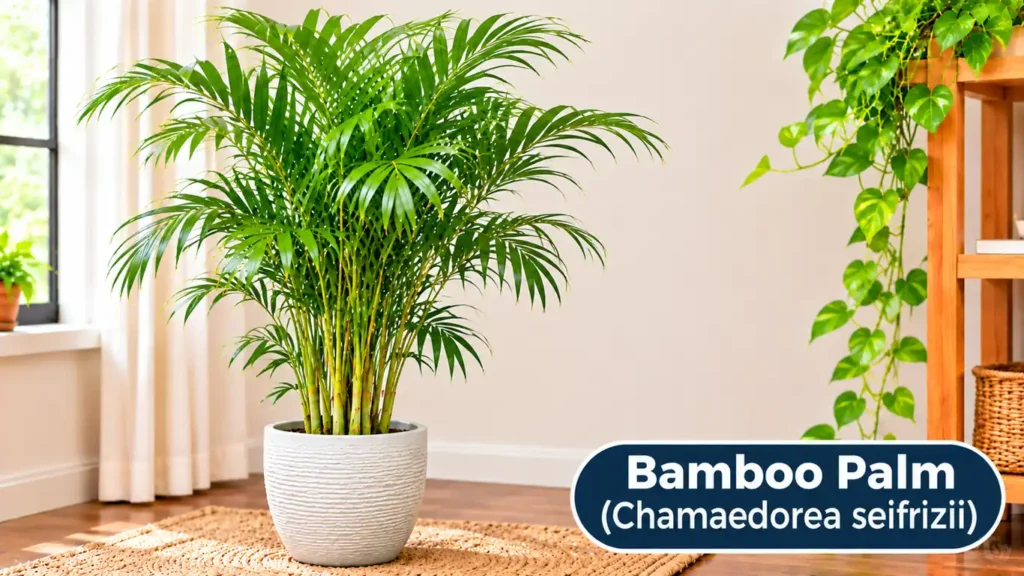
Bamboo Palm, scientifically known as Chamaedorea seifrizii, is a popular indoor palm valued for its slender, bamboo-like stems and attractive green foliage. This tropical evergreen plant grows in dense clusters, creating a natural privacy-screen appearance. Its tolerance for moderate indoor lighting and manageable growth habit make it suitable for homes, offices, hallways, and indoor decorative spaces. Bamboo Palm also adds a refreshing tropical touch without requiring excessive maintenance.
Identification
- Scientific Name: Chamaedorea seifrizii
- Common Name: Bamboo Palm, Reed Palm
- Plant Family: Arecaceae
- Native Region: Mexico and Central America
- Indoor Height: 4–7 feet
- Leaf Color: Deep green
- Leaf Shape: Narrow, feather-like leaflets arranged along arching fronds
- Growth Habit: Clumping, upright stems resembling bamboo canes
Ideal Indoor Growing Conditions
Bamboo Palm grows best in bright, indirect sunlight but can tolerate moderate or relatively low indoor lighting. Place the plant near an east-facing window or in a room with filtered natural light. Avoid prolonged direct afternoon sunlight, which may scorch the leaflets.
Maintain temperatures between 65°F and 80°F (18°C to 27°C). Bamboo Palms prefer moderate humidity and well-draining, organically rich potting soil. Keep the plant away from cold drafts and direct heating vents.
Watering and Maintenance Tips
Water Bamboo Palm when the top 1–2 inches of soil become dry. Maintain slightly moist soil during active growth, but avoid excessive watering and poor drainage.
Remove yellow or completely brown fronds to maintain its attractive appearance. Apply diluted balanced fertilizer every six to eight weeks during spring and summer. Occasionally clean the leaves and inspect for spider mites or scale insects. Repot when the root system becomes crowded.
8. Cat Palm (Chamaedorea cataractarum)
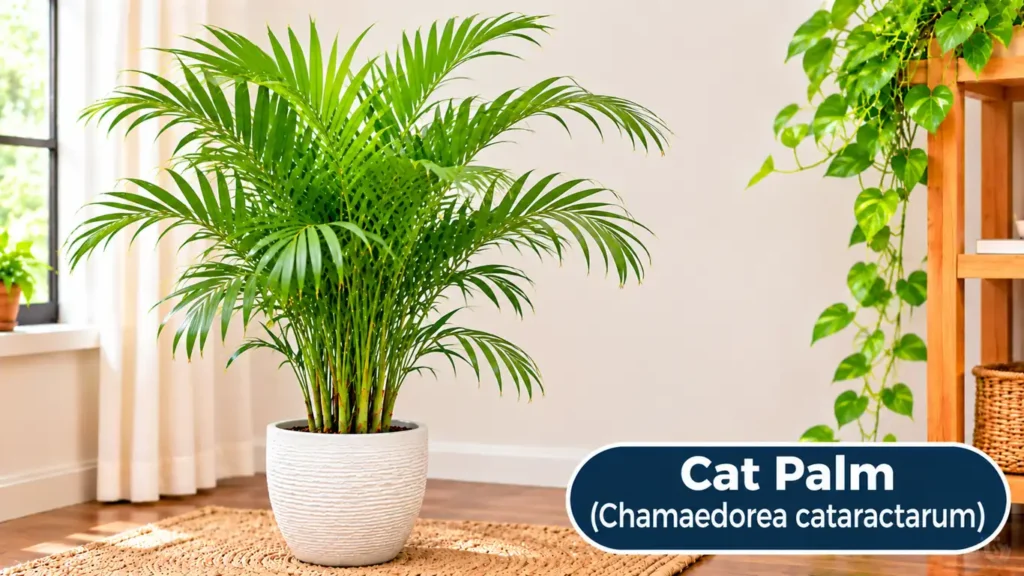
Cat Palm, scientifically known as Chamaedorea cataractarum, is a beautiful tropical palm admired for its dense, feathery foliage and bushy appearance. Unlike many palm trees, this species does not develop a prominent aboveground trunk. Instead, it produces clusters of graceful green fronds that create a lush, tropical look. Cat Palms are excellent choices for bright living rooms, offices, and indoor corners where humidity and moisture can be maintained.
Identification
- Scientific Name: Chamaedorea cataractarum
- Common Name: Cat Palm, Cascade Palm
- Plant Family: Arecaceae
- Native Region: Southern Mexico
- Indoor Height: 3–6 feet
- Leaf Color: Deep, glossy green
- Leaf Shape: Long, arching, feather-like fronds
- Growth Habit: Dense, clumping growth without a prominent trunk
Ideal Indoor Growing Conditions
Cat Palms prefer bright, indirect sunlight but can tolerate moderate indoor lighting. Position the plant near an east-facing window or a south-facing window with filtered sunlight. Avoid prolonged exposure to intense afternoon sunlight because it can scorch the delicate leaflets.
The ideal temperature ranges from 65°F to 80°F (18°C to 27°C). Cat Palms appreciate moderate to high humidity and grow best in organically rich, well-draining potting soil. Maintaining consistent environmental conditions helps prevent brown leaf tips.
Watering and Maintenance Tips
Water Cat Palm when the upper inch of soil begins to dry. Unlike drought-tolerant palms, this species prefers consistently lightly moist soil, although waterlogging should be avoided.
Remove completely brown or damaged fronds using clean pruning scissors. Apply diluted palm fertilizer every six to eight weeks during spring and summer. Maintain adequate humidity and occasionally inspect the foliage for spider mites and scale insects.
9. Ponytail Palm (Beaucarnea recurvata)

Ponytail Palm, scientifically known as Beaucarnea recurvata, is a distinctive indoor ornamental plant recognized for its swollen trunk and long, curly leaves. Despite its common name, it is not a true palm but belongs to the Asparagaceae family. Its thick trunk stores water, allowing it to survive extended periods of dry conditions. This slow-growing plant is particularly suitable for beginners seeking a low-maintenance, palm-like indoor tree.
Identification
- Scientific Name: Beaucarnea recurvata
- Common Name: Ponytail Palm, Elephant’s Foot
- Plant Family: Asparagaceae
- Native Region: Eastern Mexico
- Indoor Height: 2–6 feet
- Leaf Color: Bright to dark green
- Leaf Shape: Long, narrow, curling, ribbon-like leaves
- Growth Habit: Thick, swollen trunk with a fountain-shaped crown
Ideal Indoor Growing Conditions
Ponytail Palms thrive in bright sunlight and perform best near sunny south-facing or west-facing windows. They can tolerate bright, indirect light, although insufficient sunlight may significantly slow their growth.
The ideal temperature ranges from 65°F to 85°F (18°C to 29°C). Use a fast-draining cactus or succulent potting mixture to prevent excess moisture around the roots. This drought-tolerant plant performs well in normal household humidity and does not require misting.
Watering and Maintenance Tips
Water Ponytail Palm thoroughly only after the potting soil has dried completely. Its swollen trunk stores water, making frequent watering unnecessary and potentially harmful.
Reduce watering during winter when plant growth naturally slows. Remove completely brown leaves when necessary, but avoid cutting healthy green foliage. Apply diluted succulent fertilizer once or twice during spring and summer. Repot infrequently because Ponytail Palms grow slowly.
10. Sago Palm (Cycas revoluta)
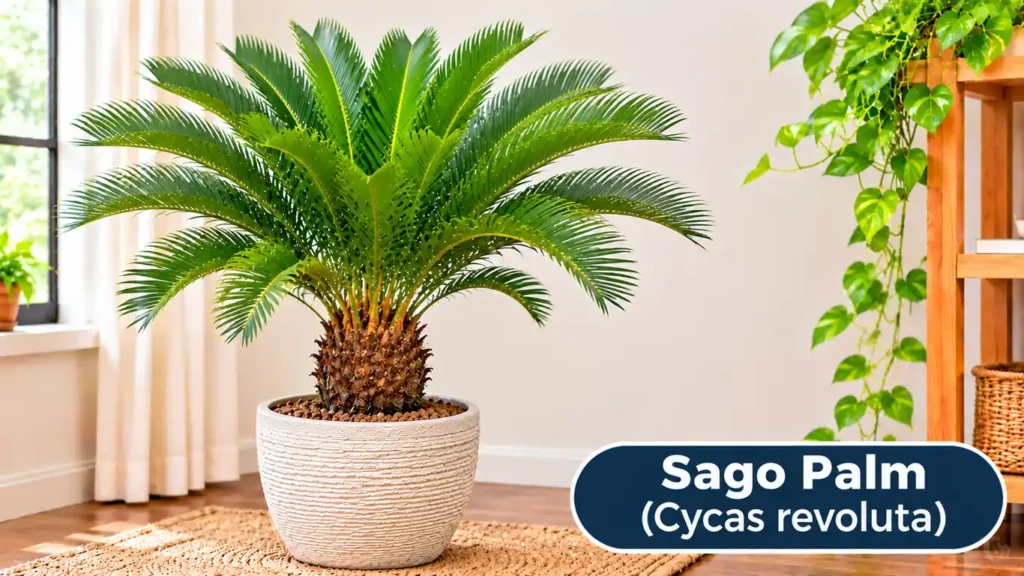
Sago Palm, scientifically known as Cycas revoluta, is an attractive evergreen ornamental plant known for its stiff, glossy fronds and thick, textured trunk. Although commonly called a palm, it is actually a cycad rather than a true palm tree. Its symmetrical crown and slow-growing nature make it a striking decorative plant for bright indoor spaces. With adequate light, well-draining soil, and careful watering, Sago Palms can grow successfully in containers for many years.
Identification
- Scientific Name: Cycas revoluta
- Common Name: Sago Palm, King Sago
- Plant Family: Cycadaceae
- Native Region: Southern Japan
- Indoor Height: 2–4 feet
- Leaf Color: Dark, glossy green
- Leaf Shape: Stiff, feather-like fronds with narrow leaflets
- Growth Habit: Slow-growing, thick trunk with a symmetrical crown
Ideal Indoor Growing Conditions
Sago Palms prefer bright, indirect sunlight and can tolerate several hours of gentle direct sunlight. Position the plant near a sunny east-facing or south-facing window. Adequate lighting is essential for maintaining strong, healthy foliage.
The ideal temperature ranges from 65°F to 85°F (18°C to 29°C). Use a well-draining potting mixture containing coarse sand or perlite. Sago Palms generally tolerate normal household humidity but should be protected from cold drafts and excessive moisture.
Watering and Maintenance Tips
Water Sago Palm when the upper 2–3 inches of soil become dry. Allow excess water to drain completely because soggy soil can lead to root and trunk rot.
Remove fully brown or damaged fronds using clean pruning shears. Apply a suitable palm or cycad fertilizer during the active growing season, following label instructions. Avoid excessive pruning because this slow-growing plant produces new foliage only periodically.
11. Chinese Fan Palm (Livistona chinensis)

Chinese Fan Palm, scientifically known as Livistona chinensis, is an attractive evergreen palm recognized for its large, fan-shaped leaves and gracefully drooping leaf tips. This tropical and subtropical species adds a bold, decorative appearance to indoor spaces. Although it can become a tall tree outdoors, young Chinese Fan Palms can be grown successfully in spacious indoor containers. Its distinctive foliage makes it suitable for bright living rooms, offices, and indoor garden areas.
Identification
- Scientific Name: Livistona chinensis
- Common Name: Chinese Fan Palm, Fountain Palm
- Plant Family: Arecaceae
- Native Region: Southern Japan, Taiwan, and southern China
- Indoor Height: 3–6 feet in containers
- Leaf Color: Deep, glossy green
- Leaf Shape: Large, rounded, fan-shaped leaves with drooping tips
- Growth Habit: Slow-growing, single-trunk palm with spreading foliage
Ideal Indoor Growing Conditions
Chinese Fan Palms prefer bright, indirect sunlight and can tolerate several hours of gentle direct sunlight. Place the plant near a sunny south-facing or east-facing window. Adequate lighting helps maintain healthy foliage and encourages steady growth.
The ideal indoor temperature ranges from 65°F to 85°F (18°C to 29°C). This palm prefers moderate humidity and well-draining potting soil containing organic matter. Provide sufficient space around the plant because its large leaves spread outward as it matures.
Watering and Maintenance Tips
Water Chinese Fan Palm when the upper 1–2 inches of soil feel dry. Keep the soil moderately moist during active growth, but avoid allowing water to accumulate around the roots.
Remove completely brown or damaged fronds with clean pruning tools. Apply diluted palm fertilizer every six to eight weeks during spring and summer. Occasionally clean the leaves to remove dust and inspect them for spider mites or scale insects.
12. European Fan Palm (Chamaerops humilis)
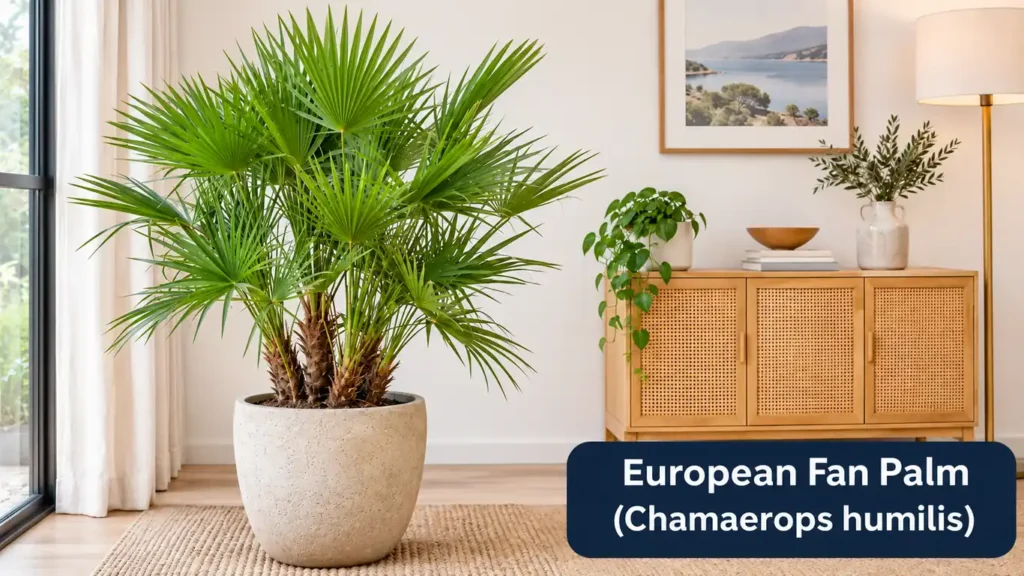
European Fan Palm, scientifically known as Chamaerops humilis, is a hardy evergreen palm admired for its compact growth and attractive fan-shaped foliage. Native to the Mediterranean region, this species is more tolerant of cooler temperatures and dry conditions than many tropical palms. Young European Fan Palms can be maintained indoors in large containers, especially in bright rooms with adequate sunlight. Its distinctive appearance makes it an excellent decorative plant for sunrooms and spacious indoor areas.
Identification
- Scientific Name: Chamaerops humilis
- Common Name: European Fan Palm, Mediterranean Fan Palm
- Plant Family: Arecaceae
- Native Region: Mediterranean Europe and North Africa
- Indoor Height: 3–6 feet in containers
- Leaf Color: Green to bluish-green
- Leaf Shape: Stiff, fan-shaped leaves divided into narrow segments
- Growth Habit: Slow-growing, clumping palm with multiple stems
Ideal Indoor Growing Conditions
European Fan Palms grow best in bright sunlight and generally require more light than shade-tolerant indoor palms. Position the plant near a sunny south-facing window where it can receive several hours of direct sunlight. A sunroom is particularly suitable for this species.
The ideal indoor temperature ranges from 60°F to 80°F (16°C to 27°C), although established plants can tolerate cooler conditions. Use well-draining potting soil containing coarse sand or perlite. This palm performs well in normal household humidity and does not require frequent misting.
Watering and Maintenance Tips
Water European Fan Palm when the upper 2–3 inches of soil become dry. Its drought tolerance makes it less demanding than many tropical palm species.
Avoid excessive watering, particularly during winter when growth slows. Remove dead or damaged fronds carefully because the leaf stalks have sharp spines. Apply balanced palm fertilizer during spring and summer according to the manufacturer’s instructions. Repot only when the roots become crowded.
13. Fishtail Palm (Caryota mitis)

Fishtail Palm, scientifically known as Caryota mitis, is a distinctive tropical palm famous for its unusual leaflets that resemble the shape of a fish’s tail. Unlike traditional feather-leaved or fan-leaved palms, this species produces irregularly shaped, jagged foliage that creates a dramatic tropical appearance. Its clustered growth habit and attractive greenery make it suitable for spacious indoor environments. However, Fishtail Palms require adequate light, warmth, and humidity to thrive.
Identification
- Scientific Name: Caryota mitis
- Common Name: Fishtail Palm, Clustering Fishtail Palm
- Plant Family: Arecaceae
- Native Region: Tropical Southeast Asia
- Indoor Height: 4–8 feet, sometimes taller
- Leaf Color: Bright to deep green
- Leaf Shape: Broad, triangular leaflets with irregular, jagged edges
- Growth Habit: Clumping palm with multiple upright stems and dense foliage
Ideal Indoor Growing Conditions
Fishtail Palms prefer bright, indirect sunlight and can tolerate moderate indoor lighting. Position the plant near an east-facing window or several feet away from a bright south-facing window. Avoid prolonged exposure to harsh afternoon sunlight, which may damage the foliage.
Maintain indoor temperatures between 65°F and 85°F (18°C to 29°C). This tropical palm appreciates high humidity, ideally around 50% or higher. Use fertile, well-draining potting soil that retains some moisture without becoming waterlogged.
Watering and Maintenance Tips
Water Fishtail Palm when the upper 1–2 inches of soil begin to dry. Maintain consistently light soil moisture during active growth, but avoid standing water around the roots.
Remove completely brown or damaged fronds using clean pruning shears. Apply diluted palm fertilizer every four to six weeks during spring and summer. Maintain adequate humidity and inspect the leaves regularly for spider mites and scale insects.
14. Christmas Palm (Adonidia merrillii)

Christmas Palm, scientifically known as Adonidia merrillii, is a beautiful tropical palm recognized for its smooth trunk, graceful green fronds, and bright red fruits that often appear around the holiday season. This ornamental species is commonly grown outdoors in warm climates, but young specimens can also be cultivated indoors with sufficient sunlight. Its compact crown and elegant appearance make it an attractive choice for spacious living rooms, sunrooms, and indoor garden areas.
Identification
- Scientific Name: Adonidia merrillii
- Common Name: Christmas Palm, Manila Palm
- Plant Family: Arecaceae
- Native Region: Philippines
- Indoor Height: 3–6 feet in containers
- Leaf Color: Bright to deep green
- Leaf Shape: Long, arching, feather-like fronds
- Growth Habit: Single, smooth trunk with a compact crown of foliage
Ideal Indoor Growing Conditions
Christmas Palms prefer bright sunlight and grow best near large south-facing or west-facing windows. They require several hours of strong natural light to maintain healthy foliage. Young plants can tolerate filtered sunlight, but insufficient lighting may slow their development.
The ideal indoor temperature ranges from 70°F to 85°F (21°C to 29°C). This tropical species prefers moderate to high humidity and well-draining potting soil enriched with organic matter. Protect the plant from cold drafts and temperatures below 50°F (10°C).
Watering and Maintenance Tips
Water Christmas Palm when the upper 1–2 inches of soil become dry. Keep the soil moderately moist during active growth without allowing it to become waterlogged.
Remove completely brown or damaged fronds when necessary. Apply a balanced palm fertilizer containing essential micronutrients during spring and summer. Occasionally rotate the container for even growth and inspect the foliage for spider mites and scale insects.
15. Bottle Palm (Hyophorbe lagenicaulis)
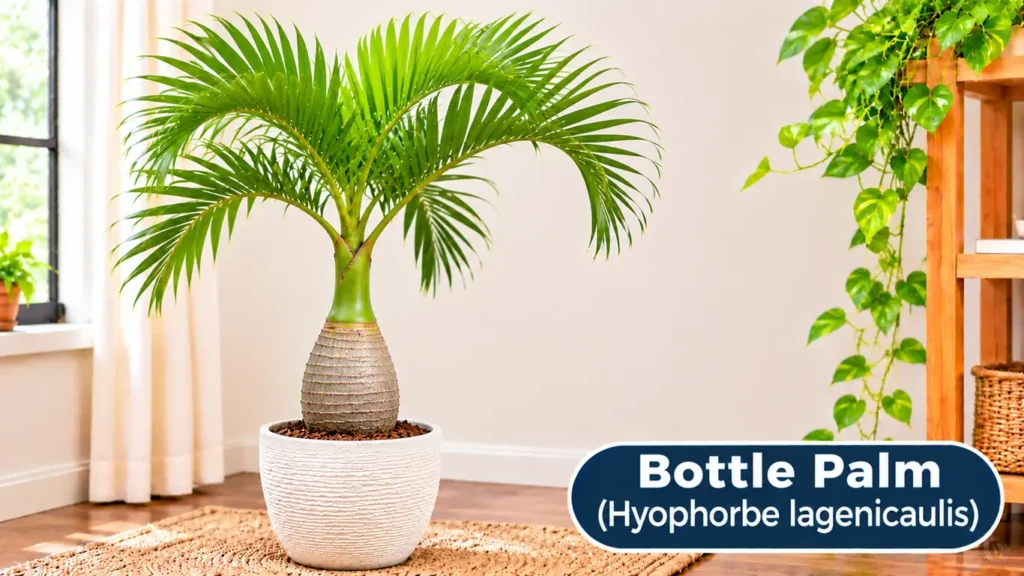
Bottle Palm, scientifically known as Hyophorbe lagenicaulis, is a distinctive tropical palm admired for its unusually swollen trunk that resembles the shape of a bottle. This slow-growing species produces a compact crown of arching, feather-like fronds, creating an attractive ornamental appearance. Although primarily cultivated outdoors in tropical regions, young Bottle Palms can be grown indoors in bright, warm environments. Their unique trunk shape makes them particularly appealing for decorative plant collections.
Identification
- Scientific Name: Hyophorbe lagenicaulis
- Common Name: Bottle Palm
- Plant Family: Arecaceae
- Native Region: Round Island, Mauritius
- Indoor Height: 2–5 feet in containers
- Leaf Color: Deep green
- Leaf Shape: Long, arching, feather-like fronds
- Growth Habit: Slow-growing, single trunk with a swollen base and compact crown
Ideal Indoor Growing Conditions
Bottle Palms thrive in bright sunlight and require strong natural lighting for healthy growth. Position the plant near a sunny south-facing window or in a bright sunroom. Young plants can tolerate some filtered light, but prolonged low-light conditions may weaken their growth.
The ideal temperature ranges from 70°F to 85°F (21°C to 29°C). This tropical palm appreciates moderate humidity and grows best in a loose, well-draining potting mixture. Avoid exposing it to cold temperatures or sudden environmental changes.
Watering and Maintenance Tips
Water Bottle Palm when the upper 2 inches of soil become dry. Allow excess moisture to drain completely because overly wet soil can damage its roots.
Reduce watering during winter when growth naturally slows. Remove completely brown fronds, but avoid cutting healthy green leaves. Apply diluted palm fertilizer during spring and summer according to the manufacturer’s instructions. Repot only when necessary because this species grows slowly and prefers minimal root disturbance.
16. Foxtail Palm (Wodyetia bifurcata)

Foxtail Palm, scientifically known as Wodyetia bifurcata, is an attractive tropical palm famous for its thick, bushy fronds that resemble a fox’s tail. Its bright green foliage and smooth trunk create a striking ornamental appearance. This species is commonly grown outdoors in tropical landscapes, but young Foxtail Palms can be maintained indoors in large containers with sufficient sunlight. Their elegant growth habit makes them suitable for spacious sunrooms and bright indoor areas.
Identification
- Scientific Name: Wodyetia bifurcata
- Common Name: Foxtail Palm
- Plant Family: Arecaceae
- Native Region: Queensland, Australia
- Indoor Height: 3–6 feet in containers when young
- Leaf Color: Bright to deep green
- Leaf Shape: Bushy, feather-like fronds with leaflets arranged around the central stalk
- Growth Habit: Upright, single-trunk palm with a dense crown of foliage
Ideal Indoor Growing Conditions
Foxtail Palms require bright sunlight to grow successfully indoors. Place the plant near a large south-facing window or in a sunroom receiving several hours of direct sunlight. Insufficient natural light may cause weak growth and reduced foliage development.
The ideal indoor temperature ranges from 70°F to 85°F (21°C to 29°C). This palm prefers moderate humidity and well-draining, nutrient-rich potting soil. Provide enough space for its broad fronds and protect it from cold drafts.
Watering and Maintenance Tips
Water Foxtail Palm when the upper 1–2 inches of soil feel dry. Maintain moderate soil moisture during active growth, but avoid excessive watering and poor drainage.
Remove fully brown fronds only when necessary, as healthy Foxtail Palms naturally shed older leaves. Apply balanced palm fertilizer containing potassium, magnesium, and other micronutrients during spring and summer. Occasionally inspect the foliage for scale insects and spider mites.
17. Dwarf Date Palm (Phoenix acaulis)
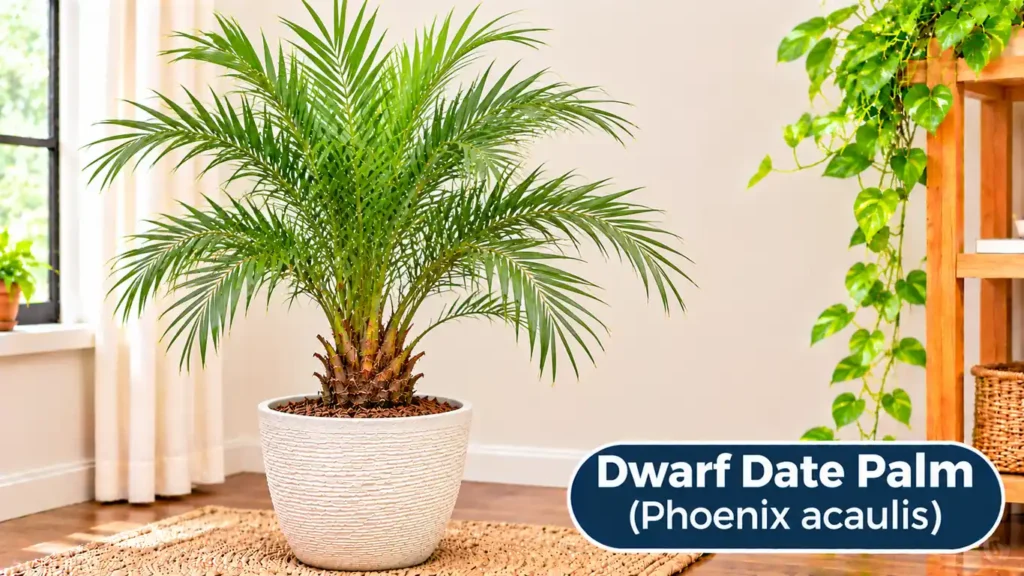
Dwarf Date Palm, scientifically known as Phoenix acaulis, is a compact palm species recognized for its graceful, feather-like fronds and relatively short growth habit. Native to the Indian subcontinent, this palm develops attractive green foliage that creates a tropical appearance. Although less commonly grown indoors than other palm varieties, young Dwarf Date Palms can be cultivated in containers with adequate sunlight and proper care.
Identification
- Scientific Name: Phoenix acaulis
- Common Name: Dwarf Date Palm, Stemless Date Palm
- Plant Family: Arecaceae
- Native Region: India and Nepal
- Indoor Height: Approximately 2–4 feet
- Leaf Color: Deep green to grayish-green
- Leaf Shape: Long, narrow, feather-like fronds
- Growth Habit: Slow-growing, nearly stemless palm with arching foliage
Ideal Indoor Growing Conditions
Dwarf Date Palms prefer bright sunlight and grow best near south-facing or west-facing windows. Provide several hours of strong natural light daily to encourage healthy foliage development. A bright sunroom is especially suitable for this species.
The ideal indoor temperature ranges from 65°F to 85°F (18°C to 29°C). Use well-draining potting soil containing organic matter, coarse sand, or perlite. Moderate household humidity is generally suitable, although good air circulation helps prevent fungal problems.
Watering and Maintenance Tips
Water Dwarf Date Palm when the upper 1–2 inches of soil become dry. Avoid keeping the soil continuously wet because excessive moisture may cause root rot.
Remove completely brown or damaged fronds carefully because Phoenix palms have sharp spines near their leaf bases. Apply diluted palm fertilizer during spring and summer. Repot when necessary, using a container with adequate drainage holes.
18. Dwarf Sugar Palm (Arenga engleri)

Dwarf Sugar Palm, scientifically known as Arenga engleri, is an attractive evergreen palm admired for its bushy appearance and elegant, arching fronds. Its dark green leaflets often have silvery undersides, creating a beautiful contrast. Unlike many large palm species, Dwarf Sugar Palm develops a relatively compact, clumping growth habit. Young plants can be cultivated indoors in spacious containers when provided with sufficient light, humidity, and warmth.
Identification
- Scientific Name: Arenga engleri
- Common Name: Dwarf Sugar Palm, Formosa Palm
- Plant Family: Arecaceae
- Native Region: Taiwan and the Ryukyu Islands
- Indoor Height: Approximately 3–6 feet in containers
- Leaf Color: Dark green with silvery undersides
- Leaf Shape: Arching, feather-like fronds with broad leaflets
- Growth Habit: Clumping palm with multiple short stems and dense foliage
Ideal Indoor Growing Conditions
Dwarf Sugar Palms grow best in bright, indirect sunlight or partial shade. Position the plant near an east-facing window where it receives gentle natural light. Avoid prolonged exposure to harsh afternoon sunlight, especially for young plants.
The ideal temperature ranges from 65°F to 80°F (18°C to 27°C). This palm appreciates moderate to high humidity and well-draining, organically rich potting soil. Provide sufficient space for its spreading foliage and protect it from cold drafts.
Watering and Maintenance Tips
Water Dwarf Sugar Palm when the upper 1–2 inches of soil feel dry. Maintain slightly moist soil during active growth without allowing water to accumulate around the roots.
Remove dead or damaged fronds using clean pruning tools. Apply diluted balanced palm fertilizer every six to eight weeks during spring and summer. Maintain adequate humidity and inspect the foliage regularly for common indoor pests.
Important: Dwarf Sugar Palm fruits contain irritating calcium oxalate crystals. Avoid direct contact with the fruits and keep them away from children and pets.
19. Macarthur Palm (Ptychosperma macarthurii)

Macarthur Palm, scientifically known as Ptychosperma macarthurii, is a beautiful tropical palm recognized for its slender stems and graceful, feather-like foliage. This clumping species produces multiple upright trunks that create a dense, elegant appearance. Although commonly grown outdoors in tropical landscapes, young Macarthur Palms can be maintained indoors in spacious containers with sufficient light and humidity. Their attractive foliage makes them suitable for bright living rooms and indoor gardens.
Identification
- Scientific Name: Ptychosperma macarthurii
- Common Name: Macarthur Palm, MacArthur’s Palm
- Plant Family: Arecaceae
- Native Region: Northern Australia and New Guinea
- Indoor Height: Approximately 4–8 feet in containers
- Leaf Color: Bright to deep green
- Leaf Shape: Long, arching, feather-like fronds with narrow leaflets
- Growth Habit: Clumping palm with multiple slender, upright stems
Ideal Indoor Growing Conditions
Macarthur Palms prefer bright, indirect sunlight and can tolerate some gentle direct sunlight. Place the plant near a large east-facing or south-facing window with filtered light. Insufficient lighting may slow its growth and reduce foliage density.
The ideal indoor temperature ranges from 70°F to 85°F (21°C to 29°C). This tropical palm appreciates moderate to high humidity and fertile, well-draining potting soil. Avoid exposing it to cold drafts, dry heating vents, or sudden temperature changes.
Watering and Maintenance Tips
Water Macarthur Palm when the top 1–2 inches of soil begin to dry. Keep the soil moderately moist during active growth, but avoid standing water and poorly draining containers.
Remove completely brown or damaged fronds to maintain its appearance. Apply diluted palm fertilizer during spring and summer according to the manufacturer’s instructions. Occasionally rotate the container for balanced growth and inspect the foliage for spider mites and scale insects.
20. Lipstick Palm (Cyrtostachys renda)

Lipstick Palm, scientifically known as Cyrtostachys renda, is a striking tropical palm admired for its bright red crownshafts and elegant green foliage. Also known as Red Sealing Wax Palm, this species creates a beautiful contrast between its colorful stems and arching fronds. Although challenging to grow indoors, young Lipstick Palms can be maintained in warm, humid environments with sufficient light. Their unusual appearance makes them attractive additions to tropical indoor plant collections.
Identification
- Scientific Name: Cyrtostachys renda
- Common Name: Lipstick Palm, Red Sealing Wax Palm
- Plant Family: Arecaceae
- Native Region: Southeast Asia
- Indoor Height: Approximately 3–6 feet in containers when young
- Leaf Color: Bright green with vivid red crownshafts
- Leaf Shape: Long, arching, feather-like fronds
- Growth Habit: Clumping palm with multiple slender stems
Ideal Indoor Growing Conditions
Lipstick Palms prefer bright, indirect sunlight and warm temperatures throughout the year. Place the plant near a large east-facing window or in a bright indoor greenhouse. Avoid intense direct sunlight on young plants because excessive exposure may scorch their leaves.
The ideal temperature ranges from 75°F to 90°F (24°C to 32°C). This tropical palm requires high humidity, preferably around 70% or higher. Use fertile, moisture-retentive soil with good drainage to support healthy root development.
Watering and Maintenance Tips
Water Lipstick Palm regularly to maintain consistently moist soil. Unlike drought-tolerant palms, this species does not tolerate prolonged dryness.
Remove completely brown or damaged fronds using clean pruning tools. Apply diluted palm fertilizer during spring and summer. Maintain high humidity and protect the plant from cold drafts. Regularly inspect the foliage for spider mites and other indoor pests.
21. Needle Palm (Rhapidophyllum hystrix)

Needle Palm, scientifically known as Rhapidophyllum hystrix, is a hardy evergreen palm recognized for its attractive fan-shaped leaves and compact, clumping growth habit. Native to the southeastern United States, this species is particularly valued for its exceptional cold tolerance. Although primarily grown outdoors, young Needle Palms can be cultivated indoors in large containers. Their dense foliage and distinctive appearance make them suitable for bright sunrooms and spacious indoor garden areas.
Identification
- Scientific Name: Rhapidophyllum hystrix
- Common Name: Needle Palm
- Plant Family: Arecaceae
- Native Region: Southeastern United States
- Indoor Height: Approximately 2–5 feet in containers
- Leaf Color: Deep green with silvery undersides
- Leaf Shape: Broad, fan-shaped leaves divided into narrow segments
- Growth Habit: Slow-growing, clumping palm with a short trunk
Ideal Indoor Growing Conditions
Needle Palms prefer bright, indirect sunlight but can tolerate partial shade. Place the plant near an east-facing or south-facing window where it receives sufficient natural light. Although established outdoor plants tolerate shade, indoor specimens generally benefit from brighter conditions.
The ideal indoor temperature ranges from 60°F to 80°F (16°C to 27°C). This species tolerates cooler conditions better than most tropical palms. Use well-draining, organically rich potting soil and maintain moderate household humidity.
Watering and Maintenance Tips
Water Needle Palm when the upper 1–2 inches of soil become dry. Keep the soil moderately moist during active growth, but avoid excessive watering.
Remove completely brown or damaged fronds when necessary. Wear protective gloves because the plant develops sharp, needle-like spines near its trunk. Apply diluted palm fertilizer during spring and summer. Repot only when the roots become crowded.
22. Silver Saw Palmetto (Serenoa repens)
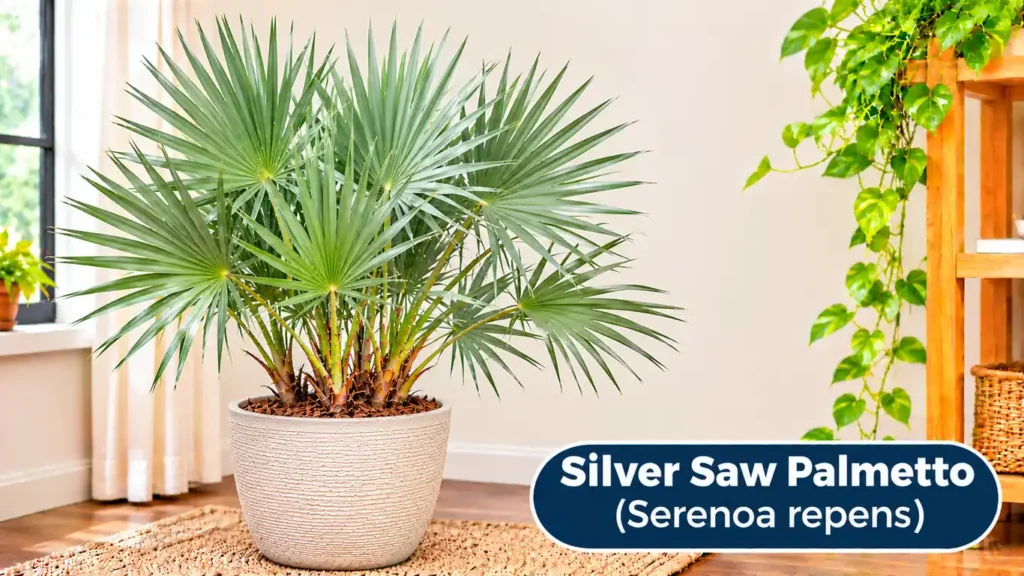
Silver Saw Palmetto, scientifically known as Serenoa repens, is an attractive palm species recognized for its striking silvery-blue foliage and compact growth habit. This ornamental form of Saw Palmetto produces stiff, fan-shaped leaves that create a distinctive appearance. Native to the southeastern United States, it is naturally adapted to sunny environments and relatively dry conditions. Young plants can be grown indoors in bright sunrooms, although they generally perform better outdoors.
Identification
- Scientific Name: Serenoa repens
- Common Name: Silver Saw Palmetto, Silver Form Saw Palmetto
- Plant Family: Arecaceae
- Native Region: Southeastern United States
- Indoor Height: Approximately 2–4 feet in containers
- Leaf Color: Silvery-blue to grayish-green
- Leaf Shape: Stiff, fan-shaped leaves divided into pointed segments
- Growth Habit: Slow-growing, clumping palm with creeping stems
Ideal Indoor Growing Conditions
Silver Saw Palmetto requires bright sunlight to maintain healthy growth and attractive foliage. Position the plant near a sunny south-facing window or in a bright sunroom receiving several hours of direct sunlight daily.
The ideal indoor temperature ranges from 65°F to 85°F (18°C to 29°C). This palm tolerates dry household air and prefers sandy, well-draining soil. Avoid growing it in dark indoor corners because insufficient light can weaken the plant.
Watering and Maintenance Tips
Water Silver Saw Palmetto when the upper 2–3 inches of soil become dry. Established plants tolerate occasional dryness, but young container-grown specimens benefit from regular watering.
Remove completely brown or damaged fronds carefully because the leaf stalks contain sharp, saw-like teeth. Apply diluted palm fertilizer during spring and summer. Avoid overwatering and ensure the container has adequate drainage holes.
23. Licuala Palm (Licuala grandis)

Licuala Palm, scientifically known as Licuala grandis, is a beautiful tropical palm admired for its large, circular, pleated leaves. Commonly called the Ruffled Fan Palm, this species produces glossy green foliage that resembles decorative handheld fans. Its unusual leaf shape makes it one of the most distinctive ornamental palms for indoor collections. Although it requires warm temperatures and relatively high humidity, young Licuala Palms can thrive indoors when provided with suitable growing conditions.
Identification
- Scientific Name: Licuala grandis
- Common Name: Licuala Palm, Ruffled Fan Palm, Vanuatu Fan Palm
- Plant Family: Arecaceae
- Native Region: Vanuatu and the Solomon Islands
- Indoor Height: Approximately 3–6 feet
- Leaf Color: Deep, glossy green
- Leaf Shape: Large, circular, pleated, fan-shaped leaves
- Growth Habit: Slow-growing, single-stemmed palm with rounded foliage
Ideal Indoor Growing Conditions
Licuala Palms prefer bright, indirect sunlight and should be protected from intense direct sunlight. Position the plant near an east-facing window or in a bright room with filtered natural light. Strong afternoon sunlight may scorch its delicate, pleated leaves.
The ideal indoor temperature ranges from 70°F to 85°F (21°C to 29°C). This tropical species appreciates high humidity, preferably above 60%. Use fertile, well-draining potting soil that retains some moisture without becoming waterlogged.
Watering and Maintenance Tips
Water Licuala Palm when the upper inch of soil begins to feel dry. Maintain consistently lightly moist soil during active growth, but avoid allowing the roots to sit in standing water.
Remove completely brown or damaged leaves using clean pruning tools. Apply diluted palm fertilizer every six to eight weeks during spring and summer. Maintain adequate humidity to reduce brown leaf tips and protect the plant from cold drafts.
FAQs
1. Which palm trees are best for growing indoors?
Areca Palm, Parlor Palm, Kentia Palm, Lady Palm, and Bamboo Palm are among the best palm trees for indoor growing. These species adapt well to household environments and require relatively simple maintenance. Parlor Palm and Kentia Palm are particularly suitable for beginners because they tolerate moderate lighting conditions.
2. Can indoor palm trees grow without direct sunlight?
Yes, several indoor palm trees grow successfully without direct sunlight. Parlor Palm, Lady Palm, and Kentia Palm prefer indirect light and tolerate lower lighting conditions. However, all palms need some light for healthy growth. Bright, indirect sunlight generally encourages stronger foliage and better overall development.
3. How often should I water indoor palm trees?
Most indoor palm trees need watering when the upper 1–2 inches of soil feel dry. However, watering frequency depends on the species, temperature, humidity, and container size. Majesty Palm and Cat Palm prefer consistently light moisture, while European Fan Palm tolerates drier conditions. Always avoid waterlogged soil.
4. What is the easiest palm tree to maintain indoors?
Parlor Palm is considered one of the easiest true palm trees to maintain indoors. It tolerates moderate to low light, grows slowly, and requires relatively little maintenance. Kentia Palm and Lady Palm are also excellent beginner-friendly choices. Proper watering and well-draining soil help keep these plants healthy.
5. How can I keep my indoor palm trees healthy?
Keep indoor palm trees healthy by providing suitable lighting, proper watering, well-draining soil, and appropriate humidity. Remove completely brown fronds and occasionally clean the leaves to prevent dust buildup. Apply diluted palm fertilizer during the growing season and regularly inspect plants for spider mites, scale insects, and other pests.