
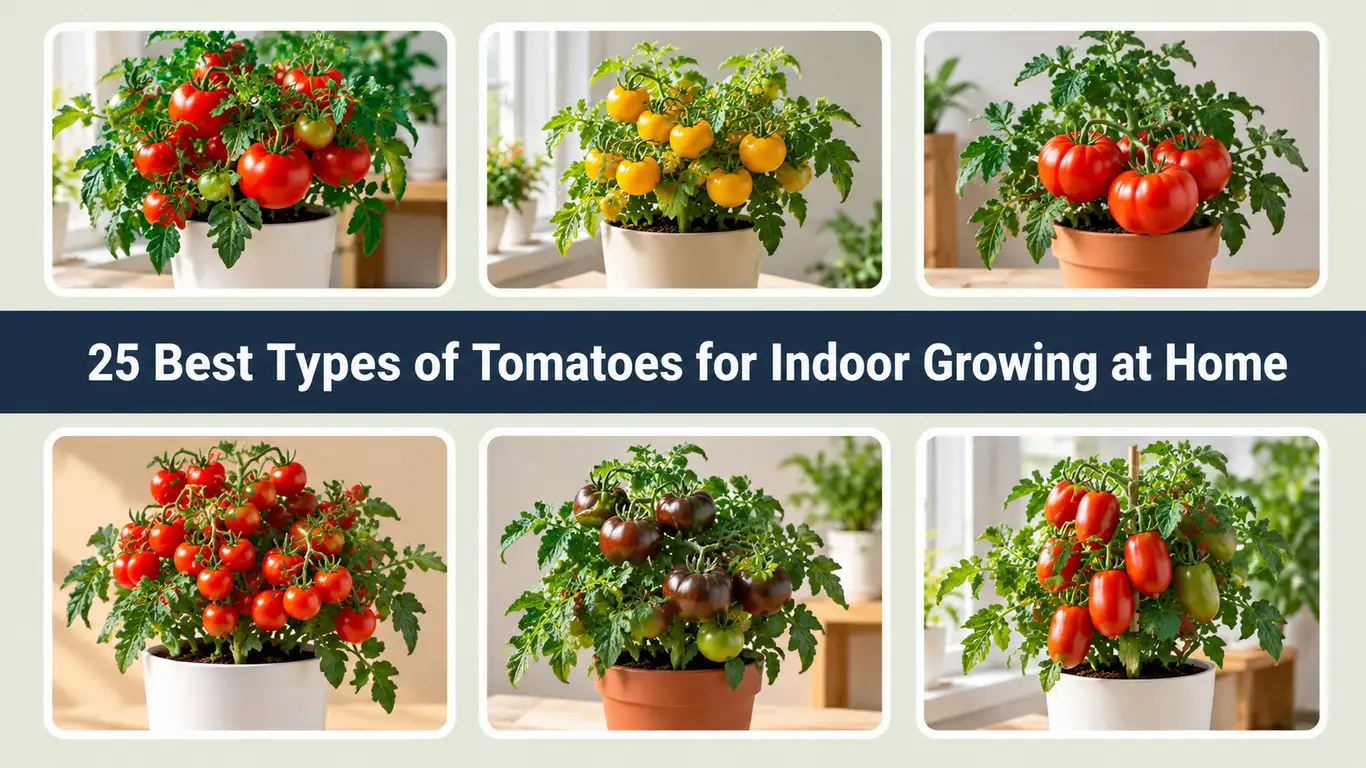
Growing tomatoes indoors is a wonderful way to enjoy fresh, delicious produce throughout the year. From tiny cherry tomatoes to compact, flavorful varieties, many types grow successfully in containers and small spaces. Whether you have a sunny windowsill, kitchen garden, or indoor growing setup, these 25 best types of tomatoes for indoor growing offer excellent options for beginners and experienced gardeners alike.
1. Tiny Tim Tomato
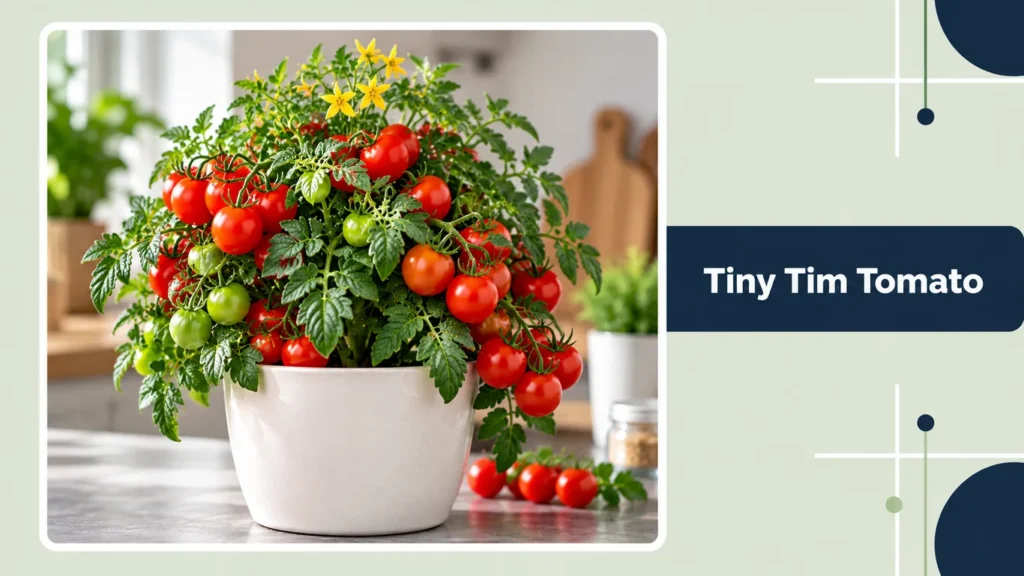
Tiny Tim Tomato is a popular dwarf cherry tomato variety that grows well in small indoor spaces. It produces clusters of sweet, juicy, bright red tomatoes and typically reaches 12–18 inches in height. Its compact, bushy growth makes it ideal for windowsills, kitchen gardens, and containers. This variety is especially suitable for beginners who want to grow fresh tomatoes indoors.
Identification
- Scientific Name: Solanum lycopersicum ‘Tiny Tim’
- Plant Type: Dwarf, determinate cherry tomato
- Mature Height: 12–18 inches
- Fruit Size: ¾–1 inch in diameter
- Fruit Color: Bright red
- Fruit Shape: Small and round
- Maturity Time: Approximately 45–60 days after transplanting
Ideal Indoor Growing Conditions
Tiny Tim Tomatoes thrive in warm temperatures between 65–80°F (18–27°C). Place the plant near a sunny, south-facing window that receives 6–8 hours of direct sunlight daily. If sunlight is limited, provide 12–16 hours of artificial lighting using a full-spectrum LED grow light.
Use a 6–8-inch container with drainage holes and nutrient-rich, well-draining potting mix. Maintain soil pH between 6.0 and 6.8 for healthy growth. Its compact structure generally requires minimal support.
Watering and Maintenance Tips
Water Tiny Tim Tomatoes when the top inch of soil feels dry. Keep the soil evenly moist but avoid waterlogging, which can damage the roots. Apply a balanced tomato fertilizer according to package instructions to encourage healthy foliage, flowering, and fruit production.
Remove yellow or damaged leaves to improve airflow. Gently shake flowering branches to help with indoor pollination. Harvest the tomatoes when they become fully red and firm for the best flavor and freshness.
2. Red Robin Tomato
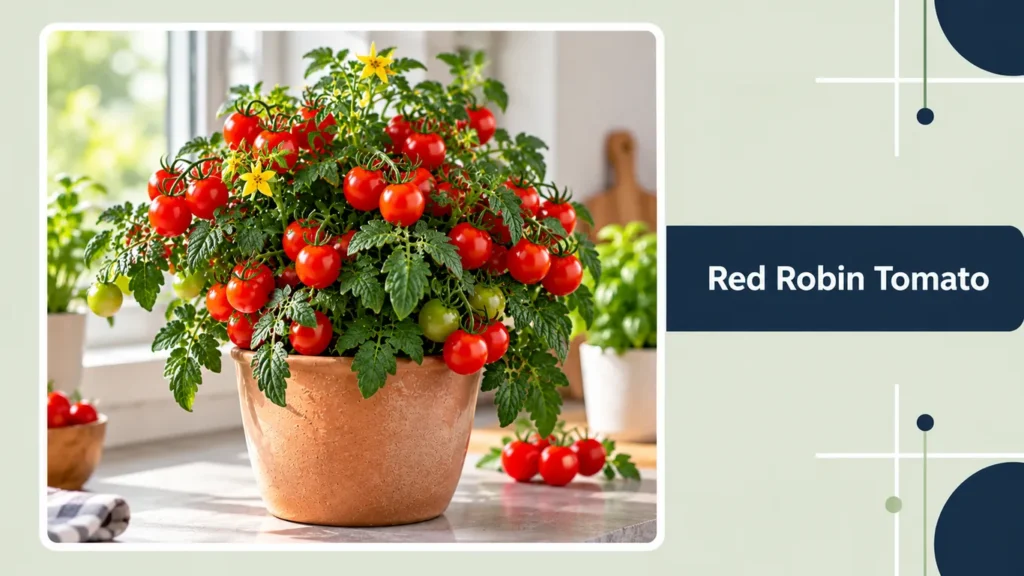
Red Robin Tomato is a compact, dwarf cherry tomato variety that is perfect for indoor gardening. It produces clusters of small, sweet, bright red tomatoes on plants that typically grow only 8–12 inches tall. Its miniature size makes it an excellent choice for kitchen windowsills, small apartments, and tabletop gardens. Red Robin is also known for its attractive foliage and productive growth, making it suitable for beginners.
Identification
- Scientific Name: Solanum lycopersicum ‘Red Robin’
- Plant Type: Dwarf, determinate cherry tomato
- Mature Height: 8–12 inches
- Fruit Size: Approximately 1 inch in diameter
- Fruit Color: Bright red
- Fruit Shape: Small and round
- Maturity Time: Approximately 55–60 days after transplanting
Ideal Indoor Growing Conditions
Red Robin Tomatoes grow best in temperatures between 65–80°F (18–27°C). Place the container near a sunny window receiving 6–8 hours of direct sunlight daily. Alternatively, provide 12–16 hours of full-spectrum LED grow lighting for consistent growth.
Use a 6–8-inch container with drainage holes and fill it with nutrient-rich, well-draining potting mix. Maintain a soil pH of approximately 6.0–6.8. Its compact growth habit makes staking and extensive pruning generally unnecessary.
Watering and Maintenance Tips
Water Red Robin Tomatoes when the top inch of soil becomes dry. Keep the soil consistently moist without allowing excess water to accumulate around the roots. Apply a balanced tomato fertilizer according to the manufacturer’s instructions to encourage flowering and fruit development.
Remove yellowing leaves and maintain good airflow around the plant. Gently shake flowering branches to improve pollination indoors. Harvest the tomatoes when they turn fully red and develop a sweet, juicy flavor.
3. Micro Tom Tomato
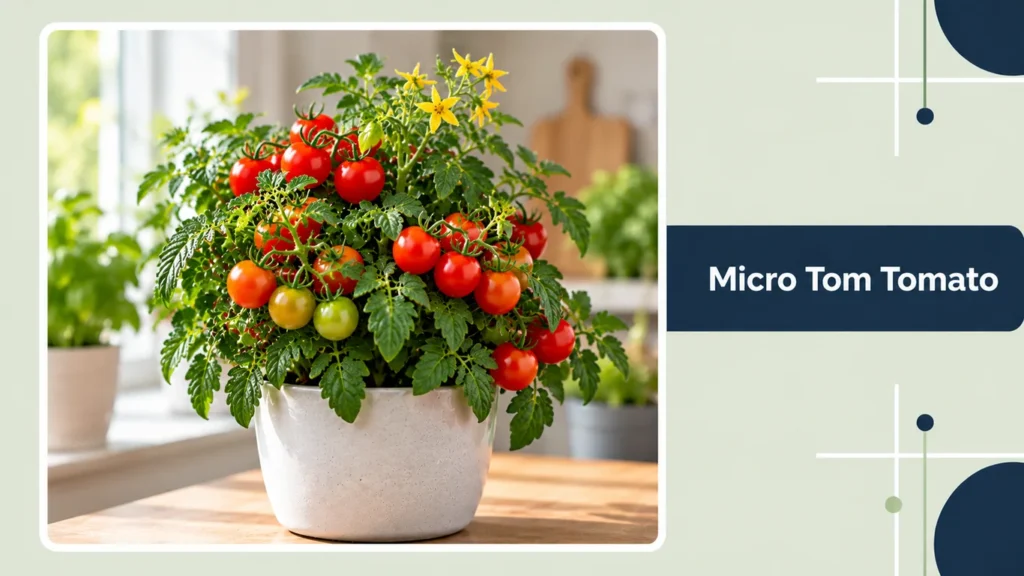
Micro Tom Tomato is one of the smallest cultivated tomato varieties, making it an excellent option for indoor growing. This miniature plant typically reaches only 4–8 inches tall while producing small, bright red cherry tomatoes. Its extremely compact growth habit allows it to thrive on windowsills, shelves, and small kitchen counters. Micro Tom is particularly popular among gardeners with limited space who want to enjoy homegrown tomatoes.
Identification
- Scientific Name: Solanum lycopersicum ‘Micro Tom’
- Plant Type: Micro-dwarf, determinate tomato
- Mature Height: 4–8 inches
- Fruit Size: Approximately ½–1 inch in diameter
- Fruit Color: Bright red
- Fruit Shape: Small and round
- Maturity Time: Approximately 70–90 days from sowing
Ideal Indoor Growing Conditions
Micro Tom Tomatoes prefer temperatures between 65–80°F (18–27°C) and require bright lighting for healthy development. Position the plant near a sunny window receiving 6–8 hours of direct sunlight or provide 12–16 hours of full-spectrum LED grow lighting daily.
Plant Micro Tom in a container approximately 4–6 inches wide with proper drainage. Use loose, nutrient-rich potting mix with a pH between 6.0 and 6.8. Its miniature size makes it suitable for tabletop gardening, and it rarely requires staking.
Watering and Maintenance Tips
Water Micro Tom Tomatoes when the upper inch of potting mix begins to dry. Small containers lose moisture quickly, so check the soil regularly while avoiding overwatering. Apply diluted tomato fertilizer according to product instructions to support flowering and fruit production.
Remove damaged or yellowing foliage to maintain plant health. Gently tap flowering stems to encourage pollination indoors. Harvest the fruits when they develop a uniform red color and feel slightly firm.
4. Orange Hat Tomato
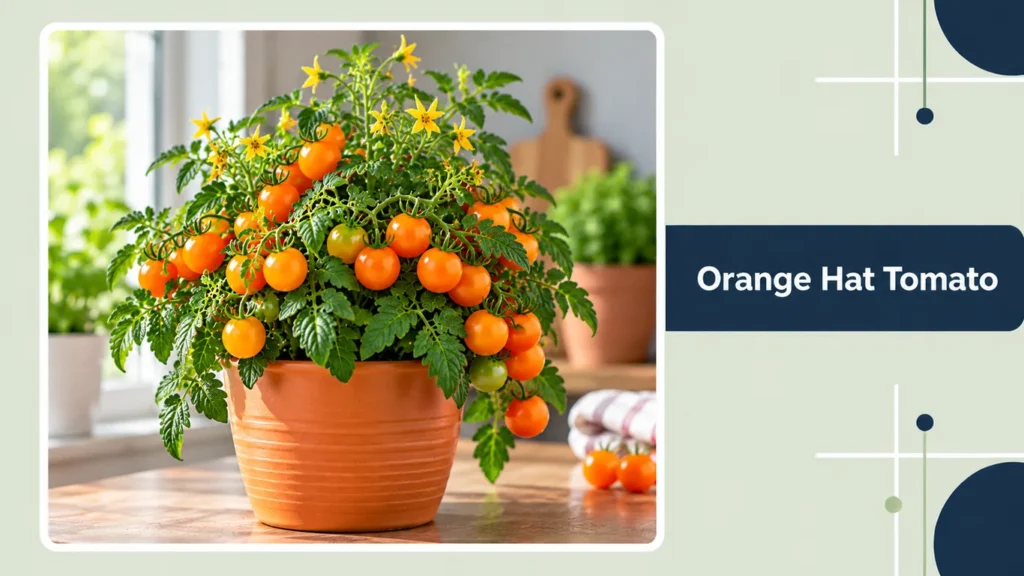
Orange Hat Tomato is a beautiful micro-dwarf tomato variety known for its compact growth and bright orange cherry tomatoes. It typically grows around 6–9 inches tall, making it ideal for windowsills, kitchen counters, and small indoor gardens. Despite its tiny size, Orange Hat can produce attractive clusters of sweet, flavorful fruits. Its vibrant tomatoes and dense green foliage also make it a decorative addition to indoor growing spaces.
Identification
- Scientific Name: Solanum lycopersicum ‘Orange Hat’
- Plant Type: Micro-dwarf, determinate cherry tomato
- Mature Height: 6–9 inches
- Fruit Size: Approximately ½–1 inch in diameter
- Fruit Color: Bright orange
- Fruit Shape: Small and round
- Maturity Time: Approximately 60–75 days after transplanting
Ideal Indoor Growing Conditions
Orange Hat Tomatoes grow best in temperatures between 65–80°F (18–27°C). Provide at least 6–8 hours of direct sunlight daily or use full-spectrum LED grow lights for 12–16 hours to support healthy flowering and fruit production.
Choose a 6–8-inch container with drainage holes and fill it with nutrient-rich, well-draining potting mix. A soil pH between 6.0 and 6.8 is suitable. Its compact, bushy structure generally requires little pruning or additional support.
Watering and Maintenance Tips
Water Orange Hat Tomatoes when the top inch of soil feels dry, keeping the growing medium evenly moist but never waterlogged. Apply a balanced tomato fertilizer following the manufacturer’s recommendations to encourage healthy growth and fruit development. Remove yellow or damaged leaves to improve airflow around the plant. Gently shake flower clusters to assist pollination indoors. Harvest the tomatoes when they develop a rich orange color and feel firm but fully ripe.
5. Vilma Tomato
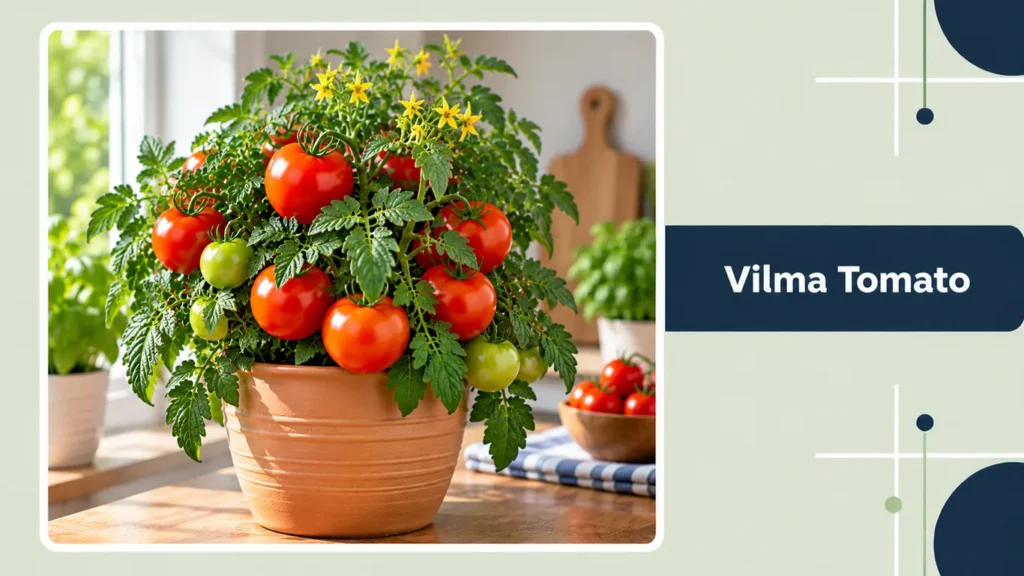
Vilma Tomato is a compact dwarf cherry tomato variety that grows beautifully in small indoor spaces. It produces clusters of sweet, juicy, bright red tomatoes on bushy plants that typically reach 10–16 inches tall. Its manageable size makes it suitable for windowsills, kitchen gardens, and small containers. Vilma is an excellent choice for beginners looking for a productive tomato variety that requires relatively little space or maintenance.
Identification
- Scientific Name: Solanum lycopersicum ‘Vilma’
- Plant Type: Dwarf, determinate cherry tomato
- Mature Height: 10–16 inches
- Fruit Size: Approximately ¾–1 inch in diameter
- Fruit Color: Bright red
- Fruit Shape: Small and round
- Maturity Time: Approximately 60–75 days after transplanting
Ideal Indoor Growing Conditions
Vilma Tomatoes thrive in temperatures between 65–80°F (18–27°C). Place the plant near a sunny window receiving 6–8 hours of direct sunlight daily. If natural light is insufficient, provide 12–16 hours of full-spectrum LED grow lighting.
Use an 8–10-inch container with drainage holes and nutrient-rich, well-draining potting mix. Maintain a soil pH between 6.0 and 6.8. Its compact growth habit generally requires minimal staking or pruning.
Watering and Maintenance Tips
Water Vilma Tomatoes when the top inch of soil feels dry. Keep the growing medium consistently moist without allowing water to accumulate around the roots. Apply a balanced tomato fertilizer according to package instructions to support healthy flowering and fruit development.
Remove yellowing or damaged leaves to maintain good airflow. Gently shake flowering branches to encourage pollination indoors. Harvest tomatoes when they become fully red, firm, and flavorful.
6. Minibel Tomato
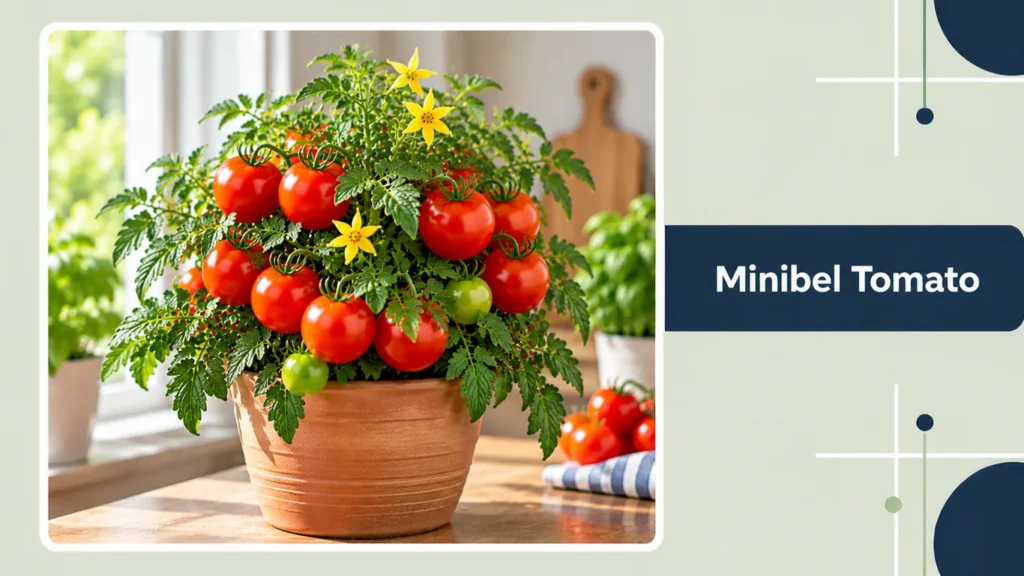
Minibel Tomato is a popular dwarf cherry tomato variety known for its compact growth and attractive clusters of small red fruits. It typically reaches 12–18 inches tall, making it suitable for indoor containers, sunny windowsills, and compact kitchen gardens. Minibel produces sweet, juicy tomatoes that are perfect for fresh salads and snacking. Its bushy appearance and relatively simple care requirements make it a practical choice for beginners and home gardeners with limited growing space.
Identification
- Scientific Name: Solanum lycopersicum ‘Minibel’
- Plant Type: Dwarf, determinate cherry tomato
- Mature Height: 12–18 inches
- Fruit Size: Approximately ¾–1 inch in diameter
- Fruit Color: Bright red
- Fruit Shape: Small and round
- Maturity Time: Approximately 60–75 days after transplanting
Ideal Indoor Growing Conditions
Minibel Tomatoes grow best in temperatures between 65–80°F (18–27°C). Position the plant near a south-facing window that receives 6–8 hours of direct sunlight daily. Alternatively, use a full-spectrum LED grow light for 12–16 hours to encourage strong growth and fruit production.
Choose an 8–10-inch container with adequate drainage and fill it with nutrient-rich, well-draining potting mix. Maintain soil pH around 6.0–6.8. Its compact structure usually requires little support, although a small stake may help support heavy fruit clusters.
Watering and Maintenance Tips
Water Minibel Tomatoes when the upper inch of soil begins to dry. Maintain consistent moisture without overwatering, as waterlogged soil can damage the roots. Apply tomato fertilizer according to the manufacturer’s recommendations to support healthy foliage, flowering, and fruit development.
Remove damaged leaves and ensure sufficient airflow around the plant. Gently tap flowering branches to help with indoor pollination. Pick tomatoes when they develop a deep red color and reach full ripeness.
7. Florida Petite Tomato
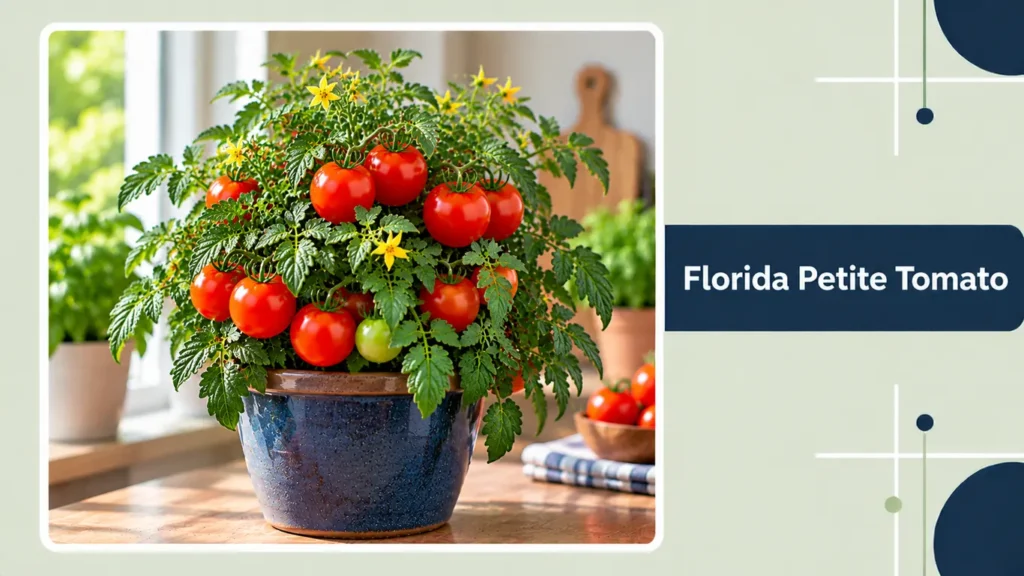
Florida Petite Tomato is a small, determinate tomato variety developed for compact growing spaces and container gardening. It produces attractive clusters of bright red cherry tomatoes on plants that typically grow around 6–12 inches tall. Its miniature growth habit makes it an excellent option for indoor windowsills, tabletop gardens, and small apartments. Florida Petite is particularly suitable for gardeners who want fresh tomatoes without needing large containers or extensive growing space.
Identification
- Scientific Name: Solanum lycopersicum ‘Florida Petite’
- Plant Type: Dwarf, determinate cherry tomato
- Mature Height: 6–12 inches
- Fruit Size: Approximately 1 inch in diameter
- Fruit Color: Bright red
- Fruit Shape: Small and round
- Maturity Time: Approximately 50–70 days after transplanting
Ideal Indoor Growing Conditions
Florida Petite Tomatoes prefer warm temperatures between 65–80°F (18–27°C). Provide 6–8 hours of direct sunlight daily through a bright window, or use full-spectrum LED grow lighting for 12–16 hours when natural light is limited.
Plant Florida Petite in a 6–8-inch container with drainage holes and nutrient-rich, well-draining potting mix. Maintain a slightly acidic soil pH between 6.0 and 6.8. Its naturally compact size makes staking and extensive pruning generally unnecessary.
Watering and Maintenance Tips
Water Florida Petite Tomatoes whenever the top inch of soil feels dry. Keep the soil evenly moist, but avoid standing water around the roots. Use a balanced tomato fertilizer according to product instructions to encourage healthy flowering and fruit production.
Remove yellow or damaged leaves to maintain plant health and good air circulation. Gently shake flowering stems to support pollination in indoor environments. Harvest the tomatoes once they turn completely red and develop a firm, juicy texture.
8. Pinocchio Tomato
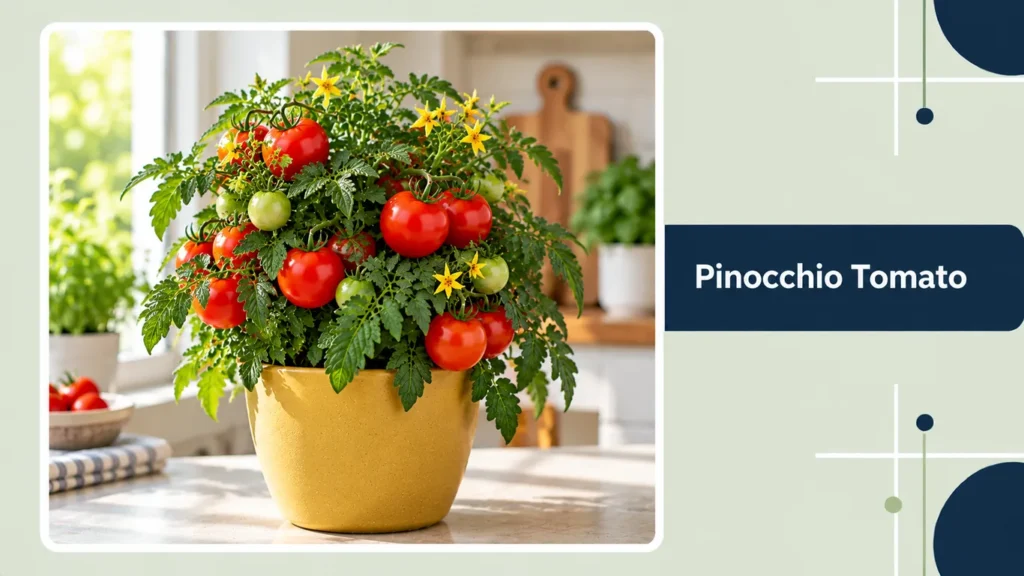
Pinocchio Tomato is a compact dwarf cherry tomato variety that is well suited for indoor gardening. It produces clusters of small, sweet, bright red tomatoes on bushy plants that typically grow around 10–16 inches tall. Its attractive foliage and manageable size make it ideal for sunny windowsills, kitchen gardens, and small containers. Pinocchio is an excellent option for beginners who want fresh homegrown tomatoes without needing a large growing space.
Identification
- Scientific Name: Solanum lycopersicum ‘Pinocchio’
- Plant Type: Dwarf, determinate cherry tomato
- Mature Height: Approximately 10–16 inches
- Fruit Size: Around ¾–1 inch in diameter
- Fruit Color: Bright red
- Fruit Shape: Small and round
- Maturity Time: Approximately 60–75 days after transplanting
Ideal Indoor Growing Conditions
Pinocchio Tomatoes thrive in temperatures between 65–80°F (18–27°C). Place the plant near a sunny window receiving 6–8 hours of direct sunlight daily. When natural sunlight is insufficient, provide 12–16 hours of full-spectrum LED grow lighting for healthy growth and fruit development.
Choose an 8–10-inch container with drainage holes and fill it with nutrient-rich, well-draining potting mix. Maintain a soil pH between 6.0 and 6.8. Its compact growth habit generally requires little pruning, although a small stake can support heavy fruit clusters.
Watering and Maintenance Tips
Water Pinocchio Tomatoes when the top inch of soil feels dry. Keep the growing medium consistently moist without making it waterlogged. Apply a balanced tomato fertilizer according to the manufacturer’s instructions to encourage healthy flowering and fruit production.
Remove yellowing or damaged leaves to improve airflow around the plant. Gently shake flowering branches to support pollination indoors. Harvest the tomatoes when they become fully red, firm, and flavorful.
9. Patio Choice Yellow Tomato
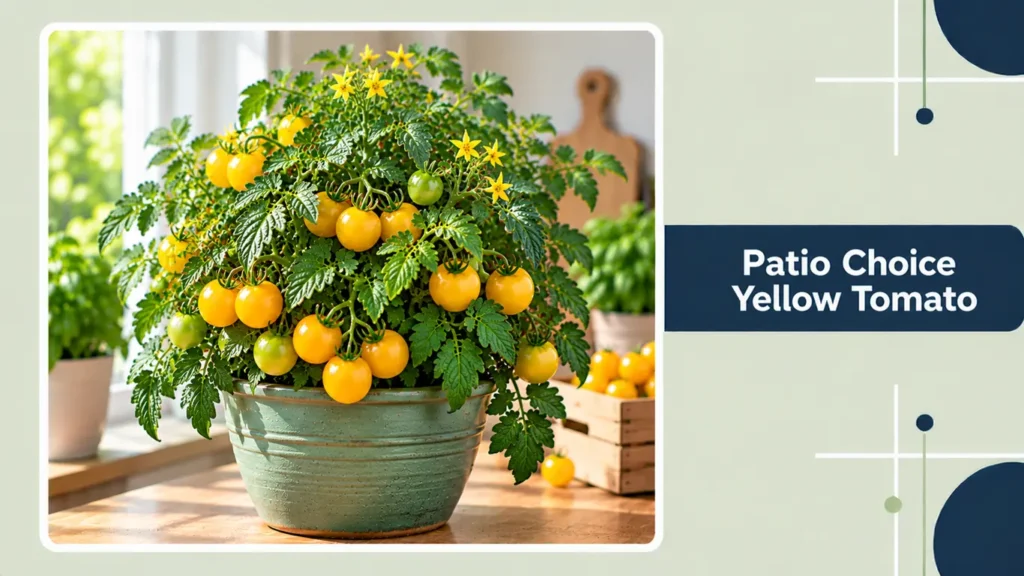
Patio Choice Yellow Tomato is a compact, productive cherry tomato variety known for its beautiful golden-yellow fruits and sweet flavor. This determinate variety typically grows around 15–24 inches tall, making it suitable for indoor containers and small gardening spaces. It produces generous clusters of bright yellow tomatoes that are excellent for fresh salads and snacking. Its bushy growth habit and attractive fruit color make it a popular choice for gardeners seeking a decorative and productive indoor tomato plant.
Identification
- Scientific Name: Solanum lycopersicum ‘Patio Choice Yellow’
- Plant Type: Compact, determinate cherry tomato
- Mature Height: 15–24 inches
- Fruit Size: Approximately 1 inch in diameter
- Fruit Color: Golden yellow
- Fruit Shape: Small and round
- Maturity Time: Approximately 45–65 days after transplanting
Ideal Indoor Growing Conditions
Patio Choice Yellow Tomatoes grow best in temperatures between 65–80°F (18–27°C). Position the plant near a bright window receiving 6–8 hours of direct sunlight daily. Alternatively, use full-spectrum LED grow lights for 12–16 hours to encourage strong growth and consistent fruit production.
Plant this variety in a container approximately 10–12 inches wide with proper drainage. Use nutrient-rich, well-draining potting mix and maintain a soil pH between 6.0 and 6.8. A small tomato cage or stake may be helpful because its branches can become heavy with fruit.
Watering and Maintenance Tips
Water Patio Choice Yellow Tomatoes when the upper inch of soil begins to dry. Maintain consistent soil moisture, especially during flowering and fruit development. Apply tomato fertilizer according to product instructions to support healthy growth and encourage productive fruit clusters.
Remove damaged or yellowing foliage to maintain good airflow. Gently tap flowering branches to improve indoor pollination. Harvest the tomatoes when they develop a rich golden-yellow color and feel firm but ripe.
10. Tumbling Tom Red Tomato
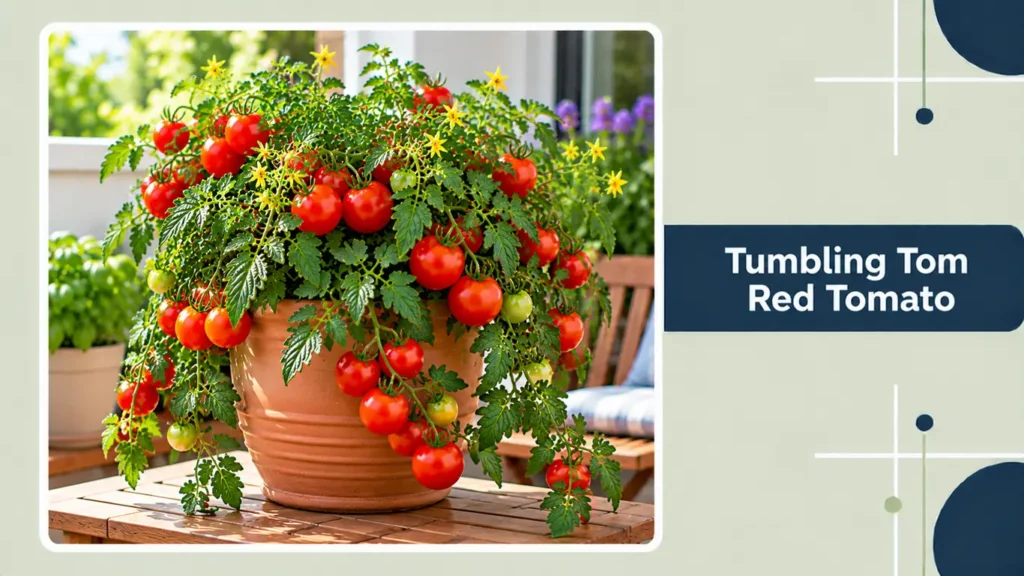
Tumbling Tom Red Tomato is a popular trailing cherry tomato variety that is perfect for hanging baskets and elevated indoor containers. Unlike upright tomato plants, this variety develops cascading stems covered with clusters of small, sweet, bright red tomatoes. Its trailing growth habit makes it particularly attractive for sunny windowsills, hanging planters, and indoor gardening shelves. Tumbling Tom Red is an excellent choice for gardeners who want both decorative greenery and a productive tomato harvest.
Identification
- Scientific Name: Solanum lycopersicum ‘Tumbling Tom Red’
- Plant Type: Determinate, trailing cherry tomato
- Mature Height: Approximately 6–12 inches
- Trailing Length: Around 18–24 inches
- Fruit Size: Approximately 1 inch in diameter
- Fruit Color: Bright red
- Maturity Time: Approximately 60–75 days after transplanting
Ideal Indoor Growing Conditions
Tumbling Tom Red Tomatoes thrive in temperatures between 65–80°F (18–27°C). Place the plant in a sunny location receiving 6–8 hours of direct sunlight daily. If growing indoors with limited natural light, provide 12–16 hours of full-spectrum LED grow lighting.
Use a hanging basket or container approximately 10–12 inches wide with proper drainage. Fill it with lightweight, nutrient-rich potting mix and maintain a soil pH around 6.0–6.8. Position the container where the trailing branches have enough room to grow freely without obstruction.
Watering and Maintenance Tips
Water Tumbling Tom Red Tomatoes when the top inch of soil feels dry. Hanging baskets may dry out faster than regular pots, so check soil moisture frequently. Apply a balanced tomato fertilizer according to the manufacturer’s instructions to support flowering and fruit production.
Remove yellowing leaves and damaged stems to encourage healthy growth. Gently shake flowering branches to assist pollination indoors. Avoid excessive pruning because the trailing branches produce most of the fruit. Harvest tomatoes when they become fully red, juicy, and ripe.
11. Tumbling Tom Yellow Tomato
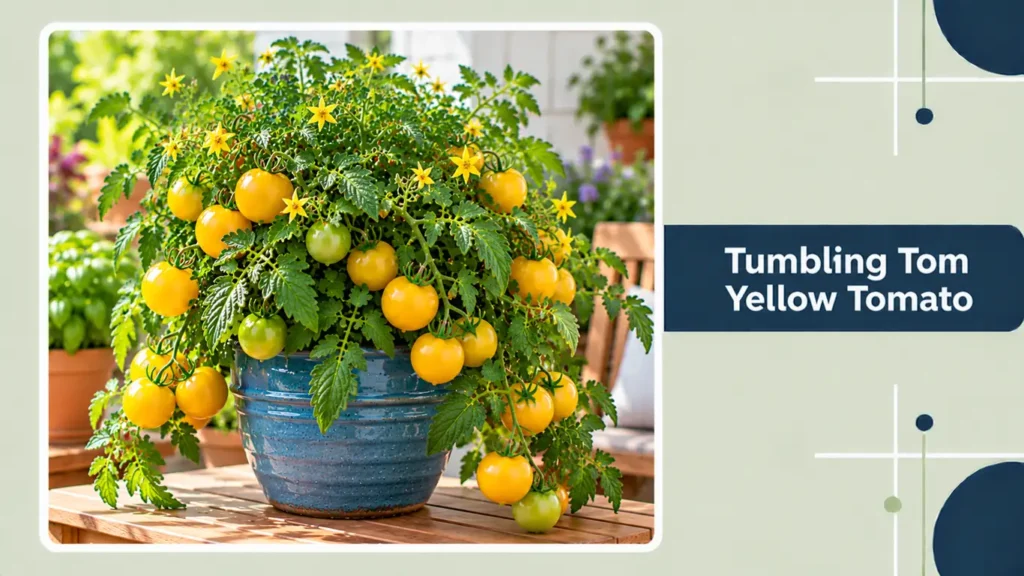
Tumbling Tom Yellow Tomato is a compact, trailing cherry tomato variety that grows beautifully in hanging baskets and indoor containers. It produces clusters of small, sweet, golden-yellow tomatoes on cascading branches. The plant typically reaches 6–12 inches tall, with trailing stems extending much farther. Its attractive growth habit and colorful fruits make it an excellent choice for sunny windowsills, hanging planters, and small indoor gardening spaces.
Identification
- Scientific Name: Solanum lycopersicum ‘Tumbling Tom Yellow’
- Plant Type: Determinate, trailing cherry tomato
- Mature Height: Approximately 6–12 inches
- Trailing Length: Around 18–24 inches
- Fruit Size: Approximately 1 inch in diameter
- Fruit Color: Golden yellow
- Maturity Time: Approximately 60–75 days after transplanting
Ideal Indoor Growing Conditions
Tumbling Tom Yellow Tomatoes prefer temperatures between 65–80°F (18–27°C). Place the plant near a sunny window receiving 6–8 hours of direct sunlight daily. Alternatively, provide 12–16 hours of full-spectrum LED grow lighting to support healthy growth and fruit production.
Choose a hanging basket or container approximately 10–12 inches wide with drainage holes. Fill it with nutrient-rich, well-draining potting mix and maintain soil pH between 6.0 and 6.8. Allow enough space for the trailing branches to grow naturally.
Watering and Maintenance Tips
Water Tumbling Tom Yellow Tomatoes when the top inch of soil becomes dry. Hanging containers may lose moisture quickly, so check regularly. Apply tomato fertilizer according to package instructions to encourage flowering and fruit development.
Remove yellowing or damaged leaves to maintain healthy growth. Gently shake flowering branches to improve pollination indoors. Avoid excessive pruning, as the trailing stems produce many of the fruits. Harvest tomatoes when they develop a rich golden-yellow color.
12. Tiny Tiger Tomato
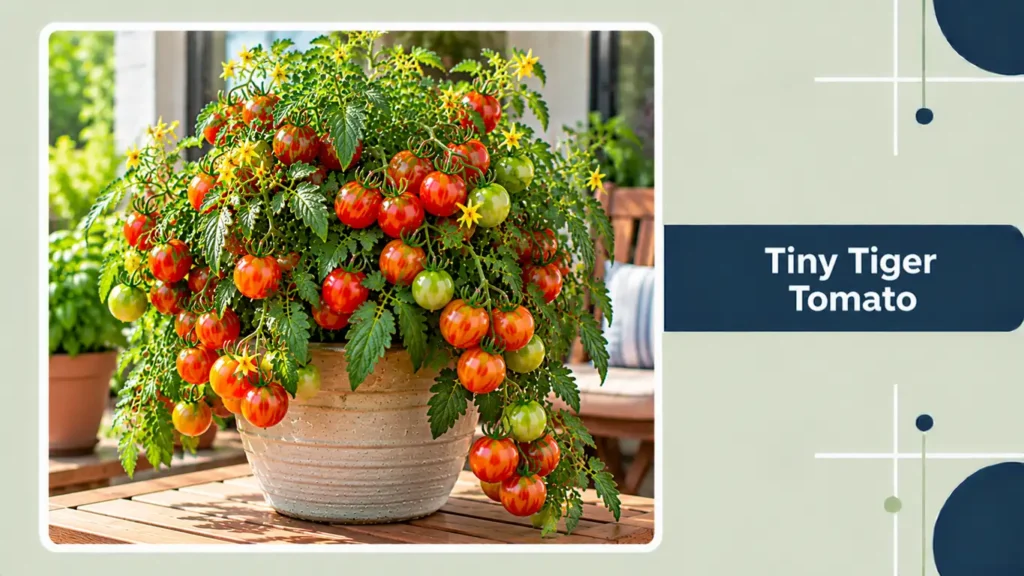
Tiny Tiger Tomato is an attractive compact tomato variety known for its distinctive striped fruits and decorative appearance. It produces small, round tomatoes with red coloring and contrasting golden-orange stripes. Its relatively compact growth makes it suitable for container gardening, although it may require more space than micro-dwarf varieties. Tiny Tiger is an excellent choice for indoor gardeners who want colorful tomatoes for salads and fresh snacking.
Identification
- Scientific Name: Solanum lycopersicum ‘Tiny Tiger’
- Plant Type: Compact, determinate tomato
- Mature Height: Approximately 18–24 inches
- Fruit Size: Around 1–2 inches in diameter
- Fruit Color: Red with golden-orange stripes
- Fruit Shape: Small and round
- Maturity Time: Approximately 65–75 days after transplanting
Ideal Indoor Growing Conditions
Tiny Tiger Tomatoes thrive in temperatures between 65–80°F (18–27°C). Provide at least 6–8 hours of direct sunlight daily through a bright window. If natural sunlight is insufficient, use full-spectrum LED grow lights for approximately 12–16 hours.
Plant Tiny Tiger in a 10–12-inch container with adequate drainage and nutrient-rich potting mix. Maintain soil pH around 6.0–6.8. Because the plant can grow larger than miniature tomato varieties, a small stake or tomato cage may be helpful.
Watering and Maintenance Tips
Water Tiny Tiger Tomatoes when the upper inch of soil feels dry. Keep the soil evenly moist, especially during flowering and fruit development. Apply a balanced tomato fertilizer according to the manufacturer’s recommendations.
Remove yellow or damaged leaves to improve airflow and maintain healthy foliage. Gently tap flowering branches to encourage pollination indoors. Harvest tomatoes when their red coloring and golden stripes become fully developed and the fruits feel ripe.
13. Little Bing Tomato
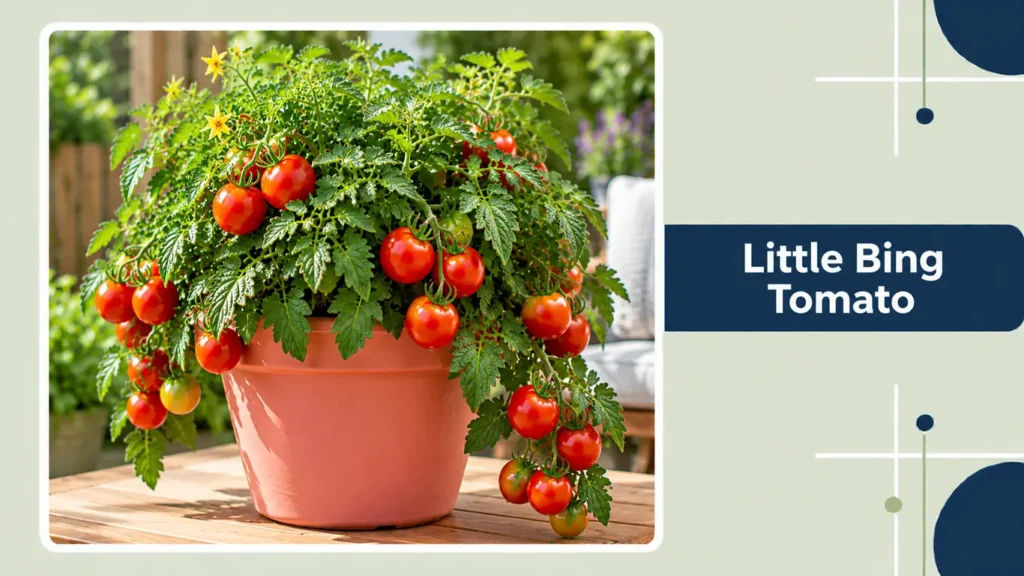
Little Bing Tomato is a compact cherry tomato variety valued for its sweet flavor, attractive red fruits, and productive growth. It develops clusters of small, juicy tomatoes on a bushy plant, making it suitable for container gardening. Although larger than micro-dwarf varieties, Little Bing can grow indoors with sufficient lighting and space. Its flavorful tomatoes are ideal for salads, snacks, and fresh home cooking, making it a rewarding choice for indoor vegetable gardeners.
Identification
- Scientific Name: Solanum lycopersicum ‘Little Bing’
- Plant Type: Compact, determinate cherry tomato
- Mature Height: Approximately 18–24 inches
- Fruit Size: Around 1 inch in diameter
- Fruit Color: Bright red
- Fruit Shape: Small and round
- Maturity Time: Approximately 60–65 days after transplanting
Ideal Indoor Growing Conditions
Little Bing Tomatoes grow best in temperatures between 65–80°F (18–27°C). Position the plant near a sunny window receiving 6–8 hours of direct sunlight daily. For reliable indoor fruit production, provide 12–16 hours of full-spectrum LED grow lighting when natural light is insufficient.
Use a container approximately 12–14 inches wide with drainage holes and nutrient-rich, well-draining potting mix. Maintain soil pH between 6.0 and 6.8. A small tomato cage or sturdy stake helps support the branches as fruit clusters develop.
Watering and Maintenance Tips
Water Little Bing Tomatoes when the top inch of soil begins to dry. Maintain consistent moisture without allowing the roots to remain waterlogged. Apply tomato fertilizer according to package directions to support healthy foliage and productive flowering.
Remove damaged leaves and maintain good airflow around the plant. Gently shake flower clusters to help with pollination indoors. Avoid excessive pruning because this compact variety benefits from retaining its fruit-producing branches. Harvest the tomatoes when they turn fully red and develop a sweet, juicy flavor.
14. Sweetheart of the Patio Tomato
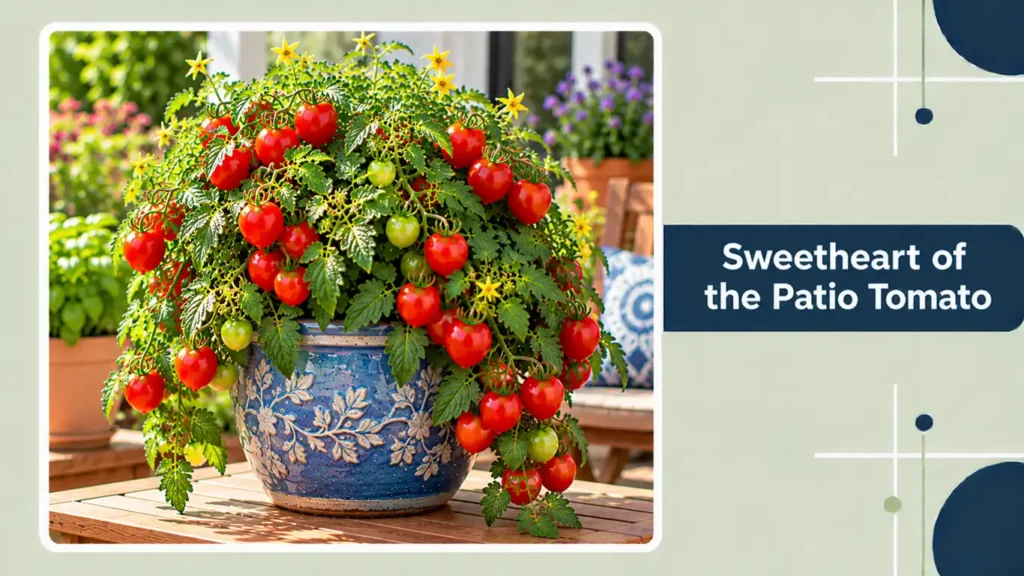
Sweetheart of the Patio Tomato is a compact cherry tomato variety known for its attractive heart-shaped fruits and sweet flavor. It produces clusters of small, bright red tomatoes on bushy plants that typically reach 18–24 inches tall. Its manageable growth habit makes it suitable for indoor containers, sunny windowsills, and small home gardens. This productive variety is ideal for gardeners who want flavorful tomatoes for fresh salads, snacking, and everyday cooking.
Identification
- Scientific Name: Solanum lycopersicum ‘Sweetheart of the Patio’
- Plant Type: Compact, determinate cherry tomato
- Mature Height: Approximately 18–24 inches
- Fruit Size: Around 1 inch in diameter
- Fruit Color: Bright red
- Fruit Shape: Small, slightly heart-shaped
- Maturity Time: Approximately 65–70 days after transplanting
Ideal Indoor Growing Conditions
Sweetheart of the Patio Tomatoes grow best in temperatures between 65–80°F (18–27°C). Place the plant near a sunny window receiving 6–8 hours of direct sunlight daily. If natural lighting is insufficient, provide 12–16 hours of full-spectrum LED grow lighting.
Choose a 12–14-inch container with drainage holes and fill it with nutrient-rich, well-draining potting mix. Maintain soil pH between 6.0 and 6.8. A small tomato cage or sturdy stake can help support developing fruit clusters.
Watering and Maintenance Tips
Water Sweetheart of the Patio Tomatoes when the top inch of soil feels dry. Maintain consistent moisture without allowing water to accumulate around the roots. Apply a balanced tomato fertilizer according to package instructions to encourage flowering and fruit production.
Remove yellowing or damaged leaves to improve airflow. Gently shake flowering branches to encourage indoor pollination. Harvest the tomatoes when they become fully red, slightly firm, and sweet.
15. Window Box Roma Tomato
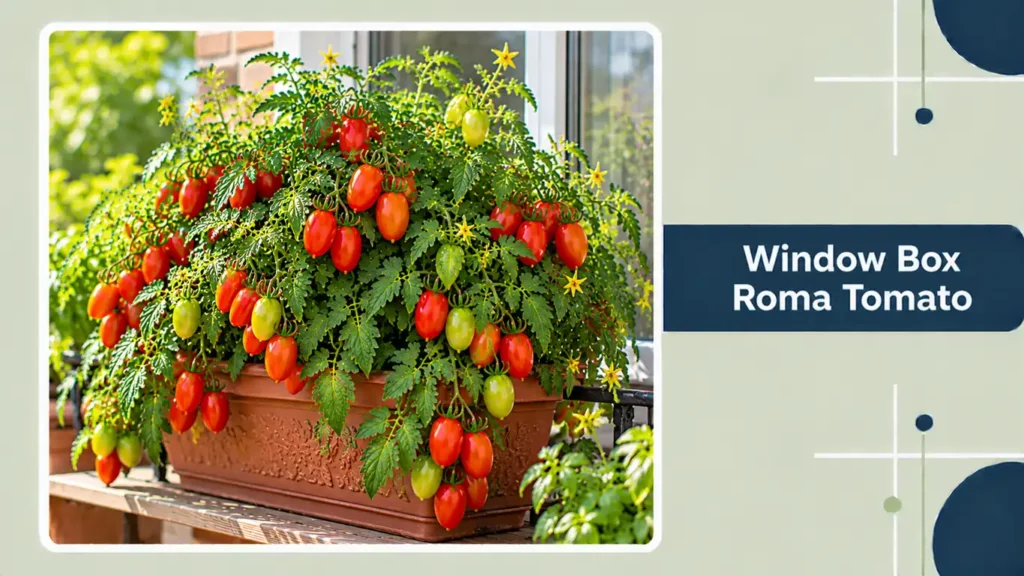
Window Box Roma Tomato is a compact Roma-type tomato variety suitable for container gardening and small growing spaces. It produces attractive red, plum-shaped tomatoes with firm flesh and a rich tomato flavor. Unlike traditional large Roma tomato plants, this variety is bred for more manageable growth. Its compact structure makes it suitable for indoor gardening when provided with adequate light, warmth, and container space. The fruits are excellent for fresh cooking, homemade sauces, and small-batch food preparation.
Identification
- Scientific Name: Solanum lycopersicum ‘Window Box Roma’
- Plant Type: Compact, determinate Roma-type tomato
- Mature Height: Approximately 12–18 inches
- Fruit Size: Small, plum-type fruits
- Fruit Color: Bright red
- Fruit Shape: Oval to elongated
- Maturity Time: Approximately 65–75 days after transplanting
Ideal Indoor Growing Conditions
Window Box Roma Tomatoes thrive in temperatures between 65–80°F (18–27°C). Position the plant near a bright window receiving 6–8 hours of direct sunlight daily. Alternatively, provide 12–16 hours of full-spectrum LED grow lighting to support healthy flowering and fruit development.
Plant this variety in a container approximately 10–12 inches wide with proper drainage. Use nutrient-rich, well-draining potting mix and maintain soil pH around 6.0–6.8. Provide a small stake if branches become heavy with developing tomatoes.
Watering and Maintenance Tips
Water Window Box Roma Tomatoes when the upper inch of soil begins to dry. Keep soil moisture consistent to support healthy fruit development and reduce problems associated with irregular watering. Apply tomato fertilizer according to the manufacturer’s instructions.
Remove damaged leaves and maintain good air circulation around the plant. Gently shake flowering branches to encourage pollination indoors. Harvest the tomatoes when they develop a uniform red color and feel firm but ripe.
16. Balcony Red Tomato
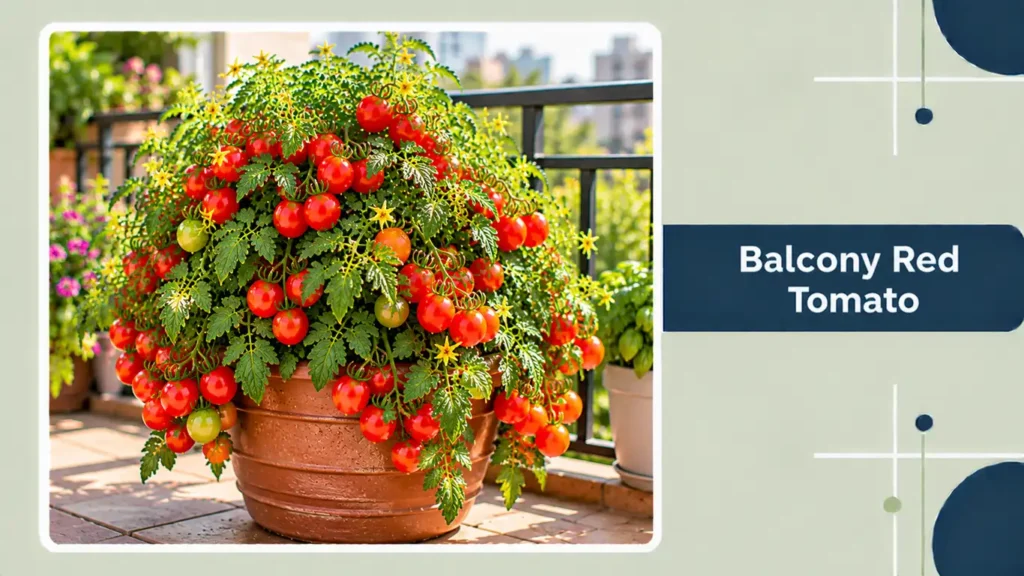
Balcony Red Tomato is a compact bush tomato variety developed for growing in containers and limited spaces. It produces clusters of small, bright red cherry tomatoes with a pleasant, sweet flavor. The plant typically grows around 12–18 inches tall, making it suitable for indoor windowsills, kitchen gardens, and small balconies. Its naturally bushy growth habit and relatively simple care requirements make it an excellent choice for beginners interested in growing fresh tomatoes at home.
Identification
- Scientific Name: Solanum lycopersicum ‘Balcony Red’
- Plant Type: Dwarf, determinate cherry tomato
- Mature Height: Approximately 12–18 inches
- Fruit Size: Around 1 inch in diameter
- Fruit Color: Bright red
- Fruit Shape: Small and round
- Maturity Time: Approximately 60–70 days after transplanting
Ideal Indoor Growing Conditions
Balcony Red Tomatoes prefer temperatures between 65–80°F (18–27°C). Place the container near a sunny window that receives 6–8 hours of direct sunlight daily. When natural sunlight is limited, use full-spectrum LED grow lights for 12–16 hours to encourage healthy growth.
Choose an 8–10-inch container with drainage holes and fill it with nutrient-rich, well-draining potting mix. Maintain soil pH between 6.0 and 6.8. Its compact structure generally requires minimal pruning, although a small stake may help support heavy fruit clusters.
Watering and Maintenance Tips
Water Balcony Red Tomatoes when the top inch of soil becomes dry. Keep the growing medium evenly moist without allowing the roots to become waterlogged. Apply a balanced tomato fertilizer according to package directions to support flowering and fruit production.
Remove yellowing or damaged leaves to maintain healthy growth and airflow. Gently shake flowering branches to improve indoor pollination. Harvest the tomatoes when they turn completely red and develop their characteristic sweet flavor.
17. Balcony Yellow Tomato
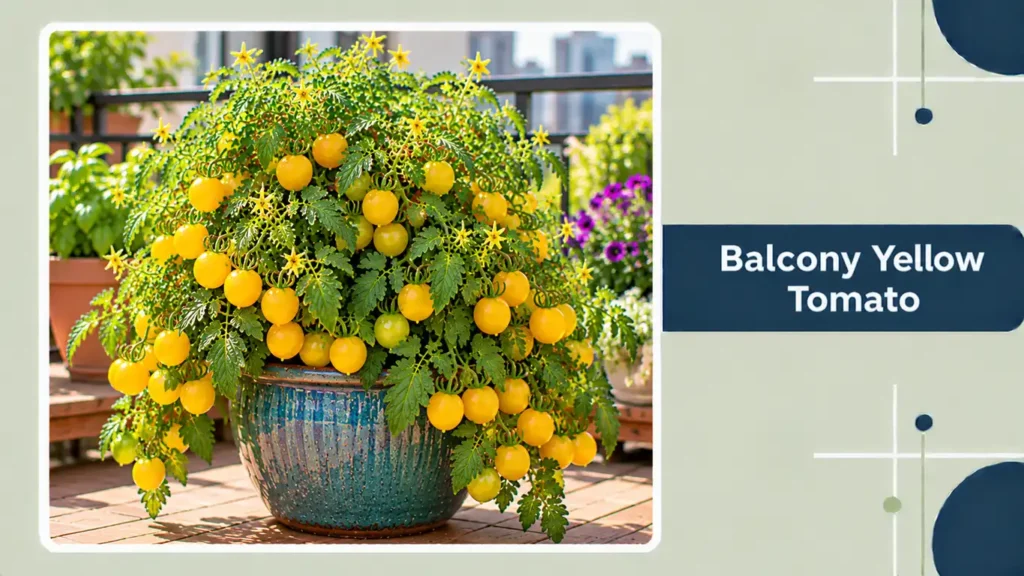
Balcony Yellow Tomato is a compact dwarf cherry tomato variety that is ideal for indoor container gardening. It produces clusters of small, sweet, golden-yellow tomatoes on bushy plants that typically grow around 12–18 inches tall. Its attractive fruit color and manageable size make it suitable for sunny windowsills, kitchen gardens, and small indoor spaces. Balcony Yellow is an excellent option for beginners who want colorful, fresh tomatoes without requiring a large growing area.
Identification
- Scientific Name: Solanum lycopersicum ‘Balcony Yellow’
- Plant Type: Dwarf, determinate cherry tomato
- Mature Height: Approximately 12–18 inches
- Fruit Size: Around 1 inch in diameter
- Fruit Color: Golden yellow
- Fruit Shape: Small and round
- Maturity Time: Approximately 60–70 days after transplanting
Ideal Indoor Growing Conditions
Balcony Yellow Tomatoes grow best in temperatures between 65–80°F (18–27°C). Position the plant near a sunny window receiving 6–8 hours of direct sunlight daily. If natural sunlight is insufficient, provide 12–16 hours of full-spectrum LED grow lighting.
Choose an 8–10-inch container with drainage holes and fill it with nutrient-rich, well-draining potting mix. Maintain soil pH between 6.0 and 6.8. Its compact growth habit generally requires little pruning or additional support.
Watering and Maintenance Tips
Water Balcony Yellow Tomatoes when the top inch of soil feels dry. Keep the growing medium consistently moist without allowing excess water to accumulate around the roots. Apply a balanced tomato fertilizer according to package instructions to support healthy flowering and fruit development.
Remove damaged or yellowing leaves to improve airflow. Gently shake flowering branches to encourage indoor pollination. Harvest the tomatoes when they develop a rich golden-yellow color and feel firm but ripe.
18. Rosy Finch Tomato
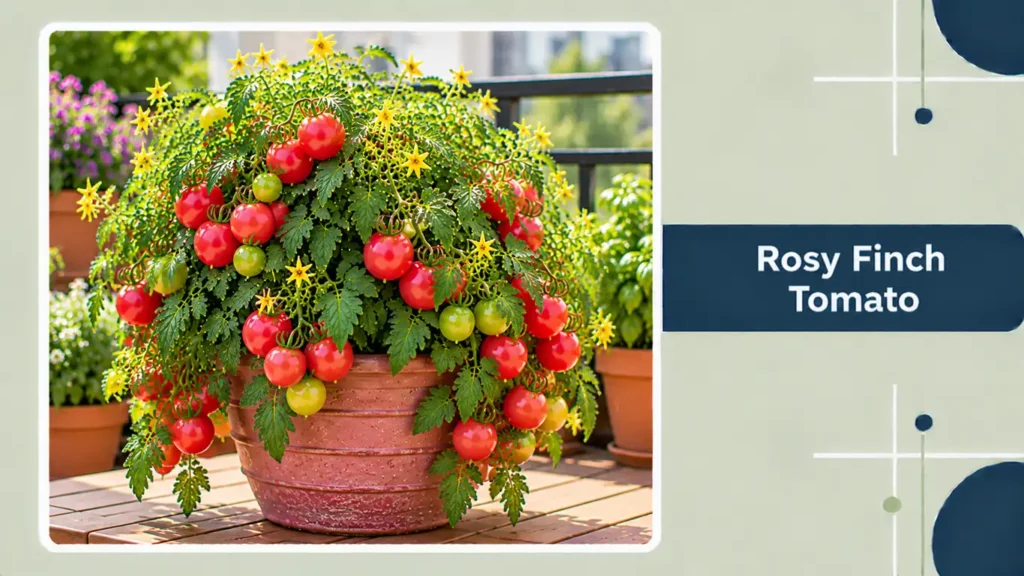
Rosy Finch Tomato is a miniature dwarf cherry tomato variety known for its compact growth and attractive red fruits. This small plant typically reaches around 6–10 inches tall, making it ideal for windowsills, tabletop gardens, and limited indoor growing spaces. Despite its miniature size, Rosy Finch can produce clusters of flavorful cherry tomatoes. Its dense green foliage and bright fruits make it both a decorative and productive addition to a home garden.
Identification
- Scientific Name: Solanum lycopersicum ‘Rosy Finch’
- Plant Type: Micro-dwarf, determinate cherry tomato
- Mature Height: Approximately 6–10 inches
- Fruit Size: Around ½–1 inch in diameter
- Fruit Color: Red to rosy red
- Fruit Shape: Small and round
- Maturity Time: Approximately 55–70 days after transplanting
Ideal Indoor Growing Conditions
Rosy Finch Tomatoes thrive in temperatures between 65–80°F (18–27°C). Place the plant near a bright window that receives 6–8 hours of direct sunlight daily. Alternatively, provide 12–16 hours of full-spectrum LED grow lighting for healthy development.
Use a 6–8-inch container with proper drainage and nutrient-rich potting mix. Maintain soil pH between 6.0 and 6.8. Its miniature size makes it suitable for tabletop gardening, and it generally does not require staking or extensive pruning.
Watering and Maintenance Tips
Water Rosy Finch Tomatoes when the upper inch of soil begins to dry. Small containers can lose moisture quickly, so check soil conditions regularly. Apply a diluted tomato fertilizer according to the manufacturer’s recommendations to encourage healthy flowering and fruit development.
Remove yellow or damaged leaves to maintain good airflow. Gently tap flowering stems to improve pollination indoors. Harvest tomatoes when they develop a uniform rosy-red color and become fully ripe.
19. Birdie Rouge Tomato
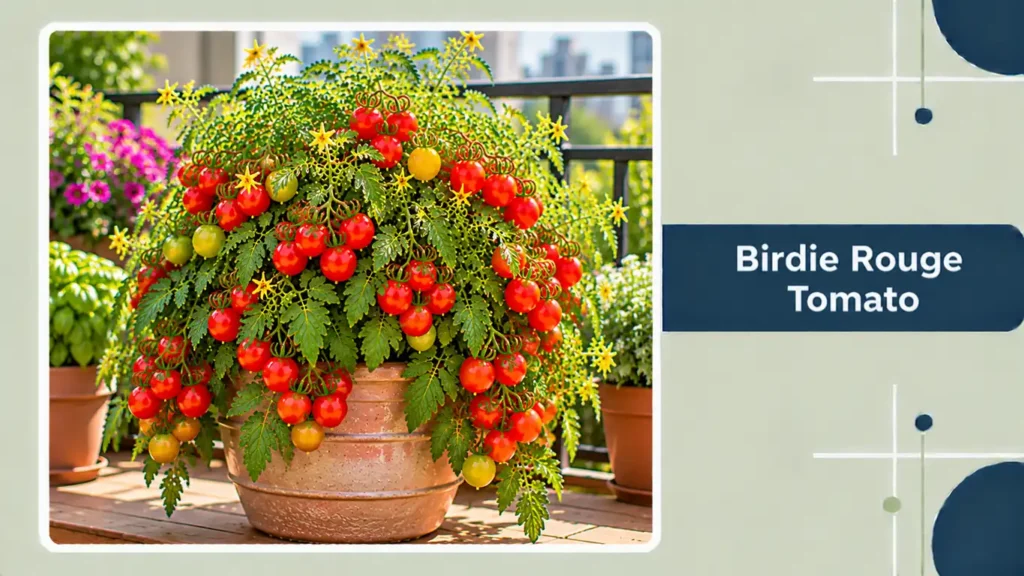
Birdie Rouge Tomato is a compact micro-dwarf tomato variety that produces small, bright red cherry tomatoes. Its miniature growth habit makes it an attractive choice for indoor gardening, especially in apartments, kitchens, and other limited spaces. Birdie Rouge typically grows around 6–10 inches tall and develops a dense, bushy appearance. Its colorful fruits and manageable size make it suitable for beginners who want to grow fresh tomatoes in small containers.
Identification
- Scientific Name: Solanum lycopersicum ‘Birdie Rouge’
- Plant Type: Micro-dwarf, determinate cherry tomato
- Mature Height: Approximately 6–10 inches
- Fruit Size: Around ½–1 inch in diameter
- Fruit Color: Bright red
- Fruit Shape: Small and round
- Maturity Time: Approximately 55–70 days after transplanting
Ideal Indoor Growing Conditions
Birdie Rouge Tomatoes grow best in temperatures between 65–80°F (18–27°C). Position the plant near a sunny window receiving 6–8 hours of direct sunlight daily. If sunlight is limited, use full-spectrum LED grow lights for 12–16 hours to support flowering and fruit production.
Choose a 6–8-inch container with drainage holes and fill it with nutrient-rich, well-draining potting mix. Maintain soil pH around 6.0–6.8. Its compact structure generally requires minimal staking or pruning.
Watering and Maintenance Tips
Water Birdie Rouge Tomatoes when the top inch of soil feels dry. Keep the soil evenly moist without making it waterlogged. Apply a balanced tomato fertilizer according to package directions to encourage healthy growth and fruit production.
Remove yellowing or damaged leaves to maintain good air circulation. Gently shake flowering branches to assist indoor pollination. Harvest tomatoes when they turn fully red and develop a sweet, juicy flavor.
20. Birdie Jaune Tomato
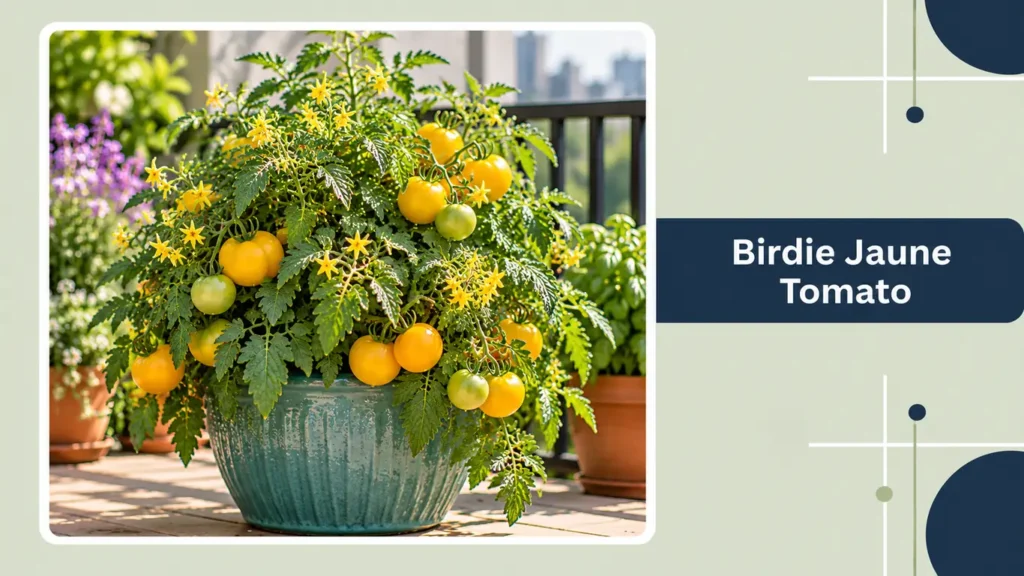
Birdie Jaune Tomato is a compact micro-dwarf cherry tomato variety that is ideal for indoor container gardening. It produces small, bright yellow tomatoes on miniature, bushy plants that typically grow around 6–10 inches tall. Its attractive golden fruits and manageable size make it suitable for sunny windowsills, kitchen counters, and small indoor gardens. Birdie Jaune is an excellent option for beginners who want colorful, fresh tomatoes without requiring much growing space.
Identification
- Scientific Name: Solanum lycopersicum ‘Birdie Jaune’
- Plant Type: Micro-dwarf, determinate cherry tomato
- Mature Height: Approximately 6–10 inches
- Fruit Size: Around ½–1 inch in diameter
- Fruit Color: Bright yellow
- Fruit Shape: Small and round
- Maturity Time: Approximately 55–70 days after transplanting
Ideal Indoor Growing Conditions
Birdie Jaune Tomatoes thrive in temperatures between 65–80°F (18–27°C). Place the plant near a sunny window receiving 6–8 hours of direct sunlight daily. When natural light is insufficient, provide 12–16 hours of full-spectrum LED grow lighting to support healthy flowering and fruit development.
Choose a 6–8-inch container with drainage holes and nutrient-rich, well-draining potting mix. Maintain a soil pH between 6.0 and 6.8. Its miniature growth habit generally requires little staking or pruning.
Watering and Maintenance Tips
Water Birdie Jaune Tomatoes when the top inch of soil feels dry. Maintain consistent moisture without allowing water to accumulate around the roots. Apply a balanced tomato fertilizer according to package instructions to encourage flowering and fruit production.
Remove yellowing or damaged leaves to improve airflow. Gently shake flowering branches to encourage pollination indoors. Harvest the tomatoes when they develop a rich yellow color and feel firm but fully ripe.
21. Yellow Canary Tomato
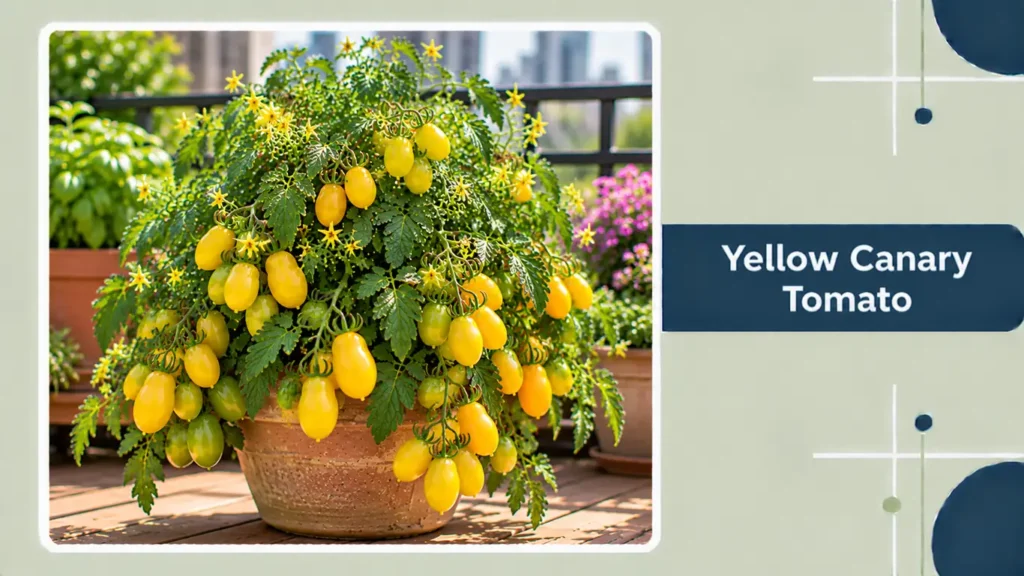
Yellow Canary Tomato is a miniature dwarf cherry tomato variety known for its bright yellow fruits and compact growing habit. It typically reaches 8–12 inches tall, making it an excellent choice for windowsills, tabletop gardens, and indoor containers. Despite its small size, Yellow Canary can produce attractive clusters of sweet, juicy cherry tomatoes. Its dense green foliage and colorful fruits also make it a decorative addition to indoor growing spaces.
Identification
- Scientific Name: Solanum lycopersicum ‘Yellow Canary’
- Plant Type: Micro-dwarf, determinate cherry tomato
- Mature Height: Approximately 8–12 inches
- Fruit Size: Around ½–1 inch in diameter
- Fruit Color: Golden yellow
- Fruit Shape: Small and round
- Maturity Time: Approximately 55–70 days after transplanting
Ideal Indoor Growing Conditions
Yellow Canary Tomatoes prefer temperatures between 65–80°F (18–27°C). Position the plant near a bright window that receives 6–8 hours of direct sunlight daily. If natural lighting is limited, use full-spectrum LED grow lights for 12–16 hours to encourage healthy growth and fruit production.
Plant Yellow Canary in a 6–8-inch container with drainage holes and nutrient-rich, well-draining potting mix. Maintain soil pH around 6.0–6.8. Its naturally compact structure makes it suitable for small indoor gardens without extensive support.
Watering and Maintenance Tips
Water Yellow Canary Tomatoes when the upper inch of soil begins to dry. Keep the growing medium evenly moist but avoid overwatering. Apply a balanced tomato fertilizer according to the manufacturer’s recommendations to support flowering and fruit development.
Remove damaged or yellowing leaves to maintain healthy foliage. Gently tap flowering stems to help with indoor pollination. Harvest tomatoes when they develop a bright golden-yellow color and become fully ripe.
22. Totem Tomato
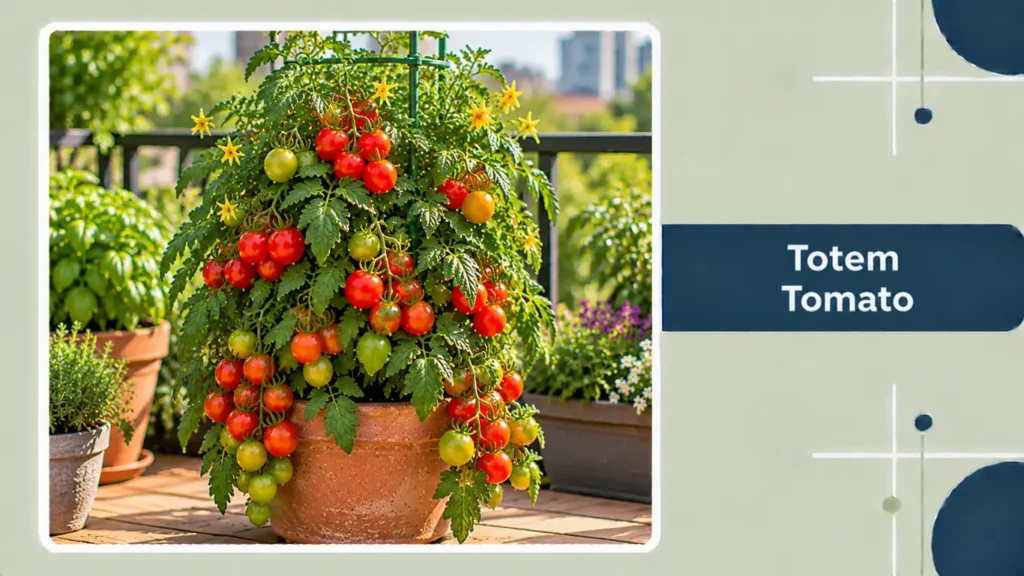
Totem Tomato is a compact, determinate tomato variety developed for container growing and limited gardening spaces. It produces clusters of medium-sized, bright red tomatoes on sturdy, bushy plants that typically reach 18–24 inches tall. Unlike miniature cherry tomato varieties, Totem produces larger fruits suitable for salads, sandwiches, and everyday cooking. Its manageable growth and productive nature make it an attractive choice for indoor gardeners who have adequate lighting and slightly larger containers.
Identification
- Scientific Name: Solanum lycopersicum ‘Totem’
- Plant Type: Compact, determinate tomato
- Mature Height: Approximately 18–24 inches
- Fruit Size: Around 2–3 inches in diameter
- Fruit Color: Bright red
- Fruit Shape: Round
- Maturity Time: Approximately 65–75 days after transplanting
Ideal Indoor Growing Conditions
Totem Tomatoes grow best in temperatures between 65–80°F (18–27°C). Place the plant near a sunny window receiving at least 6–8 hours of direct sunlight daily. For reliable fruit production indoors, provide 12–16 hours of full-spectrum LED grow lighting when sunlight is insufficient.
Choose a container approximately 12–14 inches wide with drainage holes and nutrient-rich, well-draining potting mix. Maintain soil pH between 6.0 and 6.8. A small tomato cage or sturdy stake helps support the plant as larger fruits develop.
Watering and Maintenance Tips
Water Totem Tomatoes when the top inch of soil feels dry. Maintain consistent soil moisture, especially during flowering and fruit development. Apply tomato fertilizer according to package instructions to support healthy foliage and productive fruit clusters.
Remove yellowing or damaged leaves to improve airflow. Gently shake flowering branches to encourage pollination indoors. Avoid excessive pruning because Totem is a determinate variety. Harvest the tomatoes when they become fully red, firm, and ripe.
23. Maskotka Tomato
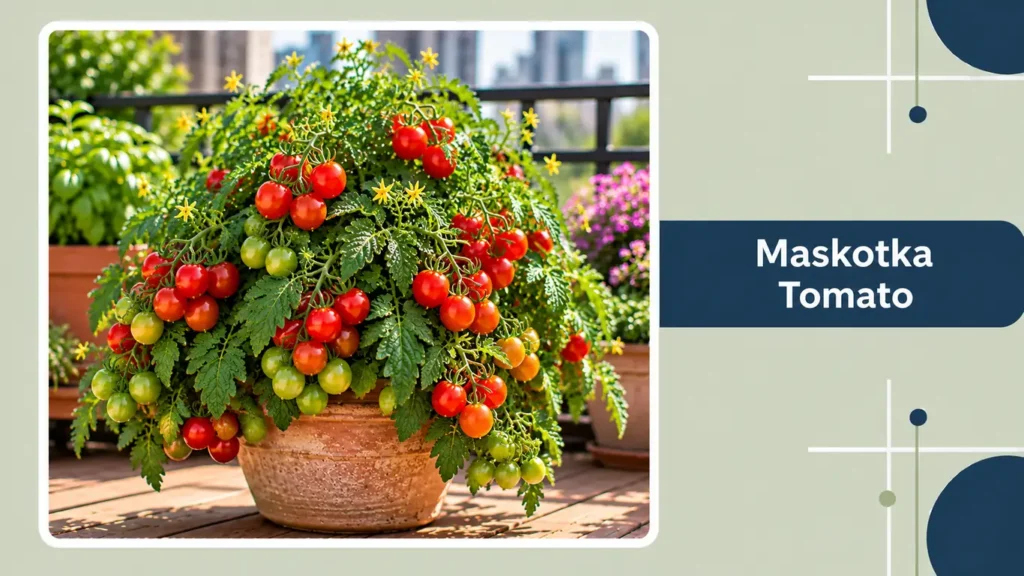
Maskotka Tomato is a compact, trailing cherry tomato variety that grows beautifully in indoor containers and hanging baskets. It produces clusters of small, sweet, bright red tomatoes on bushy plants with gently cascading branches. This variety typically grows around 12–18 inches tall, making it suitable for sunny windowsills, kitchen gardens, and small indoor spaces. Its attractive appearance and productive growth make Maskotka an excellent choice for gardeners with limited space.
Identification
- Scientific Name: Solanum lycopersicum ‘Maskotka’
- Plant Type: Compact, determinate cherry tomato
- Mature Height: Approximately 12–18 inches
- Fruit Size: Around 1 inch in diameter
- Fruit Color: Bright red
- Fruit Shape: Small and round
- Maturity Time: Approximately 60–70 days after transplanting
Ideal Indoor Growing Conditions
Maskotka Tomatoes thrive in temperatures between 65–80°F (18–27°C). Place the plant near a sunny window receiving 6–8 hours of direct sunlight daily. If natural light is insufficient, provide 12–16 hours of full-spectrum LED grow lighting to support healthy flowering and fruit production.
Choose a 10–12-inch container or hanging basket with drainage holes. Fill it with nutrient-rich, well-draining potting mix and maintain a soil pH between 6.0 and 6.8. Allow sufficient space for its trailing branches to develop naturally.
Watering and Maintenance Tips
Water Maskotka Tomatoes when the top inch of soil begins to dry. Hanging baskets may dry out quickly, so check moisture levels regularly. Apply tomato fertilizer according to package instructions to support healthy growth and fruit development.
Remove yellowing or damaged leaves to improve airflow. Gently shake flowering branches to encourage pollination indoors. Avoid excessive pruning because its trailing branches produce many of the fruits. Harvest tomatoes when they become fully red and ripe.
24. Husky Cherry Red Tomato
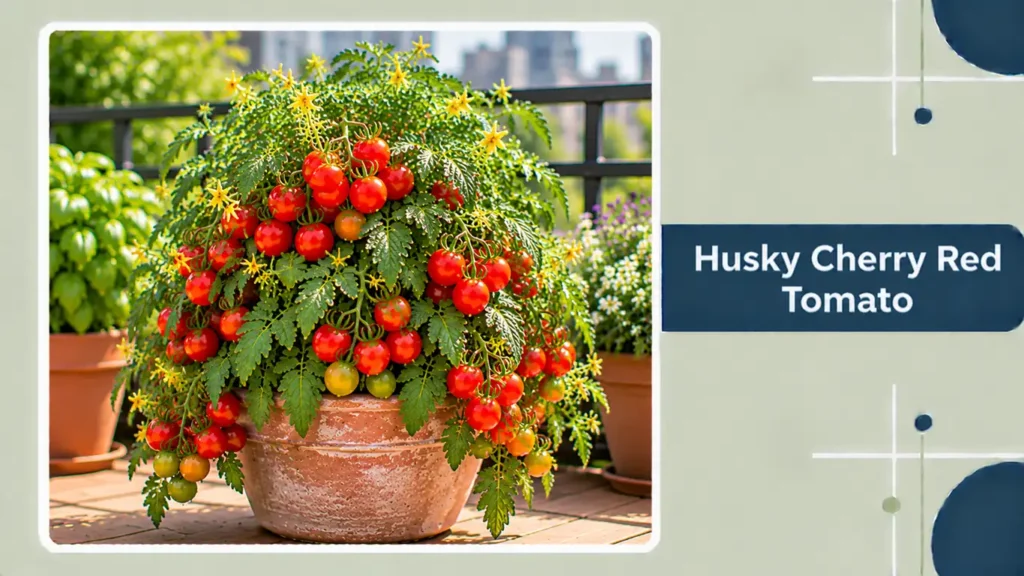
Husky Cherry Red Tomato is a compact, indeterminate cherry tomato variety known for its attractive dark green foliage and delicious red fruits. Unlike miniature dwarf tomatoes, this variety grows taller but maintains a relatively manageable, upright structure. It produces clusters of sweet, juicy cherry tomatoes throughout the growing season under suitable conditions. Husky Cherry Red is a good choice for indoor gardeners who have sufficient vertical space, strong grow lighting, and larger containers.
Identification
- Scientific Name: Solanum lycopersicum ‘Husky Cherry Red’
- Plant Type: Dwarf indeterminate cherry tomato
- Mature Height: Approximately 36–48 inches
- Fruit Size: Around 1 inch in diameter
- Fruit Color: Bright red
- Fruit Shape: Small and round
- Maturity Time: Approximately 65–70 days after transplanting
Ideal Indoor Growing Conditions
Husky Cherry Red Tomatoes grow best in temperatures between 65–80°F (18–27°C). Place the plant near a bright window receiving at least 6–8 hours of direct sunlight daily. For reliable indoor fruit production, use full-spectrum LED grow lights for approximately 12–16 hours when natural sunlight is insufficient.
Choose a large container holding at least 5 gallons of potting mix, with adequate drainage. Use nutrient-rich, well-draining soil and maintain a pH between 6.0 and 6.8. Install a sturdy tomato cage or stake to support its upright growth and developing fruit clusters.
Watering and Maintenance Tips
Water Husky Cherry Red Tomatoes when the upper inch of soil feels dry. Maintain consistent moisture while avoiding waterlogged conditions. Apply a balanced tomato fertilizer according to the manufacturer’s instructions to encourage healthy flowering and continuous fruit production.
Remove yellowing or damaged leaves and maintain good airflow around the plant. Gently shake flowering branches to improve indoor pollination. Provide adequate support as the plant grows taller, and harvest tomatoes when they develop a deep red color and reach full ripeness.
25. Patio Princess Tomato
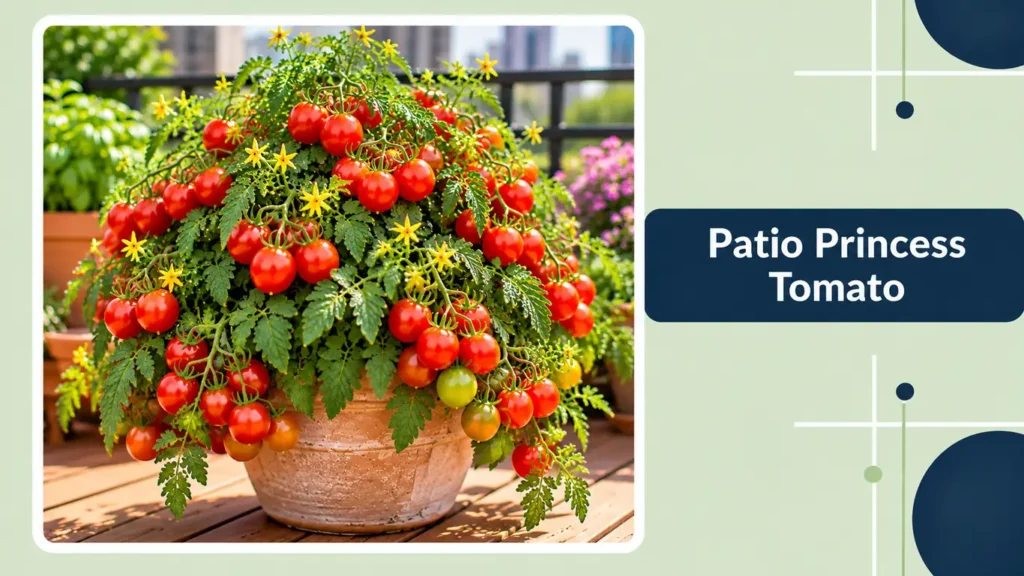
Patio Princess Tomato is a compact, determinate tomato variety developed for container gardening and small outdoor spaces. It produces attractive clusters of red tomatoes that are larger than typical cherry varieties, making them suitable for salads, sandwiches, and fresh cooking. Its manageable growth habit makes it a practical option for indoor gardening when sufficient sunlight or artificial lighting is available. Patio Princess is especially appealing to gardeners who want medium-sized tomatoes without growing large, sprawling plants.
Identification
- Scientific Name: Solanum lycopersicum ‘Patio Princess’
- Plant Type: Compact, determinate tomato
- Mature Height: Approximately 18–24 inches
- Fruit Size: Around 2–3 inches in diameter
- Fruit Color: Bright red
- Fruit Shape: Round
- Maturity Time: Approximately 60–70 days after transplanting
Ideal Indoor Growing Conditions
Patio Princess Tomatoes prefer temperatures between 65–80°F (18–27°C). Position the plant near a sunny window receiving 6–8 hours of direct sunlight daily. Alternatively, use full-spectrum LED grow lights for 12–16 hours to support healthy growth and fruit development.
Plant Patio Princess in a container holding approximately 3–5 gallons of well-draining, nutrient-rich potting mix. Maintain soil pH around 6.0–6.8. A small tomato cage or sturdy stake helps support the branches as larger fruits develop.
Watering and Maintenance Tips
Water Patio Princess Tomatoes when the top inch of soil begins to dry. Keep the soil consistently moist , particularly during flowering and fruit development. Apply tomato fertilizer according to package instructions to encourage healthy growth and productive fruit clusters.
Remove damaged or yellowing leaves to maintain good airflow. Gently shake flowering stems to assist indoor pollination. Avoid excessive pruning because this determinate variety produces fruit on its compact branches. Harvest tomatoes when they become fully red, firm, and flavorful.
FAQs
1. What Are the Best Tomato Varieties for Indoor Growing?
The best tomatoes for indoor growing are compact dwarf varieties such as Tiny Tim, Red Robin, Micro Tom, Orange Hat, and Vilma. These plants require relatively little space and produce flavorful cherry tomatoes. They grow well in containers with sufficient sunlight or artificial grow lighting.
2. Can You Grow Tomatoes Indoors Year-Round?
Yes, tomatoes can grow indoors year-round when provided with adequate lighting, warmth, water, and nutrients. Most varieties need 12–16 hours of suitable grow lighting daily. Maintaining temperatures around 65–80°F (18–27°C) supports healthy growth, flowering, and fruit production throughout the year.
3. How Much Sunlight Do Indoor Tomato Plants Need?
Indoor tomato plants generally need at least 6–8 hours of strong direct sunlight daily. If natural light is insufficient, full-spectrum LED grow lights can provide supplemental lighting for 12–16 hours. Proper lighting encourages stronger stems, healthier foliage, better flowering, and successful fruit development.
4. What Size Container Is Best for Growing Tomatoes Indoors?
Container size depends on the tomato variety. Micro-dwarf tomatoes can grow in 4–8-inch pots, while compact cherry tomatoes often perform better in 10–12-inch containers. Larger varieties may require 3–5-gallon pots or bigger. Always choose containers with drainage holes and nutrient-rich potting mix.
5. How Long Does It Take to Grow Tomatoes Indoors?
Indoor tomatoes generally take around 60–100 days from seed to their first ripe fruits, depending on the variety and growing conditions. Some early dwarf varieties mature faster. Adequate lighting, consistent watering, appropriate temperatures, and proper fertilization help encourage healthy growth and timely harvesting.