
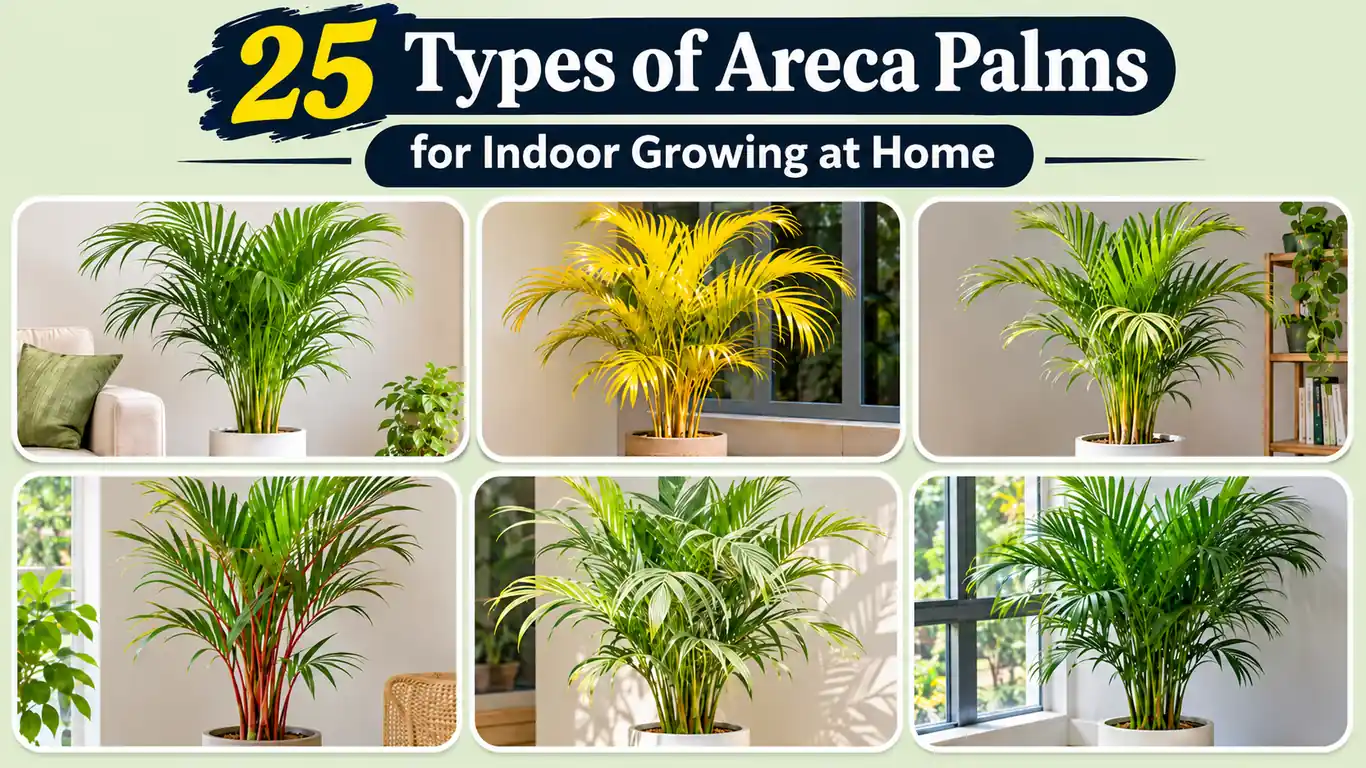
Areca palms are beautiful tropical plants known for their graceful green fronds, slender stems, and refreshing appearance. From the popular Golden Cane Palm to rare tropical species, these plants offer different shapes, sizes, and growing habits. While some thrive in ordinary indoor conditions, others require extra warmth and humidity. Explore 25 types of Areca palms and discover their identification, growing conditions, and care requirements.
1. Golden Cane Palm (Dypsis lutescens)

The Golden Cane Palm (Dypsis lutescens), also known as the Areca Palm or Butterfly Palm, is a popular indoor palm with graceful, arching green leaves and golden-yellow stems. Its bushy appearance adds a fresh tropical feel to living rooms, bedrooms, and offices. This palm is relatively easy to maintain when provided with sufficient light, moisture, and humidity.
Identification
- Scientific Name: Dypsis lutescens
- Common Names: Golden Cane Palm, Butterfly Palm, Areca Palm
- Family: Arecaceae
- Height: 4–8 feet indoors
- Leaves: Long, feathery, arching green fronds
- Stems: Slender, clustered, golden-yellow canes
- Light: Bright, indirect sunlight
- Growth Rate: Moderate
Growing Conditions
Golden Cane Palms grow best in bright, indirect sunlight and well-draining soil. Place the plant near a window where it receives plenty of filtered natural light. Maintain temperatures between 65°F and 80°F and provide moderate humidity. Water when the top inch of soil feels dry, but avoid overwatering, as soggy soil can damage the roots.
Care and Maintenance
Keep your Golden Cane Palm healthy by watering consistently and applying diluted palm fertilizer during spring and summer. Remove completely dried fronds and wipe dusty leaves occasionally. Rotate the pot for even growth and repot when the roots become crowded. Avoid cold drafts and direct afternoon sunlight, which can cause leaf damage.
2. Betel Nut Palm (Areca catechu)

The Betel Nut Palm (Areca catechu) is an elegant tropical palm known for its slender trunk, feathery green leaves, and upright growth. Native to Southeast Asia, this palm creates a refreshing tropical atmosphere in homes and indoor gardens. Young plants can grow successfully in large containers with plenty of natural light and warmth. However, mature specimens become quite tall, making them better suited to spacious indoor areas or outdoor tropical gardens.
Identification
- Scientific Name: Areca catechu
- Common Names: Betel Nut Palm, Areca Nut Palm
- Family: Arecaceae
- Height: Young indoor plants typically reach 3–6 feet
- Leaves: Long, feather-shaped, bright green fronds
- Stems: Smooth, slender, green to gray trunk
- Light: Bright, indirect sunlight
- Growth Rate: Moderate to fast
Growing Conditions
Betel Nut Palms grow best in bright, filtered sunlight and warm temperatures between 70°F and 90°F. Place young plants near a bright window where they receive enough natural light without harsh afternoon sun. Use rich, well-draining soil that retains moderate moisture. These palms prefer high humidity, so a humidifier can help prevent brown leaf tips. Avoid cold drafts and waterlogged soil, which may damage their roots.
Care and Maintenance
Water your Betel Nut Palm when the top inch of soil begins to dry, keeping the soil slightly moist during active growth. Apply balanced palm fertilizer during spring and summer to support healthy foliage. Remove completely dried fronds and occasionally wipe the leaves to remove dust. Repot when the roots outgrow their container, and provide additional growing space as the palm becomes taller.
3. Red Crownshaft Palm (Areca vestiaria)

The Red Crownshaft Palm (Areca vestiaria) is a beautiful tropical palm admired for its colorful orange-red crownshaft and glossy green foliage. Native to Indonesia, this unique species brings a striking tropical appearance to indoor plant collections. Its attractive leaf structure and colorful stems make it especially appealing to palm enthusiasts. Although young plants can grow in containers, they require consistent warmth, high humidity, and bright filtered sunlight to remain healthy indoors.
Identification
- Scientific Name: Areca vestiaria
- Common Names: Red Crownshaft Palm, Orange Crownshaft Palm
- Family: Arecaceae
- Height: Young container plants may reach 3–6 feet
- Leaves: Long, arching, glossy green fronds
- Stems: Slender trunks with orange to reddish crownshafts
- Light: Bright, filtered sunlight
- Growth Rate: Moderate
Growing Conditions
Red Crownshaft Palms thrive in warm, humid environments with temperatures between 70°F and 85°F. Position them near a bright window with filtered sunlight, as intense direct sun can damage young leaves. Use loose, organic-rich soil that drains well while retaining some moisture. High humidity is particularly important for healthy growth. A humidifier or enclosed tropical growing space can help maintain suitable conditions during dry weather.
Care and Maintenance
Water regularly when the upper layer of soil begins to dry, but never allow the roots to remain in standing water. Feed with diluted palm fertilizer during the active growing season to encourage healthy foliage and stem development. Remove dead fronds carefully without damaging the growing crown. Check regularly for spider mites and mealybugs, and keep the palm away from cold drafts or sudden temperature changes.
4. Triandra Palm (Areca triandra)

The Triandra Palm (Areca triandra) is an attractive tropical palm recognized for its slender, clustered stems and graceful, arching green leaves. Native to South and Southeast Asia, it naturally grows in warm, humid environments. Unlike single-trunk palms, this species develops multiple stems that create a fuller, bushier appearance. Its elegant foliage makes young specimens an interesting choice for indoor tropical gardens, especially in rooms with bright filtered light and enough growing space.
Identification
- Scientific Name: Areca triandra
- Common Names: Triandra Palm, Wild Areca Palm
- Family: Arecaceae
- Height: Young indoor specimens may reach 3–6 feet
- Leaves: Long, feather-shaped, deep green fronds
- Stems: Thin, clustered, green stems
- Light: Bright, indirect sunlight
- Growth Rate: Moderate
Growing Conditions
Triandra Palms prefer bright, indirect sunlight and temperatures between 65°F and 85°F. Place them near an east-facing window or another location with filtered natural light. Use well-draining soil enriched with organic matter to support healthy root growth. Keep the soil consistently moist but never soggy. Moderate to high humidity helps maintain lush foliage, while protection from cold drafts prevents unnecessary stress and leaf damage.
Care and Maintenance
Water your Triandra Palm when the top inch of soil feels slightly dry, adjusting the frequency according to temperature and humidity. Apply diluted palm fertilizer during spring and summer to support new growth. Remove completely brown leaves and inspect the foliage regularly for pests. Rotate the container occasionally for balanced growth, and repot when the roots become crowded. With consistent care, this palm can maintain its attractive clustered appearance indoors.
5. Dwarf Areca Palm (Areca minuta)
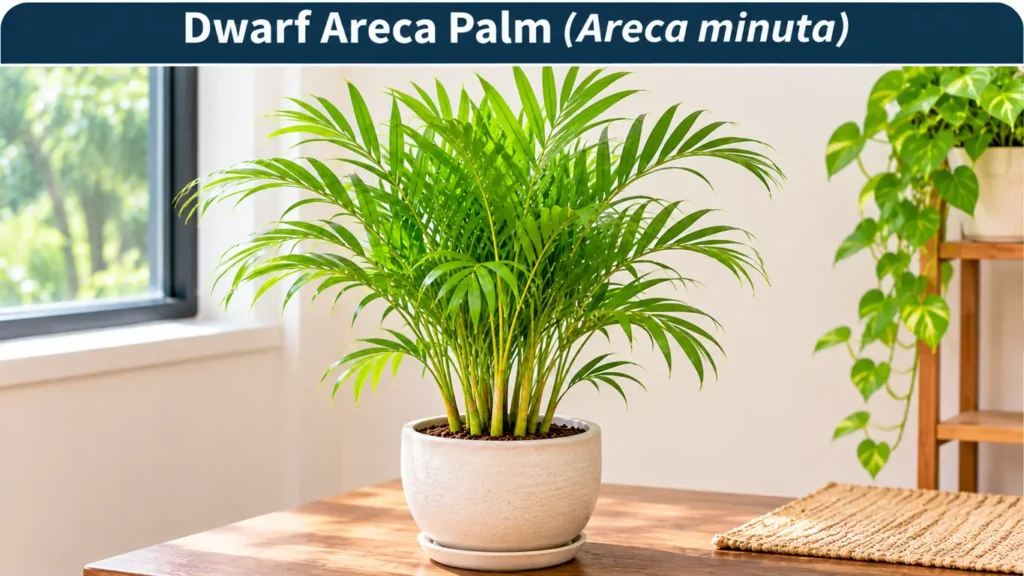
The Dwarf Areca Palm (Areca minuta) is a small tropical palm known for its compact growth and attractive green foliage. Native to Borneo, this rare species grows naturally in humid rainforest environments. Its smaller size makes it an interesting choice for indoor palm collections, especially where space is limited. However, it requires consistently warm temperatures, high humidity, and careful watering to grow successfully indoors.
Identification
- Scientific Name: Areca minuta
- Common Name: Dwarf Areca Palm
- Family: Arecaceae
- Height: Small-growing palm, with mature size depending on conditions
- Leaves: Green, divided or feathery tropical foliage
- Stems: Slender, compact stems
- Light: Bright, filtered sunlight
- Growth Rate: Generally slow to moderate
Growing Conditions
Dwarf Areca Palms prefer warm, humid environments with bright, indirect sunlight. Place the plant near a filtered window or in a controlled indoor growing space. Temperatures around 70°F to 85°F are suitable for tropical cultivation. Use loose, organic-rich soil that retains light moisture while allowing excess water to drain. High humidity is important, as dry indoor air can cause leaf edges to turn brown and slow healthy growth.
Care and Maintenance
Water when the upper layer of soil begins to dry, keeping the roots lightly moist without waterlogging. Apply a diluted palm fertilizer occasionally during the growing season. Remove completely dried leaves and inspect the foliage for pests. Because this species is uncommon in cultivation, avoid sudden changes in temperature, humidity, or light. A humidifier can help maintain a stable growing environment.
6. Kawiwi Palm (Areca macrocalyx)
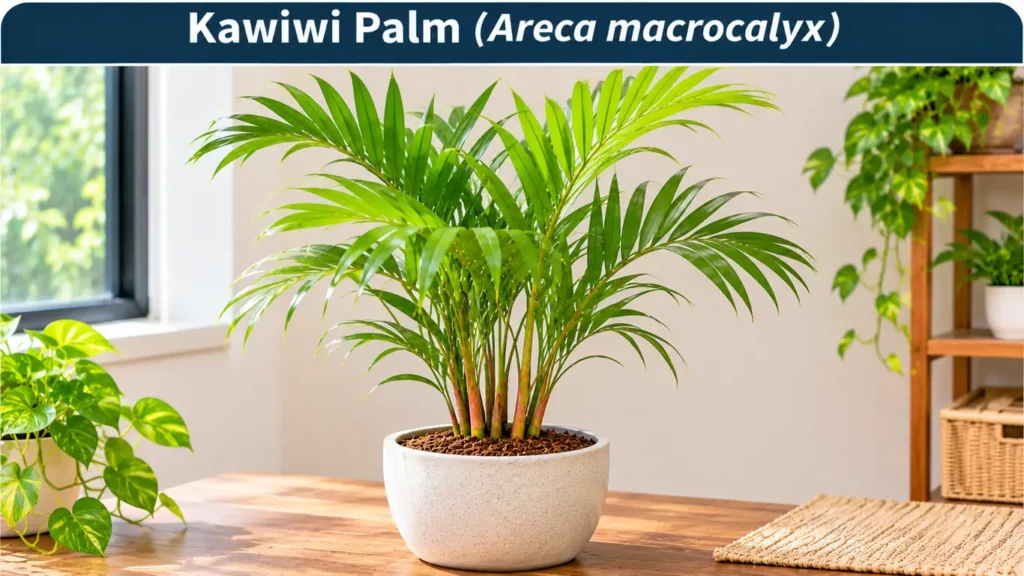
The Kawiwi Palm (Areca macrocalyx) is an attractive tropical palm recognized for its elegant green fronds and colorful crownshaft. Native to New Guinea and nearby tropical regions, this palm grows naturally in warm, humid forests. Its graceful foliage and distinctive appearance make it appealing to palm collectors. Young specimens can be grown in containers, although successful indoor cultivation requires bright filtered light, high humidity, and plenty of warmth.
Identification
- Scientific Name: Areca macrocalyx
- Common Name: Kawiwi Palm
- Family: Arecaceae
- Height: Young container plants may reach several feet
- Leaves: Long, arching, feather-shaped green fronds
- Stems: Slender trunk with a prominent crownshaft
- Light: Bright, indirect sunlight
- Growth Rate: Moderate under suitable tropical conditions
Growing Conditions
Kawiwi Palms grow best in warm temperatures around 70°F to 85°F with consistently high humidity. Position young plants where they receive plenty of filtered natural light without intense afternoon sunshine. Use a well-draining potting mixture containing organic matter to support root development. Keep the soil evenly moist but never saturated. This palm is sensitive to prolonged cold and dry conditions, making a humid indoor greenhouse more suitable than an ordinary living room.
Care and Maintenance
Water regularly when the soil surface begins to dry, and ensure the container has proper drainage holes. Feed lightly with a balanced palm fertilizer during active growth to encourage healthy foliage. Remove dead fronds carefully and clean dusty leaves occasionally. Monitor for spider mites and scale insects, especially in dry environments. Repot only when necessary, as unnecessary root disturbance can slow growth.
7. Areca concinna

Areca concinna is a rare tropical palm native to the rainforests of southwestern Sri Lanka. It is known for its slender stems, graceful green fronds, and attractive tropical appearance. This species is uncommon in cultivation and is better suited to specialized indoor collections or humid greenhouses than ordinary living rooms. With stable warmth, filtered light, and careful moisture management, it may be grown as a container palm.
Identification
- Scientific Name: Areca concinna
- Common Name: Lentheri
- Family: Arecaceae
- Height: Small tropical palm that can outgrow indoor containers
- Leaves: Feather-shaped, arching green fronds
- Stems: Slender, sometimes clustered stems
- Light: Bright, filtered sunlight
- Growth Rate: Varies with growing conditions
Growing Conditions
Areca concinna prefers warm, humid conditions similar to its natural rainforest habitat. Place container-grown specimens in bright, indirect sunlight and protect them from harsh afternoon sun. A temperature range of approximately 70°F to 85°F is a reasonable tropical growing target. Use loose, organic-rich soil with good drainage, keeping it evenly moist without becoming waterlogged. High humidity helps maintain healthy foliage, making a greenhouse or controlled indoor growing area particularly useful.
Care and Maintenance
Water when the upper soil layer begins to dry, and adjust watering according to temperature and humidity. Apply diluted palm fertilizer sparingly during active growth. Remove completely dried fronds without damaging healthy stems or the growing crown. Inspect leaves regularly for pests and avoid unnecessary repotting. Because Areca concinna is an endangered and protected species in Sri Lanka, obtain plants only from reputable, legally propagated sources.
8. Areca bakeri
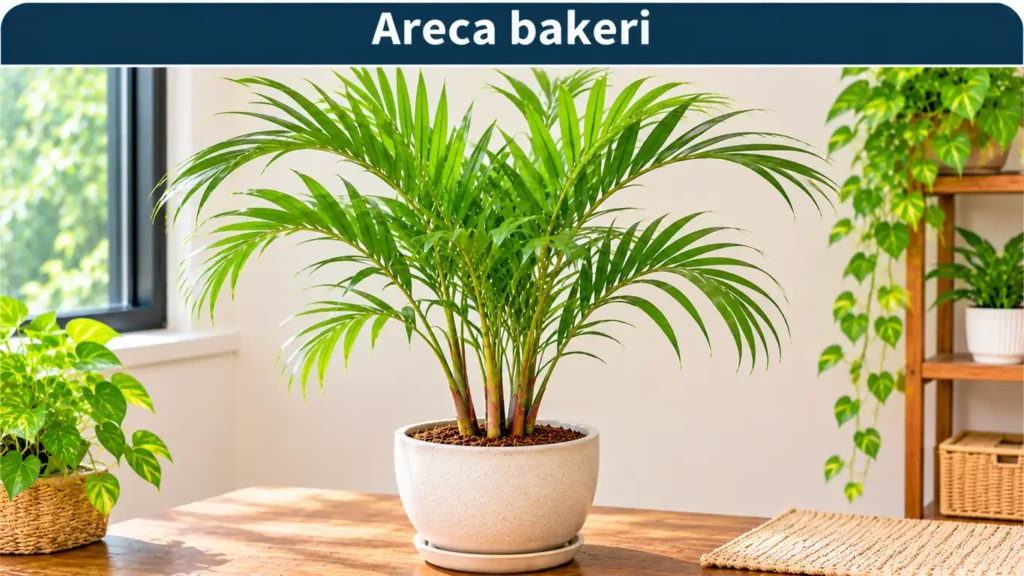
Areca bakeri is a rare tropical palm native to Borneo, known for its slender growth and attractive green foliage. This species naturally grows in humid forest environments, where it benefits from warm temperatures and filtered sunlight. Although uncommon as a houseplant, young specimens can be grown in containers under carefully controlled conditions. Its tropical appearance makes it an interesting addition to specialized indoor palm collections.
Identification
- Scientific Name: Areca bakeri
- Family: Arecaceae
- Plant Type: Tropical evergreen palm
- Height: Varies with age and growing conditions
- Leaves: Green, feather-like foliage
- Stems: Slender tropical palm stems
- Light: Bright, indirect sunlight
- Growth Rate: Depends on growing conditions
Growing Conditions
Areca bakeri prefers warm, humid conditions similar to its natural rainforest habitat. Place the plant in a bright location with filtered sunlight, avoiding intense afternoon sun. Temperatures around 70°F to 85°F provide a suitable tropical growing environment. Use loose, organic-rich soil that drains well while retaining light moisture. High humidity is especially helpful for maintaining healthy foliage, making an indoor greenhouse or humid growing space preferable to a dry room.
Care and Maintenance
Water when the upper layer of soil begins to dry, keeping the roots moist without allowing waterlogging. Apply diluted palm fertilizer occasionally during active growth. Remove completely dried leaves and inspect the foliage for common pests. Avoid sudden temperature changes and unnecessary root disturbance. Maintain stable humidity and provide proper airflow to support healthy development.
9. Areca brachypoda

Areca brachypoda is an uncommon tropical palm belonging to the Areca genus. It is mainly of interest to palm enthusiasts who enjoy collecting unusual tropical species. Its green foliage and slender growth give it an attractive natural appearance. Although it is not widely cultivated as a houseplant, young plants may be maintained in containers when provided with warmth, adequate humidity, and suitable lighting.
Identification
- Scientific Name: Areca brachypoda
- Family: Arecaceae
- Plant Type: Tropical evergreen palm
- Height: Varies depending on maturity and environment
- Leaves: Green, divided palm foliage
- Stems: Slender stems
- Light: Bright, filtered sunlight
- Growth Rate: Not well documented in indoor cultivation
Growing Conditions
Areca brachypoda is best grown in a warm, humid environment with plenty of filtered natural light. Avoid placing young plants in harsh direct sunlight, which may damage delicate foliage. A temperature range around 70°F to 85°F is a reasonable starting point for tropical cultivation. Use a well-draining potting mixture enriched with organic matter. Keep the soil lightly moist while ensuring excess water drains away. Consistent humidity can help prevent dry leaf edges.
Care and Maintenance
Water regularly but allow the soil surface to begin drying between watering sessions. Feed lightly with diluted palm fertilizer during the growing season. Remove dead or damaged leaves using clean pruning shears, and inspect the plant for pests. Repot only when necessary to avoid disturbing the roots. Because detailed indoor care information is limited, monitor the plant closely and adjust conditions based on its growth.
10. Areca caliso
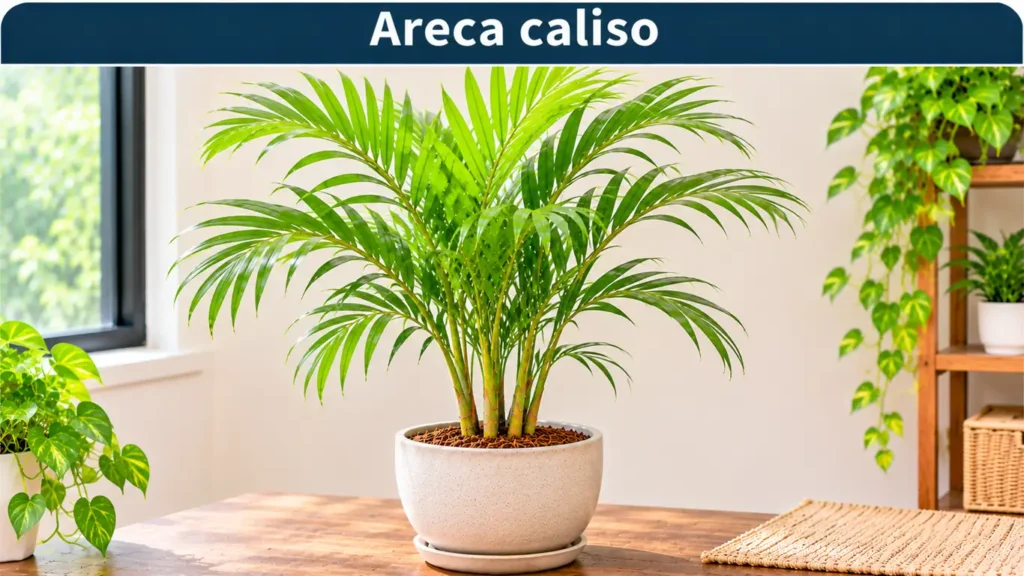
Areca caliso is a tropical palm native to the Philippines, known for its tall, slender trunk and long, feather-shaped green leaves. It naturally grows in humid rainforests and can reach heights of 20 feet or more when mature. Its graceful foliage makes it attractive to palm collectors, although its large size and tropical growing requirements make it better suited to greenhouses than ordinary indoor spaces.
Identification
- Scientific Name: Areca caliso
- Common Name: Kaliso Palm
- Family: Arecaceae
- Height: Approximately 20 feet or more when mature
- Leaves: Long, feathery green fronds with narrow leaflets
- Stems: Upright trunk with a prominent crownshaft
- Light: Bright, filtered sunlight
- Growth Rate: Not well documented in cultivation
Growing Conditions
Areca caliso prefers warm, humid conditions similar to its native rainforest habitat. Place young container-grown plants in bright, indirect sunlight, away from intense afternoon sun. Temperatures around 70°F to 85°F are a reasonable starting point for indoor cultivation. Use rich, well-draining soil that retains some moisture without becoming soggy. High humidity supports healthy foliage, while good airflow helps prevent fungal problems. Because this palm grows quite large, it requires sufficient vertical space as it matures.
Care and Maintenance
Water when the upper layer of soil starts to dry, keeping moisture levels consistent during active growth. Apply diluted palm fertilizer occasionally to support healthy leaves and roots. Remove completely dried fronds, but avoid cutting healthy green foliage. Check regularly for spider mites, scale insects, and other pests. Repot young plants when their roots become crowded, using a sturdy container with drainage holes. Avoid sudden temperature changes and prolonged exposure to dry indoor air.
Botanical information verified against Kew Science and Plant Resources of South-East Asia. Specific indoor care recommendations are general tropical palm guidance because this species is rarely grown as a houseplant.
11. Areca camarinensis

Areca camarinensis is a rare tropical palm native to the Philippines. It belongs to the Areca genus and is valued by palm enthusiasts for its unusual botanical background and attractive tropical foliage. Although this species is not commonly grown as a houseplant, young specimens may be kept in containers with suitable care. Its preference for warm temperatures and humid conditions makes it better suited to specialized indoor gardens or greenhouses.
Identification
- Scientific Name: Areca camarinensis
- Family: Arecaceae
- Plant Type: Tropical evergreen palm
- Height: Mature size varies; indoor growth is not well documented
- Leaves: Green, divided palm foliage
- Stems: Slender tropical palm stems
- Light: Bright, filtered sunlight
- Growth Rate: Not well documented in cultivation
Growing Conditions
Areca camarinensis is best maintained in a warm, humid environment with bright, indirect sunlight. A temperature range of 70°F to 85°F provides a reasonable starting point for tropical cultivation. Use loose, organic-rich potting soil that holds some moisture while draining excess water. Keep the plant away from strong afternoon sunlight and cold drafts. Consistent humidity is important, especially when growing young specimens indoors. A humidifier or greenhouse setup may help create more suitable conditions.
Care and Maintenance
Water when the upper layer of soil begins to dry, keeping the roots lightly moist without overwatering. Apply diluted palm fertilizer during active growth to support healthy foliage. Remove completely dried leaves using clean pruning tools and inspect the plant regularly for pests. Avoid unnecessary repotting or sudden changes in growing conditions. Since indoor cultivation information is limited, observe new growth carefully and adjust watering and lighting as needed.
12. Areca dayung
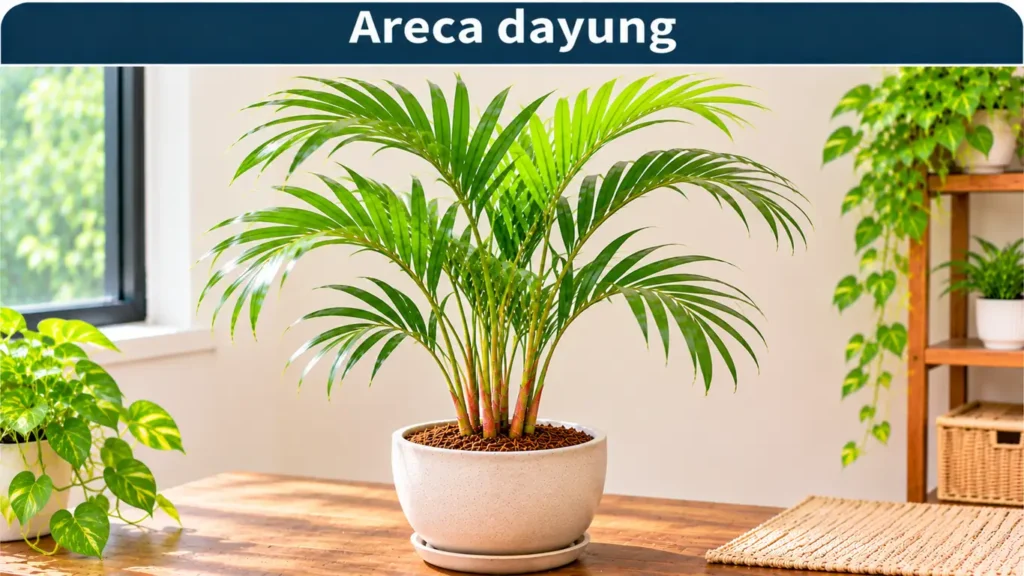
Areca dayung is an uncommon tropical palm native to Borneo. This species grows naturally in humid forest environments and is mainly of interest to collectors of rare palms. Its green foliage and tropical appearance can make it an attractive addition to specialized plant collections. However, it is not a typical indoor palm and requires careful control of temperature, moisture, and humidity to support healthy growth.
Identification
- Scientific Name: Areca dayung
- Family: Arecaceae
- Plant Type: Tropical evergreen palm
- Height: Mature size and indoor height are not well documented
- Leaves: Green tropical palm foliage
- Stems: Slender palm stems
- Light: Bright, indirect or filtered sunlight
- Growth Rate: Not well documented in cultivation
Growing Conditions
Areca dayung prefers warm, humid growing conditions similar to those found in tropical rainforests. Place the plant in bright, filtered sunlight rather than strong direct sun. Temperatures around 70°F to 85°F are a practical starting point for indoor cultivation. Use an airy, well-draining soil mixture with organic matter to maintain balanced moisture. Keep the roots consistently moist but avoid soggy conditions. High humidity and gentle airflow help create a more stable environment for this uncommon species.
Care and Maintenance
Water regularly when the soil surface starts to dry, adjusting the frequency according to temperature and humidity. Feed lightly with diluted palm fertilizer during the growing season. Remove dead foliage carefully and inspect the leaves for spider mites or scale insects. Keep the plant away from air conditioners and cold drafts. Repot only when necessary, using a container with proper drainage to protect the roots from excess moisture.
13. Areca furcata

Areca furcata is a rare tropical palm native to Borneo, where it grows in warm, humid forest environments. This species is mainly appreciated by palm collectors interested in unusual members of the Areca genus. Its attractive green foliage gives it a natural tropical appearance. Although uncommon in indoor cultivation, young plants may be grown in containers when provided with suitable warmth, moisture, and filtered sunlight.
Identification
- Scientific Name: Areca furcata
- Family: Arecaceae
- Plant Type: Tropical evergreen palm
- Height: Mature size and indoor height are not well documented
- Leaves: Green, divided tropical palm foliage
- Stems: Slender palm stems
- Light: Bright, filtered sunlight
- Growth Rate: Not well documented in cultivation
Growing Conditions
Areca furcata is best grown in warm temperatures around 70°F to 85°F with consistently high humidity. Position young plants near a bright window with filtered sunlight, avoiding intense direct afternoon sun. Use loose, organic-rich potting soil that provides good drainage while retaining moderate moisture. Keep the soil slightly moist without allowing water to collect around the roots. A humidifier or indoor greenhouse can help maintain suitable conditions, particularly during dry weather.
Care and Maintenance
Water when the upper layer of soil begins to dry, keeping moisture levels consistent throughout active growth. Apply diluted palm fertilizer occasionally during warmer months to encourage healthy foliage. Remove completely dried leaves and inspect the plant regularly for pests. Avoid sudden temperature changes, excessive watering, and unnecessary root disturbance. Repot when the roots become crowded, choosing a container with proper drainage.
14. Areca gurita

Areca gurita is a rare tropical palm native to Borneo, known for its unusual growth habit and attractive green foliage. This species naturally grows in warm, humid rainforest environments and is mainly appreciated by collectors of uncommon palms. Although it is not widely cultivated as a houseplant, young specimens may be grown in containers with proper care. Its tropical appearance makes it an interesting choice for specialized indoor gardens or greenhouse collections.
Identification
- Scientific Name: Areca gurita
- Family: Arecaceae
- Plant Type: Tropical evergreen palm
- Height: Indoor height is not well documented
- Leaves: Green, divided tropical palm fronds
- Stems: Slender stems with an unusual growth habit
- Light: Bright, filtered sunlight
- Growth Rate: Not well documented in cultivation
Growing Conditions
Areca gurita prefers warm, humid conditions similar to its natural rainforest habitat. Place the plant in bright, indirect sunlight, protecting young leaves from intense afternoon sun. Temperatures between 70°F and 85°F are a reasonable starting point for tropical cultivation. Use loose, organic-rich potting soil that retains moderate moisture while allowing excess water to drain. High humidity encourages healthy foliage, making a humidifier or greenhouse environment helpful for indoor growing.
Care and Maintenance
Water when the upper layer of soil begins to dry, keeping the roots slightly moist without overwatering. Apply diluted palm fertilizer occasionally during the active growing season. Remove completely dried leaves and inspect the foliage regularly for pests. Avoid unnecessary repotting or sudden changes in temperature and humidity. A stable growing environment is especially important because this rare palm has limited documented indoor care information.
15. Areca hutchinsoniana

Areca hutchinsoniana is an uncommon tropical palm native to the Philippines. It belongs to the Areca genus and is recognized for its attractive green foliage and natural tropical appearance. This species is mainly of interest to palm enthusiasts because it is rarely available in ordinary plant nurseries. Young specimens may be maintained in containers, although they require consistent warmth, humidity, and careful watering to grow successfully indoors.
Identification
- Scientific Name: Areca hutchinsoniana
- Family: Arecaceae
- Plant Type: Tropical evergreen palm
- Height: Mature and indoor heights are not well documented
- Leaves: Green, divided palm foliage
- Stems: Slender, upright tropical palm stems
- Light: Bright, indirect sunlight
- Growth Rate: Not well documented in cultivation
Growing Conditions
Areca hutchinsoniana grows best under warm, humid conditions with bright, filtered natural light. Temperatures around 70°F to 85°F provide a suitable starting point for tropical cultivation. Place young plants near a bright window without exposing them to strong afternoon sunlight. Use a loose, organic-rich potting mixture that drains freely while retaining some moisture. Maintain moderate to high humidity and protect the plant from cold drafts, dry indoor air, and sudden temperature changes.
Care and Maintenance
Water regularly when the soil surface begins to dry, making sure excess water drains from the container. Feed lightly with diluted palm fertilizer during spring and summer to support healthy foliage. Remove completely brown fronds without damaging the growing crown. Check leaves occasionally for spider mites and scale insects. Repot when necessary, choosing a slightly larger container with adequate drainage. Consistent growing conditions are important for maintaining this uncommon palm indoors.
16. Areca insignis
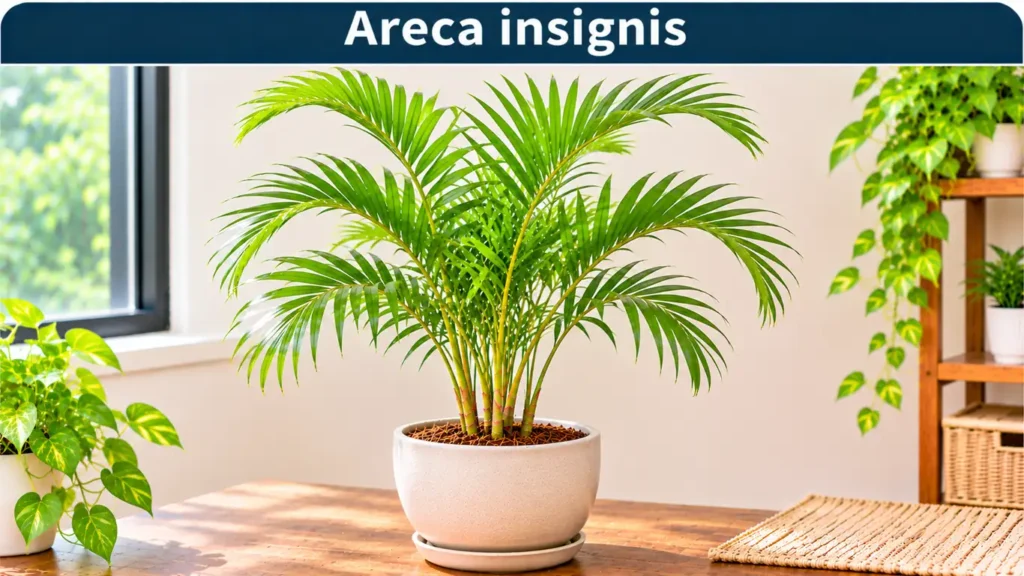
Areca insignis is a rare tropical palm native to Borneo, where it grows in warm, humid forest environments. This palm is appreciated by collectors for its attractive foliage and unusual botanical characteristics. Although it is not commonly grown indoors, young specimens may be maintained in containers under suitable tropical conditions. Its elegant green leaves can provide a natural rainforest appearance, especially in specialized indoor gardens with controlled temperature and humidity.
Identification
- Scientific Name: Areca insignis
- Family: Arecaceae
- Plant Type: Tropical evergreen palm
- Height: Indoor size is not well documented
- Leaves: Green, divided tropical palm foliage
- Stems: Slender tropical palm stems
- Light: Bright, filtered sunlight
- Growth Rate: Not well documented in cultivation
Growing Conditions
Areca insignis prefers warm temperatures, high humidity, and protection from intense direct sunlight. A temperature range of 70°F to 85°F is a practical starting point for indoor cultivation. Position young plants in bright, filtered light and use organic-rich soil with good drainage. Keep the soil evenly moist without allowing the roots to remain waterlogged. High humidity helps maintain healthy foliage, while gentle airflow reduces the risk of fungal problems in enclosed growing spaces.
Care and Maintenance
Water when the upper soil layer starts to dry, adjusting the frequency according to seasonal conditions. Apply a diluted palm fertilizer occasionally during active growth to support healthy leaf development. Remove dead fronds carefully and inspect the plant for pests. Avoid excessive pruning, cold drafts, and unnecessary disturbance of the roots. Repot only when the container becomes crowded, and maintain stable warmth and humidity for better growth.
17. Areca ipot
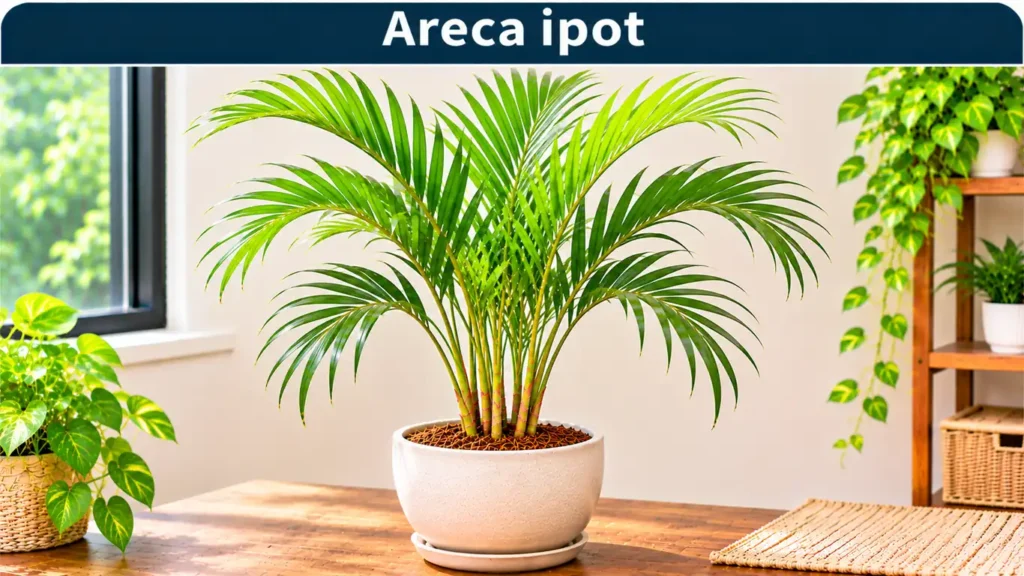
Areca ipot is a rare tropical palm native to the Philippines, known for its slender growth and attractive green foliage. This species naturally grows in warm, humid forest environments and is mainly appreciated by collectors of unusual palms. Although it is not a common houseplant, young specimens may be grown in containers with proper care. Its graceful tropical appearance makes it an interesting addition to specialized indoor gardens or greenhouse collections.
Identification
- Scientific Name: Areca ipot
- Family: Arecaceae
- Plant Type: Tropical evergreen palm
- Height: Indoor height is not well documented
- Leaves: Green, feather-shaped palm fronds
- Stems: Slender, upright palm stems
- Light: Bright, filtered sunlight
- Growth Rate: Not well documented in cultivation
Growing Conditions
Areca ipot prefers warm, humid conditions similar to its natural tropical habitat. Place young plants near a bright window where they receive filtered sunlight without exposure to harsh afternoon sun. Temperatures between 70°F and 85°F provide a reasonable starting point for indoor cultivation. Use loose, organic-rich soil that drains well while retaining some moisture. Maintain high humidity to support healthy foliage, and avoid cold drafts or sudden temperature changes.
Care and Maintenance
Water when the upper layer of soil begins to dry, keeping the roots lightly moist without allowing waterlogging. Apply diluted palm fertilizer occasionally during the growing season. Remove completely dried leaves and inspect the foliage for common pests such as spider mites and scale insects. Repot only when the roots become crowded, using a container with proper drainage. Consistent warmth and humidity help support healthy growth.
18. Areca kinabaluensis

Areca kinabaluensis is an uncommon tropical palm native to Borneo, particularly associated with the Mount Kinabalu region. This species is valued by palm enthusiasts for its distinctive botanical background and attractive green foliage. It naturally grows in humid forest environments and is rarely found in ordinary plant nurseries. Young specimens may be maintained in containers, although successful indoor cultivation requires carefully managed light, moisture, and humidity.
Identification
- Scientific Name: Areca kinabaluensis
- Family: Arecaceae
- Plant Type: Tropical evergreen palm
- Height: Mature size varies; indoor height is not well documented
- Leaves: Green, divided tropical palm foliage
- Stems: Slender, upright palm stems
- Light: Bright, indirect sunlight
- Growth Rate: Not well documented in cultivation
Growing Conditions
Areca kinabaluensis is best grown in a humid environment with bright, filtered natural light. A temperature range of approximately 65°F to 80°F can serve as a starting point, although its needs may vary with its native elevation. Use loose, organic-rich potting soil that retains light moisture while draining excess water. Keep the plant away from intense afternoon sunlight and dry indoor air. A humidifier or greenhouse setup can help maintain stable conditions for healthy foliage.
Care and Maintenance
Water regularly when the soil surface begins to dry, ensuring that the roots never remain in standing water. Apply a mild palm fertilizer during active growth, avoiding excessive feeding. Remove completely dried fronds and inspect the leaves for pests. Avoid sudden changes in temperature or humidity, which may stress the plant. Repot carefully when necessary, using a slightly larger container with adequate drainage.
19. Areca laosensis

Areca laosensis is an attractive tropical palm native to Laos, Thailand, and Vietnam. It is known for its slender stems, glossy green leaves, and graceful growth habit. This species can grow as a single-stemmed or clustering palm, creating a beautiful tropical appearance. Although uncommon as a houseplant, young specimens can be grown in containers with proper warmth, humidity, and filtered sunlight. Its relatively compact growth makes it interesting for specialized indoor palm collections.
Identification
- Scientific Name: Areca laosensis
- Common Name: Mak Lo Ka Thoen
- Family: Arecaceae
- Plant Type: Tropical evergreen palm
- Height: Up to 13 feet when mature
- Leaves: Glossy green, feather-shaped fronds with slender leaflets
- Stems: Thin, smooth, reddish stems with green crownshafts
- Light: Partial shade to filtered sunlight
- Growth Rate: Not well documented in indoor cultivation
Growing Conditions
Areca laosensis grows best in warm, humid environments with indirect sunlight or partial shade. Place young plants near a bright window where they receive gentle, filtered light. Temperatures around 70°F to 85°F are suitable for tropical indoor growing. Use fertile, organic-rich soil that retains some moisture while allowing excess water to drain. Keep the soil evenly moist without becoming waterlogged. Moderate to high humidity helps maintain healthy leaves, especially during dry weather.
Care and Maintenance
Water your Areca laosensis when the upper layer of soil begins to dry, keeping moisture levels consistent. Apply diluted palm fertilizer during spring and summer to support healthy foliage. Remove completely dried fronds and inspect the leaves regularly for spider mites or scale insects. Rotate the container occasionally to encourage balanced growth. Repot when the roots become crowded, using a slightly larger pot with proper drainage. Avoid cold drafts and sudden changes in humidity to maintain healthy growth.
20. Areca mandacanii

Areca mandacanii is a rare tropical palm native to New Guinea, admired for its attractive foliage and unusual appearance. This species is especially interesting to palm collectors because of its distinctive leaf structure and tropical growth habit. It naturally grows in warm, humid forest environments. Although uncommon as a houseplant, young specimens may be grown in containers with careful attention to lighting, temperature, and moisture. Its unique appearance makes it a beautiful addition to specialized indoor palm collections.
Identification
- Scientific Name: Areca mandacanii
- Family: Arecaceae
- Plant Type: Tropical evergreen palm
- Height: Mature height varies; indoor size is not well documented
- Leaves: Broad, divided green foliage with an unusual appearance
- Stems: Slender, upright palm trunk
- Light: Bright, filtered sunlight
- Growth Rate: Not well documented in cultivation
Growing Conditions
Areca mandacanii prefers warm, humid environments with bright, indirect sunlight. Place young plants near a bright window where they receive filtered natural light without harsh afternoon sun. Temperatures between 70°F and 85°F are a reasonable starting point for tropical cultivation. Use loose, organic-rich potting soil that provides good drainage while retaining moderate moisture. Keep the soil evenly moist but avoid waterlogging. High humidity supports healthy foliage, making a humidifier or greenhouse environment helpful for indoor cultivation.
Care and Maintenance
Water when the upper layer of soil begins to dry, maintaining consistent moisture during active growth. Apply diluted palm fertilizer occasionally throughout spring and summer to encourage healthy leaf development. Remove completely dried fronds and inspect the plant regularly for spider mites or scale insects. Avoid sudden changes in temperature and unnecessary root disturbance. Repot only when the roots become crowded, using a container with adequate drainage.
21. Areca montana

Areca montana is an attractive tropical palm native to parts of Southeast Asia, where it grows naturally in humid forest environments. This species is known for its slender stems and graceful green foliage. Its tropical appearance makes it interesting to collectors who enjoy growing uncommon palm varieties. Although it is not widely available as a houseplant, young specimens may be maintained indoors under suitable conditions. Consistent warmth, moisture, and filtered sunlight are important for healthy growth.
Identification
- Scientific Name: Areca montana
- Family: Arecaceae
- Plant Type: Tropical evergreen palm
- Height: Mature height varies; indoor growth is not well documented
- Leaves: Long, green, divided palm fronds
- Stems: Slender, upright tropical palm stems
- Light: Bright, indirect sunlight
- Growth Rate: Not well documented in cultivation
Growing Conditions
Areca montana grows best in warm, humid conditions with plenty of filtered natural light. Place the plant near a bright window, avoiding intense afternoon sunshine that could damage young foliage. Temperatures around 70°F to 85°F provide a reasonable starting point, although requirements may vary depending on its natural habitat. Use fertile, well-draining soil enriched with organic matter. Maintain consistent moisture without leaving the roots in standing water. Moderate to high humidity helps prevent leaf tips from drying.
Care and Maintenance
Water regularly when the top inch of soil starts to dry, adjusting the frequency according to indoor temperature and humidity. Feed lightly with diluted palm fertilizer during the growing season to support healthy foliage. Remove dead leaves carefully and inspect the plant for common pests. Rotate the container occasionally to encourage balanced growth. Repot when necessary, choosing a slightly larger container with proper drainage. Keep the palm away from cold drafts and sudden temperature changes.
22. Areca oxycarpa

Areca oxycarpa is a rare tropical palm native to Sulawesi, Indonesia. It is recognized for its elegant green foliage, slender trunk, and attractive tropical appearance. This species naturally grows in warm, humid environments and is mainly cultivated by palm enthusiasts interested in uncommon varieties. Young plants may be grown in containers when provided with suitable growing conditions. Its graceful leaves can create a beautiful rainforest atmosphere in specialized indoor gardens or greenhouse collections.
Identification
- Scientific Name: Areca oxycarpa
- Family: Arecaceae
- Plant Type: Tropical evergreen palm
- Height: Indoor height is not well documented
- Leaves: Long, feather-shaped green fronds
- Stems: Slender, upright trunk with a crownshaft
- Light: Bright, filtered sunlight
- Growth Rate: Not well documented in cultivation
Growing Conditions
Areca oxycarpa prefers bright, indirect sunlight and warm temperatures around 70°F to 85°F. Position young specimens near a window that receives filtered natural light without strong afternoon sun. Use loose, organic-rich potting soil with good drainage to encourage healthy root development. Keep the soil consistently moist but never waterlogged. High humidity is important for maintaining attractive foliage, especially in dry indoor environments. A humidifier or enclosed tropical growing space can provide more suitable conditions.
Care and Maintenance
Water when the upper soil layer begins to dry, keeping moisture levels steady throughout active growth. Apply diluted palm fertilizer during spring and summer to support healthy leaves and roots. Remove completely dried fronds and regularly inspect the foliage for spider mites, scale insects, or mealybugs. Avoid excessive pruning and protect the plant from cold drafts. Repot carefully when the roots become crowded, using a container with proper drainage to prevent root problems.
23. Areca rheophytica
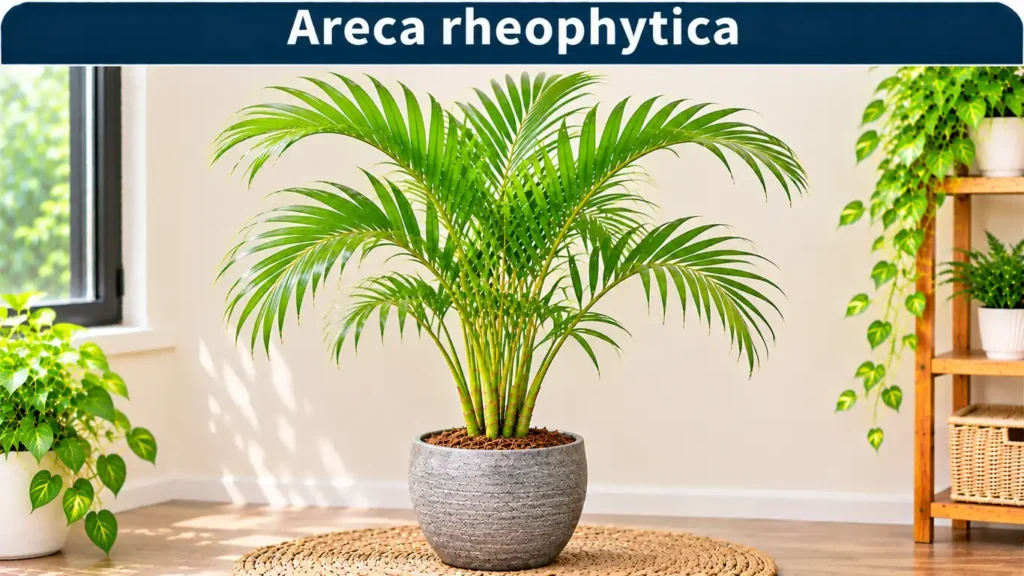
Areca rheophytica is a rare tropical palm native to Borneo, where it naturally grows near streams and rivers in humid forest environments. This species is known for its slender stems, attractive green foliage, and ability to grow in moist habitats. Although uncommon in indoor gardening, young specimens may be grown in containers with suitable care. Its graceful tropical appearance makes it an interesting choice for specialized indoor palm collections or humid greenhouse environments.
Identification
- Scientific Name: Areca rheophytica
- Family: Arecaceae
- Plant Type: Tropical evergreen palm
- Height: Indoor height is not well documented
- Leaves: Green, divided palm fronds
- Stems: Slender, upright tropical palm stems
- Light: Bright, filtered sunlight
- Growth Rate: Not well documented in cultivation
Growing Conditions
Areca rheophytica prefers warm, humid conditions with plenty of filtered natural light. Place young plants near a bright window without exposing them to strong afternoon sunlight. Temperatures between 70°F and 85°F are a reasonable starting point for indoor cultivation. Use an organic-rich potting mixture that retains moisture while allowing excess water to drain. Since this species naturally grows near waterways, consistent soil moisture is important. However, avoid stagnant water around the roots, as container-grown plants still require proper drainage.
Care and Maintenance
Water regularly to keep the soil evenly moist, especially during active growth. Apply diluted palm fertilizer occasionally during spring and summer to support healthy foliage. Remove completely dried leaves and inspect the plant for spider mites, scale insects, or other common pests. Maintain high humidity with a humidifier if necessary. Repot carefully when the roots become crowded, and avoid sudden changes in temperature or moisture levels.
24. Areca subacaulis
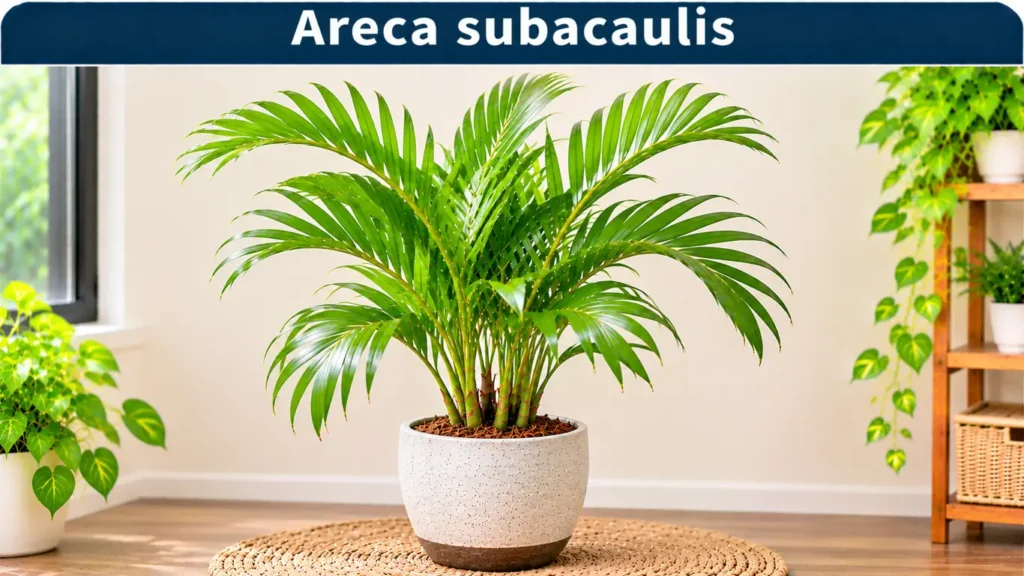
Areca subacaulis is a rare tropical palm native to Borneo, recognized for its compact growth habit and attractive green foliage. Unlike many taller palms, this species develops a very short stem, making it particularly interesting to collectors of unusual tropical plants. It naturally grows in warm, humid forest environments. Its relatively low-growing appearance may make it suitable for specialized indoor collections, although successful cultivation requires stable humidity, filtered sunlight, and careful watering.
Identification
- Scientific Name: Areca subacaulis
- Family: Arecaceae
- Plant Type: Tropical evergreen palm
- Height: Low-growing palm with a very short stem
- Leaves: Green, divided tropical palm foliage
- Stems: Short, compact stem, sometimes appearing nearly stemless
- Light: Bright, filtered sunlight
- Growth Rate: Not well documented in cultivation
Growing Conditions
Areca subacaulis prefers warm temperatures, high humidity, and gentle filtered sunlight. Place young plants in a bright indoor location away from harsh direct sunlight. Temperatures around 70°F to 85°F provide a practical starting point for tropical cultivation. Use loose, organic-rich soil that holds light moisture while draining excess water. Keep the soil consistently moist but not soggy. A humidifier or indoor greenhouse can help maintain the stable moisture levels needed for healthy foliage and root growth.
Care and Maintenance
Water when the upper soil layer begins to dry, avoiding both prolonged dryness and excessive moisture. Apply diluted palm fertilizer occasionally during the active growing season. Remove completely brown leaves carefully without damaging the plant’s short growing stem. Inspect the foliage regularly for pests and keep the plant away from cold drafts. Repot only when necessary, using a container with good drainage. Stable growing conditions are especially important for this uncommon palm.
25. Areca vidaliana

Areca vidaliana is an uncommon tropical palm native to the Philippines. This species is recognized for its attractive green foliage and slender growth habit, making it interesting to collectors of rare tropical palms. It naturally grows in warm, humid forest environments and is rarely found in ordinary houseplant nurseries. Young specimens may be grown in containers with careful attention to lighting, moisture, and humidity. Its graceful appearance can bring a natural tropical feel to specialized indoor gardens.
Identification
- Scientific Name: Areca vidaliana
- Family: Arecaceae
- Plant Type: Tropical evergreen palm
- Height: Mature and indoor heights are not well documented
- Leaves: Green, feather-shaped palm fronds
- Stems: Slender, upright tropical palm stems
- Light: Bright, indirect sunlight
- Growth Rate: Not well documented in cultivation
Growing Conditions
Areca vidaliana grows best in warm, humid environments with bright, filtered natural light. Place young plants near a window where they receive gentle sunlight without intense afternoon heat. Temperatures between 70°F and 85°F are a reasonable starting point for tropical cultivation. Use fertile, organic-rich potting soil with good drainage. Maintain consistent moisture without allowing water to collect around the roots. Moderate to high humidity supports healthy foliage and helps reduce leaf dryness in indoor environments.
Care and Maintenance
Water when the upper inch of soil begins to dry, keeping moisture levels consistent during active growth. Apply diluted palm fertilizer during spring and summer to encourage healthy foliage. Remove completely dried fronds and inspect the plant regularly for common pests such as spider mites and scale insects. Rotate the pot occasionally to support balanced growth. Repot when the roots become crowded, and protect the plant from cold drafts, excessive watering, and sudden temperature changes.
FAQs
1. Which Type of Areca Palm Is Best for Indoor Growing?
The Golden Cane Palm (Dypsis lutescens) is one of the best choices for indoor growing. It adapts well to bright, indirect sunlight and moderate humidity. Its attractive, feathery leaves and manageable growth make it suitable for living rooms, bedrooms, and offices. Other Areca species often require more specialized tropical conditions.
2. How Often Should I Water an Indoor Areca Palm?
Water your indoor Areca Palm when the top inch of soil feels dry. Most plants need more frequent watering during warmer months and less during winter. Always use a container with drainage holes to prevent waterlogging. Consistent moisture is important, but excessive watering can cause root rot and yellowing leaves.
3. Can Areca Palms Grow Indoors Without Direct Sunlight?
Yes, many Areca Palms can grow indoors without direct sunlight, provided they receive enough bright, indirect light. Place your palm near an east-facing window or another well-lit location. Avoid keeping it in dark corners, as insufficient light can slow growth and weaken the foliage. Some rare species need more specialized lighting conditions.
4. How Tall Do Areca Palms Grow Indoors?
The height of an indoor Areca Palm depends on its species and growing conditions. Golden Cane Palms commonly reach 4–8 feet indoors, while young Betel Nut Palms may remain manageable in containers for several years. Some rare Areca species grow much taller when mature and are better suited to spacious greenhouses.
5. Why Are My Indoor Areca Palm Leaves Turning Brown?
Brown leaf tips on Areca Palms commonly result from low humidity, inconsistent watering, excess fertilizer, or mineral buildup in the soil. Strong direct sunlight and cold drafts can also damage the foliage. Maintain consistent soil moisture, provide bright indirect light, and increase humidity when necessary to help keep the leaves healthy.