
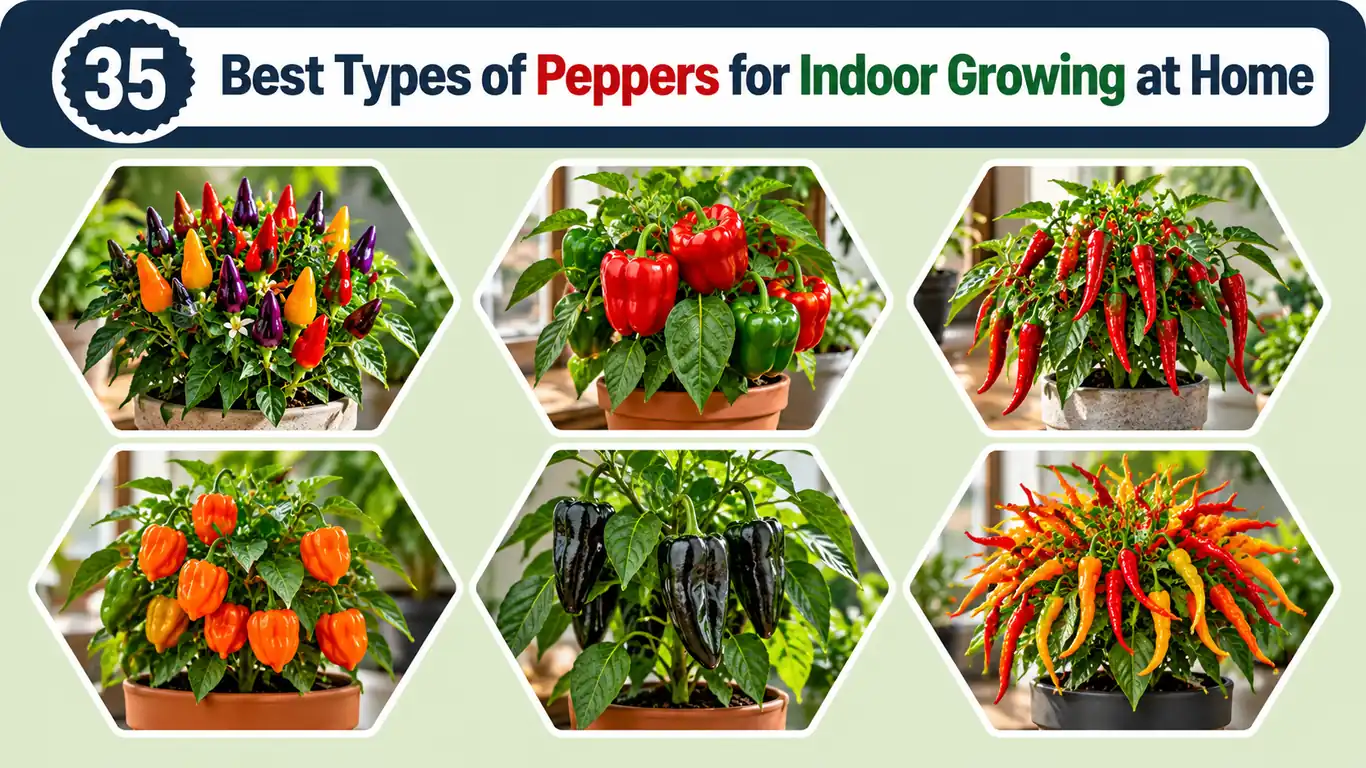
Growing peppers indoors is a great way to enjoy fresh, flavorful, and colorful harvests throughout the year. From sweet bell peppers to extremely hot chilies, many varieties thrive in containers with proper lighting, warmth, and care. Whether you have a sunny windowsill or a dedicated indoor garden, these 35 types of peppers for indoor growing offer excellent choices for beginners and experienced gardeners.
1. Jalapeño Pepper
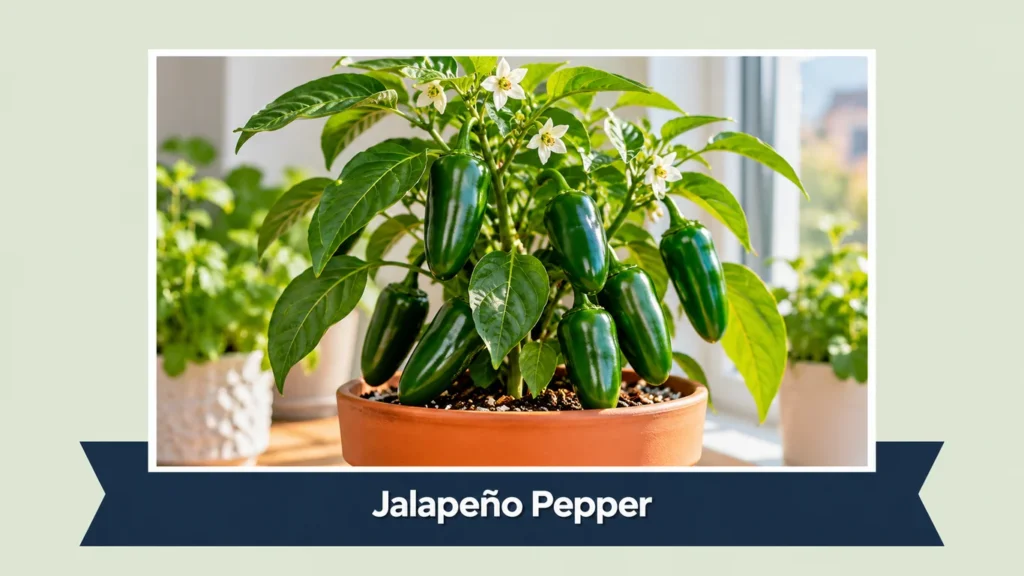
Jalapeño peppers are one of the most popular chili varieties for indoor growing because of their manageable size, attractive appearance, and productive nature. These peppers produce smooth, thick-walled fruits that typically grow 2–4 inches long and turn from deep green to bright red as they mature. With adequate sunlight, consistent watering, and proper care, jalapeño plants can thrive in containers and provide fresh, moderately spicy peppers for home cooking.
Identification
- Scientific Name: Capsicum annuum
- Plant Height: 2–3 feet, depending on the variety and growing conditions.
- Fruit Size: Approximately 2–4 inches long.
- Fruit Color: Dark green when immature, turning red when fully ripe.
- Heat Level: Typically 2,500–8,000 Scoville Heat Units (SHU).
- Growing Time: Approximately 70–90 days from transplanting to harvest.
- Appearance: Bushy green plants with pointed leaves, small white flowers, and smooth, elongated peppers.
Ideal Indoor Growing Conditions
Jalapeño peppers grow best in a warm, sunny indoor environment with temperatures between 70°F and 85°F (21°C–29°C). Place your plant near a bright south-facing window or use a full-spectrum LED grow light for approximately 12–16 hours daily.
Choose a container at least 3–5 gallons in size with proper drainage holes. Fill it with nutrient-rich, well-draining potting mix with a slightly acidic pH of around 6.0–6.8.
Maintain moderate humidity and provide gentle airflow to support healthy plant growth. During flowering, gently shake the plant or use a soft brush to encourage pollination and improve fruit production.
Watering & Maintenance Tips
Water jalapeño plants when the top inch of soil feels dry. Keep the soil consistently moist but never waterlogged, as excessive moisture can cause root rot and other problems.
Apply a balanced fertilizer during early growth, then switch to a suitable fruiting fertilizer once flowers begin developing. Avoid excessive nitrogen, which can encourage leafy growth instead of pepper production.
Prune damaged leaves and weak branches to improve airflow and maintain a compact shape. Harvest green jalapeños when they reach their desired size, or leave them on the plant until they turn red for a sweeter, more mature flavor.
2. Serrano Pepper
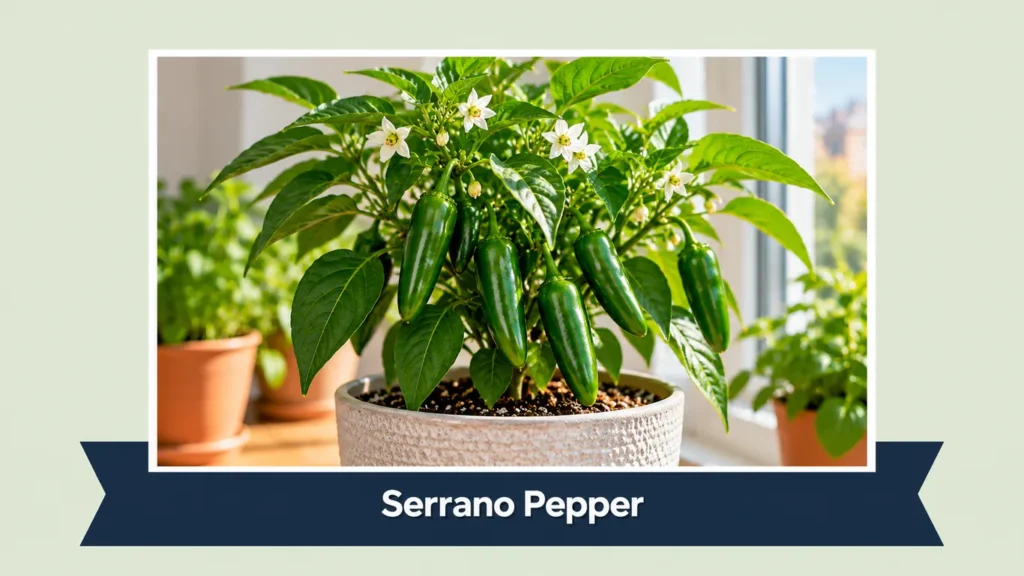
Serrano peppers are an excellent choice for indoor growing because of their compact growth habit, attractive fruits, and impressive productivity. These peppers are smaller and generally hotter than jalapeños, making them popular for homemade salsa, hot sauces, and spicy dishes. Serrano plants produce slender, smooth-skinned peppers that typically grow 1–4 inches long. With sufficient light, warm temperatures, and proper container care, serrano peppers can produce fresh chilies throughout an extended indoor growing season.
Identification
- Scientific Name: Capsicum annuum
- Plant Height: Approximately 2–3 feet, depending on growing conditions.
- Fruit Size: Usually 1–4 inches long.
- Fruit Color: Green when immature, turning red as they ripen.
- Heat Level: Approximately 10,000–23,000 Scoville Heat Units (SHU).
- Growing Time: Around 75–90 days from transplanting to harvest.
- Appearance: Bushy plants with narrow green leaves, small white flowers, and smooth, slender peppers.
Ideal Indoor Growing Conditions
Serrano peppers grow best in warm indoor environments with temperatures between 70°F and 85°F (21°C–29°C). Place the plant near a bright south-facing window or provide full-spectrum LED grow lights for approximately 12–16 hours daily.
Use a container holding at least 3–5 gallons of well-draining potting mix. The ideal soil pH ranges from 6.0 to 6.8, allowing the roots to absorb essential nutrients efficiently.
Maintain moderate humidity and proper airflow to encourage strong stems and healthy foliage. During flowering, gently shake the plant or use a small brush to help transfer pollen and support fruit development.
Watering & Maintenance Tips
Water serrano peppers when the top inch of soil becomes dry. Keep the growing medium evenly moist without allowing water to accumulate around the roots.
Apply a balanced fertilizer during vegetative growth and adjust feeding when flowering begins. Avoid excessive nitrogen because it can encourage leaf production instead of fruit development.
Remove yellowing leaves and overcrowded branches to improve airflow. Harvest serrano peppers while green for a fresh, sharp flavor, or allow them to mature to red for a sweeter and more developed taste.
3. Cayenne Pepper
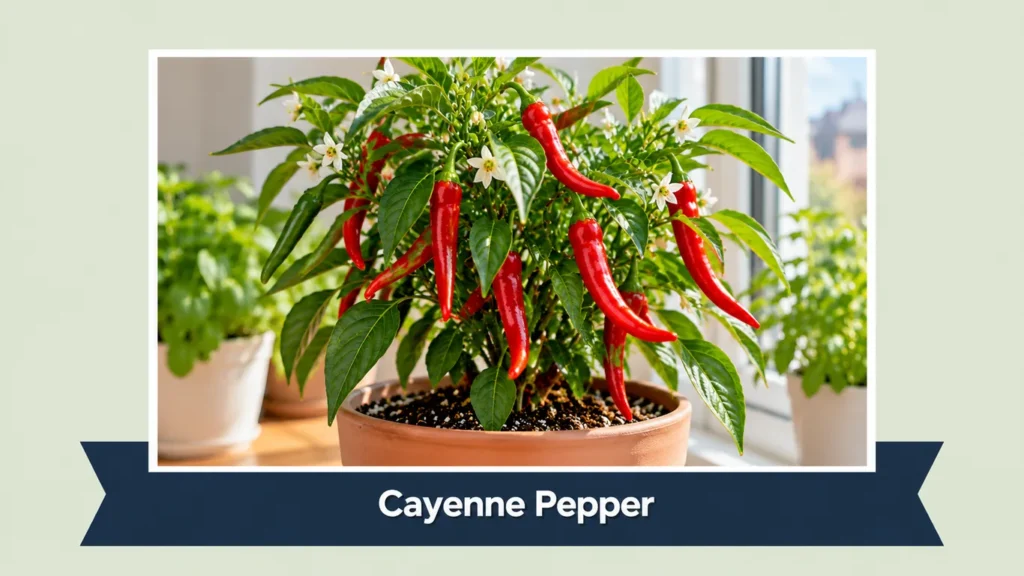
Cayenne peppers are popular for indoor cultivation because of their slender fruits, vibrant colors, and strong spicy flavor. These peppers are commonly used in hot sauces, dried chili flakes, and powdered seasonings. Cayenne plants produce long, narrow peppers that gradually change from green to bright red as they mature. Although some varieties grow relatively tall, they adapt well to containers when provided with sufficient light, warmth, and regular maintenance.
Identification
- Scientific Name: Capsicum annuum
- Plant Height: Approximately 2–4 feet, depending on the variety.
- Fruit Size: Usually 4–6 inches long.
- Fruit Color: Green when immature, becoming bright red when ripe.
- Heat Level: Typically 30,000–50,000 Scoville Heat Units (SHU).
- Growing Time: Approximately 70–90 days from transplanting to harvest.
- Appearance: Upright, branching plants with narrow leaves, white flowers, and long, thin, slightly curved peppers.
Ideal Indoor Growing Conditions
Cayenne peppers prefer warm temperatures between 70°F and 85°F (21°C–29°C). Position the container near a sunny south-facing window or provide full-spectrum LED grow lighting for approximately 12–16 hours daily.
Choose a container holding at least 3–5 gallons of well-draining potting mix. Maintain soil pH between 6.0 and 6.8 for healthy root development and nutrient availability.
Provide good air circulation and moderate humidity to reduce the risk of fungal problems. Because cayenne plants can become tall and produce numerous fruits, install a small support stake when necessary.
Watering & Maintenance Tips
Water cayenne pepper plants when the upper inch of soil feels dry. Avoid prolonged drought and excessive watering, as both conditions can interfere with flowering and fruit production.
Feed plants with a balanced fertilizer during early growth. Once flowers appear, use an appropriate fertilizer for fruiting vegetables according to the manufacturer’s recommendations.
Remove damaged leaves and prune overcrowded growth when necessary. Harvest mature red cayenne peppers regularly to encourage continued production. You can use fresh peppers immediately or dry them for long-term storage.
4. Thai Bird’s Eye Pepper
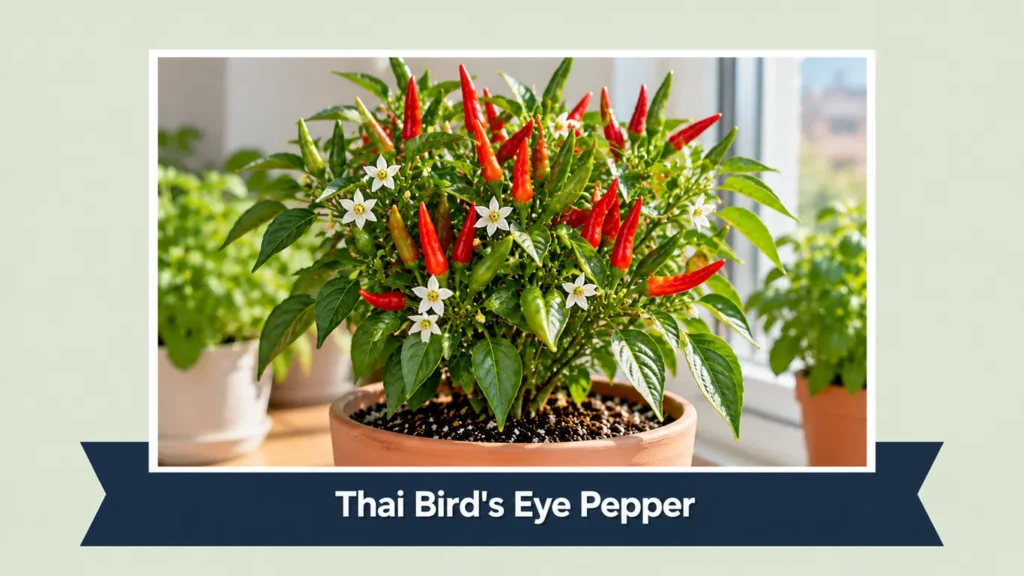
Thai Bird’s Eye peppers are a fantastic option for indoor gardeners who enjoy intensely spicy chilies. These small peppers are widely used in Southeast Asian cooking, particularly in stir-fries, curries, and spicy sauces. The plants produce numerous narrow fruits, often pointing upward, creating an attractive ornamental appearance. Their productive growth and relatively manageable size make them suitable for sunny windowsills, indoor grow shelves, and container gardens.
Identification
- Scientific Name: Capsicum annuum (common Thai bird’s eye types; the name also covers other pepper varieties).
- Plant Height: Approximately 1–3 feet, depending on the variety.
- Fruit Size: Usually 1–2 inches long.
- Fruit Color: Green when immature, changing to bright red when ripe.
- Heat Level: Commonly 50,000–100,000 Scoville Heat Units (SHU), depending on the variety.
- Growing Time: Approximately 80–100 days from transplanting to harvest.
- Appearance: Compact, bushy plants with small green leaves, delicate white flowers, and clusters of slender peppers.
Ideal Indoor Growing Conditions
Thai Bird’s Eye peppers thrive in warm temperatures between 70°F and 85°F (21°C–29°C). Provide a sunny growing location or full-spectrum LED lighting for approximately 12–16 hours daily to encourage flowering and fruit development.
Plant them in containers holding approximately 2–3 gallons of well-draining potting mix. A slightly acidic soil pH between 6.0 and 6.8 supports healthy nutrient absorption.
Maintain moderate humidity and gentle air circulation to prevent fungal diseases. These peppers are self-fertile, but gently shaking the flowering branches can improve pollen transfer when growing indoors without natural wind or insects.
Watering & Maintenance Tips
Water Thai Bird’s Eye pepper plants whenever the top inch of soil becomes dry. Maintain consistent moisture while allowing excess water to drain freely through the container.
Apply a balanced fertilizer during early growth and provide suitable nutrients during flowering and fruit development. Avoid excessive nitrogen, which may produce lush leaves with fewer peppers.
Remove weak or damaged branches to maintain good airflow. Harvest peppers when they reach their mature red color for full flavor and heat. Wear gloves when handling large quantities of hot peppers to prevent skin irritation.
5. Habanero Pepper

Habanero peppers are an exciting choice for experienced indoor gardeners who want to grow extremely hot chilies at home. These peppers are famous for their intense heat, distinctive fruity aroma, and attractive lantern-shaped fruits. Habanero plants develop dense green foliage and produce peppers that mature into bright orange, red, or other colors depending on the variety. With strong lighting, warm temperatures, and consistent care, habaneros can grow successfully in containers and provide flavorful peppers for hot sauces and spicy recipes.
Identification
- Scientific Name: Capsicum chinense
- Plant Height: Approximately 2–4 feet, depending on growing conditions.
- Fruit Size: Usually 1–2.5 inches long.
- Fruit Color: Commonly green when immature, turning orange or red when ripe.
- Heat Level: Approximately 100,000–350,000 Scoville Heat Units (SHU).
- Growing Time: Around 90–120 days from transplanting to harvest.
- Appearance: Bushy plants with broad green leaves, small pale flowers, and wrinkled, lantern-shaped peppers.
Ideal Indoor Growing Conditions
Habanero peppers prefer warm indoor conditions with daytime temperatures around 75°F–85°F (24°C–29°C). Avoid prolonged exposure to temperatures below 60°F (16°C), which can slow growth and affect flowering.
Place the plant near a bright south-facing window or use full-spectrum LED grow lights for approximately 12–16 hours daily. Strong illumination is especially important for healthy flowering and fruit production.
Choose a container holding at least 3–5 gallons of nutrient-rich, well-draining potting mix. Maintain soil pH between 6.0 and 6.8, and provide moderate humidity with sufficient air circulation.
Watering & Maintenance Tips
Water habanero plants when the top inch of soil becomes dry. Keep the soil consistently moist during flowering and fruit development, but avoid overwatering because saturated roots can cause serious growth problems.
Use a balanced fertilizer during vegetative growth and an appropriate fruiting fertilizer when flower buds appear. Monitor the leaves regularly for pests such as aphids, spider mites, and whiteflies.
Prune damaged or overcrowded branches to encourage healthy growth. Harvest habaneros once they develop their mature color and firm texture. Always wear gloves when handling these extremely hot peppers, and avoid touching your eyes or face after harvesting.
6. Scotch Bonnet Pepper
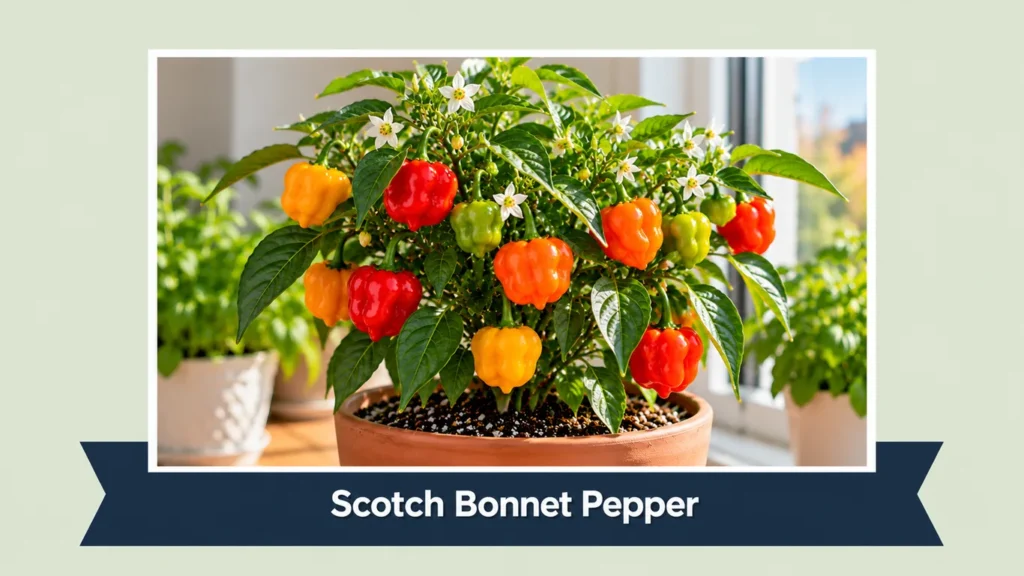
Scotch Bonnet peppers are an excellent choice for indoor gardeners who enjoy extremely spicy chilies with a distinctive fruity flavor. These peppers are especially popular in Caribbean cooking, including jerk sauces, marinades, and spicy dishes. Scotch Bonnet plants produce small, wrinkled fruits with a flattened, bonnet-like shape that makes them easy to recognize. With sufficient warmth, strong lighting, and consistent care, these peppers can grow successfully in containers and produce colorful fruits throughout an extended growing season.
Identification
- Scientific Name: Capsicum chinense
- Plant Height: Approximately 2–4 feet, depending on the variety and growing conditions.
- Fruit Size: Usually 1–2 inches wide.
- Fruit Color: Green when immature, turning yellow, orange, or red when ripe.
- Heat Level: Approximately 100,000–350,000 Scoville Heat Units (SHU).
- Growing Time: Around 90–120 days from transplanting to harvest.
- Appearance: Bushy plants with broad green leaves, small pale flowers, and flattened, wrinkled, bonnet-shaped peppers.
Ideal Indoor Growing Conditions
Scotch Bonnet peppers grow best in warm indoor environments with daytime temperatures between 75°F and 85°F (24°C–29°C). Place the container near a bright south-facing window or provide full-spectrum LED grow lights for approximately 12–16 hours daily.
Choose a container holding at least 3–5 gallons of well-draining potting mix. Maintain a slightly acidic soil pH between 6.0 and 6.8 to support healthy root development and efficient nutrient absorption.
Provide moderate humidity and gentle airflow to encourage strong growth and reduce fungal problems. During flowering, gently shake the plant or use a small brush to transfer pollen and improve fruit production.
Watering & Maintenance Tips
Water Scotch Bonnet plants when the top inch of soil feels dry. Maintain consistent moisture during flowering and fruit development, but avoid saturated soil because excessive watering can cause root rot.
Apply a balanced fertilizer during early growth and adjust feeding when flowers begin developing. Avoid excessive nitrogen, which can encourage leafy growth instead of pepper production.
Remove yellowing leaves and overcrowded branches to maintain healthy airflow. Harvest peppers once they develop their mature color and firm texture. Wear gloves when handling these extremely hot fruits to prevent skin irritation.
7. Tabasco Pepper
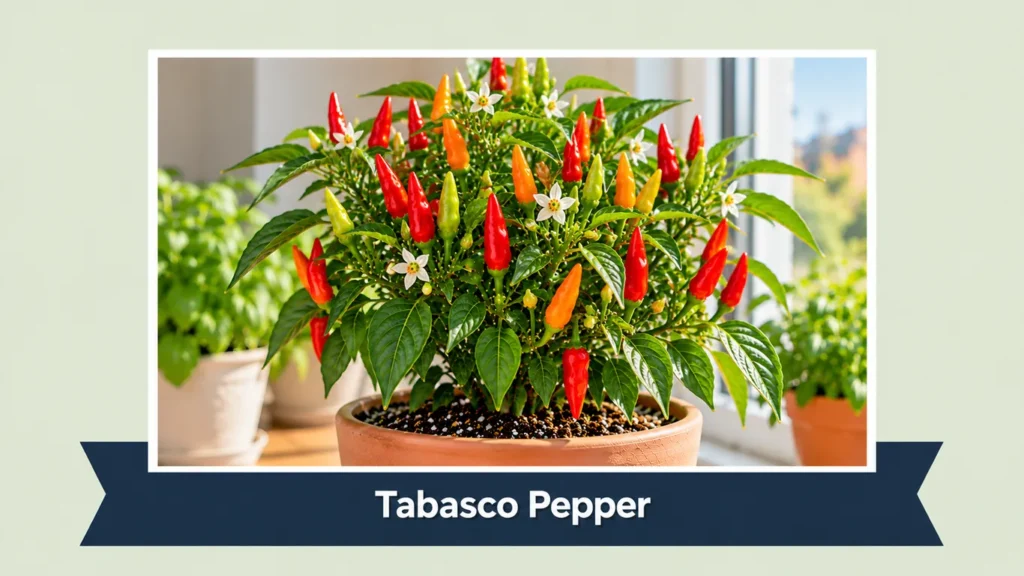
Tabasco peppers are a productive and attractive variety for indoor growing, especially for gardeners interested in making homemade hot sauces. These small, slender chilies are famous for their sharp heat and distinctive flavor. Tabasco plants produce numerous upright fruits that gradually change from green to yellow, orange, and bright red as they mature. Their ornamental appearance and relatively compact growth make them suitable for sunny indoor spaces, container gardens, and dedicated grow-light setups.
Identification
- Scientific Name: Capsicum frutescens
- Plant Height: Approximately 2–4 feet, depending on growing conditions.
- Fruit Size: Usually 1–2 inches long.
- Fruit Color: Green when immature, changing through yellow and orange to bright red.
- Heat Level: Approximately 30,000–50,000 Scoville Heat Units (SHU).
- Growing Time: Around 80–100 days from transplanting to harvest.
- Appearance: Upright, branching plants with narrow green leaves, small pale flowers, and slender peppers that often point upward.
Ideal Indoor Growing Conditions
Tabasco peppers thrive in warm indoor temperatures between 70°F and 85°F (21°C–29°C). Position the plants near a sunny south-facing window or provide full-spectrum LED lighting for approximately 12–16 hours daily to support healthy flowering.
Use a container holding at least 3–5 gallons of well-draining potting mix. Maintain soil pH between 6.0 and 6.8, and choose a growing medium that retains some moisture without becoming waterlogged.
Provide moderate humidity and good air circulation to support healthy foliage and prevent fungal problems. Since Tabasco peppers produce numerous small fruits, use a support stake if branches become heavy during fruit development.
Watering & Maintenance Tips
Water Tabasco plants when the upper inch of soil becomes dry. Maintain even moisture during active growth, but allow excess water to drain completely to prevent damage to the roots.
Feed the plants with a balanced fertilizer during vegetative growth. Once flowering begins, use a suitable fertilizer for fruiting vegetables and avoid excessive nitrogen applications.
Remove damaged leaves and overcrowded branches to improve airflow and maintain a manageable plant shape. Harvest Tabasco peppers when they turn bright red for their characteristic flavor. Regular harvesting can help maintain productivity under favorable growing conditions.
8. Hungarian Wax Pepper
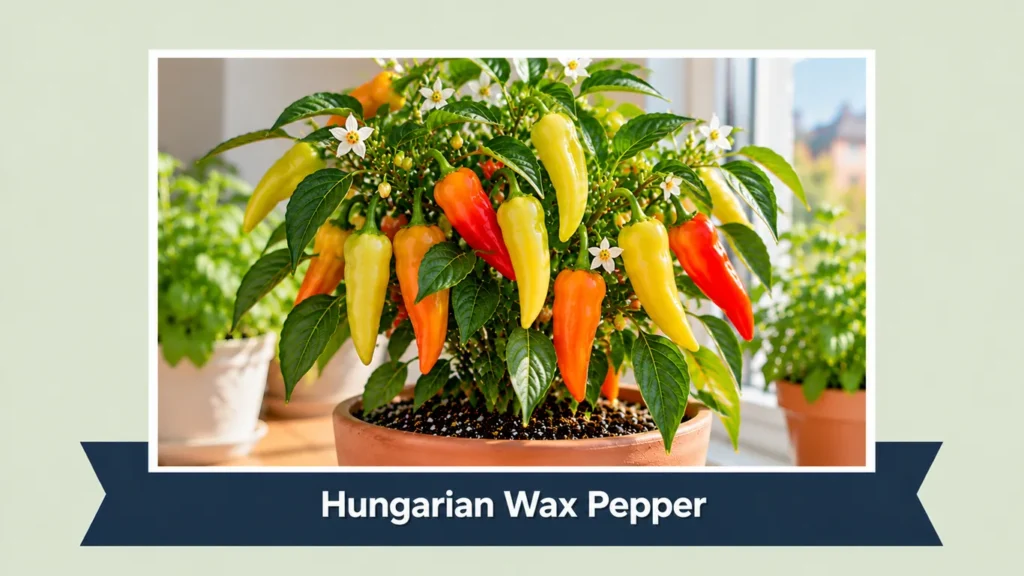
Hungarian Wax peppers are a versatile choice for indoor growing because of their productive nature, attractive fruits, and manageable container requirements. These peppers resemble banana peppers but often have a noticeably spicier flavor. Their smooth, tapered fruits typically develop a pale yellow color before ripening to orange or red. Hungarian Wax peppers are excellent for pickling, stuffing, grilling, and fresh cooking. With sufficient lighting and consistent care, they can produce a rewarding harvest in an indoor garden.
Identification
- Scientific Name: Capsicum annuum
- Plant Height: Approximately 2–3 feet, depending on growing conditions.
- Fruit Size: Usually 4–6 inches long.
- Fruit Color: Pale yellow when immature, turning orange or red when fully ripe.
- Heat Level: Commonly 5,000–10,000 Scoville Heat Units (SHU), depending on the variety.
- Growing Time: Approximately 60–80 days from transplanting to harvest.
- Appearance: Bushy plants with medium-green leaves, small white flowers, and elongated, tapered peppers with smooth, glossy skin.
Ideal Indoor Growing Conditions
Hungarian Wax peppers grow best in warm indoor environments with temperatures between 70°F and 85°F (21°C–29°C). Place the container near a bright south-facing window or use full-spectrum LED grow lights for approximately 12–16 hours daily.
Choose a container holding at least 3–5 gallons of well-draining potting mix. Maintain soil pH between 6.0 and 6.8, and ensure the container has sufficient drainage holes to prevent excess moisture accumulation.
Provide moderate humidity and gentle air circulation to support healthy foliage and flowering. During fruit development, install a small support stake if the branches begin bending under the weight of developing peppers.
Watering & Maintenance Tips
Water Hungarian Wax pepper plants when the top inch of soil feels dry. Keep the growing medium consistently moist during flowering and fruit production, but avoid overwatering because saturated soil can damage the roots.
Apply a balanced fertilizer during early growth and adjust feeding as the plants begin producing flowers. Avoid excessive nitrogen, which may encourage unnecessary leaf growth and reduce fruit production.
Remove damaged leaves and weak branches to maintain good airflow. Harvest the peppers when they develop a firm texture and pale yellow color, or allow them to ripen to orange or red for a sweeter, more mature flavor. Regular harvesting encourages continued fruit development under suitable growing conditions.
9. Banana Pepper
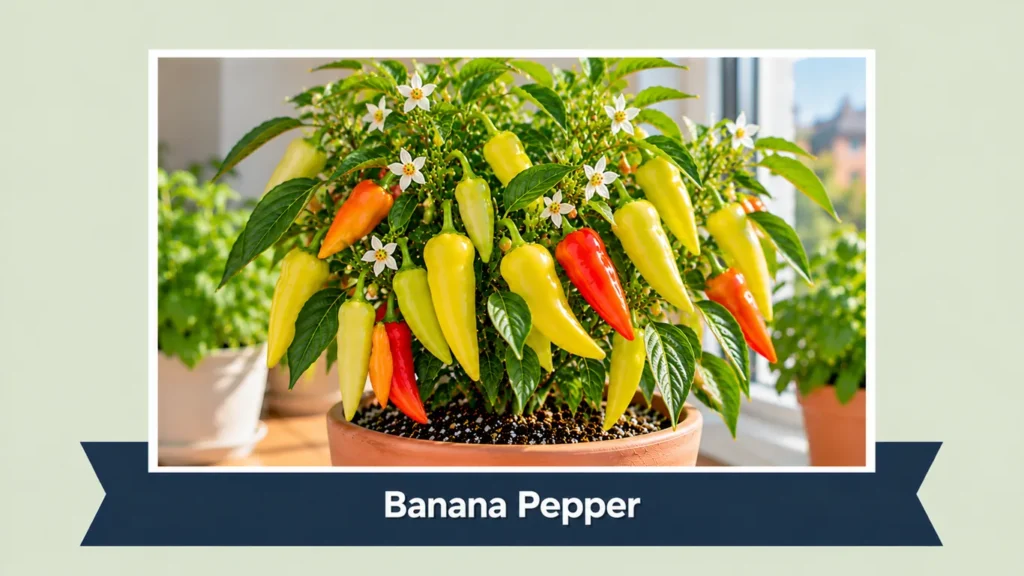
Banana peppers are an excellent choice for indoor growing because of their mild flavor, attractive appearance, and productive growth habit. These peppers produce long, curved fruits that resemble small bananas, making them easy to recognize. Banana peppers are commonly used in salads, sandwiches, pickles, and stuffed pepper recipes. Their relatively manageable plant size and adaptability to container gardening make them suitable for indoor growing. With adequate lighting, warmth, and regular maintenance, banana pepper plants can produce fresh peppers throughout an extended growing season.
Identification
- Scientific Name: Capsicum annuum
- Plant Height: Approximately 2–3 feet, depending on growing conditions.
- Fruit Size: Usually 4–7 inches long.
- Fruit Color: Pale yellow when immature, turning orange or red when fully ripe.
- Heat Level: Typically 0–500 Scoville Heat Units (SHU) for sweet varieties.
- Growing Time: Approximately 60–80 days from transplanting to harvest.
- Appearance: Bushy green plants with broad leaves, small white flowers, and smooth, elongated, slightly curved peppers.
Ideal Indoor Growing Conditions
Banana peppers grow best in warm indoor environments with temperatures between 70°F and 85°F (21°C–29°C). Place the plant near a bright south-facing window or provide full-spectrum LED grow lights for approximately 12–16 hours daily to encourage flowering and fruit development.
Choose a container holding at least 3–5 gallons of nutrient-rich, well-draining potting mix. Maintain soil pH between 6.0 and 6.8 to support healthy root development and efficient nutrient absorption.
Provide moderate humidity and gentle airflow to encourage strong stems and healthy foliage. During flowering, gently shake the plant or use a soft brush to help transfer pollen and improve fruit production.
Watering & Maintenance Tips
Water banana pepper plants when the top inch of soil feels dry. Maintain consistent moisture during flowering and fruit development, but avoid waterlogged conditions that can damage the roots.
Apply a balanced fertilizer during early growth and adjust feeding when flowers begin appearing. Avoid excessive nitrogen because it may encourage leafy growth instead of producing healthy peppers.
Remove damaged leaves and overcrowded branches to improve airflow. Harvest banana peppers when they reach their desired size and pale yellow color, or allow them to mature to orange or red for a sweeter flavor. Regular harvesting can encourage continued fruit production.
10. Shishito Pepper

Shishito peppers are a fantastic option for indoor gardeners who enjoy mild, flavorful peppers with a unique appearance. These Japanese peppers are especially popular for grilling, roasting, and quick pan-frying. Shishito plants produce slender, slightly wrinkled fruits that are usually harvested while green. Most shishito peppers are mild, although occasional fruits can develop noticeable heat. Their productive nature and manageable growth habit make them suitable for indoor container gardens, sunny windowsills, and dedicated grow-light setups.
Identification
- Scientific Name: Capsicum annuum
- Plant Height: Approximately 2–3 feet, depending on the variety and growing conditions.
- Fruit Size: Usually 3–4 inches long.
- Fruit Color: Bright green when immature, turning red when fully ripe.
- Heat Level: Typically 50–200 Scoville Heat Units (SHU), although some fruits can be hotter.
- Growing Time: Approximately 60–80 days from transplanting to harvest.
- Appearance: Compact, branching plants with green leaves, small white flowers, and slender, slightly wrinkled peppers.
Ideal Indoor Growing Conditions
Shishito peppers thrive in warm indoor temperatures between 70°F and 85°F (21°C–29°C). Position the container near a sunny south-facing window or provide full-spectrum LED lighting for approximately 12–16 hours daily to support healthy growth.
Use a container holding at least 3–5 gallons of well-draining potting mix. Maintain a slightly acidic soil pH between 6.0 and 6.8, allowing the roots to absorb essential nutrients efficiently.
Provide moderate humidity and proper air circulation to reduce fungal problems. During flowering, gently shake the branches or use a small brush to encourage pollen transfer and support fruit development.
Watering & Maintenance Tips
Water shishito pepper plants when the upper inch of soil becomes dry. Keep the growing medium evenly moist without allowing excess water to accumulate around the roots.
Apply a balanced fertilizer during vegetative growth and adjust feeding when flower buds appear. Avoid excessive nitrogen applications because they can encourage leafy growth instead of pepper production.
Remove yellowing leaves and weak branches to improve airflow and maintain a manageable shape. Harvest shishito peppers while green and approximately 3–4 inches long for their characteristic mild flavor. Picking mature fruits regularly encourages continued production under favorable conditions.
11. Padrón Pepper
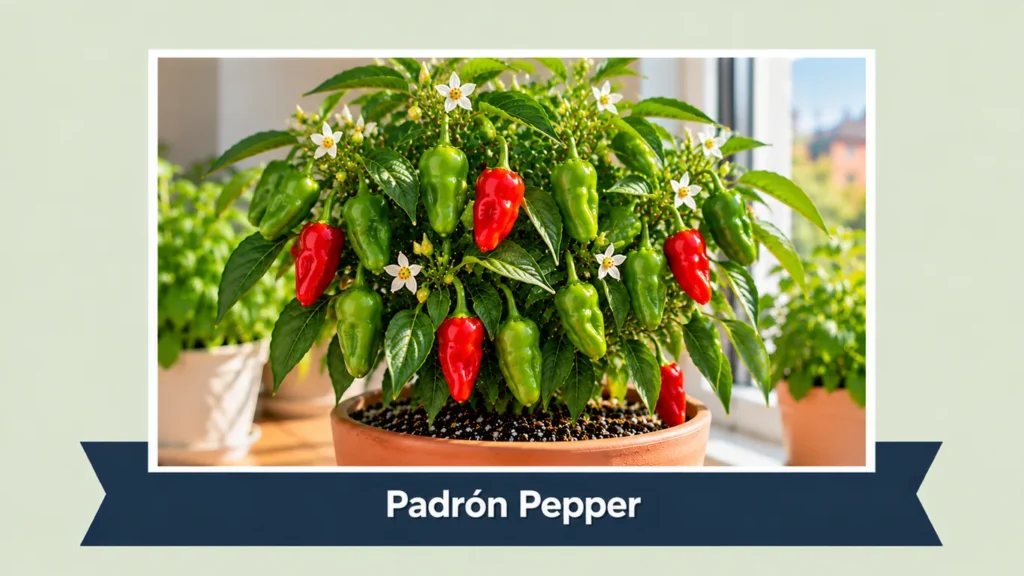
Padrón peppers are a popular Spanish variety that grows well indoors when provided with sufficient light and warmth. These small green peppers are famous for their mild, slightly sweet flavor, although some fruits develop unexpected heat. Padrón peppers are traditionally pan-fried and served with olive oil and sea salt. Their compact growth habit and frequent fruit production make them attractive for container gardening. With proper care, indoor Padrón plants can provide a steady supply of fresh peppers for home cooking.
Identification
- Scientific Name: Capsicum annuum
- Plant Height: Approximately 2–3 feet, depending on growing conditions.
- Fruit Size: Usually 2–4 inches long.
- Fruit Color: Green when immature, turning red as they mature.
- Heat Level: Commonly 500–2,500 Scoville Heat Units (SHU), with considerable variation between fruits.
- Growing Time: Approximately 60–80 days from transplanting to harvest.
- Appearance: Bushy plants with medium-green leaves, small white flowers, and short, tapered peppers with slightly irregular surfaces.
Ideal Indoor Growing Conditions
Padrón peppers grow best in warm indoor environments with temperatures between 70°F and 85°F (21°C–29°C). Place the plant near a bright south-facing window or use full-spectrum LED grow lights for approximately 12–16 hours daily to encourage flowering.
Choose a container holding at least 3–5 gallons of nutrient-rich, well-draining potting mix. Maintain soil pH between 6.0 and 6.8 to promote healthy roots and consistent nutrient availability.
Provide moderate humidity and gentle airflow to support plant health and reduce disease problems. During flowering, gently shake the plant or use a soft brush to encourage pollination and improve fruit production indoors.
Watering & Maintenance Tips
Water Padrón pepper plants when the top inch of soil feels dry. Maintain consistent soil moisture during active growth, but avoid overwatering because excessively wet conditions can lead to root problems.
Feed the plants with a balanced fertilizer during early growth and provide appropriate nutrients during flowering and fruit development. Avoid excessive nitrogen, which can encourage dense foliage and fewer peppers.
Remove damaged leaves and overcrowded branches to maintain healthy airflow. Harvest Padrón peppers while they are young, green, and approximately 2–3 inches long for their traditional cooking flavor. Regular harvesting helps encourage continued flowering and fruit production.
12. Cherry Pepper
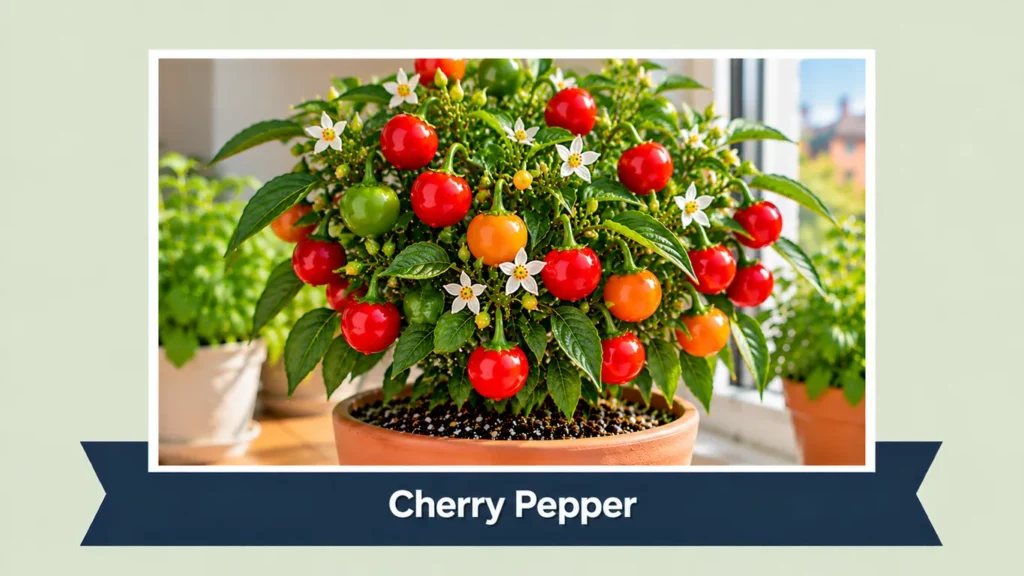
Cherry peppers are an attractive and productive variety for indoor growing because of their compact, rounded fruits and versatile culinary uses. These peppers resemble small cherries or miniature tomatoes and are commonly used for pickling, stuffing, and adding flavor to salads. Cherry pepper varieties range from sweet to moderately spicy, making them suitable for different taste preferences. Their colorful fruits and bushy growth habit also provide decorative appeal, making them a rewarding addition to indoor container gardens.
Identification
- Scientific Name: Capsicum annuum
- Plant Height: Approximately 2–3 feet, depending on the variety.
- Fruit Size: Usually 1–2 inches in diameter.
- Fruit Color: Green when immature, turning bright red when fully ripe.
- Heat Level: Approximately 0–5,000 Scoville Heat Units (SHU), depending on the variety.
- Growing Time: Approximately 70–90 days from transplanting to harvest.
- Appearance: Compact, bushy plants with broad green leaves, small white flowers, and round, thick-walled peppers resembling cherries.
Ideal Indoor Growing Conditions
Cherry peppers grow best in warm indoor environments with temperatures between 70°F and 85°F (21°C–29°C). Position the container near a sunny south-facing window or provide full-spectrum LED grow lighting for approximately 12–16 hours daily.
Use a container holding at least 3–5 gallons of well-draining potting mix. Maintain a slightly acidic soil pH between 6.0 and 6.8 to encourage healthy root development and effective nutrient absorption.
Provide moderate humidity and gentle air circulation to support strong growth and healthy flowering. Since cherry peppers can develop numerous fruits on individual branches, install small support stakes when necessary to prevent stems from bending.
Watering & Maintenance Tips
Water cherry pepper plants when the upper inch of soil becomes dry. Keep the growing medium consistently moist during flowering and fruit development, but avoid saturated soil that can lead to root rot.
Apply a balanced fertilizer during early vegetative growth and adjust feeding when flowers begin developing. Avoid excessive nitrogen because it may encourage unnecessary leaf production instead of healthy fruit development.
Remove yellowing leaves and weak branches to improve airflow and maintain plant health. Harvest cherry peppers when they reach their mature size and develop a bright red color. Depending on the variety, the fruits can be enjoyed fresh, pickled, or stuffed for flavorful homemade dishes.
13. Mini Bell Pepper
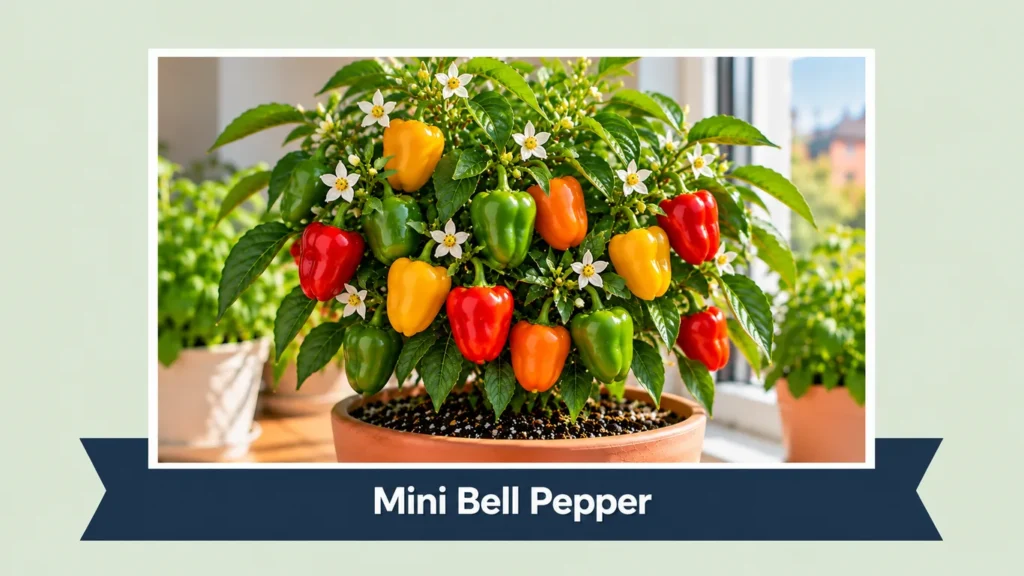
Mini bell peppers are an excellent choice for indoor growing because of their compact fruits, sweet flavor, and attractive colors. These small peppers are perfect for fresh salads, snacks, stuffing, and everyday cooking. Mini bell pepper plants produce smooth, thick-walled fruits that gradually develop bright red, yellow, or orange colors depending on the variety. Their manageable growth habit and productive nature make them suitable for container gardens, sunny windowsills, and indoor growing systems with sufficient lighting.
Identification
- Scientific Name: Capsicum annuum
- Plant Height: Approximately 1–3 feet, depending on the variety and growing conditions.
- Fruit Size: Usually 2–3 inches long.
- Fruit Color: Green when immature, turning red, yellow, or orange when ripe.
- Heat Level: 0 Scoville Heat Units (SHU).
- Growing Time: Approximately 60–90 days from transplanting to harvest.
- Appearance: Bushy green plants with broad leaves, small white flowers, and compact, blocky or elongated bell-shaped peppers.
Ideal Indoor Growing Conditions
Mini bell peppers grow best in warm indoor environments with temperatures between 70°F and 85°F (21°C–29°C). Place the container near a bright south-facing window or provide full-spectrum LED grow lights for approximately 12–16 hours daily to encourage flowering and fruit development.
Choose a container holding at least 3–5 gallons of nutrient-rich, well-draining potting mix. Maintain soil pH between 6.0 and 6.8 to support healthy root development and efficient nutrient absorption.
Provide moderate humidity and gentle airflow to encourage strong stems and healthy foliage. During flowering, gently shake the plant or use a soft brush to encourage pollen transfer and improve fruit production.
Watering & Maintenance Tips
Water mini bell pepper plants when the top inch of soil feels dry. Keep the growing medium consistently moist during flowering and fruit development, but avoid waterlogged conditions that may damage the roots.
Apply a balanced fertilizer during early growth and adjust feeding when flowers begin appearing. Avoid excessive nitrogen because it can encourage leafy growth instead of healthy fruit production.
Remove damaged leaves and overcrowded branches to improve airflow. Harvest mini bell peppers when they reach their mature size and develop their characteristic bright color. Regular harvesting can encourage continued flowering and fruit development under suitable indoor growing conditions.
14. Lunchbox Red Pepper
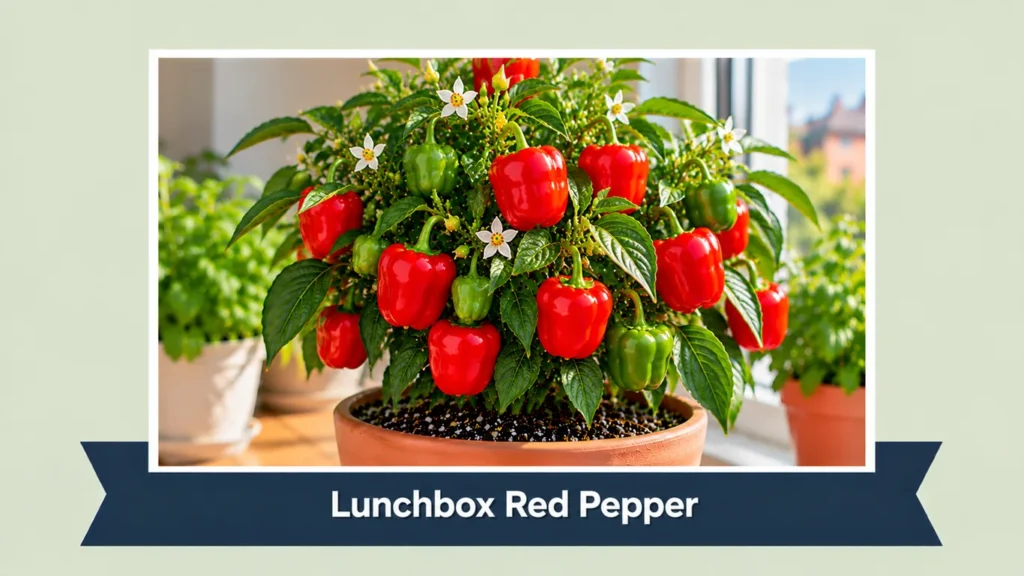
Lunchbox Red peppers are a popular sweet pepper variety for indoor gardeners who want colorful, flavorful fruits in a manageable growing space. These peppers produce small, elongated fruits with a crisp texture and naturally sweet flavor. They are ideal for fresh snacks, salads, lunchboxes, and light cooking. Lunchbox Red plants develop attractive green foliage and numerous peppers that turn bright red when fully mature. With strong lighting, consistent watering, and proper container care, they can provide a rewarding indoor harvest.
Identification
- Scientific Name: Capsicum annuum
- Plant Height: Approximately 2–3 feet, depending on growing conditions.
- Fruit Size: Usually 2–3 inches long.
- Fruit Color: Green when immature, turning bright red when fully ripe.
- Heat Level: 0 Scoville Heat Units (SHU).
- Growing Time: Approximately 65–85 days from transplanting to harvest.
- Appearance: Bushy plants with broad green leaves, small white flowers, and smooth, elongated miniature peppers.
Ideal Indoor Growing Conditions
Lunchbox Red peppers thrive in warm indoor temperatures between 70°F and 85°F (21°C–29°C). Position the plant near a sunny south-facing window or provide full-spectrum LED lighting for approximately 12–16 hours daily to encourage healthy growth.
Use a container holding at least 3–5 gallons of well-draining potting mix. Maintain a slightly acidic soil pH between 6.0 and 6.8, allowing the roots to absorb essential nutrients efficiently.
Provide moderate humidity and proper air circulation to reduce fungal problems and support strong plant growth. During flowering, gently shake the branches or use a small brush to improve pollen transfer and encourage fruit development.
Watering & Maintenance Tips
Water Lunchbox Red pepper plants when the upper inch of soil becomes dry. Maintain even moisture throughout the growing season, but allow excess water to drain freely to prevent root damage.
Apply a balanced fertilizer during vegetative growth and adjust feeding when flower buds develop. Avoid excessive nitrogen applications because they may encourage dense foliage instead of productive flowering.
Remove yellowing leaves and weak branches to improve airflow and maintain a compact appearance. Harvest Lunchbox Red peppers when they reach their mature size and develop a bright red color. Regular harvesting helps maintain plant productivity and provides a consistent supply of sweet peppers.
15. Lunchbox Yellow Pepper
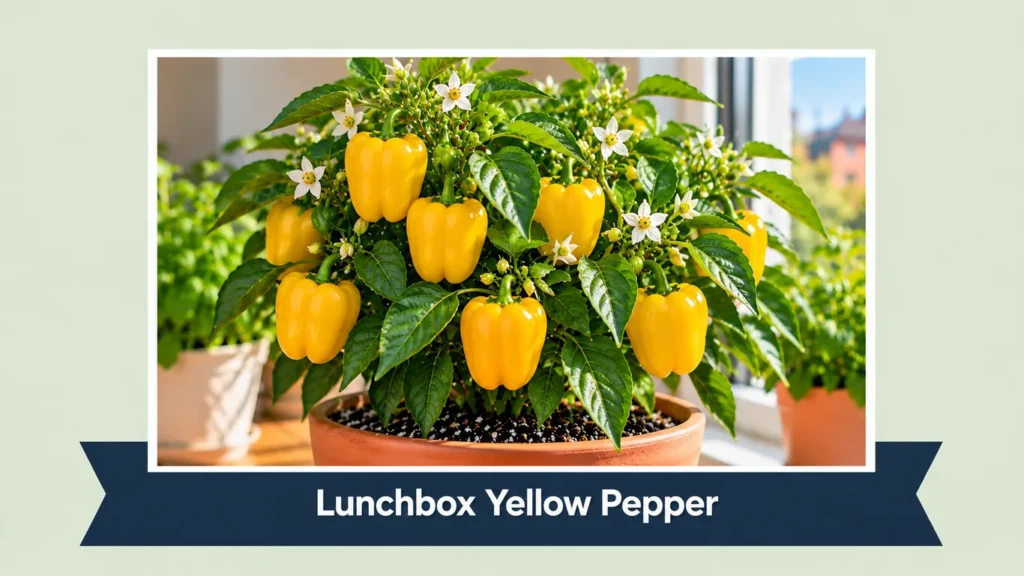
Lunchbox Yellow peppers are an attractive and productive sweet pepper variety that adapts well to indoor container gardening. These small peppers are known for their bright yellow color, crisp texture, and pleasantly sweet flavor. They are especially suitable for fresh snacks, colorful salads, sandwiches, and vegetable platters. Lunchbox Yellow plants produce numerous miniature fruits on bushy green stems, making them both decorative and practical. With adequate warmth, lighting, and consistent care, they can produce fresh peppers indoors.
Identification
- Scientific Name: Capsicum annuum
- Plant Height: Approximately 2–3 feet, depending on growing conditions.
- Fruit Size: Usually 2–3 inches long.
- Fruit Color: Green when immature, turning bright yellow when fully ripe.
- Heat Level: 0 Scoville Heat Units (SHU).
- Growing Time: Approximately 65–85 days from transplanting to harvest.
- Appearance: Compact, branching plants with green leaves, small white flowers, and smooth, elongated yellow peppers.
Ideal Indoor Growing Conditions
Lunchbox Yellow peppers grow best in warm indoor environments with temperatures between 70°F and 85°F (21°C–29°C). Place the container near a bright south-facing window or provide full-spectrum LED grow lights for approximately 12–16 hours daily to encourage flowering.
Choose a container holding at least 3–5 gallons of nutrient-rich, well-draining potting mix. Maintain soil pH between 6.0 and 6.8 to promote healthy root development and reliable nutrient availability.
Provide moderate humidity and gentle airflow to encourage strong foliage and reduce disease problems. During flowering, gently shake the plant or use a soft brush to support pollen transfer and improve fruit production.
Watering & Maintenance Tips
Water Lunchbox Yellow pepper plants when the top inch of soil feels dry. Keep the growing medium consistently moist during flowering and fruit development, but avoid excessive watering that can cause root problems.
Feed plants with a balanced fertilizer during early growth and adjust nutrients when flowering begins. Avoid excessive nitrogen because it may encourage unnecessary leaf development instead of healthy pepper production.
Remove damaged leaves and overcrowded branches to maintain proper airflow. Harvest Lunchbox Yellow peppers when they reach their mature size and develop a bright golden-yellow color. Picking ripe peppers regularly can encourage continued production under favorable growing conditions.
16. Lunchbox Orange Pepper

Lunchbox Orange peppers are a wonderful choice for indoor gardeners who enjoy growing sweet, colorful vegetables in containers. These miniature peppers produce smooth, elongated fruits with a vibrant orange color and a crisp, sweet flavor. They are excellent for fresh eating, salads, snacking, and light cooking. Lunchbox Orange plants develop bushy green foliage and attractive clusters of small peppers, making them suitable for decorative indoor gardens. With sufficient lighting and regular maintenance, they can provide a productive harvest.
Identification
- Scientific Name: Capsicum annuum
- Plant Height: Approximately 2–3 feet, depending on growing conditions.
- Fruit Size: Usually 2–3 inches long.
- Fruit Color: Green when immature, turning bright orange when fully ripe.
- Heat Level: 0 Scoville Heat Units (SHU).
- Growing Time: Approximately 65–85 days from transplanting to harvest.
- Appearance: Bushy green plants with broad leaves, small white flowers, and smooth, elongated miniature orange peppers.
Ideal Indoor Growing Conditions
Lunchbox Orange peppers thrive in warm indoor temperatures between 70°F and 85°F (21°C–29°C). Position the container near a sunny south-facing window or provide full-spectrum LED lighting for approximately 12–16 hours daily to support healthy flowering.
Use a container holding at least 3–5 gallons of well-draining potting mix. Maintain a slightly acidic soil pH between 6.0 and 6.8 to encourage strong root development and efficient nutrient absorption.
Provide moderate humidity and proper air circulation to maintain healthy foliage and reduce fungal problems. During flowering, gently shake the branches or use a small brush to encourage pollen transfer and improve fruit production.
Watering & Maintenance Tips
Water Lunchbox Orange pepper plants when the upper inch of soil becomes dry. Maintain consistent moisture during active growth, but avoid waterlogged conditions because excessive moisture can damage the roots.
Apply a balanced fertilizer during vegetative growth and adjust feeding when flowers begin developing. Avoid excessive nitrogen applications because they can encourage leafy growth instead of productive flowering.
Remove yellowing leaves and weak branches to maintain healthy airflow and a manageable plant shape. Harvest Lunchbox Orange peppers when they reach their mature size and develop a vibrant orange color. Regular harvesting encourages continued flowering and helps maintain production under suitable indoor growing conditions.
17. California Wonder Bell Pepper
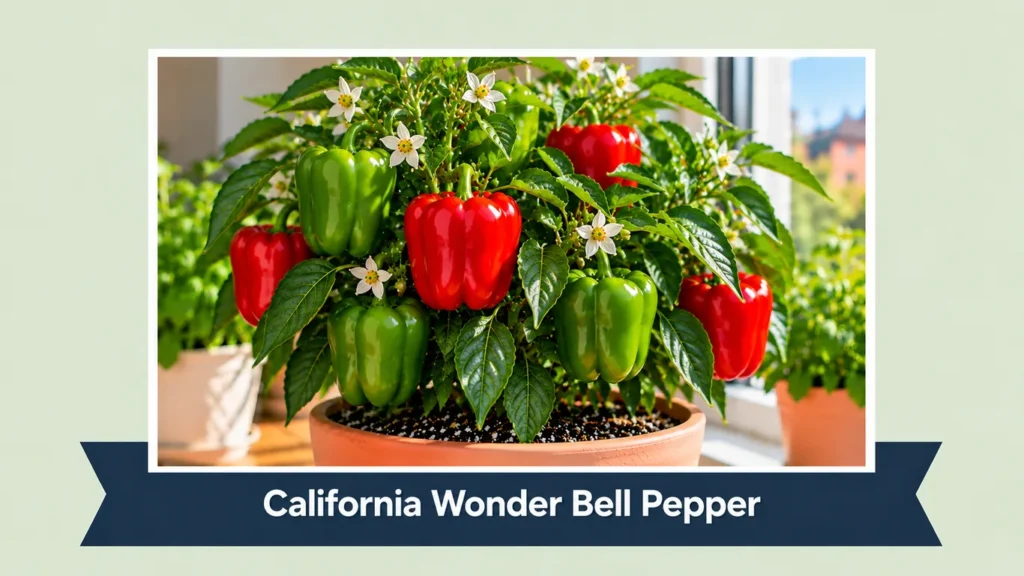
California Wonder bell peppers are a popular sweet pepper variety for indoor gardeners who want to grow large, flavorful fruits at home. These peppers produce thick-walled, blocky fruits that are excellent for stuffing, salads, grilling, and everyday cooking. California Wonder plants develop strong green stems and broad foliage, supporting several large peppers as they mature. Although they require more space than miniature varieties, they can grow successfully indoors with adequate lighting, suitable containers, and consistent maintenance.
Identification
- Scientific Name: Capsicum annuum
- Plant Height: Approximately 2–3 feet, depending on growing conditions.
- Fruit Size: Usually 3–4 inches long and wide.
- Fruit Color: Dark green when immature, turning bright red when fully ripe.
- Heat Level: 0 Scoville Heat Units (SHU).
- Growing Time: Approximately 70–90 days from transplanting to harvest.
- Appearance: Bushy plants with broad green leaves, small white flowers, and large, blocky, thick-walled peppers.
Ideal Indoor Growing Conditions
California Wonder bell peppers grow best in warm indoor environments with temperatures between 70°F and 85°F (21°C–29°C). Place the container near a bright south-facing window or provide full-spectrum LED grow lights for approximately 12–16 hours daily to encourage flowering and fruit development.
Choose a container holding at least 5 gallons of nutrient-rich, well-draining potting mix. Maintain soil pH between 6.0 and 6.8 to support healthy root development and efficient nutrient absorption.
Provide moderate humidity and gentle airflow to encourage strong stems and healthy foliage. Since California Wonder peppers produce relatively large fruits, install a support stake or small plant cage to prevent branches from bending under their weight.
Watering & Maintenance Tips
Water California Wonder bell pepper plants when the top inch of soil feels dry. Maintain consistent moisture during flowering and fruit development, but avoid waterlogged conditions that can damage the roots.
Apply a balanced fertilizer during early growth and adjust feeding when flowers begin developing. Avoid excessive nitrogen because it may encourage unnecessary leaf growth instead of healthy fruit production.
Remove damaged leaves and overcrowded branches to improve airflow. Harvest California Wonder peppers when they reach their mature size and firm texture, or allow them to turn bright red for a sweeter flavor. Regular harvesting can support continued production under favorable conditions.
18. Sweet Italian Pepper
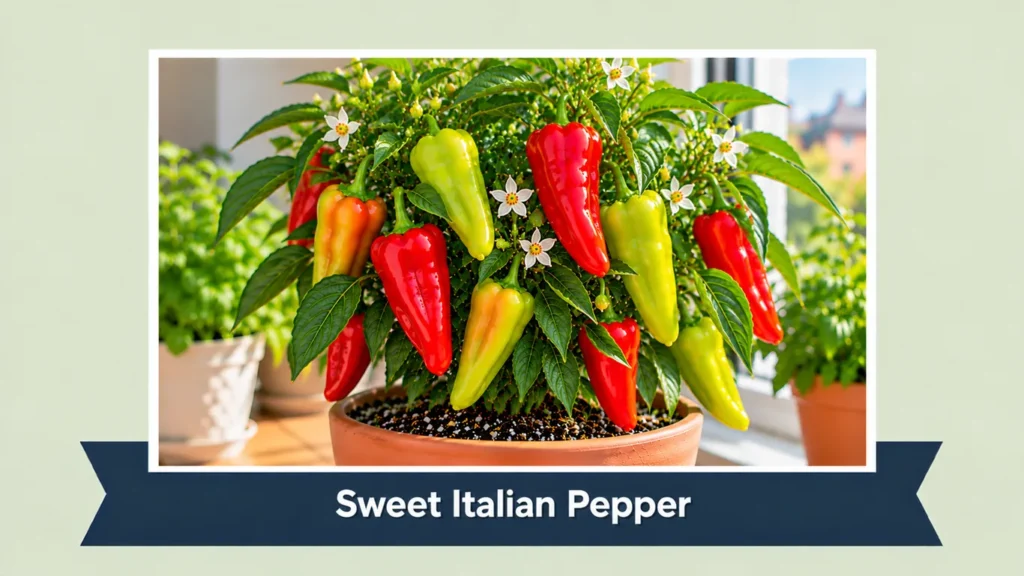
Sweet Italian peppers are an excellent choice for indoor gardeners who enjoy growing long, flavorful peppers for home cooking. These peppers are known for their mild sweetness, thin walls, and elongated shape, making them ideal for roasting, frying, grilling, and stuffing. Sweet Italian pepper plants produce attractive green foliage and numerous tapered fruits that gradually change color as they mature. With sufficient warmth, strong lighting, and regular maintenance, these peppers can grow successfully in spacious indoor containers.
Identification
- Scientific Name: Capsicum annuum
- Plant Height: Approximately 2–3 feet, depending on the variety and growing conditions.
- Fruit Size: Usually 5–8 inches long.
- Fruit Color: Green when immature, turning red or yellow when fully ripe, depending on the variety.
- Heat Level: Typically 0 Scoville Heat Units (SHU) for sweet varieties.
- Growing Time: Approximately 65–85 days from transplanting to harvest.
- Appearance: Bushy plants with green leaves, small white flowers, and long, tapered, slightly curved peppers.
Ideal Indoor Growing Conditions
Sweet Italian peppers thrive in warm indoor temperatures between 70°F and 85°F (21°C–29°C). Position the container near a sunny south-facing window or provide full-spectrum LED lighting for approximately 12–16 hours daily to encourage healthy flowering.
Use a container holding at least 3–5 gallons of well-draining potting mix. Maintain a slightly acidic soil pH between 6.0 and 6.8, allowing the roots to absorb essential nutrients efficiently.
Provide moderate humidity and proper air circulation to reduce fungal problems and encourage strong plant growth. During flowering, gently shake the branches or use a soft brush to support pollen transfer and improve fruit development.
Watering & Maintenance Tips
Water Sweet Italian pepper plants when the upper inch of soil becomes dry. Keep the growing medium evenly moist during active growth, but allow excess water to drain completely to prevent root damage.
Apply a balanced fertilizer during vegetative growth and adjust feeding when flower buds develop. Avoid excessive nitrogen applications because they may encourage dense foliage instead of productive flowering.
Remove yellowing leaves and weak branches to improve airflow and maintain a manageable appearance. Harvest Sweet Italian peppers when they reach their desired size and mature color. You can pick them while green or allow them to ripen fully for a sweeter and richer flavor.
19. Cubanelle Pepper
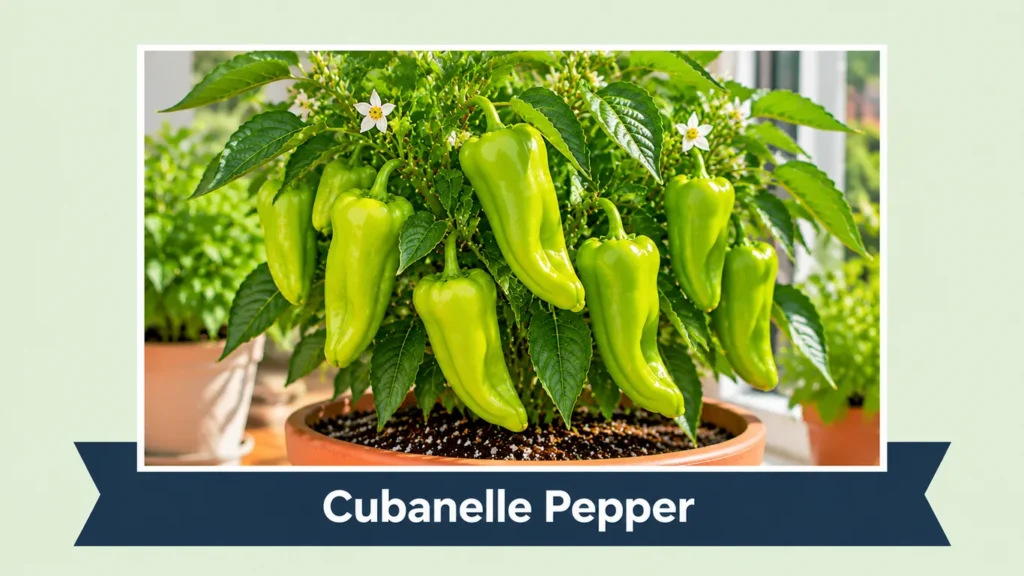
Cubanelle peppers are a versatile sweet pepper variety that can grow successfully indoors with adequate space and lighting. Often called Italian frying peppers, Cubanelles are known for their mild flavor, thin walls, and slightly wrinkled appearance. These peppers are excellent for sautéing, stuffing, roasting, and preparing traditional Mediterranean and Caribbean dishes. Cubanelle plants develop bushy green foliage and produce long, tapered fruits that change from pale greenish-yellow to bright red as they ripen.
Identification
- Scientific Name: Capsicum annuum
- Plant Height: Approximately 2–3 feet, depending on growing conditions.
- Fruit Size: Usually 4–6 inches long.
- Fruit Color: Pale green or yellowish-green when immature, turning orange or red when ripe.
- Heat Level: Approximately 0–1,000 Scoville Heat Units (SHU).
- Growing Time: Approximately 65–80 days from transplanting to harvest.
- Appearance: Branching plants with broad green leaves, small white flowers, and elongated, slightly wrinkled peppers.
Ideal Indoor Growing Conditions
Cubanelle peppers grow best in warm indoor environments with temperatures between 70°F and 85°F (21°C–29°C). Place the plant near a bright south-facing window or provide full-spectrum LED grow lights for approximately 12–16 hours daily to encourage flowering and fruit production.
Choose a container holding at least 3–5 gallons of nutrient-rich, well-draining potting mix. Maintain soil pH between 6.0 and 6.8 to promote healthy root development and consistent nutrient availability.
Provide moderate humidity and gentle airflow to encourage strong foliage and reduce disease problems. During flowering, gently shake the plant or use a soft brush to support pollen transfer and improve fruit production indoors.
Watering & Maintenance Tips
Water Cubanelle pepper plants when the top inch of soil feels dry. Maintain consistent soil moisture during flowering and fruit development, but avoid excessive watering because saturated soil can damage the roots.
Feed the plants with a balanced fertilizer during early growth and adjust nutrients when flowering begins. Avoid excessive nitrogen because it may encourage unnecessary leaf development instead of healthy pepper production.
Remove damaged leaves and overcrowded branches to maintain proper airflow. Harvest Cubanelle peppers when they reach their desired size and develop a pale yellowish-green color, or allow them to turn red for a sweeter flavor. Regular harvesting can encourage continued fruit development.
20. Pimiento Pepper

Pimiento peppers are an attractive sweet pepper variety for indoor gardening because of their distinctive heart-shaped fruits and rich, mild flavor. These peppers are commonly used for stuffing olives, making pimento cheese, roasting, and preparing homemade spreads. Pimiento plants produce smooth, thick-walled fruits that turn bright red when fully mature. Their bushy growth habit and colorful appearance make them suitable for container gardens. With proper lighting, warmth, and consistent care, pimiento peppers can provide a rewarding indoor harvest.
Identification
- Scientific Name: Capsicum annuum
- Plant Height: Approximately 2–3 feet, depending on growing conditions.
- Fruit Size: Usually 3–4 inches long.
- Fruit Color: Green when immature, turning bright red when fully ripe.
- Heat Level: Typically 0–500 Scoville Heat Units (SHU).
- Growing Time: Approximately 75–90 days from transplanting to harvest.
- Appearance: Compact, bushy plants with broad green leaves, small white flowers, and rounded, heart-shaped, thick-walled peppers.
Ideal Indoor Growing Conditions
Pimiento peppers thrive in warm indoor temperatures between 70°F and 85°F (21°C–29°C). Position the container near a sunny south-facing window or provide full-spectrum LED lighting for approximately 12–16 hours daily to support healthy flowering.
Use a container holding at least 3–5 gallons of well-draining potting mix. Maintain a slightly acidic soil pH between 6.0 and 6.8 to encourage strong root development and efficient nutrient absorption.
Provide moderate humidity and proper air circulation to maintain healthy foliage and reduce fungal problems. During flowering, gently shake the branches or use a small brush to encourage pollen transfer and improve fruit production.
Watering & Maintenance Tips
Water pimiento pepper plants when the upper inch of soil becomes dry. Maintain consistent moisture during active growth, but avoid waterlogged conditions because excessive moisture can damage the roots.
Apply a balanced fertilizer during vegetative growth and adjust feeding when flowers begin developing. Avoid excessive nitrogen applications because they can encourage leafy growth instead of productive flowering.
Remove yellowing leaves and weak branches to maintain healthy airflow and a manageable plant shape. Harvest pimiento peppers when they reach their mature size and develop a deep red color. Fully ripened peppers offer a sweeter flavor and are excellent for roasting, stuffing, and preparing homemade recipes.
21. Anaheim Pepper
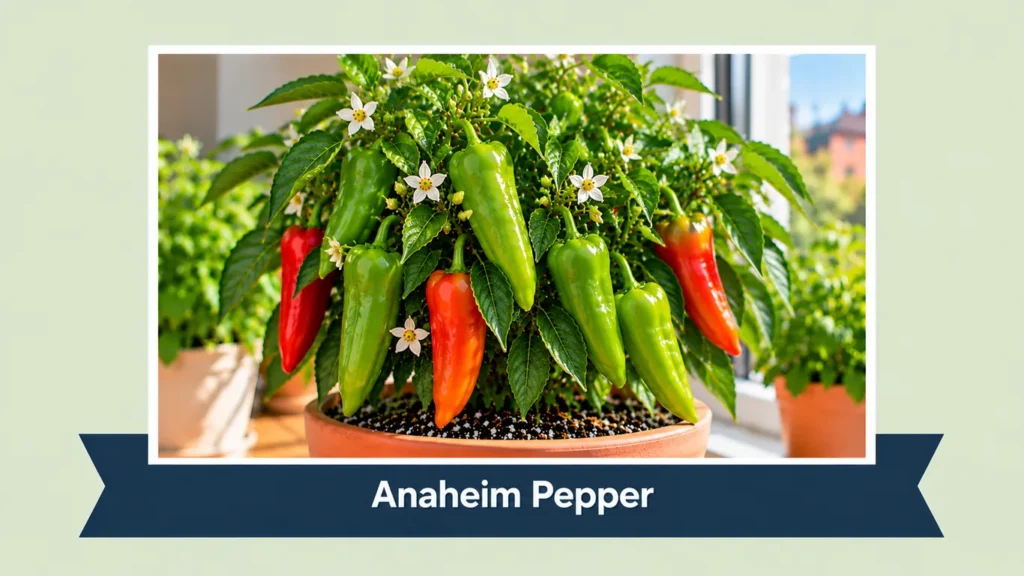
Anaheim peppers are a popular choice for indoor gardeners who want to grow mild, flavorful chilies at home. These peppers produce long, tapered fruits commonly used for roasting, stuffing, grilling, and preparing sauces. Anaheim plants develop attractive green foliage and smooth-skinned peppers that gradually turn red as they mature. Their relatively mild heat and versatile culinary uses make them suitable for home cooking. With sufficient lighting, warm temperatures, and proper container care, Anaheim peppers can grow successfully indoors.
Identification
- Scientific Name: Capsicum annuum
- Plant Height: Approximately 2–3 feet, depending on growing conditions.
- Fruit Size: Usually 6–10 inches long.
- Fruit Color: Green when immature, turning bright red when fully ripe.
- Heat Level: Approximately 500–2,500 Scoville Heat Units (SHU).
- Growing Time: Approximately 70–85 days from transplanting to harvest.
- Appearance: Upright, bushy plants with broad green leaves, small white flowers, and long, tapered peppers with smooth skin.
Ideal Indoor Growing Conditions
Anaheim peppers grow best in warm indoor environments with temperatures between 70°F and 85°F (21°C–29°C). Place the container near a bright south-facing window or provide full-spectrum LED grow lights for approximately 12–16 hours daily to encourage flowering and fruit development.
Choose a container holding at least 3–5 gallons of nutrient-rich, well-draining potting mix. Maintain soil pH between 6.0 and 6.8 to support healthy root development and efficient nutrient absorption.
Provide moderate humidity and gentle airflow to encourage strong stems and healthy foliage. Since Anaheim peppers produce relatively long fruits, install a small support stake when necessary to prevent branches from bending during fruit development.
Watering & Maintenance Tips
Water Anaheim pepper plants when the top inch of soil feels dry. Maintain consistent moisture during flowering and fruit development, but avoid waterlogged conditions that may damage the roots.
Apply a balanced fertilizer during early growth and adjust feeding when flowers begin developing. Avoid excessive nitrogen because it may encourage unnecessary leaf growth instead of healthy fruit production.
Remove damaged leaves and overcrowded branches to improve airflow. Harvest Anaheim peppers when they reach their mature size and develop a firm green color, or allow them to turn red for a sweeter and richer flavor. Regular harvesting can encourage continued production.
22. Poblano Pepper
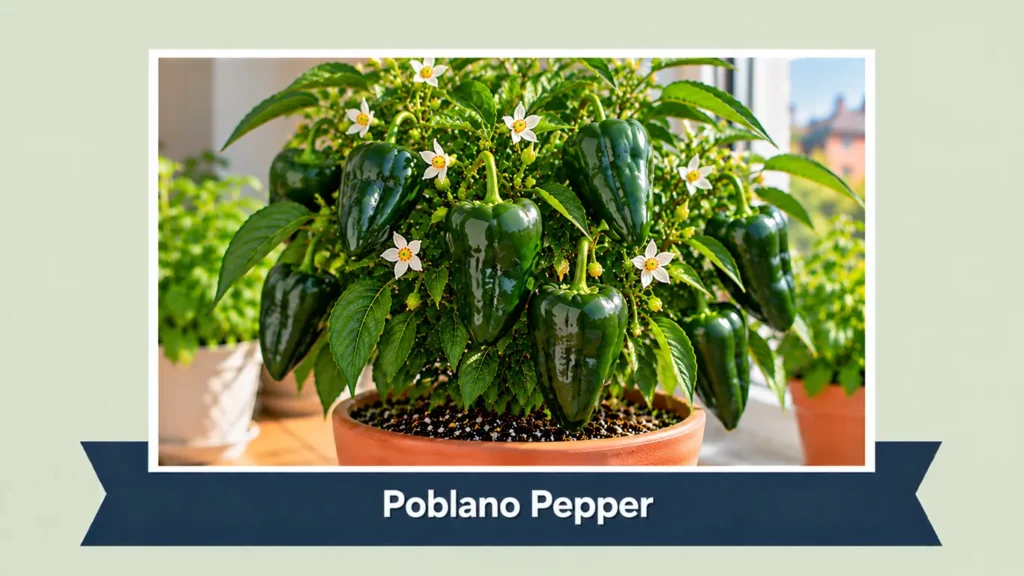
Poblano peppers are an excellent option for indoor gardeners who enjoy growing large, mildly spicy peppers for cooking. These peppers are especially popular in Mexican cuisine, where they are commonly used for stuffing, roasting, and preparing traditional sauces. Poblano plants produce broad, dark green fruits with thick walls and a distinctive heart-shaped appearance. Although they require adequate growing space, they can thrive in indoor containers with strong lighting, suitable temperatures, and consistent maintenance.
Identification
- Scientific Name: Capsicum annuum
- Plant Height: Approximately 2–3 feet, depending on growing conditions.
- Fruit Size: Usually 4–6 inches long.
- Fruit Color: Dark green when immature, turning deep red or reddish-brown when fully ripe.
- Heat Level: Approximately 1,000–2,000 Scoville Heat Units (SHU).
- Growing Time: Approximately 65–85 days from transplanting to harvest.
- Appearance: Bushy plants with broad green leaves, small white flowers, and large, heart-shaped peppers with slightly glossy skin.
Ideal Indoor Growing Conditions
Poblano peppers thrive in warm indoor environments with temperatures between 70°F and 85°F (21°C–29°C). Position the plant near a sunny south-facing window or provide full-spectrum LED lighting for approximately 12–16 hours daily to support healthy flowering.
Use a container holding at least 5 gallons of well-draining potting mix. Maintain a slightly acidic soil pH between 6.0 and 6.8, allowing the roots to absorb essential nutrients efficiently.
Provide moderate humidity and proper air circulation to reduce fungal problems and support strong growth. Since poblano peppers develop relatively heavy fruits, install a support stake or small plant cage to prevent branches from bending.
Watering & Maintenance Tips
Water poblano pepper plants when the upper inch of soil becomes dry. Keep the growing medium evenly moist during active growth, but allow excess water to drain completely to prevent root damage.
Apply a balanced fertilizer during vegetative growth and adjust feeding when flower buds develop. Avoid excessive nitrogen applications because they may encourage dense foliage instead of productive flowering.
Remove yellowing leaves and weak branches to improve airflow and maintain a manageable appearance. Harvest poblano peppers when they reach their mature size and develop a dark green color, or allow them to ripen fully for a richer flavor. Regular harvesting helps maintain plant productivity.
23. Fresno Pepper

Fresno peppers are a rewarding variety for indoor gardeners who want colorful chilies with moderate heat and a slightly fruity flavor. These peppers resemble jalapeños but generally have thinner walls and develop a bright red color when fully mature. Fresno peppers are commonly used in fresh salsa, hot sauces, marinades, and spicy dishes. Their manageable plant size and attractive fruits make them suitable for indoor container gardening. With adequate warmth, strong lighting, and proper maintenance, Fresno peppers can produce a satisfying harvest.
Identification
- Scientific Name: Capsicum annuum
- Plant Height: Approximately 2–3 feet, depending on growing conditions.
- Fruit Size: Usually 2–3 inches long.
- Fruit Color: Green when immature, turning bright red when fully ripe.
- Heat Level: Approximately 2,500–10,000 Scoville Heat Units (SHU).
- Growing Time: Approximately 70–85 days from transplanting to harvest.
- Appearance: Bushy plants with medium-green leaves, small white flowers, and smooth, conical peppers with pointed tips.
Ideal Indoor Growing Conditions
Fresno peppers grow best in warm indoor environments with temperatures between 70°F and 85°F (21°C–29°C). Place the container near a bright south-facing window or provide full-spectrum LED grow lights for approximately 12–16 hours daily to encourage flowering.
Choose a container holding at least 3–5 gallons of nutrient-rich, well-draining potting mix. Maintain soil pH between 6.0 and 6.8 to promote healthy root development and consistent nutrient availability.
Provide moderate humidity and gentle airflow to encourage healthy foliage and reduce disease problems. During flowering, gently shake the plant or use a soft brush to support pollen transfer and improve fruit production indoors.
Watering & Maintenance Tips
Water Fresno pepper plants when the top inch of soil feels dry. Maintain consistent soil moisture during flowering and fruit development, but avoid excessive watering because saturated soil can damage the roots.
Feed the plants with a balanced fertilizer during early growth and adjust nutrients when flowering begins. Avoid excessive nitrogen because it may encourage unnecessary leaf development instead of healthy pepper production.
Remove damaged leaves and overcrowded branches to maintain proper airflow. Harvest Fresno peppers when they reach their desired size and develop a bright red color for their characteristic flavor. You can also pick them while green for a slightly different taste and texture.
24. Fish Pepper
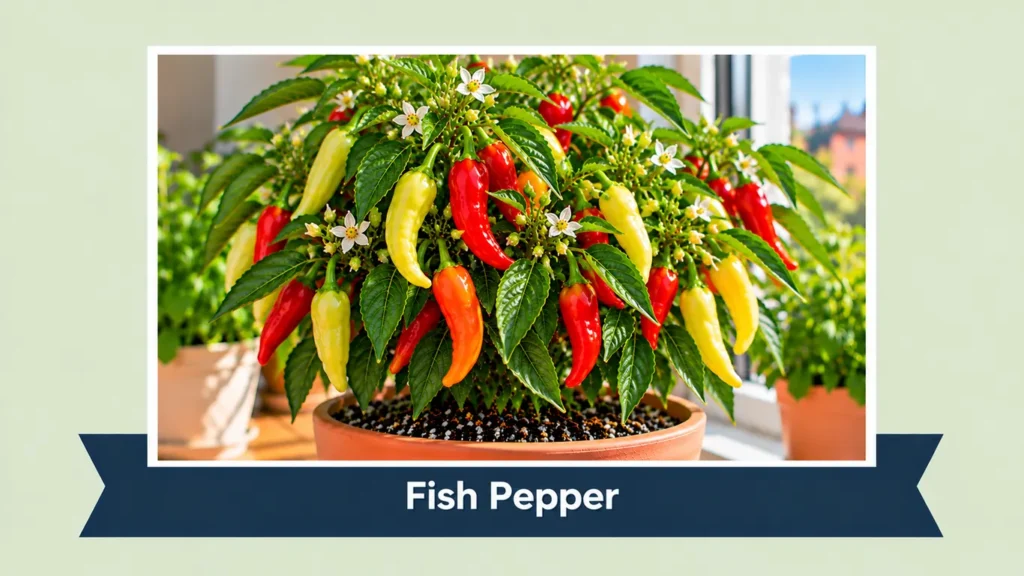
Fish peppers are a unique and attractive heirloom variety for indoor growing because of their colorful foliage and striped fruits. These peppers are known for their historical use in seafood dishes, sauces, and traditional Mid-Atlantic American cooking. Fish pepper plants produce slender chilies that often display beautiful green and cream stripes before ripening to red. Their variegated leaves and decorative fruits make them especially appealing for indoor container gardens. With sufficient lighting, warmth, and consistent care, fish peppers can provide both ornamental beauty and flavorful harvests.
Identification
- Scientific Name: Capsicum annuum
- Plant Height: Approximately 2–3 feet, depending on growing conditions.
- Fruit Size: Usually 2–3 inches long.
- Fruit Color: Green and cream striped when immature, turning orange or red when ripe.
- Heat Level: Approximately 5,000–30,000 Scoville Heat Units (SHU).
- Growing Time: Approximately 70–90 days from transplanting to harvest.
- Appearance: Bushy plants with variegated green-and-white leaves, small white flowers, and slender, striped peppers.
Ideal Indoor Growing Conditions
Fish peppers thrive in warm indoor temperatures between 70°F and 85°F (21°C–29°C). Position the container near a sunny south-facing window or provide full-spectrum LED lighting for approximately 12–16 hours daily to support healthy flowering.
Use a container holding at least 3–5 gallons of well-draining potting mix. Maintain a slightly acidic soil pH between 6.0 and 6.8 to encourage strong root development and efficient nutrient absorption.
Provide moderate humidity and proper air circulation to maintain healthy foliage and reduce fungal problems. During flowering, gently shake the branches or use a small brush to encourage pollen transfer and improve fruit production.
Watering & Maintenance Tips
Water fish pepper plants when the upper inch of soil becomes dry. Maintain consistent moisture during active growth, but avoid waterlogged conditions because excessive moisture can damage the roots.
Apply a balanced fertilizer during vegetative growth and adjust feeding when flowers begin developing. Avoid excessive nitrogen applications because they can encourage leafy growth instead of productive flowering.
Remove yellowing leaves and weak branches to maintain healthy airflow and a manageable plant shape. Harvest fish peppers while striped for their attractive appearance, or allow them to ripen to red for a fuller flavor. Regular harvesting can encourage continued flowering and fruit production.
25. Black Pearl Pepper
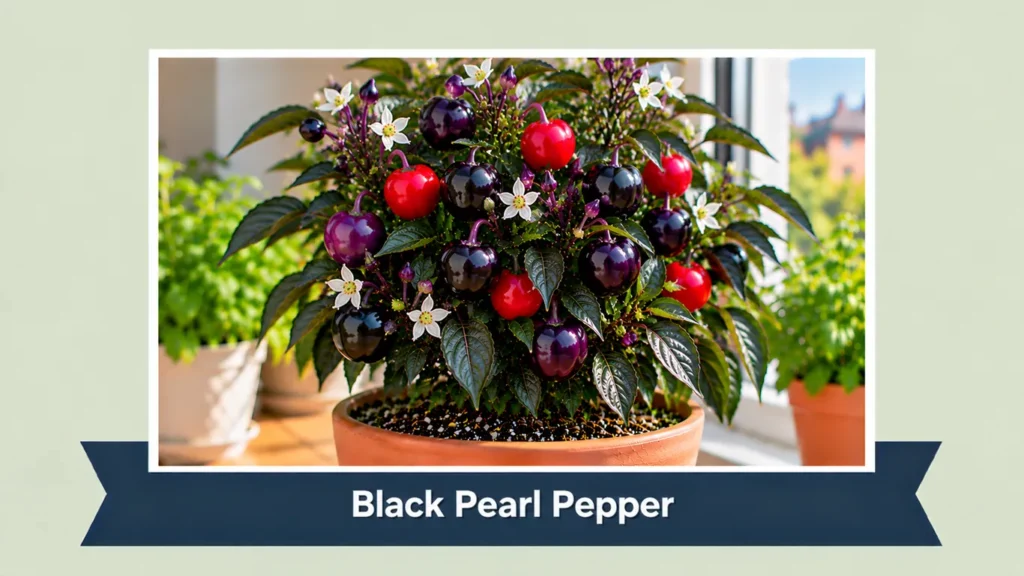
Black Pearl peppers are an excellent choice for indoor gardeners who want a decorative plant that also produces edible, spicy fruits. These ornamental peppers are known for their striking dark purple-black foliage and small, round peppers that resemble black pearls. As the fruits mature, they gradually change from glossy black to bright red, creating a beautiful contrast against the dark leaves. Their compact growth habit makes Black Pearl peppers suitable for indoor containers, sunny windowsills, and decorative plant displays.
Identification
- Scientific Name: Capsicum annuum
- Plant Height: Approximately 1–2 feet, depending on growing conditions.
- Fruit Size: Usually 0.5–1 inch in diameter.
- Fruit Color: Glossy black when immature, turning bright red when fully ripe.
- Heat Level: Approximately 10,000–30,000 Scoville Heat Units (SHU).
- Growing Time: Approximately 80–100 days from transplanting to mature fruit.
- Appearance: Compact, bushy plants with dark purple-black leaves, purple flowers, and small, round, glossy peppers.
Ideal Indoor Growing Conditions
Black Pearl peppers grow best in warm indoor environments with temperatures between 70°F and 85°F (21°C–29°C). Place the container near a bright south-facing window or provide full-spectrum LED grow lights for approximately 12–16 hours daily to encourage healthy growth and maintain their dark foliage.
Choose a container holding approximately 2–3 gallons of nutrient-rich, well-draining potting mix. Maintain soil pH between 6.0 and 6.8 to support healthy root development and efficient nutrient absorption.
Provide moderate humidity and gentle airflow to encourage strong stems and healthy foliage. During flowering, gently shake the plant or use a soft brush to encourage pollen transfer and improve fruit production indoors.
Watering & Maintenance Tips
Water Black Pearl pepper plants when the top inch of soil feels dry. Maintain consistent moisture during flowering and fruit development, but avoid waterlogged conditions that can damage the roots.
Apply a balanced fertilizer during early growth and adjust feeding when flowers begin developing. Avoid excessive nitrogen because it may encourage unnecessary leaf growth instead of healthy fruit production.
Remove damaged leaves and overcrowded branches to improve airflow. Harvest Black Pearl peppers when they develop their mature red color, or leave some fruits on the plant for their decorative appearance. The peppers are edible but quite spicy, so handle them carefully.
26. Prairie Fire Pepper
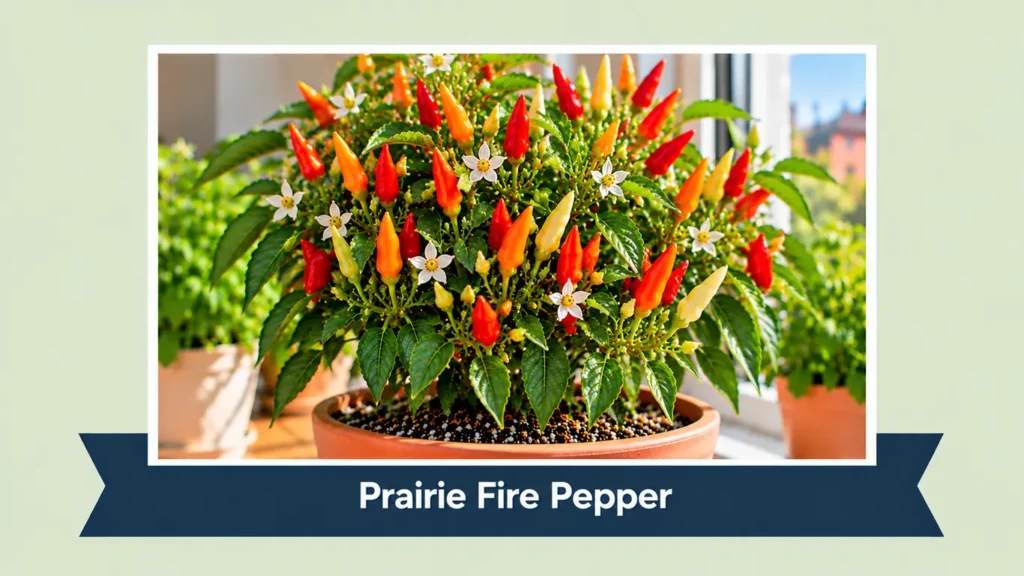
Prairie Fire peppers are a colorful ornamental variety that grows particularly well in compact indoor spaces. These small, upright chilies are known for their vibrant fruits, which display shades of cream, yellow, orange, purple, and red during different stages of maturity. Prairie Fire plants produce numerous peppers above dense green foliage, creating a bright decorative appearance. Their compact size makes them excellent for windowsills, indoor shelves, and small container gardens where gardeners want both attractive plants and spicy edible peppers.
Identification
- Scientific Name: Capsicum annuum
- Plant Height: Approximately 8–12 inches, depending on growing conditions.
- Fruit Size: Usually 0.5–1 inch long.
- Fruit Color: Cream, yellow, purple, orange, and red during different ripening stages.
- Heat Level: Approximately 70,000–80,000 Scoville Heat Units (SHU).
- Growing Time: Approximately 80–100 days from transplanting to mature fruit.
- Appearance: Compact, densely branching plants with small green leaves, delicate flowers, and numerous upright, pointed peppers.
Ideal Indoor Growing Conditions
Prairie Fire peppers thrive in warm indoor temperatures between 70°F and 85°F (21°C–29°C). Position the container near a sunny south-facing window or provide full-spectrum LED lighting for approximately 12–16 hours daily to encourage flowering and colorful fruit development.
Use a container holding approximately 1–2 gallons of well-draining potting mix. Maintain a slightly acidic soil pH between 6.0 and 6.8, allowing the roots to absorb essential nutrients efficiently.
Provide moderate humidity and proper air circulation to reduce fungal problems and support healthy plant growth. During flowering, gently shake the branches or use a small brush to encourage pollen transfer and improve fruit development.
Watering & Maintenance Tips
Water Prairie Fire pepper plants when the upper inch of soil becomes dry. Keep the growing medium evenly moist during active growth, but allow excess water to drain completely to prevent root damage.
Apply a balanced fertilizer during vegetative growth and adjust feeding when flower buds develop. Avoid excessive nitrogen applications because they may encourage dense foliage instead of productive flowering.
Remove yellowing leaves and weak branches to improve airflow and maintain a compact appearance. Harvest Prairie Fire peppers when they reach their mature red color, or leave some fruits on the plant for their ornamental beauty. Wear gloves when handling the hot peppers.
27. NuMex Twilight Pepper

NuMex Twilight peppers are a beautiful ornamental chili variety that adds vibrant color to indoor gardens. These compact plants produce small, upright peppers that change through several colors as they mature, often displaying purple, yellow, orange, and red fruits simultaneously. Their colorful appearance makes them particularly attractive for decorative containers and sunny windowsills. Despite their ornamental reputation, NuMex Twilight peppers are edible and notably spicy. With sufficient light, warm temperatures, and consistent maintenance, these plants can grow successfully indoors.
Identification
- Scientific Name: Capsicum annuum
- Plant Height: Approximately 1–2 feet, depending on growing conditions.
- Fruit Size: Usually 0.75–1.5 inches long.
- Fruit Color: Purple when immature, changing through yellow and orange to red.
- Heat Level: Approximately 30,000–50,000 Scoville Heat Units (SHU).
- Growing Time: Approximately 80–100 days from transplanting to mature fruit.
- Appearance: Compact, bushy plants with green leaves, small flowers, and clusters of colorful, upright, cone-shaped peppers.
Ideal Indoor Growing Conditions
NuMex Twilight peppers grow best in warm indoor environments with temperatures between 70°F and 85°F (21°C–29°C). Place the container near a bright south-facing window or provide full-spectrum LED grow lights for approximately 12–16 hours daily to support flowering and maintain vibrant fruit colors.
Choose a container holding approximately 2–3 gallons of nutrient-rich, well-draining potting mix. Maintain soil pH between 6.0 and 6.8 to promote healthy root development and consistent nutrient availability.
Provide moderate humidity and gentle airflow to encourage healthy foliage and reduce disease problems. During flowering, gently shake the plant or use a soft brush to support pollen transfer and improve fruit production indoors.
Watering & Maintenance Tips
Water NuMex Twilight pepper plants when the top inch of soil feels dry. Maintain consistent soil moisture during flowering and fruit development, but avoid excessive watering because saturated soil can damage the roots.
Feed the plants with a balanced fertilizer during early growth and adjust nutrients when flowering begins. Avoid excessive nitrogen because it may encourage unnecessary leaf development instead of healthy pepper production.
Remove damaged leaves and overcrowded branches to maintain proper airflow. Harvest NuMex Twilight peppers when they develop their mature red color, or leave colorful fruits on the plant for ornamental appeal. Regular harvesting can encourage continued fruit development under suitable growing conditions.
28. Bolivian Rainbow Pepper
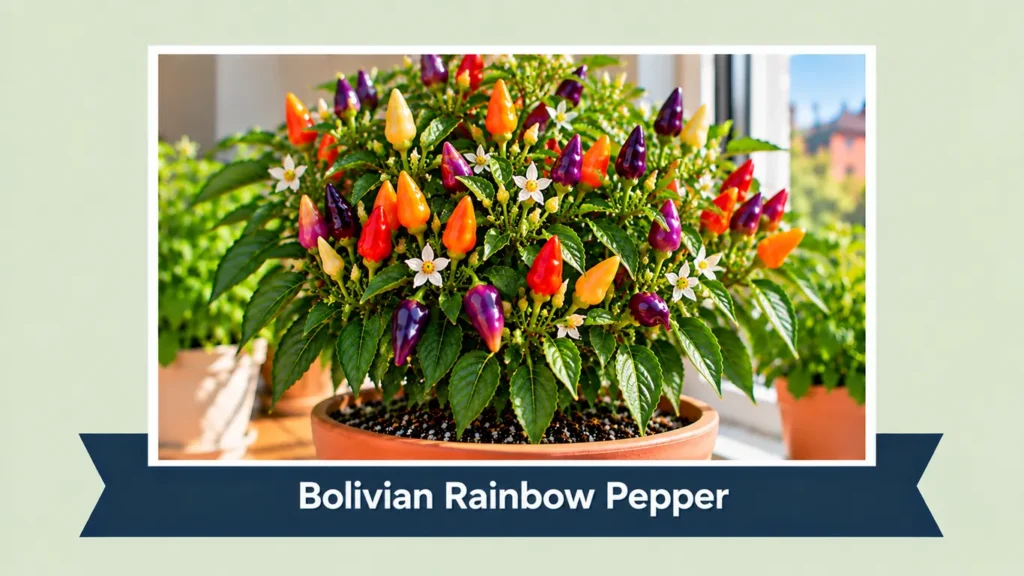
Bolivian Rainbow peppers are an attractive ornamental variety that brings exceptional color and character to indoor growing spaces. These compact chili plants produce numerous small, upright fruits that change from purple to yellow, orange, and red as they mature. Their colorful peppers and purple-tinted foliage create a striking appearance, making them popular for decorative indoor containers. Bolivian Rainbow peppers are also edible and provide significant heat, making them suitable for gardeners who appreciate both ornamental plants and spicy homegrown chilies.
Identification
- Scientific Name: Capsicum annuum
- Plant Height: Approximately 1–2 feet, depending on growing conditions.
- Fruit Size: Usually 0.75–1.5 inches long.
- Fruit Color: Purple when immature, changing through yellow and orange to bright red.
- Heat Level: Approximately 10,000–30,000 Scoville Heat Units (SHU).
- Growing Time: Approximately 80–100 days from transplanting to mature fruit.
- Appearance: Compact, branching plants with purple-tinted green foliage, small purple flowers, and upright, cone-shaped peppers.
Ideal Indoor Growing Conditions
Bolivian Rainbow peppers thrive in warm indoor temperatures between 70°F and 85°F (21°C–29°C). Position the container near a sunny south-facing window or provide full-spectrum LED lighting for approximately 12–16 hours daily to support healthy flowering and colorful fruit development.
Use a container holding approximately 2–3 gallons of well-draining potting mix. Maintain a slightly acidic soil pH between 6.0 and 6.8 to encourage strong root development and efficient nutrient absorption.
Provide moderate humidity and proper air circulation to maintain healthy foliage and reduce fungal problems. During flowering, gently shake the branches or use a small brush to encourage pollen transfer and improve fruit production.
Watering & Maintenance Tips
Water Bolivian Rainbow pepper plants when the upper inch of soil becomes dry. Maintain consistent moisture during active growth, but avoid waterlogged conditions because excessive moisture can damage the roots.
Apply a balanced fertilizer during vegetative growth and adjust feeding when flowers begin developing. Avoid excessive nitrogen applications because they can encourage leafy growth instead of productive flowering.
Remove yellowing leaves and weak branches to maintain healthy airflow and a manageable plant shape. Harvest Bolivian Rainbow peppers when they reach their mature red color, or allow fruits at different ripening stages to remain on the plant for a colorful display. Handle the spicy peppers carefully when harvesting.
29. Basket of Fire Pepper

Basket of Fire peppers are an excellent choice for indoor gardeners who want to grow compact, colorful, and highly productive chili plants. These ornamental peppers produce numerous small, pointed fruits that change through shades of cream, purple, orange, and red as they mature. Their naturally spreading growth habit makes them particularly attractive for hanging baskets, windowsills, and decorative containers. With sufficient lighting, warm temperatures, and consistent care, Basket of Fire peppers can provide both beautiful ornamental displays and flavorful, spicy harvests.
Identification
- Scientific Name: Capsicum annuum
- Plant Height: Approximately 12–18 inches, with a spreading growth habit.
- Fruit Size: Usually 1–2 inches long.
- Fruit Color: Cream, purple, orange, and red during different ripening stages.
- Heat Level: Approximately 80,000 Scoville Heat Units (SHU), depending on growing conditions.
- Growing Time: Approximately 80–100 days from transplanting to mature fruit.
- Appearance: Compact, spreading plants with small green leaves, delicate white flowers, and numerous slender, pointed peppers.
Ideal Indoor Growing Conditions
Basket of Fire peppers grow best in warm indoor environments with temperatures between 70°F and 85°F (21°C–29°C). Place the container near a bright south-facing window or provide full-spectrum LED grow lights for approximately 12–16 hours daily to encourage flowering and colorful fruit development.
Choose a container holding approximately 2–3 gallons of nutrient-rich, well-draining potting mix. Maintain soil pH between 6.0 and 6.8 to support healthy root development and efficient nutrient absorption.
Provide moderate humidity and gentle airflow to encourage strong stems and healthy foliage. Since Basket of Fire plants naturally spread outward, allow sufficient space around the container for branches to develop without overcrowding.
Watering & Maintenance Tips
Water Basket of Fire pepper plants when the top inch of soil feels dry. Maintain consistent moisture during flowering and fruit development, but avoid waterlogged conditions that can damage the roots.
Apply a balanced fertilizer during early growth and adjust feeding when flowers begin developing. Avoid excessive nitrogen because it may encourage unnecessary leaf growth instead of healthy fruit production.
Remove damaged leaves and overcrowded branches to improve airflow. Harvest Basket of Fire peppers when they develop their mature red color, or leave some fruits on the plant for decorative appeal. Wear gloves when handling these hot peppers to prevent skin irritation.
30. Apache Pepper
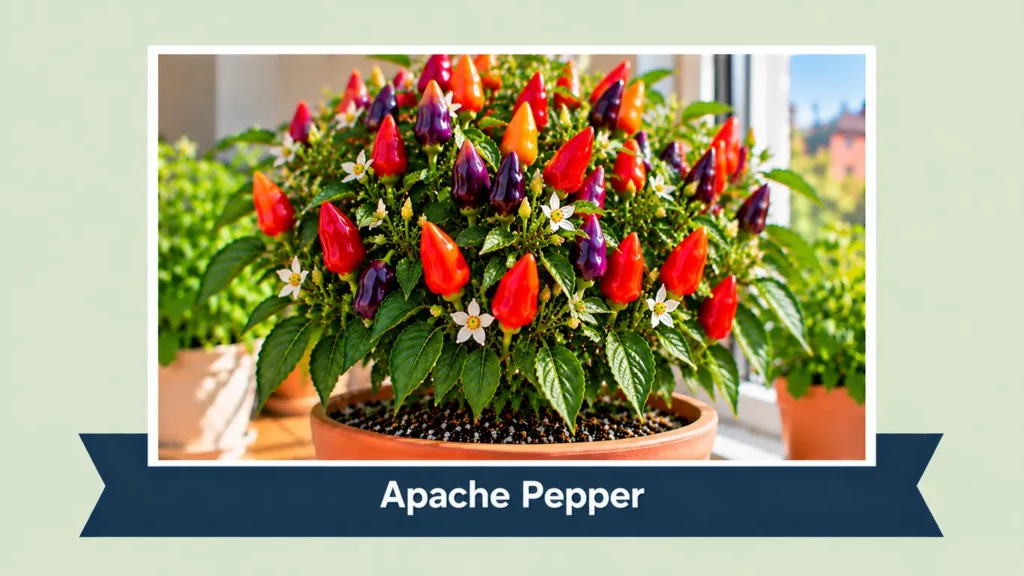
Apache peppers are a popular compact chili variety that grows well in indoor containers and small gardening spaces. These peppers are known for their upright, pointed fruits and moderately strong heat, making them suitable for spicy sauces, fresh cooking, and homemade seasonings. Apache plants produce attractive green foliage and numerous small peppers that gradually turn from green to bright red. Their compact growth habit makes them especially suitable for sunny windowsills and indoor grow shelves where space is limited.
Identification
- Scientific Name: Capsicum annuum
- Plant Height: Approximately 12–18 inches, depending on growing conditions.
- Fruit Size: Usually 1–2 inches long.
- Fruit Color: Green when immature, turning bright red when fully ripe.
- Heat Level: Approximately 70,000–80,000 Scoville Heat Units (SHU).
- Growing Time: Approximately 70–90 days from transplanting to mature fruit.
- Appearance: Compact, bushy plants with small green leaves, white flowers, and clusters of upright, slender peppers.
Ideal Indoor Growing Conditions
Apache peppers thrive in warm indoor temperatures between 70°F and 85°F (21°C–29°C). Position the container near a sunny south-facing window or provide full-spectrum LED lighting for approximately 12–16 hours daily to encourage healthy flowering.
Use a container holding approximately 2–3 gallons of well-draining potting mix. Maintain a slightly acidic soil pH between 6.0 and 6.8, allowing the roots to absorb essential nutrients efficiently.
Provide moderate humidity and proper air circulation to reduce fungal problems and support healthy plant growth. During flowering, gently shake the branches or use a small brush to encourage pollen transfer and improve fruit development indoors.
Watering & Maintenance Tips
Water Apache pepper plants when the upper inch of soil becomes dry. Keep the growing medium evenly moist during active growth, but allow excess water to drain completely to prevent root damage.
Apply a balanced fertilizer during vegetative growth and adjust feeding when flower buds develop. Avoid excessive nitrogen applications because they may encourage dense foliage instead of productive flowering.
Remove yellowing leaves and weak branches to improve airflow and maintain a compact appearance. Harvest Apache peppers when they reach their mature red color for their characteristic spicy flavor. Regular harvesting can encourage continued flowering and fruit production under favorable growing conditions.
31. Demon Red Pepper
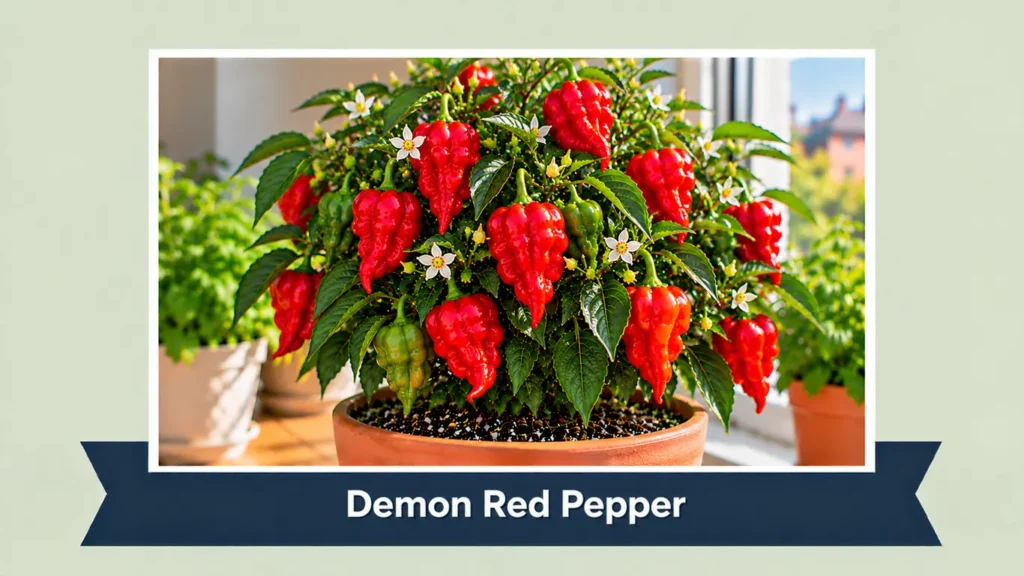
Demon Red peppers are an attractive ornamental chili variety that is well suited for indoor container gardening. These compact plants produce numerous small, upright fruits that develop a brilliant red color when fully mature. Demon Red peppers are known for their intense heat and decorative appearance, making them a popular choice for gardeners who enjoy growing spicy chilies in limited spaces. Their naturally compact growth habit makes them suitable for sunny windowsills, kitchen gardens, and indoor shelves with artificial lighting.
Identification
- Scientific Name: Capsicum annuum
- Plant Height: Approximately 12–18 inches, depending on growing conditions.
- Fruit Size: Usually 1–2 inches long.
- Fruit Color: Green when immature, turning bright red when fully ripe.
- Heat Level: Approximately 30,000–50,000 Scoville Heat Units (SHU), with variation between plants.
- Growing Time: Approximately 70–90 days from transplanting to mature fruit.
- Appearance: Compact, densely branching plants with small green leaves, white flowers, and numerous upright, pointed red peppers.
Ideal Indoor Growing Conditions
Demon Red peppers grow best in warm indoor environments with temperatures between 70°F and 85°F (21°C–29°C). Place the container near a bright south-facing window or provide full-spectrum LED grow lights for approximately 12–16 hours daily to support flowering and fruit development.
Choose a container holding approximately 2–3 gallons of nutrient-rich, well-draining potting mix. Maintain soil pH between 6.0 and 6.8 to promote healthy root development and consistent nutrient availability.
Provide moderate humidity and gentle airflow to encourage healthy foliage and reduce disease problems. During flowering, gently shake the plant or use a soft brush to support pollen transfer and improve fruit production indoors.
Watering & Maintenance Tips
Water Demon Red pepper plants when the top inch of soil feels dry. Maintain consistent soil moisture during flowering and fruit development, but avoid excessive watering because saturated soil can damage the roots.
Feed the plants with a balanced fertilizer during early growth and adjust nutrients when flowering begins. Avoid excessive nitrogen because it may encourage unnecessary leaf development instead of healthy pepper production.
Remove damaged leaves and overcrowded branches to maintain proper airflow. Harvest Demon Red peppers when they develop their mature red color, or leave some fruits on the plant for ornamental beauty. Wear gloves while harvesting because these peppers can cause skin irritation.
32. Super Chili Pepper

Super Chili peppers are a highly productive variety that is ideal for indoor gardeners who want a steady supply of spicy chilies. These compact plants produce numerous slender fruits that grow upright and gradually turn from green to bright red as they mature. Super Chili peppers are commonly used in hot sauces, dried seasonings, and spicy home cooking. Their manageable size and impressive fruit production make them suitable for indoor containers. With sufficient lighting, warmth, and regular care, these plants can provide rewarding harvests.
Identification
- Scientific Name: Capsicum annuum
- Plant Height: Approximately 18–24 inches, depending on growing conditions.
- Fruit Size: Usually 2–3 inches long.
- Fruit Color: Green when immature, turning bright red when fully ripe.
- Heat Level: Approximately 40,000–50,000 Scoville Heat Units (SHU).
- Growing Time: Approximately 70–90 days from transplanting to harvest.
- Appearance: Compact, bushy plants with narrow green leaves, small white flowers, and clusters of upright, slender peppers.
Ideal Indoor Growing Conditions
Super Chili peppers thrive in warm indoor temperatures between 70°F and 85°F (21°C–29°C). Position the container near a sunny south-facing window or provide full-spectrum LED lighting for approximately 12–16 hours daily to encourage healthy flowering and fruit production.
Use a container holding approximately 2–3 gallons of well-draining potting mix. Maintain a slightly acidic soil pH between 6.0 and 6.8 to encourage strong root development and efficient nutrient absorption.
Provide moderate humidity and proper air circulation to maintain healthy foliage and reduce fungal problems. During flowering, gently shake the branches or use a small brush to encourage pollen transfer and improve fruit production.
Watering & Maintenance Tips
Water Super Chili pepper plants when the upper inch of soil becomes dry. Maintain consistent moisture during active growth, but avoid waterlogged conditions because excessive moisture can damage the roots.
Apply a balanced fertilizer during vegetative growth and adjust feeding when flowers begin developing. Avoid excessive nitrogen applications because they can encourage leafy growth instead of productive flowering.
Remove yellowing leaves and weak branches to maintain healthy airflow and a manageable plant shape. Harvest Super Chili peppers when they reach their mature red color for a stronger, fully developed flavor. Regular harvesting can encourage continued flowering and fruit production under suitable indoor growing conditions.
33. Explosive Ember Pepper
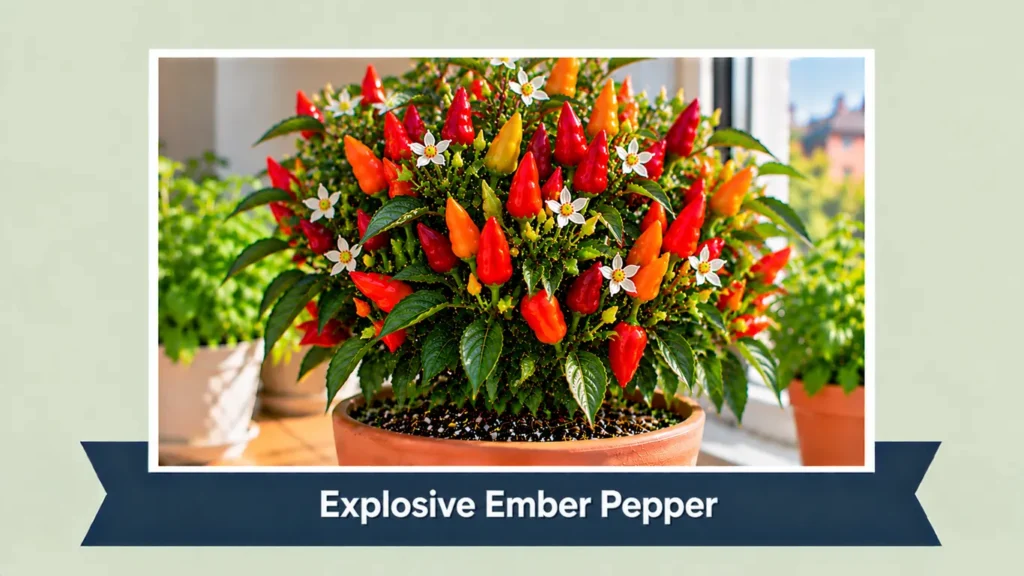
Explosive Ember peppers are an attractive ornamental chili variety that grows well in indoor containers and small gardening spaces. These compact plants are known for their striking dark purple foliage and colorful, upright fruits that gradually change from purple to orange and bright red. Explosive Ember peppers provide both decorative beauty and spicy edible fruits, making them suitable for indoor windowsills, kitchen gardens, and plant shelves. With sufficient lighting, warm temperatures, and consistent maintenance, these peppers can produce a colorful display throughout their growing season.
Identification
- Scientific Name: Capsicum annuum
- Plant Height: Approximately 10–16 inches, depending on growing conditions.
- Fruit Size: Usually 1–2 inches long.
- Fruit Color: Purple when immature, changing through orange to bright red when ripe.
- Heat Level: Approximately 30,000–50,000 Scoville Heat Units (SHU), depending on growing conditions.
- Growing Time: Approximately 80–100 days from transplanting to mature fruit.
- Appearance: Compact, branching plants with dark purple-green leaves, purple flowers, and numerous upright, pointed peppers.
Ideal Indoor Growing Conditions
Explosive Ember peppers grow best in warm indoor environments with temperatures between 70°F and 85°F (21°C–29°C). Place the container near a bright south-facing window or provide full-spectrum LED grow lights for approximately 12–16 hours daily to encourage flowering and maintain their colorful foliage.
Choose a container holding approximately 1–2 gallons of nutrient-rich, well-draining potting mix. Maintain soil pH between 6.0 and 6.8 to support healthy root development and efficient nutrient absorption.
Provide moderate humidity and gentle airflow to encourage strong stems and healthy foliage. During flowering, gently shake the plant or use a soft brush to encourage pollen transfer and improve fruit production indoors.
Watering & Maintenance Tips
Water Explosive Ember pepper plants when the top inch of soil feels dry. Maintain consistent moisture during flowering and fruit development, but avoid waterlogged conditions that can damage the roots.
Apply a balanced fertilizer during early growth and adjust feeding when flowers begin developing. Avoid excessive nitrogen because it may encourage unnecessary leaf growth instead of healthy fruit production.
Remove damaged leaves and overcrowded branches to improve airflow. Harvest Explosive Ember peppers when they develop their mature red color, or leave some fruits on the plant for decorative appeal. Wear gloves when handling these spicy peppers to prevent skin irritation.
34. Medusa Pepper
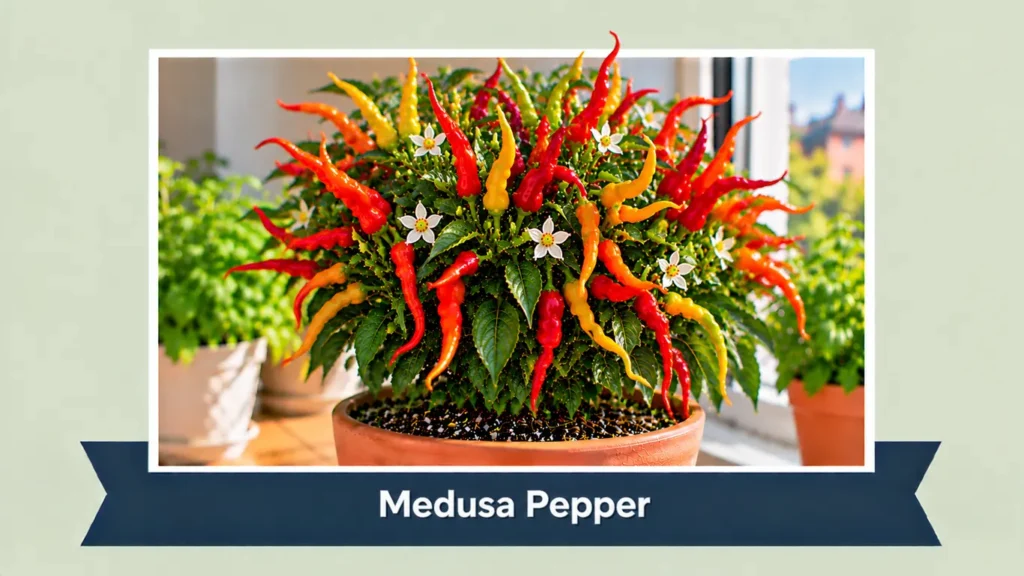
Medusa peppers are a fascinating ornamental variety that is especially suitable for indoor growing because of their compact size and unusual fruit arrangement. These peppers produce numerous long, twisted fruits that grow upward and outward, resembling the mythical Medusa’s flowing hair. The peppers gradually change from creamy yellow to orange and bright red as they mature. Unlike many ornamental chili varieties, Medusa peppers are generally sweet and mild, making them attractive for both decorative displays and fresh cooking.
Identification
- Scientific Name: Capsicum annuum
- Plant Height: Approximately 6–12 inches, depending on growing conditions.
- Fruit Size: Usually 2–3 inches long.
- Fruit Color: Creamy yellow when immature, changing through orange to bright red.
- Heat Level: Generally 0 Scoville Heat Units (SHU).
- Growing Time: Approximately 70–90 days from transplanting to mature fruit.
- Appearance: Compact, densely branching plants with small green leaves, white flowers, and numerous slender, twisted, upright peppers.
Ideal Indoor Growing Conditions
Medusa peppers thrive in warm indoor temperatures between 70°F and 85°F (21°C–29°C). Position the container near a sunny south-facing window or provide full-spectrum LED lighting for approximately 12–16 hours daily to encourage flowering and colorful fruit development.
Use a container holding approximately 1–2 gallons of well-draining potting mix. Maintain a slightly acidic soil pH between 6.0 and 6.8, allowing the roots to absorb essential nutrients efficiently.
Provide moderate humidity and proper air circulation to reduce fungal problems and support healthy plant growth. During flowering, gently shake the branches or use a small brush to encourage pollen transfer and improve fruit development indoors.
Watering & Maintenance Tips
Water Medusa pepper plants when the upper inch of soil becomes dry. Keep the growing medium evenly moist during active growth, but allow excess water to drain completely to prevent root damage.
Apply a balanced fertilizer during vegetative growth and adjust feeding when flower buds develop. Avoid excessive nitrogen applications because they may encourage dense foliage instead of productive flowering.
Remove yellowing leaves and weak branches to improve airflow and maintain a compact appearance. Harvest Medusa peppers when they reach their mature color, or leave some fruits on the plant for ornamental beauty. Their mild flavor makes them suitable for fresh salads, colorful garnishes, and decorative vegetable dishes.
35. Chilly Chili Pepper
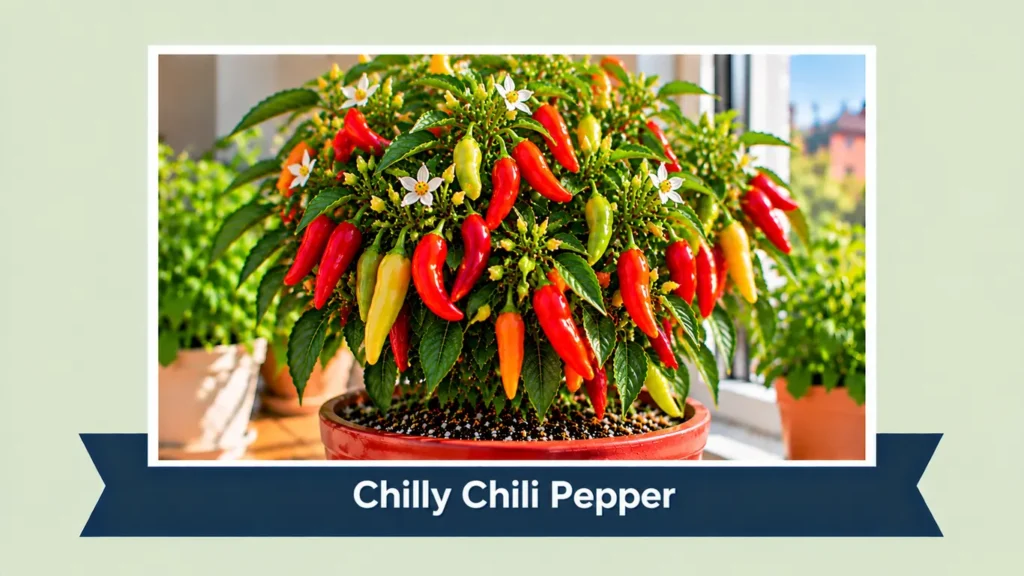
Chilly Chili peppers are a colorful ornamental variety that makes an excellent addition to indoor container gardens. These compact plants produce numerous upright fruits that change from pale yellow to orange and bright red as they mature. Unlike most ornamental pepper varieties, Chilly Chili peppers are bred for their mild, non-pungent flavor. Their attractive appearance and manageable growth habit make them particularly suitable for sunny windowsills, indoor plant displays, and small gardening spaces where decorative beauty is a priority.
Identification
- Scientific Name: Capsicum annuum
- Plant Height: Approximately 9–12 inches, depending on growing conditions.
- Fruit Size: Usually 2–2.5 inches long.
- Fruit Color: Pale yellow when immature, changing through orange to bright red.
- Heat Level: Generally 0 Scoville Heat Units (SHU).
- Growing Time: Approximately 75–90 days from transplanting to mature fruit.
- Appearance: Compact, bushy plants with small green leaves, delicate white flowers, and numerous upright, slender, colorful peppers.
Ideal Indoor Growing Conditions
Chilly Chili peppers grow best in warm indoor environments with temperatures between 70°F and 85°F (21°C–29°C). Place the container near a bright south-facing window or provide full-spectrum LED grow lights for approximately 12–16 hours daily to encourage flowering and colorful fruit development.
Choose a container holding approximately 1–2 gallons of nutrient-rich, well-draining potting mix. Maintain soil pH between 6.0 and 6.8 to promote healthy root development and consistent nutrient availability.
Provide moderate humidity and gentle airflow to encourage healthy foliage and reduce disease problems. During flowering, gently shake the plant or use a soft brush to support pollen transfer and improve fruit production indoors.
Watering & Maintenance Tips
Water Chilly Chili pepper plants when the top inch of soil feels dry. Maintain consistent soil moisture during flowering and fruit development, but avoid excessive watering because saturated soil can damage the roots.
Feed the plants with a balanced fertilizer during early growth and adjust nutrients when flowering begins. Avoid excessive nitrogen because it may encourage unnecessary leaf development instead of healthy pepper production.
Remove damaged leaves and overcrowded branches to maintain proper airflow. Harvest Chilly Chili peppers when they develop their mature red color, or leave colorful fruits on the plant for ornamental appeal. These mild peppers can also be used in fresh salads and simple homemade dishes when grown as edible crops.
FAQs
1. What Are the Best Peppers to Grow Indoors?
The best peppers for indoor growing include jalapeño, serrano, Thai Bird’s Eye, shishito, and mini bell peppers. Compact varieties such as Prairie Fire, Apache, and Medusa are especially suitable for small spaces. Choose varieties based on available space, lighting conditions, and your preferred heat level.
2. How Much Light Do Indoor Pepper Plants Need?
Indoor pepper plants generally need 12–16 hours of bright light daily when using full-spectrum LED grow lights. A sunny south-facing window may provide sufficient light in favorable conditions, but supplemental lighting often improves growth. Adequate illumination encourages healthy foliage, flowering, and consistent pepper production.
3. How Often Should You Water Indoor Pepper Plants?
Water indoor pepper plants when the top inch of soil feels dry. Watering frequency depends on container size, temperature, humidity, and plant growth. Most peppers prefer consistently moist but well-draining soil. Avoid overwatering because saturated conditions can cause root rot, yellowing leaves, and reduced fruit production.
4. Can Pepper Plants Produce Fruit Indoors Year-Round?
Yes, pepper plants can produce fruit indoors throughout the year when provided with adequate lighting, warmth, nutrients, and proper care. Many varieties continue flowering under favorable conditions. However, fruit production may slow during winter if light levels decrease or indoor temperatures become too low.
5. What Size Pot Is Best for Growing Peppers Indoors?
Most indoor pepper plants grow well in containers holding 3–5 gallons of potting mix. Compact ornamental varieties, including Medusa and Prairie Fire, can grow in smaller 1–2 gallon containers. Larger varieties, such as bell peppers and poblanos, generally benefit from containers holding at least 5 gallons.