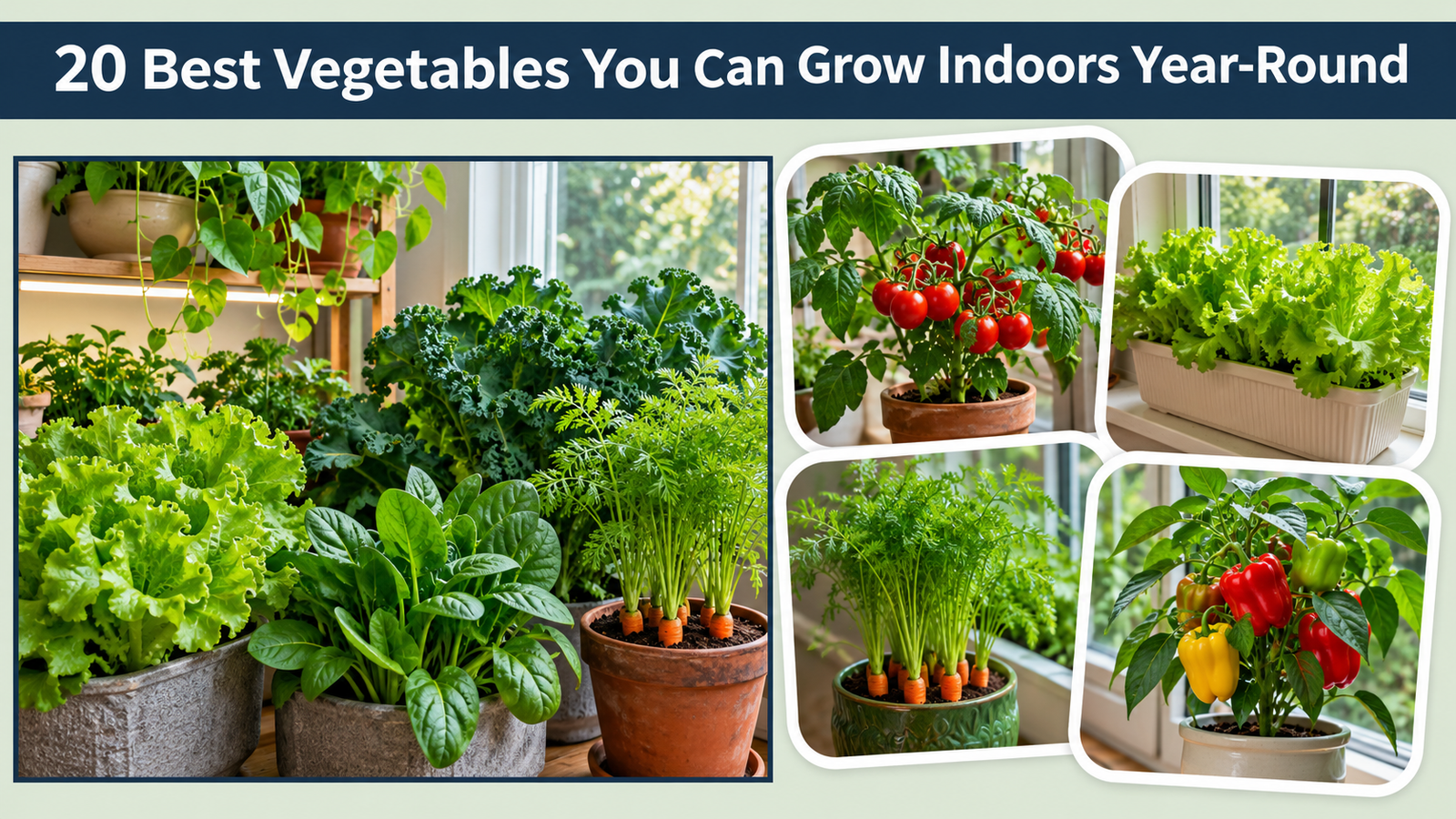
Growing fresh vegetables indoors is an excellent way to enjoy homegrown food without needing a backyard or outdoor garden. Whether you live in a small apartment, have limited outdoor space, or want to grow vegetables during winter, indoor gardening offers plenty of possibilities. Many vegetables thrive in containers with proper sunlight, watering, and soil. From leafy greens and herbs to carrots, tomatoes, and peppers, you can grow a surprising variety of crops inside your home. This guide explores 20 of the best vegetables you can grow indoors, including easy options for beginners and practical growing tips.
20 Best Vegetables to Grow Indoors
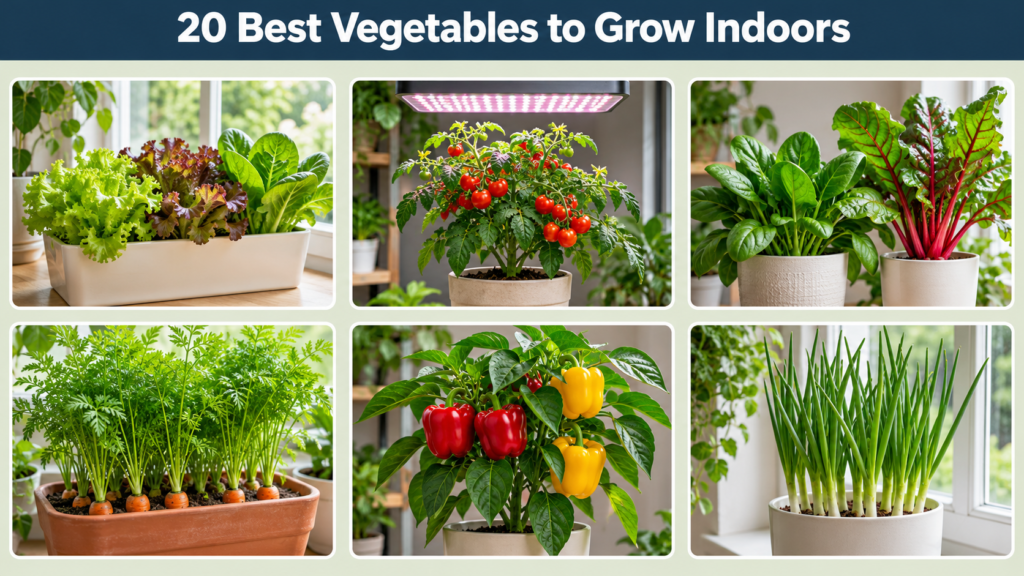
Not all vegetables grow equally well indoors. Leafy greens, compact root crops, and certain fruiting vegetables are among the best choices. Some mature quickly and need relatively little space, while others require larger containers, supplemental lighting, and more attention. Choosing vegetables based on available light, indoor temperature, and growing space will help you create a productive garden throughout the year.
1. Lettuce
Lettuce is one of the easiest vegetables to grow indoors because it has shallow roots and grows quickly. Loose-leaf varieties are particularly suitable for containers and can provide repeated harvests.
Place lettuce near a bright window or under LED grow lights for approximately 12–14 hours daily. Keep the soil consistently moist without making it soggy. You can begin harvesting young leaves in about 30 days, depending on the variety and growing conditions.
2. Spinach
Spinach is a nutritious leafy vegetable that grows well in relatively cool indoor conditions. It requires moderate space and can be grown in pots, window boxes, or shallow planting trays.
Use a container at least 6 inches deep with good drainage. Provide bright light and maintain temperatures around 60–70°F. Harvest the outer leaves once they reach a usable size, allowing the center to continue producing new growth.
3. Kale
Kale is a hardy vegetable that adapts well to indoor container gardening. Dwarf and compact varieties are especially practical for apartments and small growing spaces.
Choose a container approximately 8–12 inches deep and provide strong light for healthy leaf development. Keep the soil evenly moist and harvest mature outer leaves regularly. With proper care, a single kale plant can provide multiple harvests.
4. Arugula
Arugula is a fast-growing leafy green known for its slightly peppery flavor. It grows well in shallow containers, making it suitable for windowsills and indoor gardening shelves.
Sow seeds directly into moist potting mix and provide bright light. Baby leaves can often be harvested within 20–30 days. Regular harvesting encourages continued production, although plants eventually become less productive as they mature.
5. Swiss Chard
Swiss chard is an attractive indoor vegetable with colorful stems and nutritious leaves. Its compact growing habit makes it a useful choice for container gardens.
Plant Swiss chard in pots at least 8–10 inches deep and provide consistent lighting. Maintain slightly moist soil and remove larger outer leaves as needed. The plant can continue growing for several months under suitable conditions.
6. Radishes
Radishes are among the fastest vegetables you can grow indoors. Many small, round varieties mature in approximately 25–35 days.
Use containers at least 6 inches deep and choose loose, well-draining soil. Radishes need strong light to develop healthy roots. Avoid overcrowding seedlings, as insufficient spacing may result in small or poorly formed radishes.
7. Carrots
Carrots can grow successfully indoors when you choose short-rooted varieties such as Parisian or Thumbelina. These compact carrots require less soil depth than traditional long varieties.
Select containers approximately 10–12 inches deep, depending on the variety. Use loose potting mix without large stones or compacted soil. Provide bright lighting and maintain even moisture. Most varieties take roughly 60–80 days to mature.
8. Green Onions
Green onions, also called scallions, are excellent vegetables for small indoor spaces. They have relatively shallow roots and are useful in salads, soups, and everyday cooking.
Plant seeds or rooted onion starts in containers approximately 4–6 inches deep. Place them near a sunny window or grow light and water whenever the soil surface begins drying. Harvest the green tops while allowing the rooted plants to regrow.
9. Garlic Greens
Garlic greens are easy to grow indoors and require very little space. Although producing full garlic bulbs indoors is more challenging, the tender green shoots are edible and flavorful.
Plant individual garlic cloves in a container with their pointed ends facing upward. Keep the soil lightly moist and provide bright light. The greens can be trimmed once they reach approximately 6–8 inches tall.
10. Bok Choy
Bok choy is a compact Asian vegetable that grows particularly well in cool indoor environments. Baby bok choy varieties are ideal for containers.
Use pots around 6–8 inches deep and provide consistent moisture. Strong light supports healthy leaf growth, while excessive heat may encourage premature flowering. Baby plants can often be harvested within 30–45 days.
11. Microgreens
Microgreens are among the best vegetables to grow indoors without sunlight from a window, provided you use suitable artificial grow lights. Popular options include broccoli, radish, pea, and mustard microgreens.
Spread seeds densely across a shallow tray containing moist growing medium. Provide adequate light after germination and ensure good airflow. Most microgreens are ready to harvest within 7–21 days, depending on the crop.
12. Pea Shoots
Pea shoots are tender edible greens that grow quickly and require minimal space. They are ideal for salads, sandwiches, and garnishes.
Sow untreated, food-safe pea seeds in shallow containers filled with moist potting mix. Provide bright light and keep the growing medium consistently damp. Harvest shoots when they reach approximately 4–6 inches tall, usually within two to three weeks.
13. Cherry Tomatoes
Cherry tomatoes are among the most popular vegetables to grow indoors in pots, although they require considerably more light than leafy greens.
Choose compact or dwarf varieties and use containers holding approximately 3–5 gallons of potting mix. Provide strong grow lights for 14–16 hours daily. Maintain consistent watering, support the stems when necessary, and select self-pollinating varieties suitable for containers.
14. Bell Peppers
Bell peppers can grow indoors when provided with warm temperatures, adequate root space, and powerful grow lights.
Choose compact pepper varieties and plant them in containers approximately 3–5 gallons in size. Maintain temperatures near 70–80°F and keep the soil evenly moist. Indoor peppers may require gentle shaking or hand pollination to improve fruit production.
15. Chili Peppers
Chili peppers are particularly suitable for indoor gardening because many varieties naturally remain compact. Small ornamental and edible chili pepper plants can also make attractive houseplants.
Grow peppers in well-draining potting mix with sufficient light and warmth. Water when the upper layer of soil becomes slightly dry. With proper care, some pepper plants can remain productive for several growing seasons.
16. Bush Beans
Bush beans can be grown indoors, although they need stronger lighting and more growing space than leafy vegetables.
Choose compact bush varieties rather than climbing types. Plant seeds in containers at least 8–10 inches deep and provide sufficient spacing. Keep temperatures moderately warm and avoid overwatering. Beans typically begin producing pods around 50–65 days after planting.
17. Dwarf Cucumbers
Dwarf cucumbers can grow inside homes with appropriate support and lighting. Compact, parthenocarpic varieties are especially useful because they can develop fruit without pollination.
Use a large container, ideally around 5 gallons, and install a small trellis. Provide strong grow lights and maintain consistent moisture. Cucumbers need warmth and may require more frequent watering during active growth.
18. Baby Beets
Baby beets are practical indoor root vegetables because they can be harvested before reaching full maturity. Both the roots and young leaves are edible.
Plant seeds in containers approximately 8–10 inches deep, using loose soil that allows roots to expand. Provide bright light and thin seedlings to prevent overcrowding. Baby roots may be ready within 40–60 days.
19. Turnips
Small turnip varieties can grow indoors when given adequate root depth and consistent moisture. Their tender young leaves are also edible.
Choose quick-growing varieties and use containers at least 8 inches deep. Maintain cool to moderate temperatures and provide strong light. Harvest small roots before they become oversized or tough.
20. Potatoes
Potatoes are possible to grow indoors, but they require larger containers, substantial light, and patience. Small or early-maturing varieties are usually more practical.
Use a deep container or grow bag with drainage holes. Start with certified disease-free seed potatoes and gradually add growing medium as the stems develop. Keep the plants under strong lighting and avoid waterlogged soil. Harvesting generally takes several months.
How to Grow Vegetables Indoors Successfully
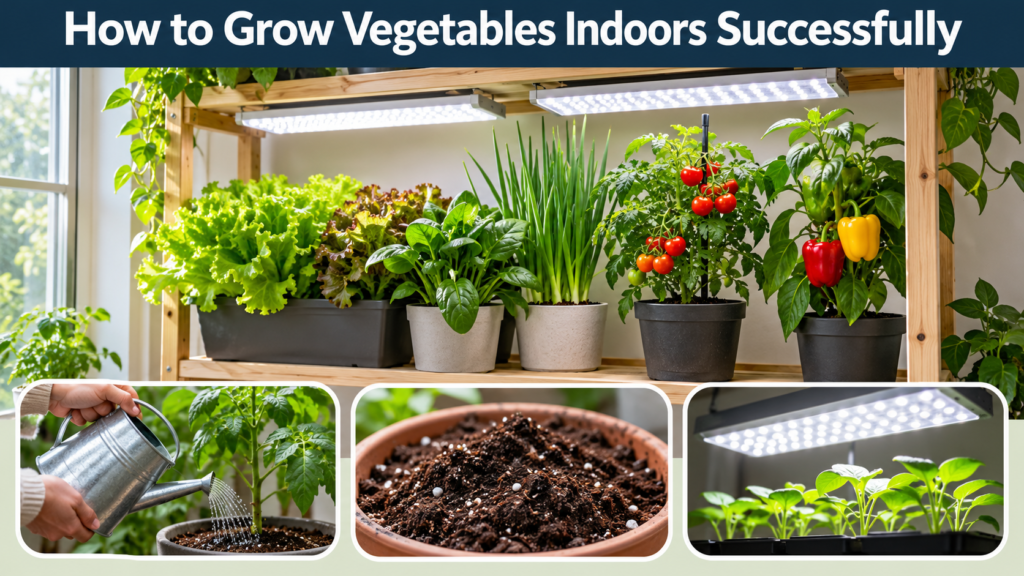
Growing vegetables indoors requires the right combination of lighting, containers, temperature, and watering. While leafy greens and microgreens are relatively easy to maintain, fruiting vegetables such as tomatoes and peppers need more attention. Understanding these basic requirements will help beginners avoid common problems and improve their chances of a successful indoor harvest.
Choose the Right Containers
Select containers based on the root depth and mature size of each vegetable. Shallow trays work well for microgreens and lettuce, while carrots, peppers, and tomatoes need deeper pots. Every container should have drainage holes to prevent water from accumulating around the roots.
Provide Enough Light
Most indoor vegetables need 12–16 hours of supplemental light daily when natural sunlight is insufficient. Leafy greens generally tolerate lower light levels than fruiting plants. Full-spectrum LED grow lights are useful for indoor growing because they provide consistent illumination regardless of the season.
Use Quality Potting Soil
Choose a lightweight, well-draining potting mix designed for containers. Avoid using ordinary garden soil, which may become compacted indoors. Vegetables also need nutrients, so apply an appropriate fertilizer according to the crop’s needs and the manufacturer’s directions.
Maintain Proper Watering and Temperature
Check soil moisture regularly and water when necessary. Most indoor vegetables prefer temperatures between 60°F and 80°F, although requirements vary by crop. Good air circulation also helps reduce fungal diseases and supports healthy plant growth.
Frequently Asked Questions
What Is the Easiest Vegetable to Grow Indoors?
Lettuce, green onions, radishes, and microgreens are among the easiest indoor vegetables for beginners. They require relatively little growing space and mature quickly. Microgreens are particularly convenient because many varieties can be harvested within two weeks when provided with proper lighting, moisture, and airflow.
What Vegetables Can You Grow Indoors Without Sunlight?
Microgreens, lettuce, spinach, kale, and green onions can grow indoors without natural sunlight when suitable artificial grow lights are provided. However, vegetables cannot grow indefinitely in complete darkness. Plants need an adequate light source for photosynthesis, healthy development, and continued production.
Can You Grow Vegetables Indoors Year-Round?
Yes, many vegetables can grow indoors throughout the year when lighting, temperature, water, and nutrients are properly controlled. Leafy greens and herbs are especially convenient for continuous growing. Tomatoes, peppers, and cucumbers can also produce indoors, but they generally need stronger lighting and larger containers.
What Vegetables Grow Fastest Indoors?
Microgreens, pea shoots, radishes, arugula, and baby lettuce are among the fastest-growing indoor vegetables. Microgreens may be ready within 7–21 days, while radishes often mature in approximately 25–35 days. Actual harvesting times depend on the variety, growing temperature, lighting, and other environmental conditions.
Can I Grow Vegetables Indoors in Small Pots?
Yes, several vegetables grow successfully in small containers. Green onions, microgreens, baby lettuce, arugula, and garlic greens are particularly suitable for limited spaces. Choose compact varieties, provide sufficient light, and ensure adequate drainage. Larger vegetables generally need more soil volume for healthy root development.