
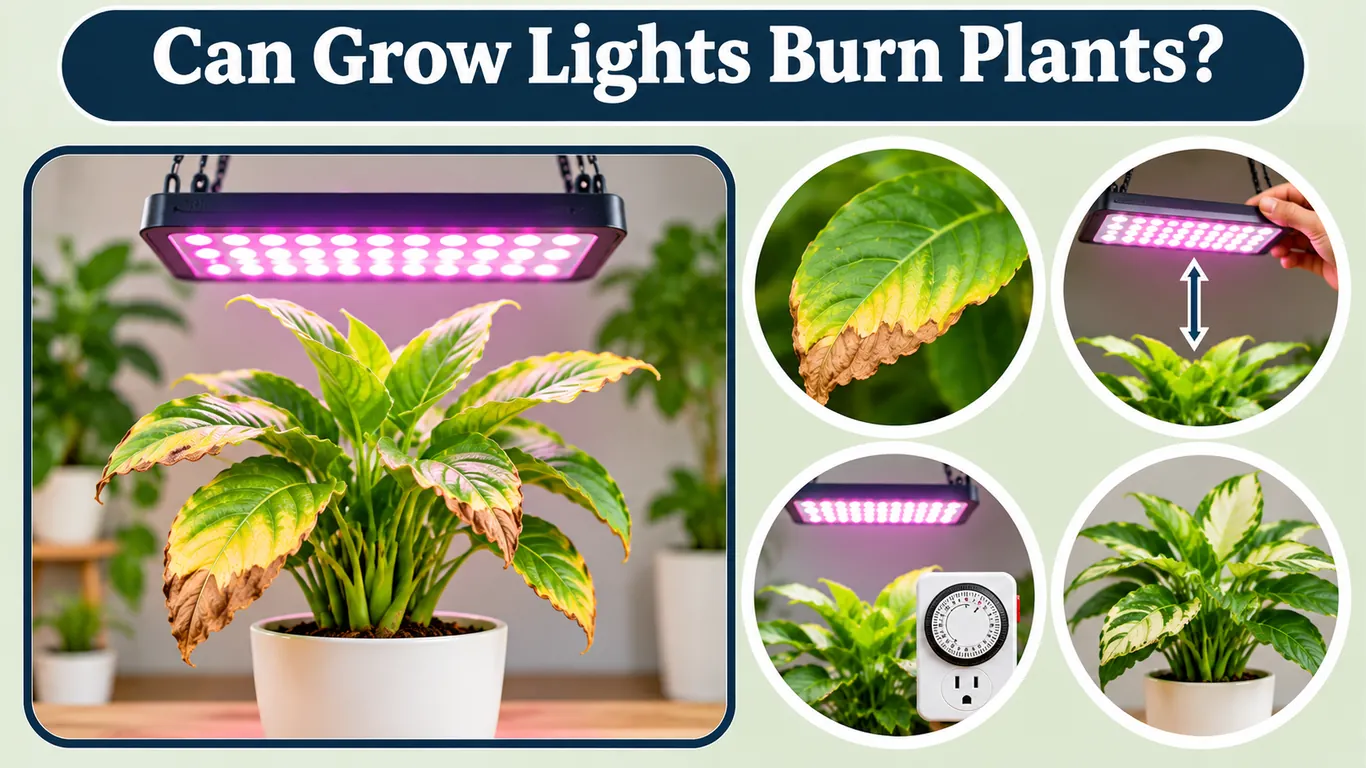
Grow lights provide essential artificial light for indoor plants, helping them grow when natural sunlight is limited. However, using them incorrectly can damage delicate leaves and affect plant health. So, can grow lights burn plants even when using modern LED technology? Yes, excessive light intensity, heat exposure, and improper positioning can cause leaf burn or light stress. Understanding the warning signs and knowing how to adjust your grow lights can help prevent damage, protect sensitive foliage, and maintain healthy growth throughout the indoor growing season.
Can Grow Lights Really Burn Plants?
Yes, grow lights can burn plants when they expose foliage to excessive heat or light intensity. Although modern LED grow lights generally produce less radiant heat than traditional high-intensity lamps, they can still cause damage through excessive illumination. The risk depends on the light’s output, distance, duration, and the plant’s tolerance to bright conditions.
Understanding Grow Light Burn
Grow light burn occurs when leaves experience damaging levels of heat or light energy. Excessive heat can dry and injure leaf tissue, while overly intense illumination may overwhelm a plant’s ability to process light efficiently.
This second condition is often associated with photoinhibition and, in severe cases, photodamage. Excessively high photosynthetic photon flux density (PPFD) can damage leaves, particularly when plants are placed too close to powerful fixtures.
Can LED Grow Lights Burn Plants?
LED grow lights can damage plants, but the problem is not always caused by heat. High-output LED fixtures can deliver more light than certain plants can tolerate, especially when positioned too close to their foliage.
Most LEDs generate less direct radiant heat than HID lamps, making them easier to use around indoor plants. Nevertheless, powerful LED grow lights require appropriate spacing, brightness settings, and regular monitoring.
What Causes Grow Light Burn on Indoor Plants?
Several factors contribute to grow light burn, including fixture intensity, placement, temperature, and daily exposure. Some plants naturally tolerate strong illumination, while shade-loving houseplants are more sensitive to excessive brightness. Understanding these causes helps indoor gardeners create balanced lighting conditions and avoid unnecessary damage to leaves, stems, and newly developing growth.
Common Causes of Grow Light Burn
- Lights positioned too close: Excessive PPFD or heat can damage upper foliage when fixtures are too near.
- High light intensity: Powerful grow lights may exceed a plant’s requirements, even at moderate distances.
- Excessively long lighting periods: Too many hours of illumination can deliver more daily light than plants need.
- Poor ventilation: Restricted airflow can increase temperature around powerful lighting equipment.
- Sudden light changes: Moving plants directly from dim conditions into intense illumination may cause stress.
- Incorrect lighting equipment: High-output fixtures designed for demanding crops may overwhelm low-light houseplants.
The appropriate light level depends on the plant species and growing conditions. Different fixtures can deliver dramatically different amounts of light at the same hanging distance.
Signs Your Grow Lights Are Burning Plants
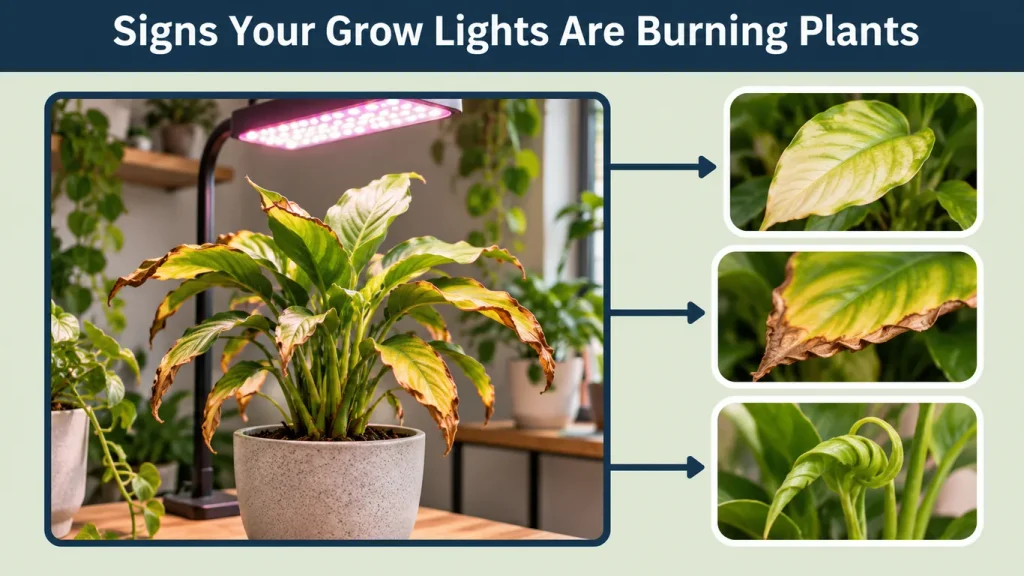
Recognizing grow light damage early can help prevent further deterioration. Symptoms generally appear on foliage receiving the strongest illumination, particularly leaves directly beneath the fixture. However, similar problems can result from nutrient imbalances, improper watering, or environmental stress. Examining leaf appearance, fixture distance, and growing conditions together provides a more reliable diagnosis.
1. Bleached or Faded Leaves
Excessive light exposure may cause foliage to develop unusually pale, faded, or whitish patches. These symptoms often become noticeable on the upper leaves closest to the lighting equipment.
Leaf bleaching can indicate that the plant is experiencing more illumination than it can comfortably use. Reducing brightness or increasing the distance may help protect unaffected foliage.
2. Brown or Crispy Leaf Edges
Brown, dry leaf margins can develop when plants experience excessive heat or light stress. The affected tissue may become brittle and eventually die.
However, low humidity, underwatering, and fertilizer problems can cause similar symptoms. Check soil moisture, temperature, and light intensity before identifying grow lights as the cause.
3. Curling or Twisting Leaves
Leaves exposed to stressful conditions may curl, twist, or develop an abnormal shape. In some cases, upper foliage becomes distorted while lower leaves remain relatively healthy.
Persistent curling beneath powerful lights may indicate excessive illumination or elevated temperatures. Reducing intensity and checking ventilation can help improve growing conditions.
4. Stunted or Slowed Growth
Excessive light can interfere with healthy plant development when the plant cannot efficiently use the energy it receives. New growth may appear smaller or develop more slowly than expected.
Stunted growth alone does not confirm light burn. Root damage, nutrient deficiencies, and unfavorable temperatures should also be considered when diagnosing the problem.
How Far Should Grow Lights Be to Prevent Plant Burn?
Maintaining suitable distance between grow lights and plants is one of the most effective ways to reduce light stress. However, there is no universal safe distance for every fixture. A low-output LED bar and a powerful commercial LED panel require different placement. Manufacturer recommendations and canopy-level PPFD measurements offer the most reliable guidance for positioning lights.
Recommended Grow Light Distance Chart
| Grow Light Type | Approximate Starting Distance |
| Low-output LED light bars | 4–12 inches |
| Standard LED grow lights | 12–24 inches |
| High-intensity LED panels | 18–36 inches or more |
| Fluorescent T5/T8 lights | 2–8 inches |
| Compact fluorescent lights | 6–12 inches |
| HID grow lights | 18–36 inches or more |
These distances are general estimates, not guaranteed safe limits. Some fixtures need considerably different spacing, so always follow the manufacturer’s recommendations.
Adjusting Light Distance for Different Plants
Low-light houseplants, including peace lilies and many philodendrons, generally require lower light intensity than plants grown for flowering or fruiting. Their lighting should be adjusted accordingly.
Tomatoes, peppers, and many flowering plants can tolerate higher illumination when properly acclimated. Rather than relying only on distance, consider the actual light reaching their leaves.
Why PPFD Matters More Than Distance Alone
PPFD measures the amount of photosynthetically active light reaching a given area each second. It is expressed in micromoles per square meter per second (µmol/m²/s).
As a fixture moves closer to plants, the light intensity at canopy level generally increases. A PAR meter or reliable manufacturer PPFD chart can help identify an appropriate brightness level.
How to Prevent Grow Lights From Burning Plants

Preventing grow light burn involves more than choosing energy-efficient equipment. Plants require an appropriate combination of light intensity, exposure duration, temperature, and growing conditions. Regular monitoring is especially important for seedlings and shade-tolerant species. Following practical lighting habits can help maintain healthy foliage while supporting consistent indoor plant development.
Best Practices to Prevent Grow Light Burn
- Follow the manufacturer’s instructions: Begin with the recommended hanging height and brightness settings for your specific fixture.
- Use adjustable light fixtures: Raise or lower the light as your plants grow and their canopy height changes.
- Monitor light intensity: Use a PAR meter or manufacturer PPFD chart to estimate the light reaching your plants.
- Maintain proper ventilation: Keep adequate airflow around lighting equipment and avoid excessive heat buildup.
- Use a lighting timer: Maintain an appropriate day-night schedule rather than leaving grow lights on continuously.
- Acclimate plants gradually: Introduce plants to stronger artificial light over several days instead of immediately exposing them to maximum brightness.
Indoor plants have different lighting requirements, so the same settings will not suit every species. A gradual adjustment strategy makes it easier to recognize and correct problems before serious damage develops.
How to Fix Plants Damaged by Grow Lights

Plants affected by excessive lighting can often recover if the cause is corrected early. However, severely damaged leaves generally cannot return to their original appearance. Recovery depends on the extent of injury, plant health, and growing conditions. The main objective is to prevent additional damage while encouraging the development of healthy new foliage.
Move the Grow Light Farther Away
Increase the distance between the fixture and the plant canopy when excessive illumination is suspected. If your light has adjustable brightness, reducing output may be another effective solution.
Make changes gradually and observe the plant’s newest leaves over the following days. Healthy new growth is generally a better indicator of recovery than the appearance of previously damaged foliage.
Check Watering and Environmental Conditions
Plants recovering from light stress need appropriate moisture and stable growing conditions. Check the potting mix before watering, because damaged plants may use water differently while growth is reduced.
Avoid overwatering or applying excessive fertilizer in an attempt to accelerate recovery. Maintaining proper drainage, temperature, and humidity allows the plant to recover without additional stress.
Remove Severely Damaged Leaves When Necessary
Leaves that have become completely brown and dry will not regain their original color or function. Severely damaged foliage can be trimmed with clean pruning tools when appropriate.
However, partially green leaves may still contribute to photosynthesis. Avoid removing too much foliage at once, particularly from small plants already experiencing stress.
Can Plants Recover From Grow Light Burn?
Many indoor plants can recover from mild or moderate light damage after their growing environment improves. The recovery process depends on whether the growing points, roots, and enough healthy foliage remain intact. New leaves may develop normally even when older leaves retain permanent discoloration. Severe damage involving the main stem or growing points can make recovery more difficult.
How Long Does Recovery Take?
Mildly stressed plants may begin producing healthier new growth within one to several weeks after conditions improve. The timeline varies considerably according to species, season, and growing conditions.
Fast-growing herbs and vegetables may show improvement sooner than slow-growing tropical houseplants. Existing bleached or brown patches typically remain visible even after the light problem has been corrected.
How to Encourage Healthy New Growth
Provide a suitable amount of light, maintain consistent watering, and keep temperatures within the plant’s preferred range. Avoid frequent changes to its location while it is recovering.
Inspect developing leaves for signs of continued bleaching, curling, or browning. If new growth appears healthy, the adjusted lighting environment is likely more suitable.
Grow Light Burn vs. Other Plant Problems
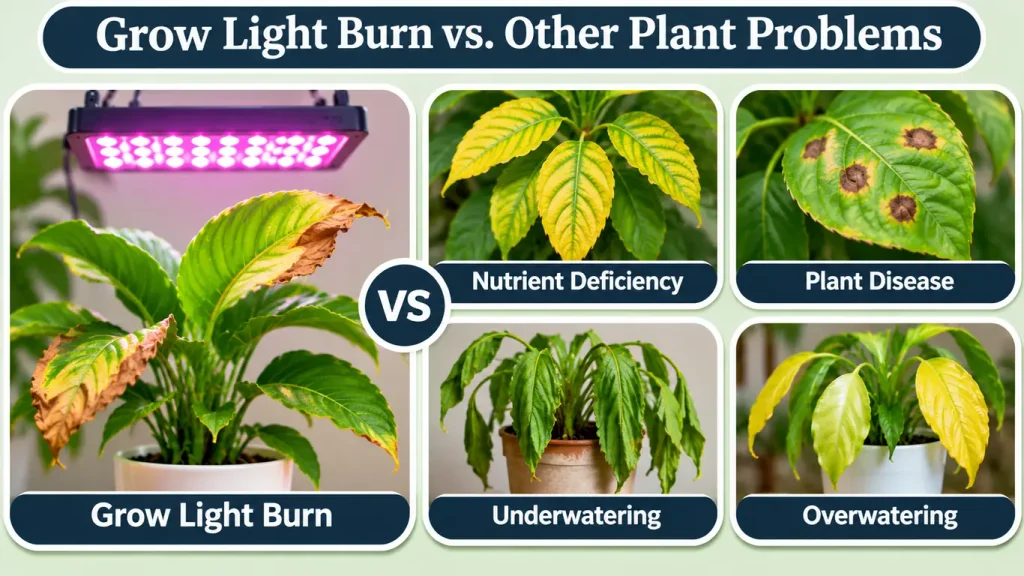
Grow light burn can resemble several common indoor plant problems. Yellow leaves, brown margins, and slow growth do not always indicate excessive illumination. Watering mistakes, nutrient deficiencies, pests, and natural leaf aging may produce similar changes. Comparing symptoms and checking the plant’s environment helps prevent unnecessary lighting adjustments that could make the problem worse.
Grow Light Burn vs. Nutrient Deficiency
Excessive light often causes damage concentrated on leaves receiving the strongest illumination. Nutrient deficiencies may produce more recognizable patterns of discoloration, sometimes affecting older or younger leaves first.
A nutrient problem may also involve poor growth throughout the plant rather than only its upper canopy. Evaluating fertilizer practices, growing media, and leaf symptoms together is important.
Grow Light Burn vs. Underwatering
Underwatered plants frequently develop drooping foliage, dry potting mix, or crispy leaf margins. These symptoms can resemble heat-related leaf damage.
Check moisture below the soil surface rather than judging the plant’s appearance alone. If moisture is adequate but the uppermost leaves remain damaged, excessive light may be a contributing factor.
FAQs
1. Can LED grow lights burn plants?
Yes, LED grow lights can damage plants when their intensity exceeds the plant’s tolerance. Although LEDs generally produce less direct radiant heat than traditional HID lamps, excessive illumination can still cause bleaching, leaf stress, and reduced growth.
2. What does grow light burn look like on plants?
Grow light burn may appear as pale or bleached patches, crispy brown margins, curled foliage, or damaged upper leaves. These symptoms commonly occur near the strongest light exposure, although watering and nutrient problems can look similar.
3. Can grow lights burn plants if they are left on 24 hours?
Continuous lighting can stress many plants, especially when the total daily light exposure is excessive. Most indoor plants benefit from a regular dark period. Some crops tolerate extended lighting, but the appropriate schedule depends on species and intensity.
4. How do I know if my grow light is too strong?
A grow light may be too strong if upper leaves become bleached, distorted, or unusually stressed while other growing conditions remain suitable. Check the manufacturer’s PPFD chart or use a PAR meter to evaluate the actual intensity.
5. Will burned plant leaves turn green again?
Severely bleached or brown leaf tissue generally will not return to its original green appearance. However, plants can produce healthy new foliage after excessive light exposure is corrected. Recovery depends on damage severity and the plant’s overall condition.