
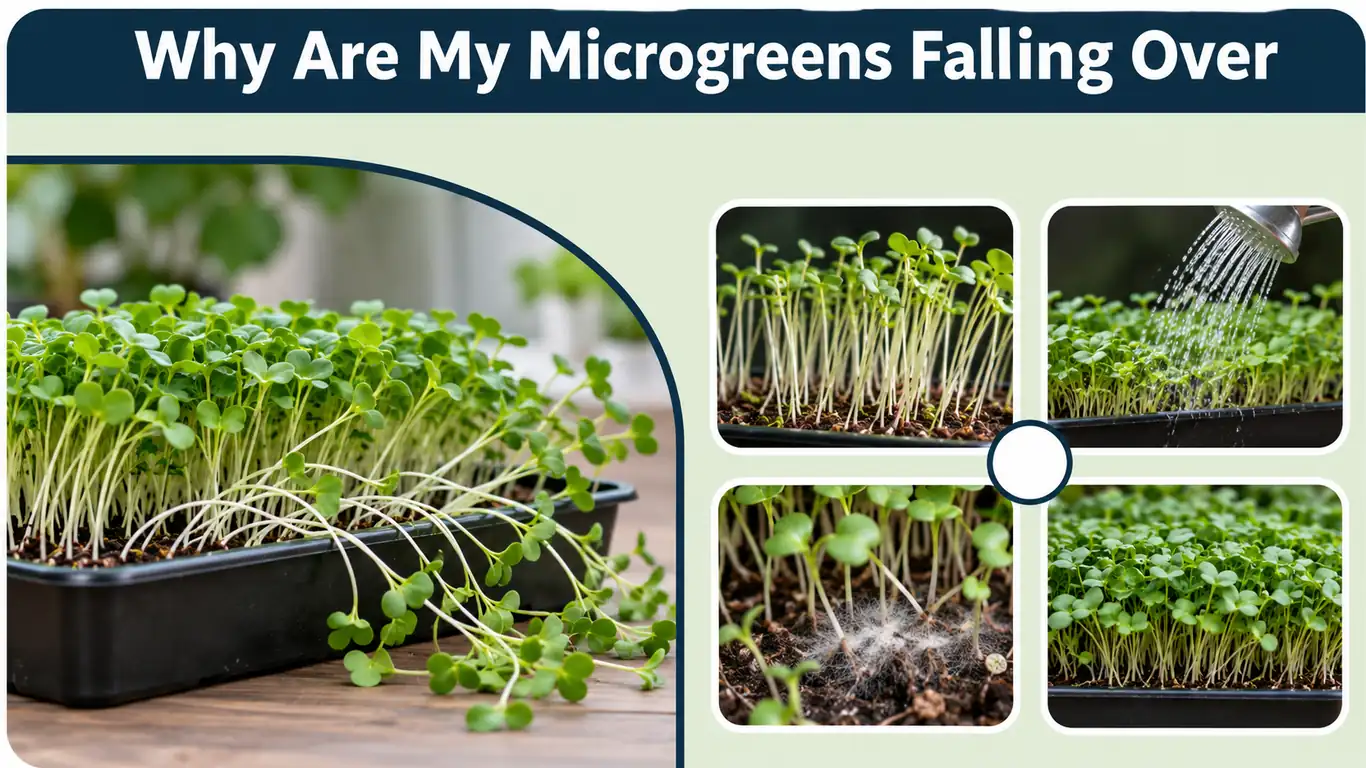
Microgreens are easy to grow, but watching their delicate stems bend, collapse, or fall over can be frustrating. If you’re wondering, why are my microgreens falling over, the problem often comes from insufficient light, overwatering, poor airflow, overcrowding, or fungal diseases. Sometimes, young seedlings naturally lean as they develop, while other cases indicate unhealthy growing conditions. Understanding the difference helps you take action before losing your crop. This guide explains the common causes of falling microgreens, how to revive weak seedlings, and practical ways to keep future harvests healthy.
7 Common Reasons Why Your Microgreens Are Falling Over
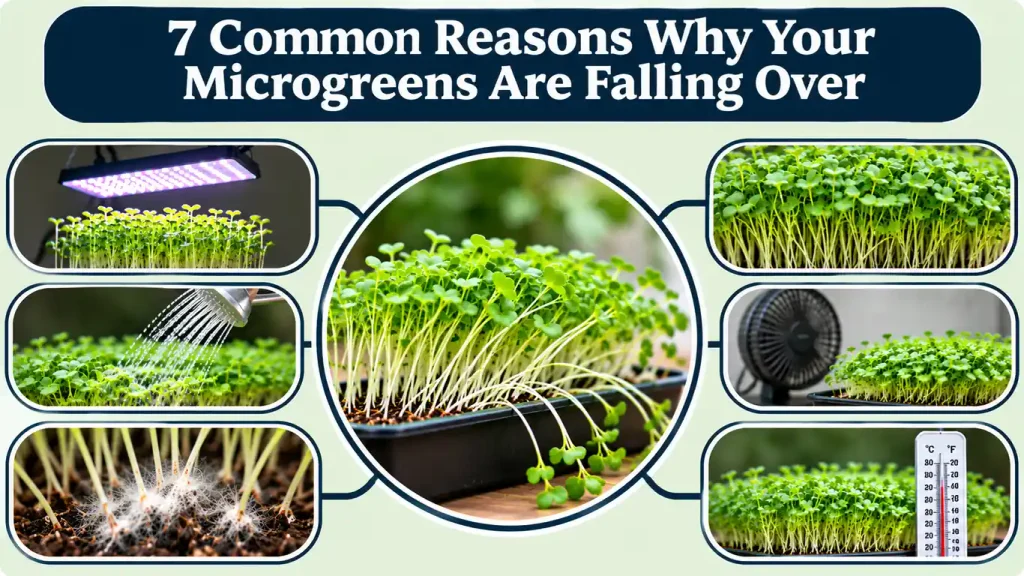
Microgreens can fall over for several reasons, and identifying the exact cause is essential for choosing the right solution. Some seedlings develop weak stems because of environmental conditions, while others collapse due to root damage or disease. Examining stem thickness, soil moisture, lighting, and growing density can help you determine what is happening in your microgreen tray.
1. Not Enough Light
Insufficient lighting is one of the most common reasons microgreens develop long, thin, weak stems. When seedlings do not receive enough light, they stretch toward the nearest light source, making them top-heavy and more likely to bend or fall over.
Move your microgreens to a brighter location or place them beneath a suitable LED grow light. After the initial germination or blackout period, provide approximately 12–16 hours of light daily, adjusting the intensity according to the crop.
2. Overwatering and Waterlogged Growing Medium
Excess water reduces oxygen around the roots and creates conditions that encourage fungal growth. Microgreens growing in constantly saturated soil may develop weak roots, yellow leaves, and soft stems that eventually collapse.
Allow excess water to drain freely and avoid keeping the growing medium soaking wet. Bottom watering can help maintain consistent moisture without repeatedly wetting the stems and leaves.
3. Damping-Off Disease
Damping-off is a fungal or fungus-like disease that attacks young seedlings near the soil surface. Affected microgreens often develop thin, discolored, or pinched stems before suddenly falling over.
Inspect the stem bases carefully and remove affected seedlings immediately. Improve drainage and airflow, and discard heavily infected trays rather than attempting to save severely diseased plants.
4. Poor Air Circulation
Stagnant air allows moisture to remain around seedlings, increasing humidity and encouraging disease development. Microgreens grown inside enclosed containers or tightly packed shelving systems may experience these conditions.
Provide gentle air circulation using a small fan positioned away from direct, strong airflow. Proper ventilation helps excess moisture evaporate while encouraging healthier growing conditions.
5. Overcrowded Seedlings
Microgreens are usually grown densely, but excessive seeding rates create competition for light, moisture, and available growing space. Seedlings may become unusually tall and weak as they stretch above neighboring plants.
Follow seed-density recommendations for your particular microgreen variety. Distribute seeds evenly across the growing medium to avoid thick clusters that trap moisture and restrict airflow.
6. Weak Root Development
Healthy roots anchor microgreens firmly in the growing medium and support upright growth. Shallow trays, compacted soil, uneven moisture, or unsuitable growing materials can contribute to poor root establishment.
Choose a loose, moisture-retentive growing medium with good drainage. Keep it consistently moist during germination so young roots can establish themselves without becoming waterlogged.
7. Incorrect Temperature and Humidity
High temperatures can accelerate seedling growth, producing elongated stems under inadequate lighting. Excess humidity may also encourage fungal problems, particularly when ventilation is limited.
For many common microgreens, temperatures around 18–24°C (65–75°F) provide a useful starting range. Adjust conditions for the specific crop and avoid prolonged excessive heat or condensation.
How to Fix Microgreens That Are Falling Over
Fallen microgreens are not always beyond recovery, especially when their stems remain healthy and their roots are firmly established. The best treatment depends on whether the seedlings are leaning from weak growth, excess moisture, or disease. Making a few adjustments early can improve their condition and prevent additional seedlings from collapsing before harvest.
Step 1: Check the Stem and Root Condition
Examine several fallen microgreens near the soil surface to identify the problem. Healthy stems generally remain firm, while soft, brown, or constricted stems may indicate damping-off.
Step 2: Adjust the Growing Light
If seedlings appear tall, pale, and stretched, improve their lighting immediately. Position the grow light according to its manufacturer’s recommendations to provide adequate illumination without overheating the plants.
Step 3: Correct Your Watering Schedule
Check the growing medium before adding more water, and reduce watering if it feels excessively wet. Use a tray with drainage holes and allow standing water to drain after bottom watering.
Step 4: Improve Ventilation
Remove unnecessary humidity covers once the germination stage is complete. Use gentle airflow and provide adequate space around trays to reduce condensation and stagnant moisture.
Step 5: Remove Diseased Seedlings
Discard seedlings showing obvious stem rot or damping-off symptoms. If the disease is widespread, dispose of the affected tray and clean reusable equipment before starting another crop.
How to Prevent Microgreens From Falling Over
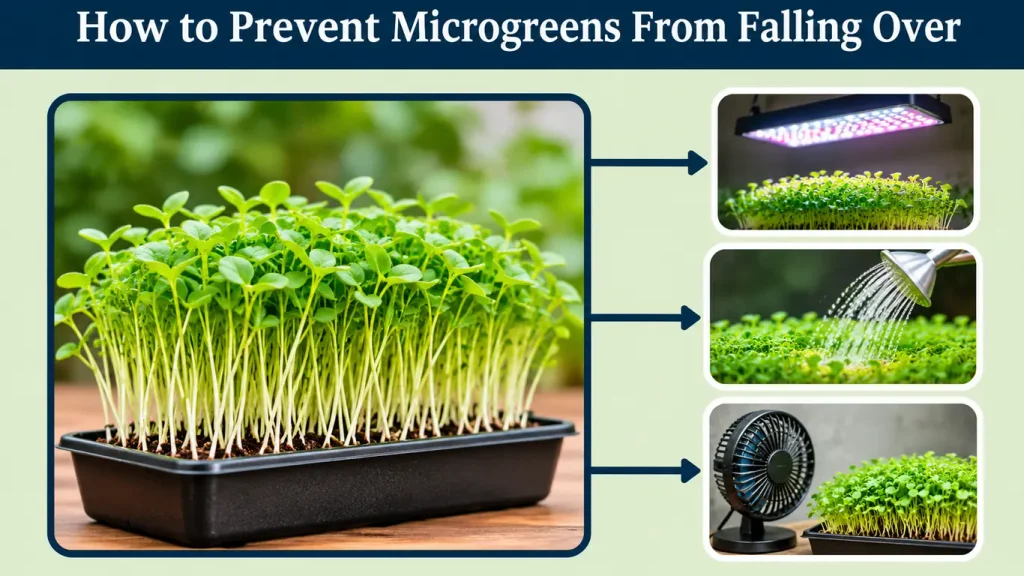
Prevention begins with creating stable growing conditions before seeds germinate. Microgreens need sufficient light, consistent moisture, appropriate temperatures, and clean equipment throughout their short growing cycle. By establishing a simple maintenance routine and correcting environmental problems early, you can encourage sturdy stems, strong roots, and healthier harvests with fewer collapsed seedlings.
Use the Right Growing Medium
Choose a clean, fine-textured growing medium suitable for microgreens, such as a quality seed-starting mix or appropriate growing mat. The medium should retain moisture while allowing excess water to drain.
Provide Consistent Light After Germination
Move seedlings into suitable lighting when their initial covered or blackout stage ends. Even lighting across the entire tray helps reduce excessive stretching and uneven growth.
Maintain Proper Seed Density
Spread seeds uniformly instead of allowing them to accumulate in thick patches. Different varieties require different seeding rates because seed size and growth habits vary considerably.
Clean Your Growing Trays
Wash and sanitize reusable trays between growing cycles to reduce the buildup of disease-causing organisms. Start with clean equipment, fresh growing medium, and seeds intended for sprouting or microgreen production.
Are Falling Microgreens Normal or a Sign of Disease?
Not every leaning microgreen indicates a serious growing problem. Seedlings may temporarily bend after emerging from beneath a germination cover, particularly when they have been growing in darkness. However, sudden collapse, visible stem damage, and spreading patches of fallen plants can indicate disease or unfavorable conditions that require immediate attention.
Normal Seedling Leaning
Young microgreens sometimes emerge bent or curved before straightening toward a light source. If the stems are firm, leaves look healthy, and seedlings gradually become upright, the leaning may be part of normal development.
Signs of Damping-Off
Damping-off commonly causes seedlings to collapse at the base, often in expanding patches. Stems may appear water-soaked, darkened, or constricted, and affected seedlings generally do not recover.
Signs of Environmental Stress
Microgreens falling in the direction of a window may be stretching toward uneven light. Limp seedlings without visible stem rot may also indicate watering problems, excessive heat, or weak root development.
Best Growing Conditions for Strong and Healthy Microgreens

Creating an ideal environment helps microgreens develop stronger stems and healthier root systems. Although growing requirements vary among varieties, most common microgreens perform well with moderate temperatures, sufficient light, and consistent moisture. Paying attention to these basic factors can significantly reduce the chances of seedlings becoming weak, falling sideways, or collapsing before they are ready to harvest.
Ideal Light Requirements
Most microgreens benefit from approximately 12–16 hours of appropriate artificial lighting each day. Grow lights should illuminate the entire tray evenly, helping seedlings grow upright rather than stretching toward a window.
Proper Watering and Drainage
The growing medium should remain evenly moist but never continuously saturated. Bottom watering is often effective because it delivers moisture to the roots while keeping the foliage relatively dry.
Temperature and Humidity Control
Many popular microgreens grow successfully at temperatures between 18–24°C (65–75°F). Moderate humidity and gentle ventilation help limit excess moisture around stems, especially in densely planted trays.
Can Fallen Microgreens Recover?
Whether fallen microgreens recover depends on the cause and severity of the damage. Seedlings that lean because of inadequate light or temporary water stress may recover when growing conditions improve. However, plants affected by severe stem rot, broken stems, or advanced damping-off usually cannot be restored, making early diagnosis particularly important.
When Microgreens Can Recover
Microgreens with firm, undamaged stems and healthy roots may gradually stand upright after receiving sufficient light and appropriate watering. Minor leaning is generally less concerning when the plants remain green and continue producing healthy leaves.
When You Should Start Over
If numerous seedlings have collapsed at the soil line, developed mushy stems, or begun rotting, restarting is usually the safest option. Discard affected plants and growing medium, sanitize the trays, and correct the conditions before planting fresh seeds.
FAQs
1. Why are my microgreens falling over after germination?
Microgreens may fall over after germination because they have stretched during the blackout period or lack sufficient light. Some temporary bending is normal, but weak, discolored, or collapsing stems may indicate excessive moisture, poor airflow, or damping-off disease.
2. Can overwatering cause microgreens to fall over?
Yes, overwatering can weaken roots and encourage diseases that cause seedlings to collapse. Constantly saturated growing medium limits oxygen availability around the roots. Maintain consistent moisture, ensure proper drainage, and avoid leaving trays standing in excess water.
3. Why are my microgreens growing tall and falling over?
Tall, thin microgreens commonly indicate inadequate lighting or excessive time spent in darkness. Seedlings stretch upward while searching for light, producing weak stems. Providing suitable grow lights after germination helps encourage more compact, sturdy growth.
4. Should I cut microgreens that have fallen over?
You can harvest fallen microgreens if they are healthy, clean, and at the proper harvesting stage. However, discard seedlings showing signs of mold, rot, or damping-off. Do not eat visibly diseased microgreens or attempt to salvage contaminated portions.
5. How do I keep my microgreens standing upright?
Provide consistent lighting, moderate temperatures, proper seed spacing, and adequate airflow. Keep the growing medium moist without waterlogging it, and use clean trays with effective drainage. Monitoring seedlings daily helps you identify problems before significant collapse occurs.