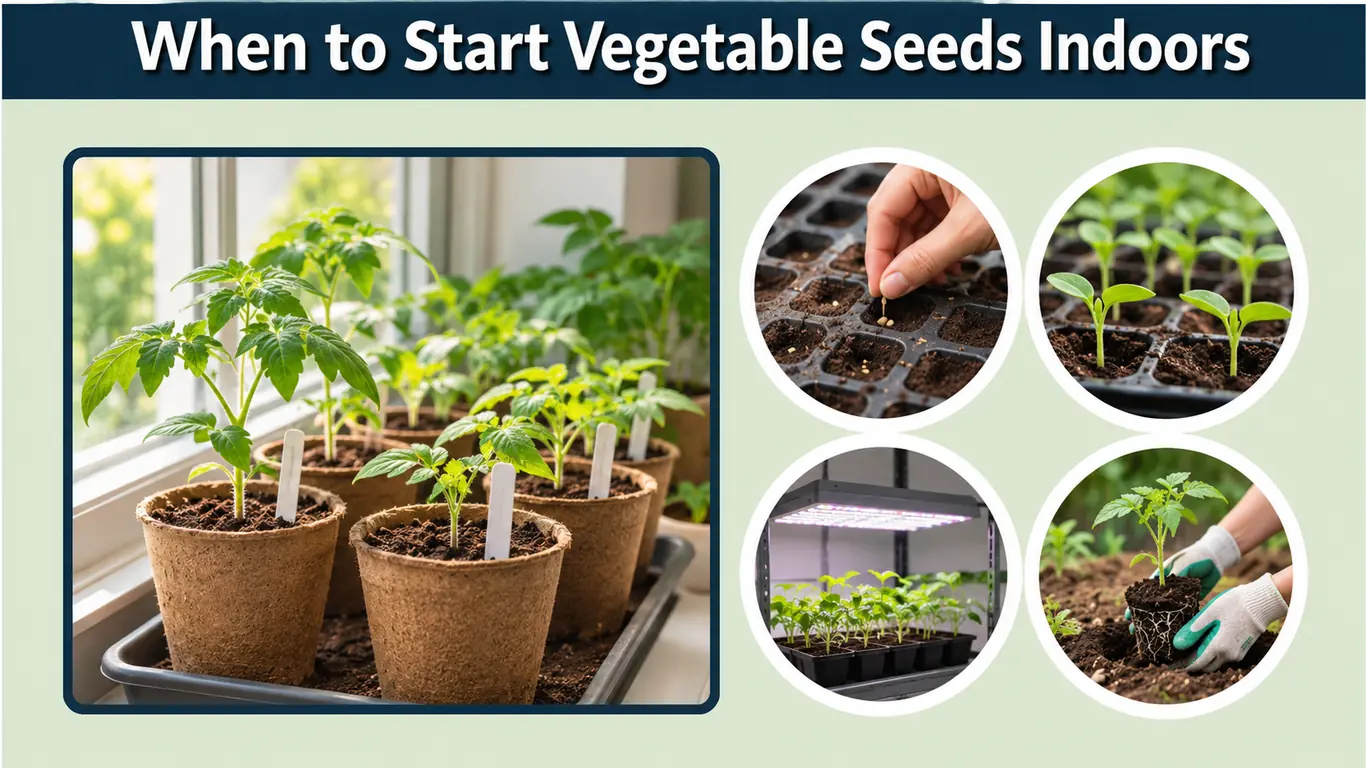
Knowing when to start vegetable seeds indoors is essential for growing healthy plants and enjoying a productive vegetable garden. Starting seeds at the right time gives seedlings enough opportunity to develop strong roots before being transplanted outdoors. However, the ideal planting schedule depends on your vegetable varieties, local climate, growing zone, and last spring frost date. Most vegetable seeds should be started indoors four to eight weeks before transplanting. This guide explains the best planting times, seed-starting schedules, regional differences, and practical tips for successful germination.
When Is the Best Time to Start Vegetable Seeds Indoors?
The best time to start vegetable seeds indoors is generally between late winter and early spring. However, different vegetables require different growing periods before they are ready for transplanting. Understanding the growth requirements of each vegetable helps prevent premature planting, weak seedlings, and transplant shock while giving plants a healthy start to the growing season.
Cool-Season Vegetables
Cool-season vegetables prefer moderate temperatures and can tolerate light frost once established and hardened off. Broccoli, cabbage, cauliflower, kale, and lettuce are generally started indoors four to eight weeks before their intended outdoor planting date.
Warm-Season Vegetables
Warm-season vegetables require warmer soil and protection from frost. Tomatoes, peppers, and eggplants benefit from an early indoor start, while cucumbers, pumpkins, and squash need considerably less indoor growing time.
Fast-Growing Vegetables
Fast-growing vegetables germinate quickly and can become overcrowded when started too early. Cucumbers, melons, and zucchini generally need only two to four weeks of indoor growth before transplanting.
When to Start Vegetable Seeds Indoors Chart
A vegetable seed-starting chart makes planning your gardening schedule much easier. Since vegetables have different germination rates and growing requirements, following a single planting date for every variety is not recommended. The following chart provides approximate indoor sowing times based on the intended outdoor transplanting date and typical germination periods under suitable growing conditions.
| Vegetable | Weeks Before Transplanting | Germination Time |
|---|---|---|
| Tomatoes | 6–8 weeks | 5–10 days |
| Peppers | 8–10 weeks | 7–21 days |
| Eggplants | 8–10 weeks | 7–14 days |
| Broccoli | 4–6 weeks | 5–10 days |
| Cabbage | 4–6 weeks | 5–10 days |
| Cauliflower | 4–6 weeks | 5–10 days |
| Kale | 4–6 weeks | 5–10 days |
| Lettuce | 3–4 weeks | 3–10 days |
| Celery | 10–12 weeks | 14–21 days |
| Onions | 10–12 weeks | 7–14 days |
| Cucumbers | 2–4 weeks | 3–10 days |
| Zucchini | 2–4 weeks | 4–10 days |
| Pumpkins | 2–4 weeks | 5–10 days |
| Watermelons | 3–4 weeks | 5–10 days |
| Swiss chard | 4–6 weeks | 5–14 days |
These are general estimates, and actual planting times may vary depending on vegetable varieties, temperature, and local weather conditions. Always check the instructions on your seed packets.
How to Determine When to Start Vegetable Seeds Indoors
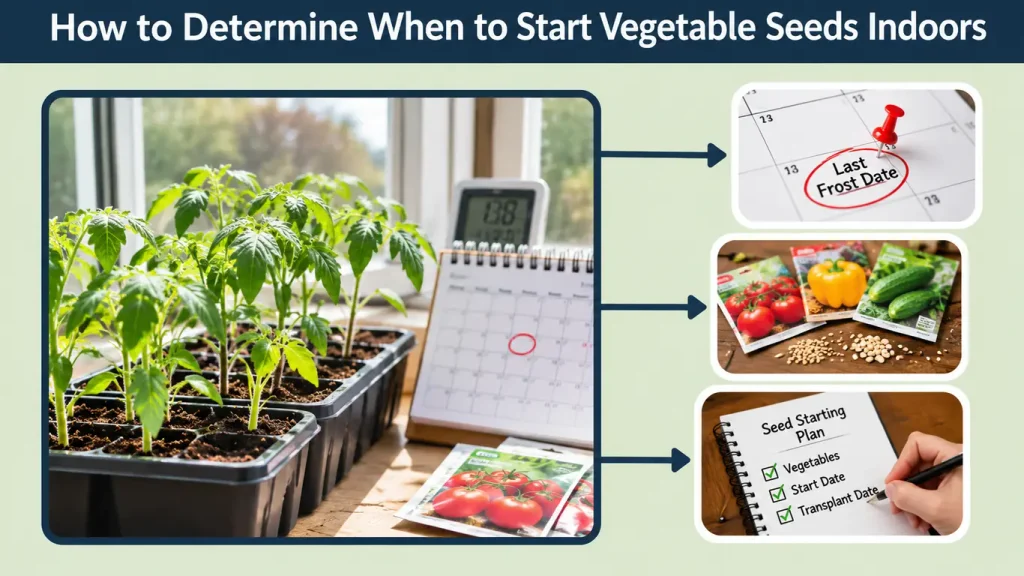
Finding the correct indoor planting date requires more than simply choosing a month. Gardeners should consider their local frost dates, vegetable growing requirements, and available indoor growing conditions. Calculating a personalized planting schedule helps seedlings reach the appropriate size before outdoor conditions become suitable, reducing the risk of poor growth and unnecessary transplant stress.
1. Find Your Last Spring Frost Date
Identify the average last spring frost date for your location. Use this information alongside soil temperatures and weather forecasts to determine when vegetables can safely be transplanted outdoors.
2. Check the Seed Packet
Most seed packets provide recommended sowing depths, germination temperatures, and indoor growing periods. Following these instructions helps you determine the appropriate planting schedule for each vegetable variety.
3. Calculate Your Seed-Starting Date
Count backward from your intended transplanting date according to the vegetable’s indoor growing requirements. For example, if you plan to transplant tomatoes on May 15, starting seeds six to eight weeks earlier means sowing between March 20 and April 3.
4. Consider Indoor Growing Conditions
Make sure your indoor growing area provides adequate warmth, lighting, ventilation, and space. Poor growing conditions can delay seedling development even when seeds are planted at the correct time.
When to Start Vegetable Seeds Indoors by Growing Zone
Growing zones provide a general understanding of regional climate conditions. Gardeners living in colder zones usually begin their spring planting schedules later than those living in warmer regions. However, USDA hardiness zones measure winter cold rather than spring frost dates, so the following schedules are approximate and should be adjusted according to local conditions.
Zone 4
- Slow-growing vegetables: February to March.
- Tomatoes and other vegetables: March to April.
- Cucumbers and squash: April to May.
Zone 5
- Peppers, onions, and celery: February to March.
- Tomatoes and broccoli: March to April.
- Cucumbers and pumpkins: April to May.
Zone 6
- Peppers and onions: February to March.
- Tomatoes, cabbage, and kale: March.
- Cucumbers and squash: April.
Zone 7
- Slow-growing vegetables: January to February.
- Tomatoes and broccoli: February to March.
- Cucumbers and melons: March to April.
Zone 8
- Peppers, onions, and celery: January to February.
- Tomatoes and eggplants: February to March.
- Cucumbers and zucchini: March to April.
When to Start Vegetable Seeds Indoors by Location
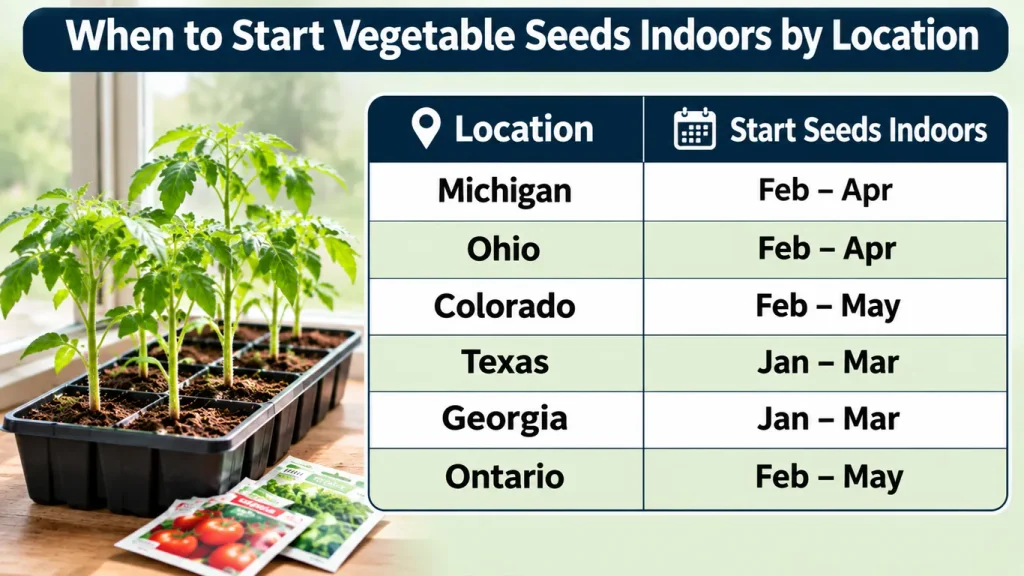
Vegetable seed-starting schedules vary significantly across different states and countries. Regional temperatures, elevation, seasonal rainfall, and frost conditions influence the ideal planting period. Although the following estimates provide a useful starting point for spring gardening, gardeners should check local planting calendars before selecting specific dates, especially in regions with diverse climates and growing conditions.
| Location | Approximate Spring Seed-Starting Period |
|---|---|
| Colorado | February–May |
| Michigan | February–April |
| Minnesota | February–April |
| Wisconsin | February–April |
| Ohio | February–April |
| Kentucky | January–April |
| Pennsylvania | February–April |
| Massachusetts | February–April |
| Connecticut | February–April |
| Missouri | January–April |
| Georgia | January–March |
| North Texas and Dallas | January–March |
| Ontario, Canada | February–May |
| United Kingdom | February–April |
These periods cover different vegetable varieties rather than a single recommended planting date. Gardeners in colder locations or at higher elevations may need to start certain vegetables later.
Which Vegetable Seeds Should You Start Indoors?
Not every vegetable benefits from indoor seed starting. Some plants require several weeks of protected growth before transplanting, while others develop healthier roots when planted directly into garden soil. Choosing suitable vegetables for indoor germination helps maximize growing space, reduce transplant damage, and improve the overall success of your vegetable garden throughout the growing season.
Best Vegetables to Start Indoors
- Tomatoes
- Sweet peppers
- Hot peppers
- Eggplants
- Broccoli
- Cabbage
- Cauliflower
- Celery
- Onions
- Kale
Vegetables Best Sown Directly Outdoors
- Carrots
- Radishes
- Turnips
- Parsnips
- Beets
- Peas
- Beans
Root vegetables generally benefit from direct sowing because transplanting can disturb their developing roots. Beans and peas also grow quickly under suitable outdoor conditions.
Tips for Successfully Starting Vegetable Seeds Indoors
Growing vegetables from seeds indoors requires proper preparation and consistent care. Even when seeds are planted at the correct time, inadequate lighting, excessive moisture, and unsuitable temperatures can affect germination and seedling development. Creating a suitable indoor growing environment encourages stronger roots, healthier foliage, and better survival when plants are eventually transferred into the garden.
- Use quality seed-starting mix: Choose a lightweight, well-draining growing medium rather than heavy garden soil.
- Provide adequate lighting: Give seedlings approximately 14–16 hours of artificial light daily when natural sunlight is insufficient.
- Maintain suitable temperatures: Many vegetable seeds germinate well between 65°F and 80°F, although requirements vary.
- Water carefully: Keep the growing medium evenly moist without allowing it to become waterlogged.
- Ensure proper airflow: Maintain gentle air circulation to reduce fungal problems.
- Thin crowded seedlings: Remove weaker seedlings to provide enough growing space.
- Label seed containers: Record vegetable names and sowing dates.
- Harden off seedlings: Gradually expose plants to outdoor conditions over 7–14 days before transplanting.
Common Mistakes When Starting Vegetable Seeds Indoors
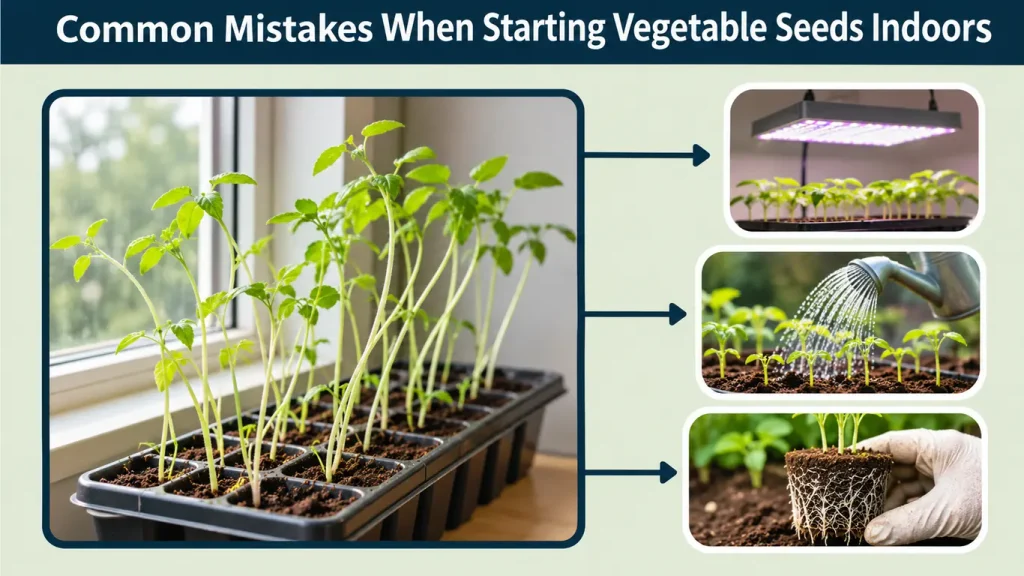
Starting vegetable seeds indoors can be relatively simple, but common gardening mistakes often result in weak plants or poor germination. Planting too early, providing insufficient light, and using unsuitable containers can negatively affect seedling development. Understanding these problems allows gardeners to maintain healthier plants and improve their chances of achieving a successful vegetable harvest.
Starting Seeds Too Early
Early planting can produce oversized, root-bound seedlings before outdoor conditions become suitable. Follow the recommended growing period for each vegetable instead of starting every variety simultaneously.
Providing Insufficient Light
Seedlings receiving inadequate light often become tall, thin, and weak. Position suitable grow lights above the plants to encourage compact and healthy development.
Overwatering Seedlings
Excessive watering can cause root rot and damping-off disease. Use containers with drainage holes and maintain consistent moisture without saturating the growing medium.
Transplanting Too Early
Moving seedlings outdoors before temperatures become suitable can damage sensitive vegetables. Check local weather forecasts and gradually acclimate seedlings before transplanting them into the garden.
FAQs
1. What month should I start vegetable seeds indoors?
February and March are common months for starting vegetable seeds indoors in temperate climates. However, the ideal month depends on your local last frost date and vegetable varieties. Some slow-growing vegetables may require sowing as early as January.
2. Is January too early to start vegetable seeds indoors?
January is suitable for starting slow-growing vegetables such as celery and onions, particularly in warmer regions. However, starting fast-growing vegetables too early can result in overcrowded seedlings that become difficult to maintain before outdoor planting.
3. Can I start vegetable seeds indoors all year round?
Yes, vegetables can be started indoors throughout the year when suitable lighting, temperature, and growing space are available. However, if you intend to transplant them outdoors, you must consider seasonal weather conditions and each vegetable’s temperature requirements.
4. How long should vegetable seedlings stay indoors?
Most vegetable seedlings remain indoors for two to eight weeks before transplanting, depending on their growth rate. Slow-growing vegetables may require ten to twelve weeks, while cucumbers and squash are often ready within two to four weeks.
5. What happens if I start vegetable seeds indoors too late?
Starting vegetable seeds too late may shorten the outdoor growing season and delay harvesting. Fast-growing vegetable varieties can help compensate for late planting, while purchasing established seedlings is another practical option for vegetables requiring longer growing periods.