
Growing citrus trees indoors is a wonderful way to enjoy fresh fruits, fragrant flowers, and beautiful evergreen foliage throughout the year. From Meyer lemons and sweet mandarins to kumquats and unique finger limes, many citrus varieties can thrive in containers with proper care. Whether you have a sunny windowsill or a dedicated indoor garden, these 22 types of citrus trees offer attractive options for growing fresh citrus fruits at home.
1. Meyer Lemon Tree
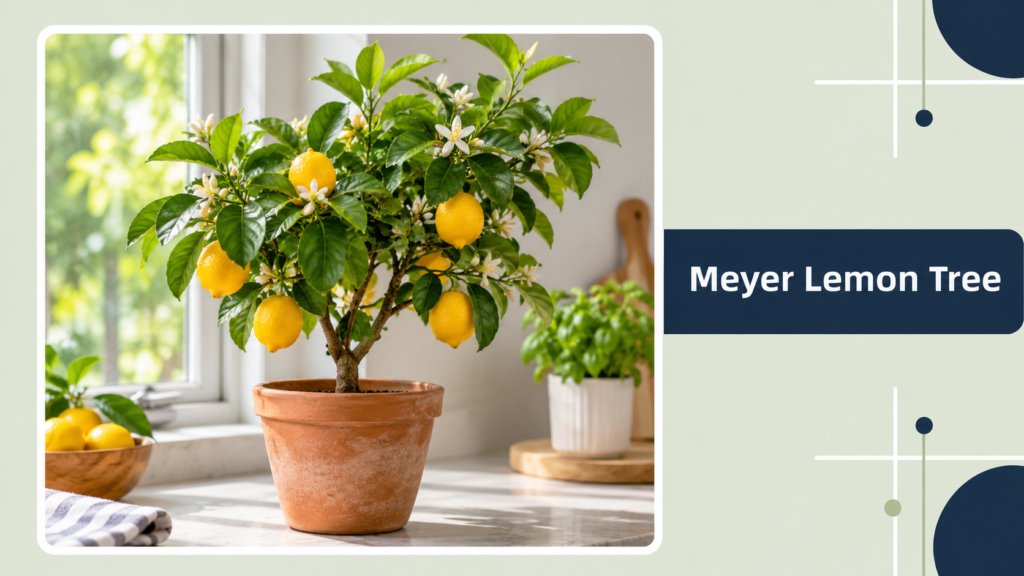
The Meyer Lemon Tree (Citrus × meyeri) is one of the best citrus trees for indoor growing because of its compact size, fragrant flowers, and sweet, juicy lemons. This attractive evergreen produces glossy green leaves and round, yellow-orange fruits that taste less acidic than regular lemons. With proper sunlight, watering, and care, a dwarf Meyer lemon tree can grow successfully in containers and produce fruit indoors.
Identification
- Scientific Name: Citrus × meyeri
- Common Name: Meyer Lemon Tree
- Plant Height: 3–6 feet indoors
- Fruit Size: 2–3 inches in diameter
- Fruit Color: Deep yellow to yellow-orange
- Leaf Color: Dark green and glossy
- Flower Color: White with purplish buds
- Growing Time: Approximately 6–9 months from flowering to ripe fruit
- Appearance: Compact evergreen tree with fragrant flowers, dense foliage, and rounded citrus fruits
Ideal Indoor Growing Conditions
Meyer lemon trees require at least 6–8 hours of direct sunlight daily, although 8–12 hours of strong light is preferable for healthy growth and fruit production. A south-facing window or supplemental LED grow light works well.
Maintain temperatures around 65–80°F and use well-draining citrus potting soil. Containers should have drainage holes to prevent waterlogging and root rot.
Watering and Maintenance Tips
Water your Meyer lemon tree when the top 1–2 inches of soil feel dry. Avoid keeping the soil constantly wet. Feed it with a citrus fertilizer during active growth to encourage healthy foliage, flowering, and fruit development.
Prune damaged or crowded branches to maintain a compact shape. Indoor flowers may also benefit from gentle hand pollination to improve fruit production.
2. Ponderosa Lemon Tree
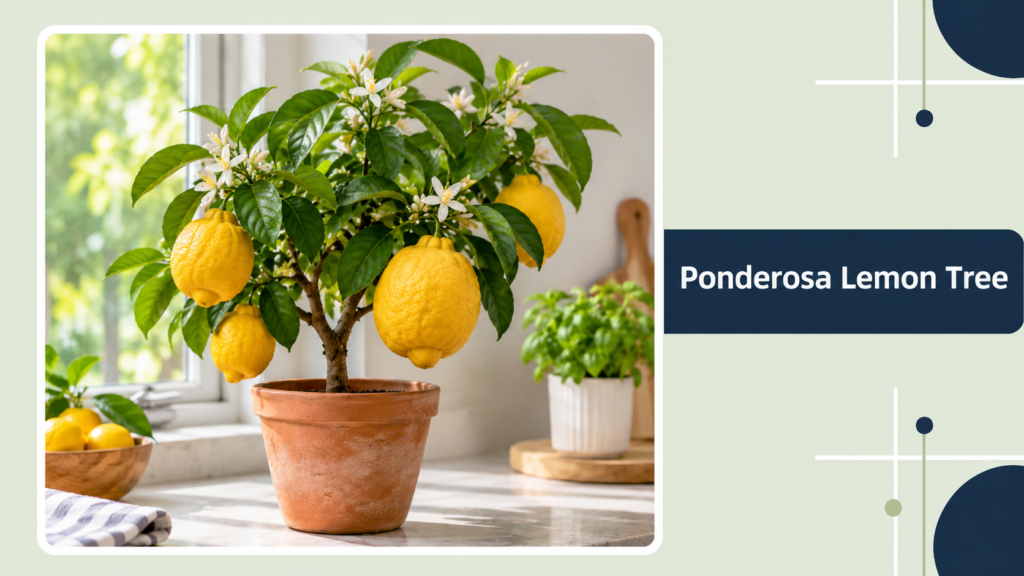
The Ponderosa Lemon Tree (Citrus × pyriformis) is a unique citrus variety known for producing exceptionally large, thick-skinned lemons. This attractive evergreen tree features glossy green leaves, fragrant white flowers, and oversized yellow fruits. Although it can grow quite large outdoors, regular pruning helps maintain a manageable size indoors. Its decorative appearance makes it a popular choice for indoor citrus gardening.
Identification
- Scientific Name: Citrus × pyriformis
- Common Name: Ponderosa Lemon Tree
- Plant Height: 3–6 feet indoors with pruning
- Fruit Size: 4–6 inches or larger
- Fruit Color: Bright yellow
- Leaf Color: Glossy dark green
- Flower Color: White with purple-tinged buds
- Growing Time: Approximately 9–12 months for fruit maturation
- Appearance: Evergreen tree with large lemons, thick leaves, and fragrant flowers
Ideal Indoor Growing Conditions
Ponderosa lemon trees grow best with 8–12 hours of strong light daily. Place the container near a sunny south-facing window or provide supplemental LED grow lights.
Maintain indoor temperatures between 65–85°F. Use well-draining citrus potting soil and a container with drainage holes to prevent excess moisture around the roots.
Watering and Maintenance Tips
Water deeply when the upper 1–2 inches of soil become dry. Allow excess water to drain completely and avoid leaving the pot standing in water.
Apply citrus fertilizer during the growing season to support healthy leaves and fruit development. Prune overgrown branches regularly and rotate the container occasionally for balanced growth.
3. Eureka Lemon Tree

The Eureka Lemon Tree (Citrus limon ‘Eureka’) is a popular lemon variety valued for its bright yellow fruits, strong citrus flavor, and productive growing habit. Its glossy evergreen foliage and fragrant white flowers make it an attractive indoor plant. Although Eureka lemon trees naturally grow larger than some dwarf citrus varieties, compact grafted trees can thrive in containers with sufficient sunlight and proper maintenance.
Identification
- Scientific Name: Citrus limon ‘Eureka’
- Common Name: Eureka Lemon Tree
- Plant Height: 4–8 feet indoors with pruning
- Fruit Size: 2–3 inches in diameter
- Fruit Color: Bright yellow
- Leaf Color: Deep green
- Flower Color: White with purple-tinged buds
- Growing Time: Approximately 6–9 months from flowering to harvest
- Appearance: Upright evergreen tree with oval lemons and fragrant blossoms
Ideal Indoor Growing Conditions
Eureka lemon trees require at least 6–8 hours of direct sunlight daily, with longer periods of strong light preferred for fruit production. Supplemental grow lights help maintain healthy growth during shorter winter days.
Keep temperatures around 65–85°F and protect the tree from cold drafts. Use a slightly acidic, well-draining citrus potting mix.
Watering and Maintenance Tips
Water when the top 1–2 inches of soil become dry. The roots should remain moderately moist without becoming waterlogged.
Feed with a balanced citrus fertilizer during active growth. Remove dead branches and trim excessive growth to maintain an attractive indoor shape.
4. Lisbon Lemon Tree

The Lisbon Lemon Tree (Citrus limon ‘Lisbon’) is a vigorous citrus variety known for its juicy, acidic lemons and dense evergreen foliage. It produces fragrant white flowers followed by bright yellow fruits commonly used in cooking and beverages. Although Lisbon lemon trees are naturally larger and thornier than many indoor citrus varieties, dwarf grafted plants can grow successfully in spacious containers.
Identification
- Scientific Name: Citrus limon ‘Lisbon’
- Common Name: Lisbon Lemon Tree
- Plant Height: 4–8 feet indoors with pruning
- Fruit Size: 2–3 inches in diameter
- Fruit Color: Bright yellow
- Leaf Color: Dark glossy green
- Flower Color: White with purple accents
- Growing Time: Approximately 6–9 months for fruit development
- Appearance: Dense evergreen tree with thorny branches, oval lemons, and fragrant blossoms
Ideal Indoor Growing Conditions
Lisbon lemon trees perform best with 8–12 hours of strong light each day. A sunny window combined with LED grow lights can provide the brightness necessary for flowering and fruiting.
Maintain temperatures between 65–85°F and avoid sudden temperature changes. Use a container with excellent drainage and a well-aerated citrus soil mixture.
Watering and Maintenance Tips
Water thoroughly when the top layer of soil feels dry. Reduce watering frequency during winter when growth naturally slows.
Apply citrus fertilizer throughout the active growing season. Prune crowded branches carefully and wear gloves when handling thorny stems.
5. Variegated Pink Lemon Tree
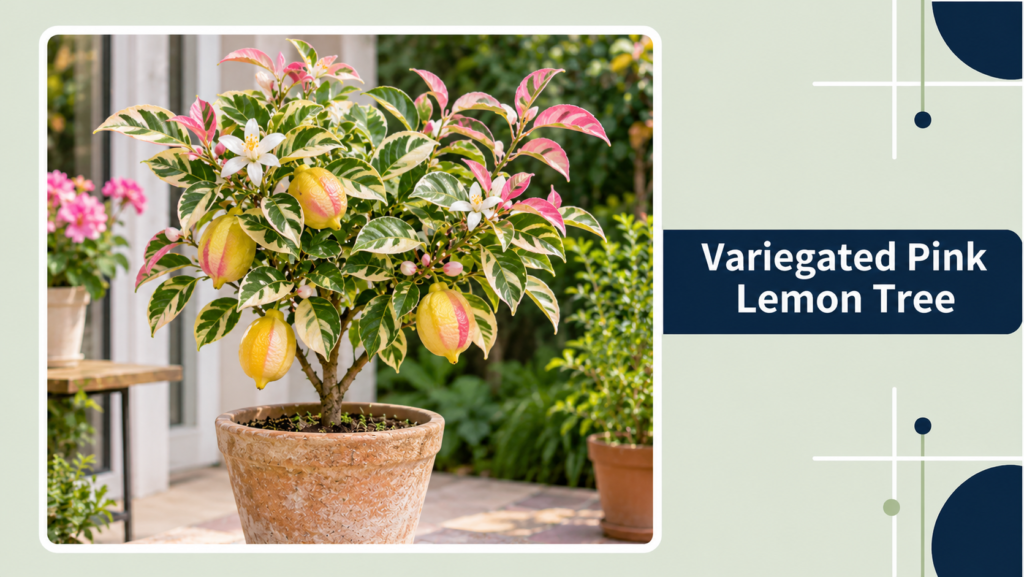
The Variegated Pink Lemon Tree (Citrus limon ‘Variegated Pink’) is an ornamental citrus variety admired for its colorful foliage and unusual fruit. Its green-and-cream variegated leaves create a striking indoor display, while immature lemons often feature green stripes. As the fruits mature, they develop yellow skins and beautiful pinkish flesh. This evergreen tree combines decorative appeal with the opportunity to harvest fresh lemons at home.
Identification
- Scientific Name: Citrus limon ‘Variegated Pink’
- Common Name: Variegated Pink Lemon Tree
- Plant Height: 3–6 feet indoors with pruning
- Fruit Size: 2–3 inches in diameter
- Fruit Color: Green-striped when immature, yellow when ripe
- Leaf Color: Green with creamy-white variegation
- Flower Color: White with pinkish-purple buds
- Growing Time: Approximately 6–9 months for fruit maturation
- Appearance: Compact citrus tree with patterned leaves, striped lemons, and pinkish fruit flesh
Ideal Indoor Growing Conditions
Variegated pink lemon trees need at least 6–8 hours of direct sunlight daily. Strong light helps maintain their colorful foliage and encourages healthy fruit development.
Keep indoor temperatures between 65–80°F and use well-draining citrus soil. Protect the plant from cold drafts and sudden temperature fluctuations.
Watering and Maintenance Tips
Water when the upper 1–2 inches of soil become dry. Avoid overwatering because consistently wet roots can cause yellowing leaves and root rot.
Use citrus fertilizer during active growth. Remove fully green shoots that begin dominating the variegated branches to preserve the plant’s distinctive appearance.
6. Key Lime Tree

The Key Lime Tree (Citrus × aurantiifolia) is a compact citrus tree famous for its small, aromatic limes and intensely tangy flavor. Often called the Mexican lime or West Indian lime, this evergreen produces glossy leaves, fragrant white flowers, and rounded green fruits that turn yellow when fully ripe. With adequate sunlight and careful pruning, a dwarf Key lime tree can become a productive indoor citrus plant.
Identification
- Scientific Name: Citrus × aurantiifolia
- Common Name: Key Lime Tree
- Plant Height: 3–6 feet indoors with pruning
- Fruit Size: 1–2 inches in diameter
- Fruit Color: Green, turning yellow when ripe
- Leaf Color: Glossy medium to dark green
- Flower Color: White
- Growing Time: Approximately 5–9 months from flowering to maturity
- Appearance: Bushy evergreen tree with thorny branches, small round fruits, and fragrant flowers
Ideal Indoor Growing Conditions
Key lime trees prefer 8–12 hours of strong light daily. Place the plant near a bright south-facing window or use LED grow lights to supplement natural sunlight.
Maintain warm temperatures between 65–85°F. Use well-draining citrus potting soil and avoid exposure to cold drafts, as Key lime trees are particularly sensitive to low temperatures.
Watering and Maintenance Tips
Water when the top 1–2 inches of soil feel dry. Ensure the container drains freely to prevent excess moisture from damaging the roots.
Feed regularly with citrus fertilizer during active growth. Prune long branches to encourage a compact shape, and check the leaves occasionally for common indoor pests such as spider mites and scale insects.
7. Persian Lime Tree

The Persian Lime Tree (Citrus × latifolia) is a popular citrus variety known for its juicy, seedless or nearly seedless fruits and refreshing flavor. Also called the Tahiti lime, this evergreen tree produces glossy green leaves, fragrant white flowers, and medium-sized limes. Dwarf Persian lime trees are suitable for indoor container growing when provided with sufficient sunlight, warmth, and regular maintenance.
Identification
- Scientific Name: Citrus × latifolia
- Common Name: Persian Lime Tree
- Plant Height: 3–6 feet indoors with pruning
- Fruit Size: 2–3 inches in diameter
- Fruit Color: Green, turning yellow when fully ripe
- Leaf Color: Glossy dark green
- Flower Color: White
- Growing Time: Approximately 5–9 months for fruit maturation
- Appearance: Evergreen citrus tree with rounded foliage, oval limes, and fragrant blossoms
Ideal Indoor Growing Conditions
Persian lime trees require at least 6–8 hours of direct sunlight daily, although longer periods of strong light encourage better fruit production. A sunny south-facing window or supplemental LED grow lights work well.
Maintain temperatures around 65–85°F and use well-draining citrus soil. Protect the tree from cold drafts and sudden temperature changes.
Watering and Maintenance Tips
Water thoroughly when the top 1–2 inches of soil become dry. Avoid keeping the roots constantly wet, as excess moisture can cause root rot.
Apply citrus fertilizer during active growth. Prune crowded branches to maintain a manageable size and encourage healthy airflow.
8. Makrut Lime Tree
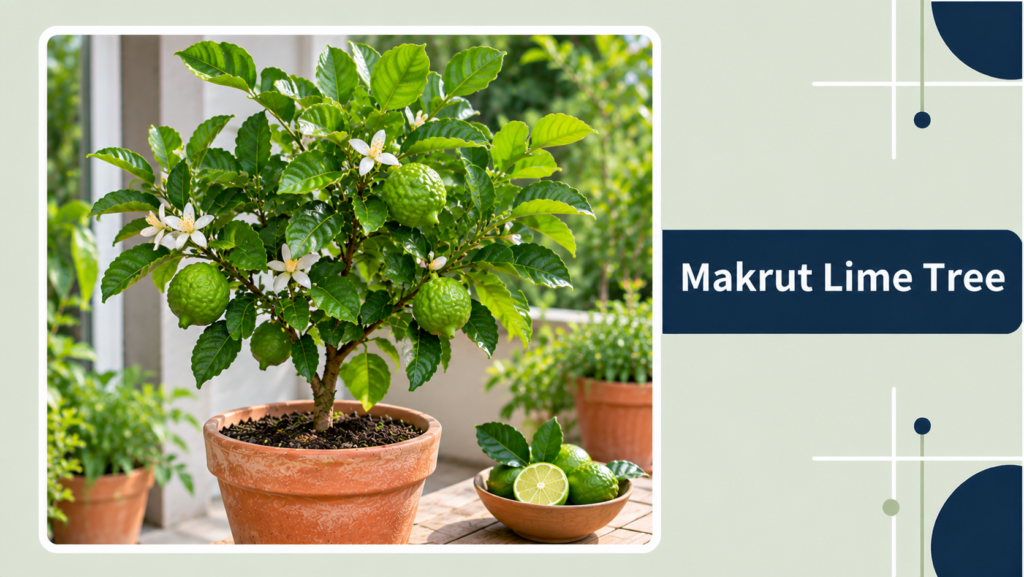
The Makrut Lime Tree (Citrus hystrix) is a distinctive citrus plant prized for its aromatic leaves and strongly scented fruits. Its unusual double-lobed leaves are widely used in Southeast Asian cooking, while the rough, bumpy fruits contain fragrant oils. This compact evergreen can grow successfully indoors, making it an excellent choice for gardeners interested in growing culinary citrus plants.
Identification
- Scientific Name: Citrus hystrix
- Common Name: Makrut Lime Tree
- Plant Height: 3–6 feet indoors with pruning
- Fruit Size: 1.5–2.5 inches in diameter
- Fruit Color: Dark green, turning yellow when mature
- Leaf Color: Deep glossy green
- Flower Color: White with pinkish tones
- Growing Time: Approximately 6–9 months for fruit development
- Appearance: Thorny evergreen tree with distinctive double-lobed leaves and wrinkled citrus fruits
Ideal Indoor Growing Conditions
Makrut lime trees grow best with 6–8 hours of direct sunlight daily. A bright window or full-spectrum LED grow light helps maintain healthy foliage throughout the year.
Keep temperatures between 65–85°F and provide well-draining citrus potting soil. Moderate indoor humidity can help prevent leaf drying.
Watering and Maintenance Tips
Water when the top 1–2 inches of soil feel dry. Make sure excess water drains away to prevent root problems.
Feed with citrus fertilizer during the growing season. Harvest mature leaves selectively for cooking, but avoid removing too many at once, as this can weaken the plant.
9. Australian Finger Lime Tree
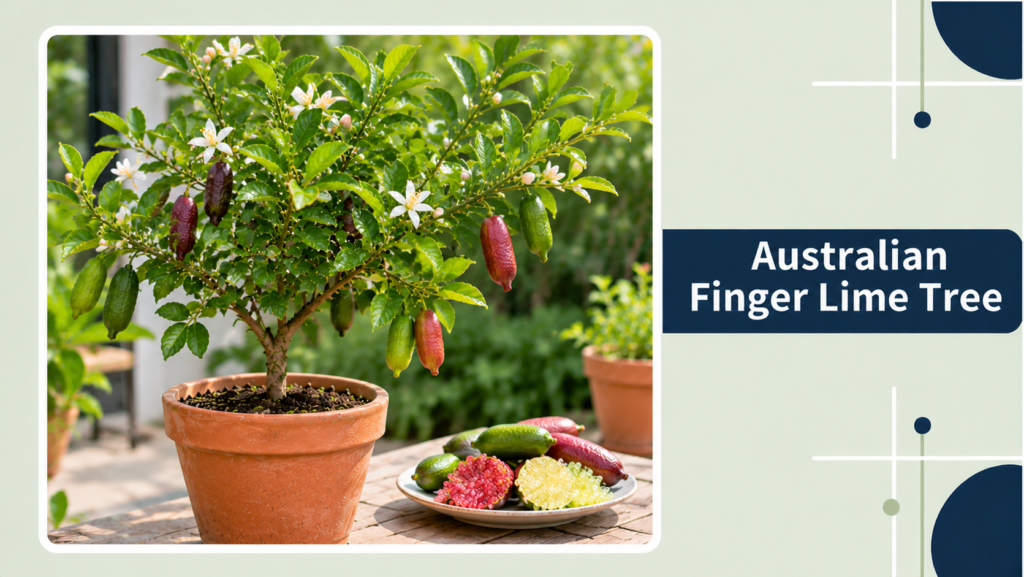
The Australian Finger Lime Tree (Citrus australasica) is an unusual citrus species famous for its elongated fruits filled with tiny, juice-filled pearls. Often called citrus caviar, these colorful pearls burst with tangy flavor and are popular in gourmet cooking. The tree has small green leaves, slender branches, and a naturally bushy appearance, making compact varieties attractive choices for indoor container gardening.
Identification
- Scientific Name: Citrus australasica
- Common Name: Australian Finger Lime Tree
- Plant Height: 3–6 feet indoors with pruning
- Fruit Size: 2–4 inches long
- Fruit Color: Green, yellow, pink, red, or purple, depending on variety
- Leaf Color: Small, dark green leaves
- Flower Color: White to pale pink
- Growing Time: Approximately 5–7 months for fruit maturation
- Appearance: Thorny evergreen shrub with narrow leaves and elongated citrus fruits containing pearl-like pulp
Ideal Indoor Growing Conditions
Australian finger lime trees prefer bright light, including approximately 6–8 hours of direct sunlight daily. Supplemental LED grow lights can improve growth in rooms with limited natural sunlight.
Maintain temperatures around 60–85°F and use well-draining, slightly acidic citrus soil. Avoid exposing the plant to freezing conditions or strong indoor heating drafts.
Watering and Maintenance Tips
Water when the upper inch of soil begins to dry, keeping the root zone evenly moist but never waterlogged.
Apply citrus fertilizer during active growth. Prune carefully to maintain a compact shape and remove damaged branches. Wear gloves when handling the tree because its branches often have sharp thorns.
10. Calamondin Orange Tree

The Calamondin Orange Tree (Citrus × microcarpa) is one of the most popular citrus plants for indoor growing. This compact evergreen produces glossy green foliage, fragrant white flowers, and small orange fruits with a distinctly sour flavor. Unlike many larger citrus trees, calamondin adapts relatively well to container environments and can flower and fruit indoors when light and growing conditions are suitable.
Identification
- Scientific Name: Citrus × microcarpa
- Common Name: Calamondin Orange Tree
- Plant Height: 2–5 feet indoors
- Fruit Size: 1–1.5 inches in diameter
- Fruit Color: Bright orange when ripe
- Leaf Color: Glossy dark green
- Flower Color: Fragrant white
- Growing Time: Approximately 6–9 months from flowering to ripe fruit
- Appearance: Compact evergreen tree with dense foliage, small round oranges, and fragrant blossoms
Ideal Indoor Growing Conditions
Calamondin orange trees perform best with 6–8 hours of direct sunlight daily. Place the container near a south-facing window and use supplemental grow lights during darker months.
Maintain temperatures between 65–80°F and use well-draining citrus potting soil. Moderate humidity helps support healthy leaves and flowering.
Watering and Maintenance Tips
Water thoroughly when the top 1–2 inches of soil feel dry. Allow excess moisture to escape through drainage holes.
Feed with citrus fertilizer during active growth. Light pruning helps maintain a rounded shape, while gently hand-pollinating indoor flowers may improve fruit production.
11. Nagami Kumquat Tree
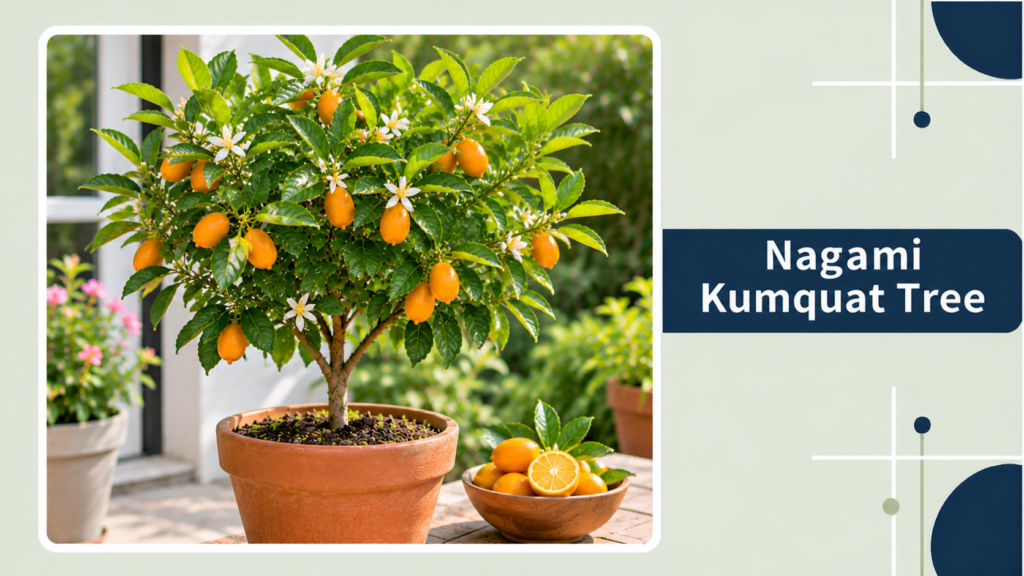
The Nagami Kumquat Tree (Citrus japonica ‘Nagami’) is an attractive dwarf citrus variety known for its small, oval fruits that can be eaten whole. Unlike traditional oranges, kumquats have sweet, edible peels and pleasantly tart flesh. This compact evergreen produces glossy leaves, fragrant white blossoms, and bright orange fruits, making it a beautiful and productive addition to indoor gardening spaces.
Identification
- Scientific Name: Citrus japonica ‘Nagami’
- Common Name: Nagami Kumquat Tree
- Plant Height: 3–6 feet indoors with pruning
- Fruit Size: 1–2 inches long
- Fruit Color: Bright orange
- Leaf Color: Dark glossy green
- Flower Color: Small, fragrant white flowers
- Growing Time: Approximately 5–7 months for fruit maturation
- Appearance: Compact evergreen citrus tree with oval fruits, dense foliage, and fragrant flowers
Ideal Indoor Growing Conditions
Nagami kumquat trees need approximately 6–8 hours of direct sunlight daily, with additional light beneficial for flowering and fruit production. A bright south-facing window or LED grow light provides suitable conditions.
Maintain temperatures around 60–80°F and use well-draining citrus potting soil. A slightly cooler winter period can support seasonal flowering, but avoid freezing temperatures.
Watering and Maintenance Tips
Water when the upper 1–2 inches of soil become dry. Keep the soil moderately moist during active growth while preventing standing water.
Apply citrus fertilizer according to the growing season and product instructions. Prune lightly to control size, remove damaged branches, and maintain balanced growth.
12. Meiwa Kumquat Tree

The Meiwa Kumquat Tree (Citrus japonica ‘Meiwa’) is a compact citrus variety known for its round, sweet fruits and attractive evergreen foliage. Unlike many other kumquats, Meiwa produces fruits with relatively mild, less acidic flesh and sweet edible peels. Its naturally bushy growth, fragrant white flowers, and bright orange fruits make it an excellent choice for indoor container gardening.
Identification
- Scientific Name: Citrus japonica ‘Meiwa’
- Common Name: Meiwa Kumquat Tree
- Plant Height: 3–6 feet indoors with pruning
- Fruit Size: 1–1.5 inches in diameter
- Fruit Color: Golden orange
- Leaf Color: Glossy dark green
- Flower Color: Small, fragrant white flowers
- Growing Time: Approximately 5–7 months for fruit maturation
- Appearance: Compact evergreen tree with rounded fruits, dense foliage, and fragrant blossoms
Ideal Indoor Growing Conditions
Meiwa kumquat trees prefer 6–8 hours of direct sunlight daily, although stronger light encourages better flowering and fruit production. A sunny south-facing window or supplemental LED grow light provides suitable growing conditions.
Maintain temperatures between 60–80°F and use well-draining citrus potting soil. Avoid placing the tree near cold drafts or heating vents.
Watering and Maintenance Tips
Water when the upper 1–2 inches of soil become dry. Ensure the container has drainage holes to prevent waterlogging.
Apply citrus fertilizer during active growth to support healthy foliage and fruit development. Prune lightly to maintain a compact shape and remove dead or crowded branches.
13. Marumi Kumquat Tree
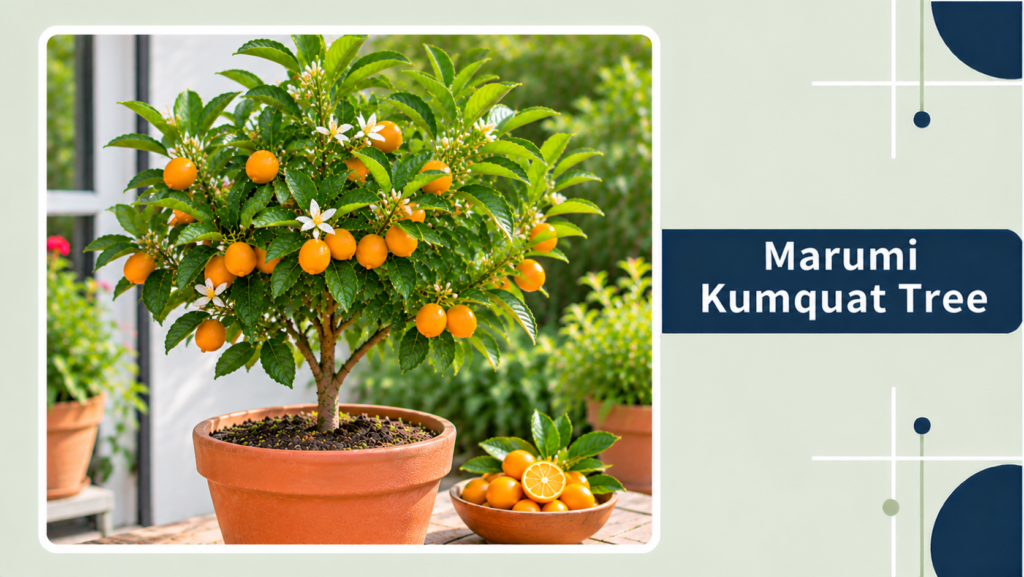
The Marumi Kumquat Tree (Citrus japonica ‘Marumi’) is an attractive evergreen citrus variety recognized for its small, round fruits and fragrant blossoms. Its orange fruits have sweet, edible skins and tart, juicy interiors, making them suitable for fresh eating, preserves, and homemade marmalade. With its compact growth habit and decorative foliage, the Marumi kumquat can be grown indoors in containers.
Identification
- Scientific Name: Citrus japonica ‘Marumi’
- Common Name: Marumi Kumquat Tree
- Plant Height: 3–6 feet indoors with pruning
- Fruit Size: 1–1.25 inches in diameter
- Fruit Color: Bright orange
- Leaf Color: Dark glossy green
- Flower Color: Small white flowers
- Growing Time: Approximately 5–7 months for fruit maturation
- Appearance: Bushy evergreen tree with rounded fruits, small leaves, and fragrant white flowers
Ideal Indoor Growing Conditions
Marumi kumquat trees require at least 6–8 hours of direct sunlight daily. Supplemental grow lights can help maintain healthy growth during winter or in rooms with limited natural light.
Keep indoor temperatures around 60–80°F and plant the tree in well-draining, slightly acidic citrus soil. Provide good air circulation while protecting the plant from cold drafts.
Watering and Maintenance Tips
Water thoroughly when the top 1–2 inches of soil feel dry. Allow excess water to drain completely before returning the container to its decorative saucer.
Feed with citrus fertilizer during the growing season. Remove damaged branches and prune lightly to maintain an attractive, balanced shape.
14. Owari Satsuma Mandarin Tree
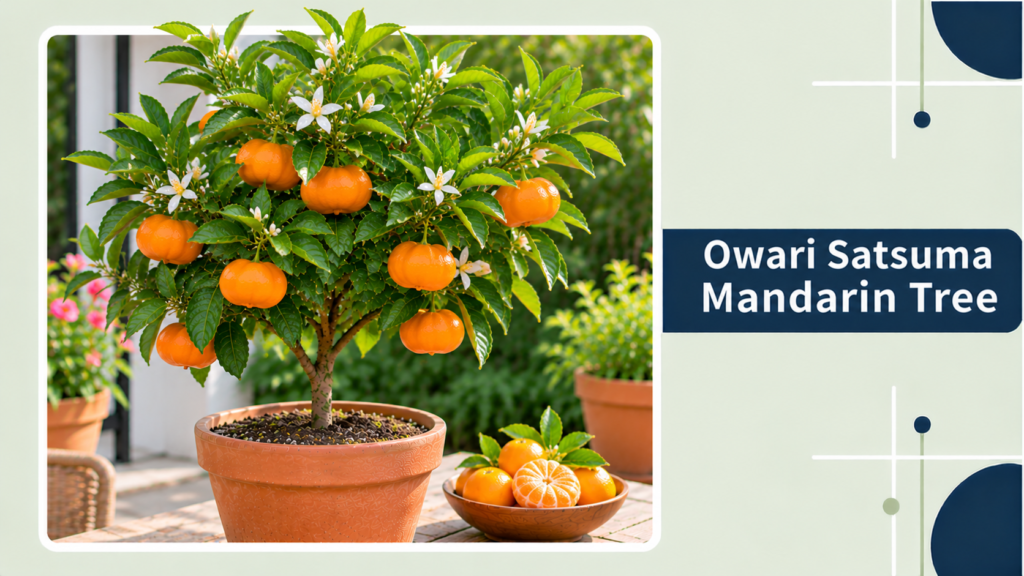
The Owari Satsuma Mandarin Tree (Citrus unshiu ‘Owari’) is a popular citrus variety appreciated for its sweet, juicy, nearly seedless fruits. Its small, easy-to-peel mandarins and glossy evergreen leaves make it attractive for indoor growing. Although Owari satsuma trees can become large outdoors, dwarf grafted varieties can be maintained in spacious indoor containers with proper pruning and sufficient light.
Identification
- Scientific Name: Citrus unshiu ‘Owari’
- Common Name: Owari Satsuma Mandarin Tree
- Plant Height: 3–6 feet indoors with dwarf rootstock
- Fruit Size: 2–3 inches in diameter
- Fruit Color: Bright orange
- Leaf Color: Glossy deep green
- Flower Color: Fragrant white flowers
- Growing Time: Approximately 6–9 months for fruit maturation
- Appearance: Compact evergreen tree with spreading branches, broad leaves, and flattened orange fruits
Ideal Indoor Growing Conditions
Owari satsuma mandarin trees grow best with 6–8 hours of direct sunlight daily. A south-facing window or full-spectrum LED grow light helps encourage healthy flowering and fruit development.
Maintain temperatures around 60–80°F during active growth. Use well-draining citrus potting soil and a container large enough to support the tree’s root system.
Watering and Maintenance Tips
Water when the upper 1–2 inches of soil become dry. Reduce watering during cooler months when plant growth slows.
Apply citrus fertilizer throughout the active growing season. Prune lightly to remove crossing branches and maintain a manageable indoor size. Avoid excessive pruning because it may reduce fruit production.
15. Clementine Mandarin Tree

The Clementine Mandarin Tree (Citrus × clementina) is a popular citrus variety known for its small, sweet, juicy fruits and easy-to-peel orange skins. This attractive evergreen produces glossy green leaves and fragrant white flowers that add beauty to indoor spaces. Dwarf clementine trees can grow in containers, although successful indoor fruit production requires strong sunlight and consistent growing conditions.
Identification
- Scientific Name: Citrus × clementina
- Common Name: Clementine Mandarin Tree
- Plant Height: 3–6 feet indoors with pruning
- Fruit Size: 2–3 inches in diameter
- Fruit Color: Deep orange
- Leaf Color: Dark glossy green
- Flower Color: Small, fragrant white flowers
- Growing Time: Approximately 6–9 months for fruit maturation
- Appearance: Compact evergreen tree with rounded foliage, small orange mandarins, and fragrant blossoms
Ideal Indoor Growing Conditions
Clementine mandarin trees need approximately 8–12 hours of strong light daily. Place the container near a sunny south-facing window and supplement natural light with LED grow lights when necessary.
Maintain indoor temperatures between 65–80°F and provide well-draining citrus potting soil. Avoid sudden temperature fluctuations that may cause flower or fruit drop.
Watering and Maintenance Tips
Water deeply when the top 1–2 inches of soil become dry. Avoid leaving the plant in standing water because citrus roots are sensitive to excessive moisture.
Apply citrus fertilizer during active growth. Prune damaged branches and maintain good air circulation. Hand pollination may improve fruit set in some indoor growing situations.
16. Dancy Tangerine Tree
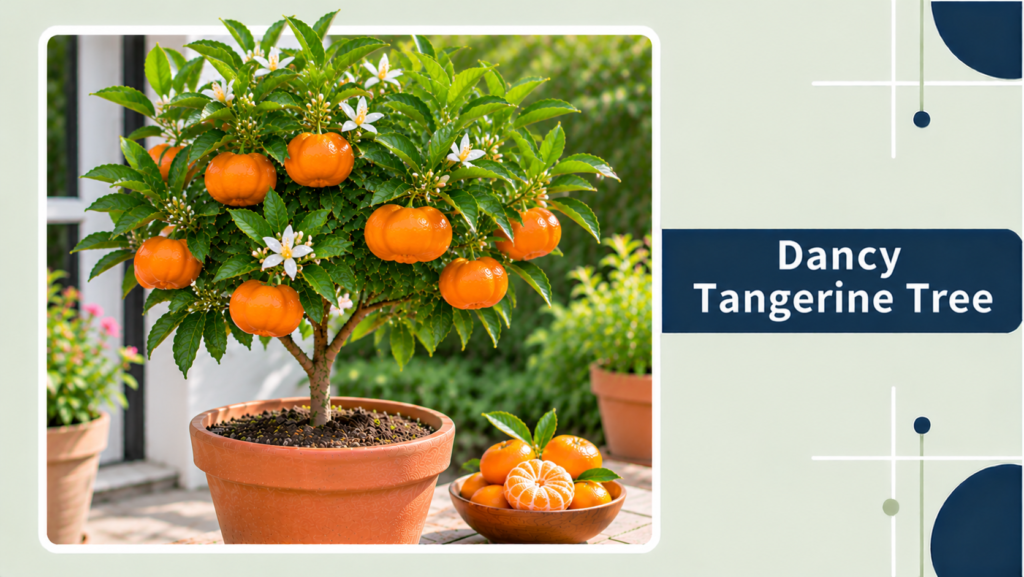
The Dancy Tangerine Tree (Citrus reticulata ‘Dancy’) is a traditional mandarin variety recognized for its rich orange-red fruits and refreshing citrus flavor. Its sweet, juicy tangerines have loose, easy-to-peel skins and a distinctive aroma. Although Dancy trees naturally grow larger outdoors, dwarf grafted specimens can be maintained indoors with sufficient sunlight, regular pruning, and appropriate container care.
Identification
- Scientific Name: Citrus reticulata ‘Dancy’
- Common Name: Dancy Tangerine Tree
- Plant Height: 4–6 feet indoors with pruning
- Fruit Size: 2–3 inches in diameter
- Fruit Color: Deep reddish-orange
- Leaf Color: Glossy dark green
- Flower Color: Fragrant white flowers
- Growing Time: Approximately 7–10 months for fruit maturation
- Appearance: Evergreen citrus tree with spreading branches, oval leaves, and flattened orange-red fruits
Ideal Indoor Growing Conditions
Dancy tangerine trees require 6–8 hours of direct sunlight daily, with longer exposure to strong light preferred for healthy fruit production. A south-facing window or supplemental LED grow light can provide suitable conditions.
Maintain temperatures between 65–85°F and use well-draining citrus potting soil. Protect the tree from cold drafts and extremely dry indoor air.
Watering and Maintenance Tips
Water when the top 1–2 inches of soil feel dry. Ensure excess water drains away to prevent root rot and other moisture-related problems.
Feed with citrus fertilizer during active growth. Prune overgrown branches to maintain a balanced shape, but avoid heavy pruning that may remove flowering wood and reduce future harvests.
17. Kishu Mandarin Tree

The Kishu Mandarin Tree (Citrus kinokuni ‘Kishu’) is a compact citrus variety known for its small, sweet, and nearly seedless fruits. This attractive evergreen produces glossy green foliage, fragrant white blossoms, and bright orange mandarins that are easy to peel. Its manageable growth habit makes dwarf Kishu mandarin trees suitable for indoor container gardening with adequate sunlight and proper care.
Identification
- Scientific Name: Citrus kinokuni ‘Kishu’
- Common Name: Kishu Mandarin Tree
- Plant Height: 3–6 feet indoors with pruning
- Fruit Size: 1–2 inches in diameter
- Fruit Color: Bright orange
- Leaf Color: Glossy dark green
- Flower Color: Fragrant white
- Growing Time: Approximately 6–9 months for fruit maturation
- Appearance: Compact evergreen tree with dense foliage, small mandarins, and fragrant blossoms
Ideal Indoor Growing Conditions
Kishu mandarin trees prefer 6–8 hours of direct sunlight daily, although additional light encourages better flowering and fruit production. A south-facing window or supplemental LED grow lights can provide suitable growing conditions.
Maintain temperatures between 65–80°F and use well-draining citrus potting soil. Protect the plant from cold drafts and sudden temperature changes.
Watering and Maintenance Tips
Water when the upper 1–2 inches of soil become dry. Allow excess water to drain completely to prevent root damage.
Apply citrus fertilizer during active growth. Prune lightly to maintain a compact shape and remove crowded branches. Check regularly for scale insects and spider mites.
18. Trovita Orange Tree
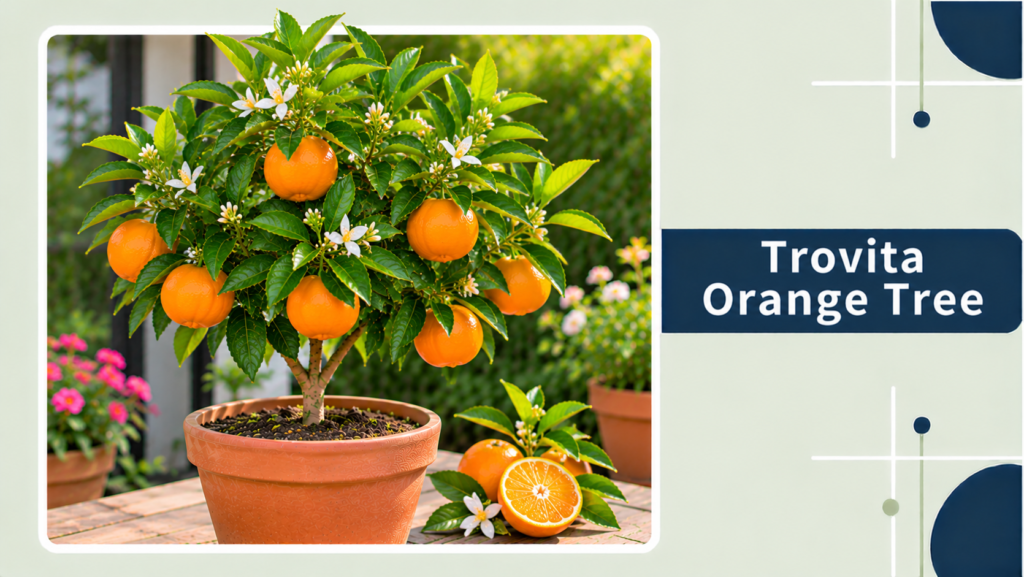
The Trovita Orange Tree (Citrus sinensis ‘Trovita’) is a sweet orange variety valued for its juicy fruits and ability to grow in regions with relatively mild temperatures. Unlike some orange varieties, Trovita can develop good fruit quality without extremely high summer heat. Its glossy leaves, fragrant flowers, and bright orange fruits make dwarf specimens attractive options for indoor citrus gardening.
Identification
- Scientific Name: Citrus sinensis ‘Trovita’
- Common Name: Trovita Orange Tree
- Plant Height: 4–6 feet indoors with pruning
- Fruit Size: 2.5–3.5 inches in diameter
- Fruit Color: Bright orange
- Leaf Color: Dark glossy green
- Flower Color: Small, fragrant white flowers
- Growing Time: Approximately 8–12 months for fruit maturation
- Appearance: Evergreen tree with rounded foliage, fragrant blossoms, and sweet orange fruits
Ideal Indoor Growing Conditions
Trovita orange trees require approximately 8–12 hours of strong light daily for healthy growth and reliable fruit production. Place the tree near a sunny south-facing window and use LED grow lights when natural sunlight is insufficient.
Maintain temperatures between 65–85°F and provide well-draining, slightly acidic citrus soil. Good air circulation helps prevent fungal problems.
Watering and Maintenance Tips
Water thoroughly when the top 1–2 inches of soil feel dry. Avoid excessive watering because consistently wet soil can damage citrus roots.
Feed with citrus fertilizer during active growth. Remove dead branches and prune lightly to maintain a manageable indoor size. Rotate the container occasionally for even growth.
19. Dwarf Washington Navel Orange Tree
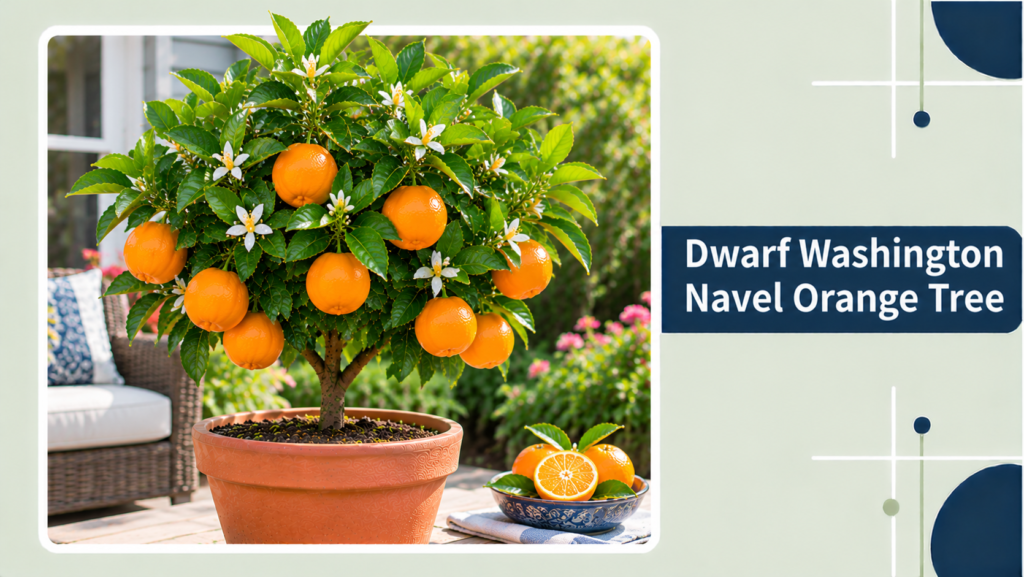
The Dwarf Washington Navel Orange Tree (Citrus sinensis ‘Washington Navel’) is a popular citrus variety known for producing large, sweet, seedless oranges. Its evergreen foliage, fragrant white blossoms, and colorful fruits make it an attractive indoor plant. When grafted onto dwarfing rootstock, this orange tree can be grown in spacious containers with sufficient sunlight and regular maintenance.
Identification
- Scientific Name: Citrus sinensis ‘Washington Navel’
- Common Name: Dwarf Washington Navel Orange Tree
- Plant Height: 4–6 feet indoors with pruning
- Fruit Size: 3–4 inches in diameter
- Fruit Color: Deep orange
- Leaf Color: Glossy dark green
- Flower Color: Fragrant white
- Growing Time: Approximately 9–12 months for fruit maturation
- Appearance: Compact evergreen tree with broad leaves, large oranges, and a distinctive navel-like fruit end
Ideal Indoor Growing Conditions
Dwarf Washington navel orange trees need 8–12 hours of strong light daily. A sunny south-facing window combined with supplemental grow lights can help support flowering and fruit development.
Maintain temperatures between 65–85°F and use well-draining citrus potting soil. Provide enough space around the container for proper airflow.
Watering and Maintenance Tips
Water when the upper 1–2 inches of soil become dry. Ensure the container drains freely to prevent waterlogging.
Apply citrus fertilizer during active growth to support healthy leaves and fruit production. Prune damaged branches and avoid excessive trimming, which can reduce flowering.
20. Moro Blood Orange Tree
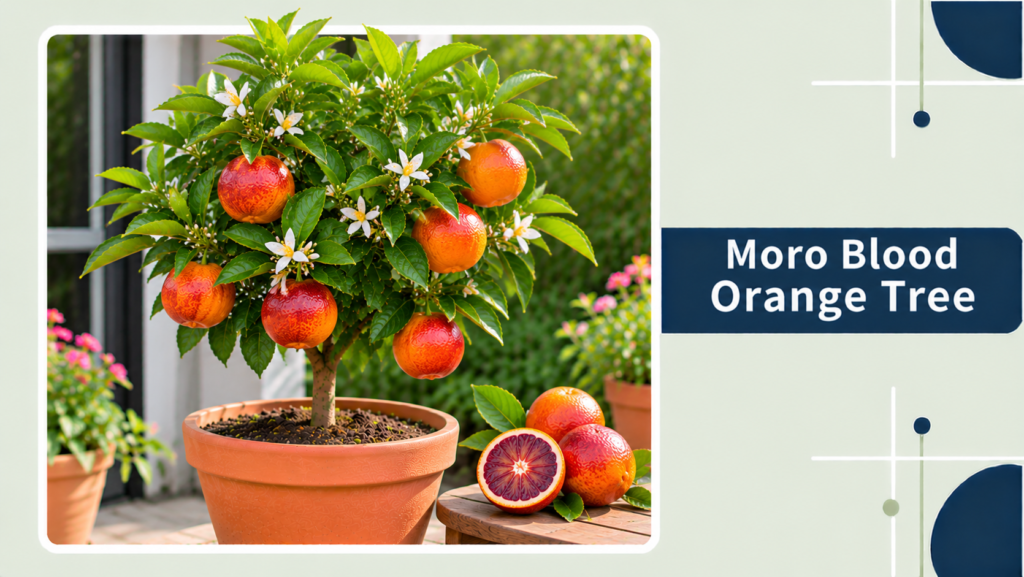
The Moro Blood Orange Tree (Citrus sinensis ‘Moro’) is a distinctive citrus variety famous for its deep red fruit flesh and rich, slightly berry-like flavor. This attractive evergreen produces glossy green leaves, fragrant white flowers, and round oranges with colorful interiors. Dwarf Moro blood orange trees can grow in indoor containers, although developing their characteristic red pigmentation typically requires cooler nighttime temperatures during fruit maturation.
Identification
- Scientific Name: Citrus sinensis ‘Moro’
- Common Name: Moro Blood Orange Tree
- Plant Height: 4–6 feet indoors with pruning
- Fruit Size: 2.5–3.5 inches in diameter
- Fruit Color: Orange peel with red markings and dark red flesh
- Leaf Color: Glossy dark green
- Flower Color: Fragrant white flowers
- Growing Time: Approximately 8–12 months for fruit maturation
- Appearance: Evergreen citrus tree with rounded foliage, fragrant blossoms, and red-fleshed oranges
Ideal Indoor Growing Conditions
Moro blood orange trees prefer 8–12 hours of strong light daily. Position the container near a bright south-facing window or provide supplemental LED grow lights.
Maintain temperatures around 65–80°F during active growth. Cooler nights during fruit ripening can help develop deeper red pigmentation. Use well-draining citrus soil.
Watering and Maintenance Tips
Water thoroughly when the top 1–2 inches of soil feel dry. Reduce watering slightly during cooler periods while preventing the root ball from drying completely.
Apply citrus fertilizer during active growth. Prune lightly to remove damaged branches and maintain the tree’s compact shape.
21. Cara Cara Orange Tree

The Cara Cara Orange Tree (Citrus sinensis ‘Cara Cara’) is a unique navel orange variety appreciated for its sweet flavor and beautiful pinkish-red flesh. Unlike blood oranges, Cara Cara oranges develop their colorful interior mainly from carotenoid pigments rather than anthocyanins. This evergreen tree produces fragrant white flowers, glossy leaves, and attractive orange fruits, making dwarf varieties appealing for indoor container cultivation.
Identification
- Scientific Name: Citrus sinensis ‘Cara Cara’
- Common Name: Cara Cara Orange Tree
- Plant Height: 4–6 feet indoors with pruning
- Fruit Size: 3–4 inches in diameter
- Fruit Color: Orange peel with pinkish-red flesh
- Leaf Color: Dark glossy green
- Flower Color: Fragrant white
- Growing Time: Approximately 9–12 months for fruit maturation
- Appearance: Evergreen citrus tree with rounded foliage, large navel oranges, and colorful fruit interiors
Ideal Indoor Growing Conditions
Cara Cara orange trees require approximately 8–12 hours of strong light daily. Place the tree near a sunny south-facing window or provide supplemental LED grow lights to encourage healthy flowering and fruit development.
Maintain temperatures between 65–85°F and use well-draining citrus potting soil. Protect the plant from cold drafts and sudden environmental changes.
Watering and Maintenance Tips
Water when the upper 1–2 inches of soil become dry. Allow excess moisture to drain completely to protect the root system.
Feed with citrus fertilizer during active growth. Prune crowded branches to improve airflow and maintain a manageable size. Regularly inspect the foliage for common indoor citrus pests.
22. Yuzu Citrus Tree
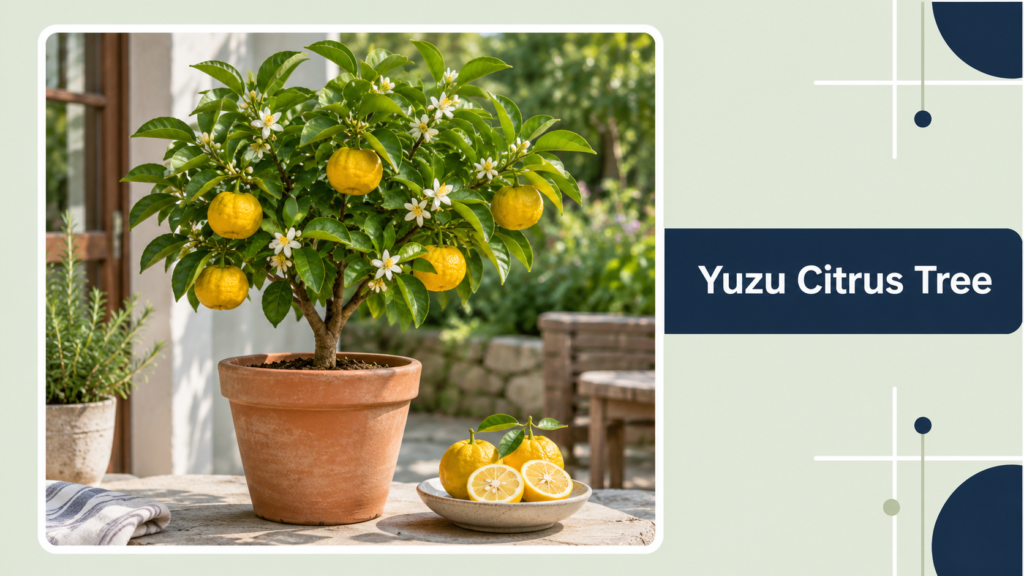
The Yuzu Citrus Tree (Citrus × junos) is a unique citrus variety known for its highly aromatic fruits and refreshing, tart flavor. Originally cultivated in East Asia, this evergreen tree produces glossy green leaves, fragrant white flowers, and round, yellow fruits with thick, uneven skins. Although Yuzu trees naturally develop thorny branches, dwarf specimens can grow indoors in containers with adequate sunlight and regular pruning.
Identification
- Scientific Name: Citrus × junos
- Common Name: Yuzu Citrus Tree
- Plant Height: 3–6 feet indoors with pruning
- Fruit Size: 2–3 inches in diameter
- Fruit Color: Green when immature, yellow when ripe
- Leaf Color: Glossy dark green
- Flower Color: Fragrant white flowers
- Growing Time: Approximately 6–9 months for fruit maturation
- Appearance: Evergreen citrus tree with thorny branches, aromatic leaves, and round, bumpy-skinned fruits
Ideal Indoor Growing Conditions
Yuzu citrus trees require approximately 6–8 hours of direct sunlight daily, although additional light supports better flowering and fruit development. A sunny south-facing window or supplemental LED grow light provides suitable growing conditions.
Maintain temperatures around 60–80°F during active growth. Use well-draining, slightly acidic citrus potting soil and protect the roots from excessive moisture.
Watering and Maintenance Tips
Water when the upper 1–2 inches of soil feel dry. Ensure excess water drains completely to prevent root rot.
Apply citrus fertilizer during active growth. Prune crowded or damaged branches carefully, as Yuzu trees often develop sharp thorns. Regularly inspect the foliage for common citrus pests.
FAQs
1. What Is the Best Citrus Tree to Grow Indoors?
The Meyer lemon tree is one of the best citrus trees for indoor growing because of its compact growth, fragrant flowers, and attractive fruits. Calamondin orange and kumquat trees are also excellent choices. All require bright light, well-draining soil, and regular maintenance.
2. Can Citrus Trees Produce Fruit Indoors?
Yes, citrus trees can produce fruit indoors when they receive sufficient sunlight, suitable temperatures, and proper nutrients. Most varieties require strong light for successful flowering and fruit development. Some indoor trees also benefit from gentle hand pollination to improve fruit production.
3. How Much Sunlight Do Indoor Citrus Trees Need?
Most indoor citrus trees need at least 6–8 hours of direct sunlight daily, although 8–12 hours of strong light is often better for fruit production. South-facing windows are usually ideal, while supplemental LED grow lights can support growth in darker rooms.
4. How Often Should You Water Indoor Citrus Trees?
Indoor citrus trees generally need watering when the upper 1–2 inches of soil become dry. Watering frequency depends on temperature, humidity, container size, and growing conditions. Always use containers with drainage holes and avoid keeping the roots in constantly wet soil.
5. How Long Does It Take for an Indoor Citrus Tree to Produce Fruit?
Grafted citrus trees may begin producing fruit within 1–3 years under favorable conditions, depending on the variety and plant maturity. Trees grown from seeds often take much longer. Adequate sunlight, proper fertilization, and consistent watering help encourage healthy flowering and fruit production.