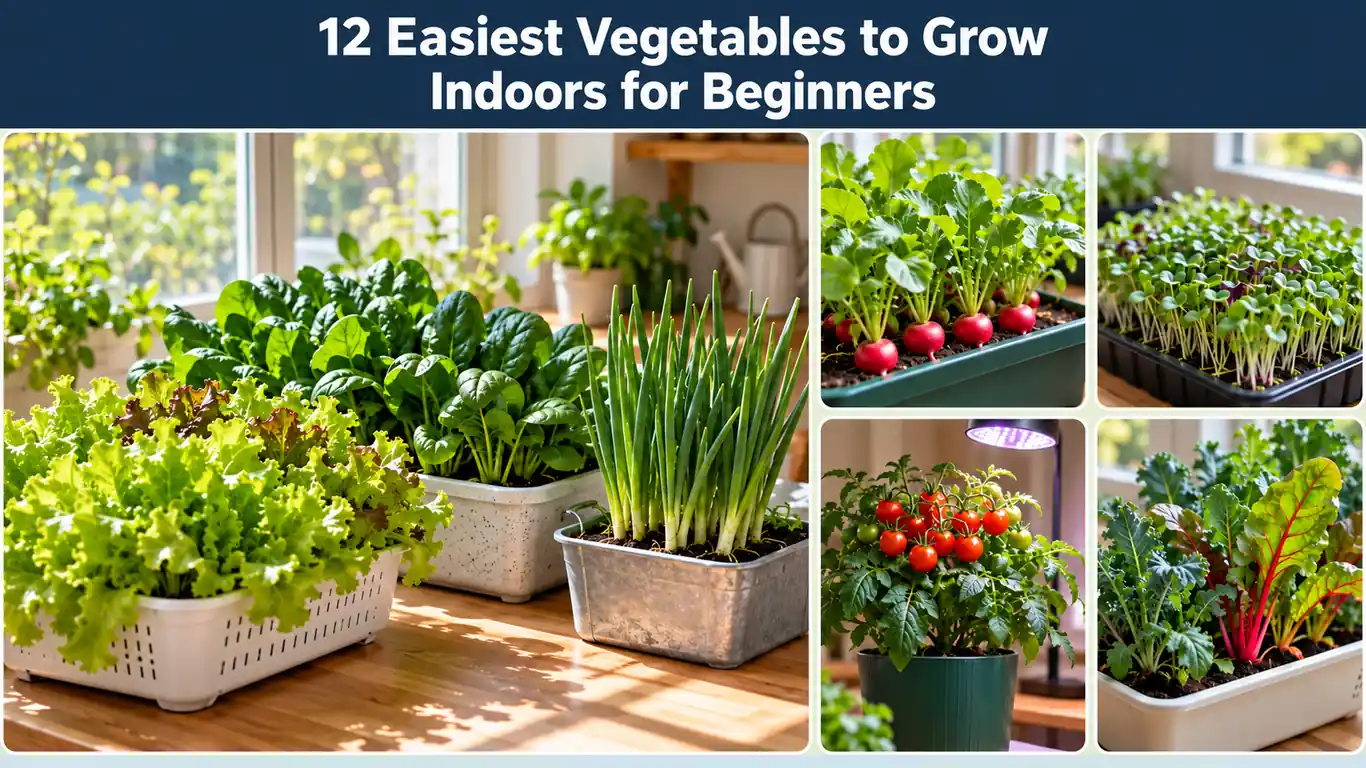
Growing fresh vegetables indoors is easier than you might think, even if you have limited space or gardening experience. With the right containers, lighting, and basic care, you can enjoy homegrown vegetables throughout the year. From leafy greens and green onions to radishes and baby carrots, these 12 easiest vegetables to grow indoors are perfect for beginners who want a simple, affordable, and rewarding gardening experience.
1. Lettuce
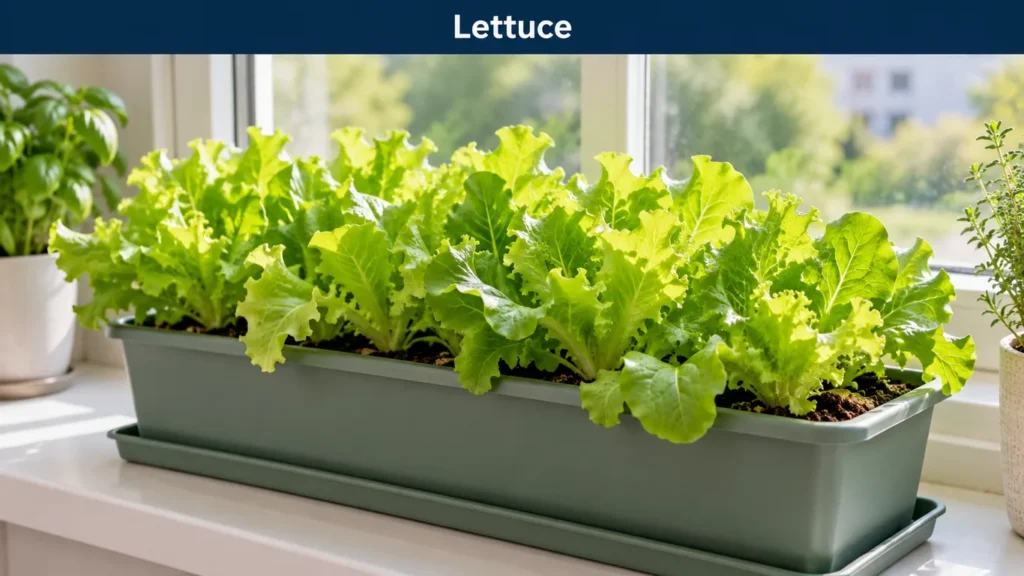
Lettuce is one of the easiest vegetables to grow indoors, making it an excellent choice for beginners and home gardeners with limited space. This fast-growing leafy vegetable thrives in containers and requires relatively little maintenance compared to many other crops. Lettuce is perfect for kitchen windowsills, small apartments, and indoor garden shelves. With sufficient lighting, consistent watering, and suitable temperatures, you can enjoy fresh, homegrown lettuce throughout the year for salads, sandwiches, wraps, and other healthy meals.
Identification and Popular Varieties
Lettuce is a cool-season leafy vegetable recognized by its tender green or reddish leaves and mild flavor. Different varieties offer unique textures, colors, and growth habits, making compact and loose-leaf types particularly suitable for indoor gardening.
- Butterhead Lettuce: Produces soft, tender leaves with a mild, buttery flavor.
- Romaine Lettuce: Features upright, elongated leaves with a crisp texture.
- Loose-Leaf Lettuce: Grows quickly and allows repeated harvesting of individual leaves.
- Oak Leaf Lettuce: Develops deeply lobed leaves in attractive green or reddish shades.
- Little Gem Lettuce: A compact romaine variety suitable for small indoor containers.
Ideal Indoor Growing Conditions
Lettuce grows best in cool temperatures between 60°F and 70°F (15°C–21°C). Place containers near a bright window receiving several hours of sunlight daily, or use full-spectrum LED grow lights for approximately 12–16 hours. Choose containers at least 6 inches deep with drainage holes and fill them with fertile, well-draining potting mix. Maintain consistent soil moisture and provide sufficient spacing between plants to encourage healthy leaf development. Loose-leaf varieties are especially suitable for indoor gardening because they require less space and allow multiple harvests.
Watering and Maintenance Tips
Water lettuce regularly whenever the upper layer of soil begins to feel dry, keeping the growing medium evenly moist without becoming waterlogged. Apply a diluted balanced liquid fertilizer occasionally to encourage healthy leaf production. Remove yellowing or damaged leaves and maintain adequate airflow around the plants. Begin harvesting baby lettuce leaves when they reach approximately 3–4 inches long, usually within 25–35 days under favorable conditions. Pick the outer leaves first while leaving the central growing point intact to encourage continued growth and repeated harvests.
2. Spinach
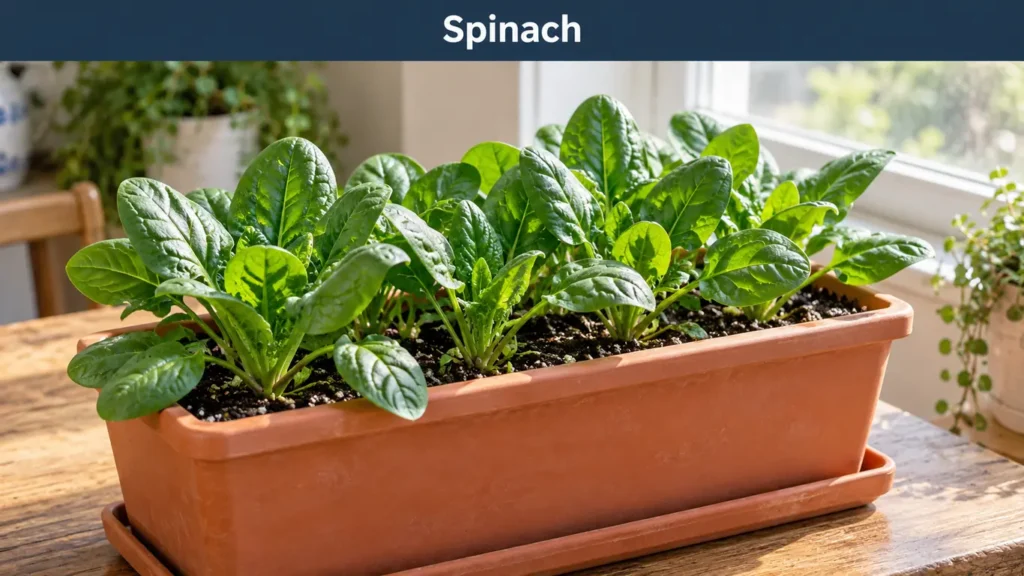
Spinach is one of the easiest leafy vegetables to grow indoors, making it an excellent choice for beginners and gardeners with limited space. Known for its tender green leaves, mild flavor, and nutritional value, spinach grows well in containers under suitable conditions. This cool-season vegetable is particularly suitable for kitchen windowsills, indoor gardening shelves, and small apartments. With adequate lighting, consistent watering, and moderate temperatures, you can enjoy fresh spinach leaves throughout the year for salads, smoothies, soups, and healthy homemade meals.
Identification and Popular Varieties
Spinach is a cool-season leafy vegetable recognized by its smooth or slightly crinkled green leaves and compact growth habit. Different varieties offer unique leaf textures, flavors, and growing characteristics, making several types suitable for indoor container gardening.
- Bloomsdale Spinach: Produces dark green, heavily crinkled leaves with a rich flavor.
- Space Spinach: Features smooth, dark green leaves and a compact growing habit.
- Tyee Spinach: Develops thick, slightly crinkled leaves and offers good resistance to bolting.
- Regiment Spinach: Produces tender, flavorful leaves suitable for regular harvesting.
- Baby’s Leaf Spinach: A variety grown for small, tender leaves that are ideal for salads.
Ideal Indoor Growing Conditions
Spinach grows best in cool temperatures between 50°F and 70°F (10°C–21°C). Position containers near a bright window receiving approximately 4–6 hours of direct sunlight, or provide full-spectrum LED grow lights for 12–14 hours daily. Choose pots at least 6–8 inches deep with proper drainage and fill them with nutrient-rich, well-draining potting mix. Maintain consistent soil moisture and adequate airflow to encourage healthy growth. Spinach prefers cooler indoor environments because excessive heat can trigger early flowering and reduce leaf quality.
Watering and Maintenance Tips
Water spinach regularly whenever the upper layer of soil begins to feel dry, keeping the growing medium evenly moist without becoming waterlogged. Apply a diluted nitrogen-rich liquid fertilizer occasionally to encourage healthy foliage. Remove yellowing or damaged leaves and maintain proper spacing between plants to improve airflow. Begin harvesting baby spinach leaves when they reach approximately 3–4 inches long, usually within 25–35 days under favorable conditions. Pick the larger outer leaves first while leaving the central growing point intact to encourage additional growth and repeated harvests.
3. Green Onions
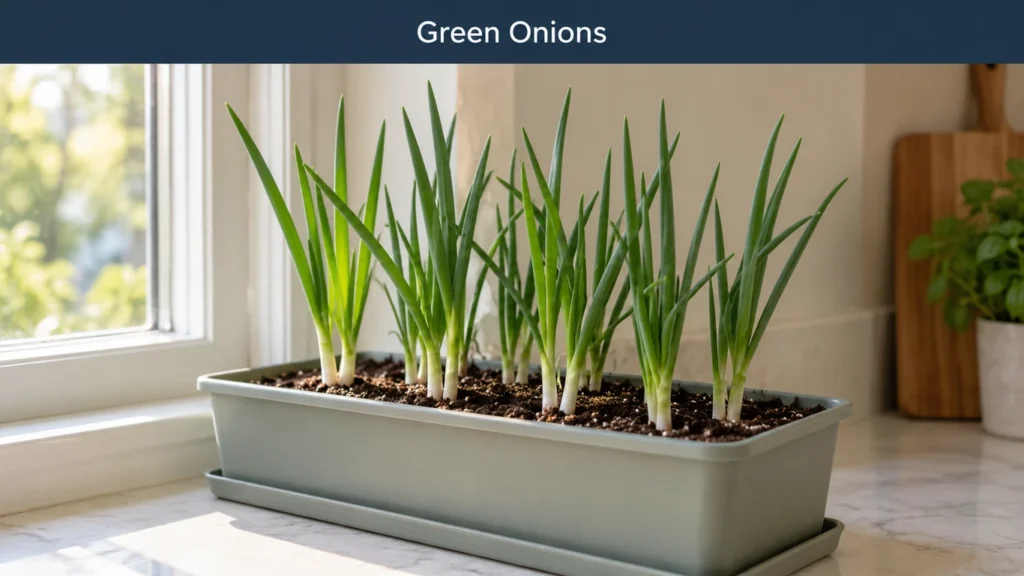
Green onions are among the easiest vegetables to grow indoors because they require relatively little space, grow quickly, and need minimal maintenance. Also known as scallions, these vegetables are popular for their slender green leaves, crisp white bases, and mild onion flavor. Green onions grow successfully in small containers and are particularly suitable for kitchen windowsills, countertops with grow lights, and compact indoor gardens. With sufficient lighting, regular watering, and proper care, you can enjoy fresh green onions throughout the year for soups, salads, stir-fries, and everyday cooking.
Identification and Popular Varieties
Green onions belong to the onion family and are recognized by their long, hollow green leaves and slender white stems. Different varieties offer unique flavors, growth rates, and levels of cold tolerance, making several types suitable for indoor container gardening.
- Evergreen Hardy White: Produces slender green stalks with mild-flavored white bases and excellent cold tolerance.
- White Lisbon: A fast-growing variety with tender green leaves and small white stems.
- Tokyo Long White: Features long, straight white stalks with flavorful green tops.
- Parade Green Onion: Produces uniform, upright stalks and is suitable for indoor harvesting.
- Nabechan Green Onion: Develops thick, tender stems with a sweet, mild onion flavor.
Ideal Indoor Growing Conditions
Green onions grow best in temperatures between 60°F and 75°F (16°C–24°C). Place containers near a sunny window receiving approximately 6 hours of direct sunlight, or use full-spectrum LED grow lights for 12–14 hours daily. Choose pots at least 6 inches deep with drainage holes and fill them with fertile, well-draining potting mix. Green onions have relatively shallow root systems, making them suitable for smaller containers. Space plants approximately 1–2 inches apart when growing them for their green tops. Maintain consistent moisture and good airflow to support healthy development.
Watering and Maintenance Tips
Water green onions whenever the upper layer of soil begins to feel dry, keeping the growing medium consistently moist without becoming soggy. Apply a diluted balanced liquid fertilizer occasionally to encourage healthy green growth. Remove yellowing or damaged leaves and ensure the plants receive sufficient light to prevent weak, pale foliage. Begin harvesting green onion tops when they reach approximately 6–8 inches tall, often within 30–45 days from seed under favorable conditions. Cut the leaves with clean scissors while leaving the lower portions intact for regrowth. Avoid removing all the foliage repeatedly, as this can weaken the plants over time.
4. Radishes
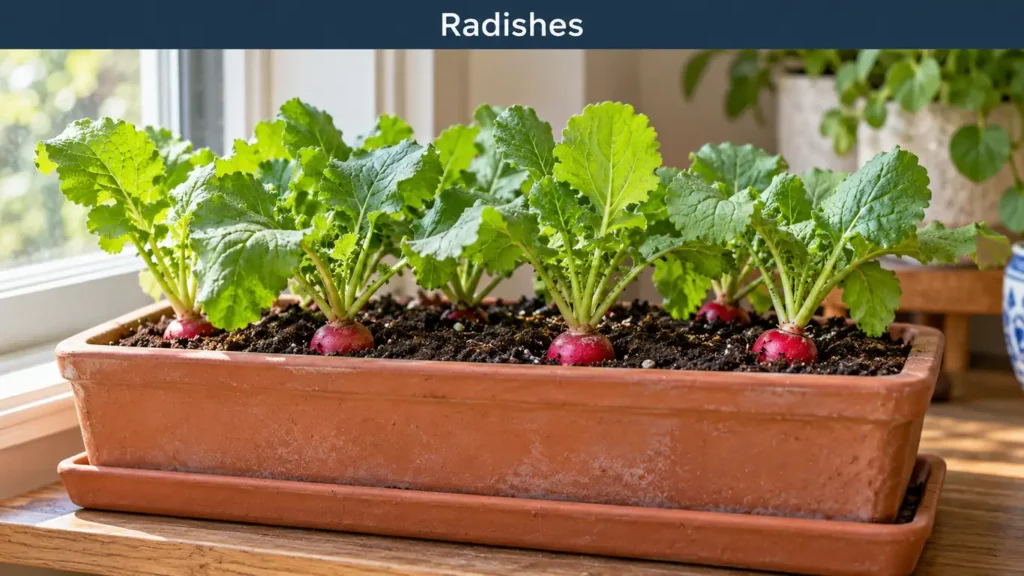
Radishes are among the fastest and easiest vegetables to grow indoors, making them an excellent choice for beginners and gardeners with limited space. These compact root vegetables are known for their crisp texture, slightly peppery flavor, and quick growing period. Radishes thrive in containers and require relatively little maintenance when provided with proper lighting, loose soil, and consistent moisture. With suitable growing conditions, you can enjoy fresh, homegrown radishes within a few weeks for salads, sandwiches, and healthy snacks.
Identification and Popular Varieties
Radishes are cool-season root vegetables recognized by their rounded or elongated edible roots and leafy green tops. Different varieties offer unique colors, shapes, flavors, and growing periods, making compact types particularly suitable for indoor container gardening.
- Cherry Belle Radish: Produces small, round, bright red roots with crisp white flesh.
- French Breakfast Radish: Features elongated red roots with distinctive white tips and a mild flavor.
- Sparkler Radish: Develops round, red roots with white lower portions and a crunchy texture.
- Easter Egg Radish: Produces colorful roots in shades of red, pink, purple, and white.
- White Icicle Radish: Features slender, white roots with a crisp texture and mildly spicy taste.
Ideal Indoor Growing Conditions
Radishes grow best in cool temperatures between 50°F and 70°F (10°C–21°C). Position containers near a sunny window receiving approximately 6 hours of direct sunlight, or provide full-spectrum LED grow lights for 12–16 hours daily. Choose pots at least 6–8 inches deep with proper drainage and fill them with loose, well-draining potting mix. Avoid compacted soil because it can restrict root development and cause misshapen radishes. Maintain consistent moisture and provide adequate spacing between seedlings to encourage healthy root formation.
Watering and Maintenance Tips
Water radishes regularly to keep the soil evenly moist without becoming waterlogged. Irregular watering can cause roots to crack, become woody, or develop an overly strong flavor. Thin seedlings after germination, leaving approximately 2 inches between plants to allow enough room for root development. Avoid excessive nitrogen fertilizer because it encourages leafy growth rather than root formation. Remove damaged leaves and maintain good airflow around the plants. Most small radish varieties are ready for harvesting within 25–35 days. Harvest promptly when the roots reach their mature size to maintain their crisp texture and mild flavor.
5. Arugula
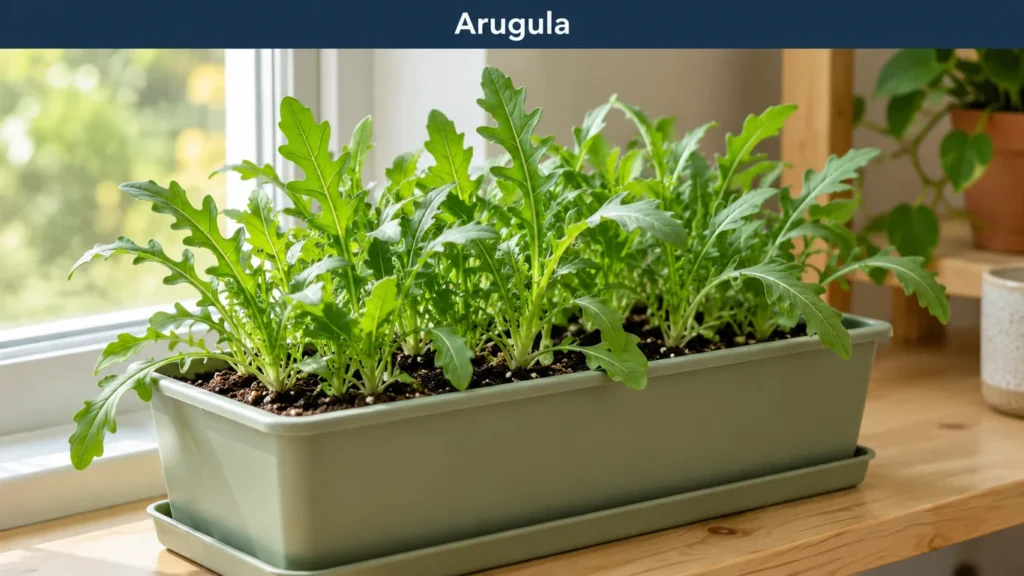
Arugula is one of the easiest leafy vegetables to grow indoors because it develops quickly, requires relatively little space, and produces flavorful leaves with minimal maintenance. Also known as rocket, arugula is popular for its distinctive peppery taste and tender green foliage. This cool-season vegetable grows well in containers, making it ideal for kitchen windowsills, indoor gardening shelves, and small apartments. With sufficient lighting, moderate temperatures, and regular watering, you can enjoy fresh arugula throughout the year for salads, sandwiches, pizzas, and homemade meals.
Identification and Popular Varieties
Arugula is a leafy vegetable recognized by its deeply lobed green leaves and slightly spicy flavor. Different varieties offer unique leaf shapes, growth rates, and levels of peppery taste, making several types suitable for indoor container gardening.
- Astro Arugula: Produces tender green leaves with a mild peppery flavor and fast growth.
- Rocket Arugula: Features deeply lobed leaves with a distinctive spicy taste.
- Sylvetta Arugula: Develops narrow, finely divided leaves with a stronger peppery flavor.
- Wasabi Arugula: Known for its sharp, spicy flavor resembling wasabi.
- Slow Bolt Arugula: A variety selected for slower flowering, allowing a longer harvesting period.
Ideal Indoor Growing Conditions
Arugula grows best in temperatures between 55°F and 70°F (13°C–21°C). Place containers near a bright window receiving approximately 4–6 hours of direct sunlight, or use full-spectrum LED grow lights for 12–14 hours daily. Choose pots at least 6 inches deep with drainage holes and fill them with fertile, well-draining potting mix. Maintain consistent soil moisture and provide enough spacing between plants for healthy leaf development. Arugula prefers cooler environments because excessive heat can encourage early flowering and cause the leaves to develop a stronger, more bitter flavor.
Watering and Maintenance Tips
Water arugula regularly whenever the upper layer of soil begins to dry, keeping the growing medium evenly moist without becoming soggy. Apply a diluted balanced liquid fertilizer occasionally to support healthy foliage. Remove yellowing or damaged leaves and maintain adequate airflow around the plants. Thin crowded seedlings to allow sufficient growing space and prevent weak development. Begin harvesting baby arugula leaves when they reach approximately 2–3 inches long, often within 20–30 days after planting. Pick the larger outer leaves first while leaving the central growing point intact to encourage continued leaf production and repeated harvests.
6. Kale
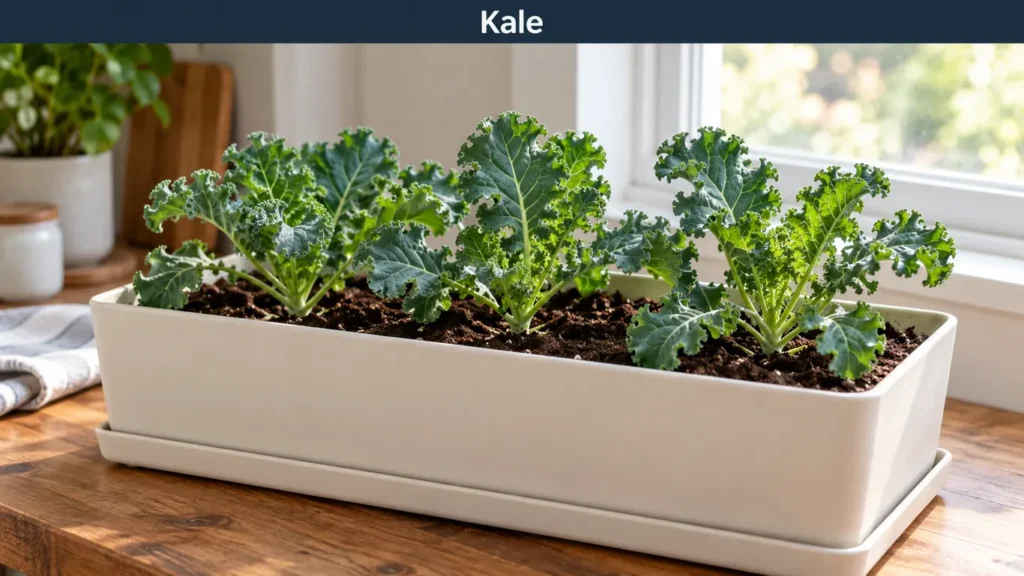
Kale is one of the easiest and most nutritious leafy vegetables to grow indoors, making it an excellent choice for beginners and gardeners with limited space. This hardy vegetable is known for its attractive green or purple leaves, slightly earthy flavor, and impressive nutritional value. Kale grows successfully in containers and can provide repeated harvests when maintained properly. With sufficient lighting, moderate temperatures, and consistent watering, indoor kale plants can produce fresh leaves for salads, smoothies, soups, and healthy homemade meals throughout the year.
Identification and Popular Varieties
Kale is a cool-season leafy vegetable belonging to the cabbage family. It is recognized by its textured leaves, sturdy stems, and distinctive green or purple foliage. Different varieties offer unique colors, leaf shapes, and growth habits, making compact types particularly suitable for indoor container gardening.
- Dwarf Blue Curled Kale: Produces compact plants with tightly curled, blue-green leaves.
- Red Russian Kale: Features tender green leaves with purple stems and reddish veins.
- Lacinato Kale: Develops long, dark green leaves with a wrinkled texture.
- Winterbor Kale: Produces heavily curled green leaves and tolerates cooler growing conditions.
- Scarlet Kale: Features attractive reddish-purple leaves with a slightly earthy flavor.
Ideal Indoor Growing Conditions
Kale grows best in temperatures between 55°F and 75°F (13°C–24°C). Position containers near a bright window receiving approximately 6 hours of direct sunlight, or provide full-spectrum LED grow lights for 12–16 hours daily. Choose pots at least 8–12 inches deep with proper drainage and fill them with fertile, well-draining potting mix. Compact kale varieties are particularly suitable for smaller indoor gardening spaces. Maintain consistent soil moisture and provide adequate airflow around the plants. Cooler temperatures generally encourage tender foliage and help maintain good leaf quality.
Watering and Maintenance Tips
Water kale regularly whenever the upper inch of soil begins to feel dry, keeping the growing medium evenly moist without becoming waterlogged. Apply a diluted balanced liquid fertilizer every few weeks to encourage healthy leaf development. Remove yellowing or damaged leaves and maintain sufficient spacing between plants to improve airflow. Begin harvesting baby kale leaves when they reach approximately 3–5 inches long, often within 25–40 days under favorable growing conditions. Pick the larger outer leaves first while leaving the central growing point intact. Regular harvesting can encourage continued leaf production and provide fresh greens over an extended period.
7. Bok Choy
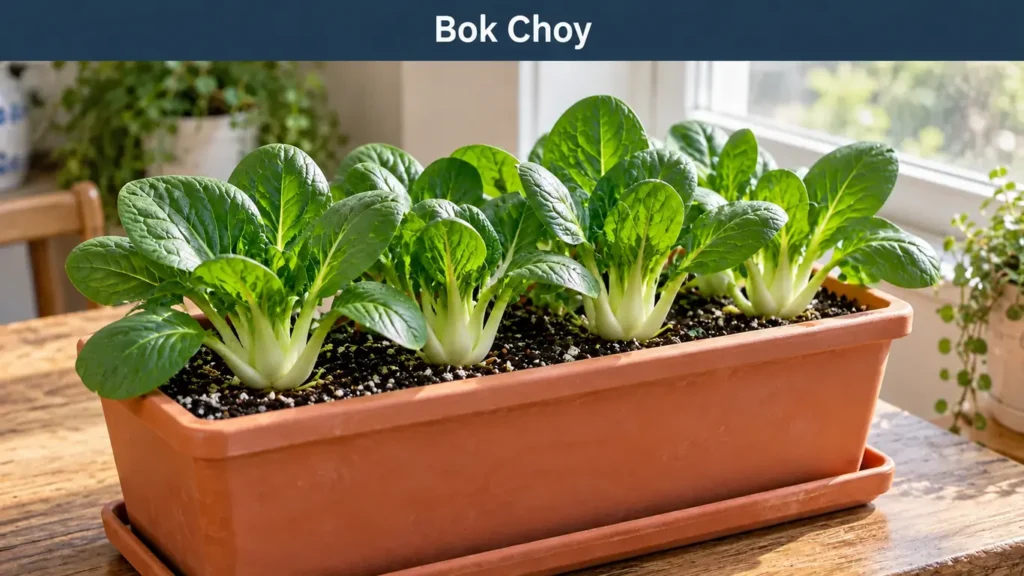
Bok choy is one of the easiest Asian leafy vegetables to grow indoors, making it a great choice for beginners and home gardeners with limited space. Also known as pak choi or Chinese cabbage, this fast-growing vegetable is popular for its tender green leaves, crisp stalks, and mild flavor. Compact bok choy varieties grow particularly well in containers and require relatively little maintenance. With adequate lighting, cool temperatures, and consistent watering, indoor bok choy can provide fresh harvests for stir-fries, soups, salads, and nutritious homemade dishes throughout the year.
Identification and Popular Varieties
Bok choy is a cool-season leafy vegetable belonging to the cabbage family. It is recognized by its broad, spoon-shaped green leaves and thick white or light green stalks. Different varieties offer unique sizes, colors, and growth habits, making smaller types especially suitable for indoor container gardening.
- Baby Bok Choy: Produces compact plants with tender green leaves and crisp stalks.
- Joi Choi Bok Choy: Features dark green leaves with thick, bright white stems.
- Mei Qing Choi: Develops compact plants with light green stems and tender foliage.
- Shanghai Green Bok Choy: Produces smooth green leaves and pale green stalks with a mild flavor.
- Toy Choy Bok Choy: A miniature variety that matures quickly and grows well in small containers.
Ideal Indoor Growing Conditions
Bok choy grows best in temperatures between 55°F and 70°F (13°C–21°C). Place containers near a bright window receiving approximately 4–6 hours of direct sunlight, or use full-spectrum LED grow lights for 12–14 hours daily. Choose pots at least 6–8 inches deep with drainage holes and fill them with nutrient-rich, well-draining potting mix. Compact varieties are especially suitable for indoor growing because they require less space than full-sized plants. Maintain consistent soil moisture and adequate airflow. Avoid excessive heat because it can encourage premature flowering and reduce leaf tenderness.
Watering and Maintenance Tips
Water bok choy regularly whenever the upper layer of soil begins to dry, keeping the growing medium consistently moist without becoming soggy. Apply a diluted balanced liquid fertilizer occasionally to support healthy leaf and stalk development. Remove yellowing or damaged leaves and thin crowded seedlings to provide enough space for growth. Maintain good airflow around the plants to reduce the risk of fungal diseases. Baby bok choy is often ready for harvesting within 30–45 days, depending on the variety and growing conditions. Harvest the entire plant when it reaches the desired size, or carefully remove the larger outer leaves while preserving the central growing point for continued growth.
8. Mustard Greens
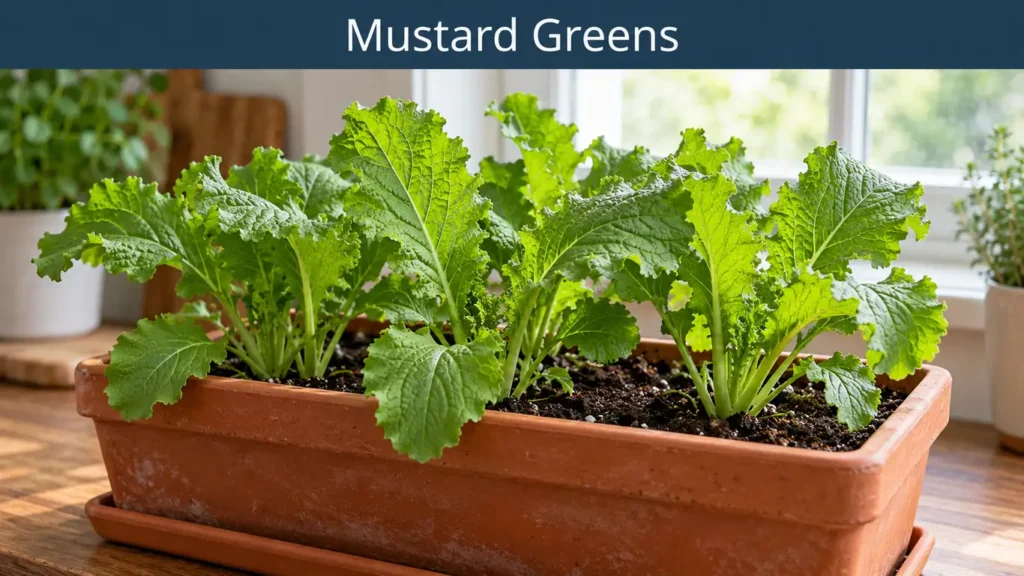
Mustard greens are among the easiest leafy vegetables to grow indoors, making them an excellent choice for beginners and gardeners with limited space. Known for their distinctive peppery flavor, tender leaves, and impressive nutritional value, mustard greens grow quickly and require relatively little maintenance. These cool-season vegetables thrive in containers and can provide repeated harvests throughout the year. With sufficient lighting, moderate temperatures, and consistent watering, indoor mustard greens can produce fresh leaves for salads, soups, stir-fries, and healthy homemade meals.
Identification and Popular Varieties
Mustard greens are leafy vegetables belonging to the cabbage family. They are recognized by their broad, smooth, or curly leaves, which may appear green, reddish, or purple. Different varieties offer unique flavors, textures, and growing habits, making several types suitable for indoor container gardening.
- Southern Giant Curled Mustard: Produces large, curly green leaves with a strong, peppery flavor.
- Red Giant Mustard: Features broad, reddish-purple leaves with green veins and a spicy taste.
- Mizuna Mustard: Develops delicate, deeply divided green leaves with a mild peppery flavor.
- Green Wave Mustard: Produces bright green, frilly leaves with a tender texture.
- Tendergreen Mustard: Features smooth, tender leaves with a relatively mild flavor.
Ideal Indoor Growing Conditions
Mustard greens grow best in temperatures between 55°F and 70°F (13°C–21°C). Place containers near a bright window receiving approximately 4–6 hours of direct sunlight, or provide full-spectrum LED grow lights for 12–14 hours daily. Choose pots at least 6–8 inches deep with proper drainage and fill them with fertile, well-draining potting mix. Compact varieties are particularly suitable for small indoor spaces. Maintain consistent soil moisture and provide adequate airflow around the plants. Cooler temperatures help maintain tender leaves and prevent premature flowering.
Watering and Maintenance Tips
Water mustard greens regularly whenever the upper layer of soil begins to feel dry, keeping the growing medium consistently moist without becoming waterlogged. Apply a diluted nitrogen-rich liquid fertilizer occasionally to encourage healthy foliage. Remove yellowing or damaged leaves and thin overcrowded seedlings to maintain proper airflow. Avoid excessive heat because it can encourage early flowering and make the leaves taste more bitter. Begin harvesting baby mustard greens when they reach approximately 3–4 inches long, usually within 20–30 days under favorable conditions. Pick the larger outer leaves first while leaving the central growing point intact for continued growth and repeated harvests.
9. Swiss Chard
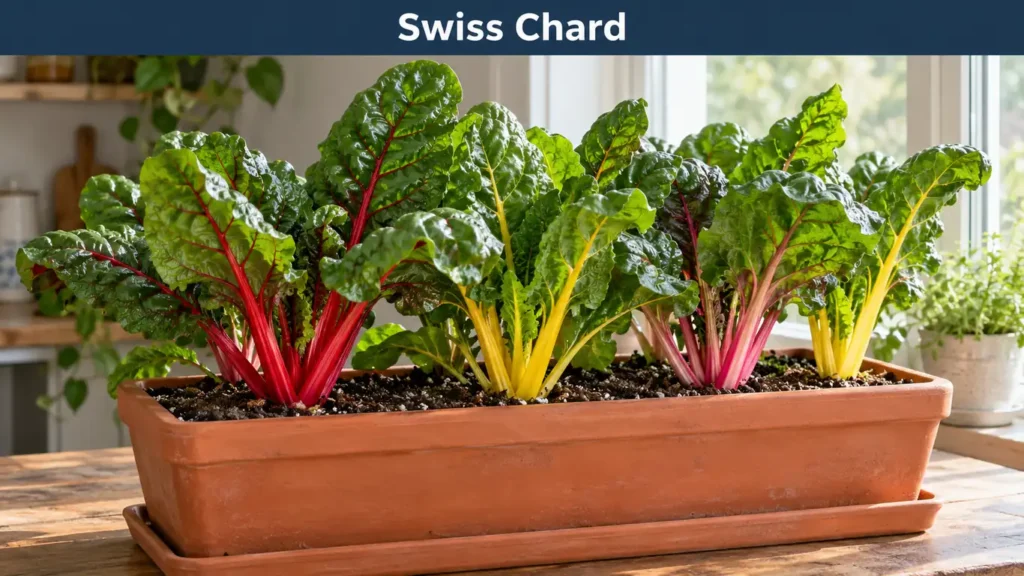
Swiss chard is one of the easiest and most attractive leafy vegetables to grow indoors, especially for beginners interested in colorful and productive plants. Known for its broad green leaves and brightly colored stalks, Swiss chard adds both nutritional value and decorative beauty to indoor vegetable gardens. It grows successfully in containers and can provide multiple harvests when properly maintained. With adequate lighting, consistent watering, and suitable temperatures, indoor Swiss chard can produce fresh leaves and stems for salads, soups, stir-fries, and nutritious homemade dishes.
Identification and Popular Varieties
Swiss chard is a leafy vegetable closely related to beets. It is recognized by its broad, slightly crinkled leaves and thick, colorful stems. Different varieties produce green, red, yellow, orange, or white stalks, making them visually appealing additions to indoor container gardens.
- Bright Lights Swiss Chard: Produces colorful stems in shades of red, orange, yellow, pink, and white.
- Fordhook Giant Swiss Chard: Features large, dark green leaves with thick white stalks.
- Ruby Red Swiss Chard: Develops deep red stems and green leaves with reddish veins.
- Lucullus Swiss Chard: Produces tender, light green leaves with pale stalks.
- Barese Swiss Chard: A compact, fast-growing variety suitable for baby-leaf harvesting in containers.
Ideal Indoor Growing Conditions
Swiss chard grows best in temperatures between 60°F and 75°F (16°C–24°C). Position containers near a sunny window receiving approximately 6 hours of direct sunlight, or provide full-spectrum LED grow lights for 12–16 hours daily. Choose pots at least 8–12 inches deep with drainage holes and fill them with nutrient-rich, well-draining potting mix. Compact varieties are especially suitable for limited indoor gardening spaces, while larger plants require additional room for healthy development. Maintain consistent soil moisture and provide adequate airflow to support strong foliage growth.
Watering and Maintenance Tips
Water Swiss chard regularly whenever the top inch of soil begins to feel dry, keeping the growing medium evenly moist without becoming soggy. Apply a diluted balanced liquid fertilizer every few weeks to encourage healthy leaf and stem development. Remove damaged or yellowing leaves and maintain sufficient spacing between plants to improve airflow. Begin harvesting baby Swiss chard leaves when they reach approximately 3–4 inches long, often within 25–35 days after planting. For larger plants, harvest the outer leaves first while leaving the central growing point intact. Regular harvesting helps encourage continued growth and provides fresh vegetables over an extended period.
10. Pea Shoots
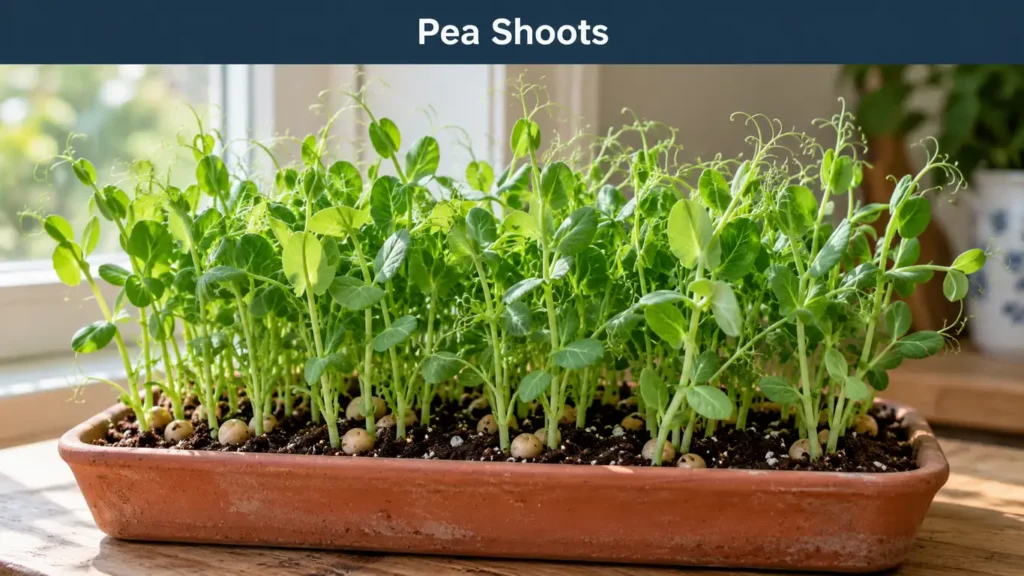
Pea shoots are among the easiest and fastest-growing vegetables to grow indoors, making them an excellent choice for beginners and gardeners with limited space. These tender young greens are harvested from pea plants before they reach maturity and are valued for their sweet, fresh flavor and delicate texture. Pea shoots grow well in shallow containers and require relatively little maintenance. With adequate lighting, consistent moisture, and moderate temperatures, you can enjoy fresh pea shoots throughout the year for salads, sandwiches, stir-fries, and healthy homemade meals.
Identification and Popular Varieties
Pea shoots are young edible stems, leaves, and tendrils harvested from pea plants. They are recognized by their soft green foliage, slender stems, and delicate curling tendrils. Several edible pea varieties are suitable for growing shoots indoors.
- Dun Peas: Produce tender green shoots with a sweet, fresh pea flavor.
- Green Peas: Develop soft leaves and slender stems suitable for harvesting as young greens.
- Speckled Peas: A popular choice for growing sweet, tender pea shoots indoors.
- Sugar Snap Peas: Produce flavorful young shoots with delicate leaves and curling tendrils.
- Snow Peas: Develop tender green shoots with a mild, sweet flavor.
Ideal Indoor Growing Conditions
Pea shoots grow best in temperatures between 60°F and 70°F (16°C–21°C). Position growing trays near a bright window receiving several hours of sunlight, or use full-spectrum LED grow lights for approximately 12–14 hours daily. Choose shallow containers at least 2–4 inches deep with drainage holes and fill them with lightweight, well-draining potting mix. Sow untreated, food-safe pea seeds evenly across the growing surface, leaving enough space for healthy development. Maintain consistent moisture and good airflow to prevent mold. Pea shoots do not require large containers or complicated growing equipment, making them ideal for small indoor gardening spaces.
Watering and Maintenance Tips
Water pea shoots gently to keep the growing medium consistently moist without becoming waterlogged. Bottom watering is particularly useful because it helps maintain moisture while keeping the leaves and stems relatively dry. Avoid overcrowding and provide adequate airflow to reduce fungal problems. Pea shoots generally require little additional fertilizer during their short growing period. Begin harvesting when the shoots reach approximately 3–6 inches tall, usually within 10–21 days after planting. Use clean scissors to cut the shoots above the growing medium. Some plants may produce a second harvest, although subsequent growth is often smaller and less vigorous.
11. Baby Carrots
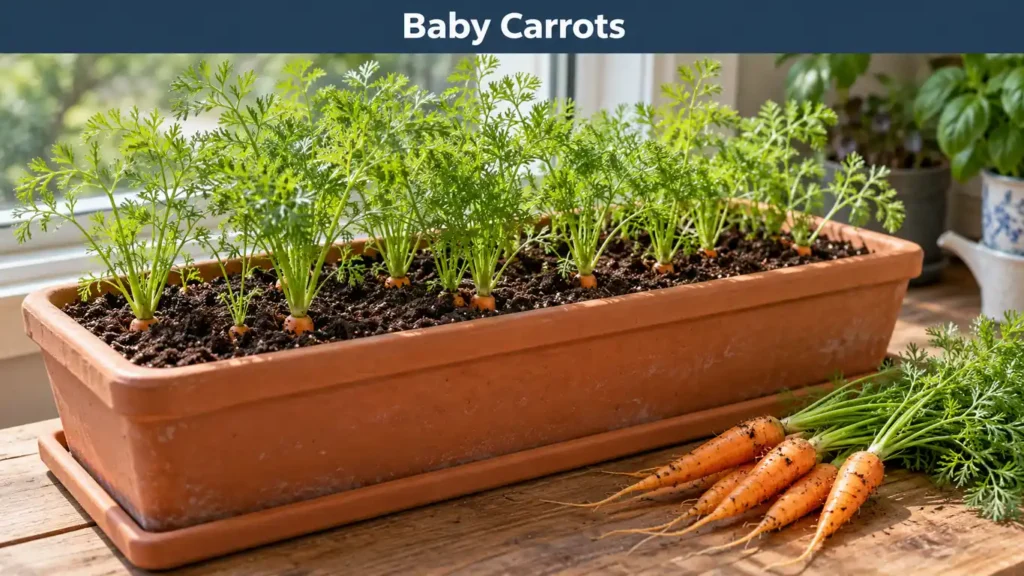
Baby carrots are an excellent choice for indoor vegetable gardening because compact varieties can grow successfully in containers with relatively little maintenance. These small root vegetables are popular for their crunchy texture, naturally sweet flavor, and attractive orange color. Unlike traditional long carrots, short-rooted varieties require less soil depth, making them suitable for indoor gardening shelves and sunny windowsills. With sufficient lighting, loose soil, and consistent moisture, indoor baby carrots can provide fresh harvests for salads, soups, snacks, and nutritious homemade meals.
Identification and Popular Varieties
Baby carrots are young carrots harvested before reaching full maturity or naturally small carrot varieties grown for their compact roots. They are recognized by their feathery green foliage and short, tender edible roots. Several varieties are particularly suitable for indoor container gardening.
- Little Finger Carrots: Produce short, slender orange roots with a sweet flavor and tender texture.
- Thumbelina Carrots: Develop small, round roots that grow well in compact containers.
- Parisian Carrots: Feature round, orange roots suitable for shallow growing spaces.
- Amsterdam Forcing Carrots: Produce slender, tender roots that can be harvested while young.
- Chantenay Carrots: Develop short, broad roots with a naturally sweet flavor.
Ideal Indoor Growing Conditions
Baby carrots grow best in temperatures between 60°F and 70°F (16°C–21°C). Place containers near a sunny window receiving approximately 6–8 hours of direct sunlight, or provide full-spectrum LED grow lights for 12–16 hours daily. Choose pots at least 8–10 inches deep with proper drainage, although round-rooted varieties may tolerate slightly shallower containers. Fill them with loose, well-draining potting mix free from stones and compacted materials. Maintain consistent soil moisture and provide adequate spacing between seedlings. Proper lighting and loose soil are essential for producing straight, healthy roots.
Watering and Maintenance Tips
Keep the soil consistently moist during germination, as carrot seeds require regular moisture to sprout successfully. Water gently whenever the upper layer begins to dry, avoiding excessive moisture that could encourage root diseases. Thin seedlings after they develop true leaves, leaving approximately 2–3 inches between plants. Avoid excessive nitrogen fertilizer because it can encourage leafy growth instead of root development. Remove damaged foliage and maintain adequate airflow around the containers. Baby carrots can often be harvested approximately 45–65 days after planting, depending on the variety and desired root size. Gently loosen the soil before harvesting to prevent breaking the tender roots.
12. Beet Greens
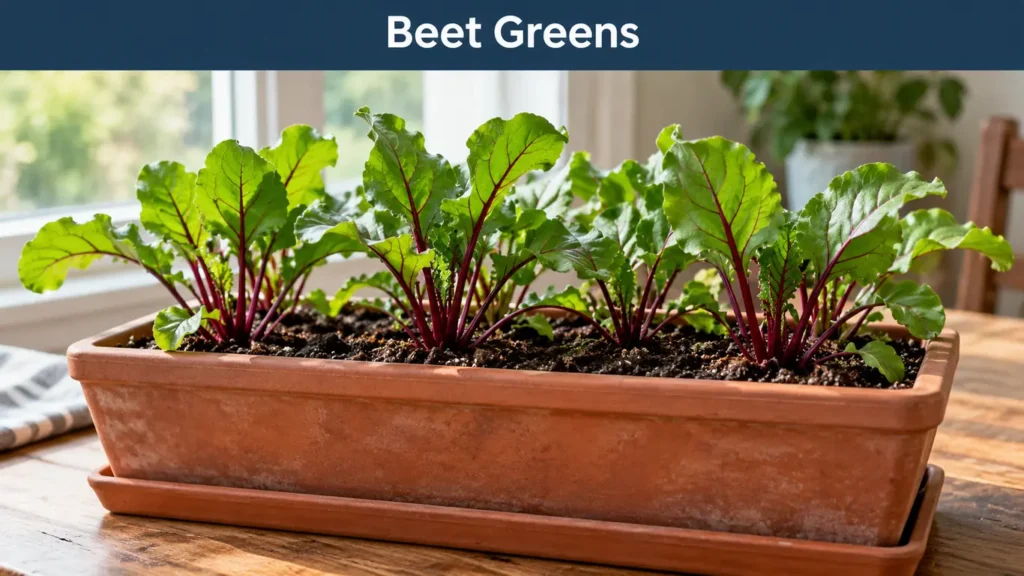
Beet greens are among the easiest leafy vegetables to grow indoors, making them an excellent option for beginners and gardeners with limited growing space. These nutritious greens are harvested from beet plants and are valued for their tender leaves, colorful stems, and mild earthy flavor. Unlike growing beets for mature roots, producing beet greens requires less space and allows earlier harvesting. With adequate lighting, consistent watering, and nutrient-rich soil, indoor beet greens can provide fresh leaves for salads, soups, stir-fries, and healthy homemade dishes throughout the year.
Identification and Popular Varieties
Beet greens are the edible leaves and tender stems of beet plants. They are recognized by their broad green foliage, often featuring reddish, purple, or golden veins and stalks. Different beet varieties produce colorful and flavorful greens suitable for indoor container gardening.
- Bull’s Blood Beets: Produce attractive deep reddish-purple leaves with a mild, earthy flavor.
- Detroit Dark Red Beets: Develop tender green leaves with reddish stems and veins.
- Early Wonder Tall Top Beets: Produce abundant leafy foliage suitable for harvesting as greens.
- Golden Beets: Feature bright green leaves with yellowish stems and a mild flavor.
- Chioggia Beets: Develop tender green foliage with colorful stems and attractive leaf veins.
Ideal Indoor Growing Conditions
Beet greens grow best in temperatures between 55°F and 75°F (13°C–24°C). Position containers near a bright window receiving approximately 4–6 hours of direct sunlight, or provide full-spectrum LED grow lights for 12–14 hours daily. Choose pots at least 6–8 inches deep with drainage holes and fill them with fertile, well-draining potting mix. Since the plants are grown primarily for their leaves rather than mature roots, they can be planted more closely together. Maintain consistent soil moisture and adequate airflow to encourage healthy foliage development and reduce the risk of fungal problems.
Watering and Maintenance Tips
Water beet greens regularly whenever the upper layer of soil begins to feel dry, keeping the growing medium consistently moist without becoming waterlogged. Apply a diluted balanced liquid fertilizer occasionally to encourage healthy leaf development. Thin overcrowded seedlings when necessary and remove damaged or yellowing leaves. Maintain good airflow and provide sufficient lighting to prevent weak, stretched growth. Begin harvesting baby beet greens when the leaves reach approximately 3–4 inches long, often within 25–35 days after planting. Use clean scissors to remove the larger outer leaves while preserving the central growing point for continued production. Young beet greens are particularly tender and suitable for fresh salads or lightly cooked dishes.
FAQs
1. What Is the Easiest Vegetable to Grow Indoors?
Lettuce is one of the easiest vegetables to grow indoors because it requires minimal space, grows quickly, and needs relatively little maintenance. Green onions, radishes, and microgreens are also excellent choices for beginners with limited indoor gardening experience.
2. Can You Grow Vegetables Indoors Without Sunlight?
Yes, you can grow vegetables indoors without natural sunlight by using full-spectrum LED grow lights. Most leafy vegetables need approximately 12–16 hours of artificial light daily. Proper lighting, watering, and temperature control help support healthy indoor vegetable growth.
3. What Vegetables Grow Fastest Indoors?
Pea shoots, arugula, radishes, lettuce, and mustard greens are among the fastest-growing indoor vegetables. Pea shoots can be harvested within 10–21 days, while many leafy greens and small radishes are ready in approximately 20–35 days.
4. Can You Grow Vegetables Indoors All Year Round?
Yes, many vegetables can grow indoors throughout the year when provided with sufficient lighting, suitable temperatures, and consistent watering. Lettuce, spinach, green onions, kale, and Swiss chard are particularly suitable for continuous indoor gardening and repeated harvesting.
5. What Containers Are Best for Growing Vegetables Indoors?
Containers with drainage holes are best for growing vegetables indoors. Shallow pots work well for lettuce and pea shoots, while radishes and baby carrots require deeper containers. Choose appropriately sized pots filled with nutrient-rich, well-draining potting mix.