
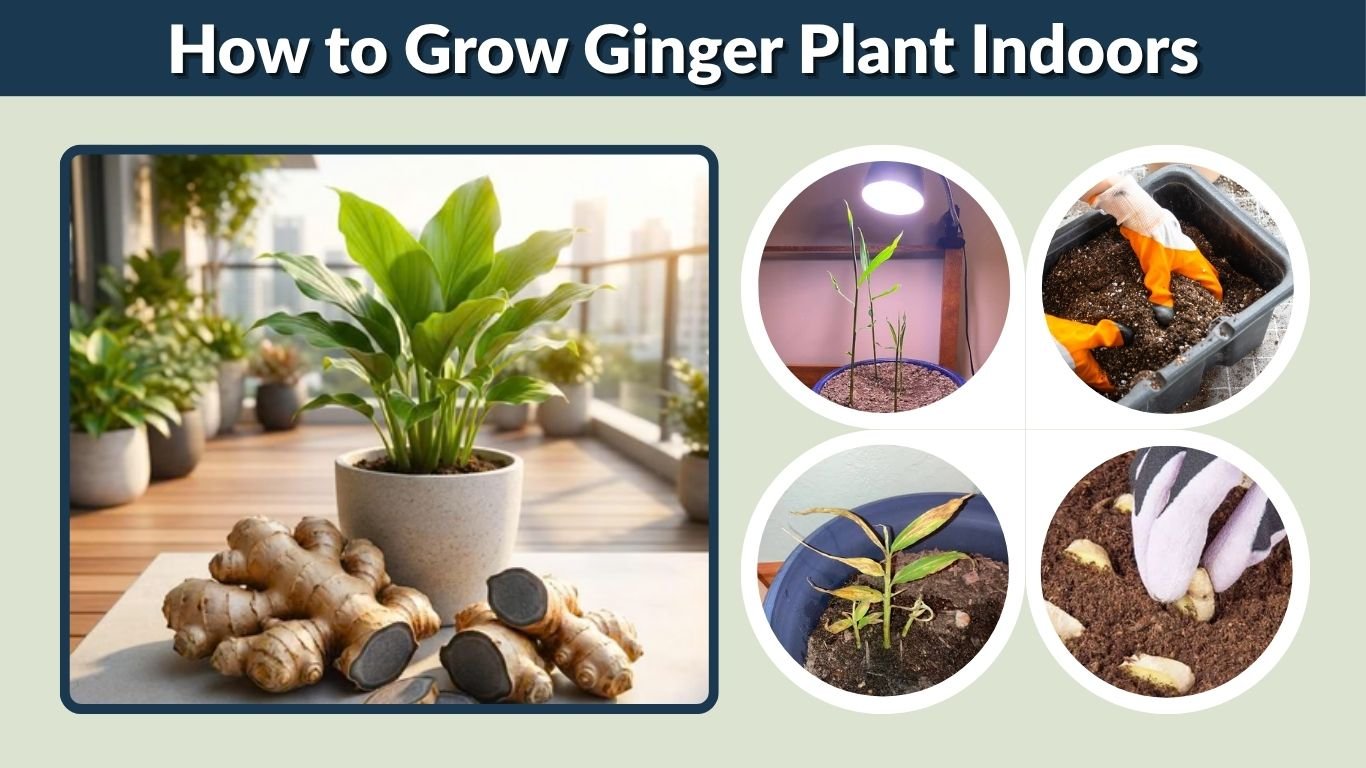
Growing fresh ginger at home is easier than you might think, even without an outdoor garden. If you want to learn how to grow ginger plant indoors, all you need is a healthy ginger rhizome, a suitable container, and the right growing conditions. Ginger thrives in warm temperatures, indirect sunlight, and consistently moist soil. With proper care, you can enjoy attractive green foliage and harvest fresh ginger for cooking. This beginner-friendly guide explains everything from planting ginger indoors to maintaining healthy growth and harvesting your first crop.
Can You Grow a Ginger Plant Indoors?
Yes, ginger plants can grow successfully indoors throughout the year when provided with suitable warmth, humidity, and lighting. Ginger (Zingiber officinale) is a tropical perennial that grows from underground stems called rhizomes. Unlike many vegetables, ginger does not require intense direct sunlight. Its preference for filtered light makes it suitable for indoor containers, sunny kitchens, and bright living rooms.
Why Ginger Is Suitable for Indoor Growing
Ginger adapts well to container gardening because its rhizomes spread horizontally beneath the soil. A wide container provides enough room for new growth without requiring a large garden. The plant produces tall, narrow stems with attractive green leaves, making it useful as both an edible crop and a decorative houseplant. Indoor growing also protects ginger from frost and allows gardeners to manage moisture and temperature.Although ginger grows slowly, maintaining favorable indoor conditions can support healthy foliage and eventually produce harvestable rhizomes.
What Do You Need to Grow Ginger Indoors?
Before planting ginger indoors, gathering the correct materials helps improve germination and prevent common growing problems. Ginger prefers nutrient-rich soil, warm conditions, and containers that provide adequate drainage. You can purchase planting rhizomes from garden suppliers or use fresh ginger from a grocery store. Choosing healthy planting material is especially important because damaged or rotten rhizomes may never produce shoots.
Essential Supplies for Growing Ginger Indoors
- Fresh ginger rhizome: Choose firm, plump ginger with visible growth buds or eyes.
- Wide planting container: Select a pot at least 12 inches wide and approximately 8–12 inches deep.
- Well-draining potting mix: Use fertile soil containing compost and materials that improve drainage.
- Watering can: Choose one that allows gentle watering without disturbing the rhizome.
- Bright indoor location: Position the container near a window receiving filtered sunlight.
- Balanced fertilizer: Use a diluted liquid fertilizer during active growth.
How to Grow Ginger Plant Indoors Step by Step
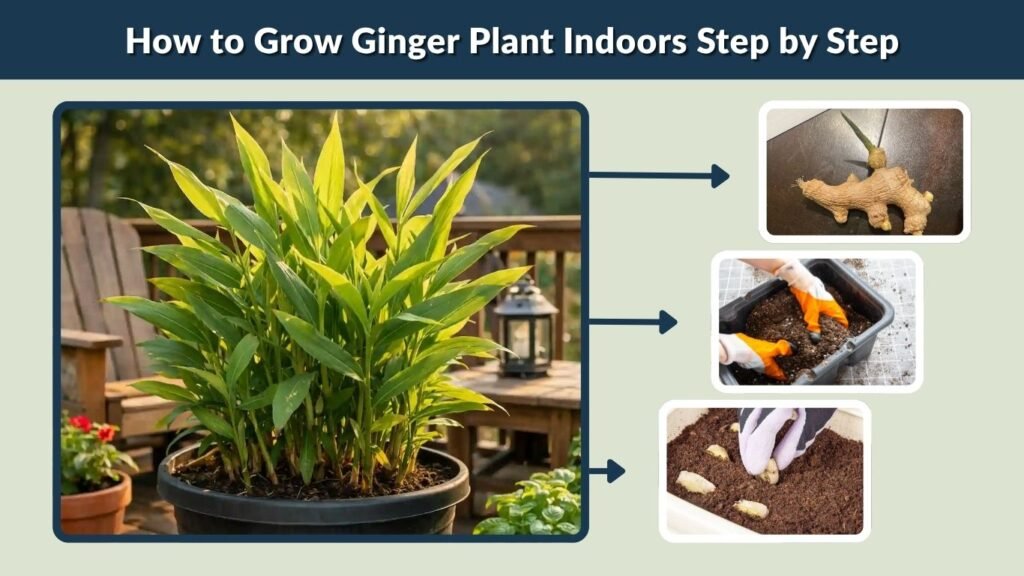
Learning how to grow a ginger plant indoors begins with selecting a healthy rhizome and preparing a suitable planting environment. Ginger grows differently from plants started from traditional seeds because new shoots emerge directly from buds along its underground stem. Proper planting depth, moisture, and temperature influence how quickly the rhizome sprouts. Following these steps will help beginners establish a healthy indoor ginger plant.
Step 1: Choose a Healthy Ginger Rhizome
Select fresh ginger with smooth, firm skin and several visible buds. Avoid pieces showing mold, soft spots, or severe shriveling.Organic ginger is often a practical choice because some conventionally marketed rhizomes may have received sprout-inhibiting treatments. A piece measuring approximately 2–3 inches with two or more healthy buds is suitable for planting.
Step 2: Prepare the Ginger for Planting
If the ginger rhizome is large, divide it into smaller sections, ensuring each section contains at least two growth buds.Allow the cut surfaces to dry and form a protective callus for a day or two before planting. This helps reduce the risk of rotting.Soaking the ginger in lukewarm water overnight is optional and can help rehydrate slightly dry rhizomes.
Step 3: Prepare the Container and Soil
Choose a wide pot with drainage holes to prevent excess water from accumulating around the rhizome.Fill the container with loose, nutrient-rich potting mix. Combining quality indoor potting soil with finished compost and some perlite can improve drainage while retaining adequate moisture.Leave a little space below the container’s rim to make watering easier.
Step 4: Plant the Ginger Rhizome
Place the ginger horizontally on the soil with the growth buds facing upward.Cover it with approximately 1–2 inches of potting mix. Avoid burying it too deeply because shoots must travel through the soil before reaching the surface.If planting multiple rhizomes, leave sufficient space between them to accommodate horizontal growth.
Step 5: Water and Position the Container
Water lightly after planting to settle the soil around the ginger.Place the container somewhere warm, ideally around 70–80°F (21–27°C). Keep the soil slightly moist without making it soggy. Ginger may take three to eight weeks to sprout, depending on temperature and rhizome condition. Once shoots appear, provide bright, indirect sunlight.
Best Indoor Growing Conditions for Ginger Plants
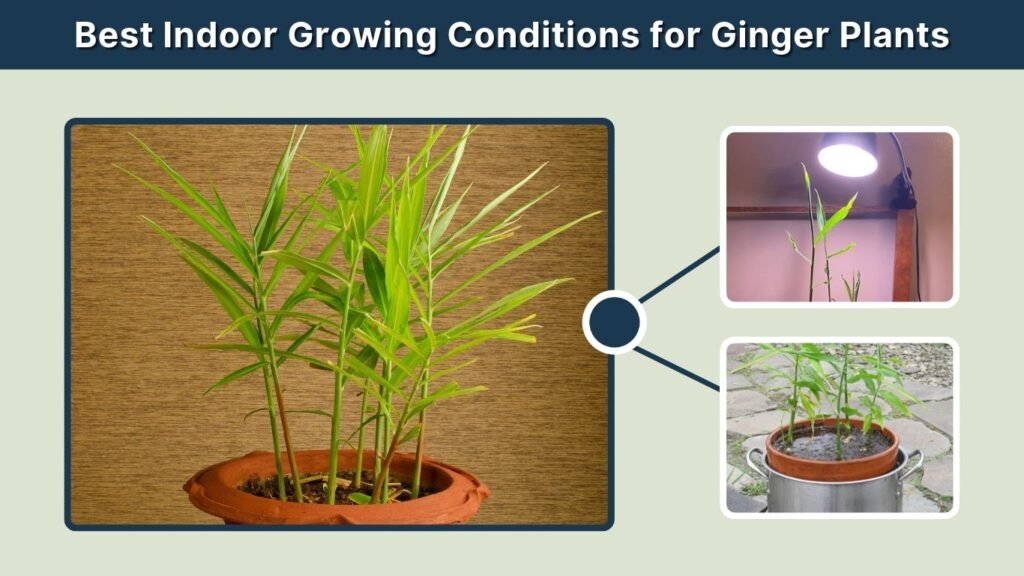
Healthy ginger growth depends on maintaining a warm, humid environment with suitable lighting and soil moisture. Because ginger naturally grows in tropical and subtropical regions, it prefers conditions that resemble a sheltered forest environment. Indoor gardeners can recreate these conditions through careful placement, consistent watering, and appropriate humidity. Understanding these requirements helps prevent weak growth, leaf discoloration, and rhizome rot.
Light Requirements
Ginger grows best in bright, indirect sunlight. Position the container near an east-facing window or slightly away from a brighter window.Avoid prolonged exposure to harsh afternoon sunlight because intense light can scorch the leaves. If your home receives limited natural sunlight, a full-spectrum grow light can supplement available daylight.
Temperature and Humidity
Maintain temperatures around 70–85°F (21–29°C) during active growth.Ginger prefers moderate to high humidity, so grouping it with other houseplants or using a humidifier may help in dry rooms.Protect the plant from cold drafts, air-conditioning vents, and sudden temperature changes.
Soil and Watering Requirements
Use fertile, well-draining soil that retains some moisture without becoming waterlogged.During active growth, water when the upper layer of soil begins to dry. Reduce watering when growth slows or the plant becomes dormant.Good drainage is essential because overly wet conditions can cause rhizome rot.
How to Care for an Indoor Ginger Plant
After the ginger sprouts, regular care encourages stronger foliage and healthy rhizome development. Indoor ginger generally requires less maintenance than many fruiting vegetables, but inconsistent watering, insufficient nutrients, or overcrowded containers can slow growth. Establishing a simple maintenance routine helps the plant remain productive. Paying attention to changes in leaf color, soil moisture, and overall growth can also reveal problems before they become serious.
Fertilizing Ginger Plants
Apply diluted balanced liquid fertilizer approximately every four to six weeks during active growth, following the product instructions.Ginger benefits from nutrient-rich soil, but excessive fertilizer can damage its roots. If the potting mix already contains slow-release fertilizer, additional feeding may be unnecessary initially.Reduce fertilizing during dormancy.
Pruning and Repotting
Remove yellow, dry, or damaged leaves with clean scissors to maintain a tidy appearance. Ginger generally does not require regular pruning because its foliage supports rhizome development.If the rhizomes become crowded or begin expanding beyond the container, transfer the plant to a wider pot with fresh potting mix.
Common Problems When Growing Ginger Indoors
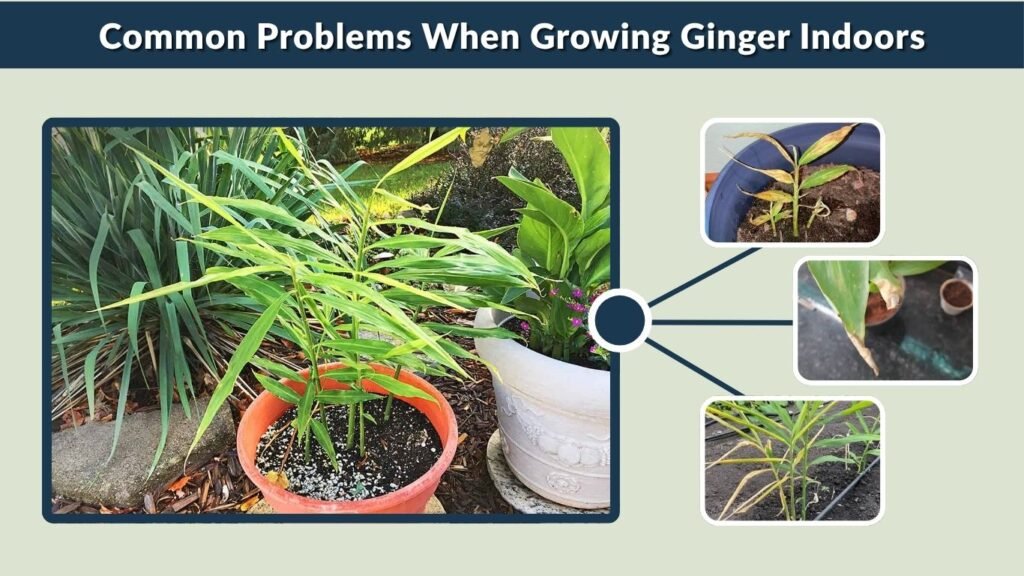
Although ginger is relatively easy to maintain, indoor growing conditions can occasionally cause problems. Yellowing leaves, slow sprouting, and rotting rhizomes usually indicate issues with moisture, temperature, or drainage. Identifying these symptoms early can prevent unnecessary plant loss. Some changes, such as seasonal leaf dieback, are also part of ginger’s natural growth cycle rather than signs of disease.
Common Ginger Growing Problems and Solutions
- Yellow leaves: Check for overwatering, poor drainage, or natural dormancy.
- No sprouts: Maintain warm conditions and allow additional germination time.
- Brown leaf tips: Check for dry air, inconsistent watering, or excessive fertilizer.
- Soft rhizomes: Remove rotting material and correct overly wet soil conditions.
- Slow growth: Improve lighting, warmth, and nutrient availability.
- Wilting foliage: Check soil moisture and inspect roots for damage.
When and How to Harvest Ginger Indoors
Harvesting is one of the most rewarding parts of growing ginger indoors. However, ginger requires patience because rhizomes develop gradually beneath the soil. Gardeners can harvest young ginger relatively early or leave the plant growing longer for larger, more mature rhizomes. The ideal harvest time depends on the growing environment and whether you prefer tender ginger or mature roots with a stronger flavor.
When Is Ginger Ready to Harvest?
Young ginger may be harvested after approximately four to six months, although the rhizomes are usually smaller and more tender.For a larger harvest, allow the plant to grow for approximately eight to ten months or longer under favorable conditions.Yellowing and drying foliage can indicate that the plant is entering dormancy and its rhizomes are ready for harvesting.
How to Harvest Ginger Without Damaging the Plant
Gently loosen the potting mix around the outer edges of the container and locate newly developed rhizomes.Remove a suitable section with a clean knife, leaving healthy buds and remaining rhizomes undisturbed.Replace the disturbed soil and continue caring for the plant if you want it to produce additional growth.
FAQs
1. Can I Grow a Ginger Plant Indoors in My Living Room?
Yes, ginger can grow in a living room receiving bright, indirect sunlight. Choose a warm location away from cold drafts and maintain adequate humidity. A wide container with well-draining soil provides enough space for the rhizomes to develop.
2. How Long Does Ginger Take to Grow Indoors?
Ginger typically takes three to eight weeks to sprout. Young rhizomes may be harvested after four to six months, while mature ginger usually requires eight to ten months or longer, depending on temperature, lighting, and overall growing conditions.
3. Can You Grow Ginger Indoors Without Direct Sunlight?
Yes, ginger prefers bright, indirect light rather than intense direct sunlight. An east-facing window is often suitable. However, completely dark rooms are unsuitable because ginger still requires adequate light to produce healthy foliage and develop new rhizomes.
4. How Often Should I Water an Indoor Ginger Plant?
Water ginger when the upper layer of potting soil begins to dry. The soil should remain slightly moist during active growth without becoming soggy. Watering frequency varies with temperature, humidity, container size, and the plant’s growth stage.
5. Can I Grow Ginger Indoors From Store-Bought Ginger?
Yes, fresh store-bought ginger can produce new plants if the rhizome contains healthy growth buds. Select firm pieces without mold or decay. Organic ginger is often preferred, and proper warmth, moisture, and planting conditions encourage successful sprouting.